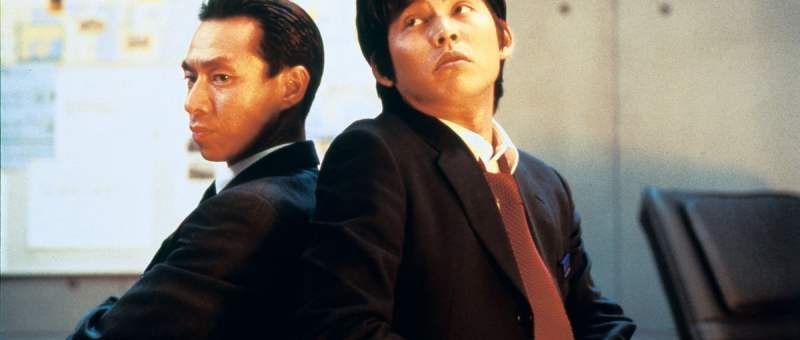
Bayside Shakedown (踊る大捜査線 THE MOVIE, Katsuyuki Motohiro, 1998)

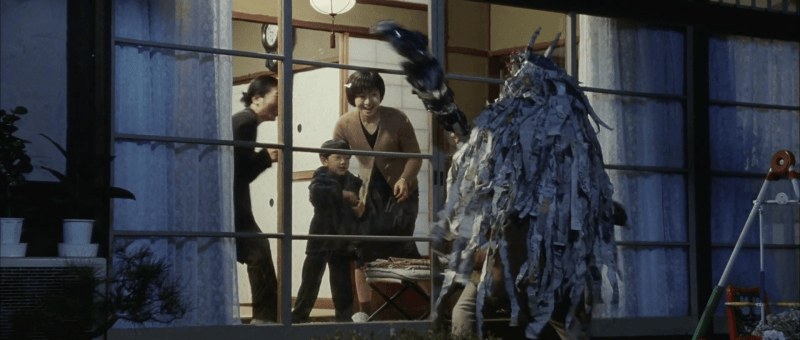
Those who believe that Japanese cinema has continued to decline throughout the 21st century often cite the release of Bayside Shakedown (踊る大捜査線, Odoru Daisosasen) as a turning point arguing that its vast and unexpected success ushered in an era of populist filmmaking dominated by existing franchises such as television drama, manga, and light novels. Leaving aside the question of whether the industry can really be said to be in a creative decline, the criticism is in itself a little unfair in that the film is exactly what it’s intended to be, perfectly enjoyable mainstream entertainment, while like the television series quietly subversive in its criticisms of police bureaucracy using humour to make subtle digs at the service in a way more “serious” films may not be able to. 

Director Katsuyuki Motohiro signals his intentions in the opening scene in which grizzled, trenchcoat-wearing detective Aoshima (Yuji Oda) stakes out a pleasant suburban house later joined by two colleagues who appear equally serious, yet as it turns out they aren’t on the look out for criminals but simply waiting for their boss, Police Commissioner Yoshida (Shigeru Koyama), to emerge so they can drive him to a police golfing tournament. Ironically enough, the scene is soon repeated, only for Yoshida to be tasered and kidnapped for ransom. Meanwhile, another difficult case arises when a body is found floating in a local river and is discovered to have been murdered, a soft toy found sewn into his stomach. 

The bizarre murder is a problem for the detectives at Wangan Police Station because whenever there’s a difficult case they have to call in the guys from HQ and are then financially responsible for them which is why the guys in accounts would really rather they write down suicide and leave it at that. Budgetary constraints are a persistent theme, the other random case hovering in the background being a phantom thief who keeps stealing the detectives’ receipts so they can’t claim their expenses. In any case, the kidnapping means HQ are involved anyway, quickly taking over an upper floor of the station and locking the local cops out of their investigation or else relegating them to demeaning leg work such as traffic stops and info gathering. 

The conflict between HQ and the local branch is further brought out by the awkward friendship between careerist policeman Muroi (Toshiro Yanagiba) and the earnest Aoshima who have each made a promise to each other that Muroi will climb the ladder while Aoshima takes care of business in the streets to ensure the police force continues to function correctly. Muroi is however in a difficult position, another officer informing him that he’s being put in charge because he’d be an easy fall guy as he went to a regional college while the others are all Todai alumni and minded to look out for each other. He finds himself compromised, unable to keep his promise to Aoshima because of the pressure from above while feeling guilty about the way the local cops are being treated by the bigwigs from the city. Meanwhile the police chiefs sit around a large circular table not unlike the war room in Stanley Kubrick’s Dr Strangelove issuing orders via video link while spending most of their time trying to make sure the local force is sidelined and squabbling over who actually gets to make an arrest. 

Pressured over their expenses, expected to work long hours, and generally made to feel unappreciated the detectives start to wonder what it’s all for, energetic female detective Sumire (Eri Fukatsu) in particular keeping a resignation letter in her desk uncertain whether or not to hand it in. Nevertheless through their quest to save the commissioner along with all the other cases including a potential serial killer operating through a murder fantasy website and a thief who seems to enjoy sneaking into people’s workplaces and stealing small personal items including those of the police officers, they each come to re-appreciate the importance of compassionate local policing along with their responsibility to each other as friends and colleagues even making sure they hold their fellow officers to account especially those involved with the budget. Lighthearted in tone yet boasting a fair few impressive action sequences Bayside Shakedown has in the past been unfairly maligned but is undeniably entertaining with a series of solid mysteries at its centre along with a few jibes at the overly bureaucratised nature of modern policing. 


Trailer (no subtitles)
Scorpion: Double Venom 2 (サソリ 殺す天使, Ryoji Niimura, 1998)

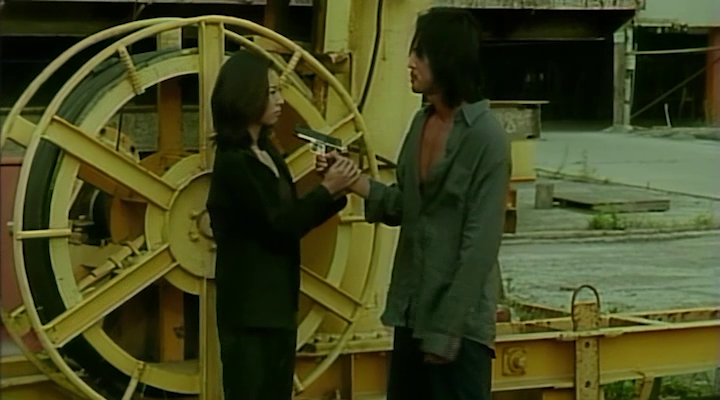
Some years after the conclusion of Scorpion Double Venom, Nami (Chiharu Komatsu) is still on the run. Now apparently using the name Sayuri, that of the surrogate sister she again failed to save in the previous film, she’s been working as a dancer in a club while continuing to look for the one-armed man she believes killed her younger sister. Spotting a one-armed gang boss on TV, she becomes convinced that Goda is the man she’s looking for and becomes a cabaret hostess to get close to him. But before she can pull the trigger, Goda is gunned down by a man in a police uniform who turns out to be a hitman hired by a local gang. 

This leaves Scorpion: Double Venom with a problem because Nami no longer has a clear target for her revenge and therefore no reason to live. She takes the gun used to kill Goda and at one point tries to use it to kill herself but is saved by Eiji (Ryo Karato), the hitman she rescued from the scene of the crime. Eiji’s mission of vengeance is however not yet over. Hoping to escape the gangland life, he robbed a bank with his girlfriend Ichiko (Aya Sasaki), but when she got shot in the leg, he ran off with the money and left her there. Nami then becomes determined to rescue Ichiko instead, making use of her old boyfriend, who has since married someone else, to get her a job as the prison doctor.

This is another break with the pattern, as Nami is not a woman in prison but undercover among the corrupt authorities who are in league with the rival yakuza gang to buy cheap drugs to use on the inmates while forcing released prisoners to deal for them. Forced into a straitjacket and sedated, Ichiko is repeatedly raped by the warden’s henchman. A female guard then takes her own life because she can no longer bear to listen to Ichiko’s screams, only the prison get a backstreets doctor to falsify the death certificate to eliminate evidence they’d been drugging her too and make it look like she died in an accident. 

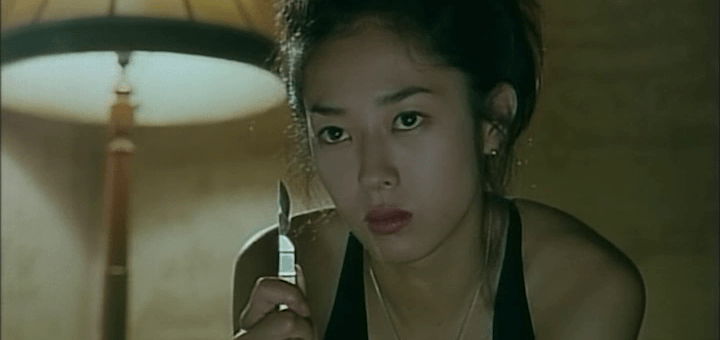
Sucked into a yakuza gang war, Nami is constrained by the darkness of the world around her and once again uses her medical skills for the purposes of revenge. The irony of her using a scalpel to kill is not lost on anyone, though this time she does also use healing abilities to nurse Eiji back to health which might explain the Japanese title “Killing Angel” even if there’s a serious plot hole along given some vague sci-fi style justifications in the film’s closing moments as Nami finally learns some unwelcome information about her sister’s death. In a way, the ending the brings the cycle full circle as Nami is one again betrayed by a man she had trusted and bonded with in a shared desire for justice and liberation.

In essence, they’re all trying to escape the prison of the wider society but as Nami discovers, society is not exactly tolerant of fugitives from order and the implications of the ambiguous ending are fairly bleak. It seems that once again, Nami has been denied her vengeance and granted only a cruel irony that suggests there can be no escape or starting over for those like Nami nor can there be closure for the traumatic past. While trying to rescue Ichiko, she’d encountered one of her former cellmates who had become a turncoat, taking the place of the guard who had killed themselves to facilitate Ichiko’s perpetual rapes. She at first refuses to help Nami because her parole is coming up, but then changes her mind, takes a shot at her own vengeful protest and pays a heavy price for it. 

Moving away from the exploitation roots of the franchise, Niimura takes the sequel in an artier direction with its love scene montage and melancholy blue-tinged colour palette while scaling back a little on the action preferring to focus on Nami’s non-romance with Eiji until her daring attempt to break Ichiko out of prison. But as has become abundantly clear, no one is able to escape from the prison of contemporary Japan and least of all Nami who remains trapped by her desire for vengeance and perhaps a willing victim of it.


Scorpion: Double Venom (サソリ・女囚701号, Ryoji Niimura, 1998)

Scripted by Sasori in USA’s Daisuke Goto, Scorpion: Double Venom (サソリ・女囚701号, Sasori: Joshuu 701-go) brings Nami back to Japan but with an all new backstory and motivation for revenge. In the films up to this point, Nami is betrayed by a man she loves and thereafter seeks a revenge that becomes progressively less personal, striking out against entrenched patriarchy and societal misogyny. This time, however, she’s to avenge the death of a girl she couldn’t save, her sister, Yumi, who was kidnapped and murdered as a child.

Like that of Sasori in the USA, this Nami (Chiharu Komatsu) is a highly educated woman, in fact a doctor. Immediately recognising a patient as the man responsible for abducting her sister all those years ago she is left with a dilemma. She confronts him and he laughs at her. As it turns out, the statute of limitations on his crime ran out the day before, so Nami’s plan to turn him in to the police is rendered a no go. As he continues to taunt her and makes suggestive comments about the little girl inexplicably in the next bed sharing a ward with an adult man, Nami ends up stabbing him to death with her scalpel but just before he dies, he tells her that he didn’t kill her sister after all. It was his accomplice, a one-armed man!

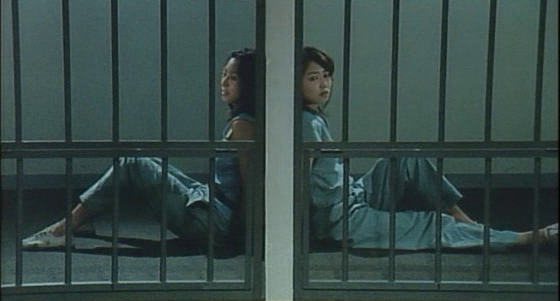
Nevertheless, Nami’s revenge will be delayed because she’s quickly carted off to prison for 10 years of hard labour. Unlike those in the other films, this prison is mainly run by women but the warden is a predatory lesbian who extracts sexual favours from the inmates with the vague promise of early parole and claims that this place is like heaven if you play by the rules. After getting sent to solitary for fighting, Nami befriends another woman, Sayuri (Miho Kiuchi), who reminds her of her younger sister, and discovers that she is shortly to be executed at the gallows hidden in the deepest recesses of the prison. Sayuri is apparently not guilty of the crime for which she is serving her sentence but was talked into taking the fall for a sleazy politician who murdered her friend so that her older sister’s medical bills would be covered. Her death sentence is for accidentally killing a guard during a previous escape attempt. All her subsequent attempts to escape have been so that she could see her sister one last time before she dies.

The theme this time is then sisterhood as the two women fill in the missing half for the other and bond in their shared misuse at the hands of the justice system. Nami becomes determined to save Sayuri in the way she couldn’t save Yumi, but her struggle eventually takes on a larger dimension in keeping with those of the previous films as she tries to get revenge for Sayuri too after discovering that her death sentence was partly handed down by the murderous politician trying to tidy up loose ends as he plans career advancement with the aid of his entire amoral aide, Naruse (Tomorowo Taguchi). Escaping from the prison, she literally and symbolically frees all of the women who then take their own revenge on the sadistic warden.

For all of its seriousness, the film does have its faintly ridiculous qualities such as Nami’s use of electrical wiring as a defibrillator that allows her to resuscitate Sayuri after she’s hanged by the warden at the politician’s instigation. She later uses these same wires ripped from the wall to electrocute the warden’s bruiser male guard though it’s Sayuri who hot wires the prison van so they can escape. Eventually, she’s hunted down by a man with a crossbow and in a nod to the original trilogy, stabs him in the eye. Still, with her own revenge still in progress, Nami effectively avenges all her sisters while fighting for justice. Tracking down the videotape Sayuri had hidden proving the politician’s guilt, she eventually exposes him along with all his corruption bringing down the complex network that had extended out into the prison and trapped so many other women. Now a fugitive, Nami chases the one-armed man and has once again become an avenger of women bringing justice to those failed by an inherently corrupt and misogynistic justice system.


Christmas in August (8월의 크리스마스, Hur Jin-ho, 1998)

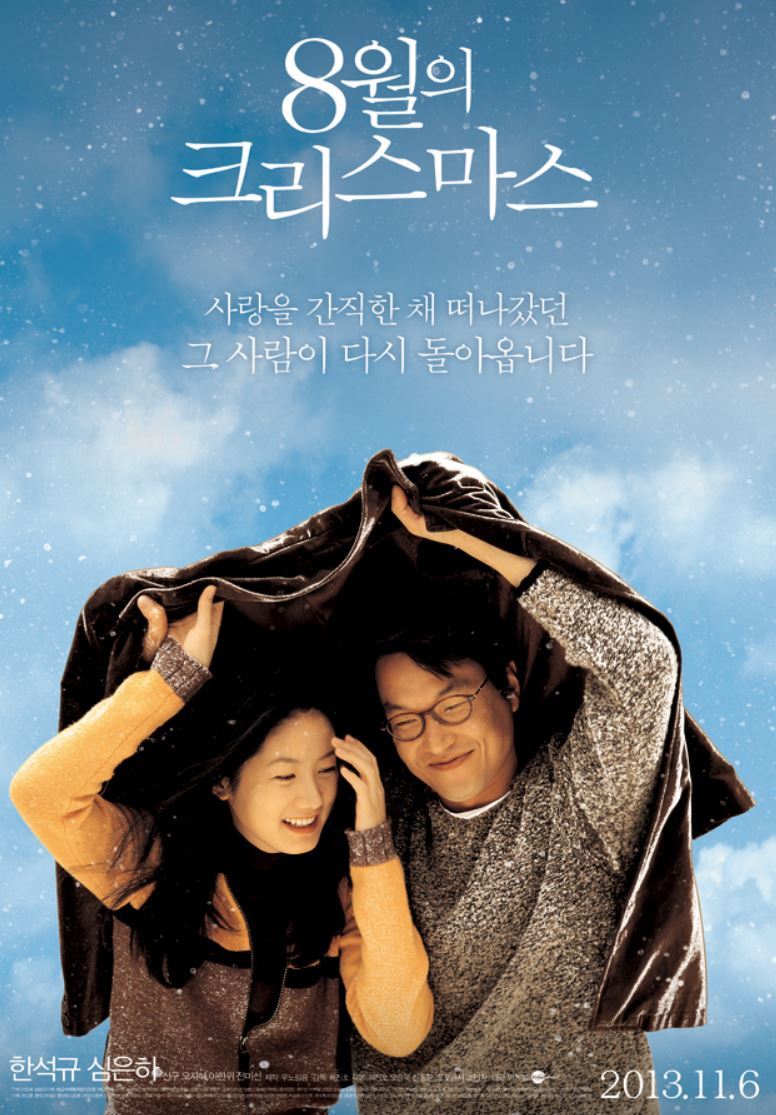
The cruel ironies of life are visited on a lovelorn photographer nearing the end of his days in Hur Jin-ho’s understated melodrama, Christmas in August (8월의 크리스마스, Palwolui Christmas). Christmas in August was Hur’s debut feature though he’d become primarily known for similar material in coming decades even if the romance was rarely as subtle and achingly poignant as in his first film. In some ways about life’s unfinished business, the impossibilities of communication, and coming to terms with impending death Hur allows his melancholy leads to discover a kind of serenity even in the depths of their yearning.

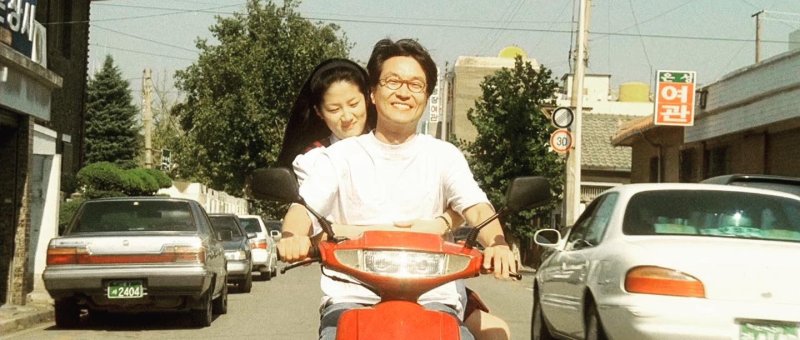
We never really find out the nature of Jung-woo’s (Han Suk-kyu) illness, only that it does not ostensibly interfere with his ability to live a normal life, though unfortunately terminal. After learning that he has only a short time to live, he simply goes home and washes the dishes, continuing with the mundanities of his life as if determined to get on with it. When someone asks him about his health, he tells them that he’s fine or that it’s not really serious, drunkenly letting slip to a friend that he will die soon but making it sound like a joke. Aside from a single moment of drunken railing against his fate, he accepts it with dignity and continues living quietly much as he always has while making preparations for after he’s gone, painstakingly writing down instructions for his father on how to use the TV remote and use the more modern printing facilities in his photography studio. 

There is perhaps a certain irony in the fact that he’s a photographer which is after all about trapping a memory or a point in time and preserving it for an eternity. He himself cannot move on, apparently hung up on his first love who married another man only to return later seemingly unhappy and regretful though she only asks him to remove the photo of her from the display in front of his store as if the memory of her youthful self is too painful to bear. And then, a young traffic warden wanders in looking for an urgent enlargement. For Da-rim (Shim Eun-ha), despite her youth, everything seems to be last minute, making several visits to the shop with an order that must be completed as soon as possible before visiting with no order at all. 

The relationship that arises between them is diffident and tender. It is also largely unspoken, Da-rim simply remarking on having a friend that can get them free tickets to an amusement park without exactly asking Jung-woo if he would like to accompany her. From his side, Jung-woo is passive, happy to be in her presence but also wary in knowing there is no possible future for them. He obviously cannot tell her that he’s ill or this brief respite from the futility of his life would disappear while she takes his diffidence as a lack of interest. It’s a love story that never quite gets started but is deeply felt all the same even its chasteness. 

Then again, perhaps words are unnecessary in situations such as this, a single photograph explanation enough on its own. In essence a gentle character study of a dying man’s learning to part with life as mediated through his yearning for a young woman though knowing that his love cannot be fulfilled, Hur presents death as something warm to be accepted rather than feared. Jung-woo takes a final photo with his friends whose eyes are all moist with tears as they pull him to the centre though he, like always, meant to stand on the end. He simply continues living, doing the dishes, retouching photographs, drinking with friends or else quietly crying himself to sleep. 

Though employing many of the tropes of romantic melodrama, Hur aims for subtlety and the eternal heartbreak of life’s unfairness that what we most desire arrives as soon as we can no longer have it. Even so, Jung-woo accepts his fate with good grace and treasures the memory of an unexpected love even as it slips away from him, storing it safely inside a photograph and a letter he may not actually intend to send. “Thank you and goodbye,” he signs off, which might be as a good a declaration of love as any other.


Original trailer (no subtitles)

Wait and See (あ、春, Shinji Somai, 1998)

In the opening sequence of Shinji Somai’s Wait and See (あ、春,  Ah haru), a large grey cat growls as it creeps through a suburban home and out into the garden where it sits outside a henhouse and loudly miaows at the birds trapped inside. In many ways, this is exactly what’s about to happen to the Nirasakis when a prodigal father suddenly returns to disrupt the life of his incredibly dull and emotionally distant son. 

Hiroshi (Koichi Sato) is the epitome of the ideal salaryman and seems to be living a charmed life having married into his wife’s wealthy family but under the surface nothing is quite as it seems to be. His wife Mizuho (Yuki Saito) seems to be suffering with some kind of mental distress and Hiroshi often appears indifferent or even cold towards to her. At the memorial service for his late father-in-law, Mizuho’s mother (Shiho Fujimura) and aunt (Chisako Hara) reflect on the late patriarch in less than favourable terms remarking that “everything was half measures” with him. He didn’t commit himself fully to either his family or his career and consequently achieved success with neither. 

The implication is that Hiroshi is much the same, simply going through the motions whether at work or at home and largely closed off to his wife at one point even drawing a curtain and leaving her in the dark to escape a conversation. “He never tells you anything” Mizuho’s mother points out after reading in the paper that the company where Hiroshi works may be in financial trouble, while Mizuho too complains that he never discusses anything with her only announcing the results when it’s already finished. 

Hiroshi had always believed his own father to have died when he was five years old, so it’s quite a surprise when the gnomish Sasaichi (Tsutomu Yamazaki) accosts him in the street and claims to be his long lost dad. Like the cat outside the henhouse, he’s set to create a disturbance but not quite the one everyone assumes it will be. Hiroshi’s mother Kimiyo (Sumiko Fuji) warns him that his crass working class dad will only cause embarrassment in the refined elegance of the upper-middle-class family he has married into. Yet Mizuho and her mother actually find Sasaichi quite amusing for the first couple of days, the mother very impressed by Sasaichi’s unreconstructed manliness which she finds so in contrast to the comparatively meek Hiroshi. Sasaichi fixes the leaky bath and sticking door that Hiroshi never got round to symbolising his lack of regard and inability to care for his home, which is in a sense ironic because Sasaichi was never really able to take care of anything. 

Sasaichi later explains that he left because his business failed and he ended up with debts to loansharks so he divorced Kimiyo and moved away to prevent them coming after her money. A fatherless son, Hiroshi struggles to construct the image of himself as a father and cannot create intimate relationships with people, but has settled for fulfilling the role of a successful member of society who can support a family financially even though the sense of himself as a provider is an illusion as his wife’s generational wealth already guarantees them a comfortable existence. Even so, this being the difficult post-bubble economy Hiroshi lives with a sense of economic anxiety but buries his head in the sand refusing to listen to a more savvy friend who can see the writing on the wall and tries to convince him to take a job at another company where he’s just secured a position for himself. But Hiroshi is afraid of change and ironically clings fast to his corporate family even while fearing it will leave him. 

He desperately doesn’t want to think that he is like Sasaichi, that he may fail his family by failing in his career or that he too is an uncouth, unrefined country bumpkin incapable of taking care of himself let alone anyone else. The again perhaps they’re more alike that he’d like to think. Hiroshi and Mizuho object when they realise Sasaichi’s been teaching their son Mitsuru (Keita Okada) how to play craps, but as his friend points out stockbroking is also really just legitimised high stakes gambling. He too wanders around until late at night because he doesn’t want to go home and makes his wife worry so she has to take sleeping pills .

Yet there’s also a side of him that is still the gentle boy from the country as he painstakingly raises chicks in the back garden. In the end, it’s Sasaichi who shows them the maternal warmth they need to grow, gestating the eggs in a pouch inside his haramaki only for them to hatch at the most ironic moment. Hiroshi gives his son a brief life lesson in explaining that the chicks that hatch from these eggs will go on to lay their own in a circular process of renewal just as he is passing on knowledge from his childhood to the next generation. The film begins and ends with a ritual of mourning, though Somai takes us through the passing season moving from Setsubun to Hinamatsuri as Sasaichi continues to outstay his welcome while attempting to repair his corrupted paternity. “Don’t worry, life will go on,” Mizuho reassures a more open Hiroshi finally coming to terms with his anxieties and willing to share them with his family in full knowledge of who he is as a man and a father in a world that’s anything but certain.


Original trailer (no subtitles)

The Cold-Blooded Trap (冷血の罠, Takahisa Zeze, 1998)

“This place is full of people like me” a violent criminal jeers, admitting that he’s killed “plenty” of women but not necessarily the one he’s being questioned about. There is indeed something eerie that seems to have taken over this small corner of Shibuya in Takahisa Zeze’s dark millennial thriller The Cold-Blooded Trap (冷血の罠, Reiketsu no Wana). “Strange things are happening here” another investigator notes, “someone’s malice has infected this whole place.” Yet the sense of haunting may be closer to home than it first seems as two men attempt to come to terms with a traumatic past by solving present mystery. 

Even the police seem to concede that the strange goings on are a “continuation” of something else. As we first meet him private detective Fujiwara (Sho Aikawa) appears to be following a young woman home from the station only as we later discover she hired him herself to watch over her because she had the feeling she was being watched. Fujiwara watches her enter her apartment building and then calls her to say everything looks clear on the ground, but a short time later a body wrapped in sheets is dropped from the roof onto the street below. The weird thing is that it’s the same building Fujiwara’s sister Noriko used to live in, only she took her own life and that of her child by jumping off the roof five years previously. 

Not only does Fujiwara feel as if he failed in his duty to protect his client, but he’s forced into a similar contemplation in his latent guilt surrounding his sister’s death. The most obvious reason for Noriko to have considered suicide was that her salaryman husband Hanazono (Hidetoshi Nishijima) had been having an affair with a work colleague, Yoko (Asuka Kurosawa), yet Hanazono refuses to accept responsibility and is convinced that Noriko was murdered by a mysterious serial killer stalking the streets of Shibuya. 

The irony is that we first think Hanazono is the faceless killer after watching him enter the woman’s apartment building, only to learn that he may have been investigating Noriko’s death. Later these assumptions are overturned again, but even he concedes that he seems suspicious. Wandering around the city at night, he runs into women alone who immediately see him as a threat and assume he may be a dangerous criminal who means them harm. The realisation first shocks him, but then gives way to a physical high in the adrenaline rush of fleeing the scene. He comes to the conclusion that he must get into the killer’s mindset in order to catch him and begins actively stalking people around the city, following them home and checking mailboxes to find out names. 

Fujiwara doesn’t trust Hanazono for obvious and understandable reasons, but even so he begins following him as Hanazono continues to follow the killer. Zeze opens the film with fuzzy 90s camcorder footage trained on the forecourt of a station from a balcony opposite. The camera follows a woman as she leaves, and Fujiwara behind her with eerie intent evoking the mild paranoia of millennial surveillance. Later Hanazono films his own POV walking through the midnight city, once again lending the streets a sense of lurking malevolence and dread-fuelled fatalism even before he arrives at his shocking destination. 

Yet we wonder if Hanazono is just a paranoid obsessive with his giant map of crime insisting that seemingly isolated incidents of violence are somehow linked. Before Fujiwara hears about the woman’s death on the news they were reporting on insolvent banks hinting at a financial anxiety in the contemporary society, and as the suspect Fujiwara later tracks down suggests there are lot of distressed or perhaps disturbed people around. The crimes may really be random, but they are also connected by virtue of being provoked by an anxious society even if as Hanazono admits there are several criminals behind them. Whether or not he gets the answer he seeks, Fujiwara will have to accept that he too bears some responsibility as Hanazono has perhaps already done even if desperate to deny it. “I’ve always been responsible” he admits while taking control over his life, only the elliptical structure of the film may imply otherwise. Dark and eerie, Zeze captures a sense of millennial dread in the streets of the capital filled as they are with “random” crimes and lurking killers in the haunting anxiety of constant threat.


Clip (English subtitles)

April Story (四月物語, Shunji Iwai, 1998)

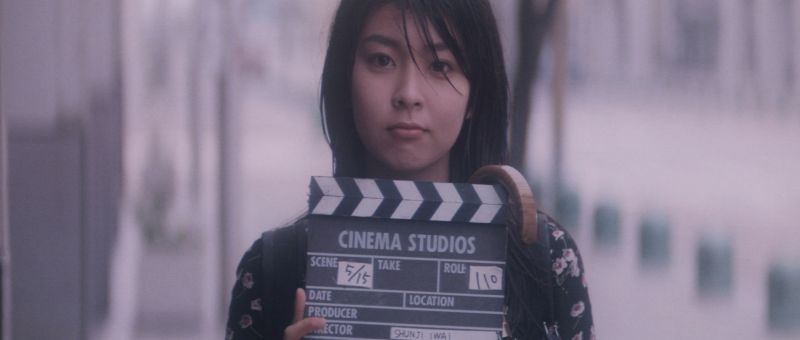
Shunji Iwai’s wistfully nostalgic coming-of-age drama April Story (四月物語, Shigatsu Monogatari) opens with a POV shot as its heroine awkwardly waits for her train to depart while her family, assembled on the platform, look back at her anxiously before the train door closes and the carriage begins to move. The girl says nothing but places a hand on the glass, freezing amid the snows of Hokkaido, as if bidding a silent goodbye now all alone as she makes her way towards her new life in the capital. 

Shot with the breezy soft focus associated with Iwai’s early work, the film positions its heroine’s growth alongside the blossoming of the cherry trees which in contrast to many other nations in Japan mark the beginning and end of a school year. Shy and somewhat reserved, Uzuki (Takako Matsu) does her best to seem grown up, managing the removals men while insisting on helping but mostly just getting in the way of their work until they finally tell her that, like many students, she’s brought far too much stuff and there’s no way it’s all going to fit in her modest two-room flat. She makes sure to introduce herself politely to her new neighbours bearing gifts, but is met with a wary indifference from the woman across the hall perhaps more accustomed to city living and less likely to be instantly trusting of a stranger. 

At the university some of her fellow students treat her like a country bumpkin asking stupid questions like whether it’s cold in Hokkaido and making fun of her snazzy jumper which is a little too heavy for Tokyo at the start of spring. In the cafeteria she takes it off and hangs it around her waist, embarrassed by her early fashion faux pas. One of the other girls, Saeko (Rumi), attempts to befriend her but as it turns out Uzuki has other things on her mind except for study and in fact Saeko may have an ulterior motive too that neatly reflects her own in looking for fresh recruits for the fly fishing club. 

In any case it’s as if the world gradually opens itself up to her, Uzuki riding the wide streets of the city on her bicycle through parks and under cherry trees before making her way to a particular bookshop. She discovers the dangers of city life while stopping in to watch a classic samurai movie, a beautifully realised historical fantasy homage to golden age cinema and old-fashioned serials in which Oda Nobunaga (Yosuke Eguchi) has managed to escape death at Honnoji Temple and is out for ironic revenge. A late arriving salaryman (Ken Mitsuishi) sits himself down a few seats away from her and surreptitiously tries to edge closer until she’s forced to flee the cinema leaving some of her belongings behind. Even so it doesn’t seem to dampen her enthusiasm for life nor for her unofficial mission and the the reason that’s brought her to Tokyo in the first place. 

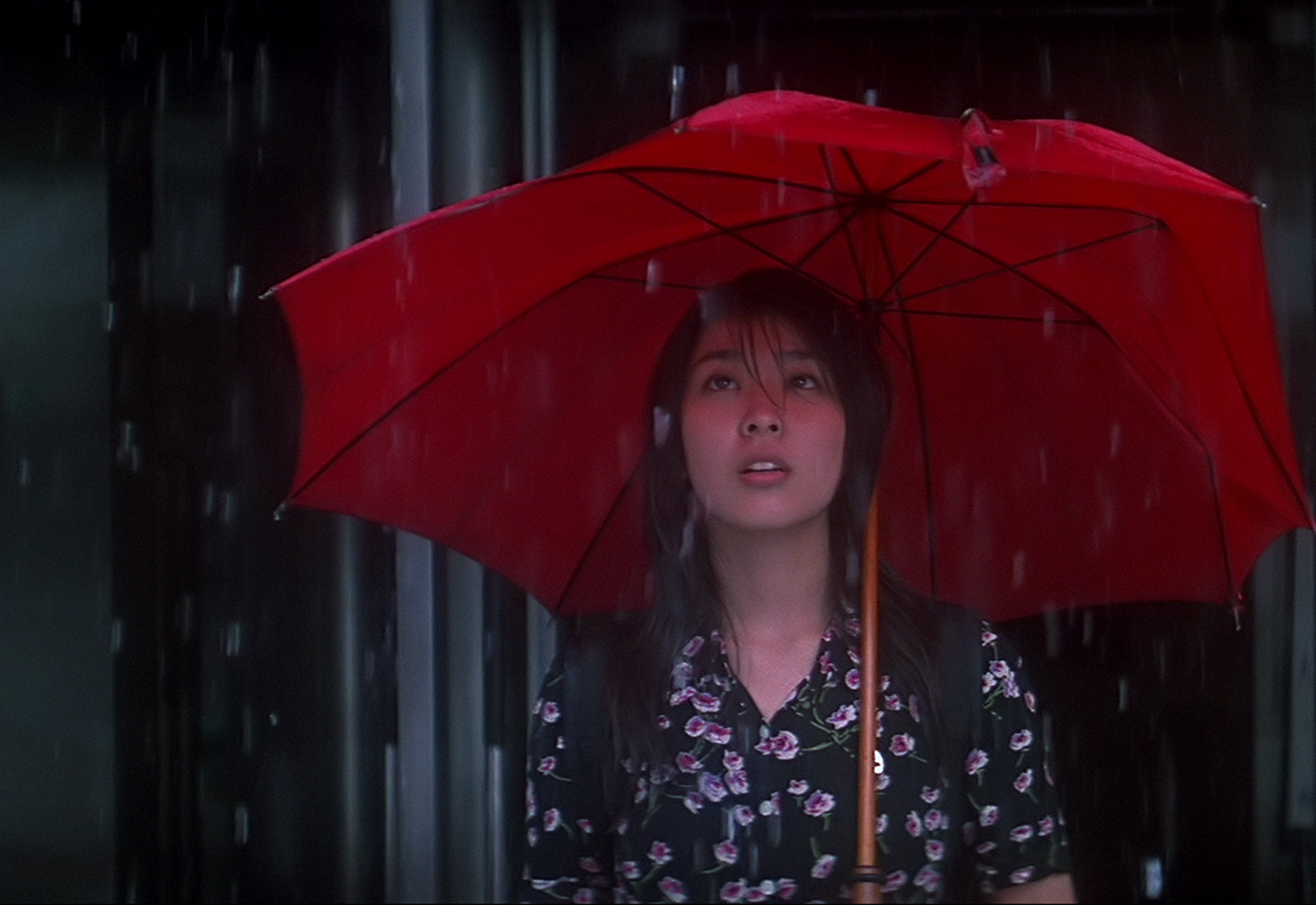
Iwai focusses on the domesticity of her newly independent existence, building a cosy nest in her tiny flat and attempting to cook for herself but finding her invitation to her neighbour for dinner politely rebuffed while uncertain if the fly fishing club is really for her given that the guy who runs it is condescending and incredibly full of himself. But then as she tells her mother on the phone she just wanted to try something new and there is something comfortable in the gentle rhythms of casting the fly especially as no one seems to do any actual fishing only practice in the park. She makes friends with the equally awkward Saeko and even finds her neighbour gradually opening up to the idea of friendship. Her world continues to expand until she’s finally ready to reconnect with the unrequited high school crush she followed to the city if admittedly in another slightly awkward meet cute involving a series of umbrellas, torrential rain, and a very patient gallery director. 

A self-declared “nice film”,  Iwai’s heartwarming drama is an innocent tale of first love and romantic obsession that is nothing other than sweetness and light. “A miracle of love” is how Uzuki chooses to describe her arrival in Tokyo and subsequent reunion with her romantic destiny, but it’s in the pursuit of love that she finally begins to come into herself and embrace the possibilities of life blossoming under the cherry trees of an unseasonably warm Tokyo.


April Story screens at Japan Society New York on Dec. 10 and will be available to stream online in the US from Dec. 9 – 23 as part of Love Letters: Four Films by Shunji Iwai

Original trailer (English subtitles)

Ringu (リング, Hideo Nakata, 1998)

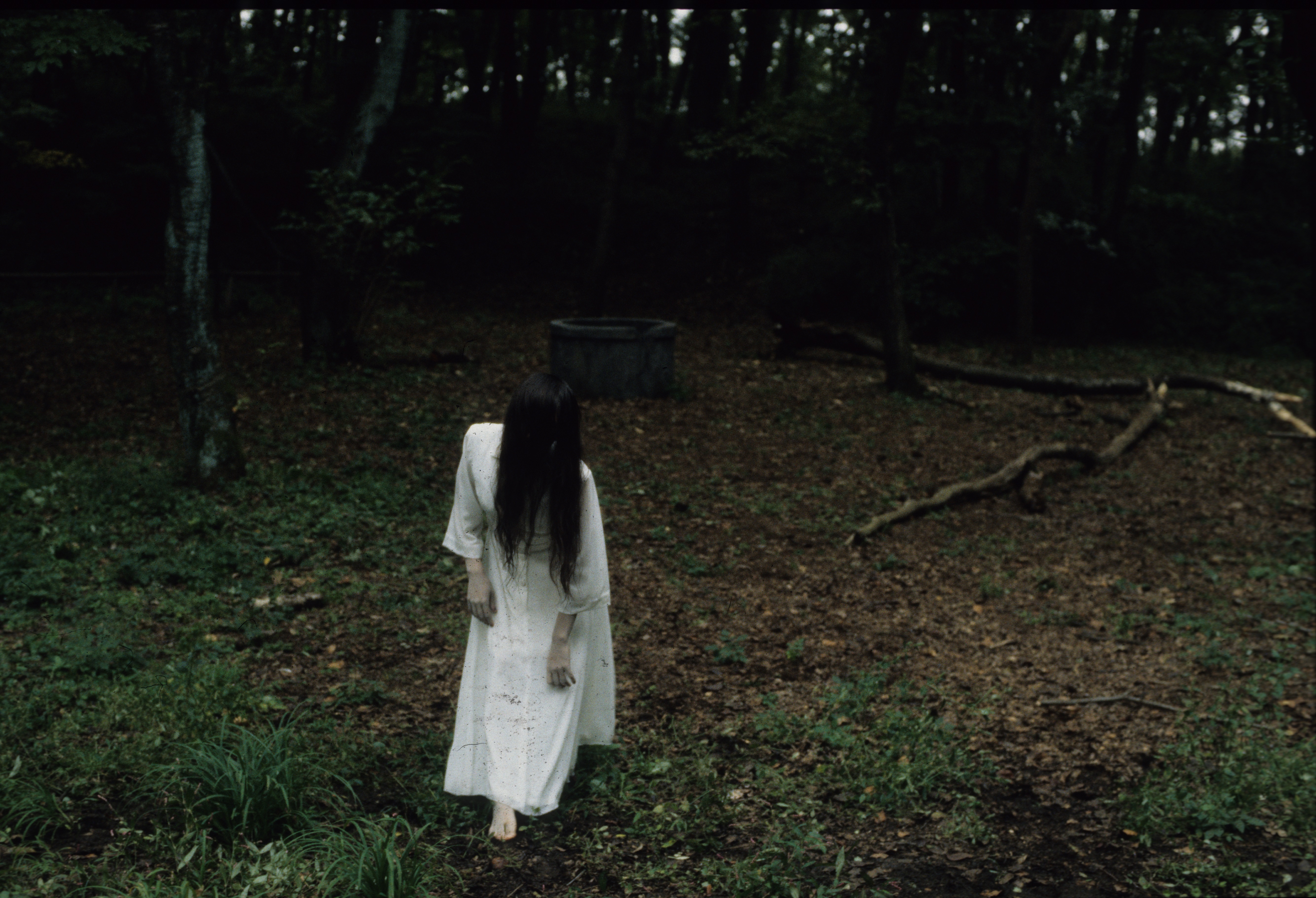
As the investigative duo at the centre of Hideo Nakata’s eerie supernatural horror Ringu (リング) begin to unlock the mystery of Sadako, we’re told that a strange woman who may have had some kind of psychic powers was loathed by those around her in part because of her habit of sitting and staring at the sea. Nakata opens the film with waves and often returns to them as if suggesting in this millennial horror that what we fear is a transmission we cannot see. In the end there may not be so much difference between the magic of an analogue TV broadcast and a message from another plane. 

In any case, perhaps the central message is that one should pay more attention to the words of those whose warnings are often dismissed on the grounds of their age and gender. Journalist Reiko (Nanako Matsushima), for example, doesn’t seem too invested in a video she’s making about a cursed video related by a trio of high school girls in a cafe who explain that they don’t personally know anyone who’s died after watching it but have been reliably informed by friends of friends who apparently do. As will later be discovered, the girls actually give Reiko crucial information but for whatever reason she does not remember it until coming to the same conclusion herself. In any case, it’s not until her own niece, Tomoko (Yuko Takeuchi), dies in mysterious circumstances that Reiko starts to wonder if this is more than a spooky story elevating the chain letter to new technological heights.

According to the urban legend, if you watch the cursed tape you’ll immediately get a phone call telling you you’ll die in seven days. The supernatural entity now synonymous with the film, Sadako, is manipulating these still analogue waves for herself. Sending her messages via television and telephone she is a literal ghost of the airwaves and as Reiko’s ex-husband Ryuji later puts it radiating her sense of rage in her own mistreatment, insisting that her story be known and that those who refuse to acknowledge it should not be allowed to survive. Just as Reiko should have listened to the high school girls, someone should have listened to Sadako and because they didn’t others now have no choice. 

In a sense Sadako represents this nascent fear of technological advancement. When Reiko answers her flip phone, it’s a reminder that there’s no escape from unwanted communication even if you can in theory try to switch it off. The girl with Tomoko when she died was driven out of her mind and now won’t venture anywhere near a television, as if you could escape Sadako’s wrath by merely keeping your distance from the portal. The two teenagers who died around the same time as Tomoko were in a car in the middle of nowhere, but cars have radios which receive radio waves. Sadako travels through the air, invisible until she chooses not to be. She may only have a direct line, but it is in one sense a call for help she’s issuing only in the very inefficient manner of a vengeful ghost whose rage has become indiscriminate or at least directed towards the society that wronged her and everyone in it rather than a single guilty party. 

In a certain sense, you can cure the curse only by spreading it. If everyone everywhere suddenly understood, learned Sadako’s painful history, then the curse would wither and die with no new hosts to go to which is perhaps what Sadako wants. Yet it leaves Reiko with a dilemma, knowing that to save the lives of those closest to her she may have to ask someone else to risk their life or even expose them without their consent. Throughout the film she’s been depicted as an imperfect mother, divorced and often leaving her small son Yoichi to fend for himself at home while the boy at one point walks past his own father in the street and does not seem to recognise him so absent had he been in his life. Through their shared quest to undo the curse, the pair in a sense reclaim their parental roles and repair their familial ties in working together to save their son’s life in contrast to the parental figures surrounding Sadako who may have done the reverse. Sadako frightens us because of her transgressive qualities, quite literally transgressing the barriers between ourselves and the stories we tell by crawling out of them and finding us here, on the other side of the screen, where we thought we were safe to remind us not to look away and to listen to those whose voices are all too often ignored. 


Ringu screens at Japan Society New York on Oct. 7 as part of the Monthly Classics series.

20th anniversary trailer (English subtitles)

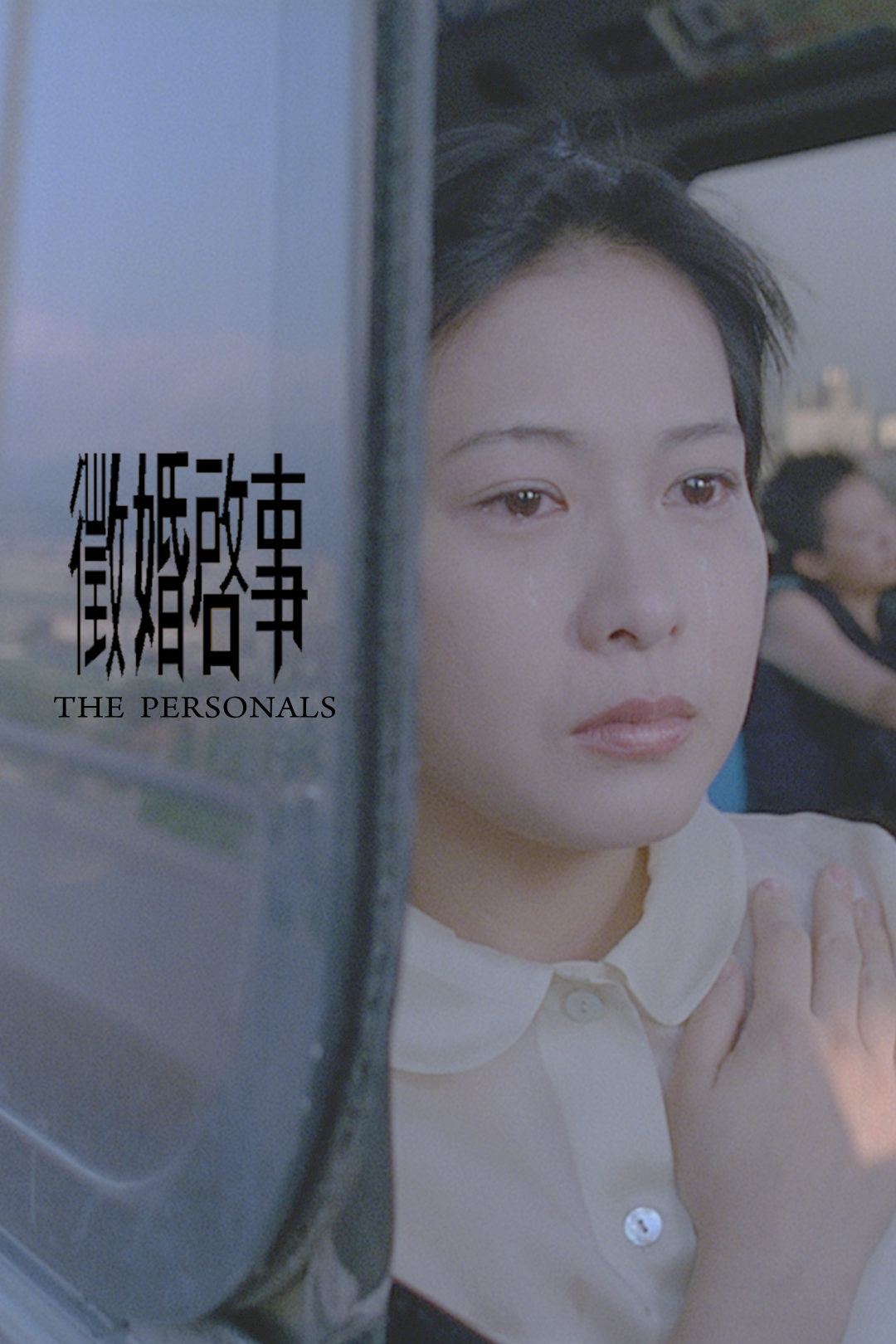
The Personals (徵婚啓事, Chen Kuo-fu, 1998)

Looking for love in all the wrong places, a Taipei career woman suddenly decides to give up her life and place a personal ad stating that she’s looking for a husband, “Who knows, maybe I’ll find happiness” she unconvincingly explains. Chen Kuo-fu’s sophisticated dramedy The Personals (徵婚啓事, Zhēnghūn Qǐ Shì) sends its heroine on a dating odyssey through the contemporary capital but is at heart the story of a woman learning to see herself while grieving a failed relationship and the married ex who won’t return her calls. 

Tu Chia-wen (Rene Liu Ruo-ying) was a successful eye doctor at a Taipei hospital, explaining to a patient that some people lose the ability to produce enough tears after the age of 30, but abruptly quits her job later claiming that she wanted sever connections with her past which is another reason why she’s decided to place an ad rather than asking friends to set her up with eligible bachelors. Implicitly, it also seems that Chia-wen feels her status as a doctor may be intimidating to some men in the still patriarchal society, if also a clue to her true identity which she has otherwise chosen to keep hidden going instead by the name of Miss “Wu” which just happens to be the name of her lover’s wife. 

Of course, it’s illogical to use a false identity if your end goal is finding a life partner, a factor which later feeds in to Chia-wen’s half-hearted conclusion that it isn’t the fault of the men she’s been meeting that they didn’t hit it off but her own in that she’s so far failed to fully “open up” to any of them. Despite newspaper personal ads not featuring photos, Chia-wen receives 100 messages in the three days after her details are posted from a varied cross section of applicants some more suitable than others. One gentleman who unconvincingly claims to be in his 30s reels off his CV as if he were introducing himself at a job interview while wearing a cheerful farmer-style straw hat. A factory worker chews betel nut and smokes tobacco at the same time while exposing an insecurity over his financial situation in complaining that modern women are too materialistic. One suitor is a woman who struggles to explain her gender and sexual identity with the terminology of the time causing Chia-Wen a degree of consternation. Another potential date is a shoe fetishist with a large suitcase intent on some kind of cinderella role-play closely followed by an executive who enthusiastically explains his only hobby outside of drinking is an encyclopaedic knowledge of S&M porn, while a son brings his father as a potential match because his mum’s “gone abroad” and in a heartbreaking moment a worried mother tries to negotiate on behalf of her son who appears to have learning difficulties and might not be sure what’s going on, hoping to find someone to look after him when she’s gone. 

It may be a biased sample, but it doesn’t speak well for the men of Taipei and that’s without even getting into the guy trying to recruit Chia-wen as a high class call girl, the obvious married man after no strings sex, or the salesman trying to peddle women’s self defence equipment with a case full of tasers and pepper spray. Chia-wen pours out her frustrations in daily calls to her ex’s answering machine, leaving long messages she knows he won’t reply to but somehow it makes her feel close to him. Gradually through her monologues we begin to piece together the trauma that she’s struggling to accommodate while a late and unexpected twist keys us in to the cosmic tragedy of her frustrated romance. “Choose what you can endure” she’s advised by a professor friend who confesses to her that he’s chosen to suppress his homosexuality out of a desire for a “normal” life as a husband and father hinting at the still conservative nature of the contemporary society. 

It’s not until she’s caught off guard by a potential match seeing through her ruse that Chia-wen begins to reconsider her experiment, eventually captivated by a sensitive young man who’s not long come out of prison but has an endearingly awkward smile that reminds her of her own. She meets each of the men in the same cafe where she had her first date with her former lover, taking on a slightly different character as she attempts to interview them about their lives, getting to know their hopes and desires often tinged with a note of loneliness or despair. They seldom seem very interested in her, but instantly propose marriage or at least some sort of serious courtship without even finding out about her hopes and aspirations in life. Chia-wen’s often comical encounters from the teenage boys trying their luck to the old men taking their last chance each expose something of contemporary gender dynamics as well as hinting at increasing urban loneliness and romantic desperation but in the end it’s herself Chia-wen must face in learning to let go of past trauma in order to give herself permission to move on in her ever evolving quest for love.


The Personals streams in the UK 25th to 31st October as part of this year’s Taiwan Film Festival Edinburgh.

Trailer (Traditional Chinese / English subtitles)

Sada (SADA〜戯作・阿部定の生涯, Nobuhiko Obayashi, 1998)

Sada poster“Facts can easily become fiction when recounted by someone, even by oneself. But with a bit of sincerity lies can become truth”, our genial guide explains, paradoxically telling us that the heroine, a woman he regards as a loveable kid sister, wants to tell us her story herself. Apologising in advance for her “rudeness”,  he reveals to us that the woman is none other than the “notorious” Sada Abe, a woman who, apparently now forgotten, was once a front page sensation for having killed her lover and cut off his penis to carry him with her always.

Despite the narrator’s claims that Sada’s fame has faded, her story has proved fertile cinematic ground, most famously inspiring Oshima’s In the Realm of the Senses which sees her claustrophobic descent into sexual obsession as a reaction to the intense austerity of militarism. Obayashi, however, is keen to remember that that aside from the newspaper headlines, the salaciousness and peculiar romanticism of her story, Sada was a real woman who suffered in an intensely patriarchal society and was perhaps seeking something that the world was unable to give her.

As she reminds us, Sada too had a childhood. Obayashi opens the film with a young Sada innocently throwing hoops over a tall phallic object. Six years later, her life changes when a college boy drags her off the street into a nearby inn and rapes her, claiming that she is well known as a good time girl and that he is perfectly entitled to behave in the way he is behaving. Deed done, the college boy leaves but Sada (Hitomi Kuroki) is rescued by the gentlemanly figure of sickly medical student Okada (Kippei Shina) who has a patch over his eye and a romantic disposition. Okada gives her not only a lifelong and strangely erotic attachment to donuts, but a junai foundation in an eternally unrealisable longing for a pure and innocent love.

Okada, as Obayashi later tells us, is also a “real” person though he has no real evidence that he and Sada ever crossed paths. He gives her the knife she will later use to sever her lover’s penis and tells her to use it to cut out his heart, which belongs to her. Okada, claiming that he will forever watch over her, introduces a secondary theme in that he is a sufferer of Hansen’s disease, or leprosy, then thought incurable and “treated” only by exile. Sada loses her pure love and never knows why, but sadly chooses not take his advice to remember that she is an honest girl and refuse to be corrupted by her trauma. Now unable to marry and it remaining a virtual impossibility to enter any other kind of profession, Sada becomes a geisha, later giving that up for the more lucrative world of casual sex work.

Perhaps ironically, it’s through her life as a sex worker that Sada begins to find a degree of freedom amidst the impassioned atmosphere of increasing militarism. While the men are caught up in destructive games of martial glory, Sada is just trying to live her many lives and dreaming her dream of love. It’s that dream of love that brings her to Tatsuzo (Tsurutaro Kataoka), a married, poetic ladies’ man with whom she eventually retreats into an isolationist kingdom of two. Yet their intensely co-dependent relationship is never quite enough for her because it fails to marry her physical need with the emotional, and the figure of Okada, the innocent, romanticised white knight of her youth, lingers in her mind. Sada kills Tatsuzo not quite by accident, attempting to take ownership of something which can never be hers in her fiercely patriarchal world where her clients coldly chide her for not being “polite” enough and despite the earning potential of her profession, she remains dependent on men to escape it.

Sada’s “crime” might not quite be revenge for all she’s suffered but it is a pointed act of rebellion towards a conformist society. She laments that her notoriety soon faded, that if being forgotten is like dying then she died long ago, but for a short time all of Japan was captivated not by the outrageous horror of her transgression but by an idea of “romance” that stood behind it as if Sada had moved beyond double suicide into new territories of eternal love through seeking to possess her lover even in death. The narrator, Sada’s sometime pimp, tells us that few remember Sada now and suggests that Japan is once again in a dark age, stopping only to remark that people were beautiful then too despite or perhaps because of the darkness. Fittingly the figure of the “real” Sada retreats and we’re left again with her legend, an imagined future for a woman who faded into pre-war tragedy as a symbol of its dangerous intensity. Even so, Obayashi is intent to show us that there was indeed a woman named Sada Abe who found herself at the mercy of her times but tried to live all the same, dreaming of impossible love in a world of corruption.


Original trailer (English subtitles)