Ghost in Love (자귀모, Lee Kwang-hoon, 1999)

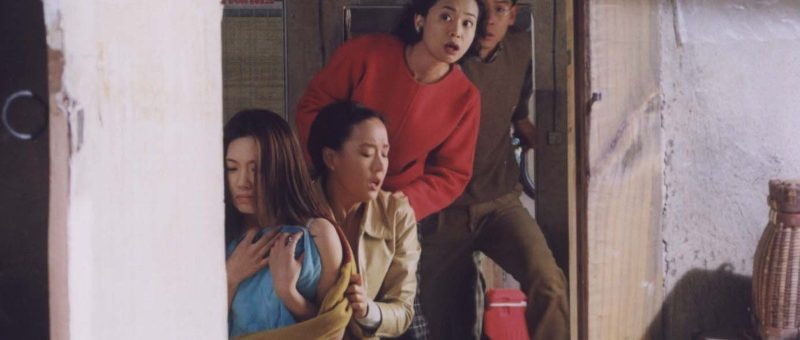
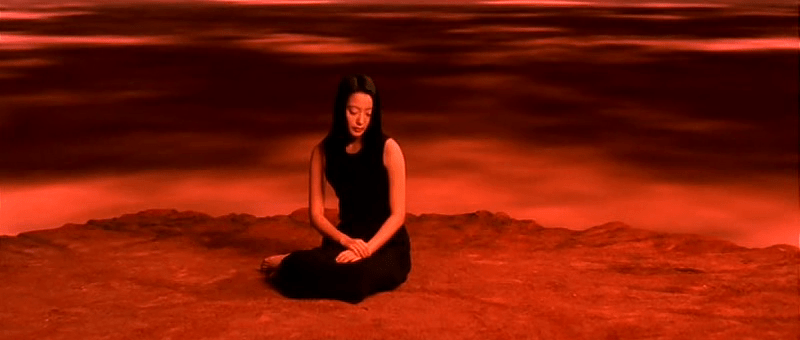
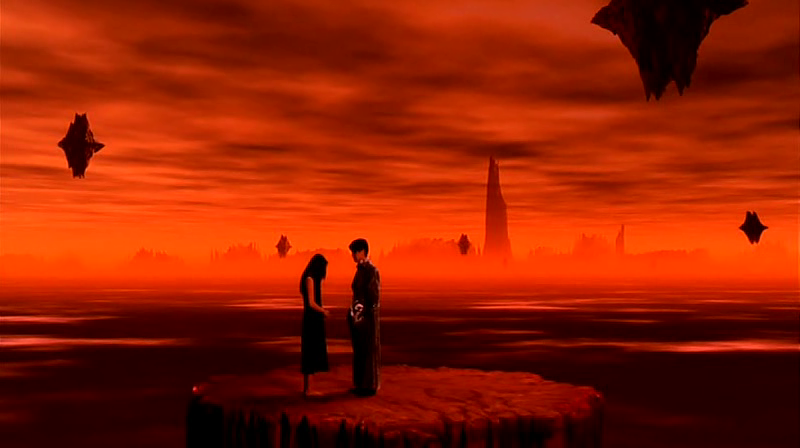
Caught in limbo, a young woman finds herself torn between the desire for revenge and letting go in Lee Kwang-hoon’s supernatural drama, Ghost in Love (자귀모, Jagwimo). Is love really what Chae-byul (Kim Hee-sun) was in, or is it more the sense of humiliation that’s she’s carried into the afterlife while obsessing over her cheating ex-boyfriend who was two-timing her with the boss’ daughter? Her colleague Kantorates (Lee Sung-jae), by contrast, had a love that was purer and reminds her that though it’s painful, if she really loved him, she’d be rooting for her ex’s future happiness rather than plotting how to mess up his life. 

Then again, the Korean title is “Suicide Ghost Club” and refers to the group into which Chae-byul is press-ganged after two of its grim reaper agents help her on her way having overheard her say she wanted to die because of all the romantic drama in her life. This literal purgatorial space located between heaven and hell is run like an exploitative company/cult in which the only metric of success is claiming more members. Chae-byul is warned that she doesn’t really have any choice but to join them, because otherwise she’ll become a vengeful spirit and lose all her memories, though she’s drawn to a mysterious presence known as Pale Face who does indeed become a terrifying spirit of vengeance, taking revenge primarily on the men who gang raped her while her fiancé, who later dumped her, looked on helplessly.

There is a kind of misogyny that’s most obvious in the afterlife but exists in the real world too. The film opens with a woman about to take her own life because of persistent fat shaming. She’s fat shamed by the grim reapers too and on into the afterlife, though in ghost form it’s revealed that she could be skinny if she wanted but is happiest in herself like this. Meanwhile, the grim reappears make other suggestive comments, leering over Chae-byul and remarking that a girl should have nice hips. Pale Face took her own life because of the trauma of her rape, the stigma of being a rape victim, and the betrayal of her fiancé who she says broke up with her because he thought that she was tainted. Even in the afterlife, she’s constantly washing in an attempt to make herself clean which is why she’s become so pale. 

Despite being told primarily from Chae-byul’s perspective, the film more or less normalises her boyfriend’s sexist views and behaviour in which he sees nothing really wrong with two-timing each of the women. Chae-byul tries to confront him, but he tells her Hyun-ju (Kim Si-won) was only visiting “to check on her stock transactions,” and shifts the blame onto Chae-byul for being paranoid and unreasonable. He says he liked her because she was “nice and comfortable,” but now she’s changed, so if she’s going to carry on “nagging” him like this, he may as well break up with her. HIs domineering attitude and characterisation of Chae-byul as a crazy girlfriend have the desired effect of causing her to back down and apologise to him. He may be a bit pathetic and materialistic in dating the boss’ daughter solely for advancement claiming it was his only chance to get on, but his behaviour isn’t really regarded as being particularly negative while Chae-byul’s desire for vengeance is, belittled in part because it involves disrupting not only his bright future but pointlessly harming Hyun-ju too.

Then again, perhaps these attitudes are intrinsic to the latent authoritarianism of the afterlife which is governed by the mysterious “messengers” who punish the transgressions of wandering ghosts. One grumpily rants about now having to work for a living, unlike in the old days in which some people would even try to bribe them for a longer life which they don’t do anymore in an allusion to Korea’s recent democratisation. The Messengers From Hades have a serious whiff of the KCIA mercilessly pursuing those who threaten to destabilise the system and then “disappearing” them. Nevertheless, Chae-byul eventually begins to come around to Kantorates point of view while quietly falling for him even as he struggles to move on from his own lost love. He knows he can’t be with her any more, but needs to find a way to tell her to move on so that he can do the same. A strange twist of fate gives them another chance at life and at love to live without wanting to die and try to find happiness even in a world of financial anxiety where consumerist desire has replaced spiritual fulfilment.
Nang Nak (นางนาก, Nonzee Nimibutr, 1999)

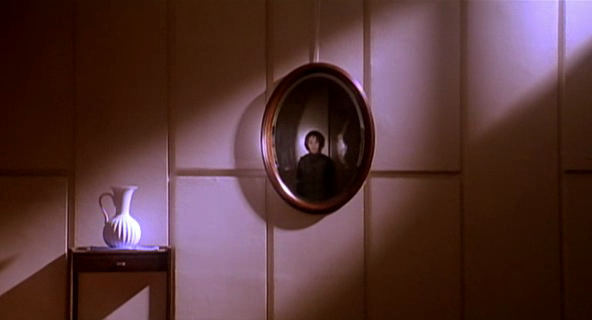
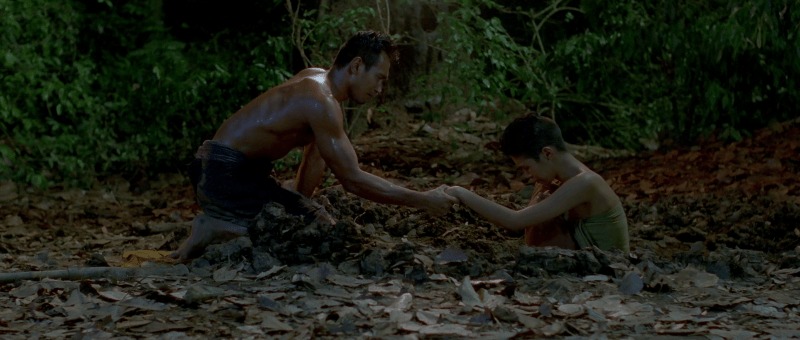
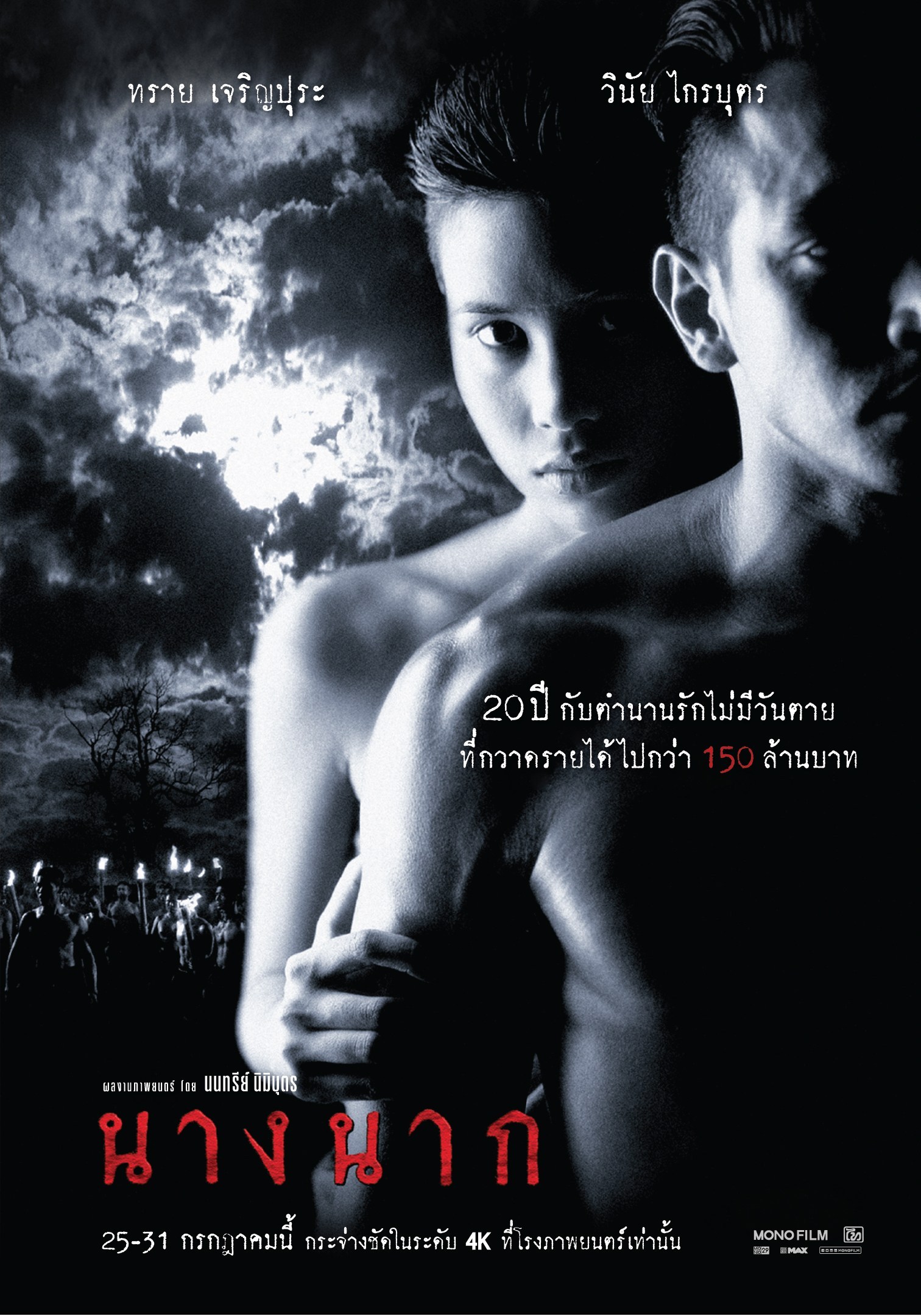
Mae Nak Phra Khanong is one of Thailand’s best known and most enduring ghost stories, though Nonzee Nimibutr’s 1999 adaptation Nang Nak (นางนาก) scales back a little on the inherent terror of the folktale, preferring to focus on the romantic tragedy of a loving couple separated by death. You could then read it as a tale of grief, that the husband returning from war cannot accept his wife is dead, rather than the reverse that the wife’s love and devotion is so strong that it overcomes death itself and becomes something that is in that way terrifying.

It does seem, however, that in this instance the ghost is real and it is vengeful. The wronged wife Nak (Inthira Charoenpura) takes revenge on those who betrayed her from the midwife who stole her wedding ring to a local man who tried to tell her husband, Mak (Winai Kraibutr), that his wife was actually dead. Though the framing of the tale may seem in its way uncomfortably sexist despite its romantic overtones, it’s clear that Nak suffered largely because of the male failure around her. Her husband was conscripted for a war which was really nothing to do with him leaving her, pregnant, to manage their farm alone. The implied cause of the miscarriage which leads to her death in childbirth is overwork and she appears to have received no help from the other villagers with many men apparently remaining in the village. When questioned by Mak, she tells him that the other villagers shunned her and called her an adulteress, disputing the parentage of her child with her husband already away at the war. 

But the film does not particularly blame war for Nak’s fate, seemingly accepting it as a necessary duty Mak had to further the cause of his nation which is placed above that he owes to his wife and unborn child. In fact, the ghost issue is later solved only by the intervention of a powerful Buddhist monk, Somdet, which implies that this supranational structure is necessary for maintaining order and that the village is otherwise unable to govern itself. Likewise, it paints Buddhism as a modern religion and essential means of national unity that is inherently superior to the backward superstitions of the villagers who decide to call in a shaman against the advice of the local monk. The shaman turns out to be next to useless and in fact makes things worse until Somdet can arrive and is able to talk peacefully to Nak and convince her that she needs to accept her death and move on to the next cycle of life.

It’s also Somdet who heals Mak of his otherwise fatal war wound and the intercutting of his fight for life with Nak’s during the violence of childbirth suggests that her life is somehow sacrificed for his further emphasising the depth and devotion of her love for him. When his health is recovered, Somdet recommends that Mak become a monk in order to clear out his bad karma but Mak declines explaining that he has a duty to his wife and child in his village and so must return to them. In this way, they become a kind of barrier to his spiritual destiny and emblematic of the attachments he should learn to cast off in order to avoid suffering. Like Nak, Mak’s own devotion extends beyond the grave for he does indeed become a monk and never remarries, keeping the promise to be reincarnated as Nak’s husband in a subsequent life.

The local priest had told Nak that scaring monks is a sin, which is odd in a way that it’s somehow worse to scare these spiritually powerful beings than the ordinary villagers. Nevertheless Nonzee Nimibutr gives her the somewhat familiar attributes of a Thai ghost, allowing her to hang from the ceiling with her hair flowing down while she stares at the monks with bloodshot eyes and a pale face. She is able to enchant Mak so that he does not notice the dilapidation of their home or that all their food is rotten even if he later becomes suspicious of the large number of rats around. Primarily she seems to use natural creatures to enact her revenge with the midwife’s corpse torn apart by lizards, though Mak too has terrifying nightmares of his friend dying in his arms and then melting away with quite sickening effects. Even so, it seems Nonzee Nimibutr is keener to emphasise the romantic tragedy and primacy of Buddhist thought rather than ghostly horror while making it clear that death, along with grief and loss, is something that must be accepted so the spiritual order may be maintained and with it order in the mortal realm.


Trailer (no dialogue)

Moonlight Whispers (月光の囁き, Akihiko Shiota, 1999)

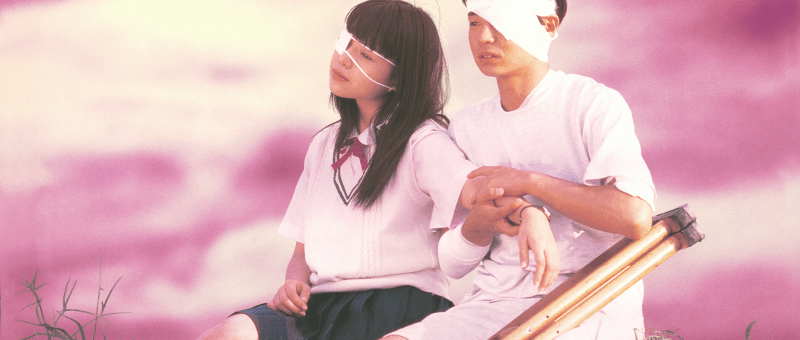
Well established in Japanese cinema, the teenage romance comes with its own series of genre tropes, the barriers standing between the young lovers usually leaning towards the constraints of a conformist society, class differences, or familial disapproval if not introducing a note of inevitable tragedy in serious illness or physical threat. What the youngsters typically do not do or are actively at times prevented from doing is to begin to accept themselves for all they know that to do so may in a sense result in their exile from mainstream society. Yet this is exactly the conclusion with which Akihito Shiota’s debut feature Moonlight Whispers (月光の囁き, Gekko no Sasayaki), adapted from the manga by Masahiko Kikuni, eventually presents us as the teens come to embrace their unconventional relationship while accepting that others may never truly understand. 

Beginning in conventionality, Shiota opens with the sweet and innocent friendship between kendo enthusiasts Takuya (Kenji Mizuhashi) and Satsuki (Tsugumi). Many seem to think they are a couple, but Takuya is quick to correct his friend telling him that they are merely “sparring partners” even going so far as to hand over a love letter, which he knows to be exactly the same as the letter his friend writes to all the other girls, on his behalf. As expected, Satsuki finds his behaviour insensitive, suspecting that Takuya himself has a crush on her but finally confessing her own feelings while he wheedles that he never said anything because of his sense of inadequacy explaining that just to be near her was always enough for him. Following this brief moment of connection, the couple embark on a “normal” teen romance, Satsuki taking the initiative with Takuya in bed with a cold to consummate their relationship. It does not go particularly well, in part because Takuya has a secret. He’s been secretly stalking Satsuki for ages, likes to break into her locker to smell her gym kit, and has a collection of keepsakes he’s stolen from her in addition to a series of illicit photographs and a tape of her using his family bathroom. The tape proves the last straw for Satsuki who then storms out calling him a freak and starts dating her handsome kendo club senior Uematsu (Kota Kusano) instead. 

What Satsuki hasn’t figured out is that Takuya quite likes it when she’s mean to him, which is why he continues stalking her even after she starts dating the very “normal” Uematsu. Unexpectedly, she begins to discover that she quite likes, if not quite the process of hurting him, then watching him suffer which is why she makes him sit silently in a tiny cupboard while she has “normal” sex with Uematsu on a sofa directly opposite. The relationship between them is one of push and pull, Takuya initially embarrassed and ashamed of his masochistic desires explaining that “god made me wrong” while ironically driving Satsuki towards an awareness of her sadism. On the other hand, the relationship had always been unconventional in its reversal of gender roles, Satsuki quite literally leading while Takuya trails behind. She is the first to openly state her feelings and the first to initiate sex, while Takuya is somewhat feminised in his deference and timidity.

Nevertheless, Satsuki struggles to accept her capacity for sadism refusing to tell Uematsu why she broke up with Takuya but explaining that she wants a “normal” relationship in with someone with whom she would be able to discuss anything and everything honestly the irony being that she might have had that with Takuya but cannot with Uematsu because she is filled with internalised shame about the “perverted” pleasure she gains on witnessing Takuya wilfully degrade himself on her behalf. They are already in an accidental sado-masochistic relationship though they of course do not quite have the words to describe how they feel or what it is that exists between them. Their love inevitably heads to quite a dark place but even so leads to a kind of rebirth in which each fully accepts themselves for who they are along with their designated role within the relationship even if also knowing that others may not be quite so understanding. 

For all of its provocative qualities, there is an underlying sweetness in Shiota’s unconventional romance even as he carefully inverts accepted genre norms the conventional indie background score perhaps ironically undercutting any sense that the relationship is actually as “perverse” as the teens sometimes feel it is even as they each struggle with their respective feelings and desires. Nevertheless he ends on a note of anxious ambivalence as the physically and emotionally wounded lovers remove themselves from mainstream society in order to embrace their authentic selves.


Original trailer (English subtitles)

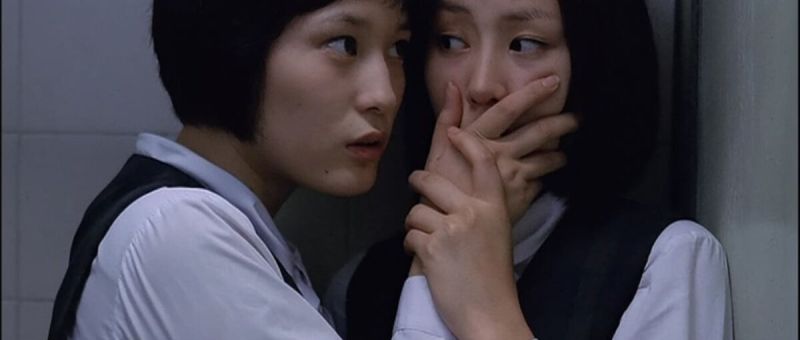
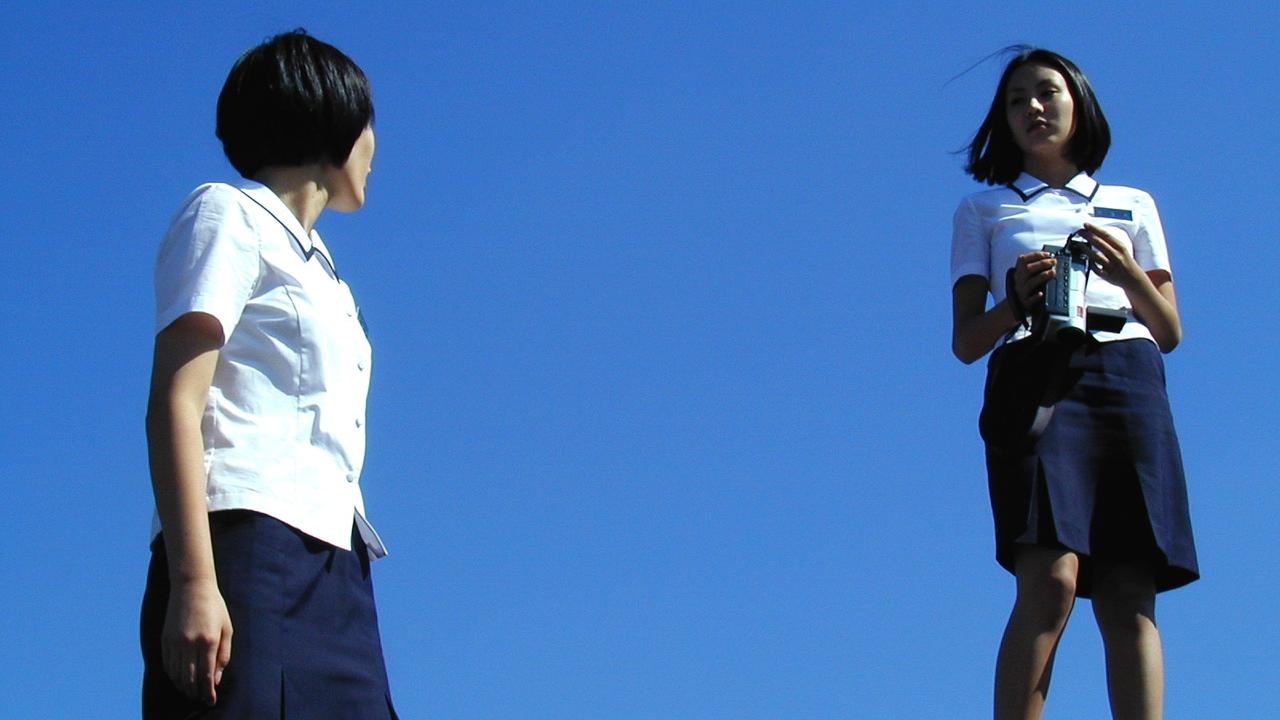
Memento Mori (여고괴담 두번째 이야기, Kim Tae-yong & Min Kyu-dong, 1999)

Internalised shame leads to tragic, unforeseen consequences in landmark South Korean horror Memento Mori (여고괴담 두번째 이야기, Yeogogoedam Dubeonchae Iyagi). The second in a thematic series of high school ghost stories, the film was radical for its time in its presentation of same sex romance in demonising not the love but the world that would not accept it while otherwise painting a fairly bleak picture of the educational landscape in which teachers are only ever symbols of a corrupt authority intent on enforcing oppressive patriarchal social codes.

The film’s heroine is in many ways an audience member, or at least a fairly passive observer of the ongoing drama who only later inserts herself into the narrative. Min-ah (Kim Min-sun) discovers a mysterious “diary” near the sports ground and is quickly hooked on its cryptic contents even before realising that it details a lesbian relationship between two of her classmates who were at one point “close” but have since “drifted apart”. The author, Hyo-shin (Park Ye-jin), is already considered “weird” by her classmates and does seem to have an otherworldly quality, most particularly in her tendency to speak in an uncanny manner. She is also accused of being a “lesbian” by an obnoxious fellow student laying bare the way these teens already enforce a social prejudice which oppresses them all. 

Min-ah’s friend Yeon-an (Kim Jae-in) has been fasting for the last few weeks to try and get her weight down before the school’s physical health check up, while Ji-won (Gong Hyo-jin) is similarly concerned with her chest measurement. This is an all girls school, and there is a clear preoccupation with the ability to conform to notions of conventional femininity while all of the teachers that we see aside from the school nurse are male and enforce discipline with quite shocking levels of violence. Yeon-an and Ji-won land up in trouble for playing around with a video camera they’d brought in to record choir practice when it’s discovered by a teacher who reacts as if he thinks the girls are on some kind of whistleblowing mission. He clearly feels that his authority has been questioned, which also implies that he knows his behaviour is “wrong”, and punishes the girls for their “rebellion” against him. 

After Hyo-shin dies in an apparent suicide, it is rumoured that she may have been pregnant which would certainly explain her desire to get out of the health check. In a flashback, she suggests that she may have drifted into an inappropriate sexual relationship with a dejected teacher, Mr. Goh (Baek Jong-hak), who claims that he doesn’t get on with his “materialistic” colleagues while fed up with the vacuous teenage girls he’s supposed to be teaching. Yet Mr. Goh appears to have suffered little after Hyo-shin’s death despite being the apparent father of her unborn child, leaving only Hyo-shin’s vengeful spirit to enact some kind of justice. 

It’s Mr. Goh who did in some way disrupt the relationship between Hyo-shin and Shi-eun (Lee Young-jin) who seems to feel on some level betrayed while deepening her inner conflict as regards her sexuality. Unlike the other girls, Shi-eun presents in a slightly more masculine fashion, not least because of her athleticism, and is filled with an internalised shame about her relationship with Hyo-shin which she otherwise does not share. In the dreamlike scene which opens the film, Hyo-shin and Shi-eun are plunged into water tied at the ankle by the red string of fate which in popular mythology signifies a true romantic connection. But as they fall together, Shi-eun begins to panic and unties herself. She violently pushes Hyo-shin away who then continues to sink into the murky depths below. This act of physical rejection is repeated several times, most notably when Hyo-shin kisses Shi-eun in front of their classmates shortly after she has been struck in the face by their teacher. Shi-eun pushes her away, and thereafter ignores her before directly stating that she is “ashamed” and does not care what Hyo-shin decides to do with her life. 

It’s this rejection that the film posits as the cause of Hyo-shin’s suicide, though the romance itself is constantly overshadowed by death. Obsessed with the diary, Min-ah eats a “magic” sweet stuck inside which is described as some kind of love poison for which Hyo-shin has an antidote, only in the climax of the film it seems to be the reverse and a kind of prelude to a double suicide. In the dreamworld created by Hyo-shin’s spirit, the schoolgirls assemble for something that looks a lot like a wedding though ostensibly a birthday party in which the couple is accepted by the world around them only in reality it can never happen in part because Shi-eun herself does not permit it to. 

Directors Kim and Min hint at the feverish atmosphere with blown out whites and strange angles even before entering the menacing dreamscape of Hyo-shin’s revenge, lending a note of unsteadiness to Min-ah’s obsessive investigation of the diary that perhaps reveals something of herself even as it draws her towards a dark spiritual destiny. In any case, what it leaves behind is a deep sense of melancholy for the tragedy of the teenage lovers who in the end maybe the ones haunted by the world around them.


Memento Mori screened as part of this year’s Queer East .

Trailer (English subtitles)

Rainbow Trout (송어, Park Chong-won, 1999)

The hypocrisies of contemporary civility pass under the microscope in Park Chong-won’s creepingly intense drama, Rainbow Trout (송어, Song-o). As a collection of urbanites pile into a car and journey far into the mountains to rescue an old friend who’s dropped out and returned to the land as a fish farmer, they find themselves stepping into a world entirely contrary to their understanding but eventually expose themselves as petty, jealous, resentful and shockingly violent even in their disdain towards the “backwards” woodsmen they feel are harassing them.

The film both begins and ends with a tollbooth as the car carrying the urbanites first leaves and then returns to the “safety” of Seoul. Ominous signs pepper their journey, one of the men wondering if the pits on a mirror at a dangerous curve are bullet holes while his friend insists they’re more like pockmarks from small rocks swept up in a storm. Swept up in a storm might be one way to describe what later happens to the city dwellers, but it’s fair enough to say that they are fairly puffed up on the superiority of their urban civility over the earthy lives of the rural hunters. None of them can understand why their friend has made the choice to leave Seoul behind and live a primitive existence in a cabin in the woods. 

Chang (Hwang In-sung) even remarks that his fish sometimes commit suicide, Min (Yu In-chon) suggesting that being cooped up in a small space makes them feel anxious. The urbanites are not in a small space, they’re in the wide open countryside, but to them it is claustrophobic in its unfamiliarity. Though the trip starts off well enough as they reminisce with Chang and enjoy a night round the camp fire, the two men, bank clerk Min and his bbq restaurant owner friend Byung (Kim Se-dong), soon fall foul of a local hunter who doesn’t like where they’ve parked their car or possibly that they’ve parked it at all. Byung is forever performing his masculinity, making a show of chopping wood and lifting weights outside the cabin, but like Min otherwise unable to challenge the hunters and entering a mini vendetta of pettiness with them that is destined to end badly. Min meanwhile is preoccupied in knowing that his wife, Jun-hwa (Kang Soo-yeon), is still in love with Chang while Chang’s decision to leave the city seems in part to have been provoked by their marriage. Byung’s wife, on the other hand, ironically submits to her carnal desires after being caught stealing a rabbit from a trap by a lecherous hunter who later shows up with a gift of yet more meat which seems somehow like even more of a betrayal given that her husband runs a barbecue meat restaurant but is obviously not quite red-blooded enough for her. 

It’s the presence of Jun-hwa’s younger sister Se-hwa (Lee Eun-ju), however, that provokes further tensions in the group not least as she develops a fondness for Chang while local dog breeder Tae-joo (Kim In-kwon) develops a fascination for her. Tae-joo peeps on Se-hwa in the outhouse and creepily lurks around the cabin though he is perhaps just awkward if a little strange more than actively dangerous. Nevertheless he becomes the target for the husbands’ frustrated masculinity as they decide to exorcise some of their frustration on a mountain boy who is ill-equipped to resist them, unleashing uncivilised violence and barbarity that would bring them to the point of homicide. They assume Chang is like them, that he will side with the city, but Chang is now a mountain man and has shades of barbarity the husbands’ little suspect. As the crisis intensifies, the urbanites shift the blame and turn on each other, uncomfortably blaming Se-hwa as if it were her fault that the boy took a liking to her or that the men took it in the direction that they did. Se-hwa also finds herself a victim of male violence from an unexpected source but is again blamed for it less for her naivety than the simple fact of her existence as a young woman in this incredibly primal environment. 

The urbanites thought the hunters to be savage, but in reality were savage themselves only to convince themselves that they had done nothing wrong pleading with Chang to cover up their violence because Tae-joo is only a mountain boy while they are civilised people from the cities who could not have acted in anything other than a civilised way. They are in a sense like the rainbow trout, raised within a narrow frame and little understanding how to live outside of it, driven out of their minds by the removal of the guardrails of civility. On returning to the city they may convince themselves that the dark shadows within have disappeared but the fragility of their sophistication has already been exposed rendering them at least less honest than the huntsmen who made no pretence of their carnality. 


Rainbow Trout screened as part of this year’s London Korean Film Festival.

Embalming (EM エンバーミング, Shinji Aoyama, 1999)

“Nothing can last forever” according ironically enough to an embalmer who feels it is her calling to preserve the bodies of the dead she says to help their grieving families, but does that actually help or is she actively preventing them from moving on in enabling their desire to hold on to something beautiful that is already gone? Jumping on the J-horror boom, Shinji Aoyama’s adaptation of the mystery horror novel by Michiko Matsuda Embalming (EM エンバーミング, EM Embalming) is another millennial mediation on the loss of bodily autonomy amid the corruptions of the late 20th century. 

A predominantly Buddhist funerary culture, embalming is rare in Japan which generally favours cremation over burial. As the opening crawl explains to us, the process may be familiar from the ancient Egyptian mummy, but was also put to use during the American Civil War in order to transport bodies of fallen soldiers home to their families. It also says that through technological advances, bodies can now be preserved for up to one hundred years though according to embalmer Miyako Murakami (Reiko Takashima), the best she can do is 50 days or perhaps she’s merely decided that after the the 49th day it’s inappropriate to hold on any longer. Apparently friendly with local policeman Hiraoka (Yutaka Matsushige), Miyako is called in when the 17-year-old son of a local politician, Yoshiki, is found dead on the pavement outside a tall building having fallen from above. Having no reason to suspect foul play, Hiraoka concludes it’s most likely to be a suicide. The reason he’s called Miyako is that the mother is out of her mind with grief and insisting her son be embalmed to preserve him as he was for all eternity though his father does not agree. 

Neither does local priest Jion (Kojiro Hongo) who sends a couple of his goons to pick Miyako up so he can tell her in imposing and ritualistic tones that she must stop the “evil acts” she’s “inflicting” on Yoshiki’s body, insisting that she’s spanner in the karmic wheel of life and death holding up the cosmos by refusing to let nature take its course in returning Yoshiki’s body to the universe. “What you are carrying out is a violation of the silence of Bodhisattva, and is therefore an act of evil!” he explains though Miyako is hardly about to be swayed from her life’s work and as we later realise Jion has motives other than the spiritual in mind. Nevertheless, it’s true enough that even if Miyako insists embalming gives dignity to the dead, Yoshiki has no further say as to what happens to his body or how much longer he remains in this world. There’s no way to know how the bodies Miyako works on would have felt about the prospect of being mummified or if they would be happy with the way their bodies may go on being used after their death. 

“When a human being dies, they become an object. Human flesh becomes food for maggots and bacteria and eventually the bodies disappear completely” according to another embalmer, Dr. Fuji (Toshio Shiba), who works with shady “death dealers” and in Miyako’s opinion betrays the art of embalming by frankensteining his bodies using a series of replacement parts to achieve the appearance of perfection. He seems to regard human bodies dead and alive as inanimate entities to be treated no differently from plant matter, recounting tales of his war trauma which seems to have permanently disconnected him from his humanity. The only reason Miyako has tracked him down is because Yoshiki’s head was severed and stolen in freak burglary and she’s received word he might know where it is. Yet to Dr. Fuji and other death dealers as Hiraoka had previously mentioned, the head is the least valuable part as he proves by simply dropping one in the bin while talking to an unfazed Miyako. 

Miyako may be as some accuse her “possessed by death” and attempting to exorcise her unresolved grief and mortal anxiety through the art of embalming in search of an eternity she does not really believe exists. But then as her assistant Kurome (Seijun Suzuki) reminds her, the dead cannot be brought back to life, “you can only be a flower while alive”. Dr. Fuji hints at a dark history that recalls the crimes of Unit 731, experimentation on living bodies and total disregard for the dignity of the dead, while an even older corruption seems to stem from shady priest Jion, “some rip-off faith healer targeting society’s political and economic echelons” as Hiraoka describes him. At times darkly humorous, Aoyama’s bleak drama is filled with existential dread and a sense of the uncanny as we see corpses twitch and flicker with the absence of life while Miyako meditates on an impossible eternity rejecting her powerlessness in the face of transience in favour of the simulacrum of existence in a world ruled by death. 


The New God (新しい神様, Yutaka Tsuchiya, 1999)

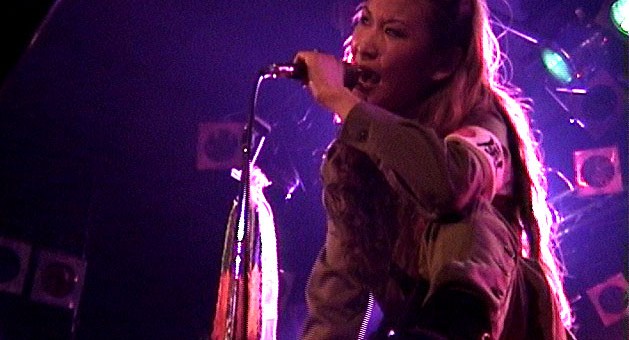
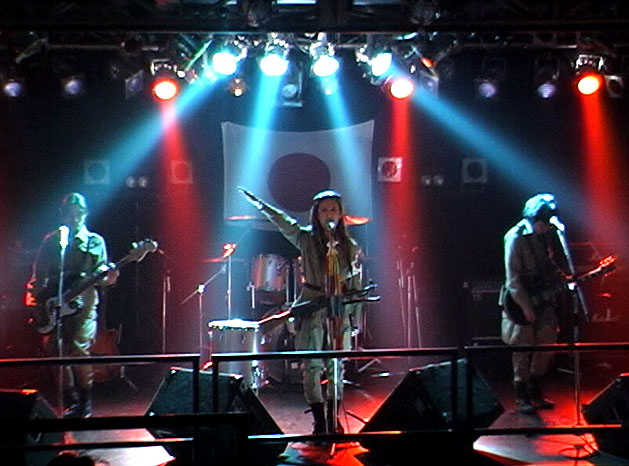
Yutaka Tsuchiya opens his 1999 shot on video personal doc The New God (新しい神様, Atarashii Kamisama) with a lengthy scene of performance art in which a young woman dressed in a suit explains why she was drawn to nationalist ideology while seemingly ignored by the other passersby in the street, a woman behind her even continuing to hand out flyers as she speaks. On the left himself, Tsuchiya was nevertheless struck by the raw emotion in the song of right-wing punk band Revolutionary Truth as performed by charismatic lead singer Karin Amamiya whom he eventually ended up marrying despite their conflicting views. 

In any case, it’s clear even from the film’s opening that Karin is becoming disillusioned with the version of nationalism to which she has hitherto ascribed, a feeling which is intensified after she is invited to visit North Korea in the company of a former member of the ultra-left organisation Japanese Red Army. During her time in Pyongyang, recording video diaries with Tsuchiya’s camera, she is extremely attracted to the quality of unity she sees as integral to the North Korean system while otherwise unable to process the simultaneous truth that oppression and unity are not synonymous. Children are not abused in North Korea she naively explains having been invited to tour a day care centre, reflecting on her own difficult childhood in which she experienced bullying so severe it has left her with lasting trauma which prevents her from fully connecting with the world. 

It is indeed this sense of dislocation that pushed her towards nationalism, taken in by the idea of nation as family while looking for a place to belong. To be fair to her and to her bandmate Itoh neither of them express particularly extreme views aside from their historical revisionism and their idea of nationalism seems to be inclusive rather than exclusive in which they have no particular problem with minorities or people who are not considered to be ethnic Japanese. In fact, they seem to subscribe more to a patriotic small-c conservatism in which hard work is regarded as a virtue which should always be rewarded in full. This is the reason they give for their views on the controversial Yasukuni shrine which houses the souls of those who died in war including those later convicted of war crimes, believing that the soldiers like everyone else “worked hard” during the war and their sacrifice shouldn’t be ignored. 

For his part, Tsuchiya listens patiently to their sometimes confused ideology while internally questioning his own as someone who identifies as left-wing progressive and believes that the war was wrong and the emperor system is responsible for the majority of ills in contemporary Japan. Yet as someone else puts it left and right are in themselves fairly meaningless labels as is the concept of nation. Karin gets on fairly well the guys from the Japanese Red Army but finds their impassioned speechifying off-putting while later disillusioned with her nationalist organisation after her speech about her experiences in North Korea fails to elicit much of a reaction from those she now decries as being part of a social club less interested in serious politics than getting together for drinks and chat. The issue for her is that these people don’t really care about Japan and aren’t sufficiently interested in changing society for the better. 

The implication is that Karin and Itoh were drawn towards nationalism because of their marginalisation, Karin mercilessly bullied and disconnected from her birth family, while Itoh later admits he became a nationalist to escape being a “nerd”. What Karin craves is the sense of extended family one might feel in a society such as she feels North Korea to be, the emperor a father figure of paternalistic feudalism. She feels herself to be worthless, admitting that she feels best when’s she’s needed and is attracted by the sense of purpose found in activism while politics is for her an escapist fantasy that allows her to evade the need for self-examination. The pair of them also feel a sense of ennui in a stagnant society, decrying their “boring” lives in insisting that “this suffocating peace” has endured too long as they direct their ire ironically enough towards capitalism and Japan’s geopolitical relations with America. 

Opposition to American imperialism unites both left and right, implying that they aren’t so different after all. Tsuchiya advances that the difference between them is that he thinks the emperor system is at fault, while Karin and Itoh feel it to be a solution. He doesn’t understand why they need to locate a sense of pride in something external like nationhood or emperor rather than learning to find it from within, while Karin seems to long for authoritarianism out of a lack of self-confidence essentially hoping to be freed from the burden of choice. Even so through spending so much time listening to each other the trio have discovered a sense of mutual understanding which does not require them to agree or even to share common ground though they do more than expected, becoming as Tsuchiya hopes a path to a better society in which such meaningless labels existing only to divide one person from another are no longer relevant. 


The New God streams worldwide (excl. Japan) via DAFilms until Feb. 6 as part of Made in Japan, Yamagata 1989 – 2021 (films stream free until Jan. 24)

Trailer (no subtitles)

Gohatto (御法度, Nagisa Oshima, 1999)

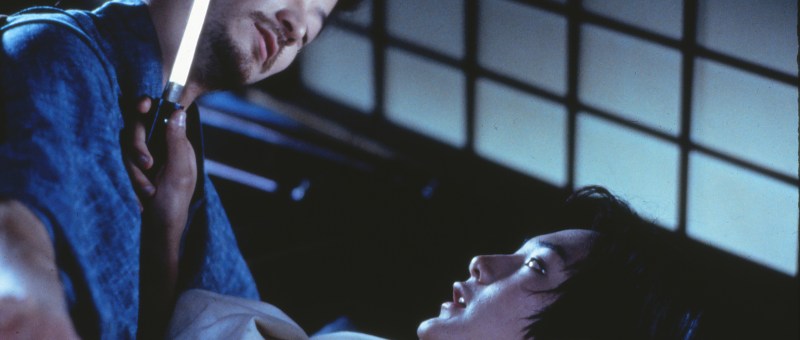
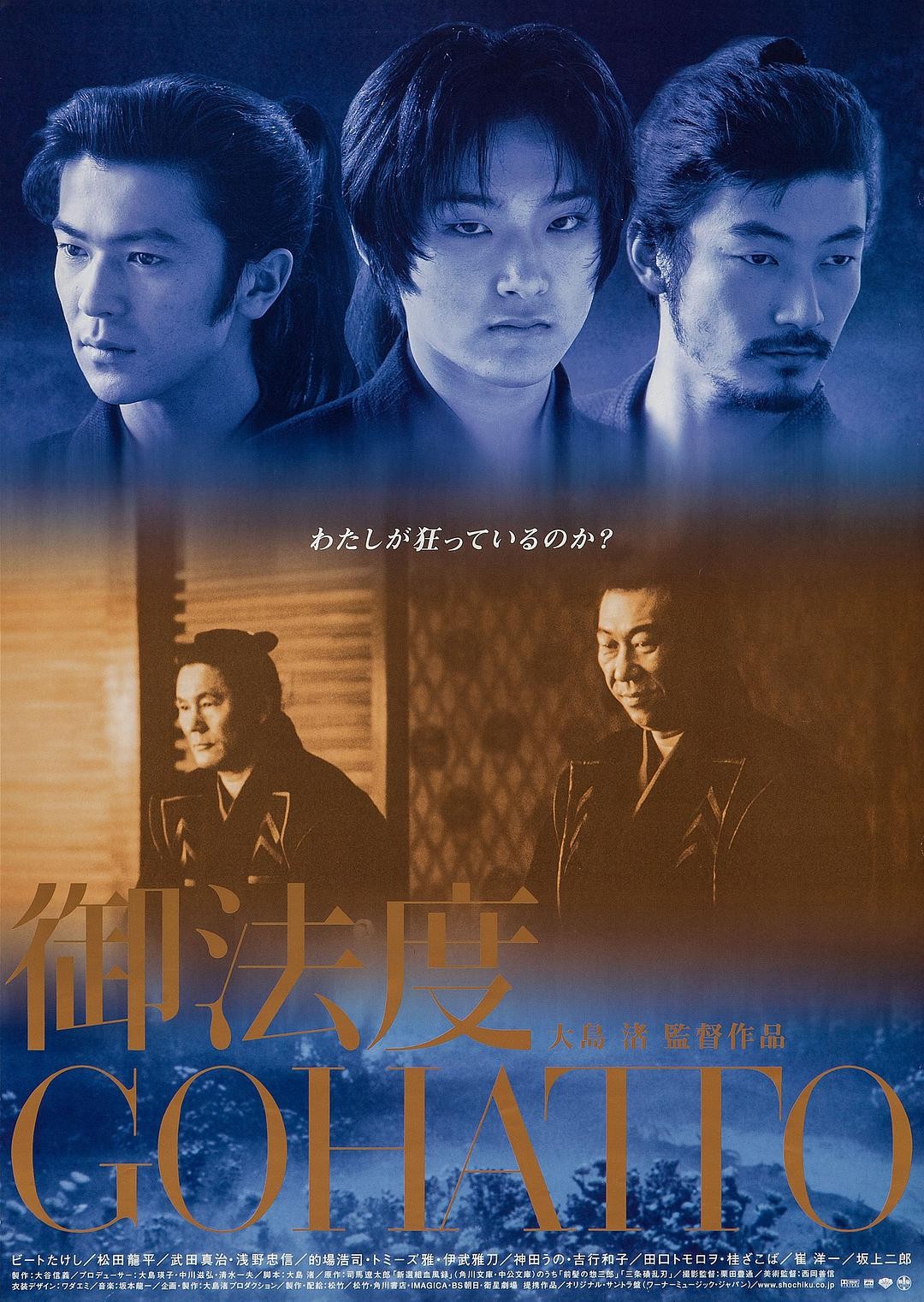
Nagisa Oshima once said that his hatred of Japanese cinema extended to absolutely all of it, decrying the hackneyed nativism of “foggy beauty and stupid gardens”, yet his final film is filled with Mizoguchian mist and almost a paen to Japanese aesthetics which ends with a cherry blossom tree in full bloom cut down in its prime. Burdened by the slightly more salacious title “Taboo”, Gohatto is less about love between men in an intensely homosocial world even as it asks what it might mean by “forbidden” or “against the law” than it is about idealism and aesthetics as its band of contradictory conservatives unknowingly approach the end of their world in a coming modernity ushered in by dangerous beauty. 

Set in the Kyoto of 1865, a scant three years prior to the Meiji Restoration, the film opens with an audition of sorts as the Shinsengumi search for promising new recruits among talented swordsmen. Already a mess of contradictions, the Shinsengumi is, loosely, a kind of official police force dedicated to defending the Shogunate against the revolutionary forces set on restoring power to the emperor. Nevertheless, in an odd way and in contrast to the elite Mimawarigumi which was staffed only by direct retainers to the Shogun, the Shinsengumi was noted for its lowkey egalitarianism in that it made a point of admitting those of ordinary birth as well as lower level samurai and ronin. Of course, the notions of equality only went so far and perhaps only fuelled its reputation for merciless savagery, but also make it a strangely progressive force fighting against progress in defence of the feudal status quo. 

Only two of the hopefuls are thought to be any good, one a young ronin, Tashiro (Tadanobu Asano), and the other a beautiful boy, Kano Sozaburo (Ryuhei Matsuda), the third son of a wealthy merchant whose line were once samurai but are no longer counted among the noble retainers. A talented swordsman, Sozaburo’s dangerous beauty presents an existential threat to the Shinsengumi order, the steely Hijikata (Takeshi Kitano) looking on conflicted in witnessing the way his commander, Kondo (Yoichi Sai), looks at this vision of androgynous beauty remarking that he had not known him to be “that way inclined”.

Being that way inclined does not seem to be a particular issue within the Shinsengumi, it is not against their draconian rules and in fact appears to be tolerated at least as long as it causes no further problems. Kondo is however mindful of the chaos caused by a similar wave of homoerotic lust which took hold shortly before a climactic battle which would prove to be their last success. What Sozaburo seems to arouse in them is something more dangerous than the accepted patterns of love between military men which is in a sense sublimated as a mentor/student relationship, loyalty more than romance. Tashiro, who is of a similar age to the apparently 18-year-old Sozaburo, lets his desire be known, vowing to sleep with him before he dies ironically acknowledging Sozaburo for what he is, an angel of death. 

For his part, Sozaburo remains curiously passive in each of his encounters, aroused only it seems by the act of killing. Yet Hijikata discerns that he has indeed become Tashiro’s lover on witnessing them fight, Sozaburo losing clumsily despite being the more skilled in a dynamic that mimics their relationship in which Tashiro is the dominant partner. Aware of the danger in Sozaburo’s allure, Kondo suggests having a superior take him to the red light district to show him the delights of woman hoping to guide him back towards a less dangerous path, only the attempt backfires on several levels. Firstly, Sozaburo has no interest in women and continues to decline believing his commander is also hitting on him (like everyone else), thereafter determined to seduce him after all. Another retainer does indeed succeed in seducing Sozaburo, developing a mild obsession, but later ends up dead, Tashiro a main suspect in his murder with the motive of sexual jealousy though all of this additional violence is perhaps only an expression of Sozaburo’s dangerous beauty. 

As so often, sex if not love becomes the force which destabilises the social order only here it’s equated both with death and with an alternative mediation of male violence. Perhaps reflecting the way they look to the 18-year-old Sozaburo who makes a faux pas in accidentally suggesting at least one of them is of pensionable age, the ranking members of the Shinsengumi are played by actors already well into their golden years as if relics of a bygone era though in reality most were in their 30s. As Soji (Shinji Takeda), a filial figure like Sozaburo wearing long hair, puts it, there are no old men in their unit which is in essence an anti-revolutionary force. Nevertheless, the Shinsengumi is on the wrong side of history and already living in its end times, perhaps ushered towards its doom by the figure of the beautiful boy. “You were too beautiful”, Hijikata eventually laments as he finally perhaps understands the nature of the revolution he is witnessing. Perverse to the last, Oshima sets his ethereal finale in a stygian fog and pays an ironic tribute to the Mizoguchian classicism he so railed against in his youth, taking a sword to the cherry blossoms as he like Hijikata severs his own legacy in a moment of destructive beauty. 


Gohatto screens at Genesis Cinema on 25th September as part of this year’s Queer East

International trailer (English subtitles)

Lotus Lantern (宝莲灯, Chang Guangxi, 1999)

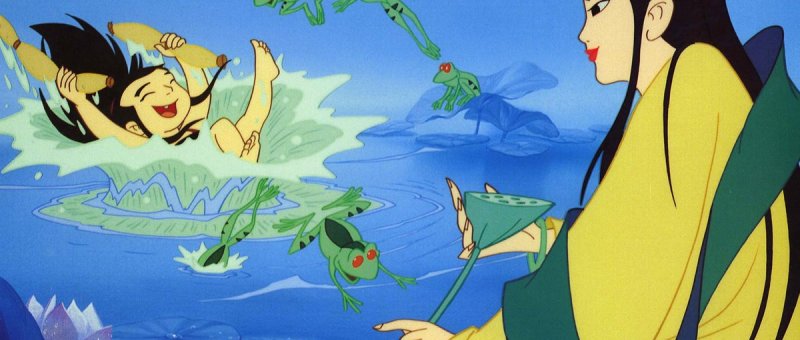
“I only want to have a normal life” a wronged woman complains on discovering that it’s almost impossible to escape the tyranny of the celestial realm and most particularly if you are a goddess. Released in 1999, Lotus Lantern (宝莲灯, Băo Lián Dēng) apparently took over four years to produce requiring 150,000 animation cells and 2000 painted backgrounds, and like much of the Shanghai Animation Film Studio’s output is inspired by a well-known folktale celebrating filial love and in fact featuring the Monkey King himself in a small role. Unlike the studio’s earlier work however and despite its roots in Chinese folklore, Lotus Lantern perhaps owes much more to Disney’s ‘90s renaissance than it does to the nation’s animation history. 

Animated in a classic 4:3, the tale opens with a voiceover as a scarf elegantly falls to Earth and into the arms of a young man. Defying her brother Yang Jian’s (Jiang Wen) wishes, the goddess Sanshengmu (Xu Fan) has chosen to leave the realm of the immortals to be with the man she loves taking the famed Lotus Lantern with her in an attempt to evade his control. He however finds her and attacks the pair with his eye lasers. Sanshengmu’s lover is killed but she gives birth to a son, Chenxiang (at 7: Yu Pengfei / at 14: Yang Shuo), and lives happily with him in the mortal realm for seven years until the flame in the Lotus Lantern is extinguished allowing Yang Jian to track her down and kidnap Chenxiang to force her to return. She tries to bargain with her brother but as she later puts it Heaven Temple lacks compassion and so he imprisons her underneath a mountain and tells Chenxiang his mother is dead. Chenxiang does not believe him and is determined to get the Lotus Lantern back, especially after a cryptic visit from the God of Land hints the same fate as befell the Monkey King, who has since become a Buddha, may have befallen his mother. 

First and foremost a tale of filial love and devotion, Lotus Lantern is also another subversively anti-authoritarian rebuke against heartless celestial tyranny. We learn than Sanshengmu’s mother also loved a mortal, yet her brother refuses to forgive her for this apparent transgression against the law of heaven, burying her under a mountain while vowing to raise her son as his own in accordance with filial piety. Meanwhile, he’s also quietly terrorising a community of non-Han Chinese trying to force them to carve a colossal statue of him by kidnapping the chief’s daughter Ga Mei (Ning Jing) and keeping her in Heaven Temple as a maid. Yet Yang Jian isn’t the only problem. The God of Land tells Chenxiang to seek out the Monkey King (Chen Peisi) for advice on busting out of a mountain, but now that he’s become a Buddha Sun Wukong has no interest in helping. Indifferent to all things, he believes suffering is a path to enlightenment and sees no reason to help Chenxiang alleviate his by showing him how to rescue his mother. 

Then again, the mortal world’s not much better. The first person Chenxiang meets on his quest turns out to be a dodgy priest who claims he knows where to find the Monkey King and can even help Chenxiang with his training but predictably ends up kidnapping his pet monkey and exploiting it as part of a fairground act even members of the crowd complain is cruel and distasteful. Nevertheless, after reuniting with his monkey buddy Chenxiang trudges on looking for a way to release his mother from under the mountain, finally moving the Monkey King by needling him about his own sense of maternal abandonment in his apparently parentless genesis. In this unsteady world, it seems to say, the only true thing is a boy’s love for his mother though a conflict perhaps arises after another seven year jump reunites Chenxiang with Ga Mei who has been returned to her tribe and probably should be his love interest if he were not currently fixated on his filiality. 

Yet as the disembodied voice of his mother reminds him, only by embracing true love which is what Heaven Temple lacks can Chenxiang finally defeat it. Borrowing heavily from Western animation and particularly from classic Disney, Lotus Lantern may in some senses seem old fashioned even for 1999 in its still frame pans and unconvincing effects, but perhaps reflects a desire to take Hollywood on at its own game as the studio found itself needing to commercialise its output especially in its series of musical montages featuring a contemporary pop songs performed by top Mandopop stars while the faces of the A-list voice acting cast are also showcased during the end credits. The approach apparently paid off, Lotus Lantern proved a huge domestic hit and is credited with reinvigorating the Chinese animation industry which had gone into decline in the market-orientated ‘90s. Complete with adorable monkey sidekick there’s certainly no doubting its mass appeal in its warmhearted, family-friendly take on filial devotion.


Lotus Lantern is currently available to stream in the UK as part of the Chinese Cinema Season.

Gemini (双生児 GEMINI, Shinya Tsukamoto, 1999)

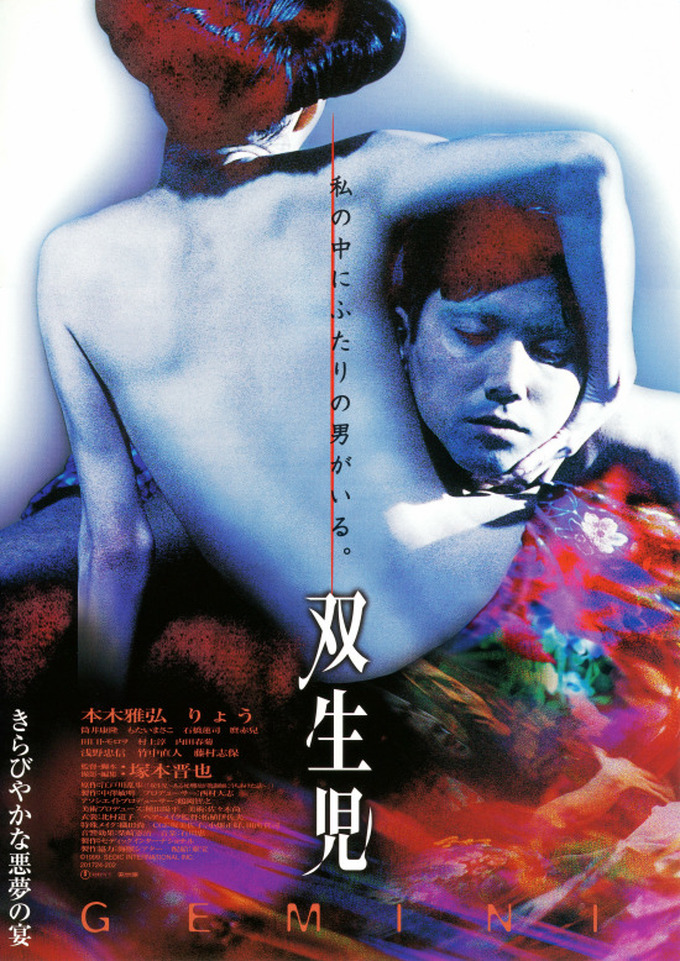
Shinya Tsukamoto made his name as a punk provocateur with a series of visually arresting, experimental indie films set to a pounding industrial score and imbued with Bubble-era urban anxiety. Inspired by an Edogawa Rampo short story, 1999’s Gemini (双生児 GEMINI, Soseiji Gemini) is something of a stylistic departure from the frenetic cyberpunk energy of his earlier career, marked as much by stillness as by movement in its strikingly beautiful classical composition and intense color play. Like much of his work, however, Gemini is very much a tale of societal corruption and a man who struggles against himself, unable to resist the social codes which were handed down to him while simultaneously knowing that they are morally wrong and offend his sense of humanity. 

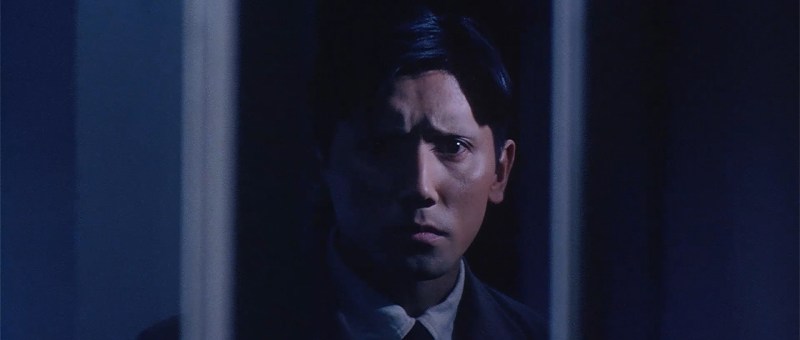
Yukio (Masahiro Motoki) is a war hero, decorated for his service as a battlefield medic saving the life of a prominent general during the first Sino-Japanese War. He’s since come home and taken over the family business where his fame seems to have half the well-to-do residents of the area inventing spurious excuses to visit his practice, at least according to one little boy whose mum has brought him in with a bump on the head after being beset by kids from the slums. “They’re just like that from birth” Yukio later tells his wife echoing his authoritarian father, “the whole place should be burned to the ground”. A literal plague is spreading, but for Yukio the slums are a source of deadly societal corruption that presents an existential threat to his way of life, primed to infect with crime and inequity. His home, which houses his practice, is hermetically sealed from those sorts of people but lately he’s begun to feel uneasy in it. There’s a nostalgia, a sadness, a shadowy presence, not to mention a fetid stench of decay which indicates an infection has already taken place, the perimeter has been penetrated. 

The shadowy presence turns out to belong to his double, Sutekichi whose name literally means “abandoned fortune”, a twin exposed at birth as unworthy of the family name owing to his imperfection in the form of a snake-like birthmark on his leg and raised by a travelling player in the slums. Having become aware of his lineage, Sutekichi has returned to make war on the old order in the form of the parents who so callously condemned him to death, engineering their demise and then pushing Yukio into a disused well with the intention of stealing his identity which comes with the added bonus that Yukio’s wife, Rin (Ryo), was once his. 

Rin’s presence had already presented a point of conflict in the household, viewed with contempt and suspicion by Yukio’s mother because of her supposed amnesia brought on by a fire which destroyed her home and family. Yukio had reassured her that “you can judge a person by their clothes”, insisting that Rin is one of them, a member of the entrenched upper-middle class which finds itself in a perilous position in the society of late Meiji in which the samurai have fallen but the new order has not quite arrived. In Rin modernity has already entered the house, a slum dweller among them bringing with her not crime and disease but a freeing from traditional austerity. In opposing his parents’ will and convincing them to permit his marriage, Yukio has already signalled his motion towards the new but struggles to free himself from the oppressive thought of his father. He confesses that as a battlefield physician he doubted himself, wondering if it might not have been kinder to simply ease the suffering of those who could not be saved while his father reminds him that the German medical philosophy in which he has been trained insists that you must continue treatment to the very last. 

This is the internal struggle Yukio continues to face between human compassion and the obligation to obey the accepted order which includes his father’s feelings on the inherent corruption of the slum dwellers which leads him to deny them his medical knowledge which he perhaps thinks should belong to all. The dilemma is brought home to him one night when a young woman is found violently pounding on his door wanting help for her sickly baby, but just as he makes up his mind to admit her, putting on his plague suit, a messenger arrives exclaiming that the mayor has impaled himself on something after having too much to drink. Yukio treats the mayor and tells his nurses to shoo the woman away, an action which brings him into conflict with the more compassionate Rin who cannot believe he could be so cynical or heartless. 

Where Yukio is repressed kindness, a gentle soul struggling against himself, Sutekichi is passion and rage. Having taken over Yukio’s life, he takes to bed with Rin who laughs and asks him why it is he’s suddenly so amorous. She sees or thinks she sees through him, recognising Sutekichi for whose return she had been longing but also lamenting the absent Yukio who was at least soft with her in ways Sutekichi never was. “It’s a terrible world because people like you exist” Sutekichi is told by a man whose fiancée he robbed and killed. Yukio by contrast is unable to understand why this is happening to him, believing that he’s only ever tried to make people happy and has not done anything to merit being thrown in a well, failing to realise that his very position of privilege is itself oppressive, that he bears his parents’ sin in continuing to subscribe to their philosophy in insisting on their innate superiority to the slum dwellers who must be kept in their place so that they can continue to occupy theirs. 

Apart, both men are opposing destructive forces in excess austerity and violent passion, only through reintegration of the self can there be a viable future. Tsukamoto casts the austerity of the medical practice in a melancholy blue, contrasting with the fiery red of the post-apocalyptic slums, eventually finding a happy medium with the house bathed in sunshine and the family seemingly repaired as a doctor in a white suit prepares to minister to the poor. Having healed himself, he begins to heal his society, treating the plague of human indifference in resistance to the prevalent anxiety of the late Meiji society. 


Gemini is released on blu-ray in the UK on 2nd November courtesy of Third Window Films in a set which also includes a commentary by Tom Mes, making of featurette directed by Takashi Miike, behind the scenes, make up demonstration featurette, Venice Film Festival featurette, and original trailer.

Original trailer (English subtitles)