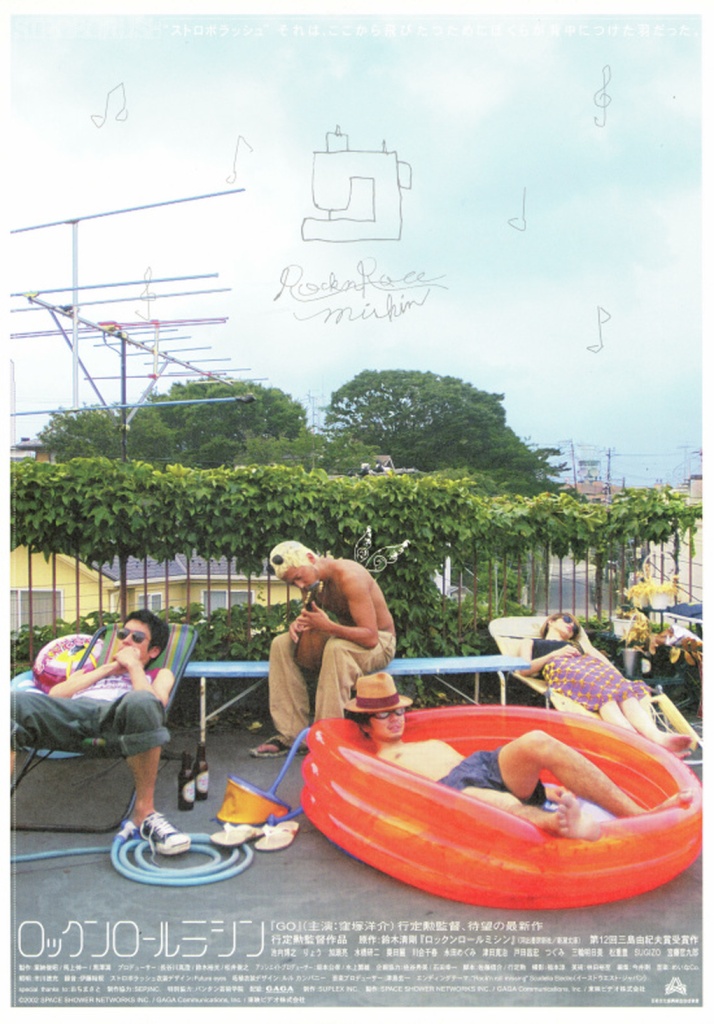
 You know how it is, you’ve left college and got yourself a pretty good job (that you don’t like very much but it pays the bills) and even a steady girlfriend too (not sure if you like her that much either) but somehow everything starts to feel vaguely dissatisfying. This is where we find Kenji (Ryo Kase) at the beginning of Isao Yukisada’s sewing bee of a movie, Rock ’n’ Roll Mishin (ロックンロールミシン). However, this is not exactly the story of a salaryman risking all and becoming a great artist so much as a man taking a brief bohemian holiday from a humdrum everyday existence.
Kenji’s life probably would have continued down a path of corporate serfdom uninterrupted if he had not run into old schoolfriend Ryoichi (Hiroyuki Ikeuchi) who, he learns, is setting up an indie fashion label with some of his friends. Ryoichi has to leave pretty quickly but he pastes a note on the outside of the restaurant window with his contact details so Kenji can find him again.
At work the next day Kenji “enjoys” some “banter” with an extremely unpleasant corporate stooge colleague who seems to be under the mistaken impression that he and Kenji are friends. After making some misogynistic comments about how Kenji is too much of a pushover and should “knock some sense” (literally) into his girlfriend, his colleague sets in on some typical salaryman careerist chat which is exactly the kind of thing Kenji is becoming disillusioned with.
Having failed to meet her at the restaurant, Kenji returns home one evening to find his girlfriend waiting outside his flat. She comes in and immediately takes off her clothes and gets into bed all without saying anything at all. When her T-shirt accidentally blows off the washing line and gets caught on some cabling below, Kenji remembers about his friend’s fashion company and decides to pay them a visit. Kenji is taken in by the sense of freedom and individual enterprise he finds in the workshop in contrast to his corporate drone office job. Eventually Kenji quits and joins the fashion gang full-time though he quickly finds that making a dream come true is surprisingly uphill work.
Unlike other films of this nature, there’s very little inspirational content to be found in Rock ’n’ Roll Mishin. The “mishin” of the title means a sewing machine and early on Ryoichi teases Kenji by telling him that his is a “rock and roll” machine because it beats out 8 stitches a second and if you really step on it it goes up to 16. Ryoichi’s teacher and mentor, Megumi (Ryo) lets Kenji in on the joke by explaining that it’s really called a “lock” machine because it holds the fabric in place for you. The other member of the team is a fashionista, Katsuo (Kenji Mizuhashi), who wants to create fashion that makes a sun of your heart so that you shine forth with an inner light. Needless to say, though the original three all have fashion skills from Ryoichi who’s the designer to Megumi who is a fashion teacher and Katsuo who studied fashion in London, nobody has any kind of business sense or a real business plan for this fledgling business.
In another film this might be where Kenji’s salaryman experience plays in, completing a missing element of the group which will enable them to triumph over adversity. However, Kenji’s experience is also fairly limited but the sensible economic advice he has to offer largely falls on deaf ears with his more creatively orientated teammates. They may understand the business on some level – at least enough to know what they can realistically expect to charge for their wares but are completely clueless about how they can go about managing their costs and maximising their profits. They also don’t really seem to know how to promote their business in anything other than a grungy, underground way which might be cool but is unlikely to take off without a serious amount of cynical marketing gimmickry which Ryoichi isn’t prepared to go for.
What Rock ’n’ Roll Mishin has to say about the youth of today isn’t very encouraging. It paints them as a group of unrealistic dreamers unwilling to put the work in to achieve anything. They might start to go for it in the beginning, but as soon as things start to look up they get scared and childishly run away rather than following through. Ryoichi is very much the tortured artist type, so fixated on maintaining his own image of artistic integrity that he’s completely unable to commercialise to work in any effective kind of way. Kenji is sucked in by the atmosphere of creative freedom but ultimately he has very little to offer and even if he is the one most affected by this new, bohemian lifestyle he’s also the best placed to recognise that you can’t live on dreams alone.
It’s tempting to read Rock ’n’ Roll Mishin as an ultra conservative, stick to the path message movie. It almost wants to say that it’s just not worth trying anything new because you’ll never see it through and you’ll be heading back to your old life with your tail between your legs quicker than you can say haute couture. However, even if the typical underdog triumphs against the odds narrative doesn’t materialise, Kenji at least comes to view his time in the fashion business in a broadly positive light. What he values is the time spent with friends, and, even if it didn’t work out quite the way they would have liked they still created something that was a success on its own terms and was ultimately appreciated by fellow travellers along the same path which, in the end, is what it’s all about.
Not exactly a trailer but this music video for one of the songs used in the film, Rock ‘n’ Roll Missing by Scudelia Electro, contains some footage from the film (lyrics in English)
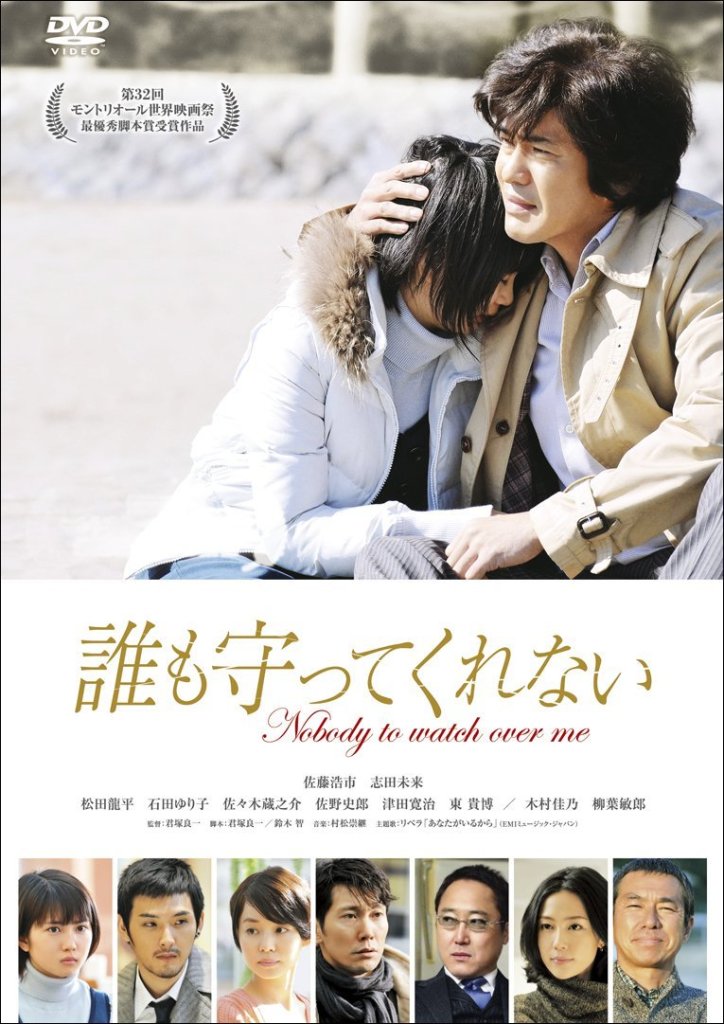 When a crime has been committed, it’s important to remember that there may be secondary victims whose lives will be destroyed even if they themselves had no direct involvement in the case itself. This is even more true in the tragic case that person who is responsible is themselves a child with parents and siblings still intent on looking forward to a life that their son or daughter will now never lead. This isn’t to place them on the same level as bereaved relatives, but simply to point out the killer’s family have also lost a child who they have every right to grieve for, though their grief will also be tinged with guilt and shame.
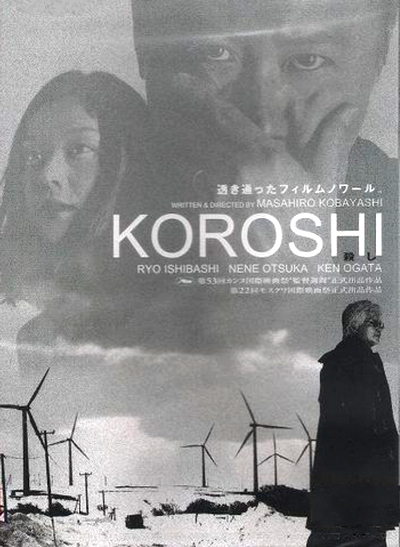 Existential tales of hitmen and their observations from the shadows have hardly been absent from Japanese cinema yet Masahiro Kobayashi’s Film Noir (AKA Koroshi, 殺し) perhaps owes as much to Fargo as it does to Le Samouraï. Taking place in the frozen, snow covered expanses of Northern Japan, Kobayashi’s story is an absurdist one filled with dispossessed salarymen leading empty, meaningless lives in the wake of late middle age redundancy.
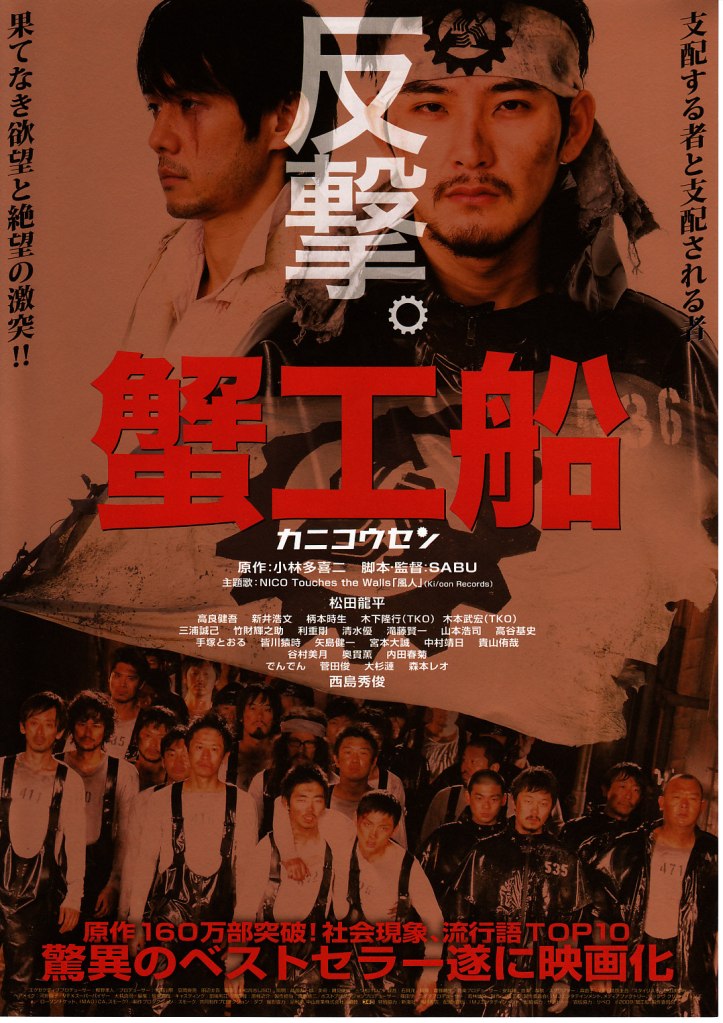 Back in 2008 as the financial crisis took hold, a left leaning early Showa novel from Takiji Kobayashi, Kanikosen (蟹工船), became a surprise best seller following an advertising campaign which linked the struggles of its historical proletarian workers with the put upon working classes of the day. The book had previously been adapted for the screen in 1953 in a version directed by So Yamamura but bolstered by its unexpected resurgence, another adaptation directed by SABU arrived in 2009.
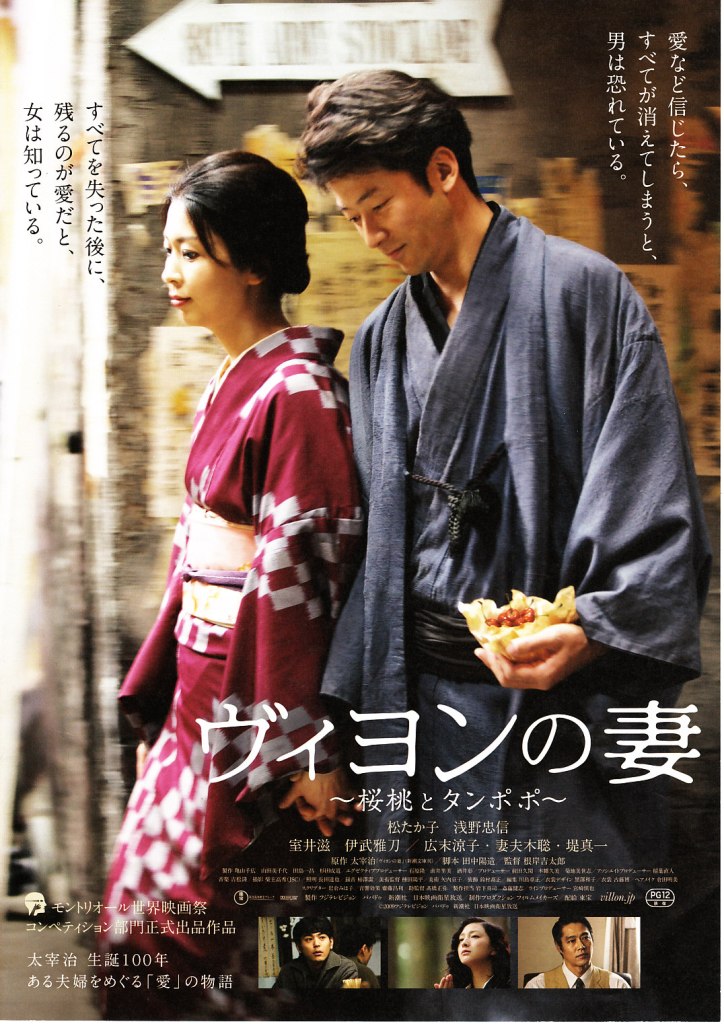 2009 marked the centenary year of Osamu Dazai, a hugely important figure in the history of Japanese literature who is known for his melancholic stories of depressed, suicidal and drunken young men in contemporary post-war Japan. Villon’s Wife (ヴィヨンの妻 〜桜桃とタンポポ, Villon no Tsuma: Oto to Tampopo) is a semi-autobiographical look at a wife’s devotion to her husband who causes her nothing but suffering thanks to his intense insecurity and seeming desire for death coupled with an inability to successfully commit suicide.
 It’s often posited that Japan rarely produces “science fiction” literature or movies and some say that’s because, well, they already live there. However, this isn’t quite true, there are just as many science fiction themed projects to be found in Japan as elsewhere you just have to look a little harder to find them. Depending on your point view, if you succeed in tracking down a copy of Cosmic Rescue -The moonlight generations- (コスミック・レスキュー ザ・ムーンライト・ジェネレーションズ), you may feel the quest was not entirely worth the effort.
 Life is full of choices, but the one thing you can’t choose is your family. Like it or not you’re stuck with them for life and even if you decide you want nothing to do with them ever again, they’ll still be hanging round in the back of your mind for evermore. Koreeda swings the camera back around the fulcrum of Japanese society for this dissection of the fault lines and earthquake zones rubbing up against this very ordinary family.
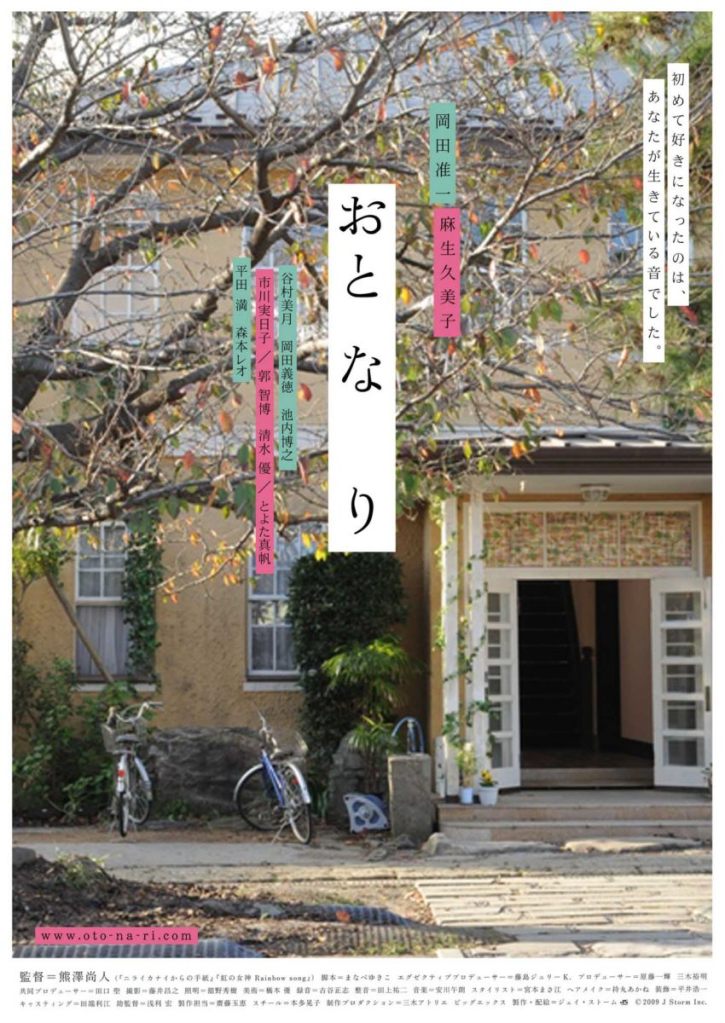 Sometimes when you live in the city it’s difficult to build meaningful connections with other people. You might find yourself a little lost, caught between the rat race and what it was that brought you to the city in the first place, but if you just close your eyes and listen, you can hear that you’re not alone. Romantic Prelude (おと・な・り, Oto-na-ri) is the story of two such people who build up a strange connection even though they’ve never really met.
 SABU might have gained a reputation for his early work which often featured scenes of characters in rapid flight from one thing or another but Dead Run both embraces and rejects this aspect of his filmmaking as it presents the idea of running and its associated freedom as an unattainable dream. Based on the novel by Kiyoshi Shigematsu, Dead Run (疾走, Shisso) is the tragic story of its innocent hero, Shuji, who sees his world crumble before him only to become the sacrifice which redeems it.
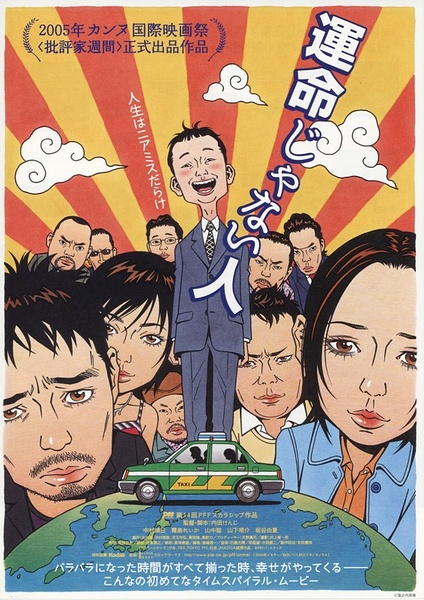 Sometimes life throws you a pretty crazy night but unbeknownst to you the whole world has gone crazy too. For the disparate group of people at the centre of Kenji Uchida’s A Stranger of Mine (運命じゃない人, Unmei Janai Hito) , this proves to be more than usually true. A cute romantic encounter may end up going in a less than cinematic direction while ex-girlfriends, detectives and even the yakuza all conspire to frustrate the lovelorn dreams of a nice guy businessman who never even realises the total chaos which is ensuing all around him.
