 Outside of Japan where he is still primarily thought of as a TV comedian and celebrity figure, Takeshi Kitano is most closely associated with his often melancholy yet insistently violent existential gangster tales. His filmography, however, is one of the most diverse of all the Japanese “auteurs” and encompasses not only the aforementioned theatre of violence but also pure comedy and even coming of age drama. Dolls is not quite the anomaly that it might at first seem but perhaps few would have expected Kitano to direct such a beautifully colourful film inspired by one of Japan’s most traditional, if most obscure, art forms – bunraku puppet theatre.
After opening with a bunraku performance featuring an excerpt from the Chikamatsu play Courier For Hell, Kitano moves on to his overarching narrative which connects the tripartite structure in a tale inspired by the classic story The Bound Beggars. This first pair of lovers, Sawako and Matsumoto, wander blankly through the ever changing landscape tied together with a long red rope. The two had previously been a young couple, very much in love, but Matsumoto was pressured into abandoning Sawako to accept a semi-arranged marriage to his boss’ daughter. Distraught, Sawako attempts suicide only to survive but in an almost catatonic state.
The second pair of doomed romantics consists of an ageing yakuza who looks back on his life which has forced him to act in a way that he is not always proud of and now finds himself remembering the girlfriend he parted with thirty years ago after fearing he was about to lose his job. She promised to wait for him, he promised to return a fine man but he became a yakuza and never saw her again. All these years later, she’s still exactly where she said she’d be, waiting.
Story three is strange tale of modern love as a young man becomes obsessed with an idol star who only ever notices his rival. After she is injured in a car accident and decides to retire, the young man takes drastic action to be able to meet with her on what he sees as a more equal footing.
Fools for love, each and every one of them. Love has ruined them, removed rational choice from their field of vision, yet there’s something noble and beautiful in the way in which it has penetrated each of their lives. They love as if possessed by an incurable madness, Sawako tries to kill herself because her heart is broken, a woman grows old spending each Saturday lunch time sitting on a bench with a second lunch box which is going to go to waste, and a young man maims himself to finally get his love’s attention. Was it worth it, in the end? Perhaps not if the desperately sad outcomes of each of these stories is anything to go by.
Kitano rejects his idiosyncratic blue colour palate for a world of vibrant colours. Travelling through a year we move along the seasons as punctuated by their symbolic scenery from cherry blossoms to green verdant landscapes, the overwhelming redness of autumn leaves and finally the purity of the winter snow. We travel one way, but also in circles as we navigate the story of love as it too changes with its seasons yet remains unchanged in essence. Each of the lovers is no more free than a bunraku puppet, manipulated by forces outside of their control and forced into a desperate unhappiness that is in part vindicated by their romantic bonds.
Love is tender, love is cruel. Each of the men, in particular, makes terrible choices which cause only pain to the women they supposedly love and, in their pride and arrogance, they fail to realise the consequences of their actions until it is far too late. The tragic inevitability of life’s suffering and the inability to escape it are the foundation stones of Chikamatsu’s world.
Working with fashion designer Yohji Yamamoto Kitano has created a beautiful, theatrical world of hyper realistic colour and life. Like much of Kitano’s work, Dolls amounts to a sad collection of tales coloured by melancholy and a resignation to the pain and suffering inherent in being alive. The lovers are inexorably bound to each other for all eternity because of the suffering they have each endured at the other’s hand. This is a sad world, but it’s a beautiful one too and even if hurts one must try to live.
Dolls is re-released in the UK on blu-ray courtesy of Third Window films.
(This is an original release trailer and does not reflect the quality upgrade of Third Window Films’ blu-ray release)
I first saw this film I guess almost fifteen years ago (!) and I still occassionally get this song stuck in my head:
Review of Takeshi Kitano’s Dolls (ドールズ) – first published by UK Anime Network.
 It used to be that movies about marital discord typically ended in a tearful reconciliation and the promise of greater love and understanding between two people who’ve taken a vow to spend their lives together. These endings reinforce the importance of the traditional family which is, after all, what a lot of Japanese cinema is based on. However, times have changed and now there’s more room for different narratives – stories of women who’ve had enough with their useless, deadbeat man children and decide to make a go of things on their own.
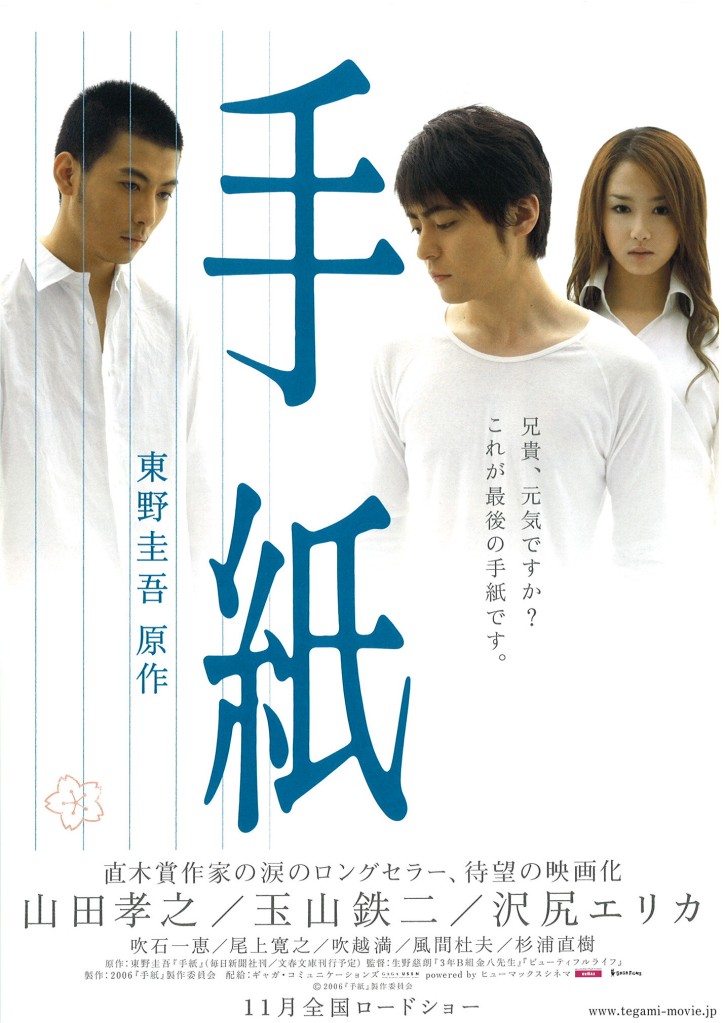 When it comes to cinematic adaptations of popular novelists, Keigo Higashino seems to have received more attention than most. Perhaps this is because he works in so many different genres from detective fiction (including his all powerful Galileo franchise) to family melodrama but it has to be said that his work manages to home in on the kind of films which have the potential to become a box office smash. The Letter (手紙, Tegami) finds him in the familiar territory of sentimental drama as its put upon protagonist battles unfairness and discrimination based on a set of rigid social codes.
 When 21 year old Hitomi Kanehara’s Snakes and Earrings (蛇にピアス, Hebi ni Piasu) was published back in 2003 it took the coveted Akutagawa prize for literature and the country by storm. Its scandalous depictions of the dark and nihilistic sex life of its outsider youngsters outraged and fascinated enough people to get it onto the best seller lists and earn a cinematic adaptation from Japan’s top theatre director Yukio Ninagawa in only his second foray into the world of moving pictures. However, Snakes and Earrings is perhaps that rare instance of an adaptation which clings to closely to its source material as its detached, emotionless and straightforward approach end in something of a miss fire.
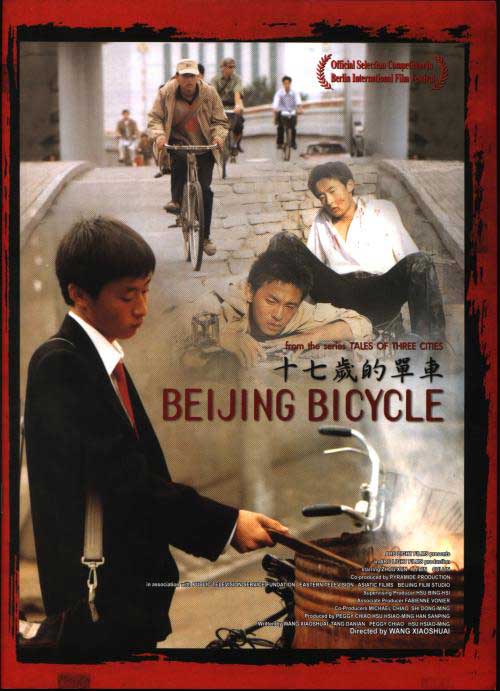 There are nine million bicycles in Beijing (going by the obviously very accurate source of a chart topping song) but there are 11.5 million inhabitants so that’s at least two million people who do not own a bike. Still, if you’re in the unlucky position of having your bike stolen by one of the aforementioned two million, your chances of finding it again are slim. Luckily for the protagonist of Wang Xiaoshuai’s Beijing Bicycle (十七岁的单车, Shí Qī Suì de Dānchē), he manages to track his down through sheer perseverance though even once he gets hold of it again his troubles are far from over.
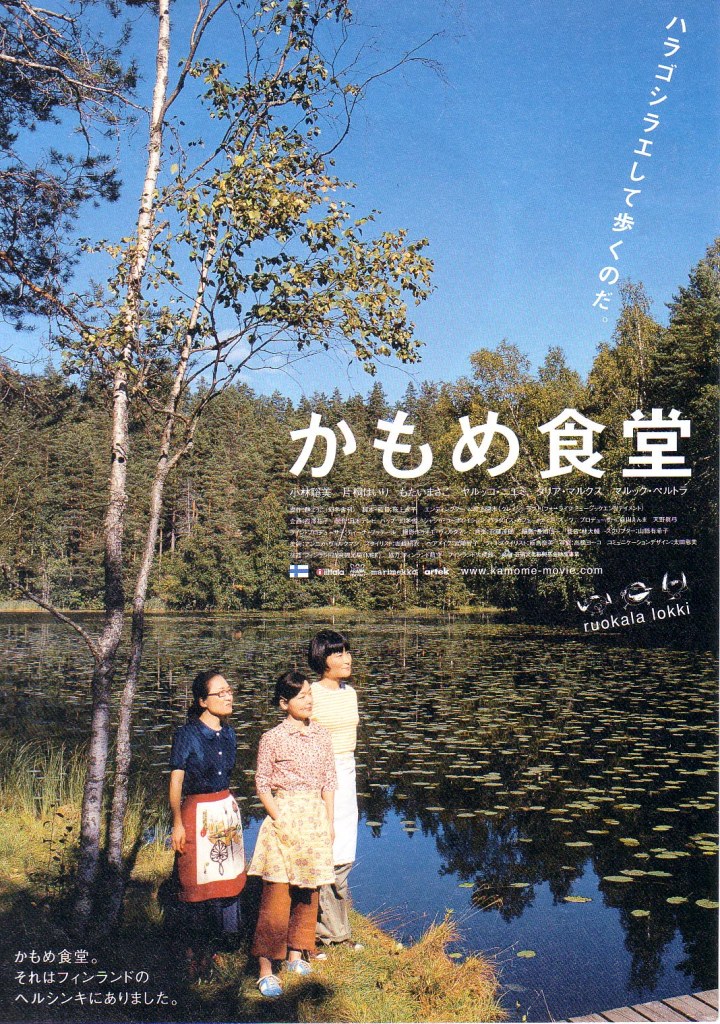 Finland, Finland, Finland. That’s the country for me! Where better could there possibly be to open up a small Japanese cafe than in Helsinki? On second thoughts, don’t answer that but moving to Finland and opening her own diner all alone is exactly what the leading lady, Sachie, has done in this warm hearted comedy drama from Naoko Ogigami, Kamome Diner (かもめ食堂, Kamome Shokudou). As in most of her films, Ogigami has assembled an eclectic cast of eccentric characters who each find themselves turning up at Sachie’s restaurant largely by chance but this time there’s a little added cross cultural pollination too.
 Just look at at that title for a second, would you? Crying Out Love, in the Center of the World, you’d be hard pressed to find a more poetically titled film even given Japan’s fairly abstract titling system. All the pain and rage and sorrow of youth seem to be penned up inside it waiting to burst forth. As you might expect, the film is part of the “Jun ai” or pure love genre and focusses on the doomed love story between an ordinary teenage boy and a dying girl. Their tragic romance may actually only occupy a few weeks, from early summer to late autumn, but its intensity casts a shadow across the rest of the boy’s life.