Petty Romance (쩨쩨한 로맨스, Kim Jung-hoon, 2010)

petty-romanceKorea is quite good at rom-coms. Consequently they make quite a lot of them and as the standard is comparatively high you have to admire the versatility on offer. Korean romantic comedies are, however, also a little more conservative,  coy even, than those from outside of Asia which makes Petty Romance (쩨쩨한 로맨스,  Jjae Jjae Han Romaenseu) something of an exception in its desire to veer in a more risqué direction. He’s too introverted, she’s too aggressive – they need each other to take the edges off, it’s a familiar story but one that works quite well. Petty Romance does not attempt to bring anything new to the usual formula but does make the most of its leads’ well honed chemistry whilst keeping the melodrama to a minimum.

Manhwa artist Jeong Bae (Lee Sun-kyun) is not having much success with his latest project. In fact, his publishing house has been using his submitted drafts as scrap paper. He’s also got a problem in that a gallery owning friend of his late father has been the caretaker of a precious painting left to him in his father’s will but now wants to call in a loan or sell it to get the money back and so Jeong bae is in desperate need of fast cash.

Across town, Da-rim (Choi Kang-hee) has managed to bag a writing gig on her friend’s woman’s magazine but finds herself out of her depth working on a sex advice column when she has no direct experience of love or dating. Given the axe by her friend and living with her moody twin brother to whom she owes money, Da-rim is also in need of something to sink her teeth in to.

When a friend of Bae’s lets him know about a new competition with a $100,000 cash prize it sounds like just what he needs. The only snag is the competition is for “adult” manhwa which has not generally been Bae’s thing. Taking his editor’s advice, Bae decides to work with a writer but most of his interviewees are not exactly what he’s looking for. Da-rim with her “experience” in translation and publishing, as well as her unusual forthrightness concerning the subject matter very much fits the bill.

Kim doesn’t waste much time in getting the two together though their love/hate relationship is a definite slow boil as both Bae and Da-rim spend most of their partnership playing each other to try and get the upper hand. Bae’s trouble, according to his editor, is a talent for action but a failure with narrative – hence the need for a writer. Da-rim, by contrast, has altogether too much imagination coupled with the kind of arrogance which masks insecurity. Having blagged her way into the job, Da-rim spends most of her time ensuring that she’s in a superior position to Bae so that he will have to do most of the work while she enjoys freshly made coffee ordered to distract him from the fact that she has no idea what she’s doing.

Despite coming up with a promising storyline about a sex obsessed female assassin, Da-rim’s naivety is palpable in her attempts to come up with a suitably “adult” atmosphere. Disney-esque scenarios of handsome princes and desert islands, even if spiced up (in the most innocent of ways), isn’t quite striking the tone for the kind of prize winning raunchy manga that the pair are aiming for. Pushed further, Da-rim’s extrapolations from “research” are so unrealistic as to set Bae’s alarm bells ringing but offered with such insistence as to have him momentarily doubt himself.

Kim makes good use of manhwa as a visual device allowing him to include slightly more erotic content than usual in a Korean romantic comedy in an entirely “safe” way. Refreshingly he keeps the usual plot devices to a minimum though there is the “sibling mistaken for lover”, “mistimed job offer,” and “aggressive rival” to contend with, even if the major barriers are entirely centred around the personalities of the protagonists who are each fairly self involved in their own particular ways. Despite making good use of the chemistry generated by previous collaborators Lee Sun-kyun and Choi Kang-hee, Petty Romance lives up to its name in providing enough low-key drama to keep rom-com fans happy but never quite moves beyond the confines of its genre.


Available to stream on Mubi (UK) until 15th March 2017 courtesy of Terracotta Distribution.

Original trailer (English subtitles)

An Investigation on the Night That Won’t Forget (Pagsisiyasat Sa Gabing Ayaw Lumimot, Lav Diaz, 2012)

an-investigation-on-the-night-that-wont-forgetIf Elegy to the Visitor from the Revolution was a poetic attempt to tackle the outpouring of grief which followed the murders of film critics Alexis Tioseco and Nika Bohinc, An Investigation On the Night That Won’t Forget (Pagsisiyasat Sa Gabing Ayaw Lumimot) is its mirror image – the somber and naturalistic testimony of one who was left behind, searching for resolution but finding only more questions and ongoing suffering as circumstances conspire to prolong the agony. As usual, Diaz uses the events to comment more widely on the often melancholy history of his country but also on the nature of narrative, time and memory in their necessity for the attempt to create order from a series of otherwise incomprehensible events.

Preceded by a title card reading Part 1: The Cradle of Memory, the central 55 minutes of the film consists of one unbroken static camera shot of a man talking to camera, recounting an incident which he is unable to forget yet cannot remember clearly. The man is Erwin Romulo, editor and best friend of Alexis Tioseco, occupying a chair next to a desk in his own office surrounded by books and papers, records and ephemera of everyday life. Romulo begins to tell the story that night and of its continuing wake alternating between English and Tagalog, gesticulating and fidgeting as his story becomes painful to tell.

At one point Romulo says that he’s glad they’re recording this because it’s already becoming so difficult to remember. Though he speaks uninterrupted for almost an hour (save for a brief moment in which he leaves the chair in search of water), Romulo occasionally goes off on tangents or pauses to explain something else, allowing the events to unfold as he remembers them. The camera becomes a cradle for his memory, a safe place of deposit where his own recollections can rest without fear of change for all eternity. Perfect and incorruptible, cinema stands witness to a time and a place to which it affords a kind of immortality in ever extending moments.

Romulo’s testimony concludes with a lament for the continuing absence of his friend, for the unlived future so cruelly severed by a violent, selfish act. This leads us into the second segment, preceded by a title card reading Part 2: Cradle of the Night. Beginning with a series of ordinary street scenes, the soundscape is soon broken by the reading of a long poem entitled Lullaby of Memory. Culminating with the line “Recollection is the final destination of justice,” the poem emphasises the essential melancholy which colours each of Diaz’s films in its sorrowful fatalism. The images are eventually accompanied by a great river of light as some kind of procession takes place, candles lighting the way as large numbers of people snake onward through the narrow streets. If the lights imply hope the poem seems to reject them as the procession represents a “failure of life” and the poet remarks that she “did not know how this life would fail me”. The lights go out, only to return, their meaning seeming lost and hollow.

Shooting again in low grade black and white, Diaz erases himself from the frame in refusing interaction or reaction to his subject even if there is clearly another human presence to whom Romulo is communicating his tale other than the cold eyes of the camera. Memory is a painful thing but necessary. The camera cannot ease the burden, but it can add to the experience, solidify a narrative which both buries and exposes its essential truths. The night is unending and unforgiving, the investigation may never be concluded. Those who take part in the procession carry a light in front of them but it seems to offer little illumination, the path is endless and leads only to suffering and loneliness.


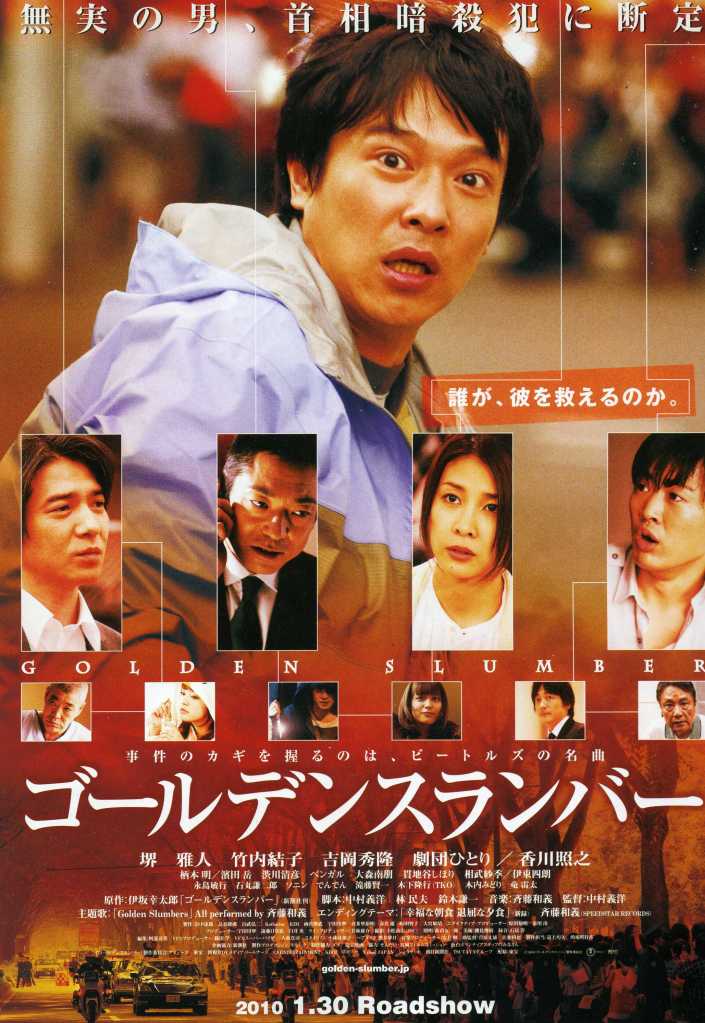
Golden Slumber (ゴールデンスランバー, Yoshihiro Nakamura, 2010)

golden-slumberYoshihiro Nakamura has made a name for himself as a master of fiendishly intricate, warm and quirky mysteries in which seemingly random events each radiate out from a single interconnected focus point. Golden Slumber (ゴールデンスランバー), like The Foreign Duck, the Native Duck and God in a Coin Locker, and Fish Story, is based on a novel by Kotaro Isaka and shares something of the same structure but is far less interested in the mystery itself rather than the man who finds himself caught up in it.
30 year old delivery driver Aoyagi (Masato Sakai) is all set for a nice day out fishing with an old college buddy, Morita (Hidetaka Yoshioka), but he’s about to discover that it’s he’s been hooked and reeled in as the patsy in someone else’s elaborate assassination plot. After grabbing some fast food, Morita takes Aoyagi to a parked car near the closed off area through which the Prime Minster is due to be paraded in an open topped car. Waking up after a brief period of drug induced sedation, Aoyagi is made aware that this has all been a trick – badly in debt thanks to his wife’s pachinko addiction, Morita has betrayed him to a set of undisclosed bad guys with unclear motives and is taking this brief opportunity to give him as much warning as he can. Sure enough, a bomb goes off at the parade and Aoyagi just manages to escape before Morita too is the victim of an explosion.

Aoyagi is now very confused and on the run. Inexplicably, the police seem to have CCTV footage of him in places he’s never been and doing things he’s never done. If he’s going to survive any of this, he’s going to need some help but caught between old friends and new, trust has just become his most valuable commodity.

At heart, Golden Slumber is a classic Wrong Man narrative yet it refuses to follow the well trodden formula in that it isn’t so much interested in restoring the protagonist to his former life unblemished as it is in giving him a new one. The well known Beatles song Golden Slumber which runs throughout the film plays into its neatly nostalgic atmosphere as each of the now 30 year old college friends find themselves looking back into those care free, joyous days before of the enormity of their adult responsibilities took hold. That is to say, aside from Aoyagi himself who seems to have been muddling along amiably before all of this happened to him, unmarried and working a dead end delivery job.

As Morita tells him in the car, it’s all about image. The nature of the conspiracy and the identity of the perpetrators is not the main the main thrust of the film, but the only possible motive suggested for why Aoyagi has been chosen stems back to his unexpected fifteen minutes of fame two years previously when he saved a pop idol from an intruder with a nifty judo move (taught to him by Morita in uni) after fortuitously arriving with a delivery. Those behind the conspiracy intend to harness his still vaguely current profile to grab even more media attention with a local hero turned national villain spin. The Prime Minister, it seems, was a constantly controversial, extreme right wing demagogue with a tendency for making off the cuff offensive statements so there are those who’d rather congratulate Aoyagi than bring him to justice, but anyone who’s ever met him knows none of this can really be true despite the overwhelming video evidence.

Throughout his long odyssey looking for “the way back home” as the song puts it, Aoyagi begins to remember relevant episodes from his life which may feed back into his current circumstances. Although it seems as if Aoyagi had not seen Morita in some time (he knew nothing of his family circumstances, for example) his college friends with whom he wasted time “reviewing” junk food restaurants and chatting about conspiracy theories are still the most important people in his life. Not least among them is former girlfriend Haruko (Yuko Takeuchi), now married and the mother of a little daughter, who seems to still be carrying a torch for her old flame and is willing to go to great lengths to help him in his current predicament.

The film seems mixed on whether these hazy college days are the “golden slumber”, a beautiful dream time enhanced by memory to which it is not possible to return, or whether it refers to Aoyagi’s post college life which impinges on the narrative only slightly when he asks an unreliable colleague for help, aside from an accidental moment of heroic celebrity. It could even refer to the film’s conclusion which, departing from the genre norms, resolves almost nothing save for the hero’s neat evasion of the trap (aided by the vexed conspirators who eventually opt for a plan B). Once there might have been a road home – a way back to the past and the renewing of old friendships, but this road seems closed now, severed by the new beginning promised to Aoyagi who has been robbed of his entire identity and all but the memory of his past. Whether this means that the golden slumber has ended and Aoyagi, along with each of the other nostalgia bound protagonists, must now wake up and start living the life he’s been given, or that the old Aoyagi has been consigned to the realm of golden slumbers, may be a matter for debate.

Though the resolution may appear ultimately unsatisfying, the preceding events provide just enough interconnected absurdity to guide it through. During his long journey, Aoyagi is aided not just by his old friends but new ones too including a very strange young serial killer (Gaku Hamada) and a hospital malingerer with one foot in the “underworld” (Akira Emoto). It speaks to Aoyagi’s character that all of those who know him trust him implicitly and are ready to help without even being asked (even if they occasionally waver under pressure), and even those who are meeting him for the first time are compelled to come to his defence.  An elliptical, roundabout tale of the weight of nostalgia and inescapability of regret, Golden Slumber is the story of a man on the run from his future which eventually becomes a net he cannot escape.


Original trailer (English subtitles – select via menu)

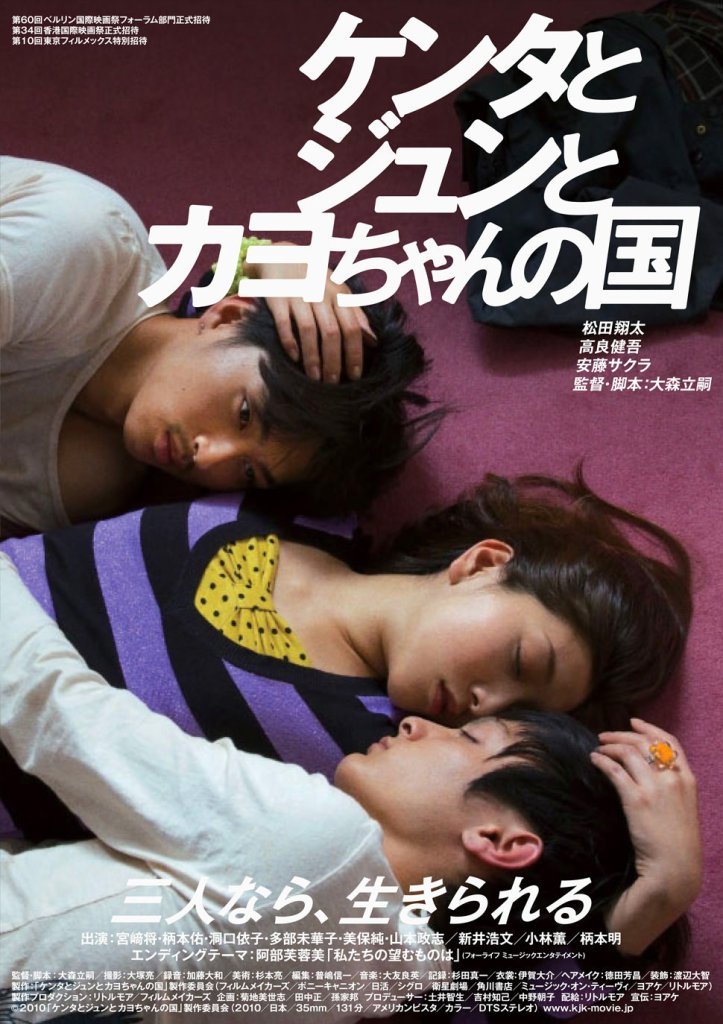
A Crowd of Three (ケンタとジュンとカヨちゃんの国, Tatsushi Omori, 2010)

crowd-of-threeTatsushi Omori’s debut feature The Whispering of the Gods proved so controversial that he was left with no choice other than to set up his own temporary cinema to screen it. Five years later he returned with another uncompromising look at modern society which is only a little less grim than its predecessor. A Crowd of Three (ケンタとジュンとカヨちゃんの国, Kenta to Jun to Kayo-chan no Kuni) takes what has become a staple of quirky indie comedy dramas – a small group of disconnected people taking a road trip to look for something better, and turns it into a depressingly nihilistic voyage to nowhere. Never quite achieving the kind of painful, angst ridden atmosphere of disaffected young men desperately trying to break out of a social straight jacket, A Crowd of Three is an oddly cold film, undercut with a pervasive layer of misogyny and hopelessness which makes its ultimate destination somewhere few will wish to travel.

Kenta (Shota Matsuda) and Jun (Kengo Kora) are young men working dead end construction jobs. Growing up together almost like brothers in the same orphanage the pair share an intense bond but also a shared sense of having been badly let down by life even at such a young age. Their main source of relief seems to be in picking up “loose women” from the street by asking random ladies on their own for their ages. One evening Jun picks up Kayo (Sakura Ando) – a melancholy woman with low self esteem who sleeps around because she is insecure about her own plain looks. After Kenta is assaulted by the foreman, he decides to take revenge by smashing up the office and his boss’ car before taking off on a journey north to see his (biological) brother who is currently in prison.

Kayo tags along with the pair after apparently having fallen in love with Jun who is only interested in her for easy sex and occasional cash tips. Despite the fact that the film’s original Japanese title is “Jun, Kenta, and Kayo’s Country”, Kayo is quickly cast aside by the pair of travellers who think it’s funny to throw all of her stuff out of the window and abandon her at a service station in the middle of nowhere. Getting thrown out of cars and left behind in remote places is something which happens to Kayo repeatedly throughout the film as she tries to follow Jun despite his obvious indifference towards her.

Kayo just wants to feel love, but at least as far as the film goes she’s looking for it in all the wrong places. Even if Jun does start to feel something more genuine for her in the end, it’s born of a kind of shared insecurity as he worries about a repetitive strain injury from using the pneumatic drill which turns his hand white at moments of stress. After literally jilting Kayo, Jun takes up with a vacuous bar hostess who does, indeed, recoil from his pale hand. The bar hostess has very ordinary dreams – a big house, wealthy husband, children. She’s even planned out her own death. These are all things which Jun could never give her, a middle school drop out with no family he already fears he has no future but at least he’s not railroaded onto a pre-determined course and is free to choose his destination even if he feels there is nowhere for him to go.

Kenta expresses this early in the film when he states that there are two kinds of people – those who choose how they’re going to live, and those who don’t. The boys feel as if they’re in the no choice category – unceremoniously kicked out of social care and expected to fend for themselves with no education or contacts, reliant on poorly paid temporary work to get by. In a slightly overworked metaphor, Kenta and Jun’s jobs on demolition projects point to their desire to dismantle their world but the more they smash away at it the less progress they make. Kenta’s literal smashing of the car and office belonging to his boss are his final act of choice but again it gets him nowhere. Even talking to his brother who is in prison for the most heinous of crimes, Kenta finds no encouragement but only cold rejection.

A Crowd of Three goes to some very dark places ranging from work place harassment to child abuse and sexualised violence, but it largely fails to capitalise on its grim atmosphere to make any kind of impact aside from the pervasive melancholia. Omori mostly sticks to a straight forward approach with some interesting editing choices and composition but largely relies on the quality performances of his leading players. Far from youth aflame with nihilistic rage, A Crowd of Three is bleaker than bleak and frozen throughout making the battling of its heroes to transcend their difficult social circumstances a forlorn hope of epic proportions.


Original trailer (no subtitles)

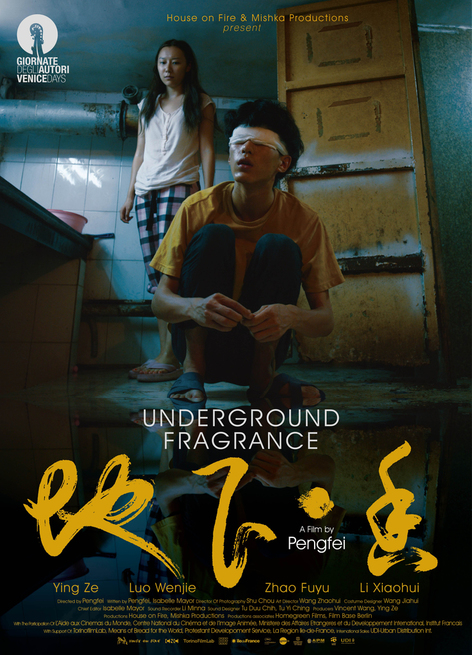
Underground Fragrance (地下・香, Pengfei, 2015)

underground_fragranceThe original Chinese title of recent Tsai Ming-liang collaborator (Song) Pengfei’s debut feature 地下・香 (dìxìa・xiāng) has an intriguing full stop in the middle which the English version loses, but nevertheless these two concepts “underground” and “fragance” become inextricably linked as the four similarly trapped protagonists desperately try to fight their way to better kind of life. Recalling Tsai’s dreamy symbolism, Hou Hsiao-Hsien’s romantic melancholy, and Jia Zhangke’s lament for the working man lost in China’s rapidly changing landscape, Pengfei’s film is nevertheless resolutely his own as it chases the ever elusive Chinese dream all the way from dank basements and ruined villages to the shiny high rise cities which promise a tomorrow they may never be able to deliver.
Yong Le (Luo Wenjie) is just one such young man, trying to buy a future by raiding the past. He has a small van he uses to “reclaim” furniture and sell it second hand. One day he has an accident whilst working which costs him his sight. Finding it difficult to manage in the cramped, noisy corridors of the subterranean cavern he is currently living in, Yong Le strikes up a friendship with his kindly new next door neighbour, Xiao Yun (Ying Ze), who helps him with some of his everyday problems like telling the time and finding food. Xiao Yun is currently working as a pole dancer in a seedy club which she longs to quit and is hoping to bag a salesgirl position at a new development office.

Yong Le is also friends with an older man, Lao Jin (Zhao Fuyu), who lives above ground with his wife (Li Xiaohui) in a large, old fashioned courtyard style house. Lao Jin and his wife are the only remaining residents of the village, the rest of which has been knocked down already after the other homeowners settled with the development company for what they considered the best deal they could get. Lao Jin, however,  thinks it’s worth holding out and has been “in negotiations” for eight years. Dreaming of a mega payout he can use to by a fancy city flat and be a big shot at last, Lao Jin has already run through his savings and is dangerously close to losing everything.

In a rather pointed piece of symbolism, Xiao Yun walks past a large mural with the slogan “Run Towards Your Dreams” prominently displayed in the middle. Later, this same wall will be reduced to rubble, a handful of brightly coloured stones marking the spot where once a village stood. Xiao Yun and Yong Le have very different dreams to those of Lao Jin, reflecting the way that even aspiration has shifted with the generations. He wants the fancy penthouse life for himself and his wife, even if it means selling their furniture and sacrificing his wife’s beloved white rooster, but all Yong Le and Xiao Yun want is out of the dingy basement and into a cleaner sort of life.

Yong Le and Xiao Yun may begin to fall in love during his period of blindness, but it’s a luxury neither of them can afford. There’s a slight irony in the fact that Xiao Yun who’s come to hate the men who visit her bar, some of them trying to buy more than a show, becomes attached to a man who cannot see her, but her desperation to escape her dead end life before it’s too late means she can’t afford to hang around for romance to bloom. A heart stopping moment sees the sight restored Yong Le unexpectedly end up at the bar where Xiao Yun dances, but having been blind the entire time he knew her, he doesn’t recognise the woman on stage (though to his credit he does not particularly look). Pulled apart by the increasing harshness of the economic environment, romance is an unattainable dream for those like Yong Le and Xiao Yun, drifting around from one thing to the next barely able to touch the ground let alone live on it.

Pengfei’s camera operates with a formalist grace, putting architecture at the forefront of his storytelling. From the ruins of a village to lie of the as yet unfinished high-rise future and the dank, dangerous underground world of the casual drifters always aiming for something better, the landscape gives voice to the often despairing nature of life on edges of a society where the rate of change threatens to leave vast swathes of its citizens behind. Adding a touch of the surreal such as a supremely timed return of the electricity in which Lao Jin’s attempt to oust a noisy owl with fireworks lines up with his peking opera record, or the couple’s later attempt to woo the developers with a musical performance of their own (another demonstration of the way their old world customs have become obsolete), Pengfei undercuts the ever present melancholy with a dose of whimsical irony. Wistfully romantic, and dreaming of a better, fairer society Underground Fragrance is a snapshot of a world in flux in which even the most essential of human connections can become lost in the crowd of faces all running towards tomorrow.


Currently screening for free on Festival Scope as part of their Torino Film Lab selection.

Trailer from Venice (English subtitles)

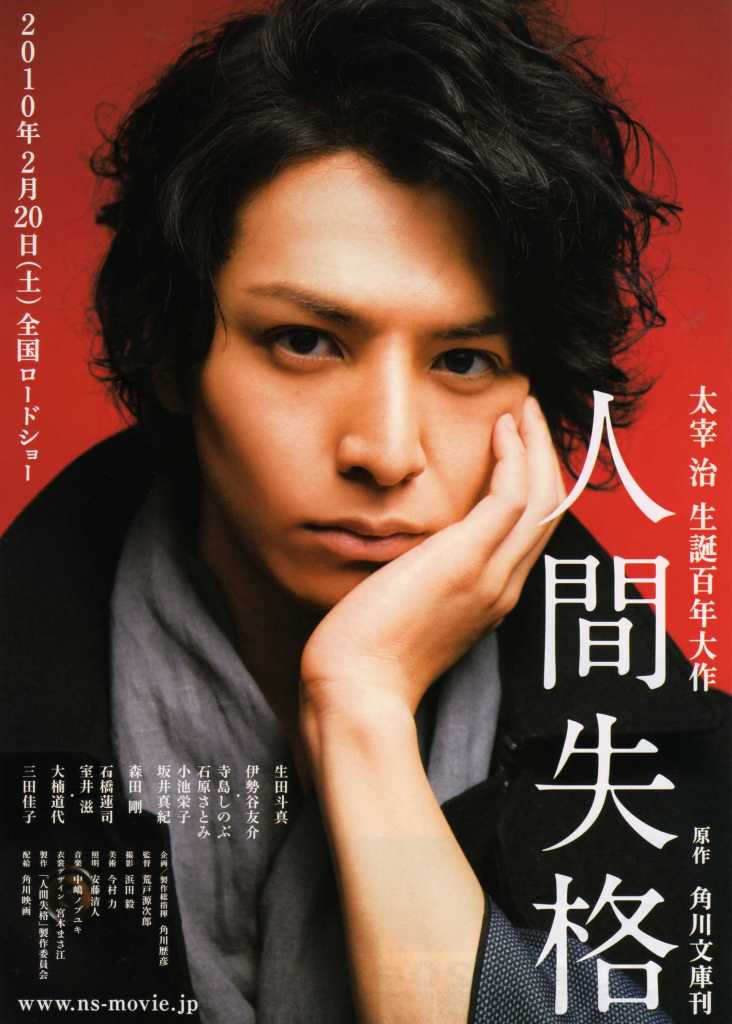
The Fallen Angel (人間失格, Genjiro Arato, 2010)

fallen-angelThe Fallen Angel (人間失格, Ningen Shikkaku), based on one of the best known works of Japanese literary giant Osamu Dazai – No Longer Human, was the last in a series of commemorative film projects marking the 100th anniversary of the author’s birth in 2009. Like much of Dazai’s work, No Longer Human is semi-autobiographical, fixated on the idea of suicide, and charts the course of its protagonist as he becomes hopelessly lost in a life of dissipation, alcohol, drugs, and overwhelming depression.

Even when we meet him as a small child, Yozo Oba (Toma Ikuta), feels himself set apart from his peers. Unable to connect fully with the people around him, Yozo gets through life by playing the clown. As a teenager, he meets another boy, Takeichi, who can see straight through his mask and encourages him in his artistic pursuits. Eventually, Yozo moves to Tokyo where he meets another artist, Horiki (Yusuke Iseya), who introduces him to the seedier pleasures of the city including drinking and hostess bars.

Yozo still feels adrift and is unable to cement his new found friendship with true connection. After asking Horiki to die with him (which he laughingly refuses to do), Yozo begins an ill-starred romance with a melancholy bar hostess with whom he does actually attempt double suicide. She dies, he doesn’t but his life is changed when he loses access to his familial wealth and is kicked out of university because of the scandal. Yozo has another shot at conventional happiness by briefly forming a family with a single mother and her little girl before leaving them because of problems resulting from his alcoholism. Eventually marrying a kind hearted woman, Yozo kicks the booze for a while and builds a career in manga but sure enough Horiki finds him and ruins his marital bliss by setting him back on the road to dissipation.

Arato makes a few changes to Dazai’s novel, mostly streamlining the book’s tripartite structure by eliding two events into one, but perhaps because of the well known nature of the story, he feels comfortable in making abrupt cuts and wide ranging shifts in terms of time. Dazai’s novel is much more focussed on the mental condition of its protagonist, whereas Arato has opted for a more overt display of the increasingly tense political environment with soldiers lurking in the background, later occupying a train shortly before the scene turns into a surreal segment in which Yozo reacquaints himself with all those he’s wronged throughout the course of the film.

Yozo’s tragedy is his inability to connect with other people even though he leads an ostensibly successful social life. Making himself an amiable presence, Yozo keeps people around him by making himself a figure of fun – a mask which gradually becomes far too heavy to wear. This buffoonish aspect of his personality is not very much in evidence in Arato’s film which focusses much more on his underlying depression than the joviality he uses to try and prevent anyone noticing just how broken he is inside. For this reason it becomes harder to see why everybody lets Yozo get away with his extremely bad behaviour for so long. Toma Ikuta captures Yozo’s listlessness and despair but without the necessary intensity to back them up and, ironically, without his sad clown routine Yozo does not always seem like someone anyone would want to hang out with for any great length of time.

Arato has recreated the novel’s pervading sense of numbness and despair to the letter with the consequence that his film remains resolutely cold. As appropriate as that may be, it makes it harder to achieve the kind of connection forged through Yozo’s first person narrative in the book. This approach brings out Yozo’s unpleasant qualities – his selfishness, weakness, cowardice, and propensity to addiction, but fails to display his better ones which lead to him being characterised as the ruined “angel” of the title. In distancing us from Yozo, Arato encourages us to see him either as a metaphor for the political turmoil taking place in his country during his lifetime, or simply as a someone whose intense self loathing eventually destroys his sense of self. What it does not encourage us to do is see that Yozo’s struggle is our own struggle, his despair is our despair felt to a greater or lesser degree. Too obtuse to be affecting, The Fallen Angel fails to capture the overwhelming nihilism of Dazai’s novel and ironically remains far too distant to achieve true connection.


Original trailer (no subtitles)

What’s in the Darkness (黑处有什么, Wang Yichun, 2015)

whats-in-the-darknessFirst time writer/director Wang Yichun draws on her own experiences for What’s in the Darkness (黑处有什么, Hei chu you shenme), a beautifully shot coming of age piece with serial killer intrigue running in the background. Seen through the eyes of its protagonist, What’s in the Darkness neatly matches the heroine’s journey into adolescence with the changing nature of Chinese society.
In May 1991 a series of horrific killings rock a small, rural town. Schoolgirl Qu Jing (Su Xiaotong) learns of the first murder of young and popular girl from the village when her policeman father Zhicheng (Guo Xiao) is called to investigate. A crowd has gathered around the crime scene where local women gossip and speculate, assuming the poor girl must have been raped and then murdered to prevent her going to the authorities.

Unaccustomed to such violent crimes, the police get busy but predictably lack the expertise to properly investigate. Zhicheng is unusual among his peers as he has a university degree and is keen on deduction, but his colleagues think his efforts are just going to make trouble for everyone and quickly decide on a suspect to beat a confession out of so that they will be seen to have done something. This plan goes haywire when a second murder occurs whilst the accused is in custody leaving the police with no option other than to allow him to “escape”. When one of Jing’s friends, whose estranged father is also a policeman, goes missing the stakes are raised but the possibility of successfully solving the crime seems increasingly remote.

Many things were changing in 1991, even in small rural towns. Jing is a wide eyed, naive and innocent girl with an intense curiosity and an ethereal nature which sets her apart from her more ordinary schoolmates. Her best friend, Zhang Xue (Lu Qiwei), is a slightly older, more mature girl ostracised by her peers who have decided that she is, in some way, immoral. Living within an extremely repressed society, Jing has very little concrete knowledge about sex or relationships – she even had to look up the word “rape” in a dictionary after hearing it at the crime scene because she’d never heard it before. Her only other information comes from pamphlets about pregnancy (with which she seems to be strangely fascinated) and her attempts to get more information out of the supposedly more experienced Xue backfire when she realises they’re both as clueless as each other.

Jing’s big hobby involves heading out to a disused factory area and singing pop songs to an imaginary crowd (and a boy who’s secretly watching her from the shadows). When she and Xue visit a hair salon there are pictures of movie stars all over the walls and the TV shows the fluffy pop entertainment of the day rather the propaganda films Jing’s parents might be more used to. Having lived through the Cultural Revolution, Jing’s mother and father have experienced far more hardship than she could ever know. Jing can’t understand their preoccupation with food, but to those who’ve experienced the threat of starvation, the presence of a full rice bowl makes almost anything endurable. Trained to keep their heads down and make sure they eat, the villagers of Jing’s parents’ generation are determined to maintain the status quo, even if it means continuing to reinforce the old values in order to avoid reprisal.

The trappings of communism are everywhere from the school room where the kids rehearse patriotic songs under banners of Marx, Engels, Lenin, Stalin, and of course Mao, to the security forces lurking in the background. Representing the state, the police force is staffed by a collection of lazy, corrupt petty officials content to throw their weight around in the absence of any real crime to deal with. Zhicheng refuses to engage in the same level of corruption as his comrades, but his honesty and steadfastness only arise resentment. Jing finds herself experiencing the same phenomenon when the headmaster finds out about her volunteering at the old people’s home and decides to give her an award thereby singling her out in front of her friends and irritating her harsh and grumpy teacher.

It’s at the old people’s home that Jing encounters her first randy old man when one of the residents she’s been asked to read to suddenly swaps out the book she’s been assigned for a probably banned erotic classical text with the only saving grace that Jing, even if she can read all the characters, does not quite understand what she’s reading.

Through Wang’s camera every man in town begins to look suspicious from the ice lolly seller eying up the behinds of the school girls as they walk away from him with their frozen treats, to an odd looking man with physical ailments who is often seen lurking in the background behind Jing. Visiting a friend’s house, Jing is unceremoniously dumped into a backroom when the older brother turns up with a porn film only for the house to be raided and everyone arrested. In a quest to finally find out what all of this is about, Jing buys a ticket for an adult movie from a man positively overjoyed at the idea of sending an underage girl into a room full of sweaty guys who all instantly turn away from the onscreen action to stare at the anomaly of Jing as she openly weeps at what she sees.

One of the benefits that communism claimed to bring was equality between the sexes. Women may hold up half the sky, but they still have to conform to an arcane set of social mores whilst they do so. Zhicheng forces Jing to ride sidesaddle on his bicycle rather than sit with her legs open and when she complains to him about the guy watching her sing, he tells her it’s all her fault for dressing in too alluring a manner. The murdered women are posthumously berated for their decision to be out on their own despite the fact that at least one of the killings must have occurred in broad daylight and when one of Jing’s schoolmates is feared to be the latest victim, their teacher reminds them that this is the kind of thing that happens when you fall in with a bad crowd. The police avoid serious investigation not only because they are lazy and corrupt, but because this kind of state sanctioned sexism is a tool they themselves (even if unwittingly) use to keep their womenfolk where they want them.

The identity of the murderer becomes irrelevant, this world is killing young women and it’s getting away with it because nobody cares. The women who die are written off as tainted, a lesson in failed femininity and evidence of what can happen if you don’t play by the rules. Little attention is paid to the perpetrator of the crimes who may also be a victim of this repressive environment as his desires are refused any other outlet than violence.

Although beginning in the vein of a serial killer movie, What’s in the Darkness is, at heart, a coming of age tale and social issue film. The era has shifted as the fear and austerity of the Cultural Revolution gives way to rising consumerism, placing a wedge between Jing’s generation and that of her parents. Wang rejects the classic procedural ending, leaving only questions in place of answers. As Jing stands alone with a little dog in her arms in the film’s final scene, she looks almost like Dorothy before the Emerald city as she plunges deeper into the reeds in search of answers, most definitely not in Kansas anymore. Jing’s eyes have been opened, her curiosity remains intact and unsated, as she alone remains unafraid to look at what’s really waiting for her out in the dark.


Reviewed at the BFI London Film Festival 2016

Original trailer (Chinese subtitles only)

https://www.youtube.com/watch?v=_69Pj-jB_rM

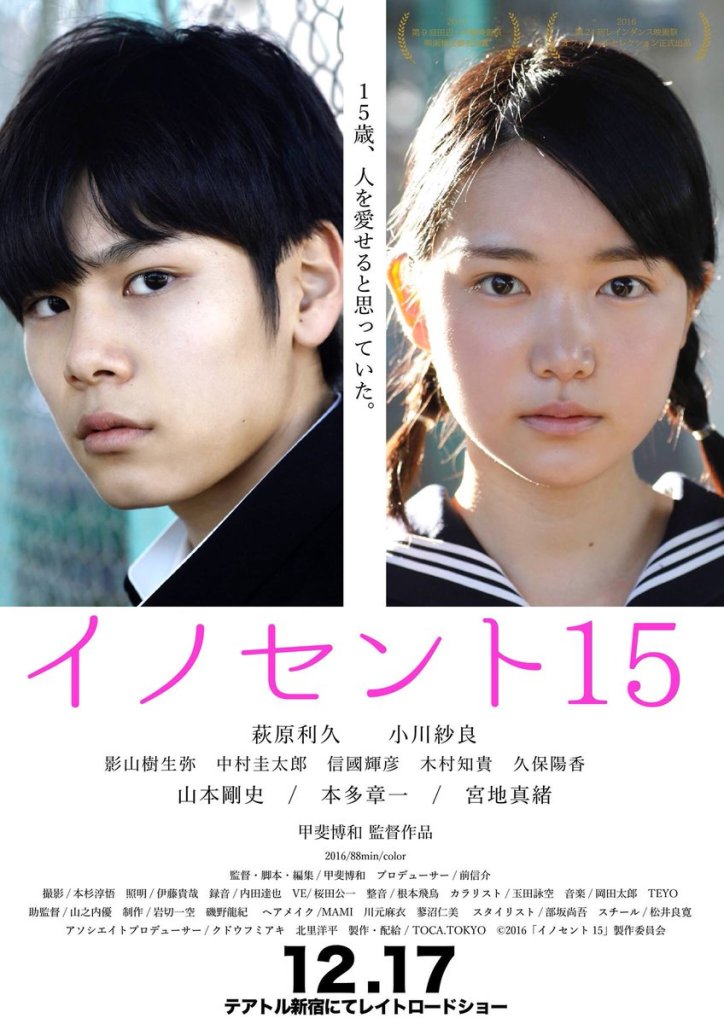
Innocent15 (イノセント15, Hirokazu Kai, 2016)

innocent-15Innocence is a fairly nebulous concept and one often misused but if you were expecting an “innocent” tale of youthful romance, Hirokazu Kai’s Innocent15 (イノセント15) is out to wrong foot you from the get go. Kai does not shy away from the darker sides of human nature in examining abusive parenting and forced prostitution as well as the damage done when a secret is broken after long years of being unable to be honest about who you really are. This is a bleak tale, but one with with hope shining round the edges, even if uncertainly.

Narumi (Sara Ogawa) and Gin (Riku Hagiwara) are ordinary middle school students living in small town not far from the capital. When Narumi plucks up the courage to confess her love to her friend, she receives the kindest of brush offs but Gin is left confused. His two drop out friends who spend their days skateboarding around the neighbourhood can’t understand his decision to turn down such a pretty girl though they remember that he’s done the same thing before. Gin himself doesn’t quite know why, but even if he feels sorry for not returning Narumi’s feelings, he is unable to accept them.

Though Narumi may seem like the perfect high school girl – quiet, studious, and refined, if a little sad, her home life is anything but ordinary. Saddled with an aggressive woman child for a mother who demands Narumi abandon her homework to cook her dinner while she plays on her gameboy, Narumi keeps her head down and makes the best of things. After putting up with her mother’s regular beatings, she finally decides to leave when she learns that her mother has sold her virginity to her boyfriend for 100,000 yen.

Meanwhile, Gin’s life is turned upside-down when he learns his father is in love with another man. Already in a state of confusion about his own adolescent feelings, Gin is unable to comprehend this sudden bombshell and lashes out at all around him. Therefore when Narumi arrives and tells him she’s leaving for Tokyo to look for her father he immediately says he’ll come with her. However, their youthful ideas of going it alone in the big city are quickly dashed.

Gin’s problems are of a more immediate kind but Narumi has endured long term suffering at the hands of her abusive mother. When she belittles Narumi’s studying and remarks that she’s no need to go to high school because the world always needs more hookers, it seems like an instance of cruel sarcasm but it turns out she really is intent on prostituting her own daughter to her no good boyfriend.

When her mother’s boyfriend viciously attacks Gin, Narumi is left with nowhere else to go. The tragedy is that intense social pressures and her already existing isolation make it impossible for Narumi to confide in someone about the abuse she’s suffering at home. Being only 15, even if she were to simply walk out of her mother’s house she would have no way to support herself, leaving her with little choice between possible starvation on the streets and allowing her mother to sell her to her cruel and violent boyfriend.

Narumi’s “innocent” love for Gin becomes her last lifeline and his rejection a crushing end to her dreams of being saved. By contrast, Gin’s problems are much easier to solve. His resentment towards his father is more likely driven by the shock of the revelation rather than directly because he has fallen in love with another man. Gin may have temporarily rejected his father, but his father has not rejected him. Guilt and embarrassment over his actions aside, Gin is always welcome to return home where his father would welcome him with open arms. All of Gin’s problems are internal as he struggles with his adolescent confusion. All of Narumi’s problems are external – when Gin spots the scars and bruises on her shoulder, she tells him that she was able to put up with her mother’s cruelty because it only hurt her body and never touched her soul. Narumi’s interior is solid, but she’s trapped in a desperate situation from which there is no obvious way to escape.

Mirroring each other, Gin and Narumi try to run away from their problems but are each unable to escape. Kai opts for a series of reverses towards the film’s conclusion which offer hope only to dash it again and the final scene with only the sound of a motorbike’s flooded engine and eventual kickstart adds a note of anxious ambivalence in which there is a chance for the pair to ride away together but no further evidence that this attempt will be any more successful than the last. The general tone is one of gritty realism though Kai also admits the existence of life’s strange coincidence’s such as in the repeated appearance of a “weird lady” on a pink mobility scooter whose eccentric driving style has disastrous consequences. A necessarily bleak tale highlighting the plight of children in danger in their own homes and left with nowhere else to go coupled with a tentative, innocent teenage love story, Innocent15 is a tense, often horrifying experience filled with outrage but is careful to leave at least the possibility of a better way out, however far off it may be.


Reviewed at Raindance 2016.

Original trailer (English subtitles)

Harmony (ハーモニー, Michael Arias & Takashi Nakamura, 2015)

Harmony PosterHarmony – the word itself sounds peaceful. A coalescence of sympathetic sounds, the feeling of wholeness and happiness. However, if given the choice, would you like to live in a world of peace and plenty in which your body is almost government property and your personal freedom is limited in favour of ensuring the survival of the species, or would you rather take your chances with the world as it is complete with its violence, sadness and pain if it meant you could be free to live in which ever way you see fit? Michael Arias’ adaptation of the Project Itoh novel addresses just this question in all its complexity as utopia turns out to have a heavy entrance fee.
Fifty years after a devastating nuclear war humanity has recovered itself and the elite now live in spotlessly clean, futuristic cities. A healthcare monitoring system administered through nanotechnology ensures proper adherence to health guidelines including sending alerts about unhealthy food and heart rate fluctuations making it almost impossible to cheat the system even if you wanted to. Everyone also has “augmentations” including a heads up display in the eyes which flags all the aforementioned info as well as a break down on your fellow humans which also includes their “social aptitude quotient” based on how well they treat others and how good they are at following the rules.

For some, all of this nannying is nothing other than an infringement on their personal freedom. After all, shouldn’t you have the right to eat what you want, drink, smoke, take risks, if that is your personal choice? Camus said that the only way to deal with an unfree world is to become so absolutely free that your very existence becomes an act of rebellion. Our heroine, Tuan, has opted for a similar solution as she finds herself working for enemy as a Helix Inspector allowed to life on the margins of society where the the rules are more easily breached. She flaunts the regulations and cares little for anything or anyone. Once, long ago, she cared deeply for a girl in high school who was so opposed to the constant invasions of the modern world that she chose the only way out that was available to her – suicide. The pair intended to die together but Tuan alone survived.

Tuan is then recalled to Tokyo following an incident of mass suicides only for another high school friend to kill herself in a violent and bloody way right in front of her. Tuan is about to discover that she herself is at the centre a complicated conspiracy which intends either to save or to destroy humanity depending on your point of view.

Harmony is an extremely complex dissection of the human need for self protection from threats real or imagined. Following a large scale humanitarian disaster, fear rules the day and humans must be protected from their bad decisions by gentle reinforcement but isn’t the right to slowly destroy yourself, should you choose to do so, exactly what wars are fought for? Is it worth surrendering such basic rights to live in a world without disease or hunger (for the wealthy nations, at least) or does this level of being looked after rob humanity of the thing that defines it? The “Harmony” of the title is a medical treatment designed to spread peace and love throughout the land, yet it eventually robs the patient of a self-aware soul leaving them without the individual desires and emotions which cause human conflict. What should the future look like – cold, sterile but long and peaceful or shorter but filled with all the richness of human passions?

Arias had been working on a live action adaptation of Harmony which apparently fell though and though asked to helm Genocidal Organ managed to get them to allow him to switch back to the anime version instead. Here he’s billed as a co-director along side Takashi Nakamura and it seems there was more than a little conflict involved in the process. In any case, the finished product is vastly different in approach from Arias’ original concept though sticks fairly close to Itoh’s novel.

Made on a very tight budget and in an extremely short time, Harmony makes the best of its difficult production circumstances with a complex mix of CG and hand drawn animation styles. The production design is prescient and interesting as it presents its utopic city as a serene place of muted colours and stress free round buildings. Even the monolith presented in the framing sequence looks exactly like what a traditional Japanese tombstone would look like if it was designed by Apple. However, the natural pops right out of the screen with its vibrant colours such as in an early scene where a field of sunflowers looks almost like stop motion in its highly textured 3D CGI. Though occasionally falling back on static conversations, the composition and directing style is also interesting with unsettling circular shots, frequent dissolves and montages, and even a light jazzy soundtrack which definitely lends to the Lynchian atmosphere.

Harmony is certainly a complex film and arguably succeeds much more because of its nuanced source material than the production itself, yet like the best sci-fi it does offer an in-depth philosophical discussion along side exciting acting scenes and moving character drama. Unfortunately, the film does fall into the trap of ponderous monologuing at times and is sometimes guilty of stilted, expository dialogue but largely manages to maintain goodwill even as it does so. In many ways imperfect, Harmony is an undoubtedly ambitious project and one of the better science fiction themed anime movies to emerge in recent years.


Reviewed as part of the “biennial” Anime Weekend at BFI Southbank. Harmony has also been licensed for UK distribution by All the Anime (and Funimation in the US). Project Itoh’s original Harmony novel is also available in English translation (by Alexander O. Smith) published by Haikasoru.

Unsubbed trailer:

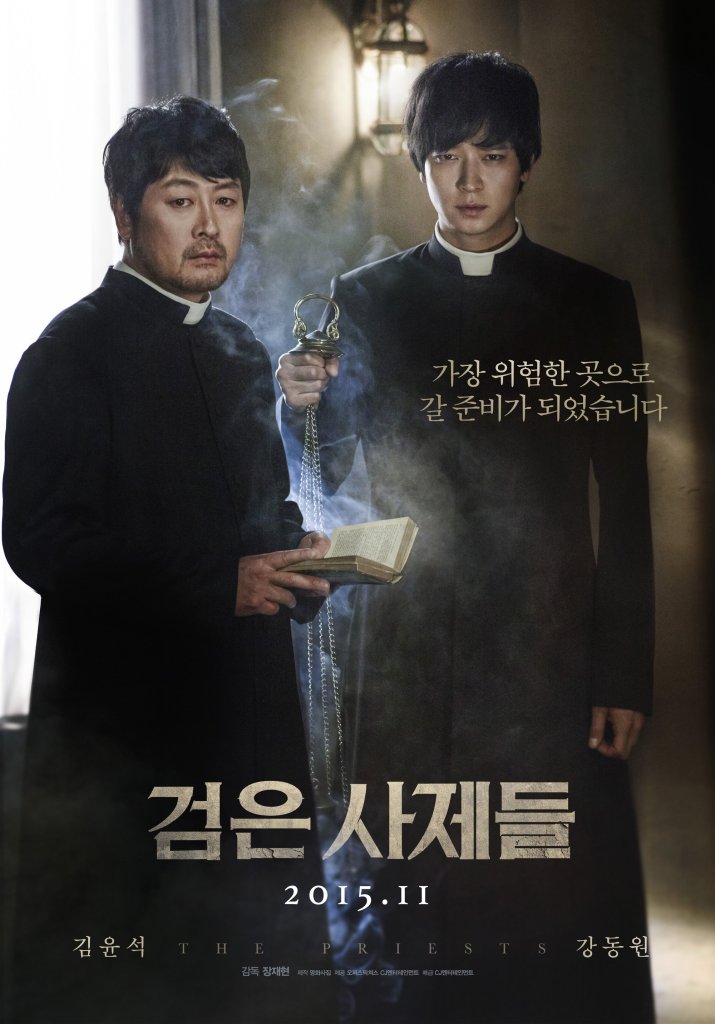
The Priests (검은 사제들, Jang Jae-Hyun, 2015)

The Priests PosterThe era of hero priests might be well and truly behind us but at least when it comes to the exorcism movie, the warrior monk resurfaces as the valiant men of God face off against pure evil itself risking both body and soul in an attempt to free the unfortunate victim of a possession from their torment. To many, the very idea sounds as if it belongs in the medieval era – what need have we for demons now that we posses such certain, scientific knowledge? There are, however, things far more ancient than man which are far more terrifying than our ordinary villainy.

The Priests (검은 사제들, geom-eun sa-je-deul) begins with two Italian clerics in the Vatican discussing the somewhat taboo subject of exorcism and demonic possession. They have been made aware of a serious case in Korea and, as they can’t get in touch with the Korean exorcism department, head out there themselves for a little pest control of their own. However, the enemy they were facing proves too strong for them as they become involved in a multi-car pileup allowing the demon they’ve trapped inside a small dog to escape and migrate to a better humanoid host.

Now we turn to the Korean church authorities who are also worried about a young girl who appears to be displaying the symptoms of demonic possession. Their leader repeatedly tells them he will not “officially” sanction any kind of action whilst making it clear he wants them to go ahead and deal with it. No one knows much about exorcism so they reluctantly turn to the maverick preacher Father Kim who, as it also turns out, is a friend of the girl, Young-sin. Matters have reached an impasse as the demon inside Young-sin tries to make her commit suicide by jumping from her hospital room window in order to migrate to a more robust host, leaving her in a comatose state.

Anyone with any basic knowledge of exorcism in the movies knows that you need a young priest and an old priest so Kim gets a sidekick in the form of the equally unusual Deacon, Choi, who is not exactly a model student at the seminary. Choi is initially quite excited to be assisting in such an arcane ritual even if his chief job title is “pig sitter” and his new “boss” is a gruff and world weary man who he has also been asked to spy on just in case this is all down to Kim acting “inappropriately” with an underage girl rather than a visitation from an even more ancient evil. Needlessly to say, Choi quickly discovers Father Kim has been speaking nothing but the truth and he is in way over his head.

Though this is a Catholic crisis bound up with Christian cosmology and centuries old rites, this is still Korea and so Eastern concerns seep into the Western religiosity. The night Kim has chosen for his final assault coincides with the Buddhist feast of the Hungry Ghost when the dead return to visit the living and one of the criteria that made Choi a prime choice for the role of the assistant is that he was born in the year of the Tiger and therefore supposedly more spiritually sensitive. In a quest to help the girl, all avenues are being explored so shamanistic rites are also performed (though with little success) and Kim seems to have a kind of professional respect for his shamanic counterpart even if the two obviously disagree on some quite fundamental things.

Thanks to its double layer of exoticised mysticism, The Priests quickly works up a supernaturally charged atmosphere though its eyes are strictly on entertainment rather than exposing any deep seated social concerns.The possessed girl calls forth animals, speaks in tongues offering bizarre and disturbing prophesies, and eventually projectile vomits blood and snakes all over a painting of the Virgin Mary yet the film never aims for the shock factor that defined Friedkin’s The Exorcist. Though tagged as horror, The Priests is not particularly frightening (jump scares aside) but does manage to evoke a kind of ever present dread in the face of this unfaceable threat.

Despite the heavy atmosphere, Jang is careful to allow the occasional comic episode providing a welcome break from the seriousness of the war against ancient evil. Impressive action sequences including the early serial car crash and later chase sequence add to the urgency of the situation whilst also alleviating some of the ever increasing tension. Though he visits some dark places, Jang’s world view is not as bleak as Friedkin’s as we’re left with a feeling of restitution, once the original threat removed, though we obviously know that other such threats remain. The heroic ending allows us to forget this for a moment as we enjoy the right and proper victory of good over evil, neglecting that this is but one of many battles in an eternal, celestial war.


Reviewed at a Teaser Screening for the upcoming London Korean Film Festival to take place in November 2016.

US trailer with English subs: