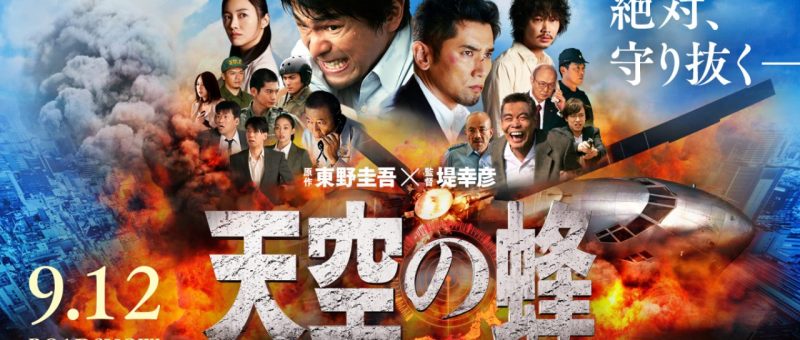
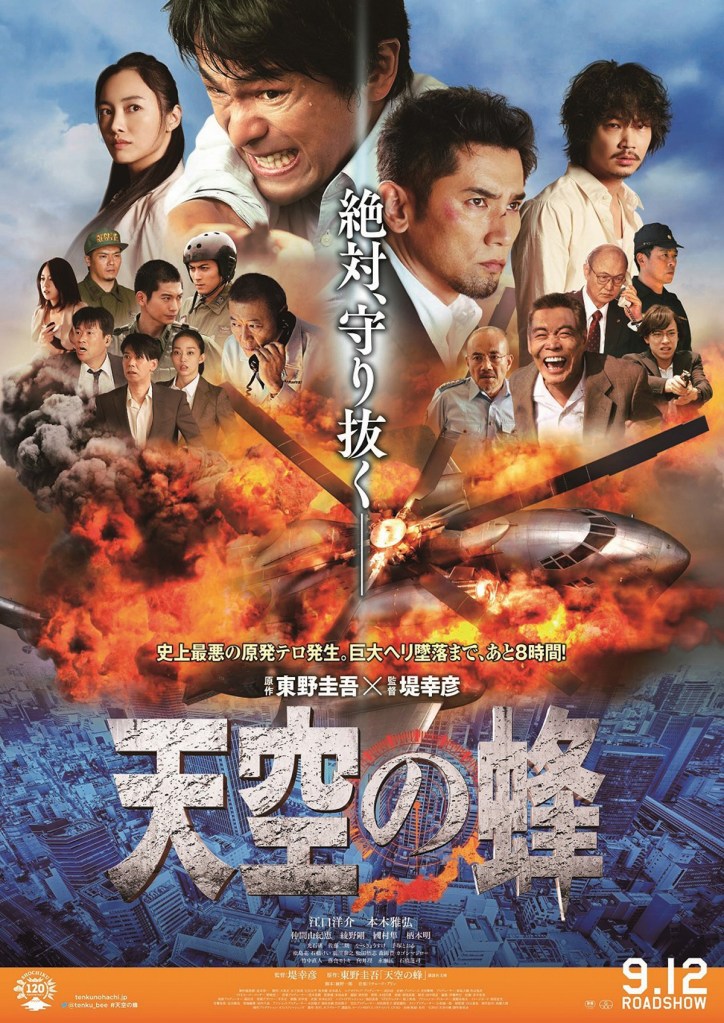
The Big Bee (天空の蜂, Yukihiko Tsutsumi, 2015)

Blockbuster cinema wades into the anti-nuclear debate in a characteristically ambivalent take from prolific author Keigo Higashino adapted from his 1995 novel. Brought to the screen by blockbuster master Yukihiko Tsutsumi, The Big Bee (天空の蜂, Tenku no Hachi) is less wedded to its anti-nuclear message than it might at first seem, eventually sliding into a more comfortable tale of failed fathers redeemed with a potentially ambiguous coda that perhaps undercuts much of what has gone before . 

The main action takes place on 8th August, 1995 which falls between the 50th anniversaries of the atomic bomb attacks on Hiroshima and Nagasaki and is also a few months after the devastating earthquake in Kobe. Engineer Yuhara (Yosuke Eguchi) is about to unveil the “Big Bee”, Japan’s largest ever helicopter built with state of the art technology. He’s brought along his wife and son, but it’s clear there is discord in the family and neither of them are very impressed that the security guard didn’t even seem to know who he was so perhaps he’s not such a big shot after all. While his wife Atsuko (Kei Ishibashi) takes their son Takahiko (Shota Taguchi) and another boy to get a drink from the vending machine, Yuhara talks things over with a colleague and reveals that his workaholic lifestyle has destroyed his family life. He’s about to be divorced and doesn’t seem particularly cut up about it. Asked what’s going to happen to Takahiko, Yuhara cooly explains that it’s best he stays with his mum because he isn’t capable of being a good father to him. Unfortunately, Takahiko overhears him say that he’s essentially planning to abandon him and runs off to explore on his own, eventually sneaking aboard the helicopter which is then hijacked by a mysterious villain via remote control who flies it over a nuclear power plant and gives the Japanese government the eight hours before the fuel runs out to agree to shut down all the nuclear power plants in Japan. 

Yuhara’s failure as a father is immediately brought home to him when his son manages to throw the other boy, who climbed in with him but got injured, to safety, but doesn’t trust his dad enough to jump himself after hearing him say he was going to abandon him to his mother. Yuhara, meanwhile, was able to jump and grab the ramp of the helicopter but not to climb up and reach his son. He has to accept that his failure as a father and in consequence as a man is complete and total. His quest to save Takahiko is also a quest to redeem himself in the eyes of his society and avoid being branded as a man who sacrificed his family for a career and was finally unable to protect them.

Yet, at the present time, he’s also trying to save a nation while in the place of a father. To his mind, he built the Big Bee as a rescue craft, but its usage is most obviously military. He and his former colleague Mishima (Masahiro Motoki) see themselves as neutral engineers interested in technology but not particularly in its application. The government is reluctant to shut the plants down not only because cutting the power is extremely inconvenient and damaging to the economy, but because they do not wish to reopen the nuclear debate and risk the general populace realising that nuclear power is not entirely “safe”. Of course, this has extreme resonance in light of the Fukushima disaster, the government wilfully putting lives at risk in order to safeguard its own ends in refusing to issue an evacuation order for a potential disaster area covering all of the nation’s major cities right across the centre of the Japanese mainland.

This cavalier approach to human life extends to those working in the plants. We’re quickly introduced to a middle-aged woman whose son died of leukaemia she believes caused by lax safety procedures while the prime suspect is a friend of his (Go Ayano) who may also be suffering from a terminal illness caused by exposure to radiation after working as a cleaner at the power station. He vows revenge on a society which has rendered him “disposable”, thrown away like used tissue and left to fend for himself only because he was born into socio-economic circumstances which left him with no other choice than to take a “dangerous” job for employers that failed to protect him in much the same way Yuhara has failed to protect his son. 

The farmers in the town where the plant has become the major source of employment complain that no one wanted it but everyone needed the money. One leans into the mild message that perhaps we take our electric lives for granted, plugging in our toothbrushes without really thinking of the costs incurred in how we generate our power. Hotels dim their lights and switch off elevators while guests complain of the heat in the absence of aircon, but didn’t we manage OK before the power grid? Perhaps so, but our lives have changed. It might be as well to think again if those changes are really as good for us as we think they are, but you can’t turn back the clock. 

Not even the villain really wants the clock turning back, just better accountability and proper governance that puts the lives of citizens ahead of economic gain. Then again, a lot of this is personal, an act of self harm rebranded as revenge taken in atonement for the failures of a father. In this respect Yuhara may redeem himself, but there’s a note of discomfort in the jump to 2011 and the Fukushima disaster which doesn’t so much shout “I told you so” as over rely on the heroic efforts of the Self Defence Force as they battle a disaster which the powers that be from the government to the power company have failed to prevent. Yuhara wonders if the country is worth dying for and is comforted only in a trick he taught his son to calm his anxiety in the wake of the Kobe earthquake, tapping out “I am here” in morse code as an affirmation of survival which might also serve to say the work goes on even while “fathers” continue to fail in their responsibilities. 


Hong Kong release trailer (English subtitles)

Love’s Twisting Path (多十郎殉愛記, Sadao Nakajima, 2019)

Sadao Nakajima joined Toei in 1959 and worked for the studio throughout its golden age, mostly associated with jidaigeki and gangster movies which were Toei’s stock in trade well into the 1970s and perhaps beyond. Now in his 80s, Nakajima’s last narrative feature was released over 20 years ago. A kind of last hurrah, Love’s Twisting Path (多十郎殉愛記, Tajuro Junai-ki) is a willing throwback to the glory days of chanbara, even bearing a dedication title card to genre giant Daisuke Ito, and doing its best to resurrect the classic Toei programmer magic. 

Appropriately enough, the action takes place at a moment of intense change. As the film opens, the men of Choshu who have left their clan to foster their own brand of revolution in opposing the shogunate in favour of the emperor and a desire to reject Western influence, are hiding out in a shack while bad mouthing soon-to-be-allies Satsuma and the man who seeks to unite them, Sakamoto Ryoma. They are soon discovered by Kyoto’s elite Shogunate police, the Mimawarigumi, and ambushed. Their leader, the famed Katsura Kogoro (Masatoshi Nagase), signals that times have indeed changed by pulling out a pistol and defending himself at distance. 

Meanwhile, Choshu fugitive in hiding Tajuro (Kengo Kora) is trying to make ends meet with his painting, designing patterns for ladies kimonos but seemingly with little success. He has the sunken cheeks, vacant eyes, and slight slowness of someone who drinks too much and hasn’t had a decent meal in a very long time. We learn that he left Choshu with the others on the pretext of revolution, but his real purpose was escape from a restrictive samurai existence and most pertinently from his miserable poverty. Having long since given up the idea of a being a samurai, he’s already sold his sword and is attempting to live under the radar, unaware that similarly troubled bar hostess Otoyo (Mikako Tabe) has fallen in love with him. Otoyo was adopted by the bar’s owner, Omitsu (Yuriko Mishima), a former geisha, who intended to sell her to a geisha house. She eloped with a man she loved instead, but it turned out that he was minded to sell her too so she came back and now runs the bar while taking care of the ageing Omitsu. 

The crisis occurs when men of Choshu arrive in search of Tajuro in the hope that he will rejoin their cause. He doesn’t want to, showing off his samurai skills (and neatly disguising the fact that he has no blade through advanced technique) but pointedly asking for a hefty payment from his former mentor Sanzaemon (Asahi Kurizuka) in belief that it would not be paid. Sanzaemon, however, comes through and leaves a message for Tajuro to meet him behind a nearby shrine. He however spends the entirety of his money getting blind drunk in Otoyo’s bar, during which time Sanzaemon is caught by the Mimawarigumi, breathing his last words to Tajuro’s younger half-brother Kazuma (Ryo Kimura) to the effect that he must reunite with Tajuro and fight for the good of the country. 

On the run and holed up with a patient priest and his beloved wife, Tajuro is asked why it is he’s decided to pick up his sword once again despite his reluctance. Asked if was for country or for money Tajuro shakes his head, leaving the priest to correctly guess that it was for love. Tajuro has fallen in love with Otoyo, the only person who either doesn’t believe he is a failed samurai and drunken fool, or doesn’t care. The world however is still too chaotic for romance, and so their pure love will have to wait. 

Tajuro’s fate is in many ways the direct result of his attempt reject his responsibility as a samurai, daring to live as a common man with all of the freedoms and burdens that entails. The force which constrains him in both worlds is poverty. Whatever else he is, he is too poor for love, unable to feed himself let alone a wife either as a low wage samurai or a ronin. The price he pays is in his desire to cross borders. The samurai world is not done with him yet and while the denizens of this small backwater worry about paying their rent paying little mind to what’s going on in the capital, political intrigue is not something that he can go on ignoring. After all, not picking a side is in a sense also picking a side. The Mimawarigumi pride themselves on not being as savage as the Shinsengumi (which largely consists of ronin, lower ranked samurai, and commoners whereas the Mimawarigumi are elite samurai and direct retainers to the Shogunate), but their job is still to bring in fugitive rebels like Tajuro and his bid for “freedom” may be doomed to failure in a world still constrained by the law of the samurai. 


Original trailer (no subtitles)

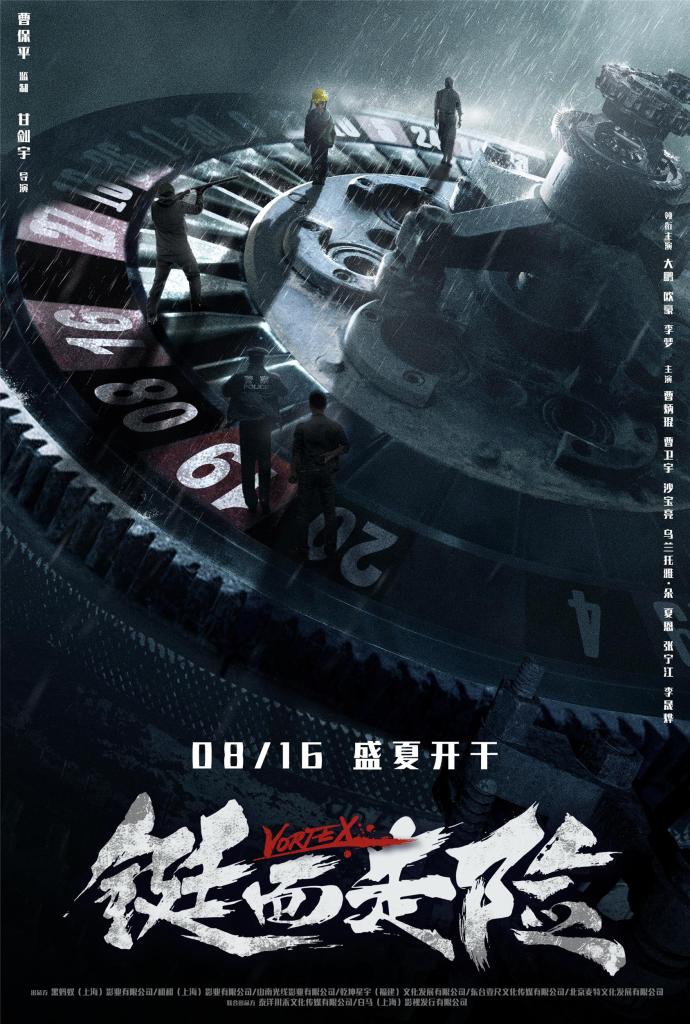
Vortex (铤而走险, Jacky Gan Jianyu, 2019)

“Only with money are you treated like a person” according to cynical gangster Xia Tao, another embattled soul turning to the dark side to try and survive after multiple betrayals in a cruel and unforgiving society. Anchored by a standout performance from comedian Da Peng in a rare dramatic role, Vortex (铤而走险, Tǐng’érzǒuxiǎn) sees one feckless young man falling into a web of criminality after succumbing to the temptation of an easy fix to all his problems. As he and others will discover, however, actions have consequences and there are no victimless crimes. 

Liu Xiaojun (Da Peng) is an embittered young(ish) man left orphaned and resentful after his policeman father died on the job. Nominally a mechanic with his own repair shop he also has a self-destructive gambling problem that’s left him deep in debt to local mobsters. He tries to hit up an old friend, Brother Wan (Cao Bingkun), recently released from prison, but he offers him a job rather than money, explaining that it’s only crime adjacent not actually illegal. All he has to do is drive unregistered cars back to the depot where Wan can resell them, and he’ll get 10,000 a pop. Xiaojun isn’t really into crime so he’s reluctant to take Wan up on his offer, trying his policeman uncle (Cao Weiyu) for yet another loan instead, but when he blows that too in reckless gambling he realises he has no other choice. The plan goes badly wrong, however, when the car Xiaojun is supposed to pick up turns out to be occupied and he finds himself in a fight with the Xia brothers. He manages to get it back to the depot but there’s another problem. The car was carrying cargo, a little girl, Qiqi (Audrey Duo / Doo Ulantoya), hidden in the boot apparently at the centre of a kidnapping plot. 

Xiaojun wants to call the police, but Wan is against it. He urges him to dump Qiqi somewhere and hope the authorities find and return her to her parents, but Xiaojun finds himself keeping the little girl. When Qiqi’s frantic mother calls the cellphone that was left in the car he realises she’s worth around two million and it’s too good an opportunity to pass up. After all, it’s a win/win. Xiaojun isn’t going to hurt Qiqi like the kidnappers might so he’s keeping her safe and he gets to pocket the money in return. 

So begins his series of moral justifications for the vortex of crime that began with his decision to drive the car for Wan which was itself caused by his gambling problem and addiction to quick fix solutions. Later, we can see that his self-destructive streak is a kind of despair, an act of self-harm taken in revenge against the unfairness of losing his father who apparently did everything right but paid a heavy price in attempting to serve justice. Xiaojun unfairly blames his uncle for failing to save his dad in choosing to do his job as a policeman and fiercely resists his well-meaning, paternal attempts to save him from his life of crime adjacent activity, but later perhaps comes to understand after unwisely becoming involved in the kidnapping plot, bonding with the innocent Qiqi, and then bitterly regretting his foolishness in placing her in danger to chase the money. 

Yet money, as Xia Tao (Sha Baoliang) says, is only thing that counts and you’re nothing without it. Xia Tao too turned to crime following parental betrayal, no longer seeing the point in playing by the rules if all it gets you is a lifetime of righteous suffering. Wan’s bar hostess friend, Zhao Qian (Li Meng), seems to be mixed up in the plot too though as her role becomes clear we realise that she has also succumbed to a quick fix solution out of desperation, trying to save a man she loves but later describes as “only a friend” by resorting to desperate measures to ensure he gets a life saving operation. Even little Qiqi seems to feel betrayed by mum and dad, answering Xiaojun’s question about who she thinks loves her more with a sad “neither”, while asking not to be returned to her mother because she’s been stopping her seeing her father and she misses him.  

As we later find out, there might be quite a good reason for that which Qiqi is too young to understand, but still she wants to try and find him and seems cheerful enough with Xiaojun while he says he’ll help her. Until then, Xiaojun becomes an awkward paternal presence, touched by Qiqi’s earnestness and lost in a moral quagmire trying to work out where the best place to send her might be while still hoping to get his hands on the cash. Redeeming himself by, in a sense, paying the ransom by deciding to prioritise saving Qiqi from the Xia brothers, Xiaojun begins to extricate himself from the vortex of crime, rediscovering a more positive paternal presence of his own in forgiving uncle Wang and his own father in coming to an understanding of their choices through being forced to make his own. A minor condemnation of the modern China’s wealth obsession and growing social inequality, Vortex finds its villains less villainous than one might expect, succumbing to the slippery slope of criminality in desperation and a sense of abandonment in a society which seems content to leave them behind.


Vortex is represented by Fortissimo Films.

International Trailer (English subtitles)

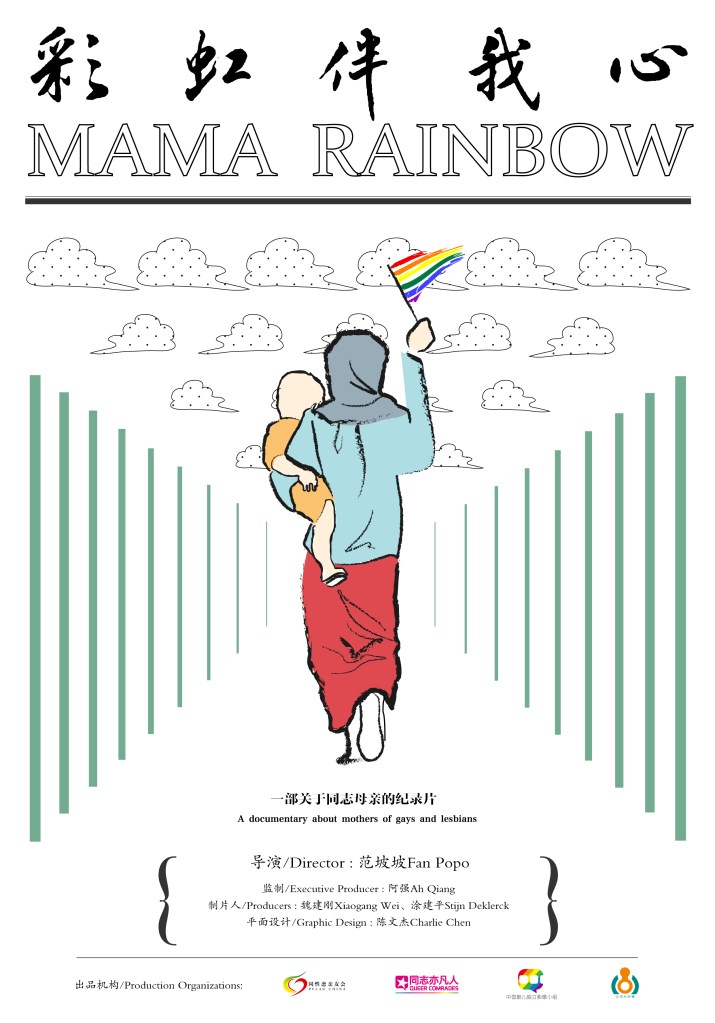
Mama Rainbow (彩虹伴我心, Fan Popo, 2012)

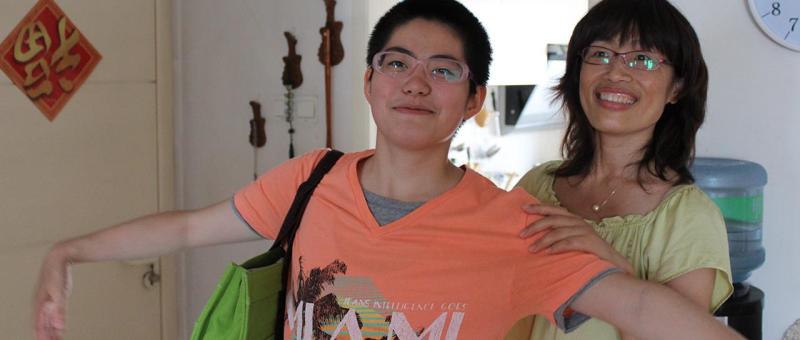
Though homosexuality is not illegal in contemporary China, it is perhaps still taboo. The notoriously strict censorship board is particularly averse to content which features LGBTQ+ themes, though many mainstream filmmakers have been able to get around the regulations with subversive allusions to same sex relationships. Times are perhaps changing. Rather than a gloomy exploration of the issues many young gay men and women face, Fan Popo’s Mama Rainbow (彩虹伴我心, Cǎihóng Bàn Wǒ Xīn) spins a tale of mass acceptance in following six mothers of gay children who, though not always so immediately supportive, have embraced their kids’ sexuality and in fact become activists themselves. 

Fan opens with a vox pop session asking members of the public about their views on homosexuality. The first few answers are predictably depressing with even young people looking embarrassed and either walking off or replying that they find the idea “disgusting”, “very bad”, “abnormal”, or “unacceptable”. Later, a few are found who think the question itself is unnecessary because they have no problem with gay people, but then asked how they’d feel if their child told them they were gay, most immediately say they wouldn’t like it though some concede there’s nothing they could do about it anyway so they’d have to just go with it while others say they’d simply “guide” them back towards the “right” direction so that they’d make “good choices”. 

One of the mothers, Mama Zhao, admits she originally thought the same way. Her son had agreed to marry a girl, but after reading book by another influential Mama decided that he couldn’t, committing himself to living an authentic life as an openly gay man. She tearfully admits that though she has accepted it herself, she is still ashamed to explain to other people, brushing off questions about why her son is still single with dull platitudes rather than simply telling them that he is gay. 

After attending talks by the woman who wrote the book that so affected her son, Mama Wu, Mama Zhao began to understand a little better, realising that the most important thing is that her son is happy which he certainly wouldn’t be if he forced himself to marry a woman to fulfil a social ideal. Education seems to be the key. Meiyi didn’t know much about homosexuality and thought it was something that was popular abroad that people did because it was trendy. When her daughter became close with a high school friend who ended up moving in with them, she began to see things differently and got to know a few other gay kids who she thought were all fantastic. She jokes that her daughter’s girlfriend “brainwashed” her by taking her to LGTBQ+ events, while the other girl’s own mother is also very supportive, actively empathising with her daughter’s choices right down to appreciating her taste in other women. 

Sister Mei and her son, meanwhile, are a cheerful and exuberant double act. She moved into the city to live with him in fear that he might need help locating other gay men (a move which seems like it should be counter productive but probably isn’t given the open nature of their relationship) and has now thrown herself into activism as a member of China’s PFLAG, becoming a surrogate Mama for all those who’ve been rejected by their families or just need to hear a supportive voice. Likewise, Mama Jasmine was as cool as could be when her daughter, after years of bringing female “classmates” over to dinner, finally came out and was supportive in a lowkey way until approached by Ah Qiang, the founder of PFLAG in China, to become a local organiser. 

Mama Wu, the woman who wrote the book that changed the mindset of Mama Zhao’s son and convinced her that his happiness was all that really mattered, speaks to another young man who reveals he hasn’t come out to his mother (assuming she doesn’t see the documentary) because she is in poor health and he worries that she just won’t be able to take the shock. Mama Xuan, who suspected her son was gay but hoped he’d grow out of it, tearfully takes to the stage to reveal that he has suffered violence and discrimination because of his sexuality, beaten up at school but too afraid to get help in case his parents find out why he was attacked, and subsequently blacklisted and expelled leaving him with a blemish on his record when the kids who attacked him had their views reinforced by the tacit approval of the school authorities. There is obviously work still to be done, but there are plenty of people willing to do it, because at the end of the day all they want is for their kids to be safe and happy and enjoying exactly the same rights as everyone else while surrounded by love and acceptance. 


Mama Rainbow is currently available to stream via Vimeo as part of Queer East’s online edition with all proceeds going to support independent cinemas.

Original trailer (English subtitles)
Parallel World Love Story (パラレルワールド・ラブストーリー, Yoshitaka Mori, 2019)

Have you ever had the feeling that you’re going out of your mind? Something just doesn’t feel right, your sense of perception and memory of the past don’t match the “reality” you’re currently experiencing but you have no way of knowing what’s at fault, you or the world. The hero of Parallel World Love Story (パラレルワールド・ラブストーリー) finds himself in just this situation as he begins to experience two very different states of being, one in which he’s living happily with the love of his life, and another where she’s dating his childhood friend. Is he a love crazed fool, or is someone messing with his head?

Travelling the same train into college every day, Takashi (Yuta Tamamori) fell in deep silent love with a young woman whose train crossed his every Tuesday morning. On his very last Tuesday, he decided he’d switch trains and try to find her, but she did exactly the same thing and so they missed each other, leaving Takashi feeling as if his fated romance was matter for another universe. He is then shocked when an old friend from middle school, Tomohiko (Shota Sometani), introduces that same young woman, Mayuko (Riho Yoshioka), as his girlfriend some time later. A little resentful at this twist of fate, Takashi tries his best to keep his feelings hidden. Meanwhile we see him “wake up” in his own apartment where Mayuko, who lives with him, is lovingly making him breakfast. He has a vague recollection of Tomohiko turning up in his dream, but can’t seem to remember what it is he’s doing these days. In this “reality”, Tomohiko introduced Mayuko to Takashi, and has abruptly moved to LA without even saying a proper goodbye, apparently working on a top secret research operation which keeps him entirely out of contact. 

Both men are involved with the research of perception and memory. Talking to another friend before “meeting” Mayuko, Takashi points out that it’s your brain which constructs the current reality from your sense perception. He grasps her hand and her brain tells her she feels it, but she’d feel the same thing if he isolated and activated the relevant sectors of her brain which tell her her hand is being grasped. Tomohiko, meanwhile, has gone one step further. He’s discovered that it’s neural networks rather than the brain which store memories and that, by stimulating those neural receptors in a particular way, memory can be rewritten or fake memories introduced. He proves this by illegally experimenting on a friend, making him think he’s from Tokyo when he’s really from Hiroshima, and reconstructing the image of an old teacher so that she’s now a pretty young woman and not a portly old man. 

The gap between what you want to be true and the “reality” is shrinking. It turns out that it’s easy enough to trick yourself into thinking something is true when it isn’t when you really want it to be. According to Tomohiko, once your brain has decided to approve the “fake” reality, cognitive dissonance is overcome by everything else being forced to fit into your new conception of the world. Takashi, however, is struggling to integrate his two parallel lives, one bleeding inconveniently into the other leaving him wondering which one is the “reality” and which the “dream”. 

Takashi’s less palatable qualities, however, exist firmly in the recent past of reality A in which romantic jealousy appears to have driven him half out of his mind, causing him to semi-stalk the innocent Mayuko and consider betraying his childhood friend by stealing the woman he loves. Takashi’s sole justification for his behaviour is the unspoken romantic connection which brought them together on the train, a connection he is “certain” she remembers without being given any particular encouragement from her side. Reality B Takashi, who lives with Mayuko, similarly becomes obsessed with the idea that Mayuko in some way belongs to Tomohiko, awakening an unpleasant sense of misogyny in his desire to prove that Mayuko is his because he saw her first on the train. 

Meanwhile back in Reality A, he starts to suspect that Tomohiko is up to no good pursuing unethical research practices and working towards a sinister goal. It’s unfortunate that Tomohiko also has a prominent limp from a lame leg, playing into the unpleasant association of villainy and disability. Even Takashi, having turned dark, accuses Mayuko of dating him out of pity, while Tomohiko describes him as a “hero” for having rescued him from childhood bullies. Takashi starts to suspect him, not only of being a mad scientist, but perhaps actively hostile and plotting revenge against him for stealing Mayuko. In a particularly Higashino-esque touch, Tomohiko’s motives turn out to be kinder than they might at first seem even if they’re a little on the extreme side, leaving Takashi pushed to make a similarly extreme yet strangely counterproductive move by his infinitely shady boss who is also exploiting the increasingly conflicted Mayuko. Yet, aside from all the philosophical musings on the nature of reality, the interplay of desire and memory, and the ethics of manipulating the perception of others, this is in essence a love story between two people who gazed at each other from passing trains. If you find each other once, you can find each other twice, and, in love, reality might not be so important.


Original trailer (hit subtitle button for English subs)

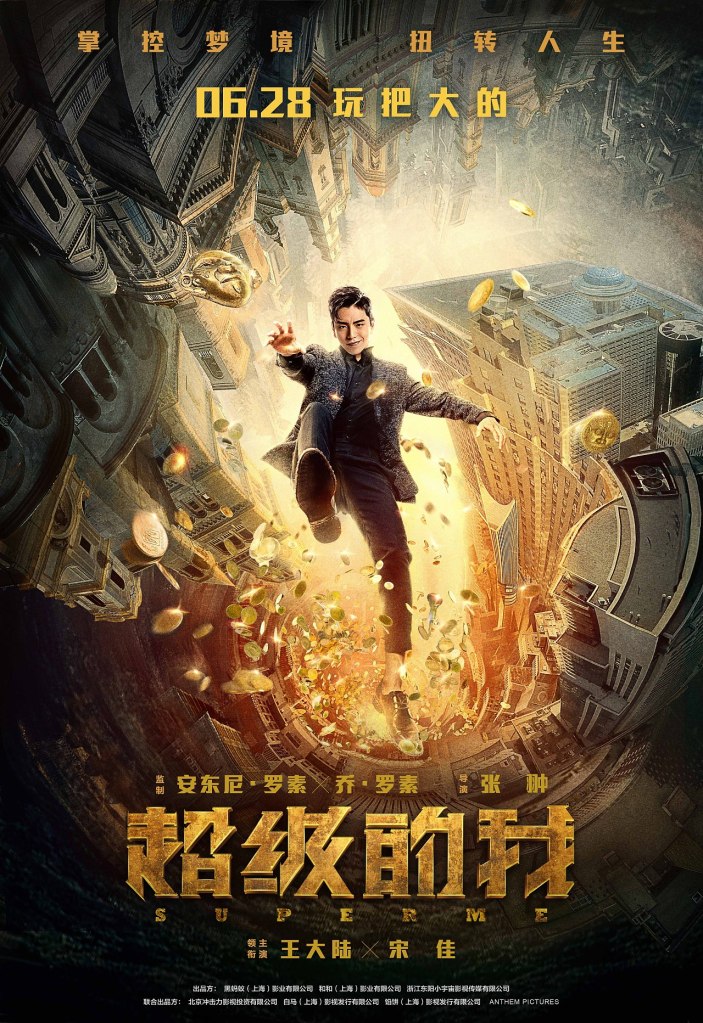
Super Me (超级的我, Zhang Chong, 2019)

Can you dream yourself into a better reality, or should you concentrate on being your best self in this one? That’s a dilemma that the hero of Zhang Chong’s Super Me (超级的我, Chāojí de Wǒ) barely has time to think about as he battles despair-fuelled hopelessness and possibly unrequited love for the beautiful woman who runs his local cafe. If only I were rich, he might well think, but though poverty is undoubtedly a factor in his malaise it’s his sense of inferiority which has him beaten down and all the money in the world won’t change that. 

We first meet Sang Yu (Darren Wang Talu) on a subway train where he recites a mantra to himself about how he’s “not an ordinary man”, he has the ability to work under pressure, and though his parents died and he has no friends those are merely tests from God which he has overcome. He is “brilliant and talented, diligent and motivated”, he expects success will soon arrive only he hasn’t slept a wink in the last six months because of the constant night terrors which plague him such as the one we’re about to witness. Sang Yu is asleep, and a nightmare is stalking him. 

Killed by having his head plunged through the train’s floor, Sang Yu wakes up and we realise his waking life is also quite depressing. A 20-something screenwriter, he’s behind on his rent and in debt to his friend/agent while unable to work because of his insomnia. Wandering around in a daze after being evicted from his apartment and getting his laptop stolen, he writes a note to his friend telling him he’ll have to pay him back in the next life and prepares to jump off the roof opposite the cafe where his true love, Hua (Song Jia), works, only to be saved by the intervention of the jian bing seller (Chin Shih-chieh) from down below who advises him to try waking up from his dreams before he gets killed by reminding himself that he is dreaming. Sang Yu takes him at his word and manages to emerge from the dreamworld unscathed clutching the weapon that once belonged to his attacker. After selling the antique sword to weapons brokers, he realises he’s sitting on a cash cow, routinely looting the dreamworld of many of its treasures and quickly harnessing its power to become a wealthy and successful man. All of which gives him the courage to finally approach Hua, wielding his newfound economic power to invest in the apparently failing cafe. 

A modern day take on Jack and the Beanstalk, Super Me finds its nice guy hero corrupted by his wealth, abandoning his artistic dreams and becoming a debauched playboy living in a five star hotel even if he continues to pine for Hua while his friend, Sangge (Cao Bingkun), reverts to being something like a minion riding on his coattails to enjoy the life of the rich and famous without really having to do anything. The irony is that the money and the fancy clothes give Sang Yu the confidence to talk to Hua, but those aren’t things she particularly cares about and may in a sense actually turn her off. Enjoying romantic evening walks, she guesses he’s a screenwriter from his veiled hints about robbing the dreamworld and is interested more in his artistic self than the wealthy man of mystery, all of which gives Sang Yu the inspiration to finish that screenplay which of course becomes a hit beyond his wildest dreams. 

After a while, Sang Yu starts to suspect there must be a cost involved in all this good fortune, realising that he’s traded some of his life away in return for riches and will perhaps never be free of his nightmares. Yet, as a cruel gangster tells him, everyone’s wealth comes at the sacrifice of life, echoing his earlier thoughts that those who are successful are either those who’ve chosen to sacrifice things that others won’t or are unscrupulous thieves and exploiters. “A person who betrays himself can never control his own destiny”, according to the gangster. Asleep or awake, Sang Yu realises he’s battling himself, that there are no quick fixes, and illusionary success is as hollow and as fleeting as the dreamworld from which he has perhaps failed to learn the appropriate lessons. As the old man told him, perhaps what he needs is to wake up, not only to life’s possibilities but to his own. Echoing his earlier The Fourth Wall, Zhang allows Sang Yu to walk through a door into a “better” reality which is perhaps the one he inhabited before but was too intimidated to actually live in. He hasn’t definitively beaten his demons, but perhaps subdued them while his new life seems determined to reward him for his choice in unexpected ways. Nevertheless, can you trust this reality more than any other? There may be no way to know, but you’ll have to learn to trust it all the same. 


Super Me is represented by Fortissimo Films.

Original trailer (no subtitles)

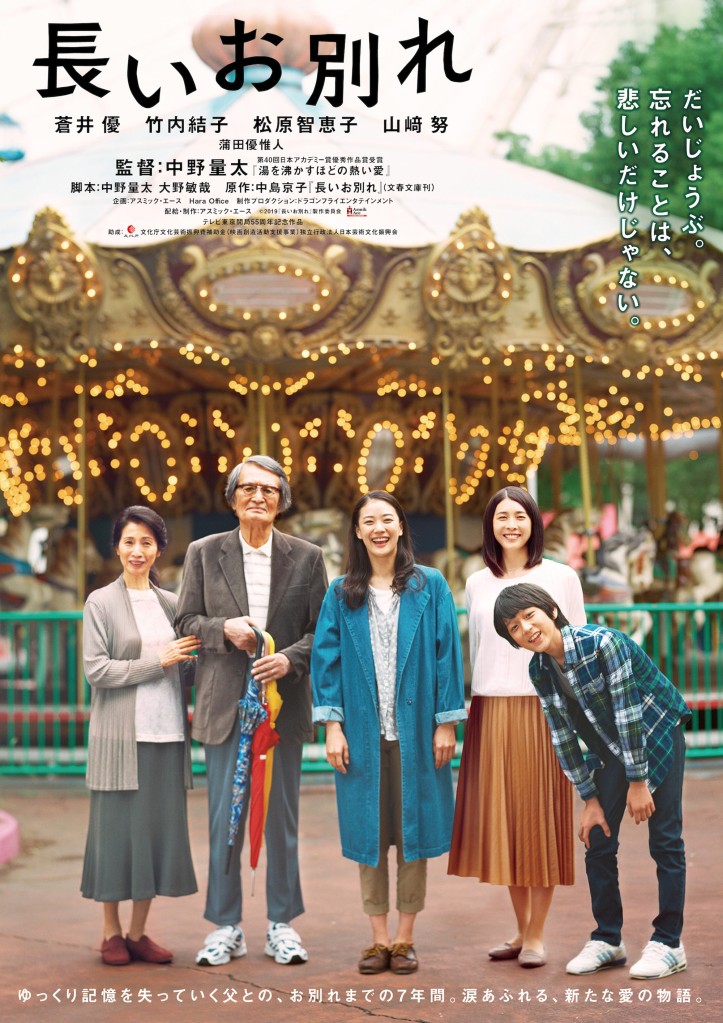
A Long Goodbye (長いお別れ, Ryota Nakano, 2019)

Contemporary Japanese cinema has gone lukewarm on the idea of family, presenting it more often as a toxic rather than supporting presence. Among the few remaining positive voices, Ryota Nakano’s previous films Capturing Dad and Her Love Boils Bathwater never made any attempt to pretend that families are always perfect or that the family as a concept is one which must always be defended, but ultimately found warmth and solace in the mutual act of pulling together as the sometimes wounded protagonists found strength rather than suffocation in unconditional love. 

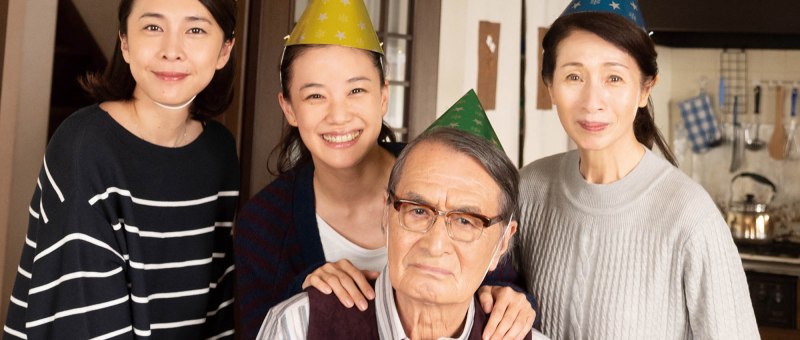
A Long Goodbye (長いお別れ, Nagai Owakare) finds something much the same as three women are forced to deal in different ways with their relationships with austere father Shohei (Tsutomu Yamazaki), once an authoritarian head master but now suffering from dementia and rapidly losing the ability to read. The first signs of decline are felt in 2007, prompting mum Yoko (Chieko Matsubara) to ring both of her increasingly distant, almost middle-aged daughters, and invite them to their father’s 70th birthday party, 

33-year-old Fumi (Yu Aoi) is in the middle of breaking up with a boyfriend who’s giving up on his dreams of being a novelist to take over the family potato farm. Fumi’s dream is owning her own restaurant, but somehow it seems a long way off. Older sister Mari (Yuko Takeuchi), meanwhile, is a housewife and mother living with her fish scientist husband Shin (Yukiya Kitamura) and son Takashi (Yuito Kamata) in California. Lonely in her marriage, Mari struggles with her English and finds it difficult to make friends with her husband’s colleagues who openly criticise her language skills from across the room while Shin makes no attempt to defend her. 

Meanwhile, Yoko carries the heaviest burden alone in trying to manage her husband’s decline even as he begins to wander off, forever asking to go “home” even when he is already there. The concept of “home” however may be difficult to define in a rapidly changing society. All the way across the sea, Mari frets about her parents and feels guilty that, as the older sister, she should be doing more and has unfairly left everything to Fumi just because she happens to be in closer proximity. She is then slightly perturbed to realise that Fumi hasn’t seen their parents since the previous New Year and is equally shocked at the noticeable change in her father who goes off on random tangents and suddenly loses his temper over trivial things. 

Mari flies back to Japan when crises occur but her husband is not as understanding as one might expect. His research concerns fish which adapt to their environment and it’s clear he’s begun to follow their example, falling wholesale for Western individualism. He criticises Mari’s anxiety for her parents’ health by reminding her that her “family” is her husband and son, bearing no responsibility for additional relatives. Shin now believes strongly in individual responsibility, that Shohei and Yoko need to look after themselves. As such he takes little interest in his family leaving all the childcare duties to Mari in somehow believing that children raise themselves. When the teenage Takashi (Rairu Sugita) goes off the rails and starts skipping school, Mari turns to the time old philosophy that he needs a good talking to from his father, but all Shin can come up with is that his son’s his own man and he’s sure he has his reasons. 

The young Takashi is acclimatising too, getting himself a red-haired Californian girlfriend who’s obsessed with J-pop and kanji, but later replaces him with another Asian guy when he goes back to Japan to spend time with Shohei while he’s still somewhat present. Meanwhile, Fumi works hard to realise her dream but encounters a series of disappointments both romantic and professional as she too reconsiders the idea of family and whether it’s truly possible to slide into one that has already fractured. Becoming responsible for her parents’ care shifts her into a maternal role she might not have expected, maturing in a slightly different direction while Mari remains trapped and lonely, neglected by her newly individualist husband who only cares about his research and shut out by her understandably angsty teenage son. 

Crises are, however, good for bringing people back together. Shohei it seems was a typical father of his times, distant and authoritarian, perhaps not always easy to be around. Fumi worries that she disappointed him, not becoming a teacher as he’d hoped while also failing to achieve her dreams of becoming a restaurateur, while Mari just wants what her parents had in a loving and supportive marriage surrounded by the warmth of  family. Shohei might not always have shown it, but there’s a lot unsaid in his constant desire to go “home” back to the time his kids were small. Home is where the heart is after all, even if you don’t quite remember the way. 


Original trailer (No subtitles)

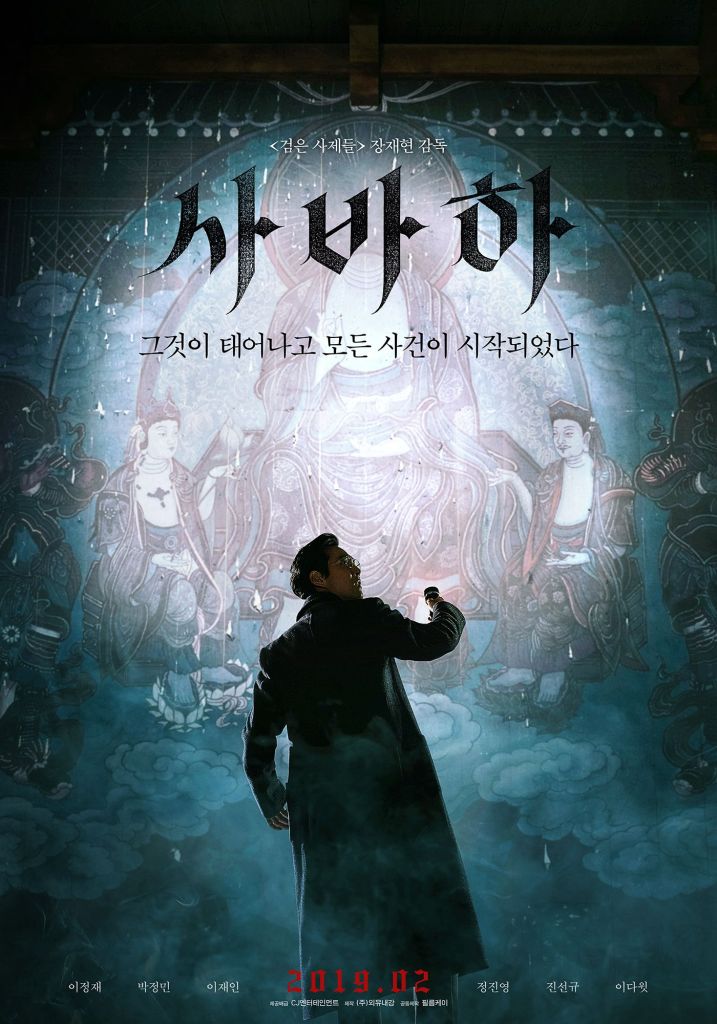
Svaha: The Sixth Finger (사바하, Jang Jae-hyun, 2019)

The thing about prophesies and the prophets who proclaim them, is that they only have power if people choose to believe in them. “Faith” can become a convenient cover for those who’d rather not explain themselves, a mechanism for manipulating sometimes vulnerable people looking for a greater truth or a purpose in their lives. Svaha: The Sixth Finger’s (사바하) dogged pastor is intent on investigating religious crimes and exploiting spiritual charlatans but he of course has his own agenda, that mostly being that he’s keen to get money off his clients who are in turn hoping to bolster their authority by rooting out “heresies”.

Leader of the Far Eastern Religious Research Institute, a kind of religious detective agency employing only himself, an undercover assistant, and a “deaconess” secretary, Pastor Park (Lee Jung-jae) makes his money flagging up dodgy and/or exploitative practices connected with organised religion. According to him, freedom of religion is “overly” protected, and he is alone on the frontlines of a spiritual war against unscrupulous cultists. Though some kind of protestant, he often works for/against the Catholic Church and is good friends with a Buddhist monk who gives him a tip off about a weird sect he can’t get a handle on, Deer Hill. 

Meanwhile, a young girl, Geum-hwa (Lee Jae-in), explains to us that she was born with an “evil” twin clamped to her leg. The twin wasn’t expected to survive, but is still living with Geum-hwa and her family who keep her locked up in a shed like a beast. Rightly or wrongly, Geum-hwa connects her sister with the deaths of her parents which occurred fairly soon after the children were born. Her grandfather, with whom Geum-hwa now lives, never even registered the birth of a second child out of fear and shame, never expecting her to survive this long. When a truck hits a bridge and exposes the hidden body of a murdered teenager, the police start investigating too, eventually leading them to two young men loosely connected with the shady Buddhist cult. 

“This world is one big muddy mess”, according to the cultists at Deer Hill. It’s not difficult to see why people might be looking for spiritual reassurance in such a chaotic world, but it’s exactly that need that places like Deer Hill may be seeking to exploit. Nevertheless, the only thing that Park’s undercover agent turns up is that there doesn’t appear to be anything untoward. Deer Hill doesn’t accept offerings from its members and even gives money away to the needy. Tellingly, the real nitty gritty to Park’s clients is in doctrinal deviation, they only really want to know what kind of Buddhism it is that they do and if it’s in line with broader teachings of the faith. 

A further tip off leads them to the mysterious Je-seok (Jung Dong-hwan), a legendary Buddhist priest who studied in Japan but apparently devoted himself to the Independence movement and is said to have achieved enlightenment. Je-seok’s teachings are dark in the extreme, “Pain is the fruit of faith” goes his mantra, “pain purifies your blood”. He believes that he is the “light” that will conquer the “darkness” by snuffing out “snakes”. One of his disciples, brainwashed as a vulnerable young man and encouraged to do terrible things in the name of good, begins to doubt his teachings when confronted with a possible hole in his logic and the very real human cost of his strategy. 

Not quite as cynical as he seems, Park retains his faith. It’s ironic that all this is taking place at Christmas and centres on the prophesied birth of a child that threatens someone’s sense of personal power. Unlike most, Park has always regarded Christmas as a “sad” holiday, unable to forget that Jesus’ birth was accompanied by the mass murder of innocent baby boys. He wonders where God is now and why he permits these things to happen. Park has faith that God sent Jesus into the world for the greater good, but Je-seok has convinced his followers that the same is true of him, that he has come to banish the darkness and that all their pain and suffering is fuel in a holy war. Their faith has been redirected and misused for the benefit of a false prophet, while his opposite number has been made to live a life of bestial misery solely because of superstitious prejudice. The police is a fairly irrelevant presence in this series of spiritual transgressions, but there is much less clarity to be had in “truth” than one might hope with “faith” the only solution in an increasingly uncertain world.


Svaha: The Sixth Finger is currently available to stream on Netflix in the UK (and possibly other territories).

International trailer (English subtitles)
A Dog Barking at the Moon (再见 南屏晚钟, Xiang Zi, 2019)

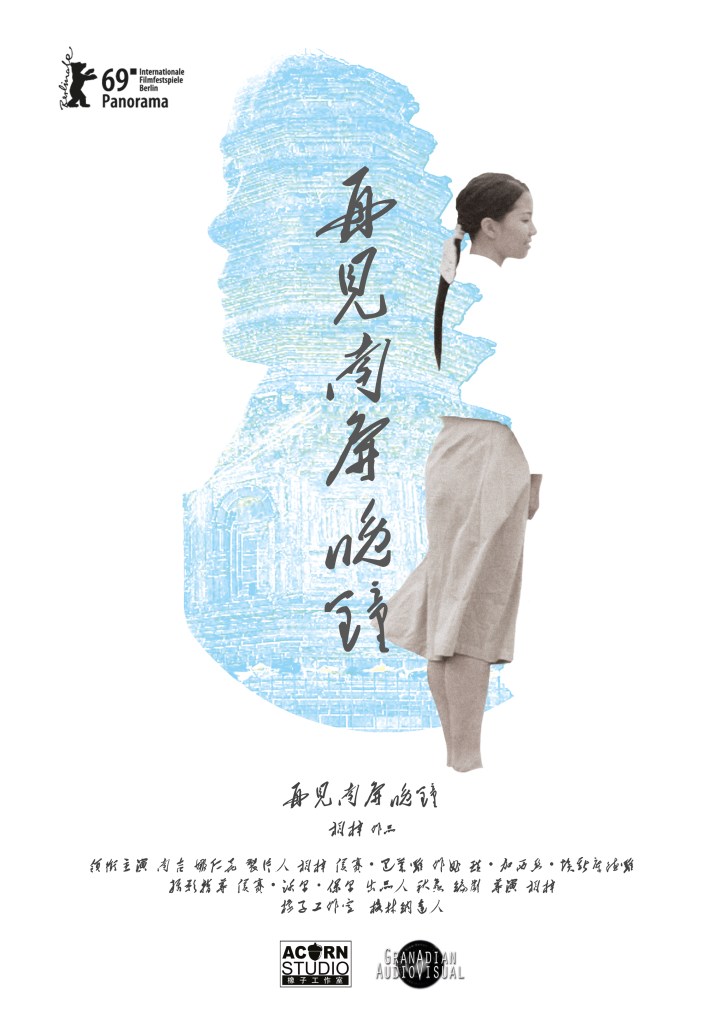
“How come she doesn’t cry?” a mother anxiously asks, still on the table following a caesarean section, “don’t worry, it’s a matter of time”, the doctor reassures her. Representations of LGBTQ+ life in contemporary Chinese cinema are few and far between, which might be one reason why the famed dragon seal does not appear before A Dog Barking at the Moon (再见 南屏晚钟, Zàijiàn Nán Bīng Wǎn Zhōng), a Spanish co-production and the autobiographical first feature from Xiang Zi. A melancholy contemplation of the various ways a repressive social system can echo through generations, Xiang’s film quietly suggests that one form of authoritarianism breeds another and that if conformity comes at the cost of happiness then it’s a price not worth paying. 

Heavily pregnant Xiaoyu (Nan Ji) has returned to China from the US with her Western husband (Thomas Fiquet) to have the baby under better medical conditions, but it appears that an extended stay with her parents may not exactly be a cause for celebration. Though her mother Jiumei (Na Renhua) originally seems cheerful and happy to see her daughter, it’s clear that there is frostiness between the two women and distance within the marriage. Gradually we discover that the iciness which pervades the Huang home is born of a sense of resentment and betrayal which stems back (partly, at least) to Jiumei’s discovery that her husband, Tao (Wu Renyuan), is a closeted homosexual after discovering him with his male lover. 

That does not, however, quite explain Jiumei’s ambivalent attitudes to her daughter. “I haven’t had a happy day since you were born” she’s fond of saying, regretting that she didn’t strangle her at birth after hearing from a fortune teller that Xiaoyu would be her “nemesis”. The allegorical quality of Jiumei’s story about going off the dog because he came to love her husband more is certainly not lost on Xiaoyu, awkwardly asked to translate for her husband, swinging between pity and resentment, as bound by social norms as her mother in feeling obliged to take care of a woman who does nothing other than reject her. 

Xiaoyu has long thought her parents should separate, but it never seems to happen. Her father tells her that he worries what will happen if they do. Jiumei says she wants to go to the US and live with Xiaoyu who can hardly refuse, but Tao knows that his wife is not an easy woman and the effect of her constant presence could prove detrimental to the state of his daughter’s marriage. Even so, Xiaoyu thinks it would be the best thing for all of them, if only to escape the never-ending hell of their cycle of bitterness. 

Jiumei, meanwhile, has found refuge elsewhere – in the arms of a shady Buddhist cult. Jiumei believes that her husband is “mentally ill”, blaming his mother for some sort of past trauma that’s made him the way he is. The cult preaches filial piety, family values, and loyalty to the state, and is always ready to “help” in return for “support”. Hoping to buy her way into a more respectable life, Jiumei donates vast amounts of money in the hope of meeting the mysterious Master Zhao who, it is claimed, can “amend” her husband’s sexuality and therefore fix all of the other problems in her life. 

“Gossip can bury you alive” we later hear Jiumei exclaim in a flashback, talking about about something else and perhaps explaining why she’s so desperate that her marriage of convenience be a superficial success. From the outside the Huangs are an ideal couple, wealthy and successful, and so their society tells them they shouldn’t complain. Having suppressed her own desires, complaining that Tao has been “impotent” for most of their marriage, Jiumei is angry and resentful of those who are unable or choose not to do the same. Meeting Tao’s lover, Xiaoyu laments that what Jiumei most wants is never to separate from her father until the end of time, but does not quite know the essential truth of it until an unexpected and all too brief moment of candour from her distant mother. Xiaoyu’s hand wants to reach out to her, but there is a barrier between them which it seems cannot be breached. 

Moving between Jiumei and Tao’s early courtship and the present day, moments of elliptical symmetry present themselves. Fengxi (Chen Zhengyuan), Tao’s younger lover, is it seems himself about to be married and become a father. Xiaoyu meets with him and explains that she is not in any way against their relationship, but pleads with him not to enter a marriage of convenience and ruin a young woman’s life, as her father did, solely for the sake of passing on the family name. He is quick to correct her that he would never consider it, his fiancée is a lesbian who wanted a child with her lover, he is merely helping them out while getting everyone’s parents off their backs.

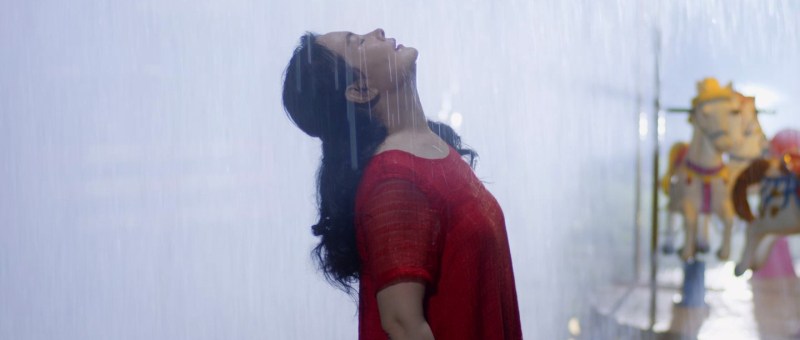
Fengxi refuses “to build happiness over someone else’s sorrow”. Meanwhile, a long time in the past, someone asked Jiumei what the point was in marrying and having children to live a life you don’t believe in, but she could only answer that marriage was a matter of finding someone who fit the role more than it was of love. Jiumei has been playing her role at the cost of her soul and it’s left her lonely and bitter. Internalised homophobia has ruined them all, forcing them to live lives of empty conformity with only the cold comfort of having fulfilled their duty to society. Jiumei resents Xiaoyu because she is the symbol of the price she paid to lead a conventional life, doubling down on her bet for normality, and passing on that same, misery inducing repression to her daughter. Xiaoyu seems to have escaped by going abroad, but even if her husband tries to convince her that her parents’ lives are not her responsibility, remains equally bound by a sense of obligation now given new weight by her impending motherhood. Xiang ends with a heartbreaking dream sequence in which all can dance together, joyfully embracing their true selves free of shame or anxiety, but as others retreat from the rain some choose to stay, sitting all alone in darkened rooms knowing it is they themselves who elected to turn out the light.


A Dog Barking at the Moon is available to stream via BFI Player until 4th April as part of this year’s BFI Flare.

Original trailer (English subtitles)
Masquerade Hotel (マスカレード・ホテル, Masayuki Suzuki, 2019)

The thing about hotels is, people often go to them when they want to be someone else, so how can you be on the look out for suspicious behaviour when everyone is to some degree acting out of character? Keigo Higashino is one of Japan’s best known authors particularly praised for his elaborately plotted mysteries. In contrast to some of his famous detective novels, Masquerade Hotel (マスカレード・ホテル) leans into his softer side, taking its cues from Agatha Christie in its ultimately cheerful exploration of the strange world of hotels while praising the detective acumen both of cynical policemen and eager to please hoteliers. 

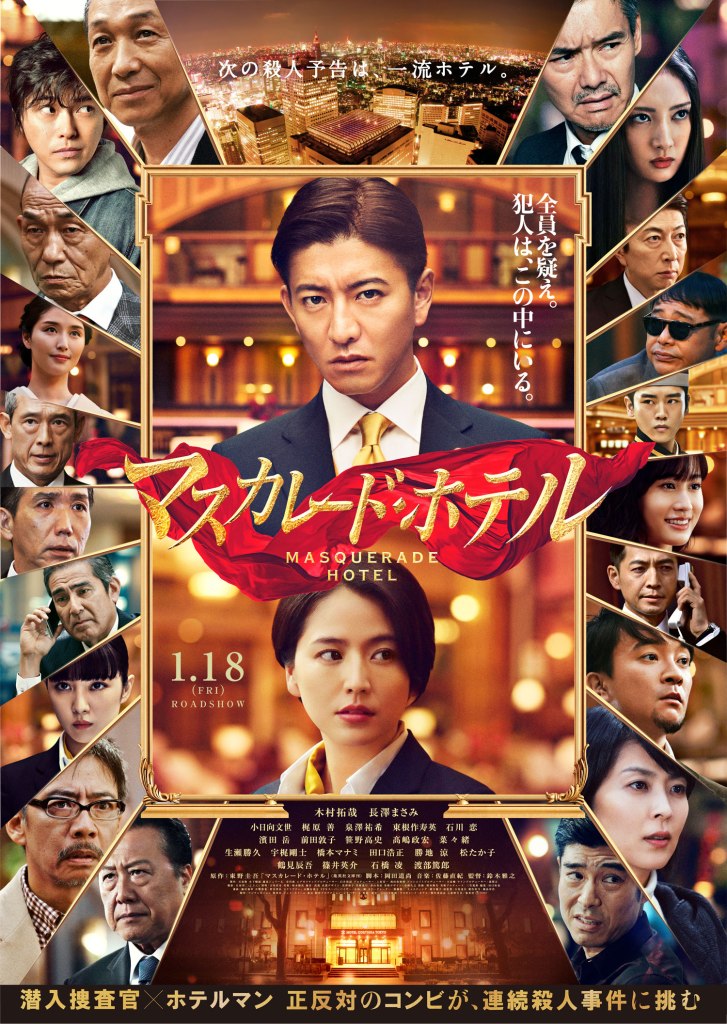
The police are hot on the trail of a serial killer and, due to clues found at the previous crime scenes, have concluded the next killing will take place at the Hotel Cotesia Tokyo. To scout out the potential crime scene, the detectives have co-opted the hotel’s basement as an incident room and are preparing to go undercover to keep an eye on things upstairs. Dishevelled detective Nitta (Takuya Kimura) has been assigned to the front desk because of his English skills apparently honed while living abroad in his youth, and is to be paired with earnest hotelier Naomi Yamagishi (Masami Nagasawa) who will do her best to turn him into a first rate hotelman. 

As might be expected, Nitta and Naomi do not exactly hit it off. Gruff and given to giving everyone in 50m radius the hard stare, Nitta is a shaggy haired middle-aged man in creased suits and shiny shoes. The first thing Naomi makes him do is get a haircut which does wonders for his image, but also plays into the peculiar art of masquerade which defines hotel life. Nitta is in the habit of calling the guests “customers” which instantly irritates Naomi who has spent the entirety of her professional life learning to be deferent. She reminds him that in here the guests are in charge, they make the rules and therefore can never break them. Her job is to provide the best service, which means she often has to set her personal pride aside and allow the sometimes unpleasant clientele, the ones who like to come to posh hotels to throw their weight around and abuse the staff, to get away with being obtuse because that’s just part of her job. 

That’s a big ask from Nitta who is both a proud man and a justice loving policeman to whom the idea of letting people act badly is almost anathema. To do his job, however, he’ll have to learn to bear it or risk letting a potential serial killer slip through his fingers. What Naomi realises is that they’re more alike than they first seemed. Both of their jobs rely on an astute assessment of their targets, even if they come at it from opposite ends. Naomi knows that each of her guests is wearing a kind of mask, taking on a slightly different persona when they enter her hotel, but her job is to see past it without ever letting on. A good hotelier knows what the guest wants before they do and is always ready to provide it, that’s the nature of service. So Naomi trusts her guests and is careful not to judge them. Nitta, meanwhile, is a policeman so he’s trained to question everything and suspect everyone. His job is to unmask and confront his suspects with who they really are. 

They both, however got into this game essentially because they want to protect people even if she wants to protect them inside and he out. Which means of course that they can work together after all, learning a little something from each other along the way. Naomi, well versed in the liberties often taken by her guests, is nearly taken in by an obvious scam that only Nitta is quick enough to catch thanks to his cynical policeman’s logic. He’s also first to suspect that there’s something not quite right with a harmless little old lady, and though Naomi senses it too she’s minded to let it go and doubles down on being the perfect servant thanks to her animosity towards Nitta. That “not quite right”, however, proves to be a slight misreading of the guest who, like many Nitta encounters, is pretending to be something they’re not for reasons that prove perfectly understandable once revealed. 

But then, Higashino characteristically pulls the rug out from under us and asks if we haven’t been suckered in buying all those reasonable excuses. Thanks to his conversations with Naomi, Nitta begins to get a grip on the crime, while she struggles with her conscience after learning that her guests may be in much more danger than she thought. Staking all on justice, the pair of them vow to abandon their respective professions if a guest gets hurt, but fail to realise that the crime may hit far closer to home than they’d anticipated. Nevertheless, what we’re left with is a strangely whimsical admiration for the weird world of hotels where no one is quite the same person they were before they walked through the revolving doors.


Original trailer (no subtitles)