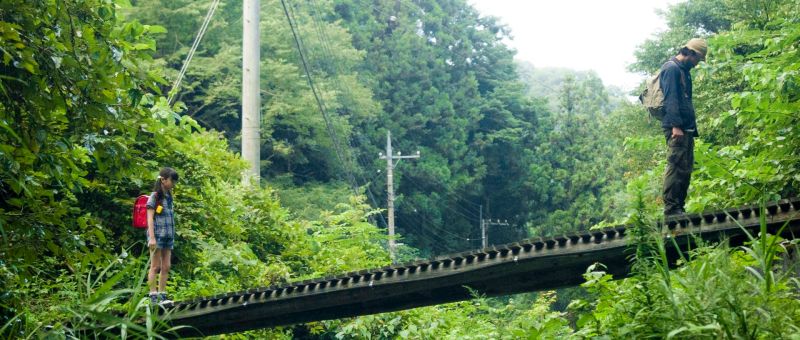
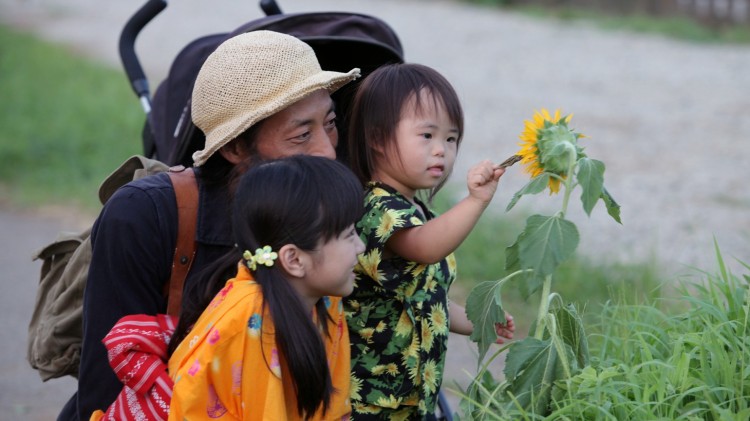
 When tragedy strikes the one thing you ought to be able to rely on is your family, but when the tragedy occurs within that sacred space which exits between you what is to be done? Yosuke Takeuchi’s The Sower (種をまく人, Tane wo Maku Hito) attempts to provide an answer whilst putting one very ordinary, loving and forgiving family through a series of tests and tragedies. Lies, regret, and despair conspire to ruin the lives of four once happy people but even in the midst of such a shocking, unexpected event there is still time to turn towards the sun rather than continuing in the darkness.
Mitsuo has just been released from a mental hospital where he received treatment for a nervous breakdown suffered as a direct result of his time as a relief worker after the Tohoku earthquake. Returned to the home of his brother Yuta and his wife Yoko, Mitsuo’s family welcome him with open arms and he is delighted to become reacquainted with his niece Chie as well as meet her younger sister, Itsuki, for the first time. Yoko’s mother was supposed to be coming to help out with the children but has let them down once again. Uncle Mitsuo seems like the perfect solution but tragedy strikes when he leaves the girls on their own to use the bathroom and comes back to discover that Chie has dropped her sister causing her to hit her head on a curb stone surrounding the play area. Mitsuo rushes to the hospital but Itsuki sadly passes away. Chie, overcome with guilt and fear hastily blurts out that her uncle dropped her sister while Mitsuo remains silent.
Chie’s claim sparks a series of consequences, the most serious being the intervention of the police investigating the case who are very keen to poke into each and every dark corner of this ordinary family. Despite the fact that Mitsuo has only been staying with them a few days, the police almost push Chie into accusing Mitsuo of abuse of herself or her sister, trying to paint him as some kind of deranged threat to children everywhere. Feeling guilty about her lie and fearing discovery Chie wisely says nothing, refusing to further incriminate her uncle save for a brief indication that he dropped Itsuki on purpose.
The police are confused, there is no evidence to support the idea of Mitsuo having behaved suspiciously towards either of the girls or anyone else for that matter. There would seem to be no motive for him to intentionally harm his niece, though they don’t want to accuse a grieving little girl of making things up, either. Conscious that making Chie give evidence in court, especially if she is going to lie, may have terrible consequences for her future the police urge Yuta to talk seriously with his daughter and try to get to the truth through more gentle means.
The swarm of tragedy has, however, already begun to drive a wedge between husband and wife. Even at the funeral, Yoko’s mother, forgetting that much of this is her fault for letting the family down in the first place, overtly criticises their decision to take in someone just released from a mental hospital and then leave him in charge of small children. Yuta loves his brother unconditionally, knows he is a good person and does not blame him for his daughter’s death. Yoko cannot bring herself to understand her husband’s reaction, accusing him of choosing his brother over their little girl. Mitsuo’s mental state is repeatedly offered as an explanation for what happened despite the fact that his condition is down to an excess of compassion rather than any violent or destructive impulses.
This same kindness means that he never speaks out or tries to appeal to Chie to tell the truth, shouldering the burden of her guilt and perhaps feeling responsible for having left her alone with her sister even if it was only for a few short minutes. Chie, terrified and remorseful, deeply regrets her original lie but is too afraid to tell the truth. When she finally does decide to confide in someone she is instantly told to keep quiet about it, placing an additional burden on this already fragile little girl in asking her to keep two terrible secrets perhaps for the rest of her life.
As the family falls apart, Mitsuo retreats to the woods, planting sunflowers which Itsuki loved in every conceivable place. Literally trying to plant the seeds of hope, Mitsuo spreads his sunflowers far and wide bringing colour and life to a landscape of desolation but it may take more than flowers to light the way out of this hellish, inescapable tragedy.
The Sower was screened at the 17th Nippon Connection Japanese Film Festival.
Original trailer (English subtitles)
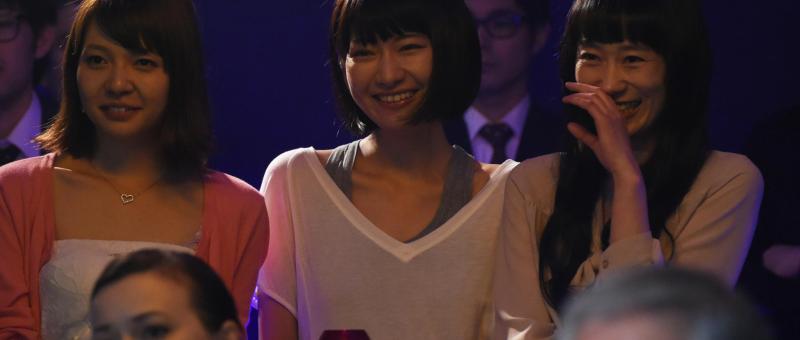
 Towards the end of the 60s and faced with the same problems as any other studio of the day – namely declining receipts as cinema audiences embraced television, Nikkatsu decided to spice up their already racy youth orientated output with a steady stream of sex and violence. The Roman Porno line took a loftier approach to the “pink film” – mainstream softcore pornography played in dedicated cinemas and created to a specific formula, by putting the resources of a bigger studio behind it with greater production values and acting talent. 40 years on Roman Porno is back. Kazuya Shiraishi’s Dawn of the Felines (牝猫たち, Mesunekotachi) takes inspiration from Night of the Felines by the Roman Porno master Noboru Tanaka but where Tanaka’s film is a raucous comedy following the humorous adventures of its three working girl protagonists, Shiraishi’s is a much less joyous affair as he casts his three lonely heroines adrift in Tokyo’s red light district.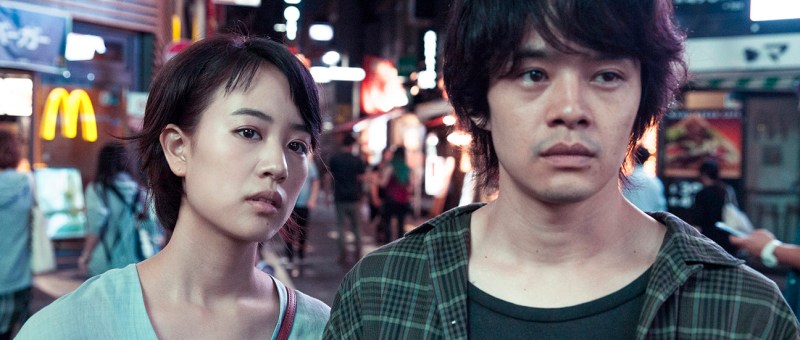
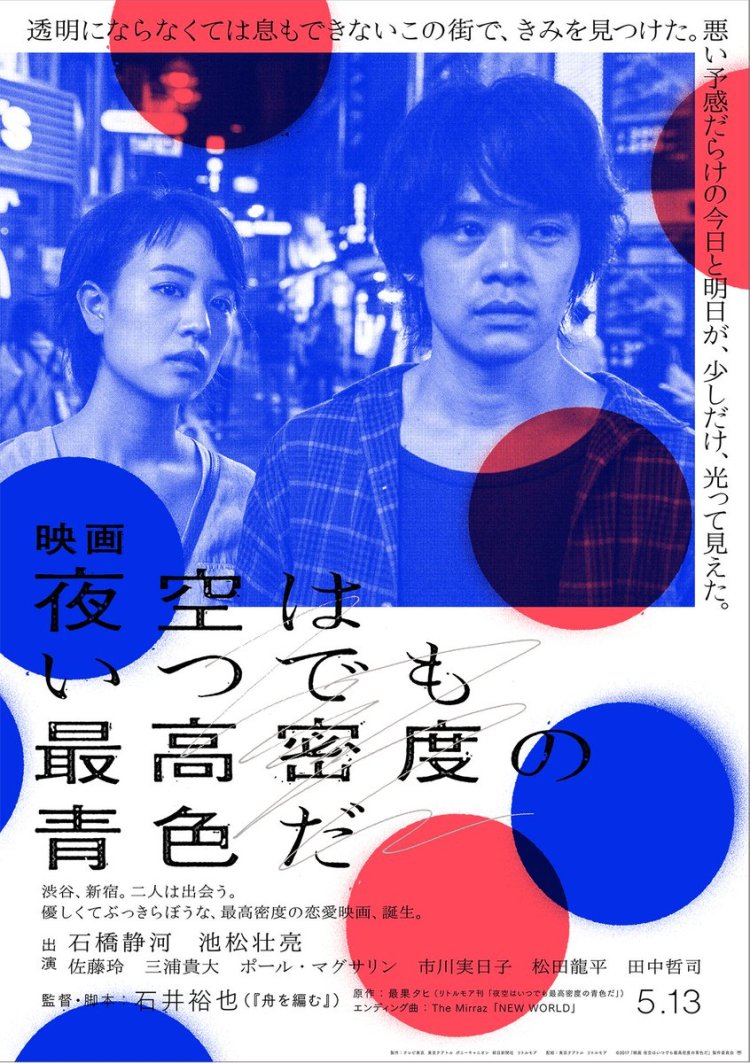 Learning to love Tokyo is a kind of suicide, according to the heroine of Yuya Ishii’s love/hate letter to the Japanese capital, The Tokyo Night Sky is Always the Densest Shade of Blue (夜空はいつでも最高密度の青色だ, Yozora wa Itsudemo Saiko Mitsudo no Aoiro da). This city is a mess of contradictions, a huge sprawling metropolis filled with the anonymous masses and at the same time so tiny you can find yourself running into the same people over and over again. Inspired by the poems of Tahi Saihate, The Tokyo Night Sky is at once a meditative contemplation of city life and an awkward love story between two lost souls who somehow find each other in its crowded backstreets.
 Generally speaking, murder mysteries progress along a clearly defined path at the end of which stands the killer. The path to reach him is his motive, a rational explanation for an irrational act. Yet, looking deeper there’s usually something else going on. It’s easy to blame society, or politics, or the economy but all of these things can be mitigating factors when it comes to considering the motives for a crime. Gukoroku – Traces of Sin (愚行録), the debut feature from Kei Ishikawa and an adaptation of a novel by Tokuro Nukui, shows us a world defined by unfairness and injustice, in which there are no good people, only the embittered, the jealous, and the hopelessly broken. Less about the murder of a family than the murder of the family, Gukoroku’s social prognosis is a bleak one which leaves little room for hope in an increasingly unfair society.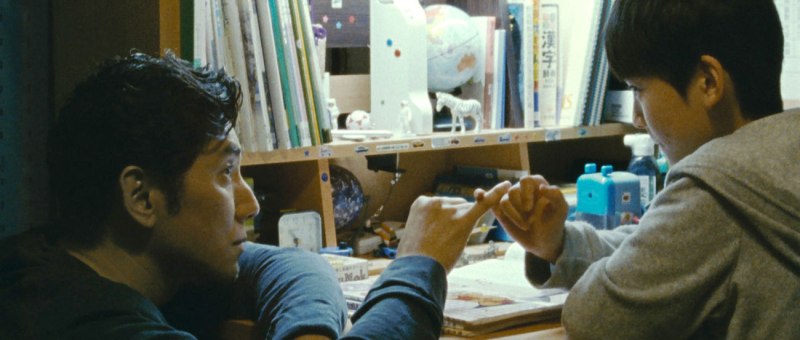
 Self disgust is self obsession as the old adage goes. It certainly seems to ring true for the “hero” of Miwa Nishikawa’s latest feature, The Long Excuse (永い言い訳, Nagai Iiwake) , in which she adapts her own Naoki Prize nominated novel. In part inspired by the devastating earthquake which struck Japan in March 2011, The Long Excuse is a tale of grief deferred but also one of redemption and self recognition as this same refusal to grieve forces a self-centred novelist to remember that other people also exist in the world and have their own lives, emotions, and broken futures to dwell on.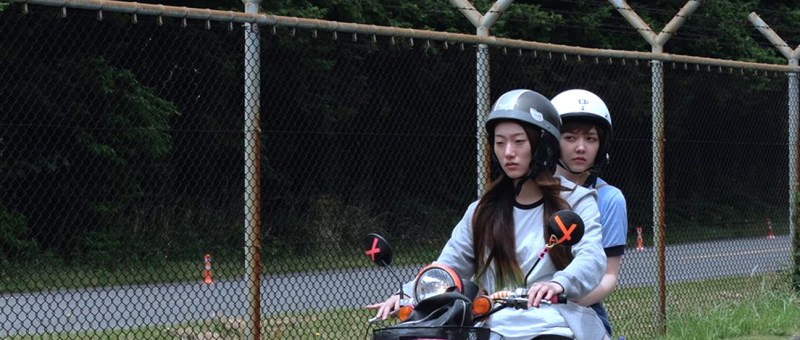
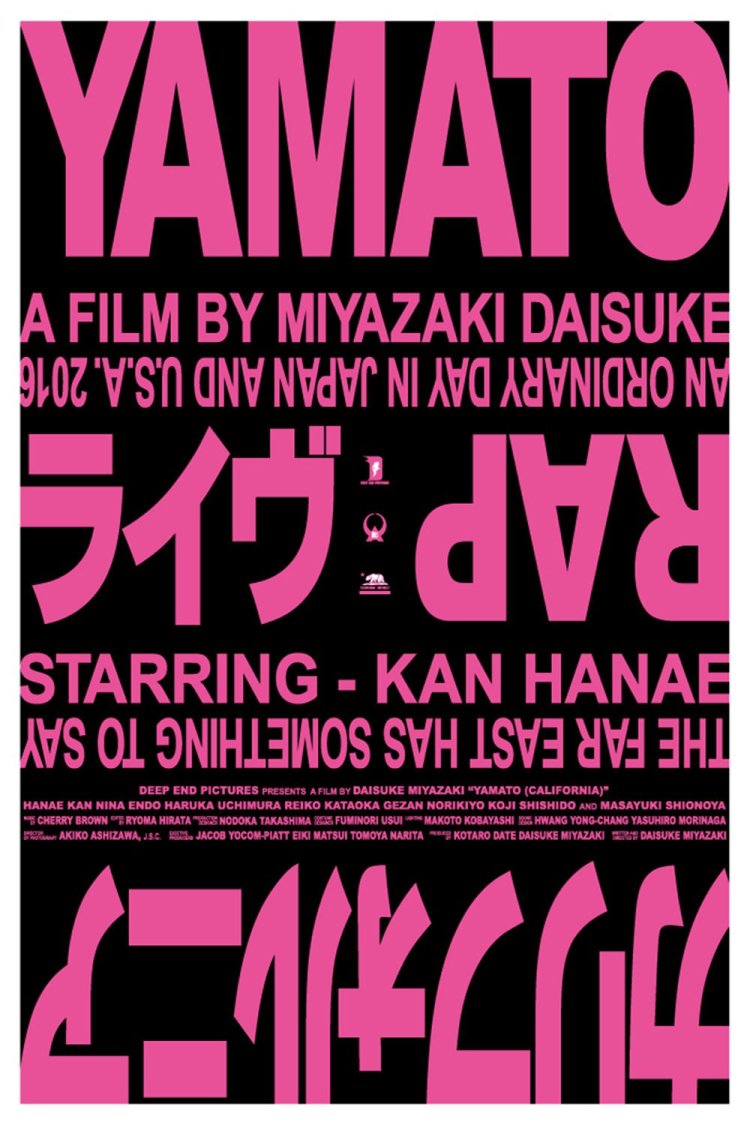 When you think of the American military presence in Japan, your mind naturally turns to Okinawa but the largest mainland US base is actually located not so far from Tokyo in a small Japanese town called Yamato which is also the ancient name for the modern-day country. The US has been a constant presence since the end of the second world war prompting resistance of varying degrees from both left and right either in resentment at perceived complicity in American foreign policy, or the desire to reform the pacifist constitution and rebuild an independent army capable of defending Japan alone. Daisuke Miyazaki’s second feature, Yamato (California) (大和(カリフォルニア) dramatises this long-standing issue through exploring the life of hip-hop enthusiast and Yamato resident Sakura (Hanae Kan) who idolises an art form born of political oppression in a country which she also feels oppresses her as a Japanese citizen living on the other side of the fence from land which technically still belongs to the US government.
 “Memories are what warm you up from the inside. But they’re also what tear you apart” runs the often quoted aphorism from Haruki Murakami. SABU seems to see things the same way and indulges an equally surreal side of himself in the sci-fi tinged Happiness (ハピネス). Memory, as the film would have it, both sustains and ruins – there are terrible things which cannot be forgotten, no matter how hard one tries, while the happiest moments of one’s life get lost among the myriad everyday occurrences. Happiness is the one thing everyone craves even if they don’t quite know what it is, little knowing that they had it once if only for a few seconds, but if the desire to attain “happiness” is itself a reason for living could simply obtaining it by technological means do more harm than good?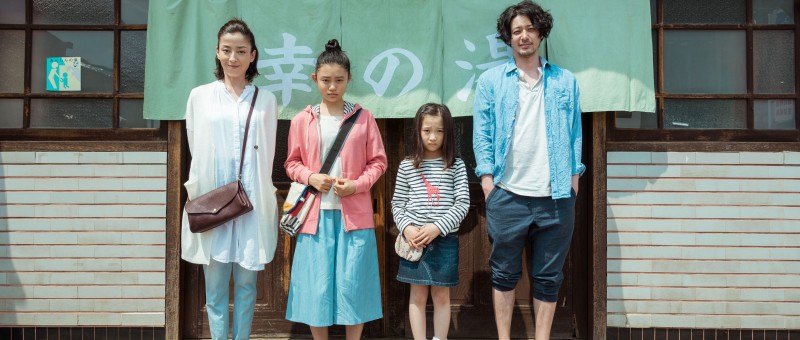

 It’s a strange paradox that in a land defined by corruption of the legal system, your only hope my lie in a new trial. So it is for the hero of Kim Tae-yun’s latest film. Inspired by a real life miscarriage of justice (a case which was in fact still continuing at the time of filming), New Trial (재심, Jaesim) takes aim at everything from social inequality to unscrupulous lawyers and abuse of police power. A teenager pays dearly for being in the wrong place at the wrong time, not only losing 10 years of his life but the entire possibility of his future now that he’s forever branded a criminal. That’s aside from leaving his ageing (now blind mother) alone with no means of support and the additional burden of trying to clear her son’s name.
 Like the rest of the world, China, or a given generation at least, may be finding itself at something of a crossroads. The past few years have seen a flurry of coming of age dramas in which the melancholy and middle-aged revisit lost love from their youth but Derek Tsang’s Soul Mate (七月与安生, Qīyuè yǔ Anshēng) seems to be speaking to an older kind of melodrama in its examination of passionate friendship pulled apart by time, tragedy, and unspoken emotion. The story is an old one, but Tsang tells it well as its twin heroines maintain their intense, elemental connection even whilst cruelly separated.
 Windows on Worlds