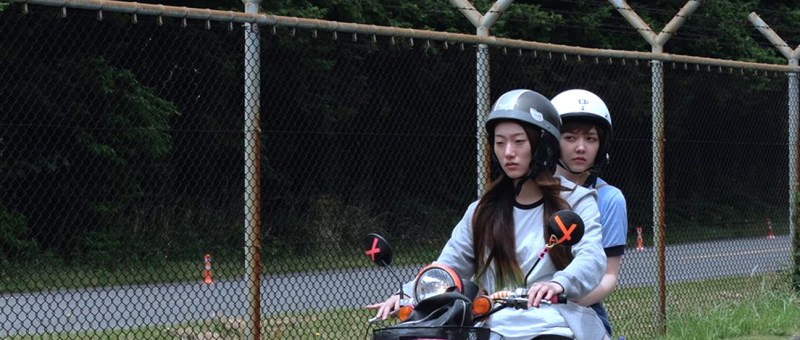
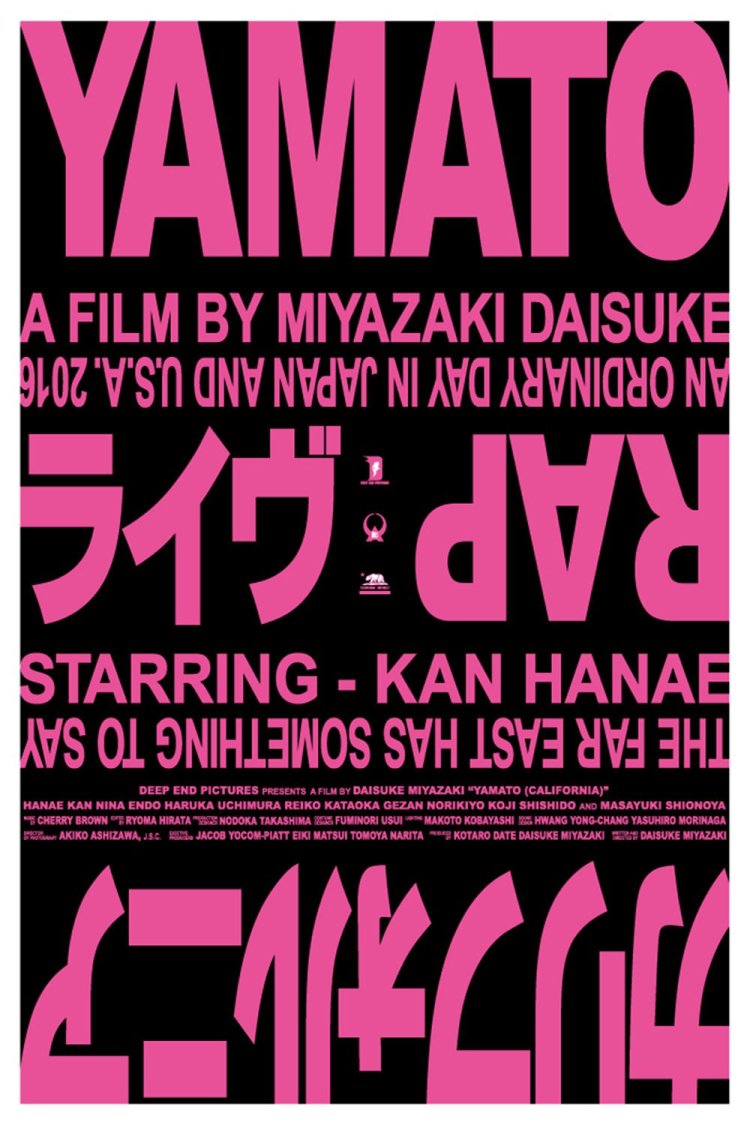
 When you think of the American military presence in Japan, your mind naturally turns to Okinawa but the largest mainland US base is actually located not so far from Tokyo in a small Japanese town called Yamato which is also the ancient name for the modern-day country. The US has been a constant presence since the end of the second world war prompting resistance of varying degrees from both left and right either in resentment at perceived complicity in American foreign policy, or the desire to reform the pacifist constitution and rebuild an independent army capable of defending Japan alone. Daisuke Miyazaki’s second feature, Yamato (California) (大和(カリフォルニア) dramatises this long-standing issue through exploring the life of hip-hop enthusiast and Yamato resident Sakura (Hanae Kan) who idolises an art form born of political oppression in a country which she also feels oppresses her as a Japanese citizen living on the other side of the fence from land which technically still belongs to the US government.
As the camera pans around a ruined landscape which turns out to be a junkyard, it eventually finds Sakura as she sits alone atop a pile of rubbish rapping about her existential misery, the hopelessness of her life, and her constant anxiety. Sakura has left high school but has no hopes, aspirations or plan. She works part-time at the eel restaurant owned by a family friend but he rarely has enough custom to need her help. Still living at home with her single mother (Reiko Kataoka) and older brother Kenzo in a cramped apartment where space is divided by a series of hanging sheets, Sakura is put out to learn that the half-Japanese daughter of her mother’s American G.I. boyfriend will be coming to stay. When Rei (Nina Endo) finally arrives, Sakura makes a point of ignoring her but the two eventually bond over a shared love of hip-hop and an awkward sense of recognition.
Tellingly, Rei’s (late) mother was from Okinawa – another reminder of the wider American presence, but her long absent father, Abby Goldman, is as distant a protector as America itself. Communicating only through handwritten letters, Abby is neither seen or heard but somehow believed in like an invisible god. Strangely, Rei asks Sakura what her father was like as if she’d never met him only for Sakura to awkwardly answer that he was somewhere between a bother, a friend, and a father but that she’s also grateful to him for introducing her to her beloved hip hop. Later she takes her mother to task on this same issue, Abby hasn’t visited in years and doesn’t even provide for them anymore yet he dispatches the daughter he rarely sees himself for them to care for instead. Abby, like America, offers little and takes much, at least in Sakura’s increasingly hotheaded assessment.
Sakura is quite clearly in a state of depression. Sullen and angry, she lashes out at all around her but is mostly at war with herself and understandably anxious about her future. Her mother and brother both understand this about her and are patient and understanding, naturally cheerful people faced with adversity. With no work to go to and the prospect of finding any slim, Sakura spends her time perfecting her rap technique and hanging out alone in an abandoned trailer in the woods. Despite dressing in the accepted rapper style of loose grey tracksuit bottoms and a hoodie Sakura is a poor fit for the world she’s chosen. Lyrical writing more suited to performance poetry or, as she later puts it, the avant-garde, doesn’t gel with the aggressive, mostly male posturing she sees from her peers yet Sakura is determined to make her way into this arena as a means of self-expression rather than any deluded idea of fame and fortune.
Rei, her American friend, eventually sparks an epiphany following a fiery argument during which she accuses Sakura of being nothing more than an American copycat, adopting a foreign art form to mask an insecurity in her own fragile identity. Rei, trying to get through to her knew friend, has pushed too deep and hit all the wrong nerves leading to a surreal sequence which finally sets Sakura off on a voyage of self discovery and results in a concerted vow of “independence” but also of rejoining the world, accepting others rather than refusing to engage, and stepping forward together but on an equal footing with no leaders and no followers.
Miyazaki’s balanced view does not shy away from the less pleasant aspects of his own society from the protest group which wanders through the frame carrying banners calling for the immediate expulsion of migrants from Asia, to a group of yankees throwing rocks at the homeless, and Kenzo’s straightforward remark that he’s only interested in meeting Rei if she’s pretty – according to him mixed-race Japanese girls often aren’t. Grey mixes with green as brutalist shopping malls break through the vegetation leaving even an errant pagoda entirely intact in the central square. Like Sakura’s own soul this is a land of contradictions and uneasy cross-pollinations but it doesn’t need to be as defeatist and unimaginative as a dated shopping mall, wasei hip-hop just might be the next big thing.
Yamato (California) was screened at the 17th Nippon Connection Japanese Film Festival.
Original trailer (dialogue free)
 “Memories are what warm you up from the inside. But they’re also what tear you apart” runs the often quoted aphorism from Haruki Murakami. SABU seems to see things the same way and indulges an equally surreal side of himself in the sci-fi tinged Happiness (ハピネス). Memory, as the film would have it, both sustains and ruins – there are terrible things which cannot be forgotten, no matter how hard one tries, while the happiest moments of one’s life get lost among the myriad everyday occurrences. Happiness is the one thing everyone craves even if they don’t quite know what it is, little knowing that they had it once if only for a few seconds, but if the desire to attain “happiness” is itself a reason for living could simply obtaining it by technological means do more harm than good?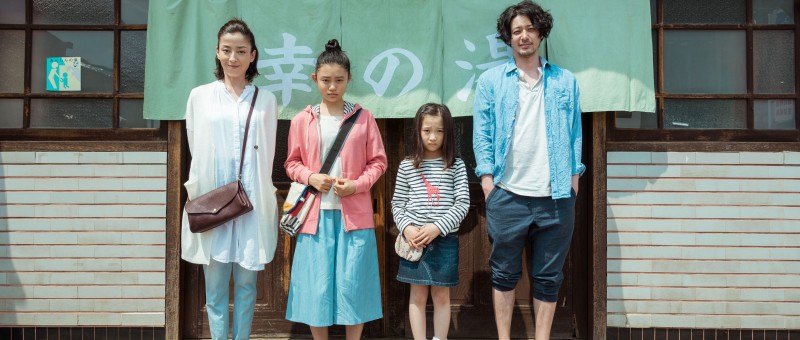

 It’s a strange paradox that in a land defined by corruption of the legal system, your only hope my lie in a new trial. So it is for the hero of Kim Tae-yun’s latest film. Inspired by a real life miscarriage of justice (a case which was in fact still continuing at the time of filming), New Trial (재심, Jaesim) takes aim at everything from social inequality to unscrupulous lawyers and abuse of police power. A teenager pays dearly for being in the wrong place at the wrong time, not only losing 10 years of his life but the entire possibility of his future now that he’s forever branded a criminal. That’s aside from leaving his ageing (now blind mother) alone with no means of support and the additional burden of trying to clear her son’s name.
 Like the rest of the world, China, or a given generation at least, may be finding itself at something of a crossroads. The past few years have seen a flurry of coming of age dramas in which the melancholy and middle-aged revisit lost love from their youth but Derek Tsang’s Soul Mate (七月与安生, Qīyuè yǔ Anshēng) seems to be speaking to an older kind of melodrama in its examination of passionate friendship pulled apart by time, tragedy, and unspoken emotion. The story is an old one, but Tsang tells it well as its twin heroines maintain their intense, elemental connection even whilst cruelly separated.
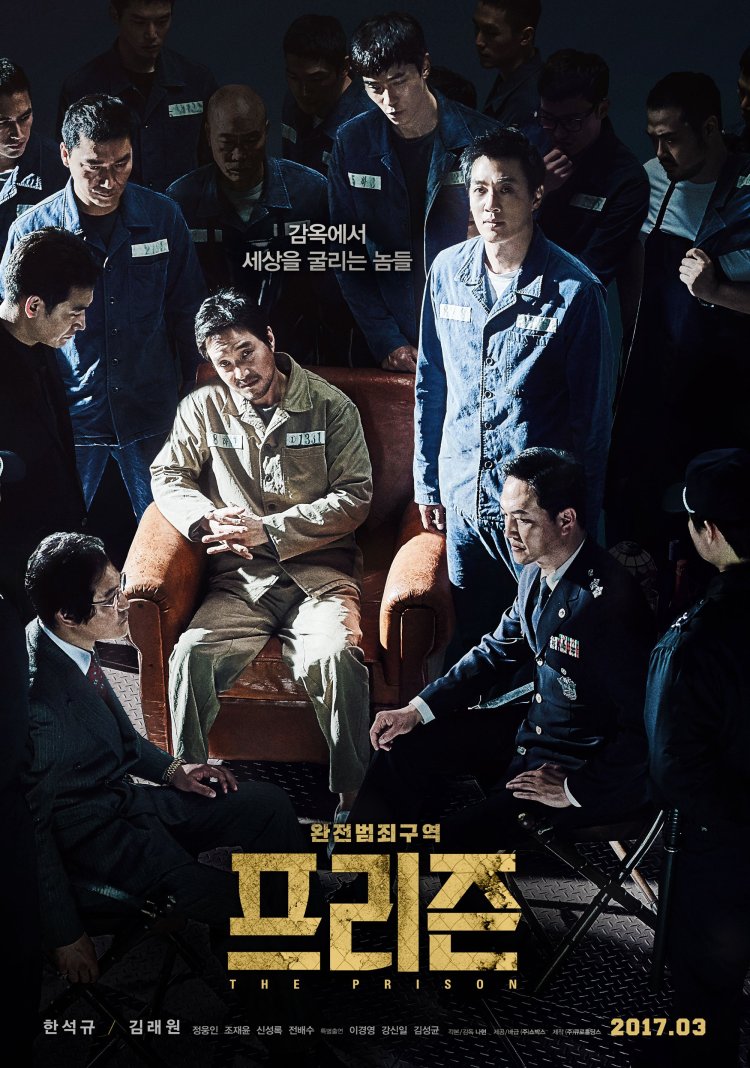 Prison can be a paradise if you’re doing it right, at least if you’re a top gangster in the movies. Na Hyun’s The Prison (프리즌) paints an interesting picture of incarceration and the way it links into his nation’s infinitely corrupt power structures. When investigators wonder why a crime spree suddenly came to an end, one of the frequently offered explanations is that the perpetrator was most likely arrested for another crime but what if you could turn this obviously solid alibi to your advantage and get those already behind bars to do your dirty work for you?
 Feng Xiaogang, often likened to the “Chinese Spielberg”, has spent much of his career creating giant box office hits and crowd pleasing pop culture phenomenons from World Without Thieves to Cell Phone and You Are the One. Looking at his later career which includes such “patriotic” fare as Aftershock, Assembly, and
  Youth looks ahead to age with eyes full of hope and expectation, but age looks back with pity and disappointment. Adapting her father’s novel, Liu Yulin joins the recent movement of disillusionment epics coming out of China with Someone to Talk to (一句頂一萬句, Yī Jù Dǐng Yīwàn Jù). Arriving at the same time as another adaptation of a Liu Zhenyun novel, I am Not Madame Bovary, Someone to Talk to takes a less comical look at the modern Chinese marriage with all of its attendant sorrows and ironies, a necessity and yet the force which both defines and ruins lives. Communism believes love is a bourgeois distraction and the enemy of the common good (it may have a point), but each of these lonely souls craves romantic fulfilment, a soulmate with whom they might not need to talk. The desire for someone they can connect with an elemental level becomes the one thing they cannot live without.
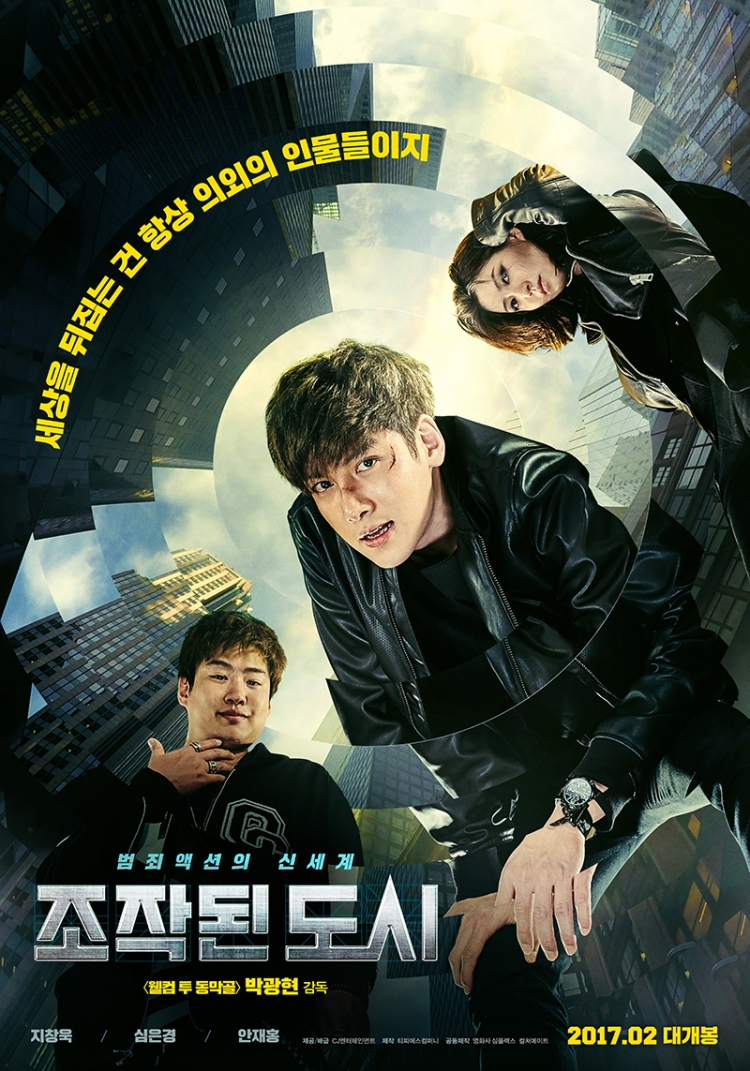 The real and the unreal. In the era of fake news, it’s become ever harder to draw a clear line between the two but when you live online, the borders are even more permeable. Twelve years after the wartime comedy Welcome to Dongmakgol, director Park Kwang-hyun finally makes a return to the director’s chair with an action packed cyberpunk thriller which joins the ranks of recent Korean films bemoaning the country’s hardwired tendency to social inequality where the rich and powerful are free to run roughshod over the merely ordinary. Fabricated City (조작된 도시, Jojakdwen Doshi) refers to more than just the literally manufactured online world, but to the social reality in which unseen forces govern and define the lives of others, operating in secret behind a government backed curtain.
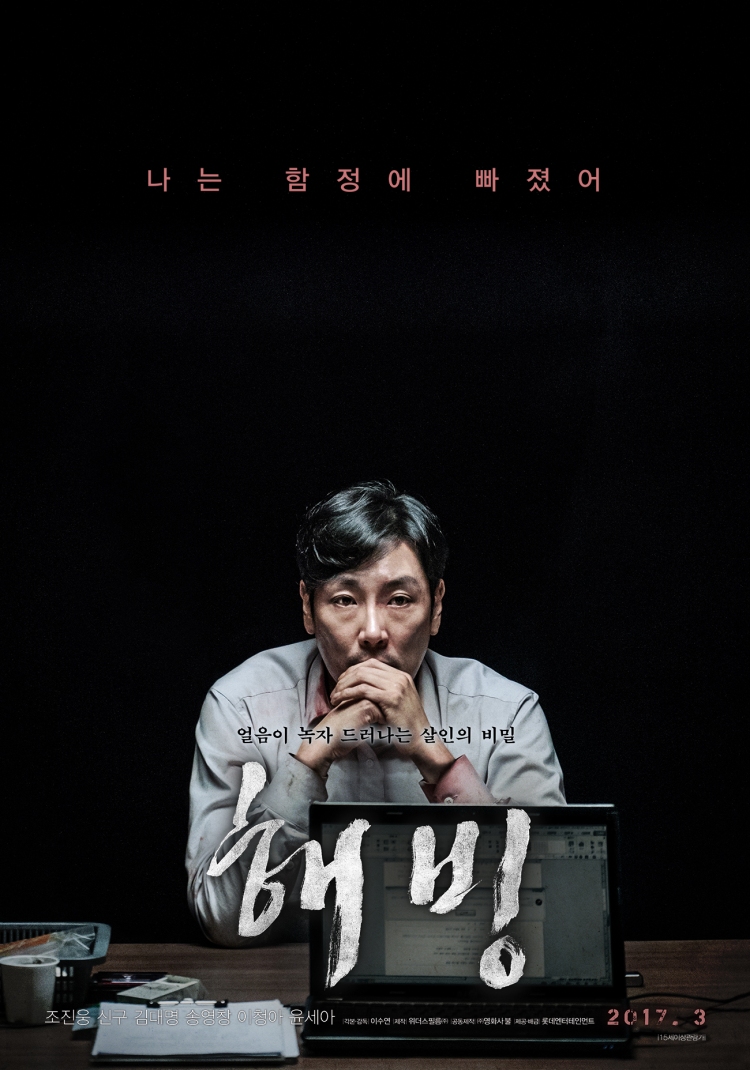 If you think you might have moved in above a modern-day Sweeney Todd, what should you do? Lee Soo-youn’s follow-up to 2003’s The Uninvited, Bluebeard (해빙, Haebing), provides a few easy lessons in the wrong way to cope with such an extreme situation as its increasingly confused and incriminated hero becomes convinced that his butcher landlord’s senile father is responsible for a still unsolved spate of serial killings. Rather than move, go to the police, or pretend not to have noticed, self-absorbed doctor Seung-hoon (Cho Jin-woong) drives himself half mad with fear and worry, certain that the strange father and son duo from downstairs have begun to suspect that he suspects.
