 What would you give to live another day? What did you give to live this day? What did you take? Adapting the novel by Genki Kawamura, Akira Nagai takes a step back from the broad comedy of Judge for an Iwai-inflected tale of life thrown into sharp relief by impending death. Less a maudlin meditation on the will to life, If Cats Disappeared from the World (世界から猫が消えたなら, Sekai kara Neko ga Kieta nara) is an existential journey into the mind of a man who believed himself an irrelevance, beloved by no one and living an unfulfilling existence, only to rediscover his essential place in the world at the moment he’s about to vacate it.
An unnamed 30 year old postman (Takeru Satoh) has a freak bicycle accident and is subsequently informed that he has an aggressive brain tumour which may take his life at any moment. Following this traumatic news, the postman returns home to discover his own doppelgänger there, waiting for him. The doppelgänger tells him that he will die tomorrow, unless the postman accepts the offer the doppelgänger is about to make him. There are too many unnecessary and irritating things in the modern world, in return for postponing the postman’s death sentence, the doppelgänger will erase one thing from human society – if only the postman will agree.
As in many similarly themed films of recent times, memories are stored not on hard drives or even in notebooks but in seemingly irrelevant objects with unexpected sentimental value. Quite literally “material culture”, it is the objects which provide the path back to the past and their destruction represents not only the severing of a connection but a kind of erasure of the past itself.
The doppelgänger sets about deleting various items at will which might previously have seemed irrelevant to the postman but turn out to have fundamental connections to the most important aspects of his life. The first item to go is phones (all phones, not just mobiles) which reminds him of his first love (Aoi Miyazaki) whom he met after she dialled a wrong number and recognised the score to Fritz Lang’s Metropolis which he happened to be watching at the time. Phones and movies – the second item on the doppelgänger’s hit list, brought the two together but it couldn’t have happened without the cinephile best friend (Gaku Hamada) the postman met at university who has been his movie mule ever since. Delete the phone and the movies and the postman loses his first love and best friend to win the right to live on alone for just one day. Cats turn out to have an even more essential role in the postman’s life, one which is painful for him to consider but impossible to ignore.
The protagonist’s occupation, which becomes his name and defining feature, is an ironic one. A mere conveyor of items charged with other people’s memories. he feels like an empty vessel, trapped in an existence devoid of meaning. Yet his strange doppelgänger pushes him to reconsider his place in the world, re-entering a sphere he had long absented himself from. Remembering long forgotten yet life changing holidays with the love of his life or finally coming to understand the silent signs of devotion in his emotionally distant father (Eiji Okuda), the postman finally writes his own letter, the first and last of his life, answering the questions he never wanted to ask.
Finally learning to accept his fate, the postman rediscovers the meaning of life. He may leave with regrets and dreams never to be fulfilled, but wants to believe his life has made a difference, meant something at least. Only as he’s about to leave it does the postman feel himself connected to the world, finally noticing the beauty all around him.
On learning of his condition, the postman’s first thoughts turn to all the movies he’ll never see and the books he’ll never read. The doppelgänger’s determination to delete the movies provokes a quietly passionate defence of the arts but, apparently, they are not worth dying for. Nagai films with a low-key dreaminess as magical realism mixes with wistful nostalgia in the melancholy world of a man who has no future finally falling in love with the past. A celebration of the interconnectedness of all things in a world of increasing isolation, If Cats Disappeared from the World advises you make the most of your time, making the difference only you can make before it’s too late.
Hong Kong trailer (English subtitles)
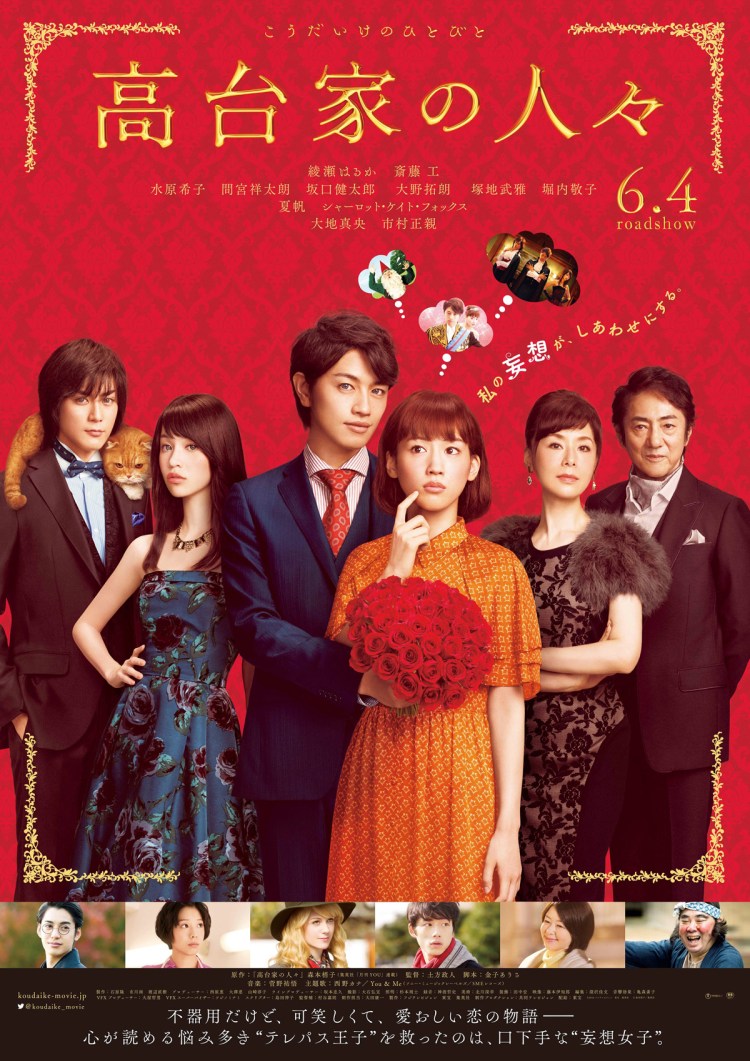 Fear of “broadcasting” is a classic symptom of psychosis, but supposing there really was someone who could hear all your thoughts as clearly as if you’d spoken them aloud, how would that make you feel? The shy daydreamer at the centre of The Kodai Family (高台家の人々, Kodaike no Hitobito) is about to find out as she becomes embroiled in a very real fairytale with a handsome prince whose lifelong ability to read minds has made him wary of trying to form genuine connections with ordinary people. Walls come down only to jump back up again when the full implications become apparent but there are taller walls to climb than that of discomfort with intimacy including snobby mothers and class based insecurities.
 Chekhov’s The Cherry Orchard is more about the passing of an era and the fates of those who fail to swim the tides of history than it is about transience and the ever-present tragedy of the death of every moment, but still there is a commonality in the symbolism. Shun Nakahara’s The Cherry Orchard (櫻の園, Sakura no Sono) is not an adaptation of Chekhov’s play but of Akimi Yoshida’s popular 1980s shojo manga which centres on a drama group at an all girls high school. Alarm bells may be ringing, but Nakahara sidesteps the usual teen angst drama for a sensitively done coming of age tale as the girls face up to their liminal status and prepare to step forward into their own new era.
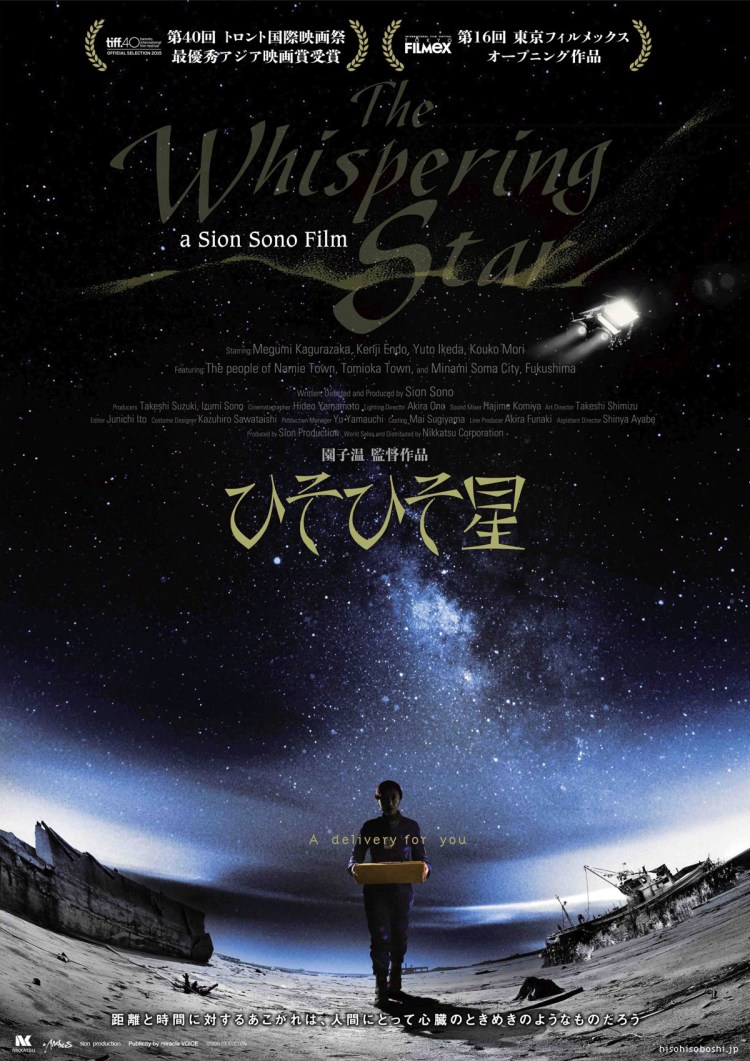 Sion Sono has been especially prolific of late, though much of his recent output has leant towards the populist rather than the art house. Having garnered a reputation for vulgar excess over the last twenty years or so, Sono returns to his Tarkovskian roots with The Whispering Star (ひそひそ星, Hiso Hiso Boshi) – a contemplative exercise in stillness which has more in common with
 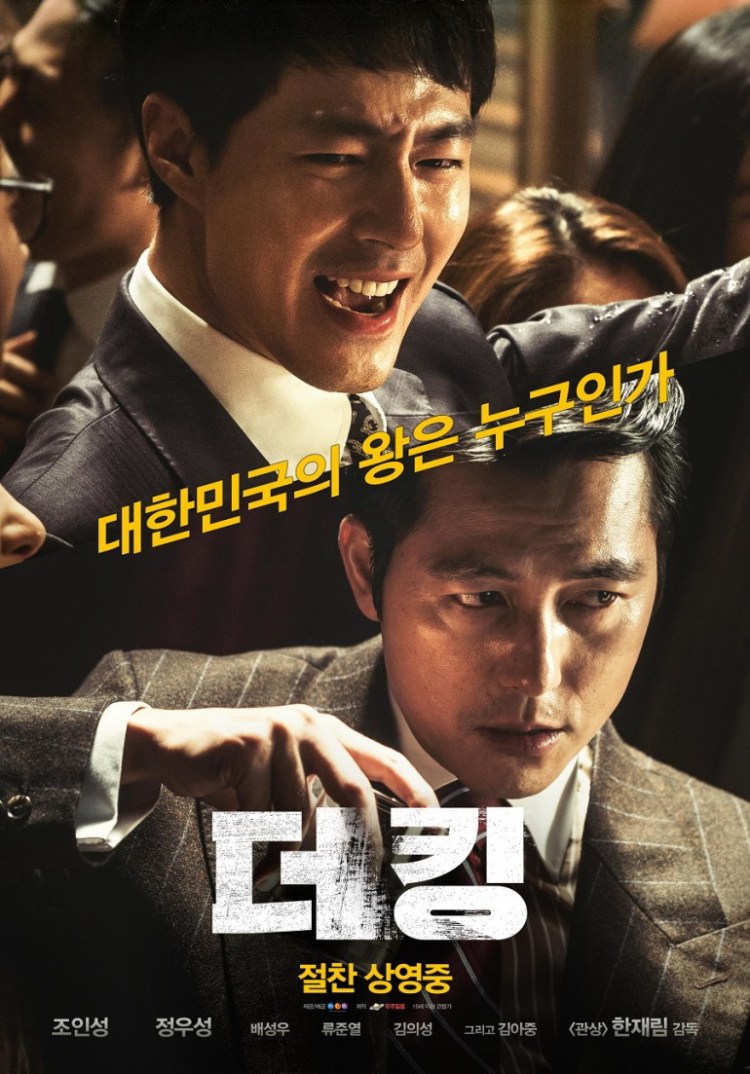 Absolute power corrupts absolutely, but such power is often a matter more of faith than actuality. Coming at an interesting point in time, Han Jae-rim’s The King (더 킹) charts twenty years of Korean history, stopping just short of its present in which a president was deposed by peaceful, democratic means following accusations of corruption. The legal system, as depicted in Korean cinema, is rarely fair or just but The King seems to hint at a broader root cause which transcends personal greed or ambition in an essential brotherhood of dishonour between men, bound by shared treacheries but forever divided by looming betrayal.
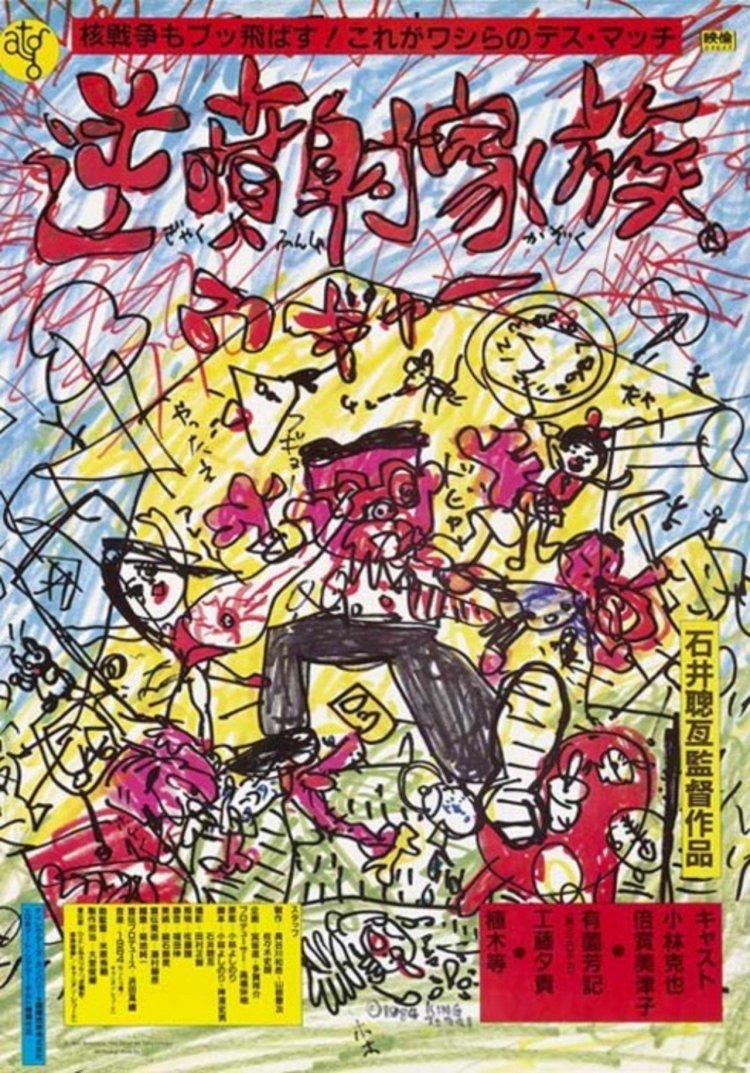 The family drama went through something of a transformation at the beginning of the 1980s. Gone are the picturesque, sometimes melancholy evocations of the transience of family life, these families are fake, dysfunctional, or unreliable even if trying their best. Morita’s
 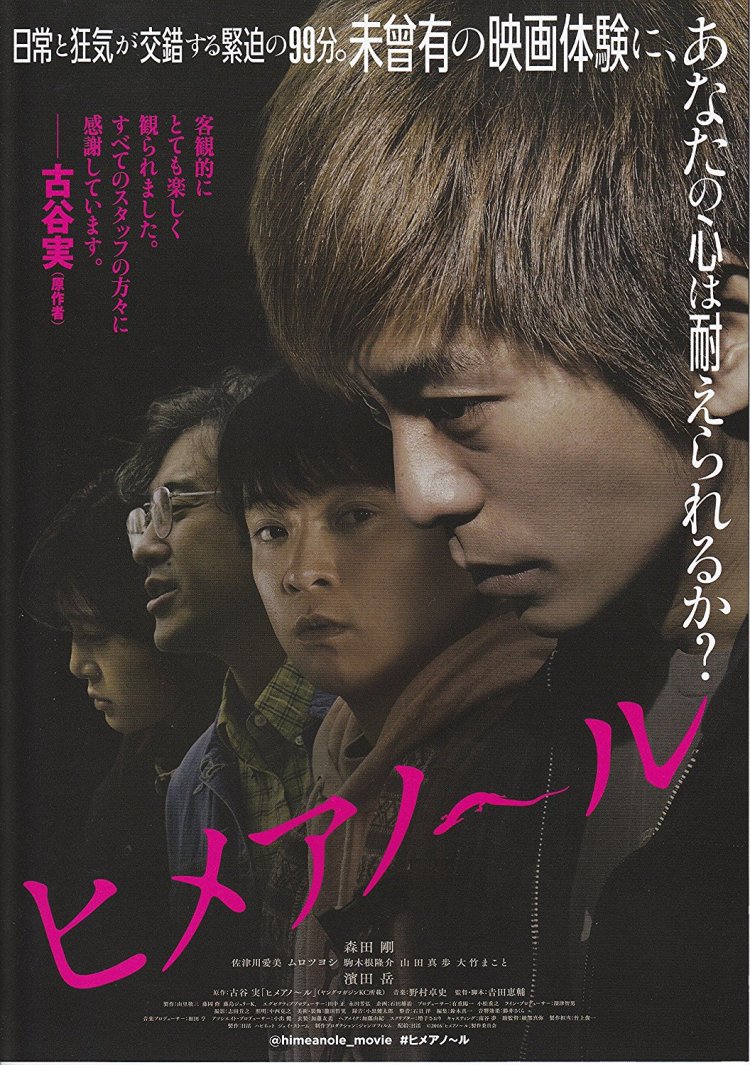 Some people are odd, and that’s OK. Then there are the people who are odd, but definitely not OK. Hime-anole (ヒメアノ~ル) introduces us to both of these kinds of outsiders, attempting to draw a line between the merely awkward and the actively dangerous but ultimately finding that there is no line and perhaps simple acts of kindness offered at the right time could have prevented a mind snapping or a person descending into spiralling homicidal delusion. To go any further is to say too much, but Hime-anole revels in its reversals, switching rapidly between quirky romantic comedy, gritty Japanese indie, and finally grim social horror. Yet it plants its seeds early with two young men struggling to express their true emotions, trapped and lonely, leading unfulfilling lives. Their dissatisfaction is ordinary, but these same repressed emotions taken to an extreme can produce much more harmful results than two guys eating stale donuts everyday just to ask a pretty girl for the bill.
 It’s tough when parents don’t approve of their children’s romantic partners, but fortunately most realise there’s nothing they can do about it so the best thing is to feign civility (and avoid saying I told you so when it all goes wrong). Unfortunately the older generation of Kim Jin-young’s Enemies In-Law (위험한 상견례 2,
 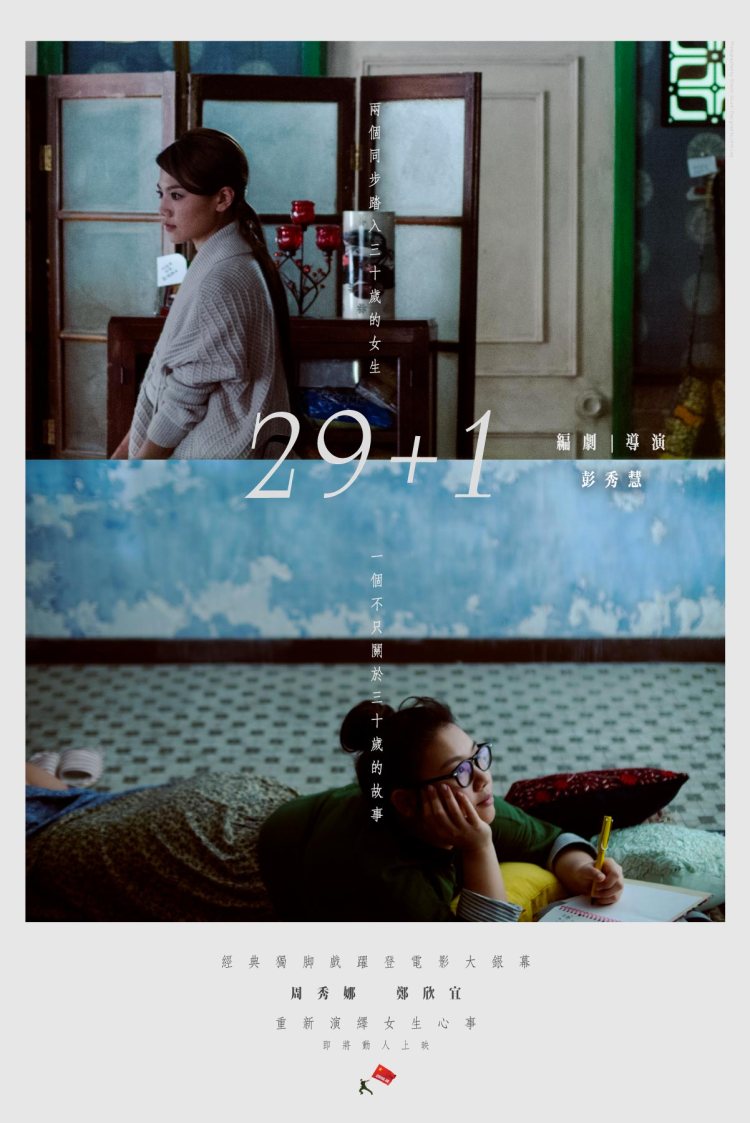 You know what they call women over 25 in China? “Christmas cake” – no one wants you after the 25th, so you’re condemned to sit on the shelf for all eternity like a piece of overproduced seasonal confectionary (a silly analogy because Christmas cakes, at least English ones, may outlive us all). Christy Lam lives in Hong Kong, not mainland China, and so her worries are a little less intense but still the dreaded 30 is causing its own share of panic and confusion in her otherwise orderly, tightly controlled life. In 29+1 Kearen Pang adapts her own enormously successful 2005 stage play about the intertwined lives of two very different women who happen to share a birthday and are each approaching the end of their 20s in very different ways. By turns melancholy and hopeful, 29+1 finds both women at a natural crossroads but rather than casting them into a bottomless pit of despair, allows each of them to rediscover themselves through a kind of second adolescence in which they finally figure out what it is they want out of life.
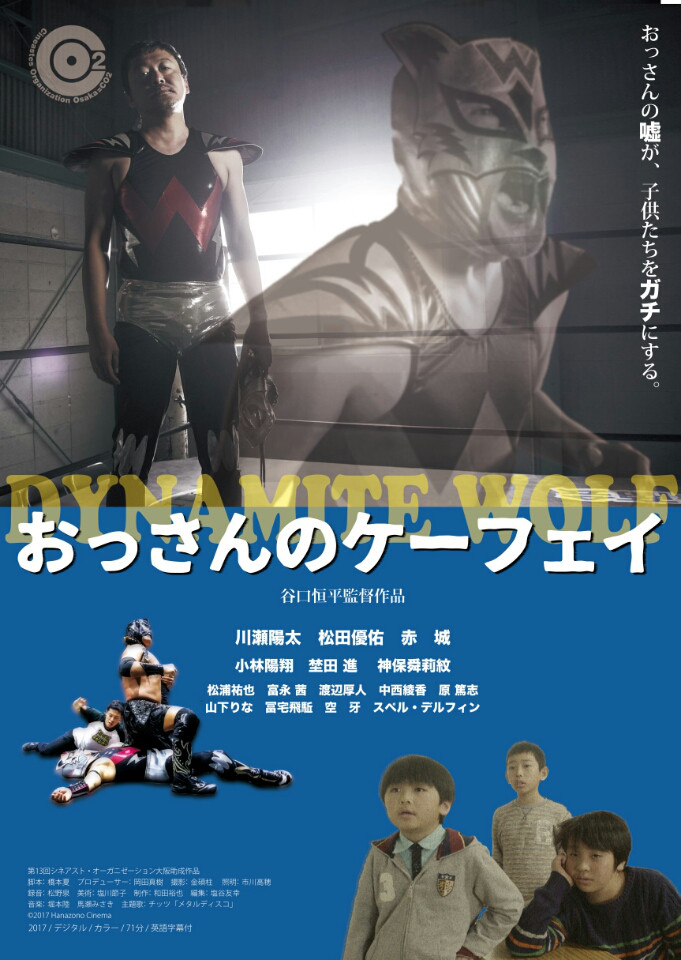 Back in the day, lucha libre-style wrestling was hugely popular in Japan. Tiger Mask, a manga set in the world of Japanese pro-wrestling remains a firm favourite and its eponymous hero has also become a byword for altruistic philanthropy as well-meaning anonymous donors donate expensive gifts such as Japanese school backpacks to orphanages in Tiger Mask’s name. Sadly, pro-wrestling is no longer as high-profile as it once was and has left mainstream television screens far behind even if it still maintains a small but dedicated fanbase. Kohei Taniguchi’s Dynamite Wolf (おっさんのケーフェイ, Ossan no Kefei) is out to change all that by shining a spotlight on this almost forgotten phenomenon of crazy outfits, killer moves, and camp showmanship.
