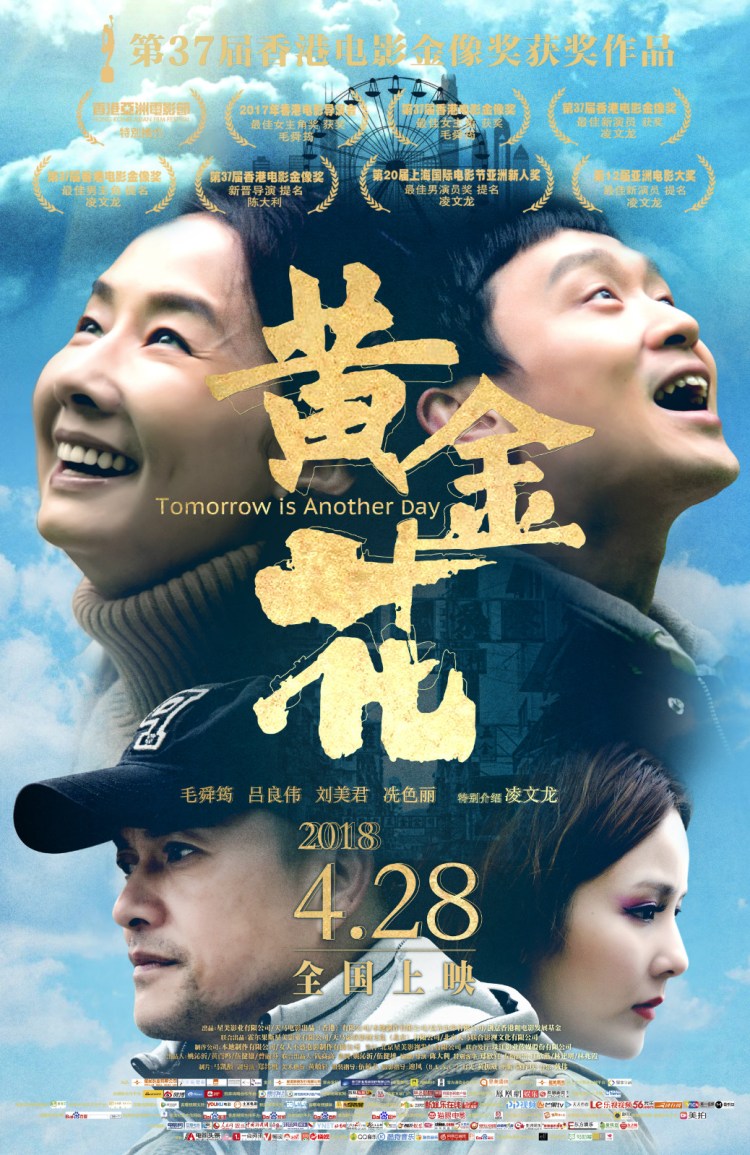
Tomorrow is Another Day (黃金花, Chan Tai-lee, 2017)

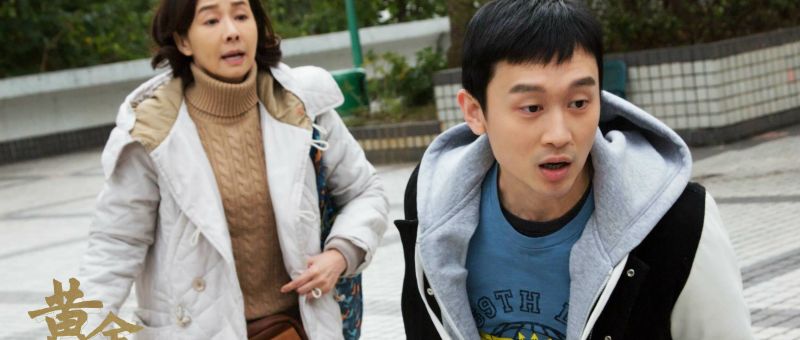
tomorrow is another day posterMiddle-aged malaise is fast becoming a dominant theme in Chinese language cinema, but the pressures faced by the heroine of the debut feature from Ip Man screenwriter Chan Tai-lee are compounded by a series of additional responsibilities and the relative lack of support available to help her cope with them. Tomorrow is Another Day (黃金花) is, in many ways, a family drama with a sympathetic depiction of the demands of caring for a child with special needs at its centre, but it’s also the story of a marriage and of the essential bonds between a mother and a son as the family struggles to survive in a sometimes hostile environment.

Mrs. Wong (Teresa Mo), interviewed at a community centre, relates the routines of her daily life to a camera crew. Describing herself as a “regular housewife”, Mrs. Wong’s existence revolves around caring for her husband (Ray Lui) – a driving instructor, and her 20-year-old autistic son, Kwong (Ling Man-lung). She tells the film crew she is happy with her life and on one level she is, but she also fears her philandering husband is up to his old tricks again. Mr. Wong is indeed having an affair with one of his pupils, a much younger nurse called Daisy (Bonnie Xian Seli) who seems to have well and truly got her hooks into him. Knowing of her husband’s string of extra-marital affairs which has spanned the entirety of the marriage, Mrs. Wong has made a decision to turn a blind eye for the sake of her son but this latest dalliance has proved difficult for her to bear. After Daisy randomly invites herself into the family home when Mrs. Wong is shopping, the couple argue and Mr. Wong walks out leaving Mrs. Wong to care for Kwong all alone.

Kwong, usually cheerful and well behaved, experiences occasional meltdowns when told he can’t have something that he wants, often resorting to frustrated acts of self harm including bashing his head against nearby solid objects. Though Kwong is not violent towards others, he is now a grown man and much stronger than his mother who finds it difficult to help him calm down on her own. Mr. Wong’s forearms are a mess of scars and bruises received whilst trying to restrain his son from hurting himself, and the physical strain of caring him has often weighed heavy on his conflicted father’s mind.

Though Mrs. Wong and Kwong experience frequent discrimination from those who are unaware of his needs – other mothers pull their children out of the playground when Kwong comes to play, and Mrs. Wong finds it difficult to get a part-time job when her prospective employers spot Kwong standing beside her, the other neighbourhood housewives have become used to Kwong’s way of being and are keen to help out where they can. Like Mrs. Wong, many of the other women have their own problems whether worrying about the (lack of) academic progress of their sons, or trying to combat the potential loneliness of early widowhood through friendship and community. Hearing of Mrs. Wong’s marital problems via the neighbourhood grapevine (another source of humiliation for Mrs. Wong), everyone has taken her side against the villainous Daisy but they’re also worried Mrs. Wong may consider harming herself while faced with so many conflicting pressures.

Mrs. Wong however, has half her mind on revenge and has taken to watching crime documentaries which give her the idea that she could get herself a convenient alibi by going to the Mainland by official means and then smuggling herself back in to off Daisy in the hope that her husband might finally remember his responsibilities. Daisy, it has to be said, is a one note villain and it’s difficult to see why she is so intent on pursuing a dead end romance with a middle-aged, married, driving instructor without coming to the conclusion that she must love causing trouble, especially as Mr. Wong seems to find her quite irritating even once he’s taken the “decision” to leave his family for her. Mr. Wong himself is also a bundle of contradictions but emerges as a weak willed man who has never been able to fully commit to his marriage and struggles with the responsibility involved in being the father of a child with special needs. Though he eventually seems to reconcile himself to his role as his son’s father and his wife’s husband, there is something conceited in his belief that his family will simply take him back when he has caused them so much pain and suffering by his hastily taken decision to abandon them.

Kwong is more perceptive than his mother gives him credit for, and Mrs. Wong too is eventually forced to consider the effect her darkening mindset has had on his emotional wellbeing. Tomorrow is Another Day offers no easy answers in its sympathetic portrayal of a middle-aged woman driven to extremes by a series of conflicting pressures but eventually finds finds comfort in living in the now as the family begins to find its way home, cutting through the noise of a high pressure city to rediscover what it is that’s really important.


Tomorrow is Another Day receives its US premiere as the closing night film of the sixth season of Chicago’s Asian Pop-Up Cinema programme on 16th May, 2018. The screening begins at 7pm, AMC River East 21 and tickets are already on sale via the official website.

Asian Pop-Up Cinema will return for the seventh season in the autumn – make sure you’re up to date with all the latest information by following the festival on Twitter, Facebook, Instagram, and Vimeo.

Original trailer (Cantonese with English/Traditional Chinese subtitles)

The Running Actress (여배우는 오늘도, Moon So-ri, 2017)

running actress posterIn international eyes at least, Moon So-ri is one of Korea’s most prominent actresses. She has worked with such highly esteemed directors as Lee Chang-dong, Hong Sang-soo, and Park Chan-wook, yet she continues to face the same kinds of issues as many women in the film industry despite her immense critical success and popularity at the box office. The Running Actress (여배우는 오늘도, Yeobaewooneun Oneuldo) is her first feature as a director and brings together three of her short films which neatly form a tryptic depicting the trials and tribulations of the contemporary actress.

Moon also stars in the films, playing a character called Moon So-ri, apparently inspired by her “real” life. Kicking off with the first segment titled The Actress, Moon introduces the fears and anxieties which recur throughout most notably in her preoccupation with gaining good roles and worrying that she is losing out on them though not being “pretty” enough. Her friends, attempting to be supportive, only add to her discomfort by assuring her that she is pretty “in her own way” and reminding her that in any case she is a wonderful actress. Confidence at rock bottom, Moon laments that her industry prefers airheaded beauty to technical skill and is unwilling to accept that women continue to exist past the age of 25 without suddenly morphing into spiky aunties and salty grandmas. Unexpectedly running into a producer whilst hiking, she gets a temporary boost when it seems he has her in mind for a dream project with a director she’s long wanted to work with but is dismayed when she realises the character has a college age child meaning she’ll be making a possibly irreversible step into playing suffering mothers rather than interesting women with nuanced character arcs.

Meanwhile, she runs into the producer and his friends at an inn on the way down and is forced to endure a drinking session with two starstruck fans whose increasingly drunken conversation turns to the rude and loutish in which they too begin picking apart Moon’s looks while mocking her acting skills, one of them even offering a slightly offensive caricature of her award winning performance as a disabled woman in Lee Chang-dong’s Oasis (the title of which he seems to have forgotten).

Moon’s fears and insecurities follow her into her family life in the second chapter, The Running Actress, which finds her attempting to juggle the demands of being a wife and mother with her acting career. In a running joke, everyone seems to assume that mega famous actress Moon So-ri must be filthy rich but like everyone else she has trouble making ends meet, especially as she is constantly worrying over where the next job is coming from. As if that wasn’t enough she also has to put up with her mother continuing to treat her like a petulant teenager (which to be fair her behaviour sometimes mimics) and trading photo opportunities for free dental work, while her adorable little daughter is sharp as a tack. 

The social and the professional come together in the final segment which sees Moon attend the funeral for a director she once worked with years ago and to tell the truth did not particularly like. Planning to show her face but not stay very long, Moon is dismayed to realise she is one of an extremely small number of mourners which include a drunken actor she doesn’t really get on with either, and an aspiring young actress who may have been involved in an improper relationship with the late director in the hope of furthering her career. In a lovely human touch, Moon breaks away from the rapidly declining situation at the wake to spend some time with the director’s young son who has been left all alone watching a few home videos his father shot by means of a handheld projector.

The film takes its title from a humorous moment in the second chapter in which Moon suddenly orders her driver to stop the car and jumps out to run away screaming, making a bid for frustrated freedom from her often exasperating life and career. Moon is obviously not afraid to poke fun at herself or her industry, taking her (presumably very real) fears and insecurities and exposing them for all to see. Taking a cue from Hong Sang-soo, Moon’s deadpan style only adds to the comic effect of her razor sharp dialogue which is filled with small moments of everyday humour somehow assuming wider dimensions thanks to the well crafted nature of the script. Addressing real problems faced by women today in all walks of life, The Running Actress is a warm and funny effort from the veteran performer turned first time director and will hopefully pave the way for an interesting second career.


Screened at the 20th Udine Far East Film Festival.

Original trailer (Korean subtitles only)

Alifu, the Prince/ss (阿莉芙, Wang Yu-lin, 2017)

Alifu posterAmong Asian nations, Taiwan has a reputation for being liberal and permissive but if you’re a minority within a minority life is far from easy even if you manage to find support from others in a similar position. So it is for Alifu (Utjung Tjakivalid) – the conflicted soul at the centre of Wang Yu-lin’s nuanced depiction of the road towards self acceptance and actualisation in the face of competing duties and obligations, Alifu, the Prince/ss (阿莉芙, Ālìfú). While Alifu struggles with the demands of being the heir to the Chieftainship of an indigenous tribe with all the rights and obligations that entails, her lesbian roommate struggles with a bad breakup and growing feelings for her transitioning best friend, a drag queen is conflicted about his sexuality, and a transgender bar owner worries for the future of those close to her after she is diagnosed with a terminal illness. Despite the multitude of difficult circumstances, each attempts to deal with their problems in a mature and rational fashion finding love and mutual support from their friends and community even if others sometimes require a little more time.

Alifu, born the son of a tribal chief, identifies as a woman and has been working in a hairdressers in the city to save up for gender reassignment surgery. Her plans for the future are thrown into disarray when she is abruptly called home, walking into a family meeting during which her father (Ara Kimbo) suddenly announces that he is stepping down because of poor health and that his son will be taking over. Though it is possible for a woman to succeed as chief, Alifu has not disclosed her intentions to transition to her traditionally minded father who wears a prominent wooden cross around his neck and does not seem to be particularly understanding of his child’s feelings or emotions, caring only for his appearance in the eyes of the tribe.

Alifu’s transition is subtly revealed in the lengthy opening in which she slowly sheds her “masculine” appearance by discarding her baseball cap, rearranging her hair and stepping into the ladies loos where she puts on colourful lipstick and hoop earrings before making her way to the hairdressers where she earns her living. Meanwhile, her lesbian roommate Pei-Zhen (Chao Yi-Lan) thinks nothing of leaving the house dressed in a way which best makes her feel comfortable only to cause a mini ruckus in the salon when her ex gives her the side-eye for openly flirting with another client apparently after “something special”. After hours, Alifu picks up extra money by doing hair and makeup for the drag acts at a local gay bar where she has also drawn close to the owner, Sherry (Bamboo Chen), who is in a long-term though apparently non-sexual relationship with a former gangster (Wu Pong-fong).

Alifu soon develops a liking for a new drag act at the bar, describing him as somehow “not like the others”. Chris (Cheng Jen-shuo), a local government worker, is a mild mannered sort apparently happily married to a piano teacher (Angie Wang) and living a conventional middle-class life, except that he likes to stay out late on Fridays performing at Sherry’s drag bar. Though it would be a mistake to assume Chris is gay just because he enjoys drag, his “secret life” eventually places a wedge between himself and his wife who is hurt to find out about his alter-ego through a third party. Chris’ wife doesn’t necessarily disapprove of his drag career but is disturbed to discover such a big secret in her married life and, understandably, has a lot of questions about the status of their relationship – something Chris isn’t keen on talking about leading to his wife finally throwing him out. Struggling to reconcile his drag persona with his need for a conventional life, Chris finds himself exiled and unable to integrate himself fully as whole person, torn between his conflicting desires. 

Meanwhile, Alifu’s ever supportive best friend Pei-Zhen has begun to develop feelings for her roommate despite the fact that Alifu has no interest in women and Pei-Zhen is a lesbian with no previous interest in male genitals. Seducing her, Pei-Zhen reassures Alifu that male or female she will always love her – something which becomes a minor theme in arguing for fluidity and self identification over culturally defined notions of gender, echoed in the relationship of Sherry and her partner which seems to be deep and loving but also celibate. Perhaps overly convenient, the union of Alifu and Pei-Zhen does at least provide an opportunity to experience the best of both worlds in allowing Alifu to fulfil her obligations to her tribe while also living an authentic life as a transgender woman.

Warm and filled with a particularly Taiwanese brand of humour, Alifu is a sympathetic exploration of life on the margins, both from the perspectives of the LGBT community and that of the indigenous peoples attempting to preserve their traditional culture whilst acknowledging their place in the modern world. Arriving at an important moment, Wang Yu-lin’s empathetic drama is a celebration of love and equality but most of all of the power of self-acceptance and actualisation in bringing about real social change.


Screened as part of the Chinese Visual Festival 2018.

Original trailer (English subtitles)

https://youtu.be/WxCBr6Adkw8

Somewhere Beyond the Mist (藍天白雲, Cheung King-wai, 2017)

Somewhere Beyond the Mist posterCheung King-wai, making his narrative feature debut, opens with a quote from Dostoevsky’s The Brothers Karamazov to the effect that people, even bad people, are often far more innocent and pure-hearted than most realise, including we ourselves. The quote, overlaid above the vision of the city at night glowing red like dying furnace, introduces us to the story we are about to hear – one which is dark, too dark perhaps to imagine, but then again all too real. Caught in the twilight half light, Hong Kong is fiery cauldron of hell, yet when the sun rises and the mist rolls in, it’s hard to see what the night made so terrible.

As if to underline the confusion, we begin with a lost old man who is desperately searching either for a way in or a way out. His housekeeper eventually comes to find him and bring him home and we discover he is the father of one of our heroines, Angela (Stephy Tang Lai-yan) – a police detective expecting her first child. Angela’s father, Dr. Ho, is suffering from advanced dementia which is beginning to take its toll on Angela’s home life even if she leaves most of the responsibility to her compassionate husband, Tony.

Meanwhile, the bodies of a middle-aged couple have been discovered at a reservoir. The police set about looking for the couple’s missing daughter, Connie (Rachel Leung Yung-ting), only to find her holed up in the mountains with her best friend Eric (Zeno Koo Ting-hin). Connie reacts with eerie calm when informed of the deaths of her parents, merely repeating that she was already aware before agreeing to accompany the police to the station where she, matter of factly, confesses to having been the one who murdered them.

Cheung’s intention is not to create a murder mystery, Connie freely confesses her crime and isn’t particularly interested in explanations or justifications (though as it turns out, she would have plenty). He is much more interested in the examining the society which made such an “unthinkable” crime possible, exposing the dark heart of an increasingly confused city which finds itself pulled in two directions by various political anxieties.

Back with the original image of the city as a pit of hell, each of our protagonists becomes a link in a circular chain of violence, turning their own feelings of oppression, marginalisation, and despair back on their fellow suffers. Connie, as we find out, comes from an extremely dysfunctional home in which her truck driver father lists small time pimping among his “hobbies”, openly masturbates while watching hardcore Japanese pornography in the family living room only enjoying it more for the thought of taunting his teenage daughter, rapes the family’s disabled mother, and seemingly ignores his grown up son. Catching Connie’s friend Eric hiding in a cupboard in her room, he assumes the pair are up to no good and drags the boy out to viciously beat him with his belt just to remind him who it is that is boss around here, pausing only to remind Connie that “a virgin pussy” is worth more money and if she’s that desperate he can find her a client to satisfy both their needs.

Strangely enough, Eric does not completely object to the beating. He sees it as a sign of validation. Like Connie, Eric is also a lonely, marginalised figure but in his case because he is gay and desperately wants not to be. Being mistaken for Connie’s boyfriend is, in his eyes, a kind of proof of his “manhood” and so it’s a beating he is almost grateful to receive unlike those from his schoolmates who taunt him with broom handles and scream homophobic slurs which only add to his feelings of extreme worthlessness. Eric wanted to be friends with Connie to escape both suspicion and loneliness, but she, in a cutting moment of despair, also uses his insecurity over his sexuality and feelings of inadequacy as a “man” against him to get him to help with her plan to free herself of parental tyranny. Connie hates bullies, but she hates people who don’t stand up to them more. Thus she becomes the gentle defender of another marginalised figure – Jessica, an Indian girl who is targeted because she wears trousers under her school skirt, constantly assailed with slurs about “stinky” curry and various other stereotypical insults that leave her in tears.

Eric points out that his beating at the hands of Connie’s father didn’t bother him because it was “understandable” – a father finds a boy hiding in his daughter’s room and chases him out. The logic is sound, it’s a story you’ve heard before – not like the senseless acts of violence which surround him every day and cannot be explained. Connie’s crime too seems “understandable” given all she’s suffered, a precaution taken to save her from a still more terrible fate she feared might soon come her way. This is the uncomfortable realisation with which Angela is faced during her investigation, forcing her to confront her own difficult relationship with her apparently tyrannical father who made her mother’s life a misery. Angela has to accept that she could easily have been Connie, or Connie her, though she ultimately made the (still taboo) decision to place her father into a home rather than continue to look after him herself. Tube fed and alone, Angela’s father is utterly powerless but however much she wishes she could abandon him she continues to visit even if her resentment is plain. Then again, if a parent breaks the contract first in failing to care for their child in infancy, should the child still be expected to care for them when they are old? Perhaps they owe each other nothing other than civility and an attempt at forgiveness.

Asked why she ran to the mountains, Connie replies that she went to live “the life I deserve”. Dreaming of a world “beyond the mist”, free from the city’s confusion and the constant stream of violence passing from one lonely soul to another, Connie transgressed in order to free herself but has only found greater imprisonment and ongoing mental torment. Beautifully photographed, Cheung’s narrative debut is a bleak and gloomy affair but somehow maintains its belief in a better place Somewhere Beyond the Mist even if it continues to elude us.


Screened as part of the Chinese Visual Festival 2018.

Original trailer (English subtitles)

One Cut of the Dead (カメラを止めるな!, Shinichiro Ueda, 2017)

One Cut of the DeadYou know how it is – you turn up to make a low budget zombie movie in a disused water filtration plant apparently once used by the military for dodgy human experimentation and a load of real zombies suddenly turn up to join the fun. Then again, at least zombies don’t have over protective managers hovering on the sidelines or require catering services so in some ways they are the perfect extras. The debut feature from Shinichiro Ueda, One Cut of the Dead (カメラを止めるな!, Camera wo Tomeru na!) is a clever bait and switch, opening with a frenetic low budget zombie chase sequence before cutting to behind the scenes where just about everything is going hilariously wrong.

As the film opens, an actress is in the middle of the 42nd take of a scene in which she is attacked by her zombified boyfriend when the director yells “cut” and begins berating her for her non-existent acting skills before storming off in a huff. The actress, the boyfriend, and the makeup artist whose many hobbies include women’s self defence are enjoying a cup of coffee when a bunch of real zombies suddenly show up with murderous intent. All shot in one cut, the 40 minute chase sequence is a celebration of all things zombie with appendages flying off with gay abandon as blood soaks the screen and our plucky heroine ends up somehow in the middle of a pentagram painted on a rooftop.

Viewers who aren’t paying attention and attempt to leave after “credits” roll will be doing themselves a huge disservice – this high impact opening has been something of a ruse to take us into the real meat of the drama in the zany backstage antics in which just about everything is going just about as wrong as it could possibly go. It turns out “One Cut of the Dead” is a one camera one cut TV special made to launch a brand new zombie channel. Our director, Higurashi, who played “The Director” in One Cut, has found himself at the helm because no one else would take on such an outrageous proposal and, unlike his onscreen counterpart, is too kind and mild mannered to say no.

Higurashi’s career has perhaps become zombified in itself. The producers have chosen him for his ironic slogan – “Fast, cheap, but…average”, and he’s made his way in the minor TV film biz by keeping his head down and just getting on with the job even when it’s as “inconsequential” as a reconstruction sequence for cheesy TV news item. The chance to direct a drama is then an exciting one even if it’s for an equally cheesy TV horror show with a gimmick that’s doomed to fail.

Thus he finds himself on set with a pair of idols – she constantly worrying about what her agency will say to the various problems presented by being in a zombie movie, and he constantly rude and arrogant. Meanwhile, a previous acquaintance of Higurashi’s set to play the cameraman has a serious drink problem, the actor playing the boom operator has a series of digestive issues, and the woman playing the makeup artist is in a car accident with the man playing the director just a couple of hours before the camera rolls. Improvising wildly and making fantastic use of a set of cue cards, Higurashi manages to keep it all together despite the ensuing chaos.

The real genius of the film lies in the cleverness of the original bait and switch. The aesthetic of the zombie sequence is pure low budget horror with noticeably low grade camera quality and deliberately iffy special effects. On the first pass through there are several moments that look like shoddy direction – Higurashi talks to the cameraman who isn’t supposed to be there, the three actors witter on about nothing, the actress continues screaming for way too long etc but each of these mini moments loops back perfectly into the second half farce in which the crew is desperately trying to overcome several obstacles at once and keep the camera rolling to get through the 30-minute live broadcast without anyone noticing.

In the background, Higurashi is also facing some minor family drama with his grown up daughter who wants to direct but needs to work on her people skills. Her keen eye for detail and youthful ingenuity eventually helps the crew figure out a way to keep going, but in the end it’s teamwork that sees them through as they learn to overcome their differences and work together to get what they need. Hilarious, self aware, and filled with homages to classic horror, One Cut of the Dead is an oddly warmhearted comedy in which the zombies are the least of anyone’s worries.


One Cut of the Dead received its international premiere at the 20th Udine Far East Film Festival and will be released in the UK by Third Window Films later in the year.

Original trailer (English subtitles)

Last Child (살아남은 아이, Shin Dong-seok, 2017)

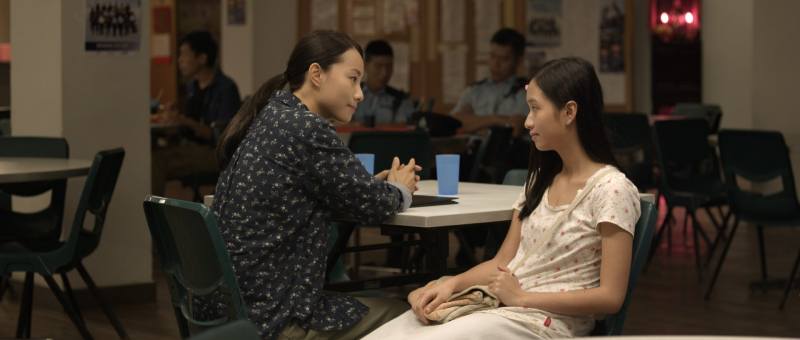
Last Child posterPeople grieve in different ways. Some stop altogether, lost in a fog of confusion and regret, while others try to keep themselves busy or at least feel as if they are doing “something” to try and find whatever positivity they can in the midst of such terrible tragedy. The parents at the centre of Shin Dong-seok’s extraordinarily accomplished debut feature Last Child (살아남은 아이, Salanameun Ayi) find themselves on opposite sides of a grief divide after their son is killed trying to save another boy from drowning. While the mother is angry and resentful, the father finds strength in pride for his son’s act of heroism, nominating him for a local heroes award and donating the compensation money they have been awarded to their son’s school to fund a new scholarship place in his name.

Eunchan, the teenage son of Misook (Kim Yeo-jin) and Sungcheol (Choi Moo-seong), passed away some months ago leaving his parents numb and grief stricken. As far as they’re aware, Eunchan lost his life while valiantly trying to save that of another boy – Kihyun (Seong Yu-bin). Asking after the boy whom his son sacrificed his life to save, Sungcheol is dismayed to learn that he’s dropped out of school, possibly as a consequence of bullying and social stigma because of the well publicised incident he has been involved in.

Spotting Kihyun around town riding his delivery scooter, Sungcheol later decides to intervene when he catches sight of some other boys harassing him. Sungcheol buys the boy dinner and tells him to call if he ever needs anything. Kihyun, despite his obvious discomfort calls when the manager of the fast food restaurant he had been delivering for accuses him of lying about his bike being stolen. As Kihyun is a minor, he needs a responsible adult to talk to the police but his mother abandoned him years ago and though his father used to send money for his upkeep, he has now remarried and severed all connection with his son. Feeling sorry for the boy and not wanting Eunchan’s sacrifice to go to “waste”, Sungcheol offers Kihyun a job in his interior construction company as a trainee apprentice.

Though originally shy and afraid, Kihyun begins to blossom under the gentle, positive parental input of Sungcheol as he picks up the paternal reins, not only teaching him a trade but investing in him the confidence to succeed. Misook, horrified at first by her husband’s decision, begins to come around to this wounded young man who perhaps reminds her a little of her own son. Despite his lingering feelings of shame and guilt in accepting such kindness from the people he feels may continue to suffer solely because of his continued existence, Kihyun slowly starts to look on Misook and Sungcheol  as surrogate parents as they provide the love and care he has never really known from Sungcheol’s down to earth fatherly pep talks to Misook’s home cooked dinners.

Kihyun does, however, have a secret he has been withholding from Misook and Sungcheol which becomes increasingly difficult for him to keep the nicer they are to him and the more he comes to respect them. Though he might have been able to push it to the back of his mind, an unexpected meeting with another friend of Eunchan’s who was also there that fateful day convinces him he has to speak the truth no matter how much more pain it may to cause to all concerned (including himself).

Sungcheol had invested heavily in the heroic nature of his son’s death and finding out it might not have been quite so straightforwardly noble as originally described is a crushing blow for him. The reopening of a wound which had begun to scar pushes Misook and Sungcheol back into their respective corners as they each attempt to process the situation in their own particular way, beginning to mildly resent each other in the process. Meanwhile, having considered the matter closed, there is little appetite to reopen the investigation into Eunchan’s death. The other parents club together to keep their kids out of it while the school sends a polite message asking Misook and Sungcheol to leave it alone to avoid damaging the school’s reputation. Sungcheol, filled with a righteous anger and a need to find out what really happened to his son, is advised to drop the matter, that it’s better to be remembered as a “hero” rather than a “victim”, implying that Sungcheol ’s quest for “truth” is in someway sullying his son’s memory.

Kihyun, meanwhile, is a mess of conflicted emotions. Grieving himself for the family he’d begun to form with Misook and Sungcheol , he tries to move on with his life whilst hoping to somehow repair what has been broken. Kihyun is not a bad kid at heart, whether changed by his experiences or simply freed from a destructive environment, but he has done bad things which fill him with guilt and remorse compounded by the faith and kindness Misook and Sungcheol have tried to show him.

Yet good as they are, the intensity of their rage and pain threatens to consume the bereaved parents who begin to turn their thoughts towards poetic justice and exacting their own revenge even if they also know it will only bring them more suffering. Isolated by their grief, ostracised for the need for truth, and torn apart by their ambivalent emotions towards each other, the trio walk headlong into a spiralling abyss of nihilistic violence and despair, rejecting the idea of a future in which the concept of family continues to exist. Shin’s drama is bleak in the extreme but strangely hopeful in its clear hearted determination to believe in human goodness which just might be the only way back from the brink.


Screened at the 20th Udine Far East Film Festival.

Original trailer (English subtitles)

Interview with director Shin Dong-seok from the 2017 Busan International Film Festival. (scenes from the film not subtitled, interview subtitled in English)

Tremble All You Want (勝手にふるえてろ, Akiko Ohku, 2017)

tremble all you want posterShojo manga has a lot to answer for when it comes to defining ideas of romance in the minds of its young and female readers. The heroines of Japanese romantic comedies are almost always shojo manga enthusiasts – the lovelorn lady at the centre of Christmas on July 24th Avenue even magics herself into a fantasy Lisbon to better inhabit the cute and innocent world of a manga she loved in childhood. The heroine of Tremble All You Want (勝手にふるえてろ, Katte ni Furuetero), Yoshika (Mayu Matsuoka), does something similar in creating an alternate fantasy world filled with intimate acquaintances each encouraging and invested in her ongoing quest to win the heart of a boy she loved in high school who became the hero of her personal interest only manga, The Natural Born Prince.

At 24 Yoshika is still obsessed with “Ichi” (Takumi Kitamura) who is forever number “One” in her affections. Working as an office lady in the accounts department, Yoshika’s fingers tip tap over the calculator all day long until she can finally go home and read about her favourite topic, extinct animals, on the internet before it’s time to head back to work. Because of her undying love for Ichi (whom she has not seen or heard from in many years), Yoshika has never had a boyfriend or engaged in “dating” – something which causes her a small amount of anxiety and embarrassment when considering the additional awkwardness of starting out at such a comparatively late age.

Yoshika’s dilemma reaches a crisis point when, much to her surprise, a colleague becomes interested in her. Kirishima (Daichi Watanabe), whom she rechristens number “Two”, is, like her, slightly shy and bumbling but also outgoing and with a need to say things out loud. Seeing as this is apparently the first time this has ever happened to Yoshika, she finds it very confusing – not least because she can’t decide if “dating” Kirishima is a betrayal of Ichi or if she is really ready to leave her Natural Born Prince behind.

The dilemma isn’t so much between man one and man two but between fantasy and reality, idealism and practicality. Yoshika, painfully shy, lives in a fantasy world of her own creation as we discover during a tentative, emotionally raw musical number in which she is forced to confront the fact that the reason she doesn’t know the names of any of the people we’ve seen her repeatedly engage with is that, despite her longing and her loneliness, she has never been able to pluck up the courage to actually speak to them. Thus they exist in her head as a series of nicknames, theoretical constructs of “friends” with whom to engage in (one-sided) conversations – a frighteningly relatable (if extreme) concept to the painfully shy. Deprived of her fluffy fantasy, Yoshika arrives home to collapse in tears and finds her world growing colder, riding the bus all alone and eventually cocooning herself in her apartment.

Thus when Kirishima starts to show an interest, Yoshika can’t quite figure out which “reality” she is really in. The idea that he might simply like her doesn’t compute so she assumes the worst and pushes him away in grand style, retreating to the entirely safe world of Ichi worship in which she, in a sense, has already been rejected so there is nothing left to fear. Coming up with a nefarious plan to meet Ichi by stealing the identity of a former classmate and organising a reunion, Yoshika’s fantasy is challenged by the man himself or more specifically his perception of events which differs slightly from her own owing to not placing herself at the centre. Though Yoshika had correctly surmised that Ichi was uncomfortable with the attention he received as the school’s “number one” and decided to ignore him as a token of her love, she remained unaware of the degree to which he suffered in her obsession with her own unrequited desires.

Wondering if she should just “go extinct” like the animals she loves so much who evolved in ways incompatible with life on Earth – literally too weird to live, Yoshika begins to lose her grip on the divisions between fantasy and reality, unable to accept the “real” attention and affection of those who would be her real world friends if she’d only let them while continuing to engage in the wilfully self destructive mourning of her illusions. Tremble All You Want (but do it anyway) seems to become Yoshika’s new mantra as she makes her first active decision to gravitate towards the land of the real despite her fear and the conviction that it will not accept her. Filled with whimsical charm but laced with a particular kind of melancholy darkness, Ohku’s tale of modern love in a disconnected world is a strangely cheerful affair even as our heroine prepares to swap her colourful fantasy for the potential comforts of the everyday.


Screened at the 20th Udine Far East Film Festival.

Original trailer (hit the subtitle button to turn on English subs)

1987: When the Day Comes (1987, Jang Joon-hwan, 2017)

fullsizephoto931939The political history of Korea is long and complex and oftentimes sad. The events depicted in 1987: When the Day Comes (1987), pivotal as they were, occurred just 30 years ago. Yet the recent past has also been one marked by protest, public anger, and political scandal though this time around with far less fear or danger. The protests of 1987 were a different story. The rule of Chun Doo-hwan, a military dictator who had seized power following the assassination of the previous dictator, Park Chung-hee, was one of extreme oppression which had already seen a widespread massacre of peaceful protestors by the state in Gwangju in 1980. Chun’s term, under the constitution, was set at seven years after which many hoped for a path to modern democracy but those hopes were dashed when he announced an intention to appoint his successor rather than call a free and fair election.

In depicting the climactic events of that summer, Jang Joon-hwan begins with chaos as a doctor is summoned to a mysterious room where a young man lies unconscious in a pool of water. The police have gone too far, and boy has died during interrogation. Aware of the potential danger of the public finding out that the state has in effect murdered a suspect in an act of torture, the head of the ACIB, Park (Kim Yun-seok), orders the body to be quickly cremated. This, however, needs a certificate signed by a prosecutor and Prosecutor Choi (Ha Jung-woo) is fed up with the ACIB and unwilling to cooperate especially as he smells a rat with the cause of death for a healthy 22-year-old listed as a “heart attack”. Not wanting to be on the wrong side of it if it does get out, Choi refuses the cremation and orders an autopsy which in itself triggers a series of other events eventually bringing the government to its knees.

The state remains cruel and duplicitous. The death of Park Jong-chul (Yeo Jin-goo) would become a catalyst and a rallying call, not just for the injustice of it but for the injustice of covering it up. Park’s family are denied their basic rights, his mother and sister literally dragged away from the morgue screaming while his traumatised father looks on in silent agony. They say that Park was a communist, that he died of fear because he weak while claiming all along to have done no wrong. Only when the “truth” begins to emerge does the ACIB decide to hang a few of its guys out to dry, urging them to “patriotically” take one for the team and head to prison for a while with a hefty compensation package to help sweeten the deal.

The death in custody becomes just one event in a situation spiralling out of control. Paranoid in the extreme, the Chun regime is also working on bringing down a “North Korean Spy Network” controlled by a democracy activist on the run who, unbeknownst to them, is also working with the Catholic Church who will eventually prove pivotal in delivering the truth to the people. Meanwhile, the press has also decided to jump ship, ignoring the government’s carefully crafted guidelines in favour of running actual news. Chun’s iron grip is slipping.

Jang’s biggest takeaway is that corrupt regimes crumble when enough people find the strength to go on saying no. It begins with Choi refusing to stamp a certificate then travels to the reporter who won’t back down, passes on to the secret revolutionaries bravely carrying messages at great personal costs, the not so secret clergy who perhaps have more protection to speak their minds (up to a point) than most, and of course the students in the streets who risked their lives to build a better future. One of the few completely fictional characters, the niece (Kim Tae-ri) of a prison guard (Yu Hae-jin) charged with conveying messages to an activist in hiding, proves the most illuminating in her inward struggle towards the democratisation movement. Afraid of the consequences and preferring to remain politically apathetic, she is eventually radicalised through witnessing the brutality of the regime first hand and suffering personal loss because of it.

Playing out as a taut thriller, 1987: When the Day Comes has a lived in authenticity from the motif of being constantly deprived of one shoe by a cruel and absurd regime to the deadly serious ridiculousness of men like Park who hate “the enemy” enough to destroy the thing they claim to love in pursuit of it. Timely and filled with melancholy nostalgia, Jang’s depiction of the pivotal events of 30 years ago is also a rallying cry in itself and an important reminder that the fight for justice is never truly won.


Screened at the 20th Udine Far East Film Festival.

International trailer (English subtitles)

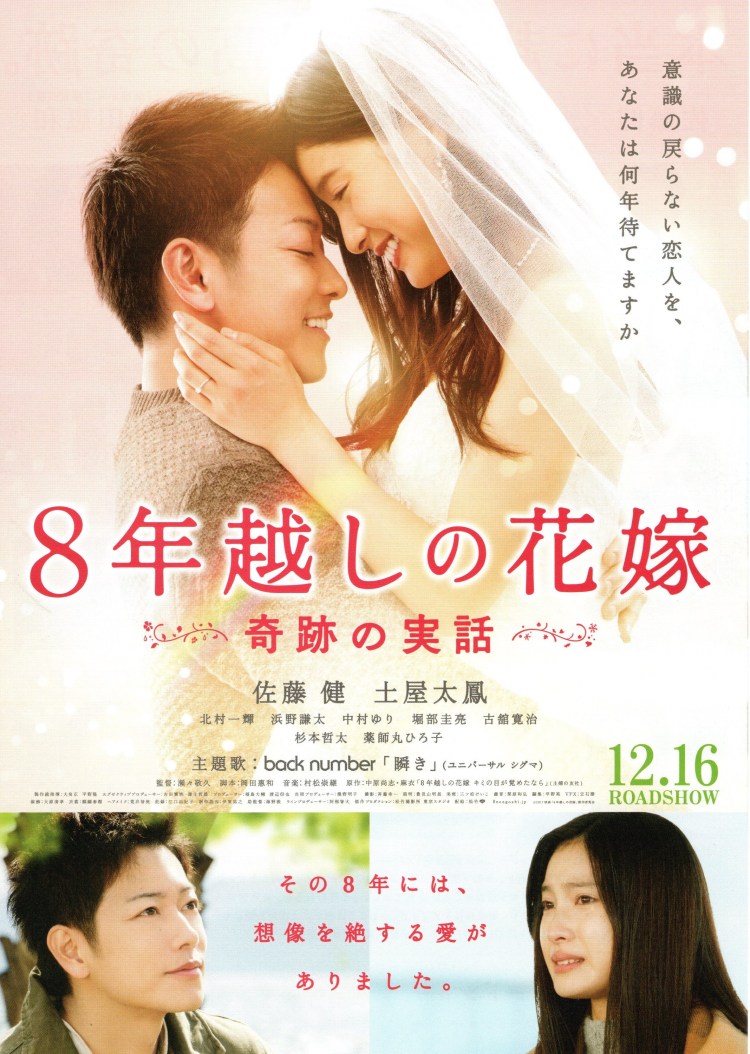
The 8-Year Engagement (8年越しの花嫁 奇跡の実話, Takahisa Zeze, 2017)

8-year bride posterRomantic melodrama has long been a staple of Japanese cinema which seems to revel in stories of impossible love. The short lived boom in “jun-ai” or “pure love” romances which blossomed at the beginning of the century may have petered out gracefully after plundering every terminal or debilitating illness for traces of heartbreaking tragedy, but the genre has never quite gone away and is unlikely ever to do so. Takahisa Zeze’s The 8-Year Engagement (8年越しの花嫁 奇跡の実話, 8-nengoshi no Hanayome: Kiseki no Jitsuwa) is, however, a slightly different case in that it is inspired by a true story which became something of a hot topic in the relatively recent past. Romantic in a grand, old fashioned sense, the film shifts away from the melodrama of misery while praising the power of perseverance and the enduring potency of true love in bringing about unexpected miracles.

In 2006, shy and retiring car mechanic Hisashi (Takeru Satoh) tries and fails to get out of a party his chatty colleague is arranging for that very evening. Sullen and resentful at having been roped into a social occasion he was not mentally prepared for, Hisashi says barely anything and then manages to free himself when the others decide to go for karaoke. Just as he’s walking off mildly regretful, one of the other partygoers, Mai (Tao Tsuchiya), comes back to harangue him about his “attitude”. Hisashi explains that he’s sorry but he’s not very good at this sort of thing anyway and the truth is he wanted to go home because he’s got a killer stomach ache which being forced to eat fatty meat and down sake out of politeness has done nothing to help. Mai approves of this excuse, and even loops back after leaving to meet the others at the karaoke to hand him a heat pack she had in her bag in the hope that it might help with the stomach trouble. The pair start dating, become wildly happy, and get engaged. Three months before the wedding, Mai is struck down by a rare illness and winds up in a coma.

The romance itself is tucked up neatly into the first half hour or so and mostly conforms to genre norms – he is shy and extremely sensitive, she is extroverted and extremely kind. The love story proceeds smoothly, though there are signs of trouble to come in Mai’s increasing clumsiness followed by headaches which lead to memory loss and finally a painful hallucinogenic episode resulting in prolonged hospitalisation. Zeze wisely scales back on medical detail and focuses on Hisashi’s devotion and unwavering belief that Mai will one day open her eyes and return to him. Rather than cancel the wedding date, Hisashi decides to keep it open in the hope that Mai will be well enough to attend before booking the same date, the date of their first meeting, in every subsequent year just in case she should wake up and regret missing out on her dream wedding.

As the condition is so rare, no one is sure what the prognosis will be though the doctors admit there is a strong possibility Mai may never awaken or that if she does there may well be extensive brain damage and irreparable memory loss in addition to life long medical needs. Hisashi puts his life on hold and comes to the hospital every day, making short video messages he sends to Mai’s phone so she can catch up on what she’s missed when she wakes up. His devotion does however begin to worry Mai’s doting parents (Hiroko Yakushimaru & Tetta Sugimoto) who eventually decide to explain to him that as he’s “not family” there’s no need for him to feel obliged to stick around. They do this not because they’re territorial over their daughter’s care, or that they don’t like Hisashi, they simply worry that he’s going to waste his life waiting for a woman who will never wake up. As he’s still young and has a chance to start again, they try to push him away in the harshest way possible – through cool politeness, but are secretly pleased when he refuses to be pushed.

People making other people’s decisions for them as a means of reducing their suffering becomes a recurrent theme. Rather than say what they mean, kindhearted people say the things which they believe are for the best and will end someone else’s suffering through a moment of intense pain. Everyone is so keen to spare everyone else’s feelings, that they perhaps suffer themselves when there is no need to. Hisashi’s supportive boss remembers a rather odd comment he made during his interview – after replying that he enjoyed fixing things when asked what made him apply for the job, Hisashi’s boss asked him what he thought about while he did it to which he replied “love”. Love does it seems fix everything, at least when coupled with undying devotion and a refusal give up even when things look grim. A romantic melodrama with a positive ending The 8-year Engagement is a happy tearjerker in which love really does conquer all despite seemingly unsurmountable odds.


Screened at the 20th Udine Far East Film Festival.

Original trailer (English subtitles)

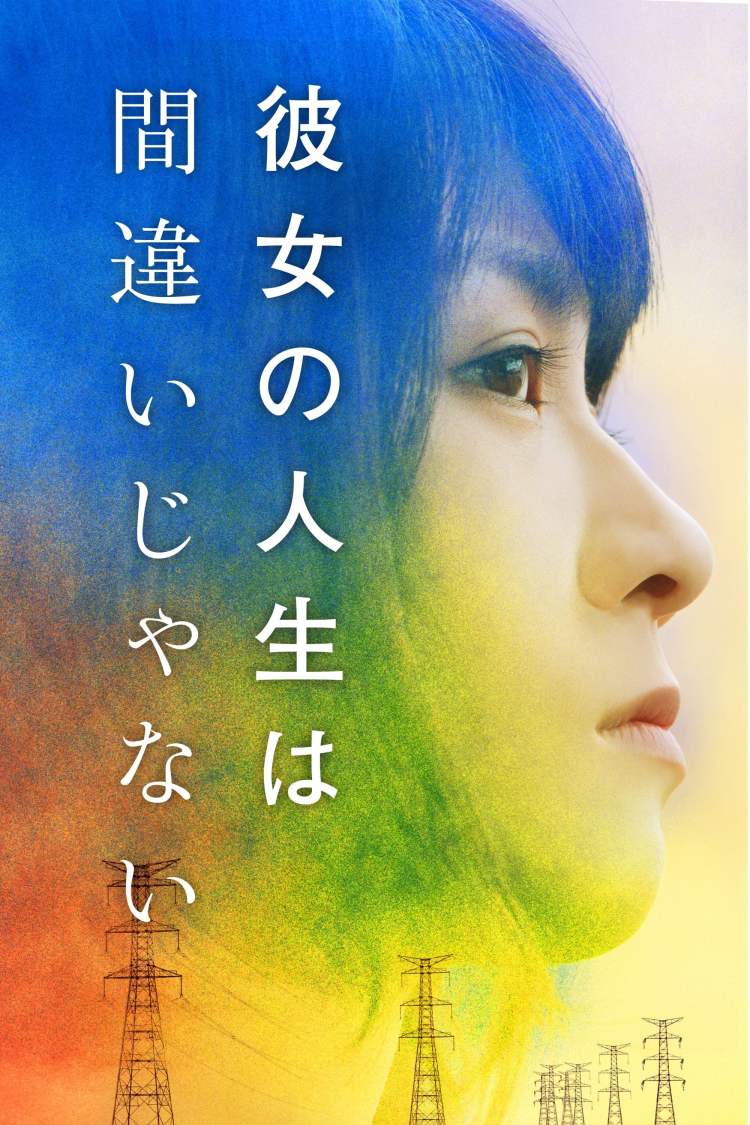
Side Job (彼女の人生は間違いじゃない, Ryuichi Hiroki, 2017)

Side JOb posterFukushima has become a focal point for recent Japanese cinema, not just as a literal depiction of an area in crisis but as a symbol for various social concerns chief among them being a loss of faith in governmental responsibility. Side Job (彼女の人生は間違いじゃない, Kanojo no Jinsei wa Machigai ja Nai) has the distinction of being helmed by a Fukushima native in Ryuichi Hiroki who also wrote the original novel from which the film is adapted. Typical of Hiroki’s work, Side Job is less an ode to the power of perseverance than a powerful meditation on grief, inertia, and helplessness. Though he offers no easy answers and refuses to judge his protagonists for the ways they attempt to deal with their situations, Hiroki does allow them to find a kind of peace, at least of the kind that allows them to begin moving forward if not quite away from the past.

Five years after The Great East Japan Earthquake of 2011, Miyuki Kanazawa (Kumi Takiuchi) is still living in a cramped prefab house with her widowed father, Osamu (Ken Mitsuishi). Miyuki’s mother was lost in the storm and her body never found, leaving the pair bereft and with an unanswered question. Having lost his farm to the exclusion zone, Osamu is left with nothing much to do and mostly spends his time idly playing pachinko and drinking much to the consternation of Miyuki who has a regular job with the city council.

Miyuki may well be angry about the way her father fritters away their money, but that doesn’t quite explain why she boards an overnight coach every Friday and spends her weekends in Tokyo engaging in casual sex work. She appears not to like the work very much and it is occasionally dangerous, but she does seem to have built up a kind of friendship with her “manager” as he drives her around the city to her various clients. Miura (Kengo Kora) claims to enjoy his work because it gives him an opportunity to observe human nature in all of its complexity though if he harbours any conflict about his role as a dispatcher of sometimes vulnerable young women, he is slow to voice it.

The “side job” of the title provides a kind of escape from a boring, conventional life in rural Iwaki, equal parts self-harm and quest for sensation. Miyuki, like many of those around her walks around with an air of irritated blankness, angry at so many things she doesn’t quite know where to begin. Yet for all that she’s also emotionally numbed, held in a state of suspended animation, longing to feel something, anything, even if that something is only shame. Through her double life Miyuki is able to find a sense of control and equilibrium that eluded her in grief-stricken Iwaki. Her manager, Miura, promises to “protect” her, though he makes clear that there are many women he feels a duty to protect rather than just Miyuki. Just as it seems Miyuki has come to depend on him, Miura drops a bombshell of his own though it maybe one which spurs Miyuki on towards a new beginning.

Everything in Iwaki is, in a sense, temporary. Miyuki and her father still live in the tiny prefab house in the hope of one day being able to go “home” while Osamu attends occasional meetings with the farming collective to try and find out what’s going on with his fields. Held in a kind of limbo, repeating the same daily tasks with relentless monotony, Miyuki and Osamu are trapped by a sense of helpless dread, forever waiting for something to happen but having lost the faith that it ever will.

While the pair struggle on, others find themselves unable to bear the weight of their tragedies. The spectre of suicide haunts Miyuki and her father from the woman next-door (Tamae Ando) who has become depressed thanks to the stigma surrounding her husband’s job with the decontamination programme, to the window at the agency which no longer opens following the suicide of one of the employees. Pushed to the edge by financial strain, there are also those who find themselves befriending the vulnerable with an intent to defraud, but it is in the end genuine human relationships which light the way for each of our struggling protagonists. Osamu bonds with an orphaned little boy through playing catch, Miyuki finds strength in Miura’s decision to break with his old life and build a new one, and her assistant at the city council, Nitta (Tokio Emoto), grows into the responsibility of being a big brother while attempting to do the best he can for the people of Fukushima.

What each of them finds isn’t an answer or a “cure” for their trauma but a path towards accepting it in such a way as it allows them to begin moving forward. New seeds are planted in the expectation of a coming future, new lives are celebrated, and the past begins to recede. Memory becomes a still frame, bottled and in a sense commodified but held close as a kind of talisman proving nothing is really ever “lost”. Filmed with an eerie sense of listless beauty, Side Job is an unflinching yet not unforgiving exploration of life after tragedy in which the only possible chance for survival lies in empathy and simple human connection.


Screened at the 20th Udine Far East Film Festival.

Original trailer (English subtitles)