
A Thousand Cuts (Ramona S. Diaz, 2020)

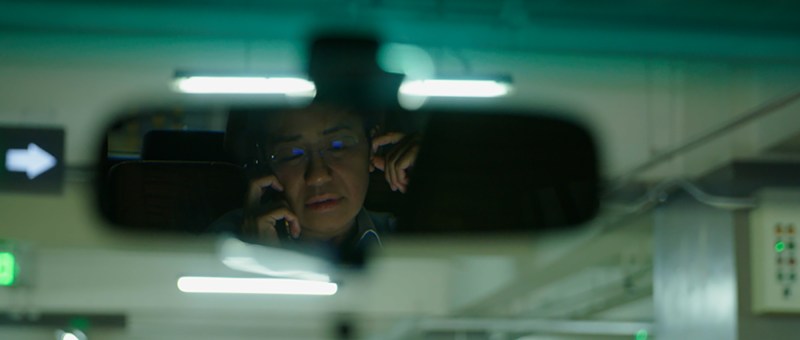
“Your concern is human rights. Mine is human lives” President Rodrigo Duterte disingenuously intones as part of his State of the Nation address, as if in the end they weren’t the same thing. Ramona S. Diaz’ clearheaded yet incendiary documentary A Thousand Cuts follows unfazable journalist Maria Ressa, head of online news site Rappler as she finds herself firmly within the president’s sights for her determination to challenge his “fake news” only to be accused of the same herself. Yet Ressa refuses to back down, holding the line even in the face of extreme threat to her person ranging from spurious prosecution to attempts to intimidate serious enough to have her wearing a flack jacket while travelling only by official car. 

As Ressa points out, the danger is not unique to the Philippines though through her investigations we see her map out the networks of bots and bad actors that allowed populism to prosper through social media, the most online nation apparently a guineapig for geopolitical manipulation. Remarkably even-handed in her presentation, Diaz introduces us to Ressa’s opposite number in Mocha Uson, a former pop idol turned rightwing blogger ensconced in the Duterte camp but scoffing at the idea her job is to spread pro-Duterte propaganda. Like fellow candidate Bato, a former police chief turned head of corrections, she likes to put on a show, a series of K-pop-style dance routines praising the president gracing her social media feeds. Cheerful scenes of dancing and celebration are directly contrasted with the disgruntled face of a female opposition candidate appearing directly below them as if in disapproval of their frivolous merrymaking.

Then again, the problem is the president is often overly “honest”, casually implying that he has personally killed and has no qualms doing so again as Ressa attempts to question him as if he were an ordinary politician. He is crass and sexist, constantly boasting of his sexual prowess at the podium while emphasising his virility,  literally playing the macho strongman, yet even as he says directly that he will kill people keep supporting him presumably believing that he means he’s going to kill other people but not them. One older woman even gets up to a mic at an event where Ressa is speaking to point out that the extra judicial killings may be awful but her pension’s gone up and she personally feels quite safe as someone unconnected to drugs so she struggles to see what the problem is. Meanwhile, the reporters recount the personal toll covering the killings can take on them as they witness the bodies lining the streets, discovered by wailing relatives protesting that their sons, husbands, and brothers were good people who didn’t deserve to die this way, not that anybody does. Not so much a war on drugs as a war on the poor, but populist politicians don’t hang on to their power by making things better, only by making them worse and then blaming someone else.  

Simply by reporting on the injustice of the killings, Ressa becomes a figurehead for the hate directed against Rappler and other news organisations prepared to challenge the president’s narrative. We see him humiliate a young reporter, answering her questions with an accusation of a lack of patriotism, before having her excluded from government briefings. The reporter later breaks down, revealing the strain placed on her by constant paranoia not just of becoming a direct target for government action but that she may someday make a mistake that would be used heavily against her. Yet she too is buoyed by the relentlessly positive presence of Ressa who refuses to be cowed, insisting that it’s not too late and that hope will win in the end. Don’t be afraid, she insists in the face of Duterte’s mantra that there must be fear, violence is his strength. Yet as the film’s title implies, the death of democracy comes in a thousand tiny cuts rather than a single blow, the cornerstones of accountability quietly chipped away while our attention is pulled in a thousand different directions. The parallels are obvious, populism on the march all over the globe, but there are at least those like Ressa willing to speak truth to power no matter what power might do to stop us listening. 


A Thousand Cuts streamed as part of this year’s San Diego Asian Film Festival.

Original trailer (English subtitles)
Unleashed (地下拳, Kwok Ka-Hei & Ambrose Kwok Yat-Choi, 2020)

Victory lies in letting go in Kwok Ka-Hei & Ambrose Kwok Yat-Choi’s macho boxing drama Unleashed (地下拳). A familiar tale of a gym under threat, a master vulnerable, and a young man indignant, Unleashed isn’t claiming to be original but eventually wanders in an unexpected direction with the entrance of a young aspiring actress who finds herself at the mercy of a predatory industry, taking refuge in the ring as she undergoes research for an upcoming role as a top assassin. 

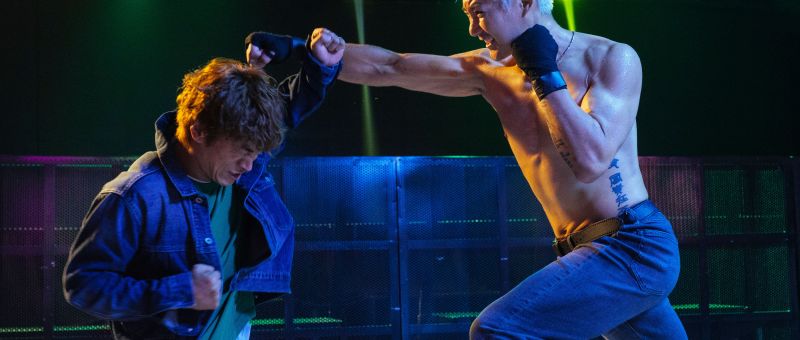
Fok Kit (Sun Zhen-Feng), the hero, is a champ of the underground boxing circuit living with his master Tak-bo (Ken Lo Wai-Kwong) at a struggling gym. When their landlord, Mr. Ho (Mok Wai-Man), comes calling, Tak-bo assumes he’s putting up the rent but the reality is even worse. Ho wants to sell the property after receiving an offer too good refuse, but he is willing to sell it to Tak-bo first if he can come up with the money. While the bank agree to loan him almost enough, Tak-bo is running a little short when he’s approached by an old pupil, Lok (Sam Lee Chan-Sam), with an offer of his own. He wants Fok Kit to face off against his guy Surat (Zheng Zi-Ping), a Thai boxer with a fearsome reputation. Tak-bo is reluctant, fearing for Fok Kit’s safety after hearing rumours that Surat killed a man in the ring, while it also turns out that there may be bad blood between himself and Lok who has not long got out of prison after being convicted of drug smuggling. Meanwhile, Fok Kit has taken on a new pupil, Effy (Venus Wong Man-Yik), who wants to join the gym to learn all the boxing she needs to know to convince in her role as an assassin in an upcoming movie. 

Left with no other options, Tak-bo gives in and lets Fok Kit fight Surat, but it goes just as badly as it could possibly go and not only does he lose but is rendered paralysed. In true boxing movie fashion, Fok Kit shifts from petulant unwillingness to undergo a risky operation that might allow him to walk again, to a full recovery and the desire for a rematch, but his scars are as much psychological as physical leaving him afraid to fight, seeing Surat’s smug grin in every challenger that swings a punch. He freezes, knocked out by even the weakest of opponents. Effy, meanwhile, is on an emotional rollercoaster of her own. The sleazy director she’s working with takes against her when she rejects his inappropriate advances, having all her scenes reshot and even using them as an excuse to use physical violence against her under the pretext of movie making. He eventually gets his comeuppance when a video of his behaviour is leaked and goes viral, but his drunken act of revenge, from which Fok Kit is unable to protect her because of his unaddressed trauma, may yet cost Effy her big break in leaving her with a prominent facial scar. 

As Tak-bo keeps telling him, however, the most important tool in boxing is not physical strength but passion, just as a good actor needs heart and dedication. “Clench your first too tight you may lose everything” Tak-bo insists gently guiding Fok Kit towards the power of letting go while he himself admits he’s been holding on to an insecurity that kept him out of the ring. A fear of losing, rather than the convenient excuse of his leg injury, had him give up the fight only now deciding that he’s tired of hiding from failure. If they want to save the boxing gym, they’ll have to face their respective fears in the form of the irredeemable big bad that is Surat, a total vacuum of humanity and unstoppable killing machine. The greedy and soulless are eventually made to pay a heavy price for their betrayal of the craft, while those who have true passion eventually prosper. Never quite managing to marry its twin plot strands with Effy’s desire to fight back against a sexist and exploitative industry taking a backseat to Fok Kit’s manly drama as he struggles to regain his confidence by beating his trauma in the ring, Unleashed moves swiftly towards it wholly expected finale but consistently lands its blows even in its willing conventionality.


Unleashed streamed as part of this year’s New York Asian Film Festival.

Original trailer (English/Traditional Chinese subtitles)

Images: © 2020 Orchid Tree Media

Drama Queen (Sắc Đẹp Dối Trá, Kay Nguyễn, 2020)

“I just changed my gender, I didn’t commit a crime” the heroine of Kay Nguyễn’s Drama Queen (Sắc Đẹp Dối Trá) answers after being publicly outed during a beauty contest. Sometimes people need a push to finally achieve their dreams, though witnessing a murder and becoming the target of shady gangsters is certainly an extreme motivation. Starring transgender pop star Huong Giang, Nguyễn’s playful drama is a win for representation as its steely heroine finds the courage to claim her space while keeping one step ahead of the mob and one step closer to beauty queen stardom. 

As the film opens, Duong (Huong Giang) is a lowly stuntman unexpectedly given the chance to shine when the lead actor goes AWOL. Unfortunately, Duong is a little too in love with the spotlight and can’t resist showing off his skills, effortlessly fighting off the ninjas who were supposed to despatch his character so he can finish his dance. In addition to irritating the crew, Duong’s improvements also result in the costume getting damaged, landing him a $500 bill he can in no way afford. The incident does at least introduce him to Hao, the actor who will be taking over. Unfortunately, however, the next time Duong encounters Hao he’s being stabbed in the street, later realising he’s been offed by Thien, the gangster who runs the stuntmen. Naively ringing his boss who turns out to be in league with Thien, Duong puts a target on his own back. Taking his friend Cutie’s (Phat La) advice and the money neighbour Ky (Puka) had been saving for a boob job he heads to Thailand for the gender reassignment surgery he always longed for but could never afford. 

The irony is that while Duong is getting her surgery, her father also falls ill and neither she nor her family have money to pay for his treatment having just spent it on her own. Though Duong’s mother had been extremely supportive, giving her all her savings and encouraging her to “get the best surgery and be beautiful”, Duong’s father disowned her on learning of her transgender identity and rejects her when she tries to visit him in hospital. Nevertheless, she remains determined to find the money to pay for his operation which is why she ends up entering the Miss Mother Earth beauty contest which admits only “natural” beauties who’ve achieved their good looks through hard work alone. 

While it might be assumed that taking part in a high profile beauty pageant when you’re meant to be in hiding from scary gangsters might not be the best idea, Duong is confident no one is going to recognise her, something that is more or less borne out by the fact that after a series of strange coincidences she ends up sharing a room with Ky who decided to enter to competition herself after catching sight of Cutie’s flyers and appears not to realise who she is. In it for the money more than the affirmation, Duong knows she has to keep her transgender identity secret or risk getting kicked out of the competition while challenged both by the idea of possible romance with sweet and handsome hotel man Tuan (Tuan Tran) and the presence of a gangster mole amongst the beauty queens after Ky in the mistaken belief that she maybe Duong. 

“Secrets make a woman a woman” Tuan unironically tells her, but Duong faces a series of very real threats because of her desire to live her truth. Publicly outed in the incident which opened the film, she grabs the mic to give a powerful speech, pointing out that before anyone mentioned the word transgender they all thought she was a hero for saving her friend’s life from a would-be-assassin, now all of a sudden she’s a criminal about to be manhandled off the stage. Yet in defiantly stepping into her own spotlight and claiming her space, she gains the confidence to be all of herself while forcing those around her to accept her as she is. Her new-found confidence inspires Cutie to pursue his own true self, as well as earning her a few fans of her own while the bad guys are forced into silence. A fairly surreal adventure encompassing everything from hitmen conspiracy to beauty pageant backstabbing, Drama Queen never takes itself too seriously but is rigorously sincere in messages of acceptance and the right of all to live their most authentic life. 


Drama Queen streamed as part of this year’s San Diego Asian Film Festival.

Original trailer (no subtitles)

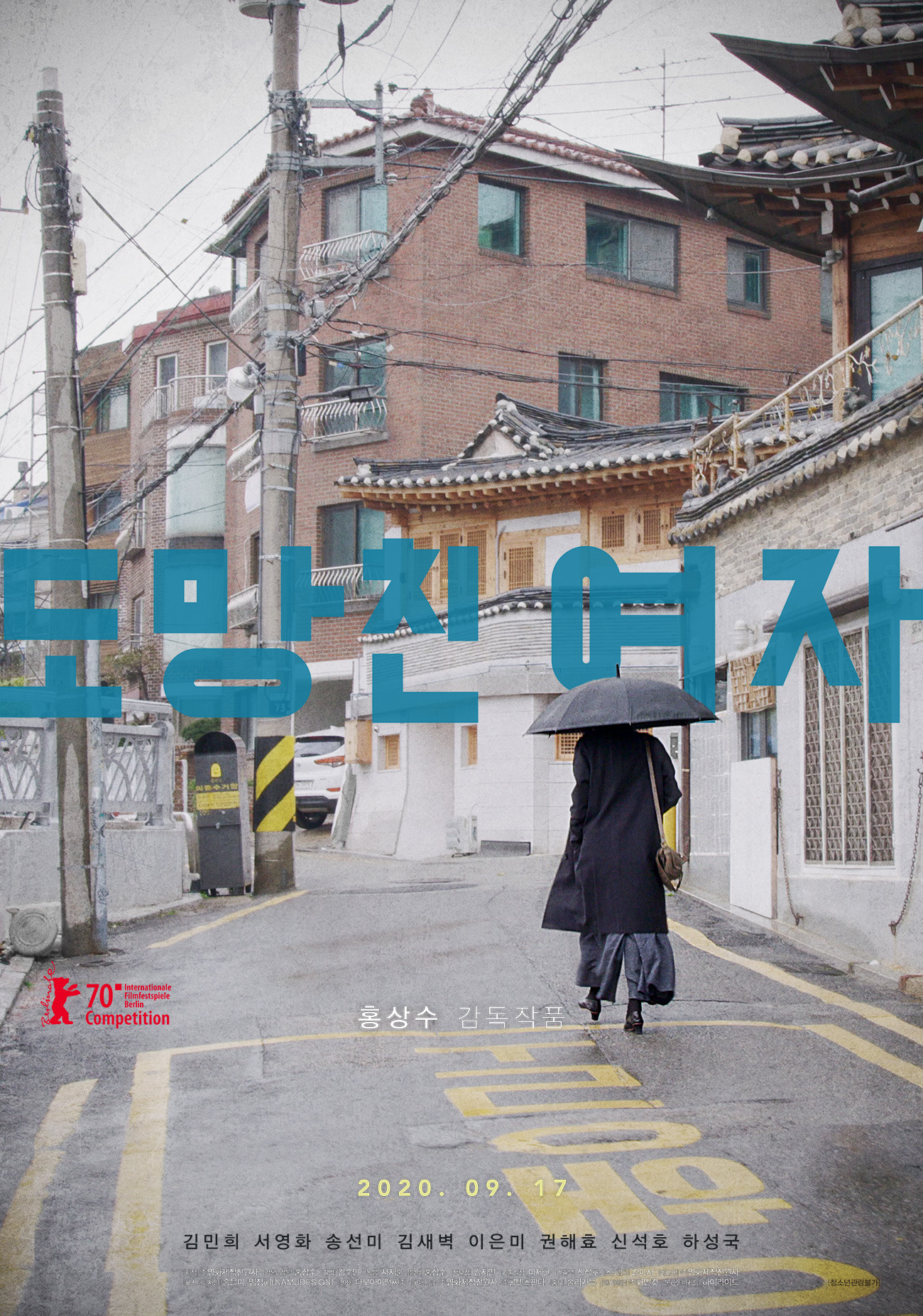
The Woman Who Ran (도망친 여자, Hong Sang-soo, 2020)

“He keeps saying the same thing. It’s absurd how he repeats himself”, an exasperated wife complains. “If he just repeats himself how can he be sincere?”. Perhaps another meta self own from master of the form Hong Sang-soo, but one that has additional bite in indirectly targeting a potentially duplicitous heroine who may or may not be “The Woman Who Ran” (도망친 여자, Domangchin Yeoja). Ran from what, one might ask though there is something clearly fugitive in the brief sojourns of Gam-hee (Kim Min-hee) whose casually profound conversations with a trio of old friends once again probe into the complicated nature of the relationships between men and women as if she were on a quest to find out what else is out there for a woman of a certain age than a, as she intentionally or otherwise characterises it, dull and unfulfilling marriage. 

It’s the first of her hosts, Young-soon (Seo Young-hwa), who perhaps signals Gam-hee’s desire for change in pointing out that her hair is much shorter than it had been the last time she saw her or ever before, Gam-hee apparently having attempted to hack it off herself in the bathroom in a fit of despair before deciding to get a professional to fix it. Young-soon thinks it makes her look like a “flighty high school student”, and in a sense it does in her slightly nervous giddiness even as she cuts the figure of a typically elegant, upper-middle class lady of leisure. As she tells each of her friends, Gam-hee claims that she and her husband have never spent a day apart in their five years of marriage, his idea apparently in a romantic conviction that those who love each other should stick together, but now he’s apparently gone off on a “business trip” so she’s travelling around visiting friends. Repeated ad infinitum in more or less the same words, Gam-hee’s story can’t help but feel overly rehearsed and less “sincere” with each iteration, leading us to wonder what the real reason for her excursion might be along with her true feelings about her marriage. 

As we find out, Young-soon is recently divorced from a self-absorbed playwright/director and has used the settlement money to move out to the semi-rural fringes of the suburbs where she has a small patch of land farming her own produce. She now lives with another woman, Young-jin (Lee Eun-mi), described only as a “roommate” but the atmosphere is domestic and settled, an ostensibly harmonious home. It is nevertheless disrupted by an irritating man (Shin Seok-ho), a new neighbour come to issue a complaint about the couple’s habit of feeding the local strays whom he maligns as “robber cats”, politely suggesting they stop because his wife is apparently so afraid of them that she can no longer leave her new home. Young-jin is polite but firm, describing their relationship to the cats as like their children, dismissing the man’s insistence that his wife’s ability to enjoy her garden is an “important matter” with the affirmation that the cats’ right to life is also an “important matter” and so they’re at an impasse. The comically passive aggressive conversation ends in a stalemate with the man admitting a momentary defeat, annoyed that the two women refused to acknowledge his authority, but pettily vowing to appeal to a higher power by reporting them to a residents’ association no better than the local rooster who likes to peck the feathers off hens to show them who’s boss. 

A man turns up to annoy Gam-hee’s second friend too, a 26-year-old unsuccessful poet (Ha Seong-guk) she apparently slept with on a whim only to see him become overly attached. Like Young-soon, Su-young (Song Seon-mi) has achieved a degree of financial independence and has recently bought a long term lease on her own home. She is apparently happily single, or at least convinced that good men are hard to find and most particularly in Korea. Nevertheless, she has something tentative going with a soon-to-be divorced architect who lives on the floor above, which is one reason why she’s keen to be rid of the annoyingly clingy poet. Su-young tries to ask Gam-hee about her marriage, if she’s really in love, but she can only answer unconvincingly that she feels a little bit of love everyday, accidentally or otherwise positioning herself as the loved and not the lover. She tells the final of her friends, Woo-jin (Kim Sae-byuk), that her husband is a part-time teacher and translator of historical texts and novels prompting the question of what sort of business trip he might have needed to go on, alone, for the first time in five years, but also signalling something of her boredom with her overly conventional life, complaining to Su-young that she’s fed up with her hobbyist sideline running an unsuccessful florists. 

Her meeting with Woo-jin is, if she’s to be beleived, serendipitous, the fact she’s brought no gift as she had for the other two women (meat for Young-soon that as it turns out was really for Young-jin, and a designer coat for fashionable Su-young) supporting her case, but does perhaps lead her towards her endgame as the protagonist in a final encounter with a problematic man, as it turns out an old flame who is the cause of the initial awkwardness between the two women whose former closeness we can infer from small, intimate gestures, Woo-jin placing her hand over Gam-hee’s by means of apology, and Gam-hee later clasping her friend’s knee. Curiously enough, the two women are also dressed more or less the same, and later seem to have patched up their old friendship, conspiratorially slagging off Woo-jin’s husband Seong-gu (Kwon Hae-hyo), now a famous author she fears has become an “insincere” narcissist who’s let fame go to his head. 

Apparently having seen him on TV, Gam-hee too agrees he’s “changed”, wondering if he’s really the same man she once knew, endlessly prattling on self-importantly for the cameras. Woo-jin can’t bear to listen to him anymore, fed up with his well rehearsed quips and affected persona. In seeing him again is Gam-hee confronted by the “reality” of her romantic fantasy of the failed love of her youth, or merely presented with an uncomfortable mirror of artifice that, like her meetings with her three friends prompts her into reconsideration of who she is and what it is she wants out of life? “I’d like to live somewhere this” she says to both Young-soon and Su-young, partly out of politeness but also re-imagining herself as a new age cottager or fancy free bachelorette, hearing the scandalous story of a woman who really did run disappearing in the night from her crushingly disappointing existence. Nevertheless, like many of Hong’s heroes Gam-hee remains a fugitive, retreating to the temporary refuge of the familiar trapped somewhere between past and future without clear direction but perhaps a little more alive. 


The Woman Who Ran streamed as part of this year’s London Korean Film Festival. It will also open at Curzon Bloomsbury & stream via Curzon Home Cinema on 11th December ahead of hitting Mubi 20th December courtesy of CMC Pictures.

Original trailer (English subtitles)

All the Things We Never Said (生きちゃった, Yuya Ishii, 2020)

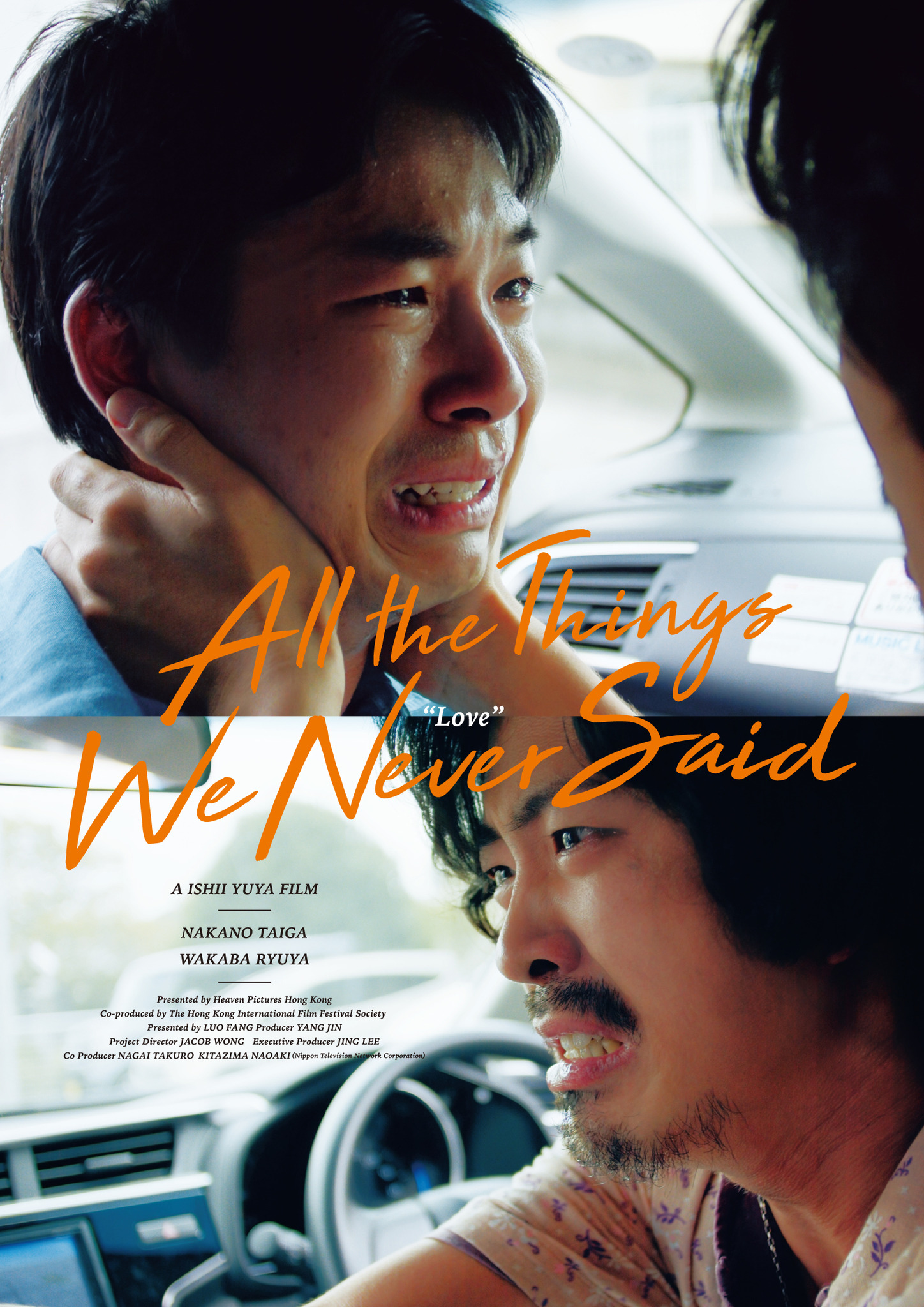
The broken dreams of youth and middle-aged malaise push a trio of former high school friends towards existential crisis in Yuya Ishii’s melancholy exploration of emotional distance,  All the Things We Never Said (生きちゃった, Ikichatta). Commissioned as part of the B2B A Love Supreme project created by the Hong Kong International Film Festival Society and China’s Heaven Pictures which tasked six Asian filmmakers with the task of proving that high quality films can still be made on a micro-budget, Ishii’s latest finds him in the same register as his poetic take on urban angst The Tokyo Night Sky is Always the Densest Shade of Blue as his frustrated protagonists each pay a heavy price for the seeming inability to communicate their true feelings honestly. 

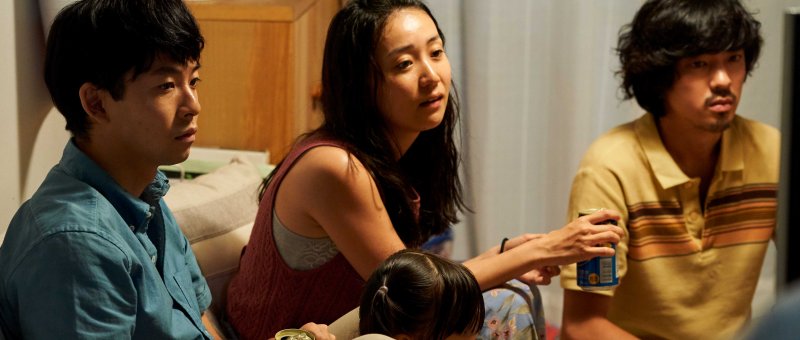
Opening with an idyllic scene of three high school friends enjoying a breezy summer day, Ishii cuts abruptly to the present, interrupting the wistful love song playing in the background mid-flow. Now in his 30s, Atsuhisa (Taiga Nakano) is a married father whose only dream is to be able to afford a nice house with a garden for his wife and daughter, maybe even get a dog. To this end, he’s been taking lessons in English and Mandarin with high school friend Takeda (Ryuya Wakaba) with the intention of one day starting their own business though they once dreamed of becoming musicians. All of that comes to nothing, however, when he begins to feel dizzy at work one day and returns home early to find his wife, Natsumi (Yuko Oshima), with another man. Unable to offer any real sound of protest, he accidentally smashes a panel on the glass door to their bedroom, apologises for interrupting, and leaves in a daze to pick up his young daughter Suzu (Yuno Ota) from school. 

Natsumi’s infidelity evidently comes as a complete surprise, though it seems obvious that their marriage is far from perfect. “My life is just stress and getting fatter” Natsumi openly complains to Takeda, her sense of inertia and impossibility seemingly more than simple dissatisfaction with her life as an ordinary housewife. For his part, Atsuhisa is as emotionally distant as they come, a near silent zombie dead eyed and permanently absent from himself. He is continually preoccupied by the absence of his late grandfather, now nothing more than an increasingly anonymous photograph on an altar as if he never existed at all. Atsuhisa asks himself if his grandfather really lived as a way of avoiding the same question in himself as he sleepwalks through a conventional life that proves infinitely unsatisfying while he chases elusive dreams of comfort and security. 

Natsumi’s revelation that she’s been completely miserable for the entirety of their married life because she’s never felt loved likewise shocks him, but if her intent was to provoke emotional honesty in her husband it fails. She pushes him to fight, to offer some kind of resistance but he simply accepts her decision to end the marriage. The sense of impotence is palpable, Natsumi turning off the TV set because she can hardly do anything about the reactors at Fukushima Daiichi so what’s the point in knowing about them. “How else can we live?” someone else later adds, other than to simply decide not to think about the things you cannot change. Atsuhisa tells himself that it’s meaningless anyway, it will all “fade away” in the end so there’s no sense in trying to resist. 

Yet he continues to struggle, wondering in a sense if he could perhaps claim agency over his life if only he could learn to communicate his true feelings honestly. He asks himself if it’s because he’s Japanese that he can’t, if his culture actively prevents him from speaking freely when it comes to desire. Of course, everyone else is Japanese too which perhaps makes his question moot, but those around him do indeed seem to suffer from the same sense of wilful repression, even Natsumi tragically withholding her real feelings and ultimately working against herself out of a mistaken sense of guilt. “You don’t love me, that’s why you can be honest” an ex of Atsuhisa’s points out during an emotional farewell, cutting to the quick in suggesting that his problem is that he fears the risks of emotional intimacy. 

Two boys and one girl is always going to be a story tinged with a degree of sadness no matter how it turns out, but on that idyllic summer day no one could ever have thought it would end like this. Takeda, manfully keeping his true desires under wraps perhaps in love with Natsumi himself but too diffident to have said anything or overly mindful of his friends’ feelings, does his best to be the emotional buffer supporting both halves of a couple rapidly spiralling away from themselves but is ultimately unable to prevent them from making decisions they may regret even as they are are made. “My love wasn’t good enough” Atsuhisa laments in his inability to make it felt, finding proof of life only in absence through the memory of those shining summer days. A little rough and ready around the edges but filled with a raw poetry Ishii’s melancholy drama puts its hero through the emotional wringer but in the end perhaps sets him free to speak his heart even if others are too ashamed to look.


All the Things We Never Said streamed as part of this year’s San Diego Asian Film Festival.

Original trailer (no subtitles)

Gull (갈매기, Kim Mi-jo, 2020)

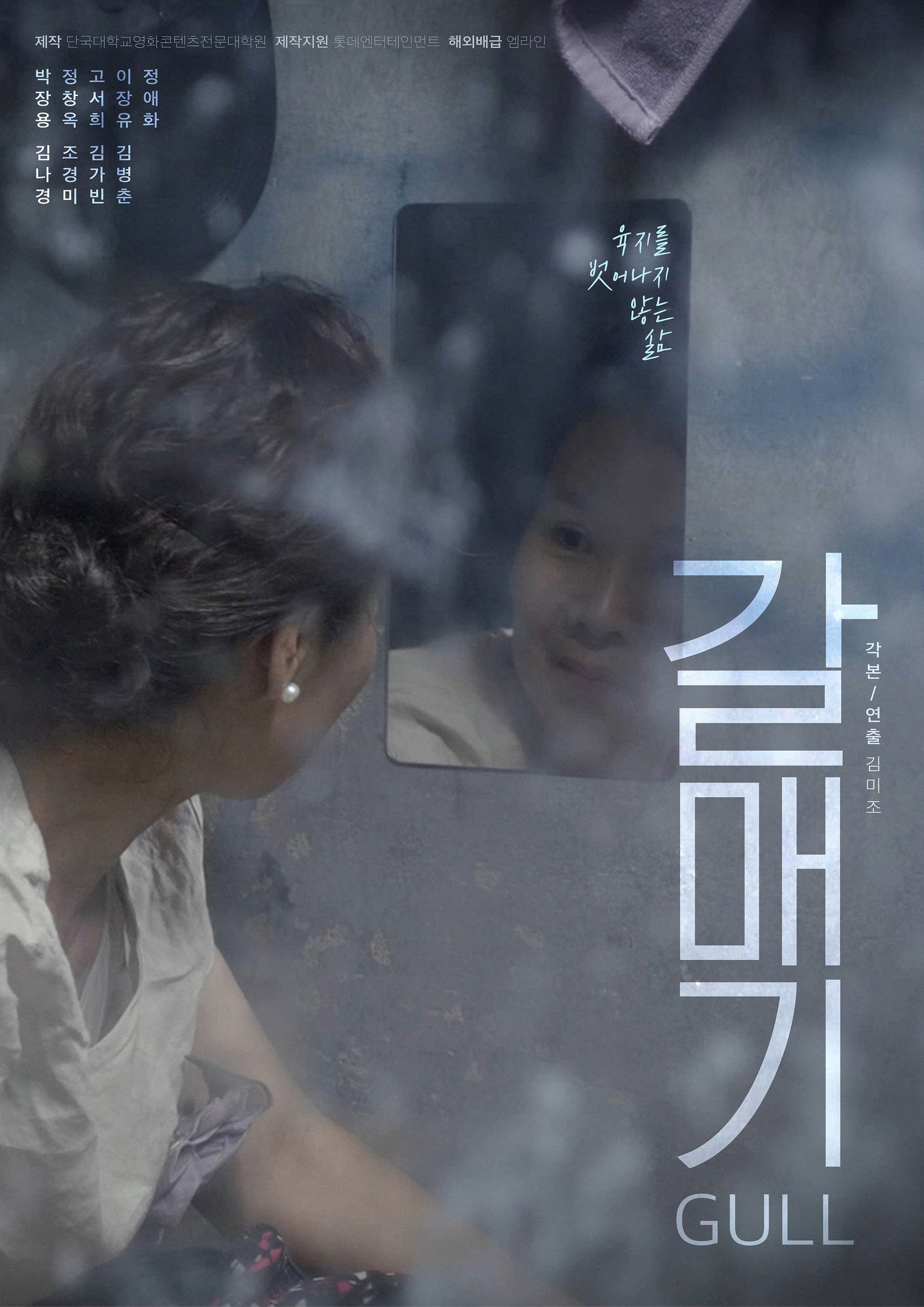
“Equality before the law must be enjoyed not only by the rich but by everyone. We must not let them get away with trampling on our human rights and right to life”, the leader of a protest against the forced relocation of his fish market intones over a loudspeaker in Kim Mi-jo’s incendiary Gull (갈매기, Galmaegi), but his words have a very different connotation to a middle-aged woman quietly seething in her protest gear as she watches from an upper window. She knows when he says “everyone”, it’s not quite what he means and that to that extent he does not truly believe what he’s saying because to be a woman in this society is to know that your human rights and right to life have been trampled on daily since the day you were born and if you try to resist someone will tell you you’re making a scene. 

30 years running a stall selling raw fish, O-bok (Jeong Aehwa) is excited about the marriage of her oldest daughter, In-ae (Go Seo-hui), though also a little anxious seeing as she’s marrying up, her fiancé’s family are educated people with good government jobs. In-ae jokes that her mother has an inferiority complex, but it is in a sense true in a half-realised acceptance of her marginalised position as a working class woman along with the frustrated dreams of her youth. Chatting on the phone with her mother who has dementia, O-bok reveals she’s proud that despite having missed out on an education herself as was the thinking for girls in those days, she managed to send each of her three daughters to college. She wonders why her mother didn’t do the same, and mourns all the things she could have done with her life if only she hadn’t been bound by societal expectations. 

Staying behind one evening to have a drink with her colleagues, she is assaulted by Gi-taek (Kim Byeong-choon), the man with the loudspeaker and the de facto leader of the protest and solidarity movement trying to ensure they cannot be pressured into accepting less than they’re owed in compensation when the market is closed. Stumbling home the following morning clearly in pain and having difficulty walking, O-bok is alerted to blood on the back of her skirt by a fellow female pedestrian, stopping into a bath house to rinse out her underwear. Aside from visiting a doctor for “bleeding”, she tells no one and does not return to the market for several days. Gi-taek, meanwhile, has the audacity to turn up at her door with premium seafood to ask after her health. 

Eventually O-bok explains what’s happened to In-ae, laying bare a generation gap as the younger woman tries to persuade her mother that she should it report it to the police. O-bok, however, is reluctant to make herself the subject of gossip, mindful of the effect it may have on her daughter’s marriage, and tries the old-fashioned way first in asking Gi-taek for an apology through an intermediary, complicating the situation in obviously being unwilling to say what it’s for. When he refuses, she takes her daughter up on the offer and files a complaint though perhaps knowing it’s unlikely to go anywhere seeing as she no longer has access to any material evidence.  

What she could not have expected is the extent to which her simple desire to see justice done would make her a social pariah. Of course, the situation is complicated by the economic precariousness of the fish market workers who cannot afford to lose out on the compensation money and are depending on Gi-taek to help them get it. The men find the whole thing embarrassing, making muted comments about O-bok’s drinking as if she brought this on herself, something her daughter later echoes in a moment of anger only to be disappointed in herself for saying it. Not knowing who made the accusation, her husband chuckles that rape is all a big joke because you “can’t rape a girl who doesn’t want to”, while the women are largely no better reminding her that this is the sort of thing you keep to yourself and try to forget as if they don’t know how that feels. 

“I’m so sick of people mouthing off about rights and all” a genial female shopkeeper confesses to O-bok, admitting that she has no idea why the man on the roof across the way with the sign is protesting, “He says things are unfair or something. I don’t even care.” “He’s just torturing himself” she adds, O-bok perhaps wondering too if that’s all she’s really doing, if her quest for justice is really worth it when no one seems to care. She wonders if they’d care more if she weren’t a 61-year-old market fishmonger but an educated woman with a good government job. Maybe we’re not all so equal under the law after all, but she can’t let them get away with trampling on her dignity. Shot with naturalistic detachment shifting to a rattled handheld, Gull is a crushing condemnation of a misogynistic, classist society but one that finds strength in its heroine’s resilience and newfound determination make herself seen if only by those ought to feel ashamed. 


Gull streams in the UK until 11th November as part of this year’s London Korean Film Festival.

Original trailer (English subtitles)
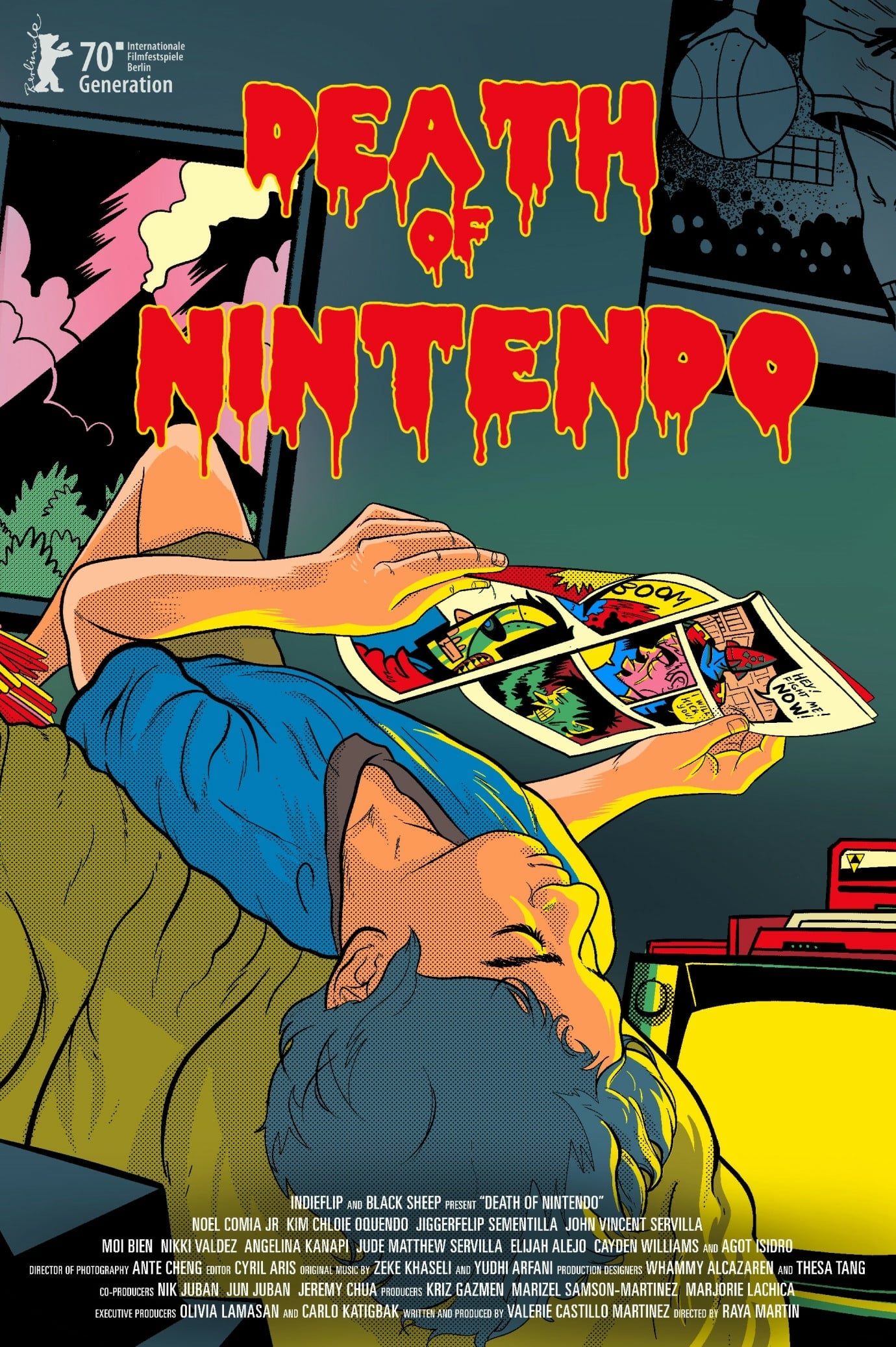
Death of Nintendo (Raya Martin, 2020)

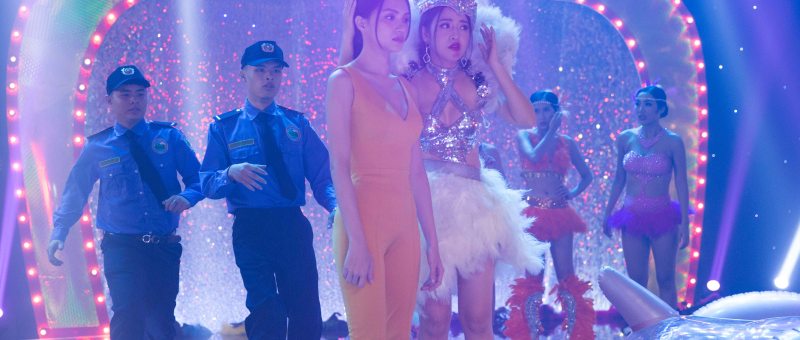
Raya Martin made his name as a pioneer of experimental cinema in the Philippines. While his more recent films have perhaps drawn increasingly closer to the mainstream, it might still come as a surprise that his latest feature is a retro teen movie of the kind that no-one really makes anymore save as an exercise in nostalgia. As the title may imply Death of Nintendo, scripted by Valerie Castillo Martinez, is indeed a nostalgia fest set in the post-Marcos early ‘90s, in a sense the dying days of the golden age of Mario, but it’s also a subtle critique of contemporary Filipino masculinity, a uncoming-of-age drama in which boys never really grow up but continue to occupy a space of perpetual adolescence. 

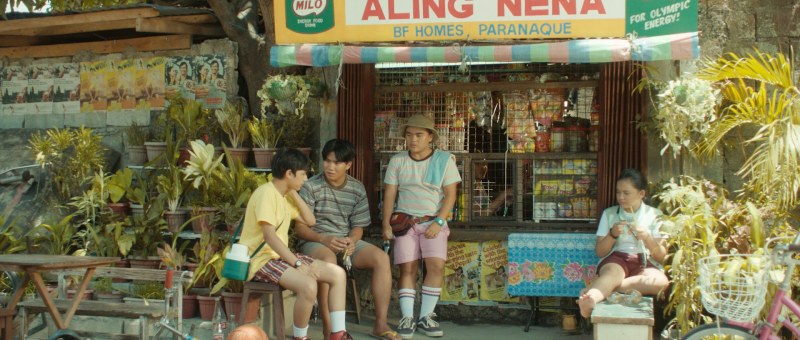
In a nebulous early ‘90s Manila, 13-year-old Paolo (Noel Comia Jr.) is an introspective rich kid obsessed with playing Nintendo of which his fiercely overprotective, helicopter mother Patricia (Agot Isidro) largely approves because it keeps him home in his room where she can keep an eye on him. She’s less keen, however, on Paolo’s circle of friends which includes both fellow rich kids Gilligan (Jiggerfelip Sementilla) and his sister Mimaw (Kim Chloie Oquendo) whose father has recently run off to America with another woman, and Kachi (John Vincent Servilla) who lives in the slums with his lothario older brother Badong (Jude Matthew Servilla) and sex worker mother Shirley (Angelina Canapi). Meanwhile, the gang’s arch nemesis, the uncouth and distinctly mean Filipino-American returnee Jimbo (Cayden Williams), is intent on making all their lives a misery and Paolo is in the first flushes of adolescent romance mooning over popular kid Shiara (Elijah Alejo). The upshot is that the boys are keen to become men as quickly as possible by undergoing the Tuli ritual circumcision, travelling to the remote village witch doctor who operated on Badong and apparently turned him into the top stud he is today.  

As all of the father figures are absent, Badong is the closest paternal presence that any of them have though in real terms his example may not be much of one to follow. He currently has a steady job working at the local Jollibee, but as Kachi fails to realise is also being courted by the petty gangsters of the slums, while his mother is quick to warn him about his promiscuous ways and possibilities of getting a girl into trouble. Neverthless, what all the guys want is to instantly transform into an idealised vision of masculinity largely gained from movies and pop culture rather than the weedy boys they currently feel themselves to be. Tellingly they see something of this in Jimbo and are intimidated by him because of it, later losing their fear after realising that he has not yet undergone the ritual and is therefore still a boy himself.

Mimaw, meanwhile, who has always been a tomboy is confronted by notions of idealised femininity after she becomes friends with Shiara and her coterie of popular girls. Allowing the other young women to give her makeovers, she wonders if it’s OK that her friendship group is her brother and his friends and why it is she’s more comfortable in jeans and T-shirts than skirts and heels. When Paolo asks her to put in a good word for him with Shiara she’s conflicted, and though it’s suggested that she’s got a crush on the most sensitive of the boys, we can’t help wondering if it’s not Shiara that she may secretly be drawn to. 

In any case, as the boys spend their time on childish competitions of masculinity, it’s Mimaw who’s perhaps beginning to realise that she wants something more out of life. Eventually, the NES is replaced by a SEGA Mega Drive, the boys having completed the ritual and become “men”, wearing jeans and smart shirts with greased hair yet looking almost identical, still boys on the inside. Mimaw prepares to move on, leaving the boys behind as they again suggest video games or basketball only for Kachi to decline because he doesn’t want to muss his hair and Gilligan because he’s got a hot date to prepare for later in the evening. The boys, it seems, have only swapped their games for girls, while Mimaw has truly grown-up, something telling us this was her story all along only no was really her paying much attention. Bathed in the golden glow of an eternal, adolescent summer in which there are earthquakes and eruptions figurative and literal as the boys edge their way towards a longed for manliness, Death of Nintendo is perhaps less conventional than it first seemed while filled with the ache of nostalgia for a more innocent era.


Death of Nintendo streams in California until Oct. 31 as part of this year’s San Diego Asian Film Festival.

Original trailer (English subtitles)

Me and the Cult Leader (AGANAI -悪の陳腐さについての新たな報告, Atsushi Sakahara, 2020)

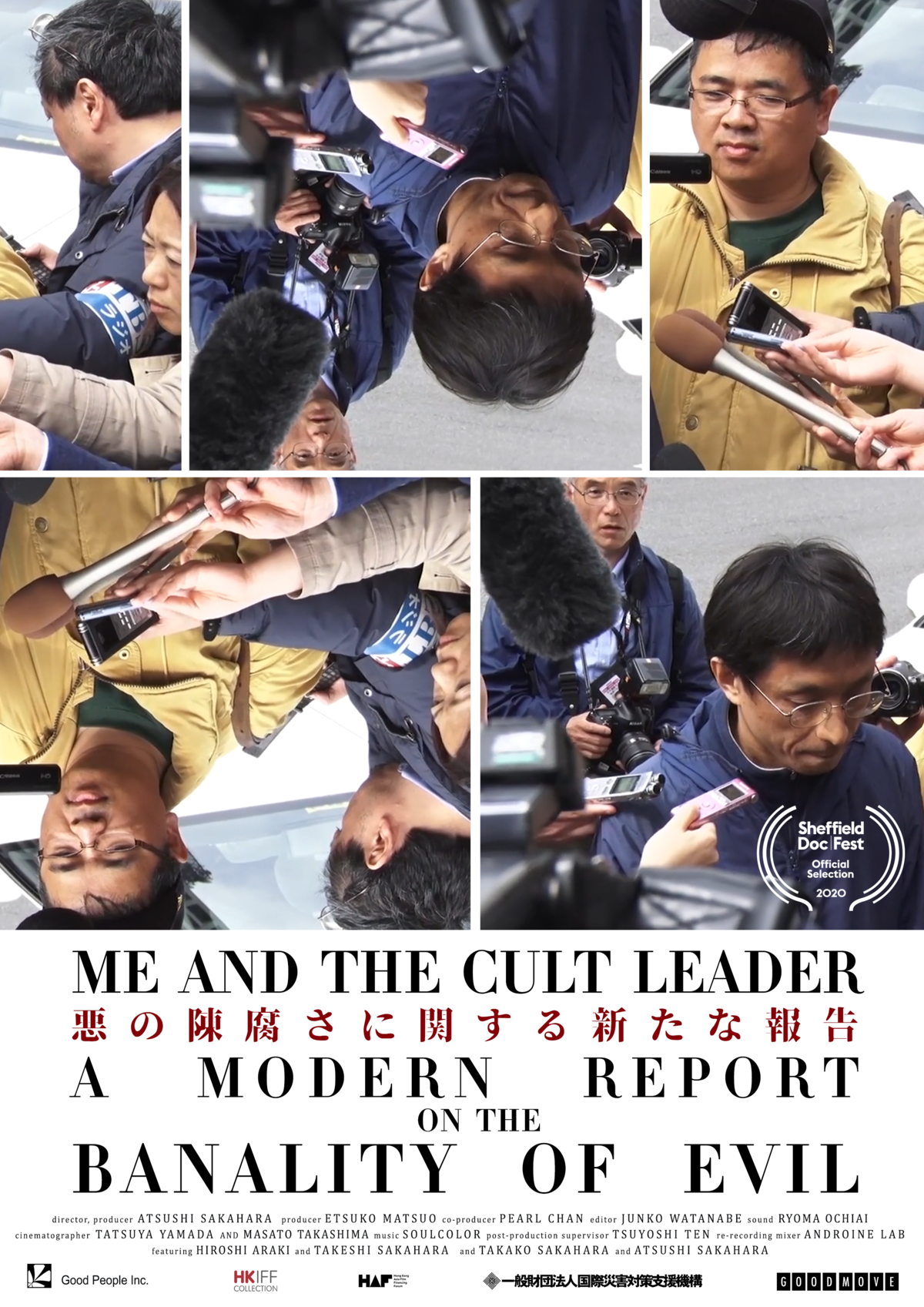
How can you continue to serve an ideology which you know is responsible for a heinous act that offends your sense of moral righteousness? That’s a question that Atsushi Sakahara, a survivor of the sarin gas attacks on the Tokyo subway, finds himself asking in his documentary Me and the Cult Leader (AGANAI -悪の陳腐さについての新たな報告, Aku no Chinpusa Nitsuite Aratana Hokoku), as he meets with Hiroshi Araki, a current member of Aleph, the successor to Aum, the cult which planned and executed the 1995 act of terrorism which led to the deaths of 13 people and left 6200 injured, many like Sakahara with life changing consequences. 

Yet Sakahara’s purpose is the opposite of polemical, he merely reaches out to Araki in an effort to understand the mindset not only of someone who joined Aum in the early ‘90s and was a member at the time of the attack though not directly involved, but of someone who stayed and continues to believe in the teachings of cult leader Asahara who was executed in 2018 after years on death row along with other members responsible for Japan’s only exposure to domestic terrorism. Throughout it all, however what he seems to want is some kind of apology, or at least an act of contrition, something which proves elusive as the distant, thoughtful Araki largely refuses to engage as if afraid to accept that the ideology to which he has devoted all his adult life may in fact be corrupt and empty. 

Araki’s justifications run mainly to technicalities. He does not exactly deny that members of Aum were responsible for the attack, but explains that their guilt is the most logical explanation given the available evidence which includes their own confessions and so concludes it is likely the truth. The two men travel together on a kind of pilgrimage back to their respective hometowns which happen to be in the same area of the country, while in another coincidence they also attended the same university at the same time. A jovial presence, Sakahara attempts to hurry the near silent Araki along, pushing him to open up which he eventually does but failing to elicit from him anything which might begin to free him from the icy grip of his ideology. 

Sakahara subtitles his film “A modern report on the banality of evil”, and there’s certainly something of that as the film opens in a subway station, Sakahara and Araki merely two ordinary middle-aged men in anoraks waiting for a train. Yet Araki is clearly not an “evil” man. He appears to be thoughtful and sensitive, often breaking down in tears as the journey forces him to remember his life before he renounced the world, the vision of his grandmother waving him off at the station after a summer holiday leading back to that of his mother as he severed connection with her to join with Aum. He doesn’t quite explain what led him to join the cult save being overwhelmed by Asahara’s charisma when he gave a speech at Kyoto university in the early ‘90s, Sakahara having witnessed him arrive the year before but jokingly shouting out for the famously outlandish cult leader to show off his talent for levitation, save that he became disillusioned with consumerism after a pencil case he lusted over as a child lost its lustre when he got it home. The training, he goes on, caused him to lose the capacity for joy or pleasure, leaving him he explains with no other choice than to join the cult because there was no longer anything left for him in the outside world which had become unbearably painful as a result.

Yet knowing what he knows, how can he go on practicing Asahara’s teachings? Sakahara tries not to push him, only once or twice pressing for an answer as to whether or not he sees and understands his suffering and feels remorse, later introducing him to both his parents in an effort to prove that actions have wider consequences, that he is not the only victim but that others suffer because of his suffering. Meeting Sakahara’s equally compassionate mother and father does appear to move something with him, evoking a loose apology even if he immediately walks back on it with some manichean justifications that Sakahara is also responsible for everything that’s happened to him because it is all a result of his choices, good and bad. 

The unavoidable conclusion is perhaps that Araki is simply afraid to confront the implications of everything he’s seeing lest his entire worldview collapse and he realises he’s wasted all of his adult life serving a corrupt and empty ideology. Sakahara acts with total warmth and compassion for his dilemma, even at one point quite literally buying him a coat because he’s only brought his anorak despite it being freezing (Araki also constantly carries a sleeping bag because his asceticism seems to extend to beds and futons), patiently listening to his often sad stories of youth but every revelation is followed by extended silence, Araki shifting back inside himself unwilling risk bursting the bubble. Sakahara, however, remains patient hoping for the day that the cultist will finally see the light. 


 Me and the Cult Leader streams in the US until Oct. 31 as part of this year’s San Diego Asian Film Festival.

Original trailer (English subtitles)
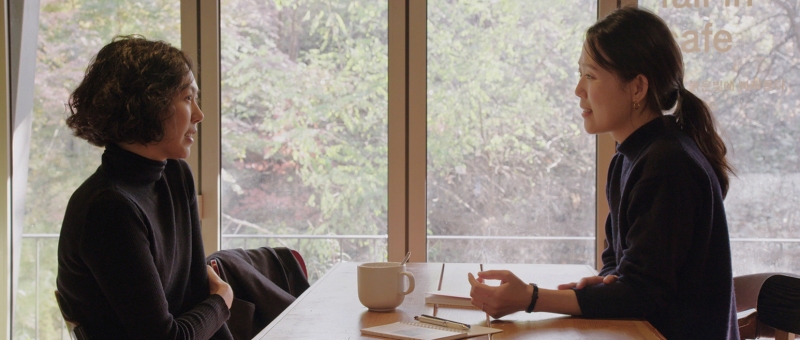
Under the Open Sky (すばらしき世界, Miwa Nishikawa, 2020)

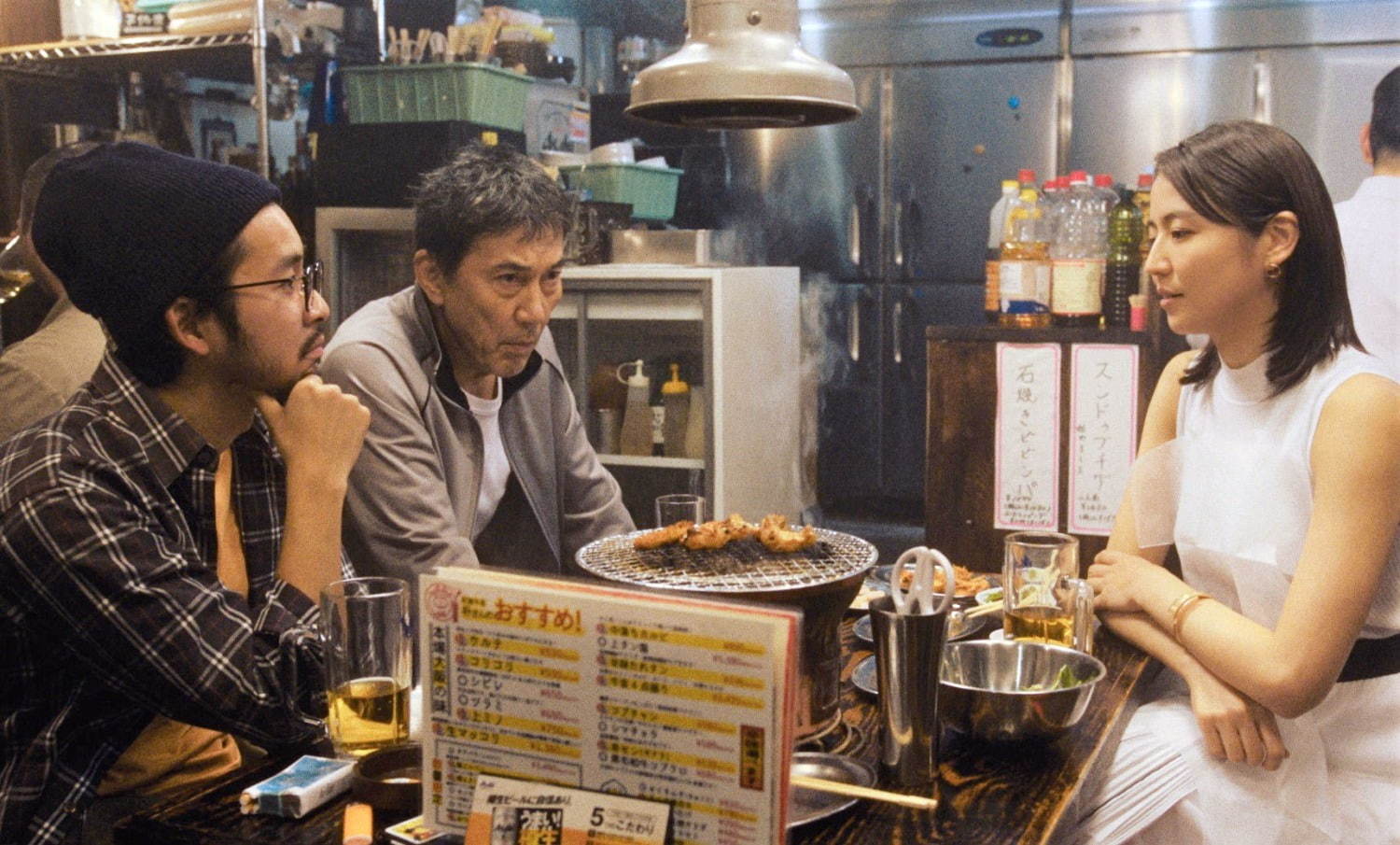
“Am I too unhealthy to live in society?” asks the hero of Miwa Nishikawa’s Under the Open Sky (すばらしき世界, Subarashiki Sekai) of his doctor, but the only answer he gets is a wry chuckle and an exhortation not to be so “pessimistic”. Inspired by Ryuzo Saki’s 1993 novel Mibuncho, the first of Nishikawa’s six features to be adapted from secondary material is in many ways a typical Showa-era story, testifying to the fact that the world has not changed as much as we might have hoped in the intervening 30 years since Saki’s novel was published, but it’s also a lowkey condemnation of the quiet hypocrisies which continue to define our notions of civility in the story of a man who was perhaps too good to survive in our “society”.

Opening with bars and heavy snow, Nishikawa introduces us to Mikami (Koji Yakusho) as he nears release after serving 13 years in prison for killing a man in what is described by the authorities as a yakuza gang war, though Mikami is keen to point out that he’d already attempted to leave the yakuza by then and the killing was mere self defence. In any case when questioned by the officers about to release him, he admits no remorse over the man’s death only that he lost 13 years of his life over “that hoodlum”. In any case he’s thrown out into the cold, boarding a bus back into the city where he vows to go straight. Once there, however he discovers the outside world to be fairly inhospitable. Not only are the skills he learned in prison next to useless when it comes to finding employment in the contemporary economy, but he must also contend with societal prejudice and his own wounded pride.

Stepping for moment into the realms of the issue movie, Nishikawa explores the relative impossibility of re-entering mainstream society as someone who has been convicted of a crime. Having spent most of his adult life in and out of prison as a petty yakuza footsoldier, Mikami has little education and no marketable skills aside from his capacity for violence and the ability to drive, something of which he is now deprived because his licence expired while he was inside and to get it back he has to start from scratch by passing the new-style two-part test. Mikami’s life is indeed a typical post-war story, abandoned to an orphanage by his geisha mother from which he later escaped and ended up joining a gang in place of the family he never had. “Prison is the only place that won’t kick you out no matter how badly you behave” he later quips, accidentally laying bare his yearning for unconditional love found only shakily in yakuza brotherhood.

Yet that old-fashioned, post-war yakuza is an outdated institution, like Mikami himself a relic of the Showa era floundering in the late Heisei society in which gangsters wear sharp suits and have fancy offices, finding more sophisticated ways to make war with each other than open thuggery. Everybody wants out, Mikami later muses to himself, but it’s hard to fit in to society and those like him find themselves drawn back towards the vagaries of the yakuza life for all the dubious certainties it continues to offer them. His lawyer and guarantor Souji (Isao Hashizume) tells him that he needs to regain his love and trust of people, but that’s a tall order when it feels like no one loves you and they make a point of letting you know you’re not forgiven. Even a simple trip to the supermarket proves traumatic when the head of the local neighbourhood association who just happens to run it decides to pick him up for shoplifting just because he knows he’s an ex-con. Thankfully he later realises his mistake and is filled with remorse, moved by Mikami’s quiet dignity in asserting his innocence and right to shop as he pleases. 

For all that, however, Mikami is a man of violence who has known no other way of life, taught that his only acceptable emotional release lies in pain and destruction. His violence is, however, for the sake of others not himself. He does not become violent with the store manager Mastumoto (Seiji Rokkaku) who later becomes his friend, but gleefully confronts two punks hassling a terrified salaryman and teaches them a minor lesson in the way only an old hand can. This other side to his otherwise childishly naive character shocks frightens Tsunoda (Taiga Nakano), a TV director Mikami had approached with the intention of being featured on his show in the hope of tracking down the mother who abandoned him, who engages in some armchair psychology to imply that the source of Mikami’s rage lies in his alienation as a rejected child. The irony is that Souji, his wife (Meiko Kaji), Matsumoto, and Tsunoda become Mikami’s new “family”, replacing that he’d looked for in the yakuza and providing a grounding in mainstream society that allows him to shed his anger, but the compromise they ask of him is in itself soul crushing in its implications to the extent that his complicity with it is no redemption but a moral failure. 

If such is the price of civility, Mikami may have a point, perhaps it isn’t worth it. In the end, it is our world which fails to live up to his goodness, his violence a result of society’s continued indifference to human suffering. He is no more free outside the walls than in, constrained by an unforgiving emotional austerity that permits injustice in the name of harmony. If you can’t protect the ones who’ll save the flowers from the storm, then what is your freedom for? Subverting a well worn redemption narrative, Nishikawa finds a wealth of kindness in a broken world, but suggests it’s not enough save us until the world itself is redeemed. 


Under the Open Sky streams in California until Oct. 31 as part of this year’s San Diego Asian Film Festival.

Teaser trailer (English subtitles)
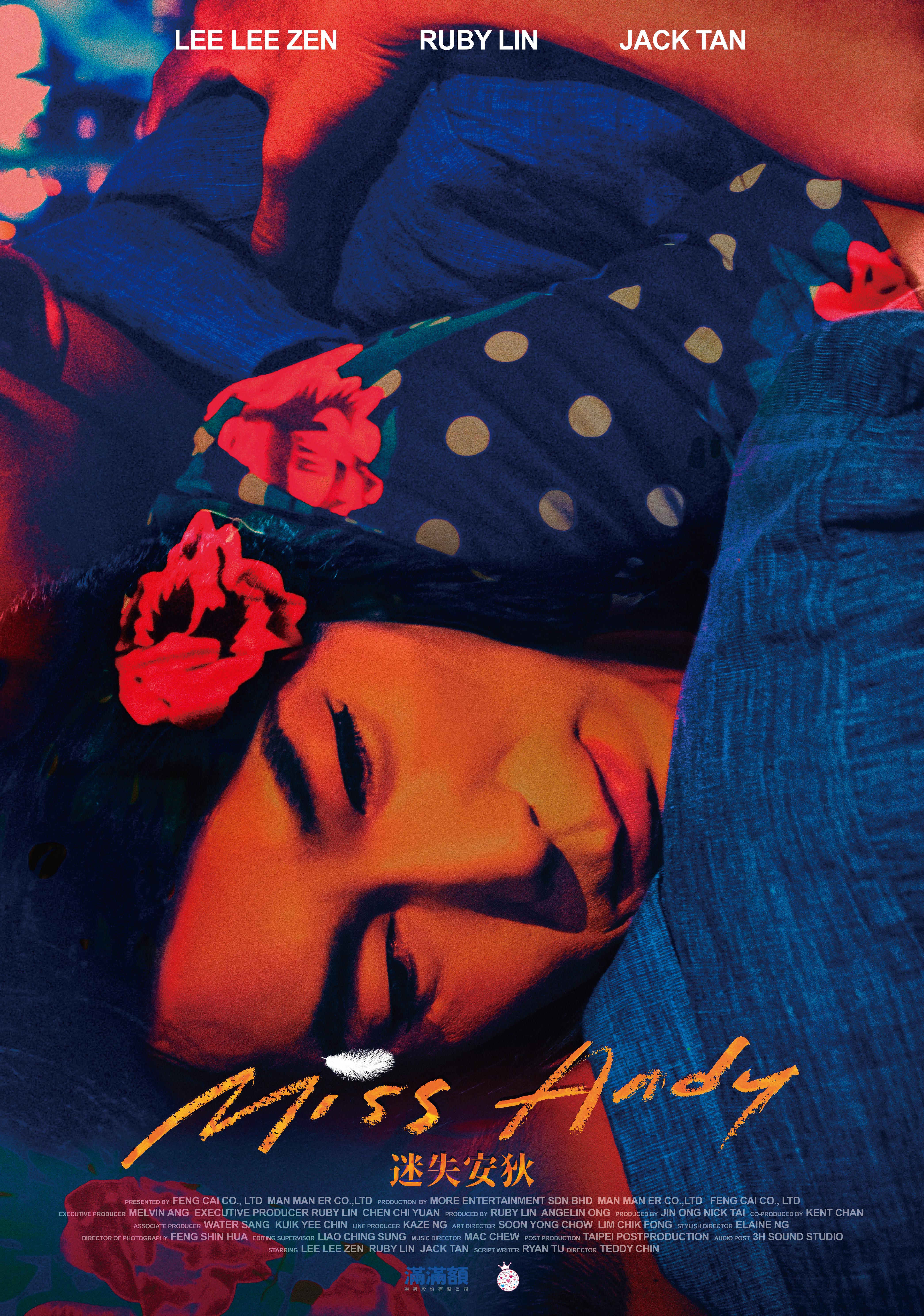
Miss Andy (迷失安狄, Teddy Chin, 2020)

“The things we like we’re still going to lose” according to a drunken young man lamenting youthful impossibility in Teddy Chin’s melancholy tale of marginalisation and frustrated hope, Miss Andy (迷失安狄). A Malaysian-Taiwanese co-production, Chin’s sensitive drama allows its disparate protagonists to find a sense of security in the solidarity of an accidental family, but all too quickly reminds us that despair is the enemy of love and that a lack of faith in human connection can undermine even the most genuine of bonds in those who can no longer believe in future happiness. 

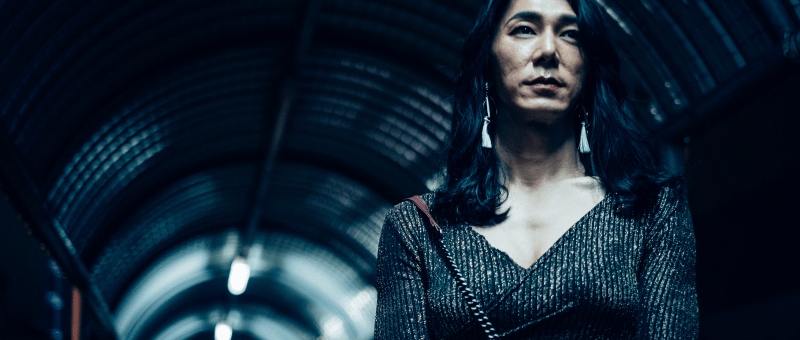
The titular “Miss Andy”, Evon (Lee Lee-zen), has certainly had her share of disappointment. Now 55, she transitioned five years previously following the death of her wife but both of her grown-up children have since disowned her. Having lost her livelihood, she’s had no choice other than to resort to sex work in order to make ends meet, finding herself on the receiving end of male violence from her clients only then to be arrested with the man insisting that he was only defending himself against her advances and attempt to rob him while the unsympathetic police officer dead names and berates her with homophobic slurs. She is eventually forced to strip and expose her genitals while half the station gawp and take photos. Evon decides to give up on sex work and advises her friend Lucy to do the same, but she refuses to see the danger and is later murdered by a man who solicited her for sex. 

Feeling totally alone, Evon tries to claim her position in society, insisting on receiving her pay from her previous employer who tries to short-change her justifying herself with more transphobic slurs. Evon has only one other friend, Teck (Jack Tan), a young man with a hearing impairment who offers her additional work as a delivery driver during which she encounters a little boy looking longingly at some pastries in a small store by a petrol station. She decides to buy one for him, but the boy has gone when she returns. Later that night, however, she gets a surprise discovering the boy and his mother having snuck into her apartment after stowing away on the truck. Hearing that they’ve escaped an abusive relationship and have nowhere else to go she invites them to stay.

Sophia (Ruby Lin), the boy’s mother, is an undocumented migrant from Vietnam. She’s struck by the unlikely miracle of Evon because her name sounds a little like the Vietnamese for hope, something on which she was beginning to give up. We see her telephone her family, but her father only angrily demands more money, eventually passing the phone over to her sister who unsentimentally tells her that her mother has died. All the rest of the family were with her, only Sophia was absent. Feeling just as alone as Evon she is grateful for her kindness, swearing to find a job to repay it while cooking and cleaning as a means of saying thank you. 

Later joined by Teck and anchored by Sophia’s young son Kang who is the same age as the granddaughter Evon is rarely allowed to see, they begin to become a family, united in their sense of marginalisation each in some way rejected by mainstream society. Evon religiously buys lottery tickets using the birthdays of her wife and children as numbers in the hope they’ll eventually come up and she’ll somehow win her family back. Even Sophia who had perhaps not dared to dream of a brighter future eventually joins in as they idly fantasise about the kind of home they’d build if they actually won while sitting in an upscale furniture store before the server at a festive restaurant offers to take a picture of their “family”, but when that sense of possibility finally presents itself the illusion is shattered. Desperation undermines their fragile bond, pushes them towards doubt and betrayal, no longer able to believe in the viability of simple human goodness or mutual support as mechanisms for living but suddenly selfish and self-destructive destroying everything they’d built in mistakenly staking all on the vague possibility of material comfort.

Asked about her dreams, Evon had only stated that she wanted a safe and stable life but what she craved was the sense of togetherness and acceptance she felt with Sophia and Kang while her children continue to reject her and she finds herself marginalised by a conservative society that refuses to affirm her existence as a transgender woman. Bathed alternately in the melancholy neon of the outside world and the golden warmth of Evon’s apartment, Miss Andy leaves its marginalised protagonists wounded, pushed into acts of self harm having lost all faith in the veracity of simple human connection corrupted by the fear and despair of an unforgiving society ruled by inequality and prejudice. 


Miss Andy streamed as part of this year’s New York Asian Film Festival.

Original trailer (English subtitles)