A Girl Named Ann (あんのこと, Yu Irie, 2024)

In the wake of tragedy, it’s easy to think that if only you had made a different choice then everything would be alright, but in reality it’s never as easy as that and blaming oneself is merely an act of vanity. There’s a peculiar kind of tradeoff that occurs to journalist Kirino (Goro Inagaki), that if he hadn’t written an article exposing a policeman who founded a support group for former drug users trying to integrate into mainstream society as a sex pest, then he might have gone on to help more people. Of course, he would have gone on abusing some of them too and his behaviour would probably have escalated into something much worse. The journalist begins to ask himself if it’s worth it for the net good, without necessarily examining the ramifications of the policeman’s actions.

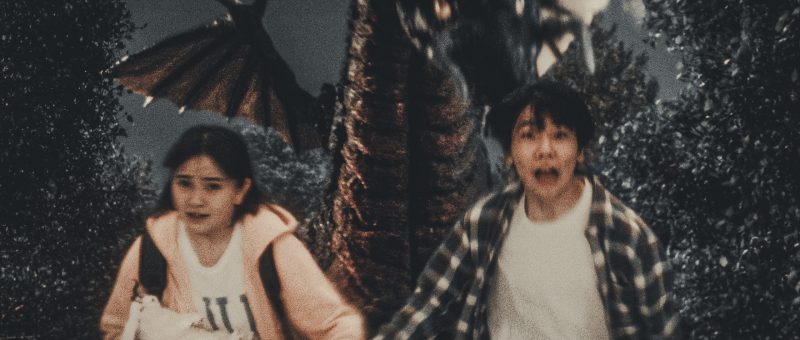
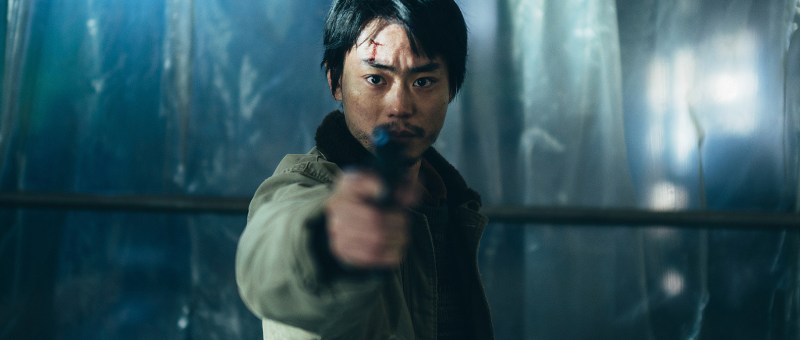
Yu Irie’s bleak social drama A Girl Named Ann (あんのこと, An no Koto) draws inspiration from a real life case in which a young woman began to turn her life around only to reach a crisis point during the pandemic. The film’s title almost makes an everywoman of its heroine who is resolutely failed by the society in which she lives and in the end discovers only a sense of futility in realising that she will never fully be able to escape the clutches of her abusive mother (Aoba Kawai) who forced her into sex work at age 12. Ann never even finished primary school even though middle school is compulsory and is functionally illiterate. Her reading level is that of a small child which of course makes it near impossible for her to be employed in any kind of salaried job while when she does secure employment her mother steals all her money. 

Being arrested by Tatara (Jiro Sato), a policeman who at first seems well-meaning even if positing “yoga” as a means of turning Ann’s life around, finally gives Ann the encouragement to come off drugs and try to integrate into mainstream society. To his credit, Tatara does everything he can for her from providing a paternal presence to finally helping her escape her mother by getting her a place in an apartment complex set up for women who are being stalked or have experienced domestic violence. Living alone gives Ann a sense of confidence and positivity that allows her to imagine a better future for herself while confronting her past. But on the other hand, it remains true that Tatara may have been better to help her move to another city where her mother would be less likely to find her and derail her life at every conceivable opportunity rather than keeping her close at his own support group which is perhaps an act of vanity if not something worse. No one helps for free and Ann encounters only differing kinds of exploitation from the employers who take her on at poverty wages because they know how desperate she is and don’t think she deserves any better, to the conflicted journalist Kirino who is only really invested in his investigation of Tatara. Ann seems to resent him for exposing Tatara and taking him away from her, but neither of the men make much of an attempt to continue supporting her once the story breaks. 

Ann’s plight exposes how the weakest in society were disproportionately affected by the coronavirus pandemic. The care home she was working at, poignantly because she wanted to learn how to take care of her grandmother (Yuriko Hirooka) who had shielded her from her mother’s abuse, is forced to restrict the number of employees on site meaning Ann is let go while the classes she’d been taking to improve her literacy are also cancelled. Though the apartment requires no rent, she no longer has a means of feeding herself not to mention being stuck inside all the time with nothing to do but study, and not even that when all her pens run out of ink. People are often judgemental and there is no further social support available to her. Even Tatara had been overly fixated on her drug use and while it’s true that she would otherwise be unable to rejoin society without recovering, he otherwise fails to consider other factors such as Ann’s toxic home life or trauma from the long years of abuse she suffered that all contribute to the problems she is facing. 

Even so, unlike her mother Ann is a warm and caring person who is well liked at the care home and clearly has a lot of love to give but the universe won’t seem to give her a break. Perhaps it would be easiest to simply blame her mother, but something must have made her like that too and there’s no one there for her either. She sometimes calls Ann “Mama”, as if the roles were reversed and she were the child being parented by Ann rather than the other way round. In any case, she comes to embody the selfishness of an indifferent society which could have saved a girl like Ann if really wanted to but in the end did not.


A Girl Named Ann screens as part of this year’s Japan Foundation Touring Film Programme.

Trailer (English subtitles)

Images: ©2024 “A Girl Named Ann” Film Partners

Rude to Love (愛に乱暴, Yukihiro Morigaki, 2024)

Momoko (Noriko Eguchi) can’t find her cat, Pi-chan. It hasn’t been home for days, and now there’s a stray prowling around near its water bowl. Her mother-in-law, Teruko (Jun Fubuki), can’t abide strays. They come into people’s homes and mess up their gardens. She shoos them away, making it clear they aren’t welcome here. It seems like Momoko’s not all that welcome either, and though her relationship with Teruko is civil enough, it’s clear Teruko has no great love for her and no desire to be any more friendly than she has to be to keep the familial peace.

In many ways, it’s Momoko herself that’s a stray cat and in trying to find Pi-chan she’s trying to reclaim her space within the domestic environment in which she fears she is imminently to be replaced, convinced that her husband, Mamoru (Kotaro Koizumi), is having an affair. At the core of Yukihiro Morigaki’s Rude to Love (愛に乱暴, Ai ni Ranbo) is a cry of despair from a middle-aged woman left with nowhere to turn. Someone in their quiet, residential district has been setting fire to the bins and it’s difficult to not think that the culprit is someone much like Momoko pushed to breaking point and desperate for some kind of release. For Momoko’s part, taking out Teruko’s rubbish has become a daily ritual and one of her key tasks as a dutiful daughter-in-law while she also goes out of her way to keep the place tidy, sweeping up the stray cigarette butts and tin cans that fall from other people’s loosely tied bags. But in other ways, we can see she wants things to change. She repeatedly approaches Mamoru with catalogues to talk about their plans for radically renovating their home, including the removal of a non-load-bearing pillar in the living room, but he generally ignores her.

In fact, Mamoru pays little attention to her at all and is frequently away on “business trips”. Momoko has a sideline in teaching other housewives how to make soap, but left her corporate job eight years previously when she married Mamoru. She tries approaching her old boss to expand the soap-making business and he suggests that she return to the office instead but almost certainly doesn’t really mean it and totally ignores her business proposal. Momoko knows that after so long out of the work force and as a middle-aged woman getting another corporate job is unlikely and the soap classes don’t pay enough to live on. If Mamoru leaves her, she’ll be left flat with nothing to fall back on. This is a key element of Mamoru’s betrayal and one of the reasons that Momoko holds fast to this domestic space to the point she would degrade herself by accepting Mamoru’s affair and begging him not to divorce her. 

Yet in other ways Momoko feels uneasy within it because she and Mamoru had no children. She looks on at other women with their babies and visits a doctor who tells her that her increasingly painful menstrual cramps are a symptom of ageing that she may have been able to ameliorate by giving birth to a child, but also that she is likely heading into the menopause so this maternal milestone is one that may already have passed her by. She can’t escape the feeling that she’s failed to make a success of her womanhood and channels all of her ambitions and desires into the remodelling project that her husband remains entirely uninterested in because he’s already decided to vacate this space. In the depths of her rage, Momoko finally takes a chainsaw to the foundations of her home in the hope of “freeing Pi-chan,” and ends up lying in a grave-like pit in the middle of her living room much like the deluded patriarch of The Crazy Family

The only person who seems to appreciate her efforts is the Chinese student, Li (Long Mizuma), who works at the local garden centre where he is treated poorly by some of the other customers. Mamoru never thanked her for anything, but Li expresses gratitude for her always keeping the rubbish drop tidy. Teruko resents her for something that is really a kind of misunderstanding, but has on some level some sympathy for her plight as a housewife. She idly remarks that she wishes she’d been widowed sooner, which sounds like a terrible thing to say, but also reflects the sense of doom a woman feels in her increasing age that a man does not. Men are never too old to start over but for a woman there are certain things for which is just “too late”, just as it was “too late” for Teruko to fulfil herself after her husband died. She tells Momoko that she still young enough to start over, but Momoko knows that in many ways she’s not. Still, at least the domestic space is hers to do with as she pleases no longer under the watchful eyes of her next-door neighbour and mother-in-law, stray cat no more but master of her own domain.


Rude to Love screens as part of this year’s Japan Foundation Touring Film Programme.

Trailer (no subtitles)

Based on the original novel Shuichi Yoshida “Rude to Love” published by Shinchosha

Images: ©2013 Shuichi Yoshida/Shinchosha ©2024 “Rude to Love” Film Production Committee

Detective Chinatown 1900 (唐探1900, Chen Sicheng & Dai Mo, 2025)

The Detective Chinatown team head back to turn of the contrary San Francisco in the latest instalment of the mega hit franchise, Detective Chinatown 1900 (唐探1900, Tángtàn 1900). Like many recent mainstream films, its main thrust is that Chinese citizens are only really safe in China, but also implies that diaspora communities exist outside the majority population and therefore can only rely on each other. Nevertheless, there’s something quite uncanny in the film’s ironic prescience as racist politicians wax on about how here rules are made by the people rather than an emperor and plaster “make America strong again” banners on their buses. 

The crime here though is the murder of a young white woman, Alice (Anastasia Shestakova), the daughter of Senator Grant (John Cusack) who is attempting to push the renewal of the Chinese Exclusion Act through government and destroy all the Chinatowns in the United States. An older Native American man was also found dead alongside her. Some have attributed the crime to Jack the Ripper as Alice was mutilated before she died and some of her organs were taken. The son of local gangster Bai (Chow Yun-Fat), Zhenbang (Zhang Xincheng), is quickly arrested for the crime while his father hires Qin Fu (Liu Hairan) to exonerate him believing Qin Fu to be Sherlock Holmes. 

What Qin Fu, an expert in Chinese medicine recently working as an interpreter for the famous consulting detective, finds himself mixed up in is also a slow moving revolution as it turns out Zhenbang is involved with the plot to overthrow the Qing dynasty (which would finally fall in 1912). As the film opens, corrupt courtiers to sell off large golden Buddha statues to American “allies” who are later seen saying that they plan to fleece China and then renege on their promises to protect it. Meanwhile, the Dowager Empress has sent emissaries to San Francisco to take out the revolutionaries in hiding there including Sun Yat-sen.

Of course, in this case, the Qing are the bad guys that were eventually overthrown by brave Communist revolutionaries that paved the way for China of today which is alluded to in the closing scenes when Zhenbang’s exiled friend Shiliang (Bai Ke) says that China will one day become the most powerful country in the world implying that no-one will look down on the Chinese people again. But on the other hand, they are still all Chinese and so the emissary tells Qin Fu to “Save China” as he lays dying having met his own end shortly after hearing that the British have invaded Peking signalling the death blow for the Qing dynasty. 

Nevertheless, there is a degree of irony in the fact that the secondary antagonist is an Irish gang who have signs reading “no dogs, no Chinese,” mimicking those they themselves famously face. The Irish gang is in league with Grant and content to do his dirty work, while Bai is supported by another prominent man who speaks Mandarin and pretends to be a friend to the Chinese but in reality is against the Exclusion Act on the grounds he wants to go on being able to exploit cheap Chinese labour. In this iteration, Ah Gui (Wang Baoqiang) is “Ghost,” a man whose parents were killed building the American railroad and was subsequently taken in and raised by a Native American community. In Bai’s final confrontation with the authorities, he takes them to task for their hypocrisy reminding them how important the Chinese have been in building the society in which they alone are privileged while “equality” does not appear to extend to them.

Through reinforcing these messages of prejudice and exploitation, the film once again encourages Chinese people living abroad to return home. Though set in 1900, the scenes of protest can’t help but echo those we’ve seen in the wake of the Covid-19 pandemic when racist hatred towards Asian communities has become much more open and pronounced. Qin Fu and Ghost do at least succeed in solving the mystery through scientific principles while ironically assisted by an earnest American policeman who says he thinks it’s important to uphold the law even as we can see the head of the golden Buddha sitting behind the victorious politician’s banquet table and realise that in reality taking out Grant has made little difference for the Exclusion Act will still be renewed (it was repealed only in 1943). They may have saved Chinatown, but Bai must sacrifice his American wealth and return to China much the way he left it having reflected on his life in light of the revolutionary course charted by his more earnest son. As Ghost and Qin Fu remark, if things were better there no one would want to come here though they themselves apparently elect to stay, solving more crimes and making sure that their descendants know they were here and where they were from.


International trailer (Simplified Chinese / English subtitles)

The Village (ヴィレッジ, Michihito Fujii, 2023)

The toxicity of life in small-town Japan is manifested in a giant recycling plant in Michihito Fujii’s poetic drama, The Village (ヴィレッジ). Closely aligned with the noh play quoted in the opening title card, the film charts a young man’s simultaneous blossoming and corruption as he finds himself at the service of a demonic mayor and fighting for his place in a village that doesn’t need him but requires a sacrifice. 

In the opening scenes, mist rises over the mountain accompanied by noh recitation before we eventually arrive at a noh recital. These two images would seem to signal a kind of innate Japaneseness which has been corrupted by the presence of the recycling plant despite the economic benefits it’s brought to the area. The mayor, and boss of the plant, Ohashi (Arata Furuta), wants to extend it out across the other mountains in the region and boasts that though there may have been resistance at first now everyone is grateful to them for everything they’ve done for the village. 

Yu’s (Ryusei Yokohama) father was the last holdout against the plant and apparently ended up killing a man in an altercation thereafter taking his own life and burning down their family home. Because of the stigma surrounding his father’s actions, Yu has been ostracised by his community and is used as a perpetual kicking bag not least by Ohashi’s thuggish son Toru (Wataru Ichinose) at his job at the plant. His mother has also turned to drink and developed a pachinko problem which has resulted in massive debts to yakuza loanshark Maruoka (Tetta Sugimoto) who’s press-ganged Yu into working at the illegal dumpsite which is how the plant really makes its money.

But his life begins to change when childhood friend Misaki (Haru Kuroki) returns to the village having apparently suffered a breakdown in Tokyo. Misaki’s resurfacing reinforces the purgatorial atmosphere as if everyone here were already dead. Having been away so long, only she immediately embraces Yu and simultaneously bonds with him in their outsider status. Encouraging him at work and at home, Yu gradually becomes more confident but equally dependent on the plant for his newfound status. When he’s suggested as the host of a TV documentary some of the locals object given his family background, but in contrast to his father’s opposition Yu is slowly seduced by the plant and the new life it offers him which seems almost too good to be true like a dream he is sure to be awoken from. In this, he mimics the man in the noh play who falls asleep in an inn and is transported to a world in which he is an emperor. He lives there happily for 50 years only to wake up again back in the inn and realise that really life is just a dream. 

Misaki hands him back his noh mask as means of separating himself from the world around him. She says that it forces you to confront yourself, and also perhaps implies a deeper connection with an idealised vision of pre-modern Japan uncorrupted by the greed and cynicism of a man like Ohashi who claims that “position is all that matters.” Toru had told Yu that the village didn’t need him, Misaki and Ohashi say it does though for different reasons. Yet Ohashi darkly suggests that it also needs a sacrfice, and in an odd way just as his father before him it may be Yu who sacrifices himself even at the cost of his idealised life. His encroaching cynicism is directly contrasted with the idealism of Misaki’s younger brother Keiichi (Ryuto Sakuma) who like he once was is meek and diffident yet certain in his idealism and unwilling to along with the lies and wrongdoing that increasingly define village life. Eventually, he leaves the village altogether.

Yu meanwhile achieves his destiny in bringing things full circle, conducting a kind of purification ritual that aims to rid the village of Ohashi’s corruption as symbolised by the giant rubbish tip which is slowly consuming the landscape. Yu’s problem was that he tried to make his life on top of all this filth and toxicity only to realise what the price of that new life might be. Conjuring the strange and oppressive atmosphere of small-town life where past is always present and petty prejudices die hard, Fujii spins a poetic tale of fatalism and redemption amid the misty mountains and ancient chants of a slowly dying village.


Trailer (English subtitles)

Troll Factory (댓글부대, Ahn Gooc-jin, 2024)

The modern world is so confusing that it’s become almost impossible to discern what is objectively “real” from what is merely currently held public opinion. Sometimes what is actually true sounds like a conspiracy theory, or maybe that’s just what they want you to think. In any case, most of us are already aware of the danger lurking behind cynically employed terms such as “fake news,” and that our perspectives are increasingly manipulated by dubious sources with their own agendas we are continually unaware of. 

Yet is Sang-jin (Son Suk-ku) the journalistic hero of Ahn Gooc-jin’s Troll Factory (댓글부대, Daetguelbudae) already too far down the rabbit hole to be able to see the light? He’s fond of saying that “the path of a journalist is dark and lonely, but his courage changes the world,” while simultaneously admitting the “thrill” of leaking a secret that no one else knows. It’s possible he’s over romanticised his role in events and is reading more into things than is really there because at the end of the day he wants to believe which obviously leaves him dangerously open to manipulation.

In some ways, he starts his story with a more positive framing explaining that the first candlelight protests took place in the early days of the internet so they weren’t able to get the information out there fast enough to attract large enough crowds to make a difference while approximately a third of the entire population turned out in 2017 and got President Park Geun-hye impeached. Of course, that’s only good news if you’re on the same side as the protestors, and Sang-jin increasingly hints that the internet has been bought up by big business which obviously wouldn’t be. Sang-jin has a particular bugbear with a company named Manjun that was forced to offer a public apology for its corrupt business practices which were exposed thanks to the protests against the government scandal. He’s suckered into writing an article exposing them to help a small IT company that says Manjun scuppered its attempts to win a government contract then poached its employees and stole its technology.

Though Sang-jin is able to publish the piece, Manjun refute it and cast doubt on the CEO’s evidence. Sang-jin is relentlessly trolled online and the CEO takes his own life with many blaming Sang-jin for allowing him to face this kind of harassment because of his own petty vendetta against Manjun and desire for journalistic glory. Yet the young man who comes to him with another story that he was employed by Manjun to run extreme PR and harassing campaigns online may not be so different in that one of their targets also took her own life after being humiliated on the internet. They were hired to get her father to stop his one man protest against the defamation laws by pushing her into suing the people trolling her. Sadly she made a much more final decision, but her father did stop protesting so technically they still achieved their goal. 

As he later says, truth mixed with lies feels more real than the actual truth. It doesn’t seem implausible that a large corporation would be doing this sort of thing. It’s not unheard of that people are paid to write product reviews for products they’ve never used or to write negative reviews of a rival business to cause them reputational damage. It stands to reason that they’d be briefing against their enemies online and trying to mitigate any negative energy by manipulating public opinion. We’ve seen this done demonstrably with bots during elections. But Sang-jin still can’t seem to critically inspect his sources and never really stops to wonder if the young man opposite him in an otherwise empty coffee shop is making all this up just to troll him personally, or in fact from the conspiracy theorist’s perspective, to permanently discredit him so that his criticisms of Manjun will never be given any credence. 

In the end, it’s him that seems like a crank resorting to posting lengthy rants on the internet because the respectable papers won’t trust him anymore now that all his scoops have been discredited. Is he right that Manjun and possibly others are running large scale “Public Opinion Task Forces” or Troll Factories online, or did he just get trolled himself and can’t let it go? In the opinion of some, he is now the troll peddling his conspiracy theories online and craving the attention of going viral with another sensationalist story. But even if not all of it’s true, that doesn’t mean it’s all lies and Sang-jin maybe onto something even if it’s just that the internet make trolls of us all as we become lost in the infinitely confusing labyrinth of what is objectively “true” and what merely a convenient lie to serve those who are in “reality” already in power or simply would wish to be. 


Trailer (Korean subtitles only)

Alone No More (得寵先生, Daniel Ho & Thomas Lee Chi-wai, 2024)

A little dog literally and more figuratively saves the life of a grumpy old man in Daniel Ho & Thomas Lee Chi-wai’s warmhearted drama Alone No More (得寵先生). Touching on themes of old age loneliness, familial estrangement, animal cruelty, and life’s stray dogs, the film makes the case that all lives are important, both human and canine, and that we should try to forgive each other in the same way that dogs seem to continually forgive us.

In any case, it’s difficult to see why stray dog Roast Piggy chooses the grumpy Kai (Lawrence Cheng Tan-shui) to be her owner despite his animosity towards her. Kai is hostile to pretty much everyone and appears to have a strained relationship with his remaining family members from the resentful brother who became his boss at work to the daughter Zoie (Fish Liew) who rarely returns his calls. Having recently retired, it seems that Kai has not much else left to live for which might be why he makes the decision to end his life and leave his retirement fund for Zoie and her daughter. Luckily, Roast Piggy arrives just in time to save Kai and alert Una (Amy Lo) who runs a dog sanctuary and had been trying to catch her.

Though Kai tries to chase Roast Piggy away, she always comes back to him and he eventually comes to accept her but only after getting a lesson in what the consequences of calling animal control can actually be. The film doesn’t go into why Hong Kong seems to have such a large problem with stray dogs but the man at the pound says they euthanise thousands a year many of which are microchipped but have owners who either can’t be contacted or simply refuse to take the dog back. It turns out the Roast Piggy was abandoned by her former owner because a fortune teller told him she was bad luck and it does seem like other of the dogs were similarly released into the wild either because their owners no longer wanted them or because they could not afford to pay for their medical treatment. Una had wanted to adopt Roast Piggy herself if Kai wouldn’t take her, but is cautioned by her boyfriend Chan (Jay Fung Wan-him) that it could get expensive if the problem turns out to be that Roast Piggy had heart worms. Though Roast Piggy seems friendly and used to people, it is clear some of the other stray dogs have unfortunately been mistreated and require further rehabilitation before they can be put up for adoption with a regular family. 

The same might be said of Kai who does begin to mellow after taking in Roast Piggy and getting a new lease of life helping out at the dog sanctuary. Nevertheless, his relationship with his daughter who is married to a Canadian man having moved there with her mother as a child is a little harder to repair. Though Una encourages him to make amends, she also has a strained relationship with her mother she is otherwise unwilling to work on though there is no real reason why she should. This sense of disconnection feeds back into her relationship with boyfriend Chan who, conversely, is under his father’s thumb and as always does exactly as he’s told. It’s Chan’s money that’s bankrolled the sanctuary which adds an additional layer of complication, though he is perhaps being slightly unreasonable when he’s hurt that Una doesn’t agree to suddenly drop everything and move to Edinburgh with him because she wants to stay in Hong Kong to save stray dogs. 

In a way, Kai and Una are the ones left behind, he by his age and loneliness and she by her regret and isolation. It’s clear that Una has replaced relationships with people with those with dogs whom she finds it easier to talk to. A subplot about a horrible person who’s been putting down poisoned meat because they don’t like the dogs being around hints at the callousness and cruelty that led to them becoming strays in the first place but also to the prejudices that see those like Kai and Una excluded from mainstream society even if Kai was indeed a very difficult person to be around before meeting Roast Piggy. Nevertheless they too find sanctuary at the Warm Heart dogs home along with purpose and compassion in caring for these kindhearted animals who have so much love and forgiveness even towards those that tried to cast them out.


UK trailer (English subtitles)
The Colors Within (きみの色, Naoko Yamada, 2024)

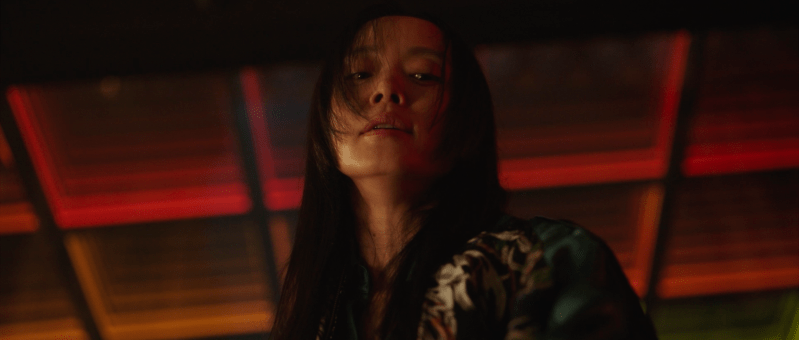
“If I could see my own colour, what kind of colour would it be?” the heroine of Naoko Yamada’s The Colors Within (きみの色, Kimi no Iro) asks herself. Yet there’s a curious pun in the film’s Japanese title in that the word “kimi” simply means “you” but it’s also the name of another girl by whom Totsuko (Sayu Suzukawa) is captivated though she doesn’t quite have the ability to articulate her feelings beyond the fact she feels “all sparkly inside”. 

In any case, Totsuko has the ability to see people as colours but largely keeps it to herself in fear that people will think she’s “weird”. Totsuko does indeed appear to be slightly otherworldly, though no one really seems to reject her for her ethereality save perhaps one classmate who describes her as that girl who sits in the chapel on her own all the time. What she’s mostly doing in there is reciting the serenity prayer to find “peace of mind,” and talking to the cool nun at her Catholic boarding school, Sister Hiyoko (Yui Aragaki), who tries probe gently into whatever it is that’s bothering Totsuko but equally avoiding pressuring her reveal anything before she’s ready. Then again, Totsuko may not quite know what it is that’s making her feel uneasy even if she remains upbeat and cheerful with a childlike sense of fun and innocence.

This quality of joyfulness is directly contrasted with the intense melancholy of Kimi (Akari Takaishi) with whom Totsuko becomes fascinated after catching sight of her “beautiful” and “clear” colours. When Kimi disappears from the school it’s rumoured she talked back to a teacher or that they found out she had a boyfriend, but it seems a Catholic education just isn’t a good fit for Kimi so she decided to drop out. Like Totsuko, Kimi has a secret but hers is that she can’t bring herself to tell her grandmother, who attended the same school and is over the moon about her going there, that it isn’t working out for her. What with it being a Catholic school, there’s also the implication that Kimi and also Totsuko may be struggling to define themselves within a repressive environment and reconcile their differences in the intense fear of not only being rejected by their community but damned to hell. 

After Totsuko checks every bookshop in town because someone said they saw Kimi working in one, she accidentally starts a band with her and a boy who just happened to wander in, Rui (Taisei Kido). Rui also has a secret which is his love of music which he fears conflicts with his responsibility of taking over the family medical practice. He isn’t exactly sure he wants this future that’s been forced on him and prevents him from following his dreams. In fact, none of the teens really wants the kind of life their parents wanted for them but they aren’t yet certain of the kinds of lives they do want or really who they are which is why Totsuko is still unable to see her own colour despite clearly discerning everyone else’s.

Through making music together, they discover new ways of expressing themselves and with it growing self-acceptance that allows them to be honest with themselves and others about who they are and what they want. Music in itself becomes an act of holy communion with the universe, a pure communication of one soul to another much like Totsuko’s synaesthetic ability to see people as colours. Even Sister Hiyoko insists that any song that is about goodness, beauty, truth or indeed suffering is itself a hymn and in the end Totsuko’s song is about all those things. Her joy, Kimi’s sadness, and Rui’s confusion coming together in a harmonised symphony as a consequence of “sharing secrets and feelings of love”. This sense of delicacy extends to the animation itself which has a watery, ethereal quality. Produced by Science Saru, this is the first of Yamada’s films not based on existing material and is underpinned by a tremendous empathy for its anxious adolescents as well as their uncertain adults along with a true sense of wonder for a world of colour and light hidden from most but visible to the ever cheerful Totsuko content to dance through life for the pure joy of it even if as she says she wasn’t very good.


The Colors Within screened as part of this year’s BFI London Film Festival and is released in UK cinemas on 31st January courtesy of All the Anime.

Trailer (Japanese with English subtitles)

Images: © 2024 “THE COLORS WITHIN” FILM PARTNERS

Born to Fly (长空之王, Liu Xiaoshi, 2023)

Elite test pilots set out to reclaim Chinese “dignity and security” through the development of a next generation stealth fighter in Liu Xiaoshi’s action drama, Born to Fly (长空之王, Chángkōng zhī Wáng). Clearly a riposte to Top Gun: Maverick (which was not approved for release in Mainland China), the film was originally scheduled as a National Day release and is another in a long line of “main melody” movies paying tribute to particular areas of military and civil service as evidenced by the use of actual voice recordings from downed pilots at the film’s conclusion and a lengthy pause on an aerial shot of the airmen’s cemetery praising those who gave their lives for the country. 

The main thrust is however that China is ready to defend itself. The film ends with a show of force much like that at the end of Operation Red Sea, though curiously for a propaganda film the implication is very much that China is lagging behind in terms of military technology and as the film begins lacks the necessary capability to hold its own against foreign aggression. The planes that stray into its airspace buzzing an oil rig and causing havoc with a sonic boom are never directly named as American but their pilots speak US-accented English while sticking one finger up and declaring “we can come and go wherever we want”.

To that extent, the central battle is as much between Western individualism and the collective spirit as it is a race for hegemony over the skies. Hot shot pilot Lei Yu (Wang Yibo) originally turns down the opportunity to join the elite test pilot squad because he wants to fight on the frontline and get personal revenge against the enemy planes. He also has a grudge against arch rival Deng Fang (Yu Shi) because he did not salute him after he beat him to a coveted Golden Helmet award and then accused him of cheating. What they have to set aside is, in contrast to the American Top Gun, the notion of “being the best” or engaging in an egoistic individual struggle to be named a winner. Instead, they must learn to work together for the common good so that China may be declared the winner as the planes they’ve risked their lives to perfect are in the best shape to protect frontline pilots and allow them to safeguard the Chinese people. 

Meanwhile, like other recent similarly themed main melody movies, the film is keen to sell the message that China stands alone and has been unfairly shunned by the international community. The leaders of the test pilot programme constantly complain that Western powers have refused to share technology with them or have attempted to limit their ability to innovate through embargoes and blackouts. They insist that China will have to create its own discoveries, but hint at an under-confidence in their ability to do so which is in some ways at odds with the usual propaganda messaging even if it spurs a sense of collective urgency that all hands are needed on deck to solve this particular problem before it’s too late. 

Lei’s unsupportive father even tells him point blank that he does not believe China can develop a stealth fighter and he is risking his life for nothing. Tellingly, Lei’s father had wanted to send him abroad and resents his decision to join the military. In order to serve his country, Lei must break a taboo by defying his father, while it’s later revealed that Deng’s father was a fighter pilot who was killed on the frontlines after winning an award while training in Russia. In another moment of surprising messaging, Deng wonders if his father might have survived if he’d been given a better plane to fly which is why he’s committed to the test pilot programme and the reason he’s eventually able to give up his ego and agree to assist Lei in testing his bright new idea for the stealth fighter rather than chasing glory for himself as the lead pilot. 

All of that aside, Lei is allowed the mild distraction of an extremely subtle romance with an airforce doctor played by Zhou Dongyu in a “special appearance” who decides to give up her transfer back to the south to commit herself to the test pilot programme after being touched by Lei’s grumpy heroism. In any case, the message is very much about pushing the limits as far as they will go while striving together for the common good. Jingoistic it may be but Liu manages to sell the aerial spectacle and sense of danger as his elite pilots risk all in the name of patriotism.


Trailer (Simplified Chinese / English subtitles)

Sister Sister 2 (Chị Chị Em Em 2, Vũ Ngọc Đãng, 2023)

An ambitious young woman determined to escape the world of sex work resorts to a series of schemes to get close to the number one beauty in 1930s Saigon in Vũ Ngọc Đãng’s lighthearted melodrama Sister Sister 2 (Chị Chị Em Em 2). A thematic sequel to 2019’s Sister Sister, the film once again sees two women face off against each other knowing that only one can be the greatest beauty in the city while otherwise evoking a subtle message of female empowerment. 

Indeed as great beauty Ba Tra (Minh Hằng) points out, ordinary women can only be chosen by men while the extraordinary choose men for themselves. This is something in which Ba Tra has excelled, weaponising her beauty and sex appeal to capture the hearts of well to do bachelors who spontaneously offer her expensive gifts for which she need do nothing in return save continue to exist. Nhi (Ngọc Trinh), the top sex worker at a nearby brothel, wonders if Ba Tra is so different from herself only to be told by a gaggle of local women in thrall to her star image that Ba Tra’s situation is entirely different because of the power she wields over men by, essentially, refusing to give them what they want while Nhi crudely exchanges it for money and is largely at the mercy of those who will pay. 

The issue is in one sense control, Ba Tra seemingly possessing it fully and Nhi not at all. She is still indentured to the brothel having sold herself into sex work to pay for her mother’s medical treatment only for her mother to drop dead of shock as soon as she found out. But Ba Tra also has maternal troubles of her own in her “crazy gambler” mother who is forever emotionally blackmailing her for more money while caring nothing for her feelings. To be the first beauty is to make friends with loneliness, Ba Tra warns and there is a kind of sadness in her solitude as a towering image of beauty not quite allowed to be a whole person or display much of an interior life lest the spell be broken. There is then something quite poignant in the genuine connection that arises between the two sisters who after all have similar goals and outlooks even if it’s destined to end in heartbreak when Ba Tra inevitably realises she’s been schemed by the manipulative Nhi. 

Director Vũ Ngọc Đãng flirts with homoeroticism in the closeness of the two women as they dance together perfecting their art but does so mainly for titillation rather than romance, also resorting to family gratuitous nudity even if it does otherwise hint at Nhi’s “naked” ambition to raise herself from the lowest layer of the society to the highest or at least the highest that may be claimed by a woman in this period. The film at once hints at the oppressive nature of the 1930s society in which the only power a woman can achieve is that exercised through her body and then undercuts any sense of a feminist message with its contradictory conclusion that implies it is impossible for Nhi to escape her past and that she will always be a sex worker no matter what else she becomes. 

Nevertheless, Nhi does demonstrate her right to the top spot through her ability to outsmart Ba Tra who otherwise has savvily figured out how to use the society to her advantage through careful media management to make herself a star. As she says, Ba Tra only thinks about the next move, but Nhi has already plotted her trajectory towards the top and thought of every eventuality. Even so, Nhi is expected to pay for her “mad ambition”, putting her back in her place again and slapping down her rebellion against the social order. With mild comic undertones in all Nhi’s crazy plans which include faking her own death and almost killing Ba Tra so she can dramatically save her, Sister Sister 2 isn’t really setting out to explore the lives of women in the 1930s so much as set two against each other in a battle of the beauties but is surprisingly entertaining even in its wilful silliness. 


Trailer (English subtitles)
Drawing Closer (余命一年の僕が、余命半年の君と出会った話。, Takahiro Miki, 2024)

Takahiro Miki has made a name for himself as a purveyor of sad romances. Often his protagonists are divided by conflicting timelines, social taboos, or some other fantastical circumstance, though Drawing Closer (余命一年の僕が、余命半年の君と出会った話。, Yomei Ichinen no Boku ga, Yomei Hantoshi no Kimi to Deatta Hanashi) quite clearly harks back to the jun-ai or “pure love” boom in its focus on young love and terminal illness. Based on the novel by Ao Morita, the film nevertheless succumbs to some of genres most problematic tendencies as the heroine essentially becomes little more than a means for the hero’s path towards finding purpose in life.

17-year-old Akito (Ren Nagase) is told that he has a tumour on his heart and only a year at most to live. Though he begins to feel as if his life is pointless, he finds new strength after running into Haruna (Natsuki Deguchi) who has only six months yet to him seems full of life. Later, Haruna says he was actually wrong and she felt completely hopeless too so actually she really wanted to die right away rather than pointlessly hang round for another six months with nothing to do and no one to talk to. But in any case, Akito decides that he’s going to make his remaining life’s purpose making Haruna happy which admittedly he does actually do by visiting her every day and bringing flowers once a week.

But outside of that, we never really hear that much from Haruna other than when she’s telling Akito something inspirational and he seems to more or less fill in the blanks on his own. Thus he makes what could have been a fairly rash and disastrous decision to bring a former friend, Ayaka (Mayuu Yokota), with whom Haruna had fallen out after the middle-school graduation ceremony that she was unable to go to because of her illness. Luckily he had correctly deduced that Haruna pushed her friend away because she thought their friendship was holding her back and Ayaka should be free to embrace her high school life making new friends who can do all the regular teenage things like going to karaoke or hanging out at the mall. Akito is doing something similar by not telling his other friends that he’s ill while also keeping it from Haruna in the hope that they can just be normal teens without the baggage of their illnesses. 

The film never shies away from the isolating qualities of what it’s like to live with a serious health condition. Both teens just want to be treated normally while others often pull away from them or are overly solicitous after finding out that they’re ill but at the same time, it’s all life lessons for Akito rather a genuine expression of Haruna’s feelings. We only experience them as he experiences them and so really she’s denied any opportunity to express herself authentically. Rather tritely, it’s she who teaches Akito how to live again in urging him that he should hang in there and continue to pursue his artistic dreams on behalf of them both. Meanwhile, she encourages him to pursue a romantic relationship with Ayaka, in that way ensuring that neither of them will be lonely when she’s gone and pushing them towards enjoying life to its fullest.

Nevertheless, due to its unbalanced quality and general earnestness the film never really achieves the kind of emotional impact that it’s aiming for nor the sense of poignancy familiar from Miki’s other work. Perhaps taking its cues from similarly themed television drama, the production values are on the lower side and Miki’s visual flair is largely absent though this perhaps helps to express a sense of hopelessness only broken by beautiful colours of Haruna’s artwork. Haruna had used drawing as means of escaping from the reality of her condition, but in the end even this becomes about Akito with her mother declaring that in the end she drew for him rather than for herself. Even so, there is something uplifting in Akito’s rediscovery of art as a purpose for life that convinces him that his remaining time isn’t meaningless while also allowing him to discover the desire to live even if his time is running out.


Trailer (English subtitles)