
All Shall Be Well (從今以後, Ray Yeung, 2024)

There’s nothing that breaks a family apart as quickly as an inheritance. As a cynical lawyer points out, even mothers and sons fall out when it comes to money, so there’s nothing like it to to focus minds with an us and them mentality to clearly define who is and isn’t included under the umbrella of family. But why is it that meaningless pieces of paper hold so much sway over us when we ought to by be governed by the emotional truths that until a moment earlier ruled our lives?

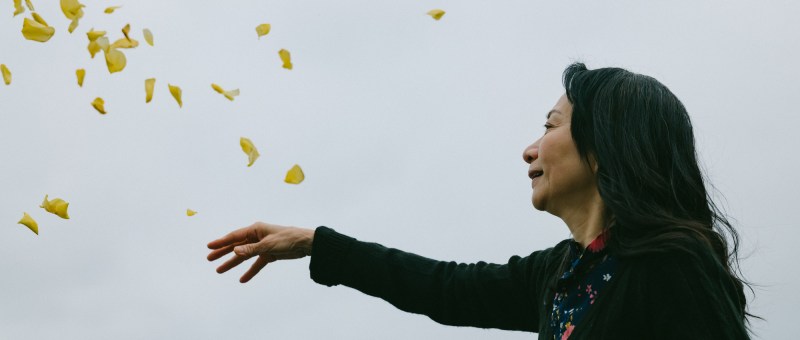
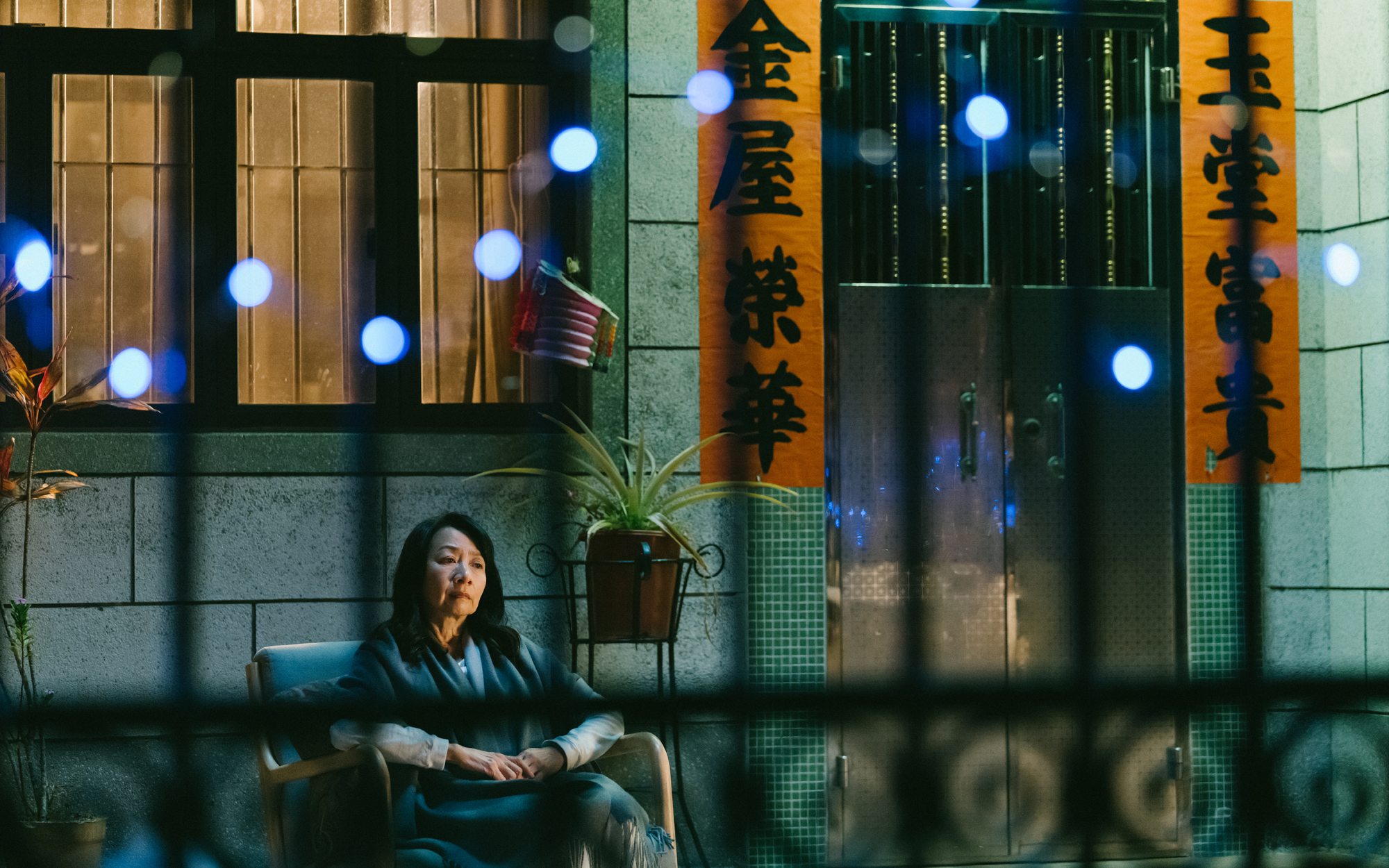
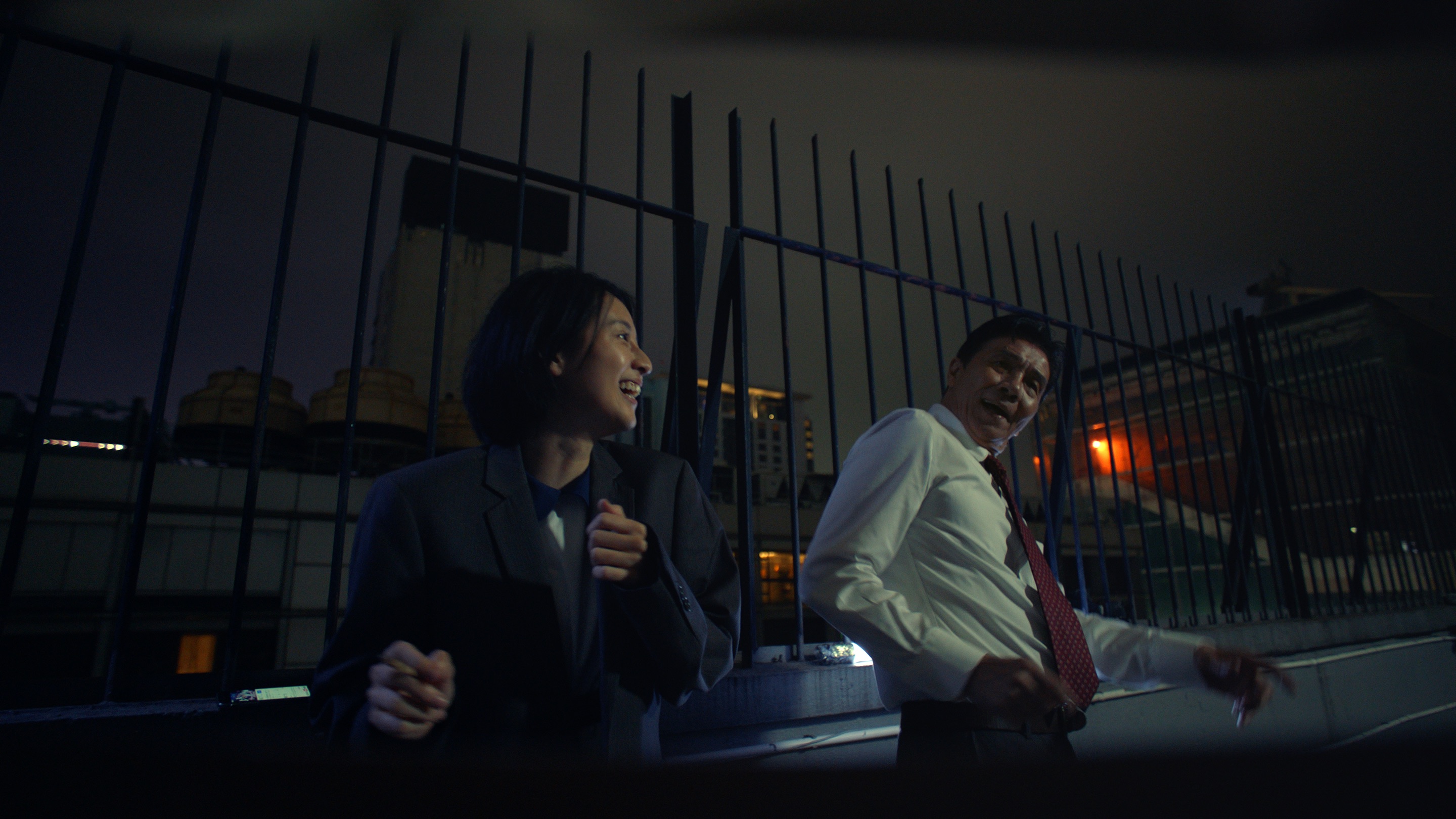
Angie (Patra Au Ga Man) had been fond of saying “because we’re family.” She never doubted her place in that of her partner who all appear, at least outwardly, to love her and accept her relationship with Pat in the way they’d accept any other marriage. But when Pat (Maggie Li Lin Lin) suddenly passes away in her sleep after one last family celebration the situation changes. Well-meaning family members step in to help with the work that must be done when someone dies, but perhaps unwittingly begin to take over slowly erasing Angie from their lives as not really one of them after all.

Her problems are two-fold. The biggest being that Pat never got round to making a will, nor did she think to put Angie on the deeds to the apartment they shared together or leave her financially provided for seeing as she’d managed all the money they’d made when they owned a factory and ran it together. The secondary problem is that Hong Kong does not recognise same sex marriage and so their relationship was not legally recognised. Had Angie been legally married to Pat, she should have inherited everything anyway because she was her spouse even without a will but with things the way they are she’s at the mercy of Pat’s brother Shing (Tai Bo). She never thought this would be a problem, because they’re family, but slowly realises that perhaps they don’t actually see her that way and with Pat gone no longer feel the need to include her.

Her sister-in-law Mei (Hui So Ying) insists on using a feng shui expert to plan the funeral who quickly puts the kibosh on Angie’s desire to have Pat buried at sea as she’d requested. Leaving aside the possibility that the feng shui master is conning them and receiving financial incentives from the people who run the columbarium, the family quickly begin to ignore Angie’s concerns swayed by the claims that interring her ashes will be more beneficial for her descendants which are Mei and Shing’s children seeing as Angie and Pat had none of their own.

A little disappointed in her kids, Mei at one point insensitively remarks that Angie is lucky not to have any though we’re also told that she almost gave in to parental pressure to marry a man in order to become a mother. Daughter Fanny (Fish Liew) makes lowkey racist remarks about her Indian neighbours as a way of expressing her frustration with her moribund marriage and unsatisfying living arrangements, while son Vincent (Leung Chung Hang) struggled to find employment and now works as an Uber driver thanks to the gift of a car from Angie and Pat which allows him to earn a living. He’s originally upset with his family’s suggestion of kicking Angie out of the apartment, but is also in a difficult position himself when his girlfriend becomes pregnant and they can’t find anywhere habitable to live on the kind of salary an Uber driver can earn. Though in her 60s, Mei is still doing a physically strenuous job as a hotel maid while Shing has taken a position he finds degrading as a nightwatchman at a carpark following the closure of his restaurant some years previously. 

The implication is these socio-economic pressures encourage them the abandon their responsibility to Angie as the beloved aunt they’ve known all their lives. But then there’s also the mild homophobia that rears its head, introducing Angie as Pat’s “best friend” and not allowing her to stand in the front with family at Pat’s funeral as if their relationship wasn’t really real because they were both women. Of course they may have behaved the same way had Pat been a man, squeezing Angie out because she had no legal claim as a common-law spouse, but it certainly seems to make it easier for them to abandon her and take everything she worked so hard to build with Pat as if they were really entitled to it. Shing justifies himself that he has to look after “his” family, which doesn’t include Angie, while cruelly implying that it’s what Pat would have wanted. 

In the end, Angie is left with no other option than to sue for her “rightful” share as a ”dependent” in an effort to force the family to recognise the legitimacy of her relationship with Pat. Thankfully she has another family in her community, though her own still living parents only partially accepted her relationship with Pat again referring to her as a “best friend” and making cracks about how she never married. But her family was Pat, and Pat is gone. Yeung paints a touching picture of grief as Angie reacts all the things she did with Pat but now alone, accompanied only by a sense of absence and comforted by her memories while otherwise exiled from a world that had seemed until then filled with familial love.


All Shall Be Well screened as part of this year’s New York Asian Film Festival.

Trailer (English subtitles)

Love Lies (我談的那場戀愛, Ho Miu-ki, 2024)

The heroine of Ho Miu-Kei’s cybercrime dramedy Love Lies (我談的那場戀愛) later rejects the idea that she has been deceived for she was only falling in love and love once believed is real which paradoxically hints at the idea of romantic love as fantasy or self-delusion. There is undoubtedly some truth in what she says, if only in the fact that the young man scamming her also begins to fall in love if not exactly with her but with the image of himself as reflected in her eyes. 

From what we can see of Joe (Cheung Tin-fu), he doesn’t quite fit our image of romance scammer. He isn’t cruel or heartless and has more or less fallen into this kind of work, learning to see it as a kind of game which conveniently allows him to ignore the real human he’s exploiting in order to win. Awkwardly still living with his ex-girlfriend’s family, he’s bonded with her father and seems to be seeking something like familial love and acceptance along with the feeling that he’s wanted and valued by another person. Of course, being a romance scammer gives him what he needs as his targets are drawn into his trap and eventually become dependent on him though it’s obviously not “Joe” they’re dependent on but whoever he claimed to be online who is perhaps all the things he’s like be rather than who he is. 

In any case, he finds himself conflicted while trying to scam Veronica (Sandra Ng), a fantastically rich gynaecologist still struggling to deal with the death of her husband four years previously from whom she was about to get a divorce. Veronica is also not being entirely honest online, posing as a 25-year-old nurse named Linda and using a random photo from the internet while planning to have some idle fun chatting to a stranger in this case a heartbroken French widower named Alain. Like Joe, Veronica is also a little unhappy in herself, explaining that she’s a difficult person who blows off steam by rearranging the goods in convenience stores and has few friends. Being “Linda” also affords her another perspective on herself and a means of reassessing her thoughts about her husband and marriage. 

But this vulnerability is also what makes her vulnerable to the scammers as mastermind Joan (Stephy Tang), who used to be a TV screenwriter, points out in instructing Joe that he’ll really have cracked Veronica when she feels comfortable enough to tell him about her husband. Ho presents the scammers as an unusually well equipped yet old school bunch who have an actual art department to construct props to help Joe sell his fantasy though he’s pretty slow to cotton onto the idea of stalking Veronica’s social media profiles for information he later uses to create a bond with her. 

Though quirky and somewhat wholesome, the film does hint at the dangers of online interaction and the information we choose to share with strangers, perhaps unwisely. Intellectually, Veronica is aware of the potential of scamming but also sees herself as “better” than that, as if an educated, successful woman such as herself should be too smart to fall for something so obviously untrue and is later unwilling to accept that she’s sent large amounts of money to a conman despite the advice of her bank which of course only keeps her in the scam so she can prove to herself that she’s not being conned. 

But the conclusion she finally comes to is that if she fell in love with someone who didn’t really exist, then that doesn’t mean the love itself wasn’t real. In any case, it allowed her to re-engage with lost love and recover herself and her memories of romance while finally beginning to deal with her husband’s death and the end of her marriage which arrived more abruptly than expected. In much the same way, Joe begins to realise that he ended up scamming himself, half in love with the image he created as reflected back to him while more aware of his own needs and desires along with the emotional consequences of the scamming game. To that extent, maybe love itself is a long con or beautiful fantasy but there might also be truth in a lie and a genuine connection between lonely souls beyond all the wilful deception and misrepresentation.


Love Lies screened as part of this year’s New York Asian Film Festival.

Original trailer (English subtitles)
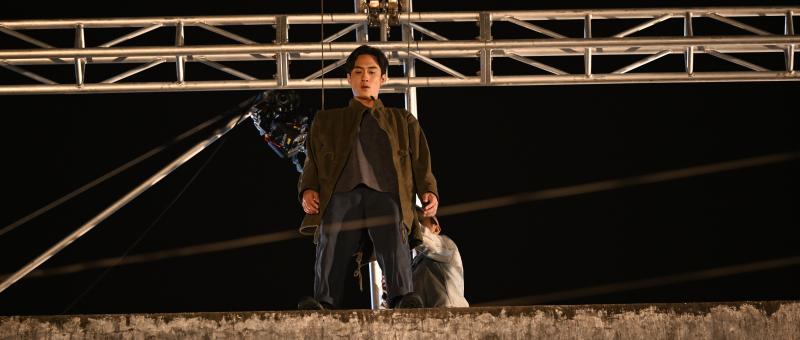
Fly Me to the Moon (但願人長久, Sasha Chuk Tsz-yin, 2023)

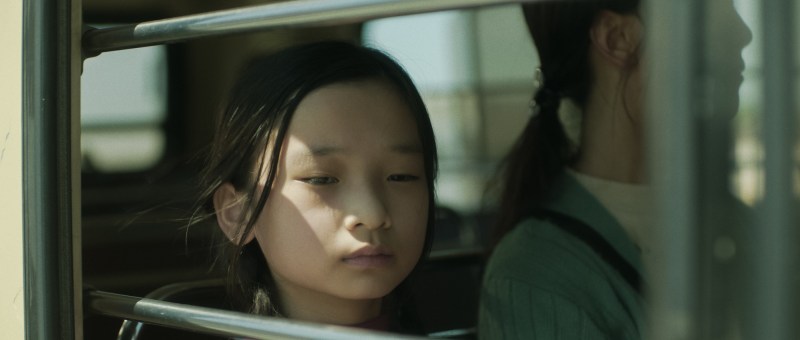
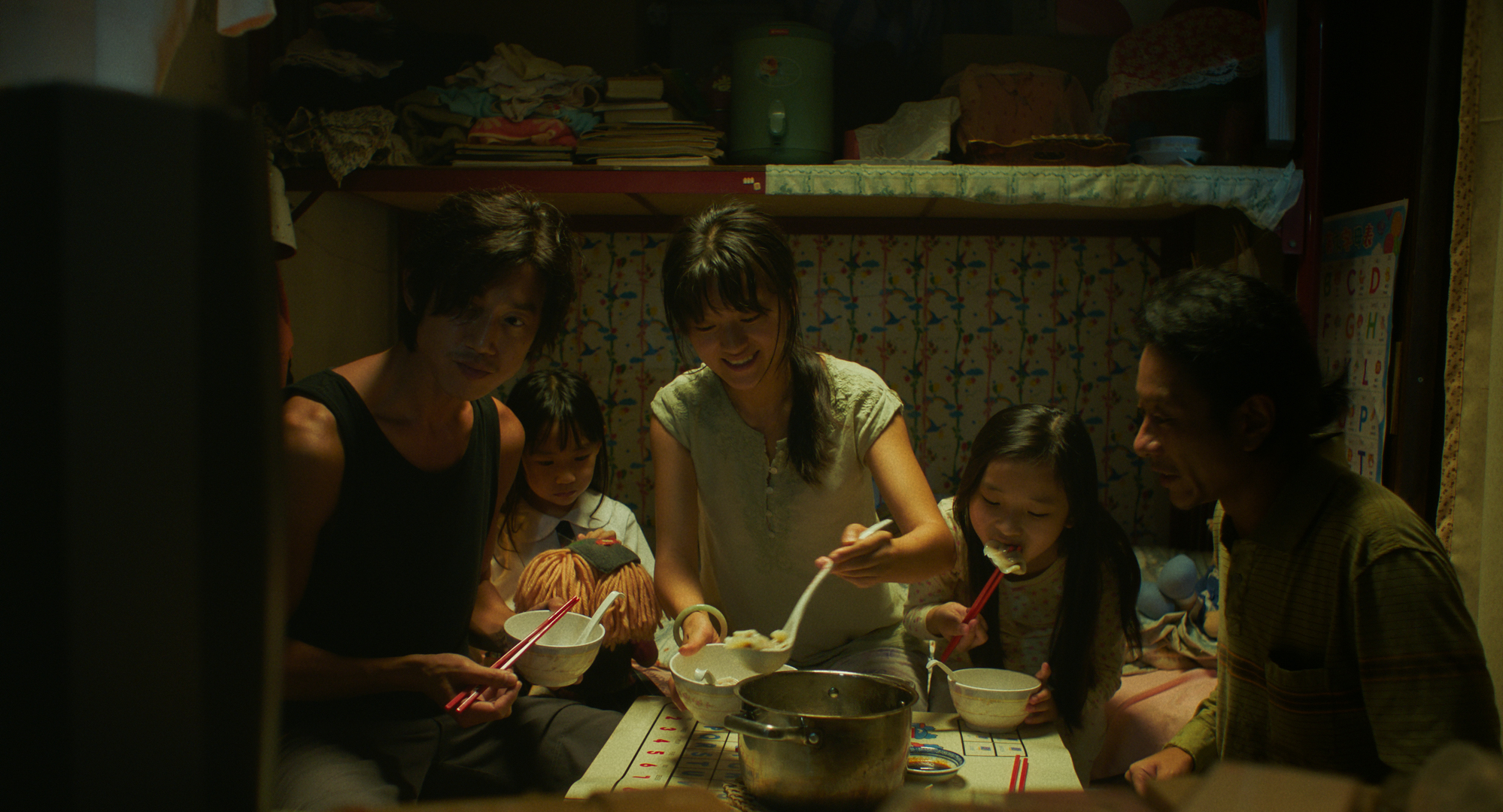
A pair of sisters find themselves exiles in their own home in Sasha Chuk Tsz-yin’s poignant familial drama, Fly Me to the Moon (但願人長久). Burdened by a sense of rootlessness, they have only each other to cling to while their family otherwise disintegrates amid the pressures of making a life in an unfamiliar place and an unavoidable paternal failure that has a lasting legacy on the lives of each of the girls as they struggle to emerge from the shadow their father cast over their lives.

It’s telling that the film opens in 1997, though Yuen’s father Kok-man (Wu Kang-ren) has apparently smuggled himself into Hong Kong from Hunan, later sending for his wife and older daughter, Yuen, while leaving the younger behind. The first image we see is of Yuen being taken to see her father in prison by her mother, a meeting in which no words are exchanged that seems to leave the young Yuen conflicted and confused. Not long after arriving in Hong Kong, she discovers him using drugs and learns of the addiction that has ruined his life, turning him into a petty thief in and out of prison for the children’s entire lives.

Yet in his later years, Kok-man told his relatives that his best and only achievement was raising two wonderful daughters though of course he didn’t actually raise them at all. Nevertheless, he had a profound effect on their lives, Yuen also tempted to steal on witnessing her father’s bad example even while remaining contemptuous and resentful of him. Though he eventually becomes violent, so desperate for money he threatens his teenage daughters, Kok-man appears to have wanted to take of his family but was not able to do so while their mother is forced to work long hours supporting the family and living the life of a single mother even while her husband is home. 

This leaves the girls with no one else to rely on while otherwise removed from mainstream society which is often is hostile towards those who’ve arrived from the Mainland and most particularly at this strained political moment. Their otherness is signalled by their home dialect of Hunnanese which later mingles comfortably with their Cantonese, much as Yuen’s Mandarin later does, which is as good as anyone else’s though some might not them as real Hongkongers. Kuet’s schoolfriends, little knowing she also was not born in Hong Kong, shun another girl after spotting that the number on her ID card begins with an “R” which means she came to Hong Kong from somewhere else. Kuet eventually decides to befriend the girl herself, though it remains unclear whether or not she discloses that she was also born outside of Hong Kong. Years later after becoming a tour guide, a customer remarks that Yuen’s Cantonese and Mandarin are both so good he wonders where she’s from which is quite an ironic comment. 

Yet in other ways, the girls can’t escape their roots. Despite her enmity towards him, Yuen’s first boyfriend is a carbon copy of her father. A brusque boy with blond hair who shoplifts to impress her, but then runs off and leaves her behind when he almost gets caught. Her romantic relationships seem fraught and difficult and the men largely no good, while her sister similarly has troubles with the law leading her mother to lament that there was little point in going to university if she was just going to end up like her father. When Yuen eventually returns to Hunan, she’s that girl from Hong Kong, even while in Hong Kong she’s that girl from the Mainland. For the girls, Hunan has a kind of mythical quality bound up with their memos of happier times for their family, but Yuen is quickly disillusioned. The lily fields her father mentioned are long since gone, destroyed in a fire, and her family home is empty as a result of her grandmother’s illness. All that remains are photographs that present a kind of evidence of the relationship Yuen once had with the father she struggled to accept in adulthood, reuniting her with her childhood self and perhaps restoring the roots she’s been looking for even she herself remains a floating presence guiding tourists around foreign countries while otherwise marooned in the family flat now shared only with the sister who equally is heading in another direction. 


Fly Me to the Moon screens July 21 as part of this year’s New York Asian Film Festival.

Original trailer (Traditional Chinese /.English subtitles)

For Alice (給愛麗絲, Chow Kam Wing, 2024)

“I don’t know if I’m really lucky or really unlucky,” a young woman wonders after a series of narrow escapes amid the otherwise dismal circumstances of her life in Chow Kam Wing’s debut feature, For Alice (給愛麗絲). A lament for failed fatherhood, Chow plays with noir tropes and the legacy of classic Hong Kong cinema in his neon vistas of despair but eventually discovers a kind of catharsis even as the absent patriarch can redeem himself only in his absence.

Shuang has spent his life in and out of prison and evidently chose to not to maintain contact with his wife and daughter during his latest stretch. The titular Alice is like her namesake lost in the wonderland of contemporary Hong Kong though she named herself for the song and is doing her best to overcome the many problems in her life many of which stem from her relationship with her often absent mother and her string of problematic boyfriends including the latest one, a tailor, who is sexually abusing her. When her mother disappears yet again on a gambling trip to Macau she decides to run away, intending to stay with a friend and sleeping rough when it doesn’t pan out. She meets Shuang, she thinks, by chance sensibly wary but also grateful for the kindness of a stranger. 

As it turns out, her mother may have had a reason for all those gambling trips and it isn’t all that different from Shuang’s for his life of crime in that they are both doing it for Alice while constantly frustrated by the socio-economic realities of contemporary Hong Kong. Now in his 60s, Shuang wants to make amends and live a more law-abiding kind of life while redeeming himself as a father but struggles to find a foothold while slowly but anonymously building a paternal relationship with Alice who is facing similar problems to those he faced as a young man. Longing to escape her circumstances she sets her sights on independence and is tempted by criminality, ironically suggesting she will become a smuggler or deal drugs to support herself even as Shuang counsels her against it, encouraging her to pursue her education so she doesn’t end up like him. He didn’t have a choice, he explains, but she does and could make a better life for herself. 

But she’s still constrained by an overly patriarchal social system as she finds herself scrambling when her teacher wants to talk to her parents to discuss her smoking on school premises. Who could she possibly ask with her mother absent and the man in the position of a step-father actively harmful and in no position to help? Unbeknownst to her, Shuang accepts his paternal role and offers a genuine apology for his failed fatherhood, his irresponsible absence and its effects on the life of his daughter who was then left unprotected, vulnerable to life’s vagaries and the impossibilities of a stratified society. Yet in the end the only way he can help her is to damn himself, accept his choices and his absence and do what he can for Alice from afar. 

Chow’s Hong Kong is place of constant danger and ever present futility filled with dank corridors, rundown buildings, and neon-lit streets. Yet there is something resonant about Alice’s resilience and desire for freedom while accepting the friendship, help and support of a friendly neighbour adopting a less oppressive paternal role that aims, like the bird in bottle, to set his daughter free both of his own destructive legacy and the constraints of the situation she finds herself in. A parallel is seen in the life of Shuang’s friend, Jiu, again fixing his sights on one last job to provide a better future for his family but at the same time risking it knowing that it may mean forfeiting it entirely. Nevertheless, Shuang redeems his paternity in its denial, an act both of self-sacrifice and revelation in which he restores to Alice a more positive paternal legacy along with a sense of love and support otherwise absent from her life as a young woman largely alone in an often hostile environment.


For Alice screened as part of this year’s New York Asian Film Festival.

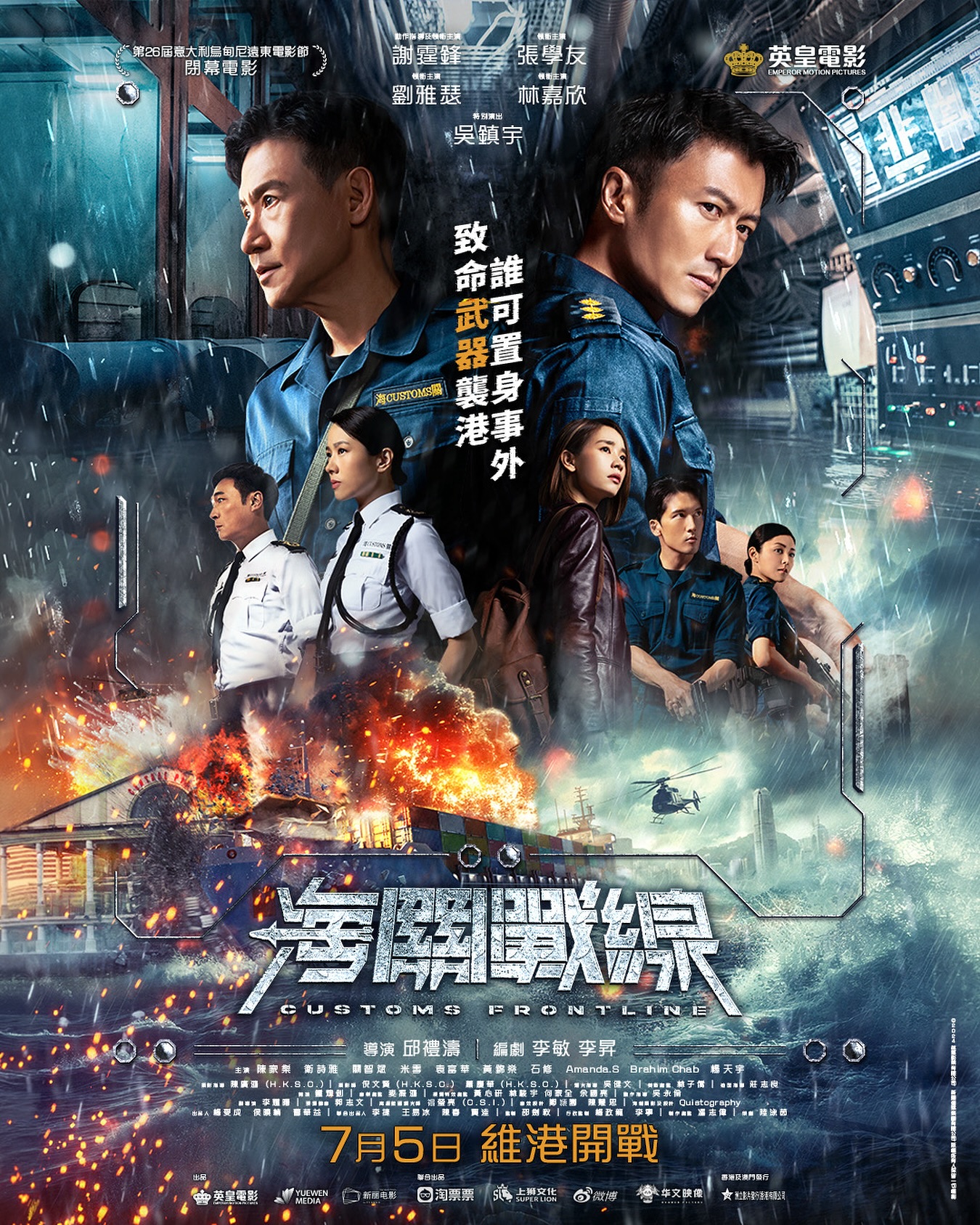
Customs Frontline (海關戰線, Herman Yau, 2024)

Who knew life as a customs official could be so dangerous? Those at the centre of Herman Yau’s high octane drama certainly do put themselves on the front line, facing constant threats of violence as they attempt to protect Hong Kong from nefarious goods and shady businessmen. The crisis in this case is, however, more international in nature as a Hong Kong corporation appears to be supplying an African warlord with seriously high tech equipment in exchange for diamonds. 

A mild political point is made that the world largely ignores conflicts in Africa, the warlord explaining that he needs all these weapons to defend himself because no one else is going to and those that do come to him largely do so for reasons of exploitation, including Dr Raw who acts as their supplier. The customs guys get dragged into it when a boat sails into their waters illegally and thereafter become determined to recover the MacGuffin of a high tech navigation device apparently stolen from the Thai army who would quite like it back. The gang are aided in their quest by a couple of Thai Interpol officers including Ying (Cya Liu) who helpfully speaks fluent Mandarin. 

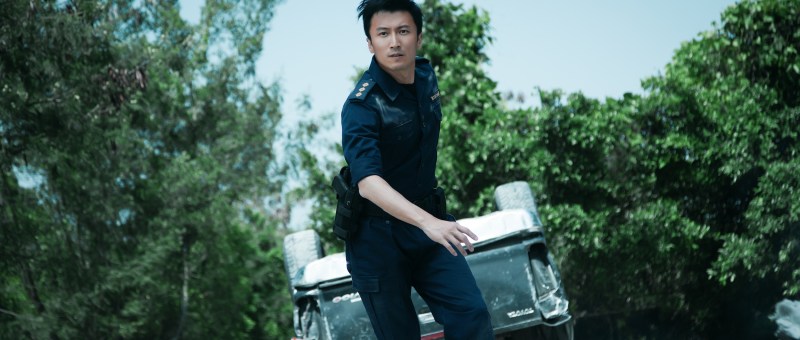
Meanwhile, Customs is divided by internal polices as two divisions vie for control over the project while plotting their ascension to the soon to be vacated post of deputy commissioner. Veteran officer Cheung (Jacky Cheung) is raked over the coals by brash supervisor Kwok (Francis Ng) and, unbenkownst to him in a romantic relationship with his rival, Athena (Karena Lam). His parter Lai (Nicholas Tse) is meanwhile nursing a degree of heartbreak having broken up with team member Katie (Michelle Yim) a year previously only to hear that she is now engaged to marry someone else. 

Perhaps surprisingly, these interpersonal dynamics largely fall by the wayside and are never dealt with again. However, the film does get into some depth with Cheung’s mental illness which it suggests is largely due to the stress of the job and has turned him into two quite different people. Somewhat insensitively, the film further stigmatises metal illness in its implications regarding Cheung’s career and emotional wellbeing with constant shots of his medication and the suggestion that he is not really up to the job. 

For the most part, however, the Customs division end up in a series of firefights and car chases eventually trying to protect the son of an industrialist (Carlos Chan) who died in suspicious circumstances after trying to sever ties with smugglers. They’re strafed in an African compound, and engage in daredevil stunts trying to outrun the bad guys with combat skills that seem incongruous with their role as customs officials. The earnest Lai runs around punching bad guys in the name of justice to heal his broken heart while otherwise failing to bond with plucky Interpol agent Ying who still ends up as a damsel in distress despite her obvious skills though her chief manoeuvre is a honeytrap, using poisoned lipstick to knock out the chief arms dealer.

The film may hint at a dissatisfaction with inequality and consumeristm along with a healthy mistrust for large, family-owned corporations but otherwise fails to follow through. Cheng dreams of a place in the sun, a house by the sea for Athena where they could leave the stressful world of customs and intelligence behind but also seems resentful of her ambition asking her if she’d choose a quiet life with him over a shot at becoming deputy commissioner and annoyed when she replies that she hopes she can do both, achieving her career goals and then enjoying the rest of her life in a peaceful retirement at Cheung’s side. It may be this sense of hopelessness that drives him, realising he can’t attain what he really wants in the elusive career success denied him because of his reluctance to play the game along with the lack of financial power it affords him leaving him unable to buy that house by the sea or give Athena what he thinks she wants (but probably doesn’t, at least in the way he wants to give it to her). Though falling flat in terms of its interpersonal drama, the action scenes are at least exciting and well-designed even if the whole is somewhat hollow in its continual lack of bite.


Customs Frontline screens in New York July 17 as part of this year’s New York Asian Film Festival.

Original trailer (Traditional Chinese / English subtitles)

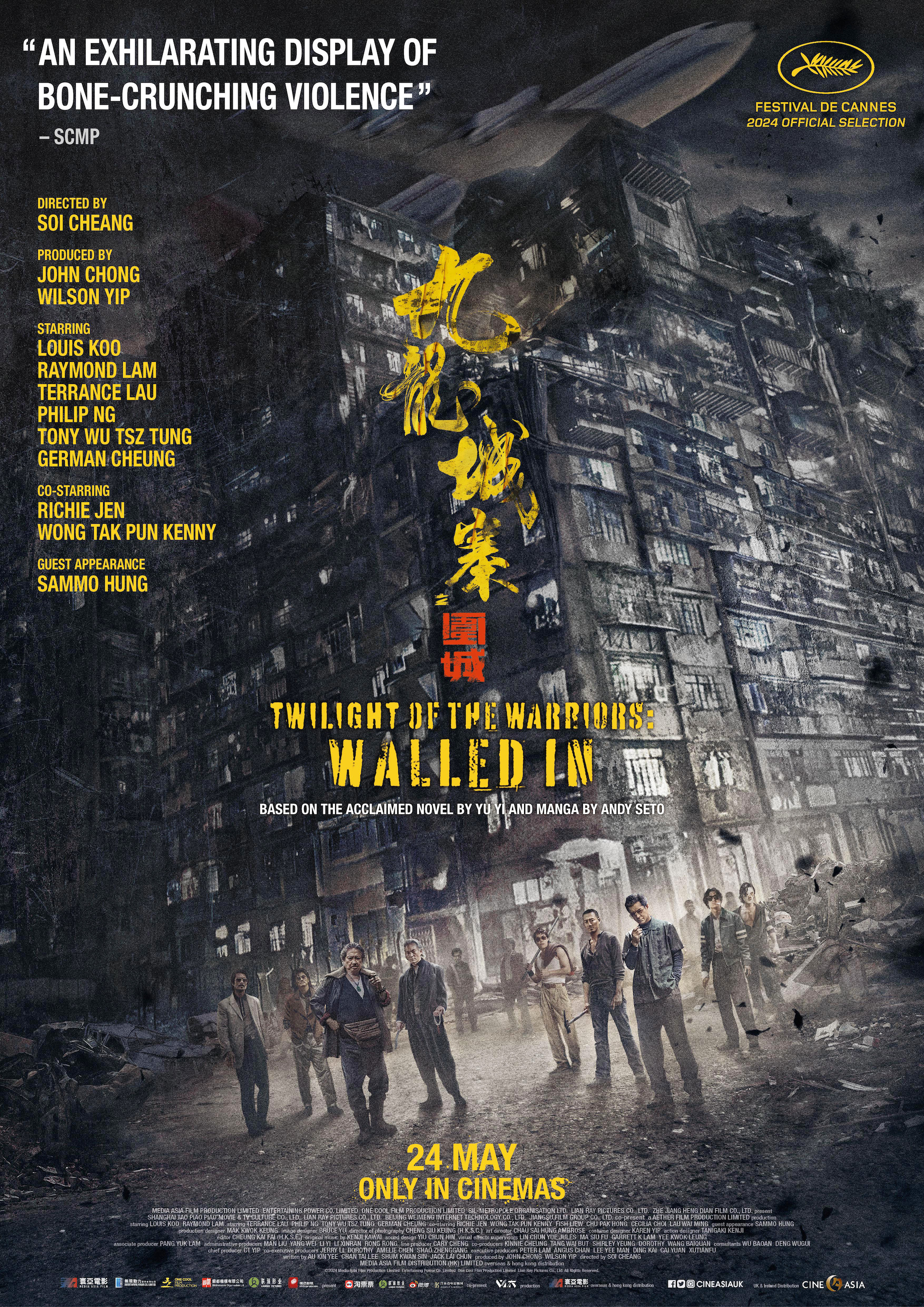
Twilight of the Warriors: Walled In (九龍城寨.圍城, Soi Cheang, 2024)

In Kowloon Walled City, you give help, you get help. Sometimes described as a colony within a colony, by the late 1980s the settlement was largely ungovernable and literal law unto itself save for the triads who maintained what little order there was. Yet in Soi Cheang’s Twilight of the Warriors: Walled In (九龍城寨.圍城) it’s a place of comfort and security, a well functioning community that as its leader Cyclone (Louis Koo Tin-lok) points out may be unpalatable for “normal” people but provides a point of refuge for the exiled and hopeless.

It’s difficult not to read it and Cyclone himself as embodiments of Hong Kong that is slowly disappearing. Dying of lung cancer, Cyclone is aligned with the fate of the walled city as someone whose time is running out, tired and world weary but still hanging on. In the opening sequence set 20 or so years before, we see Cyclone stand up to an apparent dictatorship and institute what seems to be a more egalitarian form of government though one obviously defined by violence. Nevertheless, when refugee Lok (Raymond Lam Wui Man) lands up there originally suspicious of Cyclone having been duped by local gangster Mr Big (Sammo Hung Kam-bo), he discovers him to be a stand up guy looking after those in his community and generally keeping the peace. Nevertheless, Lok’s arrival is the fatalistic catalyst for the opening of old wounds amid the free for all of the mid-80s society in which the Walled City, sure to be bulldozed, has just become a lucrative property investment.

Mr Big and his crazed henchman King represent this new order, amoral capitalistic consumerists who care little for the conventional rules of gangsterdom. Their bid to seize the Walled City has its obvious overtones as they seek to replace the (generally) peaceful egalitarian rule of Cyclone with something that appears much more authoritarian and ruthless. Believing himself to be a stateless orphan, Lok tries to keep his head down saving everything he can to buy a fake Hong Kong ID card which is also in its way a quest for identity not to mention a homeland and a sense of belonging. He finds all of these things, along with a surrogate father figure, in the Walled City only to have the new home he’s discovered for himself ripped out from under him because of a twist of fate. When he teams up with a trio of other young men who all owe their lives to Cyclone and the Walled City to attempt to take it back, it’s also an attempt to reclaim an older, more autonomous Hong Kong that exists outside of any kind of colonial control as evidenced by his final statement that no matter what happens some things don’t change.

This sensibility extends to the casting of the film which includes a series of Hong Kong legends including a notable appearance from the legendary Sammo Hung not to mention Louis Koo alongside a generation of younger stars such as Tony Wu and Terrance Lau Chun-him. Adapted from the manhua City of Darkness by Andy Seto, the film opens with a flashback to the original war for control of the Walled City that hints at deeper, extended backstories otherwise unexplored though equally mythologised by those who impart them to them Lok, a prodigal son and eventual inheritor of the City’s legacy. Even so, the comic book elements sometime distract from Soi Cheang’s otherwise evocative if hyperreal recreation of the Walled City slum or the political subtext that can be inferred in the presence of supernatural abilities such as those which seem to grant King near invincibility.

In any case, Soi Cheang looks back equally towards the history of heroic bloodshed in particular in his tale of brotherhood and loyalty in which the secondary antagonist is literally imprisoned by his own futile desire for a pointless vengeance on the descendent of a man who had wronged him but was already long dead himself. As he’d said, the future of the Walled City is in the hands of the younger generation who choose to end the cycle by setting him free rather than imprison themselves along with him while defending their home as well as they can. With some incredibly well designed action sequences including one that make its way onto a double-decker bus, Soi Cheang’s beautifully staged action thriller as its name suggests has a rather elegiac quality but also the spirit of resistance in its gentle advocation for the importance of supportive communities.


Twilight of the Warriors: Walled In is in UK cinemas from 24th May courtesy of CineAsia.

UK trailer (Traditional Chinese & English subtitles)

Connected (保持通話, Benny Chan, 2008)

A kidnapped woman’s only hope is a distant stranger in Benny Chan’s intense thriller, Connected (保持通話). Inspired by 2004’s Cellular, Chan shifts the action to contemporary Hong Kong with all of its global anxieties but eventually insists that we are all in a sense connected and have a responsibility to each other in the face of corrupt authorities and an increasingly selfish society. In contrast to other techno thrillers, technology is not threat but cure enabling unlikely alliances and facilitating justice both legal and emotional as the heroes work together yet apart to unscramble the shady threat that follows them. 

Mainlander and top robotics engineer Grace Wong (Barbie Hsu) is having a fairly normal day dropping her daughter Tinker off at school before heading into work only to be blindsided by an oncoming truck and stolen away to a secret location. With no clue what’s going on she realises the landline in the shack where they’re keeping her is still connected but one of the goons smashes it before she can get through to anyone. Using her engineering skills she’s able to rewire the surviving bits but can only make random connections which is how she ends up getting through to conflicted debt collector Bob (Louis Koo) who has problems of his own as his son, raised by his sister after his wife’s death, is supposed to be emigrating to Australia this very day and will forever lose faith in his father for his constant disappointments if he doesn’t make it to the airport by 3pm. 

Bob’s buried goodness is immediately signalled by his discomfort with his job as he watches the more violent members of crew harass and intimidate a lone woman and her crying children in an ironic mirror of his son and Grace’s daughter both also in tears while pulled into the orbit of vicious outside forces. Though originally reluctant, assuming he’s on the receiving hand of a prank call, Bob soon comes to realise that Grace and also her daughter are in real danger and after an early attempt to enlist the police fails he is the only one who can save her. Nevertheless, he is torn between conflicting responsibilities, this one to a stranger and the other to his son who has entirely lost faith in him because of his broken promises and internalised shame over the nature of his job. He finds himself doing quite extraordinary things to keep both promises which further mark him out as a “good person”, such as firing a gun at the floor to get the attention of a bored shop clerk who’d been trolling him but then insisting on paying the full amount for his phone charger and not even stopping for the change. 

Even so, there’s further conflict on the horizon when it turns out the crooks, led by a spooky Mainlander, are carrying Interpol badges leaving a huge question mark about what’s really going on, who the good guys are in this situation and whose side everyone else is on. Unthinkable in the current cinematic climate, the spectre of police corruption raises its ugly head though despite having failed to respond when originally hailed wronged hero cop Fai (Nick Cheung) eventually jumps into action after noticing something suspicious enabling Bob to fulfil his heroic missions and followthrough on his promises. 

Filled dry black humour, Chan’s worldview is tinged with an irony that also makes its way into the extremely elaborate action sequences including a car chase that later plows through an entire truck of Pepsi Max, and a flirtatious boyfriend who swears to protect his lady love for all eternity only to run off at the first sign of danger. Yet there’s also an idealistic faith in human goodness in Bob and Fai’s refusal to back down in the face of injustice, each of them somewhat revitalised in their quests to rescue Grace whose engineering skills made the whole thing possible in the first place along with her determination of save herself and protect her family. It really is all connected, the intricate, slow burn mystery gradually revealing itself thanks to the growing connection between the heroes, each of them strangers but stepping up when needed unable to abandon someone in danger while refusing to allow corrupt authority to treat their homeland with such contempt.


Original trailer (Traditional Chinese / English subtitles)

Good Autumn, Mommy (尋她, Chen Shizhong, 2023)

A family tragedy forces a grieving mother to confront the sexism and hypocrisy of mid-90s China in Chen Shizhong’s biting rural drama, Good Autumn, Mommy (尋她, xún tā). Quietly simmering with an internal rage her society convinces her she must repress, Fong-tai (Shu Qi) finds herself constrained by the intensely traditional atmosphere of her small-town home and more than that by her husband’s eternally passive attitude in which he resolutely refuses to rock the boat or make any attempt to stand up for himself. 

Fong-tai is warned by her brother, in a nice way, that her personality may make it difficult to live somewhere like this where a woman is clearly intended to know her place and keep her peace. Not that she particularly blames him for it, but Fong-tai is resentful towards her birth family who fostered her out and saved their money to send her brother to university. For this reason she remains an outsider in the village (a sentiment rammed home by the casting of Taiwanese actress Shu Qi whose accent quite clearly stands out in Cantonese-speaking Guangdong) and not least because of her feisty temperament and tendency to speak her mind. 

Often, however, it does her little good. Pregnant with her second child she begs her mother-in-law to take her to a modern hospital but she insists on doing everything the old fashioned way taking both her and her similarly pregnant friend Lam San to a disused clinic only to be trapped there by an encroaching storm. Both babies are born healthy, but battered by the high winds the dilapidated clinic collapses plunging them into the lake. Fong-tai manages to save one but the other disappears without trace. As she had put a bangle on her newborn child and the rescued baby doesn’t have one, she assumes it’s Lam San’s but later comes to doubt herself. 

Part of the problem is that Fong-tai assumes no one is really looking for her baby because it is a girl and if it had been a son they’d have left no stone unturned. As her desperation mounts, many of those around her imply that the loss of her daughter is a kind a kind of blessing for, as the couple have one daughter already, it frees them up to try again for a son given the restrictions of the One Child Policy which allowed a second child if the first had been a girl. One even tells them that a second daughter kills off the family name given that Fong-tai’s husband Yiu-cho was also an only son, and that they should simply have another child as soon as possible to produce a male heir. 

Ironically this might also be why Kong-yan, Lam San’s husband, is prepared to accept the rescued baby as his own and reluctant to submit to a DNA test given that in that sense it doesn’t matter as much whether or not he is the biological father because this child is not expected to continue his line in the same way a son would be. Yet Kong-yan also embodies another side of a changing China in that he has become rich under the new economic reforms but largely by exploiting local sugar cane farmers. Kong-yan leverages his wealth in insisting Fong-tai pay for the DNA test knowing full well she can’t and then refusing to buy any of her sugarcane out of pettiness thereby destroying her livelihood. 

While looking for her daughter and frightened enough to take note of an urban legend about wild men living in an old banana plantation, Fong-tai is confronted with the borders of her world after venturing to the edge of it and discovering a construction site she had no idea existed because she doesn’t venture out of the village. She begins to wonder what the outside world is like and if she’s been trapped here by outdated notions of filiality and patriarchal social codes that conspire to keep women in their place while becoming sick of Yiu-cho’s complicity and refusal stand up for their family even when it’s their child that is missing. 

When she decides to drain the supposedly sacred lake herself by destroying the dam it’s as if she’s pulling down the borders of that world and removing the source of her oppression in breaking free of “tradition”. The villagers that were hostile to her just minutes before, begin to reflect that it’s just a lake and sympathise with Fong-tai as a bereaved mother rather than a troublemaker who didn’t know her place. Highly critical of ingrained sexism and the hubristic behaviour of the nouveau riche elite in changing 90s China the film’s haunting yet hopeful ending suggests at least that Fong-tai was able to ensure that her older daughter was freer than she had ever been even if she can never escape the wounds of the past or regain what was taken from her.


Good Autumn, Mommy screens in Chicago April 13 as part of the 18th Season of Asian Pop-Up Cinema.

Original trailer (Simplified Chineses & English subtitles)

WE 12 (12怪盜, Berry Ho Kwok-man, 2023)

Phenomenally popular Cantopop boyband Mirror have been dominating the Hong Kong box office lately with several of the guys playing regular roles in movies not particularly designed as vehicles for their star persona such as Anson Lo’s turn in arty horror It Remains, or Lokman Yeung in Mad Fate. We 12 (12怪盜) is however the first time the band have made a movie altogether as an ensemble star vehicle and is clearly intended for their many devoted fans filled as it is with what seem to be in jokes and references to the guys’ “real” personas or at least those of the “character” they play in terms of their membership of Mirror.

The guys’ solo projects and movie work are perhaps hinted at in the film’s central thesis, if you can call it that, in that the boys have been doing too many solo missions and have lost their team spirit. In the universe of the film, they’re a kind of crime fighting zodiac who do things like save princesses and conduct jewel heists. Each of the band members, who use similar character names, is introduced with a special power which ranges from the ability to converse telepathically with animals to the nebulous “strategic planning” and the downright plain “abseiling” which seems particularly unfair given that any of the other guys could obviously learn to abseil too and then he wouldn’t have a power anymore.

In any case, their group mission is to stop a mad scientist from activating a device which can send mosquitos to other universes because it would destroy our ecosystem. Meanwhile other scientists are working on creating a “right-wing chicken” which turns out to be less political than it sounds and in fact much more absurd, along with a series of other cancer causing foods just in case you weren’t sure if they were really “evil” or not. Even so, the plot isn’t really important more a means of tying the silliness together given that focus is split between the 12 guys who each have their particular moment to shine and personalised gags. When the big job goes wrong because they decided to all do their own thing rather than work as a team, they have to come back together again and rediscover the equilibrium of Kaito (i.e. Mirror). 

Which is all to say, it’s a little impenetrable to the uninitiated but fans of the band will doubtless be in heaven. It’s all in the grand tradition of boyband popstar movies in which the silliness is sort of the point in generating a sense of conspiracy with fans that they’re the ones who get the jokes because of their intimate relationships with the stars. The film also features extended cameos from fellow Cantopop group Error who play their back up team and have a few gags of their own, while Malaysian actress and star of Table for Six Lin Min Chen also has a small cameo as the kidnapped princess. 

The best performance comes however from The Sparring Partner’s Yeung Wai-lun as the slimy security manager Johnny who is obsessed with order and dresses in fascist uniform so obviously out of keeping with the silliness and absurdity the boys represent in a mild kind of rebellion towards anything serious or grown up society in general. There is something quite childish about the way the gags suddenly pop up out of nowhere along with the otherwise nonsensical nature of the film which isn’t so much a nonsense comedy like those of the 80s and 90s as much something totally random perhaps intended to express the essence of Mirror or at least that which its fans believe it to be. For all of these reasons, the film makes very little literal sense and does not hang together very well for anyone not already well versed in the world of the band but presumably plays out just fine for anyone with a 21st-century equivalent of a decoder ring and a silly sense of humour willing to join the boys for whatever crazy adventure they may be embarking on next.


WE 12 is on UK cinemas now courtesy of CineAsia.

The Lyricist Wannabe (填詞L, Norris Wong, 2023)

Sometimes a dream might have come true only we never really noticed. In Norris Wong’s autobiographically inspired drama The Wannabe Lyricist (填詞L), a young woman battles her way towards becoming a Cantopop songwriter yet perhaps she already is one by virtue of her constant act of lyric writing. What she craves is the validation of having a song published, yet experiences setbacks at every step of the way that encourage her to doubt her talent or the right to continue chasing her dreams.

At a particularly low point after being taken on by a music producer to work with a spoilt influencer who’s getting studio time as some kind of favour, Sze (Chung Suet Ying) is told that her lyrics are no good and that after struggling so hard for six years perhaps she ought to take the hint and accept she isn’t suited to this line of work. It’s an act of intense cruelty, though one in part motivated by a well-meaning faux pas. In her excitement, she told the influencer she’d write lyrics for her album for free just to be published, but the palpable sense of desperation seems to have put the influencer off unable to have confidence in the work that Sze herself has devalued.

She encounters something similar during a partnership with an aspiring pop star who says he likes her lyrics but then drops the bombshell that he plans to sing in Mandarin because it’s a bigger audience. Ironically, on a trip to Taipei to sell his album she’s told that his accent is no good for the local market and while they like the song she worked on she later realises that they hired another lyricist for “real” release without even telling her. What’s more, tones don’t matter while singing in Mandarin whereas lyric writing in Cantonese is a painstaking process of trying to ensure that the tone of the word fits the melody. Aside from its political implications, not only does the pop star’s arbitrary decision to just sing it Mandarin ruin the lyrical flow she spent so long perfecting but entirely disrespects her work.

After deciding to take a break from trying to make it in music, Sze gets a job working at a ridesharing app startup where she’s roped in to create a jingle but once again her hopes are dashed when the business strays into a legal grey area and several of the drivers are arrested. While the app’s creator silently cries in his office, his female colleague ponders going somewhere else, “anywhere that doesn’t punish dreamers” which seems like a nod not only towards an oppressive capitalism that values only marketability but equally the increasingly oppressive atmosphere of the nation’s political realities. In a way this is what Sze ends up doing too, putting geographical distance between herself and the failure of her dreams by returning to the land which as the farmer says never lies to you, you reap what sow.

Yet for all her drive and perseverance there are others who view Sze’s obsession with her dreams as selfish and self-involved complaining that she rarely considers the feelings of others and neither notices nor cares if she may have hurt or inconvenienced them. She’s told that her lyrics are hollow because she lacks life experience but also is incapable of empathising and cannot see anything outside of her quest to become a lyricist. She watches other people move on, her brother getting married, friends enjoying career success etc while she’s still stuck looking for her big break only for something to go wrong just as everything was about to go right.

Wong signals the playful qualities of her fantasies though use of onscreen illustrations and even a karaoke-style video along with the nostalgic quality of the early 2000s setting of Sze’s schooldays with its MSN messenger and ICQ. Sze may be “dragged along by the melody” in more ways than one as she tries to make peace with her dreams and her future and find some way of living in harmony with the rhythms of the world around her but eventually comes to realise that she was a lyricist all along no matter what anyone else might have tried to convince her she was.


The Lyricist Wannabe screened as part of this year’s Osaka Asian Film Festival and opens in UK cinemas 15th March courtesy of Cine Asia.

Original trailer (Traditional Chinese / English subtitles)