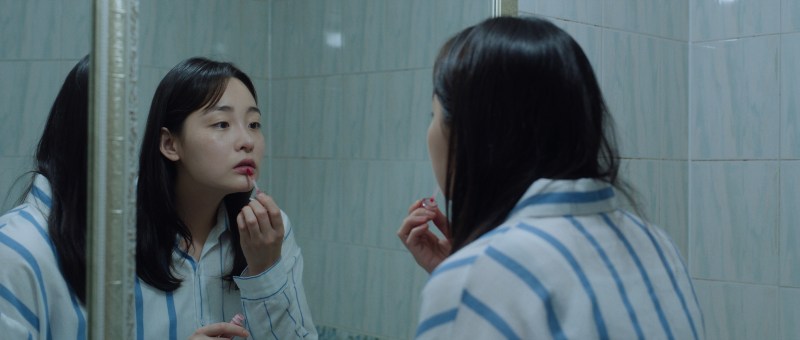
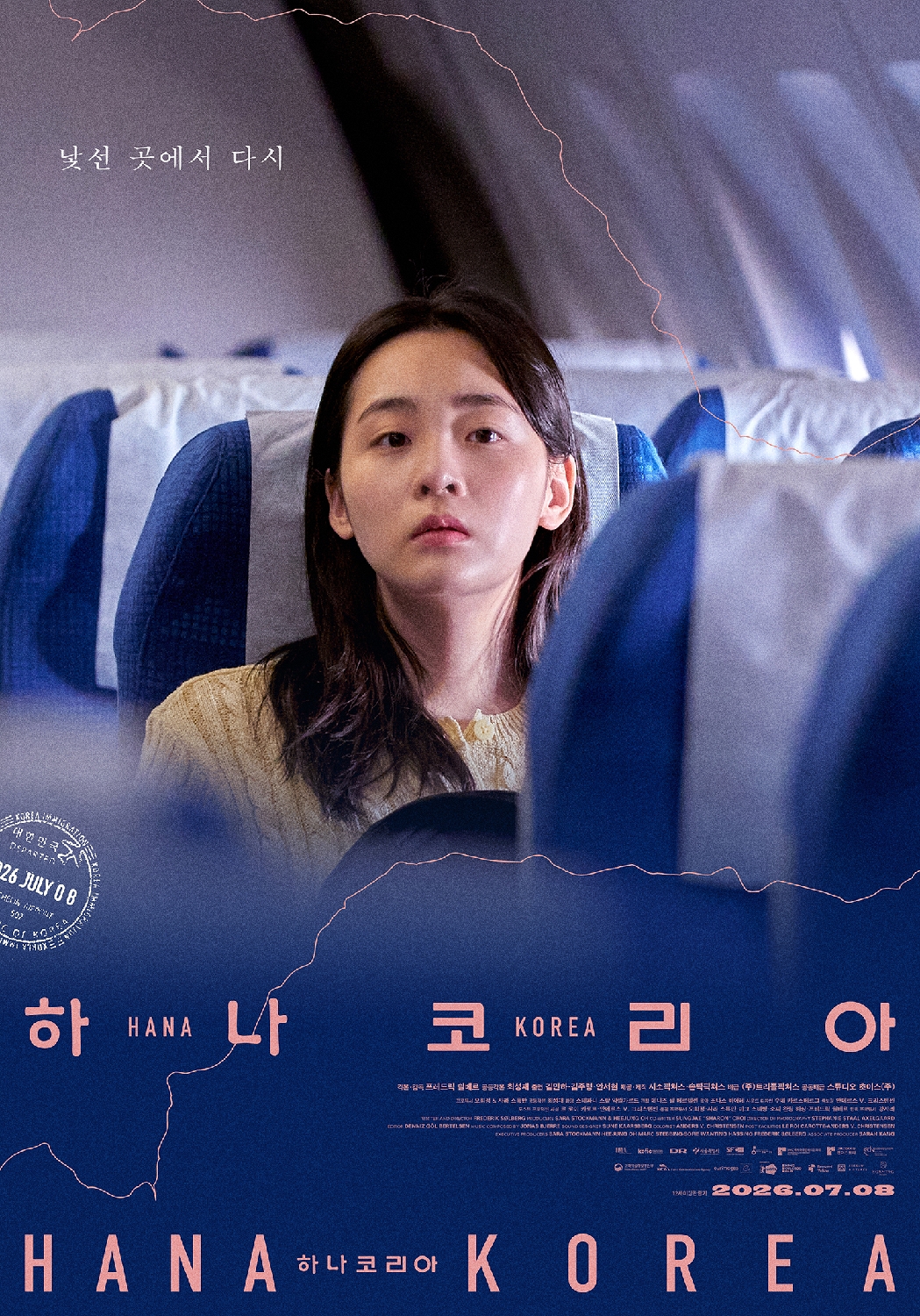
A young woman fleeing the North discovers the South isn’t exactly paradise either in Frederik Sølberg’s empathetic drama Hana Korea (하나 코리아). Based on the testimonies of those who’ve left North Korea, the film avoids the sensationalist narratives that often follow them and demand grisly details of their suffering or escape and instead suggests that the South can, in fact, be just as oppressive as Hye-sun (Kim Min-ha) struggles to establish herself in a society that is judgemental and not entirely welcoming of her.
This is obvious on her arrival when she’s asked to stay behind on the plane to be greeted by a squad of intimidating men in suits who ask her to identify herself and then taken to some kind of centre for debriefing where she’s asked a series of questions about her passage from the North. A nurse asks her to remove her underwear and lie down to be “examined”. Questioned, the nurse frames it as if it’s for her own benefit, so they can treat anything that needs to be treated, though the unpleasant idea that they suspect Hye-sun may be carrying something harmful remains. In any case, the event is traumatic for her as she later implies having been sexually exploited after leaving the North.
Hye-sun gives several, somewhat contradictory, accounts of how she lived between her escape and arriving in the South, which isn’t to say that none of them are true, only that she may find some of it painful to speak of or feel the necessity to have the kind of story that the person she’s talking to wants to hear. She regrets what her flight forced her to become, filled with shame over having betrayed someone else to save herself when they threatened her family. The only reason she left the North was financial necessity, needing to pay for the medicine to treat her mother’s illness. Her brother worked in a factory but didn’t earn enough to send any money home and lived too far away to help. Now Hye-sun finds herself dependent on smugglers to send her money home and unable to make contact with her mother until making a payment.
The people at the centre run courses to try and help them adjust to life in a modern, capitalist society that includes things like how to use an ATM, though it’s clear that they also have prejudices and expectations. Hye-sun and her roommate are chastised for using their new cards to buy makeup, despite the fact that the same supervisor had stressed how important looks are in South Korean society. Similarly, she also tries to shut down Hye-sun’s request to be allowed to study by insisting that it’s only for children and North Koreans will find it too difficult to catch up. Instead, she patronisingly recommends stereotypically feminine lines of work such as baking, cosmetics, and nail salons, though Hye-sun is determined to get a degree and become a nurse.
To do that, however, she has to find a way of supporting herself and is confronted by the prejudice of the society around her. Interviewing for a job waiting tables, the manageress obviously doesn’t want to give her the job on hearing of her “Chinese-Korean” background. Her male colleague suggests taking her on for a trial period, but later starts sexually harassing her. A customer also makes a spurious complaint, muttering that he can’t stand Chinese-Koreans. Meanwhile, Hye-sun is expected to attend religious meetings where they celebrate her salvation.
Working at the restaurant, she meets another young woman who tells her she didn’t go to university and is saving up to go travelling. If it doesn’t work out abroad, she can always go back to live with her parents. Hye-sun has gone abroad too, but she doesn’t have that luxury and may never see her family again. The manager of the facility remarked that many of them had holes in their hearts representing all they’d lost, but also that they needed to keep moving forward. This might in a way be the true liberation that Hye-sun experiences as she single-mindedly determines to become a nurse and resolves never to live like a viper hiding in the grass again. Filled with a gentle empathy, Sølberg’s nuanced drama explores the realities of life in the South but also the strength that can be drawn from deciding to leave the past behind.
Hana Korea screened as part of this year’s London Korean Film Festival.
Trailer (English subtitles)

