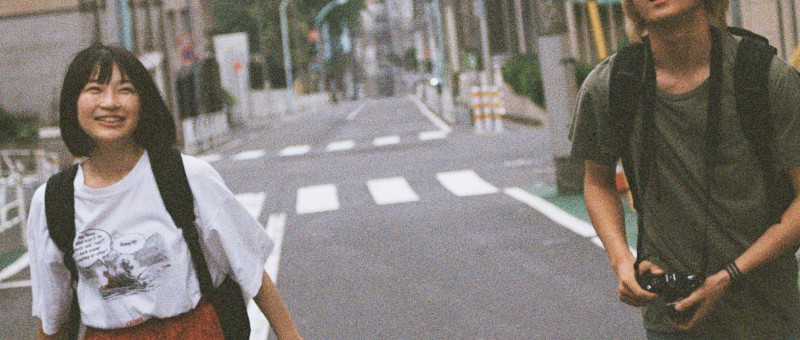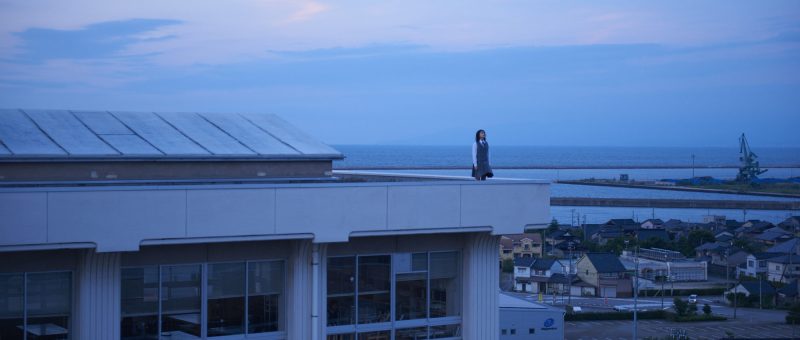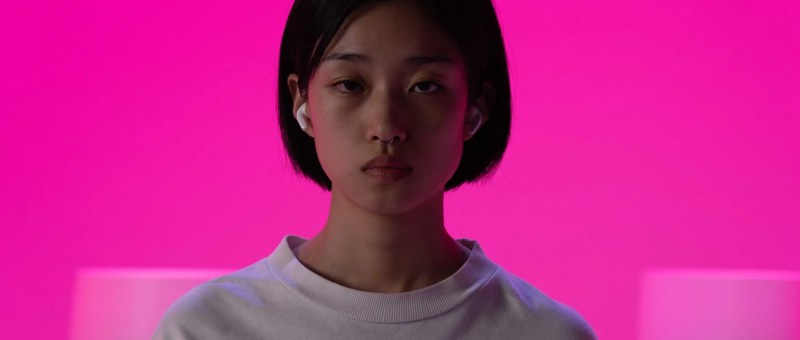
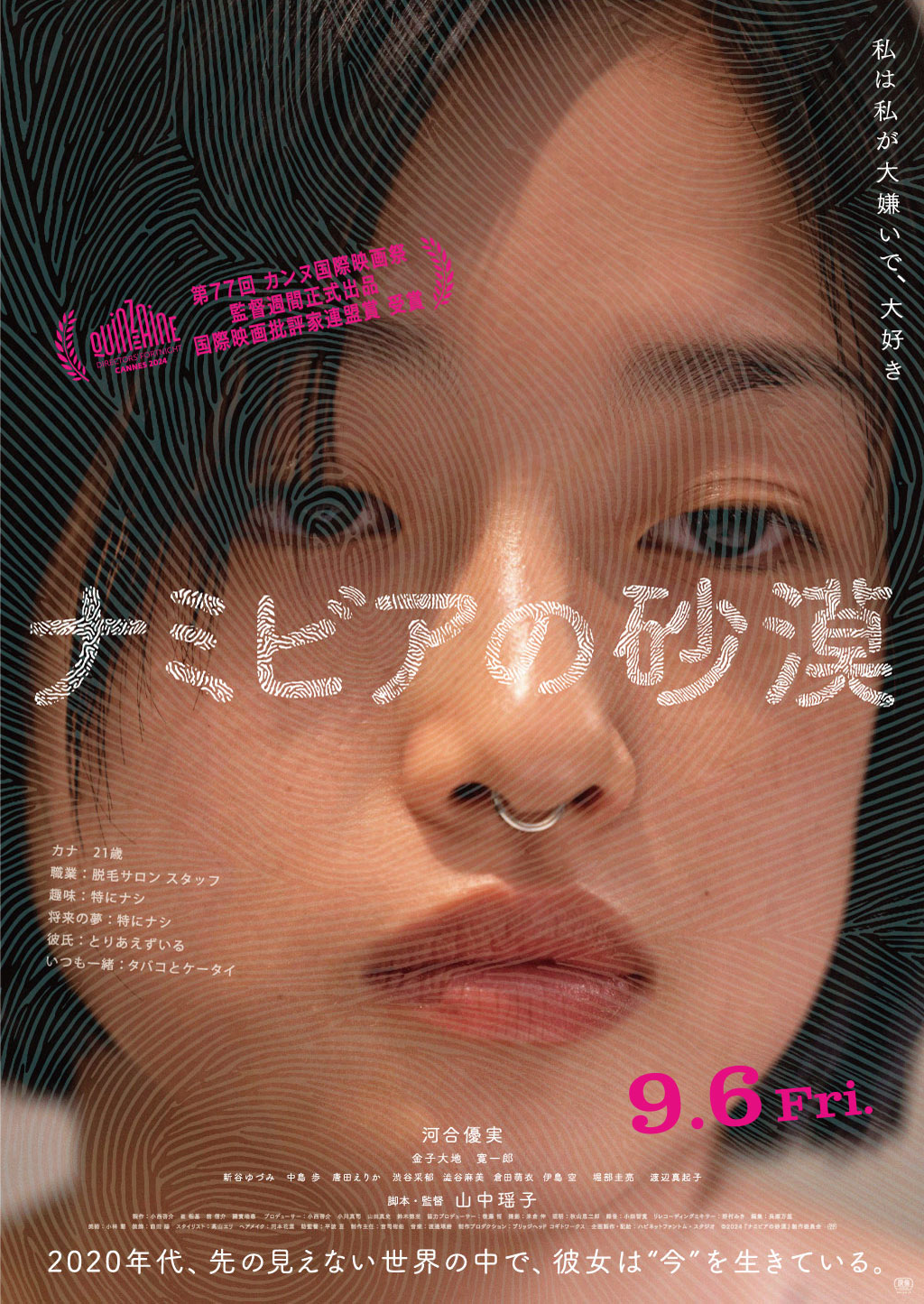
Desert of Namibia (ナミビアの砂漠, Yoko Yamanaka, 2024)

There’s a moment in Yoko Yamanaka’s quietly enraged character study Desert of Namibia (ナミビアの砂漠, Namibia no Sabaku) in which the heroine, Kana (Yuumi Kawai), finds herself stood at a crossroads. It might be tempting to read it as a symbol of her indecision, knowing she has to nix one of her two boyfriends but vacillating over which, but it’s more that she exists permanently between two states and as she later says may not really understand herself or the world around her.

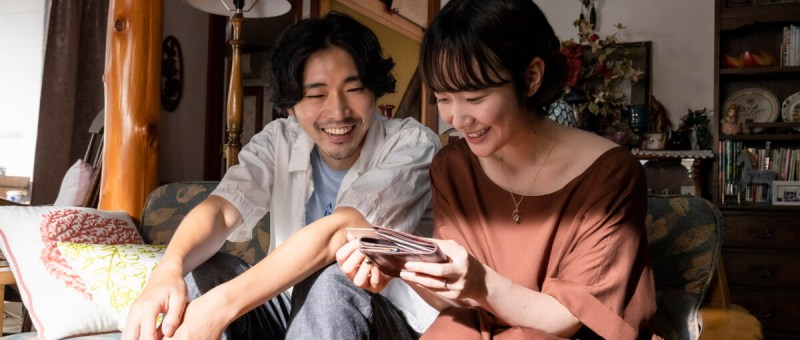
We can see this in the opening sequence in which Kana fails to respond to her friend’s emotional distress when she tells her that a mutual acquaintance has taken their own life. She seems bored, indifferent, not really listening until suggesting that the pair hit a host club together in an attempt to cheer her friend up. But Kana soon leaves her friend behind, making excuses about an early start to meet a man we first think is her boyfriend but is actually the bit on the side. She cuddles up to him in a taxi and tells him that she wants to go visit his parents (right now, in the middle of the night) to see photo albums of his childhood but later returns home to the man she lives with who patiently holds her hair as she throws up into the toilet while asking politely how her friend is.

Perhaps the problem is that Honda (Kanichiro) is too nice, too respectable for the flighty Kana. He’s an estate agent with a cosy and well kept flat where he likes to make hamburgers from scratch and is otherwise very considerate of Kana’s needs little suspecting she’s seeing another man on the side. In Hayashi (Daichi Kaneko) she may see someone a little more exciting but is equally terrified when he asks her to break up with Honda and date him exclusively. She cheerfully bickers with Honda about his upcoming business trip, urging him to stand up to his boss if he tries to make him go to a sex club. Honda says he’ll just refuse, but of course doesn’t making a heartfelt confession on his return. The problem isn’t really that he slept with a sex worker or was unfaithful, but that he couldn’t stand up to his boss and allowed himself to be controlled by Japan’s overarching, hierarchal social structure, did something he thought was wrong and did not want to do to keep his boss happy and maintain his career prospects. 

Kana doesn’t actually care about the sex, but it gives her an excuse to jump ship to Hayashi taking Honda’s fridge, and its frozen hamburgers, with her as she disappears completely from his life. But it’s at this point that her mental state begins to decline. She meets Hayashi’s well to do, upper middle class family who are actually very nice to her (even if randomly bringing up the fact her mother’s Chinese hints at latent prejudice) but feels out of place and inadequate especially on discovering that Hayashi had a previous girlfriend by the same name who may have aborted his child. Abortion seems to be a red button issue for Kana, possibly bringing up some long buried trauma of her own. She seems disconnected from her family and wanders restlessly around suburban areas while later hinting at resentment towards her father who may have in some way abused her. Her rage seems to escalate, culminating in physical abuse of Hayashi who resists but doesn’t really fight back. She craves his attention, but he wants to be left alone. 

In her spare time, she watches videos of animals in the Namibian desert, suggesting that what she might actually crave is an unstimulating environment or a more peaceful solitude but at the same time yearns for male attention. Only 21, she seems somehow older but is also unbalanced by a new colleague at work who is like her spiky and rebellious and two years younger. An unsympathetic online psychiatrist tells her she may be bipolar or have borderline personality or something else completely but is dismissive assuming she can’t afford his fees so tells her her problems are too big to solve. She sees a more sympathetic female psychiatrist in person who helps her begin to understand something of herself, but exposes her loneliness when she tries to invite her out to dinner as if she were a friend. Abstracted from herself, she disassociates and has an out of body vision of watching herself and Hayashi wrestling as if she were watching animals in the Namibian desert, staring blankly as she often does unable to comprehend herself or the world around her. 

Filming in a boxy 4:3, Yamanaka lends an air of constant tension and constraint to Kana’s world. The psychiatrist tells her that she imprisons herself in believing there’s a way she ought to feel but doesn’t when everyone is free within their minds redefining her Namibian dreamscape as the only place she is really free to be herself yet can only watch rather than directly access. “I don’t understand” she tells Hayashi when he asks her what “ting bu dong” means in a conversation with her family where her mother is apparently still somehow absent as if illuminating the entirety of her life and with it an ironic new understanding of herself. 


Desert of Namibia screened as part of this year’s Camera Japan.

Trailer
Hand (手, Daigo Matsui, 2022)

A young woman unwittingly meditates on emotional distance and the impossibility of intimacy while fixating on older men in an attempt to overcome her loneliness in feeling rejected by her father in Daigo Matsui’s contemporary Roman Porno, Hand (手, Te). Partly a critique of a misogynistic society, the film is as much interested in why old men like young girls as it is why Sawako (Akari Fukunaga) likes old men along with her general disdain for the various roles she’s expected to play. 

Sawako largely describes these as “life skills”, a brief flashback to the 20-year-old her wondering why weird old men suddenly took an interest in her when she left high school. The old guys make inappropriate banter with the woman behind bar that shocks Sawako in its crassness and leaves her wondering if she’ll be expected to “eco-exist” with men like these for the rest of her life. She decides if that’s the way it is she’ll need to equip herself which at 25 mainly involves adopting an ultra feminine persona, pretending to be stupid laughing at men’s rubbish jokes and giggling sweetly at every opportunity. Co-worker Mori (Daichi Kaneko) has, however, seen through her act especially as she doesn’t bother to put it on for him and is rather frank in her cynicism which gives her an air of authenticity that might in other ways be misleading. 

Meanwhile, she spends her time taking photos of middle-aged men and putting them in her scrapbook while sometimes going on “dates” with older guys. What soon becomes apparent is that she resents her family, with whom she still lives, and feels a little pushed out as if no one really cared about her only her younger sister Rika who in stark contrast to her is cheerful and outgoing. When she offers to make her father dinner, he doesn’t respond but apparently does when her sister asks. Sawako feels like her father thinks of her as “dark and boring” and assumes that he ignores her deliberately because he has no interest in her yet she ironically also ignores him, refusing her mother’s request that she accompany him to a hospital appointment petulantly suggesting he’d probably prefer it if Rika went. The truth is that they simply don’t know how to talk to each other, sitting far apart at the back of a bus like a couple that’s had an argument. 

A more age appropriate relationship with co-worker Mori seems as if it’s breaking down some barriers towards intimacy but finally leaves her additionally vulnerable as he too turns out to be a fairly weak, emotionally dishonest man despite his outward consideration for her. In contrast with the older men, his courtship had been coy, shyly asking to hold her hand and for permission before he kissed her while otherwise leaving her to take the lead though in the end he may not have been much different. One of the older gentlemen ironically describes her as “insecure” yet misreads her insecurity as sexual rather than emotional only for her to let the mask slip and bite back, frankly telling him that it can be “rude” to treat a woman like a girl and that his dismissiveness is offensive. If all he sees in her is “youth” then he should just date a naive teenager instead.

“Youth” may be the answer to her question about why old men like young women, something confirmed by her date’s sighing that he finds dating her “nostalgic” as if he were young again too. But what she was looking for was warmth, the closing of an emotional gap of the kind that Mori proposed when he asked to hold her hand but never really followed through on. Then again, as another said she does indeed have a habit of running away, rolling her eyes at the idea of seriousness in an attempt to mask her fear of intimacy and treating everything as a cynical joke to avoid facing reality. “Whatever you do you have to engage with people” her similarly reticent father tells while beginning to break the ice, slowly closing the gap in extending a hand across it that provokes an emotional breakthrough. Quietly poignant in the slow motion of its heroine’s gradual liberation, Matsui’s otherwise biting take on contemporary patriarchy and follies of old men nevertheless allows her to reclaim herself in opening up to others.


Hand screened as part of this year’s JAPAN CUTS.

International trailer (English subtitles)

Winny (Yusaku Matsumoto, 2023)

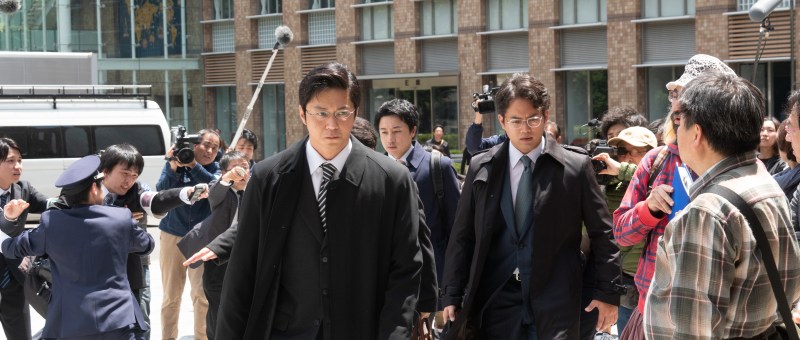
Can a creator be held legally responsible for what other people might decide to do with their creation? For some, that is the essential question of the trial at the centre of Yusaku Matsumoto’s legal drama Winny, but in speaking more to the present day than the early 2000s in which the real life events took place the film is more concerned with freedom of speech in a society in which established authorities may seek to resist the democratisation of information. 

A talking head seen on television at one point suggests that peer-to-peer file sharing programme Winny disrupts the democratic copyright regime, but according to its creator Isamu Kaneko (Masahiro Higashide) the appeal of peer-to-peer is that it is by nature democratic in forging a network of machines on an equal footing. Nevertheless, in November 2003 two people were arrested for using Winny to share copyrighted material and Isamu’s home was searched by the Kyoto police who arrested him for aiding and abetting copyright infringement. He and his lawyers argue that to charge the developer is wrongheaded and irresponsible in that it will necessarily stifle technological advance if developers are worried about prosecution if their work is misused by others while his intention in any case had not been to undermine copyright laws but essentially for technological innovation in and of itself. 

Meanwhile, the film devotes much of its running time to a concurrent police corruption scandal in which a lone honest cop is trying to blow a whistle on a secret slush fund founded on fraudulently produced expense receipts. The implication is that the reason the police decided to go after Isamu is that they feared Winny’s potential to expose their own wrongdoing. A member of the police force had apparently used Winny and introduced a vulnerability to the police computer system that allowed confidential data to be leaked, and Winny is indeed later used to publicly disseminate evidence which proves the claims of the whistleblower, Semba (Hidetaka Yoshioka), are true. Semba had previously tried to take his concerns to the press privately but was ignored, the editor simply printed a police press release without investigation unwilling to rock the boat. But a programme like Winny exists outside of the establishment’s control which is why, the film suggests, the police in particular resent it. 

A younger officer Semba reproaches at his station gives the excuse that everybody does it and refusing to fill in the false receipts would make it difficult for him to operate in an atmosphere in which corruption has become normalised. Even the police use Winny, a prison guard confiding in Isamu that he’s used the programme to download uncensored pornography while prosecution lawyers conversely attempt to embarrass Isamu by leaking pictures of his porn collection to the press and bringing it up on the stand. “Everybody does it” is not a good defence at the best times aside from being a tacit admission of guilt but reinforces a sense that the police operates from a position of being above the law. A particularly smug officer thinks nothing of perjuring himself on the stand, spluttering and becoming defensive when Isamu’s lawyers expose him in a lie. 

Isamu is depicted as a rather naive man whose social awkwardness and childlike innocence leave him vulnerable to manipulation. He’s told to sign documents by the police so he signs them thinking it’s better to be cooperative, taking the advice he’s given when he questions a particular sentence that he can correct it later at face value while assuming that he’ll be able to straighten it all out in court by telling them the truth and that he signed the documents because the police told him to. Meanwhile, he’s almost totally isolated, prevented from talking to friends and family out of a concern that he may use them to conceal evidence. 

The film seems to suggest that the stress of his ordeal which lasted several years may have led to his early death at the age of 42 soon after his eventual acquittal. In any case he finds a kindred spirit in his intellectually curious lawyer (Takahiro Miura) who defends him mostly on the basis that the right to innovate must be protected and a developer can not be responsible for the actions of an end user any more than a man who makes knives can be held accountable for a stabbing. Matsumoto captures the sense of wonder Isamu seems to feel for the digital world and has a great deal of sympathy for him as an innocent caught up in a game he doesn’t quite understand while fiercely defending his right to express himself, along with all of our own, without fear no matter what the implications may be.


Winny screens in New York Aug. 2 as part of this year’s JAPAN CUTS.

Original trailer (no subtitles)

Struggling Man (私はいったい、何と闘っているのか, Toshio Lee, 2021)

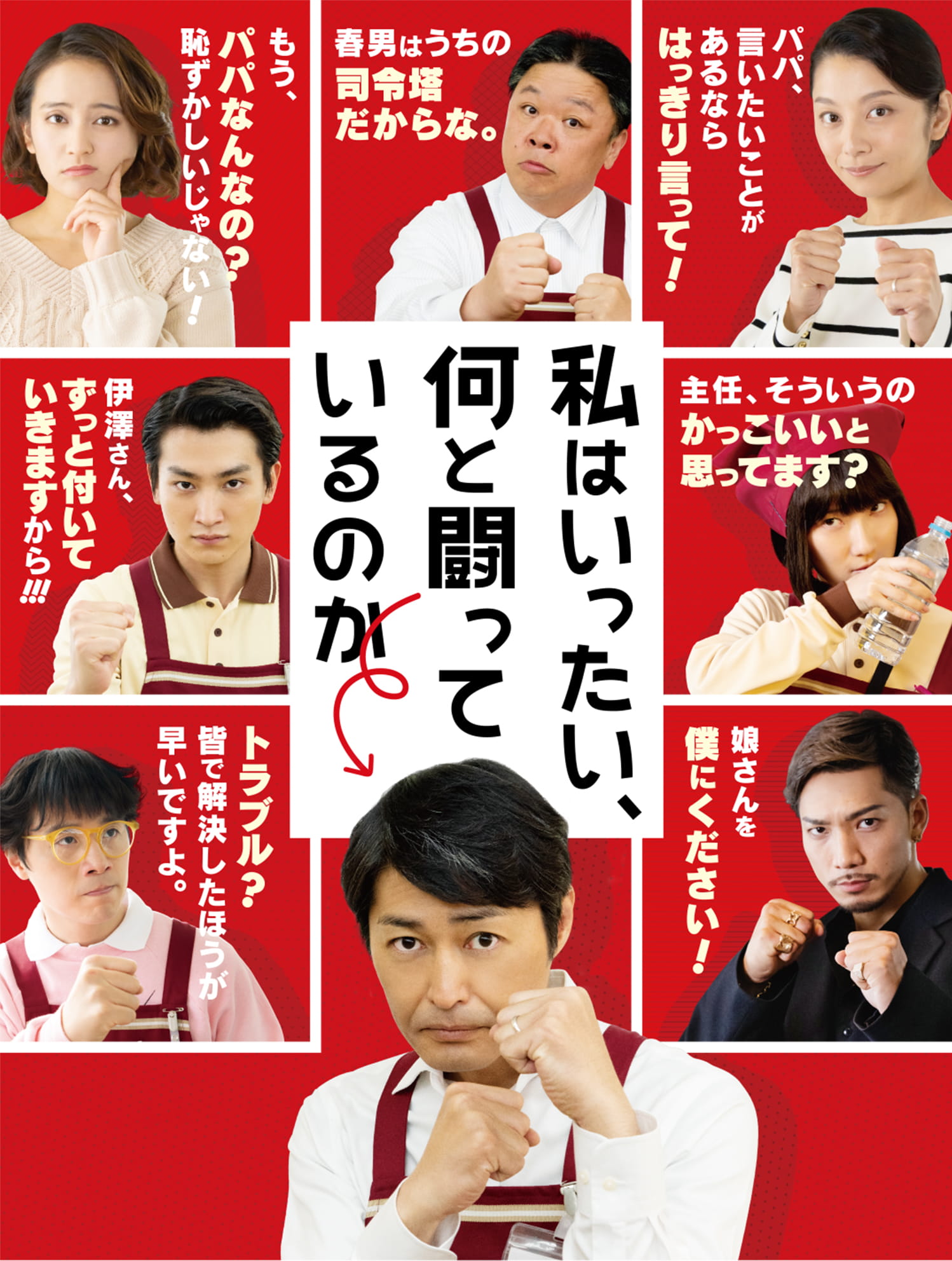
Life is a lonely battlefield for the middle-aged hero of Toshio Lee’s Struggling Man (私はいったい、何と闘っているのか, Watashi wa Ittai Nani to Tatakatteiru no ka). The film’s English-language title and supermarket setting may recall Juzo Itami’s Supermarket Woman, but Lee’s lighthearted dramedy soon takes an unexpected left turn as the hero battles a kind of mid-life crisis of fracturing masculinity as his professional and family lives come under simultaneous threat firstly by his failure to land a long overdue promotion and secondly by his eldest daughter’s impending marriage. 

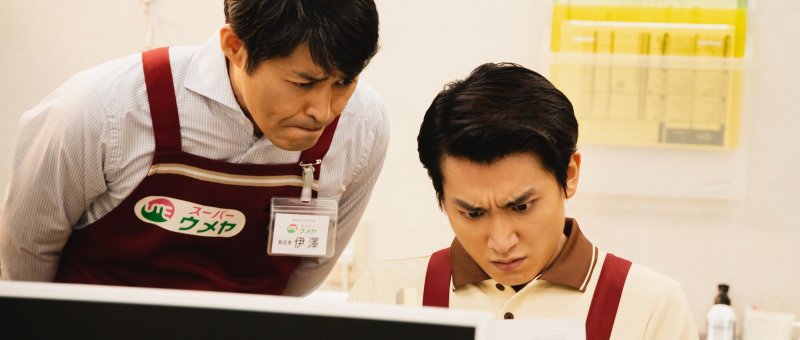
After 25 years working at the same small-town supermarket, Haruo Izawa (Ken Yasuda) is well respected by his colleagues and often depended on by his boss Mr. Ueda (Hikaru Ijuin) yet harbours an internalised inferiority complex that he has not yet made manager. When Mr. Ueda passes away suddenly, everyone, including Haruo himself, just assumes he’ll finally be getting promoted but head office soon parachute in an extremely strange man from accounts, Nishiguchi (Kentaro Tamura), who knows nothing at all about how to run a supermarket. Haruo ends up with an awkward horizontal promotion to deputy manager while Nishiguchi basically leaves everything up to him. 

Haruo is always being told that he’s too nice but as he later tells another employee, he too is really just thinking of himself as revealed by his ever running interior monologue in which he often imagines himself in situations which will show him in a good light only for things not to pan out as he’d hoped. It’s clear that what he’s experiencing is partly a middle-aged man’s masculinity crisis often comparing himself to others and embarrassed on a personal level in not having achieved his career goals while directly threatened by the presence of his daughter’s new boyfriend fearing that he will lose his patriarchal authority within his own household in which he is already somewhat mocked by an otherwise genuinely loving and supportive family. His anxiety is compounded by the fact that he is a stepfather to the two daughters while he and his perspicacious wife Ritsuko (Eiko Koike) have a son together. The discovery of plane tickets sent by the girls’ estranged birth father in Okinawa with the hope that they will visit unbalances him in his increasing fear of displacement.  

As in the Japanese title of the film, Haruo is always asking himself what it is he seems to be fighting with the obvious answers being an internalised inferiority complex and toxic masculinity while constantly told that he doesn’t help himself with his Mr. Nice Guy approach to life. When he discovers an employee may be defrauding the business, he stops his assistant from reporting it and after discovering the truth decides to help cover it up so they won’t lose their job but later loses out himself when his simple act of kindness and compassion is viewed in bad faith by a potential employer. He tries to make things work with Nishiguchi, but Nishiguchi is a defiantly strange person and so all of Haruo’s attempts to help him integrate into supermarket life backfire. As it turns out, he’s in a constant battle with himself against his better nature but always resolving to be kind and put others first while privately annoyed that the universe often seems to be unkind to him. 

Then again as an old lady running a curry house puts it, happiness is having a full belly and so long as Haruo has a healthy appetite things can’t really be that bad. His life is quite nice, which is something he comes to appreciate more fully while reclaiming his image of himself as a father and along with it a sense of security brokered by a truly selfless act of kindness informed by paternal empathy. Professional validation may be a little harder to win, but lies more in the gentle camaraderie with fellow employees than in ruthless workplace politics or rabid ambition. Life need not be a lonely battle as Haruo begins to learn setting aside his manly stoicism and trusting in his ace detective wife who has been engaging in a similar and apparently victorious battle herself reaffirming her love for the kind of sweets so unexciting no one remembers they’re there which may seem a little plain on the outside but have their own kind of wholesome sweetness. 


Struggling Man streams in the US Sept. 17 – 23 as part of the 15th season of Asian Pop-Up Cinema.

International trailer (English subtitles)

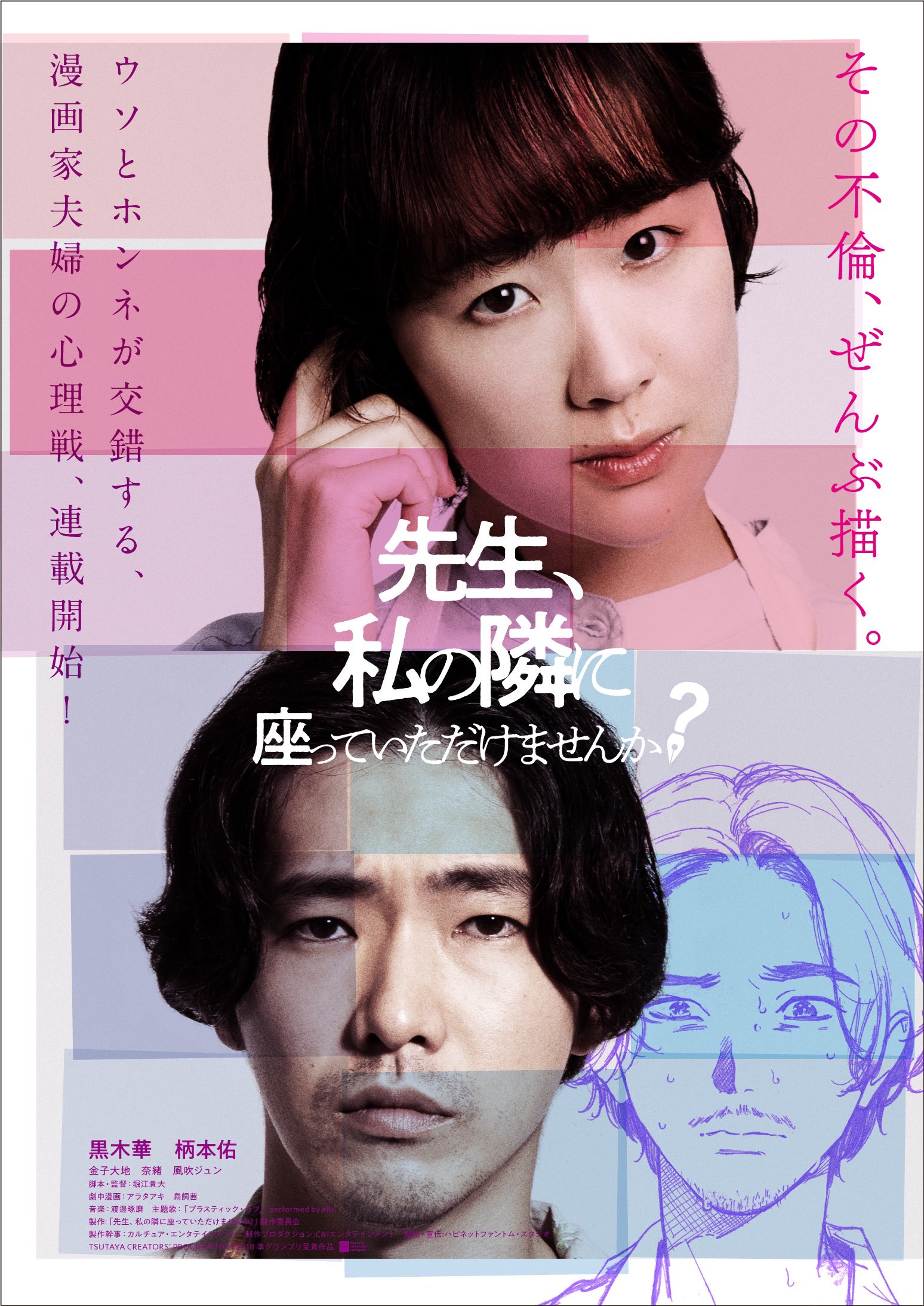
Sensei, Would You Sit Beside Me? (先生、私の隣に座っていただけませんか?, Takahiro Horie, 2021)

An under-confident mangaka tries to save her moribund marriage through a passive aggressive attempt at “realism”, but then is that really what she wants? What is she really up to? Takahiro Horie’s anti-rom-com Sensei, Would You Sit Beside me? (先生、私の隣に座っていただけませんか?, Sensei, Watashi no Tonari ni Suwatte Itadakemasenka?) is more complicated than it first seems, a tale of romantic revenge, of a woman’s determination to reclaim her independence, or perhaps even a slightly cynical not to mention sexist story of a betrayed wife’s attempts to rekindle her moody husband’s creative mojo in the hope of reigniting the spark in their marriage. What transpires is however a literary game of cat and mouse as a suddenly alarmed husband attempts to get ahead of the game through the transgressive act of reading his wife’s diary. 

A successful manga artist, Sawako (Haru Kuroki) has just completed a long-running series assisted by her husband of five years, Toshio (Tasuku Emoto) who was once a bestselling mangaka himself but hasn’t worked on anything of his own since they got married. Toshio appears to be prickly on this subject, and is in something of a bad mood while Sawako’s editor Chika (Nao Honda) waits patiently for the completed pages. Seemingly suspecting something, Sawako asks Toshio to escort Chika back to the station with the intention of following them only she’s interrupted by a phone call from the police to the effect that her mother (Jun Fubuki), who lives out in the country, has been in an accident and broken her ankle. Sawako and Toshio decide to go and stay with her while she recovers, though a change of scene seems to do little to relieve the pressures on their marriage. 

Indeed, on their first night there Toshio remarks that it’s been a while since they’ve slept in the same room which might go some way to explaining the distance in their relationship. Aside from that, Toshio superficially seems much more cheerful perhaps putting on a best behaviour act for his mother-in-law who makes a point of telling her daughter how “great” her husband is and how she’s almost glad she broke her leg because it’s brought him to stay. Her gentle hints to Sawako to let her know if there’s something wrong elicit only a characteristic “hmm” while she otherwise makes only passive-aggressive comments which suggest she fears her marriage may be on the way out. Having long been resistant to the idea of learning to drive even though she grew up in the country, Sawako starts taking lessons at a nearby school cryptically explaining to Toshio that perhaps she’d better learn after all because she’ll be stuck when he leaves her. 

Sawako’s “driving phobia” as she first describes it appears to be a facet of her underlying lack of self-confidence. She simply doesn’t trust herself to take the wheel and cannot operate without the safety net of someone sitting next to her. Having not got on with the grumpy old man she was originally assigned, Sawako gains the courage to take her foot off the brake thanks to a handsome young instructor, Shintani (Daichi Kaneko), who makes her feel safe while slowly giving her the confidence to trust in herself. The implication is that Toshio has been unable to do something similar in part because he’s so wrapped up in his own inferiority complex over his creative decline complaining that nothing really moves him anymore. When Chika advises Sawako choose a more “realistic” subject for her next series, she passively aggressively decides to go all in with a clearly autobiographical tale of adultery that suggests she is well aware her husband and editor are having an affair behind her back while the heroine experiences a passionate reawakening thanks to her handsome, sensitive driving instructor. 

Of course, Toshio can’t resist reading her “diary” and obsessing over how much of it is “true”. Perhaps Sawako intended just this effect, driving her husband out of his mind with guilt and jealousy indulging in a little revenge whether in fantasy or reality. The irony is that there are at least three “senseis” floating around including Sawako herself with the eventual decision of who, if anyone, she wants to sit beside her the unanswered question of her “revenge” manga. Her real revenge, however, may lie in her determination to grab the wheel, reclaiming agency over her life along with a new independence born of her ability to drive and therefore decide its further direction while toying with Toshio’s inner insecurity in order to effect a plan which is far more insidious than it might first seem. Filled with twists and turns, Horie’s cynical love farce eventually cedes total control to its seemingly mousy heroine as she gains the confidence to go solo or hand-in-hand as it suits her towards a destination entirely of her own choosing. 


Sensei, Would You Sit Beside Me? screened as part of this year’s New York Asian Film Festival.

International trailer (English subtitles)

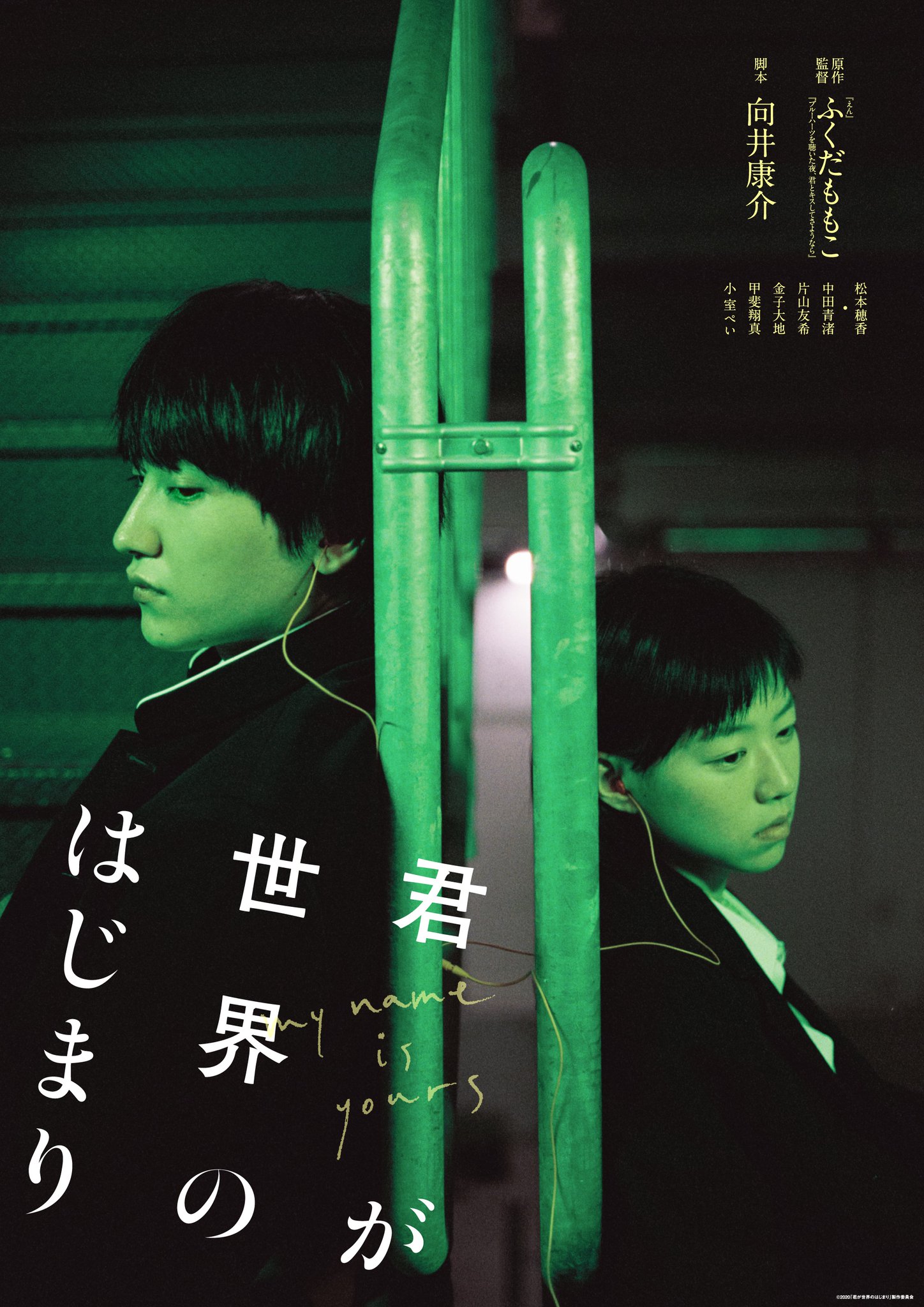
My Name is Yours (君が世界のはじまり, Momoko Fukuda, 2020)

A collection of Osaka teens process adolescent angst and generational anxiety but in the end find a gentle solidarity in their shared suffering while resolving to be kind in Momoko Fukuda’s adaptation of her own novel, My Name is Yours (君が世界のはじまり, Kimi ga Sekai no Hajimari). “People are unknowable” they solemnly resolve, admitting that you never really know anyone but later making an effort to share their secrets, if only gently, bonding in a new sense of openness as they begin to move forward into a brighter future. 

Fukuda opens however with a scene of crime as a high school student is arrested for the murder of their father. As we discover, several of the teens could be potential suspects, each in someway resentful of their dads though for very different reasons. Recently transferred Tokyo boy Io (Daichi Kaneko), mocked for his accent, is involved in some kind of hugely inappropriate sexual relationship with his middle-aged step mother as accidentally witnessed by moody classmate Jun (Yuki Katayama) hanging round the shopping mall in order to avoid going home to her overly domesticated dad (Kanji Furutachi ) whom she blames for her mother’s decision to leave the family. Narihira (Pei Omuro), meanwhile, was abandoned by his mother soon after birth and is sole carer to his father who seems to be suffering with early onset dementia. 

Childhood best friends En/Yukari (Honoka Matsumoto) and Kotoko (Seina Nakata) first encounter Narihira in their secret hideout, a disused school library, having a private cry leading Kotoko to fall madly in love publicly dumping her current boyfriend with extreme prejudice seconds later. Meanwhile, En becomes an accidental confidant to nice guy Okada (Shouma Kai) who has received a mysterious love letter he doesn’t quite understand because it’s come in the form of a classical poem only for Okada too to fall for Kotoko while Narihira seems to prefer En. 

Love triangles aside, each of the teens has their private sorrows some more secret than others but nevertheless producing chain reactions of their own in their inability to express themselves fully. But as angry and frustrated as they are, they still want to be kind if more to others than themselves. “If I only think about my own freedom how can I be kind to others?” Narihira sadly reflects confessing his occasional resentment in trying to care for his father. Even Io, seemingly realising how inappropriate his relationship with his step mother is, resolves that he wants to be kind to her despite the harm she may be doing him. “Wanting to hurt other people is absurd” he claims, unable to understand the impulse to exorcise his frustration through violence. 

Narihira attributes his salvation to having met En, explaining that in a sense she opened up a new world in giving him the courage to talk about his father sharing the secret with Okada who told the coach on their sports team who told him about a facility that might be able to help. Yet Narihira also begins to disrupt the previously close relationship between En and Kotoko, leaving Kotoko feeling jealous and En confused it seems on more than on level as the unexpectedly perspicacious Okada seems to have figured out forcing her in turn to reckon with and accept her own unspoken feelings. 

Taking refuge in a darkened shopping mall overnight, the teens unexpectedly bond through a musical performance of the classic Blue Hearts track Hito ni Yasashiku with its melancholy yet cheerful chorus encouraging each other to hang in there, remaining kind in a world which often isn’t. “Well, I can’t say for sure. Nobody can.” an amused secretary guard honestly answers asked by one of the teens if the mall will be torn down, his refreshingly direct answer perhaps adding to their new sense of confidence even in the face of the world’s uncertainty. A gentle, quietly nostalgic coming-of-age tale, Fukuda’s Osaka-set lowkey yet stylishly moody drama begins with violent darkness but ends in bright sunlight, the teens each finding a sense of equilibrium having come to new understandings about themselves and those around them bolstered by a youthful solidarity. Some secrets it seems still cannot quite be shared, but friendships resolve themselves all the same if in unexpected ways allowing a melancholy intensity to dissipate into a sad if fervent hope for the future. 


My Name is Yours screened as part of this year’s Camera Japan

Original trailer (English subtitles)

Hito ni Yasashiku music video

The Blue Hearts – Hito ni Yasashiku

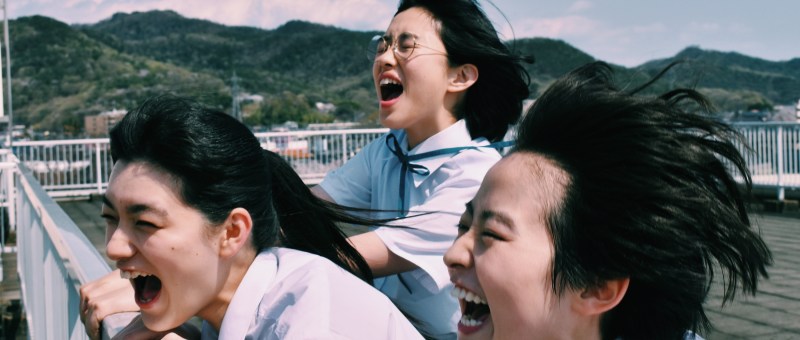
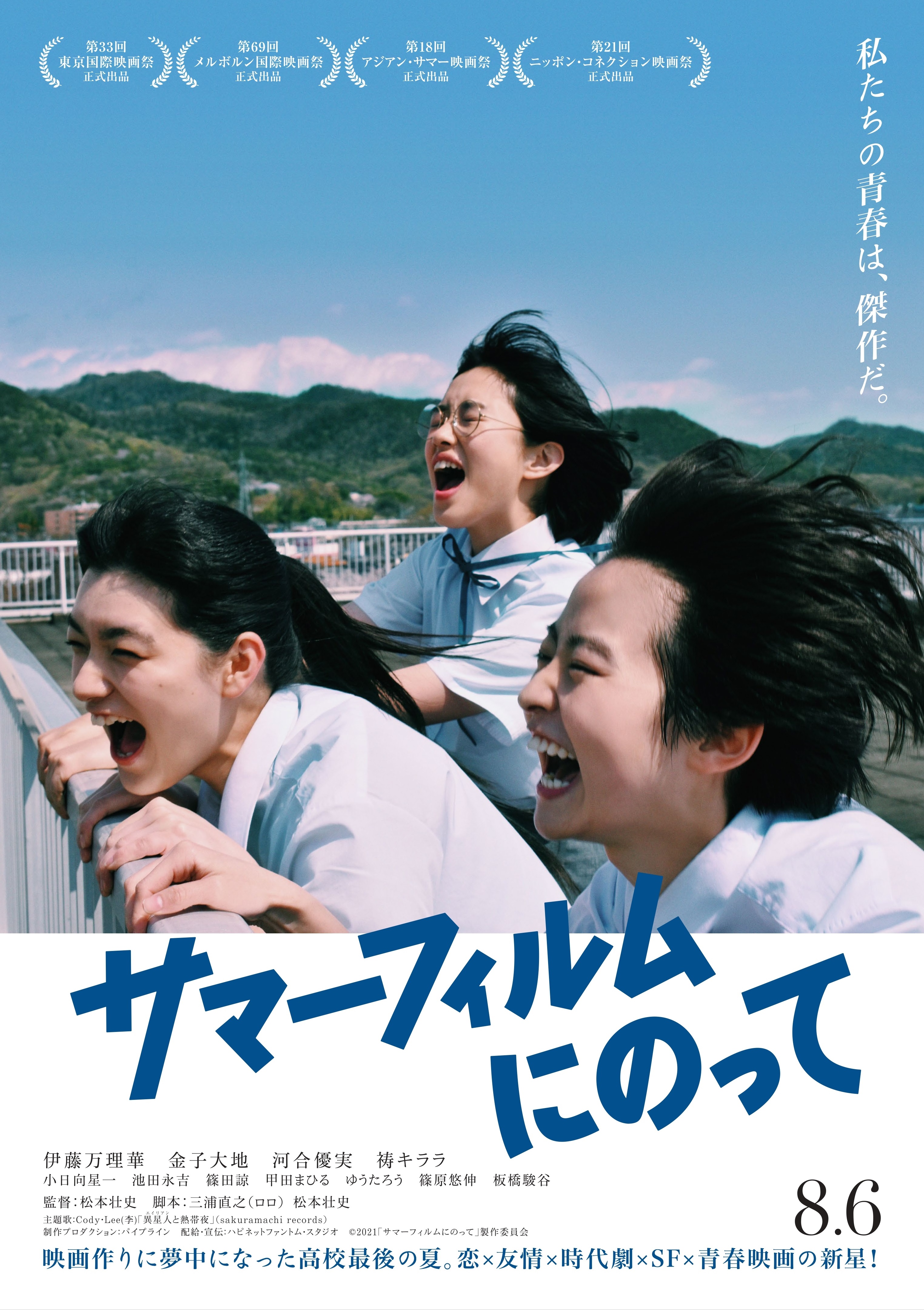
It’s a Summer Film! (サマーフィルムにのって, Soshi Matsumoto, 2020)

“Movies connect the present with the past through the big screen” according to the jidaigeki-obsessed heroine of Soshi Matsumoto’s charming sci-fi-inflected teen movie It’s a Summer Film! (サマーフィルムにのって, Summer Film ni Notte). True to its title, Matsumoto’s whimsical drama very much belongs to the grand tradition of high school summer movies as its youthful heroines contemplate eternity, romantic heartbreak, and artistic fulfilment while secretly plotting to best their vacuous rival by filming their very own teen samurai movie ready in time for the all-important school cultural festival. 

Aspiring director Barefoot (Marika Ito) is completely obsessed with classic samurai movies, arguing with her similarly devoted friends about who is hotter Shintaro Katsu or Raizo Ichikawa. She is a key member of the school movie making club, but intensely resentful of star player Karin (Mahiru Coda) who won the tender to make the film for this year’s cultural festival with a sappy teen romance which mostly seems to involve repeated scenes of the central couple loudly declaring their love for each other. Barefoot thinks a film should convey love without words and has written a script for a teen samurai movie in which adversaries become too emotionally invested in each other to engage in the expected final confrontation. All she’s lacking is a star and after spotting a handsome guy apparently as moved by a local rep screening as she is decides she’s found her man. What she doesn’t know is that Rintaro (Daichi Kaneko) is a secret time traveller from a future in which she has become a renowned master filmmaker but film itself sadly no longer exists. 

Being from the future and all explains Rintaro’s reluctance to star in the film, dropping accidental hints that he’s from another place as in his amusement that humans still staff removal companies and total mystification by the word “Netflix”. Yet he too is completely obsessed with classic jidaigeki from the heyday of the genre which had largely gone out of fashion by the early 1980s. As many point out, Barefoot’s hobby is slightly unusual, though she learned her love of chanbara from her grandma, receiving messages from the past she hoped to pass on to the future. Gathering most of the other rejected, outsider teens from a boy who looks about 40 to a pair of baseball nerds who can correctly guess the player from the sound of a ball hitting a glove and a bleach blond biker, she assembles a team to make her movie dreams come true as if to prove there’s something more out there than the, as she sees it, vacuous high school rom-coms favoured by the likes of Karin. 

Among the series of lessons she finally learns is that Karin need not be an adversary but could be a friend if only she look beyond her snootiness and resentment of the popular crowd even if Karin’s all pink, needlessly extravagant and egotistically branded crew shirts don’t do much to dispel Barefoot’s perception of her as entitled and self-obsessed. Another lesson she learns is that she’s not as disinterested in romance as she thought she was, though falling for Rintaro leaves her with a secondary dilemma realising that he’ll eventually have to return to his own times while also contemplating what the point of the future even is if they don’t have movies there. What she’s going to do with the rest of her life if the art of cinema is already obsolete? 

With some ironic help from Karin, what she realises is that even if something is destroyed it doesn’t disappear, films live on in the memories of those who saw them who can then take their memories with them into the future. Where her first draft had ended with an emotional anti-climax that saw her heroes too emotionally involved to engage in conflict, she now realises that samurai movies are love stories too and that “killing is a confession of love” in a slightly worrying though not altogether inaccurate take on the homoerotic subtext of the chanbara. A charmingly whimsical coming-of-age tale filled with meta touches from the constant references to classic jidaigeki to the heroine’s sci-fi-obsessed sidekick who seems to have an unrequited crush on her best friend idly reading The Girl Who Leapt Through Time, It’s a Summer Film! more than lives up to its name in its cheerful serenity as the teenage old souls defiantly learn to claim their own space while connecting with each other as they contemplate love and transience in the eternal art of cinema. 


It’s a Summer Film streamed as part of this year’s Nippon Connection.

Original trailer (English subtitles)

colorless (猿楽町で会いましょう, Takashi Koyama, 2019)

“I think I could capture the real you” a photographer pleads of a subject he has become obsessed with, little knowing the deeply problematic implications of his statement. Shot with a photographer’s eye, Takashi Koyama’s colorless (猿楽町で会いましょう, Sarugakucho de Aimasho), paints its heroes as just that, wandering zombies of modern day Tokyo as estranged from themselves as they are from others, but even as it attempts to draw similarities between their mutual lifelessness cannot help but reflect a misogynistic world view in which the conflicted heroine remains little more than an empty shell, a blank canvas onto which various men project their inner desires leaving her essentially robbed of an identity by an exploitative society. 

When we first meet aspiring freelance photographer Shu (Daichi Kaneko), he is in much the same position, kept waiting by an arrogant magazine editor who has stepped out of the office despite having arranged an appointment to look over his portfolio. When he eventually arrives, Kasamura (Kenta Maeno) rudely dismisses his work, claiming that the selection of photos he’s assembled doesn’t make sense in that it gives no clear indication of his style or intent and aside from that his shots are cold and lifeless. He attributes this lack of passion to the likelihood that Shu has never truly been in love, something which turns out to be true though as we later discover Kasamura is also a cold and cynical man who proudly proclaims the same of himself. Nevertheless, he hooks Shu up with a side job shooting publicity shots for an acquaintance, Yuka (Ruka Ishikawa), hoping to become a “reader’s model” as a path to fame. 

For whatever reason, Yuka seems to incite in him the passion which Kasamura claimed was missing in his work, becoming both muse and object of desire. She describes herself as colourless and wonders if there is a “her” that can be captured, while Shu assures her that he feels much the same but fails to appreciate the various ways in which he is attempting to colour her with his camera, filled with nothing but jealous anxiety when confronted by the possibility that she exists outside of the image he has created of her. The incongruities between what she tells him of herself, his own self created vision, and the evidence presented to him by others bring out an unpleasantly chauvinistic side of him which he perhaps does not even like in himself, abruptly attempting to stop her leaving his apartment without consenting to sex by threatening to withhold the data for the pictures he took, breaking into her phone to check her messages, and later feeling humiliated in realising that she may have hidden from him a prior (or current) life in sex work.

Yuka, meanwhile, remains a cipher. Unexpectedly interviewed as part of an audition she is asked to describe herself but can only reply in terms of the way others see her, answering only that she is often said to have a sunny disposition. We see her parrot back lines she’s heard from one man to another in an attempt to please him, as if wilfully erasing her essential identity to better conform to male desires in an attempt to keep herself safe but also perhaps betraying that she has few words of her own to offer. Yet in private we see a much less complimentary side of her in which she is petty and jealous, resentful of a friend’s success while she seems to get nowhere and, the film uncomfortably insists, willing to use men by exploiting their desire for her which is in essence a desire for a colourlessness they can dye with their own self projected ideals. 

Yuka claims that she does not want to know who she really is, perhaps afraid to know or realising that there really is no value in knowing because her existence is defined by male desire. Her tragedy may be that she isn’t cynical enough, unable to manipulate men to the same extent as her more successful friend, still longing to be known and loved for who she is even while insisting that she does not exist and wilfully misrepresenting herself to those around her out of embarrassment and dissatisfaction with her life. The story she tells in her interview implies a lasting trauma of male abuse which has caused a rupture in her sense of self, unable to grasp an identity other than that granted by others, but still we’re largely left with Shu’s resentment in his inability to “capture” that which cannot be captured in his desire to possess not only Yuka’s body but her image by replacing it with that of his own creation. A dark and cynical take on modern romance, colorless leaves its heroes much where it found them, floundering in an inherently patriarchal society itself devoid of the colour they each desire. 


colorless streamed as part of this year’s Udine Far East Film Festival.

International trailer (English subtitles)

Narratage (ナラタージュ, Isao Yukisada, 2017)

Narratge poster 1Isao Yukisada made his name with the jun-ai landmark Crying Out Love in the Centre of the World back in 2004. Adapted from a best selling novel (which had also been adapted as a TV drama around the same time), Crying Out Love was the epitome of a short lived genre in which melancholy, lovelorn and lonely middle-aged heroes looked back on the lost love of their youths. Jun-ai has never really gone away though it might not be so popular as it once was, but the focus has perhaps shifted and in an unexpected direction. Narratage (ナラタージュ), once again adapted from a best selling novel though this time one by an author still in her early 20s when the book was written (incidentally smack in the middle of the jun-ai boom), is another sad story of frustrated love though in contrast to the jun-ai norm, its tragedies revolve around loves which were tested and subsequently failed, leaving the broken hearted romantics trapped within their own tiny bubbles of nostalgia.

The heroine, Izumi (Kasumi Arimura), narrates her tale from three distinct periods of her young life speaking from the perspective of her still young self now living as a lonely office worker. A lonely high school misfit, she found herself drawn to a sensitive teacher, Hayama (Jun Matsumoto), who rescued her from despair through an invitation to join the drama club. Relying on him ever more, she began regularly visiting his office for guidance and the pair bonded over their shared love of cinema. On graduation Izumi decided to declare her love, but earned a sad story in return and resolved to move on with her life. Then in the second year of university, she gets an unexpected phone call, calling her back to help out with a play at the school’s culture festival.

Yukisada begins with a rather unsubtle metaphor in which the older Izumi lovingly fondles an antique pocket watch which has long since stopped ticking. 20-something Izumi apparently has very little in her life, a pang of melancholy envy passing her face as she talks to a friend on the phone at home with a new baby while she prepares for another lonely night of (unnecessary) overtime. Where the heroes of jun-ai obsess over true love lost, Izumi struggles to face the fact that the man she loved did not, could not, love her in the way that she wanted him to. There is, of course, something deeply inappropriate in the awkward relationship between Izumi and Hayama who are a teenage student and her teacher respectively – connect as they might, there are moments when a line is crossed even while Izumi is still a schoolgirl which is in no way justified by the presentation of their (non)romance as a natural consequence of their mutual suffering.

Hayama and Izumi are presented as equals but they aren’t and never could be. As if to continue the chain, university era Izumi gets a love confession of her own from old classmate Ono (Kentaro Sakaguchi) who has apparently been carrying a torch for her all this time. Ono’s love, like Izumi’s, is originally generous and altruistic – he understands her unrequited affection for Hayama and perhaps even sympathises, but once Izumi decides to try and make things work with someone who loves her it all starts to go wrong. Ono is jealous, possessive, desperate. He demands to inspect her phone, insists she erase Hayama from her mind and devote herself only to him. Izumi, sadly, goes along with all of this, even when her attempts to turn to Ono for protection when afraid and alone are petulantly refused. When the inevitable happens and she decides to try and sort things out with Hayama, Ono tries to exert an authority he doesn’t really have, ordering her to bow to him (literally), and harping on about all the hard work he personally has put into their relationship which, he feels, she doesn’t really appreciate while berating her for not really loving him enough. As it turns out, neither of Izumi’s romantic options is particularly healthy or indeed viable.

At one particularly unsubtle moment, Izumi (alone) attends a screening of Naruse’s Floating Clouds – another film about a couple who fail to move on from a failed love affair though their struggle is ultimately more about the vagaries of the post-war world than it is about impossible love. Meanwhile the school play is to be A Midsummer Night’s Dream which is also about misplaced and unrequited loves which spontaneously sort themselves out thanks to some fairy magic and a night in a confusing forest. No magic powers are going to sort out Izumi’s broken heart for her. Like the pocket watch, her heart has stopped ticking and her romantic outlook appears to be arrested at the schoolgirl level. She and Hayama maybe equally damaged people who save and damn each other in equal measure, but the central messages seem to be that difficult, complicated, and unresolved loves and the obsessive sadness they entail produce nothing more than inescapable chains of loneliness. Simplistic as it may be, Izumi at least is beginning to find the strength to set time moving once again prompted perhaps by another incoming bout of possibly requitable love lingering on the horizon.


International trailer (English subtitles)