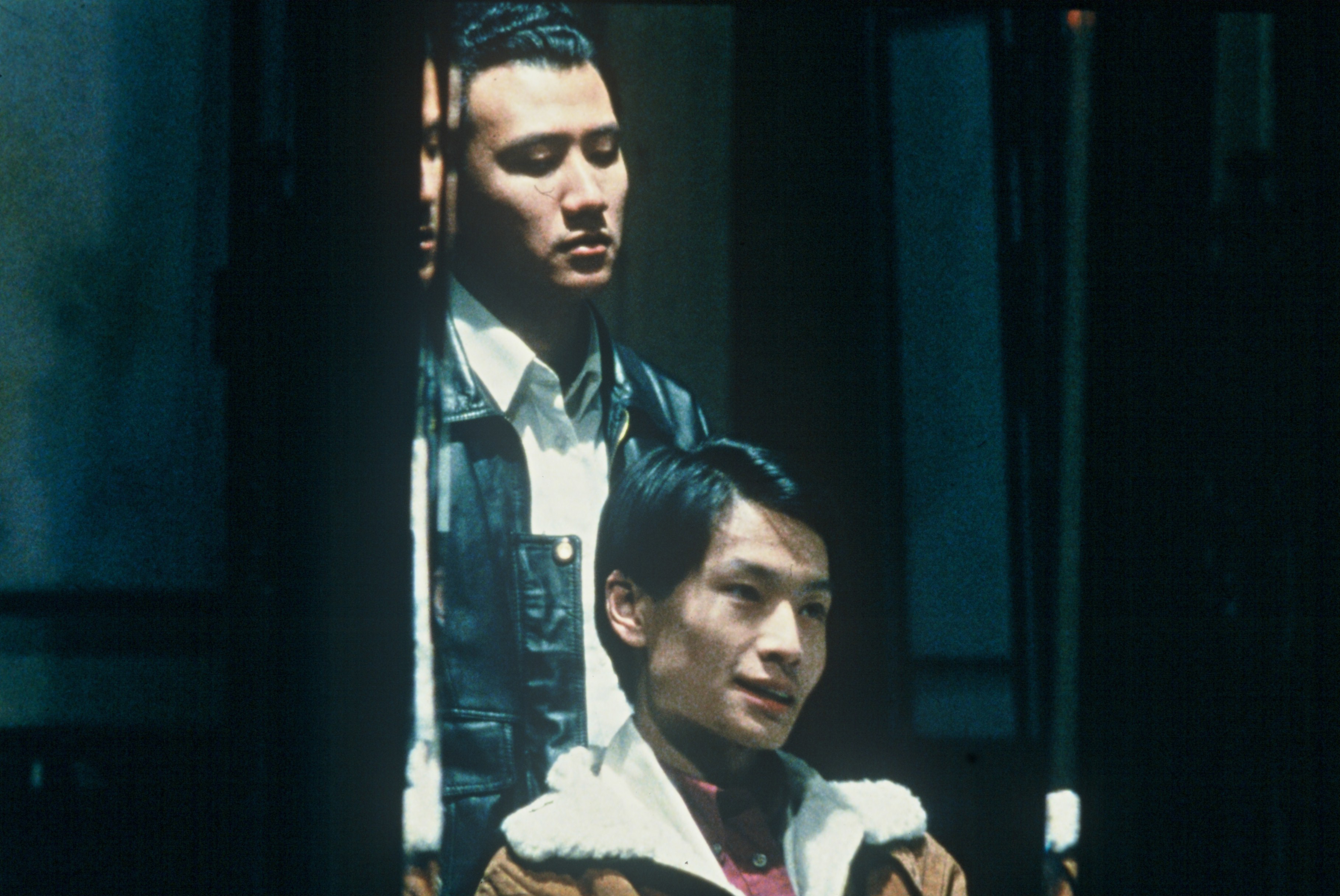
East Palace, West Palace (东宫西宫, Zhang Yuan, 1996)

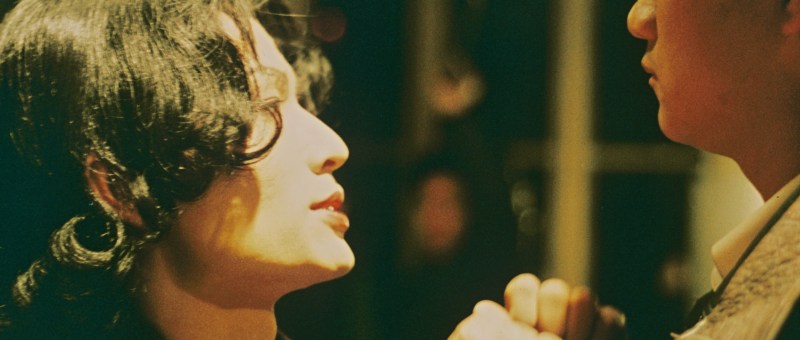
“The convict loves her executioner, the thief loves her jailer. We love you. We have no other choice.” the hero of Zhang Yuan’s beguiling, transgressive drama East Palace, West Palace (东宫西宫, dōng gōng xī gōng), whispers to his no longer sleeping guard. “I love you”, he later adds, “why don’t you love me?” turning the tables on an implacable authority and demonstrating that he too wields power. Considered the first Mainland film to deal directly with homosexuality, Zhang’s theatrical chamber piece is as much about the co-dependency of the oppressor and the oppressed as it is about gay life in post-Tiananmen Beijing while suggesting that in a sense submission too can be a weapon. 

Gay travel writer A-Lan (Si Han) is first challenged by a uniformed policeman in a public toilet. Staring at him intently, he stops A-Lan for no real reason, asking for his ID followed by a series of other personal questions with seemingly no law enforcement import before double checking if the bike outside is his and that he has a proper permit for it. These acts of hostility begin a cat and mouse game between the A-Lan and law enforcement, another policeman, Shi Xiaohua (Hu Jun), almost desperate to come up with a reason to arrest him on raiding the park, a popular spot for cruising, after dark. But as he leads him away, A-Lan suddenly plants a kiss on the policeman’s cheek and taking advantage of his momentary shock makes his escape. 

During in the arrest, meanwhile, Shi and the other policemen had a made a point of insulting each of the men who have not actually done anything illegal under the Chinese law of the time, beating them or forcing them to beat themselves, ordering them to squat on the ground, and even threatening to call one frequent offender’s place of work. As Shi often will, the police refer to the men as “despicable” and the “dregs of soceity”, yet A-Lan is in a sense empowered by his submission in allowing himself to be arrested before subsequently escaping having planted the seeds of his seduction. He flirts with danger in mailing Shi a book with the inscription “To my love, A-Lan” and thereafter deliberately gets himself arrested, later running away from Shi only in the desire to be chased by him.  

Hugely reminiscent of Kiss of the Spider Woman, the majority of the film takes place within the confines of the park’s police hut occupied only by A-Lan and Shi, a prisoner and a guard. Yet as in the Peking opera story A-Lan repeatedly quotes, elegantly recreated in Zhang’s theatrical shifts into fantasy, the two roles are to an extent interchangeable. Shi thinks he’s the guard, that he exercises authority over A-Lan, but A-Lan is also manipulating him, trapping Shi within this space and drawing him towards a recognition of his own latent desires, the same desires that were aroused when he hassled him in the public toilet. While Shi, the guard though no longer in uniform, is constrained by authority, A-Lan, the prisoner, is free in embracing his essential self and weaponising the essence of his power in the choice to submit as reflected in his masochistic desires. “It is not despicable. It is love” he insists on being challenged by Shi after detailing his BDSM encounter with a wealthy man, echoing his previous reminders that “What I write might be trash. But I am not”, refusing to allow Shi to degrade him even while taking pleasure in submitting to authority. 

Even so, he declares himself conflicted in having married a woman presumably for appearances’ sake something of which many in his community do not approve and leaves him both guilty in his treatment of his wife and disappointed in himself. When Shi barks “explain yourself” he details his life as a gay man from his first sexual experience in which he pretended to be a woman to being assaulted by thugs after sleeping with a factory boss adding only that “this kind of experience makes life with living”. “We all march to a different tune” he tries to explain to Shi, individual but also identical. He mentions another regular to the park he describes as a transvestite but in the language of today might better be thought of as transgender, A-Lan explaining that she enjoys wearing women’s clothes but is different from the men in the park. She does not make love to them, and they do not bother with her, A-Lan insisting that she too has her own beat to which to march as does Shi even in his increasing confusion. 

Shi wields his handcuffs, the relationship between the pair mediated through them just as that between the guard and beautiful prisoner in his story is mediated through chains, but eventually places the cuffs on each of their hands locking them together in an intense embrace. The guard cannot exist without the prisoner, nor the prisoner without the guard. “He will no longer escape from his love for her” A-Lan ends his story, the guard releasing his beautiful charge while she decides to return to him each of them knowing they are trapped in melancholy waltz of love and hate. Highly theatrical and scored with a persistent note of dread, Zhang’s beguiling drama hints at the sadomasochistic interplay between authoritarian power and a subjugated populace while allowing its hero to mount his resistance only through deriving pleasure from submission. 


East Palace, West Palace screens at the BFI on 27th May as part of this year’s Queer East. It is also available to stream in many territories via GagaOOLala.

A Distant Place (정말 먼 곳, Park Kun-young, 2020)

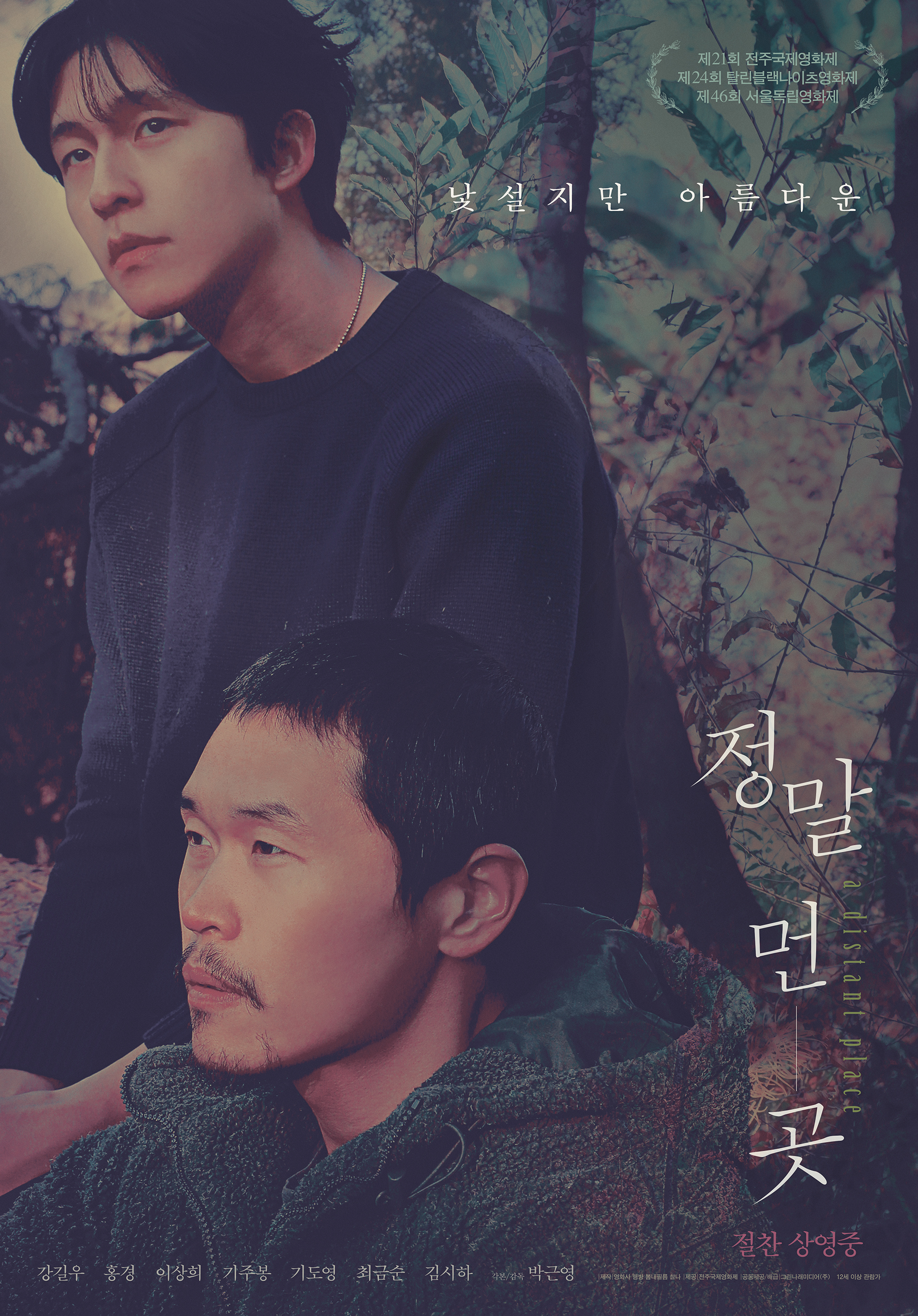
A gay couple searching for a far off land of love and acceptance find their rural dream crumbling in Park Kun-young’s melancholy autumn drama, A Distant Place (정말 먼 곳, Jeongmal Meon Gos). As it turns out, you can’t outrun yourself nor an internalised sense of shame and if you can’t find a way to root yourself firmly in the ground you risk losing those close to you lashing out in anger towards a needlessly judgemental society. 

Jin-woo (Kang Gil-woo) is indeed a man on the run, chased out of Seoul by his internalised homophobia and seeking a quieter life in a small mountain town with fewer people around to feel rejected by. Having studied fine art, he now works as a hired hand on a sheep farm where he’s bringing up his daughter Seol (Kim Si-ha) while waiting for his partner, Hyun-min (Hong Kyung), a poet, to join him. Once he arrives, everything goes well for them living a discreet life in the mountains where no one it seems has noticed that they are a couple though as we later realise the farmer, Mr Choi (Ki Joo-bong), and his daughter Moon-kyung (Ki Do-young) have figured it out and little care choosing to say nothing. The real drama begins, however, with another arrival in that of Jin-woo’s estranged twin-sister Eun-young (Lee Sang-hee) who as we discover is actually Seol’s birth mother having abandoned her to Jin-woo only to come back to try and reclaim her having married and opened a cafe. 

Jin-woo’s conflict lies partly in wondering if he’s being selfish in his desire not to return Seol to Eun-young while genuinely believing that a life of isolation in the mountains is better for her longterm future. His ideal is undercut when Seol upsets another child at a formal occasion by snatching his toy away from him, hinting at the costs of her lack of socialisation spending almost all of her time on the farm helping with the sheep or talking with Mr. Choi’s elderly mother (Choi Geum-Soon) who is suffering with advanced dementia. In a certain sense, each of them is trapped by their environment, the elderly grandma seeking escape in her small moments of lucidity. Moon-Kyung is beginning to fear her dreams of escaping small-town life will not come to pass while she has perhaps also missed the boat for becoming a wife or a mother snapped at by her grandmother in a moment of frustration. Her realisation that her crush on Jin-woo is misplaced on finding him in bed with Hyun-min is then a double moment of disillusionment leaving her only the vicarious position of becoming a surrogate mother to Seol who continues to refer to Jin-woo as “mama” rather than father. 

This framing in itself foregrounds the primacy of the traditional family in highlighting both the absence of a female caregiver and then by implication a father while simultaneously feminising Jin-woo as a man who is raising a child as we later find out with another man, if secretly. When the pair are accidentally outed, it not only strains the relationship between the two men but implodes Jin-woo’s dream of discreet country living. Though the townspeople had previously been friendly towards them, they find themselves shunned in town, figures of gossip and ridicule. Having been essentially run out of Seoul by his internalised homophobia, Jin-woo begins to fear he has nowhere left to run. Hyun-min tries to convince him that he’s asking for too much, that they should live quietly and keep the peace, but his shame gets the better of him lashing out that he’s never felt comfortable with Hyun-min around always self-conscious and paranoid about what others may be thinking of him. 

As Hyun-min puts it in a poem, only the hope of a “distant place” keeps them going even as the road ahead crumbles at a rapid pace with the abyss creeping ever closer. While there are small rays of hope in the quiet acceptance of Mr Choi who has come to think of Seol as his own granddaughter, Jin-woo begins to fear that his distant place is beyond his reach and that no matter how far he runs he will never reach a point of comfort or happiness where he can live openly with the man he loves and the little girl he has raised since birth as his daughter. Figures of loneliness and disappointment haunt the otherwise idyllic landscape shattering the nurturing image of a simple life in the country but even as the film opened with an ominous death it ends in new life promising perhaps a new if uncertain dawn. 


A Distant Place screens at Genesis Cinema on 26th May as part of this year’s Queer East.

International trailer (English subtitles)

Perhaps Love (장르만 로맨스, Cho Eun-ji, 2021)

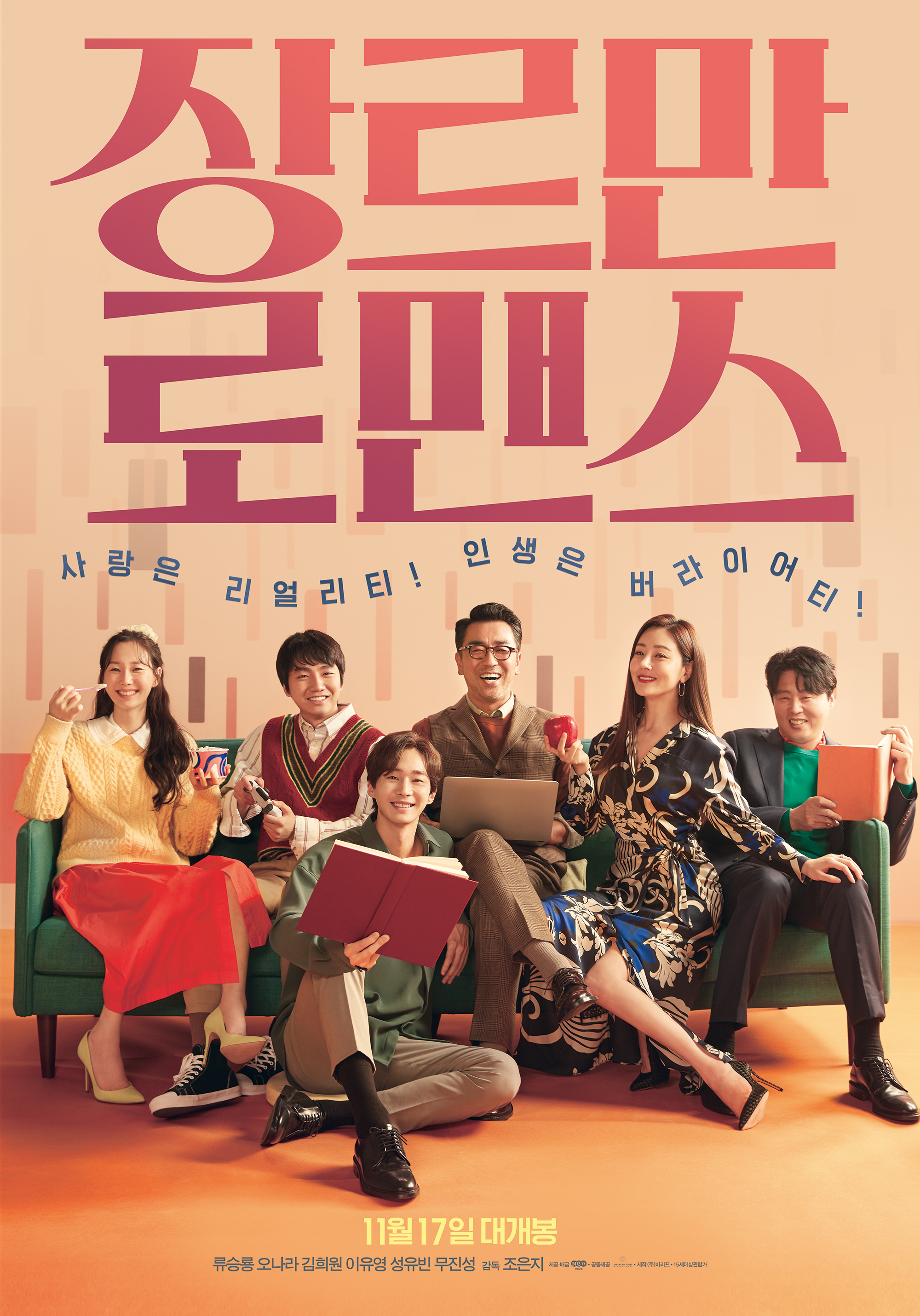
A blocked writer finds himself growing as a person after mentoring a young protégé but is also forced to meditate on his own romantic cowardice and tendency to treat others badly because of his inner insecurity in the directorial debut from actress Cho Eun-ji, Perhaps Love (장르만 로맨스, Jangleuman Lomaenseu). Caught in a complicated web of romantic intrigue between himself, his ex-wife, current wife, publisher, son, the woman across the road, and the young protégé, the writer is forced to reflect on the varying natures of love which may sometimes be misdirected or unreciprocated but no less real or important. 

Hyun’s (Ryu Seung-ryong) problem is that he had a big hit and became a literary phenomenon while relatively young but hasn’t written anything of note in the last seven years and is currently supporting himself as a professor of creative writing. His old university friend and publisher Soon-mo (Kim Hee-won) is becoming thoroughly fed up with increasing pressure from above to deliver the manuscript knowing that if he really can’t turn anything in Hyun risks being plunged into inescapable debt in having to repay his generous advance. After being pranked by a friend who invited him to his old teacher’s “funeral” which turned out to be a birthday party, Hyun goes to visit another old friend, Nam-jin (Oh Jeong-se), with whom as it transpires he had fallen out. Possibly out of jealously, Hyun had not only panned Nam-jin’s book in a review but thoughtlessly outed him by complaining that his writing was full of “cheap gay sentiment”, a comment which Nam-jin took to be essentially homophobic and on a personal level unnecessarily cruel. Hyun of course disputes this and doesn’t quite see why Nam-jin is so upset. 

Nam-jin’s short-term boyfriend Yu Jin (Mu Jin-sung) has point when he tells Hyun that the reason he can’t write is because he’s too afraid of losing what he has, unprepared to risk vulnerability in the service of his art. Then again, all Hyun really has is the faded glory of his former success, his present life is a mess. His second wife (Ryu Hyun-kyung) has been living in Canada with their daughter, while he ends up ruining his relationship with his angst-ridden teenage son Sung-kyung (Sung Yoo-bin) when he’s caught in the middle of a drunken fumble with feisty ex-wife Mi-ae (Oh Na-ra) who has secretly been dating Soon-mo. Sung-kyung meanwhile is in the middle of his first breakup after being dumped by his high school girlfriend who is carrying someone else’s child. Disillusioned by his adulterous parents he develops a not entirely appropriate relationship with an eccentric actress (Lee Yoo-young) who lives across the road. Meanwhile, Yu Jin suddenly reappears in Hyun’s life and reveals he’s been in love with him for years. 

All of these loves are in someway incomplete, hesitant or uncertain each of the lovers lacking the confidence to claim the word. A terrible holiday forces Mi-ae and Soon-mo to realise that they’ve been keeping their romance secret less because of the potential awkwardness in their shared history with Hyun than because they themselves are romantically insecure. Sung-kyung thinks he’s in love with the older lady from across the road and completely misses all of her attempts to avoid his romantic overtures, while she is perhaps just lonely and unfulfilled in both her marriage and her career. Hyun meanwhile is confronted with his own romantic cowardice in cheating on both of his wives, continually self-sabotaging in his insecure inability to commit. Having ruined his friendship with Nam-jin he threatens to do the same to a younger female writer joining the university who has eclipsed him in literary success in having been shortlisted for the Booker Prize. 

It’s the arrival Yu Jin that shakes him up, seeing something in the young writer that reawakens his creative spirit as he offers to become a mentor co-authoring a novel with him, but it also disturbs Hyun in confronting him with his latent homophobia and later his complicated feelings for the young man which might extend to a kind of love he cannot quite put a name to. Where Hyun is too afraid to risk losing the comfortable life he currently has, Yu Jin has no such worries because as he later says he’s used to getting hurt and having to get over it. As gay man in a conservative society he’s familiar with a constant sense of casual rejection, a fellow student in Hyun’s writing class shouting out “the gay guy” in mocking tones when Hyun asks who’s missing during roll call while the pair are later the subject of a media frenzy when Nam-jin goes to the press accusing them of being lovers. Yet Yu Jin is willing to state his feelings plainly with no expectation that they will be reciprocated leaving Hyun floundering as to the proper way to react.

While there may be some latent conflict in Hyun, what he comes to realise is that love is more complicated than he thought and what he feels for Yu Jin may be a kind of it comprising the paternal, fraternal, that of a mentor for a pupil, and that simply for another human being. In an interview promoting the book they’ve written together, Hyun explains that he wanted to explore how people can change and grow with relationships having overcome his latent homophobia in advancing that no one should be judged for who they love while otherwise able to appreciate Yu Jin’s talent without jealousy or resentment having regained his own desire to write. Through their various experiences each of the lovers is confronted with a romantic reality accepting who it is they love or don’t while teenager Seung-kyung experiences his first real heartbreak in realising the extent to which he’d misinterpreted his relationship with the quirky neighbour. Always forgiving of its feckless hero’s flaws, Cho’s warm and empathetic dramedy is indeed about how people can grow and change through their interactions with others finding new equilibrium with themselves if not, perhaps, love. 


Perhaps Love screened as part of this year’s Udine Far East Film Festival.

International trailer (English sutbtitles)

Big Night! (Jun Robles Lana, 2021)

In the opening scenes of Jun Robles Lana’s darkly comic farce Big Night! a young man is shot in the head by another young man, this one wearing a motorcycle helmet with its visor down, who calmly walks away and gets back on the back of the bike he arrived on his friend then driving them both away. Of course people are shocked but then again not all that much, they barely pause despite the fact that his man, Ronron, was well known to them and no one really thought he had much to do with drugs. Beautician Dharna (Christian Bables) gossips about the killing with his friend Biba but gives it little thought before returning to his day, so normalised has death on the streets become in Duterte’s Philippines. 

Dharna may not have given much thought to extrajudicial killings, but then it’s different when it’s you who might be next in the firing line as he discovers when Biba gets an advance view of the following day’s “Watch List” from her law enforcement boyfriend. What ensues is a kafkaesque quest to clear his name though there’s no real “official” path towards getting off a watch list when you’re on one. His boyfriend Zeus who is due to perform in a “Big Night” pageant at a local gay bar that very night suggests simply fleeing to another district, but flight implies guilt and as Dharna points out he’ll lose all his customers if he has to move to another area and neither of them have the money to start all over again somewhere new. Like many of Dharna’s friends and acquaintances Zeus doesn’t seem to share his concern. “The police won’t bother you if you’re not doing anything illegal” he naively advises, sure it’s all just a random mistake that soon will blow over but otherwise so numbed to the idea of extrajudicial killing that he doesn’t really think too much of it and is mainly annoyed that Dharna has lost interest in helping finish his costume for the big show. 

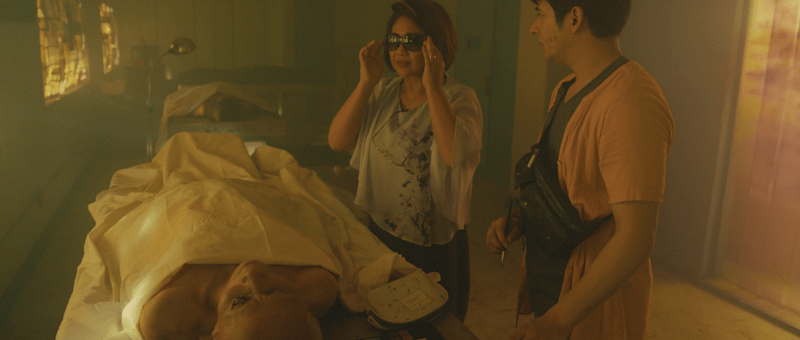
Neither of them can think of a reason why Dharna, under his full legal name, would have been placed on a list as he’s not a drug user and doesn’t know anyone who is. He does, however, have some useful connections including local law enforcement official Cynthia who isn’t terribly interested or helpful but manipulates his anxiety to force him to help her out by filling in for her regular mortician, Connie, who has mysteriously not shown up for work. The morgue is currently overflowing, Cynthia making a dark joke that undertaking is a growth industry while revealing that there are so many bodies in part because families have to pay a fee to get them back and most of those involved in extrajudicial killings are from the slums so they can’t afford it. Even so, she explains to Dharna that they get more donations when families can see the body which is why he’s supposed to make them up to look as good as they can despite many of them having sustained gunshot wounds to the head or face. 

Cynthia sends him on to local community leader Roja warning him that he’s “allergic to gays” while he too makes Dharna do his bidding pointlessly walking laps around a fountain in some sort of macho display of endurance while insisting that he’s so anti-drug that even if he gets a stomach upset he just powers through it with raw masculine energy. He too is a self-interested hypocrite spouting religious nonsense while hanging out in “massage parlours”, dangling the idea of salvation but unprepared to grant it. Dharna wonders if it might have been someone from the area where he grew up who reported him but discovers that unlicensed midwife Melba (Janice De Belen) makes a point of not putting any names forward at all and is herself willing to risk breaking the law to help women in need who are denied medical treatment because of their poverty.

It’s impossible to avoid the implication that this is happening to Dharna in part because he’s poor and powerless in an authoritarian and hierarchal society but he’s eventually forced to consider that someone may have put his name in a drop box anonymously, that perhaps they gave a random name when someone asked for one to save their own, because they had something against him, or sought to profit in some way from his absence. Like the witch trials of old, the war against drugs is another tool that can be manipulated for personal gain and so inured to violence has the society become that many are prepared to use it. Dharna finds himself at the centre of a random conspiracy in which he has no other option than to accept his complicity or die, discovering that as the radio report that opened the film had suggested the same officials in charge of prosecuting the war on drugs are in fact secretly using it to secure their stranglehold over the local drugs trade. 

Dharna finds himself compromised at every turn, beginning by offering free haircuts to help his case to progressing to covering up state crime, literally, by repairing the faces of the dead and graduating to faking a seizure in an ambulance to bypass a checkpoint. At the hospital he is confronted by the face of an old lady filled with despair one hand holding that of a little girl and the other a pair of bloody sandals before she simply collapses. Dharna tries to wash the sandals clean but there’s only so much you can do when the stain runs so deep. The irony of his big night taking place on All Souls Day is not lost though there’s precious little time for honouring the dead when your survival can no longer be assured. 


Big Night screens at UltraStar Cinemas Mission Valley, San Diego April 23/27 as part of this year’s SDAFF Spring Showcase.

Original trailer (English subtitles)
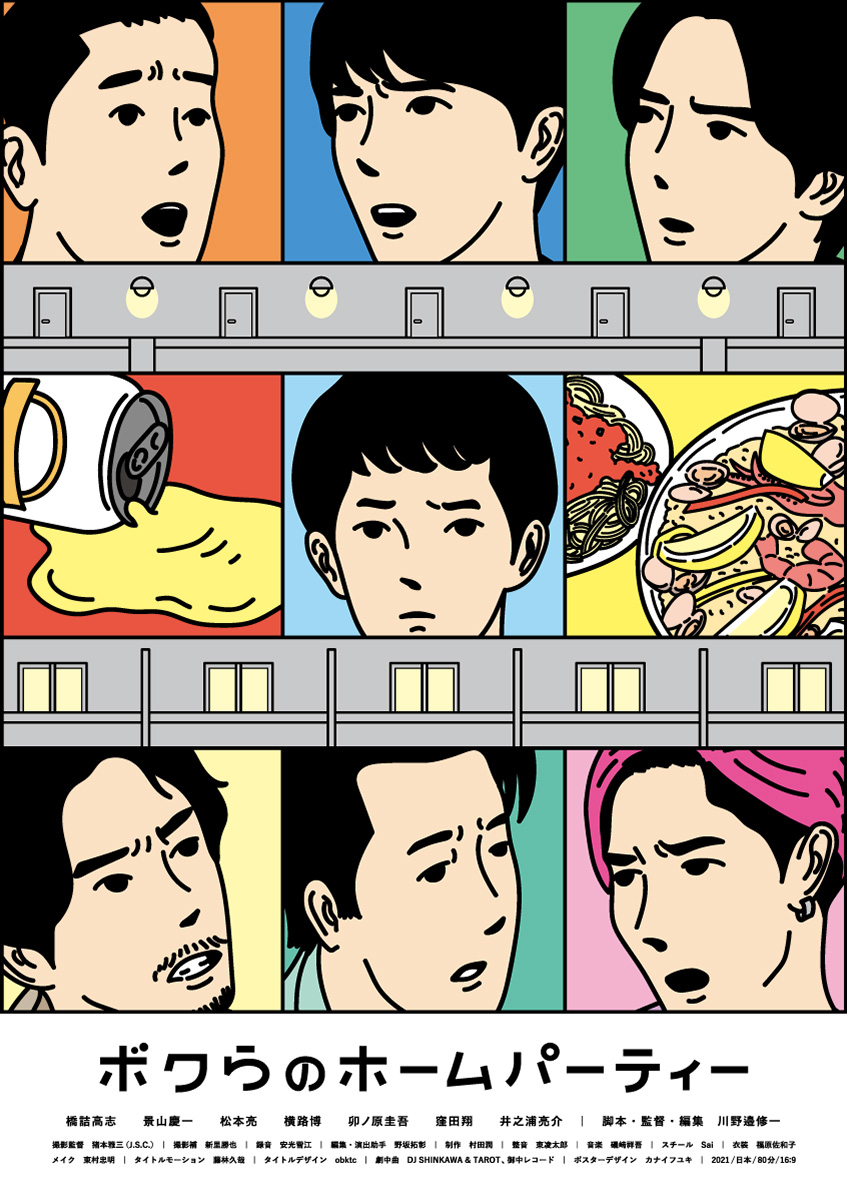
Our House Party (ボクらのホームパーティー, Shuichi Kawanobe, 2022)

The pressures of living in a still conservative society quietly build towards a small explosion provoking a moment of catharsis among a series of gay men some of whom are lovers or long term friends while others are meeting for the first time each bringing with them their own particular fears and anxieties. Inspired by his own life experiences, Shuichi Kawanobe’s Our House Party (ボクらのホームパーティー, Bokura no Home Party) presents a naturalistic view of gay life in contemporary Tokyo in which the six men find solace in their friendship while outside battling a sometimes unsympathetic society. 

The slow burn drama waiting to tank the party revolves around the relationship between hosts Akito and Yashushi who have been together for seven years, Akito having accidentally overhead his boyfriend with another man, Kenichi, through a phone call Yasushi presumably didn’t mean to answer. Despite living together so long, Akito is not out at work and finds himself deflecting potentially invasive comments from his boss about his plans for marriage while he and a recently engaged colleague not so subtly attempt to set him up with a female co-worker who has romantic issues of her own, all of them oblivious to Akito throwing longing looks at their handsome waiter in the local izakaya. When the party begins to get out of hand and provokes a complaint from the couple’s neighbours, Akito’s hostile response implies that they have faced similar complaints before which he believes to be rooted in homophobia, that they simply object to him living there. “All our lives we’ve been trying not to cause trouble” he adds, “where do you expect us to go? Why do we have to apologise?” pushed into a moment of rebellion by the emotional intensity of the present situation that is later unexpectedly echoed by Kenichi who reminds them that they’ve suffered enough, insulted and looked down on, unable to voice their feelings freely and seeing their relationships crumble under the constant pressures of a sometimes hostile society all of which leads them to hurt each other without really meaning to. 

Yet the catalyst for all this is a naive and idealistic college student hopelessly in love with his straight best friend invited to the party after being taken under the wing of kindly bar owner Sho who introduces him to the scene and tries to help him loosen up while accepting his sexuality. Tomoya acts as a kind of judge or arbiter, only just learning the rules of this society but somehow feeling betrayed by its contradictions and hypocrisies. Only he can see that Akito is not really enjoying the party and makes several attempts to check in with him only to see something he shouldn’t have and partially misunderstand it, his illusions a little shattered as he recalibrates his internal sense of morality. Meanwhile he’s both matched and challenged by the lovelorn Masashi who has come in the company of recent hook up Naoki but dreaming of a stable relationship disappointed by Naoki’s assertion that he doesn’t do commitment while picking a fight with Sho over a disagreement about the importance of physical intimacy in romantic relationships. 

Nevertheless through all of these heated debates and fraught emotional crises the men achieve a kind of catharsis in having cleared the air and agreed to return to the sense of solidarity they had felt before only with a little more clarity. “Don’t lie to yourself about how you feel, you’ll only make yourself miserable” Sho had advised the conflicted Tomoya convincing him to join the fun by pointing out that if you don’t like it you can always go back to where you were, advice that might go as well for all as they begin to interrogate how they really feel along with the fears and anxieties that cause them to behave the way they do until approaching a moment of calm after the storm cleared with all truths aired and seemingly at least forgiven. Taking place largely within the claustrophobic and intense environment of the apartment, Kawanobe captures a naturalistic vision of contemporary gay life through the eyes of a series of jaded not-quite-middle-aged men and a naive youngster discovering both himself and a new community only to be confronted by the difficulties and contradictions of life in a society he believed to be better than it is. 


Our House Party screened as part of Osaka Asian Film Festival 2022

Original trailer (no subtitles)

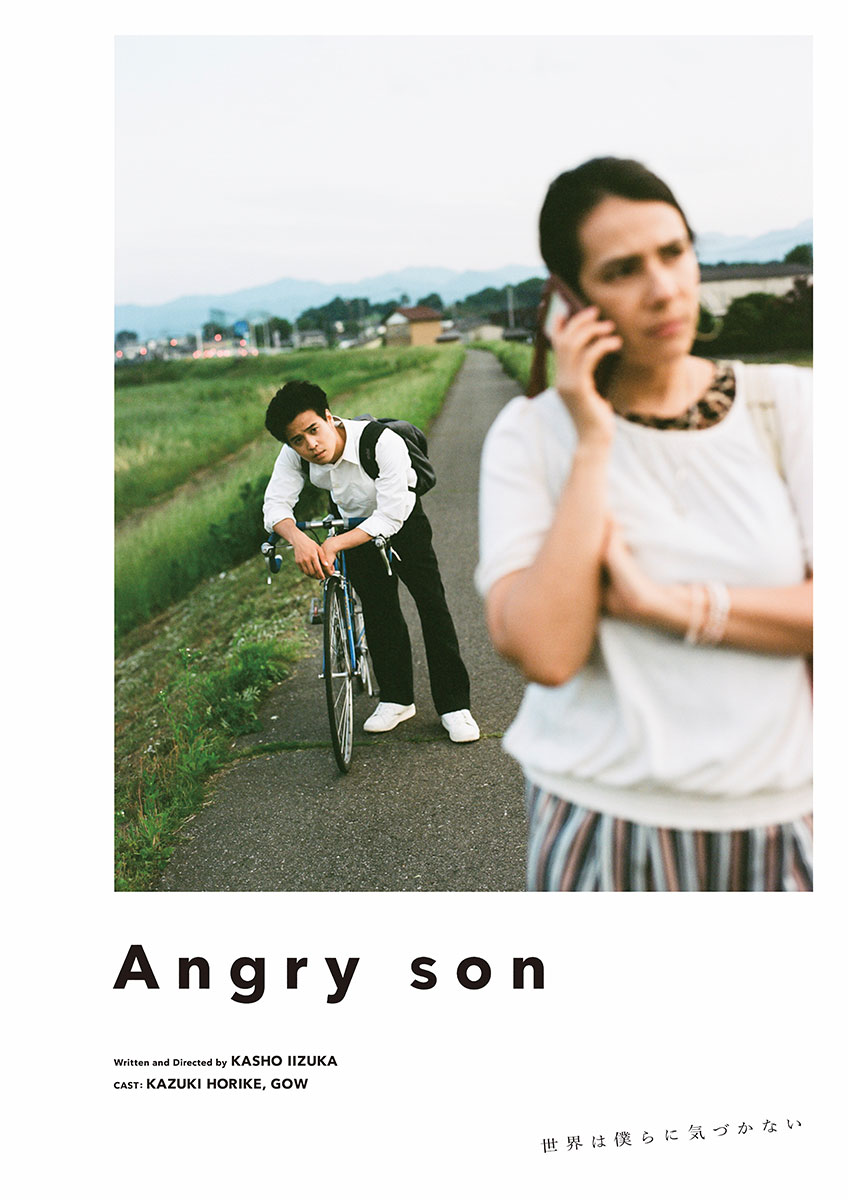
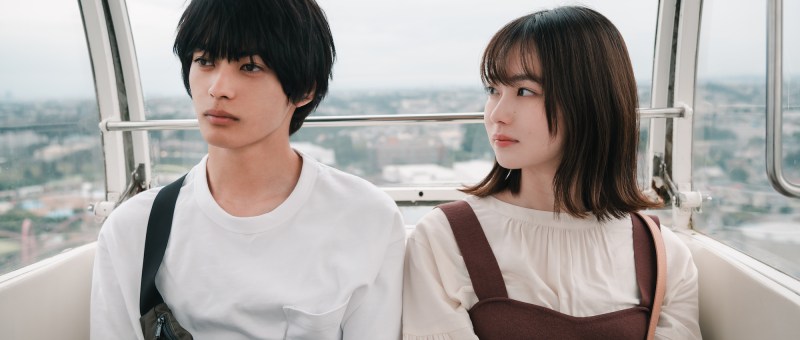
Angry Son (世界は僕らに気づかない, Kasho Iizuka, 2022)

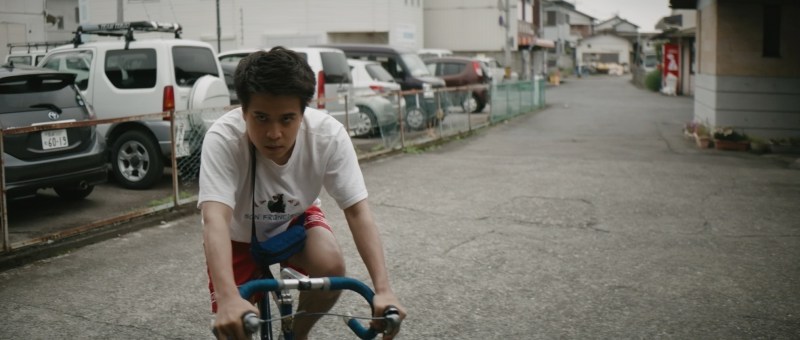
A resentful young man struggles to orient himself amid constant xenophobia and social prejudice in Kasho Iizuka’s sympathetic coming-of-drama Angry Son (世界は僕らに気づかない, Sekai wa Bokura ni Kizukanai). At a difficult age, he flails around lashing out at all around him without fully comprehending the consequences of his actions, but eventually comes to understand a little more about his mother’s past, his place in Japan, his relationships with his extended family, and his possibilities for the future while searching for the father he has never really known save for a name on his maintenance payments. 

Jun’s (Kazuki Horike) main source of resentment is towards his mother, Reina (GOW), a Filipina bar hostess by whom he feels emotionally neglected while unfairly blaming her for the discrimination he faces for being mixed ethnicity. The pair live incredibly modestly as Reina sends all her money back to her family in the Philippines even telling Jun to use his child support payments to get the electric turned back on if it bothers him that much, leaving Jun feeling as if he isn’t really included her definition of “family” or that perhaps she resents him as a burden that causes her to hold back even more of her pay. That’s one reason that he becomes so irate on coming home one day and unexpectedly finding an unfamiliar man in his pants in their living room only to be told he’s his mum’s new boyfriend, Mr. Morishita, who will be moving in the week after next because they’re getting married. Granted, this is not an ideal way to find out about such a drastic change in his living circumstances but Jun just can’t accept it, fearing firstly that Reina is after his money only to discover to his further bemusement that Morishita is also unemployed.  

News of his mother’s impending wedding has Jun feeling even more pushed out than before, especially when Reina confirms that if he’s forcing her to choose she’s going to choose Morishita and he’ll have to fend for himself. Meanwhile, his high school boyfriend Yosuke is already talking up the possibilities of marriage seeing as their prefecture has recently brought in a same sex partnership scheme. Though Yosuke excitedly talks it over with his supportive parents, Jun is noticeably sullen replying honestly that he really isn’t sure if it’s a such a good idea mostly because he doesn’t want Yosuke to get “dragged” into his ever increasing financial responsibilities to his extended Filipino family. Like many of the other kids, Jun has left his careers survey blank and it’s his refusal to think seriously about his future that eventually disrupts his relationship with Yosuke. 

In response to all of these crises, he decides to try tracking down his birth father whom he has never met a quest which takes him through a series of Filipino hostess bars across their largely rural area and eventually to a man, Watanabe, who was once married to “Loopy Lisa” as she was then but is not actually his dad. Even so, Watanabe begins to open his eyes and change his perspective on his mother’s occupation for which he had previously looked down her beginning to understand the sacrifices she is making not only for her family back home but for him too and that while her love may be difficult for him to understand it is not absent. Meanwhile, she too faces prejudice and discrimination on more than one level, a co-worker at a part-time job at a bowling alley she took while laid off from a bar struggling in the post-corona economy expressing openly racist sentiment even in front of their boss, and from the local council when she tries to apply for rent relief which she is denied on the grounds that those working in the “adult entertainment” industry are not eligible for benefits. 

Reina gives as good as she gets and refuses to let discrimination slide, but Jun finds it all quite embarrassing and is carrying a degree of internalised shame which later leads her challenge him on his fragile sense of identity that he too looks down on her as an inherently dishonest foreigner just like any other prejudiced Japanese person no different from her unpleasant colleague or the kids at school who’d bullied him for being half-Filipino, gay, and the son of a bar hostess. Confronted with his own bad behaviour and gaining a new perspective thanks both to Mr Watanabe and Morishita whom he realises is sensitive, kind, and genuinely cares for his mother he begins to envisage a future for himself only to have his horizons broadened once again when Yosuke introduces him to a young woman at the school, Mina, who is asexual but wants to raise a family and is looking for another kind of partnership that hints at a new evolution of the family unit. 

A willingness to embrace the idea of family and of being a part of one himself marks Jun’s passage into adulthood, coming to an understanding of his mother and her relationship with her family in the Philippines and willing to take on the responsibilities of a committed relationship in mutual solidarity and support. A highly empathetic coming-of-age tale, Angry Son never shies away from societal issues such as widespread xenophobia, homophobia, bullying, prejudice, and discrimination but eventually allows its enraged hero to discover a new sense of confidence in his identity in order to forge his own future in a sometimes hostile environment. 


Angry Son screened as part of Osaka Asian Film Festival 2022

International trailer (dialogue free)

Images: ©2022「世界は僕らに気づかない」製作委員会

Crazy Thunder Road (狂い咲きサンダーロード, Sogo Ishii, 1980)

If you’re pushed out of the only group you’ve ever belonged to, where is it that you’re supposed to go? Produced as a graduation film, Sogo (now Gakuryu) Ishii’s second feature, Crazy Thunder Road (狂い咲きサンダーロード, Kuruizaki Thunder Road) captures a sense of youthful alienation in an age of prosperity in following in essence two men who choose to leave a group to which they have devoted their lives each for different reasons but both discovering that their new paths lead them nowhere but nihilistic despair. 

After a brief opening sequence foreshadowing the conclusion in which a ruined motorcycle lies abandoned amid the smoke of a volcanic explosion, the main action begins with the abdication of the previous leader of the Maboroshi biker gang, Ken (Koji Nanjo), who feels he’s aged out of the bosozoku lifestyle and hopes to settle down with his barmaid girlfriend Noriko (Michiko Kitahara). The Maboroshi gang is about to join an alliance with two other local outfits, Dokuro and Gaya, to put an end to the internecine street violence. Young hothead Jin (Tatsuo Yamada) decides he wants no part of this soft and cuddly version of the biker life and abruptly leaves with three of his friends to start his own gang, Maboroshi Kamikazes, declaring that his old outfit should now consider him an enemy.  

The problem is that system doesn’t like it if you step out of place and so the Elbou Alliance doesn’t really like it that Jin wouldn’t join, capturing and killing one of his friends to make a point. The more he tries to claim his independence, the more he is forced to realise that he is an ineffectual leader and being outside the group makes him vulnerable. His four guys are no match for the combined forces of three gangs which is one reason he later finds himself joining a new outfit, an ultra-nationalist militarist biker gang operated by former Maboroshi founder Takeshi (Nenji Kobayashi) who turns up in full infantry gear singing an imperial song, only to again become disillusioned because a life of order and austerity is the very opposite of everything he wanted which would be control and agency over his own life. 

In another way, that might what Ken wanted too but he doesn’t find it either and in the film’s hyper masculine worldview he appears weakened in his choice. An entirely passive figure, he is even seen wearing a pretty pinny while helping Noriko out at the bar otherwise usually looking blank or sullen like a man half alive who’s already given up on life. To ram the point home we discover at the film’s conclusion that Noriko eventually leaves him essentially for not being manly enough now that he’s left the biker subculture though her new squeeze is clearly a yuppie salaryman which itself points to a paradigm shift in contemporary visions of masculinity. 

Meanwhile, we’re suddenly presented with a new challenger, Shigeru (Masashi Kojima), who began as a shy foot soldier lead away by Jin but later finding a home with the nationalists, becoming Takeshi’s lover after Jin rejects the rigidity of militarism. Shigeru promises to protect both the town and Takeshi in an expression of the archetypal vision of masculinity as a protector, but love is it seems incompatible with this way of life in which strength is the only thing that matters. Ken loses Noriko because his desire to escape a life of violence renders him unmanly, while love doesn’t save Shigeru either because in the hyper masculine world in which he lives attachment is never anything other than weakness. 

Literally maimed by his failed attempt at dominance, Jin is cast out further into the post-war industrial wasteland where he encounters a teenage boy selling drugs and an old man weapons implying that the mediation of death has shifted with the generations only to be undercut with another piece of shocking and random violence that reminds us of the arbitrary meaninglessness of these petty struggles for dominance. True freedom, the film implies lies only in death, Jin the ultimate outsider a man who cannot be part of any group and must always remain outside of the pack while it remains impossible to survive alone. Set in the near future inches closer to an apocalypse, Ishii’s proto-cyberpunk aesthetic owes as much to The Warriors as it does to Mad Max painting pre-bubble provincial Japan as a post-war wasteland inhabited only by the hopeless perpetually fighting over the scraps of an increasingly prosperous but oppressively conformist society. 


Crazy Thunder Road is released on UK blu-ray on Feb. 21 courtesy of Third Window Films in an edition which includes an audio commentary by Tom Mes and video essay on jishu eiga by Jasper Sharp.

Trailer (English subtitles)

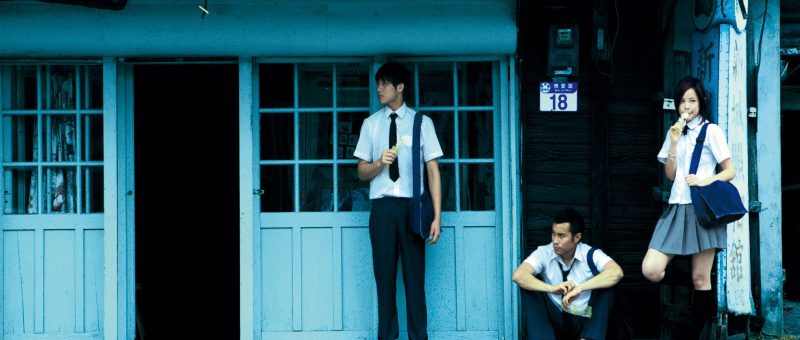
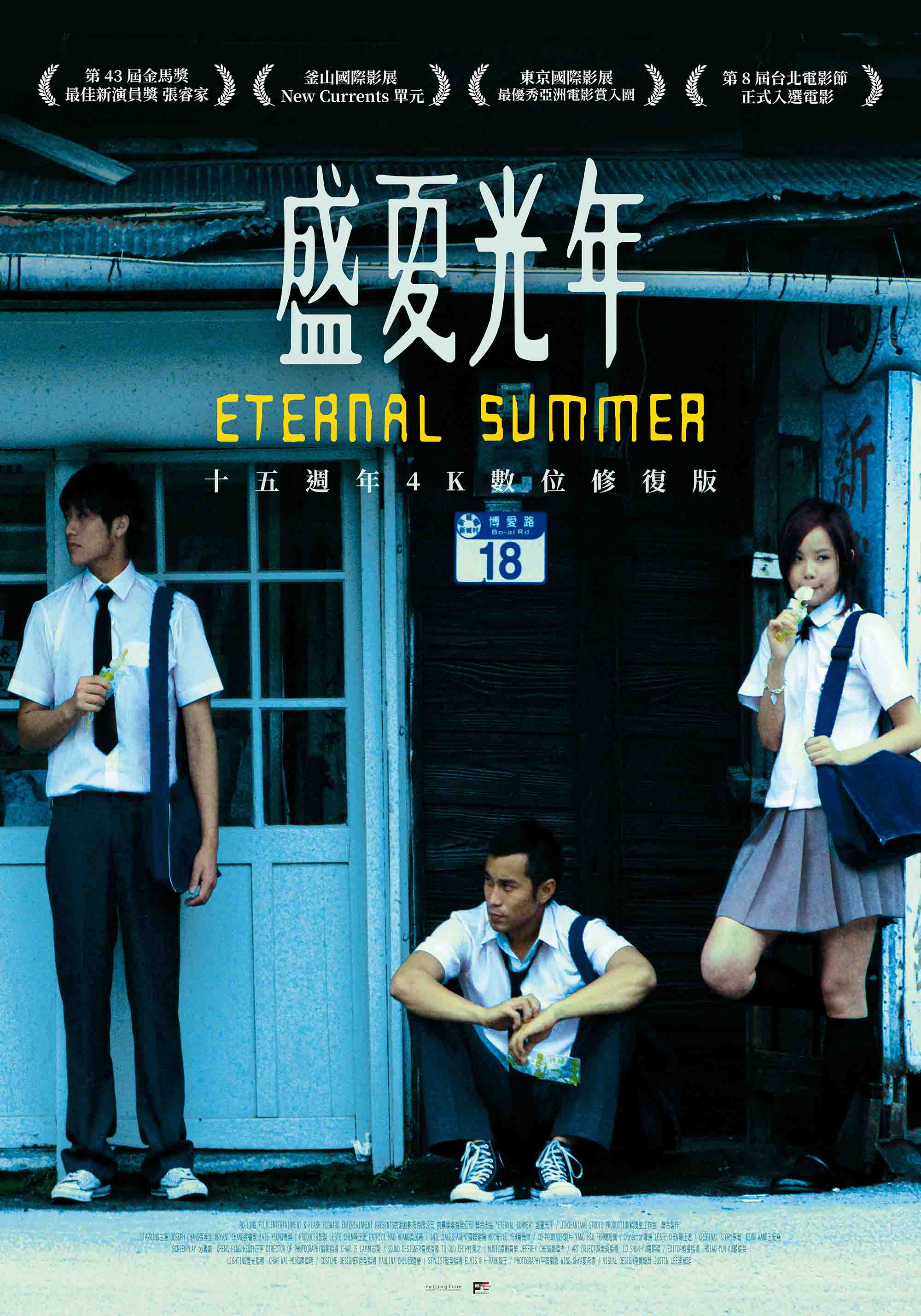
Eternal Summer (盛夏光年, Leste Chen, 2006)

A trio of emotionally displaced teens find themselves swept into an awkward love triangle while longing to escape their loneliness in Leste Chen’s melancholy youth drama Eternal Summer (盛夏光年, Shèngxià Guāngnián). Each in someway marginalised and searching for acceptance, the teens struggle to define themselves as the world changes itself around them while bound by the paradoxical qualities of their circular relationships, their unspoken secrets continually driving them apart even as they continue to long for the intimacy born only of sharing their authentic selves. 

A quiet, studious boy, Joseph Kang (Ray Chang) is asked to befriend his deskmate Shane (Jopseph Hsiao-chuan) who has ADHD and has been labeled disruptive in the hope that creating social relationships with other children will help calm him down. The arrangement in a sense backfires, Joseph’s academic achievement falling while his friendship with Shane only grows in strength and intensity. By the time they are teenagers, the pair are inseparable but Joseph has also fallen in deep, unrequited love with his best friend, a secret he is afraid to share with anyone and ironically cannot share with the one person to whom he is supposed to be able to tell anything. The friendship is further disrupted by the sudden introduction of transfer student Carrie (Kate Yeung Mei-ling) who has returned to Taipei to live with her mother after years of living with her father in Hong Kong. Carrie first develops a fondness for Joseph while working with him on the school paper, but later figures out that he’s secretly in love with Shane and decides to support him as a friend while in another irony Joseph’s ongoing internal crisis eventually forces his friends together, Carrie secretly dating Shane while each of them knows on differing levels how their relationship may hurt Joseph when he eventually finds out. 

In 2006 Taiwanese society was perhaps not quite as accepting as it would become, yet Joseph’s anxiety in his sexuality in compounded by the desire not to lose his friendship with Shane fearing not just that his feelings are not returned but that he may reject him altogether just for being gay. While Shane, a high school sports star with terrible grades, eventually blossoms academically after Carrie makes the ironic promise to go out with him in the unlikely event he gets into uni, it’s heavily implied that Joseph’s previously high level of achievement is damaged because of his preoccupation with his sexuality shockingly failing his uni entrance exams and thereafter further separated from his friends as they move on and he remains in cram school limbo hoping for better luck next year. Meanwhile he finds himself in potentially dangerous situations cruising in parks trying to verify his homosexuality while privately consumed by shame. 

For Shane, meanwhile, his problem is that he feels rejected by the world around him because of the way his ADHD was treated as a child. Regarded as a disruptive troublemaker none of the other kids would play with him save Joseph, meaning that he too is desperate to maintain the friendship in fear of his inescapable loneliness even while finding a similar connection with Carrie who is herself longing for love seemingly having strained relationships with each of her divorced parents while geographically and culturally displaced in having spent much of her life in Hong Kong. Carrie is, however, the only one to know the whole truth frustrated with the two men in her life that they can’t simply clear the air by voicing the secrets that continue to erode their relationship. 

Then again perhaps what they really fear is “change”, afraid of an uncertain adulthood in which their childhood connection will necessarily weaken. “We will lose each other in the future?” a conflicted Shane wonders, uncertain if his co-dependency is entirely healthy or fair on his friends but fearing becoming alone or having to make a choice unable to lose one or both of his essential connections. At heart a mood piece, Chen’s melancholy drama is filled with the strange canted angles of a world out of kilter and poignant reflections of the past in the midst of present torment, both elegiac and nostalgic for a particular moment in time which must in some way pass even if his parting words are painfully ironic in their cutting intensity.


Eternal Summer streams in Poland until Nov. 29 as part of the 15th Five Flavours Film Festival.

4K restoration trailer (Traditional Chinese subtitles only)

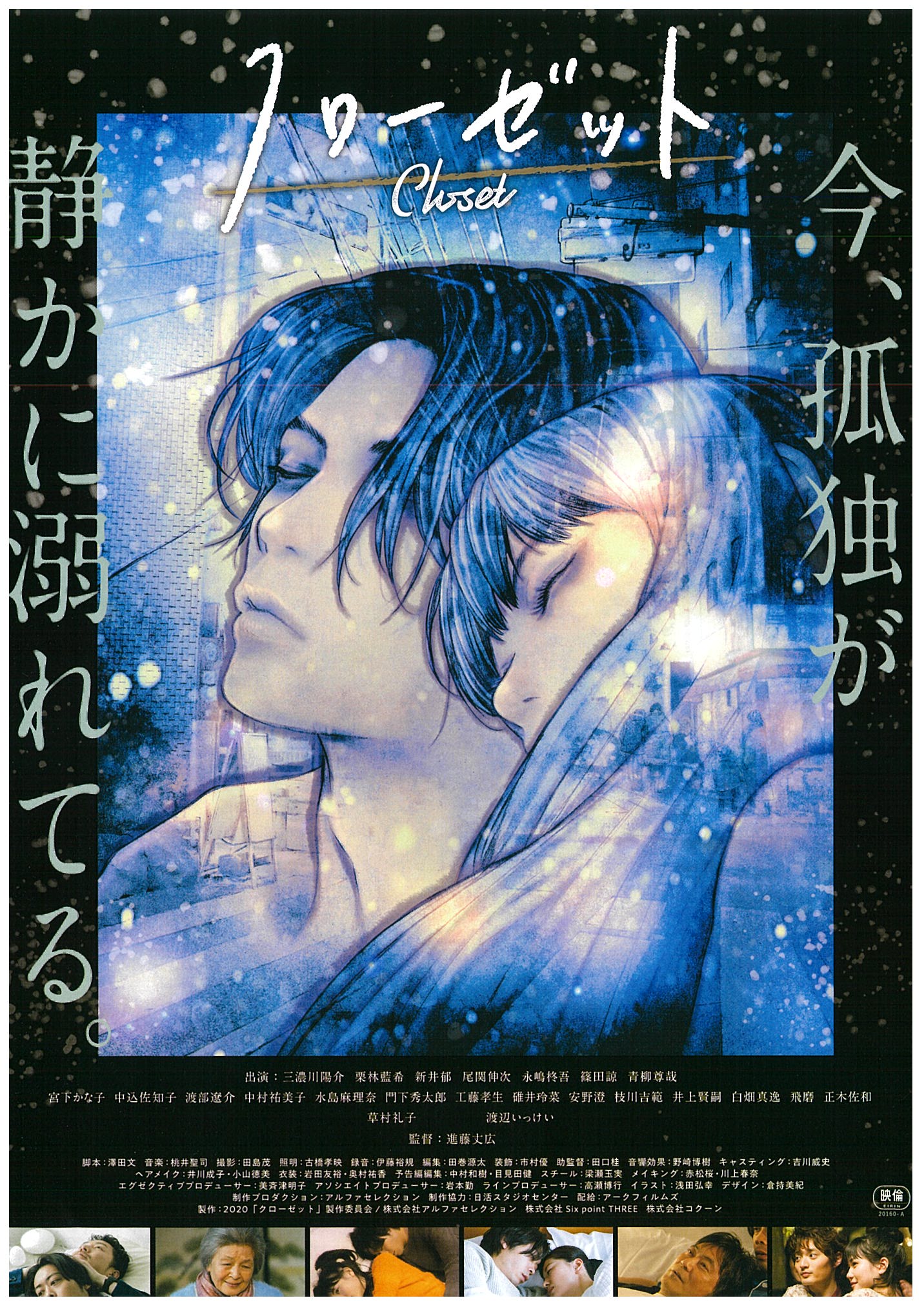
Closet (クローゼット, Takehiro Shindo, 2020)

“Everyone has their own closet” according to a bereaved older man sympathetically reflecting on a life half lived. The wounded hero of Takehiro Shindo’s Closet (クローゼット) is about to discover he may have a point as he works through his own issues, finally coming to an understanding of the true nature of intimacy before learning to open himself up to living life true to himself realising that perhaps his very ordinary dream is not as hopeless as he thought it was if only he can bring himself to put his male pride aside. 

Returning to Tokyo following a failed engagement, Jin (Yosuke Minogawa) finds himself taking on an unusual line of work on the invitation of an old friend, embarking on a career as a sleep companion. Essentially, he’s there to lie beside a lonely person offering a safe and supportive space where they can relax and be their authentic selves free from the judgement they may otherwise receive from a friend or a lover. Ironically enough, Jin is a man of few words, his fiancée once asking him to be a little more sociable when her parents visit, which means he’s a good listener but slow to adapt to the true purpose of his work. His first client, a harried hospital worker, seemingly just wants to destress but mostly through having someone listen to her rant about workplace concerns and nod along sympathetically rather than offer earnest advice. As his boss Takagi (Shinji Ozeki) reminds him, it’s all about empathy, or at least telling them what they want to hear which may sound insincere but in another sense may not be. 

As the old man says, everyone has something they don’t really want to let out but the presence of the sleep companion is intended to ease the burden and provide temporary relief. Jo Shimoda (Ikkei Watanabe), is grieving for his late partner who remained in the closet for the entirety of their relationship leaving him now with nothing but intangible memories. He asks Jin to put on the other man’s pajamas, experiencing the warmth and comfort he misses from his absent lover and gaining through it the ability to begin moving on. Kaori (Iku Arai), meanwhile, is a harried executive, or at least she claims, apparently in love with a slightly younger colleague but unsure if her crush is appropriate while worrying that she’s in danger of missing the boat both in love and in her career. 

A young student from the country, Nanami (Aino Kuribayashi), on the other hand, is in search of the kind of comfort she does not receive from her no good boyfriend, realising only too late that his treatment of her is abusive and their relationship is built on exploitation. Jin had in a sense experienced something similar, ruining his relationship in a crisis of masculinity. It is of course he who also receives warmth and support through his role as a companion, but the job also allows him to reconfigure his idea of what it is to be a man in providing a sense of safety, protection, and comfort while engaging in a true intimacy that is not defined by sexuality.

Through their shared experiences, both Jin and the sleepless companions begin to grow in confidence, accepting themselves for who they are and preparing to move on into a more authentic future even if for some the path turns darker before it reaches the light. Stepping out of their individual closets, they no longer feel so insecure finally gaining the courage to live as their true selves no matter what anyone else might have to say about it in the knowledge that others too are also suffering and might be led out of it by their example. A gentle tale of the simple power of human intimacy to overcome a sense of existential loneliness and individual despair, Closet allows its reticent hero to find new meaning in the ability to accept from and give to others comfort while coming to terms with his own traumatic past in realising that he is not and never was defined by conventional ideas of masculinity and that he is not worthless solely because he is no longer able to fulfil them. Perhaps that small yet infinitely ordinary dream is not so out of reach after all. 


Closet screened as part of this year’s Camera Japan

Original trailer (no subtitles)

Gohatto (御法度, Nagisa Oshima, 1999)

Nagisa Oshima once said that his hatred of Japanese cinema extended to absolutely all of it, decrying the hackneyed nativism of “foggy beauty and stupid gardens”, yet his final film is filled with Mizoguchian mist and almost a paen to Japanese aesthetics which ends with a cherry blossom tree in full bloom cut down in its prime. Burdened by the slightly more salacious title “Taboo”, Gohatto is less about love between men in an intensely homosocial world even as it asks what it might mean by “forbidden” or “against the law” than it is about idealism and aesthetics as its band of contradictory conservatives unknowingly approach the end of their world in a coming modernity ushered in by dangerous beauty. 

Set in the Kyoto of 1865, a scant three years prior to the Meiji Restoration, the film opens with an audition of sorts as the Shinsengumi search for promising new recruits among talented swordsmen. Already a mess of contradictions, the Shinsengumi is, loosely, a kind of official police force dedicated to defending the Shogunate against the revolutionary forces set on restoring power to the emperor. Nevertheless, in an odd way and in contrast to the elite Mimawarigumi which was staffed only by direct retainers to the Shogun, the Shinsengumi was noted for its lowkey egalitarianism in that it made a point of admitting those of ordinary birth as well as lower level samurai and ronin. Of course, the notions of equality only went so far and perhaps only fuelled its reputation for merciless savagery, but also make it a strangely progressive force fighting against progress in defence of the feudal status quo. 

Only two of the hopefuls are thought to be any good, one a young ronin, Tashiro (Tadanobu Asano), and the other a beautiful boy, Kano Sozaburo (Ryuhei Matsuda), the third son of a wealthy merchant whose line were once samurai but are no longer counted among the noble retainers. A talented swordsman, Sozaburo’s dangerous beauty presents an existential threat to the Shinsengumi order, the steely Hijikata (Takeshi Kitano) looking on conflicted in witnessing the way his commander, Kondo (Yoichi Sai), looks at this vision of androgynous beauty remarking that he had not known him to be “that way inclined”.

Being that way inclined does not seem to be a particular issue within the Shinsengumi, it is not against their draconian rules and in fact appears to be tolerated at least as long as it causes no further problems. Kondo is however mindful of the chaos caused by a similar wave of homoerotic lust which took hold shortly before a climactic battle which would prove to be their last success. What Sozaburo seems to arouse in them is something more dangerous than the accepted patterns of love between military men which is in a sense sublimated as a mentor/student relationship, loyalty more than romance. Tashiro, who is of a similar age to the apparently 18-year-old Sozaburo, lets his desire be known, vowing to sleep with him before he dies ironically acknowledging Sozaburo for what he is, an angel of death. 

For his part, Sozaburo remains curiously passive in each of his encounters, aroused only it seems by the act of killing. Yet Hijikata discerns that he has indeed become Tashiro’s lover on witnessing them fight, Sozaburo losing clumsily despite being the more skilled in a dynamic that mimics their relationship in which Tashiro is the dominant partner. Aware of the danger in Sozaburo’s allure, Kondo suggests having a superior take him to the red light district to show him the delights of woman hoping to guide him back towards a less dangerous path, only the attempt backfires on several levels. Firstly, Sozaburo has no interest in women and continues to decline believing his commander is also hitting on him (like everyone else), thereafter determined to seduce him after all. Another retainer does indeed succeed in seducing Sozaburo, developing a mild obsession, but later ends up dead, Tashiro a main suspect in his murder with the motive of sexual jealousy though all of this additional violence is perhaps only an expression of Sozaburo’s dangerous beauty. 

As so often, sex if not love becomes the force which destabilises the social order only here it’s equated both with death and with an alternative mediation of male violence. Perhaps reflecting the way they look to the 18-year-old Sozaburo who makes a faux pas in accidentally suggesting at least one of them is of pensionable age, the ranking members of the Shinsengumi are played by actors already well into their golden years as if relics of a bygone era though in reality most were in their 30s. As Soji (Shinji Takeda), a filial figure like Sozaburo wearing long hair, puts it, there are no old men in their unit which is in essence an anti-revolutionary force. Nevertheless, the Shinsengumi is on the wrong side of history and already living in its end times, perhaps ushered towards its doom by the figure of the beautiful boy. “You were too beautiful”, Hijikata eventually laments as he finally perhaps understands the nature of the revolution he is witnessing. Perverse to the last, Oshima sets his ethereal finale in a stygian fog and pays an ironic tribute to the Mizoguchian classicism he so railed against in his youth, taking a sword to the cherry blossoms as he like Hijikata severs his own legacy in a moment of destructive beauty. 


Gohatto screens at Genesis Cinema on 25th September as part of this year’s Queer East

International trailer (English subtitles)