Monster SeaFood Wars (三大怪獣グルメ, Minoru Kawasaki, 2020) [Fantasia 2020]

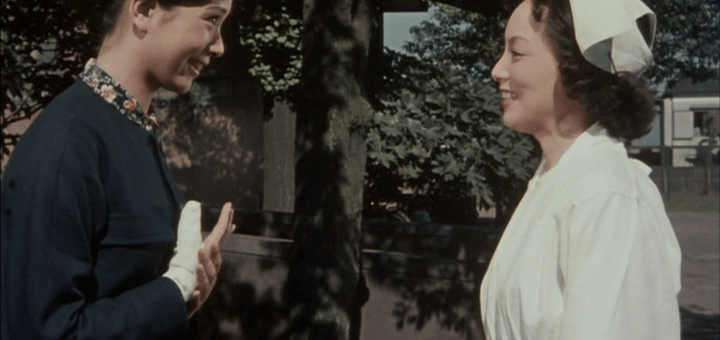
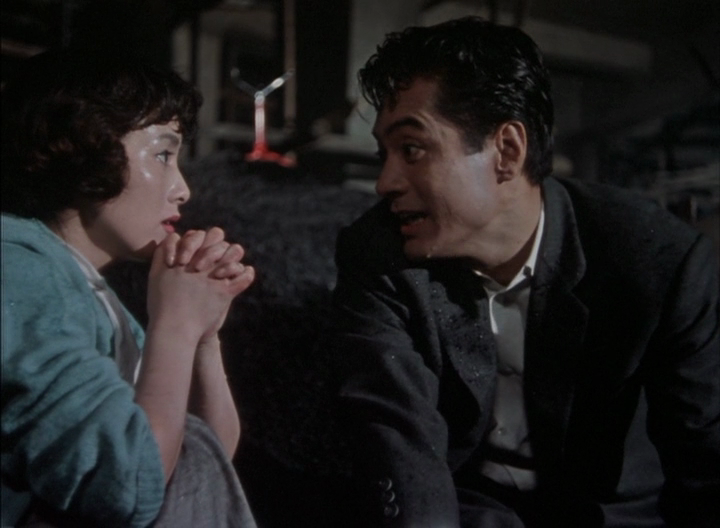
Ever wondered what happens to a fallen kaiju? After Godzilla and friends have ransacked the city, there’s certainly a lot of cleaning up to do but disposing of kaiju corpses isn’t something your average monster movie gives a lot of thought to. According to Monster SeaFood Wars (三大怪獣グルメ, San Daikaiju Gourmet), there’s surprisingly good eating to be had in monster meat and when it comes to taking down a giant squid, perhaps it’s better to ask a chef rather than a scientist or the boffins from the Ministry of Defence. 

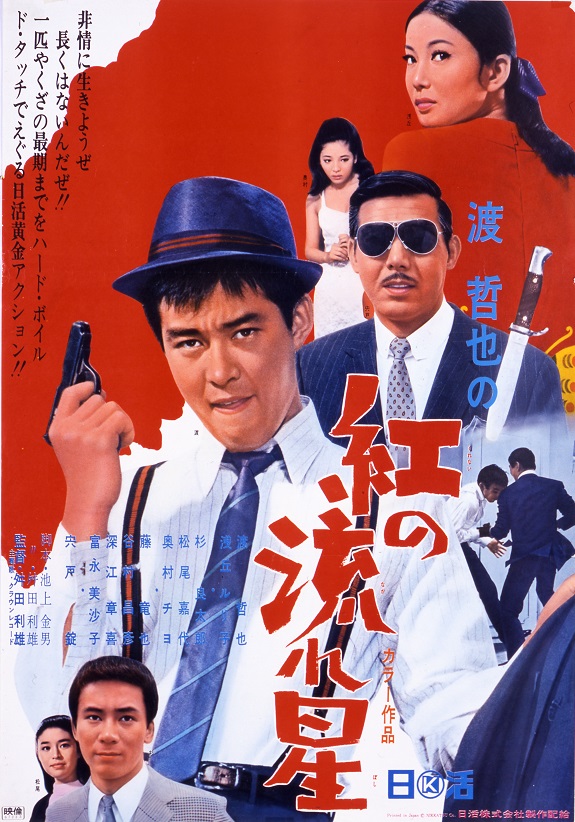
Switching between documentary sequences featuring talking heads looking back on the bizarre events and the events themselves, Monster SeaFood Wars follows scientist/sushi shop heir Yuta (Keisuke Ueda) who accidentally unleashes three giant kaiju on the city of Tokyo after he’s knocked off his bike while delivering some prize seafood to the local temple as an offering. In addition to being the heir to a sushi shop, Yuta is also a scientist apparently obsessed with giant monsters which he describes as “cute” and had been working on a serum, Setap Z, to turn ordinary foodstuffs giant in order to end world hunger. Before you know it, angry octopus Takolla and his frenemy Ikalla are on the rampage through the city. 

Of course, Yuta is the prime suspect which is perhaps why he somewhat arrogantly describes himself as the “biggest victim” while reluctantly agreeing to help out SMAT, Seafood Monster Attack Team, as they try to figure out how to mitigate the effect of Setap Z and stop the kaiju assault but is further irritated by being denied a spot on the team as a full member. Meanwhile, he’s also facing off against rival scientist Hikoma (Yuya Asato) who impresses with an obvious idea, vinegar, while charming Yuta’s childhood friend and unrequited crush Nana (Ayano Christie Yoshida) who now works for the Ministry of Defence and has only contempt for the weirdo monster geek. 

Yuta’s plan had been to let Takolla and Ikalla duke it out, assuming Takolla would win and then they’d somehow lure him into a giant octopus trap. Hikoma meanwhile suggests giant rice vinegar cannons, regular missiles already having proved ineffective against the sea creatures’ springy flesh. Hikoma’s plan would have worked, had it not been for the sudden and unexpected return of Kanilla whose hard shell protects him against the corrosive effects of the vinegar. During the fight, however, some of Takolla’s tentacles are chopped off, chunks of meaty white flesh falling to the ground as SMAT commander Hibiki (Ryo Kinomoto) unconsciously licks his lips. 

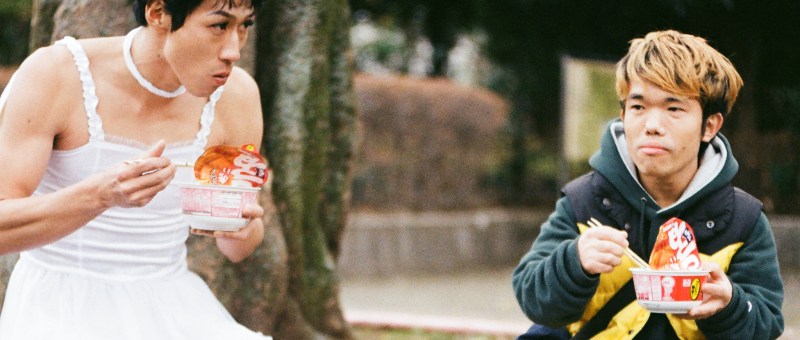
While very much a classic kaiju movie, Monster SeaFood Wars has its tongue firmly in its cheek, scaling back on the monster-fighting action for some gentle satire as the gang find they just can’t resist the urge find out what kaiju tastes like. The answer is surprisingly good, with the effect that kaiju meat becomes the latest culinary trend. “Forget bubble tea” one commentator says, monstrous squid is where it’s at. The TV news also comes in for a kicking with its placard unveiling confirming the kaiju’s name as well as a state of the nation address from an Abe-esque PM using the crisis to further his quest to “take back Japan” while speaking in a distinctly squeaky voice.

Meanwhile, drunk salarymen complain about their exploitative working conditions, joking that they’d need to be eight-armed octopuses to get through the amount of work expected of them only for Takolla to appear out of nowhere and slap them down seconds after they’ve made a few inappropriate remarks to some passing young ladies. Aside from the kaiju, the big bad does seem to be pervasive sexism with Ministry of Defence employee Nana often relegated to little more than eye candy and eventually the subject of an offensive bet between the icy Yuta and slick Hikoma whose equally sexist cheesy lines actually seem to impress her. 

Yuta, however, gets the chance to redeem himself by revealing that the really did make the formula to help starving people in Africa rather than just because he actively wanted to usher in the great kaiju apocalypse, owning his legacy as the son of a sushi shop while his best friend Niima (Shojiro Yokoi) has a few surprises of his own up his sleeve which prove that the best person to have at a giant octopus is a skilled chef. Of course Setap Z turns out to cause a few additional problems, accidentally spreading itself around after hitting the mosquito population, while it seems the villain is not quite done with their desire to misuse the serum, hinting at a possible sequel. A humorous but never mocking take on the classic tokusatsu, Monster SeaFood Wars pits culinary science against the giant monster threat and discovers that all you need to save the world is a good cook.


Monster SeaFood Wars streams in Canada from 20th August to 2nd September as part of this year’s online edition of Fantasia International Film Festival.

Original trailer (no subtitles)

Crazy Samurai Musashi (狂武蔵, Yuji Shimomura, 2020) [Fantasia 2020]

Action star Tak Sakaguchi rose to fame in Ryuhei Kitamura’s low budget zombie movie Versus, thereafter starring in a series of similarly pitched splatter and exploitation films as well as appearing in long running tokusatsu series Kamen Rider and making his own directorial debut with manga adaptation Be a Man! Samurai School in 2008. Much to fans’ disappointment, Sakaguchi announced his retirement as a performer in 2013, but has since made several high profile returns to the big screen including Yuji Shimomura’s Re:Born in which he played a former JSDF elite soldier living quietly in the countryside until an old enemy tracked him down. 

Again emerging from semi-retirement, Crazy Samurai Musashi (狂武蔵, Kurui Musashi) sees Sakaguchi reunite with Shimomura to play the most famous of legendary samurai Miyamoto Musashi in an all out action fest including a 77-minute one cut assault during which he singlehandedly kills 588 men. Unsurprisingly light on dialogue, the film credits Sion Sono with original concept and Atsuki Tomori with screenplay who do at least add a little context which frames this, to an extent, as a tale of merciless samurai hypocrisy and the fallacy of “honour” as a code for living. 

As the film opens, a small boy stares in wonder at a white butterfly before being reminded that he has, as the head of this clan, apparently challenged the great Miyamoto Musashi to a duel in revenge for his murder of two of their previous leaders. Affable retainer Chusuke (Kenta Yamazaki) tells the boy not to worry, he’s not going to let anything happen to him, but stops short of explaining that he’s really just a kind of bait. Nevertheless, Chusuke has his reservations about their plan. After all, it’s not very befitting of a samurai’s honour to challenge someone to a private duel but invite 400 retainers to the surprise party. 400 against one seems faintly ridiculous. It might even be embarrassing if anyone else finds out, but then as the priest (Yosuke Saito) says you can just kill them too. In any case, while Chusuke is talking to the priest and the mercenaries are busy arguing with the retainers, Miyamoto Musashi sneaks through the perimeter and fells the small boy who is technically the “leader” of the clan with one flying sword blow, kickstarting a scene of utter carnage as he attempts to fight his way out of the compound.   

“How many more?” Musashi asks in exasperation during a momentary pause, later doing a few calculations. He thought there’d be about 70, but it feels like he’s killed a few more than that. True to form, the samurai warriors largely follow the protocols of honour. They fight one-on-on, and only at the end does anyone attempt to attack Musashi from behind. He makes swift work of them, taking each man out with maximum economy, occasionally challenged by complete randomers who apparently aren’t even part of the clan, they just really don’t like him. Though necessarily repetitive, Shimomura’s innovative, non-stop fight choreography follows a realtime, broadly naturalistic logic in which duels are generally brutish and short. Musashi begins to tire as he continues to fight for his life, taking brief breaks for water, food, and existential questioning, before heading back into the fray. 

“Duty? Honour? Who gives a crap? I just wanna win” he later says in what is simultaneously a rejection and an embodiment of the samurai code. “I’ll die one day anyway” Musashi chuckles to himself before rejoining the fight, wilfully embracing the nihilism of the samurai existence that allowed him to kill a child without thinking twice. Chusuke failed to protect his honour, or save his clan, his earnestness perhaps betrayed by his mentor’s underhandedness in unwisely hiring vast numbers of mercenaries and sending his own unprepared students, many of whom simply flee (a wise decision), to face off against an unstoppable killing machine. Paradoxically, Miyamoto Musashi will survive because he doesn’t care about playing fair, he may not even care about surviving, all he wants is to win. “A kid who knows nothing of war”, Chusuke’s stubborn insistence on illusionary samurai honour will lead only to more suffering and violence while all Musashi can do is sigh in resignation and ready his sword. 


Crazy Samurai Musashi streams in Canada from 20th August to 2nd September as part of this year’s online edition of Fantasia International Film Festival.

International trailer (English subtitles)

Tokyo Chorus (東京の合唱, Yasujiro Ozu, 1931)

“Tokyo – city of the unemployed” runs a rather unexpected caption part way through Yasujiro Ozu’s depression-era silent comedy, Tokyo Chorus (東京の合唱, Tokyo no Chorus). Putting an unconventional spin on the reality of the contemporary capital, Ozu nevertheless retreats into his favourite themes as good people attempt to remain cheerful in the face of increasing adversity while embracing an often latent interest in class politics as the hero finds himself losing out at the hands of heartless capitalists when he alone is brave enough to stand up for a friend treated unfairly. 

Ozu opens however with an amusing prologue set some years before the main action in which the hero, Okajima (Tokihiko Okada), is a poor student goofing off during a military-style drill. While another boy arrives late to practice and is mocked for having arrived in geta, Okajima’s problem is that he didn’t want to take his jacket off because he isn’t wearing a shirt. A little less well off than some of the others, he brazens things out by ribbing the teacher, Mr. Omura (Tatsuo Saito). Flashforward some years and Okajima has become an insurance clerk, married with three children. His oldest child, a son, is desperate for a bicycle because the other kids have one and as Okajima is supposed to be getting his bonus today, the parents have decided to give in. 

Things do not, however,  go quite to plan. After picking up his pay packet, Okajima gets talking with an old timer who laments he’s just been fired. He thinks it’s because he sold some unlucky policies in which the beneficiary died shortly after signing the paperwork, but it seems obvious to Okajima that they’re firing him because they don’t want to pay his pension. He talks things over with the other employees who all agree it’s unfair, but is the only one brave enough to march into the boss’ office and say so. Unfortunately, Okajima gets nowhere and loses his own job in the proccess. Dejected, he buys his son a much cheaper scooter on the way home but the boy is unimpressed, as is his wife (Emiko Yagumo) when he hands her his notice of termination. 

It is of course a good and proper thing that Okajima stood up for colleague, but he’s lost out because of his pride, smugly explaining to his wife that he was in the right while arguing with his boss and resentfully refusing to admit the irresponsibility of his actions as a husband and a father. Pride becomes a persistent secondary concern as he tries to find another steady job in the economically straitened world of 1931. Despite telling his colleague he envied him for his job as a sandwichboard man and claiming that having a college degree makes him overqualified for casual work, Okajima struggles with himself intellectually knowing that any job will do to feed his family but embarrassed in having to resort to work he feels is beneath him. When he runs into Mr. Omura and he offers to help him with a job in the curry rice restaurant he now owns after retiring from teaching, Okajima is conflicted, telling him he won’t accept help if it’s offered out of pity but only if extended in friendship. When his wife spots him out delivering leaflets, however, she is scandalised and humiliated rather than proud or grateful, only later coming round and agreeing to help out in the Omuras’ restaurant herself. 

Meanwhile, family life is obviously strained by their ongoing financial predicament. When their daughter is taken ill and needs hospital treatment, Mrs. Okajima is upset to discover that her husband sold all her kimonos to pay the fees, their eyes aflash with anger and despair as they put on a brave face for the children but eventually brightening as they continue on with a family game of pat-a-cake. Despite her distress, Mrs. Okaijma maintains faith in her husband and the family is as happy as it can be under the circumstances. At a reunion organised for some of his former students now no longer the rambunctious young men they were at the film’s opening but wistful for the spent freedoms of their youth, Omura makes a toast hoping that everyone continues to prosper through “hard-work and self-reliance”, but it is the mutual solidarity which Okajima showed when he stood up for his mistreated colleague which eventually proves his salvation. Humbled by his experiences, no longer looking down on honest work, he gets the offer of another job which is not quite of the kind he was hoping for, but is perhaps a new start even if it means leaving Tokyo, city of the unemployed, behind for the greener pastures of provincial Tochigi and a simpler, but perhaps kinder, existence. 


Blueprint of Murder (暗黒街の弾痕, Kihachi Okamoto, 1961)

Alongside its trademark tokusatsu Toho also had a sideline in genre-hopping B-movie comedy of which Kichachi Okamoto’s Blueprint of Murder (暗黒街の弾痕, Ankokugai no Dankon) is a prime example. Playing into a zeitgeisty anxiety about corporate corruption which led to several series of films revolving around industrial espionage such as Yasuzo Masumura’s Giants & Toys and the later Black Test Car, Okamoto’s ironic take on noir and globalisation anticipates the spy spoofs Toho would produce in the wake of Bond fever while quietly also perhaps poking fun at Nikkatsu’s crime melodramas.

The film opens with a young man, Kusaka (Ko Mishima), and his boss Komatsu (Ichiro Nakatani) testing an experimental car engine that would be ultra efficient and cheap to produce. The test goes well, but Kusaka is run off the road on the journey home, caught between a truck and a mysterious man on a motorcycle. Meanwhile, Kusaka’s brother Jiro (Yuzo Kayama), a whale hunter, is busy working on a new kind of harpoon when he gets a telegram from an old friend telling him to come home right away because his brother is dead. On meeting with Komatsu, Jiro starts to think perhaps his brother’s death wasn’t an accident. It seems there are a lot of people interested in this technology, some of whom would rather it not see the light because cheap, efficient engines are not good news for the oil industry. 

Hearing that Kusaka was recieving threatening letters, Jiro wonders why he wouldn’t go to the police, but Komatsu points out that it would have made no difference. Firstly, the police rarely get involved with cases of corporate espionage, and secondly if they did the blackmailers would win anyway because if there were a court case they would have to make full disclosure of their plans. Jiro tries going to the police himself and showing them that he has evidence, as well as the “instinct of a whale hunter”, which suggests that his brother was murdered, but nonchalant policeman Azuma (Tatsuya Mihashi) doesn’t seem very interested. Teaming up with an old uni friend, Sudo (Makoto Sato), who now runs some kind of scandal rag newspaper and is well connected around town, Jiro tries to investigate but soon becomes entangled in a complicated web of corporate intrigue.

Sudo, whose paper seems to be on the verge of bankruptcy, has some sort of game going with corrupt businessman Otori (Seizaburo Kawazu) who runs Goei Economic Reporting Agency which was one of three companies bidding for Komatsu’s engine. Later, Sudo’s main squeeze Tomiko (Kumi Mizuno) also tries to blackmail Otori by posing as the daughter of a man he drove to suicide after poaching technology from his company. Played at his own game, Otori is extremely disturbed to have this traumatic incident thrust in his face, and it quickly becomes clear that although he was onboard with various kinds of corporate duplicity, he had his lines and is worried to think someone might have crossed them on his behalf. 

Otori is right to worry, they are coming for him too. Eventually unmasked, it will come as no surprise to know that the big boss is from Hong Kong making this another quiet instance of Sinophobia betraying an essential anxiety about a newly global Japan. Meanwhile, Jiro’s problems are closer to home. He starts to doubt Sudo, warned off him as man only interested in money, and witnessing him play every angle to his own advantage. Sudo may be playing his own game but has his friend’s interest at heart and is simply trying to protect him from endangering himself in a world he does not understand. 

Rather than the fulfilment of a dangled romance, what we’re left with is the restoration of the friendship between the two men in which they ultimately re-inhabit their innocent student selves complete with a surreal game of air baseball while Tomiko and Komatsu’s sister Kyoko (Mie Hama) cheer excitedly from the sidelines. Okamoto throws in a killer punchline to an early whale hunting gag while piling on the absurdist humour in characteristic style with one unexpected pay off after another even as the guys find themselves in an increasingly murky world of corporate double cross, femme fatale nightclub singers with their own identical minions/backing bands, and rowdy gangsters while trying to ensure the little guy is still free to innovate outside of consumerist concerns.  


Original trailer (no subtitles)
Infinite Foundation (無限ファンデーション, Akira Osaki, 2018)

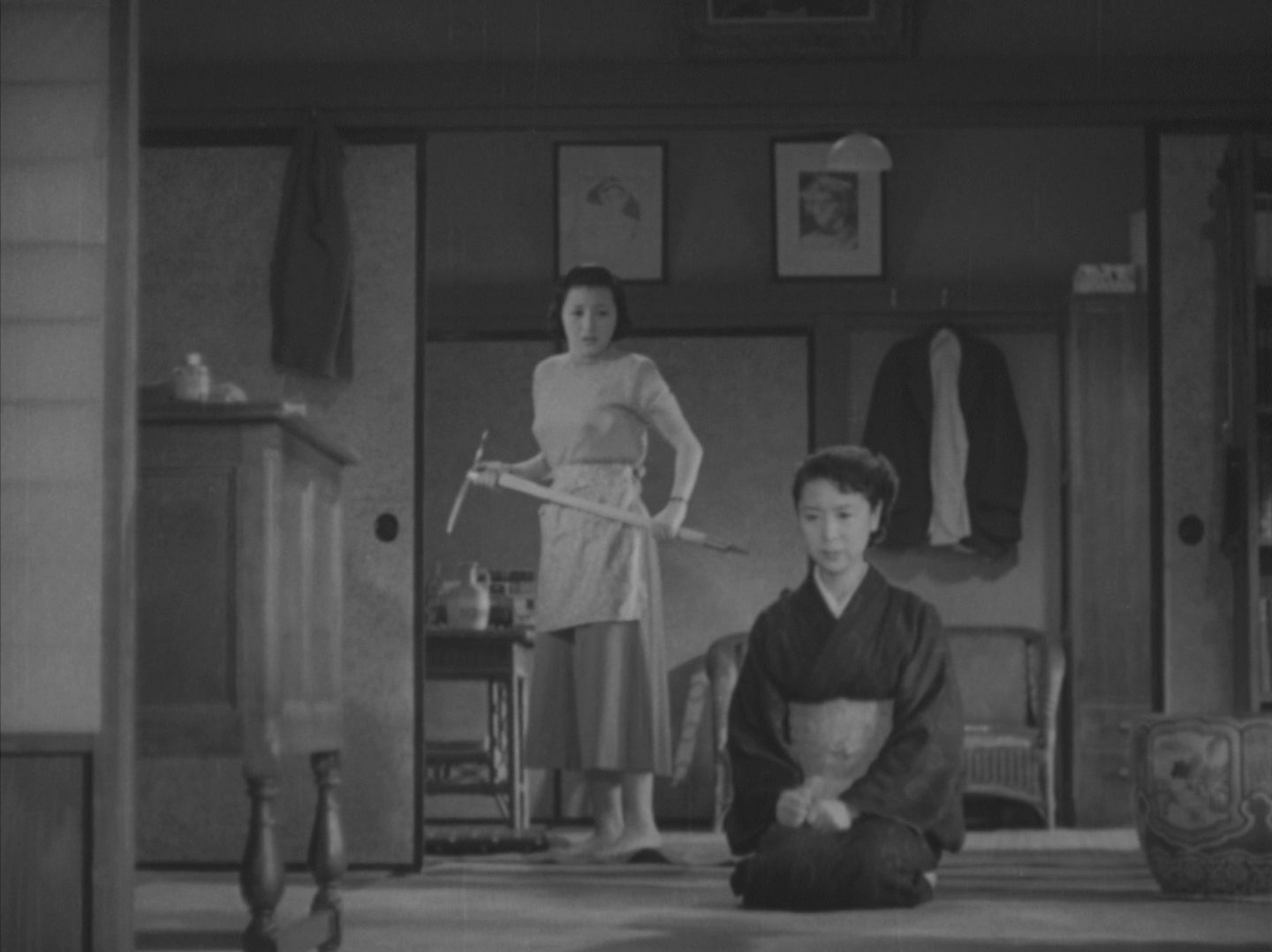
Sometimes the music finds you when you need it most. So it is for the heroine of Akira Osaki’s wistful coming-of-age drama Infinite Foundation (無限ファンデーション, Mugen Foundation). To better capture the teen experience with an immediate naturalism, Osaki’s cast was provided with no script only a vague outline inspired by the songs of singer-songwriter Cosame Nishiyama and asked to improvise each individual scene. What results is suitably intense tale of complicated teenage female friendships, frustrated ambitions, and fear for the future in which a shy, introverted young woman gradually finds the courage to chase her dreams with the help of an ethereal songstress and unexpected solidarity. 

Mirai (Sara Minami), whose name literally means “future”, is a dreamy young girl who thinks she’s not much use for anything so usually idles away her time in school drawing dress designs in her sketchbook when the teacher’s not looking. In fact, she’s technically in summer school catch up, but every time the teacher returns to check on her he notices that she still hasn’t got round to filling in the answers on her maths test. Wandering home one day she hears the gentle strains of a ukulele coming from a nearby recycling plant and strikes up a friendship with a strange girl, Cosame (Cosame Nishiyama), with her hair in long plaits and dressed in a school uniform. Meanwhile, she’s also unexpectedly approached by the stylish Nanoko (Nanoka Hara) who, taken with her beautiful designs, insists that she join the drama club to help them come up with costumes for their imminent production of Cinderella. 

Perhaps Mirai will be going to the ball after all. Before that however she’s still contending with a sense of insecurity while her cheerful and supportive mother (Reiko Kataoka) tries to encourage her to pay more attention to her studies. Pushed towards conventional academic success, Mirai had been a little embarrassed about her love of drawing, particularly as it’s something as “frivoulous” as dress designs which she can’t believe anyone else would value. Rather than hanging out with friends, she spends most of her time sewing in her room, retreating into comfortable fantasy but also lonely and a little bit lost. So when Nanoko is so enthusiastic about her artwork it gives her a much needed confidence boost showing her that someone at least thinks her drawings have value and are not silly or embarrassing wastes of time. 

The drama club, however, is something of a baptism of fire for someone who feels themselves not good with people and at sea with interpersonal relationships. Mirai sticks fast to Nanoko, but Nanoko’s longterm bestfriend Yuri predictably doesn’t like it that she’s abruptly dragged this other person into their shared activity while the other members of the group struggle to relate to her, describing her as difficult to talk to and leaving her sitting in the corner doing her own thing while they get on with rehearsing. The main drama occurs when Nanoko makes a surprising announcement that puts the show in peril. She has a big audition lined up in Tokyo for a part in a film which makes it impossible for her to also star in the play. Nanoko asks for understanding, but does so with a degree of entitlement and superiority that cannot help but annoy her friends. She implies that she’s in this because she’s a real actress, while they’re only messing around in a school play. Mirai isn’t sure where to put herself, her new friend has just betrayed her and now she doesn’t know if they were ever friends at all or she was just using her to increase her hold over the drama club. 

The message that Mirai begins to get is that she may have real talent, but it’s up to her to achieve her dreams. She begins to feel that everything she’s been doing with her life has been superficial and incomplete because she never had the confidence to follow through, living in her own tiny bubble alone in her room for fear of getting hurt out in the big wide world. While the mysterious ukulele player sings her inspirational songs about living with loneliness, Mirai begins to build her infinite foundations towards a more confident future as a young woman determined to fight for her dreams.


Infinite Foundation streamed as part of this year’s online Nippon Connection Film Festival.

Original trailer (no subtitles)

Tamaran Hill (たまらん坂, Tadasuke Kotani, 2019)

Does Japan have more uphills or downhills? You have to think about that one for a second, like one of those trick questions they put in books for children. Nevertheless, you can’t argue with the idea that so much of life is really about perspective and perhaps perspective itself can also be a subjective choice. Shot in crisp black and white with occasional animation and adapting the novel by Seiji Kuroi who actually appears at one particularly meta moment, Tadasuke Kotani’s Tamaran Hill (たまらん坂, Tamaranzaka) follows a young woman’s path towards forging, or perhaps rediscovering, her identity through a meditation on the word “unbearable”, its association with her father, and the long buried memories of a potential hometown. 

Hinako (Hinako Watanabe), a college student, lost her mother at four years old and is at something of a crossroads as she contemplates her future. Her teacher (Makiko Watanabe), who for some reason has an ever present robot assistant at her side, advises Hinako and her fellow students that if they want to get a good job what they need to get good at is the art of narrative lying. They need to assert their individuality in inoffensive ways, quantify their experiences in concrete numbers, but avoid embellishing facts in which hard evidence is available. Her advice to Hinako is that she needs to create a convincing “character” to pep up the self intro on her CV, perhaps paint herself as a survivor who lost her mother not to cancer of the vocal chords but in a natural disaster. 

Hoping to start at the beginning in rebuilding herself, Hinako begins researching the idea of “hometowns” only to be sidetracked by a book titled “Tamaran Hill”. The title catches her eye because “tamaran” which means “unbearable” is one of her father’s catchphrases, indeed we heard him say it numerous times after getting stuck at the airport by a typhoon meaning that he couldn’t get back for his late wife’s memorial service. In the book, the narrator details his friend’s increasing obsession with a slope near his home by the name of Tamaran Hill, something with which Hinako also becomes intrigued as she finds herself sliding into the narrative, the narrator detailing her own experiences as if she were reading them. 

It seems that for most, “tamaran” does indeed mean “unbearable”. The explanations for the name run from a deserting samurai decrying the folly of war as he ran from a nearby battlefield to Showa-era students resentful at having to climb uphill to gain their education but Hinako is disappointed to learn that the answer may be far more prosaic than she’d hoped. Reality and fiction begin to blur. She finds herself asking if an old man is merely a character from her imagination only to receive a philosophical answer that characters are composed of words but that words have vitality, warmth, and power. Meanwhile she begins to have visions of a mysterious past which mingle with those of the narrator’s friend leading her towards the “hometown” she has long been looking for. 

Hinako’s “unbearable” Buddhist priest father (Kanji Furutachi) apparently doesn’t like to talk about the past, which might be why she feels so lost, while he also berates her for not properly looking after her seemingly adopted younger brother. He actively hides from her the keys to her history, offhandedly remarking on the reappearance of a long absent relative in Hinako’s questions about a mysterious cosmos flower placed on her mother’s grave. Hinako wonders if it’s her mother’s fault that she can’t love anyone, retracing her steps inspired both by the novel and a letter hidden by her father in order to make sense of the brief and fragmentary memories which comprise her visions and thereby reconstruct an image of herself which is, essentially, narrative. 

Hinako’s process towards self identification hints at personal fictions and the strange alchemy of fantasy and reality that is memory, but she does at least seem to have straightened her story as per her teacher’s instruction, confidently stating that she has “decided” on her hometown. Perhaps the fiction is more reliable than truth in its manufactured certainties, and after all no one takes “just be yourself’ at face value. Does the slope go up or down, or is it actually on the level and it’s just that everything else is tilted? It’s all a matter of perspective, “unbearable” only in its inscrutability. 


Tamaran Hill streamed as part of this year’s online Nippon Connection Film Festival.

Original trailer (English subtitles)

Me & My Brother’s Mistress (おろかもの, Sho Suzuki & Takashi Haga, 2019)

Why does everyone always blame “the other woman” and not the cheating boyfriend? That’s a question earnest high schooler Yoko begins to ask herself in Sho Suzuki & Takashi Haga’s Me & My Brother’s Mistress (おろかもの, Orokamono) after spotting a suspicious text on her brother’s phone and then spying on him as he leaves a love hotel with another woman a month before his wedding. But what is it that she finds so troubling, realising her only remaining family member is a two-bit louse, or the fact he’s going to get married and it won’t be just the two of them anymore?

In the last year of high school, Yoko (Nanami Kasamatsu) is filled with anxiety about the future. In fact, she’s the only one who hasn’t returned her careers survey and it seems she also turned the previous one in blank. Her parents passed away nine years previously, and ever since then it’s just been her and her older brother Kenji (Satoshi Iwago), now a permanently exhausted salaryman engaged to the homely Kaho (Hachi Nekome). Yoko doesn’t get on with Kaho, for the bizarre reason that she’s just too nice, but when she figures out that Kenji is having a torrid affair mostly conducted in love hotels on Sunday afternoons, she is quite rightly outraged that her brother could be so duplicitous. Rather than confront him, she decides to have a word with the “mistress”, following her around all day but conflicted on spotting her doing such unexpectedly decent things as giving up her seat on the train for a middle-aged woman laden with shopping. Tracking her to a restaurant, she planned to give her a dressing down but Misa (Yui Murata), as she discovers her name to be, is perfectly reasonable if also unrepentant.

Misa asks a number pertinent questions including why it is Yoko thinks this is any of her business in the first place and why she’s decided to have it out with her and not Kenji all of which Yoko has to concede is fair. Unlikely as it sounds, the two women end up becoming friends of a sort, Yoko beginning to sympathise in realising this is all her brother’s fault but still not really feeling all that sorry for Kaho which is one reason why she suddenly suggests they try to stop Kenji’s wedding. 

Tellingly, she later asks Kaho if she’s not afraid that another woman will steal Kenji away, but it’s a question she should perhaps have asked herself. She is quite obviously at difficult time. Everything is about to change for her. She’ll soon be leaving school and evidently doesn’t really want to think about what happens next, while her home life is also about to change when Kaho moves in with them permanently meaning it’ll no longer be just her and Kenji. Perhaps that’s what’s really bothering her, that Kaho is displacing her in her own home and stealing her big brother away to start a new family that might not include her in quite the same way. 

Indeed, her main objection to Kaho is in her genial domesticity, the various ways she and Kenji already operate as a couple, the perfectly cooked meals she prepares and the maternal care with which she overseas the house. Kaho isn’t really worried about another woman because she knows what Kenji is looking for is exactly what she gives him – a settled home. Misa, meanwhile, laments her status as a perpetual mistress, never really valued by the usually already attached men she ends up dating who think of her as a casual fling, a short-lived distraction from their domestic responsibilities. Still too young to fully understand, Yoko feels offended on Misa’s behalf that her brother could treat her or any woman this way. Yet their plan to stop the wedding ends up proving counterproductive in that it forces her to sympathise with Kaho and perhaps realise that Kaho herself was never the problem while also regretting having encouraged Misa’s self destructive descent towards an inevitable conclusion that is only going to cause her more pain. 

Yoko’s only future goals were apparently to become a decent and honest person, an ideal she perhaps is not quite serving in her “evil” plot to ruin her brother’s wedding. Misa brands her a “boring teen” already obsessed with dull stability, while it’s perhaps Misa’s boldness and unconventionality which attracts the otherwise straight-laced young woman. In any case, Yoko begins to discover a new equilibrium or at least a new accommodation with adulthood that lends her a little of Misa’s defiance as she makes an unexpectedly bold decision of her own in figuring out what it is she really wants and walking confidently towards the future even if with no real clue as to what comes next.


Me & My Brother’s Mistress streamed as part of this year’s online Nippon Connection Film Festival.

Original trailer (English subtitles)

Flowers and Rain (花と雨, Takafumi Tsuchiya, 2019)

A troubled young man seeks fulfilment in hip hop glory but his self-involved insecurities frustrate his dreams in Takafumi Tsuchiya’s stylish coming of age drama Flowers and Rain (花と雨, Hana to Ame). Inspired by the album of the same name by real life rapper SEEDA, Tsuchiya’s film finds its conflicted hero consumed by a sense of internalised rage and cultural displacement as he struggles to find his place in conformist Japan after a childhood spent abroad realising only too late that he was not the only one struggling and that his self-absorbed inferiority complex has cost him dearly. 

Hakuhiro (Sho Kasamatsu) spent his early childhood in London where his father was working at the time. Whilst there, he was sadly subject to common racist microaggressions from other children who tried to put him down by showing off to their friends with ugly playground chants. Nevertheless, Hakuhiro and his older sister Saki (Ayaka Onishi) profess that they prefer living in the comparatively less stressful UK than in conformist Japan and it is indeed Saki who seems to have the most difficulty when they are forced to move back after the financial crisis. She is determined to return to the UK for university, but as we later see ultimately remained in Japan. Hakuhiro meanwhile has become a sullen and distant teen, bullied by the high school delinquents for being a returnee student. He gives them the same treatment as he gave the playground bullies, ignoring them until he is able to ignore them no more. Mostly he just keeps to himself, listening to hip hop on cassette via his retro walkman and vintage headphones. 

Hakuhiro dreams of becoming a top rapper by rapping in English, but a small circle of likeminded friends including a fellow high school student, Aida, are unconvinced. Though he actually comes from quite a wealthy family and still lives at home supported mainly by his parents, Hakuhiro wants to rap about the same things as his heroes such as street life and social oppression, none of which rings true to those around him who are painfully aware that he is somewhat uncomfortably appropriating the struggles of others and pretending to be something he’s not. He blames his friend Aida for his lack of success in not writing good enough beats for his words and Japan as a country for failing to “get” true hip hop. His sense of insecurity eventually tips over into belligerent arrogance that sees him taken in by an unscrupulous promoter who allows him to humiliate himself during a live rap battle with his high school bullies resulting in the probable end to a credible career as an underground rapper. 

To get more experience of what he sees as “the life”, Hakuhiro has also gotten himself involved with drugs firstly by growing cannabis and then by trafficking cocaine on behalf of a shady street gang. His relationship with his family has obviously suffered and though he’s nominally gone back to uni he doesn’t seem very invested in his studies. Saki, herself troubled in repeatedly failing to pass the final exams for her MBA, tries to talk some sense into him but Hakuhiro repeatedly fails to notice that she is also in distress and trying to tell him something important. A brush with the law pushes him back towards the straight and narrow, but does not exactly humble him and he is still blind to the various ways in which his self-absorbed and arrogant behaviour ruins his relationships and with them his chance of ever making it in the music business. 

Only tragedy finally awakens him to his failings. As Aida had tried to tell him, his problem was a refusal to face reality as reflected in the inauthenticity of his lyrics. If he wants to make it as an artist he’ll have to face himself from a position vulnerability and give up the macho posturing of his adolescence for something a little more “real”. Drawing inspiration from SEEDA’s life and music, Tsuchiya is unafraid to allow his hero to appear unsympathetic even while emphasising the lingering traumatic echoes of a sense of displacement and rejection that prevents him from stepping into adulthood with a fully formed identity, but eventually allows him to find a sense of peace in art even if too late to repair fractured relationships with those he loves.


Flowers and Rain streamed as part of this year’s online Nippon Connection Film Festival.

Original trailer (no subtitles)

Fish Story (フィッシュストーリー, Yoshihiro Nakamura, 2009)

“Music saves the world” according to a hold out record store owner keeping the doors open in the wake of coming disaster. In one way or another and most particularly at the present time, perhaps it always feels as if the world is ending but somehow we seem to carry on. Yoshihiro Nakamura’s Fish Story (フィッシュストーリー) is, as it says, a story of how music saves the world, but also of how personal acts of quiet integrity echo through time while art finds its audience and its purpose in the proper moment even if the message is not immediately understood. 

The film opens in the “future” of 2012 during which a fiery comet is headed directly for the Earth resulting in a deadly tsunami set to engulf Mount Fuji, drowning humanity rendered unexpectedly powerless in the face of cosmic destiny. A man in a wheelchair dressed oddly like a cult leader trundles along empty arcades strewn with rubbish, pausing to poke at some trolleys with his walking stick. Eventually he stops outside a record store which is to his surprise open for business despite the coming apocalypse and jumps up, apparently able to walk after all, and heads inside where he takes the boss (Nao Omori) to task for his strange decision to go to work on this day of all days. The shopkeeper however calmly engages in conversation with a customer, sure that “music saves the world”, “this song will save the day”, introducing him to the music of little-known ‘70s punk band Gekirin whose music was too far ahead of its time for the conservative post-war society. 

Their forgotten song, Fish Story, however as we will see does indeed change the world if in small and unexpected ways not least because it’s remembered for an unexpected pause in the middle of a guitar solo, a temporary suspension of living time in which small miracles could occur. “It has a meaning” the shopkeeper insists, though refusing to elaborate. As we discover, it does and it doesn’t, but stays true to the spirit of song, a “fish story” of its own embellished in the telling as curious listeners attempt to explain its existence. For three college students in 1982 who enjoy listening to paranormal tapes, it’s something of a let down seeing as they’d been told that the missing section contained a woman’s scream which is apparently still audible to those with a sixth sense but predictably not to them. Nevertheless, a moment of silence and a woman’s scream eventually result in a timid young man (Gaku Hamada) assuming his destiny, learning to stand up to bullies even if in eventual need of rescue himself. 

Like the young man of 1982, the shopkeeper and his customer are largely passive, sure that someone is coming to save them, idly talking of superheroes in teams of five like classic tokusatsu serial Go-rangers or else Bruce Willis saving the day by heroically sacrificing himself to blow up the asteroid. But the Americans’ “Armageddon” plan soon proves a bust, hinting perhaps at the fallacies of the disaster movie model in which the nation of production saves the world all on its own. The only possible hope now lies in cross-cultural cooperation. “Just as music knows no border, we’ve come together in this emergency” says the team of international experts boarding an Indian rocket as they pursue the only option left for the salvation of humanity no matter that there’s only a one in a million chance it works, because that’s what you do at the end of world, only what you can. 

The old man scoffs at the shopkeeper and his customer, sure the world is going to end even though he previously predicted it would do so 13 years previously in line with Nostradamus. Others concluded it would end in 2009 and took action accordingly, action which almost assures the present destruction in accidentally destroying the mind capable of preventing it. It is all connected, in a cosmic sense, but it’s also all small coincidences that lead to a greater whole. In the post-war chaos of 1953, a struggling father lies about his English skills to get a job as a “translator” only to engage in an avant-garde act of language violence bludgeoning one text into another with the aid of a dictionary. The incomprehensible novel which results is pulped, but survives as a curiosity and eventually finds its way home, inspiring another work of art and becoming a kind of fish story of its own. Gekirin chose to disband rather than compromise their artistic integrity, knowing that no one was going to hear their song. “Does that make everything we’ve done meaningless?” dejected bassist Shigeki (Atsushi Ito) asks, and perhaps it seems that way, but the word is heard in the end. It all matters, we all matter, no matter how insignificant it seems in the moment. 

Adapted from the novel by Kotaro Isaka, Nakamura’s anarchic voyage through a comfortable and nostalgic post-war Japan albeit one in the shadow of coming disaster is imbued with a quiet sense of hope even as it leaves its protagonists passive participants in a history they are unaware of making. Two teams of five do in their way save the world, and all because of a song that no one heard which was inspired by a book that no one read. Life, it’s all a big fish story, but it makes sense in the end so long as you stick around long enough. 


Fish Story is released on blu-ray & VOD in the UK on 10th August courtesy of Third Window Films. On disc extras are presented in standard definition and include: making of featurette, Gekirin live performances, Gekirin talk show, director and cast Q&A, and deleted scenes.

Original trailer (English subtitles)

Tora-san, Wish You Were Here (男はつらいよ50 – お帰り 寅さん, Yoji Yamada, 2019)

From 1969 to 1996, travelling salesman Tora-san appeared in 48 films, a 49th movie special appearing after star Kiyoshi Atsumi’s death brought an unavoidable end to the series. Tora-san, Wish You Were Here (男はつらいよ50 – お帰り 寅さん, Otoko wa Ysurai yo 50: Okaeri Tora-san) arrives to mark the 50th anniversary of the first film’s release, and as the series had done in its later stages, revolves around Tora’s neurotic nephew, Mitsuo (Hidetaka Yoshioka), who is now a middle-aged widower and father to a teenage daughter. Feeling somewhat wistful, Mitsuo’s thoughts turn to his now absent uncle, wishing he were still around to offer some of his trademark advice along with the gentle warmth and empathy which proved in such stark contrast with his otherwise anarchic and unpredictable personality.  

Yamada, who directed all but two of the series in its entirety, opens with another dream sequence this time of Mitsuo as he finds himself overcome with memories of his first love, Izumi (Kumiko Goto), who is now married with children and living abroad working for the UNCHR. Mitsuo’s wife passed away from an illness six years previously and he’s so far resisted prompts from his relatives to consider remarriage though it seems fairly obvious that his editor, Setsuko (Chizuru Ikewaki), has a bit of a crush on him. Having taken a gamble giving up the secure life of a salaryman to become a novelist, Mitsuo’s first book is about to be published and it’s at a signing that he serendipitously re-encounters Izumi who just happened to be in the store that day on a rare trip to Japan and spotted the poster. 

Like many Tora-san films, Wish You Were Here is about the bittersweet qualities of life, the roads not taken, the misdirections and misconnections, and the romanticisation of a past which can no longer be present. At a crossroads, Mitsuo ponders what might have been recalling the shattered dreams of his first love which seems to have ended without resolution because of the unfairness of life. He wishes that his crazy uncle was still around to make everything better, offering more of his often poetic advice but most of all a shoulder to cry on as he’d been for so many women throughout the series. But Mitsuo himself has always been more like Tora than he’d care to admit, if tempered by his father Hiroshi’s shyness. He too is a kind man whose bighearted gestures could sometimes cause unexpected trouble. What he’s learning is in a sense to find his inner Tora, embracing his free spirit through his art if not the road, but also coming to a poetic understanding that sometimes the moment passes and there’s nothing you can do to take it back, only treasure the memory as you continue moving forward. 

That’s a sentiment echoed by Lily (Ruriko Asaoka), one of Tora’s old flames, who now runs a stylish bar in Tokyo. The beauty of the Tora-san series was that it aged in real time. The actor playing Mitsuo played him as a child and we saw him grow up on screen just as we saw Shibamata change from post-war scrappiness to bubble-era prosperity and beyond. The family’s dango-shop has had an upscale refit and there is now a modern apartment complex behind it where the print shop once stood. Seamlessly splicing in clips from previous instalments as Mitsuo remembers another anecdote about his uncle, Yamada shows us how past and present co-exist in the way memory hangs over a landscape. Once or twice, the ghost of Tora even reappears hovering gently behind Mitsuo only to fade when he turns around to look while there’s an unavoidable sadness as we notice the Suwas’ living room is now much less full than it once was. 

Aside from his uncle, it’s the warm family atmosphere that Mitsuo recalls from his childhood, something which, like Tora, he might not have always fully appreciated. Driving Izumi to a potentially difficult reunion with her terminally ill estranged father (Isao Hashizume), he refers to his own parents as “annoying” in the “pushy” quality of their kindness, something which irritates Izumi who points out that she’d have loved to have such a warm and supportive family and if she had she might never have gone to Europe, implying perhaps that their fated romance would been fulfilled. The Shibamata house was Tora’s port, he could wander freely because he had somewhere to go back to where they’d always let him in no matter what kind of trouble he caused.

A fitting tribute to the Tora-san legacy, Wish You Were Here is also a joyful celebration of the Shitamachi spirit. Tora might be gone, but the anarchic kindness and empathy he embodied lives on, not least in the mild-mannered Mitsuo and his cheerful daughter who seems to be continuing the family tradition of meddling in her loved ones’ love lives as her lovelorn father prepares to move on in memory of Tora, the free spirited fool.


Tora-san, Wish You Were Here streamed as part of this year’s Japan Cuts.

International trailer (English subtitles)