They Say Nothing Stays the Same (ある船頭の話, Joe Odagiri, 2019)

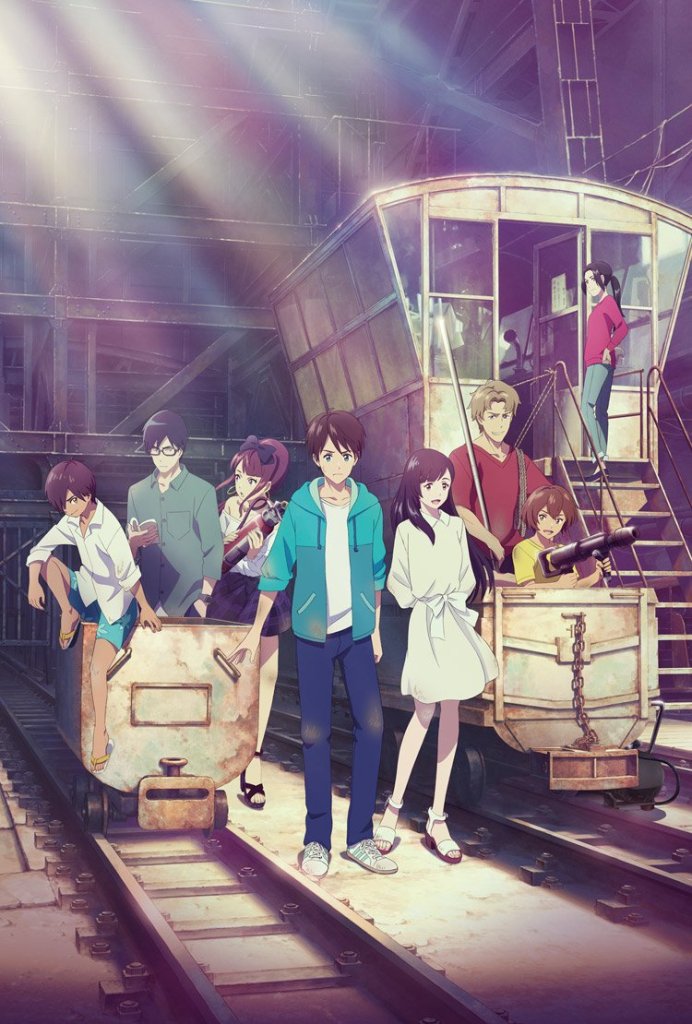
“Something new comes along, old things have to go” according to the philosophical boatman at the centre of Joe Odagiri’s They Say Nothing Stays the Same (ある船頭の話, Aru Sendo No Hanashi). A Meiji-set lament for changing times, Odagiri’s first feature following his 2009 mid-length comedy Looking For Cherry Blossoms is a visual tour de force shot by Christopher Doyle with whom he worked on the 2017 Hong Kong film The White Girl whose ethereal images of the majestic Japanese landscape with its misty vistas and rolling river perfectly compliment Odagiri’s poetic contemplation of transience and goodness. 

Toichi (Akira Emoto), the boatman, has ferried weary souls across the river for as long as anyone can remember but his days are numbered. Modernity is coming to the village in the very literal form of a bridge currently under construction not far from the crossing point, the workmen’s hammers ringing in Toichi’s ears like a ticking clock reminding him that his era is coming to a close, industrial noise at war with the tranquility of nature. For all that he tries to be philosophical. The bridge will certainly be convenient, as he admits to a man (Takashi Sasano) who needs to transport his cow across the river, the only current solution being to cross where the water’s shallowest and have the cow (and its minder) swim alongside while the man rides the boat. Toichi’s young friend Genzo (Nijiro Murakami) who sells herbal medicines, however, isn’t quite so philosophical. He doesn’t think the bridge is a good thing at all and only half-jokingly suggests blowing it up before it’s finished. 

But change comes earlier than expected. Hitting a strange object in the water, Toichi discovers it to be the body of a young girl (Ririka Kawashima) apparently still alive if only just. He takes her in and nurses her back to health, dressing her in a red outfit incongruously in the Chinese style, though she claims to have lost her memory and only later gives her name as “Fu”. Toichi muses on the possibilities, her name perhaps taken from the character for wind which, he points out, is a great motivator for a boatman capable of speeding up the rate of change, but also hears tell of a heinous crime the next village over in which an entire family were brutally murdered with only the daughter apparently spared, feared to have been kidnapped by the killer. Suspecting Fu may be the missing girl, he decides to help her, explaining her presence away in implying she’s a relative from “upriver” he’s been asked to look after for unspecified reasons. 

Toichi too claims to be from “upriver” though we never find out where it was he got those clothes from, assuming someone left them on his boat or like the portrait of the Virgin Mary he admires for its beauty and a memory of sorrow in the eyes of the woman who gave it to him as she explained that she would not come this way again, they simply drifted into his life. The poetic import of his existence as a boatman is not lost on him as he crosses the wide river of life and death, haunted by the strange spectre of another young woman who tells him that he’s damned himself with kindness in intervening in matters of fate. The modern world ebbs ever closer, a city doctor dressed in a white suit bringing Western medicine that challenges Genzo’s concoctions while the arrogant engineer and coarse construction workers resentfully climb into Toichi’s boat. 

“Bridges aren’t important, I prefer fireflies” Fu affirms, hearing the various ways in which the river is already changing. We find the bridge completed in the depths of winter, Toichi attempting to earn a living with animal pelts but now throroughly out of place in the frozen landscape. Nihei (Masatoshi Nagase), a local, laments the way the bridge seems to have hurried their lives, everyone busily crossing back and forth, the modern world now thoroughly penetrating the village. No longer so young or so kind, Genzo is fully corrupted, dressed in a three-piece suit and cape with a brogues on his feet unsuited to the rocky terrain and now looking down on his old friend who will not be able to cross the bridge into the modern world but will be forever cast away, a boatman to the end never resting too long on the shore. 

Yet Toichi maintains his imperfect humanity, admiring Nihei’s father (Haruomi Hosono) as man who truly put others before himself even in death in bequeathing his body to the animals in recompense for the many lives he took as a hunter. Toichi admits that he is not so good, a “selfish nobody” who resents the bridge despite himself but resolves to do better to become a man like Nihei’s father. Odagiri shows us leaves on the water which resemble Toichi’s boat as if to remind us how small he is and how great the river, but leaving us with the knowledge that it and he flows on if in flight, continually displaced by the onrush of an unwelcome modernity with its all of its selfishness and lust for the dubious lure of convenience. Boasting a host of famous faces in tiny roles from an imposing Yu Aoi taking village women to perform in a festival to Masatoshi Nagase in an extended cameo and Harumi Hosono as a beatific corpse, Odagiri’s melancholy tone poem is an elegy for an idealised pre-modern age in which the fireflies still shone on the banks of the river and there was time enough for human goodness. 


They Say Nothing Stays the Same streamed as part of this year’s New York Asian Film Festival.

International trailer (English subtitles)

Miyamoto (宮本から君へ, Tetsuya Mariko, 2019)

Three years after Destruction Babies, Tetsuya Mariko returns with another ultra-violent though strangely humorous masculinity drama as a mild-mannered salaryman embarks on a quest to win the heart of his one true love by proving himself a man even if aware that his efforts are entirely meaningless while he strikes out where it counts. Inspired by Hideki Arai’s manga, Mariko previously adapted Miyamoto (宮本から君へ, Miyamoto kara Kimi e) as a late night TV drama with the majority of the cast reprising their roles for the big screen feature.

As the film opens, the titular Miyamoto (Sosuke Ikematsu) is walking bruised and bloodied through a children’s park, staring at his unrecognisable face in the hazy mirror of a public bathroom. A regular salaryman, he’s later taken to task by his boss (Kanji Furutachi). After all, how does he expect people to do business with him when he’s lost all his front teeth and has his arm in a sling? His boss reminds him he’s about to be married and will soon be a father so perhaps a little more forward-thinking responsibility is in order. It seems that Miyamoto got into some kind of fight and improbably enough he won, the other guy apparently in hospital not to recover for months though thankfully he does not want to press charges. Nevertheless, Miyamoto seems strangely cheerful, happy in himself as he takes his bride to be, Yasuko (Yu Aoi), home to meet his parents who don’t disapprove but are extremely put out by his continued secrecy especially as Yasuko is already pregnant though something tells us there’s much more to this than your average shotgun wedding.  

Skipping back between the present day of the happily settled couple and the various stages of their courtship we begin to see a pattern developing as the hapless young salaryman falls for the pretty office lady only to discover she was technically using him to break up with an obsessive ex struggling to accept that their relationship is over. Challenged by bohemian playboy Yuji (Arata Iura), Miyamoto instinctively barks out that Yasuko is a special woman and he will protect her at all costs though the jury’s out on how exactly he plans to do that. In any case, Yuji exits and even if unconvinced, Yasuko is taken in by the idea of finding a protector. But Miyamoto is less than true to his word. When it really counts, he lets her down, passed out drunk as she’s assaulted by a friend from his rugby team (Wataru Ichinose). What ensues is partly, in his mind, a means of making amends to her by getting his revenge and a quest to reclaim his self-respect by asserting his masculinity in besting his girlfriend’s rapist in a fight. “It was me he insulted” Miyamoto somewhat problematically insists, rage shovelling rice into his mouth directly from the cooker while Yasuko can barely contain her resentment and exasperation with his continued failure to follow through while painting himself as the victim in her rape. 

Consumed by toxic masculinity, Miyamoto does indeed frame everything through the prism of his fracturing manhood, never jealous or abusive but comparing himself unfavourably to the other men in Yasuko’s life and convincing himself the way to beat them all is by proving himself the most manly through the medium of pugilism. Meanwhile, he emotionally neglects the woman he claims to love and promised to protect, temporarily distancing himself from her while he embarks on his quest, leaving her entirely alone to deal with her trauma. Yasuko makes it clear that she doesn’t care about his pointless and idiotic need to validate himself through male violence, but he does it anyway and then expects her to be impressed (which she isn’t, really). In any case he freely admits he did it all for himself, literally shredding his rival’s manhood in order to retake his own in addition to gaining an extremely ironic form of revenge.  

Absurd and ridiculous as it is, Miyamoto’s quest does at least allow him to gain the self-confidence which will eventually allow him to patch things up with Yasuko, ironically by affirming that he no longer sees the need to look for approval and will protect her and their new family forevermore. A dark satire of fragile masculinity filled with cartoonish yet surprisingly graphic violence, Mariko’s third feature nevertheless retreats from the pure nihilism of Destruction Babies towards a more positive if perhaps equally uncomfortable resolution as the no longer quite so insecure Miyamoto prepares to enter a new phase of his life as a paternal figure and protector of a family.


Miyamoto streams in the US via the Smart Cinema app until Sept.12 as part of this year’s New York Asian Film Festival.

Original trailer (no subtitles)

One Night (ひとよ, Kazuya Shiraishi, 2019)

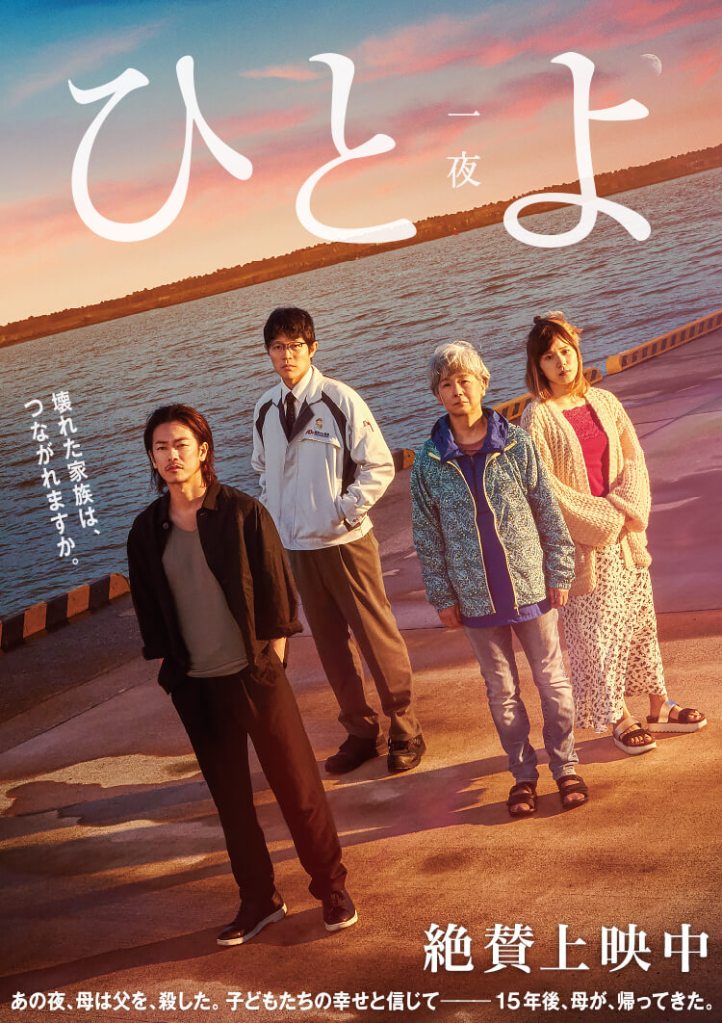
“You can live however you want, you’re totally free. You can be anything” a woman tells her children, believing she is freeing them from a cycle of violence and oppression but unwittingly consigning them to another kind of cage in Kazuya Shiraishi’s raw family drama One Night (ひとよ, Hitoyo). Adapting the stage play by Yuko Kuwabara, Shiraishi is the latest in a long line of directors asking questions about the true nature of family, taking the hahamono or “mother movie” in a new direction but ultimately finding faith at least in the concept as the family unit finally begins to repair itself in a spirit of reconciliation and forgiveness. 

The “one night” of the title is that of 23rd May, 2004 on which wife and mother Koharu (Yuko Tanaka) backs over her relentlessly abusive husband in one of the taxis operated by their company. At some point, even if only perhaps in those few moments sitting at the steering wheel, Koharu appears to have given this a great deal of thought. Calmly walking back into her familial home where her three children are each sporting prominent facial wounds from a recent beating, she hands each of them a handmade onigiri and explains that she has just killed their father. Planning to hand herself in she reassures them that an uncle will look after them and the company so they’ve no need to worry. She has no idea how long she’ll be in prison for, but cautions that she may not return for 15 years hoping that by then the stigma will have passed. On her way out, she pauses to tell them that she is proud of what she’s done, saving them from their father’s authoritarian abuse and urging them to be free to live their lives in whichever way they choose. 

15 years later, however, the children find themselves burdened by her words. Yuji (Takeru Satoh) who dreamed of being a novelist has become a cynical journalist working for a pornographic magazine. Daiki (Ryohei Suzuki) who has a stammer and wanted to be a mechanic has never been able to hold down a steady job and is on the brink of divorce after showing signs of becoming abusive himself, while Sonoko (Mayu Matsuoka) who wanted to be a hairdresser is now working as a bar hostess drinking herself into oblivion. Living with the legacy of that one night, none of them has been able to live freely or to achieve their dreams but has remained arrested in some way waiting for Koharu’s return. 

While in her mind she freed them, the children find themselves dealing with the secondary sense of abandonment in her decision to exile herself from their lives, essentially leaving them to deal with the fallout of her “crime” all alone. Not only are they now orphaned, they also have to live with the stigma of being related to a notorious murderess with all of the peculiar burdens that entails in Japanese society from harassment and bullying to reduced employment opportunities and an internalised shame. Meanwhile, their mother’s words ring in their ears, urging them to be free, to be who they wanted to be and achieve their dreams, but they find themselves paralysed by the pressure to live up to the sacrifice Koharu has made on their behalf. While Sonoko is the most sympathetic, the boys are consumed by resentment. Koharu sees her 15 years of wandering as an exile undertaken as a kind of atonement and intended to keep the children safe from further social stigma, but her sons feel only the abandonment. 

Still, “mom’s still mom. It’s we who’ve got to change” Daiki tries to convince his brother, “we’re not kids anymore” he later adds as they recreate a thwarted teenage attempt to save their mother but in a very real sense they are. The problem in Daiki’s marriage turns out be rooted in insecurity, a failure of intimacy that saw him reluctant to let his wife and daughter into his traumatic past which finally expressed itself in violence. Meanwhile another driver at the taxi firm finds himself in a parallel struggle as he processes his own troubled relationship with an estranged teenage son and comes to realise his sins are indeed being visited on him despite his best efforts to prevent it. He sympathises with Koharu against the “ungrateful” children who, like the those of the classic hahamono, fail to understand the quality of their parent’s love as expressed in the sacrifices they have made on their behalf. Yet it’s Yuji who had branded his family a mere simulacrum who eventually fights hardest to save it, paving the way for a reconciliation as they finally bring closure to the events of 15 years previously and begin to move on with the rest of their lives. A raw and painful examination of familial trauma, Shiraishi’s bruising drama eventually allows the family to reclaim the night, repairing their fracturing bonds in sharing their emotional burdens freed at last from the oppressive legacies of abuse and resentment.


One Night streams in the US via the Smart Cinema app on Sept. 6 & 11 as part of this year’s New York Asian Film Festival.

Original trailer (no subtitles)

Project Dreams: How to Build Mazinger Z’s Hangar (前田建設ファンタジー営業部, Tsutomu Hanabusa, 2020) [Fantasia 2020]

Construction was the post-war powerhouse and a traditional solution for governments looking to boost the economy but what are successful firms to do when everything’s already been built? Maeda made a name for itself as an expert in the construction of dams, but there are only so many you can build and theirs were state of the art so no one’s really looking for any more in the near future. Enter enterprising PR chief Asagawa (Hiroaki Ogi) who has a bold new plan to raise the company’s profile – start an enticing web project in which they draft iconic buildings from the fantasy world as if they existed for real starting with the underwater hangar from nostalgic ‘70s mecha anime, Mazinger Z!

As you can imagine, not everyone is taken by the idea even if initially swept up by Asagawa’s impassioned sales pitch. Being an otaku isn’t something you really want to advertise at work, and perhaps especially if you’re really into kids robot shows from 40 years ago. The point however is less about Mazinger Z than it is that Maeda can build anything it sets its mind to and if it can figure out the wilfully outlandish designs of classic anime which, it has to be said, rarely thought through the real world physics of its creations which are not even generally internally consistent, there’s nothing it cannot handle. 

The major sticking point with the Mazinger Z design is that the hangar is covered by a large amount of water (Mazinger Z is made from a special metal which is completely rust proof) which, given their proficiency with dam technology, shouldn’t be so much of a problem, but the more they look into it the more issues they find from the joints on the “roof” to the platform which pushes Mazinger Z into the launch position needing to boost him within 10 seconds. It doesn’t help that the anime often ignored the constraints of the original design for reasons of plot such as when Dr. Yumi suddenly has the robot slide to the left and bust out of the concrete rather than using the shoot. 

The team will need to show all of their engineering knowhow in order to solve the increasingly annoying number of problems, which is in a sense the point of the project in showcasing Maeda’s superior engineering power. Not all employees are originally behind it, however. Emoto (Yukino Kishii), a young woman entirely uninterested in mecha anime discovers that her colleagues quickly leave the canteen when they see her coming, while reluctant office worker Doi (Mahiro Takasugi) and former engineer Besso (Yusuke Uechi) both find themselves accosted by section chiefs who want them to undermine the project because they are embarrassed to be associated with something so “silly” and worry it will damage the firm’s reputation. Asagawa however is undaunted, sure that this kind of “silliness” is perfect for improving the company brand and capturing an online audience that will eventually lead to more business in the future even if it’s true that their “Fantasy World” clients aren’t going to be paying them nor will they actually be building any of their designs. 

In this Asagawa may well have a point because Project Dreams: How to Build Mazinger Z’s Hangar (前田建設ファンタジー営業部, Maeda Kensetsu Fantasy Eigyobu) just might be the most accessible intro to civil engineering imaginable as they somehow manage to make even the driest of calculations seem exciting in direct contrast to the frequent complaints that the ideas they’ve come up with aren’t “glamorous” enough. Dragged along by his passion, the team gradually come on side one by one with even Doi, the most cynical who told himself that he needed to knuckle down after becoming a regular salaryman, realising that there’s no shame in having fun at work, unexpectedly finding a new appreciation for the craft of engineering after being ordered to read a lot of books about dam building by the company’s foremost expert, himself quietly in favour of the project in its capacity to show off their collective know how and inspire the next generation of engineers. Contrary to expectation, they discover there’s much more industry support than they ever could have imagined for this kind of “silliness” with other companies enthusiastically coming on board to help them achieve their Mazinger dreams. Inspired by true events, Project Dreams has real love and affection for the craft and for those who are just very good at what they do no matter what it might be, embracing a childish sense of fun and imagination along with teamwork and camaraderie which suggests that anything really is possible when you put your mind to it, even constructing an underwater hangar for a robot that doesn’t exist to defend the world against the forces of evil.  


Project Dreams: How to Build Mazinger Z’s Hangar streamed as part of this year’s online edition of Fantasia International Film Festival.

Original trailer (English subtitles)

Beneath the Shadow (影裏, Keishi Ohtomo, 2020)

“There’s nothing wrong with leaving it a mystery” the enigmatic presence at the centre of Keishi Ohtomo’s Beneath the Shadow (影裏, Eiri) advises the hero as he vows to look into the unexpected appearance of a fish found swimming in the wrong river. Best known for mainstream blockbusters such as the Rurouni Kenshin series, March Comes in Like a Lion, and Museum, Ohtomo shits towards an arthouse register in adapting the Akutagawa Prize-winning novella by Shinsuke Numata which is in a sense obsessed with the unseen, the hidden details of life and secret sides we all have that are perhaps intended to protect but also leave us vulnerable. 

Konno (Go Ayano), an introverted man in his 30s, has just been transferred to rural Morioka by the pharmaceuticals company at which he works. He keeps himself to himself and largely spends his time caring for a Jasmine plant which appears to have some especial yet unexplained significance. It’s at work that he first encounters the enigmatic Hiasa (Ryuhei Matsuda), reminding him that theirs is a non-smoking building only to discover that Hiasa isn’t the sort to care very much about rules. For some reason or other, Hiasa takes a liking to Konno, turning up at his house with sake, teaching him how to fish, and going on what to anyone else look like dates. Yet when winter comes Hiasa abruptly quits his job and disappears without a word, resurfacing a few months later with a better haircut and a sharp suit explaining that he’s now a top salesman for a suspicious insurance company designed to help pay for expensive ceremonies such as weddings or more commonly funerals. The two men resume their friendship, but soon enough Hiasa again disappears. Only when he’s contacted by a co-worker (Mariko Tsutsui) after the earthquake hoping to find him because it turns out he owes her a large some of money does Konno begin to reflect on how little he might really have known this man he thought a friend. 

“Right from the start you have to groom it so it’s tantalised” Hiasa later explains, operating on several metaphorical levels but talking quite literally about lighting a fire. Konno has to wonder if that’s all it really was, if Hiasa is just a manipulative sociopath playing a long game, getting him on side in case he’d be useful later. When he resurfaces after his first absence, Hiasa eventually asks Konno to sign for one of his policies claiming that he’s one away from his quota and will be getting the can if he can’t fill it despite having talked a big game in proudly showing off a commendation he’d won as a top salesman when he turned up on Konno’s doorstep. “What you see is where the light hit for an instant, no more than that. When you look at someone you should look at the other side, the part where the shadow is deepest”, Hiasa had pointedly told him during a heated fireside conflagration, seemingly hurt as if in the moment he had wanted to be seen and is disappointed to be met with Konno’s irritated rejection, fed up with his mixed signals and distance both emotional and physical. 

Yet Konno is also himself living half in shadow as a closeted man choosing not to disclose his sexuality to those around him. A meeting with an old friend who has since transitioned presumably having embraced her own essential self raises further questions about the reasons he accepted the transfer to Morioka as if he too, like Hiasa, wanted to disappear from his old life and reinvent himself somewhere new, he’s just done it in a more conventional way. Even in contemporary Japan which is in some ways very old fashioned when it comes to the technology of everyday life and with a strong belief in personal privacy it’s surprisingly easy to just vanish at the best of times, but even his family members who are in no hurry to find him wonder if Hiasa may simply have used the cover of disaster to disappear for good. His conflicted brother (Ken Yasuda) affirms he thinks he’s probably alive because he’s “someone who can survive anywhere” which in the way he’s putting it is not much of a character reference. 

The conclusion Konno seems to come to, in a happier epilogue some years later, is that Hiasa himself was perhaps a fish swimming in the wrong waters, unable to adapt to the world around him. Perhaps it’s alright for him to remain a mystery because a mystery was what he was. Konno, by contrast, sets himself free apparently less gloomy, no longer living half in shadow, even if still hung up on the one that got away. A slow burn affair, Beneath the Shadow eventually refuses conflagration in favour of something cooler in accepting that you never really know anyone, perhaps not even yourself, even when you peer into the darkest part of the shadow. In the end you just have to let it go, “the cycle keeps repeating”. 


Beneath the Shadow streams in the US via the Smart Cinema app until Sept. 12 as part of this year’s New York Asian Film festival.

Original trailer (no subtitles)

Family Bond (太陽の家, Hajime Gonno, 2020)

“All I ever wanted was to make everyone happy” claims the father at the centre of Hajime Gonno’s Family Bond (太陽の家, Taiyo no Ie). Once again placing the modern family under the microscope, Gonno’s take is perhaps more traditional than most taking a largely uncritical stance against its extremely patriarchal patriarch whose heart might be in the right place even if his extremely outdated vision of idealised masculinity continues to undermine the idea of family that he is endeavouring to build. 
A manly man, Shingo (Tsuyoshi Nagabuchi) proudly introduces himself as a “Master Builder”, tearing up some revised blueprints from his excited newlywed clients who admittedly unreasonably have proposed major changes to the design at the groundbreaking ceremony on their new home. Such fits of artistic temperament are apparently not uncommon, Shingo’s understanding wife Misaki (Naoko Iijima) profusely apologising and later talking him down while reminding him that he might be a master craftsman but he also runs a business and his family need to eat. Shingo prides himself on being a paterfamilias, subscribing to a traditional ideal of masculinity in which a man must be strong to protect his family, and most particularly his women, but that protection extends in the main to the physical. As Misaki later complains, he largely does what he likes because family means no consequences, rarely bothering to consider the feelings of others in his impulsive drive to live in a thoroughly manly way. 
That’s perhaps one reason why he walks off the site of the traditional woodframe house he’s being paid to build to have coffee with a pretty young woman, Mei (Ryoko Hirosue), who as it turns out has an ulterior motive in that she wants to sell him an insurance policy. Despite all his life claiming that insurance is for cowards, Shingo signs as gesture of patriarchal solidarity helping out a struggling single mother while perhaps harbouring sightly less altruistic intensions. Nevertheless, it’s her son Ryusei that he’s eventually taken by, struck by the loneliness in his eyes as a boy without a father and taking it upon himself to fulfil that role. For her part, Mei is disturbingly unconcerned by this strange, over friendly, middle-aged man with a strong interest in her young son, encouraging Ryusei to hang out with him expressly because Shingo signed a policy with her as if she were in a sense loaning him out in exchange. In any case, it’s difficult to believe a modern woman would be entirely happy about Shingo’s well-meaning fathering, transmitting this extremely problematic, toxic masculinity to a new generation in instructing Ryusei that he needs to get strong because it’s a man’s responsibility to “protect womenfolk” and Ryusei’s to protect his mother as the man of the house. 

These outdated chauvinistic ideas also undermine his relationships with his wife and children, teenage daughter Kanna (Mayu Yamaguchi) resentful at his bond with a random little boy whom he seems to be grooming as a replacement son and potential heir having already alienated his adopted son and apprentice Takashi (Eita Nagayama). Kanna, studying to become an architect, resents her father for his sexism, largely ignoring her because she is a girl and therefore in his eyes unable to assume the family business. Takashi meanwhile resents him because he sent him off to apprentice as a plasterer rather than training him in carpentry as if suggesting he didn’t have what it takes to become a master builder himself. Both of them are hurt by his desire to simply get a new son in its implication that they were never good enough, a feeling compounded by the fact that they are both adopted. Shingo later signals something similar himself when Ryusei’s estranged birth father resurfaces, immediately backing off believing that he couldn’t win against blood as if that really is everything. 

“It’s all a big lie” Kanna and Takashi yell on different occasions trying to get through to their irritatingly distant father whose manly code means he doesn’t engage with emotion or feel the need to respond to their distress, eventually striking Kanna for her disrespect and kicking her out of the house. Of course, he doesn’t really mean it but it’s just another example of the ways his problematic manliness continues to destroy his relationships, Takashi also apparently harbouring resentment towards him for his unreconstructed chauvinism in his many affairs believing his desire to help Mei is just him getting up to his old tricks again. What Shingo discovers however is that he’ll have to literally repair his family through building it anew by helping Mei and Ryusei do the same as her estranged husband reassumes his male responsibility to protect his family. In essence, he’s forced to accept the family he has rather than chasing a better one, drawing a clear divide in building a house for Ryusei and his parents which is separate from his own while entreating his children to return to him through getting them to help build it. Shingo might not have changed, still defiantly patriarchal, but he has perhaps begun to accept that family is a mutual construct that requires strong support. In the end you have to build it together or the structure won’t hold.


Family Bond streams in the US via the Smart Cinema app Aug. 28 to Sept. 12 as part of this year’s New York Asian Film festival.

Original trailer (no subtitles)

Escape from Japan (日本脱出, Kiju Yoshida, 1964)

Like many directors of his generation, Kiju (Yoshishige) Yoshida began his career at Shochiku working on the studio’s characteristically inoffensive fare before being promoted as one of their youth voices through which they hoped to capture a similar audience to that attracted by Nikkatsu’s Sun Tribe movies. Yoshida’s films may have spoken to youth but they were perhaps not quite what the studio was looking for nor the kinds of projects that he really wanted to work on, which is one reason why 1964’s Escape from Japan (日本脱出, Nihon Dasshutsu), an anarchic B-movie crime thriller of intense paranoia all maddening angles and claustrophobic composition, was his last for Shochiku, the final straw being their decision to change the ending without telling him and release the film while he was away on honeymoon. 

Set very much in the present, the film opens with a young man miming to American jazz which turns out to be part of the floor show being performed by the band on the stage below for whom he is a reluctant roadie. Tatsuo (Yasushi Suzuki) dreams of going to America to rediscover “real jazz” and subsequently bring it back to Japan. He has the strange idea that America is a true meritocracy where his talent will be recognised, unlike Japan where it is impossible for him to succeed because he is not particularly good looking or possessed of “star quality”. Feeling himself indebted to the band’s drug-addled drummer Takashi (Kyosuke Machida) for helping him get the roadie gig with the false promise of becoming a singer, Tatsuo agrees to help him commit an elaborate robbery of the “turkish bath” (low level sex services and precursor to the modern “soaplands”) where his girlfriend Yasue (Miyuki Kuwano) works. Only it all goes wrong. The guys kill a policeman during the escape, and the other hotheaded member of the gang becomes convinced that Yasue may talk now that they’ve got involved with murder so they should finish her off too by forcing her to take an overdose of sleeping pills. 

Absolutely everyone is desperate to escape Japan for various different reasons. Tatsuo because of his obsession with American jazz and the freedom it represents to him coupled with the sense of impotence he feels in an oppressive society which refuses to recognise his talent because he doesn’t look the part. He jokes with his next-door neighbour, a sex worker who has redecorated her apartment in anticipation of impressing the tourists arriving for the Olympics, that he envies women and wishes he could find a “sponsor” to take him to the States, but later can offer only the explanation that Japan doesn’t interest him when probed over why he was so desperate to leave. 

“Korea or anywhere else, it’s better than Japan” Yasue later adds, consoling Tatsuo as she informs him that their escape plan won’t work because all of the US military planes are being diverted to Korea to bring in extra help for the Olympics. Bundled into a van filled with chicken carcases as a potential stowaway, he discovers another escapee – a Korean trying to go “home”, or rather to the North (presumably having missed out on the post-war “repatriation” programs) where he claims there are lots of opportunities for young people only to lose his temper when Tatsuo explains that he wants to become a jazz singer. He doesn’t want decadent wastrels in his communist paradise and would rather Tatsuo not mess up his country. Yet they are each already dependent on the Americans even for their escape, making use of military corruption networks and getting Yasue’s friend’s GI squeeze into trouble through exposing his black-marketeering. 

Tatsuo and Yasue find they have more in common than they first thought, both “deceived” by those like Takashi who turned out to be a feckless married man and father-to-be risking not only his own future but that of his unborn child solely to fuel his escapist drug habit (which was perhaps the reason for the lengthy hospital stay from which he had just returned). Yasue was just trying to save up enough money to open a hairdresser’s in her hometown, but Takashi told her he was a “famous jazz drummer” and presumably sold her the same kind of empty dreams as he did Tatsuo. Giving up on her own future, realising that even in America the sex trade is all that’s waiting for her, Yasue tries to engineer Tatsuo’s escape but he, traumatised by his crimes, descends further into crazed paranoia, eventually finding himself right in the middle of the Olympics opening ceremony. This is event is supposed to put Japan back on the map as a rehabilitated modern nation, but perhaps all it’s doing is creating an elaborate smokescreen to disguise all the reasons a man like Tatsuo and a woman like Yasue might want to be just about anywhere else. Yoshida seems unimpressed with the modern nation and its awkward relationship with the Americans, perhaps a controversial point in the immediate run up to the games. Shochiku neutered his attempt to depict a man driven to madness by the impossibilities of his times, but a sense of that madness remains as Tatsuo finds himself on the run and eventually suspended neither here nor there, trapped in a perpetual limbo of frustration and futility.


Original trailer (no subtitles)

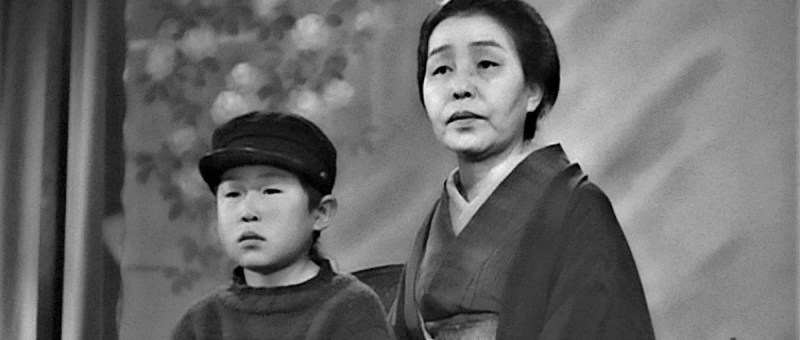
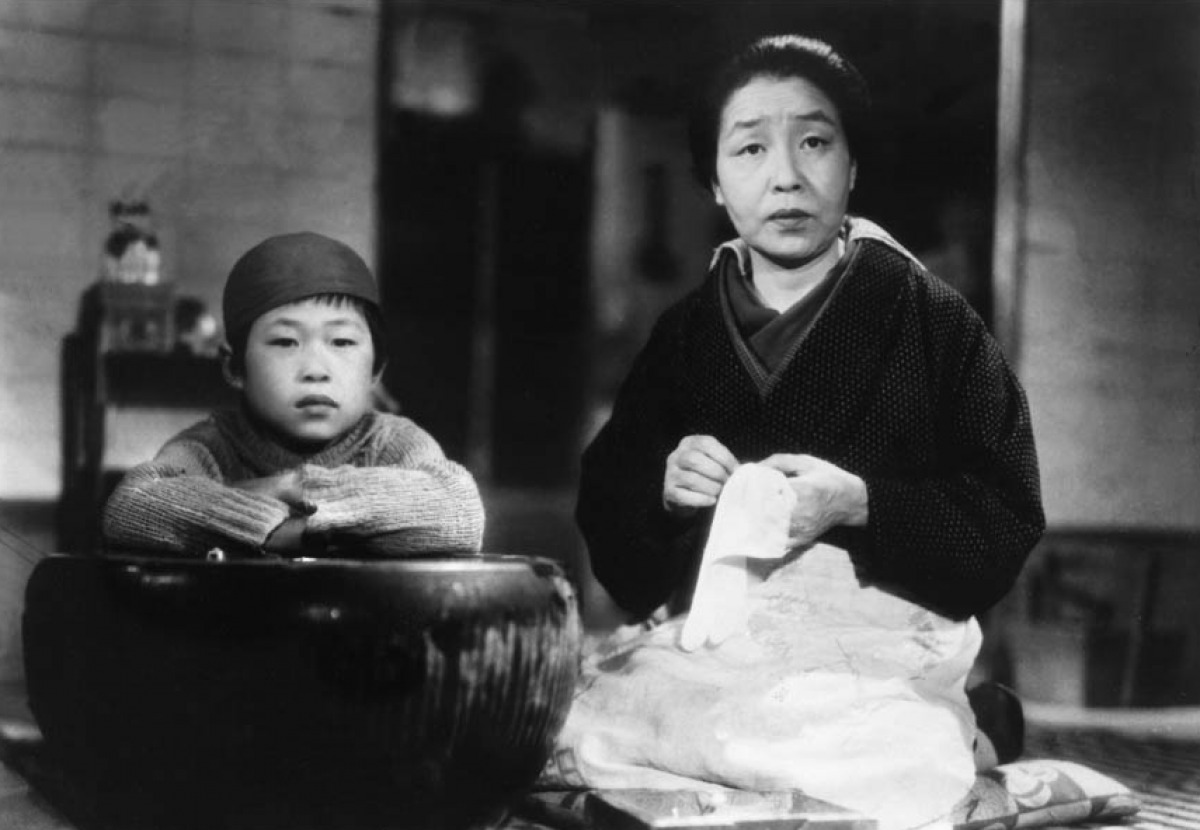
Immortal Love (永遠の人, Keisuke Kinoshita, 1961)

Patriarchal feudalism destroys not only the life of an innocent young woman but all of those around her in Keisuke Kinoshita’s embittered romantic melodrama Immortal Love (永遠の人, Eien no Hito). Scored to the impassioned beat of an incongruous flamenco and spanning almost thirty years of turbulent history from the tightening years of militarism to Anpo protests, Immortal Love finds its heroine imprisoned by the system within which she was raised but determining to free her children from the legacy of feudalism even while knowing that she traps herself in her intense resentment towards her husband and everything he represents. 

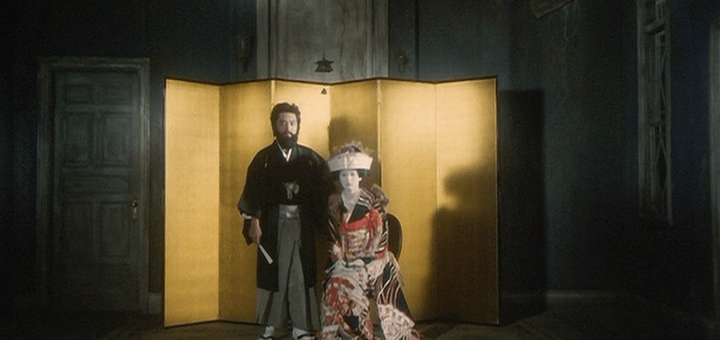
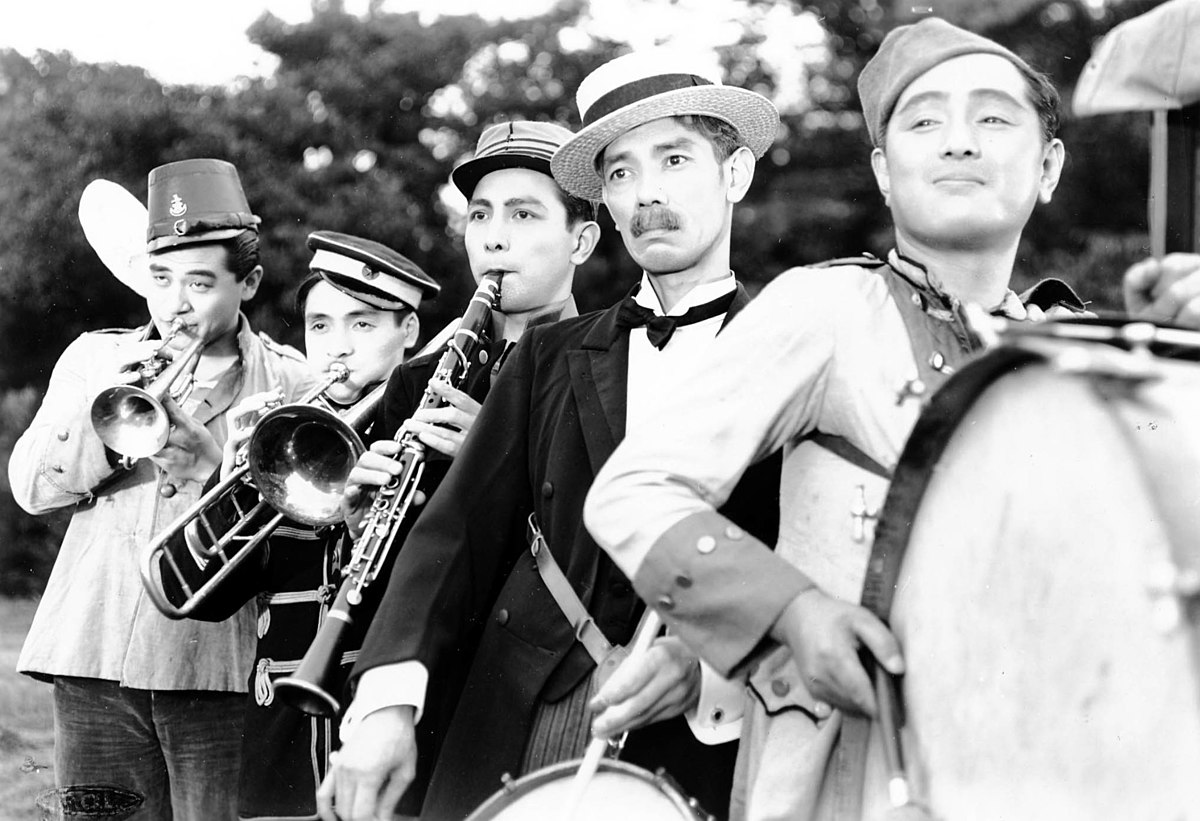
Heibei (Tatsuya Nakadai), the wealthy son of the village chief, returns home from military service in Manchuria after sustaining an injury that will leave him walking with crutches for the rest of his life. Though his father tells him that his is an honourable discharge and has organised a small parade complete with flag waving and a band to greet him, it’s obvious that Heibei feels ashamed to have returned home wounded and is unhappy that his father has made such a fuss. He’s doubly unhappy at his welcome home party on hearing the gossip that local beauty Sadako (Hideko Takamine) is in love with farmer’s son Takashi (Keiji Sada) to whom Heibei has always felt inferior, something which is only exacerbated by the fact Takashi is also at the front and apparently acquitting himself well. Cruelly calling her over, he tells Sadako that he met Takashi at a field hospital but that he was about to go off to a big battle so could very well be dead. 

Heibei’s true feelings, if you could call them that, remain unclear. Later, justifying himself, he claims that he really did care for Sadako and that all of his subsequent “immoral” acts were committed out of a love he was ill equipped to express, but that first night at the party it seems obvious that he only wants her because he knows she is Takashi’s. He tries to assault her when she is massaging his wounded leg, attempts to court her, and then finally resorts to rape with the help of his father who keeps Sadako’s dad occupied by forcing him to drink sake as his guest while making veiled threats about the status of his tenancy. Heibei had made a formal proposal which Sadako was about to turn down, further humiliating him, despite the pressure he’d piled on by threatening to throw Takashi’s brother off his land and potentially kicking her family off theirs too. By raping her and tricking her father into agreeing to the marriage he forces her to accept, wielding his feudal privilege like a weapon. 

Shortly before the marriage, Takashi returns on leave, a heroic soldier painted in glory. He too is resentful and heartbroken to learn that Sadako is to marry to Heibei, eventually hearing the truth of it from his brother. Sadako tries to kill herself rather than be forced into marriage with her rapist, and avoids seeing Takashi in thinking she is now “impure” and can no longer be his wife. Takashi assures her she is wrong, and that even if Heibei thinks he has “stolen” her in taking her by force, he can simply take her back. He proposes they elope, but fails to turn up, leaving Sadako standing sadly at the roadside until her father arrives with a letter explaining that Takashi has reconsidered and advises her to accept a life of material comfort as Heibei’s wife rather than one of hardship with him. 

Forced to marry the man who raped her, Sadako lives in quiet resentment, bearing three children the first of which she struggles to love because he is the result of the rape which condemned her to her present life of misery. Years later, Sadako learns that Takashi married too when his wife Tomoko (Nobuko Otowa) is evacuated to the village to stay with his brother. Heibei, ever cruel, offers Tomoko a job as a household servant, revelling in the idea that Takashi’s first love and current wife are both under his roof, telling her all about their strange romantic history and setting her at odds with Sadako whom she too resents knowing that her husband has never loved her because he can’t give up on his first love. A twisted bond arises between Heibei and Tomoko, united in resentment of Takashi and Sadako, but Heibei eventually tries to rape her too, once again trying to take what Takashi has, or possibly destroy it.  

Despite her despair and loathing for her husband, Sadako tries to rise above it and always makes a point of treating Tomoko with respect and kindness even when she is cruel. Later on the road, she tells her not to worry, that what she grieves isn’t Takashi but the life she lived before. Heibei is perhaps also a victim of the system, his masculinity undermined by his brash father while his sense of inferiority is exacerbated by his disability, but he is also innately cruel and selfish. There’s strange perversion in the act of healing which closes the film in that it forces Sadako to ask for an apology from Heibei, the man who raped her and ruined her life, for using his abuse as an “excuse” to go on hating him all these long years. Heibei characteristically paints himself as the victim, branding Sadako a cold and unfeeling woman, wondering who will look after him now that he has been abandoned by all his children. He tells her that his feelings were sincere even if his acts were immoral, implicitly blaming her for the abuse that he inflicted, but Sadako merely accuses him of romanticising the past in trying to justify this internecine bid for vengeance that ruined the lives of at least four people as a frustrated love story. 

“You and I may never be reconciled until one of us dies” Heibei admits, while Sadako tearfully tells a dying Takashi that it’s not too late for her to try to be happy. Tomoko was able to reconcile with her son and apparently lived out the last of her days in contentment. Naoko (Yukiko Fuji), Sadako’s daughter, eventually married Takashi’s son Yutaka (Akira Ishihama), breaking with the past both in rejecting the feudal class structure within which she was raised in marrying a working class man, and the patriarchal in ignoring her cruel father’s authority. A kind of healing has been achieved, freeing the younger generation from the cursed family legacy which claims that their ancestral wealth was gained by a literal betrayal of thousands of peasant farmers at the time of the siege of Osaka in 1615. The corruption of the war and a culture of hypermasculinty is visited on Sadako in the violent trauma of the rape, an event which echoes through not only her life but perhaps her children’s too. It is not she who should be asking for forgiveness, but she does perhaps begin to find it in herself, in making a kind of peace with the past which at least cuts the cord, allowing the younger generation to escape the net of feudal oppression for a brighter, freer, post-war future.


Immortal Love is available to stream in the US via the Criterion Channel.

Original trailer (no subtitles)

Inferno of Torture (徳川いれずみ師:責め地獄, Teruo Ishii, 1969)

“There’s no hope for us anymore” cries the hero, redeeming himself with one last act of humanity before allowing himself to be consumed by the flames of Edo-era barbarity. Another tale of feudal exploitation, Teruo Ishii’s Inferno of Torture (徳川いれずみ師:責め地獄, Tokugawa Irezumi-shi: Seme Jigoku) opens with an otherwise unrelated scene of female crucifixion followed by an elaborate beheading, presenting both of these events with a degree of historical authenticity they do not perhaps possess. Nevertheless, his central tale which turns out to be less about two women than two men, turns on the exploitation of female bodies, subtly suggesting that the modern society is itself founded on female exploitation. 

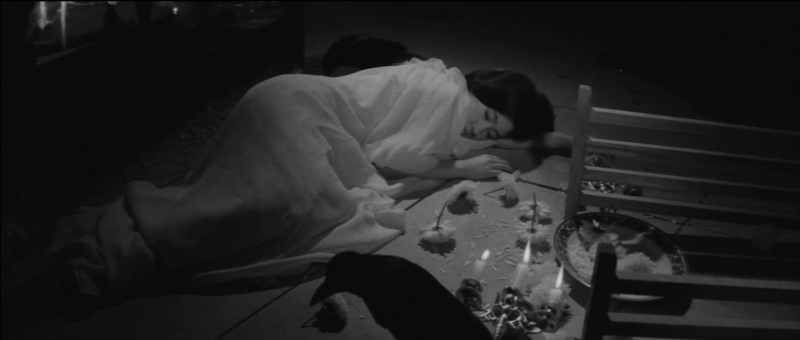
Though dropping the portmanteau structure frequently employed in the Joys of Torture series, Ishii returns from the prologue with the end of the first arc in which the presumed heroine, Yumi (Yumiko Katayama), makes a stealthy visit to a ghostly cemetery in which she trashes the grave of a man named Genzo (Shinichiro Hayashi), digs him up and dismembers his body to retrieve a key we later see him swallow which she hopes will unlock her womanhood currently imprisoned by an ornate chastity belt, only the key doesn’t fit. 

Flashing back again, we see Yumi forced into sex work in payment of a debt and imprisoned in a labyrinthine brothel which specialises in bondage and torture under the guidance of lesbian madam Oryu* (Mieko Fujimoto) and her samurai fixer Samejima (Haruo Tanaka). The brothel’s USP is in its tattooed women which neatly leads us into the main narrative as Yumi’s body becomes a battleground contested by two men, top tattoo artists in search of the perfect canvas in order to win, ironically, the hand of their master’s pure and innocent daughter Osuzu (Masumi Tachibana). 

Horihide (Teruo Yoshida) and Osuzu are in love, but the dark and brooding Horitatsu (Asao Koike) is determined to frustrate his rival’s desires by becoming the successor to Osuzu’s dying father, the tattooist Horigoro. The “hori” which prefixes each of the men’s names relates to the process of tattooing and comes from the verb to chisel, hinting at the way they prick and channel their desires into the canvas which is human skin. Horihide is our “hero”, described by Horigoro as the light to Horitatsu’s dark, Horitatsu currently making more of an impact with his designs of violent intensity, but each of them is in a very real way content to use and exploit the bodies of women without their full consent in order to practice their art. It is essentially an act of violence if not of “torture”. 

Meanwhile, Oryu and Samejima are profiting off their “merchandise” more directly in participating in the trafficking of tattooed ladies to lecherous foreigners displaying an early fetishisation of Asian women. This being late Edo, Japan is still in its isolationist period in which fraternising with foreigners was illegal which is why the action eventually takes us to Nagasaki and the Dutch trading port of Dejima, here presented as a nexus of corruption, where Samejima and Oryu prove themselves very much in league with foreign powers dealing with powerful businessman Clayton (Yusuf Hoffman), despite his name apparently a Dutchman, and his Chinese associates. Like Nikkatsu’s borderless action films of the ‘50s and ‘60s, Inferno of Torture indulges in an unpleasant Sinophobia which culminates in a chase through a crowded Chinese wet market in which we catch sight of dogs hanging bound ready for the slaughter in similar poses to those of the women in the brothel, not to mention thrusting snakes, before being confronted by a basket full of adorable puppies presumably headed for a dark destination, while we finally rediscover Hidetatsu collapsed in an opium den after being forcibly addicted by Oryu as a means of control. 

“This is a house of horrors” the Chinese gang leader tells a group of women bought by Samejima from a prison and promised a life of wealth and ease as geisha catering to high class clients. It’s difficult to tell if Ishii is critiquing Edo-era misogyny or that of the present day, or merely revelling in it with increasingly perverse scenes of sexual violence and degradation which continually imply that women have no role or value outside of reflecting the desires of men while those who try to claim their own agency are brutally put down by an inherently misogynistic, patriarchal society. After a Count of Monte Cristo-esque subplot in which Horihide is framed for murder but escapes to plot his revenge, the psychedelic final showdown returns us to the tattooists’ artistic face off as they again weaponise female bodies to embody their own ambitions, Horihide turning a blameless young woman into an iridescent peacock to get back at her father. Nevertheless, he finally reassumes his humanity in ending his mission of vengeance before it takes more innocent lives while accepting that he may now be too corrupted to return to his former life. Elegantly composed often unconsciously recalling the keyhole in Yumi’s chastity belt as it imprisons women within the peephole of the frame, Inferno of Torture ends exactly as it began, with a scene of grim and ironic punishment in which the female form is itself obliterated. 


Inferno of Torture is available on blu-ray from Arrow Video in a set which also includes an in-depth commentary from Tom Mes discussing the treatment of the various actresses involved with the series, Ishii, and Toei in general; Jasper Sharp’s Miskatonic lecture Erotic Grotesque Nonsense & the Foundations of Japan’s Cult Counterculture; and a booklet featuring new writing by Chris D.

Original trailer (no subtitles)

*This character’s name is rendered as “Oryu” in the subtitles but “Otatsu” (different ways of reading the same character which means “dragon”) in the accompanying booklet.

Bad Girl (非行少女, Kirio Urayama, 1963)

“It’s all because of poverty” according to the not-quite hero of Kirio Urayama’s Bad Girl (非行少女, Hiko shojo), and he’s right to an extent but then again not. Following his factory tale Cupola, Where the Furnaces Glow, Urayama shifts further into social realism, exploring small-town life at a midpoint in the post-war era in which the economic prosperity which was beginning to take root in a Tokyo about to host the Olympic Games had not yet been evenly distributed. The titular “bad girl” of the title is no Nikkatsu delinquent, merely a lonely young woman undermined by parental neglect and societal disdain who scandalously smokes, drinks, and steals the things she could never hope to afford. 

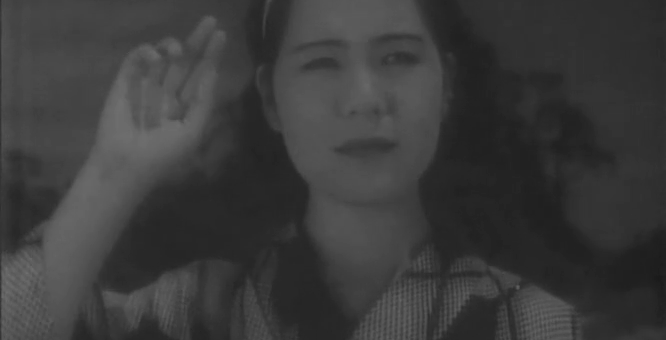
Wakae (Masako Izumi) claims she does these things in part because she hates her step-mother (Sumie Sasaki) whom she blames for her own mother’s death after returning from the hospital to tell her father that her mother had died only to find him with another woman. Emotionally neglected, she spends her time in bars enjoying the attentions of men without perhaps understanding the dangers. It’s in trying to escape two young toughs who think they haven’t got what they paid for when they took her to the cinema that Wakae runs into childhood friend Saburo (Mitsuo Hamada), recently returned from Tokyo after the factory he was working at went bust. Now 21, Saburo has a little education and was hoping for an office job but discovers that positions are generally open only to new graduates and is advised that his best option is to work for his brother (Asao Koike) with whom he does not get on. 

Where his brother is currently running for political office on a conservative ticket, Saburo is of a more liberal, progressive outlook, thinking back on the divisions in the town caused by protests against an American artillery test site which once occupied the local beach. He is extremely concerned that Wakae has been skipping school and is keen to help her study, even giving her money to help pay the fees as well as buying her a fashionable skirt to replace the worn through trousers which left her too ashamed to go. Unfortunately, Wakae loses the money after she’s accosted by a delinquent boy who tries to press her into sex work, leaving her both unable to attend school and embarrassed to see Saburo who is the only one encouraging her to think that she is worth something and can have a bright future. 

Poverty is in itself only one problem, the wider one being that everyone has already decided that Wakae is “bad girl” and that bad girls aren’t worth anything. Her disinterested father (Jun Hamamura) and stepmother are content to send her to her aunt who wants to make her a geisha, reinforcing an image of herself as somehow unfit for regular society and suited only to sex work. After losing Saburo’s money, she tries to rob the school but is caught by a caretaker who feigns sympathy but later offers her money for sex and then tells everyone that she tried it on with him so he wouldn’t turn her in. This coupled with a misunderstanding that she frittered away the money he gave her for the fees makes even Saburo lose faith in her, convincing him that they must have some time apart after he agrees to take a job on the chicken farm of a family friend to get away from his brother’s conservative authoritarianism. 

After accidentally setting fire to a chicken coop, Wakae is sent to a home for troubled children which turns out to be perhaps the best thing for her. Although she does not immediately bond with some of the other residents, she finds there what she never had at home – a supportive family, while the couple who run the facility do their best to instil confidence by teaching her skills that will allow her to reintegrate into regular society. Even there, however, members of the board are primed to write her off as a lost cause, just another “bad girl” not worth the effort. Only the head of the facility argues the problem is that no one’s ever given her a chance and if no one ever does then she’ll never have the opportunity to prove them wrong. 

Meanwhile, many of the other girls find themselves in the same position. Wakae’s friend Tomiko (Shizuka Yoshida) who ran away when she discovered that her parents were going to sell her, believes her future is hopeless because she’ll never be able to escape the “bad girl” label, but given courage by her time at the centre Wakae is able to tell her to stay strong, because you’ll never know if you don’t try. Wakae becomes an uncomfortable standard-bearer for the others, her eventual graduation another sign of hope but also perhaps a burden in knowing that if she fails to capitalise on her success she will only deepen their sense of despair. 

Yet her path forward begins to take her away from Saburo who makes a late night, romantic visit to the centre to apologise and tell her he’ll be waiting for her when she gets out. After a crisis of his own in which he too commits a crime in an attempt to buy a better future only to return beaten both literally and spiritually, Saburo has perhaps given in, agreed to work for his ultraconservative brother and bought his line of earnest hard work as the only path towards salvation. Wakae decides to take a promising job offer in Osaka and to leave without saying goodbye in case Saburo tries to convince her to stay local. That’s something he eventually tries to do in a last minute station dash, leaving Wakae torn and confused, enduring a public breakdown in a train station cafe literally stuck between one place and another. 

Saburo had complained that his problem was that he didn’t know what to do, confused by the volatile post-war society. Rather than a source of salvation he becomes a feckless suitor who can offer only a vague ideal of “love”, unable to protect Wakae and perhaps selfishly holding her back. As she tells him, she has made her decision, but ironically lacks agency. Her destiny is still to an extent in Saburo’s hands in his desire either to trap or free her. Meanwhile, there is also something insidiously uncomfortable in the fact that the only way to escape her “bad girl” image is by becoming economically productive, redeeming herself through honest hard work, while the desire to reject the label so totally also tacitly reinforces the idea of there being such a thing as a “bad girl” and that “bad girls” are worthless. Perhaps Saburo’s brother wins after all in his aspirational conservatism and its insistence on properness and industry. Nevertheless, Urayama leaves Wakae in a better place than we found her, given the confidence to pursue an individual destiny in the knowledge that she is not worthless, is deserving of love and happiness, and has a place to which to return as she makes her way into a promising post-war future.