5 Million Dollar Life (五億円のじんせい, Moon Sung-ho, 2019)

5 Million Dollar Life posterIs it possible to live a life without “debts” of one kind or another or are we all just living on loans? The hero of Moon Sung-ho’s 5 Million Dollar Life (五億円のじんせい, Gooku Yen no Jinsei) wants to find out, not least because he feels himself indebted to those who have helped him in the past and struggles with the pressure of living up to their expectation. An unexpected source provides some helpful advice in pointing out that “value” in one sense at least is not something you’re free to decide for yourself but is defined by others. Then again, not being certain of your own worth makes it impossible to claim your rightful place in society as someone as worthy of love and respect as any other.

When Mirai (Ayumu Mochizuki) was six, his family found out he had a congenital heart defect and would need to go abroad for a transplant. His community rallied around him and raised five million dollars so he could go to America for treatment. The heartwarming story also made him the star of an ongoing documentary in which he’s interviewed on television every year so those who contributed to saving his life can find out how he’s getting on. Becoming a local celebrity and an accidental TV star is obviously a lot of pressure for any young man, but Mirai feels acutely burdened by the responsibility of “repaying” the kindness that was offered to him. He doesn’t feel his life was worth five million dollars and knows he is unlikely to repay their “investment”. He is after all just “ordinary”. He won’t win a Nobel prize or cure cancer, all he can do is live his life in the normal way but that’s hard when it feels like everyone is secretly looking over his shoulder and waiting for him to make a mistake.

Meanwhile he’s also become a role model to the suicidal Chiharu (Hikari Kobayashi) who doesn’t “see the value in life”  and feels that “death is glorious” because people can hate you while you’re alive, but they’ll love you when you’re gone. Mirai gets where she’s coming from. He longs for an ending too, if only to reject the responsibility he feels towards those who saved his life. Attacked by a troll online, he takes up the challenge to make the five million dollars back and then kill himself to bring an end to the whole affair but quickly discovers that it’s a lot harder to make five million dollars than he thought.

Neatly taking place during the last summer of high school, Mirai’s odyssey sends him on an odd trek across working class Japan as he finds himself alone and without money or means to support himself. At only 17, he can’t even stay in a hotel on his own and so he winds up becoming homeless but is taken in by a nice old man who claims he decided to help him because he bought an umbrella with his last pennies rather than pinching someone else’s. Though he is often exploited and betrayed by those who take advantage of his goodness, that same quality finds an answer in others who, sometimes despite themselves, want to help him because he seems like the sort of person who needs help.

This idea finds encapsulation in the surprisingly astute words of wisdom Mirai receives from a petty gangster he meets after getting involved with sex work. The gangster, who starts off by telling him that he’s making a mistake selling himself short when it’s the customer who decides what his “value” is, later explains that it’s not so much that the world is divided into people who are nice and people who aren’t, but that some people are “worth” being nice to and Mirai, for one reason or another, is one such person who thrives on kindness.

Mirai’s desire to quantify his life by putting a price on it may be mistaken, as proved by the sad case of a family committing suicide because of monetary debt, but what he realises is that people help because they want to and they don’t necessarily expect anything in return other than kindness. If he wants to find a way to repay them, he’ll have to figure it out on his own terms first, but all they really wanted they wanted from him was that he live his life as happily as possible. 5 Million Dollar Life goes to some pretty dark places, but always maintains a healthy cheerfulness as Mirai goes on his strange odyssey looking for the “value” in being alive and discovering that it largely lies shared kindnesses and unselfish connection.


5 Million Dollar Life screens on 11th July as part of the 2019 New York Asian Film Festival.

Original trailer (no subtitles)

The Fable (ザ・ファブル, Kan Eguchi, 2019)

The Fable poster 2It’s easy to become a victim of your own success when you’re a top assassin. Being the best only makes you target, and over exposure can prove fatal. If you’ve lived by taking the lives of others, can you ever really go back to being just like everyone else? The hero of Kan Eguchi’s The Fable (ザ・ファブル) tries to do just that, but then “back” might not quite be the best way to think about it in his case. Silly slapstick humour meets fast and furious gun fu but always with a soulful heart as our heroes try to figure out how to live “normally” while inhabiting a very abnormal world.

“The Fable” (Junichi Okada) is Tokyo’s top assassin, as he proves effortlessly taking out a room full of yakuza at a wedding reception. He is not, however, heartless, letting the gangster’s pregnant wife alone unlike the next bunch of goons to turn up. In any case, Fable has been far too successful, which is why his handler (Koichi Sato) hands him an unusual new mission – to live as a “normal” person in Osaka for a whole year without killing anyone at all. Along with his assistant posing as his sister under the cover ID “Yuko” (Fumino Kimura), and a pet parrot, Fable becomes “Akira Sato” and begins his new life as a “normal” man nominally under the aegis of the local mob.

The problem is “Sato” never had much of a “normal” life. As a child, he was abandoned in the mountains with only a pocket knife to toughen him up for a life of killing. He didn’t go to school, has never had a job, and struggles with social situations. He is however extremely dedicated and committed to fulfilling his mission which means he is very keen to figure out what “normal” people do so he can do that too, quickly noting that “normal” people don’t usually eat the skin on edamame beans or the rind on watermelon so doing either of those things in public will instantly arouse suspicion. Meanwhile, he takes a minimum wage job at small printshop working alongside the lovely Misaki (Mizuki Yamamoto) who was nice enough to offer him some tissues when he let himself get beaten up by thugs to prove how “professional” he could be in maintaining his cover.

That’s something that might be easier said than done given the rapidly unfolding yakuza drama all around him. Recently released thug Kojima (Yuya Yagira) is stirring up trouble everywhere he goes, exacerbating a growing division between the big boss (Ken Mitsuishi) and ambitious underling Sunagawa (Osamu Mukai) who is already fed up with Kojima’s antics while two crazed admirers are also hot on Sato’s trail hoping to knock him off the top spot.

Meticulous and efficient, Sato is still in many ways a child trying to learn to live in the “normal” world. Somewhat arrested in having missed out on a normal childhood, his “childish” drawings of zoo animals become an unexpected hit with the print shop crew, while his justice loving heart also has him subtly undermining the office pervert who has a habit of installing illicit spy cams targeting female employees. Despite his icy profession, Sato is a goodnatured guy and deep down just wants to help and protect people. Thus he is very invested in his mission and actively tries to become “normal” while bonding with Misaki and taking care of his pet parrot (a Le Samouraï reference and ironic mentor in mimicry) as he navigates the difficult waters of interpersonal interaction.

Frustrated male relationships are indeed key from Sato’s with his boss who orders him not to die but then says he’ll kill him if he fails his mission, to the homoerotic tension between Sato’s contact Ebihara (Ken Yasuda) and the relentlessly psychotic Kojima. Sato’s boss and Ebihara acknowledge they will have to accept responsibility for their respective charges and if necessary take preventative measures in order to ensure they don’t cause trouble, but they do so with heavy hearts in service of their codes. Silly slapstick humour quickly gives way to slick action set pieces as Sato steps back into his element, ably assisted by his sake-loving “sister” who has committed to her cover ID almost as deeply as Sato. Sweet and affecting, Kan Eguchi’s adaptation of the much loved manga is a charmingly surreal one in which his fish out of water hero figures out how to live in a new pond thanks to unexpected kindnesses and honourable yakuza ethics.


The Fable screens on 2nd July as part of the 2019 New York Asian Film Festival.

Original trailer (no subtitles)

The Gun (銃, Masaharu Take, 2018)

The Gun poster 1Much as Haruhiko Oyabu had in the post-war era, Fuminori Nakamura is fast becoming the go to voice for nihilistic noir in Japanese cinema. Several of his famously dark novels have already been adapted for the screen, most recently the grisly mystery Last Winter We Parted, but it’s only now that his lowkey debut The Gun (銃, Ju) is getting a suitably detached adaptation from 100 Yen Love’s Masaharu Take.

Like many of Nakamura’s “heroes”, Toru Nishikawa (Nijiro Murakami) is a disaffected youngster who thinks “it’s completely worthless to live”. His life changes one day when he comes across the body of a middle-aged man with a pistol lying next to it. For reasons he doesn’t quite understand, Toru picks the gun up and takes it home with him. Gradually its presence begins to obsess him as if he were literally being seduced by it. Believing he can communicate with the gun through touch, he lovingly caresses it, buys it trinkets, and lingers over thoughts of all they could do together.

Even when he takes a casual hookup (Kyoko Hinami) to bed, all Toru can think about is the gun. In the morning he tries to make her hate him by coming on strong, but it backfires because it appears to be what she likes, at least she suggests they hook up again, possibly on a regular but casual basis because she already has a boyfriend. Meanwhile, another prospect walks onto the scene – Yuko (Alice Hirose), a young woman Toru may or may not have forgotten meeting in the past. With Yuko Toru decides to do everything “properly” in a quest to win her heart rather than just her bodily submission.

Detached and very possibly a sociopath, Toru does indeed begin to show something of a more sensitive side in dealing with the similarly depressed Yuko. His gentlemanly act may be just that (and as one might expect, it largely works) but does at least display an acute emotional intelligence even if it’s being wilfully misused. Similarly, his first reaction to hearing alarming sounds suggesting the woman next door is mistreating her child is to turn his stereo up and ignore them, but he later finds himself trying to talk to the little boy in the street and eventually even calling the police only to have his mistrust of authority confirmed when they admit they’re aware of the situation and will send someone but probably not until the next day.

The woman next door, a bar hostess who rolls in late and kicks her kid out of bed to sleep on the porch so she can entertain her gentlemen callers, drags up unwelcome memories of the woman who abandoned him to an orphanage. To be fair, Toru does not seem any more misogynistic than his sleazy friends but has a fairly utilitarian idea of “romance”, viewing it as a game of conquest either fast and loose like with the casual hookup or slow and deep as in his careful pursuit of Yuko. Gradually his separate pursuits of the two women become confused, leading Yuko to confront him over whatever it is that’s so obviously “wrong” with him. Upset as she is, Yuko sees the darkness in Toru but must also see the light, affirming that she has her darkness too but is willing to help him with his if only he gives her a little time and waits for her forgiveness.

Toru, meanwhile, is still fixated on his beloved gun which he has begun to carry about with him in a little bag for added frisson. Living largely without feeling, the thrill of carrying such an illicit object becomes a peculiar kind of drug, as does the intoxicating thought of the act of actually firing it and finally of taking a life. A wily police detective (Lily Franky) cuts straight through Toru’s smug facade to the gaping void beneath, trying to prevent him from jumping straight into the abyss but confident he will fail. As the detective predicted, Toru’s sense of reason continues to fragment leaving him unsure of what is real and what isn’t while he obsesses over the gun and what he might do with it but in a purely intellectual sense without considering the real world consequences of his actions. An exercise in style, The Gun is a noirish tale of existential ennui and dark obsession filled with nihilistic dread as its soulless hero commits to living his “worthless” life only to wilfully rob himself of the possibility of salvation.


The Gun screens as part of the 2019 New York Asian Film Festival on June 30.

Original trailer (no subtitles)

Samurai Marathon (サムライマラソン, Bernard Rose, 2019)

Samurai Marathon posterAfter two and a half centuries of peaceful slumber, Japan was jolted out of its isolation by the arrival of Commodore Perry’s Black Ships. The sudden intrusion proved alarming to most and eventually provoked a new polarisation in feudal society between those who remained loyal to the Shogun and the old ways, and those who thought Japan’s best hope was to modernise as quickly as possible to fend off a foreign invasion if it did eventually arise as many feared it would. Lord Itakura (Hiroki Hasegawa) has a foot in both camps. He has no desire to move against the Shogun, but fears that centuries of peace have made his men soft and complacent. His solution is to institute a “Samurai Marathon”, forcing his retainers to run 36 miles to prepare for a coming battle.

If you’ve spent your life sitting around and occasionally waving a sword at something just to keep your hand in, suddenly trying to run 36 miles might not be the best idea, as many samurai keen to win favour through racing glory discover. There is, however, an additional problem in that, unbeknownst to anyone, samurai accountant Jinnai (Takeru Satoh) is a secret ninja spy for the shogun. Confused by the preparations for the race, he reported that a possible rebellion was in the offing only to bitterly regret his decision on realising Itakura’s anxieties are only related to external, not internal, strife. All of which means, the Shogun’s men are on their way and Itakura’s retainers are sitting ducks.

Helmed by British director Bernard Rose, Samurai Marathon (サムライマラソン) plays out much more like a conventional European historical drama than your average jidaigeki. Where samurai movies with an unusual focus tend to be comedic, Rose opts for a strangely arch tone which is somewhere between po-faced Shakespeareanism and post-modern irony. Rather than the stoical elegance which defines samurai warfare, the violence is real and bloody, if somewhat over the top in the manner of a gory Renaissance painting complete with gasping severed heads and gruesome sprays of dark red blood.

A chronicle of bakumatsu anxiety, the film also takes a much more pro-American perspective than might perhaps be expected, taking the view that the arrival of the Americans heralded in a new era of freedom and the origins of democracy rather than the more ambivalent attitude found in most jidaigeki which tend to focus much more strongly on the divisions within samurai society between those who wanted to modernise and those who just wanted to kick all the foreigners back out again so everything would go back to “normal”. Itakura, like many, is suspicious of foreign influence and the gun-toting, yankee doodle humming Shogunate bodyguard is indeed a villain though it’s Itakura himself who will end up firing a gun as if conceding that the future has arrived and the era of the sword has passed. 

Ramming the point home, Itakura is also forced to concede to the desires of his wilful daughter, Princess Yuki (Nana Komatsu), who wanted to travel and see the world while her society (and conventionally minded though doting father) insisted all there was for her was marriage and a life stuck inside castle walls. Managing to escape and disguising herself by cutting her hair and putting on peasant clothes, Yuki is able to evade detection longer than expected precisely because few people have ever seen her face. She also gets to make use of some of the samurai training she’s received by holding her own out on the road, though it seems improbable that her father would let her ride out alone even if he finally allows her free rein to go where she chooses.

Meanwhile, other ambitious retainers try to use the race to their own advantage though there’s poignant melancholy in one lowly foot soldier’s (Shota Sometani) dreams of being made a samurai considering that in just a few short years the samurai will be no more. The final sepia shift into the present day and a modern marathon may be a stretch, as might the unnecessary final piece of onscreen text informing us that we’ve just watched the origin story for the Japanese marathon, but the main thrust of the narrative seems to be that the samurai were running full pelt into an uncertain future, preparing to surrender their swords at the finish line. An unusual take on the jidaigeki, Samurai Marathon perhaps takes an anachronising view of Bakumatsu chaos in which the samurai themselves recognise the end of their era but finds its feet on the road as its self-interested heroes find common purpose in running home.


Samurai Marathon screens as the opening night gala of the 2019 New York Asian Film Festival on June 28 where actress Nana Komatsu will be in attendance to collect her Screen International Rising Star Asia Award.

Original trailer (no subtitles)

The Last Recipe (ラストレシピ〜麒麟の舌の記憶〜, Yojiro Takita, 2017)

Last Recipe Poster 2Is it really possible to be “successful” and a terrible person? Some might say it’s impossible to become successful and stay nice, but in Japanese cinema at least success is a communal effort. Prideful selfishness is indeed the reason for the downfall of the hero of Yoijro Takita’s historically minded cooking drama The Last Recipe (ラストレシピ〜麒麟の舌の記憶〜, Last Recipe: Kirin no Shita no Kioku). Adapted from a novel by the director of the Iron Chef TV show, The Last Recipe offers a somewhat revisionist portrait of Japan in the 1930s but, perhaps ironically, does indeed prove that no one gets by on their own and all artistic endeavours will necessarily fail when they come from a place of self absorbed obsession with craft.

In 2002, failed chef Mitsuru (Kazunari Ninomiya) is eking out a living by cooking “last meals” for elderly people desperate to crawl inside a happy memory as they prepare to meet their ends. Mitsuru’s special talent is that he has a “Qilin” tongue which means that he can remember each and every dish he has ever tasted and recreate it perfectly – for which he charges a heavy fee in order to pay off the vast debts he accrued when his restaurant went bust. When a mysterious client in Beijing offers him an improbably lucrative job, Mitsuru jumps at the task but it turns out to be much more complicated than he could have imagined. His client, Yang (Yoshi Oida), wants him to recreate the mysterious “Great Japanese Imperial Feast” as designed for an imperial visit to the Japanese puppet state of Machuria in the late 1930s.

Somewhat controversially (at least out of context), Yang sadly intones that the years of Japanese occupation were the happiest of his life. Through the events of the film, we can come to understand how that might be true, but it’s a bold claim to start out with and The Last Receipe’s vision of the Manchurian project is indeed a generally rosy one even if the darkness eventually creeps in by the end. A perfect mirror for Mitsuru, the chef that he must imitate is a Japanese genius cook dispatched to Manchuria on a secret culinary mission which turns out to be entirely different to the goal he assumed he was working towards. Nevertheless, though not exactly an outright militarist, Yamagata’s (Hidetoshi Nishijima) view of the Manchurian experiment echoes that which the state was eager to sell in that he hopes to create a legendary menu that will unite the disparate cultures of the burgeoning Japanese empire under a common culinary banner, building bridges through fusion food.

Yang, his Chinese assistant, is the only dissenting voice as he points out that Japan is often keen to sell the one nation philosophy but reserves its own place at the top of the tree with everyone else always underneath. In any case, Yang, Yamagata, and his assistant Kamata (Daigo Nishihata) eventually bond through their shared love of cooking but the problems which plague Yamagata are the same ones which caused Mitsuru’s restaurant to fail – he was too rigid and self-obsessed, a perfectionist unwilling to delegate who alienated those around him and wasted perfectly good food for nothing more than minor imperfections. Yamagata’s kindly wife (Aoi Miyazaki) is quick to point out his faults, but it takes real tragedy before he is able to see that the reason his dishes don’t hit home is that he was not prepared to embrace the same communal spirit he envisioned for his food during its creation.

Mitsuru, however, is much slower to learn the same thing, decrying Yamagata as a loser who sold out and allowed his emotional suffering to turn to turn him soft, assuming this is the reason that his recipe was never completed. As expected, Mitsuru’s mission mirrors Yamagata’s in being not quite what he assumed it to be, eventually learning a few truths about himself as he gets to know the historical chef through the eyes of those who remember him. Eventually Mitsuru too comes to understand that the only thing which gives his craft meaning is sharing it and that he’s never really been as alone he might have felt himself to be. Though its vision of the Manchurian project is somewhat idealised as seen through the naive eyes of Yamagata, The Last Recipe nevertheless presents a heartwarming tale of legacy and connection in which cooking and caring for others, sharing one’s food and one’s table with anyone and everyone, becomes the ultimate path towards a happy and harmonious society.


Original trailer (English/Chinese subtitles)

An Actor’s Revenge (雪之丞変化, Kon Ichikawa, 1963)

An Actor's Revenge blu-ray cover“Revenge is difficult even for an actor” our secret observer tells us, watching quietly from the rooftops like a spectator at a play. In celebration of his 300th screen appearance, Kazuo Hasegawa stars once again as vengeful onnagata Yukinojo in another version of An Actor’s Revenge (雪之丞変化, Yukinojo Henge), this time directed by Kon Ichikawa with a script written by his wife, Natto Wada, which was itself based on the earlier film with minor adaptations. Recasting the scope frame for the Kabuki stage, Ichikawa shows us a maddening world of theatricality, defined by artifice and governed by the rules of narrative determinism.

Orphaned after his parents were driven to suicide, Yukinojo (Kazuo Hasegawa) was taken in by an actor at a young age and trained as an “onnagata” – an actor specialising in female roles on the kabuki stage where women were forbidden to tread. Years later Yukinojo is one of the most popular actors of the age and lives more or less as a woman on stage and off. Having brought his Osakan theatre company to the Edo capital he finally sees his chance for revenge against the trio of corrupt and ambitious merchants who conspired to ruin his father for personal gain. He is, however, conflicted – not in his desire for vengeance but in the strain it continues to place on his mental state as well as the moral corruption need for it provokes.

Despite his feminine appearance, Yukinojo is regarded as male and most assume that his (volitional) romantic attachments will be with women. His gender ambiguity is, however, a problem for some such as the spiky pickpocket Ohatsu (Fujiko Yamamoto) who describes him as “creepy” in being neither male nor female. Then again, Ohatsu’s gender presentation is also atypical in that though she dresses and acts as a woman, most regard her as inappropriately masculine in the independence and authority which make it possible for her to act as the leader of a gang of street thieves. Lamenting her tomboyishness, some of her minions make the suggestion common in these kinds of films that Ohatsu will rediscover her femininity on falling in love (with a man). Despite her supposed hatred of men, Ohatsu finds herself falling for Yukinojo possibly precisely because of his gender ambiguity in that she is in some sense permitted to fall in love with him as a woman because he is a man.

Meanwhile, Yumitaro (also played by Kazuo Hasegawa) – another street thief only a much more egalitarian one, has no desire for women and has also developed some kind of fascination with Yukinojo as man who presents as female. Yukinojo is remarkably uninterested in Ohatsu, but seems drawn both to the mysterious Yumitaro and to the pawn in his revenge plot, lady Namiji (Ayako Wakao). The daughter of Dobe (Ganjiro Nakamura), the ambitious lord who orchestrated the plot against Yukinojo’s father, who has sold her to the Shogun as a concubine in order to buy influence, Namiji develops a deep fascination with the feminine actor which is then manipulated both by Yukinojo who plans to break her heart solely to get at Dobe, and by Dobe who intends to indulge her fascination in order to persuade her to return to the Shogun. Namiji is entirely innocent and effectively powerless. Involving her in the plot weighs on Yukinojo’s conscience but he refuses to look back, preparing to sacrifice her solely in order to a strike blow towards her father.

Meanwhile, chaos reigns in Edo as the corruption of the ruling elite provokes a rebellion by the ordinary people fed up with their persistent profiteering. This too Yukinojo harnesses as a part of his plot, setting his greedy merchants one against the other as they weigh up the benefits of making themselves look good to the people and the Shogun through engineering a crash in the price of rice by dumping the stocks they’ve been hoarding. The theatrical world and the “real” begin to overlap as Yukinojo performs the ghosts of his parents to bring the merchants’ crimes home to them, but his revenge plot has devastating and unforeseen consequences which perhaps begin to eat away at his carefully crafted chameleonism. Possessing no true identity of his own, Yukinojo passes into legend, retreating back to his natural home of the stage the shadow of an avenger disappearing over the horizon.


Original trailer (no subtitles)

Elegant Beast (しとやかな獣, Yuzo Kawashima, 1962)

elegant-beast-poster-2.jpgBy 1962 the Japanese economy had begun to improve and with the Olympics on the horizon the nation was beginning to look forward towards hoped for prosperity rather than back towards the intense suffering that had defined the post-war era. There would be, however, a kind of reckoning to be had if not quite yet. Yuzo Kawashima’s Elegant Beast (しとやかな獣, Shitoyakana Kemono) is perhaps among the first to start asking questions about what the legacy of the immediate aftermath of the war might be. It may have been impossible to survive with one’s integrity entirely intact, but how should one proceed now that there is less need to be so self serving, calculating, and cruel when there is more food on the table?

The Maedas may not be the best people to ask. Carrying the scars of their poverty, they have made a “comfortable” life for themselves in a cramped flat on the fifth floor of an ordinary walk-up apartment building. When we first meet them, dad Tokizo (Yunosuke Ito) and mum Yoshino (Hisano Yamaoka) are having a furious tidying up because they’ll shortly be receiving visitors, only unlike most they’re quickly trying to scuzz up the apartment so that they look sufficiently humble. When their guests arrive, it turns out to be the boss of their only son Minoru (Manamitsu Kawabata) who has come along with one of the artists he represents and his accountant, to have a word about possible embezzlement. Tokizo and Yoshino outdo themselves with humility, pointing out the simplicity of their surroundings, and appear offended that their son is being accused of thievery but of course in reality they know all about it and are willing accomplices in his scheming. Tokizo hasn’t had a steady job since coming back from the war and the entire family is supported by the kids with the remainder of their income coming from daughter Tomoko (Yuko Hamada) who has become the mistress of a famous author (Kyu Sazanka).

Universally unrepentant, cracks start to appear in the Maedas’ morally dubious existence when they begin to realise that Minoru is not quite on the level. He’s only been giving them a portion of the money he’s been stealing – something they can understand and perhaps even admire, if it were not that he’s given most of it to a lover to fund her hotel business. The surprise twist is that the lover is none other than the accountant at the company Minoru had been working for, Yukie (Ayako Wakao), who is a widow with a 5-year-old son (which is to say, not Minoru’s usual type). Now that the hotel is fully funded and the scam has been exposed, Yukie feels there’s no more need to associate herself with lowly punks like Minoru and draws the affair to a businesslike conclusion.

Yukie is, perhaps, the “elegant beast” of the title. Refined, seemingly sweet and innocent, she inspires trust and affection. The slightest suspicions are unlikely to fall on her – something she well knows and is prepared to use to her advantage, along with her sex appeal and, ironically, reduced desirability in the marriage stakes as a widow with a child. Yukie has her dreams and they are ordinary enough. She wants a peaceful, stable life in economic comfort alone with her son. She does not want to remarry and means to be independent which necessarily means industrious. Thus she needs to get her hotel business off the ground as quickly as possible. She needed money, a lot of money, much more than she could get “honestly” but she didn’t want to dirty herself with crime and so she used the tools at her disposal, making her “weakness” a strength as she later puts it. Using her womanliness as a weapon against venal men, she convinced them to ruin themselves on her behalf and thereafter resolved to put the past behind her.

The past is, however, difficult to forget. “Your mind still wears an old fashioned coat”, the quip happy Minoru tells his father as he laments the new society’s tolerance for youthful ebullience and reluctance to forgive the wartime generation for even its most recent transgressions. As much as they resent her, there is perhaps a grudging admiration for a woman like Yukie who has managed to outsmart them all while, technically at least, remaining on the right side of the law. Tomoko, on the other hand, seems to be losing out in playing much the same game by the old rules. Essentially pimped out by her dad, she’s damned herself by becoming the mistress of one man who is becoming rather bored of her family’s obvious attempts to bleed him dry, rather than fleecing several at the same time and bending them to her will as Yukie has managed to do. Old fashioned thinking won’t get you far in this world. The Maedas, however, seem to be out of ideas.

In the closing moments, they may ponder abandoning their hard-won apartment, believing that there’s always trouble brewing in the big city and the clean country air may be what they really need to thrive but, it’s clear that this insular claustrophobic environment filled with peep holes and tiny imprisoning windows will be near impossible to escape. Tokizo hasn’t left the apartment for the entire picture. A woman ascends the stairs, walking purposefully towards a future of her own making, while the Maedas remain locked inside unable to escape the painful legacy of post-war poverty for the bright, if no more ethical, lights of a consumerist future dancing quietly on the horizon.


Seisaku’s Wife (清作の妻, Yasuzo Masumura, 1965)

Seisaku's wife posterFor Yasuzo Masumura, sexuality is both freedom and constraint but also the ultimate act of social rebellion. Seisaku’s Wife (清作の妻, Seisaku no Tsuma), set in late Meiji as Japan prepares for the possibility of war with Russia, finds its melancholy heroine a defiant outcast as she first abandons her cruel, conformist society for empty independence and then reclaims her sense of self only through a love deemed inappropriate by those around her. The seeds of militarism are already being sown and breaking the programming is hard but transgressive acts of love can, it seems, overcome persistent societal oppression.

Okane (Ayako Wakao), our heroine, was sold as a bride to a much older man (Taiji Tonoyama) at 17 to provide for her parents. Three years later she views her husband, a wealthy kimono merchant, with contempt – as does much of the local area where he is derided as a sex crazed pervert. Luckily for her, Okane’s husband eventually dies leaving her a small sum of money while his extended family would rather she absent herself as quickly as possible to minimise embarrassment. Her father now too passed away, she and her mother (Tamae Kiyokawa) return to their home village which they were chased out of some years previously for their massive debts, but are now resented by their former neighbours for their seeming wealth and aloofness. Okane, traumatised by her experiences and having lost the will to live, barely interacts with the villagers who regard her as arrogant and haughty, and has been ostracised as a result.

The situation begins to change with the return of Seisaku (Takahiro Tamura) – the village’s bright hope. Seisaku had been away doing his military service and has come back with order and discipline on his mind. Now believing that the villagers are lazy and frivolous he has brought back with him a bell he had forged himself which he hooks to a nearby tree and bangs early in the morning to “awaken” them lest they sleep in rather than hasten to their fields. As might be anticipated, the villagers find this quite irritating but respect Seisaku too much to stop him and so find themselves going along with his new brand of militarist austerity. Meanwhile Okane is the only one to refuse the call, wasting no time in telling Seisaku that she has no intention of following his “orders” and his assumption that she should is in itself offensive.

Seisaku is intrigued rather than offended and finds himself attracted to Okane despite the villagers’ obvious animosity towards her. Convincing her that his feelings are real, the pair drift into an intense sexual relationship which eventually sees the model soldier Seisaku make a transgressive choice of his own in rejecting his longstanding betrothal to a village girl in favour of marrying Okane without the approval of his conservative mother and sister. Holed up together in Okane’s remote farmland shack, they remove themselves as much as possible from village life in an insular, obsessive world of their own.

Okane, rejected because of her past as the kept woman of a wealthy man (something over which she herself was powerless and means never to be powerless again), in turn rejects the village after having lost all faith in human relationships except perhaps that with her mother whose cruel treatment at the hands of her father she both identified with and resented. Intensely lonely, she subsumes herself entirely into her love for Seisaku, eventually trying to rebuild bridges in the village in order to strengthen their relationship but finding herself rejected once again by Seisaku’s austere mother even if his sister begins to come around. Meanwhile, the spectre of the war hovers on the horizon. Seisaku, as hopelessly in love with Okane as he is, is still the model soldier in his heart and unwilling to abandon his proto-militarist ideology which tells him that dying in service of the nation is man’s highest calling.

Having abandoned such obvious brainwashing to claim her independence, Okane struggles to convince Seisaku he should do the same. She clings to him and pleads, begging him not to leave her behind alone while he resolves to go off to battle and a glorious death. The village men too regard failure to die on the battlefield as a disgrace but send their sons away with cheers and celebration. Facing the possibility her dream of love may die, Okane takes drastic action to ensure its survival but does so at an ironic cost which sees her separated from her love possibly forever. Seisaku, meanwhile, angry and resentful, begins to understand something of Okane’s life when branded a coward and traitor by his former friends, no longer the model soldier but an outcast himself. Having suffered her fate, he begins to let go of his rage in favour compassionate understanding, allowing his love to triumph over his hate as he strives to forgive the woman who has both trapped and helped him to free himself from the oppressive ideology which turned him into an unthinking “model soldier” who wilfully abandoned his freedom in favour of internalised conventionality.

Freed from didactic social brainwashing, the pair are then in a sense imprisoned by their individualistic freedom, forced to isolate themselves within a bubble of love and mutual dependence but with a new hope for the future for which they now plan even while acknowledging that they cannot know what will come of it save that they will face it together. They can no longer live within the conservative society, but must form their own new world within it in which they can be fully free and express their freedom through their love. Melancholy but tranquil, Masumura ends on an uncharacteristically hopeful note which implies that love, though violent and transgressive, can be an effective weapon against destructive militarist ideology and the folly of war through a warmer path towards compassionate freedom.


Original trailer (no subtitles)

Dawn Wind in My Poncho (ポンチョに夜明けの風はらませて, Satoru Hirohara, 2017)

Dawn Wind in My Poncho posterThe end of high school might signal impending doom for some, but it also provides a valuable opportunity for one last hurrah before surrendering to the demands of the adult world. That’s more or less how the heroes of Satoru Hirohara’s Dawn Wind in My Poncho (ポンチョに夜明けの風はらませて, Poncho ni Yoake no Kaze Haramasete) feel about it as they set off on an impromptu road trip to track down a Peruvian folksinger making his first visit to Japan in 18 years. Youthful irresponsibility and an openness to all things send our boys on a strange odyssey of self discovery in flight of a future that is almost certain to be disappointing.

Right before graduation, Janbo (Yuma Yamoto) and Matahachi (Taiga) are preparing to celebrate their friend Jin (Aoi Nakamura) getting into Uni. Only, Jin didn’t make the grade which has rather put a damper on the occasion. To make matters worse, new driver Matahatchi seems to have scratched the car belonging to Janbo’s dad which they weren’t supposed to be driving in the first place. Trying to fix the problem, they run into dejected idol Ai (Aimi Satsukawa) who dreams of chart success but is being pressured into a gravure career by her agency. Ai manages to upset some delinquents in a convenience store car park, leaving our guys wondering if they should step in but coming to the conclusion it’s not worth it unless the girl is pretty. Nevertheless, they end up driving off with Ai in the back of the car anyway with the delinquents in hot pursuit.

That’s only the beginning of the boys’ adventure, but they can’t go home yet anyway because by the end of the chase they’ve completely destroyed the car and will be extremely dead when Janbo’s dad finds out. Lovingly showing off a picture of his beloved new (secondhand) car, Janbo’s dad tells a young man coming into the bar owned by Matahachi’s single mother that if he works really hard for a very long time, he too could have a car like this. It’s a fairly depressing prospect, but it does seem like there might not be much more out there for these small town guys as they prepare to leave high school behind. Jin was the guys’ bright hope with his university dreams. Janbo is going to work for his dad and Matahachi is looking for a job. All there is to look forward to now is constraint. A boring low pay job with no prospects, followed by marriage, fatherhood, and death.

You can’t blame them for cutting loose, though in essence our guys are mild-mannered sorts well and truly outrun by Ai’s anarchic flight from her own disappointment with her faltering career. Of course, the boys are all interested in her nevertheless only Janbo is facing an embarrassing problem of his own which has him wondering if he’ll ever be able to have a “normal” sex life, marriage, or family. The problem eventually takes him to the “Banana Clinic” which is actually a front very specific sex services but does introduce him to a nice young lady (Junko Abe) who might be able to cure his sense of insecurity if in a roundabout way.

Meanwhile, the guys have blown off the fourth member of their “band” (Shhota Sometani) who is still hanging around waiting for them to turn up for practice ahead of their graduation show. A poignant radio message attached to a song request in which he reveals how lonely he was until some guys invited him to join their band goes unheard by the gang leaving him to gatecrash graduation all alone with an impromptu performance in which he sings about how school was pointless and no one cares about the future, starting a mini riot among the other kids in the process. The trio are still busy with a series of zany adventures as Matahachi tries to convince the guys to come with him on strange quest to hear the elusive folk singer, only latterly explaining to them why exactly this means so much to him. A typically teenage road trip ends up going nowhere in particular, leaving the guys in limbo as they run from their depressing futures towards the last traces freedom far in the distance. Silly, if endearing, Dawn Wind in My Poncho is a strangely sympathetic tale of youthful rebellion towards impending adulthood which ultimately places its faith in the strength of male friendship as the last refuge from a relentlessly conformist society.


Dawn Wind in My Poncho was screened as part of the 2019 Nippon Connection Film Festival.

Original trailer (no subtitles)

Japan Cuts Announces Complete 2019 Lineup!

Killing still 1

New York’s Japan Cuts returns for its 13th edition in 2019, bringing with it another premium selection of the best in recent Japanese cinema. This year’s Japan Cuts Cut Above Award goes to veteran director Shinya Tsukamoto whose latest film, anti-jidaigeki Killing, is screening as the festival’s Centrepiece Gala.

The programme in full:

Dance With Me

dance with me syill 1

An ambitious office worker faces career crisis when she is hypnotised to break into song and dance every time she hears music in the latest from comedy maestro Shinobu Yaguchi (Waterboys, Swing Girls, Survival Family). Q&A with director Shinobu Yaguchi and star Ayaka Miyoshi. 

The Island of Cats

The Island od cats still 1

The peaceful days of an old man and his cat are disrupted by the arrival of a pretty young woman from Tokyo (Kou Shibasaki) and her newly opened cafe in an adaptation of the manga by Nekomaki.

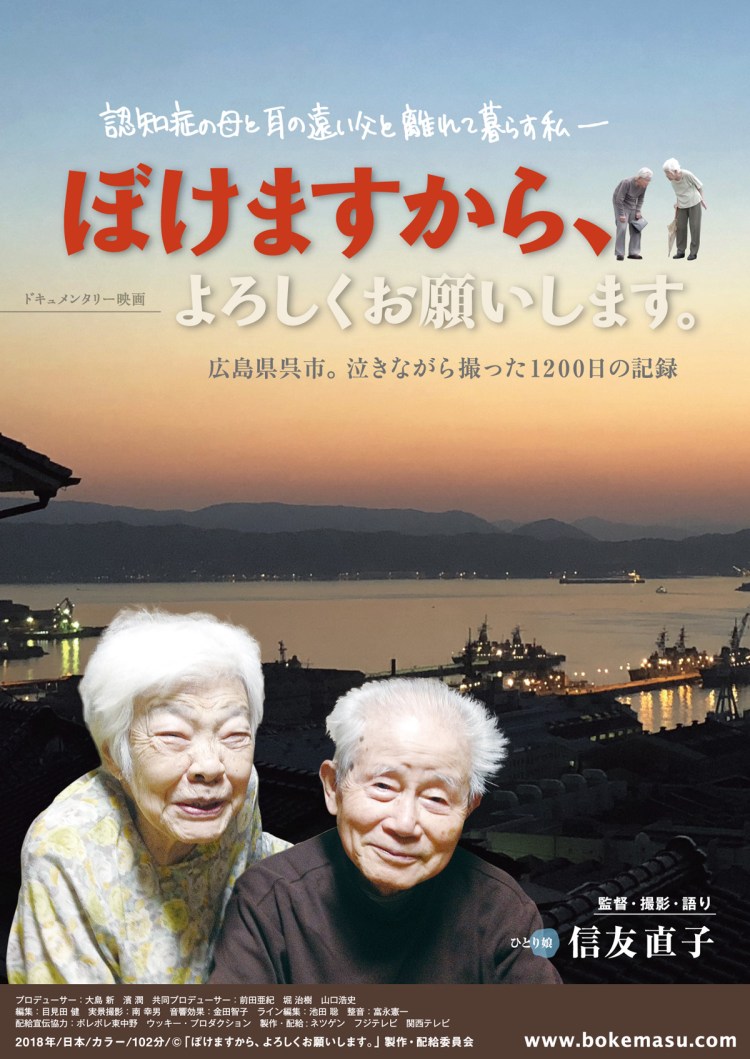
I Go Gaga, My Dear

I Go Gaga, My Dear banner

TV doc director Naoko Nobutomo follows her ageing parents as her mother’s Alzheimer’s-related dementia intensifies.

Being Natural

Being Natural still 1

An aimless middle-aged man’s peaceful existence is threatened when hipster Tokyoites rock up in his tiny rural village looking for the “natural life” only to insist on reforming it to their city bound images of idyllic country living in Tadashi Nagayama’s anarchic satire. Review. Q&A with director Tadashi Nagayama and stars Yota Kawase and Natsuki Mieda. 

Ten Years Japan

10 Years Japan still 1

Anthology film featuring five dystopian visions of near future Japan. Review.

Samurai Shifters

Samurai Shifters still 1

Isshin Inudo takes a trip back to the samurai era as a nerdy librarian (Gen Hoshino) is unexpectedly named relocation officer when his clan is ordered to move to another domain.

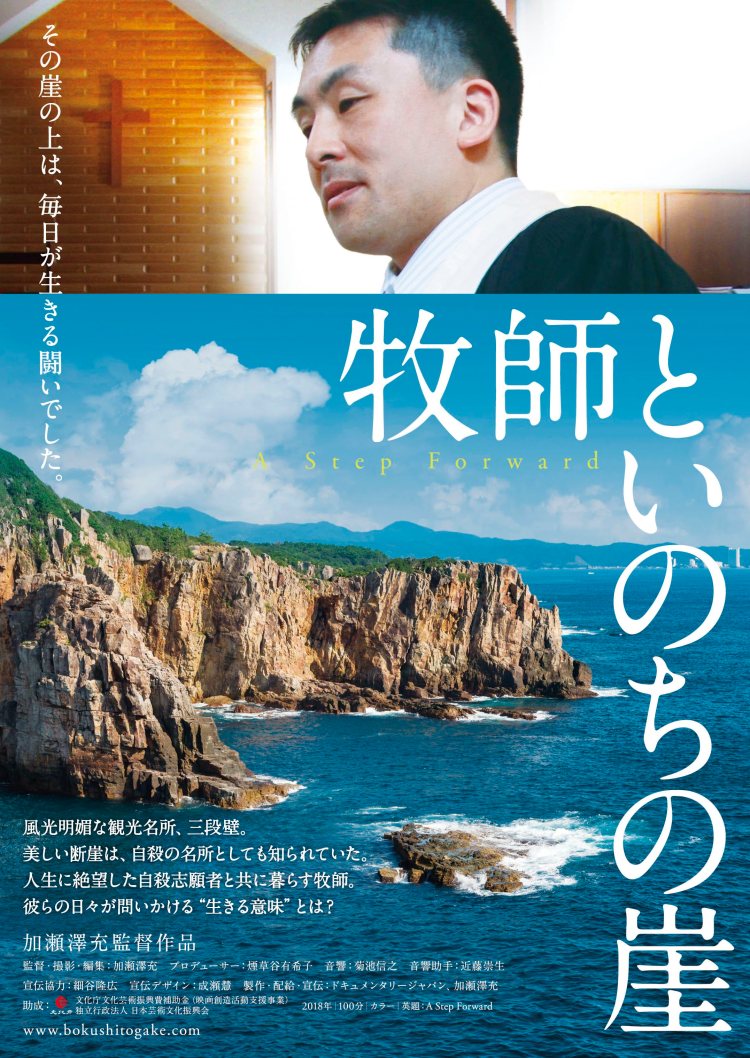
A Step Forward

A Step Forward banner

Atsushi Kasezawa’s documentary follows a pastor who commits himself to saving the lives of suicidal individuals who find themselves drawn to a particular cliff in Wakayama. Q&A with director Atsushi Kasezawa. 

The Chaplain

the chaplain banner

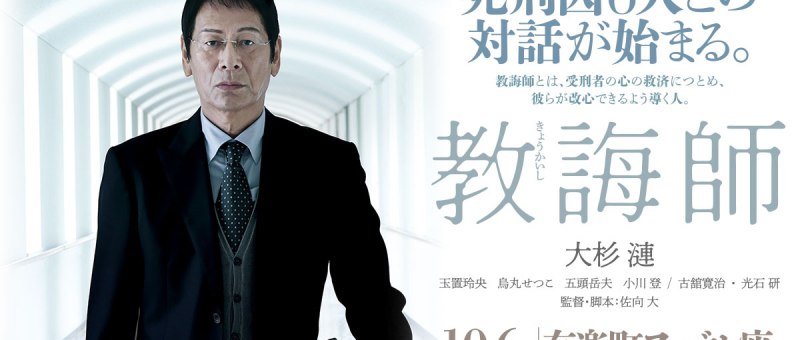
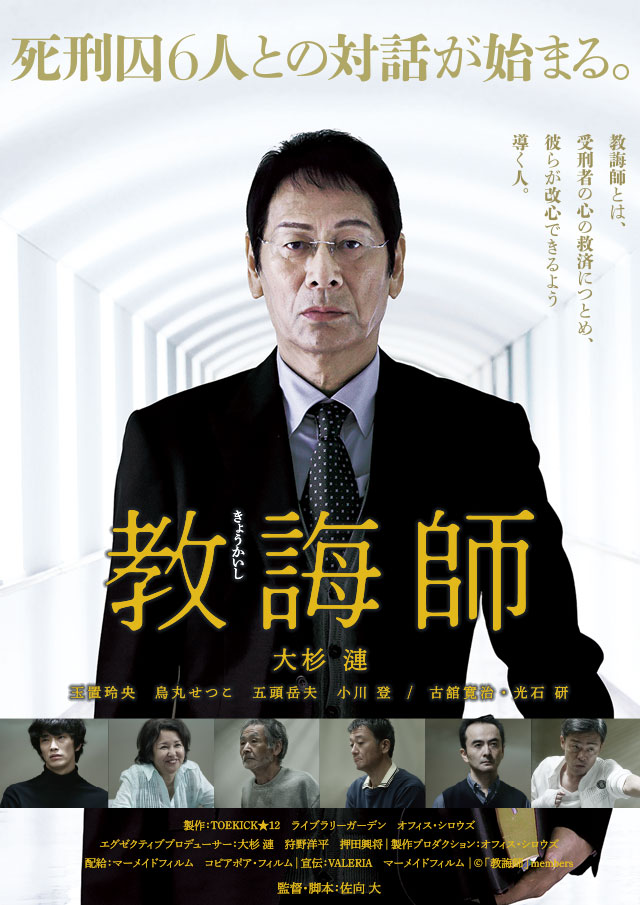
The late Ren Osugi stars as a prison chaplain ministering to those languishing on death row. (No. 10 on Kinema Junpo’s best of 2018 list)

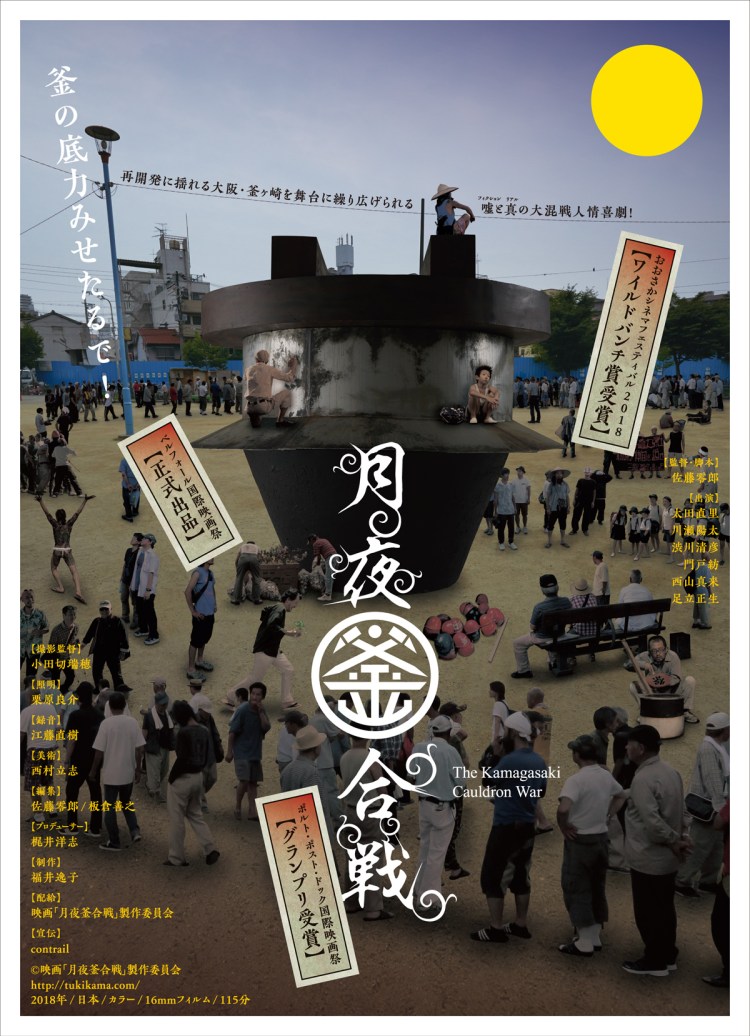
The Kamagasaki Cauldron War

The Kamagasaki Cauldron War

When a yakuza clan’s precious cauldron is stolen a war breaks out in the Osakan working class district of Kamagasaki. Q&A with star Yota Kawase. 

Demolition Girl

Demolition Girls still 1

High school girl Cocoa has given up on her dreams because she has to support her gambling addict father and no good failed manzai comedian brother, but her fortunes change when she finds out her mother left her money and if she can just top it up a little she could escape her humble life by getting into a top university in Tokyo. Q&A with director Genta Matsugami and star Aya Kitai. 

And Your Bird Can Sing

And your bird can sing still 1

Three slackers struggle to accept love in present day Hakodate in Sho Miyake’s adaptation of the Yasushi Sato novel in which an apathetic bookstore employee (Tasuku Emoto) starts a halfhearted romance with a free spirited colleague (Shizuka Ishibashi) only to introduce her to his infatuated best friend (Shota Sometani). Review.

His Lost Name

His Lost Name

A small-town carpenter (Kaoru Kobayashi) takes in a drifter (Yuya Yagira) he finds unconscious on the side of the road but their growing paternal bond begins to place a strain on his relationships with his fiancée (Keiko Horiuchi) and employees in Nanako Hirose’s sensitive debut. Q&A with director Nanako Hirose.

Red Snow

Red Snow still 1

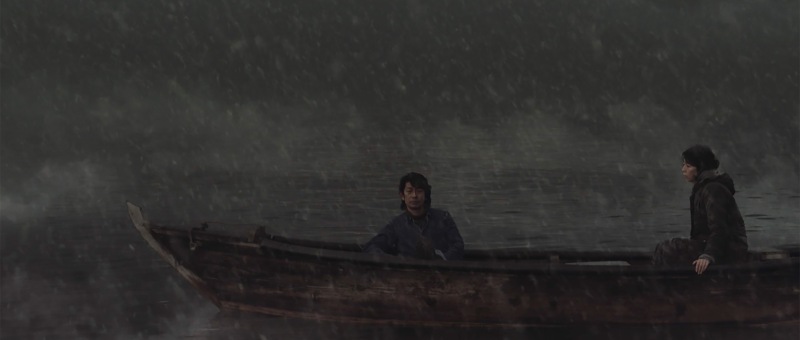
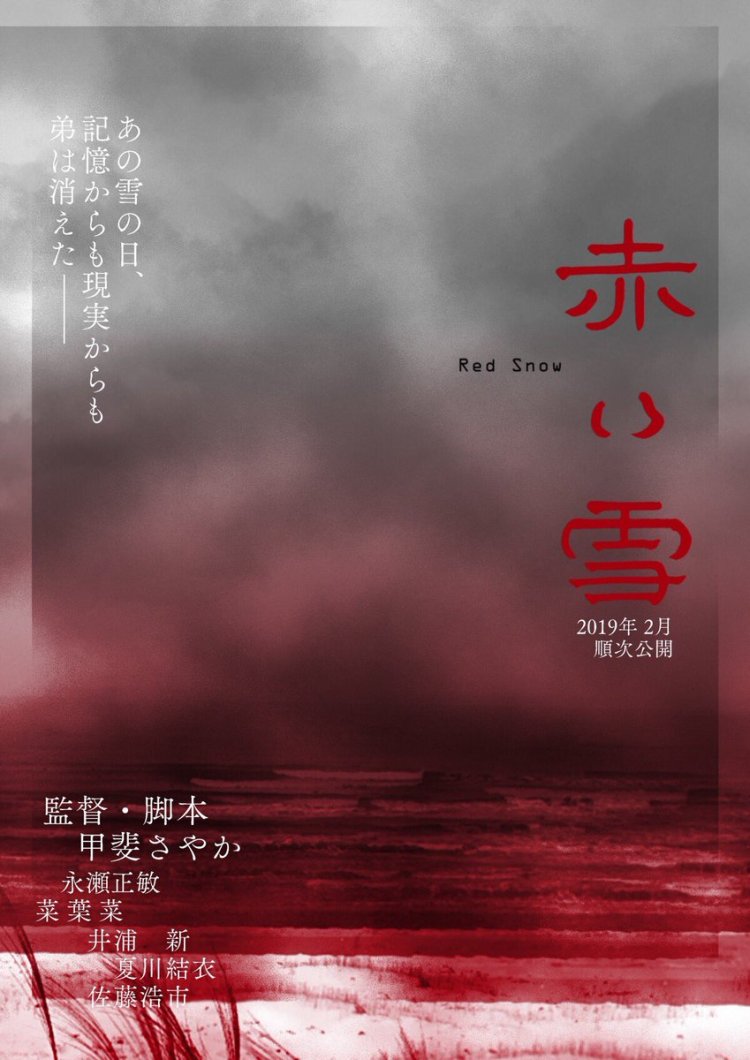
Mystery thriller starring Arata and Masatoshi Nagase in which a dogged journalist’s unearthing of a decades old child disappearance in a small rural town opens up old wounds.

Killing

Killing banner

A samurai prefers not to raise his sword but finds himself tested by his times in Shinya Tsukamoto’s impassioned anti-violence jidaigeki. Review. Q&A with director Shinya Tsukamoto, with CUT ABOVE Award ceremony. 

Bullet Ballet

Bullet Ballet still 1

An ad director becomes obsessed with the idea of finding a gun after his fiancée shoots herself in Tsukamoto’s 1998 classic. Q&A with director Shinya Tsukamoto. 

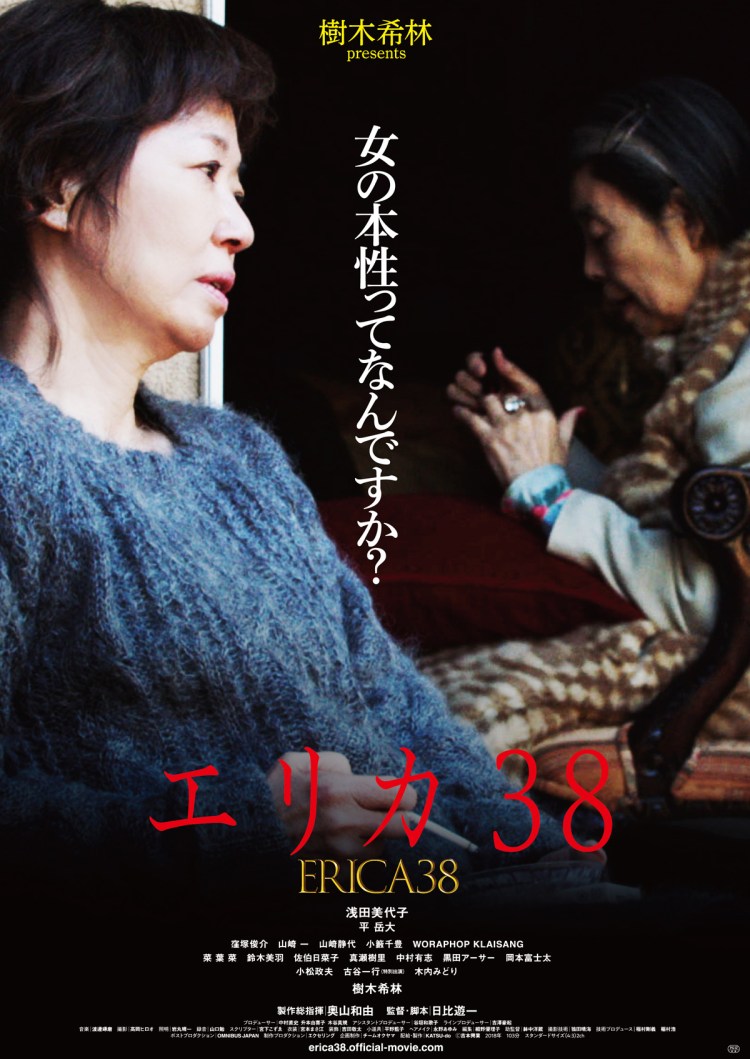
Erica 38

erika-38.jpg

Miyoko Asada stars as Satoko – a con artist whose gradual path to wealth through pyramid schemes and increasingly elaborate scams eventually leads her to reinvent herself in Thailand as a 38-year-old woman named Erica.

Jesus

jesus still 1

A young boy relocates from Tokyo to a sleepy mountain village where he has to bunk with grandma and attend catholic school. His days are eventually brightened through meeting a tiny Jesus who grants all his wishes until an inescapable tragedy colours his view of religion in Hiroshi Okuyama’s whimsical debut. ReviewQ&A with director Hiroshi Okuyama. 

Melancholic

Melancholic still 1

Kazuhiko graduated from Todai, but he’s now unemployed and living with mum and dad. A chance encounter with a pretty friend from school leads him to a job in a bathhouse but his fortunes change again when he realises the baths double as a yakuza killing ground after hours… Review.

The Miracle of Crybaby Shottan

Miracle of Crybaby Shottan banner

A shogi-loving child prodigy (Ryuhei Matsuda) is devastated when he hits the age limit for becoming a professional player but eventually finds amateur success and then the courage to challenge the system in Toshiaki Toyoda’s surprisingly inspirational drama. Review. Q&A with director Toshiaki Toyoda. 

Jeux de plage

Jeux de plage still 1

Rohmerian drama in which college friends Sayaka and Yui take a trip to the beach where they meet up with Yui’s old pal Momoko but find their dynamic disrupted by sleazy passersby and mutual awkwardness.

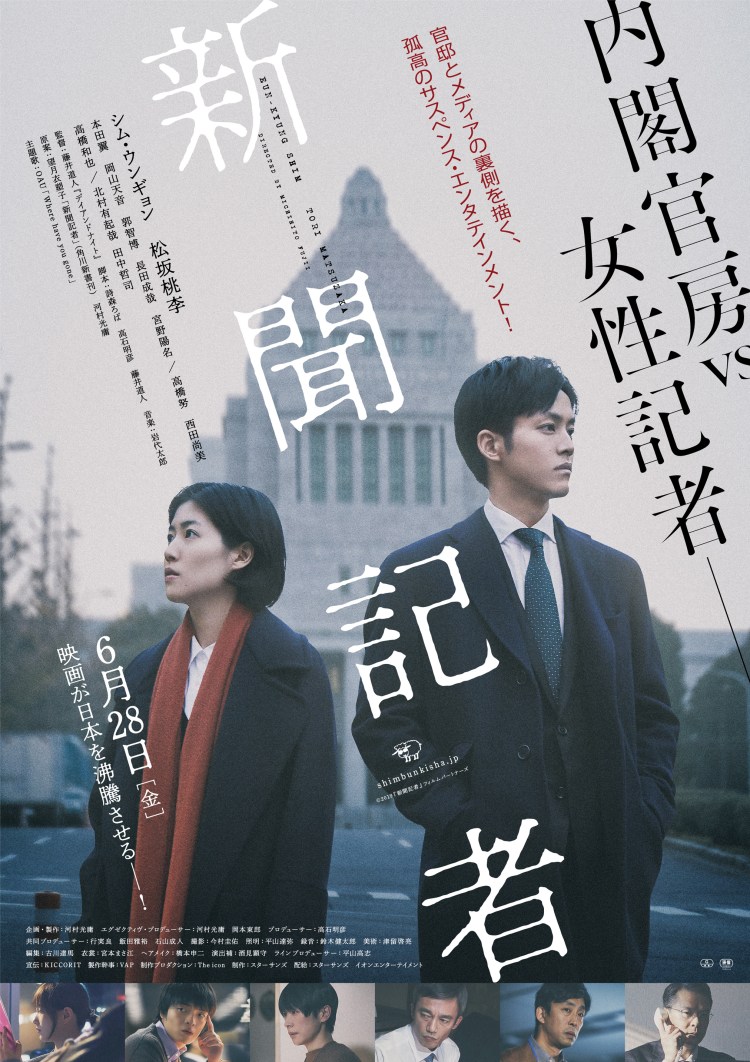
The Journalist

Journalist banner

Korean actress Shim Eun-kyung makes the first of two Japanese language performances included in the programme as an earnest Tokyo journalist haunted by her father’s suicide, playing opposite Tori Matsuzaka as a cynical bureaucrat who discovers evidence of coverup and conspiracy.

The Legend of the Stardust Brothers

Stardust Brothers still 1

Long forgotten, Macoto Tezka’s anarchic cult comedy debut has been lovingly rediscovered and restored by Third Window Films. A tale of fame, corruption, and destiny, Stardust Brothers is a whimsical piece of absurdist Showa-era nostalgia . Review. Q&A with director Macoto Tezka. 

Randen: The Comings and Goings on a Kyoto Tram

Randen banner

Three stories of love occur along the the iconic Kyoto tram line as a writer from Kamakura searches for a ghost train while recalling memories of his wife, a local girl helps a Tokyo actor master the Kyoto accent, and a girl from Aomori falls for a trainspotter!

NIGHT CRUISING

FILM NIGHT CRUISING

Makoto Sasaki’s documentary follows blind musician Hideyuki Kato as he works on a sci-fi short in which a non-sighted fighter and a telepath search for a mysterious ghost in the far future. Q&A with director Makoto Sasaki, producer Miyuki Tanaka and subject Hideyuki Kato. 

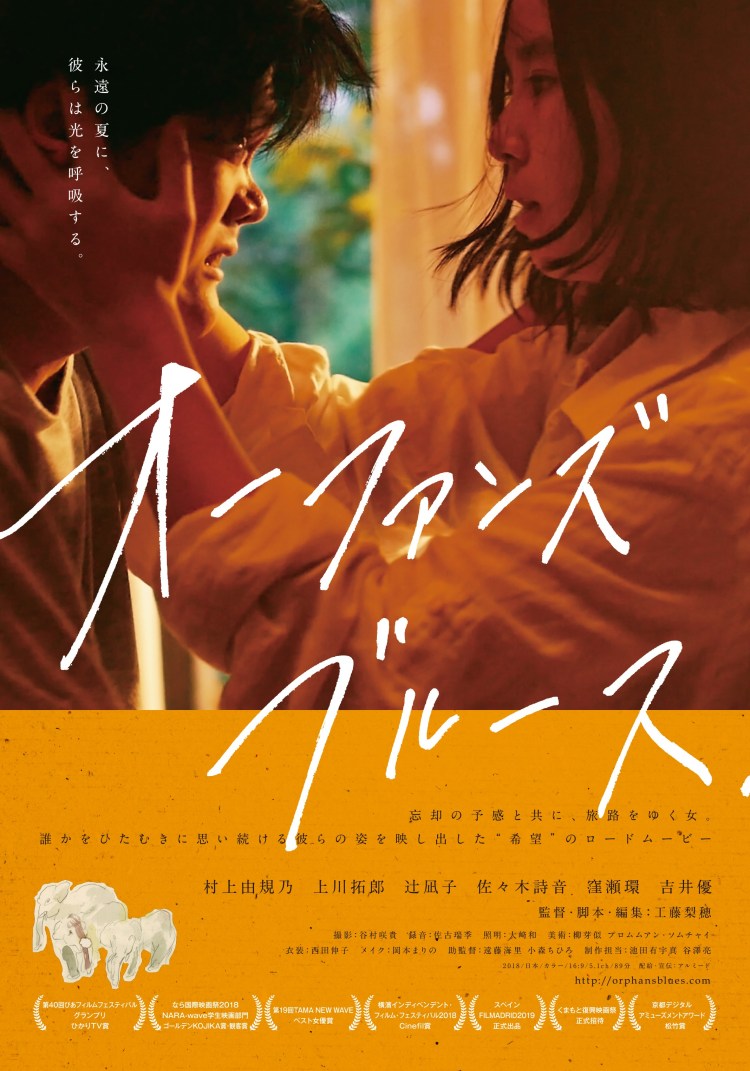
Orphan’s Blues

Orphan's Blues banner

A young woman suffering unexplained loss of memory goes in search of a childhood friend after rediscovering a drawing of an elephant in Riho Kudo’s award winning debut.

Blue Hour

Blue hour still 1

30-ish Sunada (Kaho) is becoming rapidly disillusioned with city life. She’s worked her way up to directing commercials but finds herself mostly dealing with workplace sexism and difficult stars while she is also carrying on an affair with a married colleague. Taking off on a road trip with her lively best friend mangaka (Korean actress Shim Eun-kyung in her second Japanese language role included in the programme), she is finally forced to reconnect with her rural childhood and rediscovers her sense of self in the process. Review.

Japan Cuts runs from 19th to 28th July 2019 at Japan Society New York. Full details for all the films along with ticketing links are available via the official website and you can also keep up with all the latest details by following the festival’s official Facebook page and Twitter account.