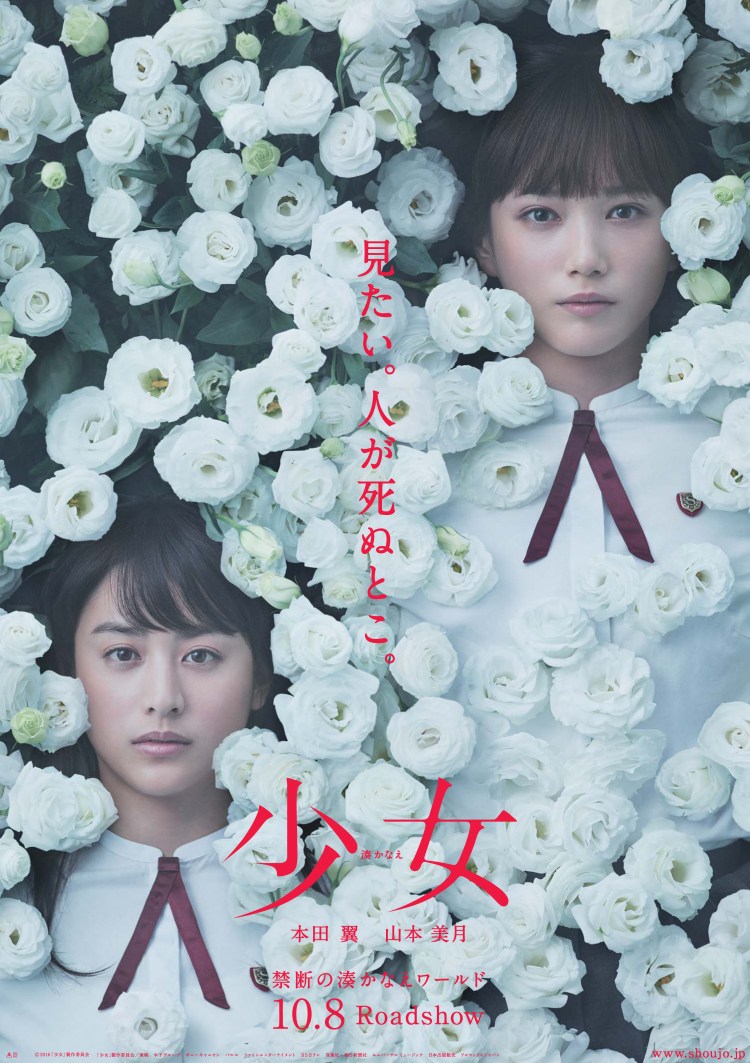
 Kanae Minato is known for her hard-hitting crime stories from Confessions to Chorus of Angels, The Snow White Murder Case, and Penance but in adapting her second novel, Shojo (少女), Yukiko Mishima has moved away from the mystery for a no less penetrating look at the death of childhood in the story of two best friends each dealing with traumatic pasts and presents. Childhood is a place of tightly controlled powerlessness, but adulthood offers little more than corruption and selfishness with its predatory teachers, abusive parents, and dirty old men so obsessed with school uniforms they barely see the girl inside them. Adolescent anxiety provokes a fascination with the idea of death which perhaps reflects this transitionary stage, but at its centre is the fracturing of a friendship which has endured all else.
The film opens with a strange avant-garde play being performed in a church by a group of girls in austere school uniforms. The monologue offered by the collective reads like an instruction booklet for the birth of fascism with its calls for genetically engineered test tube babies and universal childcare in which each child is “equal” and receives “exactly the same” education and resources. The girls are students at a strict Christian fundamentalist school where they’re also expected to participate in strange rituals including dancing round the maypole (incongruous as that may seem).
Atsuko (Mizuki Yamamoto) – a former kendo champion with a limp, and Yuki (Tsubasa Honda) who has a large scar across her hand resulting from domestic abuse, have been lifelong friends but have recently begun to drift apart. Given the overriding survival of the fittest atmosphere in the school, it’s not surprising that the other girls have turned on Atsuko and proceeded to make her life a misery by telling her to die either in person, on line, or in one particularly grim episode by shoving a sanitary towel into her locker with the message written on it in blood. Yuki is trying to help her but doesn’t know how and has taken to writing everything down in a book instead.
The world of teenage girls can often be a vicious one but there’s a strange kind of mania in the way Atsuko’s schoolmates set about pushing her towards the edge. Formerly a top kendo player, Atsuko has vivid, panic attack inducing flashbacks to her life changing accident in which she recalls her teammates prentending to comfort her but secretly hurling accusations under their breaths while Yuki looks on in horror from the stands.
Yuki has been writing their story in the form of a novel she calls Night’s Tightrope but the completed manuscript goes missing. The girls’ teacher who has longstanding dreams of literary stardom steals it, sends it to a magazine, and even wins a prestigious literary prize for brand new novelists. Yuki’s revenge is swift but has terrible, unforeseen consequences which add to her obsession with death and dying, eventually culminating in the worrying desire to see someone die in order to fully understand the nature of the “phenomenon”.
While Yuki develops a friendship with a boy she met in a library while she was destroying copies of the teacher’s stolen story, Atsuko goes in a different direction by falling under the spell of troubled transfer student Shiori (Ryo Sato). Recently witnessing a dead body herself, Shiori is just as death obsessed as the other girls but her vision is darker. Shiori introduces Atsuko to her world of blackmail and exploitation, pulling her into a high school girl scam in which they accuse a nearby salaryman of groping them and then blackmail him. Shiori may think she’s taking revenge on venal older men who lust after school uniforms – there are plenty of these on offer from skeevy old men luring school girls to abandoned houses and then trying to get them to do laundry, to teachers visiting love hotels with their students – but actions have consequences and ramifications can be severe.
The girls are caught in a kind of limbo, walking a tightrope into adulthood but doing it blind and alone. Splitting up they take similar paths with Atsuko volunteering at an old people’s home, and Yuki spending time with terminally ill children but soon enough their death obsession changes form as their twin causes eventually overlap. Stepping away from Minato’s sometimes nihilistic pessimism, Night’s Tightrope leaves a space for hope in the reconciliation of the protagonists who rediscover their shared pasts once the message buried in the novel is finally delivered. The adult world may be mired in the dark of night but the girls have recaptured the sunlight, taking solace in the depth of their friendship and stepping off the tightrope and into the world of adulthood hand in hand.
Original trailer (English subtitles)
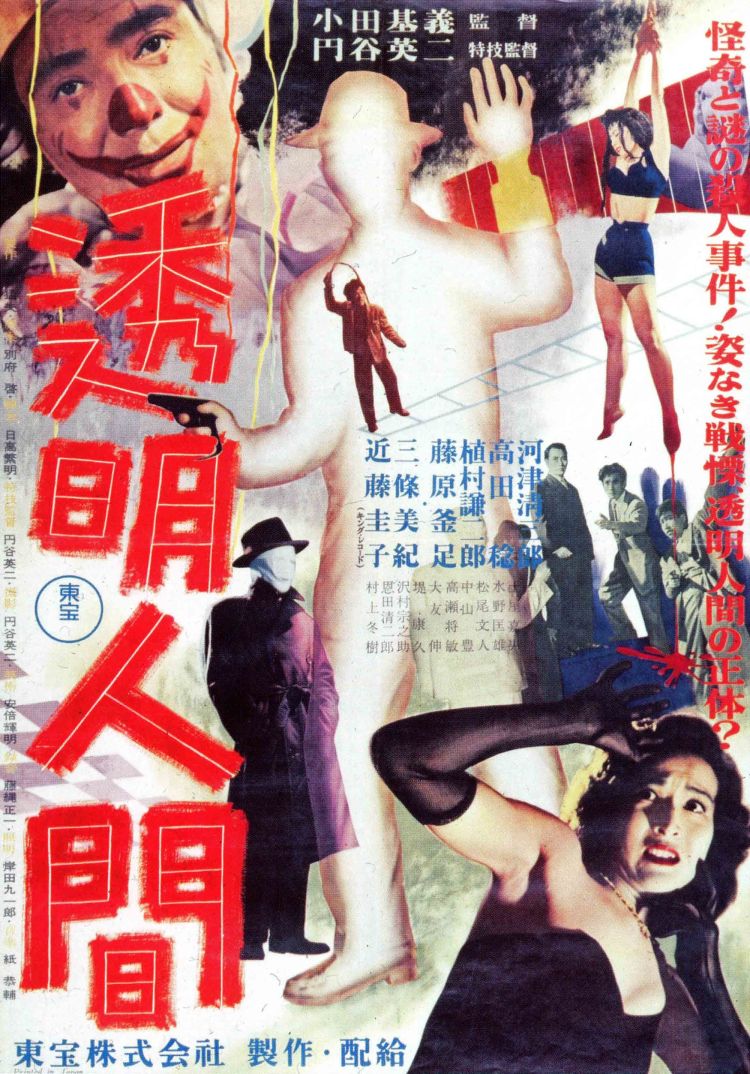 The Invisible Man is a frightening presence precisely because he isn’t there. The living manifestation of the fear of the unknown, he stalks and spies, lurking in our imaginations instilling terror of evil deeds we are powerless to stop. Daiei made
  Despite the potential raciness of the title, The Liar and his Lover (カノジョは嘘を愛しすぎてる, Kanojo wa Uso wo Aishisugiteru) is another innocent tale of youthful romance adapted from a shojo manga by Kotomi Aoki. As is customary in the genre, the heroine is cute yet earnest, emotionally honest and fiercely clear cut whereas the hero is a broken hearted artist much in the need of the love of a good woman. Innocent and chaste as it all is, Liar also imports the worst aspects of shojo in its unseemly age gap romance between a 25 year old musician and the 16 year old high school girl he picks up on a whim and then apparently falls for precisely because of her uncomplicated goodness.
 Shiro Toyoda, despite being among the most successful directors of Japan’s golden age, is also among the most neglected when it comes to overseas exposure. Best known for literary adaptations, Toyoda’s laid back lensing and elegant restraint have perhaps attracted less attention than some of his flashier contemporaries but he was often at his best in allowing his material to take centre stage. Though his trademark style might not necessarily lend itself well to horror, Toyoda had made other successful forays into the genre before being tasked with directing yet another take on the classic ghost story Yotsuya Kaidan (四谷怪談) but, hampered by poor production values and an overly simplistic script, Toyoda never succeeds in capturing the deep-seated dread which defines the tale of maddening ambition followed by ruinous guilt.
 When you spent your youth screaming phrases like “no future” and “fumigate the human race”, how are you supposed to go about being 50-something? A&R girl Kanna is about to find out in Kankuro Kudo’s generation gap comedy The Shonen Merikensack (少年メリケンサック) as she accidentally finds herself needing to sign a gang of ageing never were rockers. A nostalgia trip in more ways than one, Kudo is on a journey to find the true spirit of punk in a still conservative world.
 Japan’s political climate had become difficult by 1938 with militarism in full swing. Young men were disappearing from their villages and being shipped off to war, and growing economic strife also saw young women sold into prostitution by their families. Cinema needed to be escapist and aspirational but it also needed to reflect the values of the ruling regime. Adapted from a novel by Katsutaro Kawaguchi, Aizen Katsura (愛染かつら) is an attempt to marry both of these aims whilst staying within the realm of the traditional romantic melodrama. The values are modern and even progressive, to a point, but most importantly they imply that there is always room for hope and that happy endings are always possible.
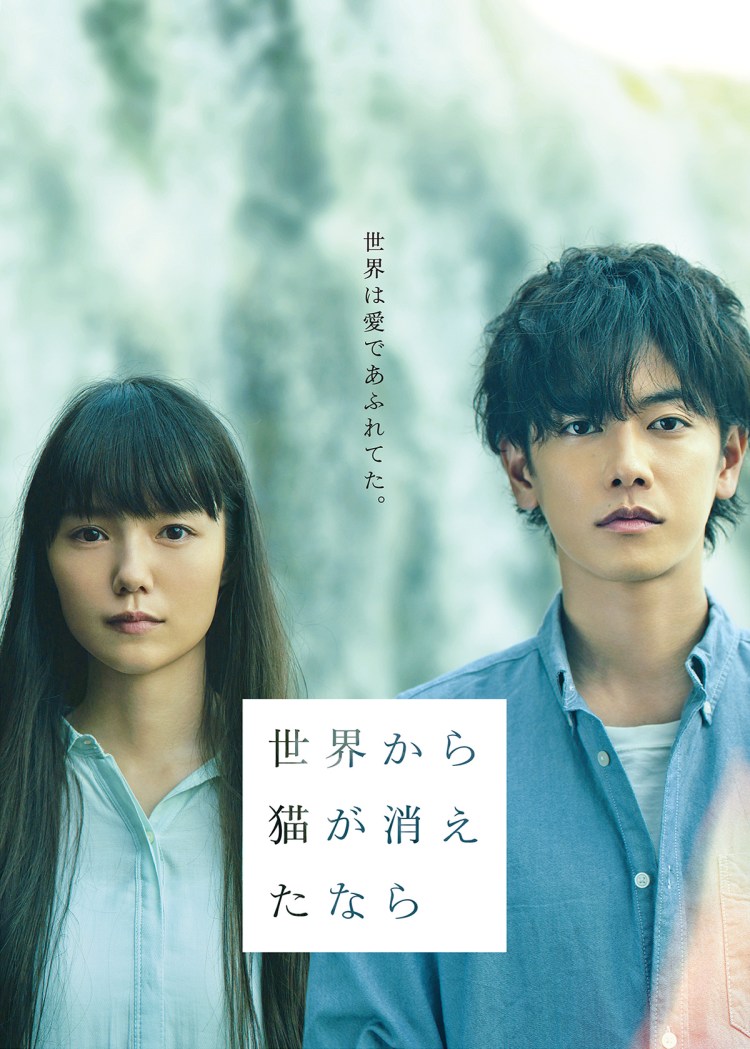 What would you give to live another day? What did you give to live this day? What did you take? Adapting the novel by Genki Kawamura, Akira Nagai takes a step back from the broad comedy of
 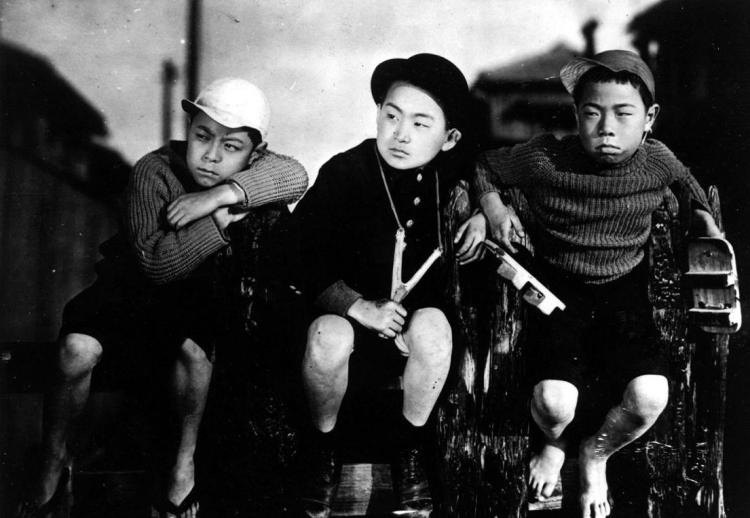 When one thinks of the classic examples of children in Japanese cinema, Hiroshi Shimizu is the name which comes to mind but family chronicler Yasujiro Ozu also made a few notable forays into the genre. I Was Born, But… (大人の見る絵本 生れてはみたけれど, Otona no miru ehon – Umarete wa mita keredo) stars one of the premier child actors of the silent era in Tokkan Kozo (later known as Tomio Aoki) who also worked repeatedly with Shimizu (
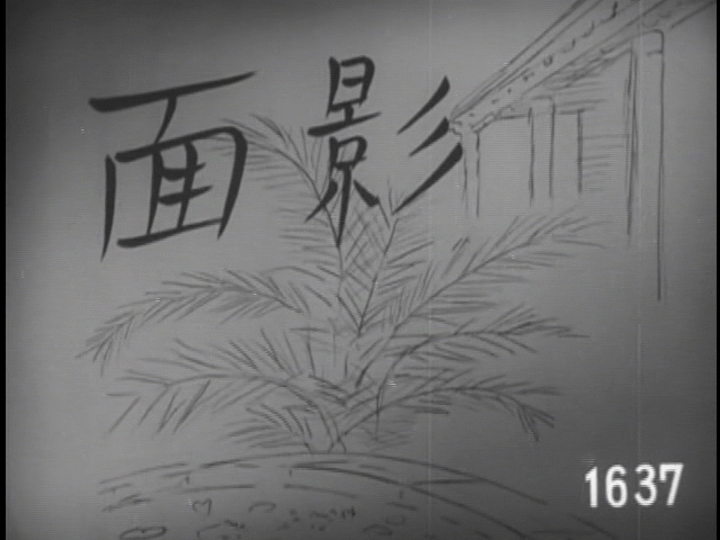 Master of the shomingeki, Heinosuke Gosho goes upscale for the post-war romantic melodrama, Vestige (面影, omokage), even if he goes out of his way to add a layer of expressionistic imagery. Inspired by Gosho’s own experiences, Vestige has an air of melancholy and of frustrated dreams but also of resignation as the two not quite lovers at the centre agree to quell their romantic yearnings and preserve their conventional, bourgeois lives at the expense of greater happiness.
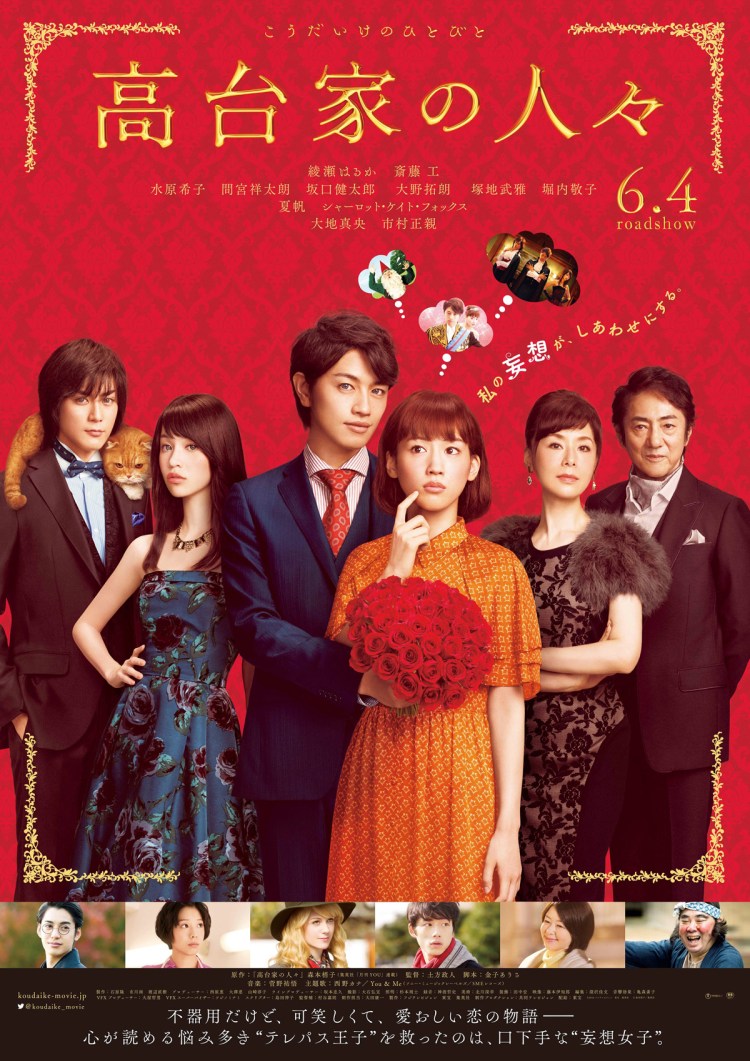 Fear of “broadcasting” is a classic symptom of psychosis, but supposing there really was someone who could hear all your thoughts as clearly as if you’d spoken them aloud, how would that make you feel? The shy daydreamer at the centre of The Kodai Family (高台家の人々, Kodaike no Hitobito) is about to find out as she becomes embroiled in a very real fairytale with a handsome prince whose lifelong ability to read minds has made him wary of trying to form genuine connections with ordinary people. Walls come down only to jump back up again when the full implications become apparent but there are taller walls to climb than that of discomfort with intimacy including snobby mothers and class based insecurities.
 Windows on Worlds