 All things considered, a live pig is a rather insensitive gift to present to your local police station, though any gift at all might be considered in appropriate even if offered by a well meaning colleague keen to help out when a horrific murder may be connected to his missing person case. By 1977 Kinji Fukasaku had made a name for himself through the wildly successful “jitsuroku” or “true record” genre of yakuza movies kickstarted by his own Battles Without Honour and Humanity. Doberman Cop (ドーベルマン刑事, Doberman Deka) is then quite an odd move as its brings him back to the looser, exploitation leaning B-movie action which featured heavily in the earlier part of his career and which the “jitsuroku” movement was set on displacing. Fittingly enough, Doberman Cop also sees Fukasaku reuniting with the frequent star of those early films – Sonny Chiba, now considerably older but still an impressive action star willing to put himself in danger to achieve the heart stopping stunts his fans had come to expect.
Chiba plays Okinawan “crazy cop” Kano, the stranger in town currently on a mission to find a childhood friend at the request of her sickly priestess mother. A body has been discovered, so horribly charred that visual identification is not possible but based on the clues found in the room the police are convinced the woman is Kano’s missing person, Yuna, who had been living as a prostitute under another name. Kano is not convinced, the priestess has conducted rituals which suggest her daughter is alive and there’s something not quite right about this case which the police have attributed to a spate of serial killings targeting prostitutes in the Tokyo area. An encounter with a shady yakuza turned music promoter brings Kano into contact with Miki (Janet Hatta) – an aspiring singer who bears a striking resemblance to the missing Yuna.
Doberman Cop is, loosely, based on the manga by Buronson. Part of the “gekiga” movement which prided itself on gritty, adult stories, Doberman Cop owed much to Dirty Harry with its sarcastic, tough as nails policeman armed with a .44 Magnum and a rock hard desire for justice. Fukasaku’s Kano is reimagined as a genial country bumpkin, a toughened farm boy in a straw hat displaced in the Tokyo jungle. Turning up like a strange relative, Kano has brought along a local delicacy in the form of a live pig he offers to the Tokyo police precinct with the promise that all they need to do is snap its neck and light the barbecue. Unsurprisingly, the city policemen decline his polite offer leaving him trailing the squealing piggy around with him like a burdensome sidekick.
Kano’s Yuna is not the only young woman of Okinawa fetching up in the mainland capital in search of a “better” life, but finding only failure and despair. The country detective alienates the city police with his arcane divinatory ritual which involves tipping out a large bag of small seashells and counting them to ascertain the answer to a binary question, but his methods convince him than Yuna is still alive while another Okinawan woman is dead. That a woman from his island has met such a grim end is of no small regret to Kano, be she Yuna or not, and his quest is one of vengeance for both women ruined by the false promise of city life, tempted from simple village existence by bright lights and urban sophistication.
Miki’s path has followed this pattern to the letter. City life turned her into a prostitute and drug addict, eventually running all the way to New York but failing to escape her ongoing despair. Running into a similarly depressed former yakuza, Hidemori (Hiroki Matsukata), who falls in love with her, reawakens her desire for life, and becomes determined to rescue both of their futures by turning her into a singing star, Miki is at a turning point as she prepares for TV stardom as the winner of a signing competition while Hidemori backtracks to his gangster days to make it happen.
Kano begins to piece things together and comes to realise his worst fears are true. Nevertheless, if he could he’d take Yuna home with him to the village to forget her city ordeal rather than hand her over to the Tokyo police to face justice whatever she might have done. Though the tone is largely a comic one, laced with Fukasaku’s characteristically bleak sense of humour, the conclusion is just as melancholy as any of his other sad stories of broken men as Kano is forced to conclude that whatever the facts, the Yuna who left the village is no longer in this world. Putting a lead on his piggy friend, he resigns himself to leaving the city to take care of itself while he returns home, his mission a failure.
Necessarily less serious than Fukasaku’s other work of the ‘70s, Doberman Cop is a return to the nonsensical B-movie action fests of the past which leaves ample room for Chiba to show off his still potent skills including the famous scene of him abseiling down a tall building to bust into a hotel room where Miki is being held captive by a crazed yakuza. The country bumpkin adapts to this part of city life well enough, karate kicking bad guys and loudly disapproving of drug peddling misogynists (not to mention “righteous” serial killers hellbent on “cleansing” the city of sleaziness). Bonding with the “salt of the earth” residents of the lower class neighbourhoods, including a stripper who takes a fancy to the pig during her routine, and a member a biker gang unfairly hauled in as a suspect, Kano concludes that city life is not all it’s cracked up to be much as he comes to admire these basically “good” people who have gone out of their way to help him for mostly altruistic reasons. Still, the world is a darker place for Kano following his city adventure, and all he can do in the end is return to the relative safety of a sunny Okinawan village, pig in tow.
Available now from Arrow Video!
Original trailer (no subtitles)
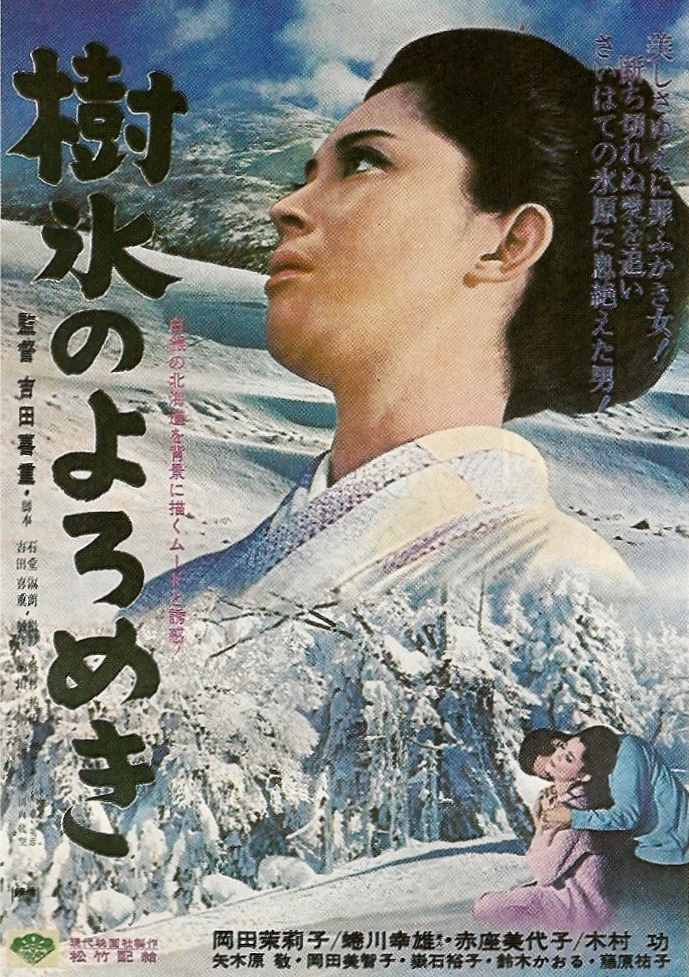 Kiju (Yoshishige) Yoshida, along with his wife – the actress Mariko Okada, was responsible for some of the most arresting films of the late ’60s avant-garde art scene. So called “anti-melodramas”, many of Yoshida’s films from this era took what could have been a typical melodrama narrative and filmed it in an alienated, almost emotionless manner somehow reaching a deeper level of an often superficial and overwrought genre. Affair in the Snow (樹氷のよろめき, Juhyo no Yoromeki) is, in essence, the familiar story of an unreasonable love triangle but in Yoshida’s hands it becomes a melancholy yet penetrating examination of love, sex, and transience as the central trio attempt to resolve their ongoing romantic difficulties.
 After leaving Shochiku and forming an independent production company with his actress wife Mariko Okada, Kiju (Yoshishige) Yoshida continued in the Shochiku vein, after a fashion, through crafting what came to be known as “anti-melodramas”. Taking the familiar melodrama a studio like Shochiku was well known for, Yoshida transformed the material through radical cinematography designed to alienate and drain the overwrought drama of its empty emotion in order to drive to something deeper. The Affair (情炎, Jouen), released in 1967, is just such an experiment as it paints the cold and repressed world of its heroine in steely black and white, imprisoning her within its widescreen frame, and setting her at odds with the younger, more liberated generation who get their kicks through groovy beatnik jazz and an eternal party.
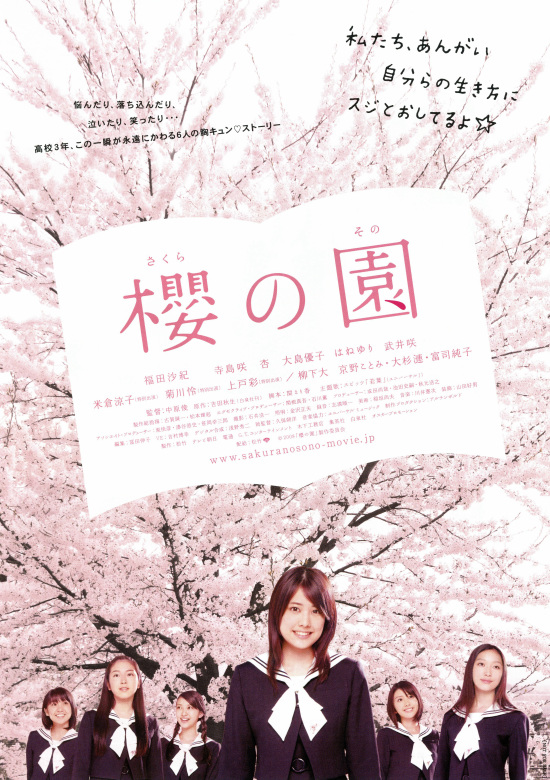 In
In  Chekhov’s The Cherry Orchard is more about the passing of an era and the fates of those who fail to swim the tides of history than it is about transience and the ever-present tragedy of the death of every moment, but still there is a commonality in the symbolism. Shun Nakahara’s The Cherry Orchard (櫻の園, Sakura no Sono) is not an adaptation of Chekhov’s play but of Akimi Yoshida’s popular 1980s shojo manga which centres on a drama group at an all girls high school. Alarm bells may be ringing, but Nakahara sidesteps the usual teen angst drama for a sensitively done coming of age tale as the girls face up to their liminal status and prepare to step forward into their own new era.
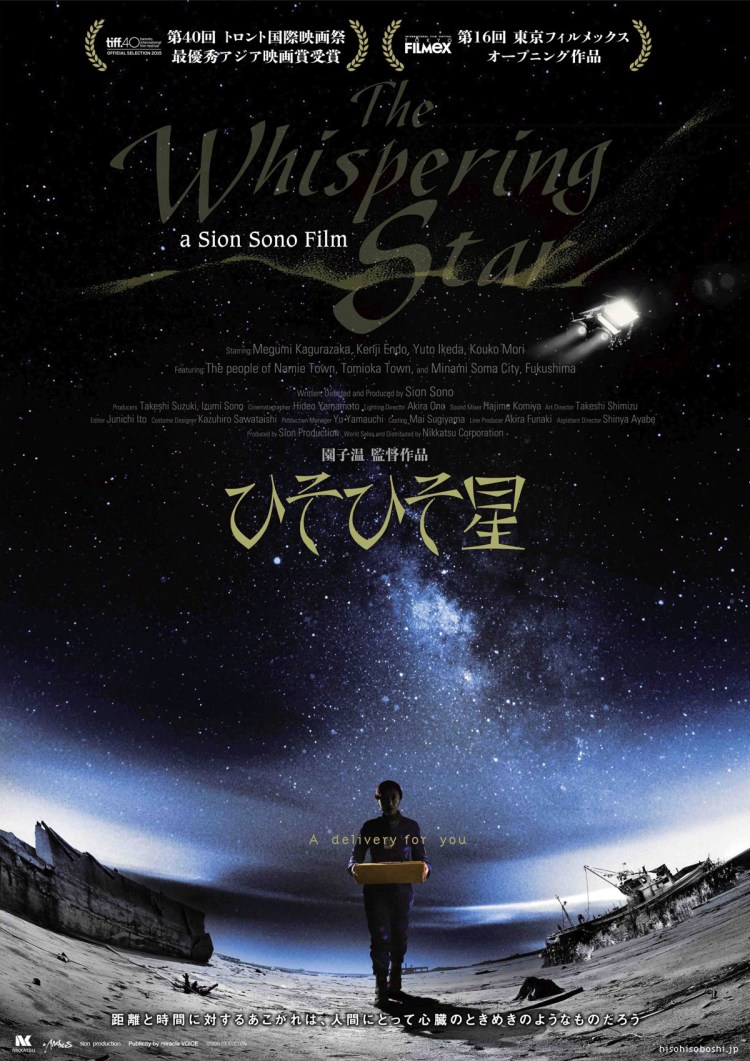 Sion Sono has been especially prolific of late, though much of his recent output has leant towards the populist rather than the art house. Having garnered a reputation for vulgar excess over the last twenty years or so, Sono returns to his Tarkovskian roots with The Whispering Star (ひそひそ星, Hiso Hiso Boshi) – a contemplative exercise in stillness which has more in common with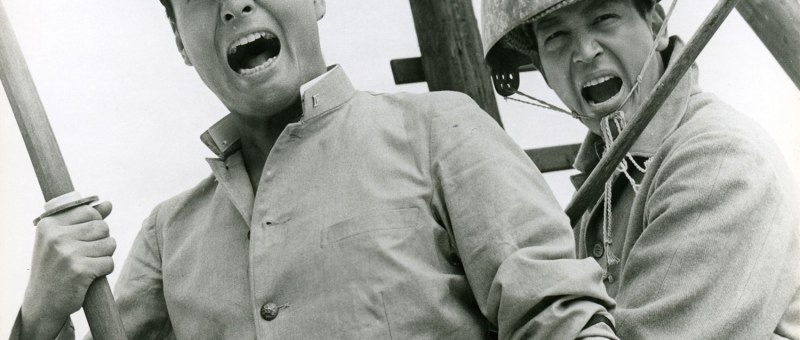
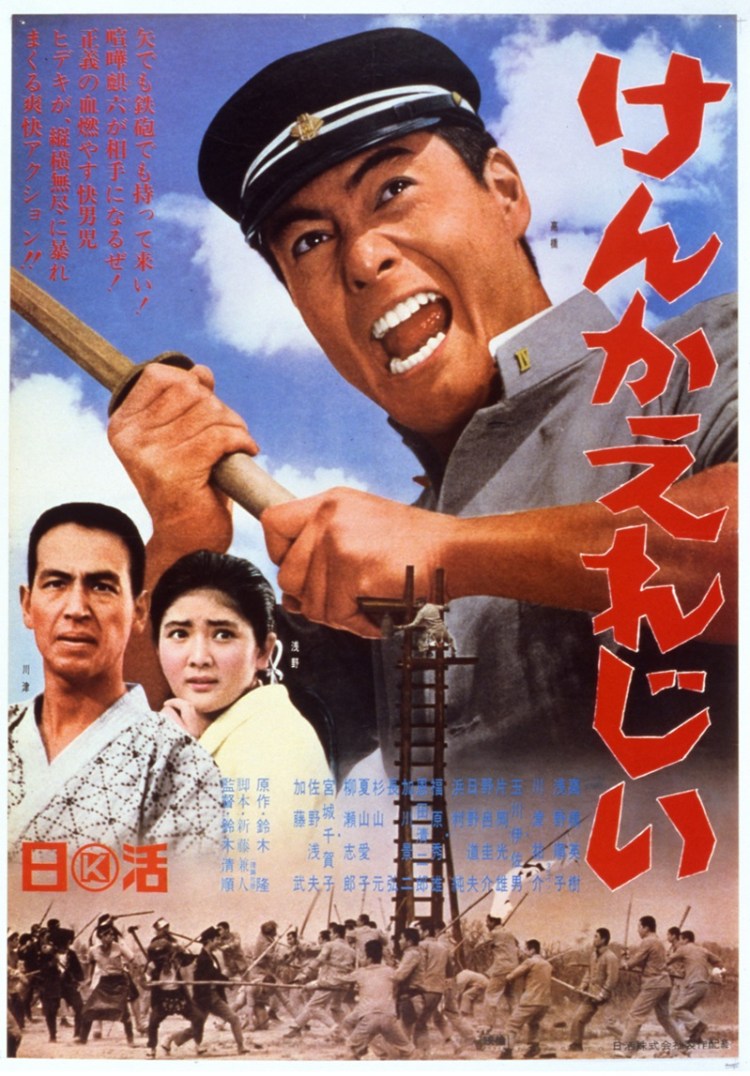 Ah, youth. It explains so many things though, sadly, only long after it’s passed. For the young men who had the misfortune to come of age in the 1930s, their glory days are filled with bittersweet memories as their personal development occurred against a backdrop of increasing political division. Seijun Suzuki was not exactly apolitical in his filmmaking despite his reputation for “nonsense”, but in Fighting Elegy (けんかえれじい, Kenka Elegy) he turns a wry eye back to his contemporaries for a rueful exploration of militarism’s appeal to the angry young man. When emotion must be sublimated and desire repressed, all that youthful energy has to go somewhere and so the unresolved tensions of the young men of Japan brought about an unwelcome revolution in a misguided attempt at mastery over the self.
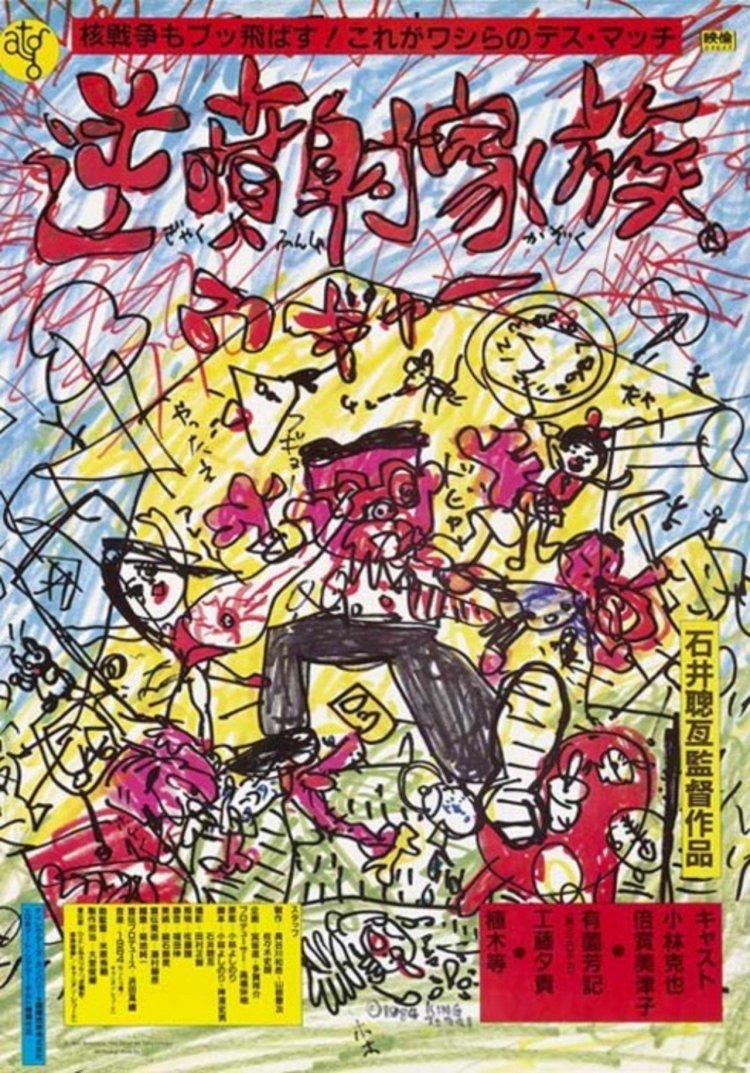 The family drama went through something of a transformation at the beginning of the 1980s. Gone are the picturesque, sometimes melancholy evocations of the transience of family life, these families are fake, dysfunctional, or unreliable even if trying their best. Morita’s
 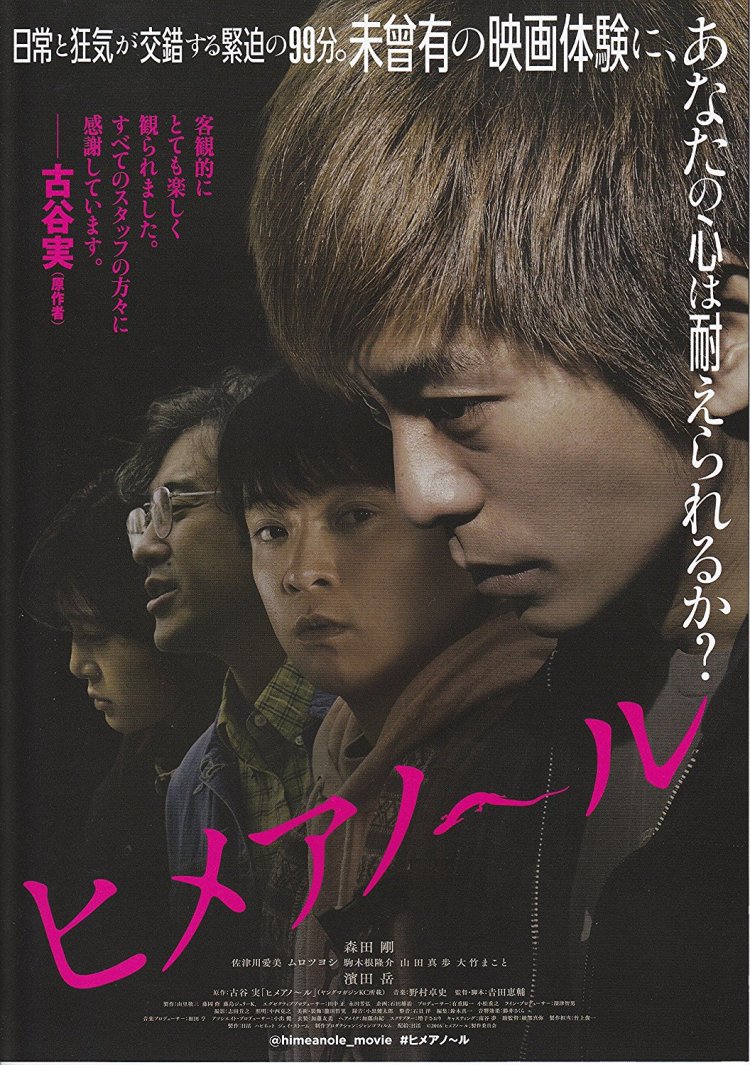 Some people are odd, and that’s OK. Then there are the people who are odd, but definitely not OK. Hime-anole (ヒメアノ~ル) introduces us to both of these kinds of outsiders, attempting to draw a line between the merely awkward and the actively dangerous but ultimately finding that there is no line and perhaps simple acts of kindness offered at the right time could have prevented a mind snapping or a person descending into spiralling homicidal delusion. To go any further is to say too much, but Hime-anole revels in its reversals, switching rapidly between quirky romantic comedy, gritty Japanese indie, and finally grim social horror. Yet it plants its seeds early with two young men struggling to express their true emotions, trapped and lonely, leading unfulfilling lives. Their dissatisfaction is ordinary, but these same repressed emotions taken to an extreme can produce much more harmful results than two guys eating stale donuts everyday just to ask a pretty girl for the bill.
 Cops vs Thugs – a battle fraught with friendly fire. Arising from additional research conducted for the first
  Windows on Worlds