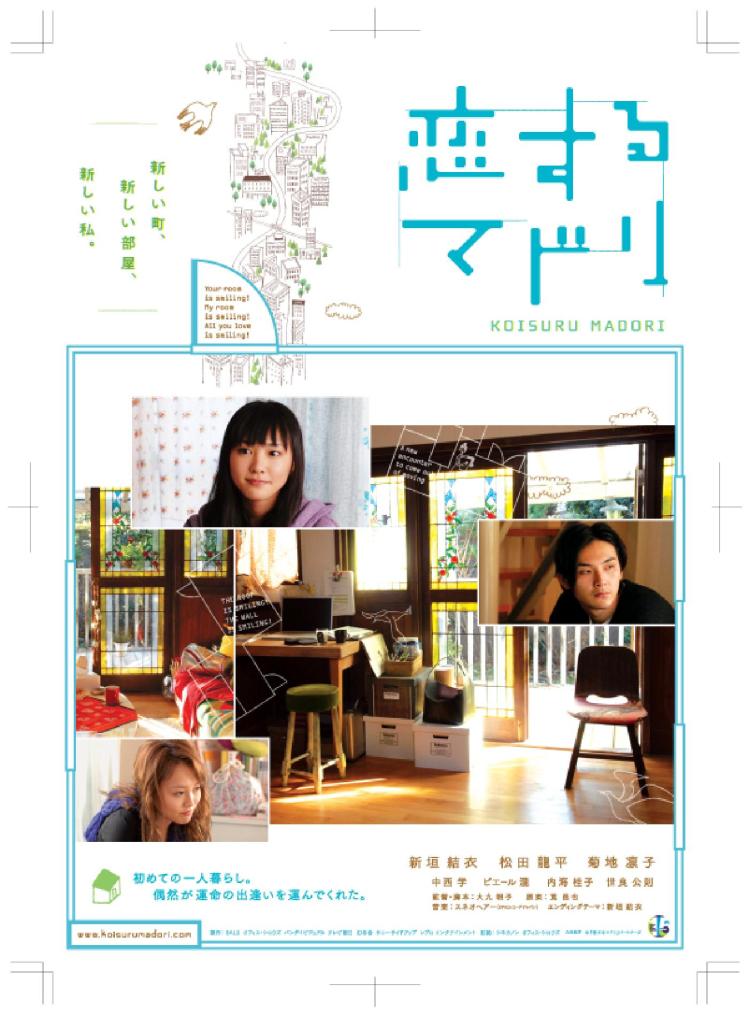
 Cities are often serendipitous places, prone to improbable coincidences no matter how large or densely populated they may be. Tokyo Serendipity (恋するマドリ, Koisuru Madori) takes this quality of its stereotypically “quirky” city to the limit as a young art student finds herself caught up in other people’s unfulfilled romance only to fall straight into the same trap herself. Its tale may be an unlikely one, but director Akiko Ohku neatly subverts genre norms whilst resolutely sticking to a mid-2000s indie movie blueprint.
Yui Aoki (Yui Aragaki) is in search of a new apartment. She had been living in an unusual old fashioned building with beautiful stained-glass windows, but her sister’s in line for a shotgun marriage and if that weren’t trouble enough the apartment is set for demolition. Living on her own for the very first time, Yui moves into a smallish modern apartment in a building filled with various eccentric residents.
One in particular catches Yui’s attention – her mysterious upstairs neighbour, Takashi (Ryuhei Matsuda). By coincidence, Yui ends up working with Takashi at his lab where she learns he’s still broken up about a girlfriend that left him flat without even a word of goodbye. Remembering she left something behind at her old place she ends up meeting the new tenant, Atsuko (Rinko Kikuchi), and striking up a friendship with her over a shared interest in homemade furnishings. The coincidences continue as Yui discovers she and Atsuko have accidentally swapped apartments! Through this odd chain of events Yui also figures out that Atsuko is Takashi’s long lost love, but is hopelessly trapped in the middle, unsure of whether she should reveal this information to either party. Of course, her developing feelings for both Atsuko and Takashi place her in a series of difficult positions.
Tokyo Serendipity was sponsored by an interior design company and so it’s no surprise that the film makes quite a lot out of its production design. The fashion choices are very much of the time and favour quirky, individual aesthetics rather than an Ikea-esque off the peg minimalism. The original apartment which is soon to by bulldozed is an artist’s dream with its hidden fireplace, old fashioned furniture, stained glass windows and well lit interior. Broadly inspirational in this regard, it’s a thrifty kind of homestyle which prizes recycled materials and repurposed furnishings as opposed to the trendy high price surroundings of other parts of the city.
Like many other films of its kind from this era, Tokyo Serendipity adopts a natural, if occasionally surreal, approach filmed with a deadpan camera. The film’s one repeated large scale gag – a group of lucha libre wrestlers who work as removal men during the day, is a good example of this as their not improbable existence somehow seems oddly funny. They drop things but only in the ring – so they say, each of them well built men treating Yui’s precious goods as daintily as children using real china at a tea party. The humour could best be described as subtle, yet does succeed in raising a smile here and there.
Smiling turns out to be the film’s main message. In fact Ohku even states that her intention in making the film was solely to leave people with a smile of their faces – something which she broadly achieves. Atsuko, a slightly lost middle aged woman, claims she became an architect as she wanted to build a house with everybody smiling – something Yui echoes as she comes to a few conclusions of her own nearing the end of the film. However, Atsuko’s desire for harmony in all things is one she’s never been able to fulfil as childhood abandonment has left her with lingering commitment issues. Simply put, she always leaves first. Interestingly enough, Yui’s burgeoning romance takes a backseat to her growing friendship with Atsuko and a half-formed acknowledgment of middle-aged regrets she’s still to young to fully understand.
Despite amassing almost all of the conventional romantic comedy/drama motifs from a last minute dash to the airport and misdirected letters to an embarrassing scene where a relative is mistaken for a lover, Ohku rejects the romantic model as her central character wisely recognises exactly where she stands in this awkward situation and makes a sensible decision motivated by the best interests of both of her friends. Straightforwardly indie in style, Ohku keeps the quirk on a low simmer but manages to make her heightened reality seem perfectly natural. An unusual coming of age film trapped inside an indie romance, Tokyo Serendipity is like one of the tiny hidden spaces the film seems to like so much, though upon opening the door some will be more impressed with what they find than others.
Original trailer (no subtitles)

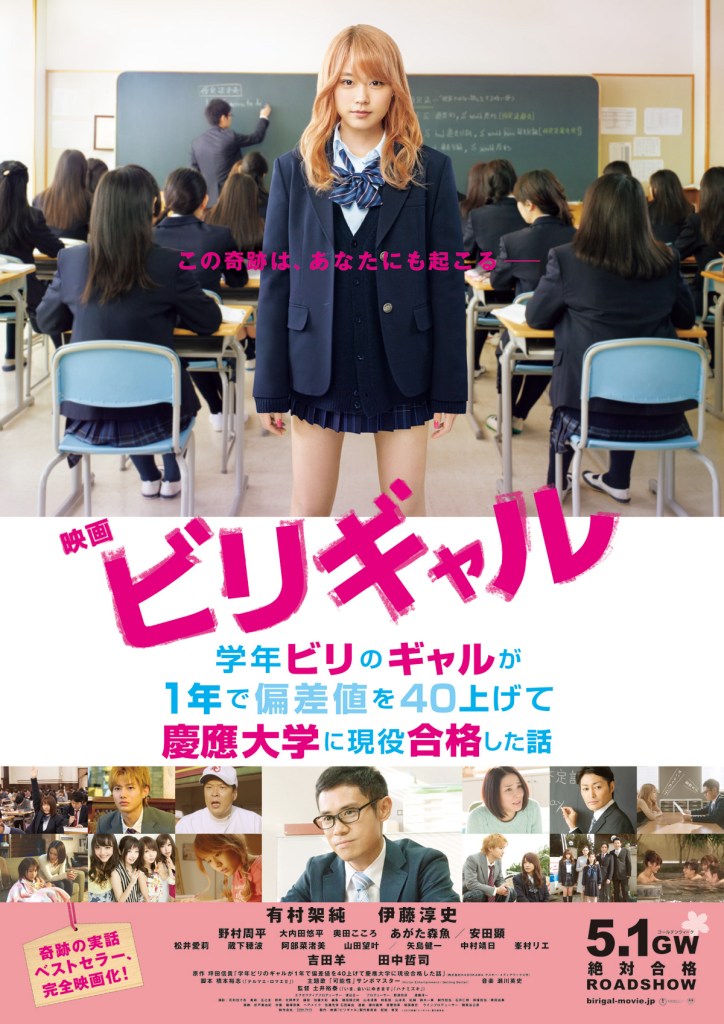 Below average student buckles down and makes it into a top university? You’ve heard this story before and Nobuhiro Doi’s Flying Colors (ビリギャル, Biri Gyaru) doesn’t offer a new spin on the idea or additional angles on educational policy but it does have heart. Heart, it argues is what you need to get ahead (if you’ll forgive the multilevel punning) as the highest barriers to academic success are the ones which are self imposed. Arguing for a more inclusive, tailor made approach to education which doesn’t instil false hope but does help young people develop self confidence alongside standardised skills, Flying Colors is the story of one popular girl’s journey from anti-intellectual teenage snobbery to the very top of the academic tree whilst healing her divided family in the process.
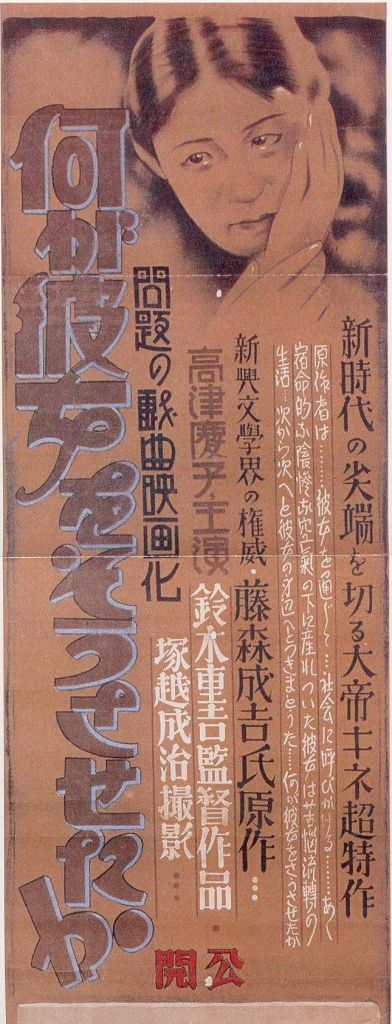 Like many other areas of the world in the first half of the 20th century, Japan also found itself at a dividing line of political thought with militarism on the rise from the late 1920s. Despite the onward march of right-wing ideology, the left was not necessarily silent. Ironically, the then voiceless cinema was able to speak for those who were its greatest consumers as an accidental genre was born detailing the everyday hardships faced by those at the bottom end of the ladder. These “proletarian films” or “tendency films” (keiko eiga) were increasingly suppressed as time went on yet, in contrast to the more politically overt cinema of the independent Proletarian Film League of Japan, continued to be produced by mainstream studios. Long thought lost, Shigeyoshi Suzuki’s What Made Her Do It? (何が彼女をそうさせたか, Nani ga Kanojo wo Sousaseta ka) was a major hit on its original release with some press reports even claiming the film provoked riots when audiences were passionately moved by the heroine’s tragic descent into madness and arson after suffering countless cruelties in an unfeeling world.
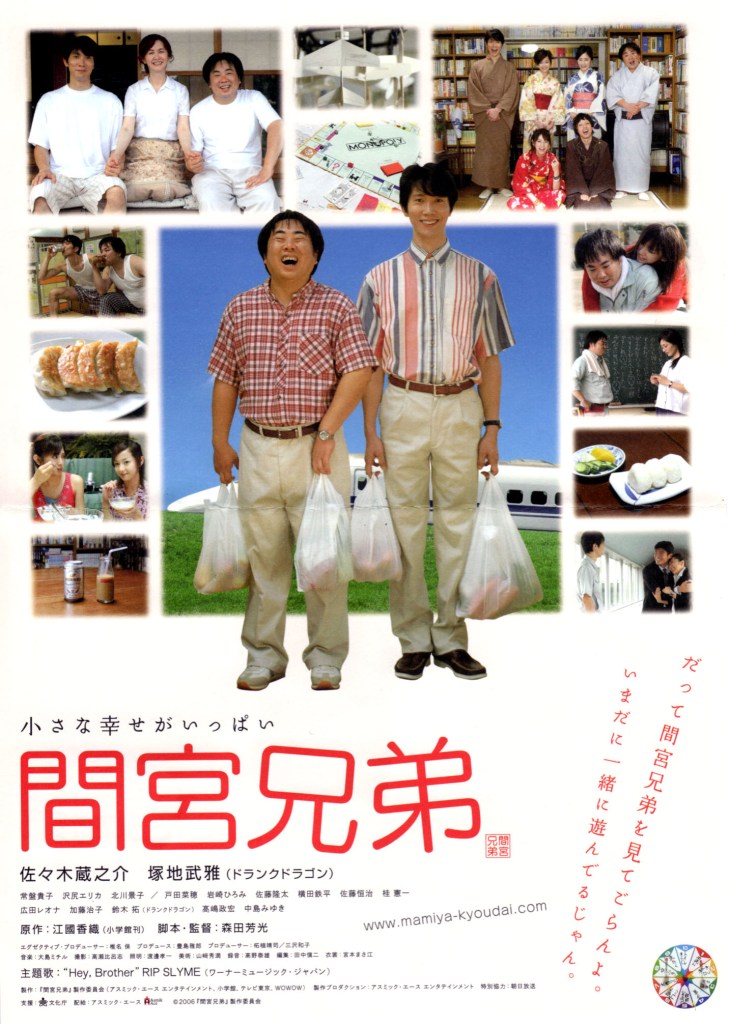 Ever the populist, Yoshitmitsu Morita returns to the world of quirky comedy during the genre’s heyday in the first decade of the 21st century. Adapting a novel by Kaori Ekuni, The Mamiya Brothers (間宮兄弟, Mamiya Kyodai) centres on the unchanging world of its arrested central duo who, whilst leading perfectly successful, independent adult lives outside the home, seem incapable of leaving their boyhood bond behind in order to create new families of their own.
 Review of Takeshi Kitano’s A Scene at the Sea – first published by
 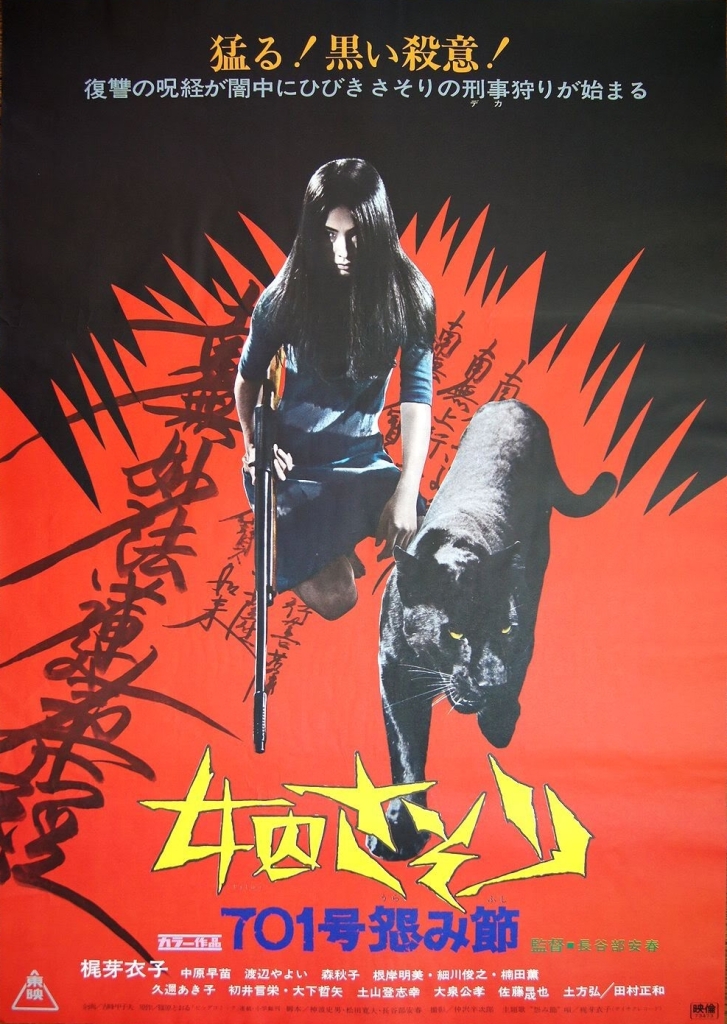 The saga seemed complete with the end of
  At the end of
  Female Prisoner Scorpion: Jailhouse 41 (女囚さそり第41雑居房, Joshu Sasori – Dai 41 Zakkyobo) picks up around a year after the end of
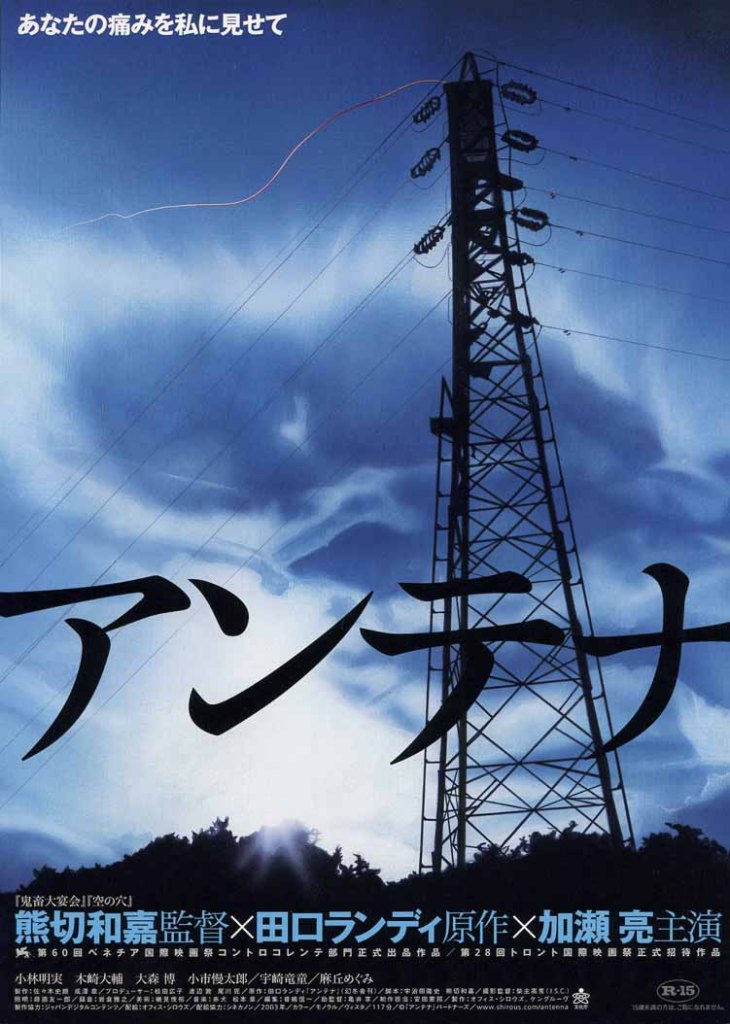 Scarring, both literal and mental, is at the heart of Kazuyoshi Kumakiri’s third feature, Antenna (アンテナ). Though it’s ironic that indentation should be the focus of a film whose title refers to a sensitive protuberance, Kumakiri’s adaptation of a novel by Randy Taguchi is indeed about feeling a way through. Anchored by a standout performance from Ryo Kase, Antenna is a surreal portrait of grief and repressed guilt as a family tragedy threatens to consume all of those left behind.
 Windows on Worlds