Law in Ghost Island (幽霊島の掟, Yasushi Sasaki, 1961)

The post-war world was one of increasing globalisation which brought with it anxiety as well as hope as Japan readied itself to step back onto the world stage. The populist cinema of the early ‘60s is marked by ambivalent attitudes to international influences, not just towards creeping Americanisation and its perceived costs but perhaps somewhat uncomfortably towards the wider world and Asia in particular with the same old prejudices which had marked the previous 20 years rearing their heads once again. Voice of the post-war era, the films of Hibari Misora are, by contrast, about as forward looking and progressive as it was possible to be but Law in Ghost Island (幽霊島の掟, Yurei-jima no Okite) in which she plays a noticeably smaller part, is a bizarre exception in which a “lawless” melting pot outpost must be “civilised” by Japanese influences else the creeping rule of thuggish Asian gangs finally reach Japan “proper”.

We’re deep in the Bakumatsu. The Black Ships have already arrived and there is considerable political trouble brewing back in Japan. That’s not our immediate concern however because we’re on a creepy boat with slovenly ronin Yagi Hanzo (Hashizo Okawa) and a mysterious woman wearing a cheongsam (Hibari Misora). Fellow petty gangster and slave trafficker Bunji (Chiyonosuke Azuma) is suspicious of Hanzo, but decides he’s probably just an unlucky retainer on the run from something or other and might prove useful. Therefore, on arrival at Dragon Island, Bunji starts on trying to recruit Hanzo for his boss Chou Yang Po (Isao Yamagata), but Hanzo’s his own man and he hasn’t come here looking for a job. Fearing Hanzo is a government official here to bring the law down on all their heads, Chou tries to force him to harm a man they have in custody and believe to be working for the state. Hanzo gets round this by breaking a chair over the man’s back but leaving him otherwise unharmed, keeping his cover (if that’s what it is) firmly intact.

During his stay on Dragon Island, Hanzo will meet several other shady characters, many of them dressed in outfits more usually associated with the Chinese, Indians, nondescript “islanders”, and strange movie pirates, but what must be assumed is that though Japan “owns” this distant island it is unable to police it and as such it has become a den of scum and villainy in which various tribal gangs vie for hegemony and control over the lucrative smuggling hub which has unwittingly formed in direct response to Japan’s unwise policy of internal isolation which is itself at breaking point thanks to Perry’s Black Ships which we later hear are also on their way to Dragon Island.

Our key into this conflict is the crazed child of the leading gangster, Isakichi (Hiroki Matsukata), who dresses like a cowboy and likes to showoff his hard-won saloon credentials as sharpshooting libertine and all round party animal. Hanzo is not as impressed by this as Isakichi was hoping though an awkward sort of camaraderie eventually arises between them. Meanwhile, Isakichi has fallen in innocent love with the sister of his childhood best friend who is deep into a putative resistance movement hoping to end the stranglehold the smugglers have placed over the previously peaceful island.

Misora’s Madame Song, for some reason posing as a Chinese sex worker, hints at the various ways nothing is quite as it seems in her astute observations of the world around her, sensing that Hanzo is hiding something but also assuming that he is on the “right” side. There is conspiracy everywhere – the putative revolution at home is sending its shockwaves all the way out here as our unscrupulous gangsters try to procure guns to send to various sides on the mainland, while Madame Song ironically laments that what Dragon Island needs is to be more like Japan which is to say ruled less by law itself than an internalised acceptance of the proper order of things. Uncomfortably, it also probably means sending the people who aren’t wearing kimono somewhere else and trying to stop them tricking nice women from Kyushu into coming to tropical islands where they discover they’ve been trafficked into sex work and are unable to leave.

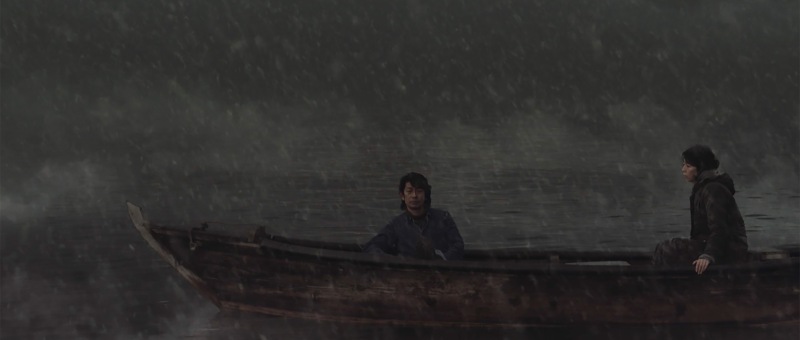
Among Toei’s lower budgeted efforts, Law in Ghost Island bills itself as a supernatural tale and does indeed open with a creepy scene of a misty boat but Hanzo doesn’t end up anywhere like the isle of the dead only a fantasy tropical “paradise” filled with zany movie pirates. Somewhere between pirate fantasy and western, Law in Ghost Island is closer to the kind of spy spoofs Toho would start producing in a few years’ time and even ends with a strangely comic scene in which just about everyone reveals themselves as spy for the same side during the climactic final shootout having been too busy playing spy games to figure any of it out before.

The final messages too are uncomfortable and ambivalent as Hanzo affirms that if there were more “good samurai” Japan would not become lawless like it is here while also claiming Dragon Island for the mainland in fear external forces may use it as a base to attack Japan. The smugglers pay heavily for their “treachery” in contributing to internal mainland chaos while the revolutionary islanders declare their intentions to make the island a better place, which mainly seems to mean making it more “Japanese” which is a fairly ambivalent message whichever way you look at it. Misora only sings two songs and is relegated to a minor mystery in the strange goings on of Ghost Island which features absolutely no ghosts or supernatural intrigue. It does however perhaps shine a light on a strange moment of cultural flux however how unflattering that mirror may turn out to be.


Brief clip of some of Hibari’s songs (no subtitles)

Hana (花よりもなほ, Hirokazu Koreeda, 2006)

Hana poster 1The heart of the samurai movie lies in the conflict between human feeling and duty to one’s code, unexpectedly the code usually wins but its victory is often tragic. Following a series of bleak modern dramas, Hirokazu Koreeda took his first (and so far only) foray into the jidaigeki with Hana (花よりもなほ, Hana yori mo Naho), stopping to ask if the entirety of the samurai ethos was founded more on pride and a sense of entitlement than a supposedly high ideal of honour of justice, and if perhaps the negative legacy of the samurai era is one that continues to be passed on through toxic masculinity and the patriarchal primacy of problematic fathers.

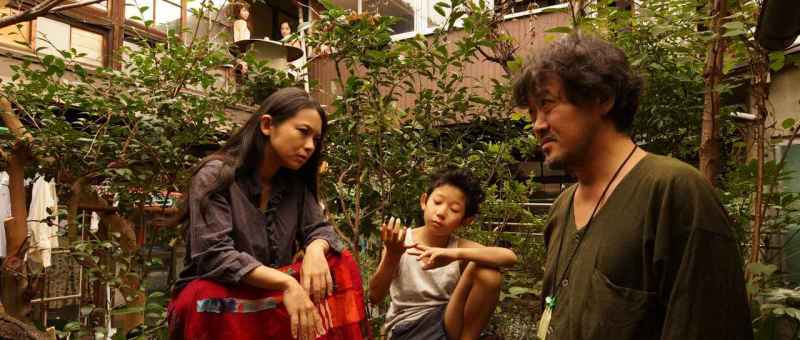
Set in 1702, the action revolves around noble hearted samurai Soza (Junichi Okada) who has been living in a rundown tenement ally for the last three years looking for the man who killed his father in a pointless quarrel over a game of Go in order to avenge his death. Despite being a fine samurai and heir to a dojo, Soza’s big secret is that he’s not much of a swordsman and is also tenderhearted which leaves him doubly conflicted in his mission. Unwilling to admit he has simply come to like living among these “ordinary” people, and most particularly alongside the widow Osae (Rie Miyazawa) and her young son Shinbo, Soza has perhaps begun to slack off and no is longer looking very hard for his quarry, willingly allowing himself to be conned into buying meals for the cheeky Sado (Arata Furuta) who already has tabs running all over town.

Unlike the majority of samurai tales, Koreeda deliberately shifts the focus to the poor – routinely oppressed by an unscrupulous landlord who has even taken to selling their excrement for extra money just to make sure they are as thoroughly exploited as possible. These people exist so far out of the samurai world that it might as well not exist for them and its rules are nothing more than a ridiculous affectation when your primary concerns are how to keep yourself fed for the day and make sure your house doesn’t suddenly fall down while you’re out. These facts are well and truly brought home to Soza when, knowing he has little chance of winning anyway, he is challenged to a fight by jaded street punk Sode (Ryo Kase) who is keen to prove to little Shinbo that dojo skills mean nothing in the real world. Soza gets a pounding, but somehow wins people’s hearts anyway if only for being so easily humiliated and bearing it with good grace.

Lessons to little Shinbo, who has figured out his father is probably dead but worries that maybe his mother still doesn’t know, becomes a persistent motif as Koreeda embraces his favourite theme – good fathers and bad. Soza’s samurai code pushes him towards martial rigour and the necessity of obeying his father’s wishes which in this case would be hating the man who killed him and avenging his death. Hate is, however, something the fair-minded Soza finds difficult even if he seems to have a fair amount of inner conflict towards his father whom even his cheerful uncle describes as a joyless prude. Osae, sensing Soza’s inner pain, points him in the right direction in remarking that if all his father left behind for him was hate then that legacy would be too sad. Eventually, Soza remembers that there were other things, better things, that his father taught him and that he could pass on to Shinbo which aren’t about pointless cycles of revenge killing and century old grudges. He can honour the spirit of his duty without having to obey it to the letter.

Meanwhile, Koreeda deliberately contrasts Soza’s gradual confidence in his humanitarianism with the stubborn pride of the 47 ronin who are also hiding out in the tenement ally while they bide their time waiting to strike. Soza manages to effect his “revenge” with some theatrical subterfuge, whereas the 47 (well, in the end 46) ronin take theirs for real but not altogether honourably and end up becoming legend overnight, earning the tenement a brief reprieve after the landlord threatens to close it down through becoming a tourist spot. The title, apparently inspired by the death poem of Lord Asano whose seppuku triggered the series of incidents later retold as the legend of the Chushingura, alludes to the nihilistic pointlessness of the samurai ideal of a death as elegant as falling cherry blossoms, later imbuing it with earthier, warmer wisdom as an unexpected fount of profundity affirms that the reason cherry blossoms fall so beautifully is that they know they will soon bloom again.


Hana was screened as part of an ongoing Koreeda retrospective playing at the BFI Southbank in April and May 2019.

Original trailer (no subtitles)

Chikamatsu’s Love in Osaka (浪花の恋の物語, Tomu Uchida, 1959)

Chikamatsu's love in Osaka poster“Money is the enemy” a dejected geisha declares in an attempt to explain her desperate circumstances to a naive young man part way  through Tomu Uchida’s Chikamatsu’s Love in Osaka (浪花の恋の物語, Naniwa no Koi no Monogatari). Before a wartime flirtation with the militarist far right, Uchida had been closely involved with the leftwing “tendency film” movement and his post-war work perhaps displays much the same spirit only with a world weary resignation to the inherent unfairness of human society. Chikamatsu, as cited in the slightly awkward English language title, was a Japanese playwright of the 17th/18th century who also specialised in tales of social oppression, most notably in frustrated romance and eventual double suicides.

Uchida’s masterstroke is that he retells Chikamatsu’s well known bunraku play The Courier for Hell and its kabuki counterpart Couriers of Love Fleeing to Yamato from the inside out. Among Chikamatsu’s most famous works the play was in fact inspired by a real life event which took place in Osaka (then known as “Naniwa”) in 1710. Uchida places the grumpy, worldweary figure of the playwright directly into the action as a powerless observer, trapped on the wrong side of the stage able only to observe and comment but, crucially, with the ability to remake reality in altering his tale in the telling.

The tale is familiar enough and possibly a little too close to that of Chikamatsu’s previous hits including Love Suicides at Sonezaki which is given a grim namecheck as events begin to mirror one of his plays. Our hero, Chubei (Kinnosuke Nakamura), is an earnest young man who has been adopted into the Kameya family with the intention that he will marry its only daughter and take over the courier business now being run by stern widow Myokan (Kinuyo Tanaka). Early foreshadowing reminds us that immense responsibility is regularly placed in Chubei’s hands and he must remain above suspicion. Embezzlement is a capital offence in the increasingly austere 18th century society.

Chubei is an honest man, but meek. Unable to risk offending a bawdy client, he allows himself to be bamboozled into the red light district where Hachiemon (Minoru Chiaki) buys him the prettiest courtesan in the place, Umegawa (Ineko Arima). Chubei tries to leave as soon as Hachiemon disappears but is convinced to stay by Umegawa’s entreaties that his sudden exit will reflect badly on her and possibly result in censure or punishment. Struck by her predicament, Chubei falls in love. He makes repeated returns, dips into his savings, and finally makes the fateful decision to spend money not his own when he discovers that a lascivious magnate has made an offer to buy out Umegawa’s contract.

Meanwhile, Chikamatsu hovers on the edges conducting “research” for a new play to save his failing theatre company which itself is suffering due to lack of monetary receipts seeing as audience members obviously prefer the heartrending melodrama of Sonezaki to the more artistic fare he’s currently running. Though he is obviously a frequenter of the red light district and its surrounding drinking establishments, Chikamatsu has a noticeably ambivalent stance towards its existence. His sympathy is instantly caught by the melancholy Umegawa when he notices her tenderly bandage the hand of a little girl who serves in the brothel, only to have her beautiful gesture of human kindness immediately mocked by the lascivious magnate who witnesses the same thing but chooses to ask her to repeat the act on him.

Chikamatsu was supposed to come to the teahouse in order to schmooze the magnate so that he will invest in the theatre company which perhaps generates an odd commonality between the playwright and courtesan both at the mercy of wealthy patrons who, one might say, are all money and no class. Umegawa, however, as Chikamatsu is painfully aware is in no way free and entirely dependent on pleasing men like the magnate whether she likes them or not. As she tells Chubei, Umegawa didn’t choose this line of work but people judge her for it anyway. She has no bodily autonomy and is bought and sold daily with no right to refuse. She is “merchandise” that “talks, laughs, cries, and gets angry” and the sole concern in all of her life is money which she now regards as “the enemy” for the subjugated position in which the need for it has placed her.

Of course, the playwright (our stand-in) has been listening all along. He too would like to free Umegawa from her torment, but he is powerless and can only blame the world that created the circumstances that trap her. Chubei is no hero either, he is weak and feckless even if his eventual willingness to damn himself by embezzling other people’s money (and ruining his adopted family in the process) proves the depth both of his love and of his rage at the social injustice which prevents him from pursuing his romantic desires. Chikamatsu can’t save his fatalistic heroes, but he can create a more fitting vision of their love imbued with all world nearly grandeur of tragic romance that returns our eyes to the cruelty of the world that wouldn’t let them be. A stunning final shot pulls us from Chikamatsu once again in the background as he watches his own play onto the other side of the stage and then back again as the playwright’s eyes burn with silent rage and impotence as he offers the only kind of resistance he can in the face of a cruel and indifferent society.


Distance (ディスタンス, Hirokazu Koreeda, 2001)

Distance DVDHirokazu Koreeda has become known predominantly for his nation’s representative genre – the family drama. He has, however, maintained a somewhat ambivalent attitude to the idea of family and more specifically what it means in the contemporary society. Koreeda’s later work might have found more faith in the healing power of familial bonds, but his third film, Distance (ディスタンス), is among his bleakest and finds little cause for hope when relations between people remain necessarily oblique. Another of the post-Aum films from the 2000s, Distance does not concern itself primarily with the immediacy of terrorist cult violence but its wider causes and implications.

As the opening news report informs us, three years previously the Ark of Truth cult released a genetically engineered virus into the Tokyo water system leading to the deaths of 128 people with thousands poisoned. In quick succession we meet four ordinary Tokyoites variously affected by the disaster but trying to go about their everyday lives. Schoolteacher Kiyoka (Yui Natsukawa), salaryman Kai (Susumu Terajima), punkish student Masaru (Yusuke Iseya), and sensitive florist, Atsushi (Arata). Eventually each of them, somewhat reluctantly, prepares for a trip. Ending up in a small rural town, they’ve gathered to commemorate the attack but, crucially, they are not relatives of those who were poisoned but of the cultists who committed the atrocity.

The relatives are, in a sense, secondary victims – they have all lost loved ones and are forced to bear the vicarious stigma the conformist society heaps on them simply for being related to someone who has committed a crime. When the group’s car is randomly stolen in the middle of nowhere, they are “rescued” by the mysterious Sakata (Tadanobu Asano) who is the only surviving member of the cult cell which carried out the terrorist attack and was subsequently wiped out by fellow cultists presumably horrified by what they had done to discredit the movement. Holing up in the remote mountain lodge where the cult had lived, the relatives are forced to confront their complicated emotions towards their late loved ones and the various ways their lives continue to be influenced by their loss.

The “distance” to which the title refers, is that between the relatives and the cultists to whose eventual slide into fanaticism they were largely blind. There are secrets, things left unsaid, a growing gap between a perception of a person and the “reality”. Most joined a cult because they were frustrated with the modern world and bought into its dubious messages from spiritual healing to saving the environment, but they were also each lonely and looking for a replacement for the traditional family which they had failed to find in their ordinary lives. Now remarried with a small daughter, Kai thinks back on the disastrous dinner during which his then wife told him she was leaving with another man to join a cult because Kai was never willing to fully face her. Only in the cult where there is full and total trust, did she finally find a reason for living – something which did not exist within her (presumably unhappy) marriage.

Yet even these flashbacks cannot be taken at face value. Our former cultist, Sakata, appears meek and apologetic among the relatives, once again describing the cult as “family” (perhaps insensitively) with fathers, sisters, and brothers who all loved him “unconditionally” though he eventually betrayed them. His description to a policeman immediately after the event is somewhat different, as is his attitude towards “quiet” sister Yuko (Ryo) who follows her brother’s lead in describing herself as an inhabitant of “Silent Blue” and subsequently views herself as part of a revolution – an engineer of the systemic crash which will reset the world.

With varying degrees of truth and self-deception, the relatives interrogate themselves and their place within the actions taken by the cultists while attempting to process the future with greater clarity. The divisions, however remain – in the strained relationship between in Kai and his wife, and that between Masaru and his suspicious girlfriend. Lonely souls look for forgiveness through reparation, but ultimately decide that perhaps the only solution really is to burn the whole thing down. A formal experiment for the increasingly formalist director, Distance is an unusually bleak negation of the concept of family which refuses the possibility of genuine connection in a world so often built on guile and subterfuge.


Distance screened as part of an ongoing Koreeda retrospective currently running at BFI Southbank.

Original trailer (no subtitles)

After Life (ワンダフルライフ, Hirokazu Koreeda, 1998)

Afterlife posterAt the end of your life, if someone asks you what it all meant, what will you say? It’s a question that can’t be answered until after you’ve turned the final page, but there is an idea at least that death brings clarity, rendering all things simple from a strange perspective of subjective objectivity. This is the central idea behind Hirokazu Koreeda’s meta existential fantasy After Life (ワンダフルライフ, Wonderful Life) in which the recently deceased are given seven days’ grace in order to decide on their most precious memory so that a small collection of clerks working in an old-fashioned government building can “recreate” it through the medium of cinema, allowing a departing soul to take refuge in a single memory preserved in eternity.

Heaven’s waiting room, as it turns out, is apparently located inside the ghost of the Japanese studio system. The recently deceased give their names at the door and patiently wait for their turn with their allotted case manager whose job it is to offer after life counselling designed to bring them to the point of boiling their existence down to the single moment which defines it within the arbitrary three day time limit which gives the crew the time to put their memories into pre-production complete with old-fashioned stage sets and studio-era special effects.

The purpose of all of this is not is exactly clear, though a clue is perhaps offered when we discover that the clerks are able to order VHS tapes of the entirety of their subjects’ lives in the event that they are struggling to think of relevant moments in an existence which seems to have disappointed them. The point is not so much the literal truth of the memory, be it accurate or not, but its sensation and the transience of feeling which is then re-experienced through the medium of cinema, captured in celluloid as momentary permanence.

Consequently, the chosen moments are necessarily often ones of stillness which promise the kind of peace and serenity one is supposed to find in death. The moments are ones of silent togetherness, of natural beauty, of childish innocence, or unbridled joy but is each is perhaps the key to unlocking the enigma of a life and as such is a solution which points towards a question. One older gentleman, Watanabe (Taketoshi Naito), finds himself unable to choose. He views his life as the epitome of mediocrity and can find nothing in it that seems worthy of “eternity”. Watching the videotapes of his life, he sees himself as a young man vowing to make a mark and is desperate to find some evidence that he lived but like many does not find it. His life was happy by virtue of being not unhappy for all that it was perhaps unfulfilled but only through communing with himself after death is he able to reclaim the memory of his late wife (Kyoko Kagawa) with whom he never quite bonded in mild jealousy of her lingering attachment to her first love who fell in war.

This being a film from 1998 and mostly featuring those in their 70s and above, the war looms large from painful battlefield memories of fear and starvation to unexpected reunions and the joy of simple pleasures found even in the midst of hardship. The clerks who died young may look on in envy of Watanabe’s “ordinary” life in the knowledge of all they were denied, while others mourn for a future they will never see. Yet there are shorter sad stories here too from a high school girl (Sayaka Yoshino) whose original choice of a day out at Disneyland is deemed too prosaic, to a middle-aged bar hostess (Kazuko Shirakawa) reminiscing about an old lover who let her down, and a rebellious young punk (Yusuke Iseya) who flat out refuses to choose because he feels that is the best way to accept responsibility. Forced into a reconsideration of his own life, even a clerk is eventually moved by the realisation that even if he had previously believed his existence devoid of meaningful moments he has achieved something by featuring in those of others and is therefore also a meaningful part of a considered whole.

Making the most of his documentary background, interspersing “genuine” memories among the imagined, Koreeda’s heavenly fantasy is one firmly tied to the ground where seasons still pass, time still flows, and the relentlessly efficient march of bureaucracy continues on apace undaunted by the presence of death. Death may give life meaning, but it’s living that’s the prize in all of its glorious complexity filled with both beauty and sadness but always with light even in the darkest corners.


After Life screened as part of an ongoing Koreeda retrospective currently running at BFI Southbank.

Original trailer (no subtitles)

Laplace’s Witch (ラプラスの魔女, Takashi Miike, 2018)

Laplace's Witch poster 2Takashi Miike, among Japan’s most prolific of directors, teams up with one of the nation’s most prolific authors, the often adapted Keigo Higashino, for a dose of scientific mystery in Laplace’s Witch (ラプラスの魔女, Laplace no Majo). Responsible for the international smash hit The Devotion of Suspect X and the Galileo series, Higashino too has worked across several genres ranging from the detective novels for which he is best known to children’s books and fantasy. Perhaps in contrast to the director, however, Higashino’s novels tend towards the socially conservative, occasionally cynical if at times perverse. Nevertheless, there is something a little ironic in Miike choosing to adapt this particular title which revolves around the idea of authenticity in art and meaningful legacy.

The unlikely hero of the tale, climate scientist Shusuke Aoe (Sho Sakurai), is called in to investigate the mysterious deaths of a film producer and an out of work actor who appear to have died of hydrogen sulphide poisoning at separate hot springs resorts. Dying of hydrogen sulphide poisoning outdoors is considered a scientific impossibility and Aoe has no real explanation for how it might have occurred but is stunned by policeman Nakaoka’s (Hiroshi Tamaki) assertions that foul play may have been involved.

Nakaoka is not exactly a bumbling policeman, but his certainties – born of policeman’s instinct, are held up for ridicule as he rapidly switches suspects, knee-jerk accusing the film producer’s widow of conspiracy to murder before deciding there must be more involved than a simple attempt at financial gain. He is however eventually correct, quickly figuring out the surprising connection between the two dead men is a famous film producer, Amakasu (Etsushi Toyokawa), who lost his own family in ironically similar tragic circumstances some years earlier and seems to have dropped off the radar ever since.

All of which means, Aoe’s scientific knowledge is increasingly irrelevant. His major contribution to the case at hand is in his strange friendship with a mysterious teenage girl who is engaged in her own missing persons case which may have some overlap with the murders. Aoe quickly notices that Madoka (Suzu Hirose) appears to have preternatural powers which she later alludes to in branding herself the “Laplace Demon” in honour of a scientific theory which suggests that if someone were to know the exact location of each and every atom in the universe then it would be perfectly possible to calculate their courses and trajectories with mathematical certainty and thereby possess absolute knowledge of the future.

Whether one might want such all encompassing knowledge is a bigger question. As one character later puts it, the ability to discern the future may impede one’s ability to dream and therefore hinder the progress of human society. The central message is, however, somewhat banal in pointing out that we are each of us connected, essential parts of a cosmic machine in which each has a specific role to play. By such logic, murder is then not so much a moral failing as one of over engineering in which attempts to tweak the system may lead to its destruction.

Then again, we hear from the depressed Amakazu that what he fears is that life is essentially meaningless and that many go to their deaths without leaving a mark. His central theory is that objective truth is a matter of record, that whatever is shot is “real” because that is what will be “remembered” long after the fact. Through his films, which are amusingly described in a piece of meta irony as dealing with edgy themes which don’t pander to audiences, he attempts to reorder his world by recreating it, improving on its many disappointments by envisioning it differently. Yet he still yearns for authenticity in his work and may have gone to great lengths to get it in a seemingly pointless piece of behind the scenes theatre.

Perhaps it is this sense of fatalistic ennui that Miike is attempting to capture through Laplace’s continually listless aesthetics but it has to be said that the central mystery, filled with plot holes and contradictions as it is, is particularly unengaging and despite the cheerful we’re all one narrative also carries some decidedly unpleasant undertones. Never quite finding the register to unlock its central philosophy, Laplace’s Witch proves a curiously flat outing for the famously out there director which may very well be the point but then again perhaps it’s a strange point to be making. 


Singapore release trailer (English subtitles)
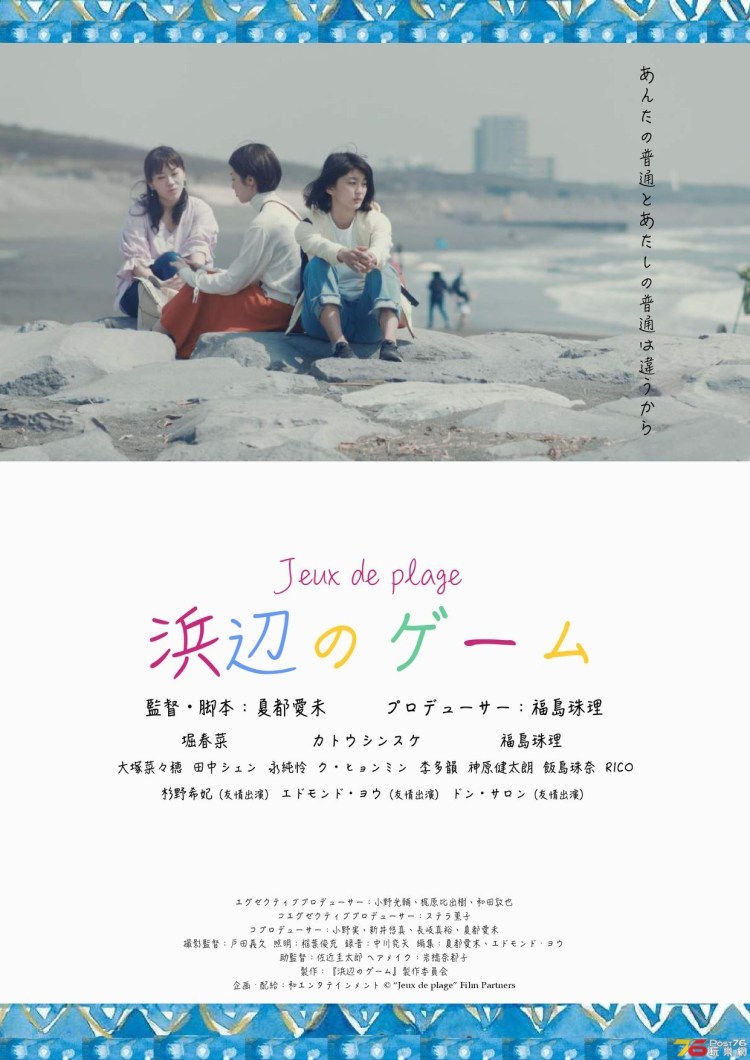
Luxurious Bone (贅沢な骨, Isao Yukisada, 2001)

Luxurious Bone poster

Isao Yukisada made his name with the 2004 hit Crying Out Love, in the Centre of the World, but even before becoming a “junai” pioneer his early films were far from strangers to melancholy, impossible romance. The strangely titled Luxurious Bone (贅沢な骨, Zeitakuna Hone, AKA Torch Song) is a case in point in its early, ambiguous treatment of same sex love and emotional repression. Though in some senses very much of its time, Yukisada’s sad chamber drama is a sensitive exploration of the path towards awakening, if ultimately not to happiness.

The drama begins when Miyako (Kumiko Aso) gets the titular “luxurious bone” lodged in her throat. In this case, it’s an eel bone which is a fish too expensive for either she or her roommate Sakiko (Tsugumi) to eat very often, hence its tinge of luxury even if there’s relatively little difference when it’s tickling your trachea. “Roommate” might not be the best way to describe exactly what Sakiko is to Miyako, though their relationship seems curiously ill-defined. The two women share a bed, and seemingly a life, but perhaps platonically. Sakiko wants to look for a job, but Miyako doesn’t quite want her to because she’s happy to support the pair of them on her wages as a sex worker. Likewise, Sakiko isn’t quite happy with Miyako’s line of work, not because she’s jealous or judgmental, but because she worries the job is unpleasant. Miyako reassures her that it’s fine because she feels nothing at all during sex so mostly it’s just dull.

All that changes however when Miyako meets unusual client Shintani (Masatoshi Nagase) who goes to the trouble of buying her a hamburger bento because he heard that’s the sort of thing you’re supposed to do in these situations. Shintani blows Miyako’s mind which isn’t something she was expecting or quite knows what to do with. On hearing the news Sakiko seems mildly worried, but following a strange series of events Shintani ends up becoming a minor part of their lives as the third wheel in their previously stable though somehow awkward relationship.

Miyako’s intense opening voice over makes reference to a secret she cannot bear to speak that will lie closed within her heart for all eternity. The fish bone becomes a symbol of the thing stuck in her throat, the truth she is too afraid to voice. Choking, Miyako gasps for air like a goldfish floundering in shallow water but cannot find the strength to swallow.

As we will later discover, this dark secret is bound up with her complicated feelings for Sakiko of which she seems to feel afraid and ashamed, wanting to possess her love in its entirety but also unable to access it and hating herself for her continuing need for possession and control. Her unexpected connection with Shintani is, after a manner of speaking, simply a more “acceptable” way of accepting her desire for Sakiko as she later reveals when confessing that she only ever thought of Sakiko when making love with Shintani which is presumably why only he was ever able to give her a satisfying experience.

Unable to cope with the intensity of her feelings, Miyako turns self destructive and attempts to lure Shintani into a sexual relationship with Sakiko who, apparently, is afraid of intimacy altogether having been raised in an abusive, neglectful home in which she was convinced that she was “dirty” and unloveable, an obstacle in the way of her father’s new relationship with a much younger step-mother (Makiko Watanabe).

Something of a cliché in itself, Luxurious Bone first attempts to delegitimise the feelings of the two women for each other by introducing the figure of Shintani to suggest that their problems are largely down to not having met a good man. Miyako sleeps with Shintani to feel closer to Sakiko, while Sakiko begins to move past her emotional trauma only thanks to the gentle machinations of Shintani. Their strange ménage à trois brings them together whilst driving them apart as the two women attempt to touch each other through Shintani while he remains detached and conflicted if perhaps wilfully used. Miyako’s self destructive impulses push her towards burning her world before facing what it is that frightens her. Only a strange encounter with another woman in a club shows her that her fear was not so much love as submission, while Sakiko tries to reconnect with her childhood self to move past her emotional trauma.

Despite its motion towards a positive resolution, Luxurious Bone cannot quite find the courage of its convictions and as quickly delegitimises the love as it tried to legitimise it through leaving Sakiko broadly where she started – lost, confused, and afraid, uncertain if unresolved longing is a natural condition of living. Perhaps of its time and overly simplistic in its treatment of complex issues from traumatic childhoods to shame and repressed sexuality, Luxurious Bone nevertheless has its heart (broadly) in the right place even if it leaves its lovelorn youngsters in the same position as many a Yukisada hero still looking for their place in a cruel and arbitrary world.


Original trailer (no subtitles)

Torch Song by The Humpbacks which features prominently throughout. The song was actually written for the film and is performed by Masatoshi Nagase.

My Love Has Been Burning (わが恋は燃えぬ, Kenji Mizoguchi, 1949)

My love has been burning posterAmong the many parallels that could be drawn between the Meiji Restoration and the immediate post-war period, the most obvious is that each provided a clear opportunity for social change along with a moment of frozen introspection and internal debate about what the new promised future ought to look like. Following Victory of Women and The Love of the Actress Sumako, Kenji Mizoguchi completed a loose trilogy of films dealing with the theme of female emancipation with My Love Has Been Burning (わが恋は燃えぬ, Waga Koi wa Moenu), returning once again to the broken promises of Meiji as its heroine discovers that old ideas don’t change so quickly and even those who claim to be better will often disappoint.

The film opens in the early 1880s as a teenage Eiko Hirayama (Kinuyo Tanaka) attends a rally to celebrate the arrival of noted feminist Toshiko Kishida (Kuniko Miyake). Eiko, a committed social liberal from a conservative middle-class family, went to see her idol in the company of a childhood friend, Hayase (Eitaro Ozawa), who is shortly going to Tokyo to study and join the democratic revolution. He halfheartedly asks Eiko to come with him, but knows that she won’t because her parents will refuse permission and she will not disobey them. Soon after, Eiko’s loyalty to her family is weakened when the family’s maid, Chiyo (Mitsuko Mito), is sold to a brothel by her father. Devastated, Eiko asks her parents for the money to buy her back but they refuse, regarding Chiyo’s sacrifice as noble and in line with filial tradition. If Chiyo had refused (not that she had the right or power to refuse), her parents would starve. Eiko rushes back to the docks, but she is too late, Chiyo and Hayase have both departed for the capital and extremely different fates.

After her family situation declines still further and Eiko decides it is impossible for her to remain under her father’s roof, she makes her own way to the city but finds it not quite so welcoming as she’d assumed it to be. Hayase is not overjoyed to see her. He merely asks if she has finally decided to marry him and becomes petulant when she reaffirms her intention to study even if she implies that she intends to marry him at a later date. During his time apart from her, Hayase has been working for the fledgling Liberal Party agitating for wider democratic rights and the expansion of the franchise, though he is irritated still further when his mentor, Omoi (Ichiro Sugai) – the leader of the socialists, is supportive of Eiko’s ambitions and agrees to find a job for her working on the party paper.

Eiko’s early disappointment in Hayase is frequently mirrored in all of her subsequent dealings with men. Hayase put on a performance of believing in her cause of women’s liberation and more widely the equality of all peoples ending centuries of feudal oppression, but really just wanted to possess her body and is unwilling to accept her decision to reject him or to choose someone else. Later visiting her after she has been imprisoned on a somewhat trumped up charge, Hayase tells her that a woman is only a woman when loved by a man, and that a woman’s fulfilment is achieved through home, family, and motherhood. He tells her that he admires her for her education and talent, but that she has “forgotten” that she is a woman. He will help her remember by getting her out of prison if only she consent to marry him even though he has previously attempted to rape her and is now working for the rightwing government having betrayed the socialist cause.

Meanwhile, Omoi looks an awful lot better. He is, ostensibly, entirely committed to socialist aims, energetically engaged in promoting the Liberal Party, and trying to ensure true democracy takes root in the new Japan, lifting the common man above his subjugated position in the still prevalent feudal hierarchy. Nevertheless, he too eventually falls in love with Eiko and like Hayase is ultimately more interested in her body than their shared cause for liberal freedom. He appears to support her desire for women’s rights as an integral part of his desire to end feudal oppressions but his belief in female equality is later exposed as superficial. Eiko, reuniting with Chiyo in prison, takes her into the household she now shares with Omoi (though they are obviously not legally married) as her maid which is perhaps not entirely egalitarian but still a well intentioned attempt to free her from the life her father condemned her to.

Omoi disappoints, bedding Chiyo while Eiko is working hard at the campaign office. Confronted, he rolls his eyes and offers a boys will be boys justification before affirming that it was just a matter of sexual satisfaction and that his feelings for her haven’t changed, mildly reproving Eiko for allowing her emotional jealously to cloud her judgement in restricting his sexual freedom. If it were indeed a matter of free love, perhaps Eiko could have understood, but Omoi damns himself when looks askance at Chiyo and remarks that it doesn’t really matter because she is nothing but a servant and a concubine. All at once, Eiko sees – despite his fine talk, Omoi may have abandoned feudal ways of thinking when it comes to working men but still sees women in terms of things. If he thinks female “servants” are not worthy of respect or agency, then what is it that he has been fighting for in his supposed mission to end oppression in Japan?

Attempting to comfort a distraught Chiyo who has been so thoroughly brainwashed that she never quite expected anything “better” than being a concubine and has truly fallen for all Omoi’s pretty words about wanting to make her happy, Eiko reminds her that as long as men continue to think as Omoi does women will never be free. Freedom and equality are what will enable female happiness, and long as men refuse to recognise women not as domestic tools but as fellow human beings there can be no freedom in Japan. Mizoguchi reinforces the idea that while one is oppressed none of us is free, neatly celebrating the success of the disappointing Omoi while lamenting that his intentions for reform will not go far enough. Eiko cannot free the women of Japan on her own, but her solution is warm and committed – she will teach them to free themselves by starting a school, educating the next generation to be better than the last. Chiyo, notably, whom she never blames or rejects, will become her first pupil neatly subverting Hayase’s cruel words when she asks Eiko to teach her how to be a woman.

Unusually brutal, My Love Has Been Burning does not shy away from the violence, often sexual violence, which both women suffer both at the hands of men and of the state as they attempt to do nothing more than live freely as full human beings. It also makes plain that even those with supposedly high ideals can disappoint as they nevertheless motion towards real social good without fully committing to its entireties. A committed pro-democratic, intensely feminist statement, Mizoguchi’s lasting message lies in an affirmation of female solidarity as, unlike the self-serving Omoi, Eiko lifts her pupil up onto her own level and draws her shawl around them both committed to proceeding forward together into a fairer future.


The Love of the Actress Sumako (女優須磨子の恋, Kenji Mizoguchi, 1947)

vlcsnap-2019-03-27-01h39m45s435The Taisho era was, like that of the post-war, a time both of confusion and possibility in which the young, in particular, looked for new paths and new freedoms as the world got wider and ideas flowed in from every corner of the globe. In The Love of the Actress Sumako (女優須磨子の恋, Joyu Sumako no koi), the second of a loose trilogy films about female emancipation, Kenji Mizoguchi took the real life story of a pioneering actress of Western theatre and used it to explore the progress of lack there of in terms of social freedoms not only for women but for artists and for society as a whole.

We begin in late Meiji as theatre director Shimamura (So Yamamura) fights to establish a foothold of Western-style “art theatre”, moving away from the theatricality of kabuki for something more immediate and naturalistic. He has, however, a problem in that as women were not allowed to take to the kabuki stage all of his students are male and casting a man to play a woman’s role would run counter to his desires to create a truly representative theatre. It is therefore lucky that he runs into Sumako Matsui (Kinuyo Tanaka) – a feisty, determined young woman who had divorced her first husband for infidelity and then left the second when he complained about her desire to pursue a career on the stage. In Sumako, Shimamura finds a muse and the ideal woman to portray the extremely controversial figure of Nora in his dream production of Ibsen’s incendiary A Doll’s House.

Shimamura casts Sumako because he sees in her some of Nora’s defiance and eventual desire to be free from illusionary social constraints, but it is in fact he who ends up embodying her spirit in real life. Somewhat feminised, Shimamura is in a difficult position in having married into his wife’s family, leaving him without real agency inside his own home as evidenced by his mild opposition to his daughter’s arranged marriage. While he wishes that his daughter be happy and if possible marry for love, Shimamura’s wife is very much of the old school and wants to make the best possible match in terms of financial gain and social status, viewing emotional compatibility as a low priority (the daughter herself as relatively little say). Unwisely falling in love with Sumako, it is he who eventually decides to follow Nora’s example by walking out not only on his family but also on the theatre company. He does this not quite because the scales have been lifted from his eyes – he was never under any illusion that his arranged marriage was “real” and there is of course an accepted degree of performance involved in all such unions, but because he finally sees possibility enough in his love for Sumako and the viability of emotionally honest Western art to allow him to break free of outdated feudal ideas of familial obligation.

Nevertheless, making a career as an artist is a difficult prospect in any age and Shimamura’s emotional freedom quickly becomes tied up with that of his art. Sumako’s Nora proves a hit (in the last year of Meiji), but he is ahead of his times both in terms of his liberal, left-wing philosophy and his determination to embrace modern drama in a still traditional society. The roles we see Sumako perform, including that in Tolstoy’s Resurrection which was another of those that helped to make her name, are all from proto-feminist plays which revolve around women who, like herself, had chosen to challenge the patriarchal status quo in pursuit of their own freedom and agency. Shimamura’s wife makes no secret of her outrage to her husband’s desire to stage A Doll’s House, viewing Nora’s decision as “selfish” and perhaps of a subversion of every notion she associates with idealised femininity. Though not so far apart in age, Sumako is a woman of Taisho who left not one but two unfulfilling marriages and is determined to forge her own path even if that path eventually leads her to subsume her own desires within those of her lover as the pair attempt to put their social revolution on the stage.

The revolution, however, does not quite take off. Despite good early notices, Shimamura’s Art Theatre company quickly runs into trouble. Faced with financial ruin, he does what any sensible theatre producer would do – he begins to prioritise bums on seats and acknowledges that if he’s to keep his company afloat and facilitate his dream of making Western theatre a success in Japan he’ll have to compromise his artistic aims  by putting on some populist plays. Of course, this sudden concession to commercial demands does not go down well with all and some of his hardline actors begin to leave in protest not just of his selling out but of his twinned desire to make Sumako his star.

Tellingly, the pair are eventually forced out of Japan entirely to tour the beginnings of empire from Korea to China and on to Taiwan. Their ideas are too radical and their society not quite ready for their messages even if not initially as hostile as it would later become. Shimamura works himself to the bone trying to keep his dream alive, eventually damaging his health. Sumako remains somewhat petulant about being forced into an itinerant lifestyle while her onstage personas come increasingly to influence her offstage life until it is said of her that her performance is “no longer an interpretation but an extension of reality”. In this, Sumako has, in a sense, achieved Shimamura’s dreams of a truly naturalistic theatre, but it comes at a cost, as perhaps all art does, and, Mizoguchi seems to suggest, becomes a kind of sacrifice laid down to a society still too rigid and unforgiving to appreciate its sincerity. Nevertheless, their boldness, as fruitless as it was, has started a flame which others intend to keep burning, eventually becoming a beacon for another new world looking to rebuild itself better and freer than before.


Short clip featuring Sumako’s performance as Carmen.

Victory of Women (女性の勝利, Kenji Mizoguchi, 1946)

Victory of Women cap 1Female suffering in an oppressive society had always been at the forefront of Mizoguchi’s filmmaking even if he, like many of his contemporaries, found his aims frustrated by the increasingly censorious militarist regime. In some senses, the early days of occupation may not have been much better as one form of propaganda was essentially substituted for another if one that most would find more palatable. The first of his “women’s liberation trilogy”, Victory of Women (女性の勝利, Josei no Shori) was released in 1946 and expressly embraced the democratic philosophy espoused by the American authorities which necessarily included a motion towards female emancipation.

Played by Mizoguchi’s muse Kinuyo Tanaka, our heroine is Hiroko – a young woman working as a lawyer defending women against the cold and hard face of the law. Her family situation is, however, complicated. Her father having passed away, Hiroko’s sister Michiko (Michiko Kuwano who sadly passed away during shooting after collapsing on set) married the prosecutor Kono (Kappei Matsumoto) who financially supported Hiroko so that she might become the lawyer she is today. Meanwhile, Kono is also responsible for the arrest and incarceration of Hiroko’s fiancé Yamaoka (Shin Tokudaiji), a liberal intellectual. The political situation having changed, Yamaoka is to be released from prison after five years but is now in extremely poor health. Hiroko intends to return to him, resume their former relationship and marry once his health recovers. This is anathema to Kono who still objects to his liberalist views and views himself as having a hold over Hiroko’s future as the head of her family and in having supported her financially.

Financial support is a cornerstone if not the full foundation of Kono’s position of entitled superiority over Hiroko and her family. Despite the melodramatic underpinning of the case at hand, the real questions are the ones defining the direction of the post-war world in pitting the feudal values of “duty” and “womanliness” against a modernising liberality that prizes freedom and equality above hierarchy and obligation.

Kono, perhaps to his credit, does not appear object to the idea of female lawyers and has indeed facilitated Hiroko’s rise to just such as position but otherwise affirms that “a woman’s duty is easy. All that is required of her is self-sacrifice”. The idea of “self-sacrifice” is one which is brought up in the closing speeches of the trial in which Hiroko makes an impassioned plea in the case of a mother, Moto (Mitsuko Miura), who, mad with grief, held her baby too closely and may have suffocated it. Kono’s argument is that Moto’s transgression is against nature and the social order, that she has “failed” as a woman in rejecting her maternity by murdering her child. He rejects the “extenuating circumstances” of her grief and desperation by painting her “crime” as a selfish one in choosing to save her own life rather than sacrifice herself on her child’s behalf. Insisting that she has “disgraced the morals of women”, Kono requests she be punished severely as an example to the others.

In refuting Kono’s argument, Hiroko not only restates the extenuating circumstances of the intense strain on Moto’s mental health but attacks his entire way of thinking in positioning “motherhood” as the primary female “duty”. She does not deny that there have been many wonderful stories of women who valiantly sacrificed their own lives for their families, but reminds the court that these stories have often been misused as a kind of propaganda in service of female oppression, that under the feudal system which militarists prized so highly women were little more than slaves to men with no rights or agency. Further more, she points to the corruption of the hierarchical society which has left Moto in such a difficult position following her husband’s early death as a result of an accident at the factory for which the factory paid but only until the end of the war at which time he was cruelly cast away like so many of his generation who had perhaps been similarly exploited to serve a similar idea of “duty” only this time to the state. Kono blames Moto, insisting that her “crime” occurred because her character is “weak”. Hiroko does not blame Moto at all but the society which placed her in such an impossible position and has all but broken her spirit.

The argument is between a fair and just society in which the law exists for the protection of the people, and an austere and cruel one in which the law exists to oppress and tyrannise. Kono, an arch and unreconstructed militarist, believes in the primacy of the law. He is rigid and uncompromising, branding Hiroko’s summation as “sentimental” and “romantic”, dismissing an “irrational” woman’s logic from his elevated position on the podium. As others point out to him, his way of thinking is outdated and his tendency towards an entitled assumption that it will eventually prevail through being the proper order of things is extremely misguided yet he clings fiercely to feudalistic values which have ensured power remains in the hands of people like him since time immemorial, uncompromising to the last.

Rather than focus on Moto and her trial, Mizoguchi and his scriptwriters Kogo Noda and Kaneto Shindo, return to the realms of melodrama in shifting into the domestic as Hiroko’s older sister Michiko struggles between the feudal duty to her husband (however much she appears to dislike him) and her love for her sister whose modern liberal way of thinking still strikes her as immoral. Michiko, it seems, was forced to sacrifice herself for her family in marrying Kono for financial support. The sisters’ mother, now committed to Hiroko’s way of thinking, willingly married her daughter off telling her never to return believing it to be the proper way of things. Having suffered so long in service of an ideal no longer current, Michiko gradually comes to the realisation that she now has a choice – she does not have to stay with a husband who she does not love and does not love her, she is free to leave him and live as a full and independent woman if that is her individual will.

Nevertheless, the slightly awkward framing perhaps casts the choices of Hiroko and her sister as being defined by their respective men – Hiroko swept along by Yamaoka’s socialist politics and Michiko by her husband’s conservatism. Both men are in different senses problematic – Yamaoka vindictive and unsympathetic to Michiko’s attempts to make peace, no more forgiving than Kono while also patronising in his last impassioned speech which places such great responsibility in Hiroko’s “tiny hands”. Nevertheless, Hiroko’s clearsighted fight not only for her own freedom but for a fairer, more compassionate society founded on the idea of a literal social justice in which the law exists in service of its people rather than to oppress them is remarkably forward thinking, moving beyond “propaganda” for the new regime to the better world so often envisaged by the post-war humanists.