
Of Love & Law (愛と法, Hikaru Toda, 2017)

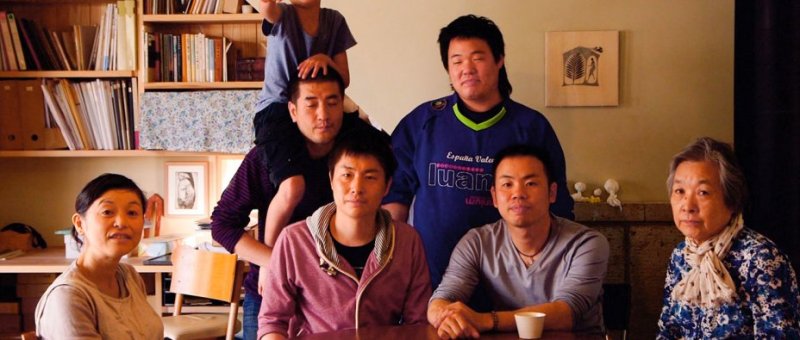
of love and law posterIn Japan the nail which sticks out is hammered down. Conformist societies promise mutual support, but all too often only when it suits the collective – those not deemed part of the club are wilfully left to fend for themselves with the dangled promise of readmission if one promises to reform and abide by the rules. We first met the couple at the centre of Hikaru Toda’s Of Love & Law in her previous documentary, Love Hotel, which documented their struggles with discrimination in frequently being turned away by establishments who did not wish to rent a room to two men. A same sex married couple in Japan’s second city of Osaka, Kazu and Fumi run their own law firm and operate under the mission statement of representing those who often find themselves without a voice in a culture which favours silence.

Opening at a local Pride event, the camera attempts to capture some talking heads but no one will bite. Asked for comments, the visitors each refuse to show their faces, revealing that they aren’t fully out, fearing that it might cause problems for them at work, or just embarrassed to go on the record about something so taboo. Though the law practice is not limited to representing LGBT issues, they are clearly a key concern to Fumi and Kazu who spend their “free” time engaging in outreach projects trying to foster a little more education and understanding of sexual minorities. Kazu brings this home when he tells his own coming out story in which his stunned mother exclaimed that she’d never heard of anything like this and therefore could not understand it. The problem wasn’t prejudice, it was ignorance mixed with fear.

Ignorance mixed with fear could equally well describe most of the cases brought against Kazu and Fumi’s clients. The protagonist of the second strand – artist and mangaka Rokudenashiko whose legal troubles even made the foreign press, attributes many of these issues to an inability to “read the air” or aquedately understand the unspoken rules of society and then silently abide by them. The law firm makes a point of defending those who have chosen to fly in the face of social convention, flying a flag for the freedom of choice in a society which often deliberately suppresses it.

The freedom of choice is certainly a key issue for the teacher suing the Osakan school that fired her for refusing to stand for the national anthem. Arguing that standing when one is forced to stand is hardly a declaration of patriotism and fearing the lurch to the right which has made even implicit indifference to the Imperial family a hot button issue, the teacher puts her foot down but finds that few will listen. Similarly, Rokudenashiko finds herself arrested for obscenity regarding her vagina themed artwork while the court undermines its own argument by accidentally proving that her work has socio-political merit.

Yet Rokudenashiko and the teacher have each, in a sense, made a firm decision to challenge the intransigence of their society, hoping to prevent a further decline even if not overly hopeful of improvement. Other clients on the roster include a fair few who are accidentally undocumented through no fault of their own thanks to Japan’s arcane and idiosyncratic legal system which makes it difficult to register births of children born out of wedlock or in difficult family circumstances meaning that youngsters sometimes grow up without the proper papers leading to problems with accessing education, employment, healthcare and welfare provisions. Getting someone a birth certificate who doesn’t currently “exist” can prove a taxing ordeal, especially as government officials often regard children born to “immoral” women as “unworthy” of care or attention.

Getting a call from the mother of a victim, Fumi is shocked when she makes a point of enquiring about the nationality of the perpetrator. He is unsurprised but disappointed in witnessing the various ways one oppressed person (both the victim and plaintiff are from impoverished, single parent backgrounds) can turn their oppression back on others as an odd kind of social revenge. Luckily, however, there are good people everywhere such as the fine young man Fumi and Kazu end up temporarily fostering after his care home is unexpectedly closed down. Kazuma accepts their relationship without a second thought, enjoys learning to cook from Fumi and blends right into Kazu’s extended family who each seem as warm and accepting as the couple themselves. Family is not about a register, it’s having a place to go where they’ll always take you in. Fumi doesn’t trust society because society shirks its responsibilities, but thankfully there are those who know better and continue on in hope tempered with patience.


Screened at BFI Flare 2018.
The Ballad of Narayama (楢山節考, Shohei Imamura, 1983)

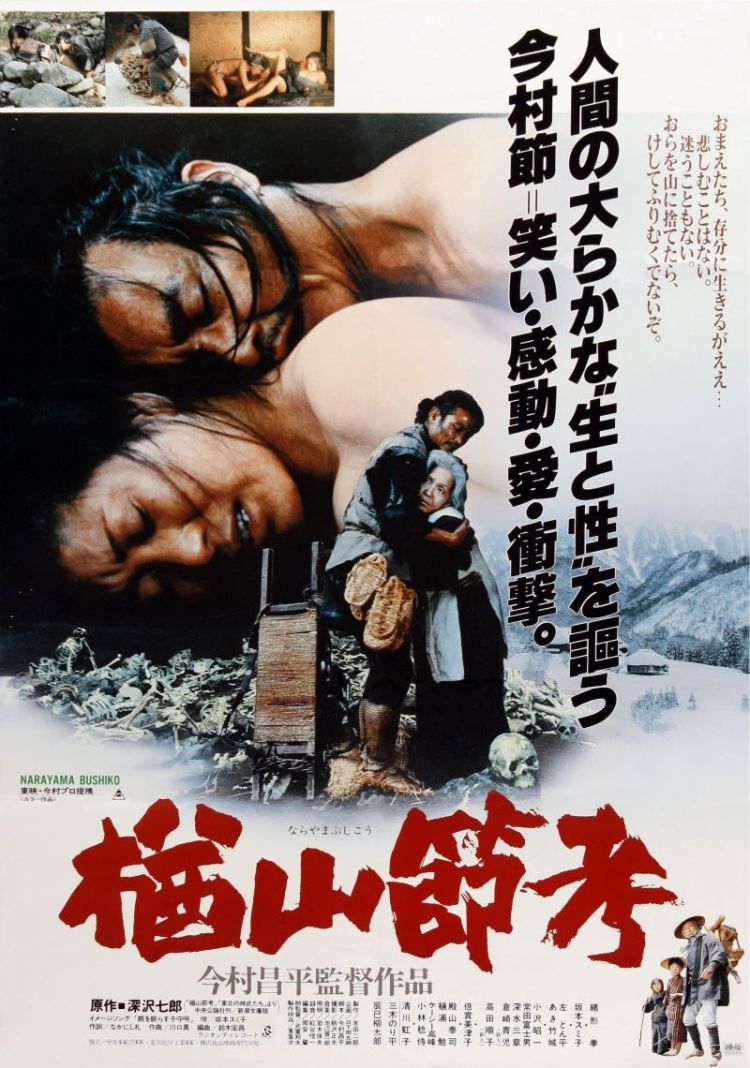
ballad of narayama imamura 1983 posterWhen Keisuke Kinoshita decided to dramatise The Ballad of Narayama (楢山節考, Narayama Bushiko), adapted from a recent novel inspired by the ancient legend of “ubasute”, he recast it is as myth – a parabolic morality play adopting the trappings of kabuki to tell a timeless tale of transience and sacrifice. As much as Kinoshita praised the heroine’s kindness and altruistic sense of duty, he also questioned her failure to question the cruel and arbitrary social codes which defined her life, sacrificing her deep familial love for the cold austerity of religious reward. Shohei Imamura, slightly younger than Kinoshita, had also read the novel when it came out though he was not sufficiently progressed in his career to have considered adapting it for the screen. Unlike Kinoshita’s highly stylised approach, Imamura opts for his trademark sense of realism, exposing nature red in tooth and claw as he attempts to restore rural earthiness to the rarefied cinema screen.

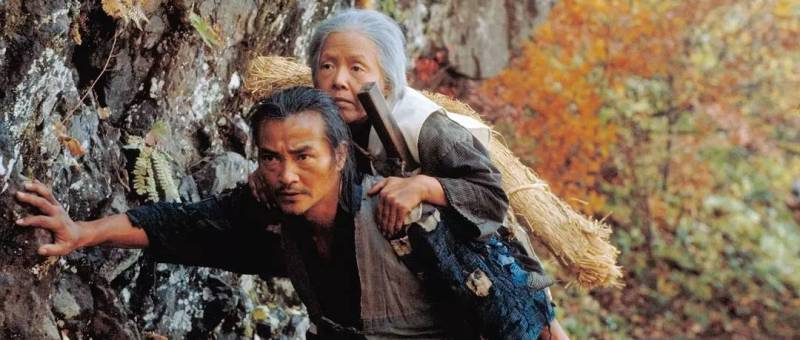
Deep in the mountains, a small village does what it can to survive in harsh terrain. 69-year-old Orin (Sumiko Sakamoto) is as strong as they come but she is preparing to meet her end. In the villages of these parts, men and women of 70 are carried by their children to summit of Mount Narayama where they are left as a sacrifice to the god, praying for snow to hasten an otherwise long and drawn out death. Orin’s husband disappeared 30 years ago, the laughing stock of the village for his sentimental aversion to carrying his own mother up the mountain, and her son, Tatsuhei (Ken Ogata) seems equally reluctant to accept that Orin will making her own journey as soon as the next snows arrive.

Existence is indeed cruel. The custom of “obasute” or “throwing away” one’s old people, originated because of a lack of food. There not being enough sustenance to support a large population, the old sacrifice themselves in the name of the young. Life is cheap and of little consequence. Tatsuhei’s simple-minded younger brother, Risuke (Tonpei Hidari), notices the body of a newborn baby emerging from the melting snow to the edge of his rice paddy but the sight does not disturb or sadden him – he is annoyed that someone has “dumped” their “rubbish” on his land. Baby boys, oddly, are worthless – just another mouth to feed until it becomes strong enough to work, but baby girls are a boon because they can be sold. Orin herself sold her baby daughter in desperation following a bad harvest, and when the salt seller calls in unexpectedly Orin is at pains to tell him they’ve still not made a decision as to whether to sell her granddaughter who has been left without a mother following the death of Orin’s daughter-in-law in a freak accident.

She needn’t have worried however because the salt seller is bringing good news – a new wife for Tatsuhei, meaning Orin can make her final journey with an unburdened heart knowing that the household will be taken care of. Tamayan (Aki Takejo), a kind and cheerful woman much like Orin herself, fits right in despite the objections of Tatsuhei’s teenage son, Kesakichi (Seiji Kurasaki), who has got his girlfriend pregnant and wants to “marry” her – bringing not one but two extra mouths into his household. Orin loves him dearly, but all Kesakichi can do is make fun of his granny for still having all her teeth and resentfully enquire if she isn’t needed somewhere up a mountain sometime about now.

Kesakichi’s coldness and selfishness is contrasted with the goodness and warmth of Orin and her son. Hardship, far from bringing people together in their shared struggle, has made beasts of all. Imamura splices in frequent shots of animals copulating or feasting on each other – rats gnawing on the body of a snake giving way to a snake swallowing the body of a twitching grey mouse. Yet it is nature that will win in the end. Early on the village men chase a hare in the snow, Tatsuhei shooting it dead, only for an eagle to swoop down and make off with the prize. On the mountain, strewn with bones, a host of flapping crows emerges from a battered rib cage. 

Catching a thief is no different to catching a hare. Convinced that the thief’s family is a curse on the village, the villagers determine that they must all be eliminated – the roots of a poisoned tree must be burned away. Breaking into the home, friends and former neighbours tie up and kidnap an entire family, burying them alive and then redistributing all their worldly goods in “recompense” for what they’d “lost”. The cycles of loss and redistribution continue, as Tatsuhei observes finding Orin’s belongings draped around other shoulders. Kesakichi, having lost one lover, quickly takes another forgetting the first while Tatsuhei struggles to come to terms with the loss of his mother and the knowledge that someday he too, and Kesakichi, and the sons of Kesakichi, will make this same journey to this same spot.

Kinoshita’s secondary concern had been with the cruelty of the custom and the mechanisms of social conformity which enforced it, but Imamura almost seems to be in agreement with the villagers, finding horror but also beauty in the sacrifice of Orin who accepts her fate with transcendent beatification and willingly sacrifices herself to the mountain gods. The world is cruel, and tender. A son’s acceptance of his mother’s sacrifice becomes the greatest expression of a love he must destroy by honouring.


Original trailer (no subtitles)

The Ballad of Narayama (楢山節考, Keisuke Kinoshita, 1958)

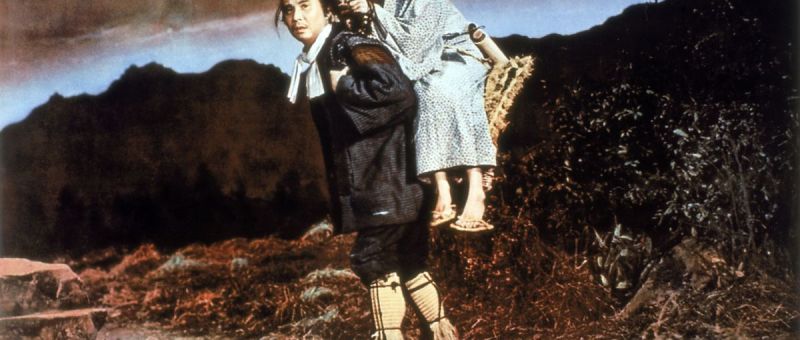
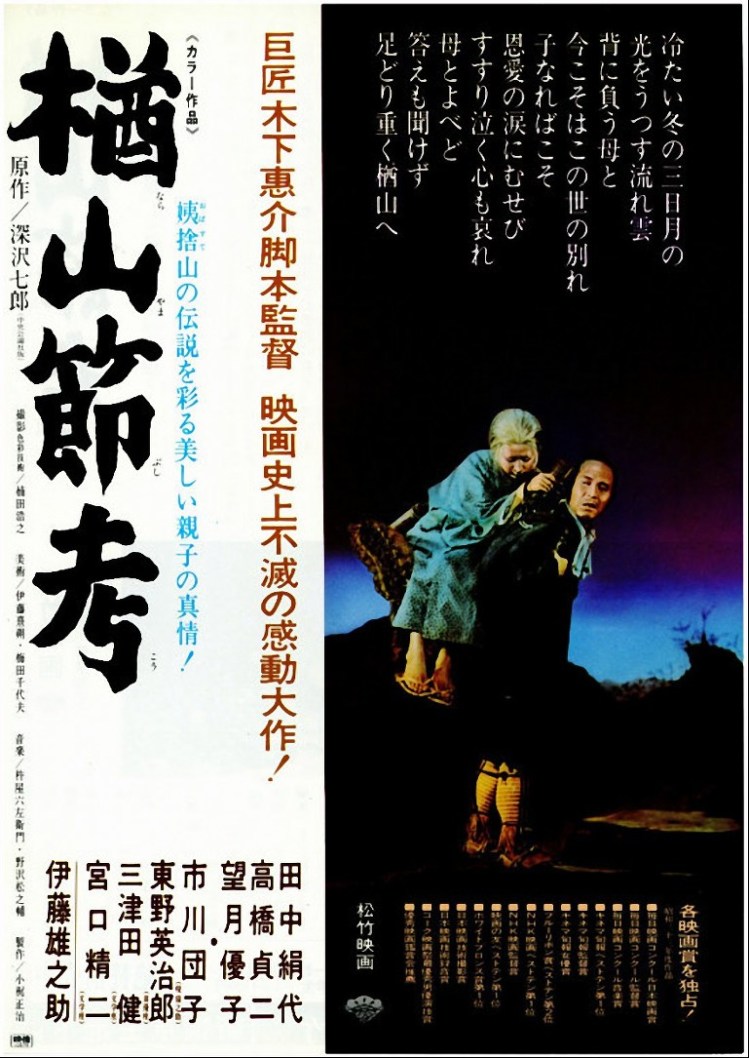
ballad of narayama kinoshita 1958 posterMany naughty children running low on filial piety have probably been told the folktale about a man who took his son along when he abandoned his senile father on a mountain to die only to have his son later do the same thing to him. In Japan, the mythical practice of “obasute” or “ubasute” is a kind of Logan’s Run equivalent in which elderly people elect to remove themselves from society in order to reduce the burden on the young. The Ballad of Narayama (楢山節考, Narayama-bushi Ko) has, perhaps, taken on an additional degree of pathos in ageing Japan in which many elderly people find themselves metaphorically cast out from a society in which they have become the majority, but the idea of “obasute” is intended to be a lesson to the young to treasure their elders and accept the responsibility to care for those who can no longer care for themselves in the knowledge that they too will one day be old.

Keisuke Kinoshita is sometimes criticised for his supposed sentimentalism but his central concern was always in the redemptive power of the relationships between people, that there is always kindness even in the worst of circumstances and that this is enough for hope to survive. In telling the sorry tale of Narayama in which those of over 70-years-of-age are forced into a ritual suicide by social convention, Kinoshita opts for alienation in deliberately shifting into a theatrical register inspired by kabuki featuring obvious studio sets, stylised action, and traditional narration, but his decision to pull back makes the message all the more painful, as does the insistence on the timelessness of his tale.

Long ago in the distant feudal past, 69-year-old Orin (Kinuyo Tanaka) knows that it will soon be time for her widowed son, Tatsuhei (Teiji Takahashi), to carry her to Narayama where she hopes to die of exposure in the New Year snows. She has made her peace with this, it is the will of the gods and she has no call to disobey. Her son, however, is distraught to think of the time he will be expected to carry his elderly mother to a remote spot in the mountains and leave her there, alone, to die of cold and starvation. When a messenger arrives from Orin’s home village to propose a match for Tatsuhei, a recently widowed woman of exactly the same age – Tama (Yuko Mochizuki), Orin is overjoyed – she can go to Narayama without fear or worry, her son and grandsons will be looked after even after she is gone.

The tradition began because the villages in this region are extremely poor. Tatsuhei and Orin will be enjoying their one and only bowl of white rice for the year in celebration of Bon. Orin’s self-centred grandson Kesakichi (Danko Ichikawa) has made up a horrible song about his grandma in which he criticises her for still having all her own teeth at 70 – implying that, as she is not malnourished enough to have lost them, she must have been greedy and taken more than her fair share of food. Unable to bear such reproach, Orin smashes out her own front teeth to better conform to the conventions of her society and make herself a more acceptable sacrifice to the gods as a good and pious woman.

This early horrific act is perhaps the key in illuminating Kinoshita’s gentle critique of social conformity as a tool of social control – something which had become increasingly apparent during the militarist era. Orin, a kind and decent woman, is herself complicit in this abhorrent custom – her acceptance of it is part of her goodness, a sign of her altruistic self-sacrificing nature, but her own unwillingness to challenge the darker aspects of the society in which she lives leads only to their perpetuation and an ongoing descent into unkindness and cruelty.

Tatsuhei, a good and pious son, cannot reconcile himself to his mother’s fate, while his own son, Kesakichi, openly mocks his grandmother for not going sooner and Kesakichi’s pregnant girlfriend (Keiko Ogasawara) looks on enviously at the extra beans on offer if there were one less mouth to feed. Old and bent, Orin still plays a vital part in her community – she harvests the rice while Kesakichi lounges in trees, and she alone knows the best place to catch trout, a valuable skill in a village where food is scarce. Despite the possibility for disaster, Orin and Tama bond instantly as kindred spirits, both kind people in an often unkind world. It’s to Tama that Orin finally divulges her knowledge – something the village will be poorer for when she is gone, having passed her familial responsibilities to another woman and seen her son happily settled with a perfectly suited second wife.

When Tatsuhei returns, broken, after having performed the dreaded ritual he watches his own cruel son laughing and joking from within their shared home, caring only for himself and his easy pleasures. Tama, equally upset over the loss of Orin with whom she had bonded as mother, tries to comfort her husband but is eventually overcome by the tragedy of life, taking comfort only in the fact that, when they are 70, she and Tatsuhei will climb Narayama together.

Hardship, far from bringing people together in the famous harmony that Japanese society praises itself for, has forced them apart, infected them with a sense of mutual distrust and a them or us mentality. Orin feeds the senile old man cast out from his own unfeeling family, but she also urges him towards making a sacrifice of himself on Narayama, genuinely believing that both of their existences have become inappropriate, a greedy usurpation of time which rightfully now belongs to others. Kinoshita respects Orin for her stoicism and righteousness, but pities her for the cruelty of the world in which she lived and was so powerless to resist that it never occurred to her that she should. There is a painful sensitivity around those who willingly went to their deaths in service of something they believed to be right because their society said it must be so, never daring to consider the ways in which their society may be mistaken.

Heavily stylised and markedly experimental for a mainstream Shochiku melodrama of the late 1950s, Kinoshita’s The Ballad of Narayama is a heartrending tale of transience and inevitability, but it’s also one of the various ways a stringent society erodes the bonds between people. The intense love of Tatsuhei for his mother is destroyed by a terrible custom that no one is brave enough to defy, leaving the family rudderless and the village poorer for having been robbed not only of Orin’s wealth of experience but of her warmth and kindness. Kinoshita ends on an ambiguous image showing us the modern train station which stands on the former village of “Obasute”, demonstrating the passage of time and arrival of “modernity” but also that ancient customs are never quite as “ancient” as they seem.


Scene from near the end of the film (English subtitles)

Noh Mask Murders (天河伝説殺人事件, Kon Ichikawa, 1991)

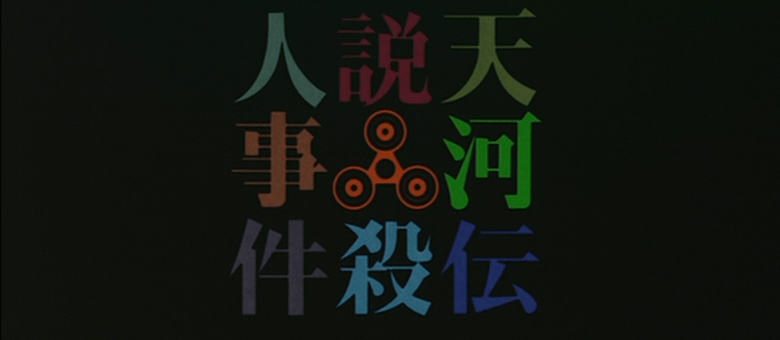
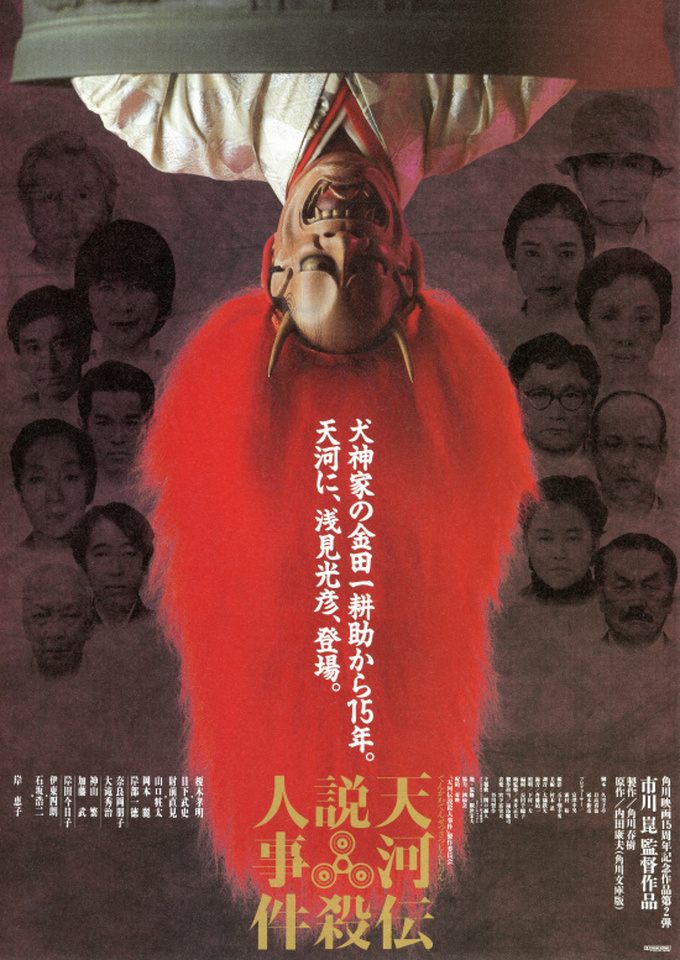
noh mask murders posterFor one reason or another, Japanese mystery novels have yet to achieve the impact recently afforded to their Scandinavian brethren. Japan does however have a long and distinguished history of detective fiction and a number of distinctive, eccentric sleuths echoing the European classics. Mitsuhiko Asami is just one among many of Japan’s not quite normal investigators, and though Noh Mask Murders (天河伝説殺人事件, Tenkawa Densetsu Satsujin Jiken) is technically the 23rd in the Asami series, Kon Ichikawa’s adaptation sets itself up as the very first Asami case file and as something close to an origin story.

Ichikawa, though he may be best remembered for his ‘60s arthouse masterpieces, was able to go on filmmaking where others perhaps were not precisely because of his forays into the populist with a series of mystery thrillers including several featuring top Japanese detective Kindaichi (who receives brief name check in Noh Mask Murders). Published by Kadokawa, Noh Mask Murders is produced by Haruki Kadokawa towards the end of his populist heyday and features many of the hallmarks of a “Kadokawa” film but Ichikawa also takes the opportunity for a little formal experimentation to supplement what is perhaps a weaker locked room mystery.

Asami (Takaaki Enoki) begins with a voice over as four plot strands occur at the same temporal moment at different spaces across the city. In Shinjuku, a salaryman drops dead on the street, while a young couple enjoy a secret tryst in a secluded forest, a troupe of actors rehearse a noh play, and Asami himself is arrested by an officious policeman who notices him walking around with a dead bird in his hand and accuses him of poaching. As he will later prove, all of these moments are connected either by fate or coincidence but setting in motion a series of events which will eventually claim a few more lives before its sorry conclusion.

To begin with Asami, he is a slightly strange and ethereal man from an elite background who has been content to drift aimlessly through life to the consternation of his conservative family which includes a police chief brother. He harbours no particular desire to become a detective and is originally irritated by a family friend’s attempts to foist a job on him but gives in when he learns he will have the opportunity to visit Tenkawa which is where, he’s been told, the mysterious woman who helped him out with the policeman in the opening sequence keeps an inn. Hoping to learn more about her, he agrees to write a book about the history of Noh and then becomes embroiled in a second murder which links back to the Mizugami Noh Family which is currently facing a succession crisis as the grandfather finds himself torn over choosing his heir – he wants to choose his granddaughter Hidemi (Naomi Zaizen) who is the better performer but the troupe has never had a female leader and there are other reasons which push him towards picking his grandson, Kazutaka (Shota Yamaguchi).

As with almost all Japanese mysteries, the solution depends on a secret and the possibilities of blackmail and/or potential scandal. The mechanics of murders themselves (save perhaps the first one) are not particularly difficult to figure out and the identity of the killer almost certainly obvious to those who count themselves mystery fans though there are a few red herrings thrown in including a very “obvious” suspect presented early on who turns out to be entirely incidental.

Ichikawa attempts to reinforce the everything is connected moral of the story through an innovative and deliberately disorientating cross cutting technique which begins in the prologue as Ichikawa allows the conversations between the grandchildren to bleed into those of Asami and his friend as if they were in direct dialogue with each other. He foregrounds a sad story of persistent female subjugation and undue reliance on superstition and tradition which is indirectly to blame for the events which come to pass. Everyone regrets the past, and after a little murder begins to see things more clearly in acknowledging the wickedness of their own actions as well as their own sense of guilt and complicity. Noh is, apparently, like a marriage, a matter of mutual responsibility, fostering understanding between people and so, apparently is murder, and one way or another Asami seems to have found his calling.


The Third Murder (三度目の殺人, Hirokazu Koreeda, 2017)

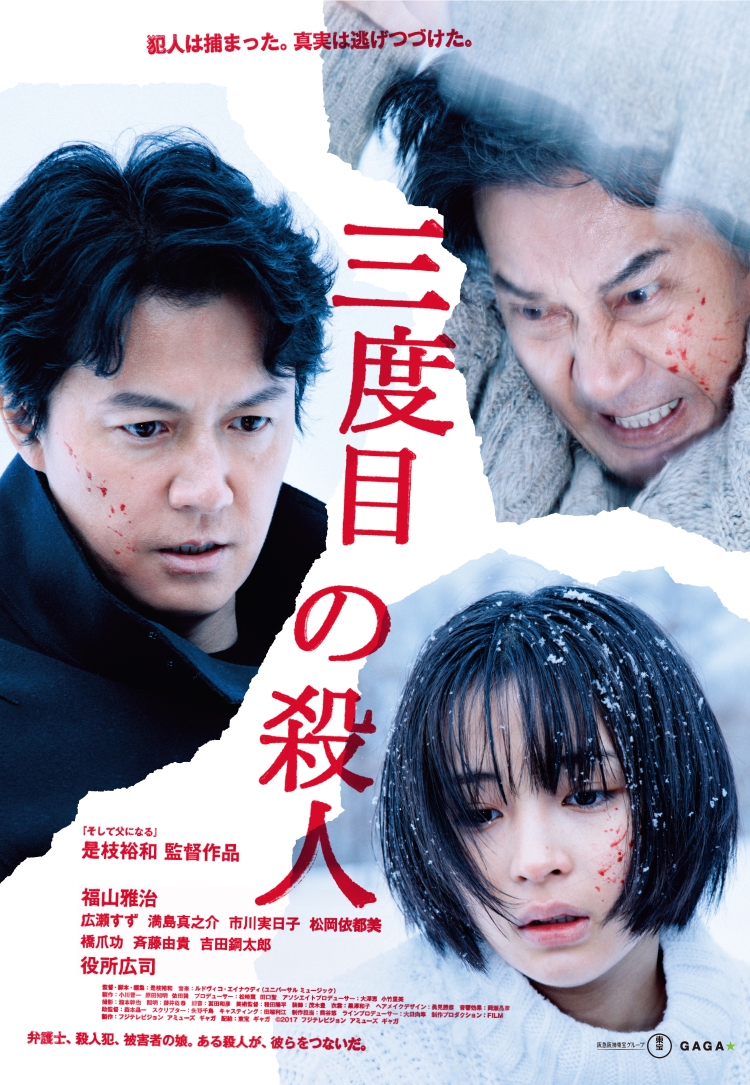
Third Murder posterJapanese cinema has often put the justice and legal system on trial and found it wanting. From Yoji Yamada’s Flag in the Mist in which a “selfish” lawyer contributes to the death of an innocent man, to Yoshitaro Nomura’s spiralling, feverish The Incident, Yoshimitsu Morita’s Kafka-esque Keiho, Gen Takahashi’s pointed Court of Zeus, and Masayuki Suo’s comparatively more straightforward I Just Didn’t Do It, the entire justice system takes on an almost spiritual quality of absurdity, tormenting the accused for the sake of a pantomime of justice, little caring for his or her guilt or innocence and intent only on propping up its own sense of absolute authority.

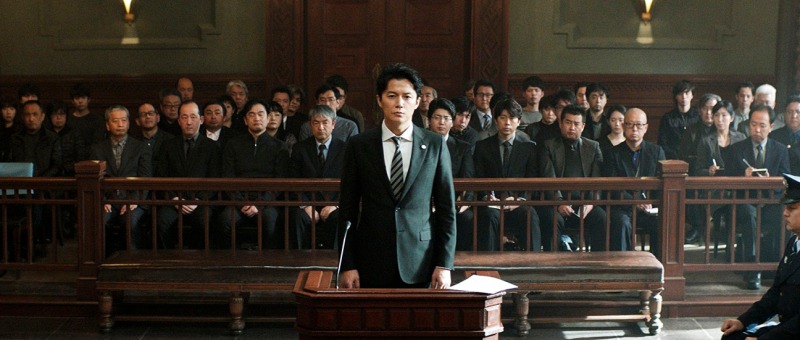
Like Yoji Yamada in Flag in the Mist, The Third Murder (三度目の殺人, Sandome no Satsujin) finds director Hirokazu Koreeda in unfamiliar territory though, at heart, it all comes back to family. A top lawyer, Shigemori (Masaharu Fukuyama), currently in the middle of a divorce, is asked to represent a man who has freely confessed to murder. As the son of the original judge who sentenced the accused, Misumi (Koji Yakusho), to the 30 year sentence he had not long been released from before (allegedly) committing the crime, Shigemori feels a responsibility to act but is frustrated by his client’s constantly shifting story. Nothing he says adds up, and every new angle Shigemori uncovers provokes only more doubt as to the true nature of the case at hand.

Shigemori, somewhat condescendingly, criticises the junior lawyer in the office for his naivety in wanting to to investigate the crime. Understanding and empathy are “unnecessary” in defending a client. The business of a lawyer, on either side, is to assess the evidence at hand, create an argument that withstands scrutiny, and eventually triumph in debating one’s opponent. In the face of the law, the “truth” is an irrelevance.

Shigemori’s cynicism is however rocked by the eerie presence of Misumi who seems to carry with him a kind of deepening emptiness. Misumi has already served 30 years in prison for the murder of two loansharks, the theft of their money, and an act of arson committed on their property to disguise the crime. Shigemori’s father, now a much older man, laments his youthful naivety in handing down a compassionate judgement which took into account the mitigating circumstances – Misumi’s troubled childhood, his poverty, the dire economic situation in which the closure of the local mines had led to mass unemployment and provided fertile ground for unscrupulous money lenders, and a series of personal tragedies which may have unbalanced his mind, but now he thinks some people are just bad and Misumi’s third murder is, in a sense, also his responsibility in allowing him the freedom to commit it.

Yet, there is also a doubt that Misumi’s first crimes are even his. We are told that, like the current case, Misumi couldn’t stick to one story – a common phenomenon with those who confess under duress, saying yes to everything in order to make the questioning stop but later forgetting what exactly they confessed to. Misumi later says he confessed only because he was told that confessing was the only way to avoid the death penalty which, ironically enough, is what he now faces. He also claims he was intimidated by the (admittedly stern) prosecutors, and when it looks as if a new trial may be necessary, the judge opts for the most “judicially economical” solution to incorporate the new demands into the current trial for reasons which the lawyers attribute to his personal need to get the case off his docket in good time so as not to muddy his own reputation. Japan’s 99% conviction rate is less an endorsement of judicial efficiency than a worrying indictment of the legal process in which trials are mere formalities held for show, a pantomime intended to reinforce an idea of “justice” which does not quite exist.

The weight of justice itself is called into question. We learn that the victim was guilty of several crimes, some of them more forgivable than others. Yet is his death “justice” or “murder”, was he “killed” or was the act one of “salvation” for his victims? There are no easy answers and the uncomfortable fact remains that one kind of justice may not necessarily be any different from another. Misumi remains a cypher, his motives for committing the crime(s) (if he even did commit them at all) unclear yet there is also something in him that suggests he is merely a reflection of ourselves, a projection of our own primal need to see justice done that our civil selves have tried and failed to codify into a universally recognised system of fairness known as law. Then again perhaps all we really want is a story we can understand and empathise with, perhaps we don’t want justice at all – we want narrative, a strategy for defence against the cruel and arbitrary charges of an unforgiving world. Shigemori stands at a crossroads, cleansed of his cynicism but unsure what to replace it with, as, perhaps, as we.


Currently on limited release in UK cinemas courtesy of Arrow Academy.

International trailer (English subtitles)

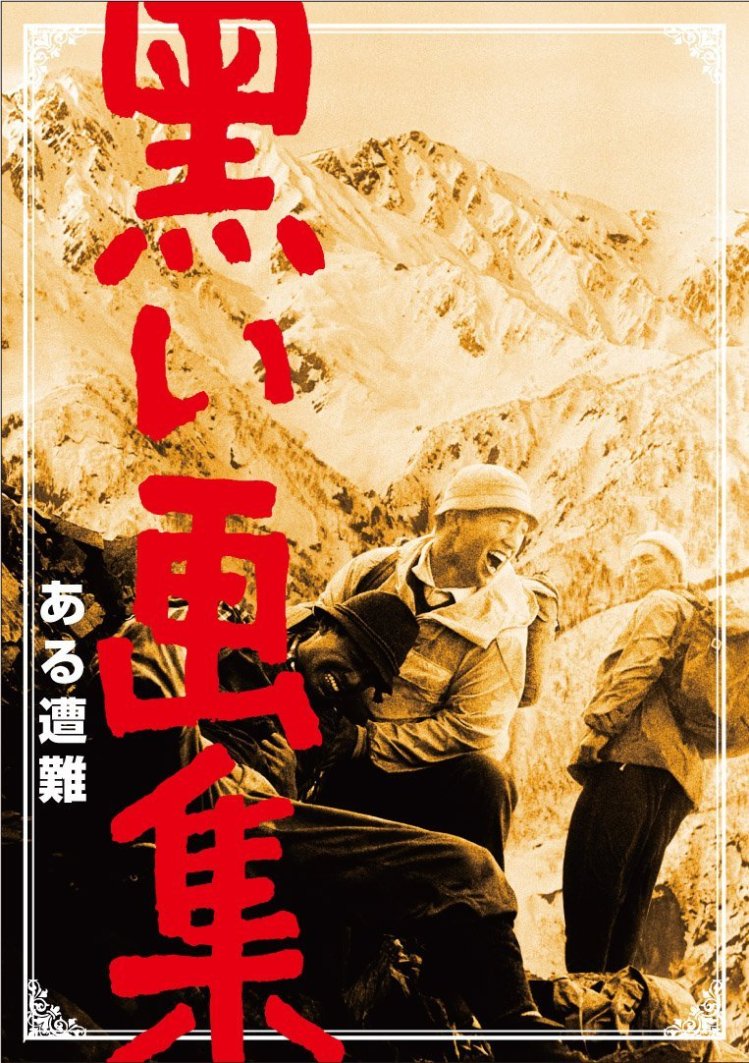
Death on the Mountain (黒い画集 ある遭難, Toshio Sugie, 1961)

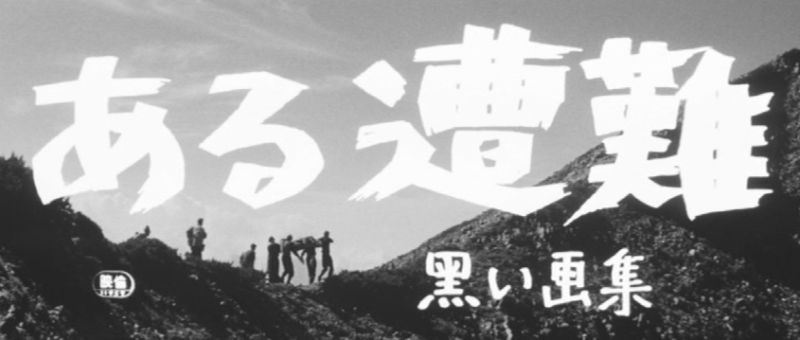
Death on the Mountain DVD coverThere can be few films with as accurate a title as Death on the Mountain (黒い画集 ある遭難, Kuroi Gashu: Aru Sonan) , but Toshio Sugie’s 1961 psychological melodrama certainly makes good on its promise. The Japanese title of the film is prefaced by “The Black Album” which is a title given to a series of novellas penned by one of Japan’s most prominent mystery writers, Seicho Matsumoto, whose work was frequently adapted for the screen including eight collaborations with director Yoshitaro Nomura of such well known mysteries as Zero Focus and Castle of Sand. Death on the Mountain was, like the others in the Black Album series, serialised in Shukan Asahi, in this case between 5th October and 14th December 1958 under the title “Sonan”. “Sonan” literally means “distress” or “disaster”, but it has another telling association – “Sonanshi”, meaning “accidental death” such as might occur while mountain climbing, sailing, or engaged in some other dangerous yet normalised activity. The death at the centre of Death on the Mountain is accidental in once sense, but very much not in another.

The film begins with a body being winched from a lower platform back up to a snowy ridge. Iwase (Kiyoshi Kodama), an experienced mountain climber, has perished in a freak accident. Packed inside his backpack, Iwase’s body is burned at the foot of his beloved mountains while his mother looks on sadly, his sister Masako (Kyoko Kagawa) angrily wondering how her brother, a true mountain man, could have died in such a bizarre way while a much less experienced climber, Urahashi (Takashi Wada), survived. The secret may lie with the leader of the expedition, Eda (Hisaya Ito), who has been looking sheepish ever since the incident but otherwise comports himself in a cool, detached manner.

Like many of Matsumoto’s mysteries, Death on the Mountain turns on a secret but Sugie’s adaptation never seriously considers that Eda is not in someway at fault or questions that Urahashi’s recollection of events, published in a popular mountaineering journal, is anything other than accurate. The facts, as laid out firstly by Urahashi’s article, state that Iwase had not been himself on the day of the climb. Eda had treated them all to first class sleeper cabins but Iwase spent the night drinking, chain-smoking and brooding, meaning he was tired before they even arrived at the mountain. He didn’t sleep at the inn either because of someone whispering all night long and needed to take frequent rests during the early part of the climb. Resting is, however, dangerous – as is excessive thirst, and Iwase spent a lot of time guzzling water and sitting down all of which made him even more exhausted. Coupled with a turn in the weather which left him cold and wet, Iwase’s exhaustion got the better of him and he finally lost his mind. At least, that’s the way Urahashi described it, and Eda seems not to dispute his version of events even if the failures – not bringing a map for both mountains they intended to climb but only one, pressing on despite the weather, and mistaking the trail back to the standard path, all rest squarely with him.

Japanese mysteries by and large are much more concerned with the how rather than the why, though in Death on the Mountain the how is a much greyer area than one might assume. As Masako’s cousin, an experienced mountaineer himself, points out, Iwase’s death was caused by a series of unfortunate circumstances but that doesn’t necessarily preclude that there was ill will or that someone didn’t help the “unfortunate circumstances” along in the hope that they would lead to the “accidental death” of the title. There was, therefore, not quite a murder but definitely a lot of ill will and gentle coaxing towards an act of guilty self destruction. As for the why, well that turns out to be far less interesting and suitably petty. Morally speaking, the act of “murder” becomes moot, though the “murderer” finally meets justice head on, only for the tale to end on a note of ambiguity as Masako, whose investigations have resulted only in further deaths, blames herself for daring to disturb the peace. If she’d only have let the “murder” of her brother lie, no one else would have died. Is Masako now an accidental “murderess” or a frustrated seeker of justice? Whatever the answer, all her efforts have been in vein.

Death on the Mountain was previously adapted as a TV drama shortly after the novel’s release, broadcast between 31st August and 7th September 1959, though presumably with lesser production values than Sugie’s admittedly minimal yet authentically detailed exploration of modern mountaineering. Shooting on location and making much of crunching snow, swirling fog, and pelting rain, Sugie runs high on atmosphere but fails to capitalise on the noirish sense of malevolence that lies at the centre of Matsumoto’s mystery, that evil can come dressed as kindness and the line between murder and accident is much thinner than might otherwise be presumed. Matsumoto seems to want to ask a few questions about causality and personal responsibility, the degree to which a man’s death is his own failing, how much the fault of “unfortunate circumstance”, and how much ill intentions from the world around him. Sugie, however, is content to let the suspense peter out with the solution offered in true detective style through a suppositional monologue delivered in front of the presumed murderer but for the audience’s benefit. Nevertheless, even if the mystery falls flat the mountain air rings true and Sugie has, at least, captured something of nature’s awesome power and terrifying beauty.


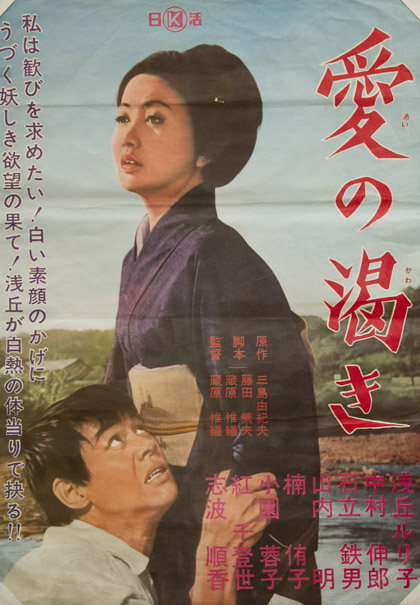
Thirst for Love (愛の渇き, Koreyoshi Kurahara, 1967)

(C) Nikkatsu 1967

Thrill for love posterIf The Warped Ones showed us a hellish, uncivilised world in which people acted on their base desires with little thought for others, Thirst for Love (愛の渇き, Ai no Kawaki) shows us the opposite as desire repressed eats away at those unable to find fulfilment in their assigned social roles. Koreyoshi Kurahara’s swirling artistry may have proved too much for studio bosses at Nikkatsu (Thirst for Love would be the last film he’d make as a regular director for the studio), but it finds a perfect match in the florid world of Yukio Mishima.  A tale of inequalities and misunderstandings, the rarefied atmosphere of Thirst for Love is just as “warped” as that of Nikkatsu’s gritty youth dramas in which desire and gratification become tools of currency in a grand game of wounds given and received.

Our heroine, Etsuko (Ruriko Asaoka), is a young widow living with her late husband’s family. Following the death of her husband, Etsuko has become the mistress of the family’s tyrannical patriarch, Yakichi (Nobuo Nakamura) – a successful businessman apparently forced out of the company he founded and into an early retirement. Yakichi resents the rest of his family whom he regards as feckless freeloaders. Oldest son Kensuke (Akira Yamanouchi) is a part-time classics professor and full-time neurotic intellectual. He and his wife Chieko (Yuko Kusunokiare unable to have children of their own (something else that annoys Yakichi), while daughter Asako (Yoko Ozono) has come back to her family home following a divorce with two children in tow. The family are all “aware” of the strange dynamic between Yakichi and his daughter-in-law but are too polite to bring it up. Nevertheless, Kensuke also has a thing for Etsuko which Chieko is aware of but not particularly worried about because she really does respect and trust her husband.

Etsuko is not particularly interested in Kensuke. There’s nothing he could really offer her. Though she keeps up a pretence of happiness with her current living standards, even going so far as to write a fake diary expressly intended for Yakichi to read, Etsuko feels nothing but contempt for and boredom with the emotionally cold and controlling family patriarch. Her faith in human emotions is low, but still she feels desire. When the teenage gardener Saburo (Tetsuo Ishidate) catches her admiring a beautiful statue and remarks on Etsuko’s own beauty, he puts untoward ideas in her head.

Even in the post-war world, women like Estuko have little agency. After her husband died, she could have stuck it out alone – found a job, supported herself. She could have remarried or perhaps have received financial support from the family while living alone, but she’s chosen to remain with them even given her somewhat degrading role as her father-in-law’s mistress-cum-plaything. When Saburo tells her she is beautiful he oversteps the established laws of class separation and Etsuko is too clever not to know how clichéd her new found lust for a peasant boy really is but she can’t unsee his broad shoulders and muscular frame or the sweat that crowds his brow as he labours on her behalf.

She begins making coy overtures which Saburo, unwittingly or otherwise, deflects. The situation is complicated by another woman, Miyo (Chitose Kurenai), who may or may not be something like Saburo’s girlfriend though as we will later find out, Saburo is a typically immature young man who regards his relationships with women as essentially inconsequential. Deferent towards his mistress, he demands to be released from her cruel games. Yet Etsuko had hardly realised that’s what they were. She cannot simply voice her desire or make her interest plain. Hers is not the first move to make. Several times Etsuko comes close to crossing a line but she always pulls back – inflicting necessary suffering on herself through her inability realise her desires.

Suffering, in a sense, becomes the point and almost a bizarre source of pleasure. In a climactic moment of drunken dinner party truthfulness, Kensuke attempts to apologise for a potentially destructive speech by revealing that he meant to smash everything to bits but has only succeeded in destroying himself. Etsuko too means to hurt others, partly as a kind of revenge, but in truth only to increase her own suffering. Her plan stumbles when she realises that Saburo is and always has been entirely indifferent towards her. He saw her as the mistress of the manor, an elegant and attractive woman, but felt no more desire for her than for any other. As he puts it, they live in different worlds – she is nothing to him, and nothing she does can change that. Etsuko has only destroyed herself, a self-immolation of repressed desire which threatens to burn the world with its ferocious intensity.

If Etsuko is to free herself from the burden of her need, she will pay a heavy price to do so. Kurahara shifts into an avant-garde register more in keeping with the more or less contemporary work of Kiju Yoshida in his anti-melodrama phase, but Kurahara’s approach is, in keeping with the source material, altogether less serious, fully embracing the melodramatic but taking pains to underpin it with deeply felt emotion. Asaoka excels as the neurotic housewife driven slowly mad in a stultifying, moribund household where she is forced to submit to the sexual whims of her bossy father-in-law and has little more to occupy her time than walking the dog and dreaming of a roll in the hay with the not yet 20 gardener.

Kurahara paints her world as one of sensations – the blood that becomes both symbol of life and death, the symbolic pleasures of a pomelo, and the fearsome flapping of chickens even as their throats are slit. Shifting to still frames for moments of high emotion – much as Shinoda had done in the finale of With Beauty and Sorrow two years before, Kurahara mixes ironic voiceover with intertitles and unexpected editing choices to capture the flightiness of Etsuko’s mind but he allows himself one luxury in letting her leave to a bright red sky, a woman on fire thirsting for love.


Original trailer (no subtitles)

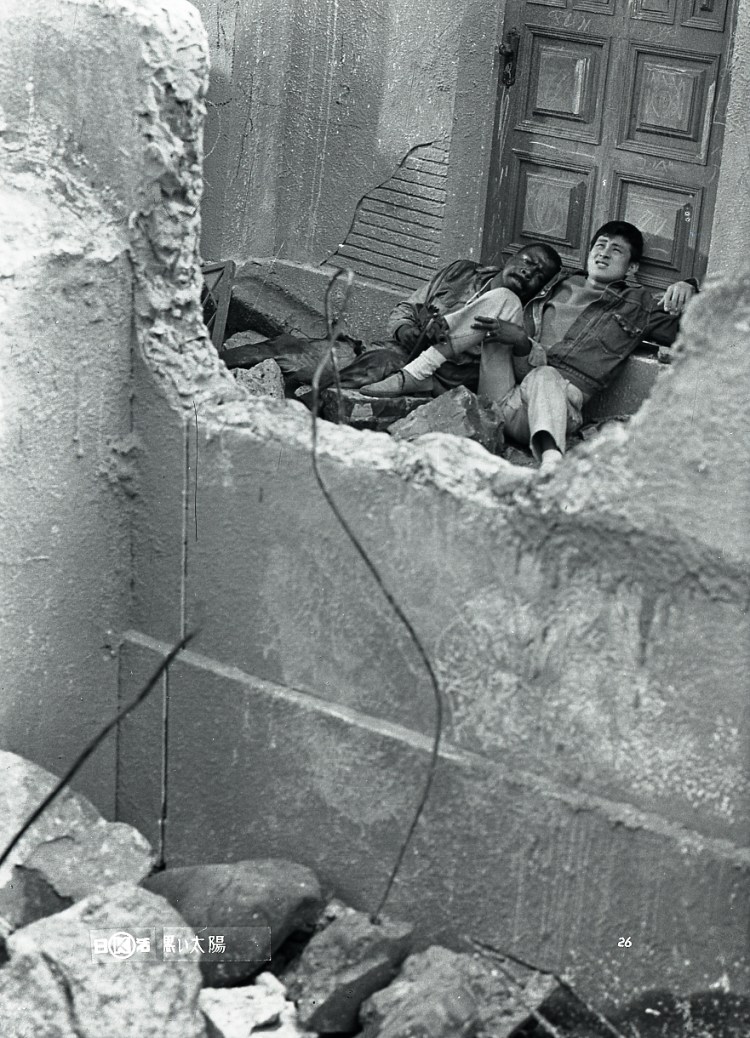
Black Sun (黒い太陽, Koreyoshi Kurahara, 1964)

black sun still 2The Warped Ones showed us a nihilistic world of aimless youth living not so much on their wits as by their pleasures, indulging their every animalistic whim while respectable society looked on in horror. By 1964 things have only got worse. Tokyo might have got the Olympics, Japan might be back on the international map, and economic prosperity might be on the rise but all around the city there’s an arid wasteland – a literal dumping ground in which the unburied past has been left to fester as a grim reminder of historical follies and the present’s reluctance to deal with them.

Akira (Tamio Kawaji), now calling himself “Mei” (perhaps a play on the reading of the character for his name 明), seems to have mellowed since the heady days of his youth. Living alone save for a dog named Thelonious Monk, Mei has co-opted a disused church and turned it into a shrine for jazz. The walls and ceilings are covered in photographs of famous jazz musicians and posters for club nights and solo shows. He has his own turntable and a well stocked selection of LPs, though he still seems to frequent the same kind of jazz clubs that so defined his earlier life.

Change arrives when Mei boosts a fancy car and is almost caught in a police net caused by the body of an American serviceman found floating in the harbour. Apparently the crime is the product of an internal GI squabble, but the offending soldier is on the run with a machine gun. As coincidence would have it, the wounded killer, Gil (Chico Lourant), fetches up at Mei’s church and, as Gil is a black man, Mei assumes that they will definitely be friends. It is, however, not quite that simple.

As in the earlier film, jazz is the force which keeps Mei’s mind from fracturing. His life still moves to improvisational rhythms even if apparently not quite so frenetically as it once did. Rather than the rampant animal of The Warped Ones, this Mei has embraced his outsider status through literally removing himself from the city in favour of self-exile and isolation as a squatter in the house of God – a place about to be torn down.

While Mei has been literally pushed out with only his beloved dog as evidence of his latent human feelings, his formerly delinquent friend, Yuki (Yuko Chishiro), has gone on to bigger and better things. No longer (it seems) a casual prostitute catering to foreigners, Yuki has repurposed the skills her former life gave her to shift into an aspirational middle-class world as a translator for those same American troops she once performed another service for. The American occupation is long over, but the US Army is everywhere.

Mei thinks of himself as one of Japan’s oppressed outsiders – an outcast in a land subjugated by a foreign power. He squats in a ruined church while the Americans “squat” in his ruined country. He likes jazz because it fits the rhythms of his mind but also because he believes it to be the music of the oppressed. In Gil he thinks he sees another like him, a man oppressed in his own homeland and ironically enough by the same forces that are (in part) oppressing him. Mei has a lot of strange, stereotypical ideas about black men – he’s excited to meet Gil because he thinks all black men must love jazz and that Gil must be some kind of jazz god, but Gil is a frightened rabbit on the run, terrified and bleeding. Thinking he’s in the middle of a visitation, Mei tries to make plain his enthusiasm despite the obvious language barrier, pointing wildly at his shrine to jazz, but all Gil wants is quiet and help with the bullet wound currently suppurating on his thigh.

The “relationship” deteriorates, but a strange kind of camaraderie is eventually born between the two men. Things take a turn for the surreal when Mei dons black face and paints Gil’s white, only to get stopped by GIs who want to see an ID from a “foreigner” driving a fancy car, and for Mei to introduce Gil at his favourite jazz bar as his new “slave”. In hindsight it’s all a little awkward as Kurahara throws in stock footage of the civil rights movement and tries to equate it both to the recent protest movements in Japan and to Mei’s self-identified status as one of Japan’s oppressed masses. Still, you can’t argue with the fact that the two men have found a bond in their shared alienation and desire to escape from the impotence of their current situations.

Ironically enough Kurahara does seem to believe in an escape, though it’s perhaps not so positive as it sounds. The tragic friendship of the two men in which one must save the other by releasing him towards the sea and the sun pushes Mei out of his self-exile and back into the “real” world even if he still considers himself to be an outsider within it. The sun is bright but it’s also dull, shining not with hope but with consolation for a hopeless world in which the only victory lies in the final act of surrender.


Short scene from the beginning of the film (English subtitles)

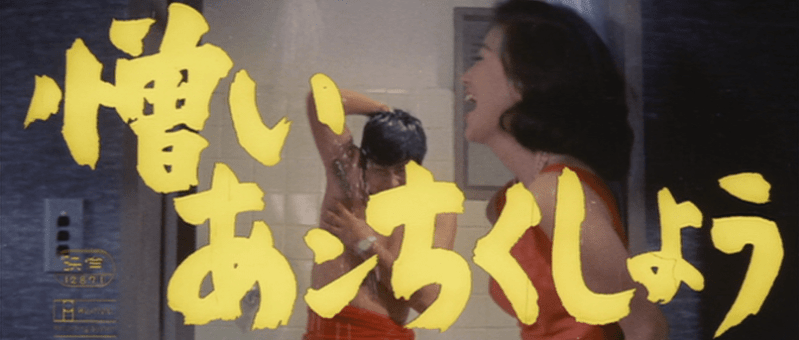
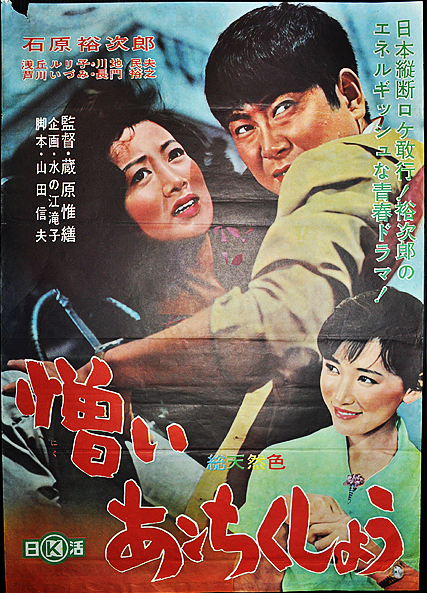
I Hate But Love (憎いあンちくしょう, Koreyoshi Kurahara, 1962)

I hate but love posterDoes “pure love” exist in the Japan of 1962, and if so what does it look like? Yujiro Ishihara, the poster boy for youthful rebellion, might not be the best person to ask but it’s his unfulfilled media superstar that ultimately determines to find out. In I Hate But Love (憎いあンちくしょう, Nikui Anchikusho) Koreyoshi Kurahara puts the jazz clubs and delinquency of The Warped Ones to one side for a Technicolor romp that owes more to Day/Hudson than it perhaps does to James Dean or Marlon Brando. Yet there is something mildly subversive in its low level criticism of Japan’s lurch towards the consumerist future, finding only emptiness in fame and success while the central couple’s deliberately repressed desires push them towards a point of both spiritual and physical exhaustion.

Daisaku (Yujiro Ishihara) and Noriko (Ruriko Asaoka) have been a couple for two years. Noriko is also Daisaku’s manager and has been with him since he was broke and an aspiring poet. Now he’s one of Japan’s top DJs and she looks after his schedule which is packed in the extreme – in fact it leaves him no time for sleeping between his radio show, TV appearances, and meetings in bars, not to mention a late night date starting at 2am! Raiding the local papers for a suitable human interest story they can flag up on the show, Noriko stumbles over the tale of a local woman who is looking for a “driver who understands humanism”. Intrigued, Daisaku and his producer Ichiro (Hiroyuki Nagato) set off to interview her but the woman doesn’t want to be involved with the media – she doesn’t want to sully her love! The fact of the matter is, Yoshiko (Izumi Ashikawa) has kept up a romance with a doctor in a rural town by letter alone and used all her savings to buy a jeep to help transport his patients more effectively. Yoshiko doesn’t need to see Toshio (Asao Koike) – her dashing doctor fiancé, she believes in their love and that’s good enough for her. She just needs someone to actually take the jeep to Kyushu where it is most needed.

Just at this point, Daisaku’s relationship with Noriko reaches a crisis point. Lovers for two years, they each feared the sparks would fade and so to keep them popping they’ve committed to a rule of no physical contact. Spark they do (though not always in a good way), but when trapped in Daisaku’s apartment one rainy afternoon and bored out of their minds they nearly give in – damaging the fragile balance they’ve managed to build through mutual rejection of their equally mutual attraction. Though Noriko remains committed to their plan for long term romance, the non-encounter pushes Daisaku into a profound state of crisis in pondering the nature of his relationship – does “pure love” exist, does he really “love” Noriko, what is the point and the purpose of their central bond of negation? Hoping to find all of that out, Daisaku makes a surprise on air announcement that he himself will drive Yoshiko’s truck to Kyushu and see what her Toshio does with that.   

Yoshiko and Noriko set themselves up as rivals – not for Daisaku’s heart but for the true nature of “love”. “Reclaiming” Daisaku’s Jaguar so she can chase after him, Noriko has a few words for Yoshiko, pointing out that she’s been patiently “building” her love with Daisaku for 737 days. Yoshiko looks at her pityingly – you don’t “build” love, she tells her, you just believe it. For Yoshiko her letters were enough, her love an act of faith, but for Noriko love is a process and an almost scientific endeavour filled with recordable and quantifiable data. Yet everything Noriko says about Daisaku is correct – she knows who he is and truly understands him, every part of him is welcome to her and so she is perfectly placed to find him off on his magic quest even if her desire to bring him back to the city is misplaced.

Daisaku’s journey puts them both through the ringer though their bond is never seriously in question. He runs and she follows, though neither of them can quite escape the net of the society in which they live. Daisaku’s flight is perhaps more from his micromanaged yet extremely comfortable life than it is just of a difficult romance. Taking to the road he wants to feel something, to know that there is something real out there. Unfortunately, even his attempt to embrace something “real” is subverted by his media buddies who secretly film him and air the footage like it’s all been a giant publicity stunt. Fearing that their cash cow is “drunk on humanism”, they ready a contingency plan to bring him back into the fold.

Ichiro tells Noriko that her desire to “tie Daisaku down” is not love but “female egotism”. What drives Noriko isn’t really a desire for control (Daisaku seemingly allows her enough of that), but a need to be needed and fear that Daisaku, now rich and famous, will eventually leave her. Paranoid their love will fail, she rejects its consummation. Yet faith alone is not enough, as Yoshiko painfully finds out on witnessing the disconnect between her imagined love created through her letters and the real flesh and blood man before her to whom she essentially has no real connection. Reaching the end of their journey, Daisaku and Noriko are forced together again, each abandoning some part of their Tokyo lives and personas to break through to something deeper and more essential. Their path takes them straight into a bizarre summer festival complete with giant floats and excited men in traditional Japanese underwear throwing water everywhere. When they finally reach their destination, their love transcends faith to become ritual, their ennui somehow transformed into an ironic celebration of life in fulfilled desire.   

Ichiro categorises Noriko and Daisaku as stingy children – defiantly saving the best for last. There is certainly something immature in their constant bickering and bargaining, the superstition that they can keep their love alive by continually rejecting it and repressing their desire for each other, but there’s also something faintly realistic in the messy grown-up commitment phobia of it all even if it joyfully strays into the absurd. Light and bright and breezy, Kurahara works in the darknesses of early ‘60s Japan from the destructive effects of celebrity and media manipulation to the emptiness of a life of excess but even if he doesn’t quite find “pure love” he does find something close to it in a perfect merger of faith and industry.


The Warped Ones (狂熱の季節, Koreyoshi Kurahara, 1960)

warped ones posterYouth was at an intense point of crisis in the Japan of 1960. The old pre-war ways were out, but what was youth supposed to do now – a question which found no answers. Whereas the intervening 15 years since the end of the war had been filled with somber soul searching and an intense dedication to forging a way through, the young of the late ‘50s were losing interest in rehashing the past and becoming keener to voice their concerns over what some saw as an undue influence wielded by the Americans. 1960 saw the biggest public protests in public memory as the citizens of Tokyo – many of them students and young people, took to the streets in protest of Japan’s continued reliance on America for military protection and the various comprises and complicities they felt that entailed.

Meanwhile, in cinema rebellious youth had become a bone of contention – the so called “Sun Tribe” movies of the mid 50s, inspired by the novels of Shintaro Ishihara, had painted an unflattering picture of decreasing morality among the young. Rising economic prosperity had given birth to a class of overindulged, privileged young men and women who frittered their parents’ money away on fast cars, drugs, jazz, and promiscuous (often violent) sex. The bright young things of the early ‘60s, young people who lived without morality or purpose, terrified the older generations who feared their kids too might wind up devotees of the sun tribe and reject the world they had strived so hard to rebuild.

The Sun Tribe movies were so controversial that the studio, Nikkatsu, was eventually forced to halt production but Japan’s rebellious youth was a subject which refused to go quietly. Koreyoshi Kurahara’s The Warped Ones (狂熱の季節, Kyonetsu no Kisetsu), released in 1960, revised the myth of the Sun Tribe by looking at it from the other side – these were no ennui filled elites, the crazed youth of the Warped Ones are poor boys and dropouts living by their wits and caring nothing for the rules of a society which has continually rejected them.

Akira (Tamio Kawaji), a petty teenage delinquent, gets caught pickpocketing in a jazz club and is sent for a spell in a reform school. Inside he meets another young man in a similar situation, Masaru (Eiji Go), and decides to team up with him after they’re released. Meeting up with fellow delinquent Yuki (Yuko Chishiro) – a casual prostitute hooking foreigners, the three decide to have some fun. Boosting a car and heading to the beach, they spot additional spice in the very reporter who got Akira arrested in the Jazz bar out for a promenade with his fiancée. The trio drive fast at Kashiwagi (Hiroyuki Nagato), knocking him flying before Yuki jumps out and grabs the girlfriend, Fumiko (Noriko Matsumoto), and bundles her into the car. Driving to a secluded spot, Masaru and Yuki pair off while Akira rapes Fumiko and then cruelly abandons her with only the “kindness” of pointing her towards a local police station.

Akira is the new kind of delinquent so feared by traditional society. He has no job or intention of forging a career – he lives on the thrill of petty crime, giving full vent to each and every urge his adolescent body conjures. His friendship with Masaru is perhaps his only redeeming feature but it’s unclear how far this really runs even if his only particular code makes the idea of any non transactional action with Yuki off limits. Masaru’s romance by contrast does appear to be deep and genuine – he can get past Yuki’s life as a casual prostitute and is even willing to support her when she falls pregnant with a child that is most likely not his. To does this, Masaru considers joining a gang which is something Akira’s individualism will not permit him to do. “Only people who don’t listen to jazz join gangs” he opines superciliously. His is a life of freestyle joys and hedonistic pursuits in which his will is all and his body his only instrument.   

Kurahara opens with a heady, swirling shot of the ceiling in the jazz club Akira likes to frequent while the score dances wildly in the background. Akira’s head is filled with the sound of “good” jazz. He moves, breathes and lives his own symphony. His world is indeed noisy – cramped tenements with paper thin walls and and the ever present rumble of passing trains give his life its own kind of oppressive rhythms, echoing the inescapability of his dead end existence. The music is his escape and the only thing keeping him “sane”, only “sane” means his self destructive tendencies become externalised as a cruel and sadistic game of revenge on the society which refuses to accept him. Akira is indeed “warped”, life is an absurd joke to him, but he is far from alone and his alienation has very real causes which lie not in the evils of Jazz music and American individualism but in a stratified, high pressure society which leaves its restless young with little to survive on save the instant gratification of their baser urges.


Opening (English subtitles)