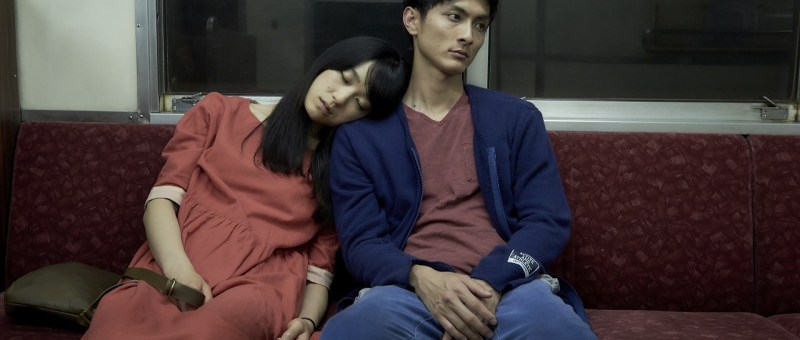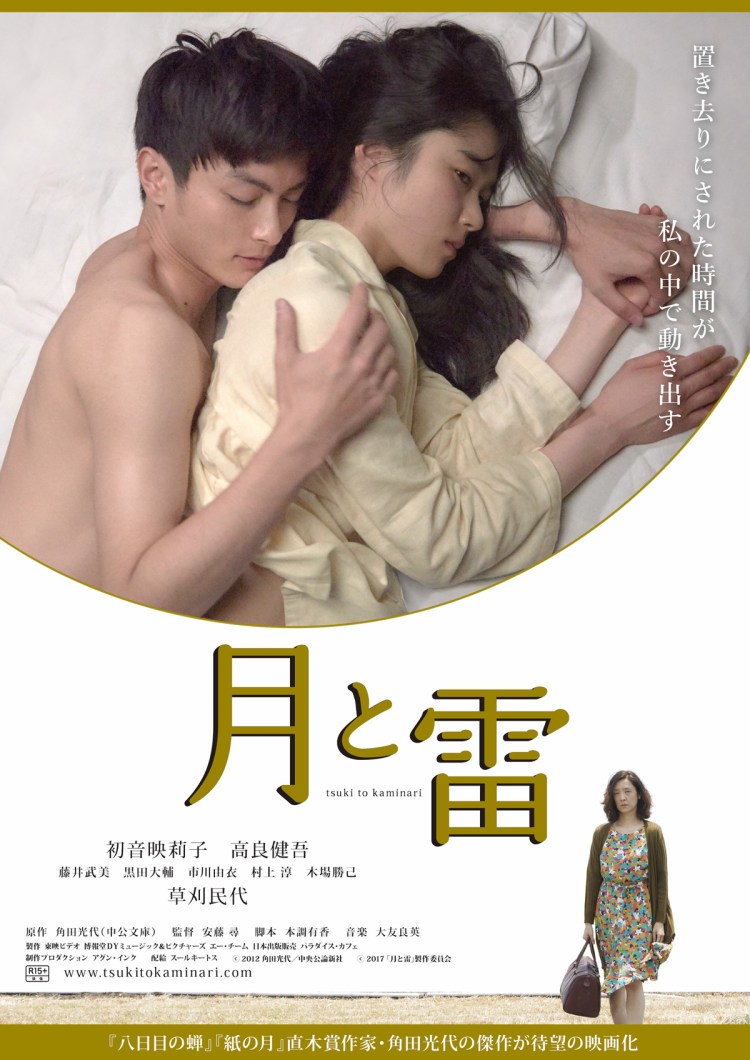
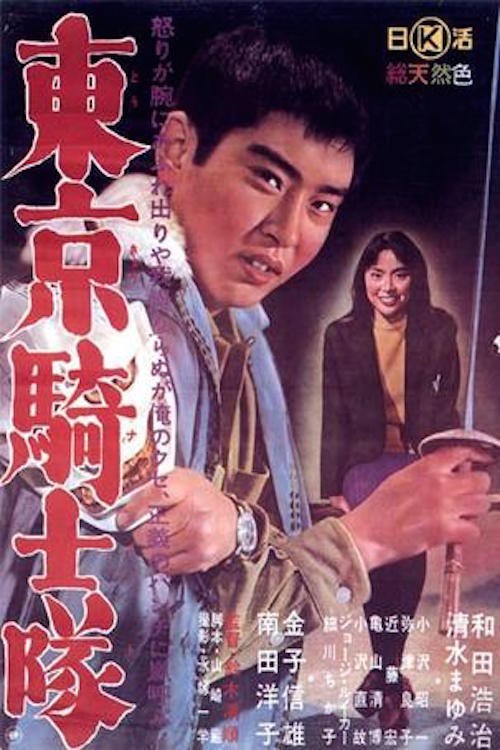
Once More (今ひとたびの, Heinosuke Gosho, 1947)

(c) 東宝

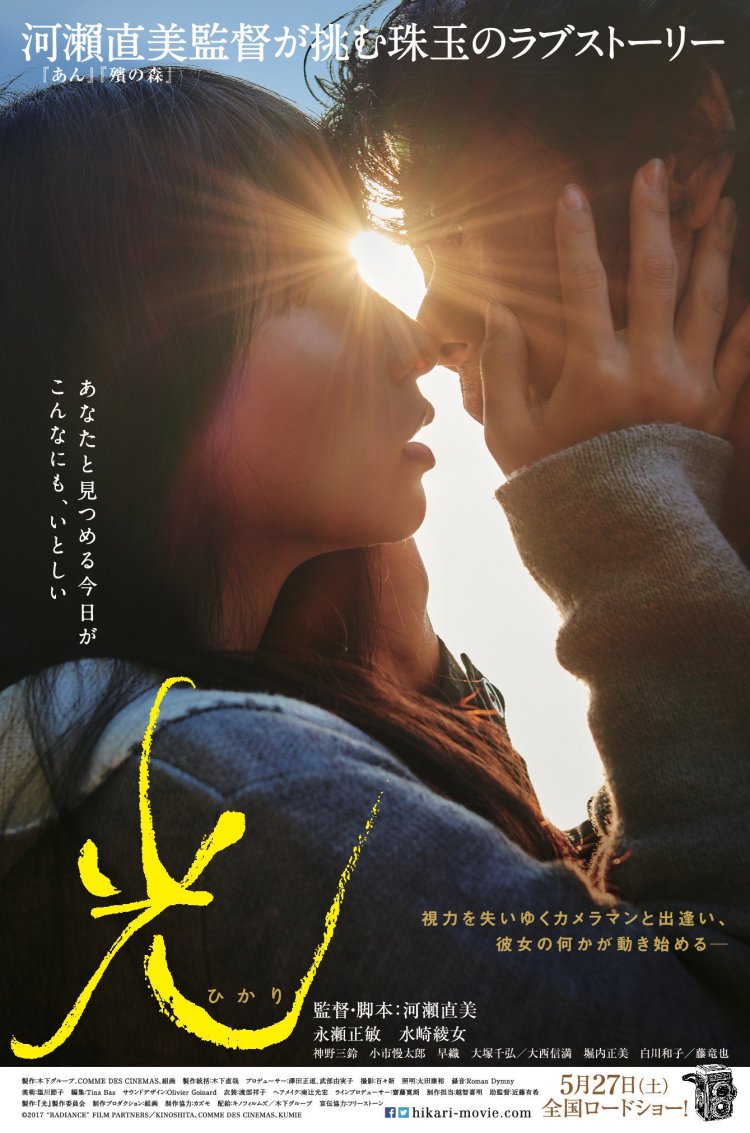
Gosho once more posterOf the Japanese golden age directors, there were few who’d “happily” gone along with the requirements of making films under a militarist regime. Heinosuke Gosho, however, must rank among the most recalcitrant in his unwavering refusal to compromise his convictions in order to preserve his career. Most of the scripts he submitted to the censor’s board were rejected in the preliminary stages though he was able to ruffle a few feathers with the few films he did manage to make if only for his skilful ability to skirt around the promised propagandistic overtones. It also “helped” that Gosho had become seriously ill with tuberculosis in 1937 which perhaps protected him from official interference and, in any case, removed him from the film industry for three years while he recovered. Nevertheless, he felt keenly that he and others had a duty and an opportunity to turn the tables in the post-war era, advancing the ideology of humanism to create a better, fairer world than the one which had descended into so much ugliness and chaos.

In fact one of the reasons Gosho decided to film Once More (今ひとたびの, Ima Hitotabi no) in 1947 under the American occupation was to counter the view held among some young people that there had been no active opposition to militarism. Gosho and his screenwriter Keinosuke Uekusa chose to adapt a heavily political novel by Jun Takami which painted itself as a romantic tragedy of resistance in which its leftist heroes find themselves carrying the legacy of defeat onward into the post-war world. Gosho depoliticises Takami’s tale and reconstructs it as a romantic melodrama with a more positive resolution, but is careful to preserve the fierce idealism of the conscientious students relentlessly protesting Japanese Imperialism whilst trying to advance the course of social justice in an increasingly oppressive environment.

The tale begins in 1936 as a group of students prepares to graduate. Nogami (Ichiro Ryuzaki), a doctor, has turned down a lucrative university post to minister to the poor. Unlike his friends Tanaka (Koji Kawamura) and Kambara (Hyo Kitazawa), Nogami is not an activist or left wing agitator but has a strong belief in humanistic socialism and a conviction that he has a duty to ensure his skills are available to those who need them most. Invited to a play directed by Kambara which is being performed to raise money for socialist causes, Nogami accidentally wanders into the dressing room of the leading lady – Akiko (Mieko Takamine), a wealthy socialite, and falls in love at first sight. Akiko too takes a liking to Nogami and invites him to her birthday party despite his rather odd behaviour after the play, but he finds it impossible to get on with her upperclass friends and eventually leaves. The pair advance and retreat, but their romance is frustrated by the times in which they live, politics, and their own senses of personal integrity which encourage them to willingly sacrifice their happiness in acknowledgement of living in an unhappy world.

Despite their original, electric attraction the obstacles surrounding the love of Akiko and Nogami may seem insurmountable, chief among them being the obvious class difference between the pair. Nogami, somewhat contrary to his humanistic ideals, has a mild prejudice against the bourgeoise, believing them to be selfish, unfeeling, and existing in their own bubble hermetically sealed away from the kind of suffering he sees everyday at the clinic. Yet he cannot forget Akiko who harbours no prejudice towards him because of his humble origins (though her friends and family make no secret of theirs) and feels similarly about her own social class, overcome with guilt that she lives in such comfort while others suffer. Eventually Akiko joins the cause, becoming a left-wing agitator and even getting herself arrested and branded a “Red Lady” in the papers (further annoying her very confused social circle). Unlike Nogami she is also subject to a kind of social and gender based oppression in which she is under constant pressure to marry her longstanding fiancé, Sakon (Haruo Tanaka), and conform to the requirements of her position. Nogami is “free” to choose to live a life of selfless altruism in a way that Akiko is not and will struggle to be throughout the rest of the picture.

Yet time and again it is the times which frustrate their romance. Akiko and Nogami repeatedly make plans to meet, but one of them is arrested and prevented from arriving leaving the other assuming the worst – that they have been abandoned, romantically and ideologically. Matters aren’t helped by Nogami’s natural diffidence and awkwardness coupled with his rigid code of honour which makes it impossible for him to pursue Akiko in any normal way, leaving her confused and later at the mercy of her controlling family. In the end it is their own senses of personal integrity which prevent their union, as a friend bound for the front points out when he, essentially, tells them to get over themselves and embrace happiness rather than overthinking an emotional response and ruining it in the process.

As much as Gosho’s central tenet could be boiled down to “don’t think, feel”, he does argue for compassionate rationality and considered fairness and understanding between people. Thus he removes the Marxist overtones from the original novel because his conflicts aren’t “political” but between justice and injustice; he simply sees unfairness and opposes it, placing his faith in the absolute truth of positive emotion and human connection to eradicate the false barriers of rational civility and irrational oppression. For Gosho, love wins, every time. 


Maquia: When the Promised Flower Blooms (さよならの朝に約束の花をかざろう, Mari Okada, 2018)

maquia poster 1Perhaps because of its often adolescent target audience, the “hahamono” or mother movie is a relatively rare genre in the world of anime despite its importance in other Japanese media. Wolf Children aside, most anime prefer to focus on the problems of young people dealing with an absentee or unreasonable parent who unwittingly enables the teen to undergo the adventures shortly to ensue. Maquia: When the Promised Flower Blooms (さよならの朝に約束の花をかざろう, Sayonara no Asa ni Yakusoku no Hana wo Kazaro), is an exception to the rule in examining the complex nature of motherhood with a sideline in the legacy of familial disconnection, alienation, and the cyclical natures of life and memory. Flawed if ambitious, the first directorial feature from scriptwriter Mari Okada is a sprawling fantasy epic but one with its heart firmly on its sleeve.

Maquia (Manaka Iwami) is a member of the Separated Clan – an Iolf who weaves time and life into being. The life in Iolf is idyllic, if dull, and consists of little other than weaving. Maquia’s tomboyish friend, Leilia (Ai Kayano) rejoices in daring stunts and precocious flirtations that the shy and introverted Maquia can only dream of, while Maquia, an orphan, feels herself alone and remains somehow incapable of bonding with the other children. When Iolf is raided by Mesarte soldiers, Maquia is carried off by one of their great stone dragons. Now forced to explore the world outside of Iolf, Maquia chances on the remains of a ruined camp, stumbling over bodies only to discover a howling baby boy still held in the icy grip of his mother who tried her best to protect him even as she died. Perhaps identifying with another soul so completely alone, Maquia picks the boy up and decides to raise him though she is barely more than a child herself.

As the Iolf age much slower than the average human, Maquia’s quest to find true connection through maternity is destined to end in tragedy. Maquia christens her son Arial (Miyu Irino) and finds a home with a kindly ranch woman raising two sons of her own alone after her husband was killed by a rabid dragon, and begins to bond with her little boy. Meanwhile Leilia has been kidnapped and forced married to the Mesarte prince in the hope that his heir will inherit some Iolf lengevity. While Maquia is beginning to find connection, Leilia now tastes isolation as an imprisoned minority in the imperial court where she is also separated from the daughter born from a non-consensual union but loved all the same.

Though she already feels so alone, Maquia is warned by her Elder that if she wants to experience true loneliness she need only fall in love with a mortal. Maquia falls in love, or rather tries to, but as a mother rather than a lover. Pouring everything into her child Maquia knows the day will come when she must lose him, but for her it is in a more concrete sense than the normal breaking of a mother/son bond. The notion of mortality and differing lifespans is somewhat uncomfortably dramatised by the passing of the aged family dog who reaches the end of his journey long before his master. Though the message is sound is enough it does rather negate Maquia’s insistence that Arial is not a toy, implying that humans are almost like pets to the long-lived Iolf, something to be loved and fussed over in knowledge of its impermanence but something to which a lesser attachment is formed. 

Maquia, however, hurtles in the opposite direction, vowing to sacrifice all of herself in service of her son. Turning down a suitor in order to remain true and pure as an idealised mother figure, Maquia perhaps takes a retrograde step in agreeing to negate her own personality to become “a mother”, but like the classic hahamono, her overwhelming love proves too much for her growing son who grows tired of the burden of a mother’s expectation, longing to be free of her somewhat suffocating need to protect him while belittled by the knowledge that he, a mortal yet still a man, is incapable of protecting her. Maquia must find the strength to let her son go if she is to see him grow, but to do so will require a shift in self-knowledge born of truly learning what it means put another’s interest above one’s own.

Maquia’s struggles play out in parallel with the ongoing political drama surrounding the corrupt and oppressive Mesarte regime which seeks to rule by fear and violence, stealing the gifts of the Iolf only to abuse them. No matter the genesis, Prince Hazel seems to have formed a genuine attachment to his stolen bride (even if it is not returned) and does what he can to “protect” her, while her former love from the Iolf, Krim, has gone half mad through love denied, kidnapping Maquia to rope her into a half-baked rescue plot before threatening to burn the world if he cannot have his love for the price he is willing to pay.

The question is one of whether it is better to connect fully in the knowledge of a coming heartbreak, or hold back in self protection. In this Maquia learns the true meaning of her Elder’s instruction and begins to realise that the fabric that she weaves is spun from love and memory. Nothing is ever truly lost, merely laid down for someone else to pick up, and while parting is inevitable meeting is not and is something to be treasured no matter how painful it may be.


Distributed in the UK by Anime Limited

Original trailer (English subtitles)

Note: there seems to be some variation in the translation of the names of various characters, this review uses Anime Limited‘s list.

Little Forest (リトル・フォレスト 夏・秋 / 冬・春, Junichi Mori, 2014/15)

Divided into four hour-long segments, Little Forest (リトル・フォレスト) opens with a voice over from Ichiko (Ai Hashimoto) introducing us to Komori, her home village. High in the mountains, Komori is a community of farmers without a single store though there is a farmer’s co-op if you make the half-hour bike ride to the high street. It’s downhill so not so far on a bike on your way, but a good 90 minute walk in the winter snow. Most people do their shopping at the supermarket a few towns over but if Ichiko wants to go there it takes her the best part of a day. Ichiko, however, has a taste for doing things herself and so she grows most of her own food or barters for that which she doesn’t have with some of the other sharecroppers. Always with one eye on the future and particularly for the winter to come, Ichiko preserves her produce and makes the most of all she has.

Despite her feelings of inadequacy and incompleteness, Ichiko throws herself into the business of farming, weeding her rice field and preparing for the harvest all alone. She doesn’t seem to mind the solitude or the monotony, rejoicing in cooking the food she has grown and savouring each of its flavours. A gifted cook, Ichiko also likes to experiment, finding new ways to use each of the vegetables in her garden and trying them out on her two old school friends Yuta (Takahiro Miura) and Kikko (Mayu Matsuoka).

Yuta, like Ichiko, tried life in the city but ultimately decided to come home to the country. Despite wanting nothing but escape, Yuta found that he couldn’t adapt to the city’s insincerity. He missed real conversation and the ability to talk seriously about serious things whilst learning from others – something he so admired in the village. Ichiko, rather than empathising with him, is a little jealous. Yuta came home to face himself and discovered who he really was whereas she suspects she came back to escape doing exactly that. In short, she ran away and is living in hiding.

Yuta, adopting the gentle tones he was so in praise of, almost points this out to Ichiko albeit in a subtle way by telling her that he admires the way she does everything for herself but that he’s worried she may have missed the point. Ichiko’s need for independence is perhaps a reaction to abandonment by her mother which apparently happened quite abruptly in her teenage years. Her mother’s letters are vague and don’t include a return address or any details regarding where, how, or with whom she is currently living. Her last letter, however, seems to contain some relevant advice in the form of various excuses. Ichiko’s mother tells her that she was worried she’d just been wandering round in circles but finally realised that the arc of her life has been more like a spiral. Never taking the same path twice, she learned as she went and so finding yourself back at the start is not the same as never having set off.

Rather than actively making the choice, Ichiko merely commits to making it. Realising that it’s time to come out of hibernation and figure out where it is she wants to be rather than simply allowing Komori to become her default setting, the decision is made quickly and keenly. Yet it takes time, effort, and experience to bring something to fruition and, skilled as she is, Ichiko still has a few things to learn. Filled with wonderful food and idyllic scenery, Little Forest is perhaps an idealised view of country life – the kind of life lived by those who know how to live happily even when life is hard, but there is truth in its age old wisdom as long as you know how to harvest it.


Released as two two-part movies: Summer/Autumn (2014) & Winter/Spring (2015)

Summer/Autumn trailer (no subtitles)

Winter/Spring trailer (no subtitles)

The Sion Sono (園子温という生きもの, Arata Oshima, 2016)

169827_01Sion Sono has acquired something of a reputation for controversy. His frequent denouncements of his nation’s cinema in which he sets himself up as a kind of “anti-Ozu” perhaps place him in line with the great 1960s iconoclast Nagisa Oshima who also proclaimed that his distaste for Japanese cinema extended to “absolutely all of it”. Funnily enough, The Sion Sono (園子温という生きもの, Sono Sion to Iu Ikimono) – a documentary exploring the director’s work, is helmed by Oshima’s son, Arata, though he is at pains to show a different side to the artist known as Sion Sono, keying in to the various aways his art reflects his life and vice versa.

Shot during 2015, the documentary follows the twin processes of the production of The Whispering Star (one of five films Sono would release that year), and a landmark art exhibition which led straight back to the director’s origins as an avant-garde street protestor with the performance art collective “Tokyo Gagaga”. These joint concerns perhaps highlight a minor conflict in Sono’s working life as he reveals during a casual conversation in referencing the “indecent” work that had been mostly occupying his time over the previous year. Expressing both fear and gratitude for finally gaining the opportunity to work a more personal project (the script for The Whispering Star had been written almost 20 years previously), Sono jokes that he’ll finally be getting “clean” only to immediately relapse by making The Virgin Psychics – the big screen adaptation of a sci-fi TV series he had also directed which largely consisted of lewd juvenile humour.

To rewind slightly, Sion Sono had been making films for almost 20 years before getting mainstream festival attention in the early 2000s with Suicide Club and Noriko’s Dinner Table. His profile was further enhanced by the international success of serial killer thriller Cold Fish and the Venice recognition of Himizu even if it’s the 4-hour epic and sleeper cult hit Love Exposure which has become synonymous with his name for many Western viewers. In the opening to camera interview, Sono is asked about his “controversial” image and overseas success to which he laments that Japanese audiences are wary of anything unconventional and particularly allergic to the “wacky Japan” tag that often dogs attempts to sell Japanese media overseas. Unorthodox views or ways of working are unwelcome, as are those who live in unorthodox ways.

Perhaps for these reasons, 2015 saw Sono diving headfirst into the populist with mixed results. Avowing at a press conference that he believes in “quantity over quality”, Sono commits himself to simply making films hoping some of them might turn out OK. Thus his more straightforwardly commercial projects, Shinjuku Swan for example, are often filled with unconventional ideas but perhaps lack the sense of attack found in his more potent work, covering a lack of substance with intentional boldness. The Whispering Star, as we see, brings him full circle. Picking up the Tarkovskian influences seen in one of his most impressive early features – the sadly neglected The Room, the minimalist sci-fi drama also encompasses his compassion for the people of Fukushima whose ongoing strife has become a recurrent concern from the ruined landscapes of Himizu to the more directly political Land of Hope.

It’s this essential sense of compassion which Oshima’s documentary seems keenest to capture. Through in person interviews with some of Sono’s frequent collaborators including Himizu’s Shota Sometani and Fumi Nikaido who characterise the director as an eccentric uncle, and his actress wife Megumi Kagurazaka (the lead in Whispering Star) who breaks down in tears remembering the sometimes difficult days of their earlier collaborations, Sono’s art emerges less as an attack on a conservative society than an exercise in melancholy sarcasm that, at heart, believes the world can be better than it is. A friend of his puts this quality best when she (part correcting herself for triteness) states that despite his sometimes controversial approach, she believes he just wants everyone to be happy and is attempting to transcend his own ideas in order to cut through to something new.

Then again perhaps Sono puts this best himself in accidentally citing a life philosophy. Art is not about good and bad; life is not about good and bad. “Paint! Express! Live!” – what better encapsulation of an artist’s credo could there be?


Released by Third Window Films as part of a double feature pack with The Whispering Star.

International trailer (English subtitles)

Mary and the Witch’s Flower (メアリと魔女の花, Hiromasa Yonebayashi, 2017)

Mary and the witch's flower posterWhen Studio Ghibli announced that it would be ceasing production, it couldn’t help but feel like the end of an era. The studio which had made Japanese animation an internationally beloved art form was no more. Into the void stepped a brand new animation studio which vowed to pick up the Ghibli gauntlet – Studio Ponoc was formed by former Ghibli producer Yoshiaki Nishimura who enlisted a host of other ex-Ghibli talent including Arrietty director, Hiromasa Yonebayashi. 

Mary and the Witch’s Flower (メアリと魔女の花, Mary to Majo no Hana), Ponoc’s first feature is, like Yonebayashi’s When Marnie was There, an adaptation of a classic British children’s novel. Part of the ‘70s children’s literature boom, Mary Stewart’s The Little Broomstick was more or less forgotten until the film, paradoxically, brought it back into print. Like many post-war children’s novels, The Little Broomstick is the story of a clever and kind little girl who thinks she doesn’t quite fit in. Mary and the Witch’s Flower is no different in this regard, even in updating the tale (seemingly) to the present day as its spiky heroine finds herself taking on mad scientists and crazed witches in a strange fantasy realm all while trying to get used to the comparatively gentle rhythms of country life.

Mary Smith (Hana Sugisaki) is bored. She hates her frizzy red hair which a horrible local boy, Peter (Ryunosuke Kamiki), uses as justification to describe her as a “red haired monkey”, and fears that the rest of her life will merely be a dull exercise in killing time until its inevitable conclusion. Mary has just moved in with her Great-Aunt Charlotte (Shinobu Otake) in the country while her parents are apparently working away and, as she still has a week left of summer holidays until school starts, she’s desperate for something to do. Unwisely following two cats into a misty forest, she chances upon a mysterious flower – the “Fly By Night” which blooms only once every seven years. With no respect for nature, Mary picks herself some of the pretty bulbs to take back to the gardener but unwittingly opens up a portal to another world. Taking hold of an abandoned broomstick, she finds herself swooped off to Endor College – an elite institution of witchcraft and wizardry where she dazzles all with her magical skills. Thinking she’s finally found her place, Mary is content to go along with everyone’s assumption that she is the new student they’ve been waiting for but on closer inspection, Endor College is not quite all it seems.

Mary’s initial dissatisfaction with herself is somewhat sidelined by the narrative but there’s something particularly poignant about her loathing of her red hair. In British culture at least, those with red hair often face a strange kind of “acceptable” prejudice, bullied and ostracised even into adulthood. Thus when Peter calls Mary a “red haired monkey” it isn’t cute or funny it’s just mean and she’s probably heard something similar every day of her life. When she rocks up at Endor and they tell her that her red hair makes her special and is the sign of high magic potential, it’s music to her ears but it’s also, perhaps, reinforcing the idea that simply having red hair makes her different from everyone else.

Feeling different from everyone else perhaps allows her to look a little deeper into the world of Endor than she might otherwise have done. Despite her conviction that she doesn’t fit in and is of no use to anyone, Mary is never seriously tempted by the promises of Endor which include untold power as well as a clear offer of acceptance and even respect. When she realises that the couple who run the school – a witch and a scientist, have been abusing their powers by committing heinous acts of experimentation on innocent “test subjects”, Mary learns to stand up for those who can’t stand up for themselves even if she couldn’t have done it for herself.

Messages about the seductive power of authoritarian regimes exploiting feelings of disconnection, the scant difference between magic and science, and the need for respect of scientific ethics in the pursuit of knowledge, all get somewhat lost amid Mary’s meandering adventures, as does Mary herself as her gradual progress towards realising that she possessed her own “magic” all along ticks away quietly in the background. Yet the biggest problem Mary and the Witch’s Flower faces is also its greatest strength – its ties to Studio Ghibli. With echoes of Yonebayashi’s previous adaptations of classic British literature, Mary and the Witch’s Flower also indulges in a number of obvious Ghibli homages from the Ponyo-esque flying fish and Laputa influenced design of Endor to the overt shot of Mary riding a deer on a rocky path, and the unavoidable girl+broomstick echoes of Kiki’s Delivery Service. Even if Mary and the Witch’s Flower cannot free itself from the burden of its legacy, it does perhaps fill the void it was intended to, if in unspectacular fashion.


Mary and the Witch’s Flower will be released in UK cinemas courtesy of Altitude Films in May 2018.

Original trailer (English subtitles)
Three Resurrected Drunkards (帰って来たヨッパライ, Nagisa Oshima, 1968)

Three Resurrected Drunkards posterThe pop star movie has a long and distinguished history in Japanese cinema, but one might not have expected it to include Nagisa Oshima – a legendary iconoclast and conscientious objector to this particular strain of pop culture frivolity. Then again, taking a much hated form and turning it in on itself as a multifaceted form of protest is exactly the sort of thing one might expect Oshima to do. Therefore we find him in 1968 teaming up with The Folk Crusaders – a folk rock band enjoying a sudden flash of popularity after pressing their own indie record and seeing it go gold when radio stations picked up their North Korean themed Imujingawa and turned it into a giant hit. The band’s best known hit remains Kanashikute Yarikirenai which was released the same year, but it was perhaps Imujingawa with its melancholy Korean theme which attracted Oshima’s attention. A Monkees-esque surreal pop-star vehicle, Three Resurrected Drunkards (帰って来たヨッパライ, Kaette Kita Yopparai) is the third and most direct (strangely) in a series of films critiquing Japan-Korea relations, pushing further into the contemporary era with additional questions to ask about American imperialism and the complicity of both nations in the ongoing conflict in Vietnam.

Three students, played by the three members of The Folk Crusaders, frolic on a beach recreating the famous Vietnam war photo of General Nguyen Ngoc Loan executing a prisoner in the street, before stripping off to go swimming. While they’re enjoying the waters, a hand rises up from beneath the sand and exchanges their clothes for a set of Korean military uniforms and some cash. The boys put on the strangers’ clothes and try to go home, but run into trouble when they try to scam an old grandma running a tobacco stand by pretending to have forgotten the price of cigarettes has gone up by 10 yen, assuming a dotty old grandma out in the sticks might not know anyway. Instantly suspicious, and seeing as this is “crack down on stowaways week”, the grandma tips off the authorities. After all, no Japanese person could be unaware of the rise in the price of cigarettes, so our heroes must be the “them” everyone is looking for.

What transpires is a surreal adventure of mistaken identities and rampant xenophobia in which our three students become temporarily transposed with their Korean counterparts – a draft dodging corporal trying to escape being sent to die in Vietnam, and his friend who’s come with him in the hopes of getting into a Japanese university. The third student, “Beanpole”, gets to keep his “Japanese” identity as a kind of control, but finds himself punished alongside his “Korean” friends as they face the harshest of punishments in this increasingly cruel and arbitrary world.

The three “stowaways” are then chased by the “real” Koreans who want to kill them and fake their own deaths to become Japanese. Later the three turn the tables on their pursuers but find themselves unable to pull the trigger because “Koreans don’t kill other Koreans”. In a bold piece of narrative reframing, Oshima abruptly resets the narrative halfway through, literally “resurrecting” our three drunkards who are instantly aware of what’s going on and determine to do things differently this time around – offering the grandma the right money, not taking the Korean uniforms with them when they leave the bathhouse etc, but they still get caught by the “real” Koreans and manage to survive only by “becoming” Koreans themselves, owning their new identities and rejecting their Japaneseness whilst turning their captors’ questions back on them and accusing them of being Japanese.

Meanwhile, the students take to the streets for an extended voxpop session in which they ask the question “are you Japanese?” to which all of their interviewees reply “No.”, asked “so how’s that then?”, they all calmly state it’s because they’re Korean. Aside from a pointed shot at a Westerner, Oshima seems to be making the rather banal point that Japanese and Koreans cannot be distinguished visually despite what some rather ignorant people might think – hence the identity confusion resulting from putting on “Korean” clothes, but he goes a little further in muddying the waters with a comparison between ongoing American imperialism and that of the Japanese past. Koreans in Japan experience oppression and xenophobic racism, but their nation as a whole also suffers from external oppression born of their government’s reliance on America for military support in the event that their truce with the North will someday be broken. Hence they find themselves packed off to another controversial war killing other Asians at the behest of a foreign government and its intense cold-war paranoia. 

Japan of course is also subject to this same oppression in reliance on American military power and so is also complicit in the horrors of Vietnam. These twin threads meet not only in the melancholy folk song penned by The Folk Crusaders, but in the final image which sees the executed Vietnamese man replaced by a Korean “stowaway” and the soldier by a Japanese policeman. Concentric circles flash in and out but Korea is always left in the middle, suffering at the hands of external powers, though Oshima remains largely silent on that presented by the authoritarian government of the day save criticising its determination to cling to American military might. A pop star movie with a title named for one of the band’s biggest hits – the high pitched and cartoonish Kaette Kita Yopparai which is itself a nonsense adventure of silliness, Three Resurrected Drunkards is a psychedelic treatise against systemic prejudices, complicity, and the seemingly inescapable cycle of geopolitical manoeuvring such prejudices fuel and enable.


Original trailer (English subtitles)

Imujingawa

Japanese Summer: Double Suicide (無理心中日本の夏, Nagisa Oshima, 1967)

Japanese summer double suicide posterThe youth of Japan can’t get no satisfaction in Nagisa Oshima’s 1967 absurdist odyssey Japanese Summer: Double Suicide (無理心中日本の夏, Muri Shinju: Nihon no Natsu). A liberated woman craves sexual pleasure but can find no man willing to satisfy her, so obsessed are they with their solipsistic concerns of death, violence, and the search for self knowledge. The nymphomaniac and disillusioned warrior yearning for a death that will restore his sense of self meet on an empty highway only to wander on aimlessly until reaching their mutually “satisfying” yet inevitable conclusion.

Nejiko (Keiko Sakurai), a sexually frustrated teenage woman, watches some municipal workers scrub at the word Japan graffitied on a bathroom wall but takes off when she realises no one here is going to give her what she wants. Throwing her underwear off a bridge in a symbolic act of abandon she catches sight of naked swimmers trailing a Japanese flag before running into collections of marching soldiers and chanting monks. She takes up with a deserter, Otoko (Kei Sato), who is on a quest for death though his desire is not so much for the act of non-existence as it is for self knowledge. He does not want to kill himself, but to be killed by another person in whose eyes he will see himself reflected and, in his final moments, reach a realisation of everything he is.

After wandering arid, sunbaked deserts the pair are picked up by a mysterious paramilitary group who keep them prisoner in a kind of bunker where they eventually meet a gun crazed teen who just wants to kill, a middle-aged man who gets his kicks through the penetrative act of stabbing, and a wise old gangster who knows what it is to carry the weight of a weapon of death. Meanwhile, once a vengeful guy with a TV turns up, they become aware of a crisis in the outside world involving a rampaging foreigner loose with a rifle on a random shooting spree.

Guns and knives are persistent obsessions. These men are obsessed with phallic objects but indifferent to their phalluses. Nejiko pleads with each of them to satisfy her sexual frustrations but none of them is interested. Her need is for pleasure and relief, seemingly free of social or cultural taboos and born of naturally given freedom. The male urge is, by contrast, destructive – they chase death and violence without pretence or justification. When questioned, one of the bunker henchmen retorts that the situation outside is not war but only killing. All there is is violence without cause or explanation, existing solely because of male destructive impulses.

The situation outside is eerie in the extreme. This is a Japan of silence and emptiness where monks chant on the motorway and shadows people the landscape. Nejiko and Otoko find themselves frequently trying to fit in to human shapes cut into the Earth, finding them far too big or in someway constraining. Yet they also become these shadow figures, birthing new shades of themselves to leave behind as they shed evermore aspects of their essential selves. What caused this situation is not revealed, but everyone seems to be carrying on as normal. There is a crazed killer on the loose and the police have asked civilians to remain in their homes but civilians have ignored them for the most characteristic reasons for uncharacteristic insubordination – they all went to work.

Eventually Nejiko manages to convince some of the men to make love to her, but she remains unsatisfied. Likewise, the teenage “gang member” who wandered into the bunker looking for a gun gets one and succeeds in an act of random killing but discovers that it was not “exciting” after all. Desire is misplaced or its satisfaction unattainable. In this world of pure nihilism there is no pleasure and no relief, no need can be met and no peace brokered. All there is is senseless violence, devoid of meaning or purpose and born of nothing more than a desperation to quell a need which can never be fulfilled.

Death and Eros approach the same end – the “double suicide” of the title though even this is essentially passive and desperate. Youth wanders blindly towards its inevitable conclusion, lacking the will or the strength to fight back. There is no self, there is no higher purpose. All there is is a great expanse of emptiness peopled by shadows, fading slowly from a world gradually falling apart.


Original trailer (no subtitles)

Sing a Song of Sex (日本春歌考, Nagisa Oshima, 1967)

20120910022716257Aimless youth wastes its potency on repressed desires in Oshima’s avant-garde treatise on power dynamics and political fallacies. Sing a Song of Sex (日本春歌考, Nihon shunka-ko), less the bawdy romp the title promises than an irony tinged journey through music as a weapon against oppression, is the first of three films Oshima would make in the late ‘60s examining Japan’s complicated relationship with Korea. Its “heroes” however are about as depoliticised as it’s possible to get – they interrupt protests they don’t understand and obsess over a single pretty girl they fantasise about raping in an elaborate classroom based piece of erotic wish-fulfilment. All that matters to them is their craving for physical satisfaction which knows no morality or greater purpose save satiation, conquest, and implied humiliation.

Japan, spring, 1967. Four boys sit their university entrance exams with (externally at least) less seriousness than might be expected. Huddling together away from the snow they smoke cigarettes and gossip about miss 469 whose name they don’t know but caught their eye in the exam hall. The boys, along with three girls, are nominally under the care of their teacher, Mr. Otake (Juzo Itami), who takes them to a pub to “celebrate” before getting extremely drunk and kicking off on an inappropriate lecture about bawdy folk songs and their lasting legacy as the voice of the poor and the oppressed who have no other way of expressing their needs and desires. Lamenting that the young people of today lack the capacity for real feeling, Otake offers to put the kids up in a local inn, perhaps hoping to provoke some kind of awakening among his teenage charges but the loss of innocence he inspires in them is of a very different nature. Still extremely drunk, Otake falls asleep next to a faulty gas heater and dies of carbon monoxide poisoning.

One of the boys, Nakamura (Ichiro Araki), went to see Otake during the night and saw him keeled over in a room that smelt of gas but did nothing. The girls, wailing and distraught, attempt to make their way home while the boys joke about having murdered their teacher and continue to exchange increasingly lewd and disturbing banter about their female classmates including collective rape fantasies (but only of the pretty one). The “other” girl that they collectively decide they don’t fancy, Kaneda (Hideko Yoshida), is disturbed enough by the boys’ murderous joke that she comes back to make sure it isn’t true, accidentally finding out about their dreamscape rape of no. 469 and pushing Nakamura towards paying a visit to Otake’s girlfriend, whom the boys have also been fantasising about, to apologise to her about his possible contribution to Otake’s death.

While Kaneda and the other three set off to track down 469, Nakamura splits off for Otake’s wake where he finds himself alone among a collection of former student protestors with differing views about Otake’s legacy and relation to the cause. The protestors break into a traditional Japanese leftwing anthem, but Nakamura isn’t having any of it. That’s not the Otake he knew. He resists their politicisation of his mentor’s funeral by loudly singing the bawdy drinking song Otake taught them at the pub. The song becomes something like an anthem for Nakamura and his friends who sing it at every conceivable opportunity, delighting in its inappropriateness and ironic similarity to the acts they frequently discuss but seemingly do not directly engage in. Like the peasants Otake idolised, Nakamura takes up the song as a weapon against his own oppression and the unwilling repression of his physical desires.

The battle becomes one of audience and agency. Nakamura sings his song over the hymn of protest being offered by the defeated left while Kaneda later attempts to counter with a female tale of exploitation, snatching a microphone away from some Americanised hippies singing Woody Guthrie and protesting the Vietnam war while dancing round the stars and stripes. Kaneda eventually gets her moment in the spotlight but she pays a heavy and ironic price for it, partly at the hands of miss 469 who re-enters the boys’ rape fantasy after it is directly revealed to her and she dares them to realise their baser desires. Suddenly back in an empty classroom presided over by Otake’s girlfriend, Miss Tanigawa (Akiko Koyama), and the silent spectre of Kaneda now dressed in a sparkly white hanbok, the boys get an intense lesson in Japanese history and more specifically the origins of the Japanese state in the royal courts of Korea.

The songs of the youthful protestors, some Japanese some co-opted from abroad, have lost their meaning and their fire. Their protest is affected and purposeless, as solipsistic as the boys’ destructive desires. On the one hand, youth embraces the pop culture of rebellion – joining the flower power revolution and adopting the Americanised protests against a foreign war and (perhaps tangentially) their nation’s complicity in it, while age fixes its sights on a recently revived imperial holiday and a rejection of the fascist past (though not a rejection of the imperial past or a recognition of its lingering legacy). Painted in tones of red and white, the rising sun occasionally replaced with the blackened flag of protest, Sing a Song of Sex is a paradoxically nihilistic condemnation of post-war youth who allow their oppression to push them into senseless acts of violence rather towards the noble causes of revolution and social change which might finally set them free.


Original trailer (no subtitles)

Violence at Noon (白昼の通り魔, Nagisa Oshima, 1966)

Violence at Noon posterFor Nagisa Oshima, the personal is always political and urges for destruction and creation always inextricably linked. Violence at Noon (白昼の通り魔, Hakuchu no Torima), a noticeable shift towards the avant-garde, is a true crime story but the murder here is of idealism, the wilful death of innocence as manifested in the rampage of a disaffected sociopath whose corrupted heart ties together two women who find themselves bound to him in both love and hate. Each feeling responsible yet also that the responsibility for action belongs to someone else, they protect and defend the symbol of their failures, continuing on in despair and self loathing knowing that to turn him in is to accept the death of their idealism in its failure to reform the “demon” that won’t let them go.

Bright white gives way to the shadow of a man lurking behind bars. He opens a door and gazes at a woman doing the washing, lingering on her neck before he forces himself in. The woman, Shino (Saeda Kawaguchi) – the maid in this fancy household, knows the man – Eisuke (Kei Sato), a drifter from her home town, but her attempts at kindness are eventually rebuffed when she tells him to go back to his wife and he violently assaults her causing her to pass out at which he point he decides to spare her and murders her employer instead. Rather than explain to the police who Eisuke is, Shino offers only cryptic clues while writing to Eisuke’s wife, Matsuko (Akiko Koyama) – an idealistic schoolteacher, to ask for permission to turn him in and end the reign of terror her husband is currently wreaking as a notorious serial rapist and murderer.

Eisuke, Shino, and Matsuko are all inextricably linked by an incident which occurred in a failing farming collective the previous year. Matsuko, a kind of spiritual leader for the farming community as well as its schoolteacher, preaches a philosophy of absolute love, proclaiming that those who love expect no reward and that through the eyes of love all are equal. Meanwhile, Shino – daughter of a poor family, contemplates suicide along with her father after their lands are ruined by a flash flood and they are left without the means to support themselves. She enters into a loose arrangement with the former son of a village elder, Genji (Rokko Toura), exchanging a loan for sexual favours, later beginning develop something like a relationship with him but one which is essentially empty. Nevertheless when Genji suggested a double suicide she felt compelled to accompany him, only to survive and be “saved” by Eisuke who, believing her to be dead, raped what he assumed was her corpse before planning to dump her body in a nearby river.

It is this original act of transgression that underpins all else. Shino believes herself in someway responsible for Eisuke’s depravity, that his rape of her “corpse” was the trigger for the death of his humanity. Matsuko, meanwhile, sees herself as the embodiment of love – she “loved” Eisuke and thought her love could cure his savage nature and bring him back towards the light and the community. Matsuko was wrong, “love” is not enough and perhaps what she has come to feel for the man who later became her husband on a whim is closer to hate and thereby a total negation of her core philosophy. To admit this fact to herself, to consider that perhaps love and hate are in effect the same thing, is tantamount to a death of the self and so she will not do it. She and Shino are locked in a spiral of inertia and despair. They each feel responsible for Eisuke’s depraved existence, but each also powerless to stop him. Shino in not wishing to overstep another woman’s domain, and Matsuko in being unwilling to admit she has given up on the idea of forgiving the man who has dealt her nothing but cruelty.

Literally seduced by nihilism, Eisuke finally rejects both women. He claims they are responsible – that if Shino had married him instead of attempting double suicide with Genji he might not have “gone astray”, going on to characterise his crimes as “revenge” against his wife’s “hypocrisy”, but then he calmly states that he is the man he is and would always have done these terrible things no matter where and when he was born. Passivity has failed, blind faith in goodness has allowed a monster to arise and those who birthed him remain too mired in solipsistic soul-searching to do their civic duty. Too afraid to let go of their ideals and take decisive action, Shino and Matsuko choose to watch their society burn rather than destroy themselves in an act of personal revolution – Oshima’s thesis is clear and obscure at the same time, “Sometimes cruelty is unavoidable”.


Original trailer (no subtitles, incorrect aspect ratio)

Pleasures of the Flesh (悦楽, Nagisa Oshima, 1965)

Pleasures of the Flesh posterHaving joined Shochiku apparently on a whim, Nagisa Oshima dramatically walked out on his home studio when they abruptly shelved his incendiary film Night and Fog in Japan citing political concerns following the assassination of the Socialist Party president by a right wing agitator. Oshima’s decision to abandon the studio system and form his own independent production company would eventually develop into a small movement, leading into that which would retrospectively be termed the “Japanese New Wave”. The first film produced by Sozo-sha, Pleasures of the Flesh (悦楽, Etsuraku), was perhaps a shift towards “pink film” aesthetics though, as in much of Oshima’s work, eroticism is more tool and trap than it is a mechanism for liberation. Ironically titled, Pleasures of the Flesh is a tale of desire frustrated by an oppressive society provoking nothing more than nihilistic need for psychological abandon.

Wakizaka (Katsuo Nakamura), an unsuccessful young man, pines for his first love – a young girl he tutored when he was a college student and she a precocious high schooler. Shoko (Mariko Kaga) has, however, married – her new husband someone more in keeping with her class and social standing. Wakizaka sees himself attend Shoko’s wedding, dreaming of her running away from the altar in her wedding dress to return to him but, no, he remains little more than a pleasant memory for the woman who has come to define his life. So devoted to Shoko was Wakizaka that when he learned from her family that a man who had molested her when she was just a child had returned to cause yet more harm by attempting to blackmail them, Wakizaka wanted to help. Seeing the man and paying him off convinced Wakizaka that the man would never give up and there would be no final payment or assurance of silence. Following him onto his train home Wakizaka took drastic action for justice, or perhaps it was revenge, or even out of a strange kind of jealousy, but nevertheless he transgressed by pushing the man from a moving train and thereby ending the threat posed to his beloved.

Wakizaka’s problems, however, are far from over. As ever in Japanese cinema, someone is always watching – in this case, a corrupt government official looking for a likely stooge with whom to stash a large amount of embezzled cash. Irony, a minor theme of the picture, rears its head as Wakizaka finds himself blackmailed over the murder of a blackmailer. The official makes a deal with him – Wakizaka must keep living in his same old horrible apartment and hang on to the suitcase full of money without opening it until he gets out of jail which is where he assumes he will shortly be headed now that his scam is reaching the tipping point. Wakizaka has little choice but to agree but when Shoko marries someone else he comes to believe his original transgression has been in vain, his life is now meaningless, and all that remains for him is a lonely death. Hence, he might as well go in style by spending all of that stolen doe, committing a bizarre act of revenge against Shoko and an unkind society by enjoying a year of debauchery followed by suicide before the official gets out of jail and turns him in as another act of retaliation.

Rejected in love, Wakizaka’s quest becomes one of continual search for conquest as he attempts to force himself on various women he wants to pretend are Shoko though of course knows are not. His approaches are many and various but begin with the obvious – he rents a fancy apartment and convinces a bar girl who looks a little like Shoko to live with him as his wife in return for a generous salary and the promise that the arrangement will only last a year. Hitomi (Yumiko Nogawa) is willing enough to submit herself to Wakizaka’s demands but he is dissatisfied by the inescapable hollowness of the relationship, uncertain who is using whom in this complicated series of transactions. His second choice is a married woman whose ongoing misery arouses in him a taste for sadism, convinced that the only way to make her “happy” is to plunge her into pain and suffering. The third woman, Keiko (Hiroko Shimizu), proves his biggest challenge – a feminist doctor afraid of men, she keeps him at arms length until he finally attempts to rape her, though this too she manages to frustrate insisting that he marry her even if they divorce a month later when Wakizaka’s time limit rolls around. Sick of Keiko’s resistance, Wakizaka opts for a mute prostitute who literally cannot talk back to him but finally makes her own defiant act of self actualisation despite Wakizaka’s attempt to assert total dominance over her existence.

Wakizaka uses the money for a life of “pleasure” but finds only despair and emptiness in each of his manufactured relationships. Having failed to “earn” it, he tries to buy love, but what he really chases is death and oblivion along with a way out of his ruined life and the humiliation he feels in his perceived failure to win Shoko’s heart. An idealised figure of elegance and purity, Shoko is an unattainable prize – the parents gentle pressing of an envelope into his hands following his “handling” of the blackmail case a subtle reminder that he is a servant, and now one perhaps cast out as tainted with a scandal they all wish to forget. Money, another recurrent motif, brings with it only sorrow and resentment. The embezzled cash didn’t do anyone any good, and neither of the blackmailers manages to make their scheme work out for them. Wakizaka is a haunted man, not so much by his crime which he sees as morally justified and feels no particular guilt over, but by his unresolvable desires as surfacing in his frequent hallucinations of Shoko who echoes in and round each and every woman in a form created entirely by her adoring suitor. In the end, reality betrays where the simulacrum remains true, but it is Wakizaka who betrays himself in allowing his pure love to become perverse revenge in the ultimate individualist act of self harm.


Original trailer (no subtitles)