90 Years Old – So What? (九十歳。何がめでたい, Tetsu Maeda, 2024)

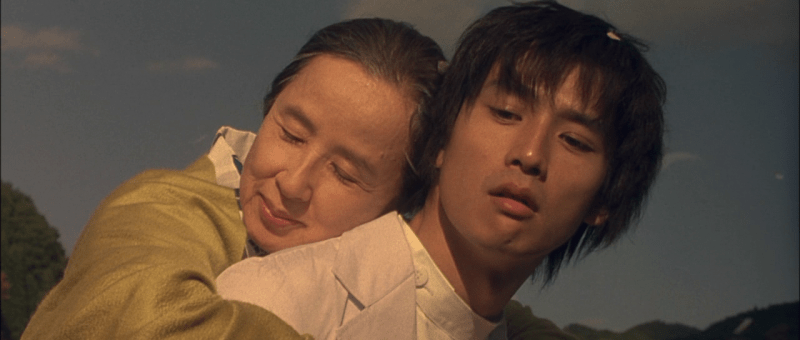
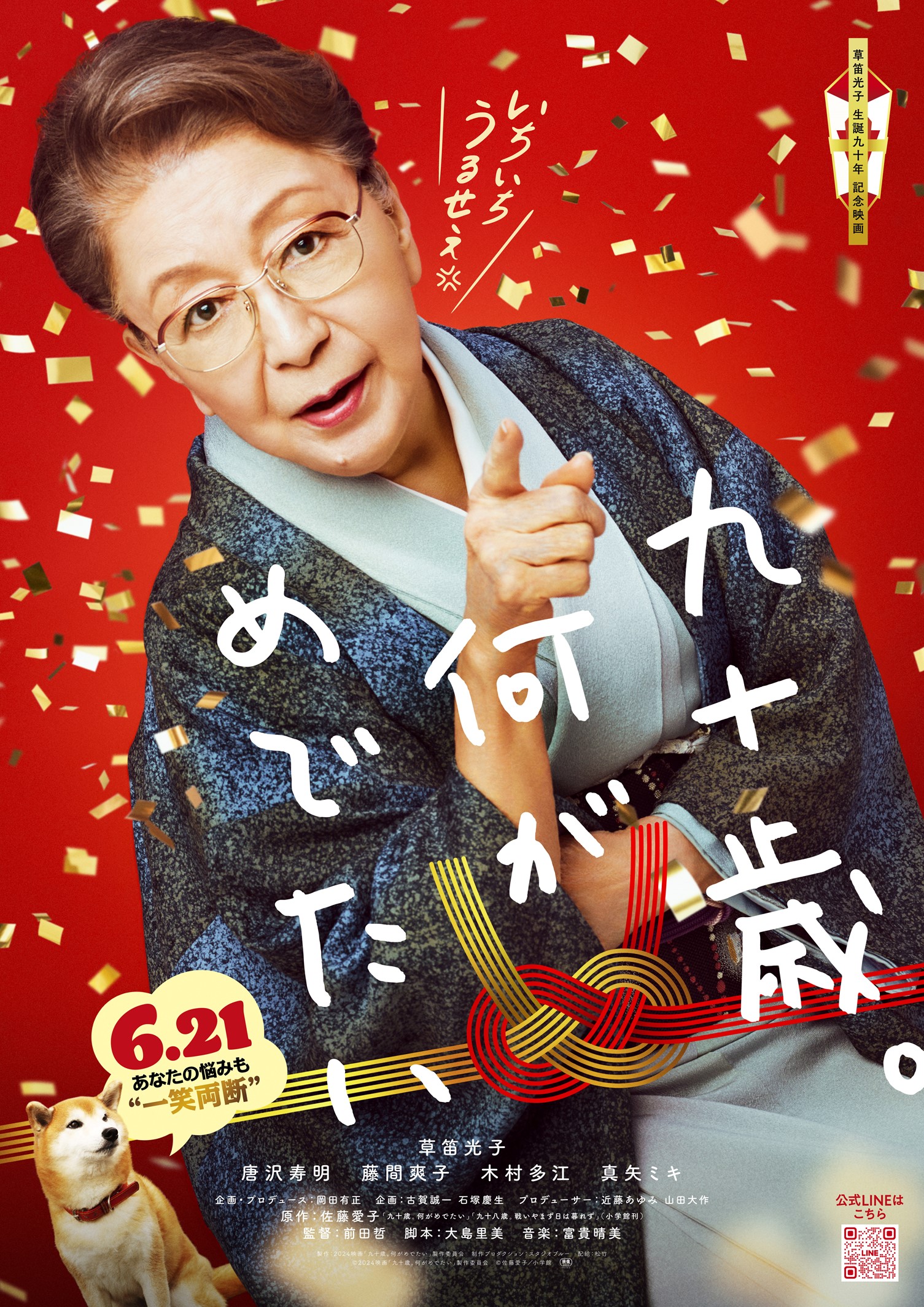
Everyone keeps congratulating Aiko Sato (Mitsuko Kusabue) on reaching 90, but she can’t see what’s so special about it. Having retired from writing after publishing her last novel at 88, she’s really feeling her age and has little desire to anything but sit around waiting to die. That is, until she’s badgered into picking up her pen by a down on his luck, “dinosaur” editor certain that her words of wisdom will strike a chord with the young people of today.

Marking the 90th birthday of its leading lady Mitsuko Kusabue and directed by comedy master Tetsu Maeda, the film takes its name from a collection of essays published under the title “90 Years Old, So What?” which largely deal with what it’s like to be old in the contemporary society along with the way things have changed or not in Japan over the last 90 years. It does not, however, shy away from the physical toll of ageing despite Kusabue’s sprightliness or the undimmed acuity of Aiko whose only barrier to writing is that she fears she’s run out of things to say and the energy to write them. During her retirement, she remarks on the fact that her legs and back hurt while she also has a heart condition and everything just feels like too much bother. Her daughter Kyoko (Miki Maya), who lives with her along with her twenty-something daughter Momoko (Sawako Fujima), asks her why she doesn’t go out to meet a friend, but as Aiko says, most of her friends have already passed on or like her don’t really have the energy to leave the house. 

In many ways, her age isolates her as she finds herself slightly at odds with the contemporary society. She turns the television up louder because she finds it difficult to understand what younger people are saying and doesn’t get why they stare at their phones all the time. Though she manages most things for herself, she has to call repair people, which costs money, if something breaks down while her daughter’s not around to fix it, even if it’s something as simple as a paper jam in a fax machine or pushing the off button on the TV too hard so it won’t turn back on again. Nevertheless, so intent is she on “enjoying” her retirement that she repeatedly turns down the entreaties of a young man from her publisher’s who wants her to write a column and always turns up with fancy sweets which are, as she says, well-considered gifts, but also a little soulless and superficial being driven by fashionable trends of which Aiko knows nothing and by which she is not really impressed.

There is something quite interesting about the contrast between herself and fifty-something Yoshikawa (Toshiaki Karasawa) who is also a man behind the times and a relic of the patriarchal culture she railed against in her writing and rejected in her personal life, divorcing two husbands and going on to raise her daughter alone. In the opening scenes, she reads an entry from an advice column about a woman who’s sick of her husband of 20 years because he’s a chauvinist who dumps all of the domestic responsibilities onto her while looking down on her because of it. Aiko tuts and contradicts the advice of the columnist, remarking that the answer is simple. She should just tell him to his face that she hates him and then leave. Nevertheless, the fact remains that not all that much has changed since she was young. The husband’s behaviour is considered “normal”, while the woman’s desire to be treated with respect or leave her marriage is not. Yoshikawa is effectively demoted because he has no idea that his treatment of a female employee amounts to workplace bullying and sexual harassment even if he didn’t intend that way because he’s trapped within this old-fashioned patriarchal ideal and is unable to see that his behaviour is not acceptable nor that he’s been taking his family for granted while considering only his own needs and positioning himself as the provider. 

Yet it’s 90-year-old Aiko rather than his humiliating demotion or the failure of his marriage who begins to show him the error of his ways by accepting him into her own family like a lonely stray. Aiko’s essays don’t really say that everything was better in the past, even if she’s confused by modern people who are annoyed by the cheerful sounds of children playing and a city alive with life because she remembers how everything went quiet during the war and how depressing that could be. But she does sometimes think that progress has gone far enough and things were better when people had more time for patience with each other. That said, patience is one of the things Aiko has no time for, advising Yoshikawa to charge forward like a wild boar because one of the benefits of age is that you just don’t care anymore what anyone thinks so get ready to annoy people or exasperate them but carry on living life to the full. Ironically, that might be a gift that he gave her by convincing her to write again which returned purpose to her life and gave her a reason to engage again with the world around her lifting her depression and making her feel as if she still mattered. The real Aiko turned 100 in 2023 and carried on writing, while 90-year-old Kusakabe is herself undergoing something of a career resurgence in recent years proving that even if you’re 90 years old, so what? There’s still a lot of life left to be lived and you might as well carry on living it doing what you love for as long as you can.


90 Years Old – So What? screens 21st June as part of this year’s Toronto Japanese Film Festival.

Trailer (English subtitles)
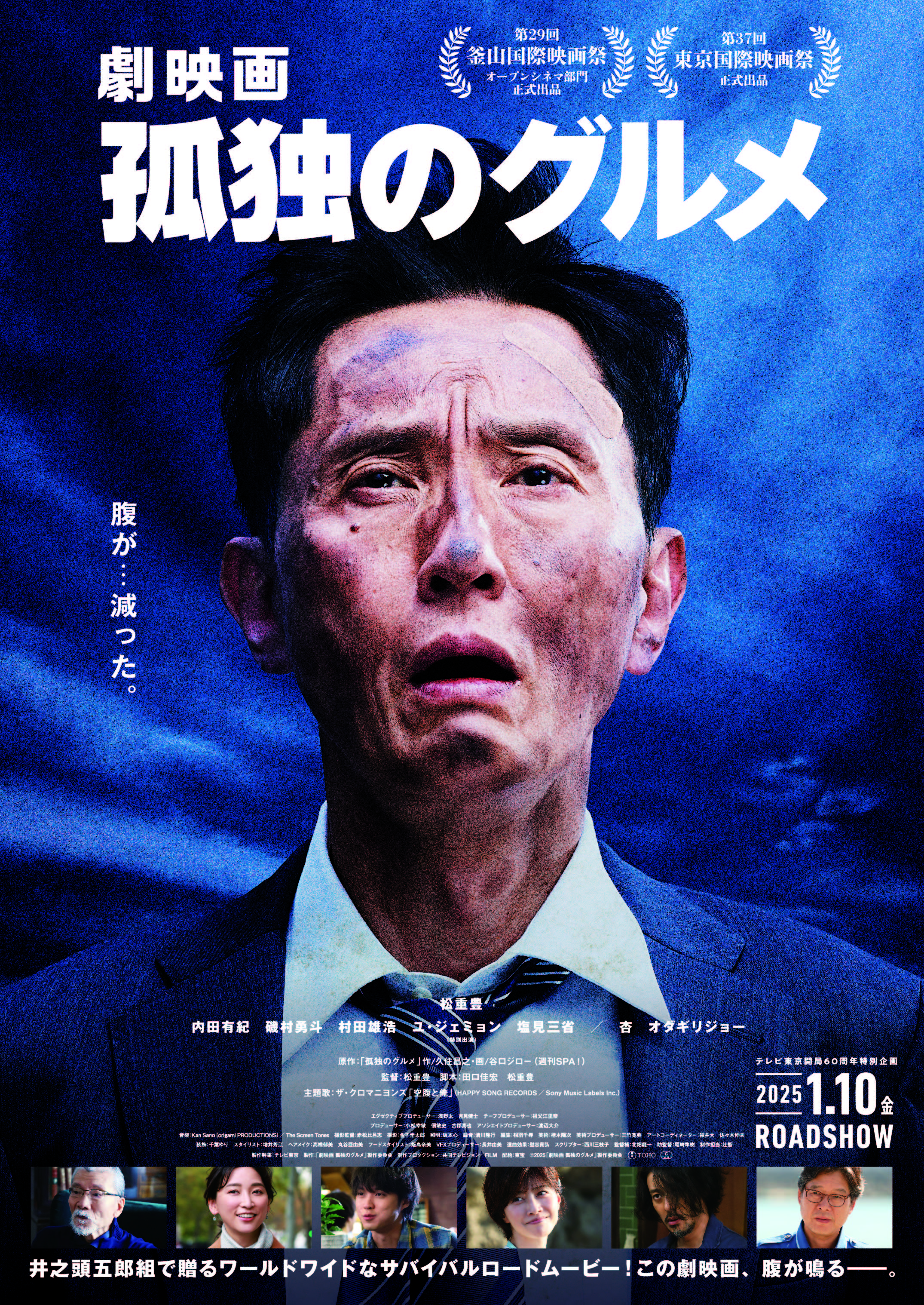
The Solitary Gourmet (劇映画 孤独のグルメ, Yutaka Matsushige, 2024)

Isn’t it funny how a good bowl of soup can make everything better? Based on the manga written by Masayuki Qusumi and illustrated by Jiro Taniguchi, the feature-length edition of the long-running series has a distinctly soupy feel as salaryman Goro (Yutaka Matsushige) finds himself travelling Japan and abroad in search for the ingredients of a soup an old man ate as a child. Airing since 2012, The Solitary Gourmet TV series was a trendsetter for Japanese comfort foodie cinema and has given rise to several other similarly themed shows in which the protagonist visits a real life establishment and enjoys whatever they have to offer from food to sake, sweets, and even traditional bathhouses.

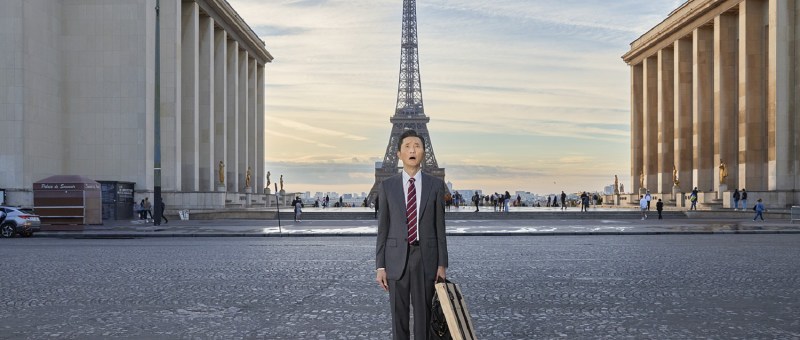
In fact, there’s even a meta joke towards the end of Solitary Gourmet (劇映画 孤独のグルメ, Geki Eiga: Kodoku no Gourmet) in which one of the restaurants Goro goes to is featured in a show about a foodie salaryman while he plays a fellow customer. The newly international setting reflects the increased budget of a theatrical feature and also helps to expand the series’ episodic format in leading Goro on a crazy chase that begins with the daughter of an old friend in Paris (Anne Watanabe) who enlists him to hunt down the ingredients for her grandfather’s cherished soup. Of course, this provides an excuse for Goro to go to the remote Goto Islands and learn about the local cuisine while running around collecting random samples like he’s on a side quest in an RPG. 

Then again, it also offers him the chance for some surreal adventures, including getting cast away on an uninhabited island before being rescued by the Korean-speaking residents of a food research institute. It’s there that he meets Shiho (Yuki Uchida), a Japanese woman living on “an island for women who are fed up with men,” and a former restaurant worker retreating from a marriage fracturing under the pressures of trying to run a restaurant in the post-COVID society. When Goro later catches up with her husband (Joe Odagiri), he too is a depressed, broken figure who now only serves fried rice in his incredibly unwelcoming restaurant. But being talked into helping Goro recreate the old man’s beloved soup seems to reactivate his creative juices and give him the desire to get back on his feet. 

Star Yutaka Matsushige directing for the first time throws in a brief homage to Tampopo but what the film is most interested in is the universality and healing power of a tasty broth from the onion soup Goro eats in Paris to the Haejangguk, or hangover soup, that he orders in Korea while being watched over by an exasperated immigration officer (Yoo Jae-myung). That Goro’s quest takes him so far hints at the shared history of the two nations and the various culinary influences and universalities running between them with soup a means of healing and friendship. Exchanging a few words of Korean, Goro tries to ask what the name of the fish in his soup is, only to come to an understanding when the immigration officer writes it down for him in Chinese characters. 

All this food really does bring people together, as Goro gets pretty much everyone he meets roped into his quest to recreate the old man’s childhood dish as his deathbed request. Matsushige recreates the zany humour of the TV series including his familiar “I’m hungry” catchphrase, followed by the camera taking three steps back and picturing Goro in front of some notable landmark. He also doesn’t seem to be getting much work done while running around trying to figure out this soup even he’s never actually tasted it and is reliant on the old man’s fragile recollections. Goro had been in Paris to deliver a painting of somewhere he once lived and the old man remarked that photographs are records of time but painting turns them into memories. Food, or more specifically soup, might do something similar, at least according to the old man who is desperately trying to reclaim something of the home comforts of his youth. Of course, the old man is the only one who knows what the soup tastes like, so perhaps Goro is on a fool’s errand, but as he later says, soup does seem to be the water of life and thanks to its healing qualities a universal symbol of peace and harmony not to mention friendship and kindness.


The Solitary Gourmet screens 29th May as part of this year’s Nippon Connection.

Trailer (English subtitles)

Images: ©2025 “Solitary Gourmet” Film Partners

The Moon (月, Yuya Ishii, 2023)

If you can judge a society by the way it cares for its most vulnerable, then at least according to Yuya Ishii’s The Moon (月, Tsuki), adapted from the novel by Yo Hemmi, Japan is not doing very well. Inspired by a real life incident in which a disaffected young man went on a rampage murdering patients at a facility for the disabled claiming they were a drain on national resources, the film probes into some dark areas of the human psyche asking what people really think deep down and who we do and don’t see as being human just like us.

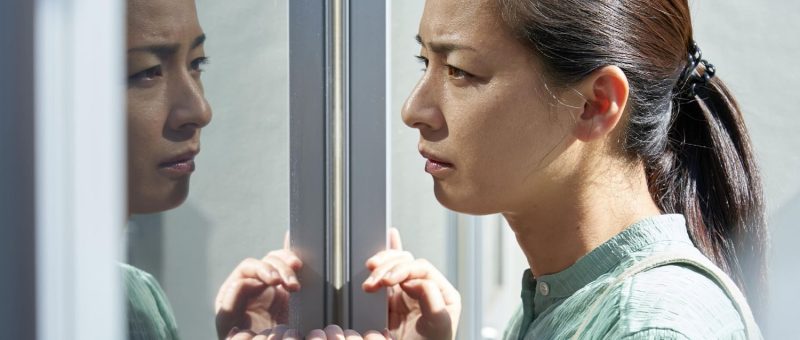
Blocked writer Yoko (Rie Miyazawa) only takes the job at a care facility because her literary career has stalled and her husband (Joe Odagiri) is out of work. Each of them is still reeling from the death of their three-year-old son who was born with a heart defect and suffered brain damage during an operation that meant he never spoke and was fed through a feeding tube. Working at the care facility brings up painful memories and directly confronts Yoko with realities of her son’s life and death while she later discovers that she is pregnant again and isn’t sure whether or not to have the baby fearing it may have the same condition and knowing that as a woman over 40 there is an increased chance she may give birth to a child who has complex needs.

In many ways it’s Yoko’s own reaction to her pregnancy which underlines the film, the lunar imagery intensely linked with that of her ultrasounds while she reckons with her own feeling of perhaps not wanting to bear an “abnormal” child, as someone puts it. Of course, this very personal sentiment is informed by the loss of her son and the experience of living and caring for him for the three years he was alive, but it also informs her perspective on the care, or lack of it, sees at the facility where patients are sometimes confined to their rooms indefinitely, left covered in their own excrement, or allowed to harm themselves through lack of stimulation. Like Yoko most of the other orderlies seem to have no medical training and two in particular mistreat the people in their care for their own amusement. On witnessing an orderly strike a patient for no reason while frogmarching him back to his room, she asks him if that’s really okay but he just replies that okay or not it’s the way they do things here. She tries to take her concerns to the facility’s director, but he basically tells her the same thing and even threatens her employment if she continues to make a fuss. 

Yoko closely identifies with another woman who happened to be born on exactly the same day she was yet has been confined to bed for 10 years and is assumed to be unable to communicate. According to another orderly, also called Yoko (Fumi Nikaido), Ki-chan could walk and was partially sighted when she arrived but someone decided that it would be easier to care for her if she stayed in her room so now her muscles are too wasted to walk while they also covered up her windows because they thought dim lighting would keep her more docile. Essentially, they further disabled her for their own convenience and concluded that because she could not communicate with them in a way they considered usual that she had nothing to communicate. It doesn’t seem to occur to them that biting the other Yoko’s arm, for instance, is also communication as are some of the behaviours exhibited by the other patients which the orderlies respond to with force or violence.

Shoko, the girlfriend of another orderly Sato (Hayato Isomura), is deaf and remarks to the other Yoko that she doesn’t need to hear to be able to understand yet a value judgement seems to have been placed on these people’s lives based solely on their ability to communicate through conventional means. Yoko is accused of romanticising notions of disability, while many people may outwardly say they believe those with physical or intellectual disabilities are equal to themselves and deserve the same levels of respect and dignity they are also unwilling to deal directly with the unpleasant side of their care such as cleaning up bodily fluids which may have strong and penetrating odours. Both the other Yoko, who has literary aspirations of her own, and Sato make frequent reference the stench of reality, something which often left out or not spoken of. The other Yoko accuses Yoko of leaving the smell of decay out of her award-winning book on the Great Kanto Earthquake of 1923 which she later reveals was something urged by her editor who instructed her to soften the edges to create a story that readers would find uplifting and inspirational.

One of the unpleasant things glossed over about 1923 earthquake was the pogrom against Koreans which took place in its wake, something that is tacitly referenced during the attack on the care facility as the killer determines to ask each of the victims if they have a soul despite having already decided that those who cannot speak do not. During the pogrom, those suspected of being Korean were often asked to pronounce certain words to see if they had a Korean accent, only many people from other areas of Japan also pronounce them in the same way so the test proved nothing. The killer wants to see themselves as “normal”, that their way of thinking is just the same as everyone else’s only they don’t have the courage to speak and that their course of action is one most people tacitly support because they also do not believe that the people at the care facility are human or that they have a soul.

Raising her concerns, Yoko has a long philosophical conversation with Sato which doubles as a self-interrogation while it is also in some senses true that the people at the care facility are each refractions of herself. In any case, the conditions and contradictions of the facility appear to place a strain on the mental health of those who work there who are encouraged to simply get used to the way the system works rather than attempt to change it. Sato complains that he struggles to discern dream from reality, while reality itself is often distorted by a lack of desire to talk about anything that might be unpleasant or inconvenient.

Even a discussion that might have been unpleasant or inconvenient to have is interrupted in the closing moments, though the most important things are indeed said while Yoko and her husband are able to sit face to face and begin rebuilding their relationship in the wake of the loss of their son. Ishii conjures an atmosphere of true dread as events slowly creep towards an inevitable conclusion, but also peppers Yoko’s life with small moments of joy if underscored by a searing horror that many are prepared to unsee until brought to a violent confrontation with the contradictions and hypocrisies that dwell deep within their own hearts.


The Moon screened as part of this year’s Camera Japan.

Trailer (English subtitles)
Transparent: Tribute to a Sad Genius (サトラレ, Katsuyuki Motohiro, 2001)

What would life be like if your every thought were audible for miles? Adapted from the manga by Makoto Sato, Katsuyuki Motohiro’s Transparent: Tribute to a Sad Genius (サトラレ, Satorare) considers how ironically isolating such a talent may turn out to be as the sufferer finds themselves withdrawing from others in embarrassment while wider society begins to resent being unable to tune out of their every inane thought or avoid being hurt by hearing something no one would ever say out loud even if they thought it privately. 

The “Committee for the Preservation of the Specially Gifted” is dedicated to protecting the so-called “Transparents” whose thoughts are audible for a 10m radius though they have no control or even idea that it is happening. They’ve started an extensive public information campaign to reduce the stigma held against them because as they claim Transparents are a valuable natural resource mainly as they all have super high IQ and are at the forefront of technological advancement. Then again this extensive campaign seems like overkill as there are only currently seven confirmed Transparents on record, but in a minor twist the campaign is necessary because it’s essential that the Transparents never find out that their thoughts are public, the first apparently having taken their own life because of the intense embarrassment of trying to live without any kind of privacy. 

This is the first ethical problem with the Transparent program which is curiously contradictory in its approach. The government could easily have said that Kenichi (Masanobu Ando), the sole survivor of a plane crash at three years old plucked from the wreckage when rescuers heard his internal monologue begging for help, had died and raised him in a lab, but instead they choose to return him to his grandmother in a designated Transparent town where they provide him with the illusion of a “normal” life while simultaneously micromanaging his existence. Their problem now is that he’s qualified as a doctor and wants to practice, but clinical medicine is obviously an occupation which requires discretion. Patients overhearing his “real” thoughts might not be helpful to their recovery, while he can hardly claim patient doctor confidentially when he’s likely to leak private medical details simply in the course of his work. Meanwhile, it tuns out that he’s already invented a revolutionary cure for athlete’s foot which is another reason why the council want to manipulate him into shifting towards research rather than clinical practice. 

That’s why they’ve dispatched military psychologist Yoko (Kyoka Suzuki) who specialises in Transparents hoping that she can find a way to bend him to their will, but gradually she begins to come to a new understanding of what his life is like even while he has no idea everyone knows what he’s thinking. For example, no one wants to date a Transparent because they don’t want the intimate details of their love lives broadcast all over town, while the perfectly ordinary thoughts which should definitely stay in his head on catching sight of crush Megumi (Rina Uchiyama) can’t help but make her feel uncomfortable. The entire town is forced to pretend that they can’t hear him think, which seems somewhat unfair, leaving him at a disadvantage and more often at not at a loss as to why someone might seem hurt or upset by him when didn’t even say anything. Meanwhile, much of Yoko’s role lies in gently manipulating him, the entire committee decamping to a summer festival in a nearby town so they can let him down gently by leading him to believe Megumi already has a steady boyfriend who is kind to children and the elderly so he’s forced to be happy for her that’s she’s found such a great guy and can give up on his romantic aspirations. 

The tone is in general admirably progressive in that it ultimately argues for a greater sense of acceptance for all minorities, but it’s difficult to square the positive message with the ways the Transparents are also being uncritically manipulated, forced to live a simulacrum of a life in an engineered small-town Japan which grateful to have them only for the massive subsidies they receive for local development in return for making sure the Transparents are kept in the dark about their condition so that the committee can exploit their genius as they plan to do with Kenichi after getting him to the research institution. Even so what they discover is that Kenichi knew what his genius was and only through letting him follow his dreams can they truly unlock it, while the committee is forced to reckon with the various ways they’ve dehumanised him, the chairman eventually referring to him as a person as opposed #7 as he’d always called him before. Somewhat contradictory and more than a little uncomfortable in its implications, Transparent: Tribute to a Sad Genius is presented as heartwarming drama and it does indeed warm the heart with this its messages of equality and acceptance not to mention the right to follow one’s dreams whatever they may be but never really reckons with its central thesis in which the authorities pat themselves on the back for being kind and doing the right thing while simultaneously exploiting those they claim to care for without their knowledge or consent. 


Yoko (658km、陽子の旅, Kazuyoshi Kumakiri, 2023)

Sometimes home is the hardest place to go. At least that’s how it is for the eponymous Yoko (658km、陽子の旅, 658km, Yoko no Tabi) in Kazuyoshi Kumakiri’s emotional road movie in which a defeated middle-aged woman is jolted out of her self-imposed inertia on hearing of the sudden death of the father she had not seen in over 20 years. As much about a moment of mid-life reevaluation as one woman’s gradual return to the world through a process of self-acceptance, the film displays a boundless empathy not to mention a sense of warmth out of keeping with a snowbound winter in northern Japan. 

At 42, Yoko (Rinko Kikuchi) lives alone in a one room apartment that she seemingly never leaves. Ironically enough, she works as a customer service assistant operating a remote chat box in which she encourages the customer to try turning it off and on again but otherwise offers little real support. When she accidentally breaks her phone, he first thought is to try contacting the online consumer helpline only to realise the irony of her situation and think better of it. In a moment of cosmic coincidence she receives a visit from her cousin, Shigeru (Pistol Takehara), who explains that her sister Rie has been trying to call but obviously couldn’t get through because of the broken phone. Yoko’s father has passed away suddenly. Shigeru and his family are making the long drive from Tokyo to Aomori and they’ve been instructed to bring Yoko with them for the funeral the day after next. 

We can tell that Yoko is no longer used to interacting with other people. Her voice is almost inaudible and her words tumble out in a half-confused jumble. Shigeru seems sympathetic and we can interpret that she’s been this way a long time, if not all of her life. He asks her if she has clothes for the funeral and is unsurprised when she gives no answer, assuring her they can sort it out when they get there while trying to cajole her downstairs and into the car where his wife and kids are waiting. The kids are, predictably, incredibly noisy and a little insensitive while the mother tries to get some sleep and Shigeru sings a folksong that was a favourite of her father’s. His spectre (Joe Odagiri), not so much a ghost as a manifestation of her memory silently, haunts her throughout the journey reminding of her of her unresolved shame and the reasons she had avoided contact with him for the last 20 years. 

These moments are full of painful melancholy but also an underlying sense of dread as if Yoko were being stalked by her own self-loathing projected onto the figure of father. After becoming separated from Shigeru at a service station and assuming she’s been abandoned with no phone and only loose change, she decides to hitchhike to Aomori and in effect travels backward meeting echoes of herself as she goes. Her first driver is a woman of about her own age (Asuka Kurosawa) in Tokyo for a job interview who reflects her buried cynicism, remarking that she resents the people she sees at service stations who to her at least seem far too happy. On learning that Yoko has no children and never married, she chuckles that she couldn’t imagine a life without out them hinting at another life Yoko might have led and perhaps quietly yearns for in her solitude. 

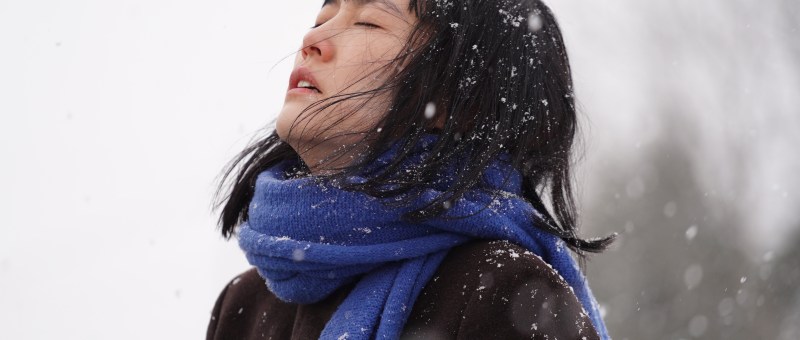
Yoko answers the woman with only grunts and a shake of the head, unable to communicate and in effect too shy to ask for help from passing strangers. Through her journey she gradually recovers the ability to speak, her words eventually pouring out of her in a voluntary monologue to a stranger on whose kindness she has become dependent. But in a girl she meets at the next rest stop she sees only her teenage self, the girl answering that it’s too hard to explain when questioned about why she’s hitchhiking alone in the middle of the night. When she gives her her scarf, it’s like a gift from her younger self, a small moment of embrace and support. Something similar happens as she approaches the area affected by the 2011 tsunami and meets a kindly older couple who represent her parents as she might have wished them to be rather than as they were. While the man gives her some fatherly advice, not unkindly, the woman (Jun Fubuki) gives her a pair of sheepskin boots in another gift of warmth that further proves to her that the world is full of kindness even if not all of the people who gave her rides were nice.

There maybe something in the fact that Yoko has to travel through the disaster zone in order to emerge from it, journeying towards the site of her trauma and beginning to overcome it as she comes to accept her father’s death and that is simply too late for many things though crucially not for all. What she comes to realise is, as her first driver told her, everyone has their reasons and she wasn’t the only one carrying a heavy burden. She only made it as far as she did because of the kindness of strangers and those, like Shigeru, who are willing to wait for her to come in from the cold. Rinko Kikuchi’s extraordinarily nuanced performance along with the snowbound vistas and melancholy score conjure a poignant atmosphere but one oddly buoyed with warmth in which the world can be a kind place or least as long as we can be kind to ourselves. 


Yoko screens Feb. 22 as part of Family Portrait: Japanese Family in Flux

Original trailer (no subtitles)

Adrift in Tokyo (転々, Satoshi Miki, 2007)

An aimless young man finds unexpected direction while walking the streets of the city with an unlikely father figure in Satoshi Miki’s meandering dramedy Adrift in Tokyo (転々, Tenten). These two men are indeed adrift in more ways than the literal, each without connections and seeking a concrete role in life while attempting to make peace with the past. But like any father and son there comes a time when they must part and their journey does indeed have a destination, one which it seems cannot be altered however much they might wish to delay it.

That Fumiya (Joe Odagiri) is aimless might be assumed from his unruly hair and the fact that he thinks tricolour toothpaste might be enough to jolt him out of his sense of despair but is confirmed by his matter of fact statement that he’s in his eighth year of university where nominally at least he’s studying law. His problem is that he’s amassed massive debts to a loanshark, Fukuhara (Tomokazu Miura), who breaks into his apartment and threatens him by shoving a sock in his mouth before leaving with his ID and driving licence. Fukuhara, however, later decides to make him another offer that he will cancel the debt and even give Fumiya even more money if only he will agree to wander around Tokyo with him for an unspecified time until they reach Kasumigaseki where he intends to hand himself in at police headquarters claiming to have recently murdered his wife. 

Like many things that Fukuhara says, it’s not clear whether or not he has indeed killed his wife though Miki frequently switches back to a scene of a woman who seems to have passed away and has been laid out in bed though she shows no signs of having died violently. Her zany co-workers keep thinking they should check on her seeing as she hasn’t shown up in days but something always distracts them and they end up forgetting about her entirely. The body appears to have been treated with love, hinting that if what Fukuhara says is true and this woman was his wife whom he killed in a fit of passion he has quite clearly thought through his plan of action rather than attempting to flee the scene and is perhaps only delaying the inevitable while walking out some other trauma in the company of Fumiya a surrogate son mirroring the description he gives of taking walks in the company first of his father and then of his wife. 

Fumiya deflects every question and agrees that he hates memories having burned his photo albums before leaving for university. He claims that he has no parents, describing the people who raised him as just that, as his mother and father both abandoned him as a child leaving him in a perpetual state of arrest which is one reason he’s still a student four years after most people have graduated. He never went to the zoo or rode a rollercoaster or called a man dad and seems to think of himself as nothing much of anything at all. Yet the fake can sometimes be more real than the real as he eventually discovers becoming part of an awkward family unit with Fukuhara’s “fake” wife (Kyoko Koizumi) he used to accompany to weddings as a paid guest, just beginning to enjoy being someone’s son when Fukuhara decides he’s reached the end of his road. 

There is a sense that everyone is chasing the ghost of someone else or perhaps even themselves, Fumiya finding shades of the father who abandoned him in career criminal Fukuhara who tells someone else that he once had a son who died in infancy, and seeing something of his mother in fake wife Makiko discovering transitory roots in an unlived imaginary childhood. But then there are also occasions of cosmic irony such as a coin locker bag being full not of money but of bright red daruma dolls and tengu noses, or a rebellious street musician meekly bowing to the police. A repeated gag says you’ll have good luck if you spot iconic actor Ittoku Kishibe out and about in the streets, and perhaps in a way Fumiya does in learning to make peace with his childhood self walking with Fukuhara who also comes to accept his failures as a man, a husband, and perhaps a father too. Filled with zany humour and a warmth underlying its melancholy, Adrift in Tokyo is a meandering journey towards a home in the self and a sense of rootedness in the middle of a sprawling metropolis filled with infinite possibility. 


Adrift in Tokyo is released on blu-ray in the UK on 12th December courtesy of Third Window Films.

Original trailer (English subtitles)

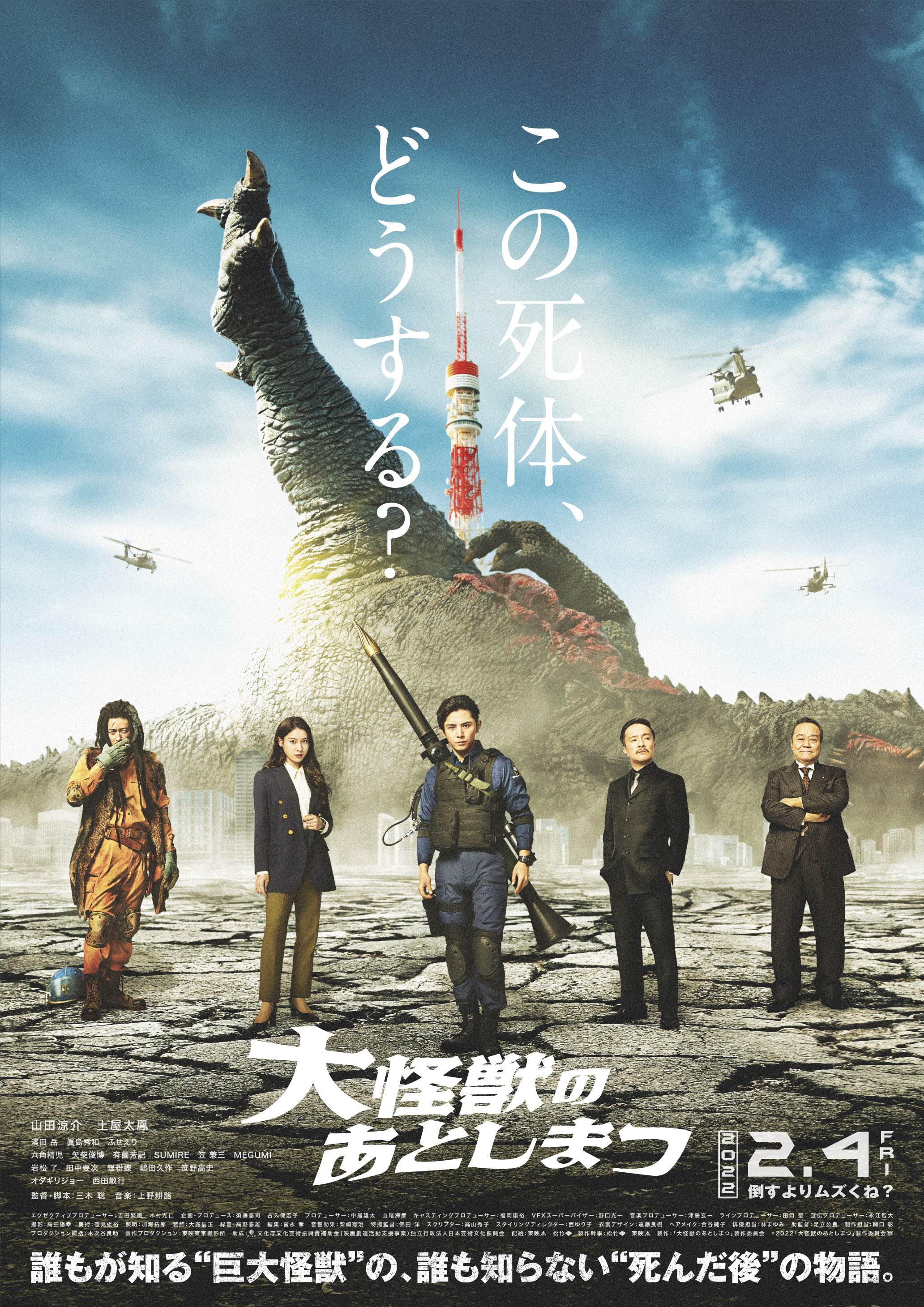
What to Do With the Dead Kaiju? (大怪獣のあとしまつ, Satoshi Miki, 2022) [Fantasia 2022]

The sudden appearance of a deus ex machina is usually where a story ends. After all, that’s the point. Whatever crisis is in play is suddenly ended without explanation. But what happens then? Satoshi Miki’s What to Do With the Dead Kaiju? (大怪獣のあとしまつ, Daikaiju no Atoshimatsu) steps in to wonder what it is that comes next after a giant monster has been defeated. Someone’s going to have to clean all that up, and in a surprising twist a fair few people are keen to take on the burden. Like Hideaki Anno & Shinji Higuchi’s Shin Godzilla, which the film is on one level at least attempting to parody, Miki’s kaiju comedy is a government satire this time casting shade on the nation’s pandemic response, though with considerably less nuance. 

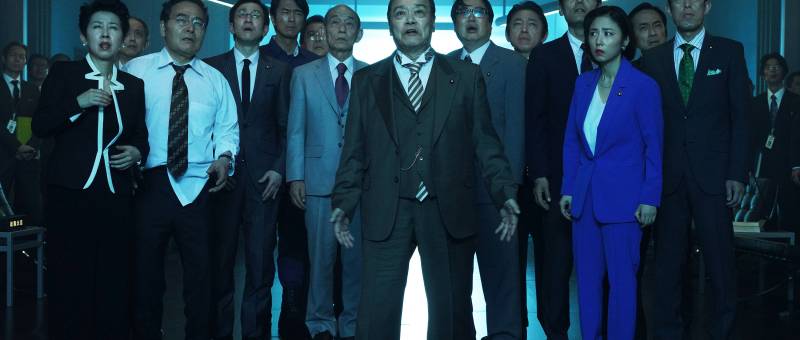
As the opening onscreen text, a nod to Shin Godzilla, and accompanying voiceover tell us Japan had been plagued by a kaiju but it suddenly died after being engulfed by a mysterious ball of light. While attempting to comedown from the constant state of anxiety under which they’d been living, the prime minister (Toshiyuki Nishida) is at a loss for what to do next especially as no-one really knows if the kaiju corpse is safe. While trying to ascertain whether or not the fallen kaiju might explode, spread dangerous radiation, or present some other kind of threat, government departments start fighting amongst themselves about whose responsibility the clean up effort must be all of them wanting the glory but not the work or expense. 

Some suggest turning the kaiju’s body into a massive tourist attraction and are therefore less keen on anything that involves destroying it while others think it should be preserved and put in a museum. The government has placed the SJF, a militarised science force set up after a terrorist incident, in charge but isn’t listening to much of what they’re saying. Meanwhile, evil moustachioed staffer Amane (Gaku Hamada) is playing his own game behind the scenes which also involves his wife, Yukino (Tao Tsuchiya), who was previously engaged to the leader of the SJF Taskforce, Arata (Ryosuke Yamada), before he abruptly disappeared after being swallowed by a mysterious ball of light three years previously. 

The political satire largely revolves around the indecisive PM, who at one point says he has no control or responsibility for what the other ministers do, and his anarchic cabinet meetings in which politicians run round in circles and insult each other like children. Not exactly subtle, much of the humour is indeed childish and scatological while one minister’s running gag is making sleazy sexist remarks even at one point accidentally playing a saucy video instead of displaying the latest kaiju data on the communal screen. The government experiences a public backlash in deciding to name the kaiju “Hope” which lends an ironic air to its rampage not to mention the necessity of its destruction, while the decision to declare the body safe for political reasons despite knowing it probably isn’t (“protecting the people’s right not to know”) casts shade on the pandemic response among other crises as do the constant refrains about getting back to normal now the crisis is over. 

Then again, there’s something a little uncomfortable going on with the film’s geopolitical perspectives, throwing up an angry politician on the screen with a mangled name who insists that the kaiju originated on their territory and must be returned to them in what seems to be an awkward allusion to Japan’s ongoing territorial disputes with Korea even while it’s suggested that the Americans wouldn’t mind getting their hands on the corpse either for purposes of experimentation and research. On the other hand it also becomes apparent that the Japanese military have deliberately destroyed civilian homes and cost lives in a reckless attempt to stop the kaiju which obviously failed. 

The closing scenes hint we may have been in a slightly different franchise than the one we thought we were dealing with, another deus ex machina suddenly arriving to save the day after the villains almost cause accidental mass destruction. The film’s problem may be that it’s the wrong kind of silly, relying on lowbrow humour while otherwise trying to conform to a blockbuster formula in which the kaiju corpse becomes the new kaiju but the battleground is bureaucracy. Ultimately the film’s prognosis is bleak. Even when the PM has achieved sufficient growth to realise he should make some kind of decision he makes the wrong call leaving everything up to a lone hero while fundamentally failing to come to any conclusion on what to do with a dead kaiju save trying to ensure it does not blow up in his face. 


What to Do With the Dead Kaiju? screened as part of this year’s Fantasia International Film Festival.

Original trailer (English subtitles)

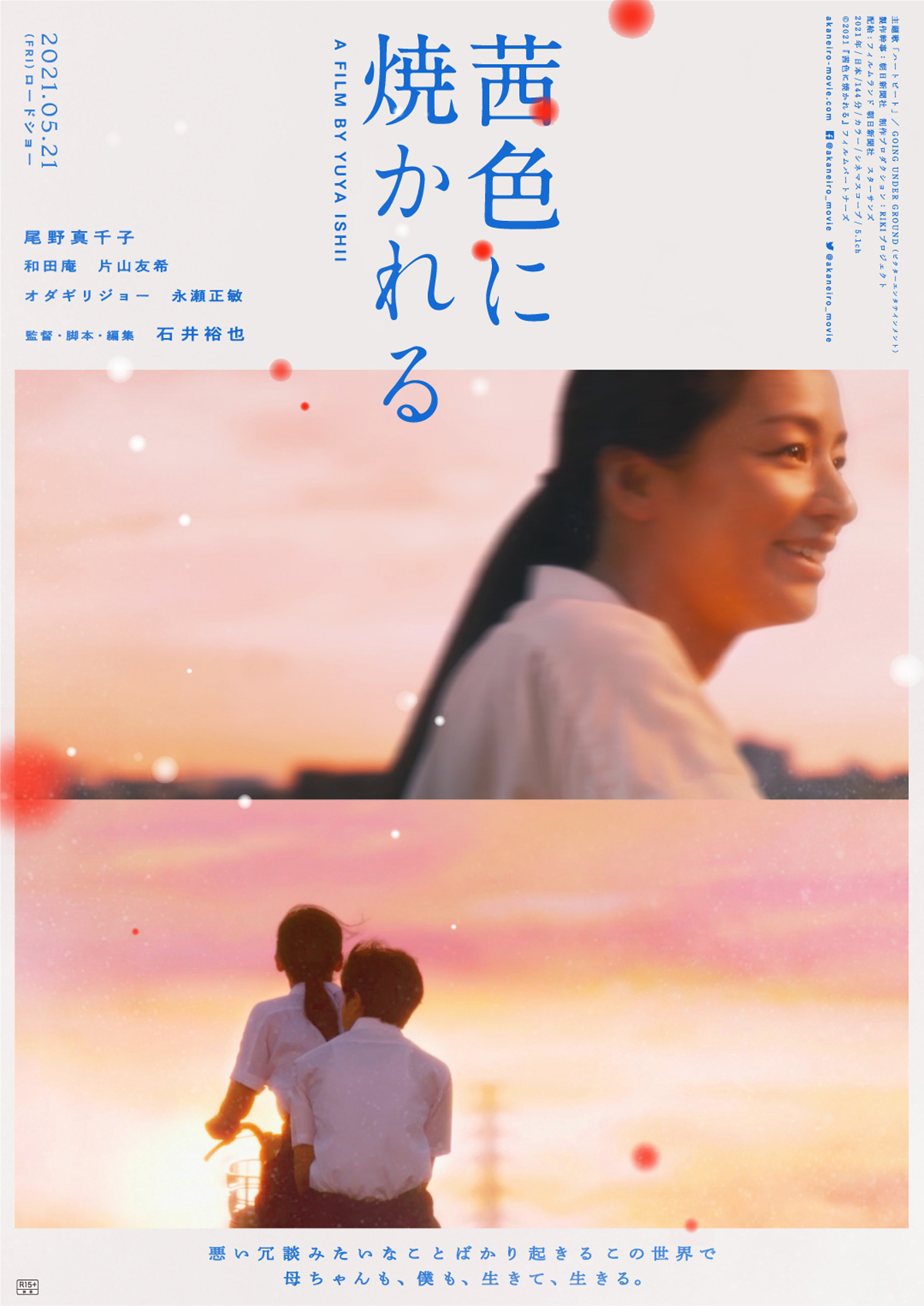
A Madder Red (茜色に焼かれる, Yuya Ishii, 2021)

©︎2021 "A Madder Red" Film Partners

A single mother and her son face the myriad injustices of the modern society with dignity and grace in Yuya Ishii’s quietly seething pandemic-era social drama, A Madder Red (茜色に焼かれる, Akaneiro ni Yakareru). The heroine is constantly asked why she isn’t angrier, those around her confused by her stoical attitude and tendency to simply sigh and say “let’s get through this” rather than railing against the persistent unfairness that defines her life but then she doesn’t have a lot of time for being angry nor would it particularly help her situation or bring about change. All she can do is persevere in the hope that it won’t always be this way, her run of bad luck will end, and she will eventually be permitted to rest. 

Ishii opens the film with a 3D model simulation of a traffic accident in which a cyclist is killed by an out of control car on a zebra crossing in an otherwise tranquil residential area. Ryoko’s (Machiko Ono) husband Yoichi (Joe Odagiri) is sent flying and ends up squished like a bug on the windscreen of a vehicle travelling in the other direction. The driver, an elderly man later revealed to have been living with Alzheimer’s, mistook the accelerator for the brake but as he had been a prominent local official the matter was swept under the carpet and he faced no consequences. What people can’t seem to understand is why Ryoko chose to attend the old man’s funeral when he eventually died. It seems attend was all she did, but the man’s son had security throw her out and his lawyer accuse her of “harassment” while expressing anger and resentment that her presence tarnished his father’s lavish ceremony when he had been such a good a man. Her presence perhaps annoys him because he knows on some level he’s in the wrong, while her strength and dignity shame him knowing that they should have just apologised. The lawyer implies she’s being unfair targeting the family who were not themselves responsible for the accident, except that in a sense they were because they failed to protect the old man by continuing to allow him to drive by himself. 

Ryoko refused the compensation money for this reason, that they tried to settle it with cash as if her husband’s life had no meaning. She lives in subsidised government housing, but doesn’t claim any benefits supporting herself after she was forced to close her cafe through a part-time job in a supermarket floristry department and after hours sex work. “Break a rule, break your life” she teaches her 13-year-old son Junpei (Iori Wada) yet constantly falls foul of rules written or otherwise while doing nothing wrong in the eyes of those who rant about benefit scroungers and routinely belittle those without means. She’s taken to task by her manager for taking home flowers that were due to be thrown out and for taking a phone call outside the store after clocking off, but when they fire her on a pretext to hire the daughter of a prominent client who can’t find a part-time job because of the pandemic, they refuse to honour the two month notice clause in her contract. Similarly when bullies from Junpei’s school set fire to some books left outside their apartment, they are the ones who have to move for violating the rule about causing a disturbance to the other residents. 

Given all of this no one can understand why Ryoko isn’t seething mad. She still pays for her father-in-law’s nursing home and even child support for a girl she’s never met fathered by Yoichi with another woman. Struggling herself, the child’s mother later turns to a sleazy friend of Yoichi’s, Ryu (Tateto Serizawa), to petition Ryoko to increase the child support but like her also worries that it “doesn’t seem right” to further burden a woman who is also struggling to raise a child alone just like herself while Ryu, as he had unsuccessfully with Ryoko, attempts to extort sexual favours in return for his assistance. Ryoko does these things when she doesn’t strictly have to and many people wouldn’t less out of pride or stubbornness than because it’s the right thing to do and if she can satisfy herself that she’s done right by others even if they’ve not done right by her then she maintains her dignity and their scorn can’t harm her. 

Even so, sick of being treated like a bug Ryoko’s rage eventually begins to boil over her subdued outfits giving way to a fiery red as her hopes of escape are once again dashed on realising a potential romantic suitor only ever viewed as a plaything. Everyone is always telling Ryoko’s that she’s “strange”, “weird”, “crazy”, in her passive resistance living by her own rules while constantly betrayed by those of others which they only enforce when it suits them. Ishii flags up all of her various expenses on the screen making it clear just how much it costs for Ryoko to be this poor while she seemingly grins and bears it. Then again as the film’s only title card tells us Ryoko is a good actress, and perhaps she has to be to get by in this indifferent society filled hidden suffering and an almost sadistic lust for self-preservation. “Mom, it’s all too much” Junpei sighs as he comes to an appreciation of his mother’s fortitude and her desire to simply “get through this” as they ride a mamachari towards a glowing technicolour sunset which ironically enough refuses to end trapping in them in this space of grief and unfairness but carrying with it a far off hope perhaps cruel in its elusiveness.


A Madder Red streamed as part of this year’s Nippon Connection.

International trailer (English subtitles)

Images: ©︎2021 “A Madder Red” Film Partners

Air Doll (空気人形, Hirokazu Koreeda, 2009)

“Was everything you saw in this world sad? Was there something, anything, what was beautiful?” the heroine of Hirokazu Koreeda’s exploration of urban loneliness Air Doll (空気人形, Kuki Ningyo) is asked by her creator though he can offer her few answers for the strange mystery of her life. Like a child, she takes beauty where she finds it yet much of what she sees is indeed sad as she reflects on the disconnected lives around her, the emptiness and futility of life in the contemporary society where everything is just a substitute for something else which cannot be obtained. 

As for herself, she is quite literally empty inside, an inflatable sex doll owned by middle-aged family restaurant waiter Hideo (Itsuji Itao) who has given her the name of his ex, Nozomi (Bae Doona), which ironically means hope, wish, or desire though not generally of the sexual kind. Yet one day she suddenly wakes up and begins to explore the world rejoicing in its new sensations feeling the rain on her hands and the wind that sounds the chimes as she watches her neighbours go about their daily routine. Dressed in the French maid’s outfit picked out for her by Hideo she gets a job at a local video store and begins living a more independent life while learning how to operate in human society. She feels herself out of place but is repeatedly told that there are others like her, mistaking her literal emptiness for their spiritual despair. 

Yet that sense of emptiness and futility is evident from Nozomi’s first forays into the human world in that the first act of mundanity she witnesses is the bin men sorting rubbish for disposal. “Unfortunately they’re non-burnable” Nozomi’s creator explains when she visits him in search of answers revealing he throws out the broken dolls that are returned to him once a year, “after all, once we die we’re burnable garbage. It’s not such a big difference” he adds, though as it turns out it is quite a big difference to Nozomi in ramming home to her that she can never become human and will always be something else, an inorganic “substitute” for something perceived as the “real”. 

“Your only flaw is that your body’s so cold” Hideo ironically laments as he warms her up in the bath, something she is told repeatedly to remind her that though she has discovered a heart it does not beat and she is not “alive”. Yet an old man (Masaya Takahashi) seeking a different kind of comfort later remarks that those with cold hands often have warm hearts as he reflects on his own life as a “substitute” teacher while she looks over the pictures of the many dogs he’s had through the course of his life as substitutes for the traditional family that have only left him feeling lonelier through their inevitable absences. There is perhaps in this a slightly conservative and uncomfortable implication that the loneliness we see in everybody that we meet is partly caused by the decline of the traditional family itself partly a consequence of the shifting gender roles of the later 20th century society. When they first meet, Nozomi has been rejected by a group of local mothers for inappropriately cooing over a baby in a pushchair the old man comforting her with a tale of the mayfly which is itself empty inside existing only to give birth and then die its own life defined by futility. Nozomi can never truly be human, but more than that she can never truly be a woman because she cannot reproduce as signalled in her final exchange with a little girl in her neighbourhood who swaps her beaten up and broken doll, a substitute for her absent mother now symbolic daughter to Nozomi, in exchange for her ring, a symbol of adulthood. 

In this way Nozomi becomes herself a symbol of something that is broken, an active barrier to societal happiness in providing a way for men like Hideo to escape the responsibility of the traditional family by satisfying his sexual desire through a fantasy of intimacy with an inanimate substitute. When Nozomi throws her pump away, Hideo buys a new model and when she confronts him he asks her to go back to being a passive doll because he finds all the human stuff “annoying” and only wants a woman who can be a selfless embodiment of his desires, will never talk back, challenge him, or hurt his feelings. Meanwhile, when her boss at the store (Ryo Iwamatsu) who seems have experienced a recent familial breakdown of his own blackmails her into having sex with him in the bathroom he is conversely annoyed by her passivity while tearfully calling out his wife’s name. Even her innocent love for coworker Junichi (Arata Iura) has its darkness, not only does she suspect she’s merely a substitute for his ex, his fetishisation of her revolves around his ability to take control over life by letting out her air and then permitting her to live by blowing his own back into her. 

“I am an air doll. A substitute for sexual desire” is how she introduces herself, preoccupied with her literal emptiness yet along with a heart discovering a sense of self as she interacts with others, beginning to wear her own clothes rather than those purchased for her by Hideo. At a moment of crisis she is surrounded by all the treasures she’s collected which ironically include a number of ornaments intended for a doll’s house including a tiny simulacrum of a cake which reappears in her imaginary birthday party suggesting that the only true happiness is to be found in wishful fantasy while the “real” will only ever disappoint. Nevertheless, she uses her last breath to bring happiness to all she can, uniting the old man with a lonely old woman (Sumiko Fuji) who confesses to random crimes just to have someone to talk to. Shot with unusual fluidity by Mark Lee Ping-Bing, Koreeda captures a society in flux in which the easy convenience of disposable consumerism has begun to replace human relationships and left us all empty inside. 


Air Doll in in US cinemas and on VOD Feb. 4 courtesy of Dekanalog

Trailer (English subtitles)
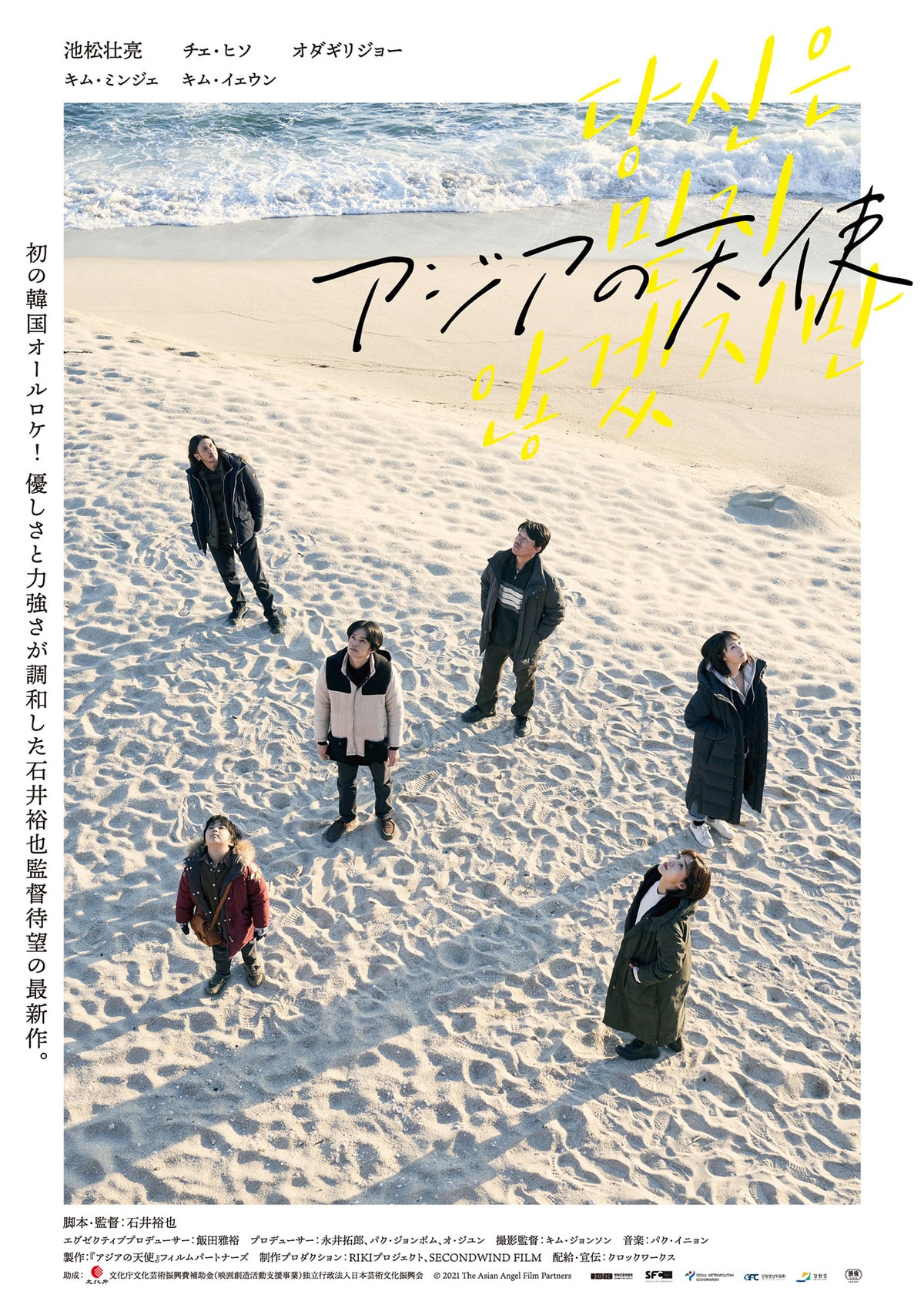
The Asian Angel (アジアの天使, Yuya Ishii, 2021)

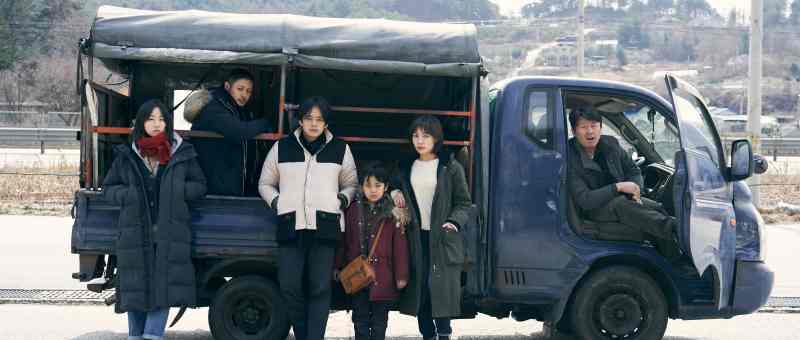
A collection of lonely souls is brought together by angelic intervention in Yuya Ishii’s grief-stricken appeal for “mutual understanding”, The Asian Angel (アジアの天使, Asia no Tenshi). Brokering the sometimes difficult subject of Japan-Korea relations, Ishii makes a plaintive case for a pan-Asian family while his wounded protagonists each search for meaning and possibility in the wake of heartbreak and disappointment. Yet what they discover is less the urge to move forward than the gentle power of solidarity, bonding in shared sense of displacement and forging a new home from an apparently fated connection. 

Displacement is a feeling which immediately hits struggling author Tsuyoshi (Sosuke Ikematsu) as he struggles to make himself understood to a grumpy Seoul taxi driver after taking his brother up on an offer to relocate to Korea with his young son following the death of his wife some time previously. Toru (Joe Odagiri), however, has not quite been honest about his life in the Korean capital, housed above a church where they always seem to be rehearsing the hymn Angels We Have Heard on High. Wandering into the apartment, Tsuyoshi is physically thrown out by Toru’s grumpy business partner (Park Jung-bum) obviously unaware they were coming as even Toru himself seems to have forgotten inviting them. In any case, the trio eventually find themselves on the street after Toru’s Korean friend with whom he’d started an illicit business smuggling cosmetics betrays them. 

Meanwhile, across town melancholy songstress Sol (Choi Moon) has been supporting her brother and sister with her music career which seems to be on the slide with a faintly humiliating gig in a shopping mall which briefly brings her into contact with Tsuyoshi, apparently captivated by her sadness. Abruptly informed her contract has been terminated, she tries to take the matter up with her manager/lover but gradually realises she’s merely one of several ladies on his books. Feeling lost, she agrees to follow up on a suggestion from her brother Jun-woo (Kim Min-jae) to pay a visit to the grave of their parents who passed away while she was only a child. 

Running into each other on the train after Toru talks Tsuyoshi into a possible seaweed venture in Gangwon, the two trios end up travelling together if originally struggling to find the “mutual understanding” that Tsuyoshi had been looking for. The first message Tsuyoshi sees on his phone on after arriving informs him that Korean-Japanese relations are at an all time low, though perhaps one would think national tension might not descend to the interpersonal level even if he appears to feel slightly awkward as a Japanese man in Korea aside from his inability to speak the language, but after a few too many drinks at a Chinese restaurant Jun-woo starts in on how 69.4% percent of Koreans apparently disapprove of Japan while 61% of Japanese apparently disapprove of Korea which is one reason he wouldn’t be keen on his sisters dating a Japanese guy. Describing himself as a “progressive”, he claims it’s the relatives who wouldn’t accept it but ends the conversation by cheerfully looking forward to when they can finally “part from these Japanese forever”. 

Yet, they do not part despite several opportunities and in fact end up travelling together for a significant distance during which they begin to bond, discovering that they have much in common including the loss of loved ones to cancer and the improbable sighting of angels who appear not like those on the Christmas cards but a weird old Asian man with a tendency to bite. Several times they are told they shouldn’t be together, Toru lamenting that love between Japanese and Koreans is as impossible as that between angels and humans while a police officer later bemusedly remarks that they don’t look like a family but family is in a sense what they become as they each sort out their respective traumas and resentments to reach a healthy equilibrium. Perhaps you couldn’t quite call it love, but almost and it might be someday if only you let it. “Seeing the world through your eyes I might come to like it a little more” Tsuyoshi admits, while Sol too begins to awaken to a new sense of freedom and possibility brokered by an angelic intervention. Marrying the melancholy poetry of The Tokyo Night Sky is Always the Densest Shade of Blue with the gently surreal sense of humour of his earlier work, Ishii’s deeply moving drama makes a quiet plea for a little more “mutual understanding” between peoples but also for the simple power of human connection as evidence of the divine. 


The Asian Angel screened as part of the 2021 Osaka Asian Film Festival.

Images: (c) 2021 The Asian Angel Film Partners