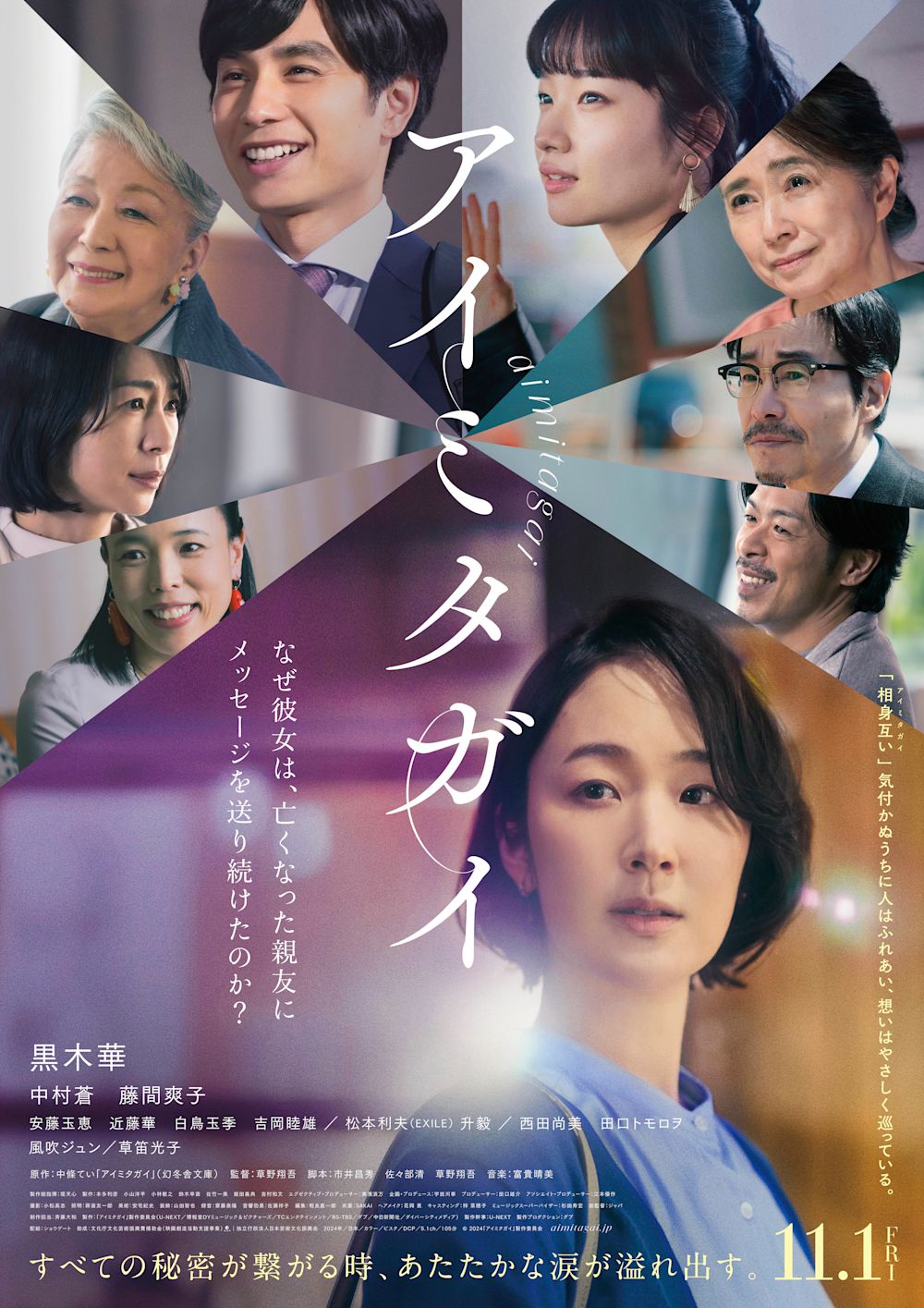
Aimitagai (アイミタガイ, Shogo Kusano, 2024)

When we say, “what goes around comes around”, we usually mean it in a bad way that someone is only getting what they deserve after behaving badly themselves. But the reverse is also true. The smallest acts of kindness people do without thinking can have quite profound effects on the world around them because, in the end, we are all connected. A bereaved father remarks that he thought novels that only had kind-hearted characters were unrealistic, but now he wants to believe that kind of world could exist after realising the impact his late daughter’s kindness had on those around her.

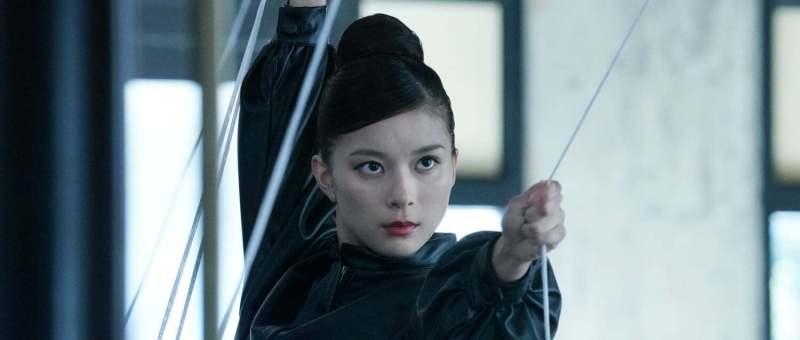
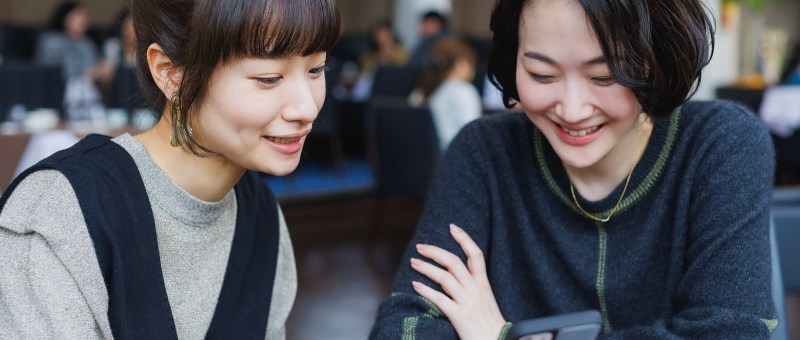
It was Kanami (Sawako Fujima) who saved Azusa (Haru Kuroki) in middle school when she was being bullied for coming from a single-parent family and the pair remained firm friends ever after until Kanami was suddenly killed in an accident while working overseas. Kanami’s loss leaves Azusa struggling to move forward with her life while mired in grief and uncertainty. Having lost her mother some years previously, she has never really dealt with the trauma of her parent’s acrimonious divorce and has a rather cynical view of marriage despite working as a wedding planner where her unmarried status sometimes causes her clients anxiety though it obviously has very little do with her ability to do her job. She’s always been clear with her long-time boyfriend Sumito (Aoi Nakamura) that marriage isn’t something she sees in her future, though he seems to want more commitment, while she repeatedly describes him as “unreliable” and is hesitant to take the next step with their relationship whether it involves getting married or not.

In that sense it’s really Azusa’s inability to surrender herself to the concept of what her grandmother (Jun Fubuki) calls “amai-tagai”, or mutual solidarity, which they experience first-hand while visiting her as another old lady nearby comes rushing in saying her house is on fire. It’s not so much reciprocity as a generalised idea of having each other’s backs, that people help each other as needed without keeping score in much the same way as Azusa was saved by Kanami and as she later realises by Komichi (Mitsuko Kusabue) whose piano-playing soothed her spirit though Komichi intended to play in secret, allowing her music to blend in with the six o’clock chimes as a daily act of atonement for having played the piano for boys who were going off to war many of whom never returned. It is then Azusa who saves Komichi in turn by telling her that she felt comforted by her music and that she does not believe that she has no right to play it simply because of the ways it was misused in the past. 

What Azusa fears is that by getting married she would essentially be cutting herself off from her paternal grandmother who, aside from her aunt (Tamae Ando) who is also Komichi’s housekeeper, is the only other family member she seems to have a meaningful connection with. Unable to let go Kanami, she keeps sending her messages little knowing that her mother is actually reading them and feeling both sorry and grateful that her daughter had such a good friend who like her is also struggling to continue on without her. She and Kanami’s father (Tomorowo Taguchi) find solace in the letters they receive from children at an orphanage where Kanami used to donate cakes and sweets after visiting there on a job. The photos she took are on display at their bathrooms, Azusa said because Kanami wanted them to be in a place where the children felt free to embrace their feelings privately without fear of embarrassment. 

The photographs, letters, and belated gifts are all examples of the ways in which what Kanami sent around is still going around and will continue to do so long after she herself is gone. Through realising the reality of “aimi-tagai”, Azusa learns that the world can also be a kind place, Sumito might be more “reliable” than she thought, and it might not be such a bad idea to trust people after all. Based on the novel by Tei Chujo, the film’s interwoven threads of serendipitous connections and the unexpected results of momentary acts of kindness prove oddly life-affirming if only in the ways in which each realise that Kanami is always with them even if physically absent.


Aimitagai screened as part of this year’s Toronto Japanese Film Festival.

Trailer (no subtitles)
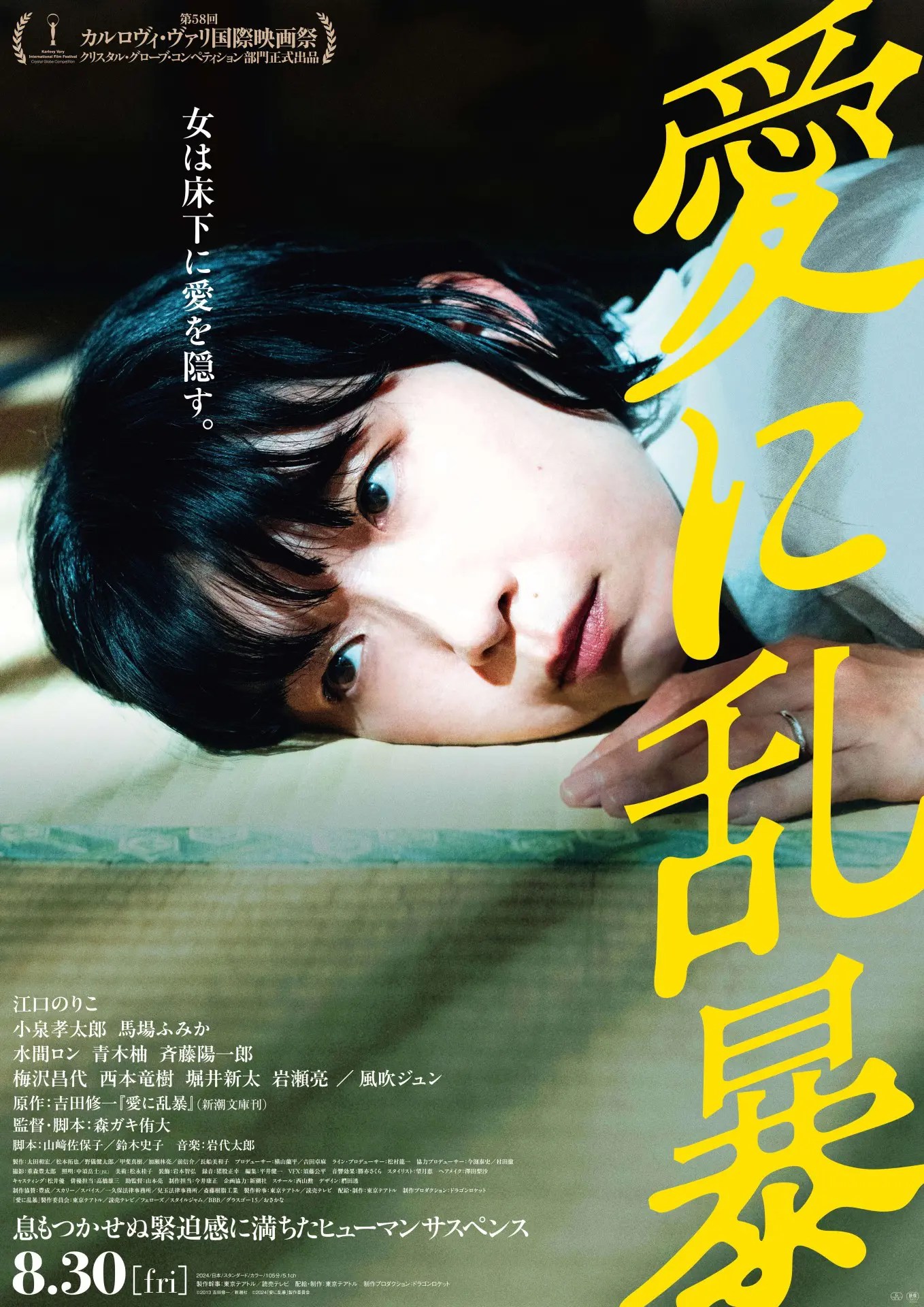
Rude to Love (愛に乱暴, Yukihiro Morigaki, 2024)

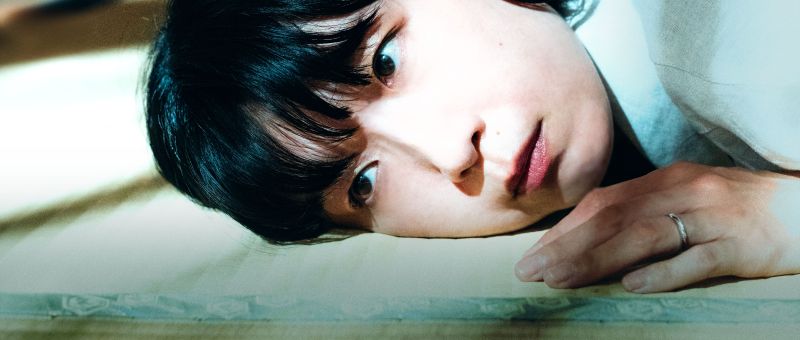
Momoko (Noriko Eguchi) can’t find her cat, Pi-chan. It hasn’t been home for days, and now there’s a stray prowling around near its water bowl. Her mother-in-law, Teruko (Jun Fubuki), can’t abide strays. They come into people’s homes and mess up their gardens. She shoos them away, making it clear they aren’t welcome here. It seems like Momoko’s not all that welcome either, and though her relationship with Teruko is civil enough, it’s clear Teruko has no great love for her and no desire to be any more friendly than she has to be to keep the familial peace.

In many ways, it’s Momoko herself that’s a stray cat and in trying to find Pi-chan she’s trying to reclaim her space within the domestic environment in which she fears she is imminently to be replaced, convinced that her husband, Mamoru (Kotaro Koizumi), is having an affair. At the core of Yukihiro Morigaki’s Rude to Love (愛に乱暴, Ai ni Ranbo) is a cry of despair from a middle-aged woman left with nowhere to turn. Someone in their quiet, residential district has been setting fire to the bins and it’s difficult to not think that the culprit is someone much like Momoko pushed to breaking point and desperate for some kind of release. For Momoko’s part, taking out Teruko’s rubbish has become a daily ritual and one of her key tasks as a dutiful daughter-in-law while she also goes out of her way to keep the place tidy, sweeping up the stray cigarette butts and tin cans that fall from other people’s loosely tied bags. But in other ways, we can see she wants things to change. She repeatedly approaches Mamoru with catalogues to talk about their plans for radically renovating their home, including the removal of a non-load-bearing pillar in the living room, but he generally ignores her.

In fact, Mamoru pays little attention to her at all and is frequently away on “business trips”. Momoko has a sideline in teaching other housewives how to make soap, but left her corporate job eight years previously when she married Mamoru. She tries approaching her old boss to expand the soap-making business and he suggests that she return to the office instead but almost certainly doesn’t really mean it and totally ignores her business proposal. Momoko knows that after so long out of the work force and as a middle-aged woman getting another corporate job is unlikely and the soap classes don’t pay enough to live on. If Mamoru leaves her, she’ll be left flat with nothing to fall back on. This is a key element of Mamoru’s betrayal and one of the reasons that Momoko holds fast to this domestic space to the point she would degrade herself by accepting Mamoru’s affair and begging him not to divorce her. 

Yet in other ways Momoko feels uneasy within it because she and Mamoru had no children. She looks on at other women with their babies and visits a doctor who tells her that her increasingly painful menstrual cramps are a symptom of ageing that she may have been able to ameliorate by giving birth to a child, but also that she is likely heading into the menopause so this maternal milestone is one that may already have passed her by. She can’t escape the feeling that she’s failed to make a success of her womanhood and channels all of her ambitions and desires into the remodelling project that her husband remains entirely uninterested in because he’s already decided to vacate this space. In the depths of her rage, Momoko finally takes a chainsaw to the foundations of her home in the hope of “freeing Pi-chan,” and ends up lying in a grave-like pit in the middle of her living room much like the deluded patriarch of The Crazy Family

The only person who seems to appreciate her efforts is the Chinese student, Li (Long Mizuma), who works at the local garden centre where he is treated poorly by some of the other customers. Mamoru never thanked her for anything, but Li expresses gratitude for her always keeping the rubbish drop tidy. Teruko resents her for something that is really a kind of misunderstanding, but has on some level some sympathy for her plight as a housewife. She idly remarks that she wishes she’d been widowed sooner, which sounds like a terrible thing to say, but also reflects the sense of doom a woman feels in her increasing age that a man does not. Men are never too old to start over but for a woman there are certain things for which is just “too late”, just as it was “too late” for Teruko to fulfil herself after her husband died. She tells Momoko that she still young enough to start over, but Momoko knows that in many ways she’s not. Still, at least the domestic space is hers to do with as she pleases no longer under the watchful eyes of her next-door neighbour and mother-in-law, stray cat no more but master of her own domain.


Rude to Love screens as part of this year’s Japan Foundation Touring Film Programme.

Trailer (no subtitles)
Based on the original novel Shuichi Yoshida “Rude to Love” published by Shinchosha

Images: ©2013 Shuichi Yoshida/Shinchosha ©2024 “Rude to Love” Film Production Committee

Legend of the Cat Monster (麗猫伝説, Nobuhiko Obayashi, 1983)

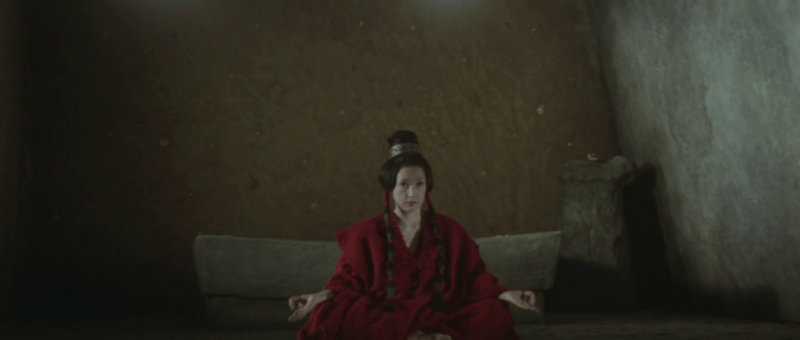
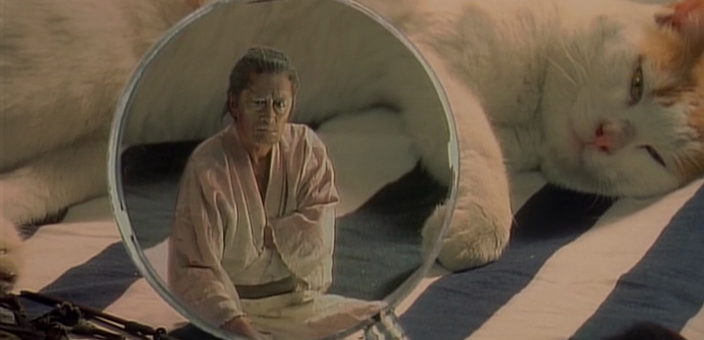
Produced as a special marking the 100th episode of the Tuesday Night Suspense Theatre TV drama series, Nobuhiko Obayashi’s Legend of the Cat Monster (麗猫伝説, Reibyo densetsu) is preceded by a title card reading “Elegy for a Faraway Film”. Scripted by Chiho Katsura, the film is indeed in its way a lament for dying world albeit one which owes a heavy debt to Billy Wilder’s Sunset Boulevard with a little Fedora thrown in. Repurposing the classic ghost cat film it casts cinema itself as dangerous illusion, a vampiric compulsion that drowns all who encounter it in irresolvable longing. 

This sense of irrecoverable nostalgia is palpable from the opening sequence which, aside from the melancholy voiceover, introduces us to the world of Setouchi Cinema apparently a moribund studio complex once dubbed the Hollywood of Japan. The new arrival, Ryohei (Akira Emoto), is dressed in noticeably anachronistic fashion as if he were a 1930s newsboy rather than a young man living in the Japan of the early 1980s. His girlfriend, Ryoko (Jun Fubuki), who works as a stage hand dresses in a similarly old-fashioned style and in fact carries an oversize watch that was a heirloom from her late father, an unsuccessful film director. Ryoko remarks that she’s been hoping someone would come and rescue her from this half-dead island but she doubts Ryohei will be the one to do it because he has also come here in search of a dream. 

That dream is, however, already dead at least according to some. The film director working at the studio is berated by a woman of around the same age working as a manager for an idol star for still getting an allowance from his mother at 60 because he has failed to make it as a film director at least in financial terms. There is a poignant, largely unexplored subplot between that suggests the inability to reconcile the dream of cinema with the economic “reality” has kept them apart all these years and that their dream of love may now be over too. 

It seems that the reclusive actress at the film’s centre, Akiko (Wakaba Irie), is also living on a frustrated dream of love withdrawing from the world around her believing that her lover will someday return from “Hollywood” which seems to be another word for paradise or perhaps the world beyond on the other side of the silver screen. To her, film is but a dream with in a dream. A window or screen is a portal to the burdens of the heart, memories of days gone by, and the illusions we once saw that cannot be seen again.  She herself is trapped within her own dream of love, but it is not so much a dream of her that bewitches Ryohei but the impossibility of cinema.

When passing photographer, Tachihara (Toru Minegishi), who lost his own wife to the unobtainable magic of the movies, snaps a picture of Akiko at her window holding a cat and looking exactly as she did the day she abruptly walked out on an incomplete film, it spurs a cynical producer to get the idea of convincing her to make a comeback and in a ghost cat movie, no less. Obayashi’s casting coup is getting mother and daughter Takako and Wakaba Irie to play aged and youthful versions of the famous actress, Takako herself having been a huge star of the 1930s performing most notably for Kenji Mizoguchi in the The Water Magician. There is an undeniable poignancy in her reflection that is only her aging body which is dying, as if she were merely becoming an embodiment of her image migrating to silver screen which exists between this world and next. It’s this screen that is later ruptured by Ryoko as she makes her escape after failing to save Ryohei from the curse of cinema. 

As Akiko laments, he’s writing his script more for himself than for her and it’s the quest for art which has begun to drain and make him mad. When he, pale and zombie-like, attempts to proffer his scripts it appears to be nothing more than his own name written over and over again. Like the Max-esque butler Mizumori (Akira Oizumi) says, film is an eternal dream which by its definition can never realised and exists only a state of longing somewhere beyond the veil. Drawing inspiration from Nobuo Nakagawa in particular and harnessing the sense of gothic dread found in Sunset Boulevard, Obayashi captures the eternal nightmares of artistic creation with the maddening obsessions of unrequited love and the image of the ideal which exists eternally out of reach somewhere on the other side of the screen.


The Asadas! (浅田家!, Ryota Nakano, 2020)

There’s a kind of irony at the centre of Ryota Nakano’s The Asadas! (浅田家!,Asada-ke!) in that its photographer hero makes a name for himself photographing his family yet at times neglects them or appears curiously insensitive, perhaps even selfish in the pursuit of his dreams. Inspired by the life of photographer Masashi Asada, the film is at once a celebration of the family and an advocation for the tangibility of a photograph as a repository of memory that can bring comfort even in the absence of its subject.

The first part of the film is narrated from the perspective of Masashi’s (Kazunari Ninomiya) much more conventional older brother Yukihiro (Satoshi Tsumabuki) who is generally exasperated by and a little resentful of the family’s indulgence of Masashi, a seeming free spirit who acts on impulse and gives little thought to the consequences of his actions. People frequently describe both Masashi and his father Akira (Mitsuru Hirata) as “not normal,” and there is something unconventional in their family setup with Akira a househusband in a small town in the 1980s while his wife Junko (Jun Fubuki) supports the family with her career as a nurse. It’s Akira who first gives Masashi a camera and his dream of becoming a photographer which he eventually achieves through taking amusing pictures of his family in various scenes casting them as firemen, racing drivers, or even gangsters. 

Masashi attempts to get the photos published as a book, but is quickly dismissed and told that no one wants to buy his personal family photo album. Though the publisher may have a point that in general people value photos of their own family but not those of others, the family photo itself is treated as a triviality as if it had no real worth. The same could be said of Masashi’s work, that some do not take it seriously because the subject is his own family. Yet Masashi finds new value in it in his ability to capture the essence of a moment in family life through a staged photograph such as that he designs for the family of a little boy who is dying of a brain tumour.

In the back of his book, eventually published by an eccentric woman who runs a small press and decides to take a loss because she found the photos so funny, Masashi pledges to travel anywhere to take similar photos for other families which of course means he is often separated from his own whom he then rarely photographs much to his father’s disappointment. After leaving for university, he had barely contacted them for two years while after travelling to the zone of the 2011 earthquake and tsunami he abruptly drops out of contact with his long suffering girlfriend Wakana (Haru Kuroki) after becoming immersed in the task of cleaning up the orphaned photos found among the wreckage. 

Of course, there are those who object to his work thinking that there are more important things to do while so many people are still missing, but as he discovers recovering the photos gives people a sense of comfort and healing as if they were getting back a little bit of the past that had been taken from them and most particularly if the people in the photographs are no longer here. A little girl who’s lost her father is alarmed and resentful that she can find no photos of him, realising that he was rarely in the ones they took as a family and wondering if that meant he didn’t really love them hinting at an ironic sense of parental absence in that parents often take the photos of their children so do not appear themselves but still leave their imprint in a sense of absence in which every photograph also contains the invisible presence of the photographer.

And then sometimes the reverse is true. A grandmother comes looking for pictures of her grandchildren, but ironically finds pictures only of herself. The triviality with which the family photo was regarded seems almost offensive for something that can offer such comfort and warmth in a time of profound grief as a tangible link to a past that will never return. Masashi makes his family’s unrealised dreams come true through his photos, bringing them joy if also a little anxiety in a creating a perfect record of their unconventional family while Nakano does something similar capturing of the essence of a happy family life filled with equal parts laughter and tears.


The Asadas! screens Feb. 24 as part of Family Portrait: Japanese Family in Flux

Original trailer (Traditional Chinese / English subtitles)

Yoko (658km、陽子の旅, Kazuyoshi Kumakiri, 2023)

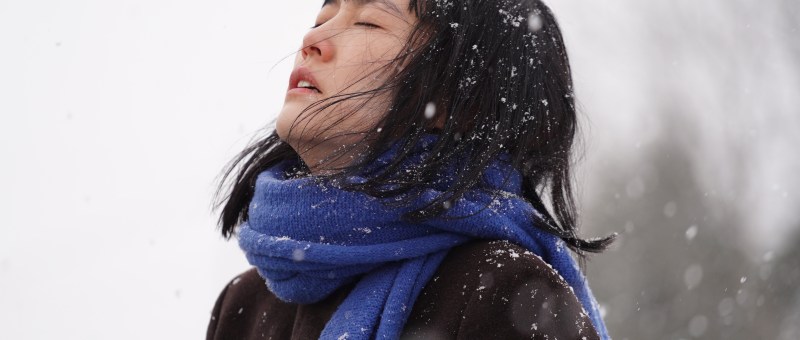
Sometimes home is the hardest place to go. At least that’s how it is for the eponymous Yoko (658km、陽子の旅, 658km, Yoko no Tabi) in Kazuyoshi Kumakiri’s emotional road movie in which a defeated middle-aged woman is jolted out of her self-imposed inertia on hearing of the sudden death of the father she had not seen in over 20 years. As much about a moment of mid-life reevaluation as one woman’s gradual return to the world through a process of self-acceptance, the film displays a boundless empathy not to mention a sense of warmth out of keeping with a snowbound winter in northern Japan. 

At 42, Yoko (Rinko Kikuchi) lives alone in a one room apartment that she seemingly never leaves. Ironically enough, she works as a customer service assistant operating a remote chat box in which she encourages the customer to try turning it off and on again but otherwise offers little real support. When she accidentally breaks her phone, he first thought is to try contacting the online consumer helpline only to realise the irony of her situation and think better of it. In a moment of cosmic coincidence she receives a visit from her cousin, Shigeru (Pistol Takehara), who explains that her sister Rie has been trying to call but obviously couldn’t get through because of the broken phone. Yoko’s father has passed away suddenly. Shigeru and his family are making the long drive from Tokyo to Aomori and they’ve been instructed to bring Yoko with them for the funeral the day after next. 

We can tell that Yoko is no longer used to interacting with other people. Her voice is almost inaudible and her words tumble out in a half-confused jumble. Shigeru seems sympathetic and we can interpret that she’s been this way a long time, if not all of her life. He asks her if she has clothes for the funeral and is unsurprised when she gives no answer, assuring her they can sort it out when they get there while trying to cajole her downstairs and into the car where his wife and kids are waiting. The kids are, predictably, incredibly noisy and a little insensitive while the mother tries to get some sleep and Shigeru sings a folksong that was a favourite of her father’s. His spectre (Joe Odagiri), not so much a ghost as a manifestation of her memory silently, haunts her throughout the journey reminding of her of her unresolved shame and the reasons she had avoided contact with him for the last 20 years. 

These moments are full of painful melancholy but also an underlying sense of dread as if Yoko were being stalked by her own self-loathing projected onto the figure of father. After becoming separated from Shigeru at a service station and assuming she’s been abandoned with no phone and only loose change, she decides to hitchhike to Aomori and in effect travels backward meeting echoes of herself as she goes. Her first driver is a woman of about her own age (Asuka Kurosawa) in Tokyo for a job interview who reflects her buried cynicism, remarking that she resents the people she sees at service stations who to her at least seem far too happy. On learning that Yoko has no children and never married, she chuckles that she couldn’t imagine a life without out them hinting at another life Yoko might have led and perhaps quietly yearns for in her solitude. 

Yoko answers the woman with only grunts and a shake of the head, unable to communicate and in effect too shy to ask for help from passing strangers. Through her journey she gradually recovers the ability to speak, her words eventually pouring out of her in a voluntary monologue to a stranger on whose kindness she has become dependent. But in a girl she meets at the next rest stop she sees only her teenage self, the girl answering that it’s too hard to explain when questioned about why she’s hitchhiking alone in the middle of the night. When she gives her her scarf, it’s like a gift from her younger self, a small moment of embrace and support. Something similar happens as she approaches the area affected by the 2011 tsunami and meets a kindly older couple who represent her parents as she might have wished them to be rather than as they were. While the man gives her some fatherly advice, not unkindly, the woman (Jun Fubuki) gives her a pair of sheepskin boots in another gift of warmth that further proves to her that the world is full of kindness even if not all of the people who gave her rides were nice.

There maybe something in the fact that Yoko has to travel through the disaster zone in order to emerge from it, journeying towards the site of her trauma and beginning to overcome it as she comes to accept her father’s death and that is simply too late for many things though crucially not for all. What she comes to realise is, as her first driver told her, everyone has their reasons and she wasn’t the only one carrying a heavy burden. She only made it as far as she did because of the kindness of strangers and those, like Shigeru, who are willing to wait for her to come in from the cold. Rinko Kikuchi’s extraordinarily nuanced performance along with the snowbound vistas and melancholy score conjure a poignant atmosphere but one oddly buoyed with warmth in which the world can be a kind place or least as long as we can be kind to ourselves. 


Yoko screens Feb. 22 as part of Family Portrait: Japanese Family in Flux

Original trailer (no subtitles)

The Boy and the Heron (君たちはどう生きるか, Hayao Miyazaki, 2023)

Sales of Genzaburo Yoshino’s 1937 novel How Do You Live? (君たちはどう生きるか, Kimitachi wa Do Ikiru ka? went through the roof when it was announced that the no longer retired Hayao Miyazaki would be directing a new film with the same title. Predictably, Miyazaki’s film turned out not to be an adaptation at all, or at least not a literal sense, but was intensely interested in the question not so much how do you live but how will you? Will you allow the past to make you bitter and live in a world of pain and resentment, or will you choose to live in a world of peace and beauty free of human malice?

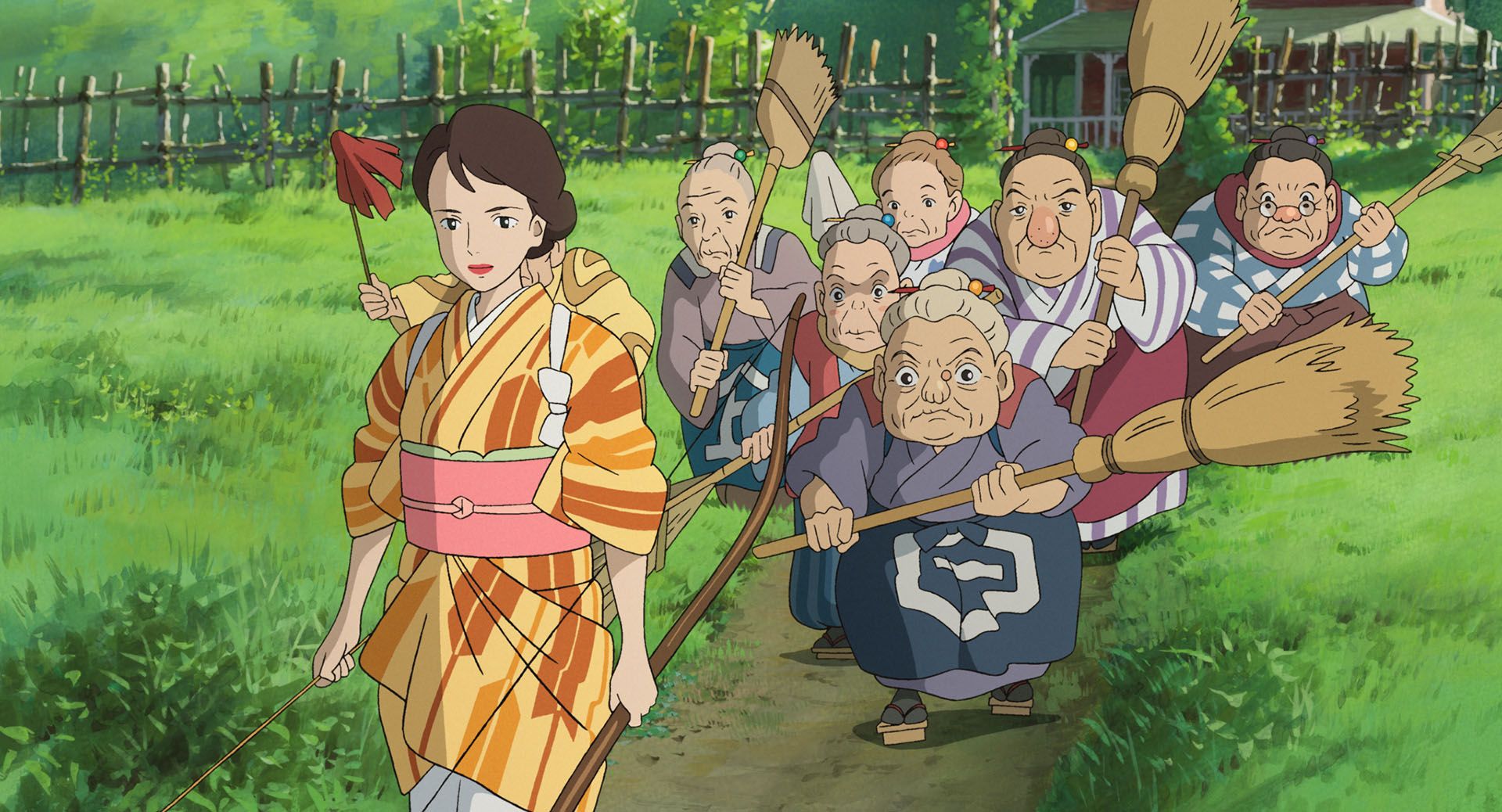
These are of course the questions faced by a post-war generation, the children of Miyazaki’s own era who came of age in a time of fear and suffering. Mahito (Soma Santoki), the hero, loses his mother in the firebombing of Tokyo. He runs through a world of shadows to save her from the flames but of course, he cannot. A year later everything has changed. His father has remarried, taking his mother’s younger sister Natsuko (Yoshino Kimura) as his new wife. Natsuko is now pregnant which suggests the relationship began some time ago though Mahito knew nothing of it and had no recollection of ever having met Natsuko before being sent to live in her giant mansion in the country more or less untouched by the war. 

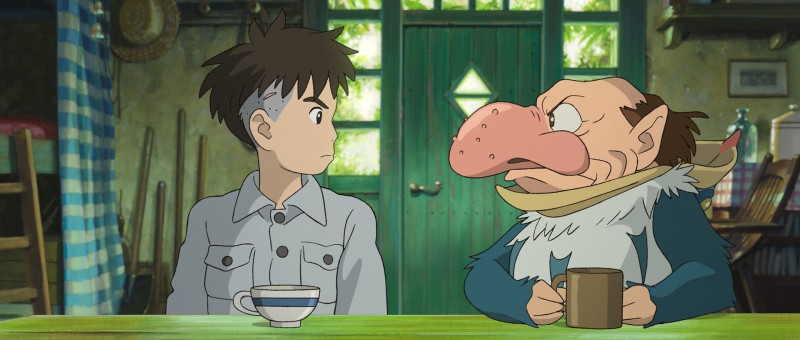
It’s here that Mahito’s own malice rises. He is polite, if sullen, but cannot warm to his new stepmother and resents his father’s relationship with her. Perpetually bothered by a grey heron (Masaki Suda) his first thought is to kill it, crafting a bow and arrow from bamboo and one of the heron’s own feathers. Shunned as the new boy at school he hits himself on the head with a rock while his father, Shoichi (Takuya Kimura), comically vows revenge and lets him stay home. As he points out, there’s not much “education” going on anyway with most of the students pulled away from their studies for “voluntary” labour in service of the war effort in this case agricultural. 

Shoichi has moved to the country to open a factory which it seems produces canopies for fighter planes which is all to say that he is profiting from the business of war, though transgressively referencing the failure in Saipan over breakfast with the mild implication that it might work out alright for him. There is after all a grim reason they’ll be in need of large numbers of aircraft parts in the near future. Mahito’s dark impulses are directly linked to those of militarism and the folly of war. When he finally enters the tower of madness apparently constructed by a great-uncle who went insane through reading too many books, he discovers that his enemies are an ever expanding clan of fascistic, man-eating parakeets led by a Mussolini-like despotic leader attempting to manipulate the Master of the tower. 

Inside the tower is a land out of time, a place for those already dead or in essence an eternal past. It’s here that Mahito is presented with a choice, how will he live? Will he choose malice and destruction, or will he choose to leave and build a new world of beauty and peace above? In many ways, the important point is that the choice is his as it is ours, that we are free to decide and that our choices create the world in which we live. Through his adventures in the tower, Mahito begins to come to terms with his situation and resolves to accept Natsuko as a mother and make friends of those he once considered enemies. When the tower itself crumbles, it takes with it the last vestiges of authoritarianism and tyranny.

Prompting his epiphany, Mahito discovers a copy of How Do You Live? in his room, a present from his late mother inscribed to the grown-up Mahito. He is surrounded by the world’s ugliness, forced into a surprisingly graphic fish gutting session that leaves him wiping away blood, recalling his profusely bleeding head injury and the scar it will forever mark him with. Pelicans imprisoned in the other world meanwhile tell him that they have no choice but to behave as they do for the Master of the Tower neglected to put enough fish in the rivers intending them to destroy rather nurture new life while their young too learn all the wrong lessons. Yet there is beauty and strangeness here too, along with kindness and humanity. Boundlessly inventive, Miyazaki couples surrealist visions of murderous birds and the hellish scenes of a city on fire with Mahito the only figure visible in his pale blue school uniform darting through the soot and the shadows. A vivid symphony of life, the film may in its way be about grief and the pain of moving on but finally discovers a kind of serenity in an accommodation with the present and the eternally unfinished question of how you yourself will live. 


The Boy and the Heron screened as part of this year’s BFI London Film Festival.

The Phoenix (火の鳥, Kon Ichikawa, 1978)

The people of early Japan contemplate different visions of immortality in Kon Ichikawa’s sprawling adaptation of the first chapter in Osamu Tezuka’s manga series, The Phoenix (火の鳥, Hi no Tori). Featuring a mix of animation and live action, the film takes place in an ancient, pre-modern Japan in which just about everyone chases the mysterious fire bird in belief that drinking its blood will confer eternal life. They each want it for different reasons, some more to stop someone else getting it than for themselves but all discover that there are other ways of living on than the strictly literal. 

Broadly speaking the film takes place during the era of possibly mythical sorceress queen Himiko (Mieko Takamine) who rules over the nation known as Yamatai which is the name given to a kingdom in Japan in ancient Chinese sources. Himiko wants the phoenix because she fears that her power is founded on a youth and beauty which has begun to fade while the people are beginning to lose faith in her magic, not least because her rule is oppressive and authoritarian. She also fears that should the Chinese emperor drink the phoenix blood first, they will forever be under his yoke yet the seal that confers her rule was in fact given by him so perhaps they are already. Her brother, Susano (Toru Emori) whom she also fears may usurp her, enlists famed hunter Yumihiko (Masao Kusakari) from the state of Matsuro to help them capture the phoenix seeing as the two nations have some kind of treaty. Yumihiko says he doesn’t really care about that, but ends up helping anyway.

In any case, Matsuro is soon overrun in a surprise attack by warlord Jingi (Tatsuya Nakadai) from Takamagahara who is set on colonisation, which is in its way another bid for “immortality” if culturally rather than literally. After all, he claims “I will implant our civilisation in these lands” before explaining that “not even the greatest kings live forever” but history will. Meanwhile, Yamatai doctor Guzuri (Ryuzo Hayashi) is washed up on the shores of remote kingdom Kumaso where Uraji (Masaya Oki) is hunting the phoenix in the hope of saving his seriously ill wife Hinaku (Reiko Ohara). Uraji is soon burnt to a crisp by the Phoenix’s light, but Guzuri is able to save Hinaku using “modern” medicine, that is by applying “blue mould” which as the onscreen text explains contains penicillin. Perhaps feeding someone mould doesn’t sound much more scientific than the bizarre folk medicine proposed by the witchdoctor which involves rubbing the severed heads of cats and ravens together and putting fish bones on the patient’s head while burning their buttocks, but it works which is not exactly a means of “immortality” but does promise the ability of temporarily overcoming death without the Pheonix’s help. 

But medicine can’t help you with an invasion, and when the Yamatai suddenly turn up and raze the village to get better access to the phoenix after realising it lives in a nearby volcano only Hinaku and her brother Nagi (Toshinori Omi) survive. Hinaku reluctantly remains with Guzuri and vows to rebuild her kingdom through childbirth vowing that she will enable the survival of Kumaso by passing her culture on through successive generations. Uzume (Kaoru Yumi), a dancer from Matsuro, later says something similar to Jingi in reminding him that “women have their own weapons” and he will “never be able to destroy life” as an abstract concept. There might be something a little uncomfortable in the implication that the phoenix is an allegory for childbirth in suggesting that one body is born in the ashes of another, but it is in the end the continuity of a lifecycle which wins out as the natural order of things. In the film’s concluding moments, the son of Hinaku and Guzuri in a sense experiences a kind of rebirth as, guided by the phoenix, he climbs out of the cave in which he has lived all his life and gazes at the vast expanses of a new world all around him. 

Ichikawa originally trained as an animator and includes several animated sequences throughout the film from cartoonish special effects when an elderly courtier bangs his head to a trio of foxes dancing to pink lady. His visual design is also heavily influenced by Tezuka’s manga with the young boy Nagi in particular striking Tezuka-esque poses and otherwise resembling Astroboy who does in fact make a surprise appearance in a brief animated sequence in which Nagi is kicked by a horse. Similarly, the conflicted general Saruta (Tomisaburo Wakayama) later gains a ridiculous Tezuka-style nose after being locked in a room filled with wasps, and Ichikawa’s vistas sometime echo the centrefold of a manga with the heroes reduced to tiny figures dwarfed by the majesty of the landscape. Even so, a rain-soaked battle pays ironic homage to Seven Samurai, while Ichikawa otherwise keeps violence to a minimum. The heads are chopped off horses and fall like cushions, entirely bloodlessly, but there is also a scene of implied attempted rape which may be out of keeping with the otherwise family-friendly approach. Despite the sense of defeat which may colour some of the closing scenes, the film ends on a note of optimistic wonder in a new journey for humanity emerging from scenes of desolation towards a bright new world. 


Samurai Kids (水の旅人-侍KIDS-, Nobuhiko Obayashi, 1993)

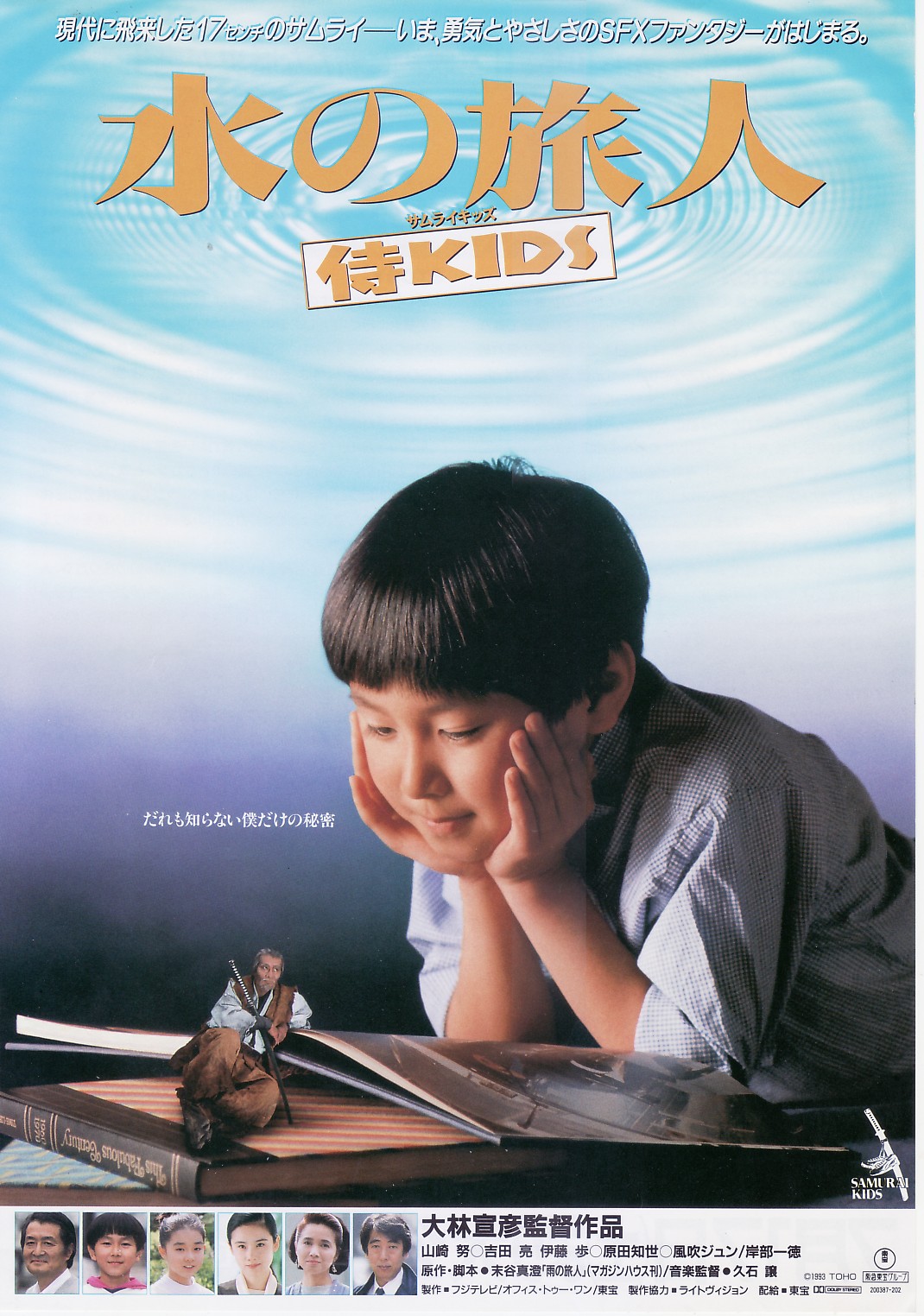
“I’ve always believed that dreams and fantasies have infinite power” an eccentric teacher explains though it might as well be a mission statement for the films of Nobuhiko Obayashi. 1993’s family adventure movie Samurai Kids (水の旅人-侍KIDS-, Mizu no Tabibito: Samurai Kids) draws inspiration from the classic Japanese folktale Issun Boshi about a pint sized warrior who floats off to the city in a bowl, but is at heart a gentle coming-of-age tale as little boy grows in self-confidence and vows to protect Japan’s beautiful natural environment from human mismanagement. 

As his mother (Jun Fubuki) describes him, Satoru (Ryou Yoshida) is a little different and slow to make friends. The confusion he feels is reflected in the persistent fast cutting that adds a note of tension to the otherwise pleasant family home. Like many small boys he is obsessed with collecting mini treasures for his collection along with frogs and insects which is how he comes across a mysterious creature knocked off a log floating in the river by a flying baseball from the game his sister Chizuko (Ayumi Ito) is playing across the way. To his surprise, the bundle of rags Satoru picks up turns out to be a tiny old man in samurai clothes complete with sword who gives his name as Suminoe no Sukunahiko. Sukunahiko (Tsutomu Yamazaki) as he explains had been on his way to the sea where he plans to “evaporate”. The river only flows in one direction after all and you can’t turn back time, everyone dies eventually. 

Having lost his grandfather a couple of years previously (a photo cameo from Ishiro Honda of Godzilla fame), loss is something Satoru hasn’t quite processed though he understands that Sukunahiko has his own path to follow even if he’ll miss him when he’s gone. Nevertheless, he feels a responsibility to look after him so he can recover sufficiently to make his journey to the sea. Through his strange friendship with the tiny old man, Satoru begins to learn more of and draw closer to the natural world. When Sukunahiko’s kimono is pinched by a cheeky crow for some reason continually hanging round Satoru’s home, Sukunahiko is forced to fight him and ends up cutting off his beak but later carves the bird a new prosthetic replacement because no to do so would have been “impolite”. 

Meanwhile a visit to his father’s hometown brings home the realities of contemporary Japan in learning that the area is soon to be sunk as a giant reservoir to prevent the flooding of other nearby villages. On a school trip, Satoru is quick to take issue with some of his classmates who throw their rubbish out of the bus windows as they pass a dam, reminding them they’re being disrespectful to the town that once existed beneath the water. The climax occurs when the children are camping further up the mountain near what Satoru assumes must be Sukunahiko’s “hometown” at the source of the river. It just so happens that the trip coincides with a fading local festival dedicated to the river god which might account for why it’s raining so much. “It’s celebratory rain” an old man explains, “but when people try to control the water it causes problems like this” implying that the water is “rebelling” against humanity’s attempts to channel it. When he and his sister’s frenemy Miyuki are trapped by rockfall, Satoru has to learn to trust the healing properties of water so that he can repay her kindness in protecting him before eventually helping Sukunahiko return to source in the company of his eccentric yokai-obsessed teacher (Tomoyo Harada) and newly sympathetic sister. 

Adapted from a story by Masumi Suetani who also penned the screenplay, Samurai Kids is perfectly suited to Obayashi’s key concerns lamenting that the adults often forget the promises to nature they made while young, Satoru calling out that he’ll protect the rivers and waters of Japan with a warrior spirit like Sukunahiko’s while the Jo Hisaishi score is also reminiscent of the similarly themed movies of Studio Ghibli. Chizuko’s parallel dilemma may be less well explored leaving it unclear whether her tomboyishness is born of discontent over her looks or a part of her essential personality struggling for acceptance in a conformist and heavily gendered society but does at least allow her to find common ground with friend/rival Miyuki who is struggling with something similar stressing the importance of friendship and mutual understanding among the children. It may be the case that the special effects have entered the realms of being classic rather than merely dated but hold up surprisingly well almost 30 years later possessed of their own strange charm yet syncing perfectly with the world around them. A quietly magical tale of loyal yet laidback family cats, parental nostalgia for simpler times, and unexpected friendships between solitary boys and ancient water gods, Samurai Kids is a surprisingly poignant children’s adventure with an important message in its fierce love of a disappearing natural beauty. 


Short clip (no dialogue)

Let Me Hear It Barefoot (裸足で鳴らしてみせろ, Riho Kudo, 2021)

“I can touch it if I reach out” one of the heroes of Riho Kudo’s second feature Let Me Hear It Barefoot (裸足で鳴らしてみせろ, Hadashi de Narashite Misero) claims as he narrates a fantasy trip to Iguazu Falls, but his tragedy is that he can not reach out and neither can his friend or really anyone in this suffocating enclave of moribund small-town Japan. As in her debut Orphan’s Blues, Kudo finds her heroes trapped with a space of artificial nostalgia and yearning for escape while in constant dialogue with Wong Kar-Wai’s melancholy romance Happy Together as the two young men process their frustrated desires not only for each other but for an end to the loneliness that defines each of their lives. 

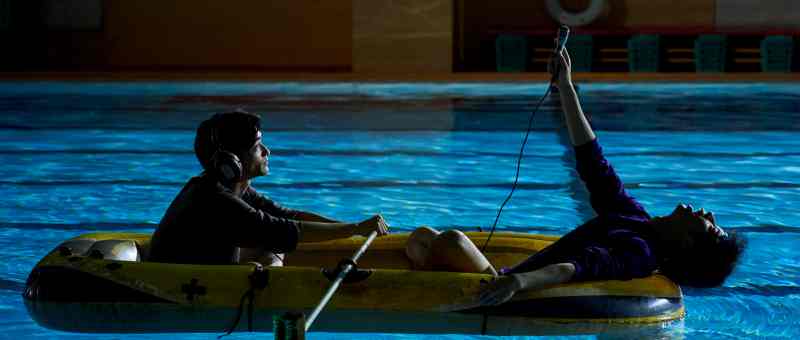
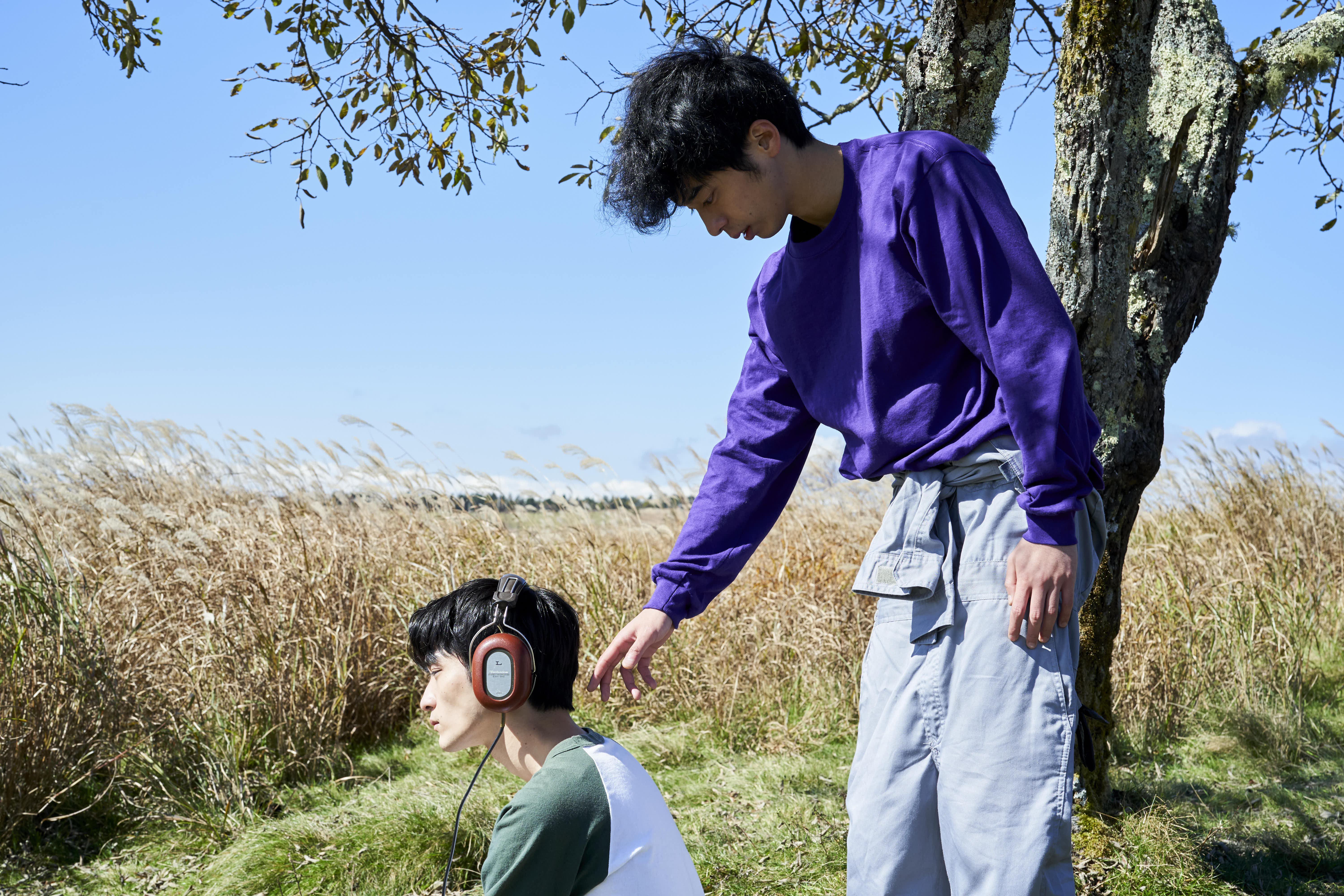
Naomi (Shion Sasaki) is lonely in part because he feels trapped. Having dropped out of university he’s working in his father’s (Masahiro Komoto) recycling depot while his best friend and high school sweetheart Sakuko is about to move to Canada. He first catches sight of the enigmatic Maki (Tamari Suwa) at the local pool after trying to learn to swim to effect change in his life and later bonds with him along with a mysterious old woman, Midori (Jun Fubuki), who has lost her sight and claims to have travelled the world in her youth. What the boys later discover is that Midori had not been entirely honest in that her travels had been vicarious, related to her by a third party long since departed whom she did not want to forget. Following a health scare she tries to give Maki her savings telling him to travel the world in her stead but he soon discovers that she was sadly mistaken about amount she’d put away. Lacking the heart to tell her, Maki decides to use an old tape recorder to fake trips to famous places ironically mirroring her final confession that her friend had never travelled either but made all the stories up for her benefit. 

The tape recorder conceit of course directly recalls Happy Together as does the final destination of the Iguazu Falls while hinting at the unattainable freedom each of the young men yearns for as mediated by their desire to travel the world. “We can go anytime” Maki tries to convince Naomi in his mounting desperation though each of them on some level knows they will never leave nor escape their sense of loneliness. Maki describes himself as feeling as if he is trapped within a magnetic field, surrounded by people but unable to touch them. A man permanently at odds with his environment, Naomi feels the same but their feelings for each other are complex and confusing. In a repeated motif one reaches out to touch the other but suddenly pulls back, their repressed desire expressed only through increasingly intense play fighting until one is finally unable to go on with the subterfuge and unsuccessfully attempts to address their unresolved romantic tension. 

Much of their courtship occurs in Naomi’s converted garage bedsit, a space filled with unwanted relics of the past from countless VHS and discarded books to TVs and radios. The garage is his literal safe space, Naomi explaining to Maki that he feels the urge to collect things out of a sense of security that they are safe here even if they disappear from the outside world. “Memories will stay” Maki reminds him, but that’s not good enough for Naomi who ironically can only trust the things that he can touch. Preoccupied with a sense of loss he is unable to move forward, cannot take hold of himself or his desires wishing to preserve the past at all costs while Maki has learnt to live in the moment able to let go but adrift in the present. 

“We may not even be alive tomorrow” Naomi wails in desperation, feeling as if he’s running out of time while boxed in by his equally lonely, disappointed father as a vision of his future self worn down by small-town life and a persistent sense of futility. The two men are forever divided, literal glass standing between them in the closing scenes in which they can no longer touch even if they wished it. Small-town life is it seems the place dreams go to die as symbolised in Sakuko’s eventual defeated return, Naomi left only with resignation to the life he had rejected in an acceptance of the failure of his unfulfilled desires. “I don’t want to forget” he claims echoing Midori’s explanation for her mysterious tattoo while left only with the ironic words of Maki’s cassette tape in their melancholy echo of the romantic impossibilities of Happy Together, “we need to start over”. 


Let Me Hear It Barefoot streamed as part of this year’s Nippon Connection.

Images: (c)PFF Partners

Arc (Arc アーク, Kei Ishikawa, 2021)

Does something have to have an ending to be meaningful or could eternity be the point? Inspired by Ken Liu’s short story, Kei Ishikawa’s near future tale Arc (Arc アーク) envisages a world without death if perhaps not for all in which bodily immortality has been achieved, but what would that mean for humanity no longer faced with mortal anxiety, how should it reorient itself in the absence of sickness or old age while the possibility of endlessness for the self has removed the urge for immortality through childbirth? These are all of course questions which have no one answer, though what the heroine finally discovers is that in the end it may be the choice itself of when to live or when to die that may lend her life at least its meaning. 

Even so, hers is a particular anxiety bound up with frustrated maternity having abandoned a baby she gave birth to at 17, too afraid of the responsibility to accept it. At 19, Rina (Kyoko Yoshine) is spotted at a club by a mysterious middle-aged woman, Ema (Shinobu Terajima), who runs a revolutionary cosmetics company which has pioneered a new way of preserving the bodies of the dead turning them into uncannily lifelike mannequins with a new process known as plasticisation. To Ema’s mind, true liberation comes from accepting transience, that once life has left it the body is just an object which might be repurposed for her art but then at the same time perhaps she is attempting to hold on to something that should be released, interfering in a natural process and while intending to offer comfort to those bereaved preventing them from letting go or moving on with their lives. Her much younger brother Amane, meanwhile, actively wants to stop time while alive utilising a similar technology to halt the ageing process and overcome the tyranny of death. 

In a strange way, Ema’s desire to restore a body which is no longer alive to ideal condition is also an acknowledgement of death which she believes is not the opposite of life but a necessary part of it. In overcoming the fear of death, she claims, a transcendental beauty will reveal itself. Amane meanwhile seeks to overcome death physically, but as Rina is warned his health revolution may not bring happiness to mankind not least because it exposes a persistent inequality in which eternal youth is available only to those with the means to acquire it, creating a new underclass not only of the poor but those whose bodies are not able to accept the treatment. Amane sees his creation as a dividing line in human history which will necessarily divide humanity into two groups, those who choose to join his revolution and those who do not (though interestingly he does not consider a third group who actively opposite it). Even so he sees it as a choice and accepts the right to reject immortality even going so far as to build a dedicated centre where those who choose to live a “natural” lifespan can do so in dignity and comfort. 

The concept of personal choice appears to be key, Ema too replying that her decision to stick with plasticisation rather than Amane’s treatment is her right though she too eventually hits a wall in the imperfection of her craft and the depths of her grief. She tells Rina to live her life freely encouraging her to live fully in the moment, while she too is quick to remind others that the decisions are theirs to make as regards their life and death. It’s not death nor the fear of it that are the problem, but the inability to choose as Rina finally acknowledges in remarking that the ability to decide its end point gives her the means to carve the arc of her life overcoming death through full existential control having in a sense closed a circle in facing her own sense of maternal failure. Shifting from the warmth and natural beauty of a beach in summer to the dark and brutalist environments of the BodyWerks lab, and from the muted colour of Rina’s youth to the black and white of her youthful old age, Ishikawa’s near future sci-fi-inflected tale suggests it’s not so much death that frightens you but helplessness and as in all things the answer lies in autonomous choice. 


Arc screens in Chicago on April 3 as part of the 14th season of Asian Pop-Up Cinema.

Original trailer (no subtitles)