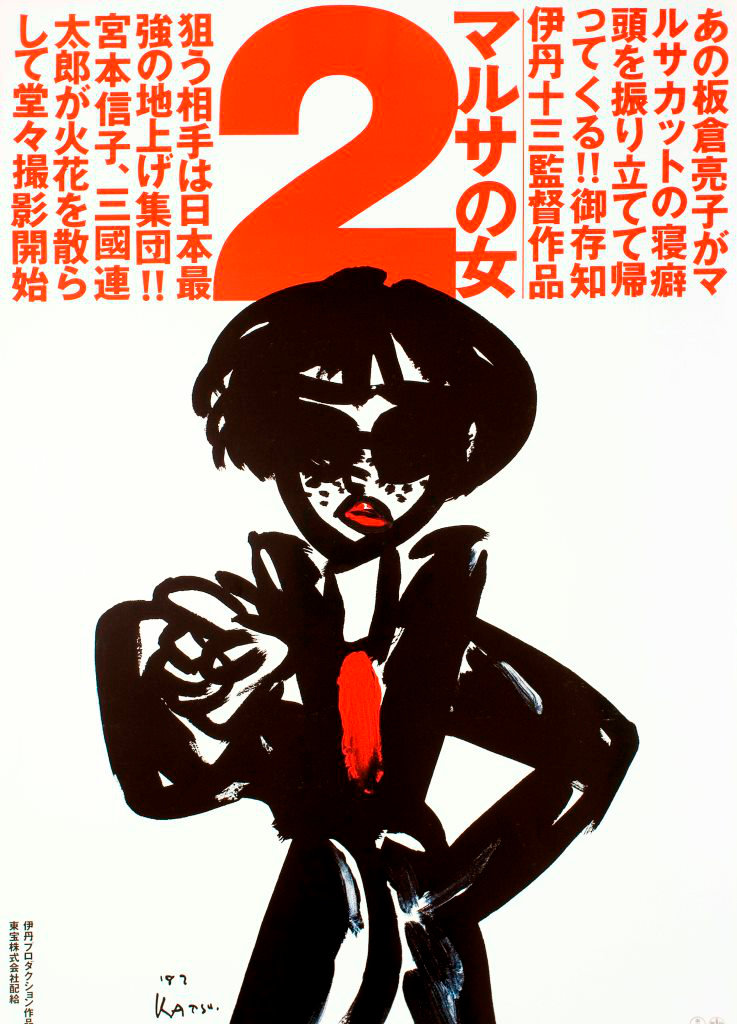
A Taxing Woman’s Return (マルサの女2, Juzo Itami, 1988)

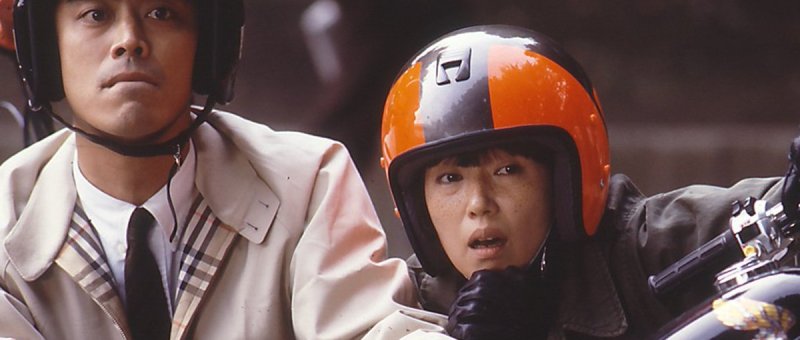
Taxing Woman 2 posterA Taxing Woman introduced us to Ryoko Itakura (Nobuko Miyamoto) – an oddball detective working as an insurance inspector who met her Irene Adler in a tax dodging corporate gangster with a limp. A year later she’s back, still the only woman working with the tax inspectorate and apparently still a dogged pursuer of those who would seek to defraud the Japanese government of its rightful earnings. Ryoko may have been a stickler for the rules who applied the same dog with a bone approach to a mom and pop store chowing down on its own supplies as to a dodgy yakuza led conspiracy, but she also believed in justice – something which stands her in good stead when she rubs up against a dodgy cult which, again, is a yakuza front but adds insult to injury by deliberately manipulating the vulnerable.

The action opens with some kids poking at the dead body of a “landshark” floating in a pond before flashing to a meeting of officials sucking crab meat from the shell and wondering what they’re going to do about this land they need cleared now their heavy is out of the picture. The corrupt politician from the first film, Urushibara (Takeya Nakamura), is apparently still involved in semi-legal land deals but palms the assignment off on a colleague. The big wigs need to empty a dated housing complex on some valuable land so they can build a vanity skyscraper – office space apparently being scarce in mid bubble Tokyo.

To do this they enlist the services of dodgy cult leader Onizawa (Rentaro Mikuni) and his troop of yakuza goons. Most of the tenants have already signed but they have three key holdouts – a diner owner clinging on to the family legacy, a stubborn paparazzo, and an intellectual professor who heads up the housing association. Unlike the yakuza of Taxing Woman, these guys have not reformed – they are the new/old style of lawless thugs who are perfectly prepared to threaten women and children to get their own way. Making it impossible for the tenants to stay through intimidation and noise torture, they stoop to blackmail to seal the deal.

Despite arriving only a year after A Taxing Woman, Taxing Woman’s Return (マルサの女2, Marusa no Onna 2) takes place in a much darker, though more obviously comedic, world. Whereas the earlier film adopted a noticeably ambivalent attitude to the tax inspectors and the enterprising gangsters, the villains of A Taxing Woman’s Return are so heinous and morally bankrupt as to be entirely indefensible even if the inspectorate takes a turn for the bumbling to compensate. The “cult” is, of course, merely a convenient money laundering front and tax dodge for the yakuza – religious organisations are exempt from taxation in the vast majority of cases which may be why the local tax office records hundreds of registered “religious bodies” in its jurisdiction alone. That doesn’t mean it doesn’t have its loyal followers, often vulnerable people looking for spiritual fulfilment but being bled dry by the money hungry cultists while the leader’s wife swans around in sables costing more than the average annual salary. A desperate devotee in need of a loan puts his own teenage daughter up as collateral only to see her raped by Onizawa, eventually becoming pregnant by him at only 16 years of age and thereafter becoming his devoted concubine in a bizarre instance of Stockholm Syndrome.

Yet for all the background darkness of weird cultists and nasty yakuza backed up by corrupt and venial politicians, Itami ups the cartoonish sense of the absurd with our hero Ryoko clambering over rooftops to listen in to the bad guys while her boss throws himself down flights of stairs and has to battle piercing sirens to get into the villains’ secret vault. It is however a dark humour as the opening makes plain with its troupe of little children staring at the strange shape floating in the water – a motif later repeated when a yakuza is gunned down in the street only for another group of children to pour over him as he expires, a single tear rolling down his cheek. The original spongy white body gives way to the businessmen sucking spongy white crab out its shell while insensitively discussing the late land shark, and the yakuza are unafraid to deploy a maggot infested severed hand (thankfully a fake picked up from a friend who makes horror movies) to convince the tenants they mean business.

At the end of A Taxing Woman, the gangster and the inspector reached something of a truce but one which came down, broadly, on the side of right. This time things aren’t quite so simple. The conspiracy is bigger and deeper, stretching all the way into the Diet and about more than just office space in still developing Tokyo. Onizawa, regarding himself as public servant, tries to say he did it all for his country, that if someone didn’t get their hands dirty Tokyo would be eclipsed by Hong Kong or Seoul. A post-war justification for a bubble era problem, but one that takes us straight back to the first film in Onizawa’s second proposition that only through money does he truly feel “immortal”. He may be a liar and a cheat, but he’s only a symptom of rapidly spreading infection, one which Ryoko and her team are powerless to cure, trapped on the wrong side of the fence while the bad guys build monuments to economic hubris, indulging in vanity in an era of bad faith which is about to be brought to a rather abrupt close.


Currently available to stream in the US/UK via FilmStruck.

Original trailer (no subtitles)
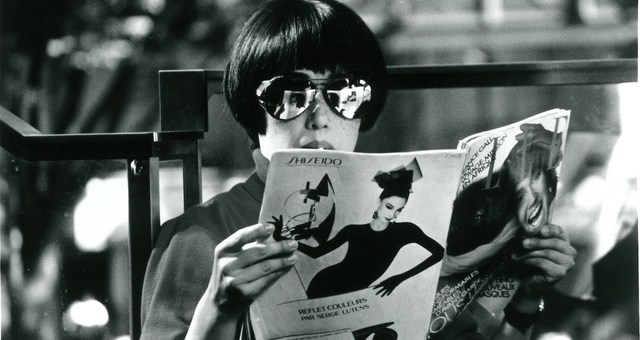
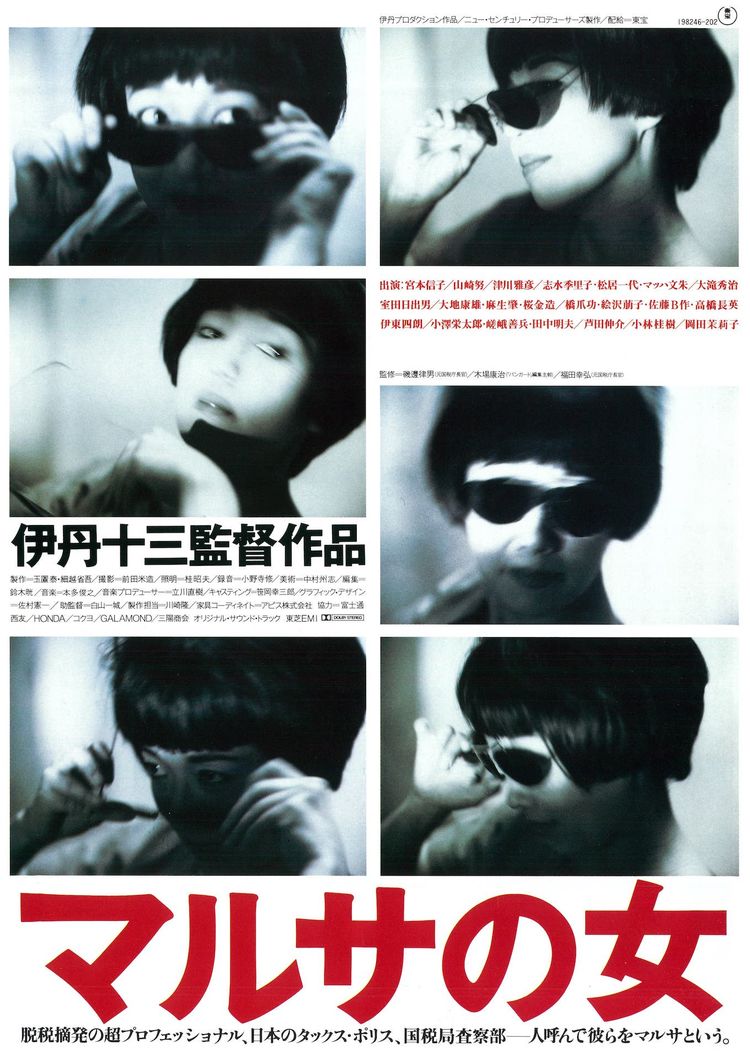
A Taxing Woman (マルサの女, Juzo Itami, 1987)

A Taxing Woman posterIn bubble era Japan where the champagne flows and the neon lights sparkle all night long, even the yakuza are incorporating. Having skewered complicated social mores in The Funeral and then poked fun at his nation’s obsession with food in Tampopo, Juzo Itami turns his attention to the twin concerns of money and collective responsibility in the taxation themed procedural A Taxing Woman (マルサの女, Marusa no Onna). Once again starring the director’s wife Nobuko Miyamoto, A Taxing Woman is an accidental chronicle of its age as Japanese society nears the end of a period of intense social change in which acquisition has divorced mergers, and individualism has replaced the post-war spirit of mutual cooperation.

Ryoko Itakura (Nobuko Miyamoto), a single mother and assistant in the tax office, has a keen eye for scammers. She demonstrates this on a stakeout with a younger female colleague in which she keeps a shrewd eye on the till at her local cafe and comes to the conclusion that they’ve been running a system where they don’t declare all of their cheques. Running her eyes over the accounts of a mom and pop grocery store, she notices some irregularities in the figures and figures out the elderly couple feed themselves from the supplies for the shop but don’t “pay” themselves for their own upkeep. That might seem “perfectly reasonable” to most people, but it’s technically a small form of “embezzlement” and Ryoko doesn’t like figures which don’t add up. Seeing as the couple probably didn’t realise what they were doing was “wrong” she lets them off, this time, as long as they go by the book in the future. A more complicated investigation of a pachinko parlour finds a more concrete form of misappropriation, but Ryoko is fooled by the owner’s sudden collapse into inconsolable grief after being caught out and leaves him in the capable hands of his confused accountant.

Nevertheless, Ryoko may have met her match in sleezy corporate yakuza Hideki Gondo (Tsutomu Yamazaki). Dressing in a series of sharp suits, Gondo walks with a pronounced limp that hints at a more violent past but as his rival from the Nakagawa gang points out, violence is a relic of a bygone era – these days gangsters go to jail for “tax evasion” as means of furthering their “business opportunities” and facilitating ongoing political corruption. Gondo’s business empire is wide ranging but mainly centres on hotels, which is how he arouses Ryoko’s interest. She looks at the numbers, does a few quick calculations, and realises either the business isn’t viable or the correct figures aren’t being reported. Ryoko doesn’t like it when the books don’t balance and so she sets her sights on the seedy Gondo, but quickly discovers she has quite a lot in common with her quarry.

Itami was apparently inspired to make A Taxing Woman after the success of Tampopo shoved him into a higher tax bracket. Given Japanese taxes (at the time) were extremely high, getting around them had become something of a national obsession even if, in contrast to the preceding 30 years or so, there was plenty of money around to begin with. More than the unexpected tendency towards civil disobedience the times seemed to cultivate, Itami homes in on the increasingly absurd desire for senseless acquisition the bubble era was engendering. Thus Gondo who owns a large family home well stocked with symbols of his rising social status, also occupies a bachelor pad where he keeps a mistress which reflects the gaudy excess of the age right down to its random stuffed hyena. Nevertheless when one of the tax clerks asks for some advice as to how to have it all, Gondo replies that that’s easy – to save money, you simply avoid spending it. Gondo lets his glass run over and delights in licking the edges. It’s all about delayed gratification, apparently, and having a secret room full of gold bars to gaze at in order to relieve some of that anxiety for the future.

Gondo, like many of his ilk, has “diversified” – yakuza are no longer thuggish gangsters but incorporated organisations operating “legitimate” businesses through “illegitimate” means. Thus we first find him using a nurse who allows herself to be molested by an elderly, terminally ill client whose identity they will steal to found a company they can quickly dissolve when he dies to shift their assets around and avoid the tax man. Later he pulls another real estate scam by pressing a desperate family but his real focus is the love hotels, whose slightly embarrassing existence ensures that not many come poking around. Ryoko, however, is unlikely to let such a large scam slide and delights as much in closing loopholes as Gondo does in finding them. Noticing a kindred spirit, Gondo quite openly asks his new tax inspector “friend” what she’d think if he married his mistress, gave her all his money, and divorced her – divorce proceeds are after all tax free. Sounds great, she tells him, as long as you trust your wife not to skip town with all the doe.

Ryoko, a modern woman of the bubble era, single and career driven, is a slightly odd figure with her officious approach to her job and unforgiving rigour. Unlike her colleague who dresses in the glamorous and gaudy fashions of the times, Ryoko wears dowdy suits and her mentor boss is always reminding her about her “bed hair”, meanwhile she stays late at the office and offers instructions to her five year old son over the phone as to how to microwave his dinner. Though there is another woman working with her at the tax office, when she’s finally promoted to full tax inspector status she finds herself in a room full of guys who apparently hardly ever go home. On her first job she’s only really brought along because she’s a woman and they want to threaten a mob boss’ mistress with a strip search to find a missing key for a safety deposit box. The mistress, however, tries to throw them off the sent by publicly stripping off and encouraging them to check her “cavity” if they’re so keen to find this key, only for Ryoko to find it under the sink while all the guys are busy being shocked. Ryoko’s methods are occasionally as underhanded as Gondo’s and, like his schemes, built on gaming the system but she’s certainly a force to be reckoned with for those considering defrauding the Japanese government.

Gondo’s schemes excel because they aren’t entirely illegal, only clever ways of manipulating the system, but they’re also a symptom of a large conspiracy which encompasses improprieties right up the chain as banks, corporations, and politicians are all part of the same dark economy managed by a corporatising yakuza. Gondo takes frequent calls from a local representative who often “helps him out”. Later the same representative tries to put pressure on the tax office to back off, but Ryoko’s boss points out that he doesn’t need to because the press are already on the story so he should probably get started on his damage control rather than bothering public servants. Gondo and Ryoko, perhaps as bad as each other, lock horns in a battle wills but discover a strange degree of respect arising between them in having discovered a worthy adversary. There’s something undeniably absurd in Ryoko’s firm determination to catch out struggling businesses and the confused elderly with the same tenacity as taking on a yakuza fronted conspiracy, and there’s something undeniably amusing in Gondo’s attempts to beat the man by playing him at his own game, but the overall winner is Itami who once again succeeds in skewering his nation’s often contradictory social codes with gentle humour and a dispassionate, forgiving eye.


Currently available to stream in the US/UK via FilmStruck.

Original trailer (no subtitles)
Sing a Song of Sex (日本春歌考, Nagisa Oshima, 1967)

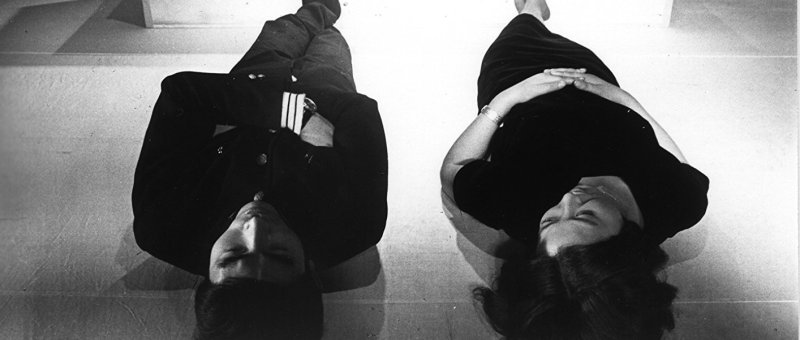
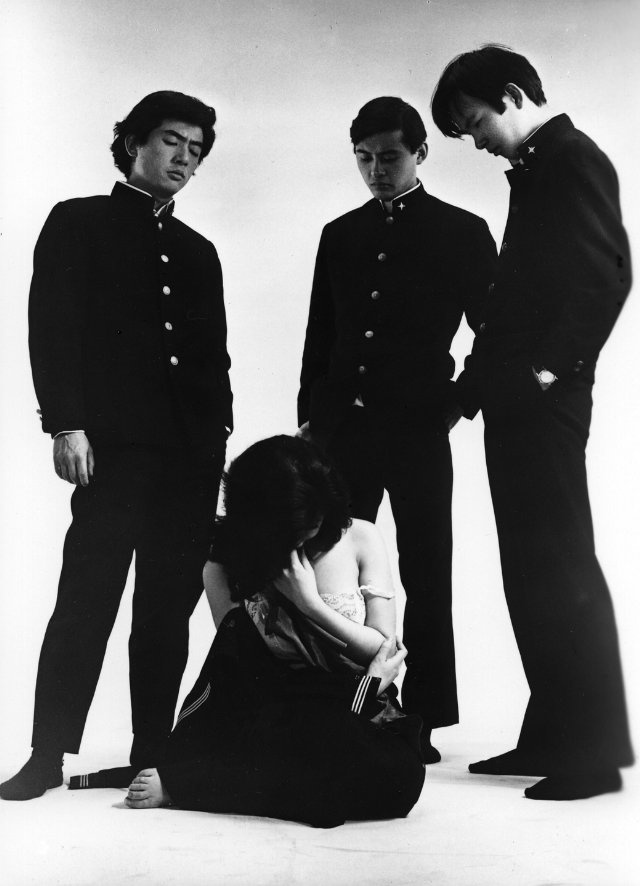
20120910022716257Aimless youth wastes its potency on repressed desires in Oshima’s avant-garde treatise on power dynamics and political fallacies. Sing a Song of Sex (日本春歌考, Nihon shunka-ko), less the bawdy romp the title promises than an irony tinged journey through music as a weapon against oppression, is the first of three films Oshima would make in the late ‘60s examining Japan’s complicated relationship with Korea. Its “heroes” however are about as depoliticised as it’s possible to get – they interrupt protests they don’t understand and obsess over a single pretty girl they fantasise about raping in an elaborate classroom based piece of erotic wish-fulfilment. All that matters to them is their craving for physical satisfaction which knows no morality or greater purpose save satiation, conquest, and implied humiliation.

Japan, spring, 1967. Four boys sit their university entrance exams with (externally at least) less seriousness than might be expected. Huddling together away from the snow they smoke cigarettes and gossip about miss 469 whose name they don’t know but caught their eye in the exam hall. The boys, along with three girls, are nominally under the care of their teacher, Mr. Otake (Juzo Itami), who takes them to a pub to “celebrate” before getting extremely drunk and kicking off on an inappropriate lecture about bawdy folk songs and their lasting legacy as the voice of the poor and the oppressed who have no other way of expressing their needs and desires. Lamenting that the young people of today lack the capacity for real feeling, Otake offers to put the kids up in a local inn, perhaps hoping to provoke some kind of awakening among his teenage charges but the loss of innocence he inspires in them is of a very different nature. Still extremely drunk, Otake falls asleep next to a faulty gas heater and dies of carbon monoxide poisoning.

One of the boys, Nakamura (Ichiro Araki), went to see Otake during the night and saw him keeled over in a room that smelt of gas but did nothing. The girls, wailing and distraught, attempt to make their way home while the boys joke about having murdered their teacher and continue to exchange increasingly lewd and disturbing banter about their female classmates including collective rape fantasies (but only of the pretty one). The “other” girl that they collectively decide they don’t fancy, Kaneda (Hideko Yoshida), is disturbed enough by the boys’ murderous joke that she comes back to make sure it isn’t true, accidentally finding out about their dreamscape rape of no. 469 and pushing Nakamura towards paying a visit to Otake’s girlfriend, whom the boys have also been fantasising about, to apologise to her about his possible contribution to Otake’s death.

While Kaneda and the other three set off to track down 469, Nakamura splits off for Otake’s wake where he finds himself alone among a collection of former student protestors with differing views about Otake’s legacy and relation to the cause. The protestors break into a traditional Japanese leftwing anthem, but Nakamura isn’t having any of it. That’s not the Otake he knew. He resists their politicisation of his mentor’s funeral by loudly singing the bawdy drinking song Otake taught them at the pub. The song becomes something like an anthem for Nakamura and his friends who sing it at every conceivable opportunity, delighting in its inappropriateness and ironic similarity to the acts they frequently discuss but seemingly do not directly engage in. Like the peasants Otake idolised, Nakamura takes up the song as a weapon against his own oppression and the unwilling repression of his physical desires.

The battle becomes one of audience and agency. Nakamura sings his song over the hymn of protest being offered by the defeated left while Kaneda later attempts to counter with a female tale of exploitation, snatching a microphone away from some Americanised hippies singing Woody Guthrie and protesting the Vietnam war while dancing round the stars and stripes. Kaneda eventually gets her moment in the spotlight but she pays a heavy and ironic price for it, partly at the hands of miss 469 who re-enters the boys’ rape fantasy after it is directly revealed to her and she dares them to realise their baser desires. Suddenly back in an empty classroom presided over by Otake’s girlfriend, Miss Tanigawa (Akiko Koyama), and the silent spectre of Kaneda now dressed in a sparkly white hanbok, the boys get an intense lesson in Japanese history and more specifically the origins of the Japanese state in the royal courts of Korea.

The songs of the youthful protestors, some Japanese some co-opted from abroad, have lost their meaning and their fire. Their protest is affected and purposeless, as solipsistic as the boys’ destructive desires. On the one hand, youth embraces the pop culture of rebellion – joining the flower power revolution and adopting the Americanised protests against a foreign war and (perhaps tangentially) their nation’s complicity in it, while age fixes its sights on a recently revived imperial holiday and a rejection of the fascist past (though not a rejection of the imperial past or a recognition of its lingering legacy). Painted in tones of red and white, the rising sun occasionally replaced with the blackened flag of protest, Sing a Song of Sex is a paradoxically nihilistic condemnation of post-war youth who allow their oppression to push them into senseless acts of violence rather towards the noble causes of revolution and social change which might finally set them free.


Original trailer (no subtitles)

Tampopo (タンポポ, Juzo Itami, 1985)

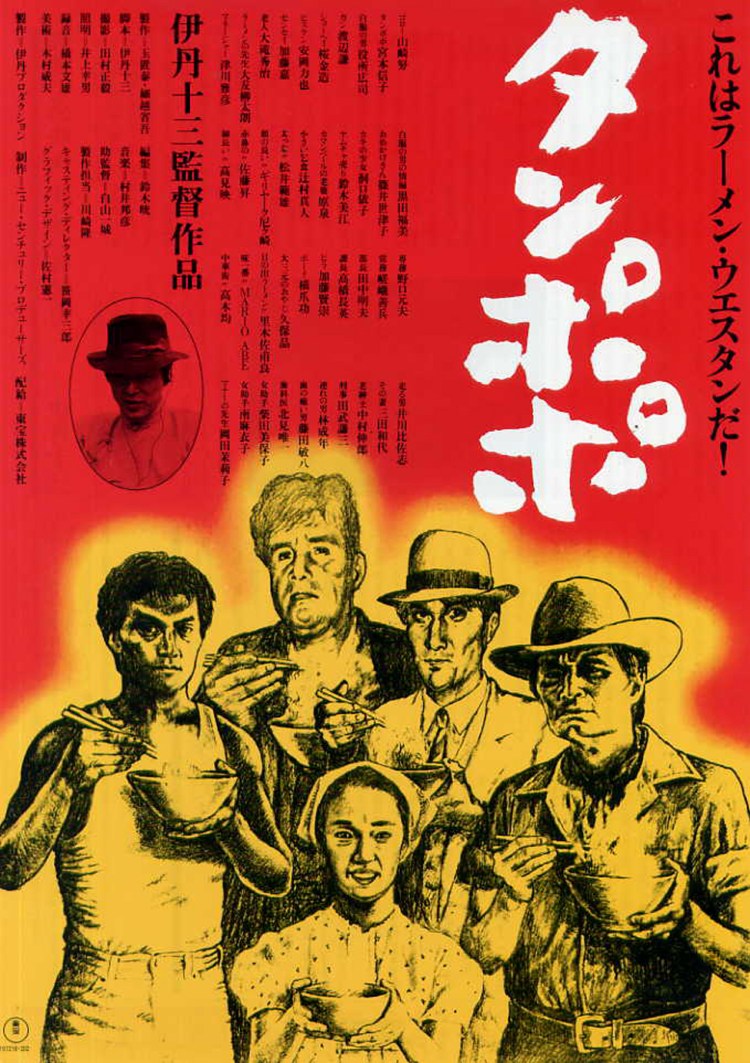
tampopo posterSome people love ramen so much that the idea of a “bad” bowl hardly occurs to them – all ramen is, at least, ramen. Then again, some love ramen so much that it’s almost a religious experience, bound up with ritual and the need to do things properly. A brief vignette at the beginning of Juzo Itami’s Tampopo (タンポポ) introduces us to one such ramen expert who runs through the proper way of enjoying a bowl of noodle soup which involves a lot of talking to your food whilst caressing it gently before finally consuming it with the utmost respect. Ramen is serious business, but for widowed mother Tampopo it’s a case of the watched pot never boiling. Thanks to a cowboy loner and a few other waifs and strays who eventually become friends and allies, Tampopo is about to get some schooling in the quest for the perfect noodle whilst the world goes on around her. Food becomes something used and misused but remains, ultimately, the source of all life and the thing which unites all living things.
Goro (Tsutomu Yamazaki), a middle-aged man with a fancy hat, and his truck mate Gun (Ken Watanabe), younger, tight white jeans and colourful neckerchief, have become ramen experts thanks to their road bound life. Taking a break during a heavy rain storm, the pair run into a little boy being beaten up by three others and, after scaring the assailants off, escort him into the ramen restaurant where he lives with his widowed mother, Tampopo. Goro and Gun get the stranger in town treatment, but decide to sit down and order a bowl each anyway before a getting into a fight with another diner. Despite her skills as a home cook, Tampopo’s ramen is distinctly second-rate which explains why her business isn’t taking off. Goro and Gun spend some time helping her figure out where she’s going wrong leading Tampopo to beg them to stay, or at least come back when they have time, and teach her what it takes to make the perfect bowl.

Essentially a hybrid between a western and a sports movie, Tampopo has its fair share of training montages as the titular heroine tries to improve her stamina by taking intensive runs, carrying heavy pots of water from one place to another, and constantly trying get her cooking time down to three minutes. The lone woman on the “ranch” that is her restaurant, Tampopo may not be contending with boisterous cattle, threatening neighbours, or disapproving townsfolk but she is being mentored to become her own master as much as anything else. Goro is her strong and silent teacher, but, like Shane, he’s a man not meant to be tied down and is essentially teaching her how to survive alone however painful it may be for him to leave.

This is a fairly radical idea in and of itself. Tampopo’s goal is not another marriage and a man to mind the ranch, but the creation of a successful business which will support both herself and her son built on genuine skills and a lot of hard work. Goro, a ramen aficionado, takes charge but ropes in a few other “experts” to help him including a ramen loving former doctor now living on the streets, the private chef of a wealthy man the gang saved when he almost choked on mochi, and the guy Goro fought with in the beginning who also happens to be a childhood friend of Tampopo nursing a lifelong crush on her.  From each of these men, as well as friendly (or not) rivalry with local competitors, Tampopo learns everything she needs to succeed including the confidence in herself to carry it through.

Whilst Tampopo and co. are busy figuring out the zen of ramen, Itami wanders off for a series of strange vignettes examining more general attitudes to food beginning with Koji Yakusho’s white suited, cinephile gangster who vows bloody murder on anyone daring to eat noisy snacks during the movie. The gangster and his moll eventually retreat to a hotel room where they find new and actually quite strange ways of using food to enhance their pleasure but their story leads us to others in the hotel from a young man stuck in a business meeting who shows up his less cultured colleagues with his culinary knowledge and either doesn’t know or doesn’t care that you’re supposed to order the same as your boss lest you be implying his choice of dish is “wrong”, to a group of young women taking a class in the proper way to eat spaghetti. The instructor (played by veteran actress Mariko Okada), goes to great lengths to explain that it’s considered very uncouth to make any kind of noise whilst eating pasta, only for a westerner of undisclosed nationality to loudly slurp his noodles half way across the room.

While these two episodes showcase the ridiculousness of food etiquette, others take a more surreal direction such as in the strange episode of an old lady who likes to sneak into the local supermarket and torment the clerk by squeezing the fruits, cheeses, and pastries while he chases her round the shop. Here appetites are to be indulged, even if they’re strange, rather than suppressed in favour of someone else’s idea of the proper way to behave. Yet that doesn’t mean that food is something throwaway, to be consumed without thought – in fact, it’s the opposite as Goro’s tutelage of Tampopo shows. Skills alone are not enough, achieving the zen of cookery is a matter of touch and sensitivity, of shared efforts and interconnected strife. Like a dandelion blowing in the wind, Tampopo’s ramen shop gives as it receives, generously and without pretension.


Available now in the UK/US courtesy of Criterion Collection!

Original 1985 trailer (English subtitles)

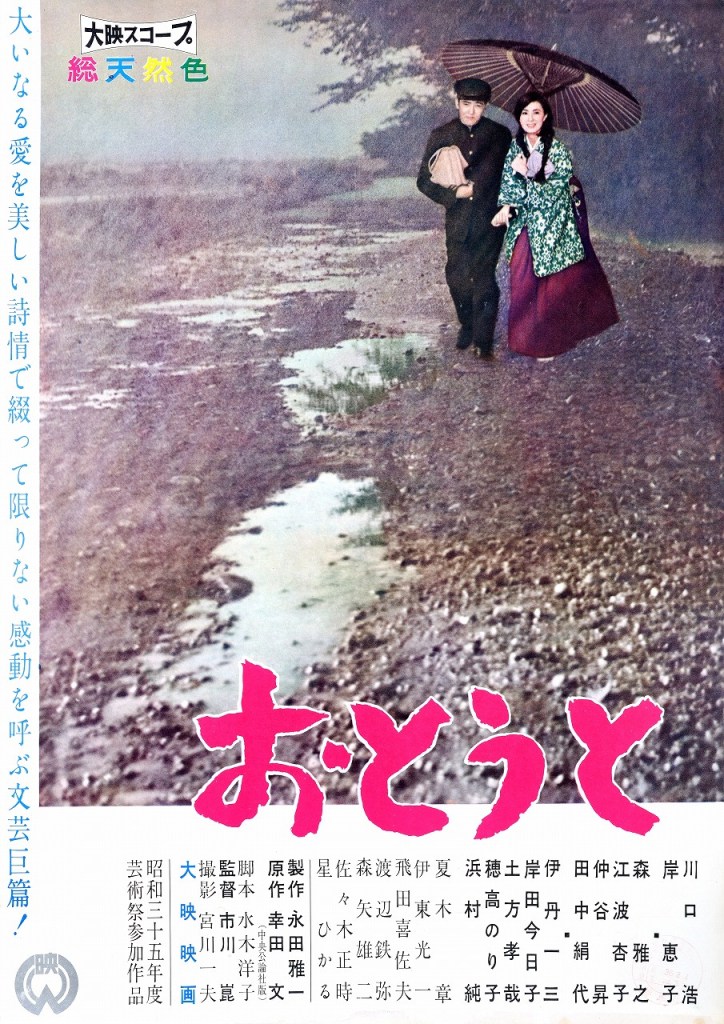
Her Brother (おとうと, Kon Ichikawa, 1960)

ototoPerhaps oddly for a director of his generation, Kon Ichikawa is not particularly known for family drama yet his 1960 effort, Her Brother (おとうと, Ototo), draws strongly on this genre albeit with Ichikawa’s trademark irony. A Taisho era tale based on an autobiographically inspired novel by Aya Koda, Her Brother is the story of a sister’s unconditional love but also of a woman who is, in some ways, forced to sacrifice herself for her family precisely because of their ongoing emotional neglect.
Oldest daughter Gen (Keiko Kishi) is still in school though she’s more or less running the household seeing as her invalid step-mother (Kinuyo Tanaka) spends most of her time bedridden with rheumatism and the rest of it pontificating about religion and listening to her poisonous friend (Kyoko Kishida) who likes to stir up trouble in this already difficult family environment. Gen’s father (Masayuki Mori) is a well known writer who needs a lot of quiet time for his work. As fathers go he’s very laid back and content to think his kids will be OK because they’re his kids, which isn’t to say he doesn’t care but he’s not exactly present most of the time. It’s no surprise then that care of the family’s youngest, Hekiro (Hiroshi Kawaguchi), has largely fallen to his sister. Where Gen is naturally responsible and practically minded, Hekiro is reckless and always in search of adventure. Eventually this lands him in trouble when he gets involved with a bad crowd but whatever his family might have been feeling towards him, everything changes once they discover that he’s facing a serious illness.

Because of the family’s odd arrangement, Gen has become almost a maternal figure towards Hekiro despite only being a couple of years older than he is. In fact, the pair have an almost comically childish physical fight at one point which is quite undignified considering their ages, especially when it involves staining their tatami mat floor with a puddle of bright red ink. Gen does her best but like her father she more often than not lets Hekiro off the hook by bailing him out, much of the time with her own rather than her father’s money. Not having the kind of authority a parent, uncle, or aunt might have all she can really do is ask him to think about behaving better, but Hekiro constantly pushes the boundaries to get a more concrete form of attention than his sister’s well meaning attempts to help are able to provide.

Hekiro’s stunts  eventually threaten to pull his sister into his darkening world, especially when a man claiming to be a detective starts more or less stalking Gen before pulling her into a shrine on the pretext of talking about her brother’s case before trying to have his wicked way with her. Luckily Gen is saved by a flock of geese cunningly released by some of her brother’s friends which gives her enough time to escape and finally get rid of the odious little man.

Similarly, Hekiro deliberately introduces his sister to the local pool hall. Though Gen seems to enjoy the game and is even good at it, she quickly realises she’s been brought as a sort of guarantor for her brother’s mounting debts. Add in other expensive and dangerous hobbies like his boat habit (he can’t swim) and it’s not surprising everyone’s had enough of Hekiro before he’s even left school. When he has an accident which results in the death of a horse (again, very expensive), it does at least lead him to reflect on the negative effect his actions can have on those around him, even if all he wanted and continues to want is an escape from his boring and miserable family life.

Even Hekiro’s illness fails to arouse very much in the way of concern from his well meaning father and grumpy step-mother who is hellbent on marrying Gen off against her wishes. Gen is, again, the only one to nurse Hekiro in hospital, managing the household as well as looking after her brother on his sickbed. When the illness becomes more serious it provides a last opportunity for the family members to bond and make amends for the various ways they’ve failed each other. The step-mother’s visit is not as altruistic as it seems when it transpires she’s only really come to “convert” Hekiro to her religion, but she begins to feel something more for him on believing that Jesus has already saved him thanks to his outwardly calm and polite manner. The final irony is that the idealised family is only born as it is destroyed, Gen puts her pinny back on and takes the reins from her stepmother who is presumably headed straight back to bed.

Gen’s devotion can’t save her brother either from himself or his fate and it may even be the end of her too. Vowing never to marry and rising from her own sickbed stopping only to instruct her stepmother to rest, she’s very clearly chosen her path even if Ichikawa’s camera and musical cues seem to find the ironic comedy of the situation rather than the sadness of her possibly tragic plight. Ichikawa and his cinematographer invented a whole new technique for this picture – the bleach bypass, which appropriately robs the environment of its vibrancy, dulling even bright colours with a sort of heavy leaded effect perfectly reflecting Hekiro’s increasingly depressed mindset as he reflects on being someone who has no firm anchor or place to feel at home. A strange, comically melancholic piece, Her Brother is a characteristically sideways swipe at the family drama from the master of irony though one which does not altogether escape his taste for the sentimental.


Original trailer (not subtitles)

Ten Dark Women (黒い十人の女, Kon Ichikawa, 1961)

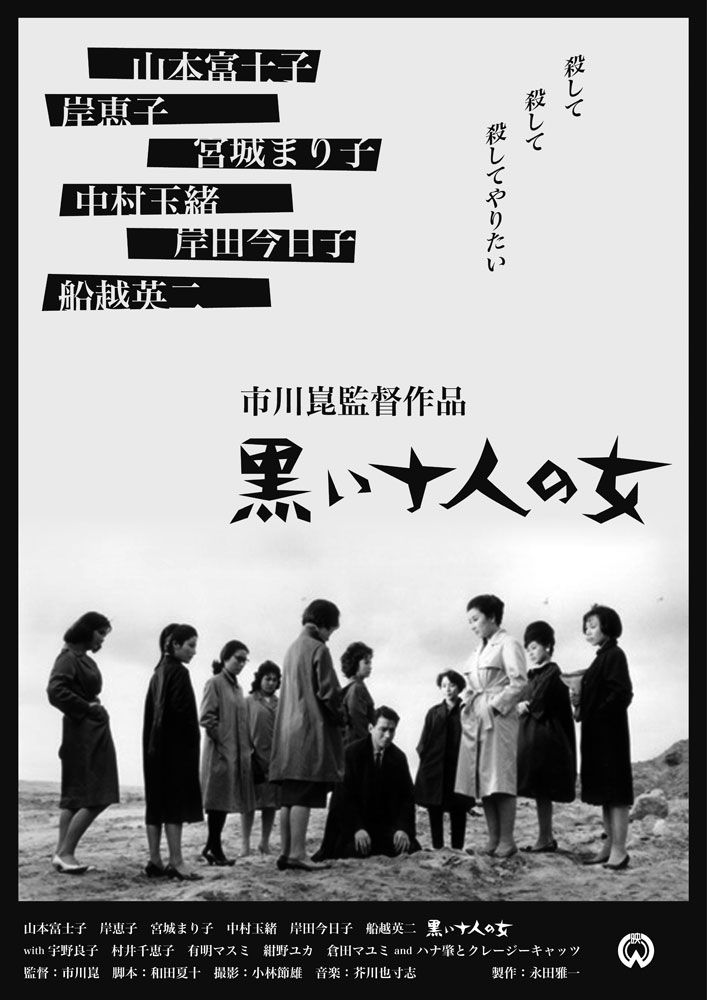
Ten Women in BlackKon Ichikawa, wry commenter of his times, turns his ironic eyes to the inherent sexism of the 1960s with a farcical tale of a philandering husband suddenly confronted with the betrayed disappointment of his many mistresses who’ve come together with one aim in mind – his death! Scripted by Natto Wada (Ichikawa’s wife and frequent screenwriter until her retirement in 1965), Ten Dark Women (黒い十人の女, Kuroi Junin no Onna) is an absurd noir-tinged comedy about 10 women who love one man so much that they all want him dead, or at any rate just not alive with one of the others.
Kaze (Eiji Funakoshi) is a TV producer by profession, though it might be better to think of him as a professional ladies’ man. He’s married to a woman who owns a bar, but is also carrying on affairs with nine (!) other women plus occasional one night stands with 30-50 others he meets through his work. His wife knows about his affairs and, while not happy about it, is putting up with things like decent wives are supposed to do. However, many of Kaze’s “mistresses” have inconveniently discovered each other’s existences and bonded in their mutual frustration with him. Strangely they all think he’s a great guy and remain very much in love with him but the situation being what it is the entirety of the betrayed wife and mistress support club eventually comes to the same conclusion – Kaze must die!

However, the women are all so devoted to Kaze, they don’t quite want him to disappear so much as for him to pick them and only them to live with happily ever after. One of the women foolishly warns Kaze about their plot as leverage for her marriage proposal but unfortunately for her he still turns her down and returns home to ask his wife what’s going on. She doesn’t deny her murderous intentions and in fact tells him in great detail how they intend to do him in. Kaze, to his credit, says he doesn’t mind very much and only worries about his wife’s future life as a murderess. Together they hatch a plan to fool the other women involving a pistol loaded with blanks and a tomato but nothing quite goes to plan.

An absurdist satire about the intense vanity of the womanising male, Ten Dark Women looks forward to Fellini’s similarly themed 8 1/2 or City of Women though here the idiotic husband at the centre becomes both prey and foil for the group of plotting women seeking revenge against his disloyal ways. Kaze, as he himself admits, is not particularly appealing to women though his position at the TV studio undoubtedly proves useful to some of them. He’s a curiously passive presence, not so much seeking out female company as acquiescing to it. It’s not quite clear if his concern for his wife should she decide to kill him is genuine or a means of manipulative self preservation but at any rate he takes the threat to his life extremely calmly.

Each of the women has their own claims on Kaze but the other thing they all have in common is being the prisoner of an extremely sexist society. Some of the women are with Kaze for careerist reasons, but it’s clear that there is a definite limit placed on a woman’s potential both inside and out of the creative industries. The commercial model makes a play for a more official relationship by bringing up the fact that Kaze’s wife has a job and therefore cannot devote herself entirely to Kaze’s wellbeing as proper wife should (as by implication would she after marrying and retiring from the modelling world). Kaze helped his wife set up her bar which she runs herself though constantly plays hostess to her husband’s industry friends. It appears what Kaze wants is less a devoted wife than an indifferent one who will permit his frequent “indiscretions” whilst also providing him with a conventional “home”.

Another of the women tries to get herself a promotion but her boss, though broadly sympathetic and dangling the idea of a raise, brings up the oft repeated notion that there’s no sense in giving her the job because a woman should leave at some point to marry and have children. When the woman criticises the behaviour of her male colleagues, her boss simply shrugs and admits men in TV aren’t “serious”, yet when she points out that she is serious and works hard she is told that women are better off at home. Women, he says, express themselves through their children whereas men make their mark through a career. The woman says that she believes everyone should try to reach their own potential in whatever way they can but her pleas fall on deaf ears. This notion is repeated later on when the women try to take revenge on Kaze by tricking him into resigning from his job – a man is his work, he claims. A man without a job is nothing at all and a man who is kept by a woman is less than nothing – Kaze is suddenly panicked, losing his occupation and social position is much more frightening to him than losing his life.

The women couldn’t kill the system or the TV, but they could kill Kaze so who can blame them for trying. Another of the women states that the imposed isolation of a man’s working life has cost him the ability to connect with other people on a human level and so his erasure is simply the end of a long process of social death. If some of the women triumph, others retreat as one does in suicide only to return as a ghost longing for the murder plot to succeed so that she and Kaze can be alone together at last. Kaze thinks he’s using each of them, but they have all been using him in one way or another and his only way out lies either in death or becoming a trophy for the most needy of his paramours.

Cynical in tone, Ten Dark Women is an amusingly absurd look at gender roles in early 1960s Japan as each of our women attempts to usurp male power for their own ends, some with more success than others. Ichikawa employs beautiful noir lighting in his elegantly composed black and white photography which, along with its jazzy score, gives the film a familiar feeling of crime laced modernity. An early instance of the feminist revenge film, Ten Dark Women is very much a comedy which avoids making its group of frustrated, resentful women mistreated by a buffoon of a TV exec the butt of its own joke, neatly highlighting the precarious nature of their existence which obliges them to rely on so hollow a support.


Original trailer (no subtitles)

The Family Game (家族ゲーム, Yoshimitsu Morita, 1983)

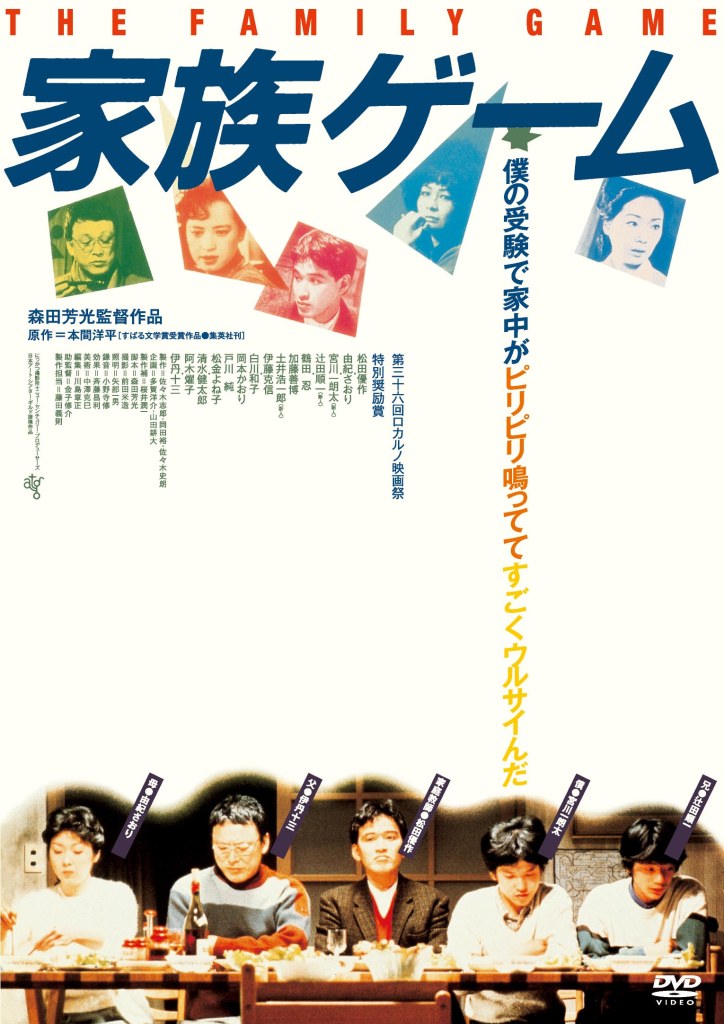
TFG_DVD_jk_ol“Why do we have to make such sacrifices for our children?”. It sounds a little cold, doesn’t it, but none the less true. Yoshimitsu Morita’s 1983 social satire The Family Game (家族ゲーム, Kazoku Game) takes that most Japanese of genres, the family drama, and turns it inside out whilst vigorously shaking it to see what else falls from the pockets.
The “ordinary” middle class Numata family consists of the salaryman father Kosuke, the regular housewife mother Chikako and their two sons – older brother Shinichi and younger brother Shigeyuki. Right now the focus of attention is very much on Shigeyuki as he approaches the difficult period of sitting entrance exams for high school. To be frank, Shigeyuki’s prospects are dismal. He ranks near the bottom of the class and though certainly bright has little interest in studying. Therefore, the family have decided to bring in a home tutor to help boost his grades. They’ve already tried several to no avail but have high hopes for Mr. Yoshimoto, a local university student, but little do they know that he’s going to end up teaching each of them a little more than they cared to learn.

Morita breaks down the modern family into its component parts and finds only archetypes representing the kinds of roles which are rigidly enforced by Japan’s conformist society. Let’s start with the “father” who is supposedly the head of the household yet barely has anything at all to do with it. He believes his role is simply to go to work and shout commands which his “family” are supposed to follow unquestioningly. His realm is everything outside the house, everything inside is the responsibility of his wife and he won’t in any way get involved with that. When he has a problem with the kids (and this problem will only be that they aren’t performing to expectation), he will tell his wife and she is expected to take care of it on her own. Of course, his authority is hollow and dependent on his family falling in with his preconceived ideas of their “individual” roles.

The wife, then, is more or less a glorified housekeeper in charge of domestic arrangements and expected to remain within the home. Barked at by her husband and treated like a servant by her own children, her existence is often a fairly miserable one. She remarks that she wishes she’d had her children later – there were so many things so wanted to do that now are denied her because she’s forced to “play the role” that’s expected of her as a wife and mother.

Of the two kids, the older brother, Shinichi, starts the film as the one who plays his pre-ordained role to the level that’s expected of him. He’s a bright boy who studies hard and got into the top high school no problem. As the film goes on and everyone’s obsessed with Shigeyuki, Shinichi’s mask begins to drop as he encounters various typically teenage phenomenons which interfere with his role as over achieving big brother.

Shigeyuki, however, refuses to play the game at all. He just does not care. He loves to get under people’s skin and takes pleasure in annoying or outsmarting them such as when he cons his mother into letting him skip school (his pancreas hurts!) which she lets him do probably knowingly because she’s still playing her role as the worried mother. Finally he only begins to study when he realises it annoys a fellow pupil when his grades improve.

When tutor Yoshimoto enters the picture he tears a great big hole through the centre of this perfect family photo. He starts by behaving very strangely with Mr. Numata by grabbing his hand and calling him “father” whilst leaning in far too close for a casual acquaintance. Similarly when he first meets Shigeyuki he leans right in and then remarks that he has “a cute face”. He proceeds to invade Shigeyuki’s physical space by regularly touching him to a degree which is odd for a teacher/pupil relationship and is almost a prelude to molestation. When Shigeyuki tries to troll him by filling pages of his notebook with the same word over and over again, Yoshimoto reacts coolly before punching him in the face. From now on, when Shigeyuki isn’t pulling his weight, he’ll get a bloody nose.

Gradually Yoshimoto begins to take over the parental roles of the household firstly by instigating the masculine discipline through violence that Mr Numata is never there to deal out as well as offering the original role of teacher/mentor which might ordinarily be found in a grandfather or uncle. Later he usurps the big brother’s place by trying to talk frankly about sex and teaching Shigeyuki how to defend himself against playground bullies which also helps the boy cement a friendship with a sometime rival. Finally, he takes on the maternal mantle too when Mrs Numata asks him to go down to the school and talk to Shigeyuki’s teachers on her behalf. By the time that his original mission is completed he’s well and truly infiltrated the household allowing him to, literally, overturn its sense of stability.

Morita’s screenplay is witty affair full of one liners and humour born of unusual frankness. Family is a fake concept which forces each of its members into predefined roles and is largely divorced from genuine feeling. What matters is the appearance of normality and the acquisition of status – i.e getting into the better university, not so much as a path to success but as a way of avoiding the embarrassment of not getting there. An absurdist social satire, The Family Game is a biting critique of the social mores of the early 1980s which punches a gaping hole through the foundation of traditional Japanese society.


By a Man’s Face Shall You Know Him (男の顔は履歴書, Tai Kato, 1966)

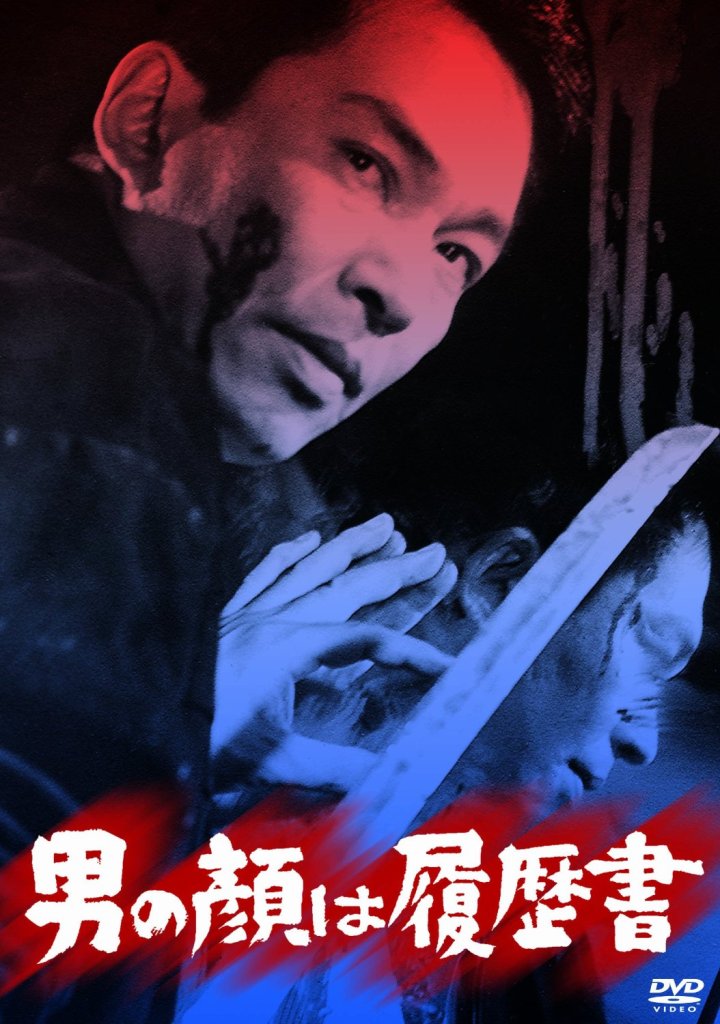
by a man's faceJapanese cinema has not been as shy as might be supposed in examining uncomfortable topics concerning the nation’s mid 20th century history but perhaps prefers to tackle them from a subtle, sideways viewpoint. By a Man’s Face Shall You Know Him (男の顔は履歴書, Otokonokao wa Rirekisho) is, in essence, a fairly straightforward gangster pic – save that the rampaging gangsters are a mob of “zainichi” Koreans rather than post-war yakuza or petty hoodlums. Less about what it is to be an outsider or the quest for identity in second generation immigrants, Kato’s film is about what it says it is about – a man’s face.
The film begins in the contemporary era when morose doctor Amamiya is contemplating a transfer to an island posting which proves unappealing to him. Shortly after, a badly injured man is brought in following a car accident and, though Amamiya originally suggests the man be taken to a hospital as his chances of survival are slim, he changes his mind after lifting the sheet and recognising the man on the stretcher. The two men go back a long way – firstly to the battlefield where “Shibata” was a private in the army serving alongside Amamiya and secondly to an incident which dictated the rest of Amamiya’s life when he ran the local GP’s office and also happened to own the deeds to some land a bunch of Korean gangsters wanted to get their hands on. Thanks to their earlier association, “Shibata” now returning to his Korean name “Choi” was able to assist Amamiya in mitigating the gangster onslaught as he himself was a member of the gang.

Perhaps more to do with the production styles of the time, all of the “Korean” gangsters are played by Japanese actors and only ever speak Japanese even to each other. Nevertheless, they all want “revenge” for Japan’s treatment of Korea and Koreans during the years of occupation and warfare. In 1949 Japan is still in ruins and the gangsters see this as a prime opportunity to finally take Japan apart and presumably also profit in the process. The leader of this particular gang has set his sights on taking over the “New Life Marketplace” (a pregnant title if ever there was one) with the intention of turning it into an “entertainment district”. His guys, including one totally crazy foot soldier played by a particularly manic Bunta Sugawara, run roughshod over the town until finally raping and murdering Japanese women which they dismiss as par for the course given Japan’s treatment of Korean women over the past thirty years.

This is not a subtle examination of Korean Japanese relations in the post-war environment, these are gangsters and movie gangsters are generally all the same. They say they want to destroy Japan but ultimately they want what all gangs want – to control the area and extort maximum profit. Choi, and the young female Korean Gye, were born in Japan, have never even been to Korea and can’t really claim to have a great deal of Korean cultural knowledge. All they have are their names, now reclaimed after Japan’s wartime defeat. Throughout the war years, Choi used the Japanese version of his name “Shibata” and tried to pass himself off as Japanese (apparently successfully) but is now committed to embracing his Korean heritage even if it once again sees him placed in a subjugated position.

Amamiya returned from the war and took over his father’s medical clinic in his home town. He’s cynical and apathetic. He treats the people who come in to his clinic without discrimination but he doesn’t care very much about the area either. The only thing he really cares about is his nurse, Maki, with whom he’s been having a passionate affair and seems to be deeply in love. Amamiya makes an enemy of the Koreans early on when he fights off some guys who are hassling his nurse proving that he’s no pushover. The title deeds for the land the market is built on also belong to Amamiya who is unlikely to surrender them. The townspeople first turn to the regular Japanese yakuza who are unable to help with their currently depleted manpower leaving Amamiya as their only form of salvation.

When Amamiya’s hotheaded brother turns up and starts causing all sorts of trouble with the Koreans as a way of avenging Japan’s wartime defeat, Amamiya is dragged into a battle he had no desire to fight. Shunji was too young to fight in the war but is a representative of the younger generation who can’t accept the new post-war society and what they see as their older siblings failure to support the nation. Though a strong attraction develops between Shunji and Gye, their love story becomes another casualty of the harsh post-war world. Reluctantly, Amamiya becomes the last defender of these put upon people leading to a High Noon style solo stand against the Koreans whilst the terrified populace look on in fear and hope.

Kato creates a colourful world rich in symbolism such as the early scene in which Choi’s red blood drips down the white sheet accidentally recreating the Japanese flag. Amamiya’s prominent scar becomes both a plot point and a symbolic motif as it echoes the film’s title in bearing out his “history”. A man’s life is indeed written on his face, and Choi’s wife’s urging to her daughter that they watch Choi’s face as he fights for his life is another indication that one’s true nature is seen most clearly in times of duress. The film closes on an ambiguous note, in one sense, but closes its thematic line neatly. Amamiya faces a choice and no choice at the same time but through his face we know him and so we understand.


The Funeral (お葬式, Juzo Itami, 1984)

The FuneralThe Funeral is the debut film from actor and director Juzo Itami, probably best known for his crazy food odyssey Tampopo. Like all of Itami’s films, The Funeral is, essentially, a social satire and though not as raucous as the later Tampopo it does a fine job of mixing a traditional comedy of manners with a poignant examination of end of life rituals. Full of naturalistic details, The Funeral is a surprisingly warm film that’s much more about laughter than tears.

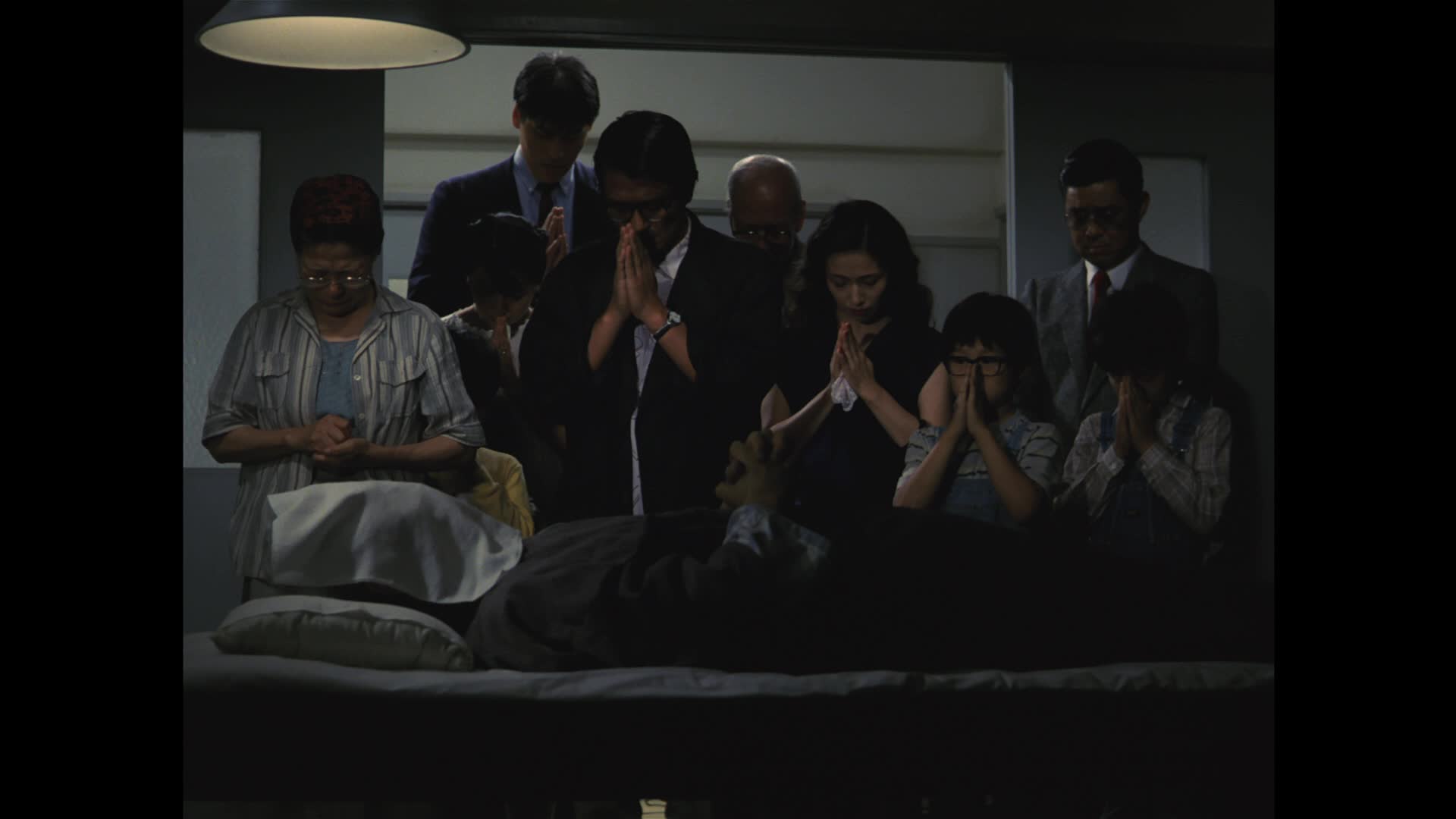
Successful actress Chizuko suddenly gets a phonecall in the middle of a shoot to say that her father has died suddenly and unexpectedly. Her mother would appreciate it if they could hold the funeral her house and if Chizuko and her actor husband Wabisuke would take charge of the funeral arrangements. Wabisuke is extremely reluctant but eventually agrees letting himself in for a whole new world of complications as the couple find themselves negotiating on the price of coffins, organising food for a wake and trying to work out what the most appropriate “donation” for a priest is. That’s not to mention trying to accommodate the wishes of all the relatives who will also be descending on them for the duration of the funeral which will last three whole days….

Funerary customs are the sort of thing you just assume everybody knows to the point that it can be a little embarrassing if you find yourself in the situation of having to ask. Luckily there are trained professionals available to help organise the main structure of events but when it comes down to the small details – what you should say, where you should stand and for how long, who’s invited and who isn’t, things can get tricky. In one hilarious moment, Chizuko and Wabisuke find themselves watching a VHS tape entitled “The ABCs of Funerals” and taking notes furiously as if learning lines for a new play.

Suddenly everything is a complicated decision and everyone seems to have their own opinion on matters. Having successfully got hold of a coffin, the couple need to decide whether to take the body home first or transport it in the coffin as advised by their very helpful funeral director. The majority of the family are in favour of the comparatively simpler option of putting the body into the coffin now and leaving it that way but an older uncle seems quite distressed by this new fangled business and laments that they don’t do it like this back home.

Said older uncle and business tycoon continues to find fault with various things including the direction of North which he insists the deceased’s head should be facing causing him to stare at the coffin and walk around the house waving his arms trying to work out, literally, which way is up. However, he’s also responsible for one of the more shocking breaks with appropriate behaviour as he starts trying to stage direct the final goodbyes so he can get a good photo, at one point asking the grieving widow to just “hold it a second” and “maybe get a little closer to his face” while he snaps away trying to capture the moment. Mind you, he’s not the only one to throw the book of etiquette out of the window as most people would probably list inviting your mistress to the funeral of your wife’s father as one of the top ten things you should never do.

However, these moments of everyday lapses in morality are just one of the film’s charmingly naturalistic elements like the priest (played by veteran actor Chishu Ryu) arriving in a very expensive car and obsessing over a series of French tiles. From a collection of shoes in different sizes scattered outside the family home to the children’s morbid curiosity in checking out the furnace at the crematorium the film is shot through with the tiny details of everyday life that are likely to find recognition everywhere. In fact the brief period of time with the whole family assembled together before the funeral really begins could easily be any other springtime celebration rather than the solemn occasion that has brought them all together this time. Even the artsy black and white video shot by a friend of Wabesuki’s to document the event shows the family laughing together and the children playing happily even as they learn the proper way to light funerary incense.

Of course, that doesn’t mean it doesn’t have its share of sorrows too – the film is called The Funeral after all and the final funeral oration given by the grieving widow is likely to leave many viewers complaining of something in their eye (especially given the couple’s rather strained relationship in the early part of the film). However, as usual Itami successfully manages to avoid sticky sentimentality in favour of a warm, natural and most importantly funny exploration of family dynamics and social customs. Not as madcap or laugh out loud funny as some of Itami’s later work, The Funeral is nevertheless a wry and witty comedy that knows how to play a merry tune on your heartstrings.