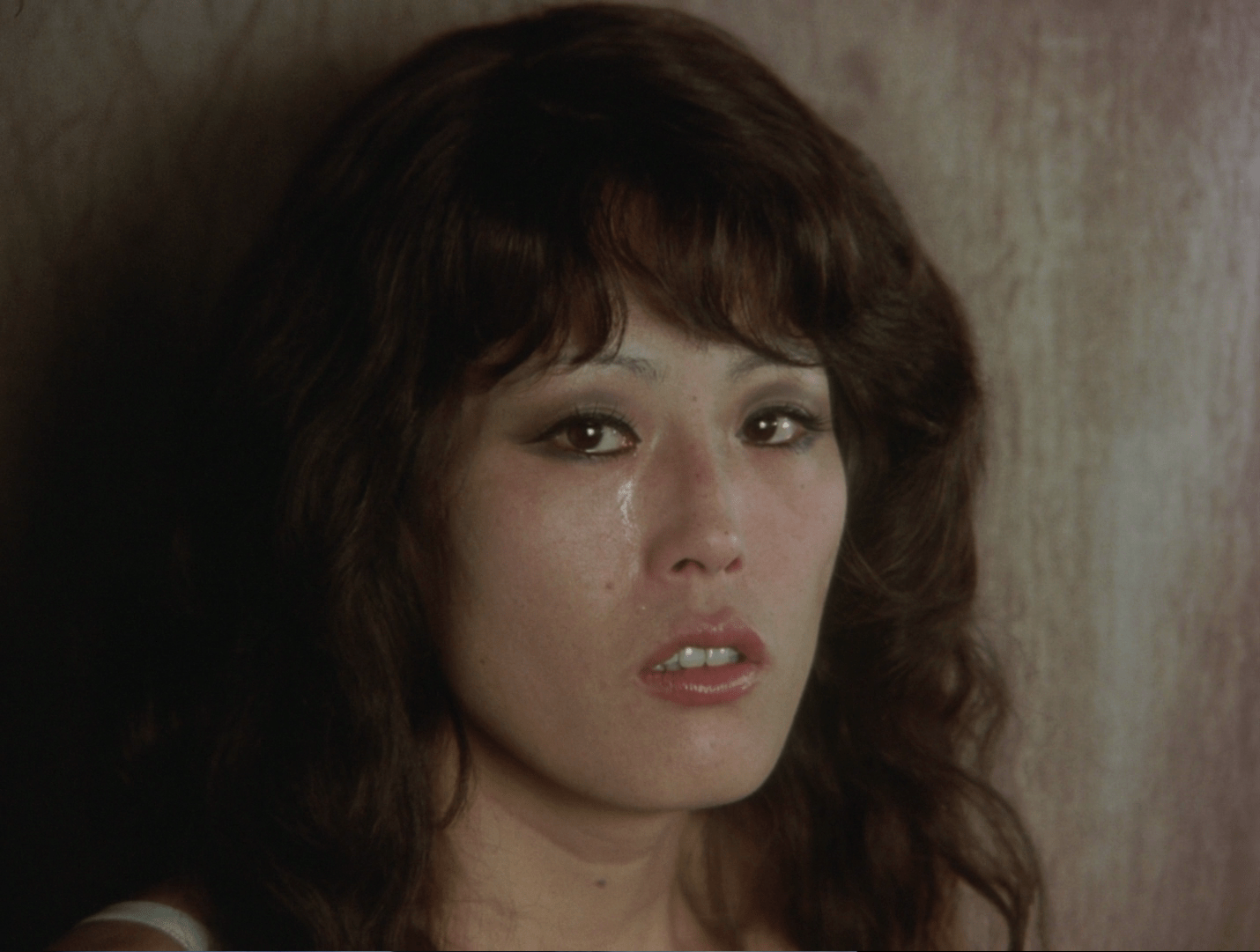
Sham (でっちあげ ~殺人教師と呼ばれた男, Takashi Miike, 2025) [Fantasia 2025]

After a couple of hundred years of corporatising culture, sham apologies have become an unfortunate phenomenon all over the world. Corporations in particular will often offer a fairly meaningless apology that acknowledges a minimal level of responsibility but does not bind them to recompense those they’ve wronged nor put right anything that their conduct has made wrong. The problem is that an apology has become a kind of sticking plaster that allows us all to move on but doesn’t really solve anything and may even prevent us from doing so because it turns us all into accidental liars who are primed to say “sorry” to make the situation go away even it wasn’t actually our fault.

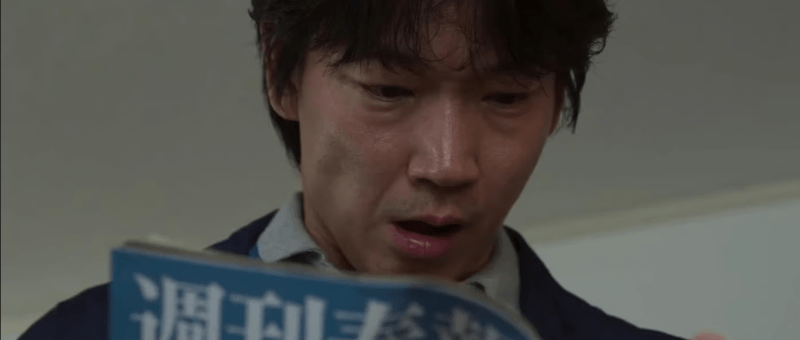
That’s essentially what happens to Seiichi (Go Ayano), previously an unremarkable primary school teacher with a teenage son of his own and an apparently happy home. Inspired by a real life case, Takashi Miike’s courtroom drama Sham (でっちあげ ~殺人教師と呼ばれた男, Detchiage: Satsujin Kyoshi to Yobareta Otoko) flirts with ambiguities but in keeping with its themes eventually descends into a defence of the well-meaning man as its hero becomes so embroiled in the injustice being done to him that he doesn’t see that he is not entirely blameless. Though we’re first introduced to him as the “homicidal teacher” the papers describe him as, the film’s title leaves us in no doubt that his account is the truer. But it remains a fact that during his conversation with Ritsuko (Ko Shibasaki), the mother of the boy Seiichi is accused of racially bullying, he did remark that Takuto’s American grandfather may explain his unique characteristics which is perhaps within the realms of thoughtless things well-meaning people say in awkward conversations but hints at a level of latent societal prejudice. In any case, that the fact his conversation with Ritsuko ended up drifting towards subjects like bloodlines and the Pacific War is not ideal, while Seiichi should probably have been more mindful of his politically neutral position as an educator. 

Likewise, he doesn’t dispute that he tapped Takuto lightly on the cheek to “educate” him that it hurt when he slapped another boy, Junya, who, according to Seiichi, he was bullying. He probably shouldn’t have done this either, even if some may see it merely as common sense in teaching the children that violence is wrong, as ironic as that may be. In any case, the film is on Seiichi’s side and insistent that he did not treat Takuto any differently on account of his non-Japanese ancestor nor spout off any of the racist nonsense that Ritsuko attributes to him. But the major problem is that Seiichi is mild-mannered and also a product of this society. He tries to protest his innocence, but is pressured by his headmaster to apologise anyway which is, of course, a form of lying, something they discourage the children from doing. In the end he goes along with it, because it’s easier to just say “sorry” and hope it goes away rather than address the real issues. 

It’s this sham society that the film seems to be critiquing, even if its message gets lost among its intertwining plot threads as Seiichi effectively finds himself bullied by an empowered tabloid media formenting mob justice against what it brands a far-right fascist teacher as a means of selling papers through generating outrage. While he is scrutinised and scorned, no one bothers to look into Ritsuko’s story which is already full of holes such as why, if she’s so protective as a mother, she waited for her son to be a victim of “corporal punishment” 18 times before complaining to the school. Little motivation is given for Ritusko’s actions, though Miike films her and her husband with an an almost vampiric sense of unease as they appear eerily in black on their way to the school. Unhinged herself, the answers may lie in Ritsuko’s own childhood and her yearning for a protective mother figure, not to mention the sophistication of being a child returning from abroad with good education and prospects for the future.

Seiichi refocuses his closing statement on Takuto, insisting that he doesn’t blame him for “lying”, but it’s perhaps also try that he is a kind of victim too whose own actions can only be explained by a closer look at his relationship with his mother and familial environment. But it turns out that it really is easier to just say “sorry” and move on. Even the psychiatrists seem more interested in treating Ritsuko like a customer whose wishes must be obeyed than earnestly trying to help Takuto even if his issues don’t seem to be as serious as his mother might have it. But according to Seiichi, telling a child off is the purest expression of love. If everyone carries on with sham apologies, nothing really changes and kids like Takuto get forgotten about as everyone falls over themselves to make the situation go away. No one really cares about the truth, and so it becomes an inconvenience to social cohesion in which those who insist on speaking it are hounded down until they agree with the majority and meekly say “sorry” while those in the wrong nod their heads and continue with their lives free of blame or consequence.


 Sham screened as part of this year’s Fantasia International Film Festival.

Trailer (English subtitles)

Leaving on the 15th Spring (旅立ちの島唄~十五の春~, Yasuhiro Yoshida, 2013)

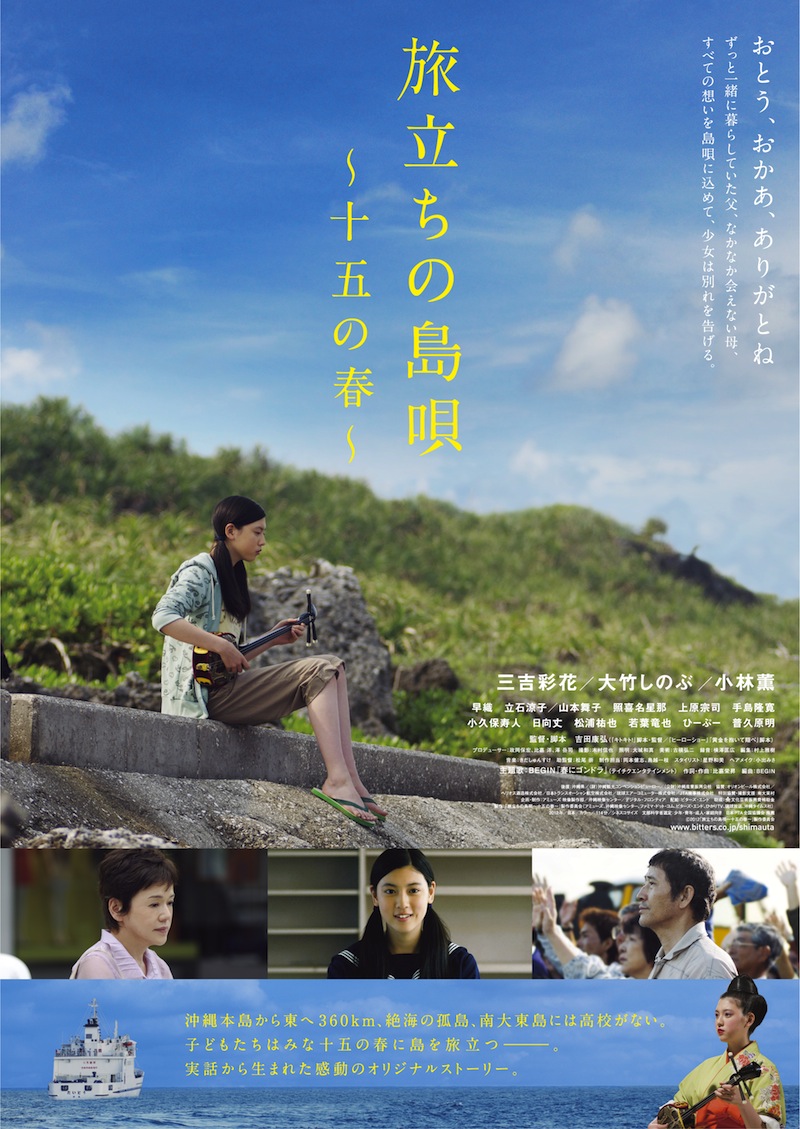
“How many of them will come back?” a man on the shore ominously asks as he watches the young people of his island ship out to pursue their education in the comparatively better equipped capital. Rural depopulation has become a minor theme in recent Japanese cinema, but the situation is arguably all the worse in the outlying islands of Okinawa. As the title of Yasuhiro Yoshida’s Leaving on the 15th Spring (旅立ちの島唄~十五の春~, Tabidachi no Shima Uta: Jugo no Haru) suggests, teens from the small island of Minami Daito (South Daito) must leave at 15 if they want to attend high school because there isn’t one on the island.

That said, there are more kids than you’d expect in young Yuna’s (Ayaka Miyoshi) middle school and it’s more than just a handful who leave the island each spring, many of them choosing to make lives for themselves in the wider world rather than return to their childhood home. On Minami Daito, the main industry is sugarcane but the prospect of Japan joining the TPP trade agreement has many worried that it will soon no longer be viable and with even fewer economic opportunities available many will have no choice other than to abandon the island for good. 

We’re often reminded just how far the island is from the Okinawan capital Naha and how difficult it is to get to. To leave, the kids are placed in a kind of cage and lifted onto a larger boat moored by a small jetty. Even to get to the next island Kita Daito (North Daito) it’s some time on a ferry which might not run if the weather is bad. Distance becomes a persistent theme, not just in Yuna’s impending exit but the scattering of her family. When kids leave for high school, a parent often goes with them as Yuna’s mother Akemi (Shinobu Otake) did when it was time for her sister Mina (Saori) to depart. But Mina is now a grown woman married with a child of her own and Akemi has not been back to the island for two years. This forcible separation continues to disrupt familial bonds as couples necessarily grow apart and children begin to choose their own paths in life which often take them away from their parents. 

It’s this sense of distance which plays on Yuna’s mind, a kind of countdown starting inside her as she witnesses another girl sing the Okinawa folk song “Abayoi” which means “goodbye” in the local dialect and recounts a young person’s sorrow as they must leave their family and childhood home behind on coming of age. Reminded that she’s next in only a year’s time, Yuna meditates on her past and future while reconsidering her relationships. Abandonment often occurs through a simple lapse in contact. Akemi now rarely phones home while Yuna’s nascent first love with a boy from Kita Daito falters when he abruptly stops calling or returning her letters. Eventually she finds out that despite their pledge to attend the same high school on Naha, he has decided to stay and take over his father’s fishing boat because of his dad’s ill health. 

Kenta has realised that his place is Kita Daito and he will remain there the rest of his life while harbouring a degree of resentment that he couldn’t go to high school or pursue his romance with Yuna. He feels their relationship is doomed simply from the fact that they’re from different islands. He won’t leave his, and she likely would not settle on Kita Daito preferring, either a life in the cities or her childhood home. It’s the same for her parents, Akemi deciding that she prefers life in the city and the degree of independence she has there while her father Toshiharu (Kaoru Kobayashi) would not survive off the island. Both of her siblings have already left, Mina returning with her infant daughter apparently on the verge of separating with her husband partly it seems because of the insecurity the separation of her family has left her with, while Yuna’s brother seems to be a harried workaholic with no family life to speak of. 

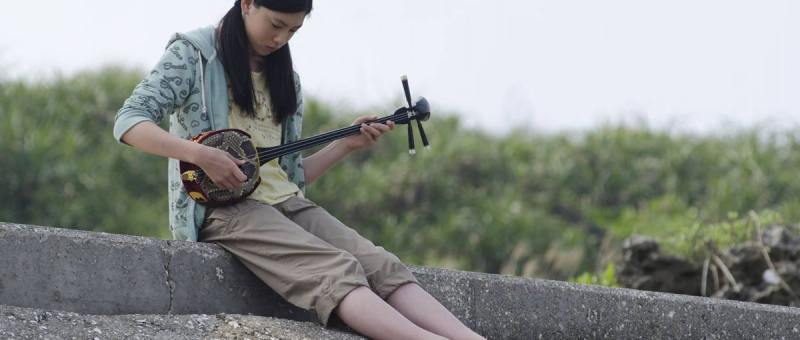
Rather childishly she thinks she can reunite her family and dreams of buying a big house on Naha for them all to live together, adult siblings included, without fully accepting that the relationship between her parents has been gradually worn away leaving them strangers to each other and each desiring different kinds of futures. What she comes to is perhaps an acceptance of the distance in her life, the longing for her island home where she says everyone is one big family, as she finds herself choosing independence. A picturesque vision of Minami Daito and its idyllic landscape along with the traditions of the island including its rich musical culture and Okinawan Sanshin, Yoshida’s gentle drama discovers that “abayoi” is a part of life that can’t be avoided but can be sweet as well as bitter once you’ve learned to accept it.


Trailer (English subtitles)

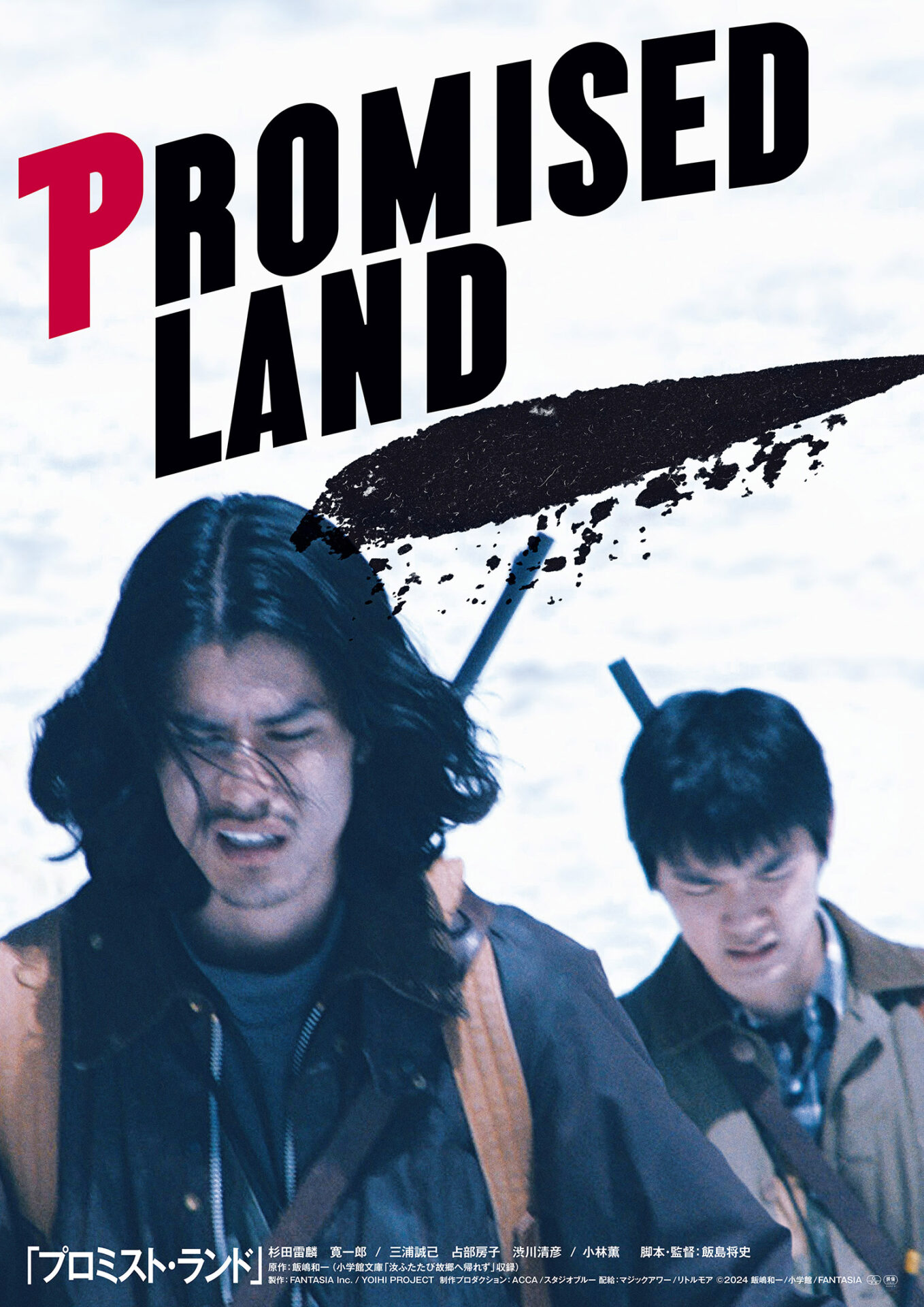
Promised Land (プロミスト・ランド, Masashi Iijima, 2024)

An avalanche approaches a small town in Japan, a harbinger of change in which the centuries old practice of bear hunting has finally been put to rest by government directive. The buried question at the centre of Masashi Iijima’s Promised Land (プロミスト・ランド) is who exactly that land has been promised to and what the rights and responsibilities surrounding it are in the midst of a changing society in which there may longer be a place for the hunter.

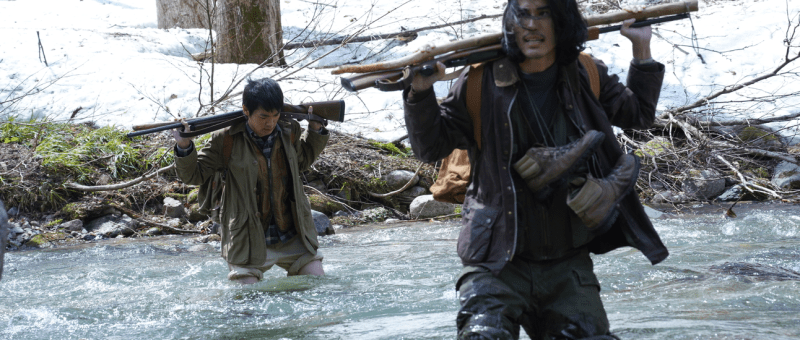
Some might argue that there shouldn’t be, and it has to be said this is one ancient tradition that’s increasingly hard to defend. Set in 1983, the film finds the “Matagi”, or traditional hunter, already all but extinct even before the head of the local association (which appears to only have five members) calls them all together and tells them the hunt is off for that year due to a preservation order by local government. One of the younger members, Rei (Kanichiro), immediately objects sensing that if the hunt is canceled this year it will never be held again. He says he thinks it’s unfair as it’s industry encroaching on the forests that has led to a decrease in the bear population rather than overhunting while another of the men takes constant pops at rich men from the city who come in and treat hunting like a hobby failing to abide by any of their rules such as not shooting mothers with their cubs.

The hunters seem to think of themselves as keeping nature in check, “culling” the bears to keep the mountain safe though there’s no sign that they are any real danger to humans and anyway their numbers are now depleted. There doesn’t seem to be any other way to defend this practice outside of tradition, but it’s evidently something very important to Rei, important enough to constitute a large part of his identity. Thus he alone is determined to defy the order and kill a bear anyway even though he knows there’s a good chance of going to prison for illegal hunting and being branded a poacher. 

Rei ropes in Nobu (Rairu Sugita), a childhood friend who apparently owes a debt to him having received a blood transfusion from him when he was four and now deeply resents having that fact wielded against him all these years later. Unlike Rei, Nobu is a much more modern young man whose father makes fun of him for wearing fashionable clothes and perfume. He hates working on his father’s farm and longs to escape the moribund small town and its brutal traditions such as the bear hunt he’s been roped into since birth just because like many things his ancestors always did it. While hunting for a bear, the pair have an opportunity to talk, Rei admitting that hunting and the gun represent for him the essence of the man he once was while reeling from the breakdown of his marriage to a woman he failed to support when she failed to fit in to village life. He recounts the story of a banker he did some work for who says that he envies the freedom of his life as a landscape gardener while he sits in a prison all day counting other people’s money but when he asks him why he does’t give it a try the man just backtracks and starts making excuses.

Rei seems to be wondering what true freedom means and perhaps feels he doesn’t really have it, asserting dominance over the mountain by killing the bear to regain control over his life. He calls the bears a gift from the mountain god as if they existed only for him to kill, though it’s difficult to see why his tradition or need for raw masculinity is worth more than a living creature’s life. When he eventually kills a bear, the film hovers on the ritualistic quality of the act as Nobu and Rei bend over the body, wafting it with leaves, and skinning its pelt before drinking its blood. This is an act of cruelty more of necessity. They have no need of the pelt or meat, do not make a major part of their income from selling them, and the bear did not threaten them. This is in short a tradition that can safely be left by the wayside, but by the film’s conclusion the two men seem to have switched positions Rei now pondering leaving the village while Nobu seemingly has a renewed desire to stay and preserve these old traditions. Perhaps it is his promised land after all, or else was intended to exist for the bears as creatures of nature free from the destructive forces of humanity.


Promised Land screened as part of this year’s Camera Japan.

Original trailer (no subtitles)

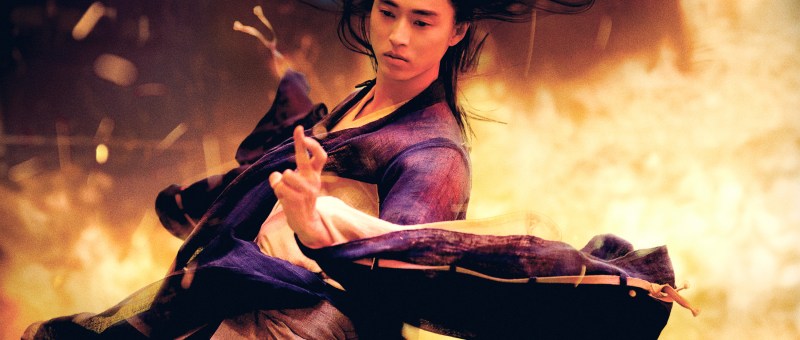
The Yin Yang Master Zero (陰陽師ゼロ, Shimako Sato, 2024)

In the Heian era, who was it that kept the social order in check if not the onmyoji or “Yin Yang Master”? Shimako Sato’s big budget fantasy drama is technically a kind of prequel origin story adapted from Baku Yumemakura’s series of novels which were previously adapted as pair of movies in the early 2000s, and introducing the young Abe no Seimei (Kento Yamazaki), a Detective Dee-esque exorcist working as a state magician to protect the nation from supernatural threats such as demons and curses in an era in which ordinary people lived side-by-side with goblins and monsters.

That said, Seimei doesn’t really believe in that sort of thing, though in an ironic twist knows it to have a kind of truth at least, and is sick of being called out to look at a potential goblin infestation that turns out to be nothing more than a creaky old house settling amid the changeable weather. Which is all to say, he is both an earnest scientist looking for rational explanations to strange phenomena and an excellent diviner who can catch a dragon spirit in a bottle. In a touch of the Sherlock Holmes, he’s also gruff and aloof, distinctly uninterested in achieving high position and makes no secret of his contempt for his fellow alchemists insisting the Ying Yang Masters merely perpetuate superstitions to keep people frightened and themselves in employment.

When one of the other alchemists turns up dead of a suspected curse, the cat is set amongst the pigeons as the young apprentices respond to the offer of his higher status spot of they can solve the crime. This of course exposes their own greed and vanity as they each fall over each other desperate for a chance to get another foot on the ladder in a hierarchal system, a step that must be taken if they’re to make it all the way to the position of the emperor’s advisor on spiritual matters. Seimei’s disinterest further arouses suspicion against him with a fellow alchemist already 45 years old and stuck at the bottom rank directly accusing him of the crime perhaps less out of a genuine conviction than a desire to advance himself. 

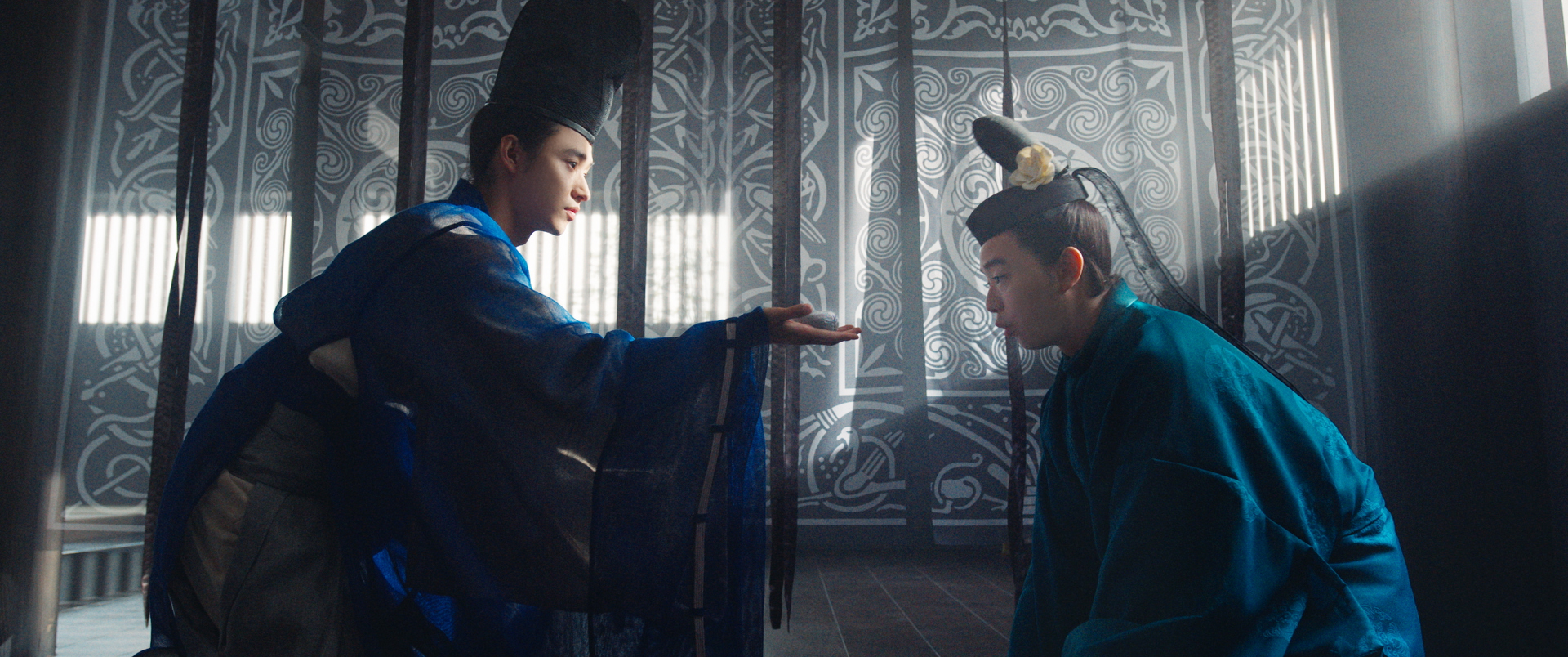
In any case, Seimei investigates in a more modern, scientific way gaining access to crime scene and corpse ironically through a connection he’s made at court to an influential musician, Hiromasa (Shota Sometani), who hired him to sort out a problem the princess, Yoshiko (Nao Honda), was having with snapping strings on her harp. That turned out to be caused by a giant golden dragon spirit which Seimei later claims represented her feelings for Hiromasa, who is also quietly in love with her, which are somewhat forbidden because of the class difference between them. In this way, the spirits are merely a manifestation of the conflict between personal feelings and the social order as Yoshiko finds herself all but powerless, a princess in a golden cage to be sent wherever she is called with no real say over her fate. 

Fittingly, these feelings are resolved in a kind of artificial reality that Seimei believes to be a space of shared consciousness though he’s also fond of remarking on the malleability of “reality” and the ways in which vision and perspective can be manipulated. Then again, he also says all that matters is what they are seeing and experiencing in that very moment which is as good a benchmark for objective reality as anything else. There is something quite poignant about his developing relationship with Hiromasa which has its homoerotic qualities even as he becomes the “idiot” stand in for the audience, a kind of Watson figure that Seimei can explain everything to so that he can explain it to us. Even we can see the restrictions of the court and the irony in the eventual victory of “order” rather than personal freedom as volatile emotional forces must be put back in their bottles lest they create problems for everyone. Such conditions will doubtless create a series of cases of Seimei and Hiromasa to solve in a potential series starring the ace exorcist and his flautist friend in a Heian society beautifully brought to life by Sato’s sumptuous production design and flair for fantasy action.


The Yin Yang Master Zero screened as part of this year’s New York Asian Film Festival

Original trailer (English subtitles)

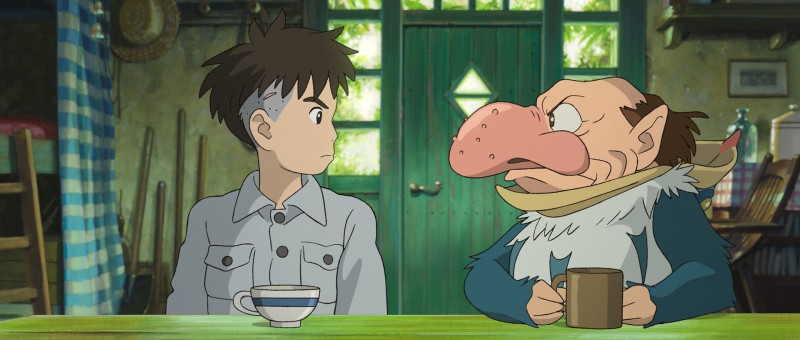
The Boy and the Heron (君たちはどう生きるか, Hayao Miyazaki, 2023)

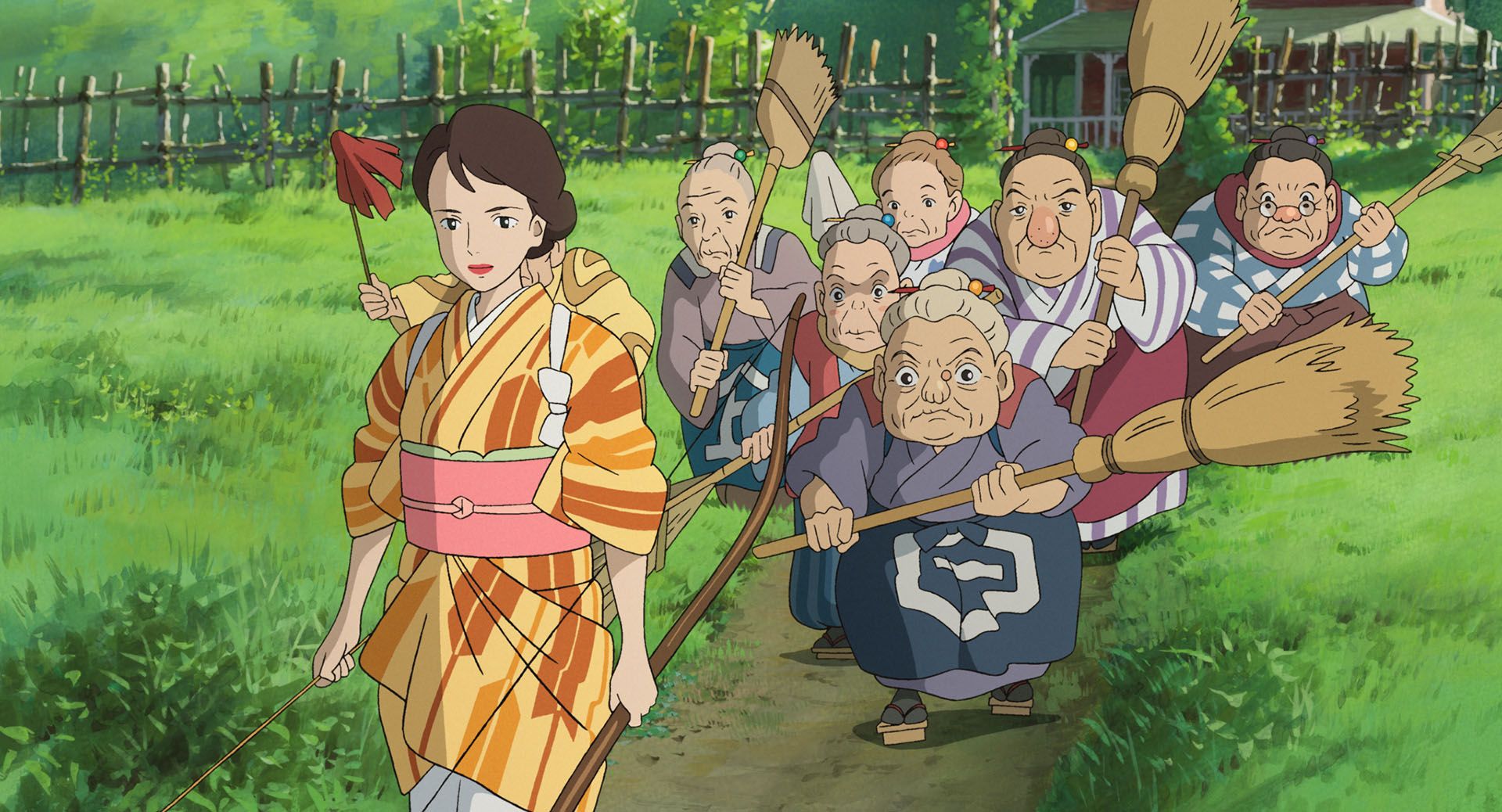
Sales of Genzaburo Yoshino’s 1937 novel How Do You Live? (君たちはどう生きるか, Kimitachi wa Do Ikiru ka? went through the roof when it was announced that the no longer retired Hayao Miyazaki would be directing a new film with the same title. Predictably, Miyazaki’s film turned out not to be an adaptation at all, or at least not a literal sense, but was intensely interested in the question not so much how do you live but how will you? Will you allow the past to make you bitter and live in a world of pain and resentment, or will you choose to live in a world of peace and beauty free of human malice?

These are of course the questions faced by a post-war generation, the children of Miyazaki’s own era who came of age in a time of fear and suffering. Mahito (Soma Santoki), the hero, loses his mother in the firebombing of Tokyo. He runs through a world of shadows to save her from the flames but of course, he cannot. A year later everything has changed. His father has remarried, taking his mother’s younger sister Natsuko (Yoshino Kimura) as his new wife. Natsuko is now pregnant which suggests the relationship began some time ago though Mahito knew nothing of it and had no recollection of ever having met Natsuko before being sent to live in her giant mansion in the country more or less untouched by the war. 

It’s here that Mahito’s own malice rises. He is polite, if sullen, but cannot warm to his new stepmother and resents his father’s relationship with her. Perpetually bothered by a grey heron (Masaki Suda) his first thought is to kill it, crafting a bow and arrow from bamboo and one of the heron’s own feathers. Shunned as the new boy at school he hits himself on the head with a rock while his father, Shoichi (Takuya Kimura), comically vows revenge and lets him stay home. As he points out, there’s not much “education” going on anyway with most of the students pulled away from their studies for “voluntary” labour in service of the war effort in this case agricultural. 

Shoichi has moved to the country to open a factory which it seems produces canopies for fighter planes which is all to say that he is profiting from the business of war, though transgressively referencing the failure in Saipan over breakfast with the mild implication that it might work out alright for him. There is after all a grim reason they’ll be in need of large numbers of aircraft parts in the near future. Mahito’s dark impulses are directly linked to those of militarism and the folly of war. When he finally enters the tower of madness apparently constructed by a great-uncle who went insane through reading too many books, he discovers that his enemies are an ever expanding clan of fascistic, man-eating parakeets led by a Mussolini-like despotic leader attempting to manipulate the Master of the tower. 

Inside the tower is a land out of time, a place for those already dead or in essence an eternal past. It’s here that Mahito is presented with a choice, how will he live? Will he choose malice and destruction, or will he choose to leave and build a new world of beauty and peace above? In many ways, the important point is that the choice is his as it is ours, that we are free to decide and that our choices create the world in which we live. Through his adventures in the tower, Mahito begins to come to terms with his situation and resolves to accept Natsuko as a mother and make friends of those he once considered enemies. When the tower itself crumbles, it takes with it the last vestiges of authoritarianism and tyranny.

Prompting his epiphany, Mahito discovers a copy of How Do You Live? in his room, a present from his late mother inscribed to the grown-up Mahito. He is surrounded by the world’s ugliness, forced into a surprisingly graphic fish gutting session that leaves him wiping away blood, recalling his profusely bleeding head injury and the scar it will forever mark him with. Pelicans imprisoned in the other world meanwhile tell him that they have no choice but to behave as they do for the Master of the Tower neglected to put enough fish in the rivers intending them to destroy rather nurture new life while their young too learn all the wrong lessons. Yet there is beauty and strangeness here too, along with kindness and humanity. Boundlessly inventive, Miyazaki couples surrealist visions of murderous birds and the hellish scenes of a city on fire with Mahito the only figure visible in his pale blue school uniform darting through the soot and the shadows. A vivid symphony of life, the film may in its way be about grief and the pain of moving on but finally discovers a kind of serenity in an accommodation with the present and the eternally unfinished question of how you yourself will live. 


The Boy and the Heron screened as part of this year’s BFI London Film Festival.

Baian the Assassin, M.D. (Part 1) (仕掛人・藤枝梅安, Shunsaku Kawake, 2023)

A traumatised assassin takes it upon himself to get rid of a few villains on realising there’s something not quite right with his latest contract in Shunsaku Kawake’s classic jidaigeki homage, Baian the Assassin, MD: (Part 1) (仕掛人・藤枝梅安, Shikakenin Fujieda Baian). The titular hero is the protagonist of a series of novels by Shotaro Ikenami which have spawned several previous adaptations on the big and small screens. Produced in celebration of Ikenami’s centenary the film, one of two, harks back to the golden age of period drama if with a more contemporary sensibility. 

Baian (Etsushi Toyokawa) is ostensibly an acupuncturist though by night he uses his needles to kill rather than to heal. Hired to take out the second wife an inn owner, Omino (Yuki Amami), his suspicions are raised on realising that he had also been the assassin who killed the man’s first wife two years earlier. He blames himself in part for having agreed to assassinate a woman in the first place, and remains conflicted even after accepting the job wondering if Omino is next in the firing line or if she was actually the one who had the other woman killed in order to usurp her place. 

The film makes clear from the outset what a difficult place Edo could be for a woman as Baian carries out an assassination on a boatman who had raped a samurai’s wife and then blackmailed her into further sexual favours only for her to hire an assassin and then kill herself confessing all. Omino had apparently been the stepdaughter of a gang leader who sexually abused her and then died leaving her with no support and nowhere to turn except to sex work. Maybe no one could blame her for taking advantage of a besotted client to escape her terrible circumstances though getting rid of his wife would obviously be a different matter. Omon (Miho Kanno), a maid Baian takes a liking to while investigating, admits something similar that as a widow with a young son realistically speaking there is nowhere else that could she work to support him except on the fringes of the sex trade. Then again, as she says the previous mistress was strict but it was because she cared, whereas Omino is just mean and self-interested. She’s fired all the old staff and brought in pretty young women who are quite obviously being expected to entertain their male customers in more direct ways. 

In any case, Baian soon finds himself drawn into a wider series of plots when his friend Hiko (Ainosuke Kataoka), a skewer maker who assassinates people with poison darts, is tasked with taking out first a lascivious carpenter and then a rogue samurai who has supposedly raped and kidnapped the daughter of his lord which obviously turns out not quite to be the case. Rape and kidnap are depressingly common in Edo-era society where it is largely women who suffer under a patriarchal society with intensely oppressive social codes that demand female purity. In a post-credits sequence, we come to understand that Hiko too is seeking vengeance for the death of a woman who killed herself and her child after being raped by bandits. Meanwhile, Baian reveals that he had a mild hatred of women himself born of pain in having been abandoned by his mother who left with another man and took only his sister with her after his father’s death. He had to overcome that resentment in order to fulfil himself as a doctor treating women’s bodies but struggles when he realises that someone involved in the case is closely linked with his own traumatic past and death may be the only way to save them. 

Both he and Hiko end up breaking the assassin’s code but only in defence of justice, which might sound odd considering the nature of their work. Nevertheless, they each have their scruples and don’t like to think of themselves as having been used or inadvertently killed someone who didn’t really deserve it. As Baian puts it, the greatest villains may really be “well-meaning weak cowards” though perhaps corrupt lords can’t really complain about falling victim to their own tactics. With noticeably polished production values and atmospheric cinematography, Kawake pays tribute to classic jidaigeki and eventually sets his heroes back on the road awaiting the next battle for justice in the distinctly unjust feudal era. 


Baian the Assassin, M.D. (Part 1) screened as part of this year’s Camera Japan.

Original trailer (English subtitles)

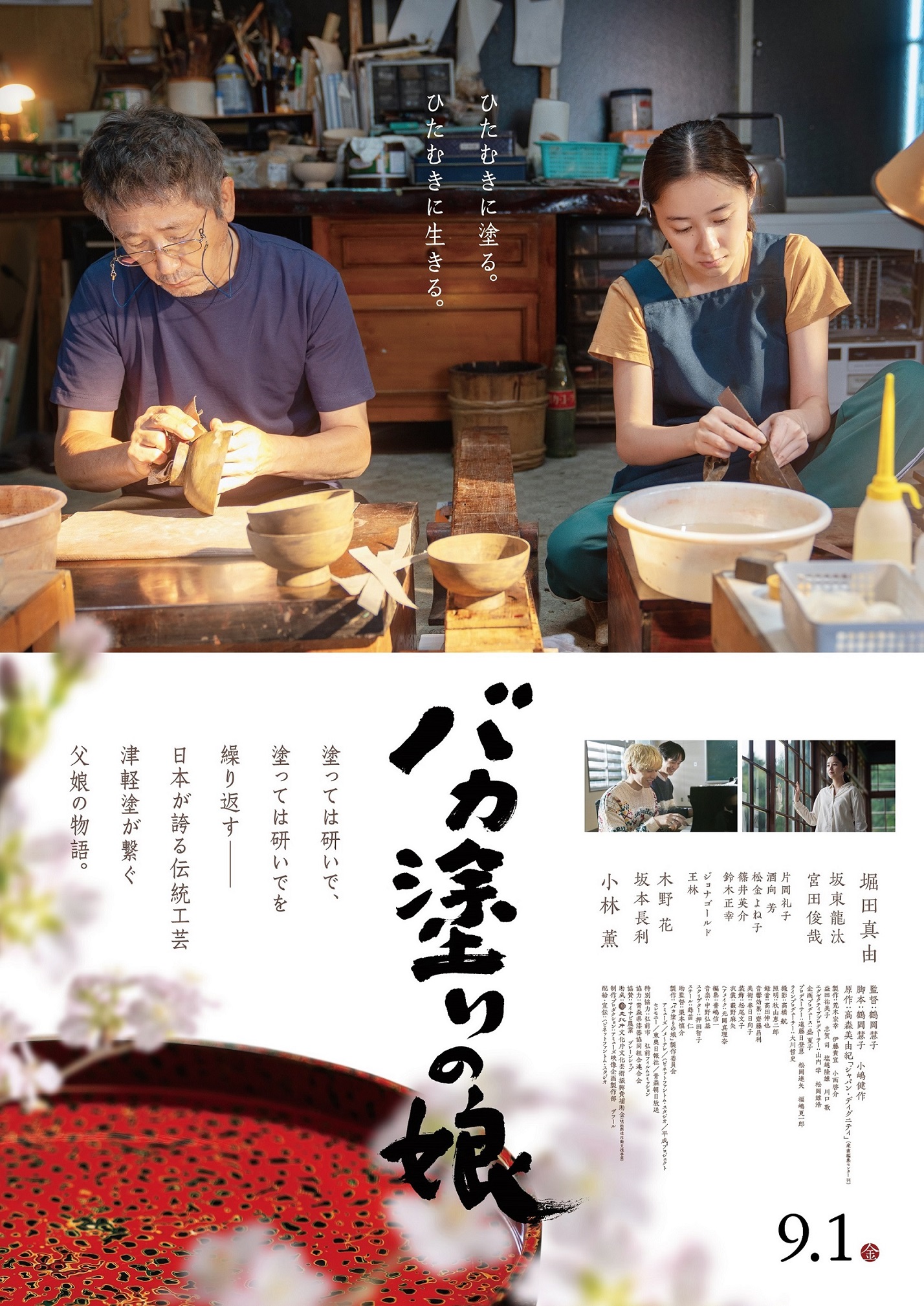
Tsugaru Lacquer Girl (バカ塗りの娘, Keiko Tsuruoka, 2023)

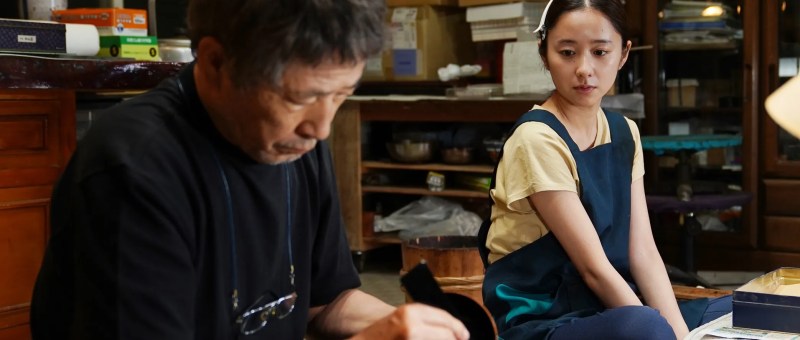
Which traditions should we keep and which should we lose? A young woman finds herself frustrated by outdated gender norms in her desire to take over the family lacquerware business in Keiko Tsuruoka’s gentle rural drama, Tsugaru Lacquer Girl (バカ塗りの娘, Bakanuri no Musume). While her family, save older brother Yu (Ryota Bando) who has already rejected lacquerware, do nothing but run her down and claim she’ll never be a success at anything all she wants to do is devote her life to a traditional craft her father no longer believes has any kind of future. 

Even so, Seishiro (Kaoru Kobayashi) is dead set on Yu taking over the business to the point that they have become semi-estranged. He calls Miyako (Mayu Hotta) “clumsy” and complains that she has no aptitude for anything unlike Yu who was always good at anything he tried. Miyako too later suggests that she was her brother’s opposite, while he was cheerful and outgoing she is shy and melancholy but then perhaps it’s hard to be cheerful when everyone’s always telling you you’re useless and doing everything wrong. In an interesting parallel, Yu is also trapped by outdated social codes in that he is gay and he and his partner have decided to move to London where they can legally get married and live their life out and proud in a way they feel they cannot do in contemporary Japan. 

Lacking other direction in her life, Miyako has been working a part-time job in a local supermarket which she hates while her father occasionally allows her to help him finish big orders though it’s clear her salary is now their main source of financial support. A local inn keeper who is a good customer of theirs explains to some of his guests that craftsmen rarely construct large pieces such as tables because they are no longer cost effective while fewer young people are willing to take up apprenticeships leaving the traditional art in danger of dying out despite the frequent remarks that everything tastes better out of a lacquerware bowl which is after all in the modern parlance “sustainable” in that it will last for many decades and can easily be repaired if damaged. 

Seishiro doesn’t seem to have a reason for rejecting the idea that Miyako might take over aside from basic sexism in preferring to hand the business over to his first born son. It might be tempting to think that he dissuades her because he thinks there isn’t a future in lacquerware, but if that were the case he could simply retire. Her mother (Reiko Kataoka), who left the family some years ago in part it seems because of her own animosity towards lacquerware and its lack of financial promise, seems to feel much the same comparing Miyako to a more successful cousin who has kids and a high powered job at an international trading firm, telling her that she should be settling down and getting married suggesting that she is simply incapable of becoming a successful lacquerware artist and should at best keep it as a hobby. 

Her mother had also shut down her desire to learn piano as a child by telling her there was no point because she’d never be good at it. Miyako’s decision to prove herself by re-laquering an abandoned piano in her disused school is then an act of rebellion against both parents showing them what she can and will achieve along with the direction she has chosen for her life. Not everyone respects it even if her father begins to come around but really it doesn’t matter because the decision is hers alone whatever anyone else might have said. Far from being insular, the embrace of traditional culture gives Miyako new opportunities and allows her to grow in confidence until she’s finally ready to set off along her own path. Even so, it seems there are some traditions she thinks it would be better to lose, such as her father’s sexism and the homophobia that has forced her brother to emigrate in order to live a happy life just as he is. They call it “fools lacquer” because no one but a fool would go to all this trouble to make a bowl but in many ways that’s the point. Miyako pours all of herself in to the lacquer, piling layer on layer dotted by handfuls of thrown rice that give it its pattern much as she herself is slowly tempered by the world around her.


Tsugaru Lacquer Girl screened as part of this year’s Camera Japan.

Original trailer (English subtitles)

The Sea of Genkai (任侠外伝 玄海灘, Juro Kara, 1976)

Juro Kara was an avant-garde playwright and theatre practitioner whose work was a part of the Little Theatre Movement which rejected conventional naturalism and prioritised the physicality of the actor over text and dialogue. Though he performed as an actor in films by other avant-garde filmmakers such as Shuji Terayama and Nagisa Oshima, he directed only one film. By these standards, the The Sea of Genkai (任侠外伝 玄海灘, Ninkyo Gaiden: Genkai Nada), a co-production with the Art Theatre Guild, may seem surprisingly conventional, but is also highly unusual not only in ATG’s filmography but also in its subversions of the yakuza film. 

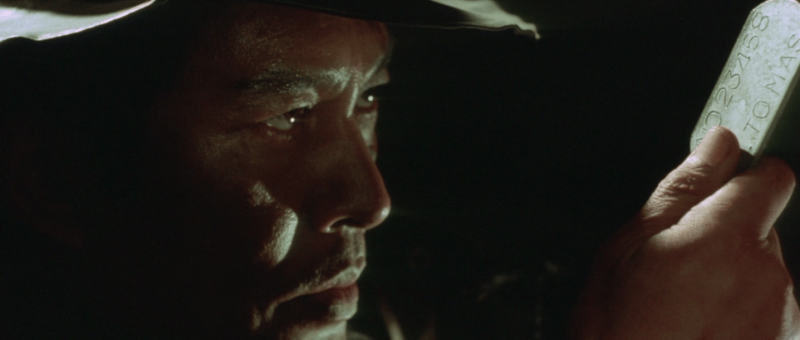
The Japanese title is prefaced by “ninkyo gaiden” which makes it sound like a spin-off to a ninkyo eiga or chivalrous gangster movie, which turns out to be incredibly ironic because there is no chivalry or honour here only cruelty and exploitation. Set in the port of Shimonoseki where boats leave for Korea, the film follows dejected petty yakuza Kondo (Noboru Ando) as fate finally catches up with him. He and his boss Sawaki (Jo Shishido) were once students together and took a job in Busan dealing with the corpses of American soldiers killed in the Korean War. Sent to deliver dog tags to widows, Sawaki spits in a distraught woman’s face and then attempts to rape her, only there is another couple in her home and the man soon wakes to challenge him. Kondo and Sawaki are then drawn into a brutal and ugly fight during which Kondo knocks out the man while Sawaki rapes the widow. The other woman then threatens them with a knife, taking back the dog tag only for Sawaki to pounce and strangle her. Sawaki then flees the scene confused by what he’s done, but Kondo stays behind and rapes the second woman’s corpse before leaving her for dead. 

Kondo later relates that he’s been unable to sleep with women ever since his experience of necrophilia in Korea in 1951. Kura often cuts back to the bundle of dog tags Kondo has been keeping all this time which hang by his window like a wind chime. He watches them sway and hears them jingle with the violent motion of Sawaki’s raping the woman, hanging that of, presumably, a random man around the second woman’s neck as he in turn rapes her body. He later finds a woman who reminds him of the one he raped while dead among a cohort of those he’s in the process of sex trafficking who has unwittingly put on one of the dog tags like an ironic necklace while taking a bath in his apartment on the invitation of his more sensitive associate Taguchi (Jinpachi Nezu). On catching sight of Kojun (Reisen Ri), he’s struck by a literal flashback that is a clear homage to Henri-Georges Clouzot’s Les Diaboliques as he watches a “dead” woman rise from a bath. Later he rapes her too, presumably the first (though not the last) “living” woman he’s had sexual contact with in 25 years. 

The dog tags take on a still more ironic relevance in the Korean song which plays over the opening titles and is sung frequently by the trafficked women. The song is sweet and innocent, narrated by a woman who is preparing a “flower garland” for someone that she loves, but its imagery is subverted in Kondo’s grim necklace of dog tags taken from fallen men. Even Sawaki describes him as someone who has been dead for 20 years while preparing to sacrifice him to curry favour with their creepy Tokyo boss Tahara (Taka Ohkubo) who permanently wears black gloves on both hands even while shirtless, while Kondo later sings a song characterising himself as a “black dog” who never stood a chance in this broken world of ruined dreams. Penned by Kura himself and performed by Ando, this song more clearly reflects his absurdist dialogue style in its deeply melancholy imagery as Kondo fully succumbs to his image of death. 

Kondo’s actions come to emblematise the continued violence inflicted on the bodies of Korean women by Japanese men from the colonial era onwards. The woman from the bath, Kojun, suffers continually throughout the film and is later forced to perform in strip shows by the Sawaki gang. She is clever, and fierce, but the world is all against her and the only answers that she ever gets as to why her “uncle” forced her to stowaway on a smuggling boat to Japan only further deepen the wounds inflicted by a deeply corrupted, imperialistic patriarchy. Kojun develops a fondess for Taguchi because he is the only man who doesn’t try to rape her and in fact saves her from being raped though later said to be impotent and rejected by the other gang members for his refusal to participate in their despoiling of the Korean women. Bloodstained underwear becomes a symbol of sexualised violence countered only by the plain white pairs Kojun later buys for Taguchi after replacing her own ruined clothing.  

She and Taguchi attempt to protect themselves by bringing the receipts, threatening to release the smuggling account books and expose a host of dodgy dealings if the Sawaki gang come for them, but in the end there is no escape. Taguchi finds himself wading through oil-soaked waters with his dreams in ruins before finally breaking the chain though it’s unclear if it will really free him. Bleak beyond measure in its deeply tragic denouement, Kara’s intense drama offers no respite from its nihilistic world of violence and exploitation and leaves us quite literally floundering in a dark sea of inevitable corruption. 


Trailer (no subtitles)

꽃목걸이 – 이영숙 (1972)

(꽃목걸이 = “flower necklace”. There doesn’t seem to be an official romanisation of singer 이영숙 (李英淑)’s name, but it does appear in a few places as “‘Iyeongsuk”, or “Lee Young Sook”. A contemporary romanisation would render it as “Lee Yeong-suk”)

Princess Mononoke (もののけ姫, Hayao Miyazaki, 1997)

“So you say you’re under a curse? So what? So’s the whole damn world.” The world is indeed cursed in Hayao Miyazaki’s landmark 1997 animation Princess Mononoke (もののけ姫, Mononoke-hime). As the greedy monk insists, “there are angry ghosts all around us. Dead from wars, sickness, starvation. And no one cares”. Yet as an impassioned parable as it is about the destructive forces of industrialisation, Miyazaki’s mystical drama is really about balance and duality along with the necessity of harmony and co-existence with nature red in tooth and claw. 

Young prince Ashitaka (Yoji Matsuda) already lives in what seems to be perfect harmony with the natural world, but his idyllic existence in an ancient clan long exiled by the emperor is disturbed one day by a marauding giant boar chased out of the forest having been turned into a demon consumed with hate and resentment. Ashitaka first tries reasoning with the beast, but is finally forced to put it out of its misery to protect the village and is infected himself in the process. Now unable to stay lest he endanger his community, Ashitaka ventures West in search of the corruption which sent the boar hurtling towards his home. 

What he eventually comes to is an industrial settlement, Irontown, ruled by Lady Eboshi (Yuko Tanaka) who ought by all rights to be a villain in her casual disregard of or active hostility towards unruly nature which her industrialisation pollutes. But then as we can see Lady Eboshi is a good and compassionate leader who has erected a community of the marginalised buying out the contracts of indentured sex workers and freeing them to labour in her ironworks while taking in lepers to manufacture her futuristic firearms. Uncharitably, one could also say that she’s chosen these people because they have little power and will be more likely to put up with hardship and exploitation without complaint because it’s better than the lives they lived before, but it does it does seem that she has her heart in the right place as far as her people are concerned determined to build a community of mutual solidarity between workers. 

Conversely, the titular Princess Mononoke, San (Yuriko Ishida), ought by rights to be the heroine but she and the wolf deities she lives with are also violent and unforgiving in their hatred of humans as determined to wipe out the threat presented by Lady Eboshi as she is them. Ashitaka was dispatched to be a peacemaker, to see with eyes unclouded by hate, in an attempt to find common ground and a way that the forest and humanity can live together because in reality one cannot survive without the other. He is by turns disappointed with each of them but holds compassion for both while a tertiary political threat lingers on the horizon in the machinations of shady priest Jigo (Kaoru Kobayashi) and the emperor who wants the head the of the Forest Spirit because he believes it will confer immortality. Lady Eboshi, who otherwise appears to reject the feudal order, intends to give the emperor the head in order to gain protection from overreaching lord Asano who hopes to capture the capitalistic potential of Irontown for himself. 

Jigo is an embodiment of humanity’s greed and its destructive potential, not caring that severing the Forest Spirit’s head will cause untold destruction in which any financial gain he might make would be all but irrelevant. His role is even more ironic given that he is a priest who has supposedly rejected material desire describing himself as a monk just trying to get by while seemingly willing to manipulate and betray almost anyone in his quest for gold. Lady Eboshi wants to improve conditions for her community while San essentially wants the same but Jigo just wants to improve things for Jigo and no one else. 

What Ashitaka wants is to cure his curse by restoring the balance between the human world and the natural in the creation of a society in which neither need be a threat to the other. Thus he pledges to help rebuild Irontown along less destructive lines while entrusting the forest to San to protect though she finds herself unable to forgive humanity for the destruction it has already wrought and may do again. Even so, as Ashitaka says, “it’s time for us both to live” hinting at a kind of rebirth and a new beginning free from the old authority be it the Forest Spirit or the emperor and the feudal order in a new world of freedom and equality. 


Princess Mononoke screens on 35mm at Japan Society New York on July 22.

Trailer (english subtitles)

Untamagiru (ウンタマギルー, Go Takamine, 1989)

“My country is not part of America or Japan! I am a child of Ryukyu!” the hero of Go Takamine’s musical fable Untamagiru ( ウンタマギルー) finds himself shouting after having unexpectedly acquired godlike powers and used them to aid the Independence Movement. Apparently inspired by a legendary local figure, Takamine’s quasi-musical like his earlier Paradise View finds the Okinawan islands at a turning point considering three possible futures: to maintain the status quo under American rule, to return to Japanese sovereignty, or finally to acquire their independence though the last of these seems to be nothing more than an idealistic pipe dream. 

Takamine begins and ends with the same scene changing only the location and the identity of a key player while the hero, Giru (Kaoru Kobayashi), drives a tiny truck in a small circle to turn the grinder that presses the sugarcane. Giru is however mainly casting looks at Mare (Chikako Aoyama), the voluptuous daughter of his taskmaster boss Nishibaru, as she languishes under a small shelter smoking pigweed from a shisha pipe. Giru later finds the courage to ask her to accompany him to a beach party, which she does, the pair sneaking off to a secluded cove near the forest where they make love. The problem is that, as Giru discovers, Mare is actually an anthropomorphised pig that Nishibaru was raising as a wife for the Forest God so now Nishibaru has it in for him. Framed for starting a fire at the plantation he’s encouraged to flee to the forest by his sister, Chiru (Jun Togawa), who has a knack for animal dream divination, and is aided by a tree spirit whose child he once saved who grants him special demi-god powers that enable him to survive the curse which otherwise falls on all who sleep with Mare. 

It’s these new powers which give Giru a new sense of possibility allowing him to become a kind of Robin Hood playing both sides off against each other from the middle of the forest, pinching meat from Japanese companies and redistributing it to the local community, and pilfering weaponry from the American bases to give to the independence movement. The two sides are represented in the two respective bosses, the blind and castrated Nishibaru, and the American commissioner Kamajisar who as Chiru puts it cares for animals more than people but is also seen injecting himself with the blood of dogs and pigs. “I am absolute” Kamajisar insists, claiming that Okinawa is a possession of the American military pointing out that 90% of the population feels themselves to be different from the Japanese while simultaneously describing the possibility of independence as nothing more than a fairytale. 

Yet Untamagiru comes to represent the face of rebellion, resisting not just political oppression but social and economic in targeting Japanese businesses and redistributing their goods to the local poor becoming a folk hero in the process. Not everyone is as immediately happy about this, the owner of the brothel where his sister works asking him to stop giving money to the poor because their business can’t cope with the sudden demand while she personally looks down on their new clientele and fears they’re damaging her upscale brand. Even so even Untamagiru eventually falls victim to his own hubris, struck down while ironically enough agreeing to play himself in a traditional stage performance inspired by his life and deeds leaving only the idea of himself behind as a kind of talisman for those who had in him found a sense of hope and possibility. 

Then again could all of this have been a dream? “Poor people are terrible, aren’t they? They’ll even try to steal the end of people’s dreams” turncoat Utou chides Giru on catching him napping assuming that he dreams of Mare though her words have a degree of sense to them in the elliptical passage of time in which we move from one “dream” to another just as Okinawa itself shifts between two states, two different rulers, and finds itself in the middle once again driving round in circles looking at something it wants but can’t have and in the end it seems may be destroyed out of spite. A magical realist fable filled with its own strangeness in its dream divinations, ethereal forest deities, shapeshifting pigs, and the constant refrains of the barbershop band who narrate the whole show with caustic wit through traditional Okinawan musical performance Takamine’s oneiric tale ends in symbolic apocalypse, “From now on Okinawa is Japan”. 


Untamagiru screens at Japan Society New York May 21 at 7pm as part of Visions of Okinawa: Cinematic Reflections