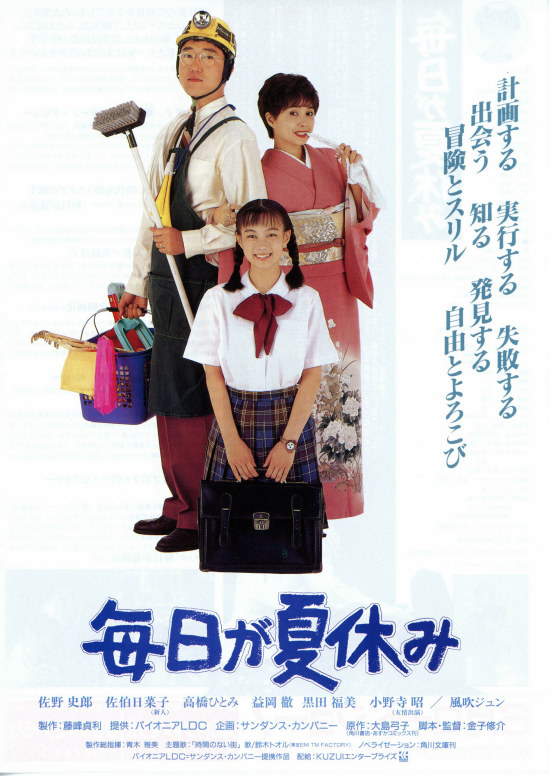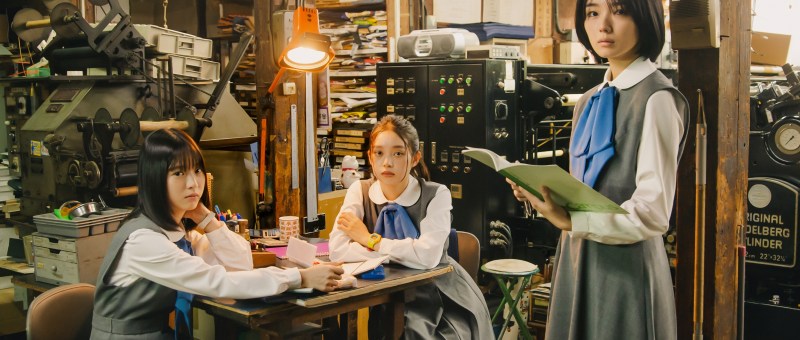
The Scoop! (新米記者トロッ子 私がやらねば誰がやる!, Keiichi Kobayashi, 2024)

The print media industry in Japan has often come in for criticism because of its perceived toothlessness in which it is often afraid of speaking truth to power lest it lose its access. Of course, as we’ve seen all too well just recently, that’s not a problem limited to Japan, but it’s something that’s preoccupied the students at the centre of Keiichi Kobayashi’s teen drama The Scoop! (新米記者トロッ子 私がやらねば誰がやる!, Shinmai Kisha Torokko: Watashi ga Yaraneba Dareka ga Yaru) whose unofficial newspaper club is threatened by the school because of its tendency to expose scandal and oppose the elitism which has otherwise taken over the institution.

Yui (Karin Fujiyoshi) only enrolled here because of the famous literature club and the possibility of meeting her idol, Konoha Midorimachi, the winner of a prestigious student writing competition. But as she quickly finds out, the Literature Club is pretty high up in the school hierarchy and only really open to those in the “advanced” class. All of its members wear red scarves to distinguish them from the other students who wear blue. You have to take a test to get in, but Yui’s dreams end before they’ve even started when she’s hit by a rogue drone and knocked out. They won’t let her retake the test because they say it would be unfair to the other students, but the club president, Mari (Rinka Kumada), has another proposition for her. It turns out that Konoha Midorimachi isn’t a member after all but a mysterious person using a pen name. Mari wants to know who it is too so she suggests they team up to find out. Following a lead to the unofficial Newspaper Club, Mari advises Yui to sign up there and win their trust to find out Konoha’s true identity on the promise of being admitted to the Literature Club once she’s solved the mystery.

Yui isn’t really happy with this plan in part because the Newspaper Club has a bad reputation for being a bunch of cranks and nerds. The Newspaper Club isn’t really all that keen on talking about Konoha either but is glad to have Yui on board while she also begins to embrace the opportunity to hone a different side to her writing skills. While there, she’s confused by the tactics employed the editor, Kasane (Akari Takaishi), whom she describes as more like a con-artist than a journalist as she employs some unorthodox methods to get to the truth, but also wakes up to the myriad problems at the school and comes to understand that the newspaper is necessary for exposing them. 

This does not, however, endear them to the headmaster, Numahara (Masahiro Takashima), who is a fascistic elitist intent on ruling the school with an iron fist. Backed into a corner, he agrees to make the Newspaper Club “official” with funding from the school but only as a gambit to control it. If Kasane accepts his offer, they will have to abide by his rules which means puff pieces and propaganda only. “Submit to me,” he snarls, inappropriately pinning the teenage Kasane to a wall while making her an ultimatum to join his side or get the hell out. “Women should be compliant,” he advises shortly before Kasane socks him on the jaw. What happens after that is a neutering of the paper while Numahara strengthens the elitism of the school by deepening the privileges held by the so-called “advanced” class represented by the Literature Club. 

The Japanese title of the film is the more evocative “Rookie Reporter “Trolley”: If I don’t do it, who will?” As Kasane had said to Numahara, silence changes nothing. Kasane later claims that she started the Newspaper Club because she lost faith in the power of fiction, but also wanted to bring about real change and expose Numahara’s corruption. Though their paper is suppressed, they do eventually manage to bring about something like a more egalitarian revolution and expose Numahara for what he really is by using the same tactics he used against them. In some ways, it’s an allegory for the wider society and an advocation for the power of journalism to bring about real change by refusing to shrink from the truth or be cowed by those in power, as much it is a coming-of-age tale in which the heroine learns that things aren’t always what they seem and a club that’s founded on the principle of excluding others isn’t one you want to join.


The Scoop! screens as part of this year’s Japan Foundation Touring Film Programme.

Trailer (English subtitles)

Gold Kingdom and Water Kingdom (金の国 水の国, Kotono Watanabe, 2022)

After centuries of conflict, two feuding countries finally begin to put the past behind them to work for a common future in Kotono Watanabe’s animated fantasy romance, Gold Kingdom and Water Kingdom (金の国 水の国, Kin no Kuni Mizu no Kuni). Adapted from the manga by Nao Iwamoto, this is very much a story of coming together to create a better future for all in which it’s always better to follow the most difficult path if it leads to longterm peace rather than opting for a quick fix like a dynastic marriage that won’t take place for another fifty years. 

In this case, the dynastic marriage actually works out but only because romantic heroes Sara (Minami Hamabe) and Naranbayar (Kento Kaku) end up meeting by chance and falling in love organically despite the class disparity and cultural differences between them. The kingdoms of Alhamit and Balkari had been feuding in part for the petty reasons of a dog and cat respectively doing their business on the wrong side of the border wall erected after previous war. Neither nation being very much interested in the dynastic marriage proposed by the previous generation in which Alhamit would give its most beautiful woman as a wife to Balkari’s cleverest man, Alhamit sent a cat instead while Balkari sent a dog. Poor Balkari engineer Naranbayar simply laughed off his new “bride” while Princess Sara of Alhamit decided to go along with the ruse knowing that to kick up a fuss would likely send both nations back to war. 

They happen to meet when Sara transgressively ventures beyond the wall in search of her dog, Lukman, who has fallen in a hole in the forest. With her pretty sisters needling her, Sara asks Naranbayar to pretend to be her new husband, little realising that he is the man she is intended to marry. The youngest of four sisters, Sara has always felt inferior and fears that she cannot live up to the title of Alhamit’s most beautiful woman but begins to fall for Naranbayar who is in fact very clever but also kind in the way most of her family aren’t. Naranbayar genuinely cares about the people of Alhamit and quickly works out that in this incredibly wealthy, “golden” desert city they will run out of water within 50 years while water is something the poor nation of Balkari has in abundance. 

An alliance will save the lives of people in Alhamit, but also also benefit those of Balkari in boosting its economy but not everyone is motivated towards a diplomatic solution with many in the court clearly agitating for war in which they would simply conquer Balkari to capture its resources. The King is under pressure in thinking of his historical legacy, not wanting to be seen as a weak monarch as his namesake earlier was in having restored with relations with Balkari rather than seeking to dominate it militarily. Under the sway of potentially corrupt shaman Piripappa (Chafurin) he rules with an authoritarian fist, while his haughty daughter Leopoldine (Keiko Toda) has appointed a handsome actor as an advisor to signal her opposition. 

Only through the genuine love which emerges between Sara and Naranbayar can the country be saved in turning away from pointless acrimony towards a more open future marked by mutual cooperation and friendship between two equal nations. Through falling in love with Naranbayar, Sara grows in confidence and learns to see herself as beautiful no longer inferior to her sisters but playing a full part in the life of the court as they work together to solve the water issue and return life to their arid land. Beautifully designed with its Middle-Eastern aesthetics and strong contrast between the desert kingdom of Alhamit and the beautiful forests of Balkari, the film also features charming paper art bookends and a watercolour credits sequence depicting a happier future for both nations as they forge a new society together. Heartfelt in its central romance, Watanabe’s charming love story positions cross cultural connection as the best means of overcoming centuries of pointless conflict along with allowing each of its heroes to become more of themselves as they work together to create a new world of love and peace in which all can prosper and live in happy harmony. 


Gold Kingdom and Water Kingdom screened as part of this year’s Nippon Connection.

International trailer (English subtitles)

his (Rikiya Imaizumi, 2020)

Though Japanese society is often regarded as comparatively liberal, that liberality can sometimes reflect a superficial politeness and respect of discretion more than true acceptance. Though several prefectures have now made local provision for same sex unions, Japan lacks a basic anti-discrimination law at the national level protecting the rights of LGBTQ+ people and has often been slow to accommodate social change especially when it comes to the organisation of the family unit. The journey of the two men at the centre of Rikiya Imaizumi’s his, a sequel to the TV drama of the same name set some years earlier, perhaps travels at a rapid pace from internalised homophobia to the acceptance of identity and foundation of a home but mirrors the path of society at large as it edges its way towards the truly liberal in which all are free to live in the way they choose. 

Beginning with an ending, Imaizumi opens in the “past” as Shun (Hio Miyazawa), now an isolated young man living alone in the country, dwells on ancient heartbreak as his first love Nagisa (Kisetsu Fujiwara) abruptly breaks up with him as they prepare to graduate from university. We subsequently discover that Shun got a regular salaryman job but remained in the closet only for rumours to circulate around him at work forcing him to endure the casual homophobia of his co-workers at the compulsory nomikai all the while denying his true identity. This seems to be the reason that he’s taken up the offer of cheap rural housing designed to bring the young back to the depopulated countryside and has been largely keeping himself to himself, growing his own produce and deliberately keeping the locals at arms’ length. All that starts to change, however, when Nagisa suddenly turns up on his doorstep with his six-year-old daughter Sora (Sakura Sotomura) in tow. 

Though not exactly overjoyed, Shun allows the pair to stay but remains conflicted unsure what it is Nagisa wants from him and also fearful of his new life being derailed should the local community discover what it is that he’s so obviously in hiding from. Nagisa, meanwhile, apparently broke up with him for the same reasons, afraid to continue into his adult life as an openly gay man eventually travelling to Australia where he drifted into a relationship with a Japanese woman, Rena (Wakana Matsumoto), working as an interpreter with whom he later conceived a child and formed a conventional family. Struggling with himself he tried to maintain the facade through casual relationships with men, but discovered that he couldn’t make it work and unlike Shun decided the only way out of his predicament was to embrace his sexuality and attempt to live a more authentic life with the man he never stopped loving. 

Having pursued contradictory solutions to the same problem, the two men find themselves still in some senses at odds even as they reunite in their obvious love for each other. Nagisa envisages for them a family life raising Sora together and with the help of his sympathetic, supportive lawyer intends to have his conviction vindicated by a verdict in law but his former wife, while not openly hostile if obviously hurt and feeling humiliated in having been deceived, wishes to retain custody of her daughter even though she was not the primary caregiver. The court battle opens a veritable can of worms in a fiercely patriarchal, conformist society, Nagisa’s lawyer reminding him that he has an uphill battle because society inherently believes that women are better suited to childrearing. Rena’s lawyer throws the homophobic book at them, describing the relationship between the two men as “eccentric”, implying it cannot be other than harmful to Sora not least because of the bullying and social stigma she may face as a daughter raised by two fathers. Even the judge agrees that the situation is “not exactly normal”, though in this he may have a point in the fact that Nagisa had been a househusband and his wife the breadwinner, still an extraordinarily unusual family setup in a society in which women are expected to shoulder the domestic burden sacrificing their careers in the process. 

Indeed, it’s this same paradox that Nagisa’s female lawyer eventually throws back at Rena, that she cannot claim to adequately care for her daughter while working especially as she is a freelancer whose hours are often unpredictable. Rena had been reluctant to involve her family because of the shame of admitting her marriage has failed and for the reason it has but is later forced to ask her mother for childcare assistance only to receive a curt “I told you so” which speaks volumes as to the quality of their relationship. Meeting in a coffeeshop Rena looks at her mother looking askance with mild though unvoiced disgust at two men holding hands, reflecting both on her unforgiving austerity and her relationship with her granddaughter. The two women obviously differ when it comes to childrearing philosophy, Rena not wanting her daughter to suffer in the same way she has suffered because of her mother’s unforgiving conservatism and is extremely worried on being called to the school and told that Sora, who had previously been so cheerful and outgoing, has become sullen and withdrawn. 

Yet Sora is perhaps the force which allows each of her parents to accept themselves for who they are and embrace their true identities. Worried that she might be a burden to her mother who often drinks and appears to resent her for interfering with her work, Sora wonders why everyone can’t just get along and live together happily. She sees nothing “weird” in her father’s new relationship, though perhaps fails to understand why the four of them might not be able to live together as a family. Supported by Sora, Shun begins accept himself for himself, eventually coming out to the community and finding them entirely unbothered by his revelation bearing out the commonly held belief that small rural communities are often far more liberal than the famously conservative capital. Filled with a sense of love and mutual support, his presents a perhaps idealistic view of the modern society but an infinitely hopeful one as the three adults resolve to be kinder to themselves and others as they move forward together into a happier, more authentic existence. 


his streamed as part of the 2021 Japan Foundation Touring Film Programme.

Original trailer (English subtitles)

Summer Holiday Everyday (毎日が夏休み, Shusuke Kaneko, 1994)

Summer Holiday EverydaySummer Holiday Everyday – It’s certainly an upbeat way to describe unemployment but then everything is improbably upbeat and cheerful in the always sunny world of Shusuke Kaneko’s adaptation of Yumiko Oshima’s shoujo manga. Published in the mid-bubble era of 1988, Oshima’s world is one in which anything is possible but by the time of the live action movie release in 1994 perhaps this was not so much the case. Nevertheless, Kaneko’s film retains the happy-go-lucky tone and offers note of celebration for the unconventional as a path to success and individual happiness.
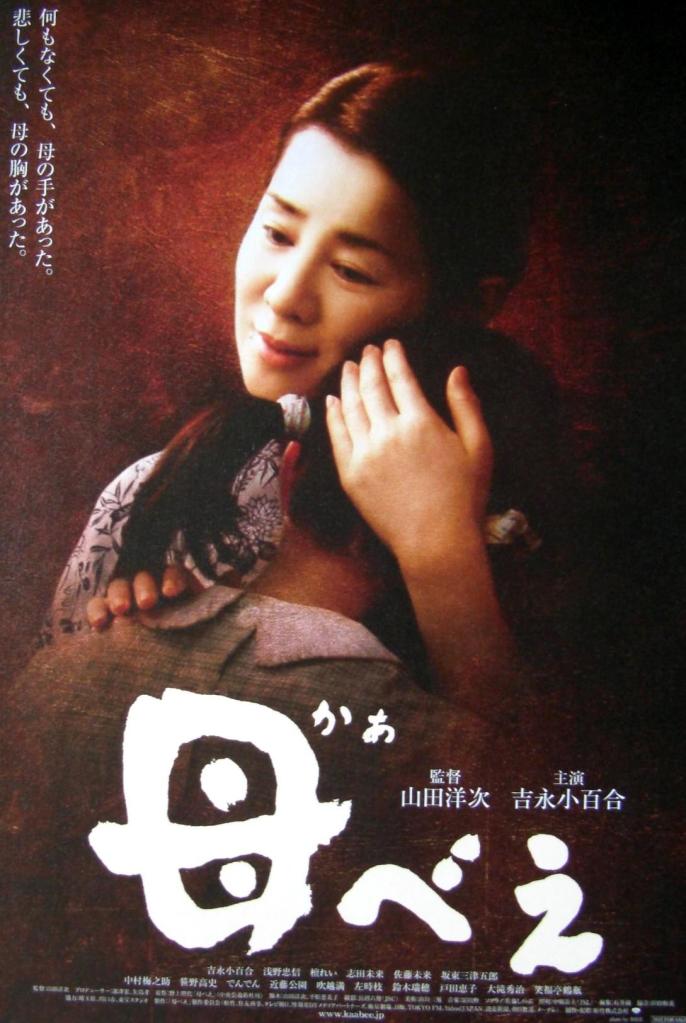
Told from the point of view of 14 year old Sugina (Hinako Saeki) who offers us a voiceover guide to her everyday life, Summer Holiday Everyday (毎日が夏休み, Mainichi ga Natsuyasumi) follows the adventures of the slightly unusual Rinkaiji family. Sugina’s mother is divorced from her father and has remarried a successful salary man, himself a divorcee, ten years ago. The family lives in fairly peaceful domesticity and Sugina’s mother, Yoshiko (Jun Fubuki), even remarks how glad she is that her daughter gets on so well with her step-father, Nariyuki (Shiro Sano), though Sugina claims this is largely because she can’t remember actually speaking to him very much over the last ten years.

The pair are about become closer though it risks tearing their perfectly normal family apart. Sugina has been skipping school due to bullying and spends her days in the local park where, unbeknownst to her, her step-father has also been wasting his days after quitting a job he could no longer stand. After getting over the embarrassment of this accidental encounter, Sugina and Nariyuki confess everything to each other and Nariyuki makes a bold decision. Sugina can quit school (seeing as her grades were terrible anyway) and come work with him in his new enterprise – the Rinakaiji Heart Service, helping the community 24/7 with assistance in those difficult to handle odd jobs everyone needs doing.

Quitting a lucrative and secure job for the risk associated with staring a new business is a difficult decision in any society but is more or less unthinkable in Japan. Yoshiko is beyond stunned by her husband’s decision, not to mention the fact that her daughter has been deceiving her by skipping school and faking her report cards to make it look like her grades were much better than they are. Immediately worrying about what the neighbours will think, Yoshiko finds it hard to deal with the embarrassment of her husband and teenage daughter going door-to-door and doing menial work in the community, especially when she overhears the snickers of gossipy housewives in the local supermarket. For Yoshiko, whose sense of self worth was bound up with having a successful husband employed at a top tier company, Nariyuki’s sudden lurch towards individual freedom has destabilised her entire existence. Her world ceases to make sense.

Yoshiko’s sense of displacement is deepened when the fledgling company’s second job offer comes from Nariyuki’s ex-wife. Beniko (Hitomi Takahashi) left Nariyuki for another man because she failed to appreciate Nariyuki’s gentle charms and he was too mild mannered to fight for his wife even if he loved her deeply. What’s more, Nariyuki’s unconventional approach to life has earned him a spot in the papers and brought the family back to the attention of Sugina’s father, Ejima (Akira Onodera).

Early on Nariyuki states that life’s true radiance is only visible through suffering and later says that pain and suffering are essential parts of human existence. Nariyuki, now making a stand for himself for the first time in his life, remains philosophical in the face of hardship though perhaps has more faith in Yoshiko’s ability to follow him down this untrodden path than was wise. As a son and then a husband, Nariyuki may be a methodical sort but he’s unused to the idea of caring for himself as his comical attempts at doing the housework show. After almost burning the house down several times, Nariyuki does indeed figure out an efficient way of managing the household chores and seeing to Sugina’s education whilst also allowing his wife become the family breadwinner. However, Yoshiko’s new line of work is one she finds both unpleasant and degrading and she probably hoped that Nariyuki would strenuously try to stop her doing it so it’s not quite as much of a progressive approach as might be hoped.

After countless setbacks, humorous adventures, and a major fire Nariyuki’s enterprise begins to catch on. Brought together in shared crisis, the family unit only becomes stronger and more committed to their shared destinies. In fact, the family expands as Sugina rebuilds her relationship with birth father and even gains a new aunt figure in the form of her step-father’s youthful ex-wife. When you love what you do everyday is a holiday, and Sugina’s path, unconventional as it is, is one that leads her into the sunlight guided by Nariyuki’s oddly philosophical wisdom.


Original trailer (no subtitles)

Kabei: Our Mother (母べえ, Yoji Yamada, 2008)

KabeiYoji Yamada’s films have an almost Pavlovian effect in that they send even the most hard hearted of viewers out for tissues even before the title screen has landed. Kabei (母べえ), based on the real life memoirs of script supervisor and frequent Kurosawa collaborator Teruyo Nogami, is a scathing indictment of war, militarism and the madness of nationalist fervour masquerading as a “hahamono”. As such it is engineered to break the hearts of the world, both in its tale of a self sacrificing mother slowly losing everything through no fault of her own but still doing her best for her daughters, and in the crushing inevitably of its ever increasing tragedy.
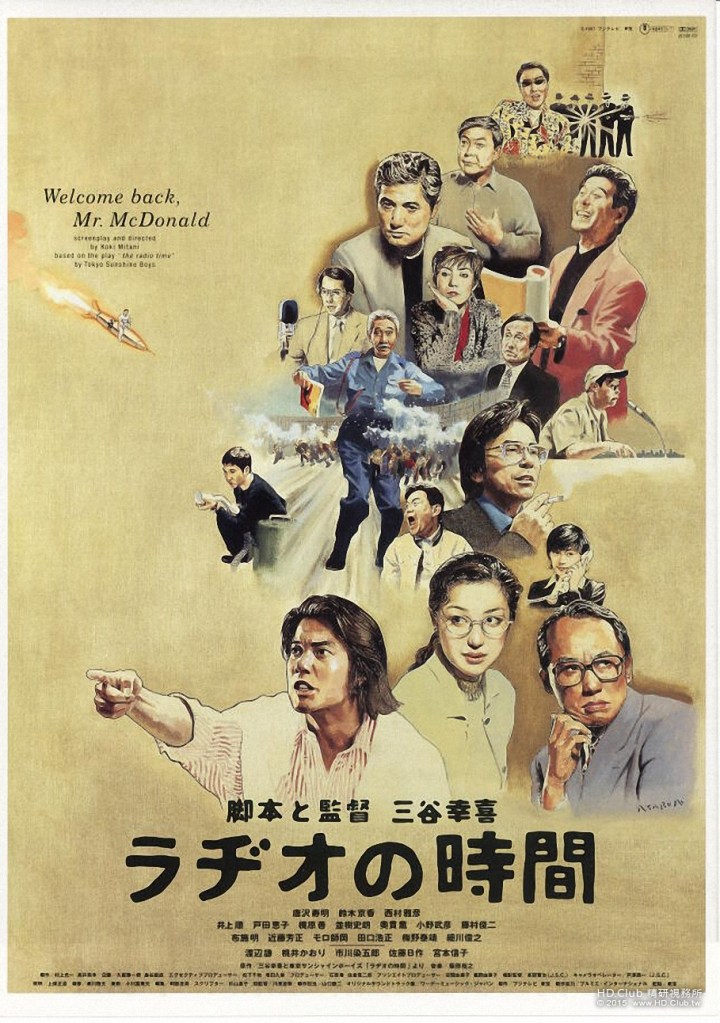
Summer, 1940. The Nogamis are a happy family who each refer to each other by adding the cute suffix of “bei” to their names. The father, Tobei (Bando Mitsugoro X), is a writer and an intellectual opposed to Japan’s increasing militarism and consequently has found himself in both political and financial difficulties as his writing is continually rejected by the censors. Eventually, the secret police come for him, dragging him away from his home in front of his terrified wife and daughters. After Tobei is thrown into jail for his “thought crimes”, the mother, Kabei (Sayuri Yoshinaga), is left alone with her two young girls Hatsuko and Teruyo (Hatsubei and Terubei in family parlance).

Though devastated, Kabei does not give up and continues to try and visit her husband, urging his release and defending his reputation but all to no avail. Thankfully, she does receive assistance from some of her neighbours who, at this point at least, are sympathetic to her plight and even help her get a teaching job to support herself and the children in the absence of her husband. She also finds an ally in the bumbling former student, Yamazaki (Tadanobu Asano), as well as her husband’s sister Hisako (Rei Dan), and her brother (Tsurube Shofukutei) who joins them for a brief spell but ultimately proves a little too earthy for the two young middle class daughters of a dissident professor.

The time passes and life goes on. The war intensifies as do the attitudes of Kabei’s friends and neighbours though the family continues its individual struggle, sticking to their principles but also keeping their heads down. By the war’s end, Kabei has lost almost everything but managed to survive whilst also ensuring her children are fed and healthy. A voice over from the older Teryuo calmly announces the end of the conflict to us in such a matter of fact way that it’s impossible not wonder what all of this was for? All of this suffering, death and loss and what has it led to – even more suffering, death and loss. A senseless waste of lives young and old, futures ruined and families broken.

Yet for all that, and to return to the hahamono, the Nogami girls turned out OK. Successful lives built in the precarious post-war world with careers, husbands and families. Unlike many of the children in the typical mother centric movie, Hatsuko and Teruyo are perfectly aware of the degree to which their mother suffered on their behalf and they are both humbled and grateful for it. Kabei was careful and she kept moving to protect her children in uncertain times. Seen through the eyes of a child, the wartime years are ones of mounting terror as fanatical nationalism takes hold. Bowler hatted men seem to rule everything from the shadows and former friends and neighbours are primed to denounce each other for such crimes as having the audacity to wear lipstick in such austere times. In one notable scene, the neighbourhood committee begins its meeting by bowing at the Imperial Palace, until someone remembers the paper said the Emperor was in a different palace entirely and they all have to bow the other way just in case.

Though the tale is unabashedly sentimental, Yamada mitigates much of the melodrama with his firmly domestic setting. We see the soldiers massing in the background and feel the inevitable march of history but the sense of tragedies both personal and national, overwhelming as it is, is only background to a testament to the strength of ordinary people in trying times. An intense condemnation of the folly of war and the collective madness that is nationalism, Kabei is the story of three women but it’s also the story of a nation which suffered and survived. Now more than ever, the lessons of the past and the sorrow which can only be voiced on the deathbed are the ones which must be heeded, lest more death and loss and suffering will surely follow.


Original trailer (English subtitles)

Welcome Back, Mr. McDonald (ラヂオの時間, Koki Mitani, 1997)

Welcome Back Mr. McDonaldKoki Mitani is one of the most bankable mainstream directors in Japan though his work has rarely travelled outside of his native land. Beginning his career in the theatre, Mitani is the master of modern comedic farce and has the rare talent of being able to ground often absurd scenarios in the  humour that is very much a part of everyday life. Welcome Back, Mr. McDonald (ラヂオの時間, Radio no Jikan) is Mitani’s debut feature in the director’s chair though he previously adapted his own stage plays as screenplays for other directors. This time he sets his scene in the high pressure environment of the production booth of a live radio drama broadcast as the debut script of a shy competition winner is about to get torn to bits by egotistical actors and marred by technical hitches.
Mild-mannered housewife Miyako Suzuki (Kyoka Suzuki ) has won a competition to get her radio play, titled “Woman of Destiny”, on air. A romantic tale of a bored housewife unexpectedly finding love at the pachinko parlour, her story may have a thin layer of autobiography or at least wish fulfilment but at any rate she is very close to her material. Unfortunately, “difficult” actress Nokko (Keiko Toda) has been foisted on the production crew due to entertainment world politics and objects to her character’s name because she once dated a married guy whose wife shared it. Eventually Nokko demands to be called something more interesting like “Mary Jane” (the irony!). At this point, all the other actors start wanting changes too and before you know it Miyako’s gentle tale of forbidden romance has become a gangster crime thriller set in Chicago filled with mobsters and tommy guns!

The writer is god, in one sense. Only, god has been locked out of the room leading to total chaos. Each small change necessitates a series of other changes and seeing as this is all being done live and on the hoof, no one is quite thinking through the implications of each decision. When the actor playing “Mary Jane’s” love interest suddenly goes off book and declares his name is “Donald McDonald” (inspired by left over fast food cartons) and he’s a pilot not a fisherman as agreed (though why would a fisherman be in the mountains of Chicago anyway?), everything goes completely haywire eventually ending up in an outer space based love crisis!

If all this wasn’t enough, someone has also wandered off with the key to the sound effects machine which would be fine if they hadn’t added all the gangster shenanigans in the first place. The show’s producer, Ushijima (Masahiko Nishimura), explains to Miyako at one point that radio has a very important advantage over visual media as you really can do anything even on no budget because your biggest resource is your audience’s imaginations. He has a very real point, though the completely bizarre saga of “sexy female lawyer” Mary Jane, her “Nasa Pilot” (a quick save after “Donald’s” plane is reported missing and someone remembers this slot is sponsored by an airline) true love, and her husband who for some reason is a random German named Heinrich is going to require a significant suspension of disbelief from the confused listeners at home.

As a theatre practitioner Mitani is an expert at creating ensemble comedy and even though he is playing with a large cast and a fast moving environment each of his characters is extremely well drawn. We see the shy writer beginning to lose heart after her story is shredded by the unforgiving production environment whilst also trying to persuade her husband who has turned up unexpectedly to go home before he figures out her script is suspiciously close to their real lives. We also see the production team frantically trying to fulfil their obligations so they can avoid getting into trouble with the higher ups and finally go home for the day. Ushijima is caught in the middle, surrounded by nonchalant yes men and lazy bosses, he’s desperately trying to compromise to keep everything on schedule whereas the jaded director just wants to do his job as written. However, it’s the director who is ultimately most moved by Miyako’s script and eventually decides it does deserve the happy ending that Miyako has been longing for.

By the end of the recording, something of the old magic has returned to the otherwise work-a-day world of the radio studio. They’ve even brought back old fashioned foley effects and retrieved the old school sound guy who’d been relegated to playing his gameboy in the security booth because no one needed his expertise anymore. Nothing went as planned, but everything worked out in the end and it’s happy endings all round both in the real world and in the completely surreal radio play. They might even do a sequel!

Mitani breaks the action every now and then to take us outside of the studio environment and into the cab of a petrol tanker being driven by a strangely dressed trucker (in a brief cameo from Ken Watanabe, no less!) who keeps trying to change the channel for more country influenced Enka but finds himself enthralled by the strange tale of the true love between Mary Jane and Donald mcDonald. We might not be quite as moved as he is, having been party to all the backstage goings on, but we have perhaps laughed more than cried through the almost screwball comedy and farcical set up of Mitani’s spot on depiction of the less than glamorous workings of the fast paced live production environment.


English subtitled trailer:

Patisserie Coin de rue (洋菓子店コアンドル, Yoshihiro Fukagawa, 2011)

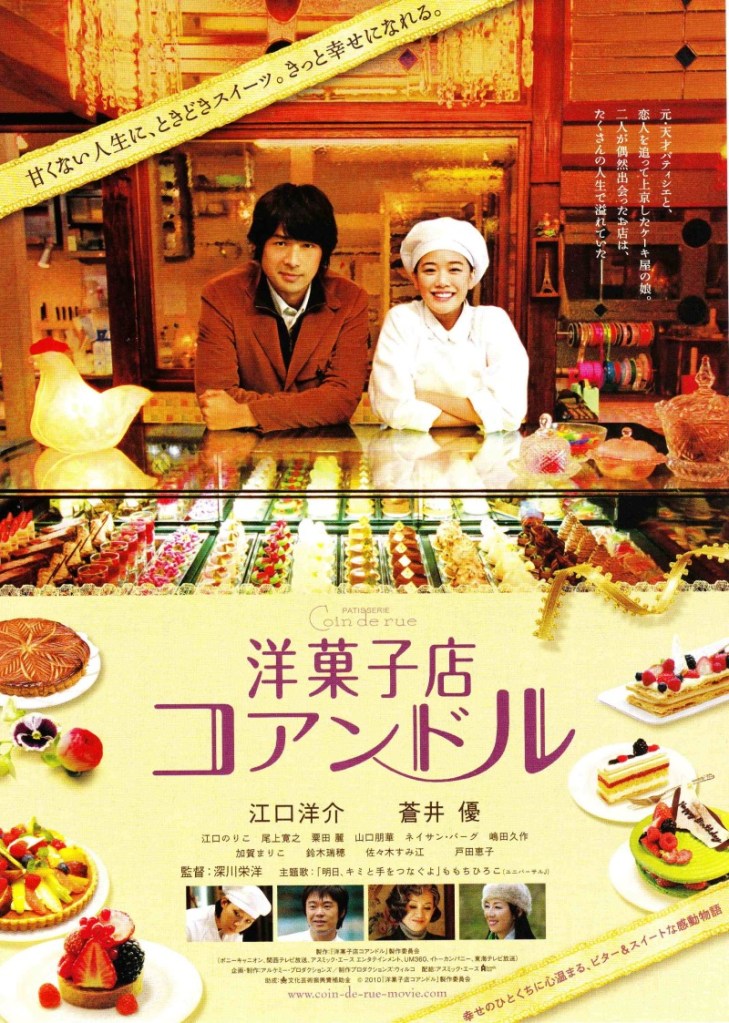
coin de rue posterYou know how it is, when you’re from a small town perhaps you feel like a big fish but when you swim up to the great lake that is the city, you suddenly feel very small. Natsume has come to Tokyo from her rural backwater town in Kagoshima to look for her boyfriend, Umi, who’s not been in contact (even with his parents). When she arrives at the patisserie he’d been working at she discovers that he suddenly quit a while ago without telling anyone where he was going. Natsume is distressed and heartbroken but notices that the cafe is currently hiring and so asks if she may take Umi’s place – after all she grew up helping out at her family’s cake shop!
However, as you might expect, even if her cakes are perfectly nice in a “homecooking” sort of way, they won’t cut it at a top cafe like Patisserie Coin de rue. Natsume is not someone who takes criticism well and is hurt that her skills aren’t appreciated but vows to stay and become the best kind of pastry chef she can be.

At heart, Patisserie Coin de rue (洋菓子店コアンドル, Yougashiten Koandoru) is a fairly generic apprentice story as Natsume starts off as a slightly arrogant country girl with an over inflated opinion of her abilities but gradually develops the humility to help her learn from others around her. Natsume, played by the very talented Yu Aoi, is not an easy woman herself and often rides a rollercoaster of emotions in just a single sentence. She’s loud but passionate and she does work hard even if her over confidence and slapdash approach sometimes cause problems for her fellow workers.

Patisserie Coin de Rue is also refreshing in that it’s one of the few films of this nature that do not attempt to pack in a romantic element. Natsume may have come to Tokyo to look for her boyfriend but no attention is paid to the possibility of winning him back or finding someone else, after calling time on her quest Natsume simply buckles down to learning her craft.

This is doubly true of the film’s secondary plot strand which centres on former international pastry star Tomura (Yosuke Eguchi) who mysteriously abandoned his cooking career eight years ago and now mostly works as a critic with some teaching on the side. He cuts a fairly sad figure as a regular visitor to Patisserie Coin de rue where he’s also an old friend of the owner and Natsume’s mentor, Yuriko. Natsume finally manages to coax him out of his self imposed isolation but the relationship is more paternal than anything else and, thankfully, never attempts to go down any kind of romantic route.

It’s a story that’s familiar enough on its own to have become something of a cliché and Patisserie Coin de rue doesn’t even try to put much of a new spin on it but it does at least carry it off with a decent amount of sophistication. Occasionally the film falls into the televisual but its production values are strong with the tone neatly flitting between mainstream aesthetics and a slightly alienated indie perspective. Of course, being a cake based film there are plenty of enticing shots of the baked goods on offer which do at least create a feast for the eyes.

The saving grace of the film is its leading actors who each turn in naturalistic, nuanced performances even given the lacklustre nature of the script. Yu Aoi carries the film as her surprisingly feisty Natsume dominates each scene she’s in while support is offered by the silent, brooding Yosuke Eguchi and the wise and patient shop owner Yuriko played by Keiko Toda. The film really owes a lot to the talent and commitment of its leading players who help to elevate its rather ordinary nature into something that’s a little less disposable.

That said Patisserie Coin de Rue is a little like a pleasant cafe you find in an unfamiliar area – the coffee’s good and the pastries are pleasant enough, you might drop in again if you’re in this part of town but you probably won’t make a special journey. A little bit formulaic and ultimately too sweet, Patisserie Coin de Rue is a shop bought cake in a boutique box which though enjoyable enough at the time is unlikely to linger long in the memory.


The R3 Hong Kong DVD release of Patisserie Coin de rue includes English subtitles.

(Unsubtitled trailer)


The Magic Hour (ザ・マジックアワー, Koki Mitani, 2008)

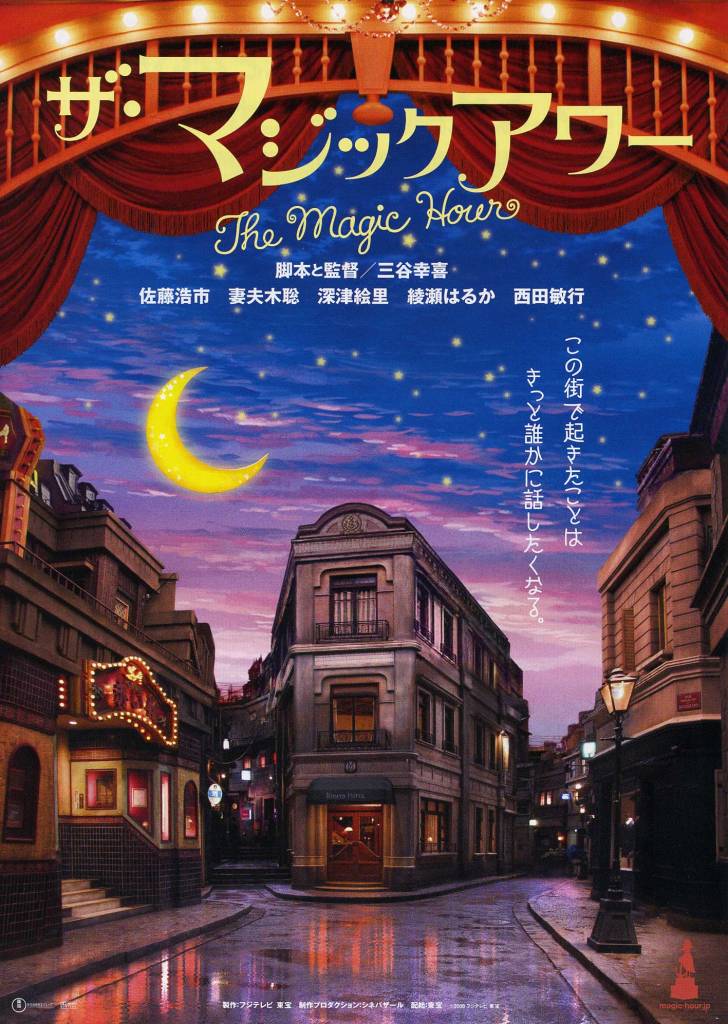
Magic Hour PosterIf there’s one thing you can say about the work of Japan’s great comedy master Koki Mitani, it’s that he knows his cinema. Nowhere is the abundant love of classic cinema tropes more apparent than in 2008’s The Magic Hour (ザ・マジックアワー) which takes the form of an absurdist meta comedy mixing everything from American ‘20s gangster flicks to film noir and screwball comedy to create the ultimate homage to the golden age of the silver screen.

In classic style the film opens with a bunch of goons chasing a scantily clad club owner out of a hotel window. Bingo (Satoshi Tsumabuki) has been hitting the jackpot with the boss’ girl, Mari (Eri Fukatsu), so the two are about to be given a new set of kicks in the latest fashion – cement. Luckily Bingo overhead some of the other guys talking about looking for another gangster, Della Togashi, so he quickly starts talking about him as if he were a long lost friend. The boss, Tessio (Toshiyuki Nishida), gives the pair a reprieve on the condition Bingo tracks down Togashi and brings him in within five days. Slight hitch – Bingo had never heard of Togashi before today and has no idea where to start. Finally, with the help  of some of his bar staff he hatches on the idea of getting a random actor to play the part, seeing as no one knows what Togashi looks like. However, the actor, Murata (Koichi Sato), plays his part a little too well and gets hired to work for the gang all the while thinking it’s just a movie! Pretty much everyone is getting a little more than they bargained for…

If you’re thinking that the oddly American looking 1920s street scene looks a little fake and everyone seems to be overacting like crazy, you wouldn’t be wrong but like everything else there’s a reason for that. What originally looks to be the primary setting for the film is a strange bubble which seems to co-exist with the modern world only its filled with people straight out of The Public Enemy or Scarface who think cement shoes is an efficient way of dealing with traitors. Murata, by contrast, is from our world and is completely oblivious to the strangeness of this movie gangster sound stage universe.

Murata is fixated on the Casablanca-esque final scene of his favourite movie in which a dyed in the wool tough guy entrusts the love of his life to a loyal friend before heading off to face certain death. His own career has not been going particularly well and even if he originally turns down Bingo’s offer as working with a first time director on a film where there’s no script sounds pretty fishy to begin with, circumstances soon find him throwing himself into the mysterious leading role with aplomb. Indulging his long held gangster dreams, Murata becomes the archetypal movie hit-man. He’s giving the performance of his life but has no idea there is no film in the camera.

The “Magic Hour” of the title refers to the twilight time near the end of the day when the light is dying but the conditions are perfect for making a movie. Mitani doesn’t fail to remind us we’re watching a film with constant exclamations of “just like a movie” or “doesn’t this look like a film set”. It’s a Barnum & Bailey world, just as phoney as it can be – but somehow it all just works despite its rather arch, meta approach. By the point we’ve hit Mari sitting on a crescent moon to give us her rendition of I’m Forever Blowing Bubbles (we’re back to The Public Enemy again) we’ve hit peak ‘20s though we scarcely mind at all.

Though he is indeed sending a lot of these classic ideas up, there’s real love here particularly for those golden age Hollywood movies with their wounded tough guys and beautiful chorus girls in need of rescue. Mitani adopts a primarily theatrical tone which meshes well with the absurdist, artificial atmosphere but always makes sure to leave us a fair few clues in the way of laughs. However, probably correctly assuming we know these films as well as he does, Mitani doesn’t give us the typical narrative that would almost write itself (or allow Bingo to write it based on his own trips to the motion picture house). The “bad” guy turns out to be not so bad, the “hero” wasn’t who we thought he was and none of our central guys winds up with a girl. Beautifully silly yet intricately constructed, The Magic Hour is another comedy masterpiece from Mitani which is filled with his characteristic warmth, mild sentimentalism and plenty of off-centre humour of the kind only Mitani can come up with.


The Japanese DVD/blu-ray release of The Magic Hour includes English subtitles.