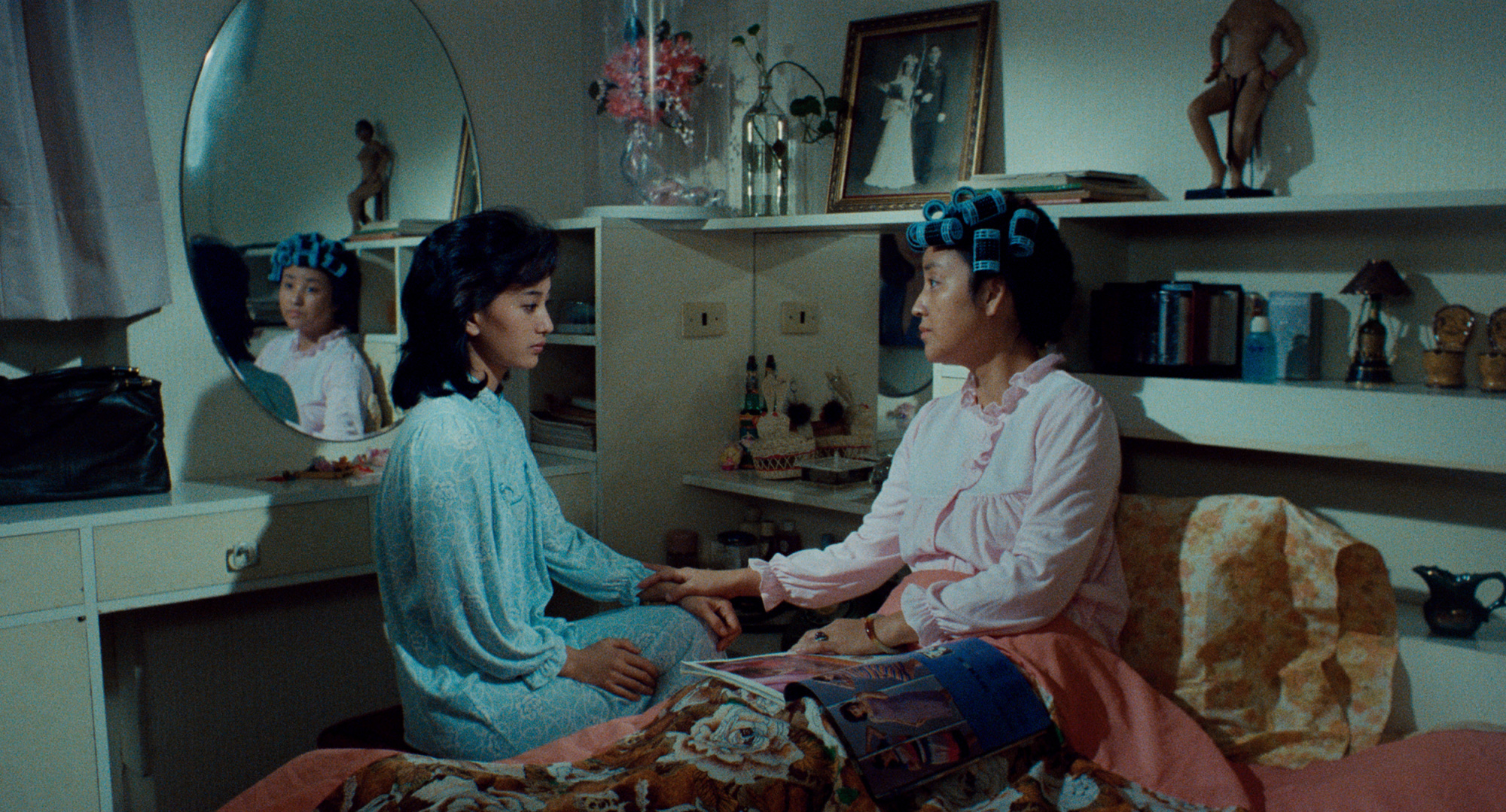
Ah Fei (油麻菜籽, Wan Jen, 1983)

A few minutes into Wan Jen’s familial melodrama Ah Fei (油麻菜籽, yóu má càizǐ), a mother takes her children by the hand and walks to the end of a long jetty. We get the sense that she means jump and take her children with her, that she’s at the end of her tether and sees no other way out for herself, but still she thinks better of it and goes back anyway. Indeed, there isn’t really any way out for Hsin-chin, but there might be for her daughter, Ah Fei, if only Hsin-chin (Chen Chiu-yen) can bring herself to set her free.

Hsin-chin’s own mother died while she was a child and her otherwise sympathetic father later arranged her marriage to a man he thought was “honest” but turned out to be anything but. Shih-chen (Ko I-chen) is violent and irresponsible. He barely works and spends all the money Hsin-chin makes seamstressing on drink, gambling, and other women. Hsin-chin appeals to her father, but he ends up sending her back and siding with Shih-chen. He gives his son-in-law a not altogether stern talking to while encouraging him that there should at least be “civility” between husband and wife. 

We can see that this patriarchal sociality trumps all. Shih-chen originally takes no interest in Ah Fei but only in his son, Ah Shong whom he takes out with him drinking and introduces to his mistress. She buys him a toy sword which both buys the boy’s affection and creates further discord in the marital home as Shih-chen conspiratorially warns him not to tell his mother how he got it. On arriving home, Shin-chen had called for Ah Shong and he had come running in without even taking his shoes off, treading mud all over the floors Ah Fei had just been washing. 

Years later, Hsin-chin asks Shih-chen if he really thinks his son is as useless as he is. Shih-chen doesn’t answer, but it’s obvious that the answer is yes. These patriarchal patterns are quite obviously learned, passed down from fathers to sons in the ingrained codes of manliness. When his mother had tried to punish him when he was caught stealing bananas from a local farmer, Ah Shong turned round and said he’d tell his father her to beat her again if she didn’t stop. There is something sad and ironic in this circulation of violence as she beats her son to discipline him in much the same way her husband inflicts his violence on her and the teachers at Ah Fei’s school whack the pupils’ hands with a ruler when their grades dip below those of the previous paper. Ah Fei is studious and respectful, while Ah Shong is lazy and entitled. When his mother suffers a nasty miscarriage and calls for his help, Ah Shong doesn’t even wake up leaving Ah Fei to run alone through the night to the neighbour’s house so she can get the doctor. 

While the lived in the country, Hsin-chin had cherished her daughter and remarked that there was no point raising sons while Ah Fei is the only one contributing to the family by helping her with the housework. But on their return to Taipei after Shih-chen is caught sleeping with another man’s wife and forced to pay a humiliating fine in compensation, the situation is reversed. Shih-chen appears to mellow. He now stays home painting rather than going out to philander, but is still a figure of male failure who cannot find a job to support his family and leaves the heavy lifting to an increasingly embittered Hsin-chen. Hsin-chen meanwhile concentrates all her efforts on Ah Shong and resents Ah Fei. Though the family pay 200 dollars for Ah Shong’s private school, they begrudge the 30 for Ah Fei’s extra tuition so she can get into high school. Ah Fei doesn’t even want her to finish primary education. A neighbour has heard about an opening at a local factory and Hsin-chin wants her to start right away. It’s only Shih-chen who supports her education and switches his allegiance to Ah Fei rather than Ah Song who has disappointed him. He has come realise that Ah Shong is just like him after all, and seems to have a new degree of awareness about the family’s dynamics. He doesn’t want this life for Ah Fei, while Hsin-chin actively tries to trap her within the domestic space just as she was trapped.

In a repeated motif, Hsin-chin picks up a pair of scissors but can use them only in passive aggressive bouts of counter-productive revenge such as shredding Shih-chen’s suits, chopping the heads off roses to express her frustration, and cutting Ah Fee’s hair so she can’t go back to school after finding out that she had a boyfriend. Even once Ah Fei is a grown woman with a good job in advertising that is actively supporting the family, she struggles to separate herself from her mother who continues to frustrate her love and discourage her from marrying. Some of this is her own bitterness, and some honest advice that Ah Fei’s choice of husband is the most important decision she’ll ever make. Marry a good man and she’ll have a good life. Marry badly and she’ll end up like Hsin-chin knowing nothing but suffering. 

Of course, the crucial element is that Ah Fei has a choice that Hsin-chin never did. But at the same time she struggles to take it or to reject the internalised misogyny that ruled her mother’s life along with the patriarchal social codes that left her unable to leave a bad husband. She is well educated and financially independent so cannot be trapped in the same way her mother was even if her “escape” is ironically bound up with the patriarchal institution of marriage. Only on seeing her in a wedding dress does Hsin-chin finally accept her, reverting to the kind mother she had been in the countryside rather than the embittered old woman she had become in Taipei who is too afraid of her impending loneliness and the spectre of poverty to set her daughter free. Ah Fei’s liberation may speak of that of her generation, travelling from the countryside to a Taipei slum and finally a well-appointed flat in the centre of a rapidly developing city in the twilight of an authoritarian regime, but equally of the interconnected cycles of toxic masculinity, patriarchal entitlement, male failure, and internalised misogyny all seemingly dissolved in a single moment of forgiveness and acceptance.


Ah Fei screened as part of the BFI’s Myriad Voices: Reframing Taiwan New Cinema.

Trailer (Traditional Chinese / English subtitles)
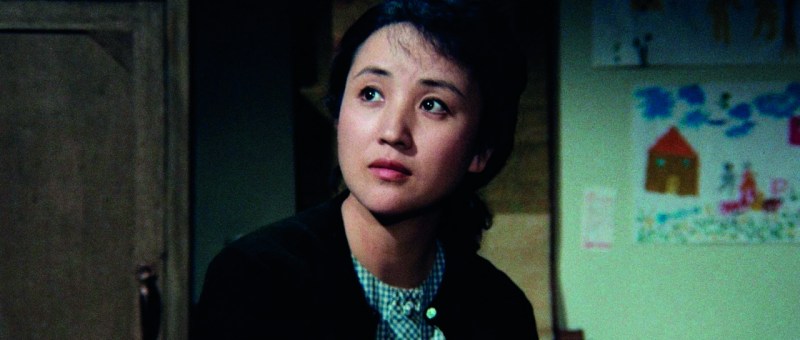
The Cabbie (運転手之戀, Chen Yi-wen & Chang Hwa-kun, 2000)

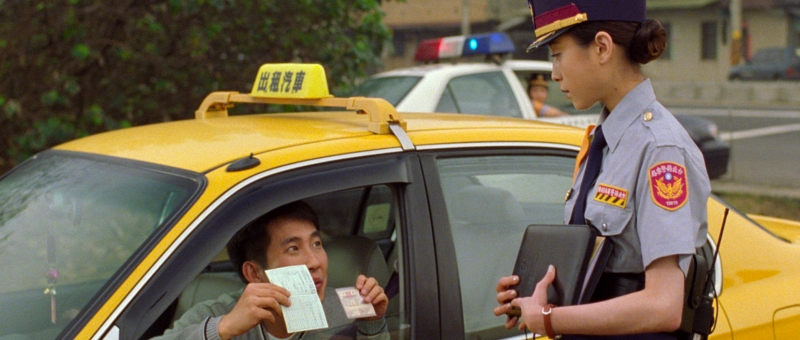
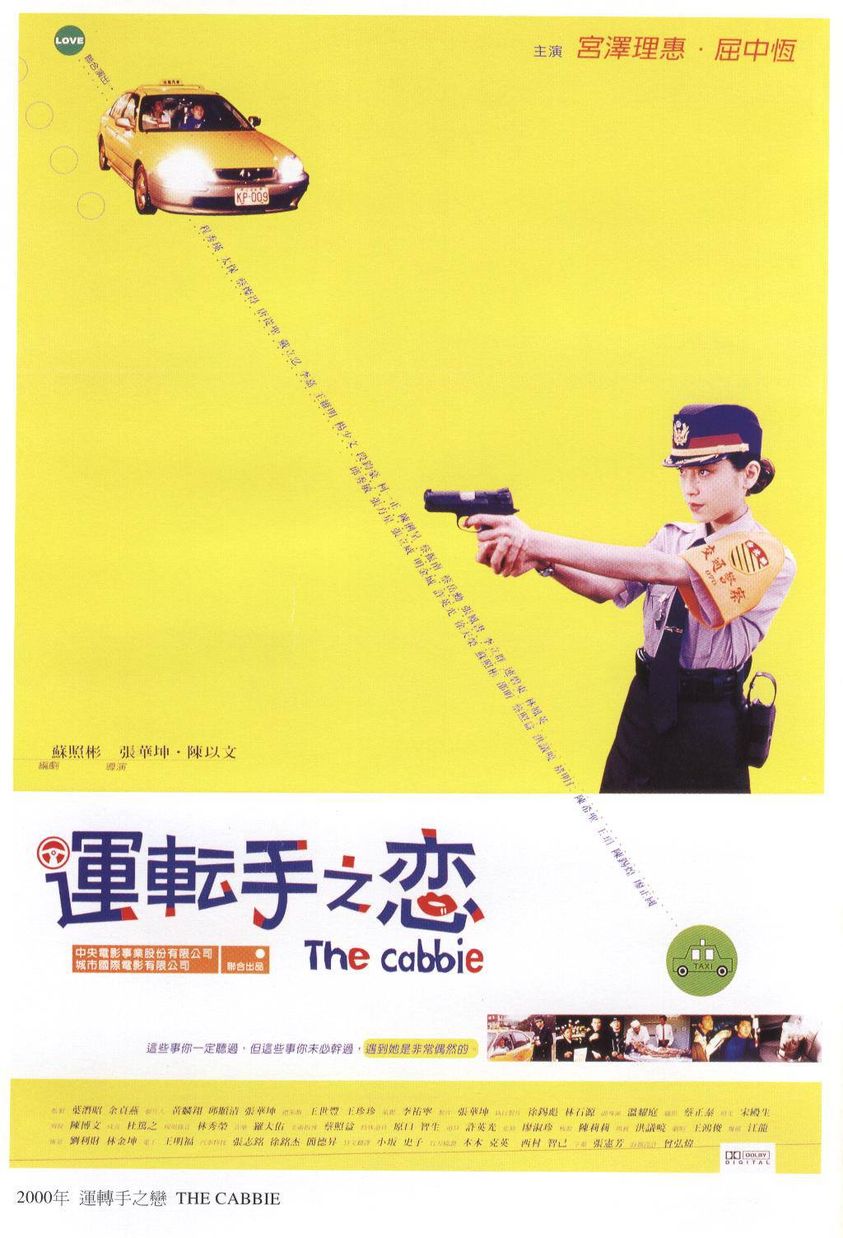
The crazy freewheeling life of a lovestruck taxi driver eventually takes a turn for the contemplative in Chen Yi-wen & Chang Hwa-kun’s infinitely charming comedy, The Cabbie (運転手之戀, yùn zhuǎn shǒu zhī liàn). Despite the film’s sunny atmosphere, darkness does indeed hang around the edges in the frequent references to car accidents and dismemberment yet it seems to be something that the affable hero can live with as he narrates a series of strange incidents from his ordinary life while meditating on his zany family when faced with mortal anxiety. 

As taxi driver Quan (Chu Chung-heng) points out, life can be pretty strange. His taxi can sometimes act as an unofficial confessional as his fares take the opportunity to unburden themselves to a complete stranger in a confined space, confessing the embarrassing details of their lives and even at one point seemingly confessing to a murder. Quan takes it in his stride, feeling as if he is one with his cab, Ah Di, and duty-bound to deliver his charges to their rightful destinations physical and emotional. Yet in an odd way it’s almost as if we’ve become the driver in this story and Quan is our fare, breaking the the fourth wall to speak to us directly of his strange life and the circumstances which led to this present turn of events. 

Quan is however unusual in that he tells his mother and father quite directly that he has no intention of marrying, giving a fairly logical reasoning based on the fact he believes women do not like him and he is not apparently much interested in them. This is of course a source of anxiety for his parents, his taxi driver father also turning fare in ranting at an old lady at the convenience store about his wayward son before trying to awaken something within him by gifting him porn. His mother meanwhile, the local coroner, decides to give up on him while ordering Quan to freeze his sperm so she can have a grandchild with or without his direct involvement at some point down the line. 

In any case, Quan changes his mind on falling in love at first sight with grumpy policewoman Jingwen (Japanese actress Rie Miyazawa, dubbed into Mandarin). Taking his mother’s advice about making an impression (not necessarily a good one) to heart, Quan decides the best way to woo his crush is to get fined by her as many times as possible. Even so there’s an undeniable Romeo and Juliet vibe to their relationship given the natural animosity between taxi drivers and traffic cops, along with a sense of cosmic irony that feeds directly back into the film’s darker themes. So much of life for Quan is coincidence, an act of cosmic collision not unlike the car crashes that occur so frequently outside the taxi depot. Quan encounters Jingwen by chance and then continues to push his luck by meeting her again in similar circumstances until she gives in to his unusual ardour. Yet not all of these accidents end well. One of Quan’s neighbours earns extra cash turning up at crash sites and making sure that the family gets all of the deceased’s body parts, reaching under twisted metal to retrieve pieces of severed flesh while his mother is indeed a coroner with a severed head in a jar sitting proudly in her office. 

In the end it might be that Quan is a mere passenger of fate, relating his life to us as it flashes before his eyes while threatened by a weird fare. What begins as absurd nonsense comedy as Quan tells us about his crazy family and the strangers who climb into his cab eventually takes an unexpected, poignant turn for the existential even as Quan continues to closely identify himself with Ah Di which might beg the question of who is driving who. Madcap and anarchic, there is something genuinely cheerful in Quan’s often simple existence governed both by chance and the rules of the road lending a fatalistic pall to all of his otherwise freewheeling adventures. Things don’t always always go right for him, but even when they go wrong it’s generally in the right way. Fast-forwarding though the “boring bits”, Quan races us through his life in the cab before taking us where we need to go keeping it cheerful while preparing for the inevitable collision with cosmic irony. 


The Cabbie screens 20th October as part of this year’s Taiwan Film Festival Edinburgh.

Original trailer (Traditional Chinese / English subtitles)
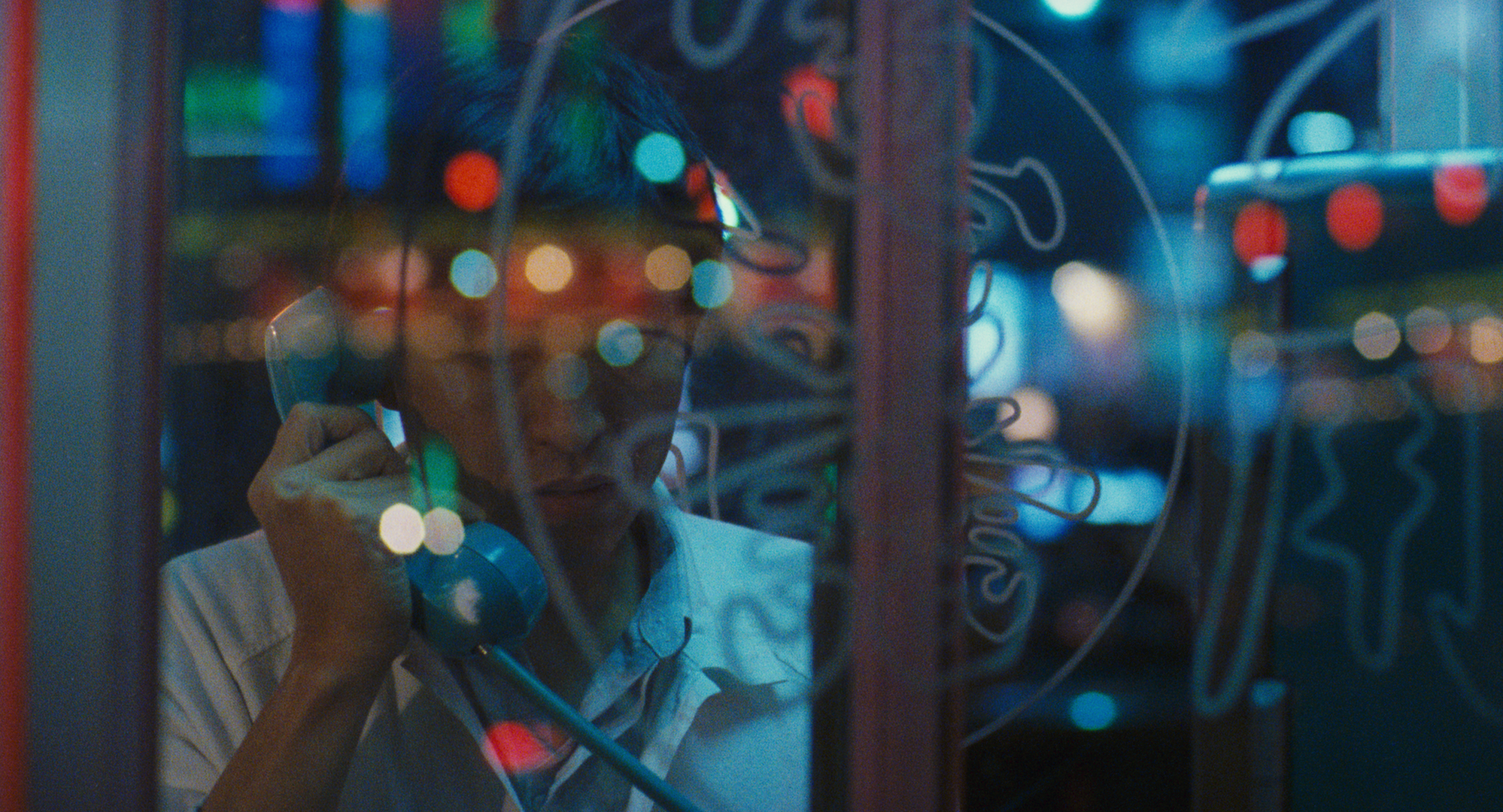
Taipei Story (青梅竹馬, Edward Yang, 1985)

“Just a fleeting hope. The illusion that you can start over” the hero of Edward Yang’s melancholy drama of the costs of modernity, Taipei Story (青梅竹馬, Qīngméizhúmǎ), eventually laments. Yang apparently chose the English title himself in a deliberate echo of Yasujiro Ozu’s equally pessimistic drama, yet the original title literally translated as “childhood sweethearts” also has its poignancy in hinting at the loss of innocence and hopeless impossibility of the fracturing love between its twin protagonists. 

Yang begins and ends in an empty room, for an empty room is always a possibility. As the film opens, high-flying career woman Chin (Tsai Chin) is buying her own apartment, already envisioning her life there in pointing out to her boyfriend Lung (Hou Hsiao-hsien) where they’ll put the TV and VCR so they can watch movies in bed hinting at a new level of consumerist success. More practically minded, he points out that the place needs a little work but Chin is confident she can manage it, saving up and paying in instalments having no immediate anxiety about her income. 

Yet Yang seems to suggest that this burgeoning economic powerhouse is built on shaky ground. The construction firm at which Chin works has recently been hit with a potential lawsuit about a lethal building error, while Chin’s mentor has already moved on and the firm has been bought up by another company presumably intent on some shady business of its own. This Chin discovers to her cost on hearing the not entirely unexpected news that the new bosses don’t understand her job title and want to demote her to the role of secretary which, she suspects, is just a way of pushing her to resign (which she then does). 

Shoddy business practices are also it seems responsible for her father’s present moment of financial insecurity though he only further alienates his daughter by talking entirely with Lung when the pair come to visit stopping only to ask awkward questions about marriage and children. Later we realise that part of Chin’s resentment towards her father is due to a long history of domestic abuse, her mother later crying silently prompting Chin to withdraw some of her savings something she would not have done had her father asked it. Yet Lung, old-fashioned in many ways and not least in his filiality, feels duty bound to help his not-quite father-in-law provoking a row between the pair when he gives him money he’d saved in the forlorn hope of going into business with his brother-in-law in America. 

Once childhood friends and now seeking a new start, the couple begin to dream of a new life though as Lung later says, America, like marriage, is not a panacea. Chin is in a sense torn between past and future neither of which have much possibility, in a committed relationship with Lung yet jealous over his past with a mutual childhood friend, and also carrying on an affair with an unhappily married man at work. A high-flying executive and independent career woman, she is determined to keep moving forward while Lung is stuck in the past hung up on baseball glory and morally righteous to a fault, helping out Chin’s feckless father while knowing it will do no good while his attempt to help a friend sort out his complicated family life leads only to tragedy. It’s obvious that he does not fit in with Chin’s yuppie friends, one particularly obnoxious male colleague describing him as having the face of a yam farmer and needling him to the point that it eventually leads to an altercation in a karaoke bar. Chin doesn’t seem particularly upset about the fight, comforting Lung as he confesses that he ends up in fights in order to stick up for himself or else because of his love of justice, but continues hanging out with her unpleasant friend for otherwise unclear reasons. 

But it’s less a love of justice than frustrated masculinity that eventually seals Lung’s fate, unwisely picking a fight with a young tough not so much in order to protect Chin as to preserve his own sense of wounded male pride. Realising the futility of his situation, he is unable to move forward into the new society, whereas Chin eventually finds herself substituting his role as her former mentor shows her around a potential new office space just as she had him her apartment envisioning how they will exist within it, where their offices will be along with the state of the art computer room. “It’s actually nice here,” she assures her, “now we have a big American company right in our hometown. Why go abroad?”. Yet Chin perhaps remembers her dejected colleague lamenting that all the new buildings look the same and he can’t even remember which ones he worked on so anonymous has the landscape become. In this Taipei story, the city is devoid of life or character a highly corporatised arena of increasingly dehumanising capitalism where everyone dreams of escape abroad to America or Japan, yet all Chin can do lowering her sunshades is to gaze from the window of her new office onto the lonely streets below and ask herself where it is she thinks she’s going. 


Taipei Story streamed as part of this year’s Taiwan Film Festival Edinburgh.

Trailer (English subtitles)

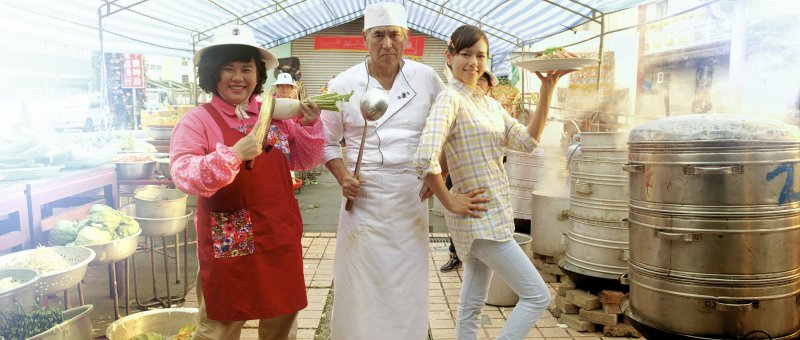
Zone Pro Site: The Moveable Feast (總舖師, Chen Yu-hsun, 2013)

In these high speed days, it’s sometimes difficult to remember that “cooking means something” or at least it should do according to “Doctor Gourmet” Hai (Tony Yang). A warm tribute to the Taiwanese tradition of bandoh outdoor banquets, Zone Pro Site: The Moveable Feast (總舖師, Zǒng Pù Shī) positions the figure of the chef as a kind of conduit bridging the gap between people through the art of well cooked food. Heroine Wan (Kimi Hsia Yu-chiao), however, thoroughly rejected the ambitions of her top chef father and determined on a life in the city with her heart set on becoming a famous model, actress, and celebrity. 

Life in Taipei is however hard. Career success is hard to come by and duplicity lurks round every corner. Wan learns this to her cost when two shady guys turn up on the pretext of delivering a birthday cake only to explain to her that her boyfriend, whose loans she’s unwisely co-signed, has skipped town and left her with the bill. Confused and afraid, Wan decides to skip town herself, planning to head back to her hometown and ask her mother for help. What she discovers however is that her mother is on the run too after losing the family restaurant partly through her subpar cooking skills which could never match those of her late husband, and partly through the betrayal of his apprentice who poached all their best customers and set up on his own. Despite being “in hiding”, the only way Puffy (Lin Mei-hsiu) has been able to make ends meet is by putting on an impromptu dance show in the central square to promote her small noodle stall. Luckily for them both, Wan makes a chance encounter on the train with a nice young man, Hai, who turns out to be a “Doctor Gourmet” specialising in “fixing” failing restaurants.

His arrival comes at just the right moment as Wan and her mother get a visit from potential clients – a sweet older couple who first met 50 years previously at a wedding catered not by Wan’s father Master Fly Spirit, but by his now departed mentor. Wan’s mother was going to turn the request down because neither she nor Wan know how to make the traditional dishes the couple are looking for, but Wan makes an impromptu decision to try and make their wedding dreams come true, warning them that it might take a little extra time and not quite match up to their romantic expectations. 

Wan’s problem is that she always hated her family’s restaurant. She resented the heat and the smell and the grease, often placing an empty box over her head and retreating into a fantasy world to escape the chaos. Her father wanted her to take over, leaving her a notebook filled with his recipes which was unfortunately stolen by a homeless man who mugged her at the station, but she was dead set on escape and becoming a “someone” in the city. Unlike her mother, however, she has real talent for cooking and is equally skilled at using her good looks and sweet nature to get things done. Soon after her arrival at the noodle stand, she’s already got herself a gang of geeky groupies calling themselves “Animals on Call” who are ready to do pretty much anything she asks of them. 

That comes in handy when Puffy persuades her to enter a national cooking competition where her rival is none other than Tsai, the apprentice who betrayed them, backed up another famous ex-chef Master Ghost Head (Hsi Hsiang) who has a fiery temper and spent some time in prison which might be why he still dresses like an ultra cool motorcycle guy from the ‘70s. There were apparently three great masters, the other being the eccentric  Master Silly Mortal (Wu Nien-jen) who is later discovered living in a subway tunnel where he keeps the art of bandoh alive through a literal underground restaurant where his regulars bring him a selection of ingredients before sitting down to enjoy a communal meal. It’s Silly Mortal whose food is said to evoke human feelings who guides Wan towards a series of epiphanies about the nature of “traditional” food. According to him, there are no rules about what goes together, and having a “traditional” heart is really about embracing the true nature of bandoh. Only by having a heart full of joy can you make good food. 

Equally eccentric in some respects, Hai takes a back seat after reminding Wan that cooking is really a way of sending a coded message to its intended target. The two goons eventually join the team, working together earnestly to prepare for the biggest banquet of all which is both the old couple’s wedding celebration and the competition’s finale. Master Ghost Spirit talks about taking the “grief” out of meat through fine cutting, while Master Silly Mortal is all about putting positive emotions in, but the missing piece of the puzzle is Master Fly Spirit who sends his final message to Wan only after death as she rediscovers him through his recipes. Not quite giving up on her celebrity career, Wan embraces her inner chef, happy with the idea of making lunchboxes to sell at the station with her new friends and family rather than chasing money through oddly nihilistic cuisine as Tsai had done. In the end, it’s all about joy and togetherness, sharing tasty food in the open air where anyone and everyone is welcome to bring whatever they have to the table.


Zone Pro Site: The Moveable Feast screens in New York on Feb. 16 as part of this year’s New York Asian Film Festival Winter Showcase.

International trailer (English subtitles)