 Chekhov’s The Cherry Orchard is more about the passing of an era and the fates of those who fail to swim the tides of history than it is about transience and the ever-present tragedy of the death of every moment, but still there is a commonality in the symbolism. Shun Nakahara’s The Cherry Orchard (櫻の園, Sakura no Sono) is not an adaptation of Chekhov’s play but of Akimi Yoshida’s popular 1980s shojo manga which centres on a drama group at an all girls high school. Alarm bells may be ringing, but Nakahara sidesteps the usual teen angst drama for a sensitively done coming of age tale as the girls face up to their liminal status and prepare to step forward into their own new era.
The annual production of The Cherry Orchard has become a firm fixture at Oka Academy – even more so this year as it marks an important anniversary for the school. Stage manager Kaori (Miho Miyazawa) has come in extra early to prep for the performance, but also because she’s enjoying a covert assignation with her boyfriend whom she is keen to get rid of before anyone else turns up and catches them at it. Hearing the door, Kaori bundles him out the back way before the show’s director, Yuko (Hiroko Nakajima), who is also playing a maid arrives looking a little different – she’s had a giant perm.
Yuko’s hair is very much against school regulations but she figures they’ll get over it. Fortunately or unfortunately, Yuko’s hairdo is the least of their problems. Another girl who is supposed to be playing a leading role, Noriko (Miho Tsumiki), has been caught smoking and hanging out with delinquents from another school. She and her parents are currently in the headmaster’s office, and everyone is suddenly worried. The girls’ teacher, Ms. Satomi (Mai Okamoto), is going in to bat for them but it sounds like the play might be cancelled at the last-minute just because the strict school board don’t think it appropriate to associate themselves with such a disappointing student.
The drama club acts as a kind of safe space for the girls. Oka Academy is, to judge by the decor and uniforms, a fairly high-class place with strict rules and ideas about the way each of the young ladies should look, feel, and act. Their ages differ, but they’re all getting towards the age when they know whether or not those ideas are necessarily ones they wish to follow. As if to bring out the rigid nature of their school life, The Cherry Orchard is preformed every single year (classic plays get funded more easily than modern drama) but at least, as one commentator puts it, Ms. Satomi’s production is one of the most “refreshing” the school has ever seen, perhaps echoing the new-found freedoms these young women are beginning to explore.
Free they are and free they aren’t as the girls find themselves experiencing the usual teenage confusions but also finding the courage to face them. Yuko’s hair was less about self-expression than it was about catching the attention of a crush – not a boy, but a fellow student, Chiyoko (Yasuyo Shirashima). Chiyoko, by contrast is pre-occupied with her leading role in the play. Last year, in a male role, she excelled but Ranevskaya is out of her comfort zone. Tall and slim, Chiyoko has extreme hangups around her own femininity and would rather have taken any other male role than the female lead.
Yuko keeps her crush to herself but unexpectedly bonds with delinquent student Noriko who has correctly guessed the direction of Yuko’s desires. Sensitively probing the issue, using and then retreating from the “lesbian” label, Noriko draws a partial confession from her classmate but it proves a bittersweet experience. Predictably enough, Noriko’s “delinquency” is foregrounded by her own more certain sexuality. Noriko’s crush on the oblivious Yuko looks set to end in heartbreak, though Nakahara is less interested in the salaciousness of a teenage love triangle than the painfulness of unrequited, unspoken love which leaves Noriko hovering on the sidelines – wiser than the other girls, but paying heavily for it.
Chekhov’s play famously ends with the sound of falling trees, heralding the toppling of an era but with a kind of sadness for the destruction of something beautiful which could not be saved. Nakahara’s film ends with cherry blossoms blowing in through an open window in an empty room. The spectre of endings hangs heavily, neatly echoed by Ms. Satomi’s argument to the promise that the play will go ahead next year with the cry that next year these girls will be gone. This is a precious time filled with fun and friendship in which the drama club affords the opportunity to figure things out away from the otherwise strict and conformist school environment. Nakahara films with sympathetic naturalism, staying mainly within the rehearsal room with brief trips to the roof or empty school corridors capturing these late ‘80s teens for all of their natural exuberance and private sorrows.
Original trailer (no subtitles)
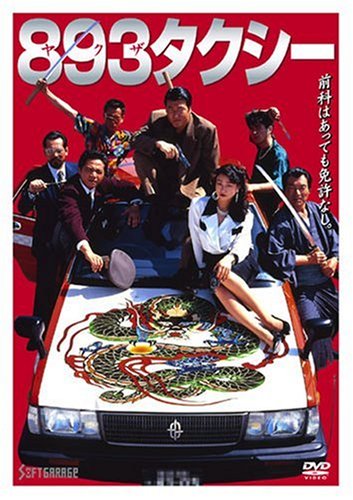 Like many fillmakers of his generation, Kiyoshi Kurosawa began directing commercially in the 1980s working in the pink genre but it was the early ‘90s straight to video boom which provided a career breakthrough. This relatively short lived movement was built on speed where the reliability of the familiar could be harnessed to produce and market low budget genre films with a necessarily high turnover. Kurosawa made his first foray into the V-cinema world in 1994 with the unlikely comedy vehicle Yakuza Taxi (893 タクシー, 893 Taxi). Although Kurosawa had originally accepted the project in the hope of being able to direct a large scale action film, his distaste for the company’s insistence on “jingi” (the yakuza code of honour and humanity) proved something of a barrier but it did, at least, lend free rein to the director’s rather ironic sense of humour.
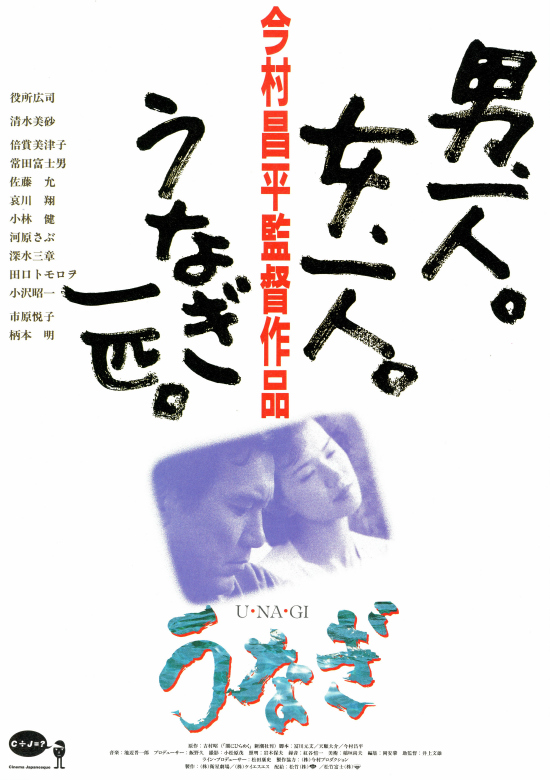 Director Shohei Imamura once stated that he liked “messy” films. Interested in the lower half of the body and in the lower half of society, Imamura continued to point his camera into the awkward creases of human nature well into his 70s when his 16th feature, The Eel (うなぎ, Unagi), earned him his second Palme d’Or. Based on a novel by Akira Yoshimura, The Eel is about as messy as they come.
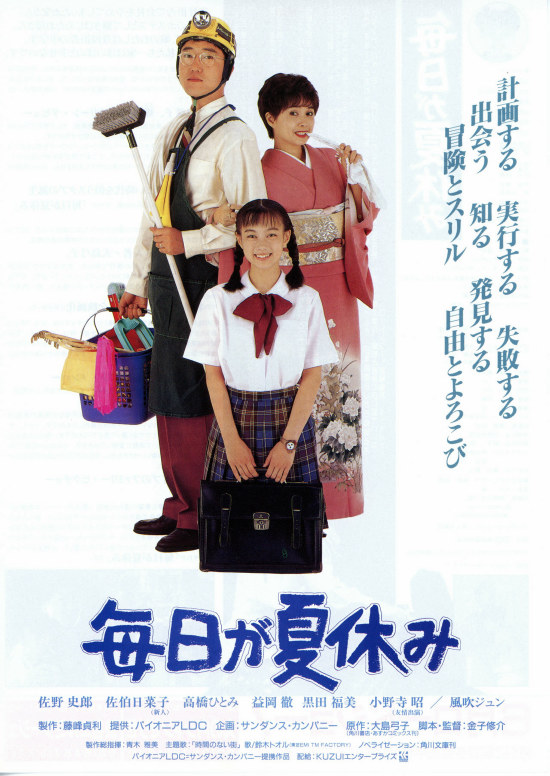 Summer Holiday Everyday – It’s certainly an upbeat way to describe unemployment but then everything is improbably upbeat and cheerful in the always sunny world of Shusuke Kaneko’s adaptation of Yumiko Oshima’s shoujo manga. Published in the mid-bubble era of 1988, Oshima’s world is one in which anything is possible but by the time of the live action movie release in 1994 perhaps this was not so much the case. Nevertheless, Kaneko’s film retains the happy-go-lucky tone and offers note of celebration for the unconventional as a path to success and individual happiness.
 Sogo (now Gakyruu) Ishii was only 20 years old when Nikkatsu commissioned him to turn his smash hit 8mm short into a full scale studio picture. Perhaps that’s why they partnered him with one of their steadiest hands in Yukihiro Sawada as a co-director though the youthful punk attitude that would become Ishii’s signature is very much in evidence here despite the otherwise mainstream studio production. That said, Nikkatsu in this period was a far less sophisticated operation than it had been a decade before and, surprisingly, Panic High School (高校大パニック, Koukou Dai Panic) neatly avoids the kind of exploitative schlock that its title might suggest.
 It used to be that movies about marital discord typically ended in a tearful reconciliation and the promise of greater love and understanding between two people who’ve taken a vow to spend their lives together. These endings reinforce the importance of the traditional family which is, after all, what a lot of Japanese cinema is based on. However, times have changed and now there’s more room for different narratives – stories of women who’ve had enough with their useless, deadbeat man children and decide to make a go of things on their own.
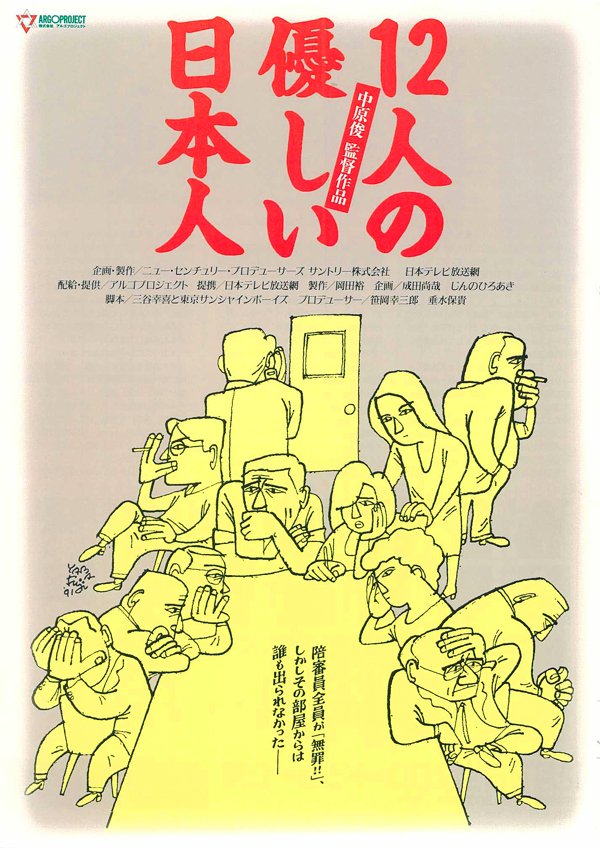 As you might be able to tell from its title, Gentle 12 (12人の優しい日本人, Juninin no Yasashii Nihonjin) is a loose Japanese parody of the stage play 12 Angry Men notably filmed by Sidney Lumet back in 1957. The Japanese title literally translates as “12 Kindly Japanese Guys” and the film takes the same premise of twelve jurors debating the verdict in a murder case which was previously thought fairly straightforward. This time our jury is a little more balanced as it’s not just guys in the room and even the men are of a more diverse background.
 Windows on Worlds