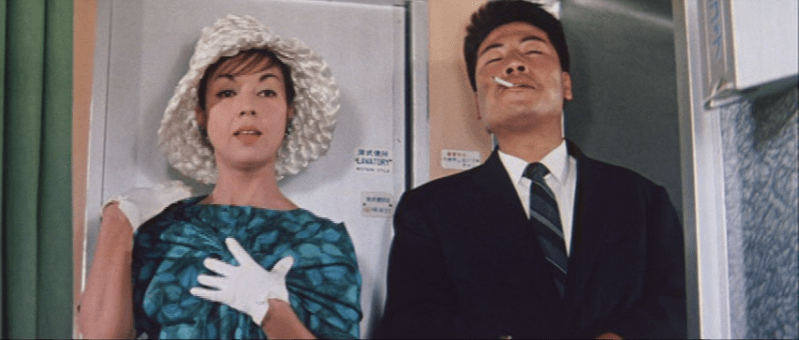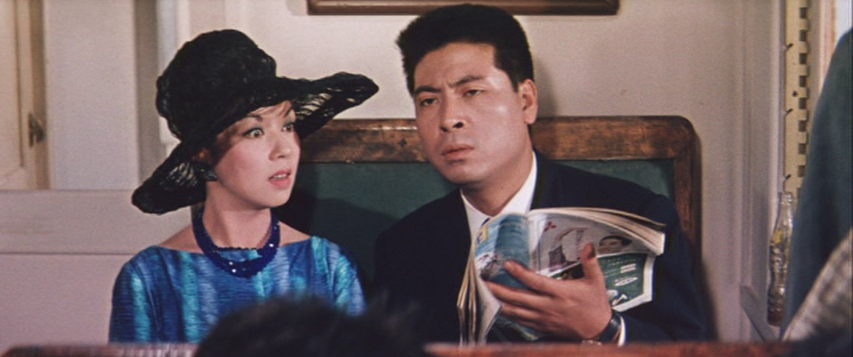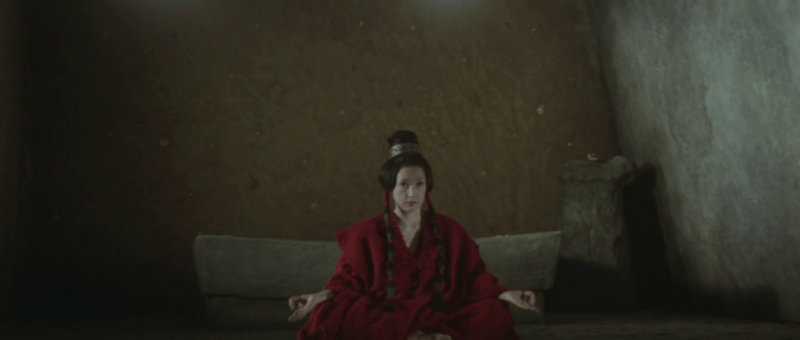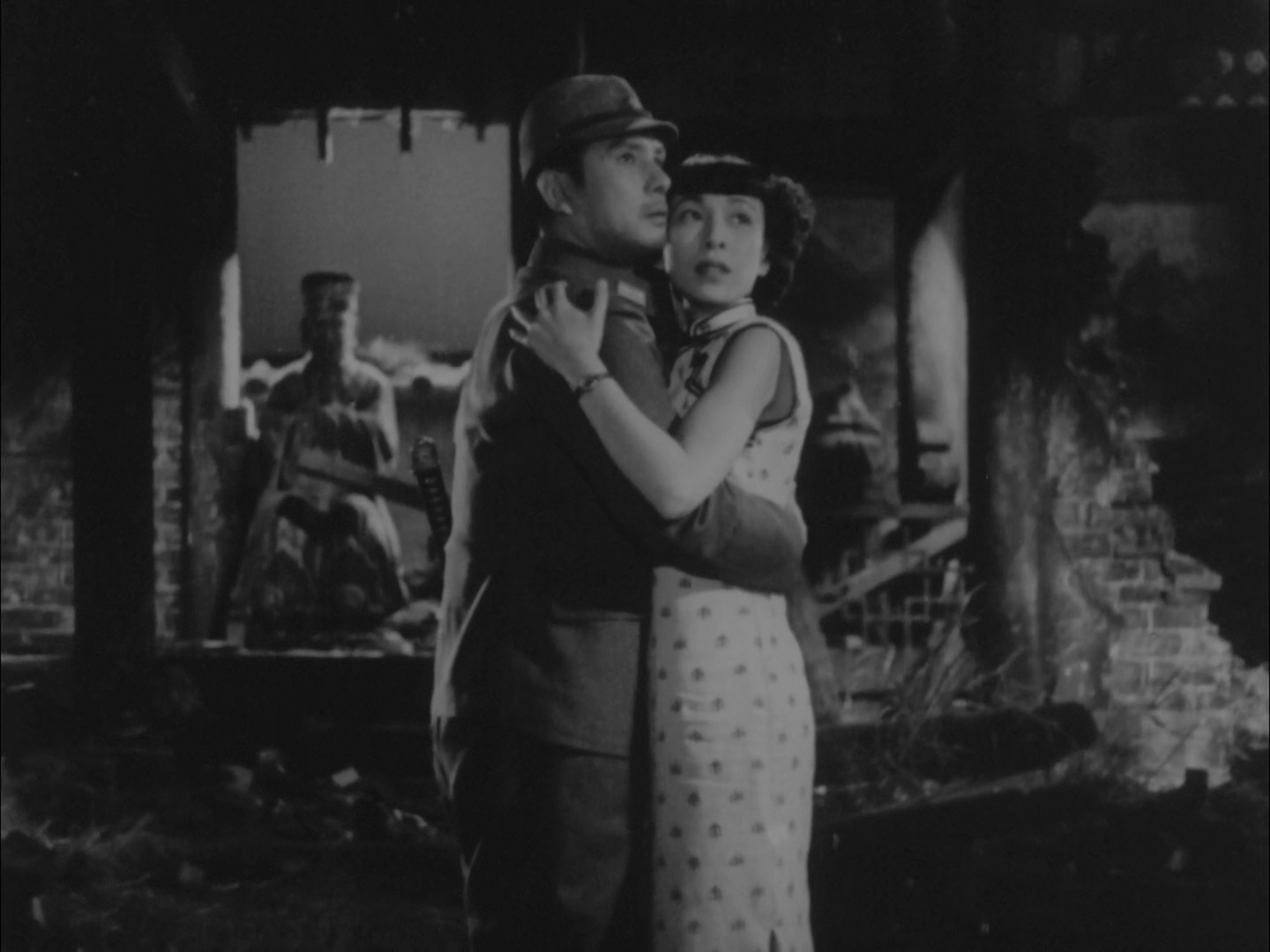
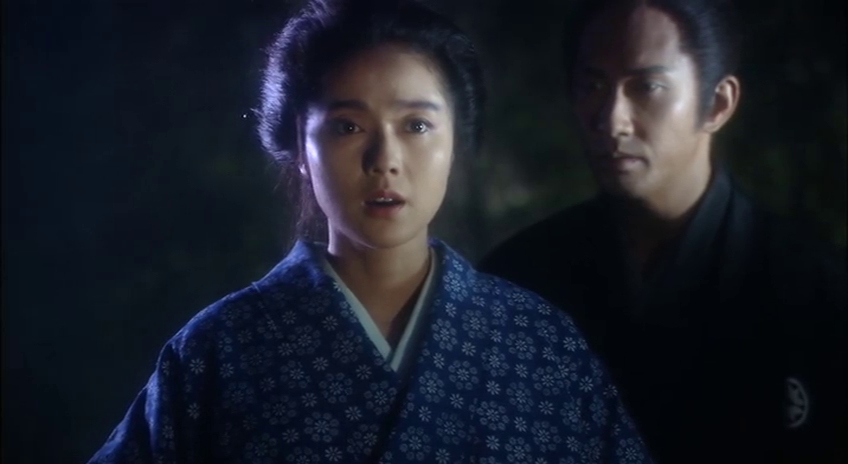
365 Nights (三百六十五夜, Kon Ichikawa, 1948)

For his second film at Shintoho, Kon Ichikawa had wanted to adapt a story by Ryunosuke Akutagawa that later inspired Rashomon, but was handed a standard melodrama to direct first. Ichikawa apparently did not think much of the novel the film was to be based on nor the script by Kennosuke Tateoka which he subsequently brushed up with the help of his new wife Natto Wada, and it’s not difficult to see why he might have felt he had an uphill battle. Melodrama is after all a genre that is founded on coincidence, though 365 Nights (三百六十五夜, Sambyaku-rokujugo ya) quickly strains credulity with the sheer number of unlikely events and surprise reappearances along with its rather strange take on the contemporary post-war society which is undoubtedly influenced by the demands of the Occupation censorship regime. 

Indeed, the setting itself seems reminiscent of 1930s cinema following the dashing hero Koroku, played by the equally dashing Ken Uehara, an architect who has walked away from his privileged upbringing as the son of a successful construction magnate. His problem is that he’s being aggressively courted by the haughty Ranko (Hideko Takamine), also the daughter of a successful but shady businessman, who to modern eyes is basically stalking him. Grinning with an evil glint in her eye, she tells her minion Tsugawa (Yuji Hori) that she’ll have seduced Koroku within 365 days which by melodrama standards seems to give her quite a lot of leeway.

Clueing us up to her villainy, Ranko is always seen wearing incredibly stylish Western outfits but otherwise behaves in a transgressively masculine fashion ordering her male employees about while set on the sexual conquest of Koroku who despises her for everything she is. It’s difficult not to see an inherent criticism of the new post-war woman and an anxiety regarding the power that comes with wealth being wielded by someone who is not a man. The contrast between Ranko and traditional femininity is rammed home by the fact that Teruko (Hisako Yamane), the daughter of the landlady in the house where Koroku finds new lodging after moving home to escape Ranko, is always dressed in kimono and otherwise naive and innocent. 

This positions Ranko, and her minion Tsugawa who is also in love with her, as the villains who are rebelling against the kind of earnestness expressed by Koroku and Teruko. From more humble origins, Tsugawa is deeply resentful of Kokoku’s class privilege and feels that he looks down on him which is one reason he seeks revenge by destroying his life along with his sexual jealously that Ranko pays him no attention yet is fixated on Kokoku perhaps precisely because he is entirely uninterested in her though it remains mystery why you’d want to be married to someone who strongly dislikes you. 

Yet for all his own earnestness, Koroku is almost betrayed by the capitalist father of whom he also seems to disapprove when he asks him to consent to an arranged marriage with Ranko to save his business. Meanwhile, it also transpires that Teruko’s father has been absent from her life because he two has a criminal past further tainting the legacy each of them bear. Ichikawa stages each evolution of their relationship at the same, noirish street corner that seems to exist as a kind of border between the illicit underworld that seeps out from Tsugawa’s bar into the post-war society, and the geniality represented by Teruko’s otherwise nice, middle-class home. 

It’s the this transgressive quality, of being caught between these two worlds, that starts to eat away at Koroku leaving him a broken and shabby man little better than a tramp. In a break with melodrama norms, though he is aware that he has led Teruko into Tsugawa’s trap he comes to believe that she has betrayed him while she clings fiercely to her love and in the end attempts to sacrifice it basically giving Koroku to Ranko whom she believes can better care for him in his now corrupted state. Though events become grim with a wedding that is staged like a funeral and takes place at a death bed, there is also the sense that something must come right that seems a little incongruous and perhaps a concession to the censors board as may be the coda implying that Ranko, despite having undergone a kind of redemption, will also have to pay for all her dodgy dealings. Though clearly hampered by the material, Ichikawa crafts some stunning images such as the final scene at Tsugawa’s bar along with a surprisingly energetic action sequence during which Koroku fights off burglars at Teruko’s home and wins her heart with his manliness. In any case despite the hints at redemption the implication remains that this is a world dark at its core in which not even the earnest can escape its creeping corruption. 


The Phoenix (火の鳥, Kon Ichikawa, 1978)

The people of early Japan contemplate different visions of immortality in Kon Ichikawa’s sprawling adaptation of the first chapter in Osamu Tezuka’s manga series, The Phoenix (火の鳥, Hi no Tori). Featuring a mix of animation and live action, the film takes place in an ancient, pre-modern Japan in which just about everyone chases the mysterious fire bird in belief that drinking its blood will confer eternal life. They each want it for different reasons, some more to stop someone else getting it than for themselves but all discover that there are other ways of living on than the strictly literal. 

Broadly speaking the film takes place during the era of possibly mythical sorceress queen Himiko (Mieko Takamine) who rules over the nation known as Yamatai which is the name given to a kingdom in Japan in ancient Chinese sources. Himiko wants the phoenix because she fears that her power is founded on a youth and beauty which has begun to fade while the people are beginning to lose faith in her magic, not least because her rule is oppressive and authoritarian. She also fears that should the Chinese emperor drink the phoenix blood first, they will forever be under his yoke yet the seal that confers her rule was in fact given by him so perhaps they are already. Her brother, Susano (Toru Emori) whom she also fears may usurp her, enlists famed hunter Yumihiko (Masao Kusakari) from the state of Matsuro to help them capture the phoenix seeing as the two nations have some kind of treaty. Yumihiko says he doesn’t really care about that, but ends up helping anyway.

In any case, Matsuro is soon overrun in a surprise attack by warlord Jingi (Tatsuya Nakadai) from Takamagahara who is set on colonisation, which is in its way another bid for “immortality” if culturally rather than literally. After all, he claims “I will implant our civilisation in these lands” before explaining that “not even the greatest kings live forever” but history will. Meanwhile, Yamatai doctor Guzuri (Ryuzo Hayashi) is washed up on the shores of remote kingdom Kumaso where Uraji (Masaya Oki) is hunting the phoenix in the hope of saving his seriously ill wife Hinaku (Reiko Ohara). Uraji is soon burnt to a crisp by the Phoenix’s light, but Guzuri is able to save Hinaku using “modern” medicine, that is by applying “blue mould” which as the onscreen text explains contains penicillin. Perhaps feeding someone mould doesn’t sound much more scientific than the bizarre folk medicine proposed by the witchdoctor which involves rubbing the severed heads of cats and ravens together and putting fish bones on the patient’s head while burning their buttocks, but it works which is not exactly a means of “immortality” but does promise the ability of temporarily overcoming death without the Pheonix’s help. 

But medicine can’t help you with an invasion, and when the Yamatai suddenly turn up and raze the village to get better access to the phoenix after realising it lives in a nearby volcano only Hinaku and her brother Nagi (Toshinori Omi) survive. Hinaku reluctantly remains with Guzuri and vows to rebuild her kingdom through childbirth vowing that she will enable the survival of Kumaso by passing her culture on through successive generations. Uzume (Kaoru Yumi), a dancer from Matsuro, later says something similar to Jingi in reminding him that “women have their own weapons” and he will “never be able to destroy life” as an abstract concept. There might be something a little uncomfortable in the implication that the phoenix is an allegory for childbirth in suggesting that one body is born in the ashes of another, but it is in the end the continuity of a lifecycle which wins out as the natural order of things. In the film’s concluding moments, the son of Hinaku and Guzuri in a sense experiences a kind of rebirth as, guided by the phoenix, he climbs out of the cave in which he has lived all his life and gazes at the vast expanses of a new world all around him. 

Ichikawa originally trained as an animator and includes several animated sequences throughout the film from cartoonish special effects when an elderly courtier bangs his head to a trio of foxes dancing to pink lady. His visual design is also heavily influenced by Tezuka’s manga with the young boy Nagi in particular striking Tezuka-esque poses and otherwise resembling Astroboy who does in fact make a surprise appearance in a brief animated sequence in which Nagi is kicked by a horse. Similarly, the conflicted general Saruta (Tomisaburo Wakayama) later gains a ridiculous Tezuka-style nose after being locked in a room filled with wasps, and Ichikawa’s vistas sometime echo the centrefold of a manga with the heroes reduced to tiny figures dwarfed by the majesty of the landscape. Even so, a rain-soaked battle pays ironic homage to Seven Samurai, while Ichikawa otherwise keeps violence to a minimum. The heads are chopped off horses and fall like cushions, entirely bloodlessly, but there is also a scene of implied attempted rape which may be out of keeping with the otherwise family-friendly approach. Despite the sense of defeat which may colour some of the closing scenes, the film ends on a note of optimistic wonder in a new journey for humanity emerging from scenes of desolation towards a bright new world. 


Nightshade Flower (夜来香, Kon Ichikawa, 1951)

A couple who met briefly in Manchuria are reunited in Kobe five years later but find their joy short-lived amid the vagaries of the post-war society in Kon Ichikawa’s tragic romance, Nightshade Flower (夜来香, Ieraishan). The film takes its name from a song “夜来香” known as “Ieraishan” in Japanese, a transliteration of the Mandarin pronunciation (yèláixiāng) in katakana, which was released in a Chinese-language version in Shanghai in 1944 performed by Manchurian Japanese actress Yoshiko Yamaguchi (山口淑子) who also went by the names Ri Koran/Li Hsiang-lan (李香蘭) and later Shirley Yamaguchi at various times in her career. A song of lost love, it seems to echo a sense of despair among the wartime generation who cannot reconcile their pasts with the post-war present. 

Akiko (Asami Kuji), a sex worker, first meets Seki (Ken Uehara), an army doctor, when he pulls her out of the way of an oncoming vehicle in a crowded market place in Northern China in June, 1944. As she is dressed in cheongsam and angrily shouts at him in Mandarin, he assumes her to be Chinese and carries on along his way while she remains ambivalent about the encounter especially as the sleeve of her dress has been torn. In any case, it’s clear that the situation has become precarious and most of the Japanese population are preparing for evacuation. The owner of the brothel where Akiko and her friend Gin (Harue Tone) are employed has hopes of carrying on her business further behind the lines where army bases are still in operation though the pair would prefer to head home as soon as possible, jumping off the repatriation truck organised for them by the madam with the intention of returning to the city and boarding the next one bound straight for the mainland. 

But Gin falls off a cliff and injures her leg, leaving Akiko to go in search of a doctor incongruously rocking up at Seki’s medical clinic. Though she is originally unwilling to have him treat Gin, she soon comes around and the pair begin seeing each other with Akiko pledging to stay behind after putting Gin on a truck. Nevertheless the pair are separated during an air raid with Akiko believing that Seki has been killed in a direct hit to the shrine they were sheltering in when he left their foxhole to check on a crying baby. Five years later, Seki has returned to Kobe to look for Akiko but has had no luck while staying with the family of one of his men, Toshio (Yuji Kawakita), who has fallen into post-war despair and given up his promising future in medicine to peddle black market drugs with shady fixer Kameyama (Reikichi Kawamura). 

The crisis comes when Seki realises he is losing his sight, apparently a delayed reaction to the head injury he sustained in Manchuria which was not fully treated due to the war’s end. Though he reunites with Akiko, he believes that he can no longer have a future with her because of his impending blindness and in fact that his life is now over. Akiko meanwhile has also fallen into despair. Believing Seki was dead she gave up on the idea of finding him and has returned to sex work, she and Gin working in a small backstreet bar and living in adjacent rooms of a rundown tenement block. Seki had always known that she was a sex worker, but she believes he may now reject her because she has failed to live up to the promise she made him of living a more “honest” life ironically because without him she had no reason to do so. 

Meanwhile, Seki is intent of saving Toshio whom he had first met as a naive private openly crying over the death of his mother having picked up a venereal disease after losing his virginity to a sex worker in an attempt to overcome his grief. Toshio is an embodiment of the despair felt by young men who went to war as innocent teenagers and are filled with disillusionment and confusion. Though Toshio is luckier than most who struggle to find work in the difficult post-war economy, he came from a middle-class medical family and if he finishes his training of which he only has a year left he would inherit his father’s clinic, he no longer sees a future for himself and actively rejects his privilege as an act of self-harm by taking up with Kameyama and becoming involved with crime. He resents his father for remarrying soon after his mother died, taking the family maid as his second wife, and is reluctant to marry their nurse, Chiyo (Chiaki Tsukioka), who is also Kameyama’s younger sister, as everyone expects him to despite otherwise carrying on an affair with her which later results in a pregnancy. He says that he wants to earn his own living and be his own man but claims he cannot see the bright future Seki speaks of for him and continues along a dark path of crime and vice. 

The constant rumblings of the train along with its flickering light strongly foreshadow the tragic denouement but also hint at the automatic motion of society that damns the trio and frustrates their attempts to move on from the war and find happiness in its aftermath. Even so, to modern eyes the motif of Seki’s literal blindness which robs him of the ability to perceive a happy future with Akiko cannot but seem a little ableist even as Akiko points out that many men lost their sight in the war but are living good lives with wives and children and that she does not see his disability as a barrier to their ability to make new lives for themselves in the post-war society much as he doesn’t regard her past in sex work as a reason to reject her.

Even so, Seki is dragged into the post-war morass after becoming involved with Kameyama in a futile attempt to save Toshio only to discover that Kameyama has betrayed them by getting them both to work on the same job as a payment for a debt taken out by Seki on Toshio’s behalf to free him from his life of crime. Ichikawa embraces a sense of melodrama with frequent closeups and an underlying theatricality, but also captures something of post-war confusion in the noirish fog that surrounds Akiko as she considers one last job to pay for probably useless medical treatment to save Seki’s sight. The cruelty of the ending is in its way too difficult to bear but perhaps apt for the view from 1951 in which the possibility of escaping the legacy of wartime corruption lies only in painful memories. 


Being Two Isn’t Easy (私は二歳, Kon Ichikawa, 1962)

With the Olympics still two years away, the Japanese economy had begun to improve by 1962 and the salaryman dream was on the horizon for all. But for young couples trying to make it in the post-war society things were perhaps far from easy and having more to want coupled with the anxieties of a newly consumerist society only left them with additional burdens. A surprisingly moving evocation of the cycle of life, Kon Ichikawa’s Being Two Isn’t Easy (私は二歳, Watashi wa Nisai) is as much about the trials and tribulations of its toddler hero’s parents as they try to navigate their new roles in a world which now seems fraught with potential dangers. 

This difference in perspective is brought home in the opening sequence in which soon-to-be two Taro (Hiro Suzuki) recalls his own birth in a slightly creepy voiceover, lamenting his mother cooing over him excited that he is smiling for her though he is not yet able to focus and has no idea the vague shadow above him is his mother or even what a mother is. His smiling is simply involuntary muscle contraction as he learns how to manipulate his body. Nevertheless, little Taro is a definite handful taxing his poor mother Chiyo (Fujiko Yamamoto) with frequent attempts to escape, managing to get out of the apartment and start climbing the stairs the instant she’s turned her back. “Always finding fault, that’s why grown-ups are unhappy” Taro complains, irritated that even though he’s quite proud of himself for figuring out not only how to undo the screws on his playpen but the string his parents had tied around it for extra protection, he’s not received any praise or congratulation and it feels like they’re annoyed with him. 

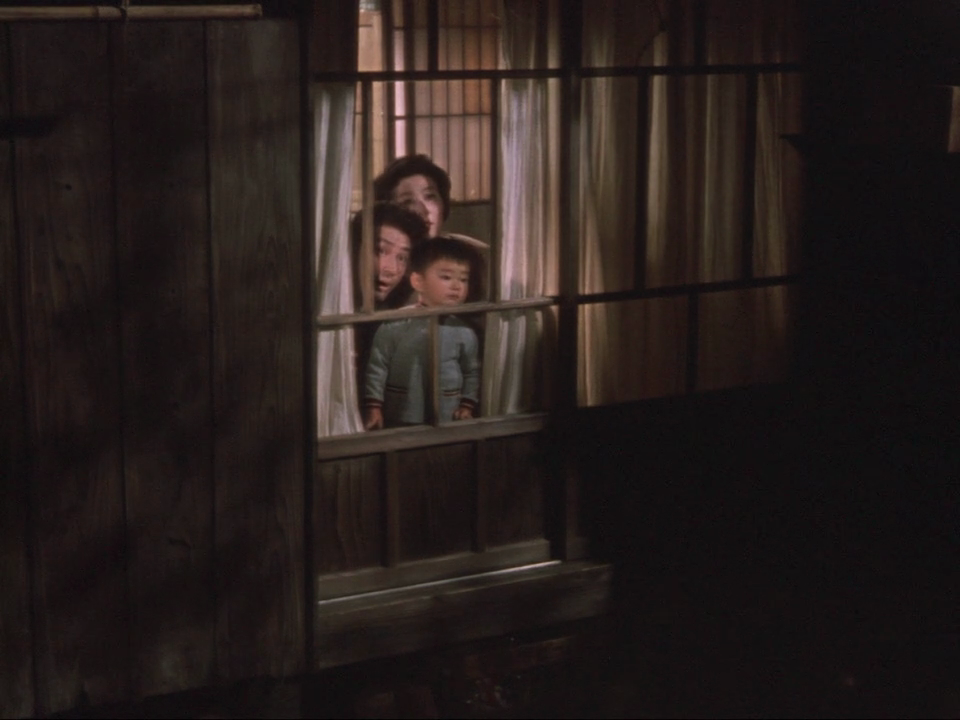
The landlord alerted by the commotion somewhat ironically remarks that “Japanese houses are best for Japanese babies” (being at least usually all on one level even if they also sometimes have their share of dangerously precipitous staircases), implicitly criticising the new high rise society. There do indeed seem to be dangers everywhere. Another baby playing on the balcony eventually falls because the screws are rusty on the railings only to be caught by a passing milkman in what seems to be an ironic nod to the film’s strange fascination with the new craze in cow’s milk to which Taro’s father Goro (Eiji Funakoshi) attributes Westerners’ ability to grow up big and strong. Taro does seem to get sick a lot, the doctor more or less implying that his sickliness is in part transferred anxiety from an overabundance of parental love. Visited by her older sister who lives on a farm in the country and has eight children, Chiyo becomes broody for a second baby (though not another six!) but Goro isn’t so sure, not just because of the additional expense or the fact that their danchi apartment is already cramped with the two of them and a toddler, but reflecting that he already lives in a world of constant fear why would you want to double it worrying about two kids instead of one?

Nevertheless, Goro is certainly a very “modern” man. He helps out with the housework and is an active father, taking on his share of the childcare responsibilities and very invested in his son. He accepts that his wife also “works” even if he also insists it’s not the same because she doesn’t have to bow to Taro and is not subject to the petty humiliations of the salaryman life. Tellingly, this changes slightly when the couple end up leaving the danchi for a traditional Japanese home to move in with Goro’s mother after his brother gets a job transfer. Grandma (Kumeko Urabe) is actively opposed to him helping out around the house, viewing it as distasteful and unmanly not to say a black mark against Chiyo for supposedly not proving up to her wifely duties. Living with Grandma also introduces a maternal power struggle under the older woman’s my house my rules policy which extends to criticising Chiyo’s parenting philosophy not to mention refusing to trust “modern technology” by insisting on rewashing everything that’s been through the washing machine by hand.

Yet when Taro becomes sick again it’s perhaps Grandma who has a surprisingly consumerist view of medical care. Exasperated by the couple’s failure to get Taro to take his medicine she offends the doctor by insisting on him having an injection as if you haven’t really been treated without one. Eventually she takes him to another clinic where they get on a conveyor belt of doctoring, rushed through from a disinterested receptionist to a physician who yells “bronchitis” to a nurse who violently sticks the baby in the arm. After that Taro vows never to trust grown-ups, though Grandma only gives in when she realises injections are not an instacure and didn’t do any good. 

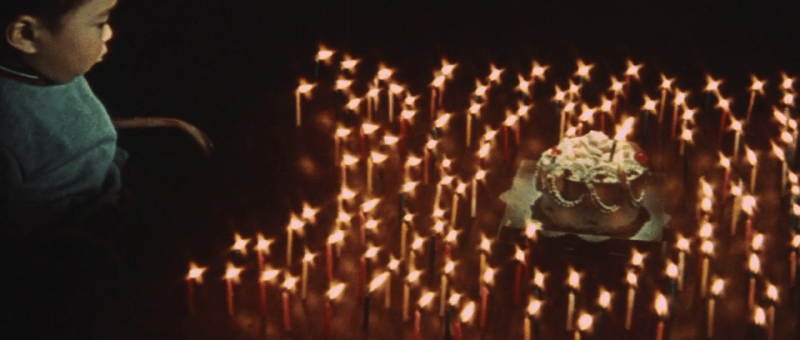
For all that however there’s a poignancy in Taro’s reflecting on his birthday cake with its two candles that Grandma’s must have many more and in fact be brighter than the moon with which he has a strange fascination. He’s just turning two. He used to be a baby but now he’s a big boy and soon he’ll be a man. Goro reflects on time passing, for the moment he’s a father but might be a grandad soon enough. The wheel keeps turning which perhaps puts the hire purchase fees on the TV he bought to keep Grandma occupied and out of the way into perspective. From the experimental opening to the occasional flashes of animation and that banana moon, Ichikawa paints a whimsical picture of the post-war world as seen through the eyes of a wise child but ironically finds a wealth of warmth and comfort even in an age of anxiety.


The House of Hanging (病院坂の首縊りの家, Kon Ichikawa, 1979)

Unlike many directors of his generation who either shifted into television or saw their careers stall, Kon Ichikawa was able to continue working throughout the difficult 70s and 80s precisely because he was less averse to taking on commercial projects such as 1976’s The Inugami Family, an ensemble mystery adapted from the bestselling book by Seishi Yokomizo and starring his famed detective Kosuke Kindaichi. The film proved an unexpected hit, an early success for Haruki Kadokawa’s new multimedia marketing model which would allow him to dominate cinema screens throughout the bubble era, and spawned a series of Kindaichi adaptations produced for Toho boasting a host of A-list stars. By 1979, however, the age of the prestige country house mystery was perhaps coming to a close and The House of Hanging (病院坂の首縊りの家, Byoinzaka no Kubikukuri no Ie) would be the last in the cycle of movies starring Koji Ishizaka who would eventually return to the role in Ichikawa’s 2006 remake of the original Inugami Family. 

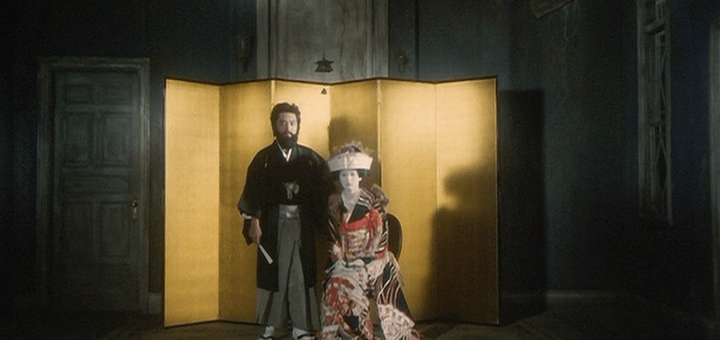
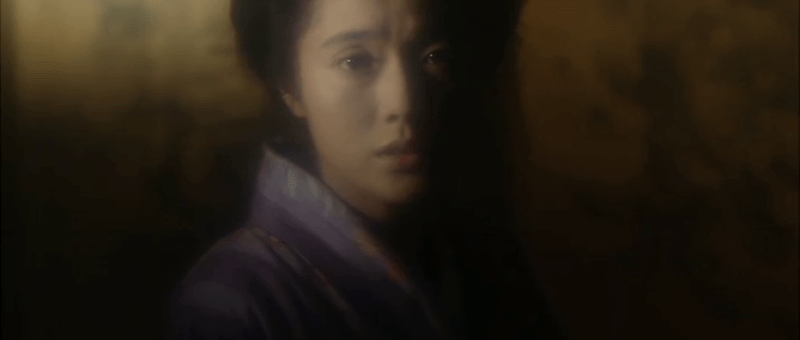
Set quite specifically in 1951 (Showa 26), House of Hanging is among the more complex of Kindaichi’s cases and rests not on war trauma, which is only a background presence in the present venality of the post-war society, but on the decline of a once noble house ruined, as we find out, through the legacy of sexual immorality and abuse. For the moment, however, Kindaichi gets roped into the mystery after visiting an author friend (played by Seishi Yokomizo himself in a cameo) who recommends a photo studio he could visit in order to get a picture taken for his passport as he plans to travel to America. The photographer, Naokichi (Koji Shimizu), takes on an odd job from a strange young woman who asks them to take wedding photos of her sister but abruptly leaves explaining she’ll send a car later to bring them to an undisclosed location. That turns out to be the bombed-out former home of the Hogen family who own the local hospital. Escorted by a creepy young man, Naokichi finds himself in front of a traditional gold screen backdrop but feels uncomfortable because the bride does not seem to be very present and he worries that perhaps she’s been drugged and something untoward may have been going on. He shows the photo to Kindaichi for advice and is later called back to the same location to discover the severed head of the groom hanging from a ceiling light.  

In slightly comedic fashion, the circumstances of the case are so confusing that they have even Kindaichi admitting that he doesn’t quite follow while his temporary sidekick, photographer’s apprentice Mokutaro (Masao Kusakari), proudly holds up a chart he’s made to help keep track. Though the why is in this case more important than it might usually be, it boils down to the same old problem of buried secrets and past shame. We learn that the Hogen family is descended from a line of prominent doctors, though the family tree is complicated because it appears many of the sons of previous generations had illegitimate children, some of whom were later adopted or married to other adopted children in a quasi-incestuous union. With no one quite sure whose children are whose, incest appears to be the original sin which condemns the family, though as we later realise it’s another kind of abuse which sets the present events in motion.

The murdered man, Toshio (Teruhiko Aoi), was apparently part of travelling jazz band earning their living playing on American bases (the photographer also has a sideline in blackmarket army surplus). Aside from the original sin that connects the murders with melancholy fatalism, the additional victims damn themselves through their amoral greed, foolishly engaging in blackmail in the hope of improving their circumstances. Nevertheless, the sin remains the same, the theory being that Toshio was murdered by missing sister Koyuki who killed him in order to escape his inappropriate romantic obsession with her. The additional complication is that Koyuki looks near identical to Yukari (Junko Sakurada), daughter of the Hogen family, connecting the crime with the traumatic events of some years’ previously which led to the cottage becoming known as the “house of hanging” when the body of a young woman was found there having taken her own life. 

As in many of the other Kindaichi mysteries, the detective has only sympathy for those caught up in this complicated murder plot, many of whom are also victims acting simply to protect themselves ironically enough from the past trauma that has in a sense led to this sorry turn of events. Justice, in the end, takes care of itself though Kindaichi will also do his bit to protect those in need acting from a place of moral compassion rather than judicial censure. This final instalment in the Kindaichi cycle has slightly lower production values and a much less starry ensemble but sees Ichikawa adding a few idiosyncratic touches such as his fast, multi-angle cuts to a single person’s speech and a brief theatrical reconstruction sequence, while making time for the return of bumbling inspector Todoroki (Takeshi Kato) and the ironic comedy the series is known for. “Old things pass, that’s when new things are born” Yokomizo sagely advises in his cameo, Kindaichi apparently taking his leave from a corrupted post-war Japan for the bright lights of San Francisco, perhaps never to return. 


Original trailers (no subtitles)

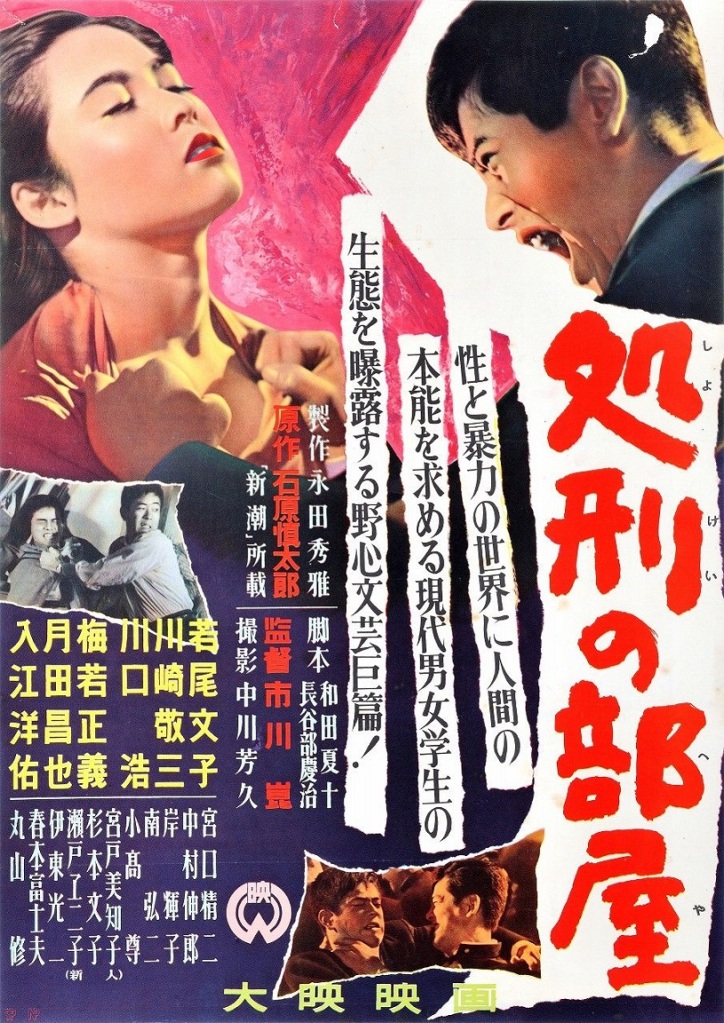
Punishment Room (処刑の部屋, Kon Ichikawa, 1956)

In the mid-1950s, Nikkatsu released a series of incendiary youth films which gave rise to a small moral panic in the older generation. The “Sun Tribe” movies proved so controversial that Nikkatsu could only release three of them before bowing to public pressure while Toho and Daiei both managed to release one each, bringing the total up to five. Produced by Daiei, Kon Ichikawa’s contribution to the Sun Tribe phenomenon, Punishment Room (処刑の部屋, Shokei no Heya), adapted another novel by Crazed Fruit’s Shintaro Ishihara who had, it seems, managed to capture something of the nihilistic spirit of the age.

Among the darkest of the Sun Tribe tales, Punishment Room follows near sociopathic university student Katsumi (Hiroshi Kawaguchi) as he works out his frustration with his hangdog father Hanya (Seiji Miyaguchi) by kicking back against societal rigidity. Hanya is a bank clerk with some kind of stress-related stomach complaint for which he is forever taking medicine. One particular day, Katsumi and his friend Hideo (Shoji Umewaka) turn up to run some kind of scam on him, insisting that Hideo’s family are in dire straits because his dad’s working abroad and they don’t have money to make a payment on a loan. The boys want Hanya to buy the note of debt as security and lend them 30,000 yen, something which isn’t really allowed but he ends up taking out half of his own life savings to avoid embarrassing or being embarrassed by his own son in the workplace. The boys, however, were just trying to extort him and planning to use the money to host a college dance while making a little extra on the side. 

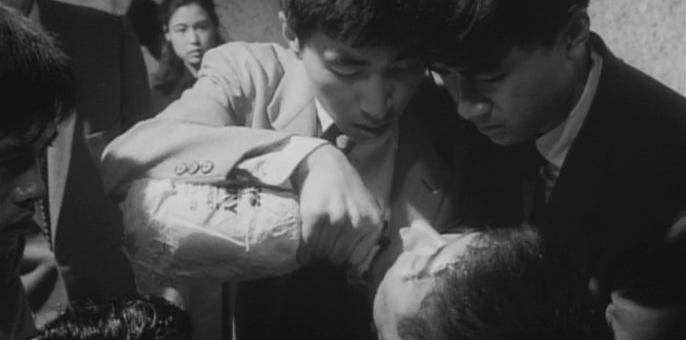
At this point, most still seem to feel that Katsumi is a “nice kid”, while Hideo is a bad influence. His middle school best friend Ryoji more or less says as much, but no one really knows the extent to which Katsumi is already becoming a black hole of nihilistic fury. His ire is provoked during a college debate session at which he’s outtalked by smart female student Akiko (Ayako Wakao) and abruptly cut off by the bored professor (Nobuo Nakamura). Despite knowing that one of his buddies has a crush on her, Katsumi makes a point of picking Akiko up during the chaos of celebration after a sports game. Along with Hideo and another, more innocent student they nickname “Sonny”, Katsumi takes Akiko and her friend to a nearby drinking house, popping out to buy sleeping pills and eventually spiking their drinks while they use the bathroom, knocking Sonny out for good measure to stop him getting in the way. After dragging the barely conscious girls back to Hideo’s family home, they take one each and rape them. On waking Akiko is defiant, threatening to call the police but an unrepentant Katsumi insists that she won’t be believed. Not content with their humiliations, the guys even insist on taking the girls home by cab only to run out and leave them with the bill. 

Katsumi is is equally unrepentant when someone sends his family a letter informing them of his conduct, admitting that the allegations are true but insisting that the women are complicit because they did not report him to the police. He even refers to Akiko, who has after a fashion fallen in love with him, as “sort of my girlfriend”. Hanya ironically blames his wife whom he has treated with nothing but contempt, giving his son a crash course in a inherited misogyny, but she turns the same logic of toxic masculinity back on him in pointing out that his own passivity is the major cause of his son’s resentful rebelliousness. If Katsumi is rebelling against something rather than just a sociopathic little punk, it is indeed the spinelessness he sees in his father, obliged to scrape and bow for a mere pittance as a “wage slave” of a cruelly conformist society. 

An angry young man, Katsumi preemptively rejects the salaryman straightjacket by rebelling against conventional morality. “I do what I want” he insists, as if proving that he’s a free agent acting under force of will alone and beholden to no one. His efforts are however, futile. His amoral violence buys him nothing but the same in return. Denied a mechanism for dealing with emotion, contemptuous of hollow authority figures, and infinitely bored by a society they believe has nothing to offer them bar empty consumerism, post-war youth seeks escape but finds only nihilistic self-destruction, trapped in a perpetual Punishment Room with no exit in sight. 


Opening Scene (no subtitles)

An Actor’s Revenge (雪之丞変化, Kon Ichikawa, 1963)

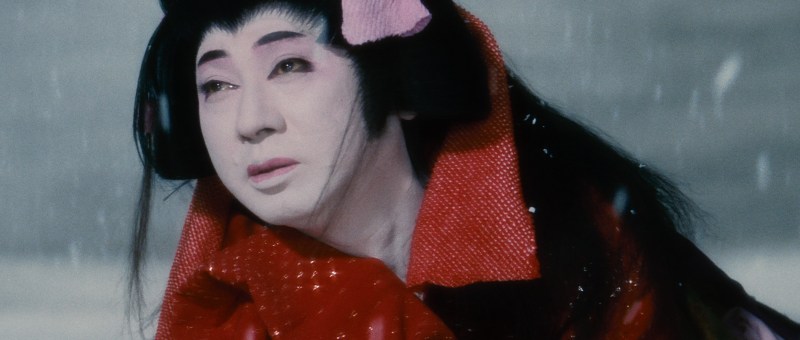
An Actor's Revenge blu-ray cover“Revenge is difficult even for an actor” our secret observer tells us, watching quietly from the rooftops like a spectator at a play. In celebration of his 300th screen appearance, Kazuo Hasegawa stars once again as vengeful onnagata Yukinojo in another version of An Actor’s Revenge (雪之丞変化, Yukinojo Henge), this time directed by Kon Ichikawa with a script written by his wife, Natto Wada, which was itself based on the earlier film with minor adaptations. Recasting the scope frame for the Kabuki stage, Ichikawa shows us a maddening world of theatricality, defined by artifice and governed by the rules of narrative determinism.

Orphaned after his parents were driven to suicide, Yukinojo (Kazuo Hasegawa) was taken in by an actor at a young age and trained as an “onnagata” – an actor specialising in female roles on the kabuki stage where women were forbidden to tread. Years later Yukinojo is one of the most popular actors of the age and lives more or less as a woman on stage and off. Having brought his Osakan theatre company to the Edo capital he finally sees his chance for revenge against the trio of corrupt and ambitious merchants who conspired to ruin his father for personal gain. He is, however, conflicted – not in his desire for vengeance but in the strain it continues to place on his mental state as well as the moral corruption need for it provokes.

Despite his feminine appearance, Yukinojo is regarded as male and most assume that his (volitional) romantic attachments will be with women. His gender ambiguity is, however, a problem for some such as the spiky pickpocket Ohatsu (Fujiko Yamamoto) who describes him as “creepy” in being neither male nor female. Then again, Ohatsu’s gender presentation is also atypical in that though she dresses and acts as a woman, most regard her as inappropriately masculine in the independence and authority which make it possible for her to act as the leader of a gang of street thieves. Lamenting her tomboyishness, some of her minions make the suggestion common in these kinds of films that Ohatsu will rediscover her femininity on falling in love (with a man). Despite her supposed hatred of men, Ohatsu finds herself falling for Yukinojo possibly precisely because of his gender ambiguity in that she is in some sense permitted to fall in love with him as a woman because he is a man.

Meanwhile, Yumitaro (also played by Kazuo Hasegawa) – another street thief only a much more egalitarian one, has no desire for women and has also developed some kind of fascination with Yukinojo as man who presents as female. Yukinojo is remarkably uninterested in Ohatsu, but seems drawn both to the mysterious Yumitaro and to the pawn in his revenge plot, lady Namiji (Ayako Wakao). The daughter of Dobe (Ganjiro Nakamura), the ambitious lord who orchestrated the plot against Yukinojo’s father, who has sold her to the Shogun as a concubine in order to buy influence, Namiji develops a deep fascination with the feminine actor which is then manipulated both by Yukinojo who plans to break her heart solely to get at Dobe, and by Dobe who intends to indulge her fascination in order to persuade her to return to the Shogun. Namiji is entirely innocent and effectively powerless. Involving her in the plot weighs on Yukinojo’s conscience but he refuses to look back, preparing to sacrifice her solely in order to a strike blow towards her father.

Meanwhile, chaos reigns in Edo as the corruption of the ruling elite provokes a rebellion by the ordinary people fed up with their persistent profiteering. This too Yukinojo harnesses as a part of his plot, setting his greedy merchants one against the other as they weigh up the benefits of making themselves look good to the people and the Shogun through engineering a crash in the price of rice by dumping the stocks they’ve been hoarding. The theatrical world and the “real” begin to overlap as Yukinojo performs the ghosts of his parents to bring the merchants’ crimes home to them, but his revenge plot has devastating and unforeseen consequences which perhaps begin to eat away at his carefully crafted chameleonism. Possessing no true identity of his own, Yukinojo passes into legend, retreating back to his natural home of the stage the shadow of an avenger disappearing over the horizon.


Original trailer (no subtitles)

Murder of the Inugami Clan (犬神家の一族, Kon Ichikawa, 2006)

the inugami family 2006 posterBeginning his career in the late 1940s, Kon Ichikawa was a contemporary of the leading lights of Japanese cinema during the golden age though has never quite achieved the level of international acclaim awarded to studio mate Akira Kurosawa. Unlike Kurosawa however, whose career floundered the wake of the studio system’s collapse, Ichikawa was able to go on making films through the difficult years of the 70s and 80s precisely because he was willing to take on projects that were purely commercial in nature. His biggest box office hit was an adaptation of the Seishi Yokomizo novel The Inugami Family which led to a further four films starring the author’s eccentric detective Kosuke Kindaichi. 30 years later, in what would turn out to be his final film, Ichikawa took the unusual step of remaking his biggest commercial success and even more unusually decided to recast several of the same actors in their original roles.

The script remains almost identical to the 1976 version though slightly slimmer. In 1947, pharmaceuticals magnate Sahei Inugami (Tatsuya Nakadai) dies leaving a confusing will which upsets absolutely everyone – not least his three daughters whom he fathered with three different women none of whom he was legally married to. Sahei has elected to leave the bulk of his estate to a young lady, Tamayo (Nanako Matsushima), who is not part of the family, on the condition that she marry one of his grandsons though he stresses that she is free to choose. If she chooses to marry someone else, the estate will be split between the three grandsons and another illegitimate son fathered with a maid whose whereabouts are apparently unknown. With such a vast fortune at stake, it is not long before the first murder occurs.

The most major difference between the 1976 and 2006 versions is, perhaps counterintuitively, the budget. Whereas the 1976 version had been one of the “taisaku” prestige pictures which dominated the mainstream cinema of the era and had the marketing genius of a young Haruki Kadokawa behind it, the 2006 version is a much more modest affair with minimal production values and a noticeably unfussy approach. The 1976 version, like the other instalments in the ‘70s series, also boasted a starry cast including golden age star Mieko Takamine, even employing Kyoko Kishida in a tiny two scene role as a blind koto teacher. Perhaps the strangest and most experimental choice made by Ichikawa in terms of his “remake”, is the one to cast original star Koji Ishizaka as the eccentric detective, reprising his role from the earlier film 30 years later. In fact, many of the other characters whose ages are not important are also played by the original actors including the bumbling policeman (Takeshi Kato) and his sidekick who appear throughout the series (comedy director Koki Mitani makes a noted cameo in the spot occupied by Seishi Yokomizo in the original adaptation).

The recasting adds to the level of uncanniness created by the dissonance between the opulence of the 76 version, and the austerity of that from 2006. This time around, Ichikawa shoots in 16:9 rather than (the then) TV friendly 4:3, but in the scaled back hyperrealist style common to lower budget dramas from the 2000s. The flat digital cinematography only serves to add to the general lifelessness of the drama which features only the main players, the sole crowd scene occurring during a flashback to the repatriation shot to match the accompanying stock footage just as in the 1976 version. Whereas Ishizaka and the other veterans are mainly acting within the broader yet largely naturalistic style of 70s cinema, the younger members have adopted the decidedly theatrical tones common in contemporary indie drama which somewhat undercuts the strange mix of camp fun and serious drama which had defined the Kindaichi series.

In contrast to the ‘70s movies, Ichikawa plays it uncharacteristically safe – opting for many of the same techniques but reining them in, using plain black and white instead of negative, easing back on the gore, and lowering the level of violence. The results are decidedly mixed and though the central mystery has not changed, the 2006 edition proves a much less satisfactory experience that does not so much attempt to recapture the strange magic of the original as throw it into contrast through its absence. The story of the Inugami murders is, like many a Kindaichi mystery, one less of greed and selfishness than the lasting effects of repression, frustrated desires, and difficult loves and as such it is timeless, yet lightning doesn’t strike twice and Ichikawa’s second attempt at bottling it only goes to show that there’s little to gain in slavishly aping the past.


Original trailer (English subtitles)

The Inugami Family (犬神家の一族, Kon Ichikawa, 1976)

the inugami family 1976 posterUnlike many of his contemporaries, Kon Ichikawa was able to go on working through the turbulent ‘70s and ‘80s because he was willing to take on purely commercial projects. The phenomenal and hugely unexpected success of 1976’s The Inugami Family (犬神家の一族, Inugami-ke no Ichizoku) set him in good stead for the rest of the decade during which he followed up with another four movies starring Koji Ishizaka as the eccentric detective Kosuke Kindaichi as featured in the novels of Seishi Yokomizo each of which was a bonafide box office success partially thanks to the effect of Haruki Kadokawa’s intensive multimedia marketing strategy then still in its infancy. In fact, Ichikawa would return to the sordid world of the Inugamis for his final picture in which he dared to remake his “greatest hit” with a now much older Koji Ishizaka reprising his role exactly 30 years later. Ichikawa might have been making “commercial” movies, but he never lost his experimental spirit.

Old Sahei Inugami (Rentaro Mikuni) finally drops dead in 1947 after a lifetime of seemingly doing exactly as he pleased. As a 17-year-old orphan he was taken in by a kindly priest and thereafter founded one of the biggest pharmaceuticals companies in Japan which is to say he leaves behind him a vast estate and desirable name. Unfortunately, he also leaves a messy family situation. Sahei was never legally married, but fathered three daughters with three different women who each have a son. In his 50s, he also fathered a son with his maid who would be about the same age as the grandchildren if anyone knew where he was. Sahei’s will, which in dramatic fashion can only be read with everyone present, leaves everything to a young woman, Tamayo (Yoko Shimada), who isn’t even part of the family but was doted on all the same by the elderly patriarch. In order to inherit, Tamayo must consent to marry one of the three grandsons – Suketake (Takeo Chii), Suketomo (Hisashi Kawaguchi), or Sukekiyo (Teruhiko Aoi) with whom she seems to have shared a past attachment. The will stresses that she is free to choose though if she decides to marry someone else entirely, the fortune will be divided in five with one part each to the grandsons and the rest to the maid’s son. As one can imagine, the daughters are furious.

Kindaichi is called in by a clerk (Hajime Nishio) at the solicitor’s office who has seen the will and finds it all decidedly strange (plus he’s in love with Tamayo so it’s very bad news for him). The clerk gets murdered before he can spill the beans, but the solicitor himself, Furudate (Eitaro Ozawa), decides to enlist Kindaichi’s help in figuring all of this out before it claims any more lives. Unfortunately, claim more lives it will.

Greed, as ever, is at the root of all evil but like the other entries in the Kindaichi series the crimes are largely a result of the world which surrounds them. Old Sahei made his money in some dubious ways. Ingratiating himself with the rich and powerful, later becoming a militarist for what seems like opportunistic reasons, he got himself special dispensation to grow poppies for their medicinal properties. Which is to say, he got rich selling opium to the masses. Inugami pharmaceuticals profited hugely from suffering incurred in wars spanning the century – with Russia, with China, through the first world war and the second. There was Inugami, ready to fuel the fire by numbing the pain.

Yet it’s his own unresolved emotional suffering that seems to have sent him such a dark and amoral path. Later we discover that a strange and emotionally difficult set of circumstances involving a quasi-incestuous, bisexual love triangle seem to have left him craving something to numb his own pain but only succeeding in passing it on to those around him. Firstly through the women he kept around to satisfy his carnal desires and then sent away, keeping the children with him but in a loveless, austere home. The sisters – Matsuko (Mieko Takamine), Takeko (Miki Sanjo), and Umeko (Mitsuko Kusabue) share an uneasy sort of camaraderie but are quick to turn on each other when it becomes clear that only one of them will inherit the family fortune and that they are now each rivals for the hand of Tamayo.

Like their grandfather, the Inugami boys are not an especially good catch. Two of them eventually attempt to rape Tamayo in an attempt to force her into marriage through shame (despite the fact that one has already fathered a child with his cousin), while she also has her doubts that Sukekiyo, with whom she has always felt a connection, is really who he says he is. Having gone away to the war, Sukekiyo did not return home after being demobbed because of intense survivor’s guilt. He also sustained severe burns to his face which require him to wear a latex mask over his entire head making positive identification difficult seeing as his voice, which he rarely uses, is also changed.

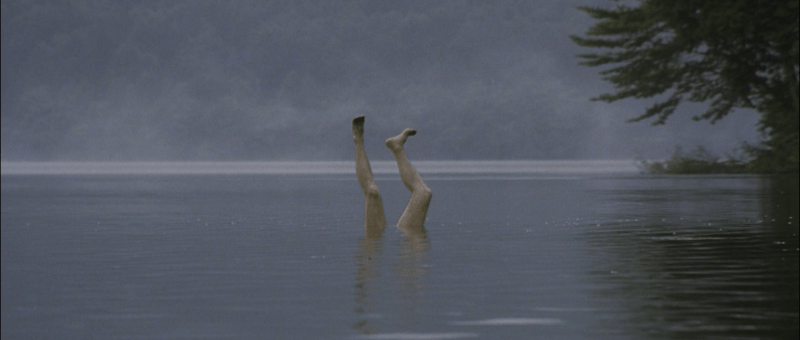
Rather than submit himself to the necessarily pokerfaced approach common to prestige murder mysteries from across the globe, Ichikawa uses the saleability of the property as an excuse to go all out. His tone varies wildly, almost to the point of parody in his frequent cuts to Kindaichi causing another of his famous anxiety induced dandruff avalanches. The blood eventually flies as do severed heads while upended corpses do handstands in lakes. The story of the Inugami family is a strange one filled with moments of bizarre whimsy but somehow it all works. As in many a Japanese mystery, the past refuses to die and the guilty eventually realise how misguided their enterprise has been, but there is hope for those left behind if they can free themselves from the cycle of guilt and suffering on which the Inugami name was built.


Original trailer (no subtitles)

The Devil’s Island (獄門島, Kon Ichikawa, 1977)

Devil's Island posterKon Ichikawa revisits the world of Kosuke Kindaichi for the third time in Devil’s Island (獄門島, Gokumon-to). Confusingly enough, Devil’s Island is adapted from the second novel in the Kidaichi series and set a few years before Ichikawa’s previous adaptation The Devil’s Ballad (the twin devils are just a coincidence). As with his other Kindaichi adaptations, Ichikawa retains the immediate post-war setting of the novel though this time the war is both fore and background as our tale is set on profane soil, a pirate island once home to Japan’s most heinous exiled criminals, which is to say it is the literal fount of every social failing which has informed the last 20 years of turbulent militarist history.

In 1946, Kindaichi (Koji Ishizaka) travels to Kasaoka to catch the ferry to the island. On the way he runs into a demobbed soldier hobbling along on crutches only to catch sight of the man quickly picking his up crutches and running across the railway tracks when he thought no one was looking. Kindaichi is in luck – before he even reaches the boat he runs into the very man he’s come to see, Reverend Ryonen (Shin Saburi), for whom he has a message. Posing as a fellow soldier, Kindaichi reveals he has a “last letter” from a man named Chimata who sadly passed away right after the cessation of hostilities having contracted malaria. Chimata, as we later find out, was the legitimate heir of the island’s most prominent family. Kindaichi chooses not to reveal his true purpose, but the truth is that Chimata suspected his death would put his three younger sisters in danger from various unscrupulous family members attempting to subvert the succession.

Your average Japanese mystery is not, as it turns out, so far from Agatha Christie as one might assume and this is very much a tale of petty class concerns, island mores, and changing social conventions. The extremely confusing island hierarchy starts with the head of household who doubles as the head of the local fishing union and then shuffles out to the branch line and brassy sister-in-law Tomoe (Kiwako Taichi) who is keen claim all the authority she is entitled to. The old patriarch, Yosamatsu (Taketoshi Naito), went quite mad at the beginning of the war and is kept in a bamboo cage in the family compound where he screams and rails, only calmed by the gentle voice of Sanae (Reiko Ohara), a poor relation raised in the main house alongside her brother Hitoshi who hasn’t yet returned from the war. Aside from Yosamatsu, the absence of the two young men means the main house is now entirely inhabited by women, looked after by veteran maid Katsuno (Yoko Tsukasa).

Then again, Japanese mysteries hinge on riddles more than they depend on motives and there are certainly plenty of those on this weird little island where they don’t like “outsiders”. Ichikawa hints at the central conceit by flashing up haiku directly on the screen along with a few original chapter headings for Kindaichi whose eccentricities might seem less noticeable in such an obviously crazy place but strangely seem all the more overt, his trademark dandruff falling like rain from his tousled hair. It has to be said that Kindaichi fails in his otherwise pure hearted aims – he doesn’t make a great deal of effort to “save” the sisters and only attempts to solve the crimes as they occur, each one informing the next. This time around he gets trouble from both irritatingly bumbling detective Todoroki (Takeshi Kato) and his assistant Bando (Kazunaga Tsuji) , and the local bobby who immediately locks Kindaichi up and declares the crimes solved on the grounds that they only started happening after Kindaichi arrived.

Meanwhile, there are rumours of an escaped “pirate” running loose, demobbed soldiers, and a host of dark local customs contrasting strongly with the idyllic scenery and the strange “pureness” of this remote island otherwise untouched by the war’s folly save for the immediate events entirely precipitated by the absence of two young men taken away to die on foreign shores. Though the various motives for the crimes are older – shame, greed, classism, a bizarre dispute between Buddhists and Shamans, none of this would have been happening if the war hadn’t stuck its nose into island business and unbalanced the complex local hierarchy. Tragically, the crimes themselves all come to nought as a late arriving piece of news renders them null and void. Just when you think you’ve won, the rug is pulled from under you and the war wins again. Ichikawa opts for a for a defiantly straightforward style but adopts a few interesting editing techniques including fast cutting to insert tiny flashbacks as our various suspects suddenly remember a few “relevant” details. This strange island, imbued with ancient evils carried from the mainland, finds itself not quite as immune from national struggles as it once thought though perhaps manages to right itself through finally admitting the truth and acknowledging the sheer lunacy that led to the sorry events in which it has recently become embroiled.


Original trailer (no subtitles)