Tune in for Love (유열의 음악앨범, Jung Ji-woo, 2019)

Tune in for love poster 2The course of true love never did run smooth. Another in the recent series of nostalgic ‘90s romances, Tune in for Love (유열의 음악앨범, Yooyeolui Eumakaelbum) takes a pair of nervous youngsters and charts the course of their love story over a decade which, though not quite turbulent, saw its share of difficulties and a host of technological changes. “Miracles are nothing special” the heroine tells us, but when it comes to love miracles are all there is and in the end you’ll just have to learn to trust them.

On Oct. 1, 1994 Hyeon-u (Jung Hae-in) walks into Mi-su’s (Kim Go-eun) bakery looking for something with tofu in it. While inside, he hears the first broadcast of Yoo Yeol’s Music Album, a new morning program which seems to signal the beginning of a new era. Though Mi-su is quick to realise that the only reason someone would be desperately looking for plain tofu early in the morning is because they’ve just been released from prison, she decides to offer him a part-time job in the bakery where he becomes a member of the family alongside her “aunt” Eun-ja (Kim Guk-Hee) who’s taken care of her since her mother died. His past, however, refuses to let him go however much he tries to move away from it. Tracked down by his delinquent friends, Hyeon-u is unable to return to the bakery and will spend the next decade trying to do just that.

Fate parts the youngsters repeatedly, but always brings them back together again seemingly by chance. Military service, changes of address, miscommunication and changing technology all conspire to keep them apart but like any good rom-com the problems aren’t so much circumstantial as personal. A deeply wounded young man, Hyeon-u is taken with the familial atmosphere at the bakery because he feels a sense of acceptance he hasn’t anywhere else, but deep down he still doubts he deserves the “normal life” he so deeply craves. His friends doubt it too, always turning up unexpectedly to remind him of their shared trauma and the debt of guilt he can’t repay. His insecurity prevents him from sharing the source of his pain with Mi-su, keeping her somehow outside the bubble of his shame as the only one capable of knowing the “real” him. She meanwhile is frustrated in realising that he’s holding something back, hurt he doesn’t trust her enough to let him in, and worrying he’ll never truly be ready for full commitment. 

Nevertheless, though often apart they remain painfully in sync, until that is fate brings them back together. As young man with a checkered past and no safety net, Hyeon-u has to fight twice as hard to get ahead, eventually graduating high school and getting into college while supporting himself with part-time jobs. Mi-su, meanwhile, is burdened by the knowledge that she’s lost her mother’s bakery and is desperate to get it back. Dreaming of being a writer, she turns down an internship at the all important radio show to go for a steady job she’s told is at a publisher’s but is actually somewhere more like a print shop where she’s stuck doing incredibly boring admin work. Hyeon-u is unable to get back in touch with her after miraculously reappearing because he’s ashamed to admit that he ended up getting in trouble again thanks to his awful friends even though it really wasn’t his fault. She meanwhile confesses that a part of her was relieved not to hear from him because she too is unhappy in herself, feeling lost and confused, disappointed not to be living the kind of life she could be proud of. 

Times change, but their one constant is the radio show broadcasting every morning and providing additional though indirect methods of communication when they are otherwise unable to make contact. Pay phones give way to email and then to mobiles all the way into the early days of the smartphone era, but face to face conversation remains the most difficult. Mi-su gives up on Hyeon-u while he, ironically, probably does sort something out by having a good old fashioned punch up with his generally unhelpful friend. She wonders if she’s better off to make the “smart” choice rather than waiting on love. Hyeon-u is hurt that in the end she didn’t trust him, but is eventually made realise that the problem was that he didn’t trust himself. Then again, you can’t fight the power of true connection or the pain of its absence, all you need to do is a little fine tuning to make sure the signal comes through loud and clear.


Currently available to stream online via Netflix in the UK (and possibly other territories)

Netflix trailer (English subtitles)

Wanee & Junah (와니와 준하, Kim Yong-gyun, 2001)

What marks adulthood more than giving up on idealised first love? For the heroine of Wanee & Junah (와니와 준하) the time has come to grow up but the choice she faces is more complicated than that between the emotional safety of an unrealisable attachment and the risk of real connection because her love comes bundled with guilt tied to its potential inappropriateness and a traumatic loss which was its result. Yet Kim’s film, gloriously forgiving and open hearted, is less about the breaking of a taboo than it is an acceptance that choosing to move on is not a betrayal of romantic idealism but a very necessary path towards maturity.

26-year-old animator Wanee (Kim Hee-sun) has been in a relationship with 27-year-old aspiring screenwriter Junah (Joo Jin-mo) for the past year but though the pair live together and are happy enough, something seems to be missing. A phone call from Wanee’s mother begins to poke at what that might be when she reveals that Wanee’s step-brother, Young-min (Cho Seung-woo), is about to return (temporarily) from an extended stay in Europe where he has been studying abroad.

The news of Young-min’s possible return comes as something of a shock to Wanee, who perhaps feels she has betrayed him by beginning a relationship with Junah. As inappropriate as some may feel it to be, Wanee remains unable to let go of her love for her step-brother who returned her feelings and asked her to run away with him only to leave alone. Confessing her feelings to a third party, however, turned out to have terrible consequences which have surely made their love an impossibility no matter what barriers may have already been in place against it.

Meanwhile, the past is further resurrected by the return of Wanee’s high school best friend, So-yang (Choi Kang-hee), who is also still harbouring feelings for the absent Young-min. As teens, the three were always together and happy in each other’s company, seemingly not allowing possible romantic drama to ruin their easy connection though So-yang seems to have known that Young-min had someone else in his heart even if she doesn’t quite want to spell it out. She tries to warn Junah not to get too attached, that he clearly loves Wanee much more than she loves him and that Wanee may not find that an attractive quality. Wanee, indeed, does not – snapping at Junah when he buys a TV without discussing it with her not only for the usual reasons that he’s spent a lot of money on something frivolous rather than something he actually needs for his work, but because she thinks he probably bought it “for” her as a kind of comfort.

Junah, himself a little lost and lingering at a crossroads, “wavering between love and separation” like the hero of his “uncommercial” screenplay, seems to make these kinds of thoughtful gestures often, later reprogramming the TV to come on in time for Wanee to come home so that it won’t be dark and scary if there’s no one there. Wanee may originally find his solicitous attention claustrophobic, but eventually begins to see it for what it is while dwelling on the continued absence of Young-min. So-yang’s arrival completes the triangular symmetry of both relationships, signalling the distances travelled and not from their carefree youth.

While So-yang claims to have hit a period of insecurity in her chosen career as a photographer, Junah vacillates in defending his artistic integrity and Wanee repeatedly refuses a promotion, claiming to be just fine where she is. There is something about Wanee which is always waiting, arrested in that youthful summer longing for Young-min’s return. If she wants to move on, she’ll have to make a choice. Kim’s vistas are however broad and forgiving, he doesn’t condemn Wanee for an attachment which may be confused or misplaced and which others would brand inappropriate, only for her failure to embrace present love rather than past longing. Meanwhile he shows us other instances of successful barrier crossing love aside from the still unusual co-habitation of Wanee and Junah that sees So-yang brand her friend as “brave” in Wanee’s boss and his policeman boyfriend, and the easy camaraderie of the office where sign language is a fully integrated part of everyday life. A beautifully mature romance and an ode to letting go of old love, Wanee & Junah is a surprisingly affecting slow burn coming-of-age story in which two lost youngsters find themselves in finding each other in a mutual process of self actualisation.


Singapore release trailer (English/Chinese subtitles)

Happy Ero Christmas (해피 에로 크리스마스, Lee Kun-dong, 2003)

Happy Ero ChristmasMany may feel that we’ve forgotten the true meaning of Christmas, but behind the consumerist frenzy aren’t we all just looking for warmth and connection to help us make it through the cold? Well, maybe not, at least as far as one enterprising old man at the centre of Happy Ero Christmas (해피 에로 크리스마스) would have it, but in Korea Christmas is also a time of romance and so our hapless hero hopes to harness the goodwill of the festive season to make this year truly special.

Rookie cop Byung-ki (Cha Tae-hyun) grew up in a hot spring resort famous for its healing waters and inhabited mostly by tourists and gangsters. As a small child dumped by his dad at the baths, Byung-ki suffered a traumatic incident which has defined the course of his life – a horrible gangster decided to throw him into the super hot pool as a kind of hazing exercise, something which caused him both physical and emotional pain. He swore when he grew up he’d get rid of all the gangsters for good, starting with Suk-doo (Park Yeong-gyu) who has a tattoo of the hot springs map symbol but with musical notes instead of steam on his arm.

Unfortunately, however, mostly what Byung-ki does is dress up as the local police mascot “Polibear” and hand out leaflets while taking care of all the other inconvenient station jobs like sweeping the foyer. When he’s not busy dreaming of crime fighting glory, he’s fantasising about the melancholy young woman at the bowling alley, Min-kyung (Kim Sun-a), with whom he’s dreamily in love though she doesn’t seem to know he exists. Min-kyung, as it happens, has hit a rough patch with her fireman boyfriend she started dating when he rescued her from a fire.

Meanwhile, across town, a sleazy old man claims to have discovered the true meaning of Christmas, and it’s X-rated. Rebranding the holiday “Sexmas”, he wants to make an adult movie about a randy Santa who gets kicked out of Santatown for sleeping with all the other Santas’ wives. Coincidentally, the recently released Suk-doo has decided to open a new club, the Sex Palace, during the holiday, while two sexually frustrated teens try to get dates with trombone players and idly fantasise about the abuse of flatfish by sailors at sea.

Suk-doo doesn’t even really remember Byung-ki and is at a bit of a loss as to why he seems to hate him. He spends his life obsessively rewatching Shunji Iwai’s snowy classic Love Letter and getting well and truly into the Christmas spirit to make up for lost time seeing as he spent the last one inside and found it very depressing. Inconveniently for Byung-ki, Suk-doo too develops a liking for Min-kyung after she accidentally spits on him from the roof of the bowling alley after going up there to have a little cry over her rubbish fireman boyfriend.

The thing is, as Min-kyung says, Suk-doo might not actually be that bad. He’s a sensitive soul who knows how to keep Christmas well, which, to be honest is a lot more than you can say for most of the guys in this town. Byung-ki’s efforts to win her heart are so subtle that she hasn’t even noticed most of them, even when he dutifully drops her home after finding her having a drunken karaoke session and she throws up in his police car. Nevertheless, Suk-doo is still a gangster, and gangsters can be awkward too but they’re a lot more dangerous when they are.

Predictably, some of Byung-ki’s most questionable tactics – going through Min-kyung’s bag after it gets left behind in his car when she throws up, quasi-stalking her, putting up a police alarm button right outside her house to let her know he’s only three minutes away etc are written off as awkward goofiness, something which Min-kyung eventually seems to appreciate after realising Suk-doo’s not so nice after all. Suk-doo, meanwhile, gets a sad back story about his mother supposedly dying on Christmas Day, which also happens to be Min-kyung’s birthday, with a series of awkward implications only later undercut by a late confession. As Byung-ki puts it, everyone dreams something special for Christmas be it a weird erotic escapade, or an innocent romance. Mostly everyone gets what they wanted from Santa’s sleigh, riding off into the snow with a new hope for the future whatever that might hold.


Original trailer (extreme low res, no subtitles)

The Drug King (麻藥王 / 마약왕, Woo Min-ho, 2018)

Drug King posterKorean cinema has been in a reflective mood of late, keen to re-examine the turbulent post-war era in the wake of a second wave of democratic protest and political turmoil. Even so, dealing with the difficult Park Chung-hee era has remained sensitive with the legacy of life under a repressive regime apparently very much still felt. Woo Min-ho’s Drug King (麻藥王 / 마약왕, Mayakwang) is first and foremost a crime doesn’t pay story, but it’s also a subtle condemnation of authoritarianism and the corruption and cronyism that goes along with it. Painting its hero’s rise as a consequence of the society in which he lives, it perhaps implies the new wind of egalitarian democracy made such amoral venality a thing of the past but then again is at pains to show that nothing really changes when it comes to greed and resentment.

Our hero, Lee Doo-sam (Song Kang-ho), starts out as a jeweller dabbling in smuggling in Busan in 1972. Just as the smuggling business starts to take off, Doo-sam’s boss falls out with his friends in high places and decides to throw him to the wolves while he escapes abroad to safety. Doo-sam, not one to be beaten, starts coming up with ideas. Mobilising his wife (Kim So-jin) to get him out of jail through a combination of bribery and blackmail, he teams up with the area’s smuggling king to act on a tip-off he got from a Korean-Japanese yakuza and begins producing popular drug Crank for export to Japan.

As the opening voice over explains, Crank is a dangerous stimulant developed by the Japanese during the war and given to factory workers and kamikaze pilots because of its ability to eliminate both fear and fatigue. It is also highly addictive and provides an extreme high which have made it a popular recreational drug but, crucially, the real value is economic. The rising Japan is keen to make use of foreign labour, and Korea is keen to up its export capability. This, coupled with poor regulation of the workforce, has led to extreme exploitation in which factory workers are encouraged to hop themselves up on stimulants to keep working overtime for the sake of economic expansion. Thus, the influx of Crank is, in many ways, simply another facet of ongoing Japanese imperialism.

Not that Lee Doo-Sam cares very much about that. An honest prosecutor later puts it to him that he’s contributing to the exploitation of ordinary workers who might earn a few pennies extra for working a few more hours but at the cost of their health and wellbeing, while he gets filthy rich off the back of their misery. Doo-sam is, however, unrepentant. In the beginning he just wanted to provide for his wife, children, and unmarried sisters, but perhaps he also wanted to kick back against his reduced circumstances and he certainly did enjoy playing the big man. In any case, it has paid off. Doo-sam too has friends in high places and they won’t want to let him sit in a police cell for long in case he starts feeling chatty.

Times change, however, and whatever standing and influence Doo-sam thought he’d accrued his life is built on sand. When Park is assassinated by a member of his own security team, all those contacts are pretty much useless because the cronies are now out in the cold. There are protests in the streets and the wind of a new era is already blowing through even if it is still a fair few years away. That bold new era will, it hopes, do away with men like Doo-sam and their way of thinking, eradicating corruption and backhanders in favour of honest meritocracy. Naive, perhaps, and idealistic but it is true enough that Doo-sam is a man whose era has passed him by while he, arrogantly, burned all his bridges and gleefully sacrificed love and friendship on the altar of greed and empty ambition.

Hubris is Doo-sam’s fatal flaw, but he remains a weasel to the end only too keen to sell out his associates in order to save his own skin. He may claim he was only trying to live a “decent” life, but his definition of “decent” may differ wildly from the norm. Nevertheless, perhaps he was just like many scrappy young men of post-war years, desperate, hungry, and left with few honest options to feed his family if one who later found himself corrupted by backstreet “success” and the dubious morals of the world in which he lived which encouraged him to disregard conventional morality in favour of personal gain. Much more about life in Korea in the authoritarian ‘70s than it is about crime, The Drug King is nevertheless an ironic tragedy in which its drug peddling hero eventually enables the birth of a dedicated narcotics squad and helps to dismantle system which allowed him to prosper all while grinning wildly and, presumably, planning his next move.


Currently available to stream online via Netflix in the UK and possibly other territories.

International trailer (English subtitles)

Key tracks from the (fantastic) soundtrack:

Jung Hoon-Hee – Flower Road

Kim Jung Mi – Wind

Jo Pil-ho: The Dawning Rage (악질경찰, Lee Jeong-beom, 2019)

Jo Pil-ho- The Dawning Rage posterThe Man From Nowhere’s Lee Jeong-beom returns five years after No Tears for the Dead with another retro crime thriller, though this time one with additional bite as he digs into a nation quite clearly failing its young. Another of the recent films set in the post-Sewol world, Jo Pil-ho: The Dawning Rage (악질경찰, Akjilkyungchal) is a noirish voyage through an intensely corrupt society in which Chaebols act with impunity while goodhearted schoolgirls are branded delinquents and left to fend for themselves by the “adults” who seem to have abandoned all sense of social responsibility.

Our hero and the titular “bad cop” of the Korean title, is Jo Pil-ho (Lee Sun-kyun) – a corrupt police officer who abuses his position to force criminals to commit crime on his behalf. Recently, he’s teamed up with a teenage safecracker, Gi-chul (Jung Ga-ram), and is also involved in an ill-advised business relationship with a petty gangster. IA are all over him, but they don’t have anything yet. Everything is about to change, however, when an angry Pil-ho decides it would be a good idea to rob the police warehouse. The gangster’s minion makes a mistake and the place blows up with Gi-chul trapped inside. Suddenly it’s not looking so rosy for Pil-ho who is now implicated in a series of crimes only to discover that there is far more going on than he could have anticipated. The warehouse fire appears to be connected to an ongoing corruption case involving one of Korea’s biggest conglomerates and Pil-ho may have just destroyed key evidence without realising in an attempt to save his own skin.

Despite himself, Pil-ho is not such a bad guy. He’s corrupt and greedy, but he has a moral compass and probably sees himself as kicking back against the system rather than abusing it seeing as he only seems to take money from sources he feels could stand to lose. This is perhaps why he finds himself increasingly shaken by his investigations, eventually forced to pick a side – surrender to Chaebol influence as a willing underling or expose the corruption possibly at the cost of his own life.

In true noir fashion his own past comes back to haunt him as he re-encounters the father of a young woman (Im Hyeong-gook), Song Ji-won (Park So-eun), who died in the ferry tragedy and had wanted to become a policewoman when she grew up. Pil-ho was the officer charged with the empty gesture of presenting him with a police uniform with his daughter’s name on it. In an unlikely coincidence, the girl Pil-ho needs to find, Mina (Jeon So-nee), was Ji-won’s best friend. Alone and without family, Mina has been living by her wits on the streets but as Mr. Song points out she’s not a bad kid at heart and goes to great lengths to protect those close to her.

Despite their original mutual distrust, a kind of camaraderie eventually builds up between the cynical cop and the jaded teen who views the so-called “adults” around her with nothing more than contempt. Her admiration for Pil-ho begins when he beats up a sleazy backstreet doctor who tries to swap treatment for sexual favours and then continues as Pil-ho, against the odds, begins to look out for her in ways no one else ever has. Mina, like many kids, is simply trying to survive in a world which is often actively hostile to her existence, but unlike Pil-ho she has avoided becoming cynical and remains committed to protecting those weaker than herself even if others may write her off as a lost cause delinquent.

Set in Ansan which, as an ironic sign tells us before falling to the ground, is the “city of happiness”, Dawning Rage locates itself in a haunted land in which the lingering effects of the ferry tragedy are impossible to ignore. Pil-ho begins catching sight of teenagers everywhere but their presence only seems to highlight absence while providing a kind of chorus watching and observing the adults around them in order to learn how to live. The corrupt Chaebol cites his provision of scholarships as evidence of his commitment to building a fairer society, all while knowing that by doing so he is really buying influence and loyalty. He spins a yarn about his humble origins and makes a show of inspiring the next generation, but thinks nothing of silencing those who stand in the way of his selfish aims.

The corruption rains down from above – the Chaebols make their money and they cut corners, leaving ordinary people squeezed. Fear and deference are the primary contributors to the societal decline which placed innocent young people directly, if unwittingly, in harm’s way. This is Pil-ho’s “dawning rage” as he awakens himself to the depths of injustice within his own society with which he had blindly gone along thinking only of himself. With a distinctly 1970s aesthetic, Dawning Rage is a dark conspiracy thriller in which the system is so hopelessly corrupt as to be beyond saving. Pil-ho is a “bad cop” who turns out to be acting for the public good after all but finds himself pushed towards the dark side by the intransigence of his society and forced into an act of violent revenge both personal and social.


Currently available to stream online via Netflix in the UK and possibly other territories.

Original trailer (English subtitles)

Ieodo (異魚島 / 이어도, Kim Ki-young, 1977)

Ieoh Island restoration posterIn the hyper-masculine and intensely patriarchal atmosphere of Korea under Park Chung-hee, Kim Ki-young spins a tale of male obsolescence in the mysterious Ieodo (異魚島 / 이어도, AKA Ieoh Island). The eponymous island, apparently a kind of paradise home to the lonely ghosts of fishermen lost at sea, becomes a symbol of the impossible life drive of its impotent protagonists who find themselves taken by the island before their time while the community of women asserts its primacy in rendering men “redundant” through finding new ways to procreate.

The hero, Hyun Seon-woo (Kim Jeong-cheol), is an executive at a tourism company who is struggling to conceive a child with his wife and undergoing the early stages of IVF treatment. Alarmed to realise that his wife could have a child without him thanks to his frozen sperm, he throws himself into his work, planning for a new hotel development to be called “Ieodo” after the mythical fisherman’s paradise. Organising a publicity stunt in which journalists and industry guests are asked to board a boat to an unknown destination backfires spectacularly when a reporter, Chun Nam-seok (Choi Yoon-seok), becomes extremely upset and insists on turning the boat around on learning they will be heading towards the mythical island. Nam-seok accuses of the hoteliers of appropriating local culture, while even the boat’s captain expresses dismay at the thought of breaking such a strong taboo. Seon-woo offers to settle the matter with a drinking contest, eventually passing out during which time Nam-seok “falls” off the boat, leaving him the prime suspect in the man’s death. Convinced that Nam-seok must have taken his own life, he determines to investigate the case himself with the help of Nam-seok’s editor (Park Am).

Seon-woo’s quest takes him to the nearby island where Nam-seok was born, Parang – a place inhabited solely by women which all men must leave on having a child. Parang is a place where tradition reigns and superstition is prevalent. Guided to the local shamaness (Park Jeong-ja) by a timid widow, Seon-woo and the editor are told that Nam-seok’s family were under an ancestral curse in which all the men of previous generations were eventually taken by the “Water Ghost” of Ieodo, including Nam-seok’s own father. After his mother died of grief, Nam-seok tried to escape, but now, the villagers seem to believe, he too has returned to embrace his fate proving that the Water Ghost will always take what is hers by right.

In order to get around the lack of menfolk, the women practice what a friend of Nam-seok’s calls “both the most primitive and the most modern” form of marriage in which they copulate with men of their choosing during a candlelight ritual. Having sworn off having children himself, at least on the island owing to the curse, Nam-seok takes up with the wealthy widow Mrs. Park (Kwon Mi-hye) who finances his unusual business venture – an abalone farm designed to bring prosperity back to the island where the traditional diving business has begun to flounder thanks to the corruption of the modern world.

The fish in the ocean are dying because of industrial pollution – itself a problem produced by the thoughtless capitalism of the Park Chung-hee’s authoritarian regime and its relentless drive forward into economic dynamism at all costs. Watching his seed fall on stony ground (literally and figuratively), Nam-seok becomes enlightened to environmentalism, bemoaning that the ancestors of humanity cared for the planet for thousands of years only for recent generations to destroy it. It’s the end of the world, he says, everything is rotting. Which might, after a fashion, explain why everyone seems to be finding it so difficult so have children.

Nam-seok’s attempts to artificially breed abalone link straight back to Seon-woo’s inability to father a child with his wife whom, we are told in the very beginning, eventually died without ever giving birth. We’re told that sperm survives its host, that the sperm of a man who froze to death on the mountains was found to be perfectly viable once defrosted and that, therefore, Seon-woo himself is a largely irrelevant presence in his his wife’s ongoing quest to have a child. The island women too who do things the “traditional” way, had also stumbled on a way to conceive children in the absence of men, or at least in the absence of “living” men in realising that sperm could often be harvested from the dead and applied by means of ritual.

Kim returns to his favourite themes of sex and death as two literally become one. “All fears disappear when men and women unite”, the mysterious barmaid (Lee Hwa-si) tells an increasingly confused Seon-woo who has come to embody for her the soul of the lost Nam-seok whom she believes to be her spiritual husband. “Everything is only momentary”, he answers her, “eternity is a word which deceives us”. Seon-woo admires “the incredible energy of women who risk their lives to have children”, but if the island is to survive it can only be in the absence of his destructive male energy. Like countless men before him, he must leave, not for the paradise of Ieodo, but for the rapidly declining modern society, while a woman remains behind alone – the sole guardian of a child who is also, of course, the future.


Ieodo was screened as part of the 2019 London Korean Film Festival. It is also available on English subtitled blu-ray courtesy of the Korean Film Archive in a set which also includes a complete script (Korean only) bilingual booklet, commentary by critic & director Chung Sung-ill, commentary featuring critic Kim Young-jin and director Oh Seung-uk (not subtitled), an interview with actress Lee Hwa-si, and clips of Lee Hwa-si with Jeong Beom-sik, and Park Jeong-ja with Lee Yoon-ho (no subtitles).

A Single Spark (아름다운 청년 전태일, Park Kwang-su, 1995)

In the present day, South Korea has become a prosperous society and leading world economy, but the miracle of its modernisation came at a heavy price. Socially committed filmmaker Park Kwang-su’s A Single Spark (아름다운 청년 전태일, Areumdaun cheongnyeon Jeon Tae-il) takes a trip back to the “truly dark days” of the Park Chung-hee dictatorship to expose the exploitation on which the modern society was, and in fact still is, founded, enabled largely by the wilful misuse of a fear of “communism” as manifested in the problematic presence of threat from “the North”.

Park filters his true life tale through the figure of a fictionalised author and activist, Kim (Moon Sung-Keun), who finds himself on the run from the authorities in 1975. Hiding out in a small town in a backroom rented by his pregnant factory worker girlfriend Jung-soon (Kim Sunjae), Kim is working on a biography of a labour rights activist, Jeon Tae-il, who self-immolated in order to protest the failure to properly enforce existing workers’ rights five years’ earlier in 1970.

Switching to crisp black and white, Park paints a bleak picture of working class life in the late 1960s as the oppressive Park Chung-hee regime imposed extreme export goals designed to boost the local economy. We first meet Jeon (Hong Kyeong-in), who was only 22 at the time of his death, selling umbrellas on the street before he is “lucky” enough to get a job in a tailoring factory. Committing himself to working hard and getting on, he is quickly disillusioned with conditions at the plant which has little light or ventilation and often forces its employees to work through the night without adequate breaks for food. When the young woman next to him begins vomiting blood and is sent home but subsequently fired, Jeon becomes radicalised. Told that there are no laws which protect workers, he is surprised to discover that there are but their existence has been wilfully kept from him. The law is written in a language which is almost impossible for him to understand, in highly formal text using Chinese characters which most ordinary Koreans, never mind those like Jeon denied a proper education, struggle to read.

Jeon begins agitating. He takes a copy of the statutes and a series of violations at the factory to those in charge, but no one is interested. Even when he convinces some of the other workers to come with him, the boss is eventually forced to make a token concession of listening to them but ultimately rolls his eyes and says it’s all very well but not good for business. Jeon isn’t asking for anything radical (save the later addition of provision for menstrual leave), only for better ventilation and for the existing laws to be obeyed.

Meanwhile, Kim meditates on his legacy in the dark days of 1975 where anti-communist sentiment runs high in the wake of the end of the Vietnam War. “Anti-communism” and the demonisation of the North were a central part of Park Chung-hee’s right-wing, nationalist military dictatorship and any attempts to form things like unions or left-leaning political associations were quickly decried as “communist”. Kim’s girlfriend Jung-soon is currently involved in trying to set up a union at her factory to combat many of the same kinds of issues that Jeon was fighting five years’ earlier, but she too is under a lot of pressure. Afraid of the authorities and of losing their jobs, many workers refuse to join and even after she reaches her quota the request for recognition is denied. She and the other activists are harassed by factory management beginning with a “friendly” meeting outside her home in which they try to bribe her with money and expensive fruits, and ending with a raid on the building in which some of the workers are holding a protest during which a woman falls ill and the others are badly beaten when they try to get her to a hospital.

Jeon and the others are lectured by management that they should try to feel more “patriotic” and be willing to suffer in order to raise the economy, bribed with false promises that they’ll all be driving luxury cars in 10 years’ time. Meanwhile, a woman coming to collect money from Jeon’s mother angrily exclaims that debtors should take rat poison and die (which seems counterproductive when they owe you money), and the managers dismiss workers’ concerns with the rationale that they obviously “aren’t hungry enough” to put up with starvation wages and poor working conditions. From the vantage point of 1975, Kim meditates on Jeon’s sacrifice as he witnesses the suicide of another young man, Kim Sang-jin – a student who quoted Thomas Jefferson’s words that democracy is an outcome of struggle at a rally at Seoul National University before publicly slashing his belly. He sees the tragedy of Jeon’s death as the “single spark” which lit a fire under the democracy movement, a torch he wants to pick up and keep aflame to guide them towards a better future.

20 years later, Park may be acknowledging that some battles have been won in a newly democratised Korea as Kim looks on with satisfaction in a peaceful marketplace while a student carries the book he has written about Jeon Tae-il under his arm, but implicitly suggests that not enough has changed and the same battles Jeon was fighting are still being fought. A melancholy meditation on political martyrdom, art, and legacy, A Single Spark pays tribute to those who gave their lives for a fairer world but is equally intent that their sacrifice must not be forgotten.


A Single Spark was screened as part of the 2019 London Korean Film Festival.

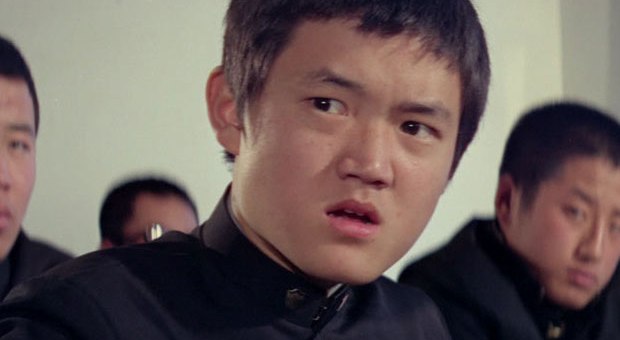
The Age of Success (성공시대, Jang Sun-woo, 1988)

Age of Success still 3“Love only matters when you can sell it” in the nihilistic world of Jang Sun-woo’s The Age of Success (성공시대, Seonggong shidae). The Korea of 1988 was one of increasingly prosperity in which the recently democratised nation looked forward to a new era of freedom, hosting the Olympic Games as a calling card to the world stage. Like everywhere else in the ‘80s however it was also a time in which greed was good, time was money, and compassion was for suckers. Jang’s narcissistic hero worships Hitler and offers a nazi salute to a mockup of a high value note with his own face on it as he leaves for work every morning, but his relentless pursuit of “success” is destined to leave him empty handed when he realises the only commodity he can’t sell is sincerity.

The executives of Yumi Foods, a subsidiary of Mack Gang (Mighty) corporation, are looking for a bright new face through a series of individual interviews. The panel asks each of the prospective new hires to prove their sales ability by convincing them to buy something inconsequential they happen to have in their pockets. Each of the young men fails, until the sharply suited Kim Pan-chok (Ahn Sung-ki), whose name literally means “sales promotion”, dazzles them with a show of intense charisma. He simply offers to sell them whatever is inside his clenched fist. Such is his conviction, the CEO finds himself emptying his wallet, pouring out his credit cards, and eventually borrowing from his friends until Pan-chok is satisfied he’s getting all he could possibly get at point which he opens his fingers and reveals his empty palm. The bosses are annoyed, but quickly convinced by Pan-chok’s explanation that what he’s sold them is “sales spirit” which is, after all, the most valuable thing of all (not to mention exactly what they were looking for). Pan-chok is hired.

Later, we find out that Pan-chok’s routine is an ironic inversion of his childhood trauma. A poor boy abandoned by a mother who became fed up with his father’s fecklessness, he waited alone every day for his dad to come home with something to eat. But his dad was an irresponsible drunkard who could never hold down a job. Like Pan-chok, he held out his fist and told the boy to open his fingers but he was always empty-handed. Hating his father’s incompetence, laziness, alcoholism, and violence, Pan-chok decided that he had to be strong. “Poverty makes you low and pathetic”, he insists. Love, pity, and mercy are for people with no power. “The important thing is to be strong, to win, succeed, possess, and to dominate. Only then will I be happy”.

Pan-chok is a corporate fascist wedded to ultra capitalist ideology in which the only thing that matters is strength and the ability to dominate. He lies, and cheats, and misrepresents himself to pull every underhanded trick in the book to try and get ahead. He goes to war, quite literally, with industry rival Gammi, intent on completely destroying them in order to dominate the market by whatever means possible. Coming up with signature product Agma, he irritably tells his development team that none of their work really matters because the quality of the product is largely irrelevant. Just as in his interview, all Pan-chok is selling is false promise wrapped up in marketing spin. His rival goes on TV to talk the value of tradition to defend himself against a smear campaign Pan-chok has engineered to suggest his products are a health risk, but eventually gets the better of him by playing him at his own game and making a late swing towards ultra modernity.

Pan-chok’s main gambit is seducing a local bar hostess, Song Sobi (Lee Hye-young), lit. “sexual consumption”, and using her as a spy to get info on Gammi’s latest products, but Sobi falls in love with him only to have her heart broken when she realises Pan-chok will discard her when he decides she is no longer useful. He tells her that love is only worth something when you can sell it, but is confounded when she later turns the same logic back on him after selling her charm to seduce the son and heir of the Gammi corporation as a kind of revenge.

Proving that he never learns, Pan-chok’s last big idea is that the only way to beat Gammi’s technological solution is to commodify nature, to repackage and sell back to the people the very things he previously rejected in human sensation. By this point, however, he is so thoroughly discredited that few will listen. His new boss has an MBA from an American university and no time for Pan-chok’s scrappy post-war snake oil salesman tactics. “Only success can set you free”, Pan-chok was fond of saying, but it belied a desperation to escape post-war penury. What he wanted was freedom from hunger, anxiety, and subjugation. He wanted to be a big man, not a small one like his father who always came home empty-handed, so that no one could push him around. What he became was a man without a soul, empty-hearted, consuming himself in pursuit of the consumerist dream. Korea, Jang seems to say, should take note of his lesson.


The Age of Success was screened as part of the 2019 London Korean Film Festival.

Height of the Wave (파고, Park Jung-bum, 2019)

Height of the Wave poster“The suspects are all the residents” says the world weary police chief at the end of Park Jung-bum’s uncharacteristically forgiving island drama Height of the Wave (파고, Pago). Island communities are often thought of as innocent idylls, the city’s corruption lying far off over the horizon, but where there are people there is suffering and perhaps there’s nowhere completely free of human cruelty.

Recently divorced maritime police woman Yeon-su (Lee Seung-yeon) has been seconded to a remote island to act as its police chief for two years. She’s brought her deeply resentful teenage daughter with her, and is currently struggling with a “panic disorder” she’s keen to keep a secret. Meanwhile, island’s sleazy foreman, handsy and making inappropriate comments about the scent of Yeon-su’s hair, is hard at work to a get a designation as a “desirable destination” and attract much needed funding. His plans are disrupted, however, when Yeon-su overhears some worrying comments from the island’s only young woman, Yae-eun (Lee Yeon), which suggest she is indulging in sex work (which is illegal). Yeon-su investigates, becoming worried for Yae-eun who is an orphan and seems to be a little different than you might expect for a woman of her age, and contacts the mainland for support. As you might expect, this does not go down well with the foreman who worries that his precious designation might be denied if word got out about the base immorality lurking in his town.

Traumatised by her career as a policewoman on the mainland which mainly involved retrieving the bodies of those who’d committed suicide by drowning, Yeon-su might have come, or been sent, to the island as quiet place to recover. The island is after all a liminal space, between one state and another, where one might pause for reflection before preparing to move forward. Yae-eun, who lost her parents at sea, is trapped because of her fear of water and terror that someday a great wave will swallow everything and everyone. Yeon-su fears something similar, unable to sleep on thinking about all the bodies she never managed to save that sunk to the bottom of the ocean never to be seen again.

Yeon-su’s daughter Sangyi (Choi Eun-seo) recognises the similarities in the anxieties of the two women, bonding with Yae-eun out of a shared sense of betrayal and abandonment but finding it more difficult to forgive her mother for her increasingly strange behaviour, the breakdown of her parents’ marriage, and for bringing her to this barren place. Early on, Sangyi tries to join in with some of the other children, but finds them playing a cruel game in which they’re trying to kill off the sleepy ants on the grounds that they will soon invade and destroy all their houses. Sangyi, perhaps identifying with the “alien” bugs, tries to stop the kids crushing the ants before they’ve even done anything but is then othered herself, ironically put in “jail” with the chickens as a hostile element. “It’s your fault” a boy tells her, “we wanted to be friends”.

From the perspective of the foreman and perhaps others in the village, Yeon-su is a burrowing termite intent on undermining their foundations. This is an island, after all, and they do things a bit differently. What’s normal here, might not be appropriate on the mainland. It seems that Yae-eun has been accepting money in exchange for sex, and that she might not be fully capable of understanding the implications of her actions, but if she’s making a free choice to sell her body and is not in that sense being exploited by a third party then perhaps some might say that is her own business. The situation is complicated, however, when Yae-eun reveals she may have been doing this as young as 17, which means she was underage. Yeon-su wants to protect the young woman, all alone on an island full of possibly predatory old men and cared for only by an “uncle” (Park Jung-bum) and a “grandpa”, but has to accept that her desire to do so may involve short-term harm in that Yae-eun is terrified of getting on boats which means she is unable to escape her present environment even if she wanted to.

Yae-eun immediately recognises something in the other woman. “You look so lonely, chief”, she tells her placing artificial flowers on the altar of a disused church reassured by the fact they never change, “I thought I was the only lonely one”. The foreman tries to get the others on board by referring to Yae-eun as everybody’s child, literally raised by a village, but he wants to forcibly export her to the mainland so that she won’t mess up his desirable island plan by embarrassing him when the inspection committees arrive. Yae-eun’s uncle apologises for not being better able to protect her, complaining that the villagers are “blinded by money”, and have decided to sacrifice her rather than risk destroying their chances of financial gain. Yeon-su’s attempts to help have merely created a different, perhaps more dangerous, set of problems that expose but do not intend to heal a painful hypocrisy. Tellingly, it is Sangyi who eventually proposes the only positive solution in her desire to help Yae-eun overcome her fear of water but even this has its darkness because it is also a path to exiling her from the island possibly against her will to cover up the “scandal” of her existence. The wave may not be so high that it drowns us all, but it’s as well to learn to swim.


Height of the Wave was screened as part of the 2019 London Korean Film Festival.

Short clip (dialogue free)

The Flower in Hell (地獄花 / 지옥화, Shin Sang-ok, 1958)

Flower in Hell newspaper 1Five years after the end of the Korean War, Korea was still a poor country in which hope for the future seemed all but impossible. Shin Sang-ok’s The Flower in Hell (地獄花 / 지옥화, Ji-oghwa), borrowing incongruously from both European neorealism and American film noir, situates itself directly within the “hell” of the modern city, a lawless and loveless place where life is cheap and an honest buck hard to come by. The corrupting influence of the American military has come to dominate the local economy with complicity the only option for survival.

“Country bumpkin” Dong-sik (Cho Hae-won) knows nothing of this when he arrives in Seoul in search of his missing brother. Pure of heart, he tries to intervene when he spots someone being robbed, only to be beaten up and fleeced himself. Unable to find trace of his brother Yeong-sik (Kim Hak) who apparently came to the city on business some time ago and hasn’t been heard of since, he roams the streets looking for clues. Unbeknownst to him, Yeong-sik has fallen into a life of crime and avoided contacting his family out of shame. Currently in a relationship with brassy “Western Princess” Sonya* (Choi Eun-hee), he has no intention of going back to a life of honest hardship.

“We live in a world of confusion” a street pedlar tells a melancholy Dong-sik, but that was perhaps something he’d never quite realised in his apparently happy life in the country. Dong-sik, just demobbed from the army, has come to bring his brother home because his mother is worried about her missing son. What Dong-sik comes to represent is a kind of village utopia that embodies the spirit of an uncorrupted Korea where the people are honest and happy, not wealthy but not starving either. Seducing him, Yeong-sik’s girlfriend Sonya ruffles Dong-sik’s hair and remarks that it smells like corn – the scent of pastoral innocence and the dream of a simpler life that she is now chasing.

A “Western Princess” – the slightly derogatory name given to sex workers catering largely to American servicemen, Sonya is an intensely corrupted figure. Brazenly chewing gum and unafraid to use her sex appeal as a weapon, she bewitches Yeong-sik and then breaks the ultimate taboo of seducing his brother. Yeong-sik, meanwhile, has been confronted with the dishonestly of his city life and considers returning to the country, asking Sonya to marry him but finding her unresponsive. Aside from her practical questions about the money they would need to start a new life, Sonya currently enjoys an unusual amount of independence for a contemporary woman and is unlikely to want to surrender that to become a conservative wife to Yeong-sik in his quiet country town even if he really could learn to accept and ignore her past as a sex worker.

Despite her original aversion to Yeong-sik’s offer, the idea begins to appeal to Sonya when captivated by Dong-sik’s innocence. Aware that she is also corrupting him, Dong-sik now dressing in a garish gangster-style Hawaiian shirt, Sonya convinces herself that what she wants is to return with him to his rural paradise while he agonises that perhaps he himself has lost the right to go back there because of his transgressions in the city. Meanwhile, another sex worker, Julie* (Kang Seon-hee), has also taken a liking to Dong-sik because of his simple hearted country ways. A war orphan, she is far less comfortable with her life as a Western Princess, her dependence on the Americans, and her lack of opportunities for a better life as a woman who most likely can no longer marry. Putting this to Dong-sik she finds him superficially sympathetic, telling her that she is good and kind and therefore could easily find a nice man to settle down with. When she asks him if he would consider marrying someone like her, all she gets is silence while he later cruelly answers her that he is not convinced she has the right to live in his idealised pastoral paradise.

Yeong-sik tells Sonya that the world won’t always be out of control, he too now yearning for the purity Dong-sik’s idealised hometown represents, but finds himself sinking deeper into the morass of the modern society in order to get there. Aside from pimping out the Western Princesses, the other main line of business for Yeong-sik’s gang is robbing American military bases, striking while the women distract the soldiers with salacious dance routines. Sonya and Yeong-sik are already too far gone, trapped in the purgatorial hellscape of the modern city, unable to go either forward or back. For the pure of heart like Dong-sik and Julie, there may be hope yet but if there is it lies only in the imaginary utopia of an idealised “hometown” free of American corruption and existing in another, purer Korea perhaps now inaccessible to those whose hearts are already blackened by the fetid air of the contemporary capital.


The Flower in Hell was screened as part of the 2019 London Korean Film Festival. It is also available on English subtitled DVD as part of the Korean Film Archive’s Landscape After the War box set.

*Names are as they appear in the subtitles for the Landscape after the War box set. In the screened 35mm print of the film the two women are named as “Sonia” and “Judy”.