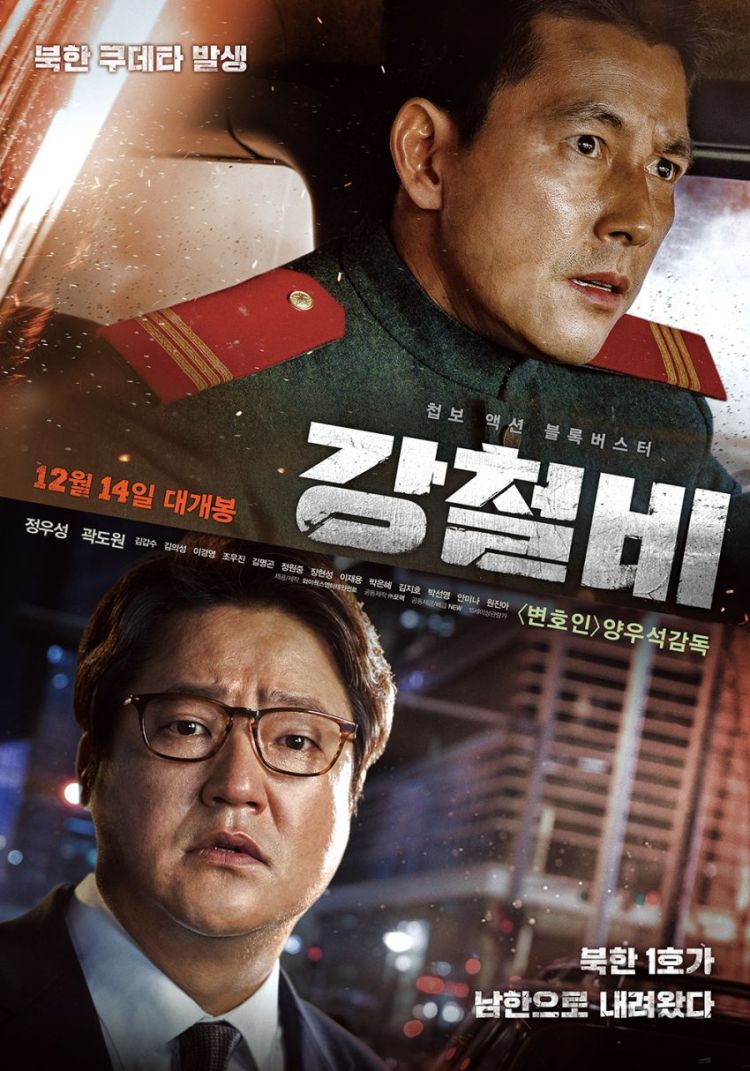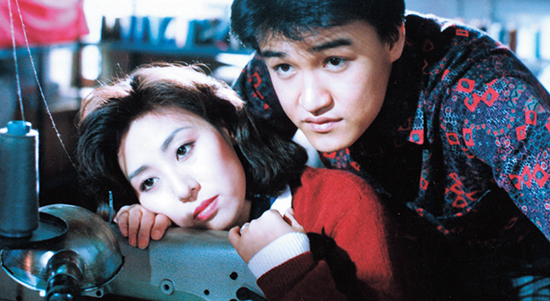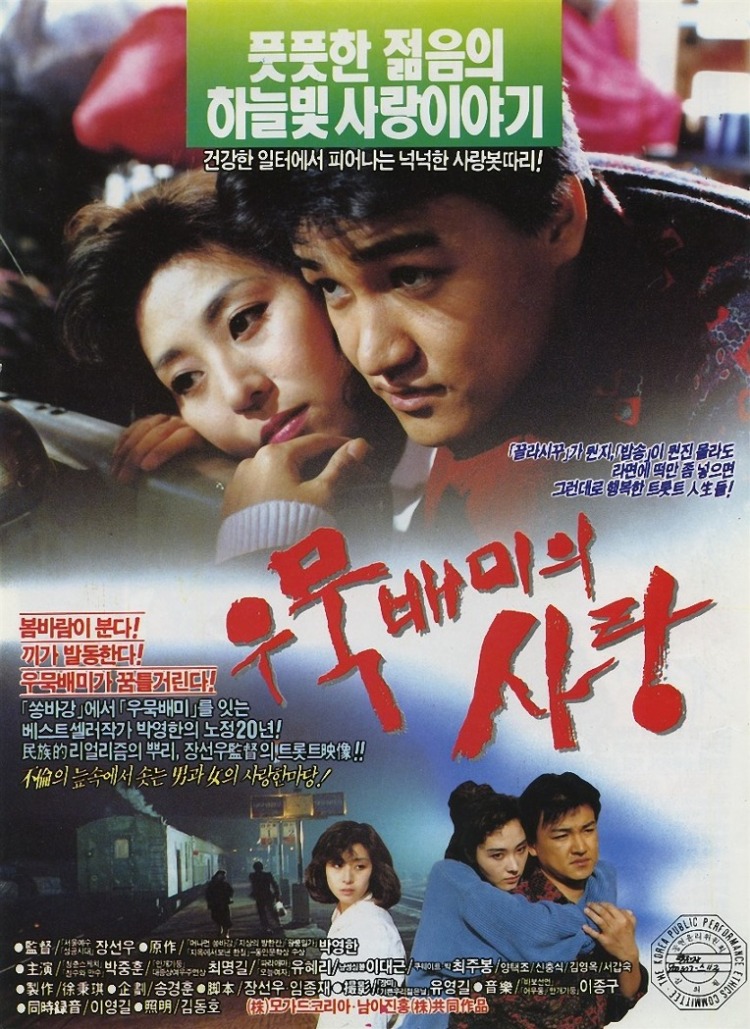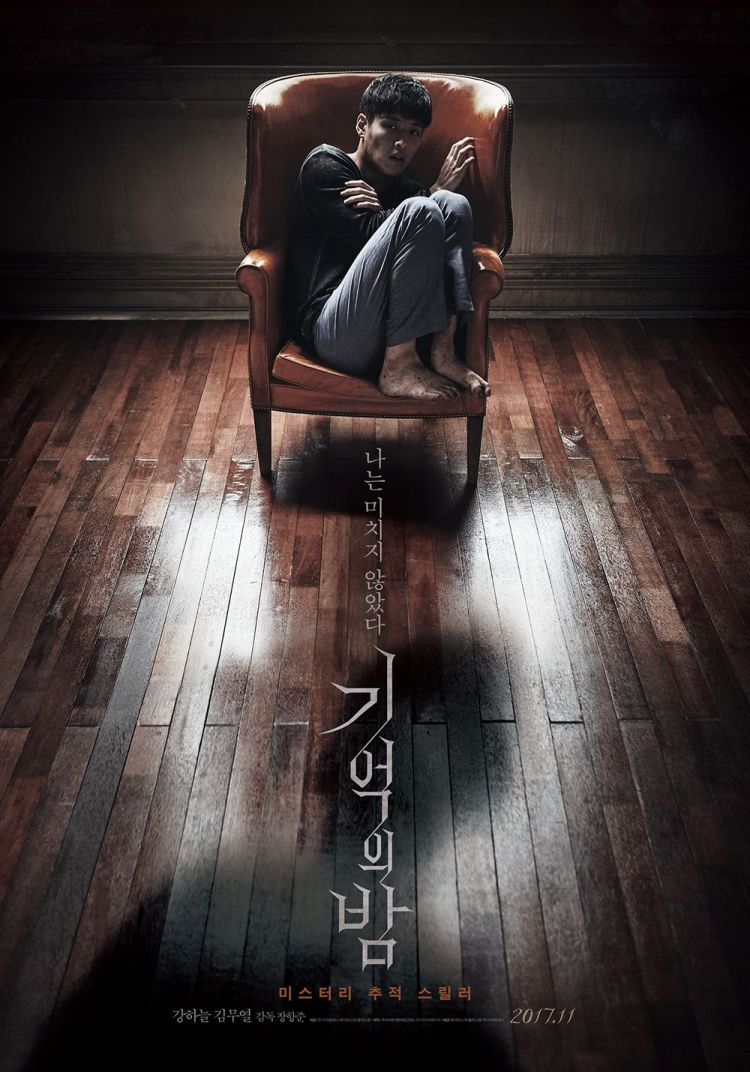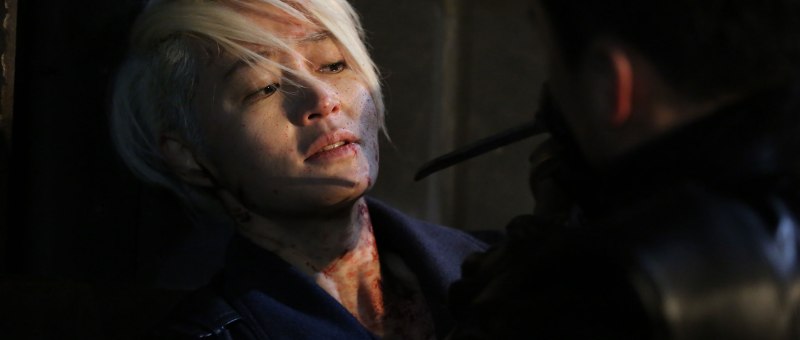
Secret Reunion (의형제 / 義兄弟, Jang Hoon, 2010)

secret reunion posterStrangely enough, North Koreans in South Korean films are often marked by a naive nobility, filled with all the “goodness” that is otherwise so absent from the hypocritical egalitarianism of the nation that raised them. Jang Hoon’s Secret Reunion (의형제 / 義兄弟, Uihyeongjae) is a perfect example of the ongoing trend in its direct contrasting of a pure hearted North Korean operative betrayed by his comrades, and the cynical NIS officer who turns to a shady career in the private sector when a botched operation gets him fired. An interesting look at North/South relations, Secret Reunion is equal parts buddy cop comedy and probing thriller but places the heartfelt connection between its perfectly mirrored protagonists firmly at its centre.

North Korean agent Song (Gang Dong-won) reads a bedtime story to his unborn child over a telephone whilst preparing for an operation south of the border, while NIS officer Lee (Song Kang-ho) bickers with his wife about their daughter’s education. Song, along with another agent, Tae-soo (Yoon Hee-seok), is to meet a top North Korean hitman known as Shadow (Jeon Kuk-Hwan) and assist in his mission to take out a prominent North Korean defector. Horrified by Shadow’s abrupt murder of the target’s wife and mother-in-law, Song draws on Shadow in defence of the man’s young son whom Shadow has also marked for death and places himself in the firing line in the process but is “saved” when Lee and the NIS turn up following a tip-off from Tae-soo who has betrayed them. Lee and Song briefly catch sight of each other but the operation is a bust which allows both Shadow and Song to escape whilst causing mass civilian casualties from stray police bullets and general panic.

Six years later Lee, fired from the NIS and divorced by his wife, spots Song again during his shady line of work as a finder of missing persons which often sees him tracking down runaway mail order brides from Vietnam. Unable to go home after being branded a traitor, Song is living as a casual labourer under a false South Korean identity. Unbeknownst to Lee he recognises the NIS agent but is unaware Lee has recognised him, especially when he offers him a job at his “company”. Song, intrigued, accepts in the hope of getting enough money together to bring his family to the South while Lee is hoping Song will lead him to Shadow and path back into the NIS but despite their best efforts the two men begin to develop a deep and warm understanding of each other even whilst working at cross purposes.

Song and Lee are indeed mirror images. When we first meet Song he’s eagerly embracing his role as a father and lamenting the fact that he cannot be with his pregnant wife while promising to be home soon. Lee, by contrast, argues with his wife over the phone and abruptly hangs up to go back to police business. Neither man is able to have the close and loving relationship with their daughters they would like – Song because he cannot return home and worries for the safety of his family, and Lee because his wife has remarried and moved to England. Lee’s loss of family is a personal failure first and foremost, but also a consequence of the botched operation in which Song escaped – hence Lee’s desire to capture Song is also part payback for ruining his life, but one which is frustrated by his gradual awakening to Song’s uncomplicated pureheartedness and identification with his own separation from his wife and child.

Song’s nobility is used against him by the heartless North Korean hitman, Shadow, who decries the “pathetic Southerners ruled by emotion” and warns Song that the “Great Nation cannot tolerate someone so fragile” when taken to task over his heartless murder of the defector’s South Korean family members. Lee, the NIS agent, resorts to barely legal immorality when stripped of his authority in becoming a finder of missing persons. The work largely involves tracking down trafficked women who’ve been tricked into coming to South Korea to marry rich and handsome men but often find themselves shackled to cruel husbands who regard them as slaves to be beaten and tortured. Yet Lee sends them back, knowing exactly what will happen to them when he does – something which Song refuses to allow. Despite coming from a brutalising regime, Song has retained his innate humanity, battles injustice and (tries to) protect the weak where Lee, a police officer in a (recently) democratic developed nation, quips about the nature of capitalism being learning to find happiness in stealing the wealth of others and is content to make himself complicit in a system he otherwise does not condone.

Despite their differences the two men come to see themselves in the other, discovering the better qualities of an “enemy” and becoming conflicted in anticipating the day when they will eventually have to confront the secrets they’ve been keeping. Jang keeps the tension high as Lee and Song play each other while Shadow dances around in the background, presumably playing a game which is entirely his own. Nevertheless the bonds of brotherhood between North and South are firmly repaired in Lee and Song’s eventual transition to blood brothers, restoring their severed familial connections whilst building and strengthening new ones.


International trailer (English subtitles)

How to Steal a Dog (개를 훔치는 완벽한 방법, Kim Sung-ho, 2014)

how to steal a dog posterEverything seems so simple to children. The logic maybe surreal, but it is direct. Problems have solutions and there are clear pathways to achieve them even if they seem odd to a more adult way of thinking. Perhaps we’d all be better off if we thought about social issues in the same way children do, though naivety and innocence often prove blindspots in otherwise solid plans. How to Steal a Dog (개를 훔치는 완벽한 방법, Gaereul Hoomchineun Wanbyeokhan Bangbub) is basically a heist movie in which two adorable little girls plan to kidnap a beloved pooch from a rich old lady who will then be only too happy to part with her millions to get it back but it’s also a subtle social satire on class relations and the economic causes of family breakdown in modern Korea.

Little Ji-soo (Lee Re) tries her best to put brave face on it, but at home everything’s gone wrong. In fact, they don’t even have a home any more – Ji-soo’s dad’s pizza business failed and he’s run off and left them. Evicted, the family have been living in the old pizza van while Ji-soo’s mum (Kang Hye-jung) has convinced an old flame (Lee Chun-hee) to give her a job as a waitress in a posh cafe. It’s approaching crunch time because Ji-soo’s birthday is coming up and the other kids are expecting to be invited to a party at a house Ji-soo doesn’t have. When she spots an ad for a lost dog which promises a reward, Ji-soo strikes on an idea. Together with a new found friend (Lee Ji-won), she hatches a complicated plan to steal the beloved dog of the grumpy old lady (Kim Hye-ja) who owns the cafe where her mother works and extort enough money to buy a lovely new house for her family where she can have her birthday in style.

Ji-soo’s worldview is both cheerfully innocent and extremely cynical. Sad and lonely with her dad gone, she blames her mother’s fecklessness for their present plight, berating her lack of practicality and failure to get her kids into a proper home in good time. Playing the sensible one for her family of three, Ji-soo is always on the look out for scams and trickery, assuming most people are up to something especially when it comes to innocent little girls. Hence she quickly has the number of the local pizza boy (Lee Hong-ki) who takes orders for family size pizzas but writes regular on the order slips and then pockets the difference from the unsuspecting customer. When she spots an ad in an estate agent’s window for houses at 5 million won she becomes fixated on gaining exactly that amount of money, thinking “per three square metre” is the name of an area and little knowing that 5 million won won’t even buy you a front porch in Seoul let alone an entire house.

Though living in a van is not exactly pleasant, Ji-soo’s problem is more one of social shame than it is of actual discomfort. All the kids at school have already been indoctrinated with class competitiveness and everyone is still talking about the last birthday party, the subject of which is getting a little nervous in case Ji-soo’s house turns out to be nicer than his. No one knows Ji-soo’s dad has run off and they’re living in a van, even the teacher seems curious enough about Ji-soo’s putative birthday party to actively remind her about it and enquire when she plans to make some kind of announcement to her schoolmates.

Thankfully, Ji-soon does eventually learn that money and status aren’t everything. The mean old lady turns out just to be sad and lonely, filled with regrets about a mistake made in her past. The scary homeless man (Choi Min-soo) turns out to be a goodhearted free spirit, and Ji-soo’s mum finally finds her feet after buckling down in an honest yet low paying job which requires a lot of early morning starts. From Ji-soo’s point of view, adults are still a bit rubbish but everything seems to be working out for the best. Oddly pure hearted for a story about dognapping, How to Steal a Dog is a charming, whimsical adventure in which a little girl’s faith in the goodness of the world is finally rewarded, even if not quite in the way she imagined.


Original trailer (no subtitles)

Office (오피스, Hong Won-chan, 2015)

office posterThe pressure cooker society threatens to explode in Hong Won-chan’s Office (오피스). The writer of recent genre hits The Chaser and The Yellow Sea, Hong has long experience of examining those living on the edge but in his directorial debut he takes things one step further in depicting an entire society running to keep up with itself, furiously chasing its own tail with barely suppressed rage. Not so much survival of the fittest as survival of the least scrupulous, the world of Office is the one in which the mad become the most sane, escaping the constraints of corporate oppression through social revenge but taking the innocent along with them.

Salaryman Byun-guk (Bae Seong-woo) has the soulless eyes of one whose dreams have already died. Dejectedly he sits alone at a coffee shop before cramming himself into the commuter train home where he sits, silently, among his busy family. They wonder why he hasn’t changed out of his suit, shed his corporate persona for his familial one, but when Byung-guk gets up he returns brandishing a hammer which he then, as if in a trance, uses to bludgeon to death his loving wife, disabled son, and senile mother.

Byun-guk flees the scene of crime and is loose somewhere in the city. The police search his office for clues but his colleagues have already come up with their unified version of events, keeping the company out of it by claiming that they all loved Byun-guk and are shocked that he could have done something so horrifying. Meanwhile, intern Mi-rae (Go Ah-sung), who regarded Byun-guk as her only friend in the office, is upset but perhaps not quite so shocked. Excluded from the interoffice cliquery, no one has thought to brief Mi-rae on the party line leaving her a prime target for police inspector Choi (Park Sung-woong).

Byun-guk and Mi-rae are two of a piece – members of the upright and hardworking lower classes who have done everything right but somehow have never been accepted by their peers. Mi-rae, an ordinary girl from Gwangju who worked to lose her accent in her teens dreaming of the high life in Seoul, is shy and mousy but works hard – harder than anyone, to prove herself worthy of Seoul’s unrealistic demands. Her colleagues, privileged, confident, and also harried, do not forgive her for this. They find her earnestness “creepy”, her desire to succeed “suspicious”. Cruelly taken down a peg or two by a colleague taking out her own frustrations on the office nobody, another tries to comfort her with some advice – don’t try so hard, you make us all look bad and we wonder what your need is hiding. Mi-rae isn’t really hiding anything save her slowly fragmenting mental state and the overwhelming need to be accepted to a club that, in truth, is not open to people like her who value their integrity and still believe deep down that working hard and being honest are the only paths to true success.

Korean society, it seems, has become a giant chain of screaming. Byun-guk has been repeatedly passed over for promotion despite being the most reliable employee in the office but his ineffectual boss is overly wedded to the shouting school of business management. Faced with results he doesn’t like, Byun-guk’s boss picks someone to shout at to make them better but offers no further guidance. Railing at the police for not doing their job as if screaming will some how provoke major results even outside of the office, the boss can’t know that police also have their own chain of screaming and Choi has his own boss already taking care of that side of things, demanding results rather than truth or justice.

The meek are taking their inheritance ahead of schedule, but their revenge is born both of societal corruption and rejection. People like Byun-guk and Mi-rae, who are quiet, honest, kind but perhaps not good with people, become the bugs in a system which simultaneously holds them up as essential cogs. Those who cannot just pretend, grease the wheels with superficial social niceties, and accepted their place in the chain of screaming in order to climb further up it are condemned to wander idly around its lower levels going quietly mad until, perhaps, the system crushes them or else collapses.


International trailer (English subtitles)
The Scarlet Letter (주홍글씨, Byeon Hyeok, 2004)

The Scarlet Letter posterSouth Korea has long had a reputation for being among the most conservative of East Asian nations, perhaps because of a strong Christianising influence, but even so the fact that adultery was only fully decriminalised in 2015 is something of a surprise. Ironically enough the legislation was enacted in the defence of women who enjoyed few legal rights and would be left destitute if their husbands left them, suffering not only the humiliation and social stigma of divorce but also having no independent income and very little possibility of gaining one. Nevertheless it quickly became another tool of social control, branding “harlots” rather than protecting “wives”. Byeon Hyeok’s The Scarlet Letter (주홍글씨, Juhong Geulshi) was released in 2004, which is a whole decade before adultery was removed from the statue books, and draws inspiration from the book of the same name by Nathaniel Hawthorne in which a young woman becomes a social outcast after giving birth to an illegitimate child.

Cocksure policeman Ki-hoon (Han Suk-kyu) lives in a world of his own dominion. Married to the elegant concert cellist Su-hyun (Uhm Ji-won), Ki-hoon is also carrying on an affair with the bohemian nightclub singer Ga-hee (Lee Eun-ju). One fateful day he is called to the scene of a bloody murder. The owner of a photographer’s studio has been found with half his head caved in and the prime suspect is his wife, Kyung-hee (Sung Hyun-ah), who found the body. Once she’s had some time to recover from the shock, Kyung-hee offers up some possible evidence regarding a local photographer who may have been semi-stalking her – something which had caused tension between herself and her husband. The photographer claims Kyung-hee asked him to take the photos, and others besides, but denies he was romantically interested in her or that the couple had been having an affair.

The murder case floats in the background as Ki-hoon’s personal life spirals ever more out of control. Both Su-hyun and Ga-hee are pregnant with his child and it seems inevitable the affair will be exposed. Ki-hoon fears this not out of guilt in causing emotional harm to one or both of his women, but out of a sense that it will be very annoying, inconvenient, and burdensome for him. When his wife does eventually confront him about the affair, Ki-hoon’s response is to ignore it and carry on as normal by acting excited about the baby as if to remind Su-hyun that she is already tied to him and it will be almost impossible for her to leave. Meanwhile, he refuses to give up Ga-hee whose mental state seems to be fracturing under the intense pressure of her need for Ki-hoon and his continuing disregard for the feelings of others.

Ki-hoon is a classic noir hero, wading into a morass of moral ambiguity and hurtling headlong towards an existential reckoning. A late, yet fantastically obvious, twist offers another perspective which the film has no time to expand on so caught up is it in the moral ruining of Ki-hoon in suggesting that oppressive social codes have in some way contributed to this intense situation, forcing three people into an uncomfortable love triangle where everyone has ended up with the wrong partner. Byeon does, however, choose to emphasise “morality” in lending a spiritual slant to Ki-hoon’s fall rather than choosing to attack the social oppression of Korea’s intensely conservative culture in which all the power was in Ki-hoon’s hands (even if he uses it to ruin himself, later left in a state of spiritual emptiness filled only with guilt and shame).

The reckoning comes in a literal evocation of Ki-hoon’s claustrophobic love life in which he finds himself trapped in an inescapable black hole, waiting to find out if he will be released or condemned to suffer an eternity of pain for his various transgressions. Byeon never quite manages to marry his higher purpose to the noir narrative, leaving his avant-garde final set piece out of place in an otherwise straightforward thriller while his final twist falls flat in retreading well worn genre cliches. Frank in terms of its depiction of sex and nudity, The Scarlet Letter takes on an anti-erotic quality, painting its various scenes of actualised sex as passionless acts of compulsion with only those of fantasy somehow imbued with colour and light though its melancholy conclusion suggests even these may carry a heavy price.


Original trailer (no subtitles)

Nowhere to Hide (인정사정 볼 것 없다, Lee Myung-se, 1999)

Nowhere to hide poster

One of Korea’s foremost visual stylists, Lee Myung-se’s work has often been under appreciated at the time of its release. His desire to experiment finds fertile ground in the intensely kinetic ode to the police procedural, Nowhere to Hide (인정사정 볼 것 없다, Injeongsajeong bol Geos Eobsda). A tale of cops and robbers, Nowhere to Hide follows a cop who talks too much on the trail of a silent assassin who is, in fact, an expert at hiding in plain sight through the art of disguise. Moving quickly from one intense, beautifully choreographed set piece to the next, Lee draws inspiration from the crime-tinged tragedies of old Hollywood and beyond whilst embracing those of his home nation in the classic twin pairing of actors Ahn Sung-ki as the enigmatic assassin, and Park Joong-hoon as the bullheaded cop hot on his trail.

Lee opens in black and white with Inspector Woo (Park Joong-hoon) in full on gangster mode as he wanders through a ruined landscape, pausing only to tie his shoelace while the pulsing, punkish music continues in the background, before he walks in on an entire room of besuited gangsters and calmly sits down to introduce himself. Sometime later, Sungmin (Ahn Sung-ki), in sunshades and trench coat, patiently bides his time before committing a dramatic murder and making off with a mysterious briefcase.

What follows then is a game of cat and mouse as Woo chases the ghost of Sungmin through dingy back allies and neighbourhood dive bars, taking his more serious partner, Kim (Jang Dong-kun), whose more primary motivations include his family or more particularly his little girl, along for the ride. Woo lives only for his work, drawing more thrill from the chase than he is likely to admit. Through his pursuit of Sungmin, Woo draws closer to a side of himself he hoped to avoid, burying his natural rebelliousness in service of the law. We see him brutally interrogate suspects, even at one point trussing one up like a prize pig and suspending him between two desks in the middle of the police station. It is, in this sense, Woo who is left with “nowhere to hide”. As a young man, he had a violent streak which might well have led him into crime if his father had not pointed him towards the police, but he can no longer claim to be very much different than the quarry he pursues. His true nature has been laid bare by his opposing number.

Woo’s rage and unpredictable energy are tempered by Kim’s evenhandedness, but after a job goes wrong and Kim kills a suspect by mistake he starts to fall apart. Suddenly Woo cannot rely on Kim to save him from himself and then tragically fails to save Kim during another operation, leaving him open to serious injury. His quest is now as much one of vengeance and personal feeling as it is of justice.

Sungmin, by contrast, says not one word in the entirety of the film. A felt presence more than a seen one, he slips in and out of personas, escaping from the scene in various disguises as a figure more of legend than of reality. A close relationship with a bar hostess girlfriend is Woo’s way in to Sungmin’s world, correctly identifying a weakness and pressing it, pursuing a more concrete route to the centre of Sungmin’s existence than simply tracking him through the shady netherworld in which he lives.

The two men run from and mirror each other as pictures of action and stillness, resistance and urgency. Through a relentless pursuit of capture or escape, neither can evade the shadow of himself, each moving closer to their true selves as repressed elements surface and threaten to destroy the whole. Woo and Sungmin are each on a mutually destructive pursuit of the self as much as they are for their own, self defined goals.

Lee frames all of this within his characteristically ironic world view, painting the drama as comedy imbued with its own kind of cartoonish slapstick. Throwing in cinematic homages from a brief nod to Battleship Potemkin to an ending plucked straight out of The Third Man, Lee mixes freeze frames with an odd jump dissolve technique which lends his intensely beautiful choreography an impressionistic, fleeting quality. Two men chase the shadow of the other, engaged in a desperate game of hide and seek, but when the game is up neither may like what they see.


Screened at London Korean Film Festival 2017.

Robbery sequence (dialogue free)

Kilimanjaro (킬리만자로, Oh Seung-uk, 2001)

Kilimanjaro posterMt. Kilimanjaro is the world’s tallest free-standing mountain. Oh Seung-ok’s debut, Kilimanjaro (킬리만자로), is not a climbing story, at least not in that sense, but a story of a man trying to conquer his own mountain without really knowing why. Twin brothers Hae-shik and Hae-chul are mirrors of each other, a perfect mix of light and dark, but when one makes a choice to choose the darkness, it throws the other into despair and confusion. A noir-ish tale of fragmented identities and fatalistic retribution, Oh’s world of tired gangsters and impossible dreams is as icy and unforgiving as the summit of its titular mountain, offering little more than lonely deaths and eternal regrets.

Policeman Hae-shik (Park Shin-Yang) drifts in and out of consciousness, tied up in a room by his twin brother, Hae-chul, with Hae-chul’s children looking on. Hae-chul murders his family and then shoots himself all while his brother is tied up and helpless, a policeman without recourse to the law. Taken to task by his colleagues who want to know how he could have allowed any of this to happen, if not as a brother than as a cop, Hae-shik has little to offer them by way of explanation. To add insult to injury, he is also under fire for unethical/incompetent investigation, and is taken off the case. Suspended pending an inquiry, Hae-shik goes back to his hometown but is immediately mistaken for Hae-chul and attacked by gangsters Hae-chul had pissed off before he left town and killed himself. Saved by local petty gangster Thunder (Ahn Sung-Ki), Hae-shik assumes Hae-chul’s identity and slips into the life of hopeless scheming which ultimately led to his brother’s ugly, violent death.

The film’s title is, apparently, slightly ironic in referring to the film’s setting of a small fishing village in the mountainous Gangwon-do Providence, known to some as “Korea’s Kilimanjaro”. Each of the men in this small town is trapped by its ongoing inertia and continual impossibility. They want to make something of themselves but have few outlets to do so – their dream is small, owning a family restaurant, but still it eludes them and they soon turn to desperate measures in opposing a local gangster in the hope of finally improving their circumstances.

Despite the seemingly tight bond of the men in Thunder’s mini gang – a mentally scarred ex-soldier known as “The Sergeant” (Jung Eun-pyo) and nerdy religious enthusiast knows as “The Evangelical” (Choi Seon-jung) rounding out Hae-chul’s goodhearted chancer, none of them has any clue that Hae-shik is not Hae-chul, or that Hae-chul and his family are dead. No one, except perhaps Thunder, is very happy to see him but even so Hae-shik quickly “reassumes” his place at Thunder’s side and takes over Hae-chul’s role in the gang’s scheming.

Hae-shik and Hae-chul had formed a perfect whole of contradictory qualities, each with their own degrees of light and darkness. Hae-chul had been the “good” brother who worked hard at home taking care of his parents while Hae-shik headed to university and a career in the city, never having visited his hometown since (in fact, no one seems to know or has already forgotten that Hae-chul even had a twin brother). Hae-shik’s “goodness” might be observed in his career as a law enforcer, but he’s clearly not among the list of model officers, and his home life also seems to be a failure. Hae-chul’s family might also have failed, and his shift to a life of petty crime provides its own darkness but living in this claustrophobic, impossible environment his crime is one of wanting something more than that his world ever had to offer him.

As might be expected, Thunder’s plans do not unfold as smoothly as hoped. Ineptitude and finally a mental implosion result in a near massacre costing innocent lives taken in a fury of misdirected vengeance. Despite wishing for a quiet life spent with friends on the beach, heroes die all alone, like mountain climbers lost on a snowy slope unsure whether to go up or down. Attempting to integrate his contradictions, become his brother as well as himself, Hae-shik reaches an impasse that is pure noir, finally meeting his end through a case of “mistaken identity”.


Screened at London Korean Film Festival 2017.

Horse-Year Bride (말띠新婦 / 말띠신부, Kim Ki-duk, 1966)

In the relatively conservative Korean society of 1966 it’s surprising that film like the Horse-Year Bride (말띠新婦 / 말띠신부, Maltti Sinbu) could have been made at all. On the one hand it embraces and subverts common notions of gender by positioning its “horse year women” as somehow deviant from the norm, difficult to deal with and undesirable, but also places them centerstage as individuals making independent choices in their own lives rather than simply trailing along behind their men. Technically the second in a trilogy of films, the first and last being directed by Lee Hyung-pyo, Kim Ki-duk’s Horse Year Bride is a raucous sex comedy, tame by modern standards but transgressive by those of the time. Adopting a mild, if ironic, issue movie stance, Kim also satirises social attitudes to “horse year women” and councils against a trend of aborting babies set to be born in the year of the horse lest they be female and turn into vicious harridans.

The film opens with a wedding in which middle-aged (presumably 35 or 36 year old) Bok-soon (Hwang Jung-seun) marries the extremely miserable looking professor Seok-du (Park Am). The wedding photographer who later turns out to be a horse woman herself and a private eye is surprised to notice that Bok-soon has horse’s hoofs rather than fancy shoes under her wedding dress. A fortune teller (Kim Hee-kap) then introduces us to his matchmaking service and claims the wedding we have just witnessed is a result of his best ever match before introducing us to two more couples – Soo-in (Nam Mi-ri) whose husband Sang-won (Yoon Il-bong) has gone full on domestic to look after her while she’s pregnant, while Mi-hae (Um Aing-ran), also pregnant, fends off the sexual advances of her frustrated husband Keun-ho (Shin Seong-il). The two as yet unmarried horses include the aforementioned private detective, Young-hee (Bang Seong-ja), and a dancer, Suk-ja (Choi Ji-hee), who is engaged but not above making use of her sex appeal for material gain.

Bok-soon, one horse cycle ahead of Soo-in and Mi-hae, laments her long period of matronly virginity and is keen to make up for lost time. Seok-du, however, is not exactly a love machine and is completely worn out by his wife’s appetites, even going so far as to return to the fortune teller and complain that his excellent matchmaking has turned him into an exhausted sex slave. The matchmaker suddenly grabs a picture of Napoleon and has a novel explanation for where the famous general’s hand might be. Anyway, his advice is to practice yoga to increase stamina and keep Bok-soon happy.

Meanwhile, Soo-in and Mi-hae have both lied to their husbands about being pregnant in order to avoid sex so that they don’t conceive a daughter that, like them, will be born in the year of the horse. This particular “White Horse” year is thought to be especially inauspicious and daughters born as White Horses will apparently be total nightmares and have terrible lives. The two relationships send up various culturally accepted norms of martial gender roles as the women both manipulate their husbands to get their own way. Soo-in’s Sang-won is so solicitous about the pregnancy that he’s put Soo-in on virtual bed rest and blossomed into a mother hen clucking around doing the housework but making a total mess of it (because, after all he’s a man, and men aren’t “built” for this sort of thing). Mi-hae’s problem is the opposite in that Keun-ho’s sexual needs are a constant source of frustration to him in which he resorts to pounding a giant mortar in an unsubtle attempt to relieve his pent-up energy. Bok-soon too is subtly manipulating Seok-du by feeding him an “aphrodisiac” and secretly practicing yoga herself to get the most out of her married life.

Unmarried Suk-ja attempts to manipulate men by promising more than she means to give but finds herself in hot water with a grumpy salaryman (Joo Sun-tae) who seems determined to take what he thinks he’s owed. Suk-ja later pays heavily for her rejection but the other women rally to her side to take revenge on the lecherous businessman whom they regard as “human scum” and intend to “re-educate” to treat women better. The vengeful band of women taking revenge on the male sex with each of its various double standards and chauvinistic assumptions derives part of its humour from the relative lack of power available to them but does manage to make a sensible point about the sexist world they inhabit.

Eventually, when the women have given up their power and allowed themselves to become pregnant by their men, even the doctor at the hospital assumes they will want abortions to avoid the threat of White Horse daughters. By this point the women have also resolved that there’s nothing wrong being Horse Women or even White Horse Women, with women excising power (even if in necessarily feminine ways), or with enjoying full relationships with their husbands, but they’re still bound by otherwise typical ideas of female gender roles in the importance of maternity and dream their daughters will be Miss Koreas rather than great scholars or forces for good in the world. The doctor raises an interesting point when he suggests the fear of White Horse Women is an unwelcome foreign import from Japan which both paints it as another symptom of colonial corruption and ignores the fact that the reasons for the ongoing stigma are part of the essential social fabric of Korea. He does, however, find some darkly comic reasons against abortion in citing the economic effects of empty schools and lonely classrooms while also suggesting the women’s daughters may have an easier ride thanks to the lack of competition.

In contrast to his previous films, Kim adopts a youthful, pop-culture infused approach which makes frequent use of domestic and foreign pop music with a lengthy animated title sequence plus extended scenes of music and dance often unconnected to the main drama. Extremely frank in its treatment of modern sexual relations, Horse-Year Bride is an unlikely ‘60s Korean sex comedy filled with silly gags and slapstick humour but proves an extremely effective satire of the complicated social mores of ‘60s Korea.


Available on DVD as part of the Korean Film Archive’s Kim Ki-duk box set. Also available to stream online for free via the Korean Film Archive’s YouTube Channel.

North and South (南과北/남과북, Kim Ki-duk, 1965)

north and south poster

Melodrama has often been an unfairly maligned genre, dismissed as pandering to the sentimental or engaging in frivolous emotion but to do so misses the undercurrent of social questioning that such films often entail. Korea has made the melodrama its own – indeed, though genre is often a more fluid matter in Korea than it is elsewhere it’s difficult to find films of any kind which are completely devoid of melodramatic themes. It’s less of a surprise therefore to find that Korean cinema turns to melodrama to examine one the nation’s most pressing concerns – the relationship between North and South. Kim Ki-duk’s North and South (南과北/남과북, Namgwa Buk) is the story of a woman caught between two men, two nations, and two eras but it’s mediated through the story of a noble North Korean who has battled all in the name of love, left his family, his home, his country only to find that he is too late and the world has already left him behind.

The film begins with capture of a North Korean soldier in November 1952, the middle of the Korean War. Following normal procedure, the soldier, Major Jang Il-gu (Shin Young-kyun) is taken in for questioning but the major matter on his mind is the lady in the photograph he keeps brandishing to everyone he meets. Rather than political disaffection, Il-gu has defected to the South in the name of love – he’s looking for a woman he regarded as his wife, the mother of the son he has never seen. The South Korean officers are less than sympathetic, they’ve been noticing increased activities on the frontiers and they want to know some concrete military details before they even agree to admit Major Jang, but Il-gu won’t talk until they promise to help him look for Eun-ga (Um Aing-ran) – the woman for whom he has betrayed his comrades.

Captain Lee Hae-ro (Choi Moo-ryong), otherwise sympathetic to Il-gu’s plight, runs into a problem when elements of Il-gu’s story start sounding all too familiar. In a coincidence too staggering to believe, Eun-ga is Hae-ro’s wife. Originally reluctant to marry him, Eun-ga had explained that she had a son already and was waiting for the child’s father (to whom she was not “legally” married) from whom she had been separated by the 38th parallel. Lee was patient and persistent, he told Eun-ga that she was free to leave him should her long lost love return (never believing it was possible) and that he was content to look after her until that day came or, should he be so fortunate, for the rest of his life. Now Il-gu has arrived as if to punish him for disrupting this fairytale of doomed romantic love.

Unlike many films of the time, Kim is not interested in demonising the North so much as emphasising the tragedy of Korea’s division. Eun-ga and Il-gu are divided by more than just politics. Eun-ga was the middle-class daughter of a wealthy doctor, Il-gu was the son of one of their servants. Their love was not possible even before the war, but still it blossomed. Growing up together, Il-gu and Eun-ga experienced the quintessentially innocent taste of first love, vowing to stay together even in the face of fierce parental opposition and social convention, but it is the war which eventually seals their fate. Il-gu, not wanting to be conscripted into the Japanese army hides out in a shack where Eun-ga, the only person to know his whereabouts, spends a fateful night with him during which time their child is conceived.

Dreaming only of being re-united with his “wife” and child, Il-gu has been carrying around a picture of Eun-ga and looking for an opportunity to defect ever since the erection of the 38th parallel. Abandoning everything in the name of love, he has left his mother alone in the North and risked his life in hope of seeing Eun-ga once more. Hae-ro, a romantic man himself, is intimidated by Il-gu’s passion. The great, fated love he’d imagined for himself in marrying the nurse who had saved him at his lowest ebb suddenly pales in comparison to Il-gu’s willingness to sacrifice his life in pursuit of a true love dream. Understating Il-gu’s feelings, Hae-ro finds himself in a terrible position, worried that his love will leave him, feeling guilty for pestering her into a marriage she may not have really wanted, and unsure whether he should even tell Il-gu and Eun-ga that he holds the key to their long delayed reunion. Il-gu remains resolute, demanding love or death, but Hae-ro vacillates, drinks himself into solipsistic misery, and indulges his own weaknesses which are only made worse by Il-gu’s continued heroism.

Immediately before the final sequence in which the trio are forced to confront their emotionally difficult situation, Il-gu is threatened with a gun but refuses to give up any information without proof he can meet Eun-ga. Believing all hope to be lost, he asks only to be allowed to go up a mountain to die but is moved by the compassion of intelligence officer Kwon (Namkoong Won) who alone is committed to delivering Eun-ga and eventually gives up his information even though it pains him to betray his own comrades. In an impassioned debate with Kwon, Il-gu gives voice to the film’s overarching message in reminding him “Are we not all brothers”. Kwon, counters that the reason they fight is in service of Il-gu’s quest – it’s precisely so that he can come here, speak freely, and pursue his love unhindered. The “South” is winning, in a sense, but the message of brotherhood and understanding between men is the one which is delivered with the most clarity.

Understanding between men is indeed the theme of Hae-ro and Il-gu’s eventual meeting. Eun-ga’s torment is relegated to background detail as she sobs her heart out in the corner in the unfairness of her impossible situation. Her heart has always belonged to Il-gu and she feels herself to have betrayed him, betrayed love, in marrying an admittedly good and kind man out of reasons of practicality rather than passion. Coming to understand the situation, Il-gu responds with compassion and understanding even in the middle of his own heartbreak. He bitterly regrets his journey and wishes Hae-ro had told him Eun-ga was now his wife rather than allow him to hurt her by suddenly reappearing and breaking her heart all over again. Witnessing Il-gu’s magnanimity, Hae-ro is also moved, offering to step back and allow Il-gu to return to the family he may have lost. Both men recognise the goodness of the other, want nothing more than the best outcome of the situation for Eun-ga and her son, and are committed to moving forward with sensitivity in trying to minimise the emotional pain inflicted on the innocent Eun-ga who continues to suffer through no fault of her own.

The “fault” falls on the 38th parallel which, as Il-gu explains during a painful first meeting with his unknowing son, is “the worst thing ever made by stupid men”. The situation is indeed impossible, there is no easy answer for Eun-ga who will have to choose between past love and a present commitment (or, uncomfortably, have that decision made for her by her respective lovers). Kim dramatises their anguish perfectly through the extraordinary performances of his cast during the drawn out, painful encounter in which they attempt to forge a way forward, but Eun-ga, who stands in for her nation, stands to lose all when this same fierce love and understanding between men may cost her everything in tragic gestures of love and sacrifice.


Available on DVD as part of the Korean Film Archive’s Kim Ki-duk box set. Not currently available to stream online.

Five Marines (五人의 海兵 / 5인의 해병, Kim Ki-duk, 1961)

Five Marines posterKorean War films have a very particular tone and flavour often absent from those from elsewhere. As sad and despairing as they can be across the world, war films are generally the realm of macho heroism, men bravely holding back tears and charging forth with unrestrained rage in a quest to avenge their fallen comrades. Korean War films, however, like the majority of the nation’s cinematic output, are tinged with melodrama. These men wail, talk about their mothers, and worry for the future while forging intense bonds of homosocial brotherhood and becoming a battlefield family. The debut feature from Kim Ki-duk, Five Marines (五人의 海兵 / 5인의 해병, O in-ui haebyeong) is a prime example of this approach, eschewing combat scenes for behind the lines ensemble drama as ordinary men attempt to come to terms with the extraordinary situation of war.

Stock footage of the battlefield eventually gives way to a small squadron of marines digging trenches and at constant risk of ambush by Chinese forces. The main drama revolves around lieutenant Deok-su (Shin Young-kyun) who is the son of the company commander but there has long been bad feeling between the two men as Deok-su has always felt that his father favoured his brother, Deok-han (Choe Bong), and never really loved him. Meanwhile we’re introduced to another four marines – intellectual Jeong-guk (Choi Moo-ryong), Ju-han (Flyboy / Gwak Gyu-seok) – a father of five from Seoul, farm boy Yeong-seon (Park Nou-sik), and mother’s boy with anger issues Hun-gu (Hwang Hae). Following the death of two comrades, the squad of five is sent on a daring missing into enemy territory to blow up an arms depot through which they aim to make the sacrifice their friends have made in some way meaningful.

Made just eight years after the end of the Korean War and apparently commissioned by the Marine Corps in the wake of the May 16 military coup which initiated the dictatorship of Park Chung-hee, Five Marines takes a very different approach to that seen in other contemporary war films such as Lee Man-hee’s The Marines Who Never Returned. Though in no way particularly jingoistic or warmongering, it would be difficult to describe Five Marines as an “anti-war” movie, not least because it avoids depicting scenes of combat until the final mission in which, as expected, some or all of the heroes will fall valiantly defending their fellow Koreans as well as their friends.

Jeong-guk, the college educated enlisted man, originally considers himself to be taking part in the pantomime of war, going along with the ridiculous sham of soldiering, but when a fellow soldier – a young boy who spends his time rewriting a poetic confession of love he doesn’t quite have the nerve to send to the girl he left behind, falls in front of him, Jeong-guk suddenly wants to join the fight for real. The idea of militaristic patriotism is then subtly reinforced if not quite sold with patriotic fervour. The necessity of the sacrifice is never questioned and the idea of doing one’s duty remains paramount even if it is also clear that the war has taken these men out of their familial environments leaving their women at home alone and, perhaps, defenceless.

Kim explores the peacetime lives of each of the men through flashback with the consequence that we get to know and care for them as people rather than as combatants. We rejoice with Jeong-guk when he hears he’s going to be a father, share Ju-han’s amused frustration when his wife includes all their bills in his mail, and worry with Hun-gu when his usual letters have not arrived. During their down time, the men discuss women but with more tenderness than expected – save for Yeong-seon’s rather lewd (and apparently fabricated) story of his wedding night for which he is rightly taken to task by his stern company Sergeant. Rather than focussing on the negatives of military service, Kim emphases the warmth and friendship among the men who forge deeper and stronger connections precisely because of the ever present threat of death.

When the final mission rolls around, Kim allows the action to take centre stage as the five man squad plots and executes a daring raid which does not quite go to plan and eventually erupts into a more conventional fire fight. Marrying the demands for macho battle scenes with the emotional quality of melodrama, Kim allows the men to sort out their emotional difficulties, shedding both blood and tears in equal measure. More emotional drama than action packed celebration of the glory of war, Five Marines may not quite be what the Marine Corps had in mind but perhaps serves their purpose anyway in reinforcing the positive ideas of camaraderie and patriotism whilst telling the stories of ordinary men and extraordinary heroism.


Available on DVD as part of the Korean Film Archive’s Kim Ki-duk box set. Also available to stream online for free via the Korean Film Archive’s YouTube Channel.

Love Me Once Again (미워도 다시 한번, Jung So-young, 1968)

love me once again posterBy the late 1960s, Korean society was caught in a moment of intense social change. Though under the oppressive authoritarian regime of Park Chung-hee, the strict censorship regulations of the early 1970s had not yet taken effect and the 1962 Motion Picture Law which encouraged a shift towards commercial cinema intended for mass entertainment created a fertile ground for melodrama which itself enabled subtle commentary on modern society. The first in what would become a long running series with two sequels and a number of remakes stretching into the 1980s, Love Me Once Again (미워도 다시 한번, Miweodo Dasi Han Beon) is a prime example. A box office hit and pop culture phenomenon, Love Me Once Again is a somewhat unusual entry the melodrama canon in its broadly sympathetic treatment of adultery and attitude towards children born out of wedlock.

The film begins in the present as family patriarch Shin-ho (Shin Young-kyun) enjoys a pleasant family Sunday fishing with his son and picnicking with his wife (Jeon Gye-hyeon) and daughter but the scene is quickly interrupted by a servant who comes to fetch Shin-ho to greet an urgent visitor to the house. The visitor turns out to be an old friend of Shin-ho’s who has a distressing message for him – Hye-young (Moon Hee), a young woman with whom he had an affair eight years previously, is back in town and would like to meet.

Flashing back eight years, Hye-young is a young kindergarten teacher living in the lodging house where Shin-ho is staying while working away from home. The pair become friends and everyone seems to assume they are a couple, though Shin-ho insists Hye-young is just a friend. Nevertheless, he eventually begins an affair with her leading Hye-young to turn down a marriage arranged by her parents. Though Shin-ho discourages her to do this, Hye-young has no idea he is already married with two children and believes he will marry her at some point in the future. Shin-ho plans to tell Hye-young about his wife but can’t bring himself to do it, allowing her to find out in the worst possible way when his wife arrives with both kids in tow. Realising she’s been duped and feeling in the way, Hye-young takes off without warning leaving only a letter wishing Shin-ho well and letting him know that she is pregnant with his child and intends to raise it alone.

Hye-young is certainly a very “modern” forward thinking woman though she is also morally upright, only embarking on a relationship with Shin-ho because she believes he is the man she will spend her life with. Her family had arranged a marriage for her and express their frustration with Hye-young for not returning home immediately in a letter which also makes plain that they will suffer embarrassment if she refuses the marriage altogether – which she does. When she returns home pregnant with Shin-ho’s child, her brother (who seems to be the head of the family), throws her out. Hye-young’s mother seems more sympathetic, but is powerless to help. Hye-young will have to manage on her own without the assistance of friends or family.

Eight years on she has a lovely little boy, Young-shin (Kim Jung-hoon), whom she has raised alone in hardship but not unhappiness. Encouraged by her brother and seeing how Young-shin looks on enviously at other little boys playing with their fathers on the beach, Hye-young begins to wonder if it might not be better to have Shin-ho raise Young-shin alongside his other two children in a middle-class family home. As Shin-ho’s son he would have a life of material comfort, a paternal input, and be free of the stigma of being the illegitimate child of an unmarried single mother.

Though the situation is difficult, it is handled with calm and maturity on all sides, not least from Shin-ho’s wife who takes a while to think hard on the situation and then agrees to look after Young-shin but only as a full adoption. She asks that Hye-young refrain from writing to or seeing her son, leaving him entirely in the family’s care. Hye-young has made her decision and agrees that may be for the best, even declining the offer of written updates from Shin-ho’s best friend. Once Young-shin has become a part of Shin-ho’s family, his wife truly does her best to make him feel at home as the third of her children, treating him kindly and taking the older two to task for teasing their “baby brother”. The children however are not quite so accepting with Shin-ho’s eldest son particularly hostile, bullying little Young-shin mercilessly even though he has done nothing to provoke his anger other than try to be friends with him. Getting a new little brother is perhaps particularly hard for the children who now have to share everything with a virtual stranger, but despite the efforts of Shin-ho’s wife, she just can’t seem to make them accept him.

Shin-ho, feeling awkward and guilty, is not quite as committed as his wife is to making the new family work. He tries to treat Young-shin as his son, but never quite connects with or makes him feel at home. The major problem is that the family all insist Young-shin must forget about Hye-young and commit fully to his new family as they are committing to him but that’s a lot to ask for an eight year old boy who quite fairly misses his mother and does not understand why he is not allowed to see her. A crisis occurs when Shin-ho angrily confiscates a locket Hye-young had given Young-shin containing her photo as a memento, sending him off on a long journey trying to find a way back to his mother. Being only eight, Young-shin has no idea how to go about finding her bar knowing the name of the town where he used to live. Roaming around the city all alone calling his mother’s name, Young-shin stays out all night. Shin-ho and his wife are sick with worry, searching for him in the pouring rain, but when he finally returns drenched and miserable, Shin-ho treats him only with anger and not with tenderness.

Meanwhile, Hye-young is struggling to come to terms with her decision to “abandon” her son, having bad dreams that Young-shin is being mistreated or is miserable, missing her as much as she misses him. Obeying the family’s request to stay away, Hye-young cannot resist coming to visit and observing from far away, hoping to catch a glimpse of her son and find out if he is well and happy. Unfortunately she turns up just as he’s gone out looking for her and spots him cowering outside Shin-ho’s house, drenched in the rain. Afraid to go near him she urges him to go inside, calling out from the shadows only to be spotted by Shin-ho as she makes her escape.

Rather than wallow in misery, Jung does not refuse the inherent melodrama of the situation but addresses it realistically and with a degree of maturity and patience most real life situations can only aspire to. Hye-young believes that Shin-ho hates herself and her son and will never be able to accept them as members of his family, but even so he does appear to have developed at attachment to Young-shin and hopes that he can maintain contact with him even if it remains clear Young-shin cannot remain in their home. Shin-ho’s wife too makes a point of not blaming Young-shin for her husband’s mistake and displays compassion for Hye-young who meant her no harm and has incurred only suffering as a result of her involvement with Shin-ho. Where most melodramas would punish Hye-young for her transgressions, Jung is kinder to her, never condemning her for her “immoral” behaviour in sleeping with Shin-ho before marriage and making it clear that her decision to live independently as a single woman and raise Young-shin alone is not only valid but correct and to be supported. A controversial attitude for the Korea of 1968 but one which declares itself on the side of modernity rather than adherence to traditions which more often than not create more problems than they solve.


Available to stream for free via the Korean Film Archive’s YouTube Channel.