
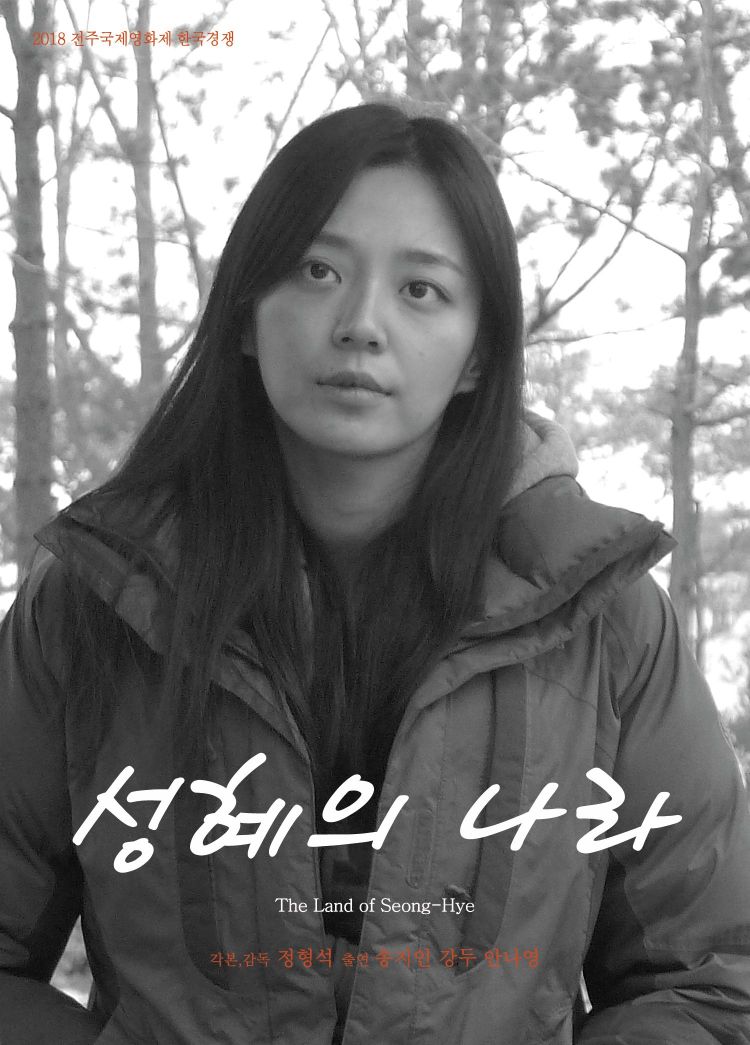
 A rapidly developing economy dangles the promise of social mobility, but like a hamster turning endlessly inside an empty wheel, the prize is often unattainable. The young men and women at the centre of Jung Hyung-suk’s The Land of Seonghye (성혜의 나라, Seonghyeui Nara) are caught in an endless struggle of bureaucratic trials, perpetually stepping over each other trying to get one more foot on the ladder to corporate success only for something to catch them by the ankles and pull them back down again. For the unlucky youth of modern Korean society, there may be no way out of its relentless demands other than to retire from the game entirely.
29-year-old Seonghye (Song Ji-in) lives a hand to mouth existence working two part-time jobs – one in a convenience store and the other delivering newspapers. Too tired to sleep, she knocks herself out with tranquillisers and mostly subsists on expired produce from her convenience store job. Meanwhile, she’s taking classes at cram school, trying to improve her TOEIC score, and chasing interviews at corporations in the hope of scoring a permanent position. A health scare underlines the fact that things can’t go on as they are, but there are only two other choices open to Seonghye – give up and go home to work in her parents’ restaurant, or marry her similarly troubled boyfriend Sanghwan (Kang Doo) which necessarily means he gives up on his civil service dreams and gets a regular job somewhere else.
When we first meet Seonghye, she’s sitting alone in a park watching the surreal action of the other visitors rocking back and forth on the exercise swings. Motion without direction seems to accurately sum up Seonghye’s way of life. At 29, she’s facing the facing the prospect that it’s already too late. On the old side for an entry level position, she’s been struggling to secure key interviews but she thinks there’s another reason she isn’t being selected. Some years previously, she’d achieved her dreams with an internship at a major company but she quit before it ended. The reason she left was familiar enough – sexual harassment at the hands of the boss. She reported it. It was ignored. She went to the police and they did nothing. None of the other women backed her up and the working environment became so uncomfortable that she was forced to resign. Working in the convenience store, Songhye runs into an old colleague who reveals that her lecherous boss got a big promotion and is well on the way to mainstream success. Such is life.
Seonghye’s former colleague seems happy enough with her corporate existence, perhaps a little self absorbed and insensitive, not spotting just how uncomfortable Seonghye is with being exposed at her “humiliating” part-time job. Seonghye lies out of embarrassment and tells her former officemate that this is her family’s store and she’s just helping out while she prepares to study abroad. She tells the doctor that she’s a graduate student, too ashamed to admit she’s drowning in the seas of “hell Joseon” all while her solicitous parents remind her she can always come home though doing so feels like accepting defeat from which she might never recover.
Seonghye is far from alone in her troubles. Many of her university friends are in a similar situation, mostly unemployed or in continuous cycles of unpaid “opportunities” which never pay off. Suicide hovers on the horizon as a prideful solution to the impossibility of their lives while others embrace the cruel individualism of the capitalist society, accepting that you will need to betray your friends if you’re going to get ahead. Seonghye doesn’t want that. She doesn’t want to get ahead by throwing bodies to the wolves but the world keeps conspiring against her and soon not even this sort of no life existence will be viable.
Later, Seonghye gets an unexpected windfall for the most terrible of reasons. She has no idea what to do with the money – it is a significant amount, it might be enough to live on frugally (and alone) for a number of years. Should she invest her money wisely and live simply for the rest of her days or keep on running herself into the ground trying to attain corporate success and the social status that goes with it? Seonghye makes her decision. Suddenly her motion has direction once again. She smiles for the first time in a long while, shrugging off the burdens of an oppressive society and embracing her own freedom in the face of its relentless drive.
The Land of Seonghye was screened as part of the 2018 London Korean Film Festival.
Original trailer (English subtitles)
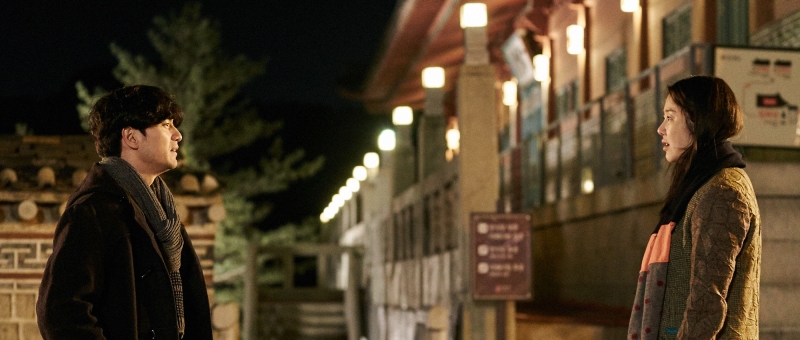




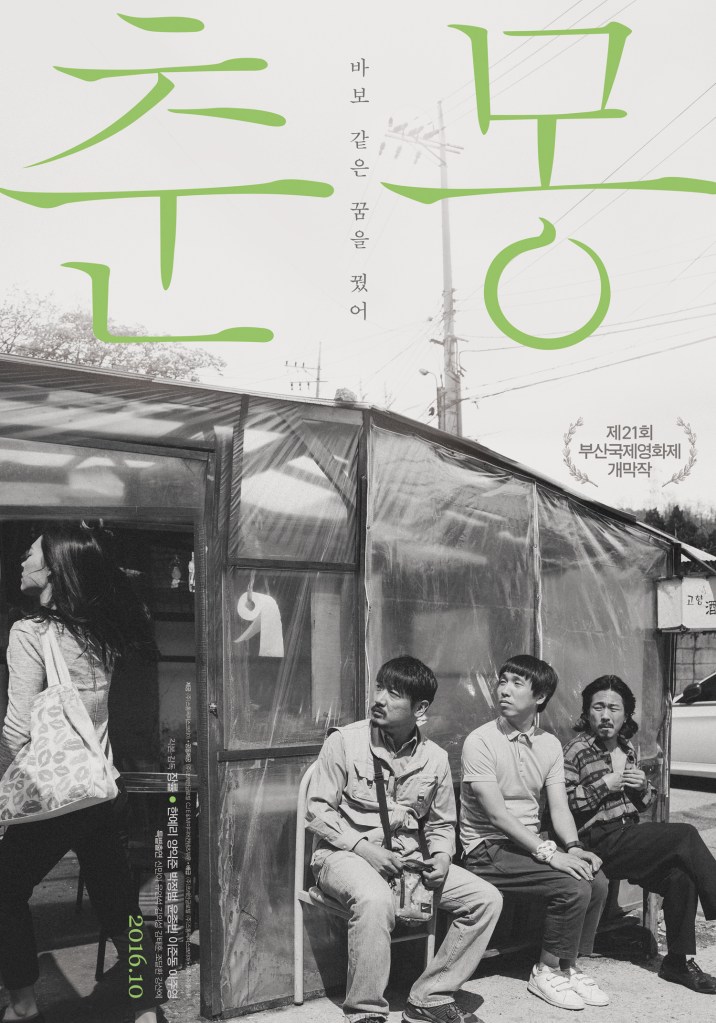 Review of Zhang Lu’s A Quiet Dream (춘몽, Chun-mong) first published by
  The history of LGBT cinema in Korea is admittedly thin though recent years have seen an increase in big screen representation with an interest in exploring the reality rather than indulging in stereotypes. The debut feature from Lee Hyun-ju, Our Love Story (연애담, Yeonaedam), is among the first to chart the course of an ordinary romance between two women with all of the everyday drama that modern love entails. A beautiful, bittersweet tale of frustrated connection, Our Love Story is a realistic look at messy first love taking place under the snowy skies of Seoul.
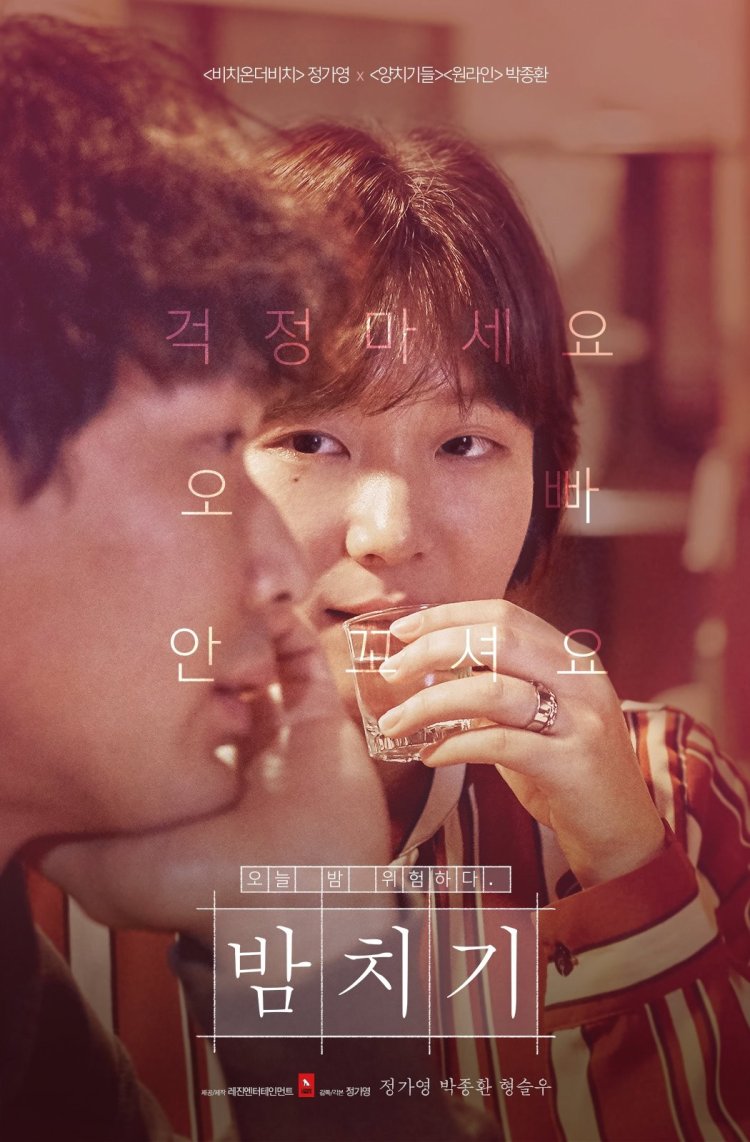
 Do you know Hong Sang-soo? So asks the heroine of Miss Ex (비치온더비치, Bitch on the Beach) as part of her nefarious mission to win back her childhood sweetheart. Unfortunately, his reply is to ask if he directed The Host, so Ga-young (Jeong Ga-young) is out of luck with her Dark Knight loving former love, but possibly in luck with us as her movie obsessed ramblings and strange stories about accidental AIDS tests during wisdom tooth extractions continue to dominate the screen for the next 90 minutes. Divided into three chapters and filmed in an oddly colourful black and white, director and leading actress’ Jeong Ga-young’s debut feature channels Hong Sang-soo by way of Woody Allen and the French New Wave but may prove funnier than all three put together.
