Running Turtle (거북이 달린다, Lee Yeon-woo, 2009)

running turtle posterOne has to wonder why anyone becomes a policeman in Korea, or at least in the world of Korean movies. A policeman’s work is never done, yet they rarely prosper and often succeed in making themselves look ridiculous. The hero of Running Turtle (거북이 달린다, Geobuki Dalinda), played by The Chaser’s Kim Yoon-seok, is a case in point. Unlike Joong-ho, Pil-seung is still on the force (for the time being) but even for a small town beat cop he’s pushing his luck. It’s not surprising then that he gets himself all fired up when he comes into contact with a notorious fugitive from justice.

Pil-seung (Kim Yoon-seok) is among the least well-respected on a small team of police officers nominally upholding justice in a tiny fishing village. Mostly his day job involves harassing local sex workers which he mostly does by means of entrapment whilst hanging out with petty crooks like local loser gangster Yong-bae (Shin Jung-geun). Looked down on at work, things don’t improve much for Pil-seung at home where, despite the admiration he receives from the older of his two daughters, Pil-seung fails to pull his weight leaving his wife to supplement the family income by running a moribund manwha cafe whilst reduced to folding socks for the extra pennies. Then again, home is a place Pil-seung rarely goes, preferring to waste his life drinking and gambling.

On a rare occasion of busting his gut for justice, Pil-seung takes things too far with a pimp who’s a little on the heavier side and ends up almost dying after an “undue force” provoked heart attack. Suspended, Pil-seung has another set of problems in being without money for three months and being too afraid to tell his wife the truth. Stealing her savings and betting them on a local bull-fight Pil-seung’s luck comes up only to go down again when escaped fugitive and martial arts expert Gi-tae (Jung Kyung-ho) pinches the money off Yong-bae in payback for Yong-bae getting fresh with his girl (to be fair, Yong-bae had it coming).

What follows is a locking of horns as filled with macho posturing as the central bullfight between the “Bear” and “Typhoon”, though possibly not as elegant. Gi-tae, softly spoken and melancholy, has returned to an old love and means to leave the scenes of his crimes behind him for good. This whole thing with Pil-seung is a major irritation but he has no especial interest in the portly policeman other than needing to get rid of him long enough to escape with his patient lady-love.

Pil-seung’s motivations are different. Yes, he’s originally pissed off and wants his money back, but Gi-tae also represents an opportunity for him prove himself as everything he’s hitherto failed to be – a success, a strong man, someone worthy of respect. Sadly, Pil-seung will have to work quite hard to convince himself he can be any of these things, let alone convince anyone else. Trapped in his tiny rural town, Pil-seung has long felt impotent and oppressed. He can’t provide for his wife whose lack of respect for him is real enough, though noticing the holes in her underwear as he goes in for a not altogether romantic overture reminds Pil-seung that perhaps he needs to shape up and make something of himself before it’s too late. Generally he eases his feelings of inadequacy and existential despair through alcohol, gambling, and being the big guy around petty gangsters to whom he is useful but again, not a figure to be feared, loved, or respected.

Going up against a top criminal like Gi-tae all alone is a fairly stupid proposition in the first place, one only someone as deliberately pig-headed as Pil-seung would ever attempt. It’s his particular quality of bloodymindedness which becomes Pil-seung’s trademark as he absolutely refuses to give up on clawing his way back into the hearts of his wife and family through an act of officially recognised heroism though it’s true enough that if he’s going beat a man like Gi-tae (who often seems the unfair target of Pil-seung’s petty quest) he’ll need to reawaken some of those little grey cells to do it. The turtle of the title, Pil-seung chases his hare with furious, if plodding, determination only to see victory within his grasp through no fault of his own. It just goes to show, slow and steady wins the race but obsessive hard headedness doesn’t hurt either.


Currently available to stream in the UK (and possibly other territories) via Netflix.

Original trailer (English subtitles)
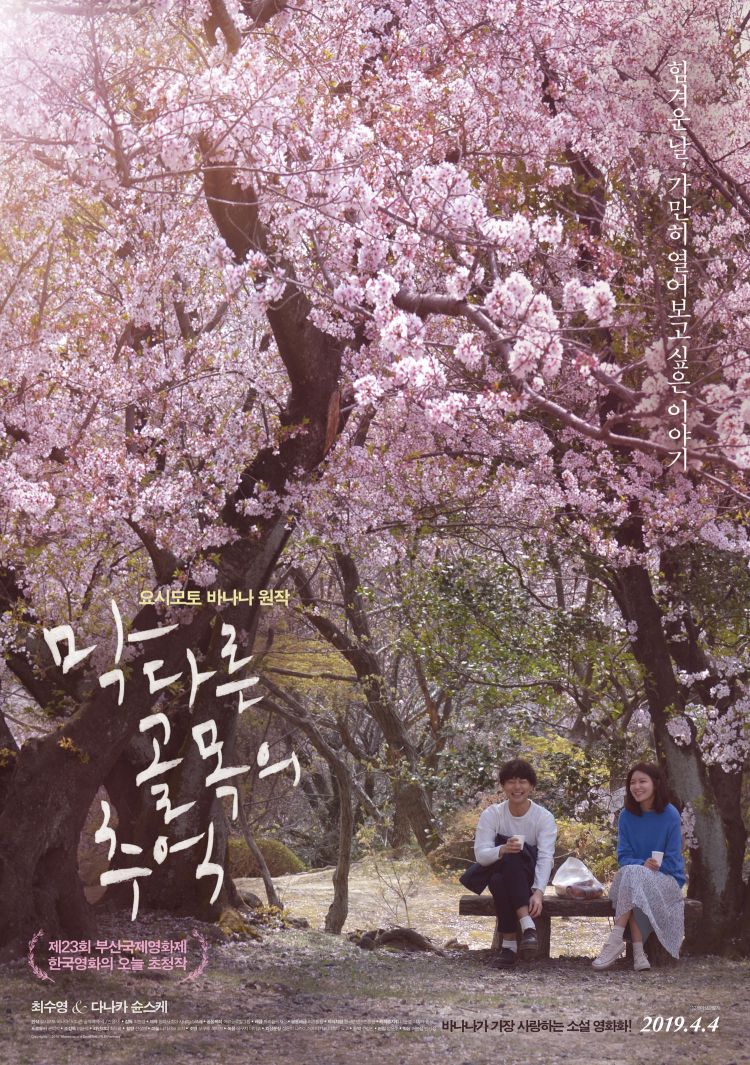
The Bell Tower (종각 / 鐘閣, Yang Ju-nam, 1958)

bell tower newspaper 1Yang Ju-nam directed only five films and spent the bulk of his career, which began in the mid-1930s, working as an editor. Making his directorial debut with Sweet Dream in 1936, Yang would not return to the director’s chair for 21 years, releasing Exorcism of Bae-Baeng-Yi in 1957. In 1958, however, he completed two more, The Bell Tower (종각 / 鐘閣, Jonggak, AKA The Bell Tower: Missing Another Dawn) following on from A Mother’s Love. Adapted from the novel by Kang Ro-hyang, The Bell Tower is a small scale affair starring two actors who would become giants of golden age cinema in a melancholy chamber piece charting the tragic history of mid-century Korea through the life stories of a bell maker and a lonely orphan.

The scene opens with a voice over from Yeong-sil (Moon Jeon-suk) who tells us that she has been staying in this temple for sentimental reasons seeing as she loves the sound of its bell and was once told that her father was a bell maker. Her story quickly gives way to that of the bell maker himself, Seok-sung (Heo Jang-gang), now very elderly and in poor health, who recounts his own sad life story in answer to her question about the bell. As a young man, Seok-sung had been in love with a young woman, Ok-bun, and planned to marry. After she died suddenly, he became a bell maker in honour of a promise he made her but met tragedy again when his mentor died, only latterly finding happiness with a widow who bore him a child only to lose them too.

Of course, we are conditioned to assume that Seok-sung must be Yeong-sil’s long lost father – after all, that’s how these stories go, but Yang keeps wrong footing us, not least through the triple casting of Moon Jeong-suk who plays each of the women Seok-sung meets throughout his life including the tragic Ok-bun, dead of appendicitis at only 19 and around 40 years previously. Then again, our perception of events is that of an old man’s memories – perhaps none of these women truly resembled Yeong-sil and Seok-sung has simply read her into his story as he leads her through the course of his life which eventually led him to creating his masterwork in the beautiful bell which now hangs in the temple.

Tellingly, Heo also turns up in Yeong-sil’s eventual flashback as we come to learn how it was she came to be staying in the temple. Her story and Seok-sung’s occupy differing temporal spaces, seemingly cleaved in two by historical circumstance. Seok-sung is man of Joseon whose long life story takes him into the age of occupation but his troubles are all those of an old world and not the new, until, that is the present day. Yeong-sil is a child of the colonial era whose life has been lived in the shadow of imperial violence though it is men of her own nation who seem to have betrayed her. A lonely orphan she made her way to the city but was tricked by a people trafficker who sold her to a mine as a sex slave. Falling in love with an indentured miner (Chan Min-ho), she managed to escape when the trafficker decided to sell her on a Japanese comfort woman station in China, but lives her life as a fugitive in fear of discovery, hiding from those who would misuse her but longing for her lover to return and a new life to start.

For Seok-sung the bell seems to toll mournfully as if in memory of things past, while for Yeong-sil it rings of determination, as if urging her not to give up rebelling against her fate. Yet the bell itself is doomed by the times of its creation. Now finding itself in the middle of a failing war, the bell is just hollow metal and soon to be melted down for military use. Having poured his heart, soul, suffering, and familial legacy into its creation, Seok-sung can hardly bear to see it put to such a sordid purpose. He would rather destroy his bell or take it with him than allow it to be sullied in such a way, but he is old and his gesture of rebellion futile.

Contrary to expectation, Yang ends on an ambivalent note as if anticipating a kind of limbo in which the present struggles to break free of the past but is, in essence, still waiting for something to begin rather than resolving to begin it. Beautifully framed and told almost entirely in flashback, The Bell Tower is a strangely melancholic meditation on post-war malaise and temporal dissonance as a dislocated father and daughter ponder on past and future while pulling at the threads of their miscommunication.


Available on DVD from the Korean Film Archive accompanied by a bilingual booklet featuring essays by film critics Kim Jong-won and Chung Sung-il, plus a documentary on the career of direct Yang Ju-nam. Also available to stream via the Korean Film Archive’s YouTube Channel.

The Midnight Sun (0시(영시) / 0時, Lee Man-hee, 1972)

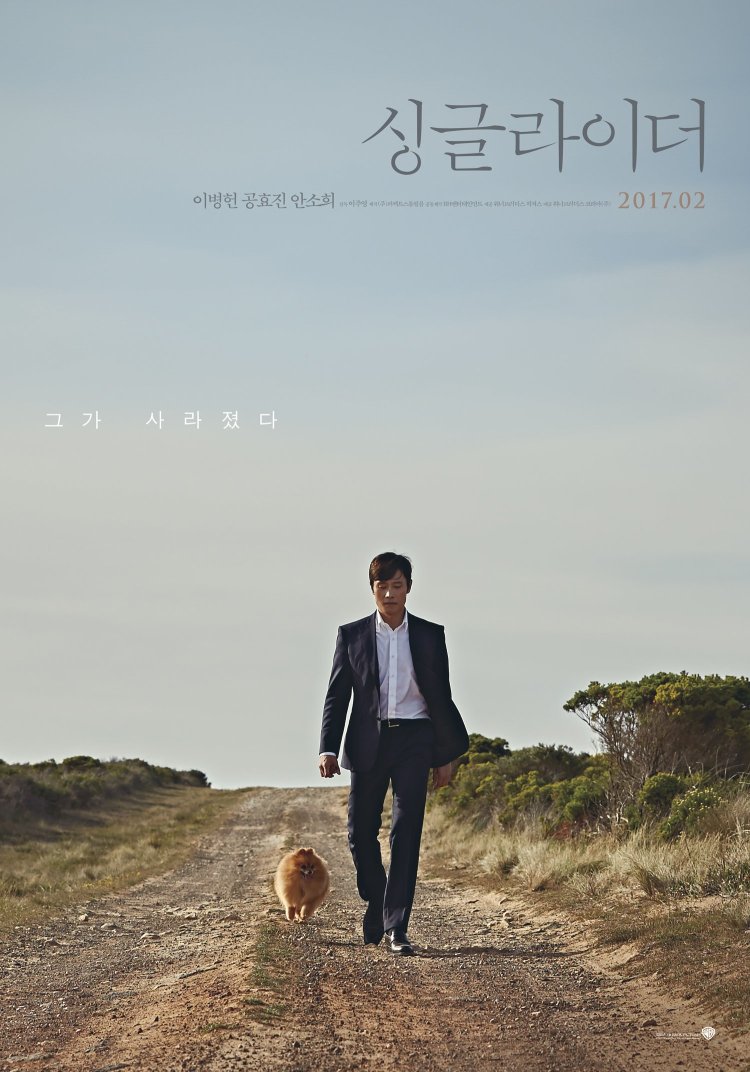
midnight sun posterIn Korean cinema, the police are a problematic presence. Often corrupt, violent, self-interested, and incompetent, even when the cops are the good guys it’s generally because they’re badder than the bad. 1972’s The Midnight Sun (0시(영시) / 0時, 0 Shi), however contains a rare example of a virtuous policeman whose fierce commitment to ethical values perhaps runs too far in endangering his role as a husband and father.

Police captain Jang Jung-han (Heo Jang-gang) has been charged with tracking down a couple of delinquents who’ve been going round committing robberies on a motorcycle they stole from the son of a high ranking police officer. Meanwhile, his son, Kyuseok, has made friends with a boy from the country, Dol Lim, who’s looking for his sister. Feeling sorry for the boy who’s all on his own, Jang takes him in until Kyuseok manages to get him a job as a greeter outside a local restaurant. Complications arise when Lee Min-soo (Mun Oh-jang), a felon previously arrested by Jang, is released and signals his intention to get revenge on Jang whom he blames for the death of his son while he was inside.

Jang is in all ways a model police officer who is good at his job and pursues all of his investigations with the utmost professionalism. His work is, however, not always compatible with being a regular family man. An early scene sees him greeted by his young son, up early on a part-time job delivering newspapers on his flashy pushbike, who reminds him he’s not been home in a couple of days. Kyuseok has been given a message from both his aunt and his mum to make sure his dad remembers to come home early – Jang has completely forgotten that it’s his wife’s birthday (and not for the first time).

Though she has long made her peace with being a policeman’s wife, Mrs. Jang (Yoon Jeong-hee) has her share of troubles with a husband whose safety is not assured while he is often absent from home for extended periods of time. Jang’s salary is also comparatively low and the family have a very modest quality of life with little chance of any kind of advancement. For all of these reasons, she counsels her sister, Hye-rung (Kim Chang-sook), not to get into a relationship with Jang’s junior officer, Park (Shin Seong-il). Hye-ryung, unmarried, lives with the Jangs and works as a tour guide on a tourist bus. Rather than advocating marriage, Mrs. Jang thinks her sister should look into becoming an air hostess, hinting at new possibilities outside of the home for the next generation of Korean women. Despite her sister’s advice, however, Hye-ryung purses a tentative, spiky romance with Park even if somewhat irritated that he only takes her out for noodles rather than something fancier. A policeman’s salary only stretches so far, after all.

Jang’s loyalties are strained when his cases begin to overlap. Lee Min-soo has returned from his prison sentence to find his wife has left him for another man and his son has died. Lee only turned to crime because his son was ill and he needed money for medical treatment, but Jang wouldn’t listen to his mitigating circumstances and arrested him anyway. While he was inside his boy died and Lee holds Jang responsible. In revenge, he kidnaps Kyuseok but rather than drop everything to look for his son, Jang continues to work on the delinquent case and reminds his colleagues to split their workloads. He regards his son’s predicament as “personal” and refuses to dedicate extra resources or take men and time away from other matters for his own benefit. Jang’s coolness further strains his relationship with his wife who can’t understand why he isn’t trying harder to find their son. Yet in Jang’s officious mind, to do so would be wrong and a betrayal of his duty as a police officer.

Lee eventually decides to give up on his revenge and let Kyuseok go after bonding with the boy and being swayed by his cheerful innocence. Kyuseok forgives his kidnapper and wants his dad to do the same. Jang too is a compassionate soul – he is eventually able to help Dol Lim find his sister though, unfortunately, also has to arrest her. Like Lee, Dol’s sister is also forced into a reconsideration of her life of crime after seeing her brother. Arrested by Jang, she resolves to atone, swaps her bright red mini skirt for modest attire, and ties her hair up in a more innocent style. She even manages to convert her boyfriend to the same cause and the pair decide to get married once they’ve paid their debts to society. Wanting to help Dol, Jang does his best to get the pair as a light a sentence as possible while ensuring justice is served both on a legal and on a human level.

Mixing the crime genre with family drama, Lee Man-hee continues his tendency towards experimentation but with a more hopeful outlook, allowing for a happier ending in which family bonds are restored and crimes forgiven rather than punished. Rather than the frustration and inertia which often traps Lee’s conflicted heroes, Jang and his family are able to free themselves from their various prisons through nothing more than compassion and goodness. Sponsored by the Seoul Metropolitan Police Agency, Midnight Sun is an oddly cheerful piece of pro-police propaganda in which the stigmatised face of authoritarian rule is given a humanising makeover even while remaining steadfast and selfless in the pursuit of justice.


Available to stream online via the Korean Film Archive’s YouTube Channel.

Psychokinesis (염력, Yeon Sang-ho, 2018)

Psychokenesis posterThe animated world of Yeon Sang-ho is dark and cynical, finding only fear and anger in the hopeless vision of contemporary Korea that his films continue to paint. His first live action feature, Train to Busan, began to see a little light as its jaded protagonist finally rediscovered his humanity while the innocent were eventually allowed to find a degree at least of rescue. Psychokinesis (염력, Yeomlyeok), in once sense, continues the theme in centring itself on another of Korean cinema’s bad dads, one so morally corrupted that he rejects all responsibility to others and lives only for the self-indulgent pleasure of the petty scam. Given superpowers, his thoughts turn to finance but eventually lead to an opportunity to right himself in societal eyes by reconnecting with his estranged daughter and accepting his responsibility as a family man.

Seok-heon (Ryoo Seung-Ryong) left his family when his daughter was only ten years old. These days he makes a living as a (lazy) security guard while supplementing his income by pilfering coffee and toilet paper from the company. After drinking spring water from a mountain shrine which, unbeknownst to him, has recently been struck by a mysterious meteoroid, Seok-heon realises he has developed the power of psychokinesis but is only really interested in how it might benefit him financially. That said, Seok-heon’s thoughts do not turn to crime, but to fame – he thinks it might make a good magic act and has heard there can be a lot of money to be made on the circuit.

Shortly after his magical revelation, Seok-heon gets a call from Ru-mi (Shim Eun-kyung) – his now grown up daughter who had been running her own very successful fried chicken restaurant until the shop was compulsory purchased to make way for a shopping mall intended to cater for Chinese tourists. Ru-mi and some of the other shopkeepers have been engaged in a resistance movement, refusing to let their property be taken until they have received fair compensation. During an altercation with the thugs sent in to evict them by force, Ru-mi’s mother was killed – which why is she called, to invite her long lost father to the funeral. Though Seok-heon is not exactly keen to get involved, he eventually realises that his new found abilities might prove useful and help him restore himself in his daughter’s judgemental eyes.

As in Train to Busan, Seok-heon is a cynical and jaded father but this time he’s one very much down on his luck, one of life’s losers whose decision to accept defeat has been lifelong and total. Faced with Ru-mi’s cohort of resistance members, he publicly refuses to help, pointing out that their battle is doomed to failure and it would be better to just give up now. Ru-mi, apparently still capable of additional disappointment, reminds her father that this is what he does – when things look grim he runs away. Ru-mi refuses to be like her dad, and therefore refuses to give up without a fight.

Yeon once again injects some background social criticism into an otherwise friendly tale of dead beat dads and the power of community. Echoing the Yongsan tragedy, Yeon makes the destruction of a neighbourhood to build a shopping mall for tourists his battleground as Ru-mi and her fellow resistance members hole up behind a barricade throwing Molotov cocktails at the police and trying to avoid a fight with the thugs who work for the corrupt construction company behind the whole affair. To make matters worse, Yeon takes us past the site of so much drama at the film’s conclusion, showing us an empty lot, a scar on the landscape memorialising the senselessness of corporate greed which eventually eats itself and stifles any kind of progress economic or social. Ru-mi and the others are powerless to resist their eviction but insist on the compensation they ought to be entitled to which would allow them to begin their businesses again elsewhere so they can continue to earn a living.

Seok-heon is the archetypal apathetic man who thinks it’s pointless to resist and is content to live in as corrupt a way as his society permits. He refuses his responsibility to others, walking past the cleaner being threatened for taking the “free” coffees from the lobby he convinced her were OK to take whilst lamenting her “stupidity” for inexpert pilfering. Battered and defeated, Seok-heon rejoices in pettiness, getting his kicks by shirking at work and getting one over on the bosses by stealing. His first thought on getting powers isn’t their capacity for good, but nor is it a lust for power or revenge, he merely wants to show off a little and earn big bucks – his crime is petulant self-indulgence, not active villainy. Reuniting with his daughter and witnessing her fighting for something she believes in, Seok-heon begins to rediscover his long buried heroism finally becoming a father worthy of his daughter’s respect.

It’s not all plain sailing however as the corporate stooges are not just thuggish but clever and devious. Figuring out that the twin issues to evicting the protestors are the unsolved murder of Ru-mi’s mother and Seok-heon’s superpowers, they set about undermining both – setting up a patsy for the crime and attempting to blackmail Seok-heon by leaking footage of his powers to the news in the hope that the country turns against him. Unable to explain his unusual abilities, TV news pundits do what they always do – blame North Korea, and insist he must be some kind of spy and/or infiltrator.

Working with a much lower budget, Psychokinesis is a lighter affair than might be expected, essentially mixing a hapless dad narrative with a superhero origin story but with a more cheerful tone than one usually associates with Yeon. As expected, you can’t fight city hall and Seok-heon’s assertion that the battle was always a losing one may prove to be correct but what he discovers is that is not necessarily a reason to just give up and walk away. Even if one plan fails, there may be other ways to “succeed” so long as there are enough people willing to stand up for what’s right whilst holding fast to each other, committed to building something better rather than just to tearing something down.


Psychokinesis is currently streaming worldwide via Netflix.

Original trailer (Korean subtitles only)

The Bros (부라더, Chang You-jeong, 2017)

The Bros posterTime passes differently in the country. Two brothers from rural Andong thought they’d escaped the relative restrictions of an oddly feudal upbringing, but something keeps pulling them back. Ghosts literal and figural force them to return home, confront each other and their remaining family, and then attempt to come to some kind of acceptance of their places in the grand scheme of things in light of their newly acquired knowledge. The Bros (부라더, Buladeo) stars unlikely siblings Ma Dong-seok and Lee Dong-hwi and is adapted from the stage musical “The Brothers Were Brave” which was also directed by Chang You-jeong. Set in rural Andong, the film is an affectionate, if not entirely sympathetic, portrayal of the fiercely traditional way of life in tiny country towns in which it really still matters who accedes to be the head of a family and women are expected to know their place.

“Estranged” brothers Seok-bong (Ma Dong-seok) and Joo-bong (Lee Dong-hwi) have each skipped out on their familial responsibilities for lives of modern “freedom” in Seoul. Seok-bong is a “treasure hunter” who gives eccentric lessons on archeological ethics to bored students while overspending on the latest tools to aid him in his (permanently unsuccessful) quests, while Joo-bong is an ambitious salaryman whose career runs into a problem after he is accused of “embezzlement” for ruling out the cheapest route for a new road because (unbeknownst to his bosses) it would cut right past his childhood home. Just as Seok-bong realises he’ll have to pay back the outrageous sum of money he “speculated” on new equipment when a civil war breaks out in his prospective dig site, and Jong-boo frets over his workplace blunder, both sons get an unexpected text informing them that their “estranged” father has died and they’re “welcome” to attend the funeral, if they should wish. As both brothers are in need of a getaway plan (and also an opportunity to ask for some financial assistance), they find themselves finally going “home” only to unexpectedly find each other on the road, start bickering in the car, and then accidentally run over a random young woman (Lee Honey) apparently out walking in this otherwise barren and deserted stretch of land.

On their arrival, the brothers are not exactly embraced by their loving family. Nobody really expected to see them and, as it turns out, their grandfather didn’t even realise they’d been invited. The boys’ rural country home is one of fierce traditionality, seemingly cut out of time and existing in the feudal past where people refer to each other via archaic titles and it really seems to matter who is declared “first son” of the family. Both Seok-bong and Joo-bong left the village because they had no interest in all this feudal nonsense and resented the old fashioned authoritarianism which defined their relationships with the apparently tyrannical patriarch they have both come home to bury, if not perhaps to mourn. Seok-bong, in particular, remains extremely resentful towards his late father for the way he treated their mother who, he assumes, must have been very unhappy all her married life.

Rural Andong, it turns out is not a great place for women. The brothers do have a “friend” in the family complex in the form of Mi-bong (Jo Woo-jin) – a policeman recently married to a very nice but often frustrated young lady who has taken to smoking (still considered scandalous in these parts) in secret in order to relieve the stress of being a married woman suddenly expected to undertake all these arcane social responsibilities, which include being “nice” to her overbearing mother-in-law who seems to delight in scolding her for doing everything wrong. In fact Mi-bong’s wife wants to move to Vietnam to get as far away from the family as possible, but  finds it difficult to abandon the feudal way of thinking in wondering what it would be like to be the wife of a “first son”. Women here are supposed to know their place – stay silent, serve the men. When Joo-bong’s “lady friend” from the city shows up unexpectedly, everyone reacts to her as a “potential daughter-in-law” and sets about giving her the third degree which includes a pop quiz on the three duties of an Andong woman which include obeying a father, then a husband, and then presumably a son. In a running joke, no one can even remember the given name of the boys’ mother because she was always just referred to as “first daughter-in-law”.

All in all, it’s no surprise that Seok-bong and Joo-bong wanted to leave but then again, it turns out there was a lot more going on with the family than they were ever privy to know and they have perhaps judged their father unfairly without knowing all the facts. This being a comedy, the central point is the repair of a broken family – firstly in the brothers repairing their bond as they face the crumbling of their individual quests and are forced to work together, unwittingly uncovering the truth about their family history. Meanwhile, they also have to cope with the strange woman they apparently ran over who seems to have lost her memory but has valuable information to impart to each of them. Haunted by the ghosts of home, neither of the boys finds what they originally came for but gets something (arguably) better in rediscovering their roots and experiencing the upsides of familial connection.

Filled with the strangeness of the village tradition with its mourning suits, wandering monks, shamanic rituals, and uncles who speak only in incomprehensible four character idioms The Bros is an absurd affair but one with its heart in the right place. Chang enlivens the otherwise unremarkable comedic narrative with interesting visual compositions as the mysterious woman seems to drag the brothers away into a pretty fairytale land filled with oversaturated picture book images in which the moon is just a little bit bigger than you’d expect and oddly ‘70s fashions of purple and yellow lend a cheerful and nostalgic air. A comedic tale of family, brotherhood, and the unexpected endurance of feudal tradition, The Bros is a warm and fuzzy tribute to rediscovering one’s roots but also one with unexpected bite in its subtle undercutting of the pervasive misogyny which underpins it.


The Bros is currently available to stream in the UK (and possibly elsewhere) via Netflix.

Original trailer (Korean subtitles only)

26 Years (26년, Cho Geun-hyun, 2012)

26 Years posterA society says a lot about itself in the way it treats its villains. Chun Doo-hwan was a brutal dictator who came to power as a result of a violent counter coup which encompassed the now notorious murder of ordinary citizens by agents of the state in Gwangju in May 1980. Chun’s reign eventually came to an end with the successful conclusion of the democratisation movement which gave birth to the modern democratic state of South Korea that is, at present, in the aftermath of dealing with another unpopular leader deposed through peaceful, democratic means. Though originally sentenced to death Chun’s punishment was later commuted. He has never paid the massive fine that was imposed upon him as symbolic recompense for his acts of terror and vast web of corruption. .

The five men and women at the centre of 26 Years (26년, Nyeon) have not forgotten the face of Chun Doo-hwan (Jang Gwang), identified only as “that man”, and are among the many frustrated by his refusal to take responsibility for his actions. A former soldier remorseful for his role in the events (Lee Geung-young) recruits an olympic sharpshooter (Han Hye-jin) whose mother was killed by a stray bullet, a gangland thug (Jin Goo) whose father was tortured and murdered by security forces driving his mother into madness, and a policeman (Im Seulong) who lost his sister running away from a demonstration, as well as his son (Bae Soo-bin), to assist in a plan to force the former general to apologise for his crimes and, if he refuses, enact their own justice.

Spoilers aside, Chun Doo-hwan is still very much alive and the events of 26 Years are inspired by an entirely fictionalised webmanga though it is true that Chun lives in an L-shaped compound protected by perimeter walls and a small army of police and security forces presumably at great cost to the Korean tax payer. He has never apologised for his actions regarding the Gwangju massacre and continues to blame the “rioters” in insisting that the soldiers had no choice but to fire back in self defence. That such a politically sensitive film could be made about a figure who is still alive, let alone that it would become a major box office success and crowd funding phenomenon is a small miracle in itself but speaks to the deep rift this troubled period of recent history provokes in the minds of the contemporary society.

First time director Cho opens with the events of 1980 but in highly stylised animation rather than live action. There is something in the sketchy quality of the artwork that perfectly evokes the ambivalence of the entire enterprise, of not quite wanting to look at events which are so hard to see. See we do as bystanders are cruelly struck by stray bullets, soldiers panic and shoot, and the left behind search desperately for their missing loved ones but find only tragedy and pain. Reverting to live action for 1983 onwards, Cho then takes us through the next 20 years noting landmarks as he goes – the ever present terror of Chun on TV screens everywhere, his eventual fall and the restoration of democracy, Chun’s pardoning and eventual yet accidental house imprisonment for his own security.

The wounds remain unhealed, festering without resolution. While protestors make their voices heard, a room full of supporters fall to their knees before a resurgent Chun standing proud before them. Chun remains unrepentant, cruelly so in Cho’s dramatisation, shaking off the body of a fallen bodyguard like a slobbering dog, caring nothing for his people and thinking only of his own survival.

Cho keeps the tension high as the small band of traumatised youngsters attempts to confront their nation’s difficult history head on, finding both resistance and camaraderie yet fighting internal conflict all the way. Avoiding easy answers, 26 Years is among the most direct attempts Korean cinema has made to reckon with the traumatic recent past, mixing high octane action with a melancholy consideration of the effects of a national trauma but it also finds itself in a moment of indecision, refusing the ending narrative demands in favour of an intake of breath followed by a weary exhale of weighty resignation.


Currently available to stream via Netflix.

Original trailer (English subtitles)
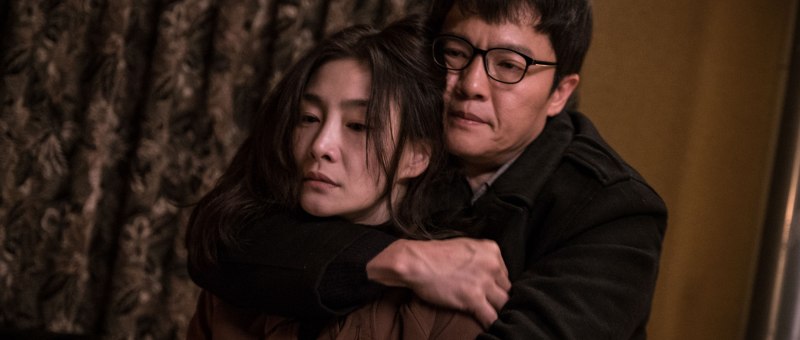
Seven People in the Cellar (지하실의 7인 / 地下室의 七人, Lee Seong-gu, 1969)

Seven People in the Cellar poster

The “literary film” was beginning to fall out of favour by 1969. The collapse of the quota system introduced under the 1962 Motion Picture Law, the exclusion of literary film from the “Domestic Films of Excellence” programme (which encouraged producers to produce high quality Korean films to qualify for distributing more lucrative foreign ones), and the rise of television all conspired to produce a shift towards the populist. Lee Seong-gu had made his name with a series of literary adaptations which enabled him to experiment with form in the comparatively more elevated “arthouse” arena but with horizons shrinking even he found himself with nowhere left turn. Seven People in the Cellar (지하실의 7인 / 地下室의 七人 *, Jihasil-ui Chil-in) is Lee’s last “literary film” and is adapted from a stage play by Yun Jo-byeong who was apparently unhappy with Lee’s adaptation in its abandonment of his carefully constructed ideological balance in favour of adhering to the typical rhetoric of the “anti-communist” film.

Set towards the end of the Korean War, Seven in People in the Cellar presents itself as a conflict between the godless and hypocritical forces of communism and the good and righteous Catholic Church. Accordingly, our hero is a priest, Father Ahn (Heo Jang-gang), who has just returned to his church after being forced to flee by the encroaching “puppet army”. Accompanied by a nun, Lucia (Yun So-ra), and a new curate, Brother Jeong (Lee Soon-jae), Father Ahn is glad to be reunited with his flock but there are dark spectres even here – Maria (Yoon Jeong-hee), a young woman Ahn was forced to leave behind when he fled, runs away from the priest on catching sight of him, apparently out of shame. Meanwhile, while Ahn was away, three rogue Communists began squatting in his cellar waiting for the “reinforcements” which are supposedly going to retake the town. Taking Sister Lucia hostage, the Communists force Ahn to feed them while keeping their existence a secret. To Jeong’s consternation, Ahn agrees but out of Christian virtues rather than fear – he feels the Communists too are lost children of God and have been sent to him so that he may guide them back towards the light.

Not a natural fit for the world of the anti-communist film, Lee does his best to undermine the prevalent ideology even if he must in the end come down hard with Ahn’s essential moral goodness. Thus, Communists aside, the conflict becomes one of age and youth, male and female, as much as between “right” and “wrong” or “North” and “South”. Jeong, youthful and hotheaded, lacks Ahn’s Christian compassion – he bristles when Ahn immediately sets about feeding the starving villagers with their own rations, and disagrees with his decision to harbour the Communists even while knowing that Lucia’s life is at stake if they refuse. Twice he tries to kill the communist “enemy”, threatened by their ideological opposition to his own cause – once when he enters the cellar and misinterprets an altercation between Lucia and sympathetic soldier Park (Park Geun-hyeong), and secondly when the troop’s female commander, Ok (Kim Hye-jeong), attempts to seduce him.

Sexuality becomes spiritual battleground with Christian chastity winning out over Communist free love. Ok, as unsympathetic a communist as it’s possible to be, is sexually liberated and provocative. She suggestively loosens her shirt and fondles her breast in front of a confused junior officer, later taking him into the forest and more or less ordering him to make love to her (which he, eventually, does). However, it is to her simply a matter of a need satisfied. Ok describes the moment she has just shared with her comrade as no different than sharing a meal. She was “hungry”, she ate. When she’s hungry again she will eat again but there’s no more to it than that and there is no emotional or spiritual component in her act of “lovemaking”, only the elimination of a nagging hunger. 

Ok’s transgressive and “amoral” sexuality is contrasted with that of the abused Maria who was tortured and later raped by the Communists’ commanding officer. Forced to betray a nun, she was robbed not only of her innocence but also of her faith. Maria is the “pure woman” corrupted by Communist cruelty. Her chastity was removed from her by force, and she sees no other option than to continue to ruin herself in atonement for her “sin”. Unable to live with the consequences of her actions, she sees no way out other than madness or martyrdom.

The fact that Maria’s torturer is another woman, and such an atypical woman at that, is another facet of the Communist’s animalistic inhumanity. As in The General’s Mustache, the Communists are seen to use innocent children as bargaining chips when ordinary torture fails, even this time killing one to prevent him telling the village about their hiding place. Yet the height of their cruelty is perhaps in their indifference to each other – Park, touched by Sister Lucia’s refusal to leave when he tried to let her go fearing that he would face reprisals, announces his intention to defect to the South and is shot dead by his commander in cold and brutal fashion. Park’s defection is a minor “win” for Ahn who sought restore the Communists’ sense of humanity and bring their souls to God, but it’s also born of misogynistic pique in his intense resentment of the “bossy” Ok who turns out to be an undercover officer from HQ on a special mission to spy against him.

With the one redeemed Communist dead, all that remains is for the others is to slowly destroy themselves. Ahn, cool and composed in absolute faith, waits patiently certain that the friendly South Korean soldiers will shortly liberate them. A hero priest, Ahn is the saintly opposite of the Communists’ cruelty in his compassionate determination to save them even at the risk of his own life. Lee keeps the tension high, creating siege drama that feels real and human in contrast with the often didactic and heavily stylised narrative of the “anti-communist” film, subtly muddying the essential messages but allowing Ahn’s compassion (rather than his “faith”) to shine through as the best weapon against oppressive inhumanity.


Seven People in the Cellar is the fourth and final film included in the Korean Film Archive’s Lee Seong-gu box set. Not currently available to stream online.

* In rendering the Hanja title, the landscape poster uses the arabic numeral 7 while the portrait version uses the Chinese character 七.

The General’s Mustache (장군의 수염 / 將軍의 수염, Lee Seong-gu, 1968)

General's Mustache posterBroken dreams of the post-war society prove too much for one man to bear in Lee Seong-gu’s masterpiece of Korean Modernism – The General’s Mustache (장군의 수염 / 將軍의 수염, Janggun-ui Suyeom). Adapted from the novel by Lee O-young, Lee’s film co-opts the procedural but subtly subverts it, taking a cue from the film noir to turn it in on itself and ask if we can truly ever know another person, or if we simply conjure an image of everyone we know based on a collection of external observations gathered by ourselves and others. Our hero, Cheol-hun (Shin Seong-il), is a melancholy man who has chosen to live in a world of his own creation but when his shield of artifice is pierced by a spear of reality he can endure it no longer. Cheol-hun is dead, but who, if anyone, killed him and can we ever really understand why he died without his words to guide us?

Lee opens with a scream as Cheol-hun’s landlady discovers his body, draped half naked over his bed next to a stove with the safety cover removed. Concluding that carbon monoxide poisoning is likely the cause of death, the police find the panicked landlady suspicious but leave with three clues – a ladies’ stocking, a missing camera, and the scar on Cheol-hun’s forehead. The stocking takes them to Cheol-hun’s ex, who tells them that Cheol-hun gave his camera to a “nude model” which was perhaps a point of tension between the two, but not apparently the reason they decided to separate. The scar, ruining the detective’s (Kim Seung-ho) theory, turns out to be an old one – received in infancy when his exhausted mother (Han Eun-jin) dropped an iron on his head after a long day at the press.

After the testimony from Cheol-hun’s mother, the scar seems incidental but turns out to be anything but. Cheol-hun’s mother blames herself for his childhood injury (as any mother would) and has spent her life worrying about him, believing that the scar itself has been the cause of all his misfortune and sent him off on an unlucky path. From Cheol-hun’s sister (Kim Sin-jae) we learn that the family was once wealthy – local landowners who valued their “aristocratic” blood. After the war all that ended. The land was given back to the people, and Cheol-hun’s family were stripped of not only of their prestige but of their means of living. Nevertheless, Cheol-hun’s austere father refused to let his children play with the “commoners”, and so little Cheol-hun’s loneliness was born.

The testimony of Cheol-hun’s former boss reinforces the view that Cheol-hun was an eccentric loner, ill equipped for life in the “real” world. A former photojournalist, Cheol-hun lost his job as a result of a disastrous interview with a recently returned scholar who had enjoyed some minor success in America. The scholar, having been abroad five years, peppers his speech with random English and puts up a pretence of having forgotten his Korean. He complains that Korean kimchee is too spicy, and suggests that the key to improving the “backward” nation lies in “reforming” the cuisine. Cheol-hun, becoming ever more irritated, offers a few barbed comments but cannot contain himself when the kids, “John” and “Mary” who do not speak any Korean, arrive. American names, he points out, are usually associated with dogs and sex workers – why would you give them to your children if you plan to live in Korea? Needless to say, the interview is over.

Cheol-hun has now been characterised as a man who cannot read the air, but it’s time to hear from him too though it will have to be second hand. Shin-hye (Yoon Jeong-hee), the girlfriend, radically changing under testimony broadly agrees with this view of the man she loved but could no longer live with. Cheol-hun told her that he’d never been good with people and had no real friends save one in the army – interestingly enough a man descended from royalty, but that he died leaving Cheol-hun alone again with the lingering guilt that he was unable to save his only friend. His tragedy is that he yearns for true connection, to truly become one with another person, but he cannot achieve it. His life with Shin-hye crumbles not because of “reality” but because Shin-hye craves the real – to live in the real world where people bleed and hurt. She cannot live with Cheol-hun in his escapist paradise, but he cannot bear to leave it.

The title of the film comes from the book that Cheol-hun wanted to write. In the story, a victorious general fighting for “independence” returns to his “liberated” country. The general is dashing and brave and he has on his face the most magnificent mustache. A weedy reporter giddily asks him if he too might dare to grow such a wonderful mustache to which the general cooly assents. Before long a mustache craze sweeps the nation. Even those who cannot grow a mustache of their own have taken to wearing wigs, but our protagonist says no. He doesn’t want a moustache and refuses to wear one. He loses his job, but it remains open whether the fact of his not having a mustache (which no one forces him to have) or his melancholy loneliness in not wanting to have one and not understanding why everyone else does is the cause of all his suffering. 

The quote at the film’s beginning, painted on Cheol-hun’s maddeningly crowded walls, reads “I refuse to, That’s why I’m alive”. Yet it isn’t quite a refusal so much as a lack of capacity. Cheol-hun’s boss had a point when he said that Cheol-hun was fundamentally unsuited to living in human society, as did Shin-hye when she described him as a lonely child in need of a guardian. If anything killed Cheol-hun, it was loneliness – a revelation which profoundly shakes the conviction of the veteran detective. After all, you can’t put handcuffs on spiritual isolation. The detective thinks of his family, and decides to take a watermelon home to share with them as means of reinforcing his own shallow connections but it’s clear that his conception of the world, of his abilities as a detective and the entire framework of his existence have been irreparably compromised by his investigation into the life and death of Kim Cheol-hun.

Partly a satirical swipe at post-war conformity, Lee’s film also subtly subverts a popular trope from the anti-communist genre in its apparent sympathy for landlords. Cheol-hun’s loneliness is posited as a direct result of his “fall” from his rightful position – the only friend he ever makes is also a fallen nobleman, and he struggles to adapt himself to the “classless” society of the “democratic” era. Yet it’s precisely these outdated ideas of “class” that have ruined his life in his father’s refusal to let him play with the other children. Cheol-hun retreats to a fantasy childhood world to avoid the harshness of modern life, but cannot escape his loneliness or his longing and when he realises Shin-hye is not the soulmate with whom he thought he could forge a new, perfectly isolated paradise, his entire existence becomes impossible.

Lee conjures a mosaic of Cheol-hun composed of the memories of those around him, gradually thickening in texture and finally coming into focus but always only a simulacrum of a man and not the man himself. Adopting a standard procedural narrative, Lee adds in extensive flashback and hypothetical dramatisations as the police investigate, switching to black and white for raw hypotheses and even breaking into elegantly drawn animation to recreate the surreal world of Cheol-hun’s putative novel. Dark and sad, The General’s Mustache seems to imply that there is no answer for solitude, that you can never really know another person fully, and that the loneliest man of all is the one born without a “mustache”, already naked of face in having no final mask to expose but finding that no one wants to see his true self only the one which is demanded he wear to appear just like everyone else.


The General’s Mustache is the third film included in the Korean Film Archive’s Lee Seong-gu box set. Also available to stream via the Korean Film Archive’s YouTube Channel.

When the Buckwheat Blooms (메밀꽃 필 무렵, Lee Seong-gu, 1967)

When the Buckwheat Flowers Bloom posterLife’s little ironies conspire against an ordinary pedlar in Lee Seong-gu’s adaptation of the Lee Hyo-seok short story When the Buckwheat Blooms (메밀꽃 필 무렵, Memilkkot Pil Muryeop). Set in the colonial period, the film tracks the long sad story of an unlucky man and his impossible love as he finds himself continually pushed to the edges of a world which is already disappearing. Yet as bad as things are for the heartbroken pedlar, they’re far worse for his long lost lady who finds herself continually handed from one man to another, abused, and exploited with no possibility of escape.

The story begins with three pedlars – Heo (Park No-sik) who hawks fabric, Jo (Kim Hee-gab) who sells paper, and Yun (Heo Jang-gang) who peddles “medicine”. Heo gets into an altercation with another, younger man, Dong-i (Lee Soon-jae), who he accuses of cutting in on his business. Unable to let the matter drop, Heo starts arguing with Dong-i again at an inn at which point he departs and leaves the old men to it. Heading back on the road, Heo entertains his friends with a familiar story – the one about his night in the buckwheat fields with his one true love.

Flashing back almost 20 years, the pedlars are all young men and only Jo is already married with a pregnant wife (Do Geum-bong) he takes with him on the road. In the marketplace one day, Heo catches sight of Bun-i (Kim Ji-mi), a noblewoman fallen on hard times whose father apparently plans to sell her to pay for his gambling debts. Crestfallen, Heo goes back to his business but catches sight of Bun-i once again and “enjoys” a spot of not exactly consensual sex in the middle of a beautiful buckwheat field. Heo asks Bun-i to wait for him, insisting that he will find the money to buy her from her father before he sells her to someone less nice. After trying several madcap schemes to get the requisite funds (including wrestling to win a bull), Heo sells his beloved donkey but is too late – Bun-i’s dad left in a hurry and sold her off somewhere or other but no one knows where. Heo sets off on a five year quest to find her but remains perpetually too late, only a little way behind but always arriving just after Bun-i and the son which is presumably Heo’s have been sold on to their next “owners.”

When the Buckwheat Blooms is very much Heo’s “depressing” (as he later describes it) life story. We see Bun-i on the periphery of his flashback, but he never finds her and so does not know of all she’s suffered since they parted, nor even that she has a child. Much of his melancholia is born of being old and of being poor. It is clear that his life has been ruined through poverty and lack of prospects – no one chooses to be a pedlar (as the pedlars keep pointing out), it’s what you do when you can’t do anything else. An itinerant existence has deprived each of them of a traditional family life. Jo had a wife in the flashback, but she and her children now live in a permanent home which Jo only rarely visits. Meanwhile Yun’s wife left him after the first time he took off for the road, unable to bear the loneliness and lack of stability involved in being a pedlar’s wife. Heo had remained single because of his lack of financial stability, but meeting Bun-i gave him hope for a different kind of life. He planned to give up peddling and set up as a farmer but, of course, it was not to be.

If that weren’t all the times are changing. The pedlars’ business is disrupted by the arrival of a band of fiddlers, but they haven’t just come to make merry – they’re advertising the “future”. They come to sing the virtues of the newfangled “department store” which is apparently a “foreign” invention and stocks “everything” – it has everything the market has and more, only cheaper and better quality. Dong-i, a young man, plans to give up peddling and try his luck in the gold mine, but there’s precious little hope for old men like Heo who have spent their lives living hand to mouth day by day and are now ill-equipped for anything else.

Heo is, at least, an “honest” man – he drinks but not to excess, and is frugal rather than throwing his money away on sex or gambling. Nevertheless, it’s hard to get away from his quasi-rape of Bun-i as she tries to run from him in the forest. The violence of the initial encounter undermines the romance of Heo’s ongoing tale as he hunts down his missing woman, apparently wanting to save her by buying her back from whoever it is “owns” her at the current time.

Told from Heo’s perspective, Bun-i’s feelings do not much factor in to his narrative but her life has been just as miserable as his, if not more so. A once noble lady, she suffers the humiliation of being “sold” by her father, and then sold on numerous times to other men each of whom abuse and mistreat her. By this time she also has a young son on whose behalf she resolves to suffer, even as her various “husbands” threaten to separate them. Bun-i has no freedom or possibility of escape. She is as chained as Heo’s donkey and treated with far less kindness.

Yet it is Heo to whom the central tragedy to ascribed – he yearns, searches, is frustrated and then forced to give up on his dreams while continuing to harbour enough of a spark of hope as to prevent him from moving forward with his life. He is condemned to grow old walking in circles burdened by an unrealisable dream. Once again shooting entirely on location, Lee aims for a more “sophisticated” aesthetic than many of his contemporaries, co-opting a shooting style much closer to European or Japanese film than is usual in ‘60s Korean cinema. A melancholy tale with an ironic, perhaps “happy” ending, Lee’s sad story of missed opportunities and ruined hopes is an oddly apt one for the post-war world but one which finds its share of cheerfulness even in abject misery.


When the Buckwheat Blooms is the second film included in the Korean Film Archive’s Lee Seong-gu box set. Also available to stream via the Korean Film Archive’s YouTube Channel.

Ilwol: The Sun and the Moon (일월 / 日月, Lee Seong-gu, 1967)

Sun and Moon posterOld habits die hard in Lee Seong-gu’s Ilwol: The Sun and the Moon (일월 / 日月). The feudal past refuses to ease its icy grip even in the new “democratic” era in which freedom and prosperity are promised to all. Lee Seong-gu, closely associated with the Western Modernist movement, flexes his Literary Film muscles with an adaptation of Hwang Sun-won’s novel. Mixing a standard melodrama narrative with an exploration of “outdated” social prejudices and the gradually fracturing psyche of a man who learns a “dark secret” regarding his personal family history, Lee isolates the individual within a changing society as an ordinary man finds himself unable to move forward despite his own desire to be free of the superstitious past.

Lee opens with a scene more in keeping with a romantic comedy. Aspiring architect In-cheol (Shin Seong-il) meets drama student Na-mi (Nam Jeong-im) at an upscale ski resort and is instantly smitten. After spending time with her, In-cheol goes home and visits a childhood friend, Da-hye (Moon Hee). Da-hye is quite obviously in love with In-cheol – a fact of which he is obviously unaware or just completely insensitive since his purpose in coming is to tell her about Na-mi. Despite her personal pain, Da-hye is a good friend and gives In-cheol the appropriate advice regarding his romantic endeavour, reminding him that many of his previous relationships have failed because he was too diffident and he let them drift away.

Meanwhile, In-cheol is called into his father’s study to meet his dad’s new business contact who, it happens, wants a house designed. In a piece of near dynastic finagling, In-cheol gets a new job and, surprise surprise, the house turns out to be for Na-mi who is the daughter of the bank manager In-cheol’s dad wants a loan from. Everything is working out just fine, but then In-cheol’s brother – the Mayor of Gwanju (Jang Min-ho), turns up in a state of agitation and tells them he’s being blackmailed. Someone has discovered their dark family secret – In-cheol’s dad ran away from his family because they were butchers, a near “untouchable” class even in the Korean society of 1967. In-cheol thinks this is all very silly, who cares about things like that anymore? But on another level the discovery profoundly disturbs him in what it says about him as a person and about the society in which he lives.

It does seem ridiculous to stigmatise such commonplace occupation in a supposedly modern society, but In-cheol can’t seem to move past it. He pays a visit to a slaughter house which is just as awful as he’d expected it to be as he watches a once powerful cow twitching helplessly on the floor while other workers dismember the corpses of animals, pulling out entrails and severing heads ready for keener butchery. Still, In-cheol reminds himself it’s just a job and resolves to meet his cousin, but his cousin, insisting that he has no relatives, won’t talk to him. In-cheol takes this for rudeness or rejection, but really his cousin is attempting to protect him. In having internalised the constant abuse he suffers – even once being arrested by the police when a murder took place nearby solely because he is a butcher and had no alibi, In-cheol’s cousin avoids contact with those outside of his group and does not want to taint him with the butcher brush. Yet In-cheol keeps pushing, only for his cousin to roundly tell him to leave it alone unless he has the courage to accept his butcher blood fully for all it is.

The problems are manifold. In-cheol’s father’s first engagement was broken when the bride found out he came from a butcher family, while his wife (who married him without knowing) became a religious obsessive after learning of her husband’s origins. In-cheol’s marriage prospects are almost certainly off the table if anyone finds out, but even if someone agrees to marry him knowing the truth should he really invite them to do so knowing that they (and their children) will share his shame?

Unable to speak, unable to move forward or back, In-cheol spirals into a depressive cycle of inertia and suffering. Da-hye tries to talk to Na-mi to get him to wake up, but Na-mi tells her she’s not much bothered about In-cheol’s mental state and has only been messing around. Nevertheless, she finally draws closer to him as means both of assuming the leading role in her relationship, and as a way of annoying her father whilst potentially getting herself involved in a small scale scandal. Meanwhile, Da-hye who had pointed out that In-cheol’s problem was his passivity, ironically reveals that she too has been waiting for him to wake up and realise her feelings for him, only now realising she has probably missed her chance. The melodramatic device of the love triangle becomes a symbol of In-cheol’s ongoing psychological fracturing as he finds himself caught between two women and realising he can choose neither of them because his “ancestral curse” has effectively disqualified him from living in the modern world.

Using innovative editing techniques, Lee dramatises the tragedy of an isolated generation, supposedly living in a “modern” society but unable to escape the outdated social codes of the past. Rather than attempt to free themselves from irrational and superstitious ways of thinking, they choose self-exile and willingly accept their unhappiness in an otherwise altruistic intention of preventing the spread of a contagion. Melancholy yet urgent, Ilwol: The Sun and the Moon uses the ridiculous survival of an ancient prejudice to lay bare a dark secret at the centre of its own society but finds only tragedy without sense of an escape.


Ilwol: The Sun and the Moon is the first film included in the Korean Film Archive’s Lee Seong-gu box set. (Not currently available to stream via the Korean Film Archive’s YouTube Channel).