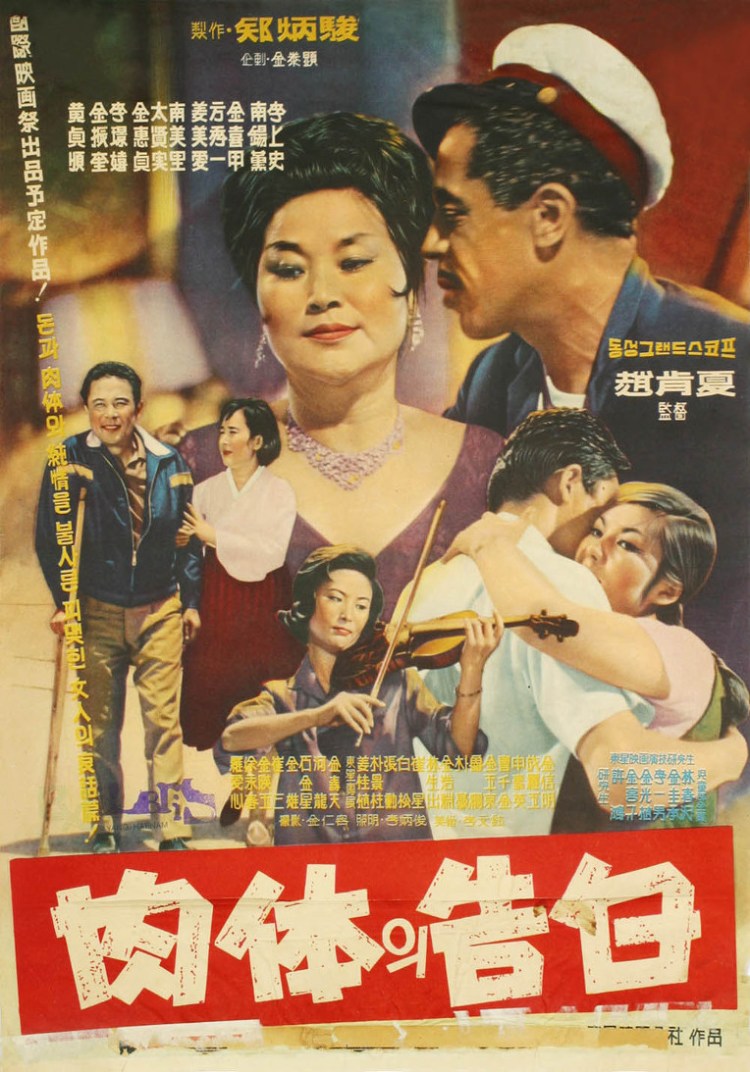
The Body Confession (肉体의 告白 / 육체의 고백, Jo Keung-ha, 1964)

Body Confession posterThe Korea of 1964 was one beginning to look forwards towards a new global future rather than back towards the turbulent colonial past, but the rapid leap forward into a new society had perhaps left an entire generation behind as they prepared to watch their children reject everything they’d strived for in search of “modernity”. 1964’s The Body Confession (肉体의 告白 / 육체의 고백, Yukche-ui Gobak) is the story of one such woman. Widowed young, she turned to sex work in order to support her three daughters in the hope that sending them to university would win them wealthy husbands only for her daughters to encounter the very problems she worked so hard for them to avoid.

The heroine, a veteran sex worker known as The President (Hwang Jung-seun), has become a kind of community leader in the red light district largely catering to American servicemen in the post-war era. While she labours away in the brothels of Busan, her three daughters are living happily in Seoul believing that she runs a successful fashion store which is how she manages to send them their tuition money every month. The President goes to great lengths to protect them from the truth, even enlisting a fashion store owning friend when the girls visit unexpectedly. Nevertheless, she is becoming aware that her position is becoming ever more precarious – as an older woman with a prominent limp she can no longer command the same kind of custom as in her youth and is increasingly dependent on the support of her fellow sex workers who have immense respect for her and, ironically, view her as a maternal figure in the often dangerous underworld environment.

This central idea of female solidarity is the one which has underpinned The President’s life and allowed her to continue living despite the constant hardship she has faced. Yet she is terrified that her daughters may one day find out about her “shameful” occupation and blame her for it, or worse that it could frustrate her hopes for them that they marry well and avoid suffering a similar fate. Despite having, in a sense, achieved a successful career in the red light district, The President wants her daughters to become respectable wives and mothers rather than achieve success in their own rights or be independent. Thus her goal of sending them to university was not for their education but only to make them more attractive to professional grade husbands.

The daughters, however, are modern women and beginning to develop differing ideas to their mother’s vision of success. Oldest daughter Song-hui (Lee Kyoung-hee) has fallen in love with a lowly intellectual truck driver (Kim Jin-kyu) who has placed all his hopes on winning a literary competition. He is a war orphan and has no money or family connections. Meanwhile, second daughter Dong-hui (Kim Hye-jeong) has failed her exams twice and developed a reputation as a wild girl. Toying with a poor boy, she eventually drifts into a relationship with the wealthy son of a magnate (Lee Sang-sa) but fails to realise that he too is only toying with her and intends to honour his family’s wishes by going through with an arranged marriage. Only youngest daughter Yang-hui (Tae Hyun-sil) is living the dream by becoming a successful concert musician and planning to marry a diplomat’s son.

The three daughters have, in a sense, suffered because of their mother’s ideology which encourages them to place practical concerns above the emotional. Song-hui is conflicted in knowing that she will break her mother’s heart by marrying a man with no money or family but also knows that she will choose him all the same. Dong-hui, by contrast, enthusiastically chases Man-gyu for his money but naively fails to realise that he is selfish and duplicitous. In another evocation of the female solidarity that informs the film, Man-gyu’s fiancée Mi-ri eventually dumps him on witnessing the way he treats Dong-hui, roundly rejecting the idea of being shackled to a chauvinistic man who assumes it is his right to have his way with whomever he chooses and face no consequences. Like Song-hui, Mi-ri breaks with tradition in breaking off her engagement against her parents’ wishes and reserving her own right to determine her future.

Yang-hui, whose future eventually works out precisely because of the sacrifices made on her behalf by her mother, turns out to be her harshest critic, rejecting The President on learning the truth and attempting to sever their connection by repaying all the “ill-gotten” investment. Her wealthy husband, however, turns out to be unexpectedly sympathetic in pointing out that her mother has suffered all these long years only to buy her future happiness and that now is the time they both should be thanking her. Meanwhile, The President has become despondent in realising she is out of road. There is no longer much of a place for her in the red light district, and she has nowhere left to turn. Only the kindly Maggie, another sex worker who has been a daughter to her all this time, is prepared to stand by her and take care of her in her old age.

The gulf between the two generations is neatly symbolised by the surprising inclusion of stock footage from the April 19 rising against the corrupt regime of Rhee Syngman which led to a brief period of political freedom before the dictatorship of Park Chung-hee took power in 1961. The poor intellectual author whom The President dismissed, eventually becomes an internationally renowned literary figure after being published abroad while the wealthy magnate’s son turns out to be a louse. The President staked her life on the old feudal ways of ingratiating oneself with privilege by playing by its rules, but the world has moved on and it’s up to the young to forge their own destinies rather than blindly allowing those in power to do as they please. Sadly for The President, her sacrifices will be appreciated only when it’s too late and her desire for her daughters to escape the hardship she had faced misunderstood as greed and snobbishness. There is no longer any place for her old fashioned ideas in the modern era and her daughters will need to learn to get by on their own while accepting that their future was built on maternal sacrifice.


The Body Confession was screened as part of the 2019 Udine Far East Film Festival. It is also available to stream online via the Korean Film Archive’s YouTube Channel.
Extreme Job (극한직업, Lee Byeong-heon, 2019)

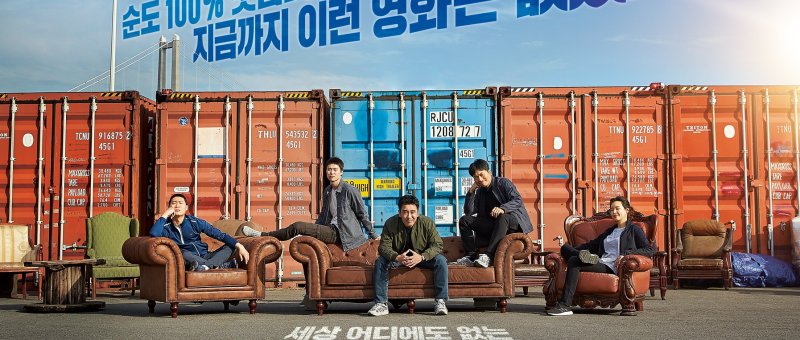
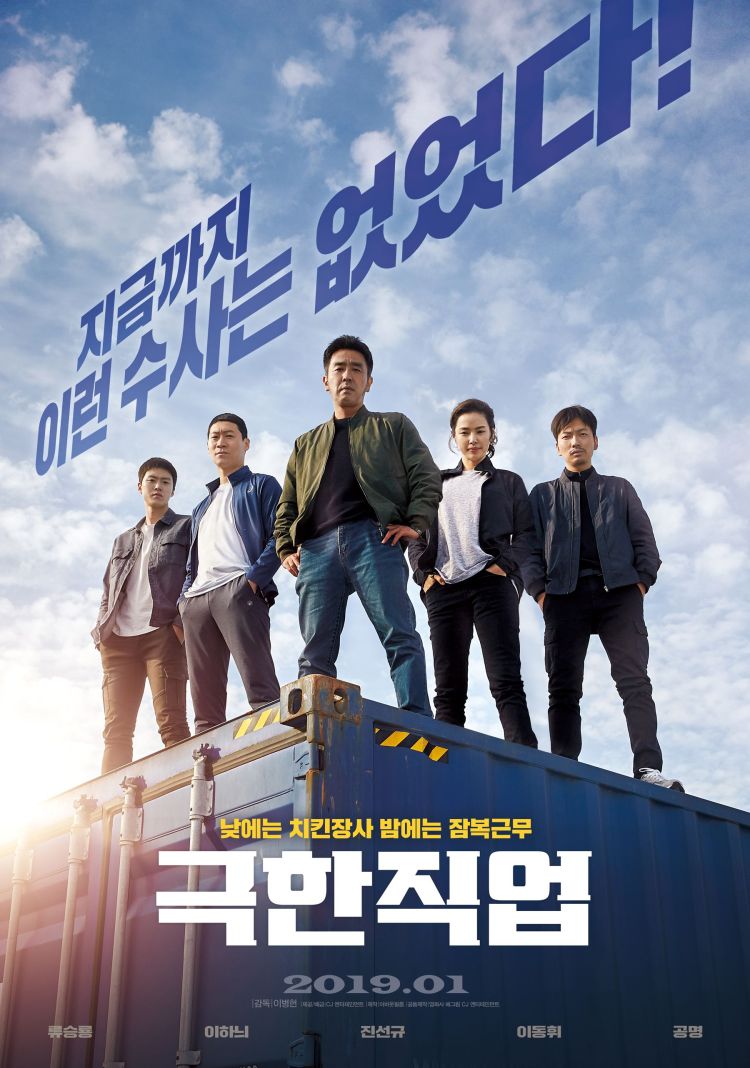
Extreme Job poster 2Another in the increasingly popular trend of multi-territory simultaneous productions, Twenty director Lee Byeong-heon’s Extreme Job (극한직업, Geukan Jigeop) shares its premise with recent Chinese hit Lobster Cop but swaps low budget zaniness for the kind of high concept comedy that dominated Korean cinema in the 2000s. Where the Chinese version was perhaps bold in making its law enforcers look like idiots, the Korean version is very much in the long tradition of idiotic but sincere policemen eventually making good, if perhaps more by accident than design.

The film opens with Chief Go (Ryu Seung-ryong) dangling on a window washing wire and making small talk with his quarry who then manages to get away leaving Go quite literally spinning in the wind. The rest of the team give chase, but the guy eventually ends up in a bad way with the gang’s exploits causing a multi-car pileup and a significant amount of public damage for which Go and his team are now responsible. Facing the threat of disbandment, the team senses opportunity when they get a lead on the Korean HQ of a notorious international drug gang and vow to break the case before a rival squad to prove their worth as police officers.

Bedding in for a 24-hr stakeout, Go & co hole up in a small fried chicken restaurant which happens to be right next to the bad guys’ hide-out only to discover the moribund eatery will soon be closing. The good news is the property is up for sale and Chief Go, borrowing the life savings of rookie Jae-hoon (Gong Myung), decides it’s worth the investment to crack the case. The only problem is, despite having been the only visitors for days, the guys keep getting interrupted by potential customers and are forced to open the chicken shop for real as a cover with the secretly excited officer Ma (Jin Seon-kyu) as chief fryer. Ma’s family recipe rib sauce proves an unexpected hit with chicken lovers and so a new food sensation is born, which is an inconvenience when you’re trying to balance running a restaurant with taking down a drug den.

Like Lobster Cop, Extreme Job satirises modish internet success as something as down to earth and ordinary as fried chicken becomes the latest foodie sensation. So taken with their success are they, that the guys begin to forget about the drug dealers in order to facilitate their chicken business all the while conveniently forgetting that they’re technically moonlighting even if it’s in service of an active investigation (albeit one they weren’t actually assigned to). Deciding that they’ve gone too far the guys raise the price to extreme levels, but that only makes the problem worse as does an attempt to rebuff the attentions of a foodie TV programme who then take against them and attempt to ruin their reputation at the worst possible moment.

Meanwhile, Go’s loyal wife is pleased with the extra money coming in but also suspicious. She doesn’t really like him being a policeman – mostly because his nickname is “zombie” on account of all the times he’s nearly died, but she probably wouldn’t want to be married to a chicken shop manager either. For some reason, owning a chicken shop seems to be a shameful occupation that everyone is embarrassed about, though through his unexpected business success Go eventually learns to embrace his inner chicken man and become a better police officer because of it.

The one officer intent on watching the bad guys finds himself excluded from the group as the others regard him as a shirker for not helping out with the chicken business. Nevertheless, in true cop comedy fashion, it’s team work that counts as the guys come to understand their complimentary strengths and start working together as a unit so they can take down the drug dealers if in bumblingly idiosyncratic fashion. As if to ram the point home, Lee closes with Leslie Cheung’s iconic theme from A Better Tomorrow running in the background to remind us that this has all been about brotherhood, togetherness, and holding the line as much as it’s been about fried chicken success. Slapstick laughs collide with ironic familial comedy and a dose of mild social commentary as the bumbling cops eventually make good by embracing their inner chicken men and reclaiming their dignity in the process.


Extreme Job was screened as part of the 2019 Udine Far East Film Festival.

International trailer (English subtitles)

Unstoppable (성난황소, Kim Min-ho, 2018)

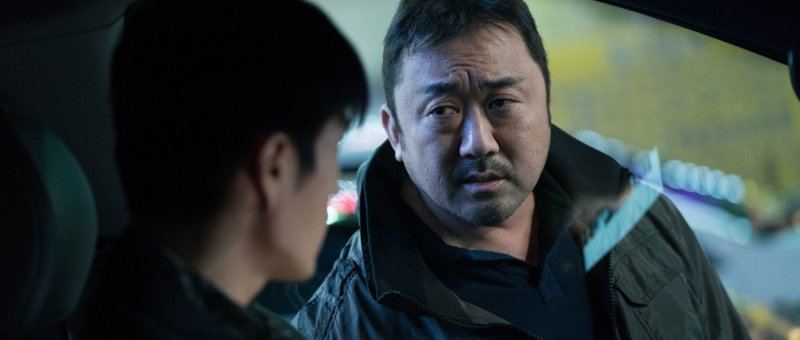
Unstoppable poster 5Can a person ever really change? The answer might be more complex than it seems but then again, you might not quite want them to change as much as you might think you do. Ma Dong-seok is quickly becoming Korean cinema’s MVP, in the genre stakes at least, and has begun to make a career for himself as a big hearted teddy bear of a man with gigantic heavy fists. It’s a legacy he very much embraces in the oddly light hearted Unstoppable (성난황소, Seongnan Hwangso) which sees him play a former gangster gone straight whose latent violent streak is reawakened when he becomes a warrior for love.

Dong-cheol (Ma Dong-seok) was once a notorious tough guy but gave up the streets when he met “an angel”, nurse Ji-soo (Song Ji-hyo), and married her. These days, he works a regular low pay labour job at the fish market but is always dreaming of better things which is why he’s constantly getting scammed by the latest get rich quick scheme proposed by one of his dodgy friends. The trouble starts when Dong-cheol is rear ended by some shady types and gets out of his car to ask for insurance details. Sensing danger but now fully reformed, Dong-cheol remains calm and refuses to engage but Ji-soo isn’t having any of it. She verbally lays into the gangsters and insists on compensation. When Dong-cheol returns home to find his apartment in disarray after arguing with Ji-soo about his unwise financial decisions during a birthday dinner at a fancy restaurant they can’t afford, he has an inkling about what may have occurred but finds the police slow and unsympathetic leaving him to take matters into his own hands.

Unlike many a similarly themed action drama, Unstoppable is keen to emphasise the sweet and innocent love between Dong-cheol and Ji-soo with even the climactic argument between them neutered shortly before Ji-soo is taken. Dong-cheol is not a violent man at heart, but is prepared to meet violence with violence where necessary and he does not like to lose. He takes damage, but never gives up the fight not because he’s angry and hellbent on revenge but because he loves his wife and is desperate to make sure nothing bad happens to her while he is around to prevent it. Meanwhile, Ji-soo is far from a damsel in distress. Refusing to be cowed, she keeps her wits about her and protects the other women kidnapped by the gang while she looks for a way to escape.

The fact is, there seem to have been a lot of unexplained disappearances of young women in this city – something which Dong-cheol becomes aware of while hanging around the police station, yet the authorities have not made much headway on the case. Dong-cheol quickly works out that he’s potentially dealing with an organised crime network which makes its money out of trafficking kidnapped women all over Asia and that, unlike himself, the families of these women largely opted to take the “compensation” money left in their place by the gangsters rather than fight back. This in itself annoys him, though not quite as much as being forced to play the gangsters’ game in order to maximise the chances of getting to Ji-soo before it’s too late.

What quickly becomes apparent to flamboyant gangster Ki-tae (Kim Sung-oh) is that he’s made quite a big mistake, even if that mistake might be more fun than hassle. Ji-soo is not the victim type and her husband will stop at nothing to get her back which means he’s fighting a war on two fronts, both surprised and somewhat amused to be met with such unexpected resistance. Still, Dong-cheol is determined to barrel through fists flying while his bumbling sidekicks – old comrade Choon-sik (Park Ji-hwan) and fast talking fixer Gomsajang (Kim Min-jae), handle the investigation from the sidelines. Undercutting the essential darkness of the “lone vigilante takes on heinous human trafficking ring” narrative with warmhearted humour, Unstoppable proves an ideal vehicle for the increasingly popular Ma Dong-seok which finds unexpected sweetness in the genuine connection between its perfectly matched husband and wife team.


Unstoppable was screened as part of the 2019 Udine Far East Film Festival.

International trailer (English subtitles)

Rampant (창궐, Kim Sung-hoon, 2018)

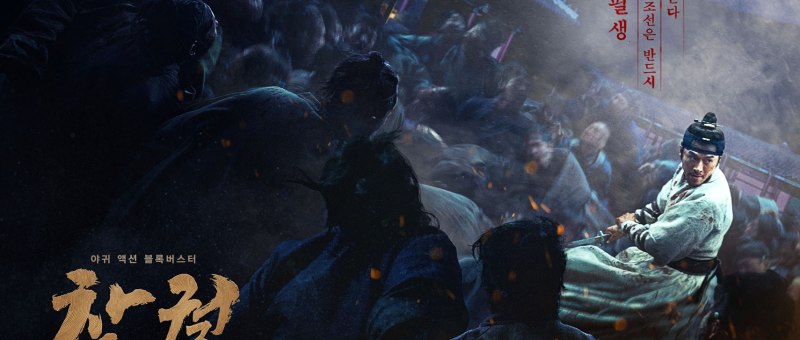
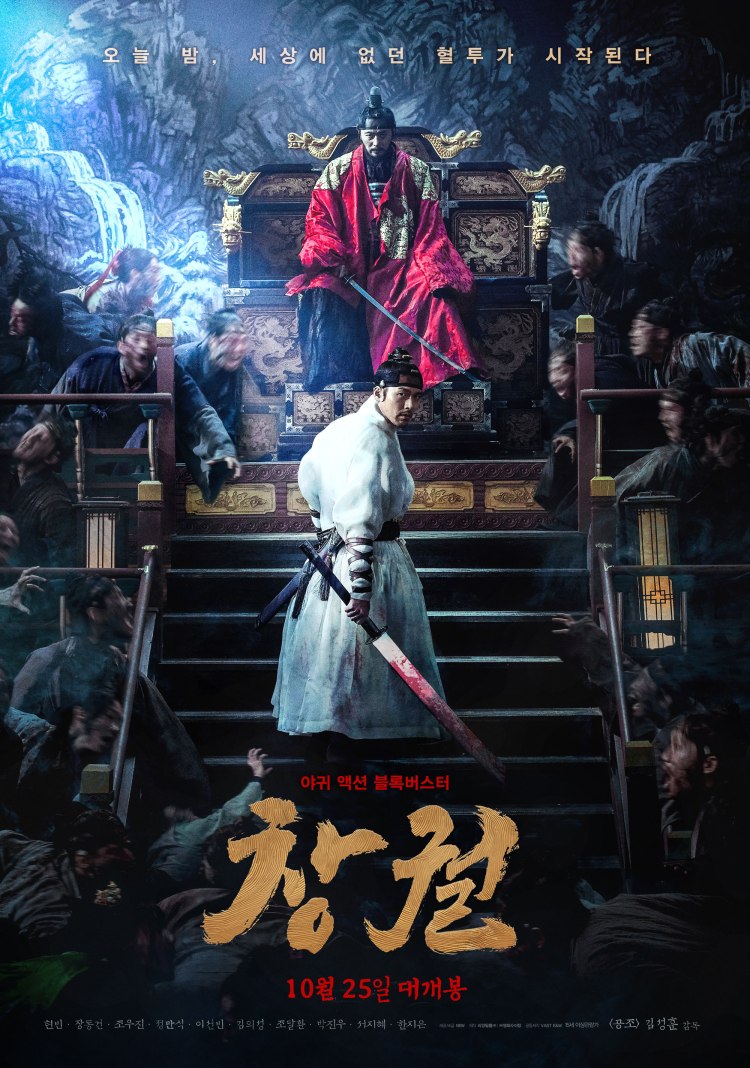
Rampant posterKorean cinema has well and truly fallen in love with zombies. You might have heard of zombie kings lingering on while ambitious underlings run the show to ensure their own succession, but you’ve never seen one quite like this. Kim Sung-hoon’s Rampant (창궐, Changgwol), arriving mere months before similarly themed Netflix TV show Kingdom, sends the zombie apocalypse back to the Joseon-era. Incorporating the political intrigue and courtly machinations the genre is known for, Rampant is ultimately less a tale of battling undead threat than of fighting for a humane future ruled over by a good king who purifies the kingdom and commits himself to the service of his people.

Our hero, Ganglim (Hyun Bin), was raised among the Qing and feels himself to be more Chinese than Korean – he isn’t even very comfortable with the language and wants nothing more than to go “home” where all the pretty ladies are. The reason he’s come “back” to Korea is that his brother, the Crown Prince (Kim Tae-woo), feared for his safety and asked Ganglim to escort his pregnant wife to the Qing out of harm’s way. The major problem is that the elderly king is weak and many in his court believe he has failed to stand up to the Qing, damaging Korean sovereignty. Unbeknownst to Ganglim, the Crown Prince has already committed suicide to take responsibility for a treasonous plot to usurp the king using firepower purchased from the Dutch. Inconveniently, this also means that Ganglim is now heir to the throne which is very much not something he is particularly interested in. Romantic as he is, however, he can’t pass up the chance to avenge his brother’s death while fulfilling his dying wish of saving his wife and unborn child.

Meanwhile, that Dutch ship was carrying more than guns. Strange flesh eating “night demons” have overrun the harbour town of Jemulpo and are slowly staggering forward under the cover of darkness ravaging as they go. Wandering into the fray, Ganglim is eventually accosted by a band of “rebels” previously loyal to his brother who, alone, are busy defending the innocent townspeople by disposing of the zombie corpses before they can do more harm.

Ganglim too is originally unwilling to help, not quite believing the tale he’s been told and then affirming that it’s not much to do with him while he concentrates on concluding his mission so he can get back to Qing. Nevertheless he gradually begins to accept his responsibility through realising it affords him an opportunity to be dashing and heroic. Meanwhile, there is conspiracy afoot in the court. Evil defence minister Kim Ja-joon (Jang Dong-gun) is still intent on seizing the throne to create a new Korea free of Qing of influence and is not above using the zombie threat as a part of his plan.

The conflict is then the familiar one of good kings and bad, or the rightful heir and an unscrupulous usurper. Ganglim, a self-centred libertine who thinks of little else than beautiful women, is not looking for the kind of responsibility which comes with a crown which of course makes him the perfect person to inherit it. Little by little, beginning to care for his small band of rebels and the townspeople they help to save, Ganglim embraces his nobility and commits himself to the service of his people. The king, he discovers, is a servant of his subjects – not the other way around as Kim would have it. Watching the old world burn, he vows to build a better one founded on more egalitarian principles with fairness and accountability at its centre.

The zombies become a kind of metaphor for the corruption which is literally devouring the kingdom and must be purified by Ganglim’s righteous fire. Kim’s revolution has destabilised the nation through unexpected foreign influence which he, ironically, attempts to turn to his advantage little caring if it costs the lives of his fellow Koreans who are, after all, only peasants and therefore not really worth caring about. Kim Sung-hoon brings painterly aesthetics to the classically inspired tale of true kings and righteous hearts while letting the zombies do their thing in true genre fashion as Joseon prepares to save itself from the rot within by beheading the monster before before it has a chance to bite.


Rampant was screened as part of the 2019 Udine Far East Film Festival.

International trailer (English subtitles)

Intimate Strangers (완벽한 타인, Lee Jae-kyoo, 2018)

Intimate Strangers poster 1Middle-aged malaise and technophobia collide with potentially catastrophic consequences in brutal comedy of manners Intimate Strangers (완벽한 타인, Wanbyeokhan Tain). The hugely popular Italian film Perfetti Sconosciuti has already been remade in several territories, proving the universality of its conceit. The Korean edition, cleaving closely to the original, demonstrates once again that nowhere is safe in the modern wired world where public and private personas are beginning to blur as lives lived online become realer than real.

The action takes place (almost) entirely within a swanky Seoul apartment owned by plastic surgeon Seok-ho (Cho Jin-woong) and his psychiatrist wife Ye-jin (Kim Ji-soo). The couple, along with their teenage daughter (Ji Woo), have been living in the apartment for some time but haven’t gotten around to inviting their dearest friends so this evening’s celebration will be something like a belated housewarming. The other guests will be friends of Seok-ho’s from all the way back in elementary school – elite lawyer Tae-soo (Yoo Hae-jin) and his wife Soo-hyun (Yum Jung-ah), “entrepreneur” Joon-mo (Lee Seo-jin) and his much younger wife Se-kyung (Song Ha-yoon), and recently divorced Young-bae (Yoon Kyung-ho) who is supposed to be bringing his new girlfriend, but disappoints everyone by turning up alone. Part way through the evening, Ye-jin suggests a kind of party game in which they’ll all put their phones face up on the table and agree to share any messages or calls that come in. Of course, this is a game you can’t afford to refuse to play lest everyone think you’ve something to hide, but total honesty is not always advisable even amongst friends.

Despite their supposed intimacy built up over a couple of decades of similar evenings and get togethers, everyone is very much in public mode and maintaining appropriate levels of decorum. Which is why Tae-soo and Soo-hyun are at great pains to hide the fact their relationship is at breaking point thanks to the recent arrival of Tae-soo’s mother while Ye-jin and Seok-ho also have obvious problems, especially when it comes to the upbringing of their teenage daughter. Despite being a psychiatrist with full knowledge of boundaries and the harm that can be done crossing them, Ye-jin has been going through her daughter’s things and not liking what she finds. Nevertheless, everyone wants to have a pleasant evening, so the fights are on hold and politeness very much in the ascendent.

And then the phones start ringing. It might be a matter of debate exactly how much privacy one should want or expect in a marriage, with friends, or from the world in general, but everyone has something or other they’d rather wasn’t brought up at a dinner party and so showcasing one’s phone is likely to be quite a bad idea. That might be the attraction of the game, but no one seriously wants marital breakdown across the dinner table, nor do they want to hear about medical procedures, outings they weren’t invited to, workplace drama, or familial strife.

The messages, as pregnant with melodrama as they might be, begin to expose the simmering conflicts between this now disparate group of “friends”. The petty class resentments and awkward political differences that politeness sees fit to gloss over become harder to ignore when flashed up by an inconvenient notification or a call the other party is not aware is being broadcast (breaching their privacy too in the process). Realising secrets have been kept from you can be hurtful, but it’s even worse realising that you disappoint yourself in proving exactly why the secret was kept in the first place.

It’s tempting to blame everything on technology, that if no one had a phone no one would be hurt but the truth is that married or not everyone has a right to their secrets and a separate, individual life to which no one but themselves is privy. Perhaps it isn’t so much lies which are the enemy, but the expectation of intimacy and that sharing your life with someone necessarily means the entirety of it. In any case, the film (like the other incarnations) opts for an ironic ending which undoes everything which had gone before, erasing the awkwardness of exposed secrets with a return to a more comfortable reality in which everyone is superficially happier pretending to be happy in blissful ignorance. Perhaps sometimes it really is better not to ask too many questions.


Intimate Strangers was screened as part of the 2019 Udine Far East Film Festival.

International trailer (English subtitles)

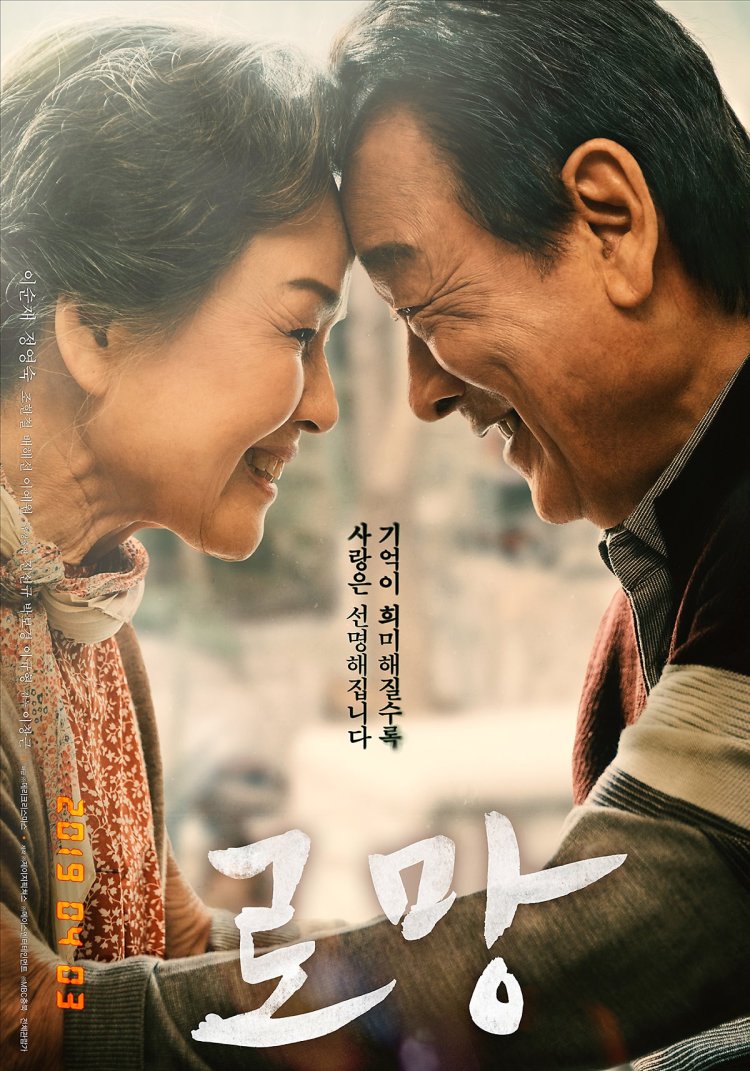
Romang (로망, Lee Chang-geun, 2019)

romang posterKorea, like many developed nations, is facing a demographic crisis as society continues to age at an unprecedented pace. While cultural norms demand deference to older people, the many problems they face in a society where welfare provisions are still minimal have often gone unaddressed in the assumption that family members have a duty to look after their relatives in their old age. This is, however, not always possible and there are occasions where considering opting for outside help becomes unavoidable.

This is the dilemma faced by elderly taxi driver Nam-bong (Lee Soon-jae) as he gradually comes to the conclusion that his wife, Mae-ja (Jung Young-sook), is suffering from dementia. The couple share their house with grown-up son Jin-soo (Jo Han-Chul), his wife Jeong-hee (Bae Hae-sun), and their young daughter Eun-ji who had mostly been cared for by Mae-ja while Jeong-hee was the family’s only breadwinner seeing as Jin-soo is an out of work academic (not particularly actively) looking for a new position. Mae-ja’s condition gradually declines to the point at which she begins to pose a danger to her remaining family members causing Jeong-hee to leave Jin-soo and take Eun-ji to her parents’ out of the way.

Gruff and insensitive, Nam-bong decides to send Mae-ja away to a hospice despite Jin-soo’s pleas but eventually reconsiders and brings Mae-ja home where he is committed to care for her himself. However, he too begins to experience the early signs of dementia and is at a loss as to how to proceed in the knowledge that it will become increasingly difficult for him to look after his wife or she him.

The onset of dementia, the film seems to imply, perhaps allows the troubled couple to begin to move past a central moment of trauma in their relationship which has left a lasting thread of resentment between them. Nam-bong, a chauvinistic, difficult husband is not well liked by his family members and most particularly by his son while Mae-ja had, maybe reluctantly, stood by him physically at least if not emotionally. His decision to send Mae-ja away is then a double betrayal in his abnegation of his duties as a husband and in his spurning of all Mae-ja has had to put up with over the last 40 years.

The distance between the couple has also had an effect on Jin-soo who always felt himself pushed out as an accidental victim of his parents’ emotional pain. It is clear that Nam-bong, a traditionally minded patriarch, has little respect for his son who, in his view, is a failure for not having secured a steady career which can support a wife and child, “allowing” his wife to work in his stead. For Nam-bong, being a man is all about “supporting” a family but not actually having to be around very much. For Jin-soo, a modern man, it’s very different. He wants to be there for his wife and daughter so that they have good memories of him hanging out and having fun rather than being that guy who turns up at dinnertime to shout at everyone and then leaves again.

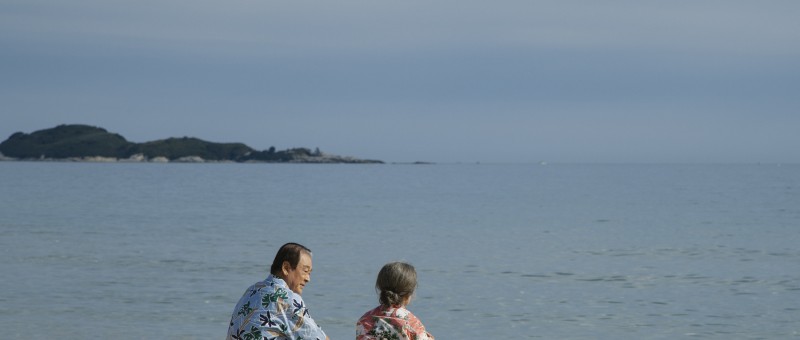
Nevertheless, Nam-bong is eventually forced to accept his emotional duty to his family when he decides to care for Mae-ja. While their mutual condition begins to bring old, negative emotions never fully dealt with to the surface, it also allows them to rediscover the innocent love they had for each other as a young married couple. When Jin-soo eventually leaves the family home to return to his wife and child, the couple decide to isolate themselves, holing up in the living room and communicating via a series of poignant post-its which remind them to care for each other as the darkness intensifies.

Yet it’s not quite all sweetness and light as the elderly romantics rediscover a sense of warmth and connection they assumed long lost. Despite the support shown for Jin-soo’s modern parenting, there is a notably conservative spin placed on the story of Mae-ja and Nam-bong which may very well mark them out as simply being of their time but a late poignant scene in which the young Mae-ja declares her dream to be having a good husband while Nam-bong’s is to support a family sits uncomfortably in its unsubtle defence of traditional gender roles. To make matters worse, the final moments seem to suggest that there is no place for the elderly couple in contemporary society in allowing them (well, Nam-bong) to take control of their destinies only in the most final of ways. Maudlin and sentimental, Romang sparkles when embracing the unexpected cuteness of the late life love story but too often opts for easy melodrama over emotional nuance in its refusal to address its darker elements and eagerness to romanticise the business of ageing.


Romang (로망) was screened as part of the 2019 Udine Far East Film Festival.

International trailer (English subtitles)

Default (국가부도의 날, Choi Kook-hee, 2018)

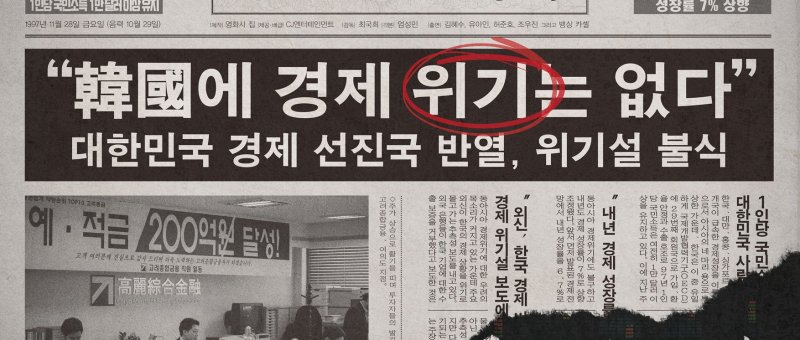
Default poster 1The Korean economic miracle came to an abrupt halt in 1997. In an event the media labelled “the day of national humiliation”, the Korean government went to the IMF for a bailout in order to avoid bankruptcy. So, what went wrong? Choi Kook-hee’s Default (국가부도의 날, Gukga-budo-eui Nal) looks back at the fateful seven days before the country would go bust, asking serious questions about why it found itself in this position and why it chose to opt for external assistance rather than fix its own problems. The answer is, as always, a mix of disaster capitalism, incompetency, and a healthy disinterest in the lives of the less well off.

As if to signal its hubris, the Korea of 1997 is busy celebrating its accession to the OECD and emergence on the world stage as a major player, escaping post-war austerity once and for all. Young Koreans have embraced consumerism with gusto. Luxury goods and foreign travel are becoming increasingly popular with the government insisting everything is on the up and up. However, listeners to Son Sook’s Woman’s Era are telling a different story – cafes not getting customers, businesses going under, people not getting paid. With the Asian Financial Crisis mounting, the Korean Won is being hit hard and the government does not have the reserves to cover its debts. A high ranking Bank of Korea official, Si-hyun (Kim Hye-soo), has concluded that the nation has one week to find a solution before everything comes to a grinding halt.

Meanwhile, self-interested merchant banker Yoon (Yoo Ah-in) has come to the same conclusion on his own but his aims are very different. Where Shi-hyun sees crisis, Yoon sees opportunity. He quits his job and starts calling up wealthy clients with an innovative pitch. Explaining to them that the country is about to go bust, he outlines a plan to short the government which will make them a lot of money though at the expense of those without who will be hung out to dry when it all goes to hell.

As Yoon tells his investors, the trouble is that the entirety of the modern Korean Economy is built on lies. An underling is tasked with explaining the crisis to the president in simple terms, only for Si-hyun to grimly suggest he tell him “we spent borrowed money like it was water hoping to get an extension and here we are”. Factory owner Gap-soo (Heo Joon-ho) is excited to receive a large order from a major department store, but put off when he realises that they intend to pay him with a promissory note. The department store CEO belittles his concerns, implying that he can’t be much of a player if he doesn’t know that’s how business is done these days. Gap-soo’s partner is all for it and so they sign, but when banks go bust promissory notes become worthless and they need ready cash to pay their staff and suppliers.

Si-hyun tries to make the case for saving the economy to protect the working classes but her advice falls on deaf ears. Often the only woman in the room, Si-hyun is dismissed as a “secretary” while the all male officials make a point of talking to her male assistant and accusing her of being “sentimental” when she points out that people will starve if they put their plan into action. The conclusion that she gradually comes to is that the crisis is an elaborate game being played by elites for their own gain at the expense of ordinary men and women all across the country. Odious finance ministers prioritise saving the Chaebols, warning their friends and cronies, while deliberately running down the clock so the country will have no other option than running to the IMF full in the knowledge that an IMF bailout comes with considerable strings which will vastly constrain their sovereignty and economic freedom – effectively handing control over to the Americans who will use it as an excuse to extend their own business interests by insisting on destructive labour reforms which will devastate the working classes.

Si-hyun’s exasperation leaves her making a last ditch effort to get the government to see sense only for the IMF negotiator (Vincent Cassel) to make her removal another of his red lines, her plain speaking instantly deemed “inappropriate”. Meanwhile, Yoon’s headlong descent into amoral profiteering begins to prick at his conscience even as he tries to justify his actions to himself. 20 years later, it might seem as if the crisis is over but its effects are very much still felt. Gap-soo’s factory may have survived, but it’s running on exploited foreign labour while the Chaebols continue to run rampant over the increasingly unequal Korean economy. None of the problems have been solved and another crisis is always on the horizon. Tense and infuriating, Default is a story of moral as well as financial bankruptcy which places the blame firmly on systemic corruption and the undue influence of self-interested elites while acknowledging that little has changed in the last 20 years leaving the little guy very much at the mercy of capricious Chaebol politics.


Default was screened as part of the 2019 Udine Far East Film Festival. It will also be screened as the next teaser for the upcoming London Korean Film Festival on 20th May at Regent Street Cinema, 7pm.

International trailer (English subtitles)

The Great Battle (안시성, Kim Kwang-sik, 2018)

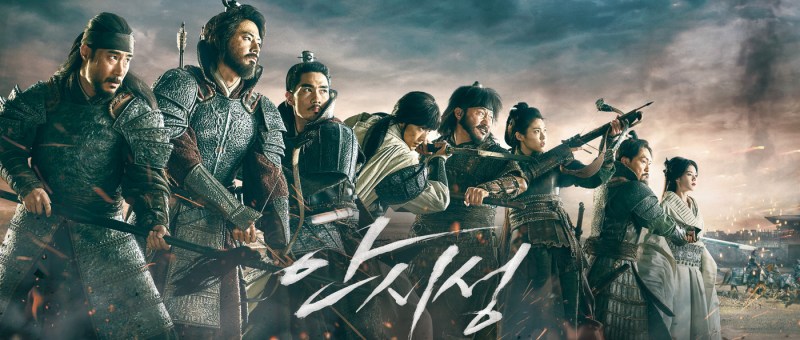
Great Battle posterThe moral of every Korean war film, period and modern, is that Koreans are resilient and resourceful. They can accomplish great things when they work together in a spirit of collective good. Kim Kwang-sik’s The Great Battle (안시성, Ansi-seong), is no different in this regard for being set in 645AD when Goguryeo is threatened by the warlike Tang Dynasty which has its eyes firmly set on conquest.

Meanwhile, there is drama in the court. The king has been usurped and most of the lords have fallen behind General Yeon (Yu Oh-seong) who promises to vanquish the Tang, but to do so he intends to cede territory and abandon his fellow citizens (mostly peasants) to the mercy of Emperor Li (Park Sung-woong). However, the governor of Ansi understandably objects and has alone chosen to stand against Yeon in support of his people, vowing to fend off the Tang all alone by defending his garrison to the last man if necessary. To facilitate his plan, Yeon orders Ansi native and earnest cadet Samul (Nam Joo-hyuk), still grieving for the loss of his brother in a previous battle, to infiltrate the recalcitrant fortress and assassinate Yang (Jo In-sung) so that the territory can be razed.

Having been inducted into the city and despite his fierce loyalty to Yeon, Samul begins to question his mission the longer he is exposed to Yang’s unfettered nobility. A lord but also a man of the people, Yang thinks of himself as a leader among equals. He is not the type to observe from the safety of the rear lines, but proudly wades into battle alongside his men, unafraid to risk his life in their service. In fact, Yang is also perfectly aware of Samul’s true intentions, but is prepared to let him bide his time as a son of Ansi in the hope that he can be turned. Orders, as it turns out, are less important than doing the right thing, and Yang, out of sense of loyalty to the old king refuses to throw his lot in with Yeon, especially if it means he is supposed to throw away the lives of his subjects without a fight.

This necessarily means that the people of Ansi are left with the prospect of fending off the entire might of the Chinese Empire with only a garrison army and limited resources. Of course, they succeed – largely through ingenious stratagems and a sense of solidarity. The Tang, not to be outdone, decide to build an entire artificial mountain in order to fight on Yang’s level, bedding in for months of siege as they do so, but there is no crisis Yang cannot overcome and Emperor Li is about to discover he has seriously underestimated the capabilities of Goguryeo warriors when their backs are to the wall.

Not for nothing does Li eventually mutter that it’s bad idea to go about invading Korea and instruct his successors never to bother trying. Sacrifices, however, must be made – many of them romantic. Yang’s dynamic sister (Kim Seol-hyun), a talented bow woman, has long been in love with the head of his cavalry (Uhm Tae-goo) but Yang tells them to delay their happiness until after the war while he himself nurses a broken heart over a young woman who ended up becoming a shamaness (Jung Eun-chae) and later falls into the hands of the Tang. Not everyone is as convinced by Yang’s boldness as he is, and even some of his own people decide perhaps it would be better to simply acquiesce in the face of such overwhelming odds, but Yang remains firm. He will protect his fortress and the people inside it from anything which threatens their peaceful way of life.

In contrast to Yeon’s authoritarian austerity, Yang’s leadership is one built on nobility and fellow feeling. He hopes to create a freer, more equal society in which the king exists to serve the people rather than the other way around. The battle for Ansi is then an oddly revolutionary affair as they fend off imperialists on either side, bowing neither to Li nor to Yeon in steadfastly defending their principles against overwhelming odds. Kwang achieves truly epic scale through the modern wonder of CGI and ensures his battles are suitably gruelling while keeping the patriotism in check as Yang makes himself stand for something bigger than nationhood or ancient nobility in solidarity as he leads from the front but gives the power back to his people.


The Great Battle was screened as part of the 2019 Udine Far East Film Festival.

International trailer (English subtitles)

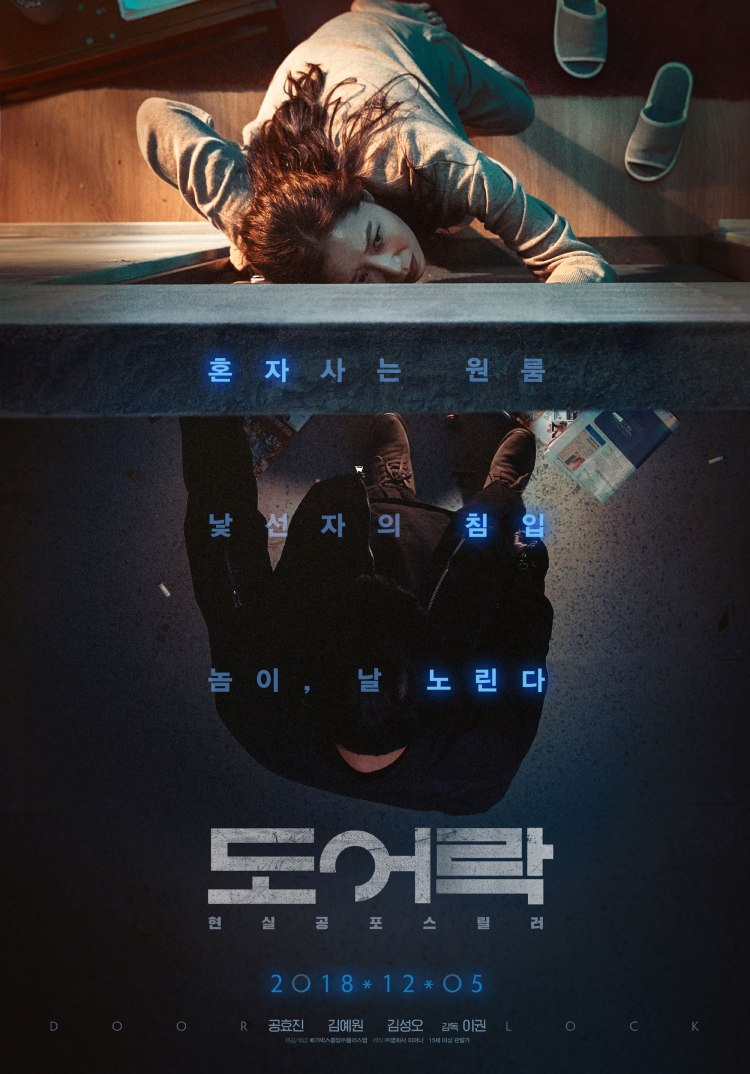
Door Lock (도어락, Lee Kwon, 2018)

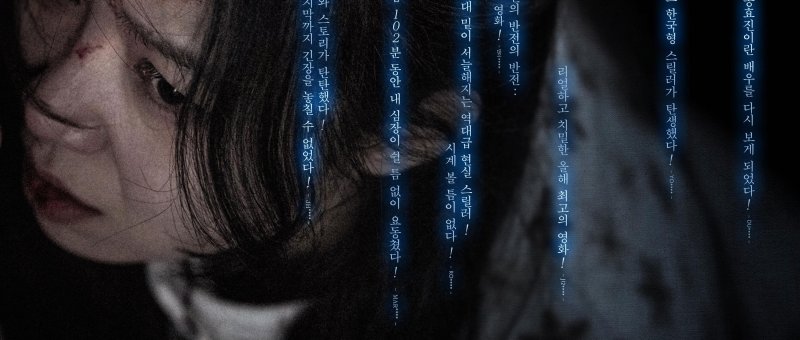
Door lock poster 1Behind your own front door, you’re supposed to feel safe but the modern city conspires to ensure no space, not even the most private, can feel completely free from danger. A Korean spin on the Spanish film Sleep Tight, Lee Kwon’s Door Lock (도어락) shifts the focus from perpetrator to victim as it explores each of the many and various ways women are made to feel vulnerable in the still male dominated Korean society.

Kyung-min (Gong Hyo-jin) has more than one reason to feel anxious. A bank clerk on a temporary contract, she’s forever worrying that she’ll soon be out of a job though there is a rumour of permanent employment on the horizon if only she can keep up her efficiency at work. That might be difficult, however, because Kyung-min has not been feeling well. She wakes up groggy and goes through much of the day feeling a little out of things, though perhaps that’s just the city air. Another cause for concern is that she keeps having the eerie feeling that someone’s been in her apartment when she wasn’t there. Fully aware of all the dangers (and perhaps having had problems before), Kyung-min is concerned enough by signs of someone fiddling with her door lock to change the code every few days, and is panicked by someone furiously rattling the door late at night trying to get in.

Like any sensible person, Kyung-min calls the police but they remain unsympathetic to her fears. Knowing she’s called several times before, they write her off as nervous and hysterical or perhaps an attention seeking lonely single woman. Kyung-min, unfortunately for her, has a habit of attracting the attentions of unpleasant men like a customer at the bank, Ki-jung (Jo Bok-rae), who refuses to take no for an answer after inappropriately asking her out during a consultation about his bank account. In an angry rant, Ki-jung accuses her of leading him on, that she flirted with him on purpose to encourage him to take out additional accounting services. Kyung-min feels herself shrinking in wondering if there’s some truth in what he said, instantly blaming herself, as she recalls that the appraisals are in the offing and she wasn’t making enough sales. Her colleague told her to smile more, so maybe she did and this is what comes of it. The situation is only diffused when Kyung-min’s smartly dressed boss steps forward to place a hand on her shoulder and call security on her behalf.

The boss, nice and well mannered as he is, is perhaps another sort of problem as he too has additional interest in Kyung-min that could end up becoming an awkward workplace issue. As it turns out he becomes another sort of crisis entirely which gets Kyung-min mixed up with the police who now assume she herself is the creepy stalker with only the evidence of her previous calls to back up her claim of persistent harassment. The police remain unsympathetic, intent on pinning something on Kyung-min to close the case quickly while dismissing her fears as either lies, psychosis, or hysterical paranoia. Eventually Kyung-min and her best friend Hyo-joo (Kim Ye-won) decide they’re on their own and they’ll have to proactively protect themselves because, it seems, no one else is going to.

The men who routinely approach Kyung-min do so with frustrated entitlement. They disregard her right to refuse for no particular reason and assume it to be a slight, insisting that Kyung-min is a snob who has only rejected them for their working class occupations and relative lack of financial status. Wounded male pride is once again the most dangerous force of them all. In a precarious economic situation of her own, Kyung-min is left feeling as if nowhere is safe in an intensely chauvinistic, rabidly capitalist, and conservative society which encourages her to find fault with herself rather than the world in which she lives that forces her to feel that way. Inequalities, both economic and sexual, are driving violent crime but when it comes down to it the powers that be are relatively uninterested in the fears of single women or in doing more to create a fairer, safer society. They would rather hang fake security cameras that make you feel safe than deal with illicit spy-cams or listen seriously to women’s concerns when they say they feel afraid. A tense and harrowing thriller, Door Lock is also a frighteningly relatable exploration of the fears of modern urban living.


Door Lock was screened as part of the 2019 Udine Far East Film Festival.

International trailer (English subtitles)

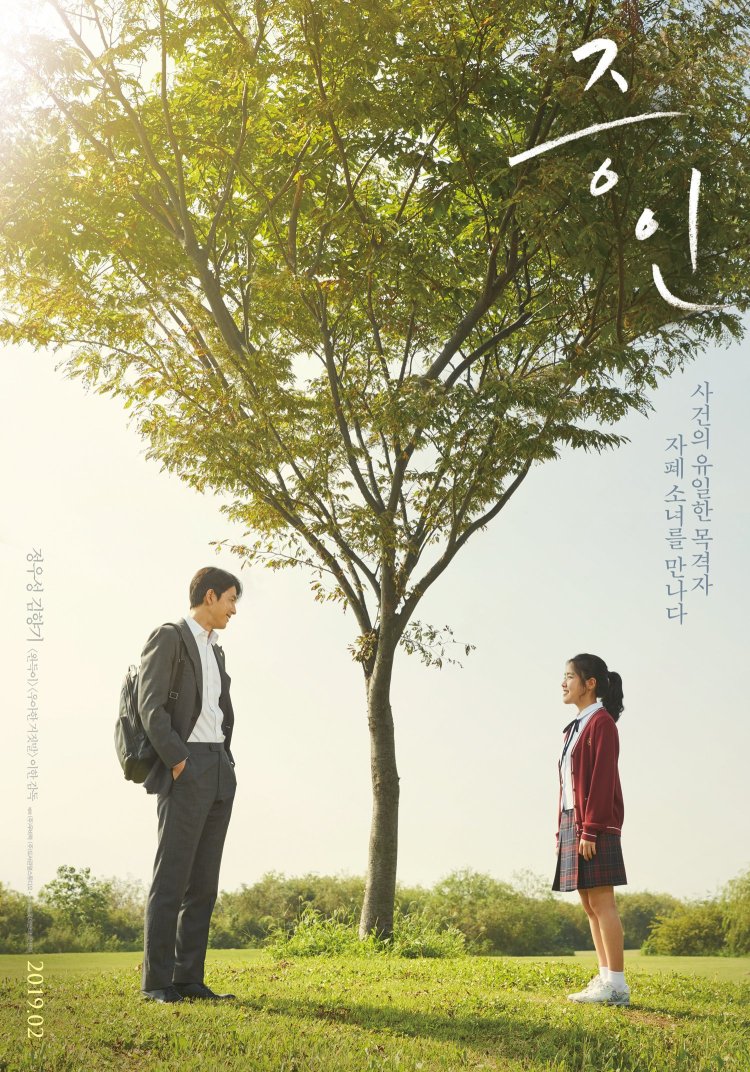
Innocent Witness (증인, Lee Han, 2019)

Innocent Witness poster“Are you a good person?” asks the confused girl at the centre of Lee Han’s Innocent Witness (증인, Jeungin). Her question comes after a series of surprising revelations which have left her questioning all of her relationships and the nature of the world itself, yet it’s one that’s largely impossible to answer. Formerly idealistic lawyer Soon-ho (Jung Woo-sung) thinks he’s been given the kind of case he can get behind, but as usual nothing is quite as it seems and if he wants to get to the truth of the matter he’ll have to learn to think differently.

Soon-ho began his career as an activist lawyer working for NGOs, but now he’s “sold out” to join an elite law firm with a dodgy reputation in order to pay back debts his father unwisely guaranteed for a friend. Because of his precarious financial status, Soon-ho has put-off marriage and relationships, despite his father’s nagging, believing them to be out of his reach and is conflicted by his recent career choices which leave him on the opposite side from old friends. When he’s handed a pro-bono case to defend a housekeeper (Yum Hye-ran) accused of murdering her employer he thinks it’s the best of both worlds. All the evidence points to suicide, but there’s a witness testimony which suggests otherwise. Seeing as the testimony is from a 15-year-old autistic girl who witnessed the crime from across the street, Soon-ho feels he can easily have it discounted.

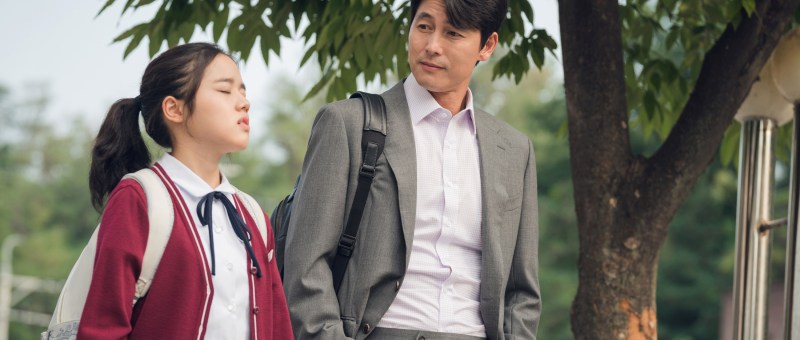
Like many in the film, Soon-ho doesn’t know much about autism and writes Ji-woo (Kim Hyang-gi) off as “mentally impaired”, believing that will be enough for the jury to disregard her testimony especially as it so strongly conflicts with the rest of the evidence. Refused permission to meet with her in person, Soon-ho begins trying to befriend Ji-woo on the way home from school and eventually comes to realise that she is highly intelligent if easily distracted and uneasy in social situations. What he discovers is not that Ji-woo is unable to communicate with the world, but that the world is unwilling to communicate with her. If he wants to bond, he will need to learn her language and earn her trust.

Trust maybe he hard to come by as he witnesses the minor aggressions she goes through every day like the horrible boys at school who taunt her mercilessly and the supposed friend bullying her in secret, not to mention a world full of barking dogs and ringing telephones. When he finally puts her on the stand, his own co-defence chair reads out passages from a book about autism which describe it as a “mental disability” before painting her as a deranged idiot who probably half-imagined what she saw from things she’d seen on television – an act which has profound ethical implications in eroding Ji-woo’s sense of self. Ji-woo told Soon-ho she wanted to be a lawyer because lawyers are good people who help those in need, but Soon-ho has to ask himself whose interest destroying a 15-year-old girl on the stand is really serving.

The law firm Soon-ho joined does seem to be a sleazy one. Despite hiring him to improve their image, Soon-ho’s boss tells him that his new clients won’t be comfortable with him unless he gets himself a little “dirty” while inviting him to awkward parties with call girls in high class hotels. Meanwhile, Soon-ho remains conflicted – especially after potentially losing a 20-year friendship through saying the wrong thing to a still idealistic lawyer and passing it off as an attempt to be “realistic”. Realism is one thing, but Soon-ho seems to have given up and decided if you can’t beat them join them. His dad, sensing his son’s unease, writes him an impassioned letter in which he tells him that the most important thing in life is to be happy with yourself, everything else you can figure out later.

Realising his mistake, Soon-ho begins to see the light. Through bonding with Ji-woo, he learns that seeing things differently can be advantage and that society should have a place for everyone where they shouldn’t have to worry about being themselves. Tellingly, no one ever bothered to ask Ji-woo about the most important part of evidence in her testimony because they all had too many prejudices about her delivery. Only Soon-ho, having bothered to get to know her, was able see what it was that she wasn’t saying. The film perhaps missteps when it has Ji-woo come to the conclusion that she can’t be a lawyer because of her autism, but otherwise presents a sensitive portrayal of a society trying to be better in accommodating difference and doing it with empathetic positivity while subtly waving a finger at the self-serving forces of conservative corruption.


Innocent Witness was screened as part of the 2019 Udine Far East Film Festival.

International trailer (English subtitles)