The Love Marriage (自由結婚 / 자유결혼, Lee Byung-il, 1958)

The love marriage posteA hot button issue at the centre of the tradition vs modernity debate – who knows best when it comes to love, a bevvy of relatives with lifetimes of experience behind them or the youngsters themselves still filled with youthful idealism? Then again, as the wise father of Lee Byung-il’s The Love Marriage (自由結婚 / 자유결혼, Ja-yugyeolhon) points out, perhaps both options are bad. An arranged marriage may not work out for a variety of reasons, and a love match may only result in heartbreak, but perhaps there is a third way after all – something which he intends to figure out through gentle manipulations of his lovelorn daughters and feisty conservative wife.

Inverting the normal pattern, Lee opens with the wedding. Dr. Ko’s (Choi Nam-Hyun) eldest daughter, Suk-hee (Choi Eun-hee), has scandalised her family by marrying for love, making a modern future in a modernising world. However, her new husband, Seung-il (Seong So-min), is pensive. He has something he feels he needs to get off his chest to start married life on the right foot. Seung-il confesses that he was once in love before, somehow believing this is a terrible secret which his new wife needs to know. Suk-hee is of course sympathetic and understanding, she never assumed herself to be marrying someone without a past. In an effort to console him she makes a confession of her own. She too was once in love with someone else – the older brother of a school friend who died tragically years ago never knowing of her deeply held affection. Despite his earlier plea, Seung-il is horrified, abruptly walks out on his new wife on their wedding night, and sails to America to make a new life for himself alone.

Flashforward four years and Suk-hee, humiliated, has retreated to her bedroom, seldom leaving the house and only then to walk along the paths she used to take with Seung-il when she does. Dr. Ko has two more daughters – Moon-hee (Lee Min-ja) and college student Myeong-hee (Jo Mi-ryeong), as well as a young son, Gwang-sik (Park Gwang-su), still in school. Ko’s wife, Mrs. Ahn (Seok Geum-seong), is convinced all Suk-hee’s problems are down to getting married for love – after all, Mrs. Ahn was always against it. To prevent the same thing happening again she plans to find good matches for her other two daughters, hoping to set Moon-hee up with the son of one of her best friends, Wan-seop (Lee Ryong), who has recently returned from studying abroad. Moon-hee, however, has taken a liking to the timid college student who has been tutoring Gwang-sik, Jun-cheol (Choe Hyeon). Meanwhile, Myeong-hee has also developed a fondness for Ko’s assistant, Yeong-su (Park Am).

The times are changing, but only to an extent. Mrs. Ahn doesn’t like it that they’re changing at all. The romantic destiny of her daughters was, perhaps, one of the few things over which she exercised complete control and control seems to be something she is reluctant to give up. Suk-hee’s decision to get married for love is a new one – a rejection of the oppressive pre-war system of total deference to one’s elders in favour of exercising her individual right to choice. Her choice, however, did not work out, in part at least because of some very old fashioned ideas embedded in the head of Seung-il who is unable to cope with the idea of his wife as a real flesh and blood woman rather than the idealised picture of passive femininity he had conjured for himself.

Love and marriage enter a conflict with each other. Ko and Mrs. Ahn have extremely different temperaments but seem to have built a happy and harmonious home for their four children, raising love between them as they go. Yet not all arranged marriages work out, especially when relatives might not have their children’s future happiness as a priority. Meanwhile, young people in love might not be best placed to make serious decisions about a long term future whilst caught in the throws of passion. Ko, otherwise sympathetic, has his doubts about Moon-hee and Jun-cheol, not because of Jun-cheol’s “weak” character which is his wife’s chief complaint, but because he worries that though they are in “love” they have not yet reached an understanding of each other. Rejecting both ideas – the hyperrationality of the “arranged” marriage, and the emotional volatility of the “love” match, Ko wonders if there isn’t a way to meet in the middle, that if the older generation could perhaps guide the youngsters towards a series of likely candidates they believe to be well suited, love might blossom in a place it can take root.

Ko, quiet yet wise and permanently amused, tries out his idea on his youngest daughter, Myeong-hee, who might be the most like him and also the most modern among her sisters. Spotting the obvious attraction between Myeong-hee and his assitant Yeong-su, Ko tries to set them up and then puts a wedge between them through using Wan-Seop who is at a loose end while Moon-hee pines after Jun-cheol and refuses to meet any other suitor. Wan-seop, despite Mrs. Ahn’s obvious esteem for him, is the very example of the new Korean man who tries to make a virtue of his modernity but only exposes his old fashioned conservatism. Caught in a small debate with Yeong-su and Myeong-hee, Wan-seop who has recently returned from study in America sings the praises of life overseas and declares himself a feminist – he hates the way women are treated in Korea which is why, when he’s married, he plans to 100% obey the housekeeper and not make waves in the domestic domain. Yeong-su, quite fairly, finds this ridiculous and even if his ideas are perhaps no more “progressive” he is at least transparent in his constant verbal sparring with the confident Myeong-hee.

For all its inherent comedy, love is still a painful business and parental rigidity has a potential dark side as we see in an attempted suicide brought about by heartbreak and frustration at not being listened to by parents who insist they know best. Yet in the end love conquers all. Ko’s gentle manipulations eventually work their magic, guiding each of his daughters towards their most hopeful path but leaving the decision to take it entirely up to them. Even Mrs. Ahn begins to see the beauty of young love rather than its destabilising qualities and cannot help being touched by the happiness each of the sisters seems to have found in their chosen men even if they’ve suffered quite a lot along the way. Love is never easy, but it doesn’t need to be so hard and it only takes a little bit of understanding to set it on its way.


The Love Marriage is the second of three films included in the Korean Film Archive’s Romantic Comedy Collection of the 1950s box set. It is also available to stream online from the Korean Film Archive‘s YouTube Channel.

Holiday in Seoul (서울의 休日 / 서울의 휴일, Lee Yong-min, 1956)

Holiday in Seoul title cardUnlike many “golden age” directors, Lee Yong-min was not especially prolific and left behind him only 23 films when he abruptly disappeared without trace. Perhaps a fitting legacy for a director so strongly associated with the horror genre, but Lee had begun his career as a documentarian working for a Japanese company during the Colonial era. It’s Lee’s documentary background rather than his taste for genre which is most strongly in evidence in his second film, Holiday in Seoul (서울의 休日 / 서울의 휴일, Seoul-ui Hyuil), which, while containing a fair few genre elements, is an anarchic romantic comedy set entirely in a small residential area of the capital over the course one day – a public holiday, in which a series of couples are separated by accident or design on this very day which has been specifically set aside for them to spend together.

Lee opens with a series of location shots of various Seoul landmarks, elegantly composed and somewhat romanticised as if to recast the burgeoning city as a capital of love with all the promise and mystery of Roman Holiday’s Italy which even gets a brief namecheck later on. Again unconventionally, he then breaks into a lengthy POV shot with additional voice over from a narrator who locates a drunk snoozing on a bench and follows him home hoping something more interesting is happening over in the residential quarter. The narrator settles on the house opposite which belongs to a young couple recently married – she an obstetrician running a clinic out of the house, and he a hotshot reporter who’s just made a big splash with a story about a violent murder.

This is, however, a public holiday so work should be strictly off limits. Hee-won (Yang Mi-hee) has designed a packed itinerary, while her husband Jae-kwan (No Neung-geol) would rather have just lazed around at home, but as it turns out neither of them is going to get what they wanted. Minor disagreements about how to spend a rare day off aside, Hee-won and Jae-kwan are a happy young couple who have apparently married for love, are each professionally successful, and are living a comfortable middle-class life in a period of increasing economic prosperity. Their marriage is directly contrasted with the families around them which include that of the drunk we first met on the bench whose daughter Ok-i eventually descends on Hee-won for help in fear she may have fallen pregnant out of wedlock to a man who won’t take responsibility, and a middle-aged couple who have the opposite problem to that of Hee-won and Jae-kwan. Mr. Ju, a regular salaryman, is excited about spending the day with his wife but she skips out on him to go to the beauty parlour and spends most of the day with a wealthy friend and her opera loving toyboys on a well appointed yacht.

Nevertheless, marital bliss is indeed tested by the demands of the day. Though Jae-kwan had promised to go along with Hee-won’s carefully crafted plan, he gets a phone call he thinks is an important tip off about the murder case but is actually a trick set up by his colleagues who were hoping to get him to buy them a few drinks. Unfortunately, due to an odd coincidence, Jae-kwan thinks he witnesses a kidnapping that might be related to the killings and takes off in hot pursuit only to find himself dealing with another sad case of a woman brought low by love. While Hee-won is busy trying to help Ok-i sort out her predicament with both her sad/angry father and the boyfriend that’s thrown her over, Jae-kwan finds himself locked in a room with a poor young girl (Moon Jeong-suk) who is apparently also pregnant by a man who’s disappeared and has gone out of her mind with heartbreak, actively adopting the role of Ophelia and reciting potent lines from Hamlet while absolutely convinced that Jae-kwan is her long absent lover.

While the new freedoms of the post-Colonial era have enabled Hee-won not only to find love and an elected marriage but also a successful professional career as the head of her own clinic, other women have not been so lucky and have suffered doubly at the hands of men who feel bolder in their casual pursuits but also know they cannot be held to account for their actions in the same way they might have been before. Ok-i’s story does at least have a happy ending but is symptomatic of the times in which she lives as she recounts going for a job at a factory only to be molested by the foreman who thought she was a “prostitute” because he found out she had a boyfriend, while the boyfriend sort of thought the same in assuming she had been taken advantage of by the foreman. At least Ok-i has her father who might be have been enraged to begin with but later comes to her defence as does the warmhearted Hee-won, while Jae-kwan’s young woman is all alone save for her mother who is worried sick over her daughter’s mental health and has no real way to help her.

Hee-won is indeed a force for good. Despite her worry about her husband’s whereabouts (she ends up going drinking with his work buddies who, along with her other married female friends, have half convinced her he’s gone off with another woman), Hee-won comes to the aid of a crying little girl who’s desperately looking for help because her heavily pregnant mother is in a very bad way at home while dad went out a few days ago and hasn’t come back. Needless to say, Hee-won’s emergency dovetails into Jae-kwan’s dogged pursuit of crime which eventually sees him arrest a murderer after accidentally getting into a cab with him. The killer, perhaps annoyed about the previous article, makes a point of explaining to Jae-kwan that his job isn’t quite as morally upright as he’d like to believe. You can’t just go printing things in papers, he tells him, it ruins people’s lives. Jae-kwan thinks it’s murdering people that ruins lives so anything after that is fair game but his heartless rationality brings him into conflict with Hee-won when he wants to photograph and interview one of her patients who is seriously ill and might not survive if she finds out the unpleasant truth Jae-kwan wants to get her reaction to on camera. To Jae-kwan, people are just his “subjects”, mere materials for his essays, but to Hee-won they are literally flesh and blood – less fortunate than herself, they are her responsibility and she will do all she can to help them even at great personal cost.

Yet in the end the conflicts resolve themselves satisfactorily and the couples are each reunited in time to spend the last of the holiday gazing up at the moon glowing above the twinkling lights of Seoul. Having spent the day apart, each spouse emerges with a greater understanding of their partner (or in Mr. Ju’s case perhaps just a greater talent for (self)deception) and remains committed to working on their relationship. Mostly shooting on location, Lee’s camera is as sophisticated as they come shifting effortlessly from documentary-style naturalism to a silent movie aesthetic while maintaining a high level of cinematic wit throughout. Cheerfully romantic and carefree even considering its darker themes, Holiday in Seoul is an oddly anarchic romantic comedy though one with total faith in true connection and emotional honesty.


Holiday in Seoul is the first of three films included in the Korean Film Archive’s Romantic Comedy Collection of the 1950s box set. It is also available to stream online from the Korean Film Archive‘s YouTube Channel.

Adulthood (어른도감, Kim In-seon, 2018)

Adulthood poster 2Growing up is a funny thing, most of us are content to let it run as a background task while we get on with our daily lives but some of us are forced to contemplate the nature of “adulthood” from a transitionary perspective when confronted with independence delivered at an unexpected juncture. The debut feature from Kim In-seon, Adulthood (어른도감, Eoreundogam) is a coming of age tale but it’s also one about family, responsibility, integrity, and the social fabric as a teenage girl’s attempts to adjust to life alone are frustrated by the arrival of an irresponsible uncle with issues of his own.

14-year-old Kyung-un’s (Lee Jae-in) father (Choi Duk-moon) has just passed away following a lengthy illness. Her mother left when she was small, and now Kyung-un is all alone. The funeral is lonely, and Kyung-un is otherwise unaccompanied, without friends or relatives to assist in the business of mourning. That is, until a good-looking young man suddenly jumps on the bus to the crematorium and bursts into tears. Jae-min (Um Tae-Goo) claims to be the younger brother of Kyung-un’s father whom she has never met. Sceptical, Kyung-un has no other option than to allow Jae-min to invade her life even though she felt as if she was managing fine on her own.

However, Jae-min’s intentions turn out to be less than honourable. He’s a conman and a gigalo who’s forever failing in various scams and deceptions, and despite Kyung-un’s prudent caution towards him, he manages to trick her out of her dad’s life insurance money thanks to making himself her legal guardian on a pretext of saving her from a foster home. Being the clever little girl she is, Kyung-un manages to track her errant uncle down to a shady part of town, but the only way she’s getting her money back is if she consents to become Jae-min’s accomplice and pose as his daughter in order to win over his latest mark, lonely pharmacist Jum-hee (Seo Jung-yeon).

Forced to care for herself from an early age thanks to her father’s illness, Kyung-un is a mature little girl who can manage perfectly fine on her own, even dealing with complicated formalities like submitting death certificates and dealing with insurance companies. At 14 she probably shouldn’t have to do any of this alone but doesn’t want to lose her independence or have her life further disrupted by being forced out of her home and into foster care. Despite her natural caution there is perhaps a part of her that wants to believe Jae-min’s story, even if the other part of her is cloning his mobile phone and going through his bag to try and figure out what it is he’s after.

Jae-min, however, is a selfish man child perpetually chasing quick fixes and conveniently deciding to ignore whoever might end up getting hurt in the process, though it’s also true that he’s not completely unaffected by the pain he causes to others. His moral scruples do not extend to cheating his niece out of her father’s money which is all she has to live on and probably means she will also become homeless seeing as her landlord (who hasn’t even noticed her dad has died) is pushing the rent up. Eyes always on the prize, Jae-min’s dream of opening a Japanese restaurant is real enough and he doesn’t much care what he has to do to make it a reality.

However, when Jae-min and Kyung-un are forced to start playacting family for the lonely Jum-hee, a genuine connection is set in motion. As it turns out, there’s a reason for Jum-hee’s continued aloofness and fear to engage and her interactions with the “widowed” father and daughter do indeed begin to shift something inside her too. Despite all the lying and the natural mistrust, something true bubbles to the surface even if the continued deceptions threaten to push it all back down again.

In the end perhaps that’s what adulthood means, understanding that sometimes people tell the truth when they lie. Kyung-un and Jae-min, both orphans, both lonely, both doing “fine” on their own, nevertheless come to realise that perhaps it’s not so bad to be doing fine on your own with someone else. It’s not perfect, and perhaps it’s not what you wanted, but then that’s “adulthood” for you. A promising debut from Kim In-seon, Adulthood is a warm and empathetic look at different paths to maturity as a little girl and a hollow man bond in their shared sense of aloneness and come to realise that independence does not necessarily require solitude.


Adulthood gets its North American premiere as the opening night gala of the seventh season of Asian Pop-up Cinema which takes place in Chicago from 12th September to 14th November 2018. Director Kim In-seon and actress Lee Jae-in will be in attendance for the opening night screening at AMC River East 21 on 12th September for an introduction and Q&A. Tickets are already on sale via the official website.

Original trailer (no subtitles)

Gonjiam: Haunted Asylum (곤지암, Jung Bum-sik, 2018)

Gonjiam Haunted Asylum posterBack in 1992, all of the UK was scandalised by a strangely realistic “drama” starring three well respected TV personalities “investigating” poltergeist activity in an ordinary house. Screened as part of an ongoing anthology drama series, the show was presented as if it were live complete with a telephone number for viewers to ring in. Many were tricked into believing the events they were witnessing were “real” and that a genial children’s TV presenter they knew and loved had been dragged off by a malevolent supernatural entity. Fast forward 10 years and the nation was once again gripped by a “live” ghost hunting show presented by a dubious psychic and a (former) children’s television presenter but this time at least keeping up a pretence of “reality” even if the show’s appeal lay more in its exaggerated seriousness than it did a genuine interest in the paranormal.

The world may have been a more innocent place back in 1992, but ghost shows are still big business even in this comparatively more cynical age. Reality TV ghosthunters Horror Times decide the best way to pick up their flagging views is to go viral by going live inside a notorious disused sanatorium listed as one of CNN’s seven freakiest places on Earth. Rumour has it that Gonjiam Mental Hospital (a place all too real though here given a fictionalised history) was built by the Japanese over the top of a mass grave for resistance fighters though, according to our guides, it was also accounted one of the best psychiatric facilities in the country. Its director received numerous awards from the government of Park Chung-hee (which ought to tell you she was probably up to no good), but the hospital fell into disrepute after an incident in which all the patients mysteriously died and the director herself “disappeared”. Ever since then teenagers have been breaking in to try their luck, but anyone who’s tried to open the door to room 402 has met a sticky end.

Gonjiam: Haunted Asylum (곤지암, Gonjiam) is a found footage horror movie in the modern mould and like most, the crime our “heroes” are about to commit is one of extreme hubris. Cynical in the extreme, the Horror Times crew have absolute certainty in the non-existence of the supernatural and actively mock it through their exploitation of engineered “scares”. In an odd way, if you really thought about it, Horror Times would be quite an exploitative show if it involved “real” ghosts – perhaps you should let malevolent spirits lie rather than bullying them to fight you for the entertainment of others. Nevertheless, the Horror Times crew are about to find out just how wrong they are. While they bicker amongst themselves, hatching plans to wind up the most “expressive” of the team members, setting up bizarre “rituals”, and faking being “scared” to get more money, the Captain keeps a firm eye on the numbers from the safety of the editing tent and the horrors of Gonjiam begin to bubble quietly below the surface.

The thing is, there is clearly horror in spades in this version of Gonjiam where we are told the directoress excelled at treating not only the “distressed” but also “political prisoners”. The lab holds its share of bizarre discoveries including some kind of weird chicken in preserving fluid while the “collective treatment room” is filled with individual confessional boxes which are completely closed save one opening at the chest level. The spectres we later see have large scars running down their torsos and we can only image the true horror of whatever it was that was done here and to whom and on what grounds, but Horror Times aren’t interested in any of that despite their rather superficial “investigations” of the directoress’ office and her many photos of that time she got a prize off a dictator. By the time everyone starts speaking in tongues and getting trapped in strange underwater realms, it becomes clear the “truth” is going to remain buried. 

Maybe the other lesson the Horror Times guys should have learned is that the traumatic past is not your playground and it’s probably fair enough if those unable to pass on begin to feel upset about their personal pain being exploited for ghoulish thrills. Perhaps there’s a mild lesson in the unhappy fates of those who’d rather poke the ghosts than cure them, revelling in the darkness of another era rather than trying to expose it, but Gonjiam isn’t so much about lessons as good old fashioned scares. The abandoned hospital itself is atmospheric, as are the distant banging and doors opening of their own accord but there’s a glibness in its unease that undercuts the sense of dread and inevitability so essential to the genre. The biggest irony of all is that Horror Times’ viewers lost interest when the “real” ghosts showed up – reality TV never really was about “reality” anyway.


Screened as a teaser for the upcoming London Korean Film Festival. The next and final teaser screening will be A Tiger in Winter on 17th September at Regent Street Cinema at which the full programme for this year’s festival will be revealed.

International trailer (English subtitles)

For the curious, a clip from Ghostwatch (1992)

Soseongri (소성리, Park Bae-il, 2017)

Soseongri posterElderly people are often assumed to be of a conservative disposition, steadfastly clinging to the values of a world rapidly slipping away, but many have also experienced things they sincerely hope no further generations will be forced to experience. The grannies of Soseongri lived through the Korean War and so they remember just how terrible life in wartime can be. Even so, despite living close to the North Korean border, they’d put those days of fear and anxiety long behind them – that is until it was announced that the peaceful village of Soseongri would be the site for a bank of US military THAAD missile systems intended to act as a deterrent/defensive measure against aggression from the North.

Director Park Bae-il opens with lengthy shot of an old woman’s hands carefully placing seedlings into the earth. The first part of the film immerses us in village life, and in the lives of the old ladies who make up the bulk of the population now that most of the youngsters have moved into the cities. In fact, other than the police officers and right wingers who turn up later, there are only two men ever captured on screen – one very elderly, and the other a cheerful toddler ironically dressed in a T-shirt which reads “let’s go red”. Most of the women arrived in Soseongri to marry and their lives have been defined by farming and family. One particularly feisty old woman proudly tells us how she and her friends have managed to strike a small blow against their restrictive society in reclaiming their own names. When they came to Soseongri, they came as “the new bride” or “so-and-so’s wife”, later becoming “so-and-so’s mother” but now that they’re old they’ve all started to call each other by their given names and insisted everyone else, even the local post service, do the same. Even so, the same woman laments that she feels she was not a good wife to her husband because of her defiant attitude and worries that she made her family unhappy in being unwilling to just go along with the way of things.

Meanwhile, life on the border holds its own share of anxieties. The memories of the war are still vivid for these older women who remember the threat and violence, the horrifying deaths of friends and the constant ideological conflicts. Anti-communist sentiments are still prevalent among the older generation – one woman describes certain villagers as having been “contaminated” by communist ideas, but admits that when the communists came to Soseongri they came in peace. Everyone got a free cow, the villagers ate meat, and the communist cadre treated them well while building infrastructure and protecting village life. When the communists were forced back North, however, it was the South Korean army which marched “collaborators” off to the cliffs never to seen again.

Nevertheless, one of the things that bothers the women the most in their protests is being accused of being “communists” by the right wing counter protestors. In a shocking display of extreme political rhetoric, the arrival of the THAAD missile system is greeted by loud patriotic songs from the authoritarian era which are explicit in their violence, wishing for the bloody deaths of all communists. The defenders of THAAD claim that it will maintain peace through deterrence, but the old ladies fear it will only antagonise an old enemy and prolong the already protracted peace process. They don’t want “peace” through mutually assured destruction, they want an end to the conflict once and for all. In truth they don’t want the THAAD anywhere, but they particularly don’t want it in their village which will after all become a major target, ensuring they will be the first to feel the fire if the missiles fly.

As it stands the old women are already worried about the planes flying constantly overhead, bringing back bad memories of a past they hoped was already far behind them. Now they find themselves facing violence once again as the police act to protect the right wing protest groups and think nothing of using their superior strength against little old ladies who are just trying to make their voices heard. THAAD or not, the peace in this tiny village has already been ruptured and serious questions raised about the rights of local people vs the national government, a difference in attitudes between young and old when it comes to the North, and possible government hypocrisy in the face of rising tensions coupled with geopolitical concerns. Park, immersing himself in village life, allows the ladies to speak for themselves as they offer both their histories and their wisdom, but most of all their fortitude as they refuse to stop fighting for a peaceful existence.


Screened as part of London Korean Film Festival 2018: Documentary Fortnight.

Original trailer (no subtitles)

Interview with director Park Bae-il from the 2017 Busan Film Festival

Along With the Gods: The Last 49 Days (신과함께-인과 연,Kim Yong-hwa, 2018)

Along with the gods 2 posterKarma is a bitch, and Korean hell is apparently full of it. You don’t have to be guilty to work here, but it certainly seems to help. Picking up straight after the conclusion of the first film, Kim Yong-hwa’s Along with the Gods sequel, The Last 49 Days (신과함께-인과 연, Singwa Hamgge: Ingwa Yeon) sees stern grim reaper/celestial defence lawyer Gang-lim (Ha Jung-woo) make good on his promise to clear the name of a once vengeful spirit now cheerfully deceased, but willingly or otherwise it’s himself he’s putting on trial as the facts of his client’s case veer eerily close to his own. King Yeomra (Lee Jung-jae) is up to his old tricks once again.

Brother of the first film’s “paragon” Ja-hong, Kim Su-hong (Kim Dong-wook) is headed nowhere good – after being accidentally shot by one friend and then buried alive by another to cover it up, Su-hong became a vengeful spirit creating havoc in the mortal and underworlds. Gang-lim, however, is convinced that Su-hong’s death was “wrongful”, that he died as a deliberate act of murder rather than simply by a tragic accident, and commits himself to clearing Su-hong’s name so that he can be reincarnated immediately. He manages to win King Yeomra over, but there is one condition – an old man, Hur Choon-sam (Nam Il-Woo), is an overstayer in the mortal world and should have been “ascended” long ago but his household god, Sung-ju (Ma Dong-Seok), keeps despatching the Guardians to keep the old man safe. If Gang-lim and his assistants Hewonmak (Ju Ji-Hoon) and Deok-choon (Kim Hyang-Gi) can clear Su-hong’s name and ascend Choon-sam within 49 Days King Yeomra will at last set them free and allow them to be reincarnated.

Having dealt so thoroughly with the mechanics of hell in The Two Worlds, Kim expands and deepens his canvas to delve into the lives of our various Guardians. As it turns out Sung-ju was once a Guardian himself and so he knows a thing or two about our two underlings – Hewonmak and Deok-choon, whose memories were wiped when they became employees of King Yeomra. As Sung-ju spins a yarn, it becomes clear that the fates of the three Guardians were closely linked in life and death, bound by a series of traumatic events over a thousand years ago during the Goryeo dynasty.

As in the Two Worlds it all comes down to family. Gang-lim’s memories are fractured and confused, he’s convinced himself he’s a righteous man and wilfully misremembered his death (or at least misrepresented it to his cohorts). Stiff and lacking in compassion, Gang-lim was at odds with his gentle hearted father who, he thought, had found a better son in a boy orphaned by the cruelty of his own troops. These broken familial connections become a karmic circle of resentment and betrayal, enduring across millennia in the knowledge that even to ask for forgiveness may itself be another cruel and selfish act of violence. The circle cannot be closed without cosmic justice, but justice requires process and process requires a victim.

Gang-lim plays a bait and switch, he walks the strangely cheerful Su-hong through the various trials but it’s himself he’s testing, working towards a resolution of his own centuries old burdens of guilt and regret. There are, however, unintended victims in everything and the fate of orphans becomes a persistent theme from the orphaned foster brother Gang-lim feared so much, to those who lost their families in the wars of Goryeo, and a little boy who will be left all alone if Hewonmak and Deok-choon decide to ascend Choon-sam. Choon-sam’s adorable grandson is only young but he’s already been badly let down – his mother sadly passed away, but his father ran up gambling debts and then ran off to the Philippines never to be seen again. He didn’t ask for any of this, but there’s no cosmic justice waiting for him, only “uncle” Sang-ju who has taken the bold step of assuming human form to help the boy and his granddad out while trying to come up with a more permanent solution.

Nevertheless, compassion and forgiveness eventually triumph over the rigid business of the law, finally closing the circle through force of will. Kim doubles down on The Two Worlds’ carefully crafted aesthetic but perhaps indulges himself with a series of random digressions involving psychic dinosaur attacks and lengthy laments about stock market fluctuations and failing investments. Along With the Gods: The Last 49 Days may lack the narrative focus of its predecessor but is undoubtedly lighter in tone and filled with the sense of fun the first film lacked, which is just as well because it seems as if hell is not done with our three Guardians just yet.


Along with the Gods: The Last 49 Days is currently on limited release in UK cinemas.

Original trailer (English subtitles)
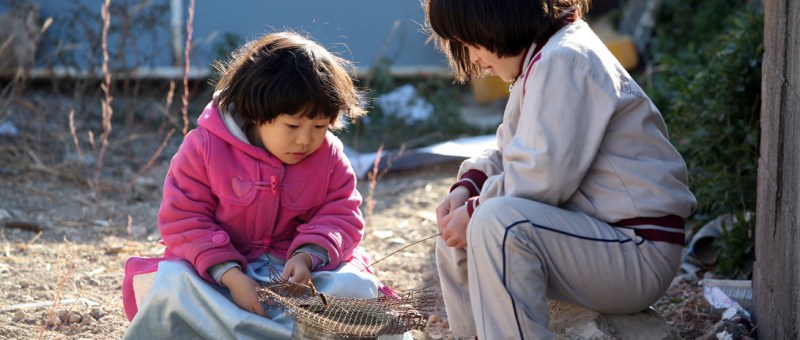
Mandala (曼陀羅 / 만다라, Im Kwon-taek, 1981)

Mandala posterIn a world defined by suffering, does one have the right to retreat into the self and engage in a personal quest for enlightenment or is true enlightenment to be found in the confluence of human consciousness? Im Kwon-taek has some profound questions to ask about human spirituality, the futility of existence, and the transcendence of the self in his 1981 masterpiece, Mandala (曼陀羅 / 만다라). Two monks with very different ideas of spiritual fulfilment meet, part, argue, and perhaps finally understand each other as they walk solitary, individual paths towards Nirvana, each also doubting the purpose of their quest and its ultimate resolution.

Beob-wun (Ahn Sung-ki) dropped out of university and broke-up with his girlfriend in order to become a monk. Consumed with nihilistic thoughts about the futility of existence, he could not go on living a meaningless life. Six years later, Beob-wun is on a bus which is stopped at a checkpoint. Another man in monk’s robes fails to furnish an official monk’s ID card to the authorities and is unceremoniously ejected. Beob-wun gets off the bus too out of a sense of professional courtesy and a desire to help, but Jisan (Jeon Moo-song) is not exactly the kind of monk a serious minded man like Beob-wun would usually want to associate with. Nevertheless, he is oddly fascinated by him, conflicted yet drawn.

Jisan has a sad history of his own. After an indiscretion with a girl at a mountain temple, he was falsely accused of rape and subsequently defrocked. Nevertheless, he continues to practice as a wandering monk, seeking enlightenment in his own way and at his own pace. Jisan’s Buddhas are buried at the bottom of bottles of soju and in the hearts of women – most especially that of the girl from the temple, Ok-sun (Bang Hee), to whom he often returns and is unable to forget. Beob-wun retreats when tested, he doesn’t look at the things which tempt him. Jisan runs headlong towards his demons and defeats them by satiation, but the relief is only temporary – the old emptiness soon returns and the cycle of spiritual deaths and rebirths begins itself again.

When Beob-wun’s former girlfriend, Young-ju, tracks him town to a mountain retreat and confronts him over his “selfish” decision to run away from all his problems by hiding in a temple, he tells her that temples aren’t places for the defeated but to lead one’s life and save the lives of others. She quite fairly asks why he can’t save her life by returning to the world, but Beob-wun looks away. Beob-wun is in denial. He can’t forget Young-ju and has come to resent her as an obstacle to his path towards enlightenment, blaming her for existing rather than himself for his failure to “overcome” her.

There is something dark and dangerous in Beob-wun’s wilful negation of his desires which later manifests as violence, first in a memory or perhaps a fantasy of rape, and then more directly against a woman who was attempting to tempt him into breaking his self affirmed vows of chastity. Jisan’s philosophy is melancholy and perhaps hopeless in its own way, but brighter and free from artifice or malice. Having separated from Jisan, Beob-wun reunites with a fellow monk who has taken their mentor’s instructions to “burn away” the fetters of the mind literally by setting fire to his fingers in order to transcend himself through conquering physical pain. His friend tells him of a funny monk he met on an island who was the only one to rush in and help when the islanders were struck down by a mysterious plague. Jisan fulfilled his duty to others. The other monk sat in the woods on his own praying for his personal enlightenment while the islanders continued to suffer alone.

Jisan, and later Beob-wun’s friend Sugwan, have chosen to look for themselves as reflected in the souls of others, but Beob-wun remains trapped within his own solipsistic belief that he can only overcome his suffering and find an answer to his existential crisis through entirely negating the outside world. Beob-wun is the kind that keeps his head down and avoids getting involved with other people’s troubles – the reminders of an authoritarian regime are everywhere, but a part of him knows that Jisan, for all his faults, is the most “enlightened” man he’s ever known, if only for being the least like himself. The quest for “enlightenment” might be an intensely selfish act of self harm, but the need to create meaning from meaningless persists, for good or ill, and Beob-wun remains lost on the never-ending road to Nirvana, a solitary traveller without hope or expectation.


Mandala was screened as part of the Korean Cultural Centre’s Korean Film Nights 2018: Rebels With a Cause screening series. It is also available on DVD as part of the Korean Film Archive’s Im Kwon-taek box set, as well as online via the Korean Film Archive’s YouTube channel.

Repatriation (송환, Kim Dong-won, 2004)

Repatriation posterIt is sometimes said that citizens of a divided nation suffer more from the manipulation of the division than from the division itself. Kim Dong-won’s landmark 2004 documentary Repatriation (송환, Songhwan) tackles this issue from the side in examining the lives of “unconverted” political prisoners – spies from the North who endured years of torture yet never abandoned their core ideology. Kim tells their stories with warmth and empathy, but cannot avoid the various ways they have been used and misused as proxies in a long dormant war, sometimes willingly but sometimes not. Personal friendships aside, Kim’s view of the ex-prisoners is coloured by the political attitudes of his times in which the left, deeply wounded following the subversion of the hard won fight for democracy, longs to see the right’s claims of the North as mere propaganda and perhaps idealises the positive qualities of life North of the border only to have their illusions shattered and their hopes once again dashed

Back in 1992, a priest asked director Kim Dong-won for the use of his car. He was bringing a pair of “unconverted” long term prisoners to the village and needed help. Despite his reservations Kim agreed and against the odds, Choi and Kim were warmly welcomed into the small community who came together to look after the two old men regardless of their controversial beliefs and pasts as spies sent down from the North more than 30 years previously.

“Unconverted” is, strictly speaking, the preferred language of the North. The South refers to the same prisoners as “converts-to-be”, which is to say that the normal practice for captured spies is a period of lengthy torture designed to force the captives to “convert” from North Korean communism to regularised South Korean anti-communism. The language in itself is telling, and Kim frames his tale as one of faith and martyrdom with the Unconverted painted as true believers who never wavered even in the face of extreme suffering and persecution. Indeed, the suffering itself only strengthened their resolve and legitimised their struggle – if they are prepared to go this far to obliterate your ideas, then your ideas must after all have power.

This idea of an almost religious belief in the righteousness of North Korean “socialism” seems to have caught Kim’s attention, but he is not blind to the darker sides of their continued indoctrination. Kim and Choi have frequent get togethers with others in the same position, singing North Korean folksongs and communist anthems while they extol the virtues of a land they’ve not set foot in since they were young men, pining for a homeland that might not exist anymore. The Unconverted want to go home, but those of a more practical mindset might wonder what would happen to them if they could – will they be welcomed with open arms as they seem to think, or be treated with suspicion as returnees who’ve lived freely in the South which has, after all, released them willingly?

Meanwhile, belief in the “goodness” of the North begins to crumble with increasing improvement in relations which gradually lays bare the truth of the Communist state, suffering heavily thanks to the fall of the Soviet Union and ongoing economic reforms in China. Pervasive governmental corruption had encouraged many to feel that any and all information regarding the evils of North Korea must be lies created to spread fear as part of a vast propaganda machine and so when much of it turned out to be the truth it was a double blow to an already wounded left whose revolution had been betrayed when a newly democratic Korea went ahead and elected the dictator’s chosen successor. The Unconverted become a political pinball – if the South lets them go home some will praise their compassion, but many more will read it as a defeat while the North may well make full capital out of their returned heroes’ unbreakable resolve while also using them to attack the “cruel” South for treating them so badly and refusing to allow those still imprisoned to return.

Yet Kim’s concerns are human before they’re ideological – these are men who want to go home and someone is telling them that they can’t. The Uncoverted are mere pawns in an ongoing ideological game being played by two sides of a never-ending civil war. The division itself remains weaponised by both sides, each seeking to use it to demonise the other and no matter your personal ideology the inhumanity of making political capital of ordinary people ought to be disturbing. What Kim proves, however, is that a kind of “reunification” is possible – that friendships can be formed across ideological lines and that a peaceful coexistence can be won over common ground so long as there is the will to find it.


Screened as part of the London Korean Film Festival 2018: Documentary Fortnight.

A Slice Room (사람이 산다, Song Yun-hyeok, 2016)

slice room still 1It’s easy to view a city like Seoul as a shining example of economic prosperity in which even ordinary people enjoy a high standard of living and perhaps no longer need to worry about extreme poverty or hunger. Of course, this is not the case and despite the aspirational image the city likes to project for itself, a long and complex history of political instability, authoritarian government, and the legacy of the 1997 Asian financial crisis have ensured the survival of an oppressed underclass unable to escape the roots of their poverty due to entrenched social issues which will not allow them to free themselves from the Slice Room existence.

Director Song Yun-hyeok first learned of the “jjok bang” or “Slice Room” phenomenon while working with the homeless and himself lived in one of the tiny tenement rooms for a year in order to make the documentary. He follows three groups of impoverished people who have each found themselves trapped in the slums for different reasons. 27-year-old Il-so was born in the jjok bang and has lived in the community all his life. He lives with his girlfriend, Sun-hee, who uses a wheelchair and finds it difficult to get around the makeshift world of the jjok bang without him. Meanwhile, 60-something Nam-sung lost his job after the Asian financial crisis and has been drifting aimlessly ever since as has Chun-hyun whose mental health issues prevent him from gaining secure employment.

Bad luck can happen to anybody, but the forces which conspire to keep someone in the jjok bang are no accident only a result of deliberate governmental failures. The reason many are unable to get off benefits and return to mainstream society is down to a law which mandates familial support – i.e. if a son gets a job his father loses his benefits even if the prospective job is not enough to support them both or if there are other dependents involved. Thus Nam-sung, by most standards an old man, finds himself in the humiliating position of having to reconnect with his estranged parents in order to get them to sign a consent form so that he can have access to government subsidy and take up a job his social worker has found for him. The family, whom he has not seen for 40 years, are also aware of the support legislation and are worried they will at some point be required to support Nam-sung and so they disown him and refuse to sign. Nam-sung is back at square one with no other options because of the say so of his father even though he is old enough to be a grandfather himself.

Meanwhile, Il-so and Sun-hee want to get married and start a family, but once they become a couple they will also receive a substantial benefits cut and seeing as they are also unable to work because of health issues and the support law, they have no real possibility of being able to support themselves without government help. Nevertheless they decide to try and fulfil their dream of building a family only to face a further dilemma when Sun-hee becomes pregnant.

Medical costs are another constant worry. Il-so, who has spent his entire life in the jjok bang, has long standing health issues from high blood pressure and diabetes to recurrent TB. Disease is rife in the jjok bang and mysterious deaths not uncommon, but the secondary problems are spiritual malaise and creeping depression as the hopelessness of the jjok bang world begins to sap the strength of those who live there, convincing them there is no way out of this world of crushing of poverty. For those like Chun-hyun the situation is even more precarious as they attempt to manage their conditions while living in the impossible jjok bang society, forced into exploitative, low paid and illegal labour simply to get by all while worrying about being caught out, losing their benefits and their homes.

Nam-sung, having found temporary relief outside of the city, is forced to return to the jjok bang but has resigned himself to wanting nothing more than to be allowed to live there until he dies. The jjok bang, however, has been scheduled for demolition which might be a good thing in many ways save that no provision has been made for where these people are supposed to go – rents everywhere else are simply too high and many will have no other option than being forced back onto the streets. With no address they’ll have no access to welfare or possibility of finding work and so the whole vicious cycle starts over again. Make no mistake, these problems are not exclusive to Korea but are the result of an uncaring and authoritarian government which continues to abnegate its responsibilities towards its most vulnerable citizens while social stigma and a belief that the poor have only themselves to blame continues to perpetuate a myth of othering which thinks the problem will eventually solve itself in the cruellest of ways. Director Song Yun-hyeok explores the lives of the jjok bang residents with empathy and understanding, demonstrating the extent to which they are rendered powerless by a needlessly arcane social welfare system in the hope that something might finally change.


Screened as part of the London Korean Film Festival 2018: Documentary Fortnight.

A Woman Judge (女判亊 / 여판사, Hong Eun-won, 1962)

The 1960s were a time of great social change the world over, but while Doris Day was showing the world how to have it all (to a point, at least), not everywhere found the idea of women’s liberation quite so aspirational. In the comparatively more liberal period before the Motion Picture Law brought in by Park Chung-hee there had indeed been a fair few films challenging persistent misogyny and advancing the cause of equality, but there had also been those which ran the other way and pushed an intensely conservative message. Han Hyung-mo’s A Female Boss from 1959, for example, centres around a seemingly successful female editor of a woman’s magazine whose business is in trouble. Eventually she ends up marrying an employee and becomes a housewife, neatly reinforcing the idea that women do not belong in the work force. Three years later and just just before the advent of a more stringent censorship environment, Hong Eun-won’s A Woman Judge (女判亊 / 여판사, Yeopansa) takes a much more positive attitude to the idea of women having the right to personal fulfilment outside of the home but again only to a point and only partially.

Jin-suk (Moon Jeong-suk), a youngish woman from a humble home, is studying for the judges’ exams. Though her father is supportive and encourages her to study, Jin-suk’s mother (Hwang Jung-seun) worries – she cannot envisage a life for a woman who does not marry and doesn’t want her daughter to end up alone, unhappy, and isolated. Jin-suk also finds unexpected resistance from her childhood sweetheart, Dong-hoon (Park Am), who makes a motion to solidify a long held but never spoken promise that the pair would marry but only on the condition that Jin-suk give up her intentions of becoming a judge and agree to be solely his wife. Jin-suk, of course, refuses. Meanwhile, a construction magnate who caught sight of her on the road has taken a liking to her which is only deepened when he reads of her success in the papers. He becomes determined to get Jin-suk to marry his son, Gyu-sik (Kim Seok-hun), and add some sophisticated modernity to his otherwise soulless home.

The great surprise (or perhaps it is in its own way unsurprising) is that Jin-suk’s greatest supporters are two middle-aged men – literally her patriarchal elders in the form of her own father and her father-in-law. Each of the two men is impressed by Jin-suk’s fortitude and intelligence, they believe in her and want her to succeed. The women, however, feel quite differently. Jin-suk’s mother is caring and supportive but locked into the social codes of her youth, unable to envisage a successful life for a woman which does not involve marriage or children. Jin-suk’s mother-in-law by contrast is harsher, actively resenting Jin-suk’s insistence on maintaining her career and seeing it as a rejection of the idea of the good wife. The most surprising enemy, however, is Jin-suk’s new sister-law, Geum-won, who, despite being a modern woman exhibits extremely conservative values even at one point berating Jin-suk for not showing the proper respect to her husband and failing in her wifely duties. Women oppress other women, making it almost impossible to break free of the conspiratorial forces of a conservative social order even when there are women as brave and determined as Jin-suk willing to pave the way.

That said, Jin-suk is only prepared to go half the distance. She marries and then resigns herself to double duties, insisting that she can manage both a career and a home with no support. There is no suggestion of a rebalancing of the domestic world, no one asks anything of Jin-suk’s petulant husband Gyu-sik other than he do what he’s told. Gyu-sik married Jin-suk knowing she would prioritise her career, but it’s less the fact that she works that begins to irritate him than her growing “celebrity” as “the woman judge” coupled with the paternal oppression he too feels as his father’s son. Even though he is head of accounts, his secretary won’t cash his checks without his dad’s signature – he’s not “in charge” at home or at work and feels himself increasingly emasculated. Which is perhaps why he lets his sister manipulate him into an affair with his mousy secretary who conforms much more strongly to the feminine ideal and therefore allows him to feel like “a man”.

The affair between Gyu-sik, and his lonely secretary, Miss Oh, eventually turns dark and leads the pair to consider double suicide. Gyu-sik, a coward, is unwilling to leave his “unhappy” marriage but Miss Oh does not want to end up a perpetual mistress. The first case Jin-suk presides over is a divorce in which a man has cited his own adultery to divorce his wife because she works too much. Obviously, Jin-suk does not approve of his reasoning but it’s the accomplice who becomes unexpectedly sympathetic. Jin-suk asks her if she knew her lover was married to which she says she did not and that had she known she would never have become involved with him. When the woman affirms that she only slept with the man because she believed they would be married, Jin-suk asks her a perhaps cruel question with a wry smile – if she thought the same thing with each and every man she had ever slept with (implying there must have been many in an unintentional act of slut shaming). Rather sadly, the woman replies that yes she did – she may be naive, but she loved them all and firmly believed they would marry her only to be let down just as she’s being let down now.

Such is the difficult position in which women find themselves in a liberalising but not liberal society. One of Gyu-sik’s friends even petitions him to get Jin-suk to help him get rid of a paternity suit filed by a girl he’s got into trouble while engaged to marry someone else and has now disowned. In fact one of the frustrations fuelling Gyu-sik’s resentment is that he has become a mini conduit to Jin-suk as just about everyone attempts to make use of the familial connection to ease their legal woes, little knowing that Jin-suk is not that kind of judge. She entered the law to heal society like a doctor heals the sick, but begins to doubt herself when the disorder in her own home threatens to boil over.

Disorder shifts into murder. A surprising second act twist puts us back in the realms of the courtroom drama as Jin-suk finds herself first a suspect and then presumed an intended victim before being forced to interrogate, literally, her own family and prove her devotion to it in the process. Though it’s Jin-suk determination, perseverance and legal skill coupled with compassion and emotional intelligence that eventually save “the family”, the jury is still out on whether she will be allowed to continue her legal career or be forced to give it up to fully repair the fracturing family home. While Jin-suk is committed to the idea that all women have the right to fulfil their potential, she too is wedded to the patriarchal ideas of the home and family and never truly considers living outside of them, only insisting on being allowed to continue working as a wife if not, ultimately, as a mother (though it is also interesting that she never suggests her career necessitates a rejection of those things or that there is an active choice available to her). A Woman Judge provides a fascinating insight into the prevailing social codes of Korean society in the early 1960s, even if taking only small steps towards a larger goal.


A Woman Judge was screened as part of the Rebels With a Cause season of free film screenings at the Korean Cultural Centre London. You can also stream the film for free via the Korean Film Archive’s YouTube Channel.