Dark Figure of Crime (암수살인, Kim Tae-kyun, 2018)

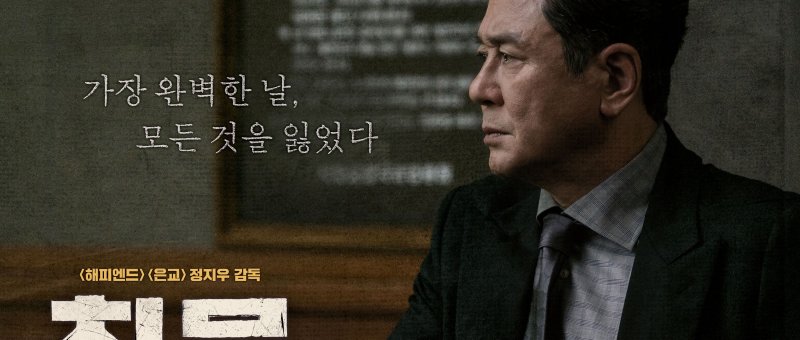
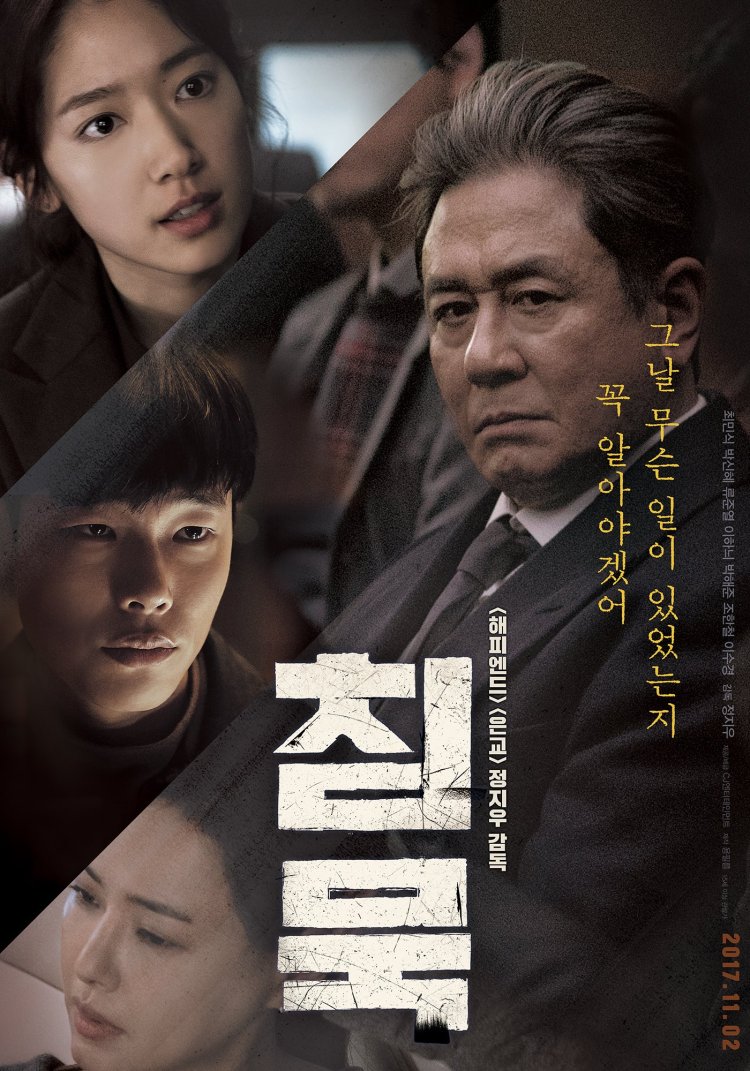
Dark Figure of Crime poster 1No matter how accurate statistics relating to criminal activity might be, there are many more acts of violence and immorality which, for various reasons, will go unreported. Criminologists refer to this phenomenon as the “Dark Figure of Crime”. Kim Tae-kyun’s cerebral thriller takes the strangely poetic term as its title (암수살인, Amsusalin) and does indeed revolve around the perfect murder and a man who claims to have completed six of them before abandoning his system and getting himself caught. Yet unlike many cops and robber dramas, Dark Figure of Crime is not about the killer but about the hidden victims who’ve lived a life haunted by the horrible uncertainty of whether their loved ones abandoned them but are alive and well somewhere else, or have fallen victim to some terrible event.

Narcotics officer Kim Hyung-min’s (Kim Yoon-seok) introduction to a new source of information takes a turn for the unexpected when he first starts telling him about having disposed of a body some years ago and then is promptly arrested by Homicide for the murder of his girlfriend. Tae-oh (Ju Ji-hoon) is convicted and sent to prison, but calls Hyung-min and complains that the police framed him when they didn’t need to. Tae-ho murdered his former girlfriend alright, but the evidence the police submitted was faked which has annoyed him. He draws Hyung-min a map to where he buried the “real” evidence just so he can catch the police out acting improperly and embarrass them as well as earn Hyung-min’s trust for the next part of his plan, which is vaguely confessing to another six murders. Hyung-min can’t know if Tae-oh is on the level or just messing with his head but feels as if he has to investigate all the same.

Not everyone understands Hyung-min’s commitment to this strange series of cold cases. After getting himself a transfer to Homicide, Hyung-min’s new boss warns him about another officer who was tricked by a bored felon and ended up losing everything – once a promising policeman he’s now a divorced carpark attendant. A meeting with the former officer yields another warning – men like Tae-ho know the law and they play with it. He’ll get you to investigate crimes B and C for which he knows there won’t be enough evidence, then he’ll use his acquittals to cast doubt on his original conviction. Hyung-min is wary but also hooked. He knows Tae-ho is playing him, but thinks he can win by giving him the opportunity to slip-up and give something away he didn’t quite mean to.

Tae-ho is certainly a dangerous, unhinged young man no matter how much of what he says is actually true. Hyung-min can’t know if any of this is real or just a bizarre game Tae-ho has cooked up because he’s got 15 years and no one ever visits him, but then he starts turning up suspicious absences. As he tells him in a tense conversation late in the game, none of this is really about Tae-ho. Hyung-min couldn’t care less about his big man act and is not impressed by his “crimes” or the ways in which he got away with them though he does want to make sure he never gets out to hurt anyone else. What Hyung-min cares about is the victims whose family members are living with the unresolved trauma of not knowing what happened to their loved ones. Something Tae-ho could quite easily help with if he had a mind to, but seeing as Tae-ho only wants to play games Hyung-min will have to find out on his own, and he will stop at nothing to do so even if he ends up manning a rundown police box in the middle of nowhere for his pains.

Living with a trauma of his own, not even Hyung-min has much faith in the police hence why he needs to complete this case himself – he simply doesn’t believe anyone else will bother. Police in Korean films are universally bumbling and incompetent if not actually corrupt and selfish. Hyung-min is an exception though his opinion of his profession may not be much different to the stereotypes you see in the movies. He doesn’t care about getting a big promotion or being the guy who catches the big fish, he just wants the truth to be known and the past laid to rest so the indirect victims can begin to move on with their lives. The “dark figure of crime” refers not only to the hidden and unresolved, but to the oppressive spectre cast over those left behind with only pain and worry. The terrifying thing is, there may be countless other dangerous people out there whose crimes go undetected not because they’re criminal geniuses but because no one really cares enough to stop them. Subtly subverting serial killer movie norms, Kim pulls the focus from the self-aggrandising villain to remind us of the very real costs of his actions while making a hero of the dogged policeman who refuses to to give in to a societal expectation of indifference.


Screened as part of the 2018 London East Asia Film Festival.

International trailer (English subtitles)

Burning (버닝, Lee Chang-dong, 2018)

Burning posterWith the world the way it is, it’s no wonder young people everywhere find themselves lost and confused, unable to find a sense of greater purpose when all they see is futility. Eight years on from Poetry which revolved around a grandmother’s growing sense of disquiet on realising no one cares about the victim of her grandson’s transgression, Lee Chang-dong returns with a story of frustrated youth as three conflicted souls are drawn into a spiral of resentments, jealousies and forlorn hopes.

Our hero, Jong-su (Yoo Ah-in), is an aspiring writer currently working a series of casual blue collar jobs to get by in the city. One such job unexpectedly brings him into contact with Hae-mi (Jeon Jong-seo), a childhood friend from his home town he didn’t quite recognise. “Plastic surgery” she quips, though she seems happy enough to see him which comes as a surprise to Jong-su, awkward as he is. Hae-mi invites him for drinks over which she asks him a favour – to look after her cat while she goes off to Africa for a bit in response to the call of “great hunger”. Jong-su agrees, but has also agreed to go home to Paju to look after the family’s last remaining cow seeing as his dad, whom he hates, has got himself arrested after getting into a fight with a public official. Before she leaves for Africa, Jong-su begins a sexual relationship with Hae-mi which he seems to think is a sign of a deeper attachment, but when she rings and asks him to pick her up from the airport he is dismayed to find she’s in the company of another man – Ben (Steven Yeun), a handsome, sophisticated, and very wealthy Korean she was accidentally marooned with for three days in Nairobi waiting for a plane.

A man like Ben is an existential threat to one like Jong-su. He doesn’t even put up a fight when Ben, whose friend has been secretly following Jong-su’s rundown pickup all the way back to the city in his Porsche, offers to take Hae-mi the rest of the way. A farm boy from rural backwater Paju, he feels himself inferior, bumpkinish, and unrefined as Ben subtly undermines his self-confidence in order to boost his own sense of superiority. Jong-su, invited to Ben’s upscale condo for “pasta”, is instantly uncomfortable. Eventually unable to mask his rising resentment, he rudely lays into his host while smoking with Hae-mi out on the balcony by musing on how a man in early middle age can afford to live like this – cooking pasta and listening to music, driving a Porsche, owning a Gagnam apartment. In the first of many barbed comments which won’t help his cause, Jong-su asks Hae-mi what exactly she thinks Ben is doing with someone like her. She replies that he says he finds her “interesting”, but the sadness in her eyes implies that she’s already given this question more than a degree of thought.

Ben remains a cypher. Though his manner is charming, even superficially kind, there’s something unsettling about him, a kind of creeping hollowness coupled with unpredictability. Rattled, Jong-su starts going through his bathroom cupboards and finds a ladies’ makeup box and a draw full of trinkets which seem to have belonged to several different women. At the very least, Ben has not been honest with Hae-mi, but Jong-su doesn’t say anything. Jong-su, less naive, is also well aware of the way Ben has been trotting them out for entertainment value at dinner parties frequented by his wealthy friends who take in the country bumpkin freak show with cruel superiority. Ben, however, is already bored – yawning ostentatiously but making a conspiratorial show of locking eyes with Jong-su who he knows is on to him in more ways than one.

Unexpectedly rocking up at Jong-su’s rundown Paju farmhouse, Ben plants a kernel of intrigue in Jong-su’s fragile mind by telling him about his “hobby” of burning down random “greenhouses” just for the hell of it. Despite his literary pretensions, Jong-su takes Ben’s words at face value and misses the obvious subtext. Whatever Ben is or might be, men like him delight in destroying fragile things to mask their own fragility. Jong-su takes the bait and the “metaphorical” fire Ben has lit within him begins to catch.

Ben, who finds Hae-mi’s tears “fascinating” because he has never cried, says he burns things to feel his soul vibrate. Hae-mi, meanwhile, remains frustratingly distant to both men. She talks about spiritual hunger and longs to find some kind of meaning in a world of futility but also longs to disappear like an all too brief sunset. She “reminds” Jong-su of a childhood incident in which she fell into a well behind her family’s farm and eventually found salvation in the sudden appearance of his face, but Jong-su doesn’t even remember. Hae-mi is in a sense still living at the bottom of a well, staring at the sky and waiting for rescue only to find herself continually abandoned, friendless and alone.

Then again, perhaps nothing she’s told Jong-su is true. Hae-mi’s answer to want is imagination, a simple ability to “forget” a desired object does not already exist. She asks Jong-su to look after a cat who is so shy he begins to wonder if it’s real, reassured only by an empty food bowl and full litter tray. Jong-su is our “writer”, but the only thing he writes is a petition letter to get the father he can’t stand an appeal for crime he knows he committed. He is our guide to “truth” but his job is to engineer narrative – the story is his to direct and the ending his to choose. He writes because “the world is a mystery” to him, but remains trapped within his own petty preoccupations in which the full weight of his rage levels towards Ben whose existence seems so unfair.

Burdened by a strangely feudal deference, Jong-su is a fuse slowly catching light. Failed by family, he and Hae-mi are abandoned children looking for a way out. They thought they wanted out of Paju, but perhaps they were meant to be together in this place if the world were better and there were no more playboy kings like Ben, eager to do “anything for fun” in order to escape the emptiness of their existence in which inherited wealth has left them purposeless and hugely insecure despite the superficial confidence of class. Jong-su and Hae-mi chase brief moments of sunlight bounced back from the gleaming spires of an inaccessible city but find no relief or promise in its greying skies. Adapting a short story by Haruki Murakami, Lee Chang-dong paints a dizzying picture of a tinderbox world in which the rage of the oppressed little guy threatens to engulf us all while those best placed to help only want to fan the flames.


Screened as part of the 2018 BFI London Film Festival.

US trailer (English subtitles)

Believer (독전, Lee Hae-young, 2018)

Believer posterJohnnie To’s darkly comical tale of a weaselly meth cook with an extremely strong survival instinct and the austere policeman who can’t resist taking his bait might seem perfectly primed for a Korean remake in its innate pessimism and awkward bromance. Lee Hae-young’s Believer (독전, Dokjeon), however, merely borrows the bones of To’s Drug War while doubling down on its central conceit as reckless obsession leads to the undoing of both our heroes, each forced to confront the futility of their respective, mutually dependent quests.

Obsessed with tracking down a mysterious drug lord known only as “Mr. Lee”, narcotics cop Won-ho (Cho Jin-woong) asks a favour from an old informant only to see her murdered, leaving him only a vague clue by tracing an infinity symbol on a crumpled receipt moments before passing away. Warned off the Mr. Lee case, Won-ho finally gets a lead when an explosion at a drug lab brings scorned righthand woman Oh (Kim Sung-ryung) into his office promising to spill the beans in return for protection and immunity. Sadly, Won-ho couldn’t protect her either, but there was another unexpected survivor in the form of low level middleman Rak (Ryu Jun-yeol).

Traumatised by the death of his mother in the same explosion, Rak initially says nothing under interrogation but suddenly wakes up on learning that the lab’s dog also survived and has been rescued by the police. Unlike the “hero” of To’s film, Rak is small fry (if well connected) and is not looking at anything more than significant prison time. Rak may not be fighting for his life but he has a number of reasons for switching sides, especially once Won-ho fills him in on Mr. Lee’s backstory and long history of abrupt purges.

Despite working for the organisation, neither Oh nor Rak had ever met “Mr. Lee”. No one knows anything about them – gender, nationality, name, or location. In fact, there may not even be a Mr. Lee. Perhaps “Mr. Lee” is merely the “god” of drug dealers – an abstract idea almost given flesh but existing in a spiritual sense alone. Nevertheless, the idea of a Mr. Lee has completely captured the heart of compassionate police detective Won-ho whose all encompassing need to find him has already severely destabilised his life. After failing to protect his informant, Won-ho’s complaint against Mr. Lee is now a personal as well as professional one. Not so much out of vengeance (though there is that too), but a need to make the deaths count and his mounting losses meaningful.

Yet as another Mr. Lee contender later puts it, salvation may not be a matter of faith and if your faith has been misplaced, death may be a healing. In believing so deeply in the idea of “Mr. Lee”, Won-ho has given him form and created an idol to be worshipped through devotion. “Brian” (Cha Seung-won), a higher ranking gangster and former preacher chased out of the US for getting his congregation hooked on cocaine, has his own particular brand of faith based problems but subscribes to much the same philosophy. He may really be Mr. Lee (as may anyone), but if he isn’t he’s determined to convince himself he is in order to see himself as something more than the failed son of a chaebol dad who couldn’t hack it in the family business or in the pulpit. Brian would be happy to die as Mr. Lee rather than going on living as “himself”. Won-ho, unable to understand why kids do drugs asks his informant who explains it’s mostly because life is rubbish. Later someone says something similar to Brian, that he’d rather delude himself with the belief that he’s “someone” rather than face the emptiness.

Despite himself, and as Rak is eager to remind him, Won-ho is dependent on his informant for the pursuit of his case. Won-ho is reluctant to trust him even though Rak seems to be actively working to protect him in this extremely dangerous and largely unfamiliar world. Rak, by contrast, is aware he hasn’t won Won-ho’s faith, but assures him that’s OK because Rak trusts him. Rak does indeed seem to have the upper hand along with mysterious motivations and a fishy backstory, but Won-ho’s desperation to get close to Mr. Lee leaves him wide-open, unwilling to trust his guide but too invested to consider cutting him loose. “Belief” becomes its own drug, a transformative ritual act which gradually erodes all other needs and leaves only emptiness in their place. Won-ho can’t even remember why he started chasing Mr. Lee, but all that remains of him is the chase – a true believer suddenly bereft of a cause. Lee Hae-young takes To’s nihilistic cynicism and subverts it with a focus on the personal as both men fight self created images of their individual demons but find themselves unable to escape from their mutually assured identities.


Believer was screened as part of the 2018 BFI London Film Festival.

The Spy Gone North (공작, Yoon Jong-bin, 2018)

Spy gone north posterSome might say the first lesson of spying is not too ask too many questions. The hero of Yoon Jong-bin’s Spy Gone North (공작, Gongjak) may wish he’d heeded this advice as his ongoing mission to gain access to North Korea’s nuclear secrets by way of an unlikely advertising scheme sets him on a dark path towards the realisation that he might not be working for the good guys after all. In geopolitical terms, an enemy is sometimes more helpful than a friend – especially if your “enemy” is working on the same system and can be relied upon to play along when the occasion calls.

By the early ‘90s, South Korea has emerged from a lengthy period of military dictatorships into a fledgling democracy. Tensions with the North are running high as the nation has announced an intention to withdraw with from the Nuclear Proliferation Treaty on grounds of national security. Fearing that the North has already successfully developed nuclear weapons, the South decides to ramp up intelligence gathering activity which is where “Black Venus” comes in. Shedding his old identity by appearing to lose himself in drink and gambling, intelligence officer Park Suk-young (Hwang Jung-min) poses as a sleazy businessman with the intention of gaining access to the North Korean elite through their external trade commission operating out of Beijing.

Improbable though it seems, Park manages to engineer a genuine friendship with the cold and austere North Korean trade official Ri Myong-un (Lee Sung-min) with whom he eventually shares unexpected common ground. Strapped for cash after the South sets them up by getting them in hock to China over a mislabelled walnut scandal, the North needs money fast, which is why they’re prepared to talk to someone as shady as Park’s cover. Park sells them an unlikely solution which runs contrary to their core philosophies in exploiting the exoticism of the forgotten North to sell capitalistic decadence in the South through selling licenses to shoot commercials on North Korean soil (which also allows him to travel about the country with a camera), but he doesn’t quite see the added value of his mission even while almost forgetting about the need to get close to the site of the supposed nuclear research facility.

While Park finds himself an “honoured guest” of the Dear Leader (Gi Ju-bong) whose presence evokes both fear and awe, he is also faced with a pressing political crisis at home as the nation prepares for an upcoming presidential collection. Despite the democratic revolution, the same party has been in power for the last 30 years and the recent swing towards the liberal opposition party has many running scared, especially as taking a softer line towards the North is a prominent manifesto pledge – alongside a reform of the security services, which is obviously distressing news for Park’s bosses. In order to maintain the sense of fear which keeps the right-wingers in power, the security services have been secretly communicating with the North and bribing them to create disturbances at politically advantageous times to manipulate the outcome of elections. Park is not exactly a liberal, but he has to admit this is not a good look and if you’re just going to parrot the “for the people” line perhaps you’re not much better than the thing you claim to hate.

Meanwhile, Park is also witness to a side of North Korea outsiders don’t generally see filled with the starving and the destitute. Loyalists all, there are those among the North Korean elite who want to see conditions improve and worry that thanks to the intense stranglehold of the ruling regime they never will. As in everything, business interests trump all. Park and Ri are fighting for the same thing, aware their fledging enterprise is a subterfuge but also that it’s a huge and dangerous first step towards a happier future. After 40 years of mutual manipulations, however, not everyone is keen on abandoning the status quo especially as the two nations have developed an intensely symbiotic relationship founded on mutual demonisation and a friendly willingness to conspire in ensuring the survival of a useful evil. Still, the strangely fraternal relationship between Park and Ri – two fiercely patriotic men from opposing sides who each identify goodness in the other becomes the heart of the film, holding out hope for empathy and compromise when most prefer enmity and chaos.


Screened as part of the 2018 BFI London Film Festival.

International trailer (English subtitles)

Hit the Night (밤치기, Jeong Ga-young, 2017)

Hit the Night posterFollowing her impressive, Hong Sang-soo inspired debut Bitch on the Beach, Jeong Ga-young returns with a similarly structured exploration of modern relationships though now in a suitably fuzzy colour rather than Bitch’s artful black and white. Once again, Jeong plays a meta version of herself – this time a writer/director ostensibly researching a screenplay but perhaps obfuscating her true motives even as she makes visible her innermost anxieties for her invisible audience.

Hit the Night (밤치기, bam-chi-gi) follows Ga-young (Jeong Ga-young) as she takes a young man, Jin-hyeok (Park Jong-hwan), out on the town. The pair have dinner together, but they aren’t a couple, or even really friends – Ga-young has bought Jin-hyeok’s time on the pretext of interviewing him to get background information for a screenplay she is writing. Jin-hyeok wants to be helpful and has committed to answering Ga-young’s questions as frankly as possible. Her questions are, however, extremely personal from the outset as she begins asking him about his masturbation habits almost before they’ve even sat down. As the night wears on and the drinks keep flowing, Jin-hyeok begins to smell a rat, wondering why it is Ga-young is so interested in his sex life when it doesn’t seem to have much to do with the various screenplays she outlines to him. Ga-young is indeed trying it on, her pretext of “research” a mere ruse and means towards seduction.

It has to be said that the situation is indeed creepy and Jin-hyeok has every right to be upset and offended, especially as he has repeatedly made clear to Ga-young that he has a girlfriend and is not interested in her. If Ga-young were a man taking a young woman out for dinner, plying her with drinks, asking increasingly suggestive and inappropriate questions and all on false pretences she would not be looking very good at all (much, indeed, like a classic Hong Sang-soo hero), not to mention the fact that money has already changed hands.

Nevertheless, despite his irritation Jin-hyeok decides to stay, progressing to a karaoke box rather than simply going home only to leave abruptly after palming Ga-young off on a lonely friend. Despite Jin-hyeok’s slightly underhanded machinations, there is less calculation and a clear possibility for genuine feeling between Ga-young and the other man, but she remains too fixated on her failed conquest and the idealised, unattainable fantasy romance to take a chance on an organic connection with a cheerful guy who likes movies and has his own well developed life philosophy.

Jeong’s approach is meta in the extreme – she repeatedly tells us the ongoing arc of the movie by referencing other movies while also reinforcing her intentions by foregrounding the various ideas for screenplays which Ga-young describes to Jin-hyeok. Her movie titled “Best Ending Ever” ironically has no ending while its hero aims to make a film in which all the characters speak their own fates in a conclusion that “won’t leave you hanging”, but real life is never quite so neat and there are no clean cut, narratively satisfying conclusions to be had in a “film” which is still ongoing.

Ironically enough, unlike the heroine of Bitch on the Beach, Jeong’s screenwriter makes a performance of control she never quite possesses, ceding ground to the earnest Jin-hyeok as he picks her up on her unethical practices and makes frequent attempts to reflect the inappropriate questioning back on her. Ga-young finds herself on the back foot, trying to manipulate Jin-hyeok into abandoning his principles and betraying his girlfriend even as her mask of unflappable frankness begins to slip. Yet Jin-hyeok, even if remaining steadfast in his moral goodness, finds himself captivated by Ga-young’s surprising candour while perhaps more ambivalent about her unusually predatory behaviour. With her short hair and plain, boyish clothes Ga-young adopts an aggressive, “male” persona, pursuing rather than being pursued, and using all of the same tactics that would generally be used against her only for Jin-hyeok to punch a hole through her artifice and expose the very insecurities it was designed to mask.

Not done with her meta messaging, Jeong “ends” on a Days of Being Wild inspired epilogue in which she meticulously dons her chosen persona before setting off to meet Jin-hyeok. This is a film without an ending because in its end is its beginning. Ga-young finds herself running in circles pursuing unrealistic ideals destined to end in frustrated defeat while ignoring the various “realities” which present themselves to her as she sets her sights on the “best ending ever” rather than the emotionally satisfying conclusion.


Hit the Night was screened as part of the 2018 New York Asian Film Festival and will also be screened as part of the London Korean Film Festival on 6th November 2018, 6.30pm at the ICA where director Jeong Ga-young will be present for a Q&A.

International trailer (English subtitles)

Jagko (짝코, AKA Pursuit of Death, Im Kwon-taek, 1980)

Jagko poster

During the dark days of the dictatorships, the “anti-communist film” was a mainstay of the Korean film industry. Though it wasn’t exactly possible to make a pro-communist film and that therefore any and all films were at least implicitly anti-communist, the authorities had been especially keen on films which took a hardline on anything remotely leftwing. By the late ‘70s however times were changing and a more nuanced view of recent history began to become possible. Im Kwon-taek is thought to be among the first directors whose work precipitated a shift from the “anti-communist” to the “division” film in which the tragedy of the division itself takes precedence over the demonisation of the North (though such views were perhaps not as uncommon as might be assumed in films from the late ‘50s and early ‘60s before the passing of the Motion Picture Law). Jagko’s (짝코) two haunted protagonists are both flawed men betrayed by their country and changing times realising they have wasted their youth on a cat and mouse game over an outdated ideological disagreement when the conflict that defined their lives was merely a proxy war fought by two super powers on Korean soil.

Song (Choi Yoon-seok), a former policeman, is picked up by a vagrancy patrol and taken to a “rehabilitation centre”. Despite the name the centre is more like a debtors’ prison and Song is now a prisoner of poverty who will not be allowed to leave unless redeemed by a family member (of which he has none or he might not be here). Nevertheless, the men are treated well, fed three meals a day, and only asked for a couple of hours of non-strenuous work with the rest of the time marked “free”. Once Song has begun to calm down, he makes a shocking discovery. He is convinced that a man lying ill a few beds over is none other than Jagko (Kim Hee-ra) – a former North Korean partisan and the man he holds responsible for ruining his life.

Im lets us in on the stories of both men via a series of flashbacks. Though he pretends not to know him, the other man, calling himself Kim, is indeed “Jagko” though his life has been just as miserable as Song’s. Back on Mount Jiri at the end of the Korean war, Song was a respected policeman – he left school at 12 and made a name for himself catching partisans. When he catches the legendary Jagko, wanted for a series of atrocities and terrorist acts, all Song can do is boast and talk of his imminent promotion after which he will enjoy a life of comfort. Unsurprisingly, Jagko is not exactly happy for him but allows his captor to prattle on in order to buy time for his escape. It is Song’s own arrogance which permits him to do so. Claiming to need the bathroom, Jagko offers Song a gold ring hidden in his shoe which Song scoffs at, but he does loosen his cuffs to facilitate Jagko’s relief at which point he manages to headbutt him and run away. Song is accused of taking bribes and dismissed. He is humiliated and loses his status, job, and family all in one go. Fixated on Jagko, Song gives up everything to chase him in order to turn him in to his former commander and have him clear his name by confirming that he was not bribed and did not sell out his country for gold.

Almost thirty years later both men are older than their years, broken and defeated. As one of the rehabilitation centre residents puts it, they’re all about to die – what does it matter now if someone was a communist or a partisan, what good could it possibly do to drag the past up all these years later? For Song it’s almost as if there is no “past”, the last few decades have been spent in a relentless pursuit of the man who holds the key to his good name. He wants to undo the folly of his hubris by overwriting it, but time has passed and what he’s lost cannot be reclaimed. Meanwhile, Jagko is not an ideologically crazed leftist, but a lonely old man who is now in poor health and has nothing but regrets. The two men bond in their mutual suffering and work together to escape, but the world they emerge into is not that of their youth. Song was disempowered when he entered the facility – they took his arrest rope away from him, but when he tackles the weakened Jagko to the ground and tries to call two policemen on patrol over to arrest him as an “escaped communist guerrilla” the young officers of the law have no idea what he’s talking about. Those words no longer mean anything. The bemused policemen conclude the old men must be escaped mental patients before spotting the rehabilitation centre uniform and jogging off to phone someone to come and take them back.

The old men’s quarrel is exposed as ridiculous. Jagko, less angry more soulful, remarks that men like he and Song are the most pitiful souls on Earth as he watches America sit down with Russia on the TV and realises he is merely a victim of ongoing global geopolitical manoeuvring. It’s no longer a question of left and right, both men are victims of their times, neither “good” nor “bad” but flawed and human. We do not know if Jagko did the things Song says he did but he has paid a heavy price all the same. Song, by contrast, has shifted all the blame for his fate onto Jagko, believing that if he can catch him he can somehow make it all right, but of course he can’t and is trapped in a spiral of denial in refusing to accept his own responsibility for the tragedies of his life. What is to blame is the folly of war and particularly of an internecine fraternal conflict which remains unresolved and may well be unresolvable unless an attempt is made to address the past with empathy and understanding in place of enmity and rancour.


Jagko is available on blu-ray courtesy of the Korean Film Archive. The set includes subtitles in English, Japanese, and Korean with the audio commentary by Kim Dae-seung and editor of Cine21 Ju Sung-chul also subtitled in English. The audio commentaries from the DVD edition included with the Im Kwon-taek boxset, one by director Im Kwon-taek and film critic Huh Moon-yung, and the other by screenwriter Song Gil-han and film critic and director Kim Hong-joon, unfortunately do not carry over the English subtitles. The set also comes with a bi-lingual Korean/English booklet featuring an essay by film critic and professor Park Yuhee. Not currently available to stream via the Korean Film Archive’s YouTube channel.

The End of Wind (风的另一面, Fog Forest, 2018)

The End of Wind posterDoes beauty still exist in the world or only in the minds of lonely people? Director Fog Forest wants to know if there is anything pushing back against the forces of indifference in his debut feature, The End of Wind (风的另一面, Fēng de Lìngyī Miàn) which follows the melancholy fates of three individuals each looking for connection in an increasingly apathetic society. A salaryman with an existential crisis, a man wrongly imprisoned for a violent crime, and a young woman whose escape from North Korea led her straight into the hands of human traffickers, ponder if life is still worth living when the bonds between people have become so weak and distorted.

Wang Ran, a frustrated company man and all round snappy dresser, has long been in a depressive slump. Lamenting the attitudes of those all around him, he resents their all encompassing greed and self-interest. He can’t understand why they are so keen to destroy the “beautiful things” of the world in order to continue their quests towards materialist success. Then again, Wang is no longer sure that the “beautiful things” really exist outside of his own mind and if they do he has no idea how to find them. Meanwhile, Yang Botao has just been released from a ten year prison sentence for a crime he did not commit only to find that his mother passed away while he was inside and his father has spent all their money trying to get him released. To make matters worse, Yang is also suffering from kidney disease thanks to constant beatings from sadistic prison guards. A series of events brings the two men together when they decide to rescue a young woman, Kim Meishan, who escaped from North Korea but fell into the hands of human traffickers when her father was killed during the journey.

Each of the three protagonists is looking for some kind of connection which will restore their will to continue living even when life is so obviously meaningless and depressing. In order to find his purpose, Wang gives up his job and goes wandering, living in bare apartments and trying to make connections with kind people he finds along the way. Yang too decides to set off on a journey when his attempts to restart his life are frustrated by an inability to find a job in his hometown where the spectre of his “crime” haunts him everywhere. Unlike Wang, Yang decides to try rekindling an old connection in looking for a woman he knew before he went away who has apparently moved on, possibly to the North West. A true journeyman, Yang becomes the conduit which delivers the path to destiny that Wang has been seeking when his delivery job brings him into contact with Meishan who is able to pass him an SOS in the form of a cassette tape. Intended for her long lost mother, the message is in Korean and Wang is therefore unable to understand it save for identifying Meishan’s distress and realising that he has received a literal cry for help.

Though helping Meishan, Wang’s sense of purpose beings to return, warmed by her desire for life as evidenced by her ravenous hunger. In her he perhaps comes to believes that the “beautiful things” he dreamed of really do exist, and can be found by building genuine connections with others even if they are not supported by common language. His final answer is, however, not quite so positive and all three of our protagonists realise different destinations in their mutual quests for fulfilment. Having been abandoned by all each exists separately, unable to reconcile themselves either to the compromises of the consumerist world or discover a new one through forging bonds with other similarly lonely people. Wang’s world is one of imperfect destruction, surrounded by ruins and filled with nihilistic emptiness from which there may be no escape. Or perhaps, the only possibility of escape ends in an “end” which is not an end but a release. Poetic, if at times obtuse, Fog Forest’s debut is a noirish exploration of the sadness of being alive but one which offers no sign of hope for a society in terminal decline.


The End of Wind was screened as part of the 2018 Raindance Film Festival.

Original trailer (english subtitles)

The Return (Malene Choi, 2018)

the returm posterIn today’s sometimes hostile political environment, the question of transnational adoption has become a hot button issue with adoptees raised abroad in sometimes difficult circumstances where paper work was never correctly filed finding themselves exiled to the land of their birth despite having no knowledge of the culture and no means to support themselves. Documentarian Malene Choi, a Korean-Danish adoptee herself, frames her first narrative feature around this very thorny issue, taking inspiration from her own experiences and from those of fellow adoptees from around the world she encountered during her own attempts to find her birth parents and unlock the secrets of her history.

The central narrative revolves around two Korean-Danish adoptees, Karoline (Karoline Sofie Lee) and Thomas (Thomas Hwan), who meet for the first time at a hostel exclusively for “returnees” traveling to Korea to find their birth parents. Karoline, nervous and conflicted, talks to some of the other guests hoping to find strength in their stories of successful reunion but the stories she gathers are generally less conclusive than she perhaps expected them to be. Choi, originally planning to make a documentary focussing on the hostel itself, often found the same things – that guests would appear and disappear after only a few weeks, returning perhaps years later either to visit their birth families or to try pressing the adoption agencies again in the hope of finding more information.

Karoline’s own visit to the adoption agency turns out to less positive than she’d envisaged. The “excessively polite” employee managing her case explains that although there is actually “quite a lot” of information attached to Karoline’s file – her mother’s full name (only without her Chinese characters to help narrow it down further), a verified date and place of birth, and a reason the adoption was sought, none of it is much use in trying to find her birth mother. Later discussing the meeting with Thomas who seems a little more experienced, Karoline begins to doubt she was told the whole story and is convinced that the adoption agency is either wilfully holding information back or is simply disinterested in helping her.

Given the various circumstances surrounding international adoption from Korea from the end of the Korean War through the pre-democratic period, the government and adoption agencies might have reasons to avoid revealing the entirety of the truth. In an interview talking about the genesis of her film, Choi mentions meeting a British researcher who described the process of adoptions in this period as akin to “human trafficking”. Children, not only infants but those old enough to have memories of Korea and of their birth families, were sometimes taken without it being fully understood that they were being adopted and sent abroad, never to be returned to their parents or relatives.

A fictionalised scene of a child reuniting with a mother tells a common yet tragic story of a young girl taken advantage of by an older boy, falling pregnant, and then being disowned by her family. Talked into signing adoption papers she tries to change her mind once the child is born, but it’s whisked away from her after only seconds and she is powerless to resist. A combination of oppressive social forces from an unforgiving conformist society which looks down on “immoral” women pregnant out of wedlock to economic impossibilities and bureaucratic concerns all conspire to remove children from their birth families without proper scrutiny or much thought for where exactly they might be going.

Though Karoline and Thomas appear to have been raised well in loving families, they have each experienced other difficulties which have left them feeling adrift, caught between two cultures an unsure where exactly they fit. Karoline’s socially conservative parents were ill equipped to support her when she experienced racial bullying from the other children. They saw her as their daughter and a Dane and therefore could not understand why others didn’t because to them she “doesn’t even look Korean” – well meaning though they might have been, their solution to her suffering was an attempt to erase her ethnicity rather than embrace it. Though Thomas’ experiences were different he too experienced typically xenophobic micro aggressions, but it was the aggressors’ constant taunts of “go back to where you came from” that most hurt him. His persecutors seemed to have such a clear idea of where he “belonged” when he himself did not.

This sense of dislocation is further brought out by Thomas and Karoline’s experiences in Korea where they find themselves supposedly “at home” yet unable to communicate as neither of them speak Korean or have the necessary cultural knowledge to easily navigate the city. It also puts them at a disadvantage in their respective quests, leaving them reliant on the kindness of the hosts at the hostel to help explain some of the information they’ve been able to find as well as interpreting for them when they need to ask further questions.

Yet for others, a return Korea has become a kind of answer in itself. Another American adoptee Thomas meets at the hostel first came to Korea for only a few days but felt an instant connection, as if he’d finally found what it was he’d been looking for. His adopted family, however, were far from happy with his desire to explore his Korean roots and made him an ultimatum (something which might explain why he had previously felt so unhappy) which convinced him to move “back” to Korea on a more permanent basis, certain it was the place he was “truly” supposed to be. The hostel becomes a kind of community base in itself, connecting Korean adoptees from across the world who have each had very different experiences but share something otherwise unique. Thomas, however, remains conflicted, unsure if the connection to his fellow adoptees is real or illusionary, created out of his own desire to find in them what he sought in himself.

Making use of her documentary background, Choi mixes the real and the fictional, blending unscripted sequences and interactions with non-actors with a fiercely hyper naturalist approach only to undercut it with the artifice of strange and unexpected cuts to remind us we are watching a construction. Rather than an attempt to undermine the idea of adoption itself transnational or otherwise, Choi’s aims to look at the complicated, often uncomfortable, ideas of identity, belonging, and family through her protagonists’ continuing struggle to find resolution. Feeling as if they’ve been robbed of their histories, Karoline and Thomas’ quest is an attempt to come to terms with the loss of something which perhaps cannot be returned, but only eased through the restoration of a severed connection.


The Return was screened as part of the New York Asian Film Festival 2018 and will also be screened plus Q&A with actress Karoline Sofie Lee in London on 14th November as the closing night gala of the London Korean Film Festival.

Original trailer (English language dialogue/subtitles)

A Tiger in Winter (호랑이보다 무서운 겨울손님, Lee Kwang-kuk, 2018)

Tiger in Winter poster“Life just keeps getting harder” sighs a weary policeman charged with extracting a coherent statement from an accidental hero who only wants to talk about a tiger. Lee Kwang-kuk’s third feature, A Tiger in Winter (호랑이보다 무서운 겨울손님, Horangiboda Museoun Gyeoulsonnim), is in some ways a more conventional exercise in comparison with the time bending reflexivity of his earlier work, but the journey he takes us on is similarly circular as a melancholy young man finds himself chased out of his natural habitat and cast adrift, outside of his comfort zone too resentful to crawl back into a familiar cage but too afraid to embrace his freedom. 

On the day a tiger escapes from the zoo, Gyeong-yu (Lee Jin-wook), a failed writer, “loses” his day job and has to temporarily vacate his apartment because his girlfriend’s parents are coming to visit and she evidently hasn’t told them she is “living in sin”. Gyeong-yu offers to stay and meet them, but bristles when his girlfriend wonders if he’s ready to make a firm a commitment. He packs and leaves, planning to return in a few days’ time when the coast is clear. Decamping to a friend’s place, Gyeong-yu continues his night “job” as a designated driver which brings him into contact with an old girlfriend – Yoo-jung (Ko Hyun-jung), who is also a writer and apparently successful but suffering from an extended bout of writer’s block and has descended into a self destructive spiral of alcohol fuelled existential desperation.

After reconnecting with Gyeong-yu, Yoo-jung pulls down a book he once gave her from her well stocked bookcase – a Korean translation of Hemingway’s The Old Man and the Sea. Hemingway’s hero fights his age as manifested in a powerful marlin and dreams of youth in the lions of Africa. The film’s English title, “A Tiger in Winter”, is perhaps a mild pun on “The Lion in Winter” which again tells of a once proud old man struggling to deal with his bodily decline, only Gyeong-yu is still young even if he feels himself diminished and brought low by life. Unlike the old man, he has stopped fighting and accepted his defeat. He no longer writes and flounders aimlessly, running away from the things that frighten him without aim or purpose. The loosed tiger is a manifestation of the fears Gyeong-yu refuses to fight which render him both physically and artistically impotent.

Writing, or perhaps art of any kind, becomes its own kind of vice – a dangerous addition, a need which must be sated or displaced without which the rest of life remains hollow. Unable to satisfy her need for creation, Yoo-jung has crumbled under the pressure of her own expectations and retreated into the comforting world of the permanently tipsy even whilst knowing that the alcohol itself inhibits her ability to create and forever separates her from that which would make her whole. She wants to stop, throws away her soju, but can’t move past her inability to face herself and resolve her creative doubts. Yoo-jung wants the quick fix, and like any addict, she is past caring about the harm she might do to herself and others in the pursuit of it.

Gyeong-yu, meanwhile, almost wallows in his degradation as he allows himself to be belittled by the customers who call for his services and insist on treating him like a servant. Designated driving doesn’t seem like a particularly safe arrangement for either party – many of Gyeong-yu’s customers are extremely drunk and willingly allowing a man they don’t know to drive them somewhere in their own car while they are barely conscious, while conversely many refuse to pay or accuse Gyeong-yu of damaging the car while berating him for acting in an insufficiently humble manner. Yet it’s not humiliation that knocks Gyeong-yu out of his stupor but trauma and a direct confrontation with someone else’s despair.

Tigers lurk everywhere, though when Gyeong-yu finally learns to look his in the eye it’s a very cute and non-threatening sort of tiger which perhaps makes him feel foolish for having evaded it for so long. Lee may not be playing with time in his usual fashion, but he sends Gyeong-yu retreating into the past all the same in an attempt to hide from his fears only to discover you can’t walk backwards into the future. An exploration of the destructive power of the creative urge, the soul crushing inertia of artistic block, and the continuing rootlessness of a life lived in flight, A Tiger in Winter is another beautifully poetic character drama from Lee whose world weary optimism loses nothing in its seeming simplicity.


A Tiger in Winter was screened as the final teaser for the London Korean Film Festival which will open on 1st November with Microhabitat. The full programme for this year’s event is now available on the official website – tickets on sale soon!

International trailer (English subtitles)

A Female Boss (女社長 / 여사장, Han Hyung-mo, 1959)

Female Boss poster

Romantic comedies, most essentially, are made to reflect the anxieties of their times. They are not, and never have been, at the forefront of progressive thought and are, generally speaking, intended to reinforce typical notions of social conservatism. Even so, the messages of Han Hyung-mo’s A Female Boss (女社長 / 여사장, Yeosajang) are extremely jarring for the modern viewer though they proved popular enough at the time and most audiences were apparently able to find something funny in the crushing victory of the patriarchy.

Joanna (Jo Mi-ryeong) is the editor of a magazine entitled “The Modern Woman” and apparently successful enough to live a life of selfish entitlement. She has a message board above her desk which reads “women are superior to men” and most of her senior employees are also female. However, she is also extremely jaded when it comes to love and has instituted an office-wide ban on romance. Despite her previous successes, Joanna’s magazine has hit a rough patch and has been on hiatus for the last three editions. Urged on by a relative, she’s currently engaged in a form of long form flirting with the easily flattered “Golf Pants”, or Mr. Oh (Joo Sun-tae) to call him by his more dignified name, whom she intends to manipulate into propping up The Modern Woman.

Meanwhile, selfishly hogging a public telephone brings her into contact with Yong-ho (Lee Su-ryeon) who angrily kicks her little dog Mario in an effort to get her to hang up. What Yong-ho doesn’t know is that the job interview he wanted to chase a recommendation for is with Joanna’s company. Joanna, infuriated by Yong-ho’s manly insolence, decides to give him the job but only so that she can make his life a misery as a form of revenge. However, despite her “feminist” leanings, Joanna falls for Yong-ho’s brash masculinity and begins a campaign of sexual harassment that threatens to implode both her personal and professional lives.

“Joanna” has obviously taken a Western name and the title of her magazine, “The Modern Woman” is also a clue as to her “progressive” attitude towards women’s liberation. Within the context of the film, these are not “good” things to pursue or “right” opinions to hold. Joanna’s women first policy is largely held up for ridicule – not only is her magazine in trouble, but her employees are portrayed as harridans who only exist to belittle and undermine their male colleagues whose jobs they have, by implication, usurped. Joanna is not married and has no interest in men until she meets Yong-ho and is overcome by his masculine confidence and conservative attitude towards the separation of the sexes, effectively inhabiting the role of the sleazy CEO salivating over the new girl only this time it’s a new boy whose “gentlemanly” resistance to Joanna’s atypically assertive romantic pursuit only makes her want him more while also upholding his moral rectitude.

Yong-ho’s original problem with Joanna also stems from her sense of entitlement – something he is personally offended by, not just by her lack of feminine deference but in her callous flaunting of her economic superiority. Making use of the public phone to conduct her business, Joanna feeds luxury cakes to her little dog, Mario. Given than many of the other people in the queue can barely afford rice to feed their families let alone luxury foreign pastries, idly feeding one to a pet dog right in front of them is an extremely insensitive act though it’s hardly poor Mario’s fault and Yong-ho’s kick is firmly aimed at Joanna. Confronting him later, Yong-ho sees nothing wrong in his violence towards an innocent dog but even more worryingly Joanna starts to complain about damage to her “property” rather than a genuine worry that Yong-ho had caused physical pain to a creature she “loved”.

What Female Boss sets out to do is to paint the very idea of a female business leader as a ridiculous nonsense, an unwelcome subversion of the proper order which must be rectified before the whole thing comes crashing down. This does perhaps reflect a male anxiety of the growing agency of women in the post-war world where they are no longer resigned to being shuffled into arranged marriages and thence into motherhood with no other possibilities or paths to fulfilment. Worried that women won’t go back in their boxes again, men reassert their masculinity to put them back in their place. Thus, at the end of Female Boss, Joanna is made to realise the “error” of her ways by ceding her business interests to Yong-ho (by her own volition) who becomes the magazine’s editor while she, now his wife, stays home to cook fish and knit baby clothes. The other senior women are demoted and the older man they’d constantly found fault with put in their place, intent on revenge. Yong-ho does, however, promote another woman he’d become friends with to a more senior position, a woman with a young child no less, proving that perhaps it’s not all about gender, but also makes sure to take down Joanna’s sign and replace it with one which reads “men are superior to women” which is quite something to see above the editor’s desk at a magazine still calling itself The Modern Woman.

That is not to say Han doesn’t also stick the boot in to hollow masculinity as seen in the dismal collection of men who turn up to interview for Yong-ho’s position. Running from the independently wealthy who apparently just want to meet women, to scary looking silent types, and in a notably subversive touch an ultra-nationalist just demobbed from the army who breaks into an impassioned patriotic rant about how everyone should be bravely dying for the nation, these are a sorry collection of modern Korean men whom, Han seems to imply, have been emasculated by female empowerment. Poor Mr. Kim, a middle-aged man with 12 children, is apparently so incompetent at his job as to be constantly threatened with termination, only to regain his “rightful” place under the new Yong-ho regime, suddenly standing a little taller now all those “nasty women” have been robbed of their power to “oppress” him.

Unlike many other romantic comedies of the time, Female Boss’ humour is subtler and meaner, had entirely at the expense of its “ridiculous” heroine. Han does however make sure to add in a fair few club scenes and musical numbers to lighten the mood while Joanna makes her way through predatory, unwomanly, unKorean, modern girl to hanbok-wearing housewife all in a few easy steps. Female Boss is distinctly unfunny to anyone born into a society where the idea of sexual equality, if not the reality, is at least regarded as an ideal but it does perhaps betray the anxieties of a society still in flux, afraid of both the future and the past.


A Female Boss is the third of three films included in the Korean Film Archive’s Romantic Comedy Collection of the 1950s box set. It is also available to stream online from the Korean Film Archive‘s YouTube Channel.