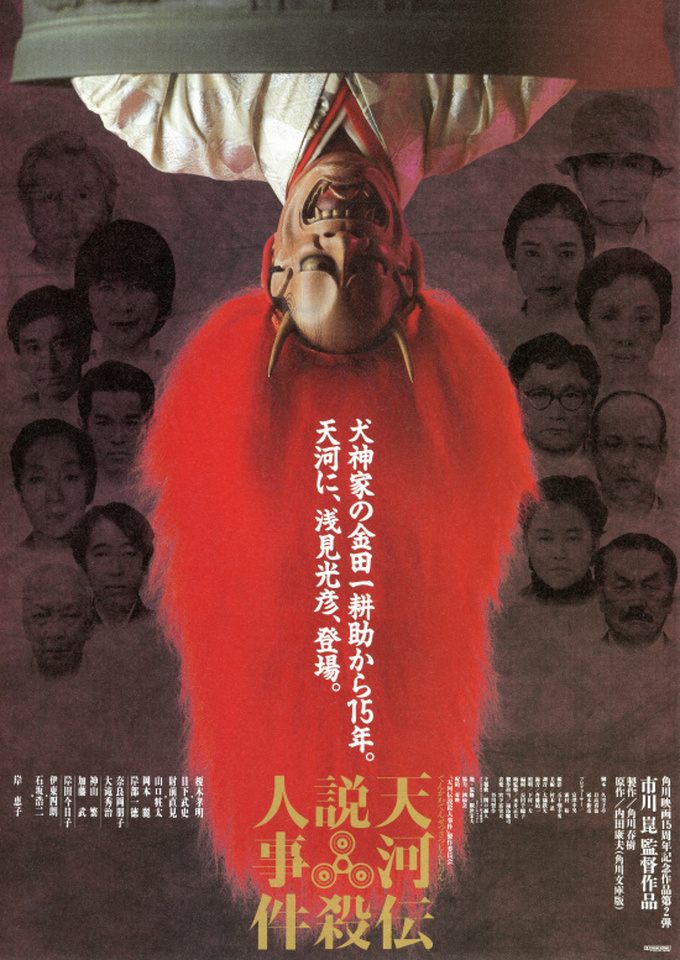
For one reason or another, Japanese mystery novels have yet to achieve the impact recently afforded to their Scandinavian brethren. Japan does however have a long and distinguished history of detective fiction and a number of distinctive, eccentric sleuths echoing the European classics. Mitsuhiko Asami is just one among many of Japan’s not quite normal investigators, and though Noh Mask Murders (天河伝説殺人事件, Tenkawa Densetsu Satsujin Jiken) is technically the 23rd in the Asami series, Kon Ichikawa’s adaptation sets itself up as the very first Asami case file and as something close to an origin story.
Ichikawa, though he may be best remembered for his ‘60s arthouse masterpieces, was able to go on filmmaking where others perhaps were not precisely because of his forays into the populist with a series of mystery thrillers including several featuring top Japanese detective Kindaichi (who receives brief name check in Noh Mask Murders). Published by Kadokawa, Noh Mask Murders is produced by Haruki Kadokawa towards the end of his populist heyday and features many of the hallmarks of a “Kadokawa” film but Ichikawa also takes the opportunity for a little formal experimentation to supplement what is perhaps a weaker locked room mystery.
Asami (Takaaki Enoki) begins with a voice over as four plot strands occur at the same temporal moment at different spaces across the city. In Shinjuku, a salaryman drops dead on the street, while a young couple enjoy a secret tryst in a secluded forest, a troupe of actors rehearse a noh play, and Asami himself is arrested by an officious policeman who notices him walking around with a dead bird in his hand and accuses him of poaching. As he will later prove, all of these moments are connected either by fate or coincidence but setting in motion a series of events which will eventually claim a few more lives before its sorry conclusion.
To begin with Asami, he is a slightly strange and ethereal man from an elite background who has been content to drift aimlessly through life to the consternation of his conservative family which includes a police chief brother. He harbours no particular desire to become a detective and is originally irritated by a family friend’s attempts to foist a job on him but gives in when he learns he will have the opportunity to visit Tenkawa which is where, he’s been told, the mysterious woman who helped him out with the policeman in the opening sequence keeps an inn. Hoping to learn more about her, he agrees to write a book about the history of Noh and then becomes embroiled in a second murder which links back to the Mizugami Noh Family which is currently facing a succession crisis as the grandfather finds himself torn over choosing his heir – he wants to choose his granddaughter Hidemi (Naomi Zaizen) who is the better performer but the troupe has never had a female leader and there are other reasons which push him towards picking his grandson, Kazutaka (Shota Yamaguchi).
As with almost all Japanese mysteries, the solution depends on a secret and the possibilities of blackmail and/or potential scandal. The mechanics of murders themselves (save perhaps the first one) are not particularly difficult to figure out and the identity of the killer almost certainly obvious to those who count themselves mystery fans though there are a few red herrings thrown in including a very “obvious” suspect presented early on who turns out to be entirely incidental.
Ichikawa attempts to reinforce the everything is connected moral of the story through an innovative and deliberately disorientating cross cutting technique which begins in the prologue as Ichikawa allows the conversations between the grandchildren to bleed into those of Asami and his friend as if they were in direct dialogue with each other. He foregrounds a sad story of persistent female subjugation and undue reliance on superstition and tradition which is indirectly to blame for the events which come to pass. Everyone regrets the past, and after a little murder begins to see things more clearly in acknowledging the wickedness of their own actions as well as their own sense of guilt and complicity. Noh is, apparently, like a marriage, a matter of mutual responsibility, fostering understanding between people and so, apparently is murder, and one way or another Asami seems to have found his calling.
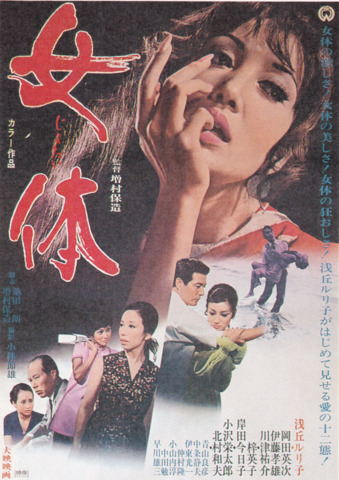
“Freedom for the masses!” cry the student protestors outside the claustrophobic environment of a corrupt educational institution at the heart of Yasuzo Masumura’s Vixen (女体, Jotai – lit. “a woman’s body”). While they cry for freedom, one young “liberated” woman finds she’s anything but free even in the throws of her liberation. Possessed of little power, she has a need to find herself a white knight but no sooner has she got him than she begins to long for new conquests, trapped in a destructive cycle of sex and violence. Subverting his own ideas of sex as liberation, Masumura reconfigures lust as a trap in the form of a siren song sung by a lonely young woman unable to find her place in the complicated post-war landscape.
Michi (Ruriko Asaoka), a modern young woman, has a brief episode of fondling an office chair while waiting to see the chairman of a university. Proudly showing off the bruises on her thighs, she accuses the chairman’s son of rape. Despite the evidence, Michi’s accusation is undermined by her mercenary behaviour which does not tally with that expected in such difficult situations. She’s come alone, flirts with the chairman’s secretary Nobuyuki (Eiji Okada), and is quick to talk money. Questioned at home the chairman’s son admits everything but thinks it’s no big deal because that’s just “how it’s done these days”. The chairman, worried more for his reputation which is already under strain given the widespread student protest movement, thinks paying Michi off is the best thing to do but there’s a disagreement over the amount. Nobuyuki’s wife Akie (Kyoko Kishida), sister of the accused and daughter of the chairman, only wants to give Michi half of the two million she’s asked for. Nobuyuki gives her the full amount anyway behind his wife’s back, winning Michi’s eternal admiration for his considerate treatment. Unwisely visiting her hotel room, Nobuyuki develops a dangerous fascination with the alluring young woman and embarks on a passionate, ill-advised affair.
Michi is, in many ways, the archetypal post-war woman. Orphaned at a young age she was raised by a grandmother in a small fishing village and has been living with another relative whilst working as a waitress in his ramen restaurant after coming to the city. She’s grown up in a more liberal era, has a “positive” attitude to sex, and lives outside of the “traditional” path for “respectable” young women of early marriage and continued monogamy. As someone later puts it, women like Michi are two a penny now that the economy is getting back on its feet – they live alone in the city, aren’t interested in marriage and value their independence. Michi, however, is more or less the opposite of this “new” kind of woman. Independence is something that frightens her beyond all else. She cannot survive without a man, does not want or know how to live alone as a “single” woman and uses her sex appeal in order to manipulate men into staying by her side to look after her. Sex is not what she craves so much as security, but security also frightens her and so each time she’s made one conquest she latches on to the next gallant young man who shows her any sign of kindness or courtesy.
Indeed, all Michi thinks she has to offer is her body – the “Jotai” of the title. Perhaps hinting at some past trauma in speaking of the roughneck fishermen that frequented her grandmother’s ramen shop, fatherless Michi says she’s chased men in her dreams since childhood, seeking new tastes and new sensations. She wishes she could find one man and stick with him because the chase and the longing cause her nothing but pain, but her need will not let her be. Asked what she will do when her appeal fades (as it inevitably will), Michi has no other plan than drinking herself into oblivion. “I’m a woman,” she says, “what is there for me to do but love?”. Quite far from the idea of the “liberated”, independent woman spoken of before who has learned to make her own way in the new “freedoms” promised by increased economic prosperity.
This false idea of liberality is one which originally attracts Nobuyuki. A straight laced salaryman working for his corrupt father-in-law and often doing his dirty work for him against his batter judgement, Nobuyuki has sacrificed his individual freedom for the rewards his society offers those who play by the rules. Also a war orphan, Nobuyuki sacrificed his youth to raise his younger sister (now preparing to marry herself), and has a comfortable, middle-class life with an austere if loving wife. Having worked his way into their upperclass world, Nobuyuki feels he doesn’t quite belong, something always nagging at him prevents Nobuyuki from fully committing to his drone-like life of pleasant conformity. A mad infatuation with Michi, an irritating child woman at the best of times, is an excuse to go all out in escaping the oppression of his conventional life but it’s not one with long term stability and his life with Michi is unlikely to offer him the freedom he had originally envisaged.
Later, Michi makes a play for the man Nobuyuki’s sister is set to marry. Akizuki (Takao Ito) is not like Nobuyuki – he’s a post-war man but one with definite ambitions and goals, each element of his life is a product of considered choices. As anyone would who took the time to really think about it, he’s turning Michi down, but for some reason he continues to help her placing a wedge between himself and his fiancée. This way of living – the considered, ordered, boring but pleasant life is directly contrasted with the chaotic, destructive, and perhaps exciting one that is offered by Michi, and the dull life is winning. Michi is miserable, and her self destruction is primed to drag any “nice” young man into her wake along with any other woman associated with him. Nobuyuki is left with a choice but it turns out not to be so binary as might be assumed. Personal freedom, if it is to be found, is not found in abandonment either to another person or to a job or way of life, but in the realisation that choice exists and can be exercised, freely, by all.
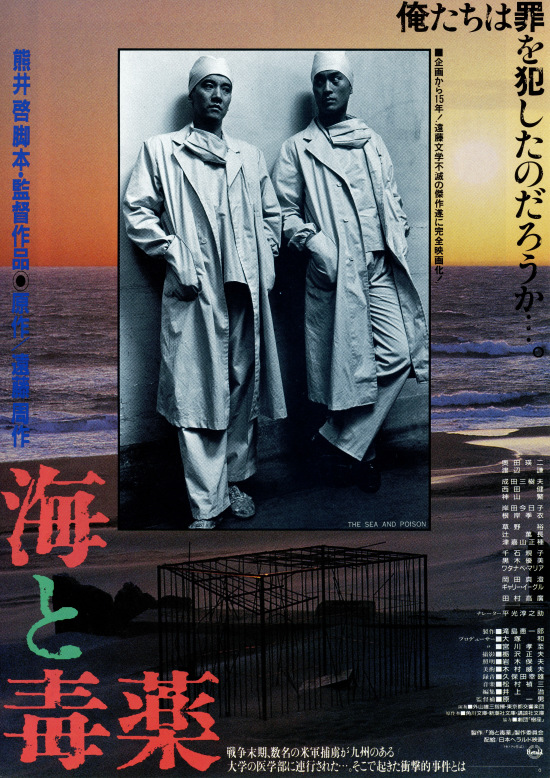
When thinking of wartime atrocity, it’s easy enough to ascribe the actions of the perpetrators to a kind of madness, to think that they have in some way moved away from us to become some kind of “other”. In thinking of those who transgress our notions of humanity as inhuman or “evil” we can absolve ourselves of their crimes, believing that they are not like us and we are not like them. The truth is never so simple and as long as we continue to other these dark parts of ourselves, we will not be able to overcome them. The Sea and Poison (海と毒薬, Umi to Dokuyaku), adapted from the novel by Shusaku Endo, shows this delusion of inhumanity for what it is in taking as its central concern the real life case of the doctors at a Kyushu university who committed heinous acts of experimentation on eight American prisoners of war in late 1945. Rather than focus of on those who took the decision that the experiments should take place, Endo and Kumai examine the motives of those on the fringes who merely went along with them finding that they did so for petty, essentially human motives.
Shot in a crisp black and white, the film opens in a caged cell where an American officer is interrogating a young man still in a student’s uniform. Suguro (Eiji Okuda) is the first of several witnesses to the deaths of eight American servicemen during alleged vivisection at the hospital at which Suguro had worked. Young and naive, Suguro is the most sympathetic of three witnesses we will encounter but his essentially compassionate nature puts him at odds with his colleagues who abhor “sentimentality” and regard his emotionality as a childish weakness. It is through Suguro that we discover that the hardness that has apparently led to these horrific betrayals of the physicians’ code are not born of the war, or of militarism, or of adherence to some ideal like god or country but are a natural extension of the hyper-rational attitude of the medical profession.
Suguro’s colleague, Toda (Ken Watanabe), is his polar opposite, viewing Suguro’s sense of compassion as a ridiculous but somewhat endearing character trait. A textbook nihilist, Toda takes the view that as death comes to us all, the when and why are essentially unimportant. When so many are dying in air raids or on the battlefields, what does it matter that some also die in hospitals. Yet Toda is, in someways, the most ruminative among the hospital staff. In the diary he keeps, Toda attempts to dissect himself and his ongoing lack of feeling. Telling the interrogators that he began the diary because he had begun to find himself “creepy”, Toda asks why it is he feels nothing in relation to his fellow men. Surely it must be right that one should feel some degree of empathy? Toda volunteers for the experiments in part to test his own hypothesis but discovering that he still feels no pity for these men, he wonders if these ideas of morality are a kind of affectation seeing as others too can commit such acts of extreme cruelty and think nothing of it.
In this, Toda earns our sympathy, seeming at least to want to feel something even if he does not. Nurse Ueda (Toshie Negishi), by contrast, is the most human and also the most repugnant of our three witnesses. Her concerns are petty and ordinary, born of jealousy and resentment. Returning again to the scene of a botched surgery, Kumai shows us Ueda calling the operating theatre and being told to give a patient a dose of morphine by a harried doctor still panicked by the ongoing OR drama. Following her instructions, Ueda fills a syringe but the vial is knocked out of her hand by the German wife of the head doctor, Hilda, who was once a nurse herself and likes to help out on the wards. Hilda is a severe woman but not a cold one, she cares for the patients but perhaps with a more rigorous adherence to the nurses’ code than the less experienced team at the hospital. Hilda tries to get Ueda fired for her “mistake”, scolding her by asking (in German) if she is not afraid of God, and expressing concern that she thought so little of giving a fatal dose of morphine to a suffering patient.
Ueda’s decision to attend the experiments is a form of backhanded revenge – Hilda, whom everyone regards as some kind of annoyingly saintly figure, has no idea her husband would be involved in something so against her deeply held ideals, but Ueda also offers another reason when she says that the doctors exist in another, more rarefied world to the rank and file ward staff. This idea is echoed again by the head nurse, Ohba (Kyoko Kishida), who states that nurses must do as the doctors tell them without asking questions. Ohba rounds out the just following orders contingent but the first half of the film has already shown us that the medical profession is corrupt and cannot be trusted.
The old Dean has had a stroke and there is a mini war of succession in play between the heads of surgery divisions one and two. Dr. Hashimoto (Takahiro Tamura) had been the favourite but his star is fading. In an effort to improve his chances, he decides to move up an operation on a friend of the Dean – a young woman with advanced TB. Meanwhile, Suguro’s patient, an old woman who also has TB has been earmarked for “experimental surgery”. The old woman has not been properly briefed on the risks of the operation in which she has only a five percent chance of survival and has only agreed to it because the doctor, whom she trusts implicitly, has told her it’s her only chance. The Dean’s friend is “Mrs. Tabe”, and she is “important”. The old woman is only “the welfare patient” and therefore not important at all.
Suguro, anxious to save the old woman to whom he has developed an attachment, wants the operation to be postponed, at least until she’s potentially strong enough to survive but Dr. Shibata (Mikio Narita) is only interested in using her as a potential candidate for experimentation which he claims will help future treatment of TB but also, of course, improve his career prospects. Mrs. Tabe’s mother asks the doctor if her operation carries any risk but the assistant laughs in her face, claiming the operation is so simple even a monkey could do it and pretending to be insulted that she has so little faith in her physicians. The operation goes wrong and Mrs. Tabe dies which is bad news for Dr. Hashimoto but rather than offer his apologies to the relatives, he tries to cover it up. So that it won’t look like she died on the table, they take the body back to her room and hook it up to a drip, insisting to Mrs. Tabe’s mother and sister that all is well while planning to announce that Mrs. Tabe died of complications from the operation early the following morning.
This level of callousness and self interest is echoed in Dr. Shibata’s justification that the old woman is going to die anyway and therefore the operation is worth a shot even though he believes it will kill her and is not in any way attempting to save her life (though it would be a nice bonus). Unlike Toda’s nihilism, Shibata’s practicality has no human dimension, he thinks in numbers and statistics, deciding who is a “real patient” and who is not. This same justification is used when recruiting doctors for the experiments. The US servicemen are downed aircrew from the bombers which have been making raids overhead for months. A court in Tokyo has ruled the random bombing contravenes international law and has sentenced the airmen to death. Seeing as the airmen will die anyway, might it not be “better” for their deaths to “benefit” medical science? The operations will be conducted under anaesthetic and so the men will not be in pain or know their fates which might, perhaps, be better than a firing squad.
The reality is not so convenient. Asked if his agreement was partly revenge, Suguro replies that, no, he felt no hate, he was just too mentally and physically exhausted to resist. Threatened by soldiers with guns he capitulates but refuses to assist in the room on the day, remaining a passive witness cowering at the edges. Before the operation, Dr. Gondo (Shigeru Koyama) makes small talk with the subject in English, asking about his hometown to which the airman, poignantly, says he’d like to return. The surgery is not like that conducted on Mrs. Tabe. The airman gets only ether and he struggles as the cloth is placed over his mouth, requiring four people – two doctors and two nurses, to hold him down until he stops kicking. This is no gentle death, this is murder.
A possible “justification” lies in the fact that the operating room is also filled with soldiers who laugh and jeer, snapping away on their brand new German-made camera. Tanaka, the officer in charge, asks for the airman’s liver after the operation, joking that he’d like to feed it to his men. The liver is indeed delivered to the horrified faces of the soldiers waiting for the party they’ve organised to begin, though it is not clear whether Tanaka really intends to feast on it or keep it as some sort of grim souvenir. Gondo, looking at the liver, remarks that they’ve all grown used to corpses but that “sentimentality” is never far away. Nevertheless, he appears to feel no real remorse for the heinous act of killing in which he has just been involved.
Adopting Endo’s Christianising viewpoint, the interrogations take place in a ruined church, a statue of the Virgin Mary directly above Ueda as she gives vent to her impure thoughts. The trio are being judged, not only by God but by us – or “society” as Suguro later puts it. The central proposition is that prolonged exposure to death on a mass scale – firstly as members of the medical profession, and later as victims of war, has led to an inhuman, nihilistic viewpoint in which we are all already dead and that, therefore, nothing really matters anymore. It isn’t clear who suggested this be done or why, but it is clear that Hashimoto collaborated in an effort to save his career by allying himself with the military – something he misses out on anyway when Shibata steals his thunder. Suguro is powerless to resist, Toda a melancholy sociopath, Ueda a vengeful woman, and Ohba a willing disciple of a beloved doctor, but none is a zealot to a regime or true believer in militarism. This is the dark heart of humanity – selfishness and cowardice, petty jealousies and ambitions. Kumai paints this scene of desolation with intense beauty, which only makes it all the more painful.
Kon Ichikawa’s approach to critiquing his society was often laced with a delicious slice of biting irony but he puts sarcasm to one side for this all too rare attempt to address the uncomfortable subject of Japan’s hidden underclass – the burakumin. The term itself simply means “people who live in hamlets” but from feudal times onwards it came to denote the kinds of people with whom others did not want to associate – notably those whose occupations dealt in some way with death from executioners and undertakers, to butchers and leatherworkers. Though outright discrimination against such people was outlawed during the Meiji restoration, social stigma and informal harassment remained common with some lingering tendency remaining even today.
The Outcast (破戒, Hakai), adapted from the book by Toson Shimazaki (known as The Broken Commandment in English) is the story of a young man of burakumin lineage who has to hide his true identity in order to live a normal life in the Japan of 1904. Segawa’s father, formerly a village elder, sent his son away to live with his brother and his wife in a distant town where they could better hide their burakumin status to enjoy a better standard of life. Sadly, Segawa’s father dies after being trampled by a recalcitrant bull never seeing his son again and leaving him with the solemn commandment to live as a regular person, never revealing his connection with the burakumin world.
This debt to his father’s sacrifice creates a conflict in the heart of the young and idealistic Segawa (Raizo Ichikawa). Forced to listen to the casual racism all around him and unable to offer any kind of resistance, Segawa has become interested in the writings of a polemical political figure, Rentaro Inoko (Rentaro Mikuni), who has begun to write passionate political treatises advocating for burakumin rights. When Inoko turns up in Segawa’s town, he finds himself a new father figure and political mentor but continues to feel constrained by the debt of honour to his father’s sacrifice and is unable to confess his own burakumin heritage even to Inoko.
The world Segawa lives in is a conservative and stratified one in which old superstitions hold true even whilst hypocritical authorities use and abuse the trust placed in them. Inoko falls foul of local politics after he discovers a politician has married a wealthy burakumin woman solely for her money and is planning to expose him at a political rally. This same politician has already threatened to blackmail Segawa who continues to deny all knowledge of any burakumin related activities whilst failing to quell the eventual gossip surrounding Segawa’s lineage. The gossip causes problems at the school where Segawa had held a prestigious teaching position as the headmaster and school board fear the reaction of the parents. Though the people at the temple where Segawa takes refuge after growing tired of the racist inn owners in town are broadly supportive of the burakumin, the priest there has his own problems after having made a clumsy pass at his adopted daughter, Shio (Shiho Fujimura) – the daughter of a drunken teacher sacked by the school in order to avoid paying him a proper pension. At every turn the forces of authority are universally corrupt, selfish and venal, leaving no safe direction for a possible revolution of social justice to begin.
This is Segawa’s central conflict. After his experiences with Inoko, Segawa begins to want to follow in his footsteps, living out and proud as a burakumin and full time activist for burakumin rights. However, this would be undoing everything for which his father sacrificed so much. Talking things over with Inoko’s non-burakumin wife, Segawa is also presented with a third way – reveal his burakumin heritage and attempt to live honestly as an ordinary person, changing hearts and minds simply through leading a life among many other lives. This option seems attractive, especially as Segawa has fallen in love and would like to lead an ordinary life with a wife and family, but his youthful idealism is hungry for a greater, faster change than the one which will be born through simple integration. Despite the warnings of Inoko’s wife who believes change will occur not through activism but through the passage of time, Segawa decides his future lies in advancing the burakumin cause in the wider world.
When Segawa does choose to reveal himself, he finds that there is far more sympathy and support than he would ever have expected. A woman he has come to love wants to stay by his side, his previously hostile friend rethinks his entire approach to life and apologises, and even the children in his class convince their parents that their teacher is a good and a kind man regardless of whatever arbitrary social distinction may have been passed to him through an accident of birth. Segawa’s conflicted soul speaks not only for the burakumin but for all hidden and oppressed peoples who have been forced to keep a side of themselves entirely secret, faced with either living a lie in the mainstream world or being confined to life within their own community. His choice is one of either capitulation and collaboration, or resistance which amounts to a sacrifice of his own potential happiness in the hope that it will bring about liberation for other similarly oppressed people.
Scripted again by Natto Wada, The Outcast takes a slightly clumsy, didactic approach filled with long, theatrical speeches but does ultimately prove moving and inspiring in advocating for the fair treatment of these long maligned people as well as others facing similar discrimination in an unforgiving world. As a treatise on identity and rigid social attitudes, the film has lost none of its power or urgency even forty years later in a world in which progress has undoubtedly been made even if there are still distances to go.
An Autumn Afternoon (秋刀魚の味, Sanma no Aji) was to be Ozu’s final work. This was however more by accident than design – despite serious illness Ozu intended to continue working and had even left a few notes relating to a follow up project which was destined never to be completed. Even if not exactly intended to become the final point of a thirty-five year career, An Autumn Afternoon is an apt place to end, neatly revisiting the director’s key concerns and starring some of his most frequent collaborators.
Returning to the world of Late Spring, An Autumn Afternoon once again stars Chishu Ryu as an ageing father, Shuhei, though this time one with three children – the oldest, a son, married and left home, the middle one a daughter not yet married at 24, and the youngest boy still a student living at home. Michiko (Shima Iwashita), like Noriko, is devoted to the family home and has no immediate plans to marry despite the urgings of her father’s good friend who has already picked out a good prospect for an arranged marriage.
Shuhei had been content with this arrangement, after all as a 50-something man of 1962 he’s in need of someone to look after him and likes having his daughter around the house. A class reunion with some of his friends and an old teacher begins to change his mind when “The Gourd” (as the boys liked to call him) speaks somewhat unkindly of his unmarried, middle-aged daughter, later regretting that he acted selfishly in turning down marriage proposals which came her way because he wanted to keep her at home for his own upkeep. Taking the extraordinarily drunk The Gourd home, Shuhei and his friend encounter the daughter for themselves (as played by frequent Ozu collaborator Haruko Sugimura) and find her just as embittered and shrewish as The Gourd had implied. What they don’t see are her tears of heartbroken frustration at being left all alone to deal with this hopeless case of her dead drunk, elderly father.
At the end of the film, following the inevitable marriage, Shuehei retreats to a friendly bar just as the father of Late Spring had done before him though this time he goes there alone, not wanting to return to his now much quieter home before time. Whilst there the mama-san (Kyoko Kishida) for whom Shuhei has developed a fondness as something about her reminds him of his late wife, notices his attire and asks if he’s just been to a funeral. “Something like that”, he replies. Shuehei is being a little maudlin and self indulgent but what he says is almost true – he has, in a sense, lost a daughter though the Japanese way of doing things does not quite allow for the rejoinder of gaining a son.
All of this is to be expected, it is the best outcome. Time moves on and the baton passes from one generation to the next, one family is broken so that another may be created. Ozu revisited this universally tragic element of the life cycle several times throughout his career and even echoes himself in the final shots as Chishu Ryu sits with his back to the camera, less visibly shaken than in Late Spring but no less bereft. What Ozu gives us next is not the image of transience in the ebbs and flows of a stormy sea, but a parade of emptiness in which Michiko is ever present in her absence. Shuehei is not alone, he has his younger son Kazuo, but the house is now a soulless and colourless place filled with uninhabited rooms and mirrors with nothing to reflect.
In the end, life is defined by this final loneliness as children depart, setting off on a path which has to be entirely their own. The Gourd laments that he is all alone despite having, in part, destroyed his child’s chances of personal happiness in order to maintain his own, but Shuhei and his friends are also left to reflect on the same problem as fathers who’ve each successfully married off daughters only to find themselves rendered obsolete in the new family order. The times have changed, but they have not changed in this. Shuhei is left alone with his memories of youth, trying to bully his sadness into submission by humming a popular military march from his wartime glory days but the pleasures of the past are always hollow and melancholy, at best a mirage and at worst quicksand.
Ozu maintains his trademark style, mixing humour with wistful sorrow, resigned to the inherent sadness of life but determined to find the warmth there too. His sympathies, however, have shifted as he reserves a little of his bite for the modern young couple as exemplified by Shuehei’s oldest son, Koichi (Keiji Sada), and his wife (Mariko Okada) whose concerns are material (refrigerators, vacuum cleaners, handbags and golf clubs) rather than existential as they struggle to attain the “aspirational” quality of life the burgeoning post-war boom promises and have to rely on frequent “loans” from Shuehei to maintain it. The world moves on apace and leaves old sailors behind, alone and adrift on seas now much quieter than they have ever been but the peace and solitude is the sign of a life well lived and in a strange way its reward as the time slips by unhurriedly and only as painful as it needs to be.
Perhaps oddly for a director of his generation, Kon Ichikawa is not particularly known for family drama yet his 1960 effort, Her Brother (おとうと, Ototo), draws strongly on this genre albeit with Ichikawa’s trademark irony. A Taisho era tale based on an autobiographically inspired novel by Aya Koda, Her Brother is the story of a sister’s unconditional love but also of a woman who is, in some ways, forced to sacrifice herself for her family precisely because of their ongoing emotional neglect.
Oldest daughter Gen (Keiko Kishi) is still in school though she’s more or less running the household seeing as her invalid step-mother (Kinuyo Tanaka) spends most of her time bedridden with rheumatism and the rest of it pontificating about religion and listening to her poisonous friend (Kyoko Kishida) who likes to stir up trouble in this already difficult family environment. Gen’s father (Masayuki Mori) is a well known writer who needs a lot of quiet time for his work. As fathers go he’s very laid back and content to think his kids will be OK because they’re his kids, which isn’t to say he doesn’t care but he’s not exactly present most of the time. It’s no surprise then that care of the family’s youngest, Hekiro (Hiroshi Kawaguchi), has largely fallen to his sister. Where Gen is naturally responsible and practically minded, Hekiro is reckless and always in search of adventure. Eventually this lands him in trouble when he gets involved with a bad crowd but whatever his family might have been feeling towards him, everything changes once they discover that he’s facing a serious illness.
Because of the family’s odd arrangement, Gen has become almost a maternal figure towards Hekiro despite only being a couple of years older than he is. In fact, the pair have an almost comically childish physical fight at one point which is quite undignified considering their ages, especially when it involves staining their tatami mat floor with a puddle of bright red ink. Gen does her best but like her father she more often than not lets Hekiro off the hook by bailing him out, much of the time with her own rather than her father’s money. Not having the kind of authority a parent, uncle, or aunt might have all she can really do is ask him to think about behaving better, but Hekiro constantly pushes the boundaries to get a more concrete form of attention than his sister’s well meaning attempts to help are able to provide.
Hekiro’s stunts eventually threaten to pull his sister into his darkening world, especially when a man claiming to be a detective starts more or less stalking Gen before pulling her into a shrine on the pretext of talking about her brother’s case before trying to have his wicked way with her. Luckily Gen is saved by a flock of geese cunningly released by some of her brother’s friends which gives her enough time to escape and finally get rid of the odious little man.
Similarly, Hekiro deliberately introduces his sister to the local pool hall. Though Gen seems to enjoy the game and is even good at it, she quickly realises she’s been brought as a sort of guarantor for her brother’s mounting debts. Add in other expensive and dangerous hobbies like his boat habit (he can’t swim) and it’s not surprising everyone’s had enough of Hekiro before he’s even left school. When he has an accident which results in the death of a horse (again, very expensive), it does at least lead him to reflect on the negative effect his actions can have on those around him, even if all he wanted and continues to want is an escape from his boring and miserable family life.
Even Hekiro’s illness fails to arouse very much in the way of concern from his well meaning father and grumpy step-mother who is hellbent on marrying Gen off against her wishes. Gen is, again, the only one to nurse Hekiro in hospital, managing the household as well as looking after her brother on his sickbed. When the illness becomes more serious it provides a last opportunity for the family members to bond and make amends for the various ways they’ve failed each other. The step-mother’s visit is not as altruistic as it seems when it transpires she’s only really come to “convert” Hekiro to her religion, but she begins to feel something more for him on believing that Jesus has already saved him thanks to his outwardly calm and polite manner. The final irony is that the idealised family is only born as it is destroyed, Gen puts her pinny back on and takes the reins from her stepmother who is presumably headed straight back to bed.
Gen’s devotion can’t save her brother either from himself or his fate and it may even be the end of her too. Vowing never to marry and rising from her own sickbed stopping only to instruct her stepmother to rest, she’s very clearly chosen her path even if Ichikawa’s camera and musical cues seem to find the ironic comedy of the situation rather than the sadness of her possibly tragic plight. Ichikawa and his cinematographer invented a whole new technique for this picture – the bleach bypass, which appropriately robs the environment of its vibrancy, dulling even bright colours with a sort of heavy leaded effect perfectly reflecting Hekiro’s increasingly depressed mindset as he reflects on being someone who has no firm anchor or place to feel at home. A strange, comically melancholic piece, Her Brother is a characteristically sideways swipe at the family drama from the master of irony though one which does not altogether escape his taste for the sentimental.
Hideo Gosha maybe best known for the “manly way” movies of his early career in which angry young men fought for honour and justice, but mostly just to to survive. Late into his career, Gosha decided to change tack for a while with a series of female orientated films either remaining within the familiar gangster genre as in Yakuza Wives, or shifting into world of the red light district as in Tokyo Bordello (吉原炎上, Yoshiwara Enjo). Presumably an attempt to get past the unfamiliarity of the Yoshiwara name, the film’s English title is perhaps a little more obviously salacious than the original Japanese which translates as Yoshiwara Conflagration and directly relates to the real life fire of 1911 in which 300 people were killed and much of the area razed to the ground. Gosha himself grew up not far from the location of the Yoshiwara as it existed in the mid-20th century where it was still a largely lower class area filled with cardsharps, yakuza, and, yes, prostitution (legal in Japan until 1958, outlawed in during the US occupation). The Yoshiwara of the late Meiji era was not so different as the women imprisoned there suffered at the hands of men, exploited by a cruelly misogynistic social system and often driven mad by internalised rage at their continued lack of agency.
Opening with a voice over narration from Kyoko Kishida, the film introduces us to the heroine, 19 year old Hisano (Yuko Natori), as she is unwillingly sold to the red light district in payment for her father’s debts. After a strange orientation ceremony from the Yoshiwara police force where one “kindly” officer explains to her about the necessity of faking orgasms to save her stamina, Hisano is taken to the brothel which is now her home to begin her training. Some months later when Hisano is due to serve her first customer, she runs from him in sheer panic, leaping into a lake where a young Salvation Army campaigner, Furushima (Jinpachi Nezu), tries and fails to help her escape.
Taken back to the brothel and tied up in punishment, Hisano receives a lesson in pleasure from the current head geisha, Kiku (Rino Katase), after which she appears to settle into her work, getting promoted through various ranks until she too becomes one of the top geisha in the area. Sometime later, Furushima reappears as a wealthy young man. Regretting his inability to save her at the river and apparently having given up on his Salvation Army activities, Furushima becomes Hisano’s number one patron even though he refuses to sleep with her. Though they eventually fall in love, Hisano’s position as a geisha continues to present a barrier between the pair, forcing them apart for very different reasons.
Despite having spent a small fortune accurately recreating the main street of the Yoshiwara immediately prior to the 1911 fire, Gosha is not interested in romanticising the the pleasure quarters but depicts them as what they were – a hellish prison for enslaved women. As Hisano and Furushima later reflect, the Yoshiwara is indeed all built on lies – a place which claims to offer freedom, love, and pleasure but offers only the shadow of each of these things in an elaborate fake pageantry built on female suffering. Hisano, like many of the other women, was sold to pay a debt. Others found themselves sucked in by a continuous circle of abuse and exploitation, but none of them are free to leave until the debt, and any interest, is paid. Two of Hisako’s compatriots find other ways out of the Yoshiwara, one by her own hand, and another driven mad through illness is left alone to die like an animal coughing up blood surrounded by bright red futons in a storage cupboard.
As Kiku is quick to point out, the Yoshiwara is covered in cherry blossoms in spring but there is no place here for a tree which no longer flowers. The career of the courtesan is a short one and there are only two routes forward – become a madam or marry a wealthy client. Kiku’s plans don’t work out the way she originally envisioned, trapping her firmly within the Yoshiwara long after she had hoped to escape. Hisano is tempted by a marriage proposal from a man she truly loves but finds herself turning it down for complicated reasons. Worried that her lover does not see her as a woman, she is determined to take part in the upcoming geisha parade to force him to see her as everything she is, but her desires are never fully understood and she risks her future happiness in a futile gesture of defiance.
Defiance is the true theme of the film as each of the women fight with themselves and each other to reclaim their own freedom and individuality even whilst imprisoned and exploited by unassailable forces. Hisano, as Kiku constantly reminds her (in contrast to herself), never accepts that she is “just another whore” and therefore is able to first conquer and then escape the Yoshiwara even if it’s through a second choice compromise solution (albeit one which might bring her a degree of ordinary happiness in later life). Land of lies, the Yoshiwara promises the myth of unbridled pleasure to men who willingly make women suffer for just that purpose, further playing into Gosha’s ongoing themes of insecurity and self loathing lying at the heart of all physical or emotional violence. Though the ending voiceover is overly optimistic about the climactic fire ending centuries of female oppression as the Yoshiwara burns, Hisano, at least, may at last be free from its legacy of shame even whilst she watches the object of her desire destroyed by its very own flames.
Kon Ichikawa was born in 1915, just four years later than the subject of his 1989 film Actress (映画女優, Eiga Joyu) which uses the pre-directorial career of one of Japanese cinema’s most respected actresses, Kinuyo Tanaka, to explore the development of Japanese cinema itself. Tanaka was born in poverty in 1909 and worked as a jobbing film actress before being “discovered” by Hiroshi Shimizu and becoming one of Shochiku’s most bankable stars. The script is co-written by Kaneto Shindo who was fairly close to the action as an assistant under Kenji Mizoguchi at Shochiku in the ‘40s before being drafted into the war. A commemorative exercise marking the tenth anniversary of Tanaka’s death from a brain tumour in 1977, Ichikawa’s film never quite escapes from the biopic straightjacket and only gives a superficial picture of its star but seems content to revel in the nostalgia of a, by then, forgotten golden age.
The film begins with the young Tanaka awaiting a visit from her mentor, Hiroshi Shimizu (Toru Watanabe), whom her family are keen to thank for bringing them all to Tokyo away from their life of hardship. Although everyone is very happy for Tanaka’s success, there is shadow hanging over the party in the form of missing oldest brother Ryosuke who went on the run to avoid the draft and has not been heard of since.
Shimizu gives Tanaka (Sayuri Yoshinaga) her first roles at Shochiku where she becomes a contract player but is put out when another director, Heinosuke Gosho (Kiichi Nakai), wants to give her a leading role. Overruled by studio bosses, Shimizu becomes increasingly jealous of Tanaka’s career – a situation which is further complicated by the couple’s growing romantic entanglement which sees them living together in an unofficial marriage allowing Tanaka to continue acting. However, Shimizu continues to meddle in Tanaka’s professional life whilst also continuing his hard drinking, womanising playboy lifestyle. The couple eventually divorce but reunite from time to time on the film set.
Vowing never to marry again, the rest of Tanaka’s life is dedicated to acting and sees her working with some of the best directors of the age including Ozu (Shigemitsu Ogi) and later Mizoguchi (Bunta Sugawara). It is Tanaka’s professional and personal relationship with Mizoguchi which occupies the second half of the film. Judging by the first experience on the now lost Woman of Osaka in 1940, you wouldn’t think the two would ever wish to work together again though they eventually completed fifteen films together over the next fifteen years.
Mizoguchi’s process is completely different from any other Tanaka had worked with. Rather than meeting to rehearse and discuss the work, Mizoguchi abruptly sends her a lifetime’s supply of books about bunraku and changes the script that she has painstakingly committed to memory with on set rewrites communicated via a large blackboard he expects the actors to read from. Exasperated, Tanaka finally asks him for actual direction but he coldly states that she’s the actress and her acting is not part of his job description. Mizoguchi and Tanaka are very different people but each driven and ambitious so their frequent locking of horns produces a fiercely creative collaboration in which each was able to find worth even if it was frequently difficult.
The film ends around the time of Life of Oharu which would mark the final time the pair would work together. In terms of the film’s narrative, this unspoken development is foreshadowed by the idea that the two artists are heading in different directions but in the real world the reasons are a little less clear. Tanaka became the second woman to direct a feature film with Love Letters in 1953 which was even featured at Cannes, but for reasons unknown Mizoguchi attempted to block her access to the Director’s Guild of Japan, effectively ending both their friendship and any professional relationship. Ironically enough, Actress seems to imply that Tanaka’s desire to direct may have been inspired by Mizoguchi and his all powerful on set status prompting her to wonder how he does it, and, perhaps how she could do it too.
Ichikawa weaves the history of Japan through its cinema into the narrative to recount the changing tastes of the eras as naturalism came in and out of fashion and Japanese films began to experience international as well as domestic acclaim. Skipping huge portions of time to focus on the two directors – Shimizu and Mizoguchi, Ichikawa avoids mentioning Tanaka’s post-war visit to America which had a profound impact on her later career, not only in what she learned there but also in the extremely hostile reception she received on returning home. The main takeaway from his depiction of Tanaka is a woman ahead of her time, independent and headstrong, willing to work hard to achieve the things she wanted to achieve even if flying in the face of social convention though it makes no particular judgement on her character other than in her success as an actress.
Taking on the conceit of being a film about film, Ichikawa’s sets are theatrical, creating a deliberately artificial, half unreal world. This also extends into the scriptwriting which is extremely talky and more like a stage play than film, offering pointed, long stretches of monologuing which are already far away from the more naturalistic approach of early talking cinema. Characters have improbable, exposition filled conversations in which they each tell each other things they already know for the audience’s benefit – an effect which enhances the overall theatricality, but does draw attention to itself and eventually becomes wearing. Ichikawa’s picture of Tanaka is one of steely determination and of a woman ahead of her time, but even if Actress proves less than enlightening regarding its subject it does help to shed some light on both classic Japanese cinema and that of the late 1980s.
Review of Masaki Kobayashi’s magnum opus The Human Condition (人間の條件, Ningen no Joken) first published by UK Anime Network
If Masaki Kobayashi had an overriding concern throughout his career, it was the place of the conflicted soul within an immoral society. Nowhere is this better articulated than in his masterwork – the nine and a half hour epic, The Human Condition. Adapted from a novel by Junpei Gomikawa, Kobayashi’s film also mirrors his own wartime experiences which saw him conscripted into the army and sent to Manchuria where he was accounted a good soldier, but chose to mark his resistance to the war effort by repeatedly refusing all promotions above the rank of Private. Kaji, by contrast, essentially sells his soul to the devil in return for a military exemption so that he can marry his girlfriend free of the guilt that comes with dragging her into his uncertain future. At this point Kaji can still kid himself into thinking he can change the system from within but to do so means compromising himself even further.
The first of three acts, No Greater Love, takes place in Manchuria during the Japanese expansion where Kaji is working for a Japanese steel company. Fully aware that the company is using forced and exploitative labour, Kaji has been tasked with increasing productivity and has written a comprehensive report indicating that introducing better working conditions would positively affect efficiency as there would be less absenteeism and fewer sickness related gaps in the line. His boss is impressed and presents him with an offer of promotion managing a mine in the North. Kaji is conflicted but ultimately decides to accept as the post comes with a certificate of military exemption so he can finally marry his girlfriend, Michiko. However, his progressive ideals largely fall on deaf ears.
Road to Eternity finds him in the army where his left leaning ideas are even less appreciated than they were at the mine. Asked to train recruits, Kaji once again enacts a progressive approach which takes physical reinforcement out of the process and focusses on building bonds between men but his final battle comes too early leaving his team dangerously exposed. Kaji is briefly reunited with Michiko who has made a perilous journey to visit him but neither of the pair knows when or if they will see each other again.
The concluding part, A Soldier’s Prayer, finds a defeated Kaji wandering the arid land of Northern Manchuria on a desperate quest south with only the thought of getting back home to Michiko keeping him going. Eventually he is taken prisoner by Soviet forces but far from the people’s paradise he’d come to believe in, the Russians are just as unforgiving as his own Japanese. In the army he was a “filthy red” but now he’s a “fascist samurai”.
As much as Kaji is “good” man filled with humanistic ideals, he is also an incredibly flawed central presence. Already compromised by working for the steel company in Manchuria in the first place fully knowing the way the company behaves in China, his decision to take the mining job is an act of self interest in which he trades a little more of his integrity for military exemption and a marriage license. Needless to say, the head honchos at the mine who’ve been at the coal face all along do not take kindly to this baby faced suit from head office suddenly showing up and telling them they’ve been doing everything wrong. Far from listening to their experiences and arguing his point, Kaji attempts to simply overrule the mining staff taking little account of the already in place complex inter-office politics. This creates a series of radiating factions, most of whom side with Kaji’s rival and have come to view the cruel treatment of workers as a sort of office perk.
The complicity only deepens as Kaji becomes ever more a part of the machine. Kaji feels distraught after he loses his temper and strikes a subordinate, but before long he’s physically whipping a crowd of starving men in an attempt to stop them killing themselves through overeating. His biggest crisis comes when a number of Chinese prisoners are caught trying to escape and Kaji is unable to help them after specifically guaranteeing nobody would be killed. Forced to watch the botched execution of a brave man who refused to capitulate even at the end, Kaji is forced to acknowledge his own role in the deaths of these men, his complicity in the ongoing system of abuse, and his complete powerlessness to effect any kind of change in attitudes among the imperialist diehards all around him.
Kobayashi pulls no punches when it comes to examining the recent past. The steel company is built entirely on the exploitation of local workers who are progressively stripped of their humanity, whipped and beaten, starved and humiliated. The situation is only made worse when Kaji is forced to accept a number of “special labourers” from the military police. Tagged as prisoners of war, these men are not soldiers but displaced locals from Northern villages razed by Japanese troops. The train they arrive on is worse than a cattle truck and some of the men are already dead of heat, thirst, and starvation. The others pour out, zombie-like, searching desperately for food and water. Kaji is further compromised when the head of the mine has a plan of his own to subdue the men which involves procuring a number of comfort women which Kaji eventually does even if the entire process makes him sick. This is where the system has brought him – effectively to the level of a people trafficker, pimping vulnerable women to enslaved men.
Kaji comes to believe in a better life across the border where people are treated like human beings but anyone who’s read ahead in the textbooks will know this doesn’t work out for him either. Equally scathing about the left as of the right, The Human Condition has very little good to say about people, especially when people begin to act as a group. Even Kaji himself who has so many high ideals is brought low precisely because of his self-centred didacticism which makes it impossible for him to take other people’s views into account. With his faith well and truly smashed, Kaji has only the vague image of Michiko to cling to. Even so, he trudges on alone through the snowy landscape, deluded by hope, still dreaming of home. Trudging on endlessly, driven only by blind faith, perhaps that’s the best definition of the human condition that can be offered. A brutal exercise in soul searching, The Human Condition is not always even certain that it finds one but still retains the desire to believe in something better, however little in evidence it may be.
Trailers for each of the three parts (English subtitles)
Kon Ichikawa, wry commenter of his times, turns his ironic eyes to the inherent sexism of the 1960s with a farcical tale of a philandering husband suddenly confronted with the betrayed disappointment of his many mistresses who’ve come together with one aim in mind – his death! Scripted by Natto Wada (Ichikawa’s wife and frequent screenwriter until her retirement in 1965), Ten Dark Women (黒い十人の女, Kuroi Junin no Onna) is an absurd noir-tinged comedy about 10 women who love one man so much that they all want him dead, or at any rate just not alive with one of the others.
Kaze (Eiji Funakoshi) is a TV producer by profession, though it might be better to think of him as a professional ladies’ man. He’s married to a woman who owns a bar, but is also carrying on affairs with nine (!) other women plus occasional one night stands with 30-50 others he meets through his work. His wife knows about his affairs and, while not happy about it, is putting up with things like decent wives are supposed to do. However, many of Kaze’s “mistresses” have inconveniently discovered each other’s existences and bonded in their mutual frustration with him. Strangely they all think he’s a great guy and remain very much in love with him but the situation being what it is the entirety of the betrayed wife and mistress support club eventually comes to the same conclusion – Kaze must die!
However, the women are all so devoted to Kaze, they don’t quite want him to disappear so much as for him to pick them and only them to live with happily ever after. One of the women foolishly warns Kaze about their plot as leverage for her marriage proposal but unfortunately for her he still turns her down and returns home to ask his wife what’s going on. She doesn’t deny her murderous intentions and in fact tells him in great detail how they intend to do him in. Kaze, to his credit, says he doesn’t mind very much and only worries about his wife’s future life as a murderess. Together they hatch a plan to fool the other women involving a pistol loaded with blanks and a tomato but nothing quite goes to plan.
An absurdist satire about the intense vanity of the womanising male, Ten Dark Women looks forward to Fellini’s similarly themed 8 1/2 or City of Women though here the idiotic husband at the centre becomes both prey and foil for the group of plotting women seeking revenge against his disloyal ways. Kaze, as he himself admits, is not particularly appealing to women though his position at the TV studio undoubtedly proves useful to some of them. He’s a curiously passive presence, not so much seeking out female company as acquiescing to it. It’s not quite clear if his concern for his wife should she decide to kill him is genuine or a means of manipulative self preservation but at any rate he takes the threat to his life extremely calmly.
Each of the women has their own claims on Kaze but the other thing they all have in common is being the prisoner of an extremely sexist society. Some of the women are with Kaze for careerist reasons, but it’s clear that there is a definite limit placed on a woman’s potential both inside and out of the creative industries. The commercial model makes a play for a more official relationship by bringing up the fact that Kaze’s wife has a job and therefore cannot devote herself entirely to Kaze’s wellbeing as proper wife should (as by implication would she after marrying and retiring from the modelling world). Kaze helped his wife set up her bar which she runs herself though constantly plays hostess to her husband’s industry friends. It appears what Kaze wants is less a devoted wife than an indifferent one who will permit his frequent “indiscretions” whilst also providing him with a conventional “home”.
Another of the women tries to get herself a promotion but her boss, though broadly sympathetic and dangling the idea of a raise, brings up the oft repeated notion that there’s no sense in giving her the job because a woman should leave at some point to marry and have children. When the woman criticises the behaviour of her male colleagues, her boss simply shrugs and admits men in TV aren’t “serious”, yet when she points out that she is serious and works hard she is told that women are better off at home. Women, he says, express themselves through their children whereas men make their mark through a career. The woman says that she believes everyone should try to reach their own potential in whatever way they can but her pleas fall on deaf ears. This notion is repeated later on when the women try to take revenge on Kaze by tricking him into resigning from his job – a man is his work, he claims. A man without a job is nothing at all and a man who is kept by a woman is less than nothing – Kaze is suddenly panicked, losing his occupation and social position is much more frightening to him than losing his life.
The women couldn’t kill the system or the TV, but they could kill Kaze so who can blame them for trying. Another of the women states that the imposed isolation of a man’s working life has cost him the ability to connect with other people on a human level and so his erasure is simply the end of a long process of social death. If some of the women triumph, others retreat as one does in suicide only to return as a ghost longing for the murder plot to succeed so that she and Kaze can be alone together at last. Kaze thinks he’s using each of them, but they have all been using him in one way or another and his only way out lies either in death or becoming a trophy for the most needy of his paramours.
Cynical in tone, Ten Dark Women is an amusingly absurd look at gender roles in early 1960s Japan as each of our women attempts to usurp male power for their own ends, some with more success than others. Ichikawa employs beautiful noir lighting in his elegantly composed black and white photography which, along with its jazzy score, gives the film a familiar feeling of crime laced modernity. An early instance of the feminist revenge film, Ten Dark Women is very much a comedy which avoids making its group of frustrated, resentful women mistreated by a buffoon of a TV exec the butt of its own joke, neatly highlighting the precarious nature of their existence which obliges them to rely on so hollow a support.
 For one reason or another, Japanese mystery novels have yet to achieve the impact recently afforded to their Scandinavian brethren. Japan does however have a long and distinguished history of detective fiction and a number of distinctive, eccentric sleuths echoing the European classics. Mitsuhiko Asami is just one among many of Japan’s not quite normal investigators, and though Noh Mask Murders (天河伝説殺人事件, Tenkawa Densetsu Satsujin Jiken) is technically the 23rd in the Asami series, Kon Ichikawa’s adaptation sets itself up as the very first Asami case file and as something close to an origin story.

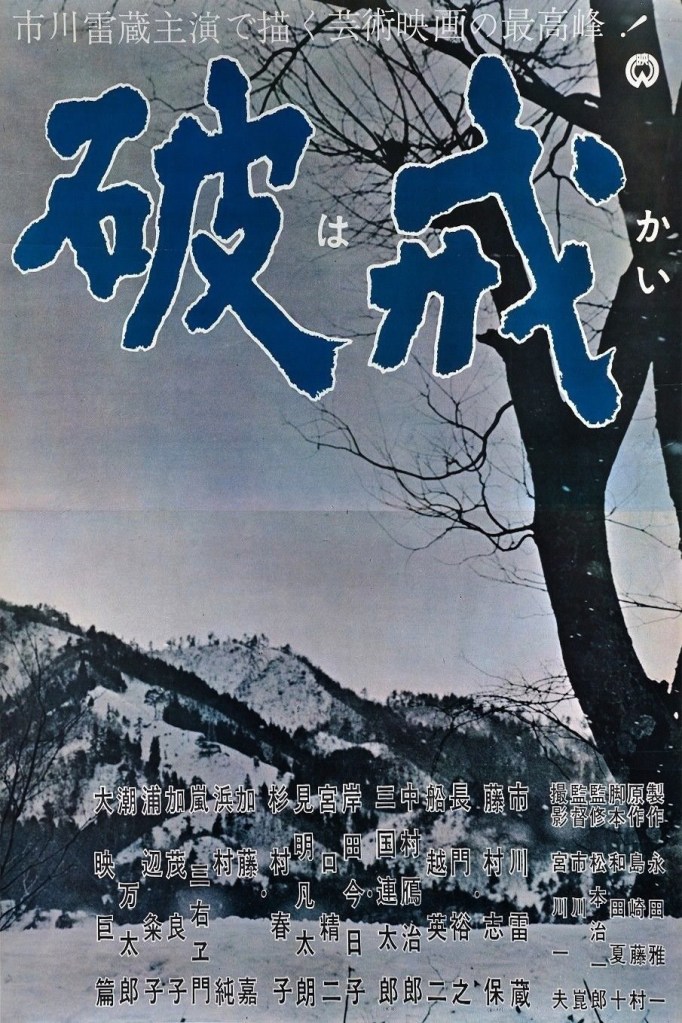 Kon Ichikawa’s approach to critiquing his society was often laced with a delicious slice of biting irony but he puts sarcasm to one side for this all too rare attempt to address the uncomfortable subject of Japan’s hidden underclass – the burakumin. The term itself simply means “people who live in hamlets” but from feudal times onwards it came to denote the kinds of people with whom others did not want to associate – notably those whose occupations dealt in some way with death from executioners and undertakers, to butchers and leatherworkers. Though outright discrimination against such people was outlawed during the Meiji restoration, social stigma and informal harassment remained common with some lingering tendency remaining even today.
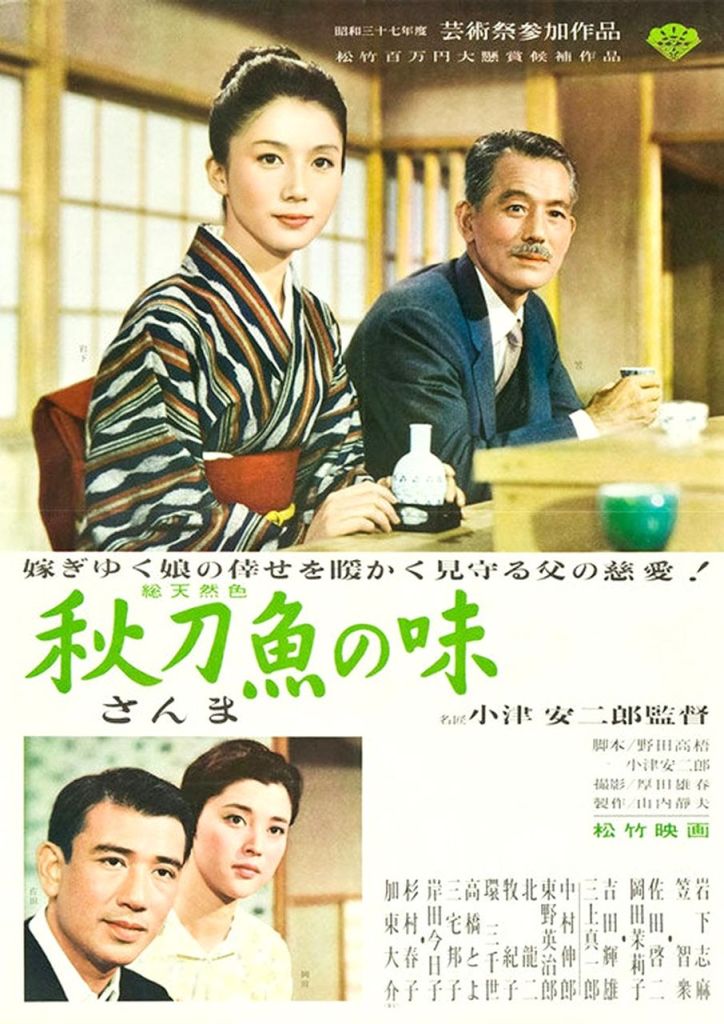 An Autumn Afternoon (秋刀魚の味, Sanma no Aji) was to be Ozu’s final work. This was however more by accident than design – despite serious illness Ozu intended to continue working and had even left a few notes relating to a follow up project which was destined never to be completed. Even if not exactly intended to become the final point of a thirty-five year career, An Autumn Afternoon is an apt place to end, neatly revisiting the director’s key concerns and starring some of his most frequent collaborators.
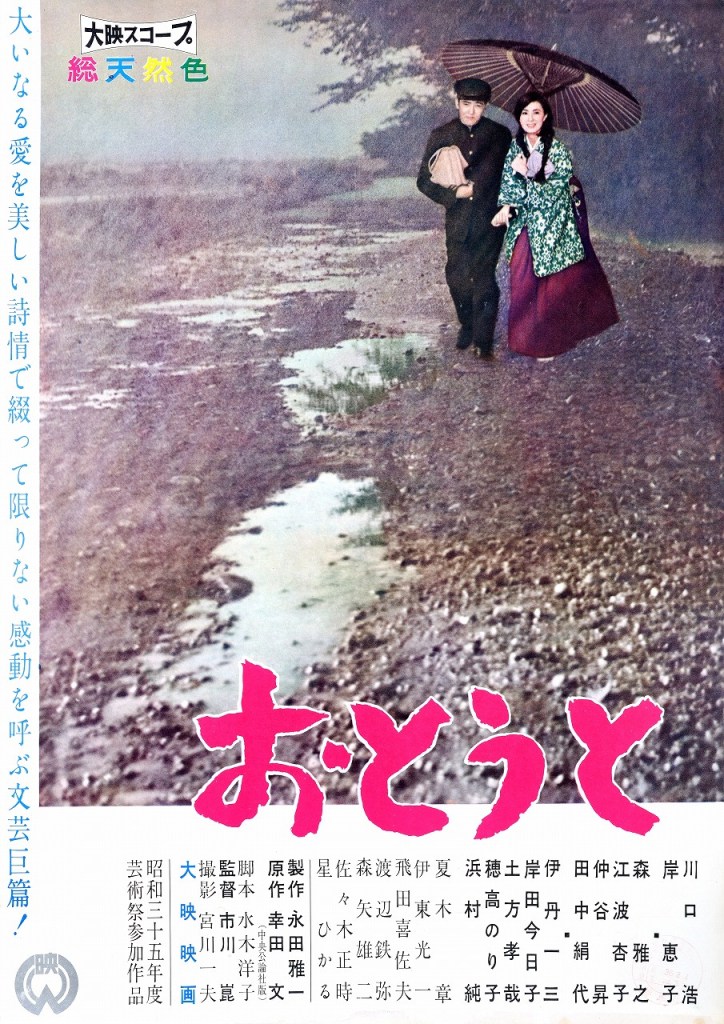 Perhaps oddly for a director of his generation, Kon Ichikawa is not particularly known for family drama yet his 1960 effort, Her Brother (おとうと, Ototo), draws strongly on this genre albeit with Ichikawa’s trademark irony. A Taisho era tale based on an autobiographically inspired novel by Aya Koda, Her Brother is the story of a sister’s unconditional love but also of a woman who is, in some ways, forced to sacrifice herself for her family precisely because of their ongoing emotional neglect.
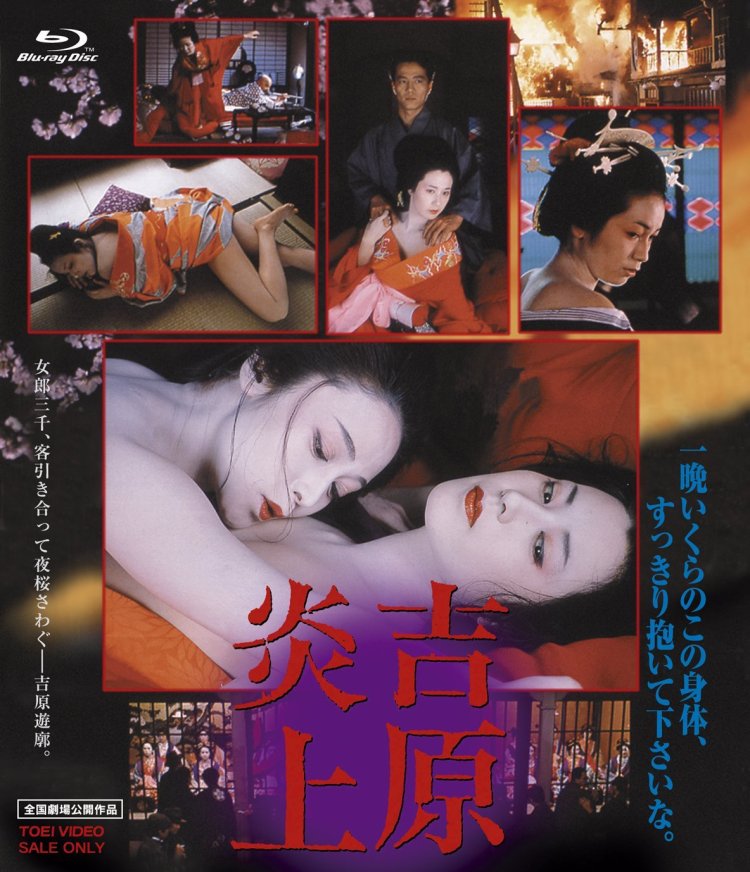 Hideo Gosha maybe best known for the “manly way” movies of his early career in which angry young men fought for honour and justice, but mostly just to to survive. Late into his career, Gosha decided to change tack for a while with a series of female orientated films either remaining within the familiar gangster genre as in Yakuza Wives, or shifting into world of the red light district as in Tokyo Bordello (吉原炎上, Yoshiwara Enjo). Presumably an attempt to get past the unfamiliarity of the Yoshiwara name, the film’s English title is perhaps a little more obviously salacious than the original Japanese which translates as Yoshiwara Conflagration and directly relates to the real life fire of 1911 in which 300 people were killed and much of the area razed to the ground. Gosha himself grew up not far from the location of the Yoshiwara as it existed in the mid-20th century where it was still a largely lower class area filled with cardsharps, yakuza, and, yes, prostitution (legal in Japan until 1958, outlawed in during the US occupation). The Yoshiwara of the late Meiji era was not so different as the women imprisoned there suffered at the hands of men, exploited by a cruelly misogynistic social system and often driven mad by internalised rage at their continued lack of agency.
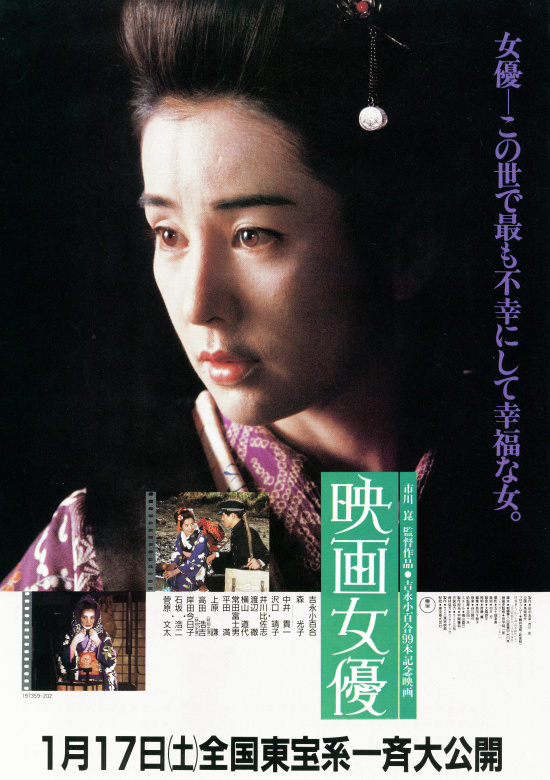 Kon Ichikawa was born in 1915, just four years later than the subject of his 1989 film Actress (映画女優, Eiga Joyu) which uses the pre-directorial career of one of Japanese cinema’s most respected actresses, Kinuyo Tanaka, to explore the development of Japanese cinema itself. Tanaka was born in poverty in 1909 and worked as a jobbing film actress before being “discovered” by Hiroshi Shimizu and becoming one of Shochiku’s most bankable stars. The script is co-written by Kaneto Shindo who was fairly close to the action as an assistant under Kenji Mizoguchi at Shochiku in the ‘40s before being drafted into the war. A commemorative exercise marking the tenth anniversary of Tanaka’s death from a brain tumour in 1977, Ichikawa’s film never quite escapes from the biopic straightjacket and only gives a superficial picture of its star but seems content to revel in the nostalgia of a, by then, forgotten golden age.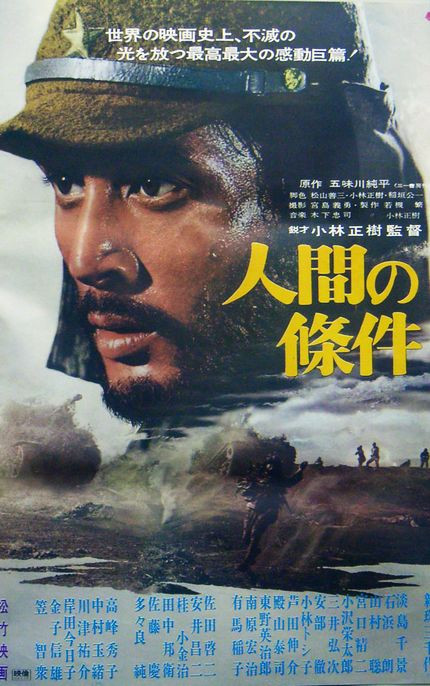
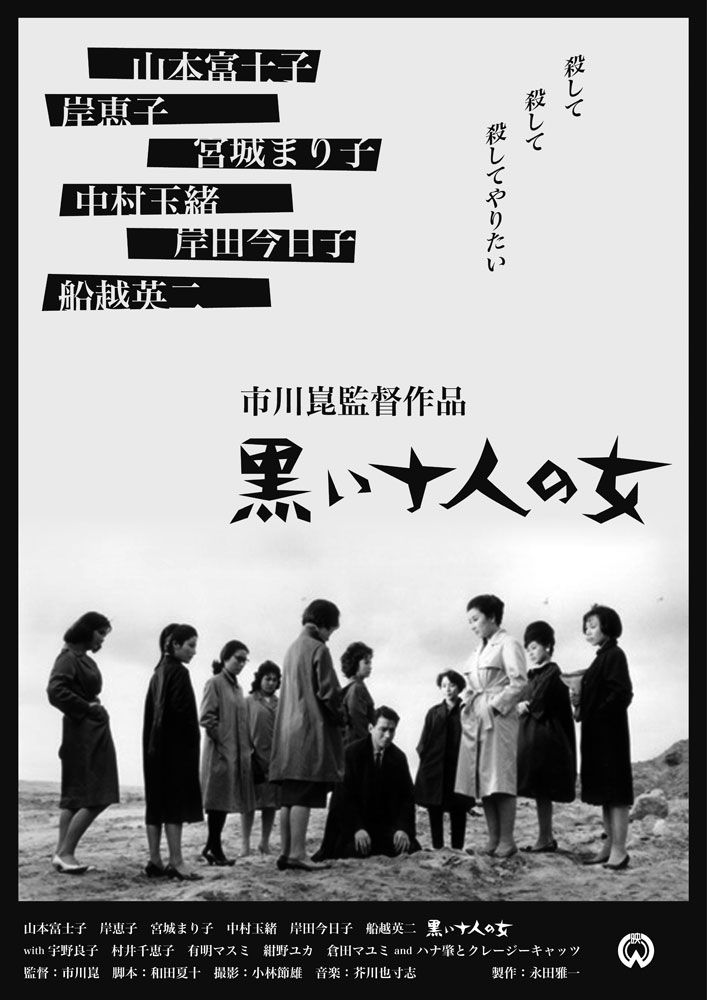 Kon Ichikawa, wry commenter of his times, turns his ironic eyes to the inherent sexism of the 1960s with a farcical tale of a philandering husband suddenly confronted with the betrayed disappointment of his many mistresses who’ve come together with one aim in mind – his death! Scripted by Natto Wada (Ichikawa’s wife and frequent screenwriter until her retirement in 1965), Ten Dark Women (黒い十人の女, Kuroi Junin no Onna) is an absurd noir-tinged comedy about 10 women who love one man so much that they all want him dead, or at any rate just not alive with one of the others.
 Windows on Worlds