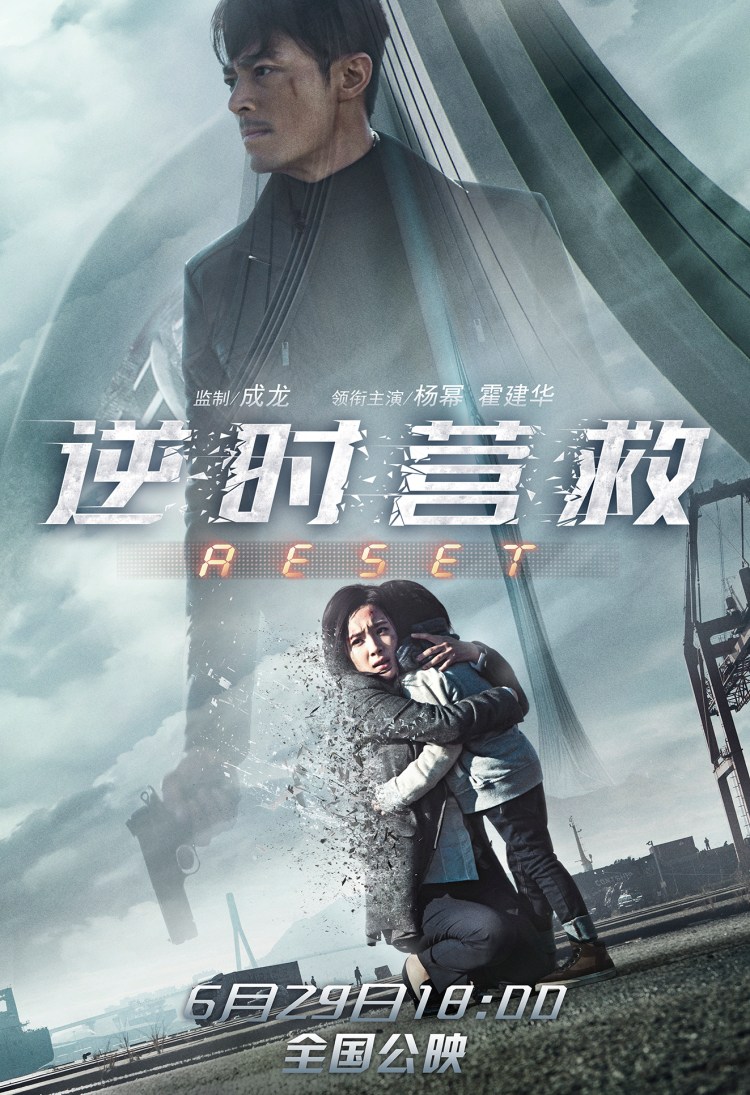
Reset (逆时营救, Chang, 2017)

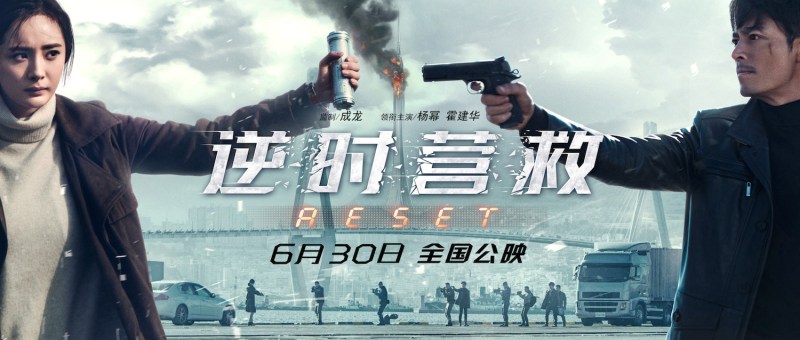
reset posterTime travel – the solution to all one’s problems. Or is it? Chinese thriller Reset (逆时营救, Nì shí yíngjiù) is helmed by Korean director Chang (AKA Yoon Hong-seung) but it’s also produced by Jackie Chan and is very much in the vein of his recent projects in its non-sensical sci-fi setup and troubling conservative messages. Reset casts a female scientist as its heroine but uses the crisis to explore her ongoing guilt as a single mother with an intense workload who has chosen to dedicate herself to both her work and her son without remarrying. Despite the action packed drama in which Xia Tian plots, shoots, and stabs her way back to her son, the message which is ultimately delivered is that you can’t go back in time and mothers should just give up everything to be with their kids 24/7.

In the near future, the existence of parallel worlds has been confirmed but early research into time travel has been derailed after test subjects transported between universes descended into mindless violence destroying each other and valuable data. Xia Tian (Yang Mi) works for one of the big companies still investigating parallel world theory and has just made a major breakthrough in “projecting” test subjects into the recent past. In order to steal her research for a rival company, Xia Tian’s young son Doudou is kidnapped by mysterious men who give her a limited amount of time to hand over the top secret documents. Xia Tian’s first attempt to rescue her son fails, leading her to make personal use of her findings and travel into the past to change the future.

Reset starts as it means to go on with Xia Tian having a heart to heart with her boss and mentor (King Shih-Chieh) who reminds her that it’s been ages since she broke up with Doudou’s dad and its high time she find someone new. Xia Tian, embarrassed, says she’s dedicating herself entirely to Doudou and doesn’t need anyone else. The bond between mother and son is the focus of the film (though Xia Tian’s clinginess may become an ongoing problem as Doudou grows up) as Xia Tian travels through time to ensure the survival of her little boy no matter how morally compromised she may eventually become.

Use of the time machine apparently has certain side effects, as the first experimenters discovered. The original Xia Tian was a sweet, innocent woman way out of her depth with these fearsome, amoral gangsters but Xia Tian 2 is much more savvy, chloroforming the “nice” version of herself and taking over with the power of hindsight to help her get out of the building before all hell breaks loose. Xia Tian 3, however, has taken things too far, acting without any kind of concession to morality and suddenly becoming some kind of major action star with special forces training for no given reason. There might be a clever point about Xia Tian’s various conflicting roles but Reset doesn’t want to make it so much as have Xia Tian help/hinder herself in a selfish tug of love to save little Doudou who just wants to go home to his mum.

Non-sensical as it is, Reset picks up when it hits its action heavy final third in which Yang Mi, more often seen in sweetly romantic roles, acquits herself well enough as a fiery action star filled with maternal rage. The various layers of the resets generally hang together as the three Xia Tians cross each other’s paths to get Doudou to safety, only to belatedly realise that only one of them can really stay with him forever.

Maternal love is the machine which drives the story forward but it’s also the most problematic element in its partial insistence than Doudou’s fate is somehow Xia Tian’s fault for daring to use her finely tuned brain for the common good rather than just staying home and reading comics with her little boy like a mother should. It’s difficult to escape the conclusion that the lesson is women shouldn’t work, rather than corporations are inherently untrustworthy and that time travel creates problems for everyone (not least editors and scriptwriters) and should generally be avoided. Despite high production values, interesting production design, and an impressive (or is that three impressive) performance(s) from Yang Mi, Reset’s strong action credentials cannot compensate for its unpalatable conservative message and non-sensical science fiction narrative.


Screened at the London East Asia Film Festival 2017.

International trailer (English subtitles)

V.I.P. (브이아이피, Park Hoon-jung, 2017)

V.I.P. posterIn New World, Park Hoon-jung provided a bleak overview of creeping corruption with the absolute certainty that the forces of darkness will always win over those of the light, but with V.I.P. (브이아이피) he turns his attentions away from South Korea’s hellish gangland society to examine the effect of geopolitical concerns on the lives of ordinary citizens. He does this by positioning South Korea’s two biggest international concerns – America and The North, as twin manipulators with his home nation caught in the middle, trapped between the need to preserve allies and defend against enemies. The “enemy” here is a sociopathic serial killer allowed to get away with his crimes at home because of his elite status and then again abroad as a key informant of the American intelligence services.

Beginning at the end with a weary man accepting a gun and striding into a rundown building in Hong Kong, Park jumps back a few years to North Korea where an innocent schoolgirl is grabbed by a gang of three boys on a peaceful country road. Not only do they brutally rape and kill the girl, but they even go so far as to massacre her entire family. Police Chief Lee (Park Hee-Soon) identifies the killer as Kim Gwang-il (Lee Jong-Suk), son of a high ranking official. His boss closes the case; Gwang-il is untouchable. Lee is demoted and sent to a fertiliser plant.

A couple of years later similar crimes begin occurring in the South and maverick policeman Chae (Kim Myung-min), temporarily reinstated after being suspended for his violent ways, is handed the case after his superior apparently “commits suicide”. Like Lee, who eventually makes contact with Chae having followed his quarry to the South, Chae identifies Gwang-il and is prevented from arresting him but this time by South Korean intelligence services who were partly responsible for Gwang-il’s defection working closely with America’s CIA and the very greasy Agent Gray (Peter Stormare).

Like many Korean films of recent times the central point of concern is in the ability of the rich and powerful to do whatever they please and get away with it because their special status makes them untouchable. Park scores a double a whammy when he casts his villain both as an elitist and as a North Korean though he draws no connection between life in a brutalising regime and the desire to inflict violence.

This is a violent tale and the violence on show is sickening, often needlessly so. After showing us the aftermath of what happened to the innocent teenage girl in the prologue and then to her entire family including a five year old brother, there was really no need to go into detail but Park eventually includes a horrifying scene of Gwang-il garrotting his victim in an elegant drawing room right underneath the portraits of the Kims hanging proudly on the wall. The scene is problematic for several reasons but the biggest of them is in the depiction of the naked female body covered in blood and bruises while Park’s minions stand naked around her, pale and unstained by her blood, each of the actors carefully hiding their genitals from the camera. The victim, who has no lines other than a final plea not to kill her, is the only real female presence in the film save for one female police officer who is seen briefly and only appears to become another potential victim for Gwang-il.

The real ire is saved not for Gwang-il but for the intelligence services who lack the backbone to stop him. The Americans, or more precisely a need to placate them, are the major motivator – a fact which takes on additional irony considering Gwang-il is the North Korean threat the US is supposed to be helping to mitigate. It remains unclear why the CIA would be allowing Gwang-il free reign to live as a regular citizen given that he supposedly has important information regarding North Korean finances which is the reason the Americans are helping him defect, rather than keeping him safely contained and preventing him from committing heinous crimes all over the world which, apart from anything else, threaten to cause huge embarrassment to everyone involved. Still, Agent Gray lives up to his name in his general sleaziness and the intense implication that he is playing his own long game which may have nothing to do with country or protocol.

Park’s decision to structure the film in several chapters each with a different title card often works against him, taking the momentum of his procedural and occasionally proving confusing. Loosely, Park ties the stories of three men together – the idealistic North Korean officer who wants to see justice done, the grizzled cop with a noble heart, and the conflicted NIS officer realising the unforeseen consequences of his attempts to play politics for career advancement, but he fails to weave their fates into anything more than an extremely pessimistic exploration of hidden geopolitical oppression. Final shootout aside, V.I.P. is a grimy, politically questionable thriller which irritates in its narrative sluggishness and leaves a sour taste in the mouth in its own indifference to its villains’ crimes in favour of his V.I.P. status as the representative of an entirely different existential threat.


Screened at the London East Asia Film Festival 2017.

Original trailer (no subtitles)

Before We Vanish (散歩する侵略者, Kiyoshi Kurosawa, 2017)

©2017 BEFORE WE VANISH FILM PARTNERS

before we vanish posterKiyoshi Kurosawa is getting sentimental in his old age. In Journey to the Shore and Real, brokenhearted, left behind spouses went on long and difficult journeys of grief and salvation. In Before We Vanish (散歩する侵略者, Sanpo Suru Shinryakusha) we receive a visitation that presages our doom but wishes to know us before we go. An alien invasion movie which takes its cues from Invasion of the Body Snatchers and They Live, Kurosawa’s quirky drama is less about the enemy within than the hidden existential threat of a failure to understand oneself. As the Japanese title suggests, these invaders are merely out for a stroll, making time to smell the flowers before the big lawnmower arrives to cut them all down.

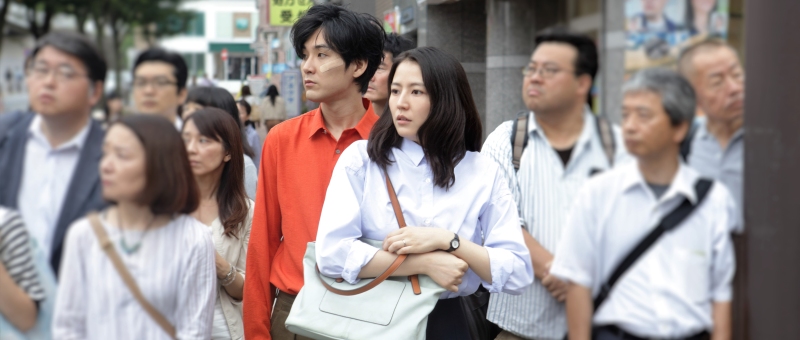
Strange events are afoot in Tokyo. A high school girl wanders home with a pair of goldfish in a plastic bag before brutally murdering her entire family, gazing at the scene of carnage with a beatific smile. Meanwhile, the estranged wife of Shinji Kase (Ryuhei Matsuda), Narumi (Masami Nagasawa), has been sent for to claim her presumably amnesiac husband from a medical facility. Shinji was brought in after wandering the streets cluelessly and seems to have lost certain sections of his memory. The doctor’s diagnosis is uncertain but leans towards some kind of temporary psychotic break or early onset Alzheimer’s. In any case, he is now Narumi’s responsibility, much to her consternation. Across town a down on his luck journalist (Hiroki Hasegawa) covering the brutal family murder finds himself the designated “guide” to another strange young man, Amano (Mahiro Takasugi), who seems to have done something very untoward to his parents.

These three “strangers” are really invaders from outer space – something which they freely confess to anyone who will listen, only everyone assumes they are joking. Exactly why they want to destroy the Earth is never revealed, nor is the the reason for the strange mission undertaken by the three researchers acting as the vanguard for the upcoming invasion. These three have been tasked with a thorough investigation of “humanity” in which they must learn and acquire certain “concepts”. They do this by requiring the subject to visualise their thinking behind a word or phrase and then tapping the head to pinch it causing that concept to be removed from the person’s interior cosmology.

The aliens learn as much from the effect of removing the concept as they do from its explanation. This being Japan, it’s not surprising that the first concept Shinji removes is that of “family” which he takes from Narumi’s younger sister, Asumi (Atsuko Maeda). Asumi had decamped to Narumi’s after an argument with her parents over their railroading her into a mainstream life she doesn’t really want. The removal of the concept of family means Asumi no longer needs to be bound by hollow obligation but her sudden coldness towards her sister immediately invites a series of other questions as to the true nature of their relationship. Similarly, Shinji removes a concept of “possession” from a young man. The young man does not immediately lose understanding of the word, but the concept ceases to be important to him. He is, in a sense, freed from the burden of materialism. Paying an unexpected visit to Narumi’s workplace and meeting her boss who, it seems, has just belittled her work on an important project after she rebuffed his attempt at sexual harassment, Shinji removes his concept of “work” leading him to play aeroplanes all around the office like an overexcited child.

There are positive effects of losing some of these centrally held ideas even if their loss seems tragic or painful on the surface. They are, however, what make us human whether that be attachment to family or an irrational desire to devote all to work and ceaseless acquisition. The final, most elusive concept is that of love – something alien and fascinating to the visitors which they find impossible to harvest due its essentially nebulous nature. Despite being part of a uniform hive mind, the invaders have each developed unique personality traits as a consequence of their “human” lives – the schoolgirl craves violence and destruction, Amano fatherly friendship, and Shinji something close to love with his own “guide” in the form of Narumi whose love for her husband apparently endured despite his betrayal.

Far from the gloomy nihilism of Pulse in which death is eternal loneliness, Before We Vanish suggests that what will survive of us is love. Salvation does, however, require a sacrifice which provokes the film’s romantic conclusion in which the absence of love becomes the “eternal loneliness” promised by Pulse but is tempered by patience and devotion. A gleefully absurdist exploration of the human soul, Before We Vanish finds Kurosawa at his most optimistic affirming the power of the human spirit at its most indestructible.


Screened at the London East Asia Film Festival 2017.

International trailer (English subtitles)

Anarchist from Colony (박열, Lee Joon-ik, 2017)

anarchist from colony posterLee Joon-ik follows his poetical mediation on the Korean independence movement, Dong-ju, with an equally philosophical, if not quite as rigorous, tale of rebellion and tragedy inspired by real life revolutionary anarchist, Park Yeol. Where Dong-ju was a tale of a world in in black and white, Anarchist from Colony (박열, Park Yeol) is one of glorious colour and the strange joy of pithily rejecting an oppressor’s authority. The oppressor’s authority is, however, infinite and no amount of anarchy will be enough to evade it even if there may be long term advantages in losing a battle in grand style.

Park Yeol (Lee Je-hoon) is a Korean left wing agitator living in Tokyo and earning a living as a rickshaw driver. He is also a hero to local Koreans and has gained a lot of fans (many of them female) thanks to his poetry including his latest entitled “Damn Dog” which laments his lowly status as an oppressed Korean man. One of his many fans, Fumiko Kaneko (Choi Hee-seo) – a Japanese woman who spent some time in Korea as a child, manages to work her way into his heart and becomes both a lover and an integral part of his revolutionary movement known as The Revolt.

In 1923, The Great Kanto Earthquake caused wide scale destruction and general chaos in the capital. Martial law was instituted, but a rumour soon spread that Korean insurrectionists were using the confusion to fuel their revolutionary ambitions, poisoning wells, committing arson, and plotting to assassinate the Emperor and his son. Of course, the rumours were baseless but led to a citywide pogrom in which around 6000 Koreans are thought to have been murdered both by ordinary people and by the army. Hoping to avoid the violence, Park decides he might be better off turning himself in to the police, but even police cells are not free of vigilante justice.

Unlike many recent films set during the colonial period, Anarchist from Colony is not particularly interested in demonising the Japanese. Generally speaking, the Japanese government are depicted as a collection of buffoons ill equipped to deal with the unexpected disaster of the earthquake and obsessed with rules, protocol, and Emperor worship. The major antagonist is a moustache twirling idiot and committed racist nursing a grudge against Koreans over a career setback to do with the suppression of the March 1, 1919  protest which kickstarted the Korean Independence Movement. The other officials mostly regard Mizuno (Kim In-woo) as an embarrassment, calling him out on his obvious racism and attempting to circumvent his machinations but more often than not failing to successfully outmanoeuvre him.

Having been partly responsible for the massacre in failing to stop the racist rantings of Mizuno and co, the government are eager to suppress all knowledge of it and distance themselves from anything that could make them look bad on the international stage. In this Mizuno makes a serious miscalculation when he decides to fit up the most popular Korean political activist he can get his hands on as a “traitor” and have him tried and executed as an example to the others. Park is wise to this scheme right away and decides to play along even if he knows it may eventually cost him his life. In fact, he almost hopes it will because not only will he lend weight to the cause of independence through his own martyrdom, but it will be much harder for the government to suppress news of the massacre with him on trial for his supposed terrorist activities which are being touted as its cause.

Yet the tale is framed not so much as suppressed revolution but ill fated love in the tragic romance of Park and Kaneko. The mini band of anarchists are a surprisingly cheerful bunch for hardline leftists, and Park and Kanenko’s intense bond is one of both political solidarity and true affection. Being anarchists through and through, they do not believe in marriage but agree to live together after signing a contract of cohabitation in which they mutually affirm their loyalty to each other and their cause. When Park is arrested, Kaneko turns herself in and follows him despite his pleas with her not to. The couple remain fiercely together to the end presenting a united front delighting in mocking their joint show trial even knowing they may soon be heading for the gallows.

This strange kind of lightness and dada-esque surrealism is an odd fit for the grim tale at hand. Lee mostly glosses over the wider implications of the massacre aside from minor references to longstanding prejudices such as Park’s beating by a customer who has short changed him and the vigilante gang’s repeated use of a particular phrase to flag up Korean accents. The overriding sense of flippancy undercuts the seriousness of Park’s plight and ultimately robs it of its power as his struggle is played for broad comedy rather than subtle satire. Perhaps overly ambitious, Lee’s reframing of of Park’s story as surrealist vaudeville romance never quite takes off, sacrificing passion for laughs but finding that they ring hollow surrounded by so much suppressed terror.


Screened at the London East Asia Film Festival 2017.

International trailer (English subtitles)
De Lan (德蘭, Liu Jie, 2015)

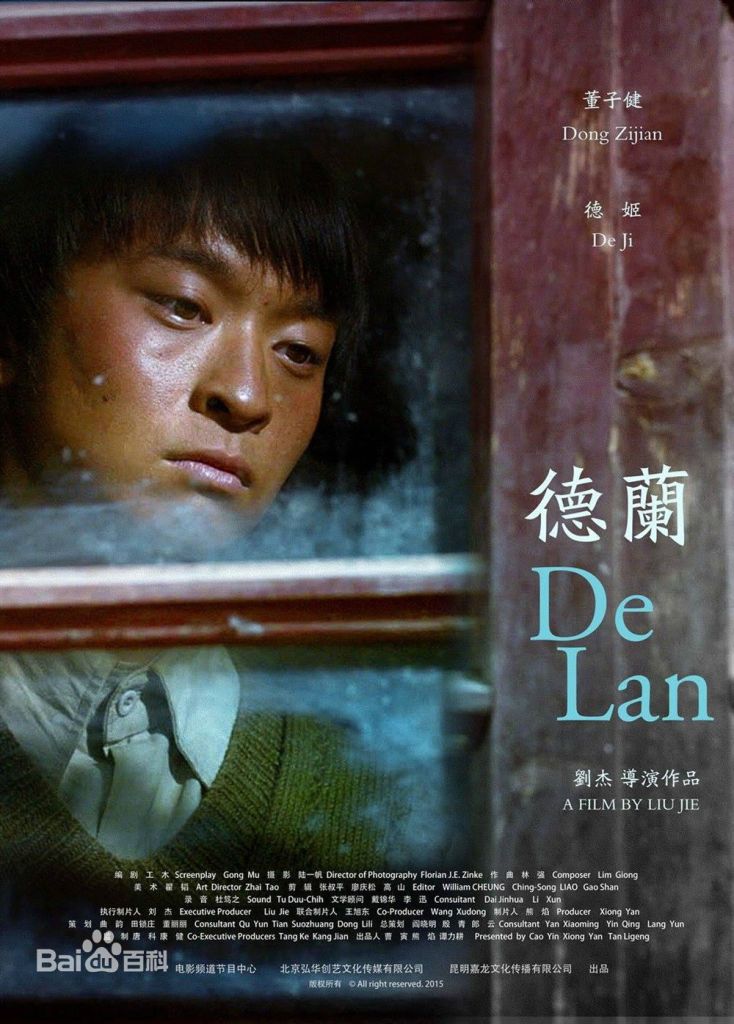
Set in 1984 in a rural Chinese backwater, De Lan (德蘭) is named not for its central character, but for his first love – a mountain woman far from home in search of a missing relative. Tasked with following De Lan (De Ji), Wang (Dong Zijian) finds himself entering a strange new world which he is incapable of fully understanding, not least because he doesn’t speak the language. A wordless love story between the tragic De Lan and the adolescent Wang is destined to end unhappily, but will affect both of them in quite profound ways.

Wang’s father has been missing for three months, and what’s worse is that around 2000 yuan went missing with him. Mr. Wang had been the loans officer for the local party office in this dreary mountain town and now the best idea anyone has come up with is for Wang to take over the position and pay back the missing money with deductions from his wages (this should take around ten years). Hardly fair, but what can you do? Wang’s first assignment is to take an audit of a mountain town where the residents have a lot of outstanding payments. Seeing as they’re heading to the same place, Wang is to accompany a mountain woman, De Lan, who had been travelling around local towns looking for a missing person but has now run out of money and must go home alone.

Wang is told to trust De Lan when it comes to the terrain, but that he should keep control of the food supplies in case she tries to run off. All things considered, the people at the foot of the mountains, aren’t very well disposed to those at the top. Wang is young and unused to walking such long distances, frustrating De Lan with his inability to keep up and frequent needs to rest. Nevertheless a kind of mutual affection seems to build up between them but largely goes unspoken and unacknowledged. Finding himself installed in De Lan’s home, Wang begins to feel very awkward indeed, unable to work out the strange family dynamic between the gruff man with the lame leg, ancient blind old woman, and the feisty De Lan.

Wang has, after all, been sent to the town to collect on loans – an entirely pointless enterprise as no one here has any money. Wang’s father was a much loved presence, mostly because he always came with cash and never pressed them on repayments. His son, with a father’s debt around his neck, is not quite so nonchalant. Calling a village meeting with no notice, Wang makes it clear he won’t be following his father’s lax approach and will not be issuing any new loans, rather he will be calling in the old ones. This does not make him popular in the village.

Eventually he changes his mind and decides to flash some cash but his worst assumptions are confirmed when the villagers, far from using the money they claimed to so desperately need to survive to invest in their businesses, club together to buy all the booze in the surrounding area and have a giant party. Originally put out by their trickery and De Lan’s ongoing unavailability, Wang suddenly finds himself trying some of their liquor and joining in with a dance around the fire. Perhaps learning to adjust to the Earthy, less ordered way of life, Wang has embraced the new found freedom of the place, but he will also discover that it only runs so deep.

De Lan’s life has undoubtedly been a difficult one which she faces with stoic resignation. Shared between two men and longing only for a child, De Lan has very little say in anything that happens to her yet she was able to set off all alone to look for her missing person. During the trip, De Lan is dismayed when a teenage boy in a home they spend a night in makes a vulgar comment about her body, leading her to try to leave as soon as possible only for Wang to pledge his protection. De Lan is aware of the dangers of the road, as well as the constraints placed on her life, whereas as Wang is still naive enough to think his physical strength and government position would be enough to keep De Lan any safer than she would be alone.

As Wang’s feelings for De Lan grow he fantasises about saving her from this strange, cold household though he barely stops to ask himself if saving is really what she wants. Unable to speak the local dialect, Wang necessarily needs to rely on look and gesture which is largely how he and De Lan have come to communicate – a pure kind of dialogue without need of words. Wang’s love for De Lan is destined to cost him dearly both in financial and emotional terms. A beautifully sad tale of frustrated first love set against the picturesque Chinese countryside and inside it’s much less pretty political system, De Lan is the story of one man’s transition from adolescence to manhood through heartbreak, filled with quiet, yet intense, emotion.


Reviewed at the 2016 London East Asia Film Festival.

Trailer (English subtitles)

https://www.youtube.com/watch?v=AIqY-zUEzww

Bangkok Nites (バンコクナイツ, Katsuya Tomita, 2016)

bangkok-nites“Asia is a paradise for men” though not for anyone else, if Bangkok Nites (バンコクナイツ) is anything to go by. In Tomita’s previous film, Saudade, he explored the intercultural exchange between Thailand and Japan with one character having tried to escape there and failed, and another idly dreaming of running away with his Thai mistress. Five years later he revisits the same idea but from the other side as he weaves a meandering trail through the Japan-centric element of Bangkok’s red light district which eventually leads him on to other neighbouring nations whose landscapes still bear the scars of war and colonialism decades into a supposedly enlightened age.

We begin with Luck (Subenja Pongkorn), caught in reflection against a swanky hotel window overlooking her city. Her client is a Japanese man, clingy in the extreme though it’s unclear if his desire to avoid paying is out of consideration to his wallet or a genuine case of affection. Nevertheless, his whining is too much for Luck who eventually manages to escape the room and get back to work. Employed by a bar on Thaniya Road, an area of Bangkok’s red light district popular with Japanese tourists, Luck’s job involves sitting on a shelf in a large stable area where she and her colleagues wear colour coded badges so the customer can see their rates and services offered at a single glance.

Good friends with a Japanese man who works as a kind of procurer for the club, Luck ends up at a party where she runs into Ozawa (Katsuya Tomita) – a quasi-customer with whom she’d developed a deeper relationship around five years previously but subsequently lost contact. A former Self Defence Force soldier, Ozawa first came to Asia on a peacekeeping mission to Cambodia and has been back and fore ever since. During this most recent stay he’s begun to strike up a friendship with fellow Japanese guys working around the edges of the sex industry and related businesses including the drugs trade. After getting to know each other again, Luck takes Ozawa to her peaceful, rural, hometown beginning a journey which is to have a profound impact on his view of the continent.

There’s something a little sad about the small, sleazy world of the red light district and its collection of melancholy ex-pats eking out a living by exploiting desperate local women. Ozawa hovers on the fringes of this group, obviously a visitor to the brothels of Thaniya Road, but not quite a devotee. The other guys repeatedly refer to Thailand and other surrounding countries as “paradise” or a “utopia” where the women are “easy” and can be had at will and with few strings. One visitor remarks that he can have twenty nights of debauchery in Bangkok for the cost of one fancy night out in Roppongi. Yet for every one like him just trying to blow in and blow out with no fuss, there are a handful who can’t separate a transaction from a romance, becoming overly attached to women merely providing a service who, naturally, are not particularly seeking a long-term relationship with the sort of man who thinks a woman can be bought wholesale.

Luck is the number one on Thaniya Road, though she’s aware her time is limited. The work pays well and she’s been able to acquire an elegant Bangkok apartment as well as a house for her mother and siblings back in the country, but her heart is set on saving enough money to open an upscale European restaurant when she finally leaves the sex trade behind. Taking Ozawa back to her hometown, she explains to him that her life in Bangkok is just what happens to girls from the country. Children are raised by aunts while mothers live in the city, sending money back home, until they swap places and the children head to the city while the women return to raise the children of relatives. Most of her friends are also involved in the local sex trade, catering to foreign travellers with less than romantic ideas about the country and its “exotic” women.

Tomita paints this as another ongoing echo of the colonial past as foreign men come to Thailand for purposes of discreet pleasure, giving little thought to the interior lives of the real breathing women in front of them. Taking Ozawa around her home town, Luck shows him the beautiful European style mansion she grew up in with her mother’s second husband (her step-father and the only positive male input she ever mentions) who was an American working at a local air base. The bases are a relic of the Vietnam war, the legacy of which also rears its head once Ozawa makes his way into Laos where giant bomb craters still scar the landscape like pock marks on the face of the Earth more than forty years later. Ultimately these colonial wars trace themselves back to the first waves of colonisation but when Luck tries to look forwards she only sees the past – her desires are for the European, fancy restaurants and urban sophistication.

Ozawa looks at Luck’s hometown and (thinks he) sees a “paradise”, a calm and peaceful place where people drink and smoke their lives away with no worries. He thinks this ought to be enough, and perhaps he’s right, but women like Luck and her friends are still left with no other choice than to enter the sex industry in order to feed their families while the men bum around smoking, drinking, and whoring with other women. It could be a paradise for Ozawa, but it would only be supported by the private hell of the women all around him.

Tomita shoots in a straightforward style but also adds epic sweeping pastoral shots thanks to drone  camerawork and occasional touches of the surreal such as groups of shadowy figures in the forests who may be real or imagined, perhaps the ghostly spirits of past rebellions. Another figure encountered by Ozawa may also be a manifestation of these long-standing ghosts as he recites patriotic speeches and asks for money to help look after the refugees flooding into the forests thanks to the Vietnam war. Ozawa later meets the descendant groups of the guerrillas in Laos which includes disaffected Filipinos, Japanese, and Thais all looking for alternative ways of living.

Harnessing the power of popular song from classic ‘60s Thai pop to indie folk tunes about sold daughters and karaoke covers of The Carpenters, Tomita demonstrates how even music receives external influence but repurposes and exports it as a form of popular protest. Everyone is looking for an elusive form of paradise which does not exist, but their own actions and desires are often the very thing which prevents them from finding it. Tomita’s four years of research have been put to good use in creating a nuanced, thoughtful dissection of the ongoing effects of colonialism in a land still scarred by war and the painful wounds of the unexamined past.


Reviewed at the 2016 London East Asia Film Festival.

International trailer (dialogue free)

Spirits’ Homecoming (귀향, Cho Jung-rae, 2016)

sprits-homecomingOf all the awful things that happened in the middle part of the 20th century, the trafficking, incarceration, enslavement and forced prostitution of women and girls from across Asia (including at least 65 Dutch women in what is now known as Indonesia) who were abducted for use as “comfort women” by the Japanese military remains one of the least discussed and most controversial. The issue (arguably) runs most deeply in Korea which had been experiencing a prolonged and often brutal era of colonial rule even prior to the intensification of hostilities in the early 1940s. The torment these women faced did not end with the ceasefire as entrenched social attitudes left them not only with a lifetime of physical and psychological trauma but also internalised shame which made it difficult for them to talk about their experiences even to those closest to them. Now more than ever, it is important that this story be told and the long suffering of these women, many of whom are no longer with us, is finally acknowledged.

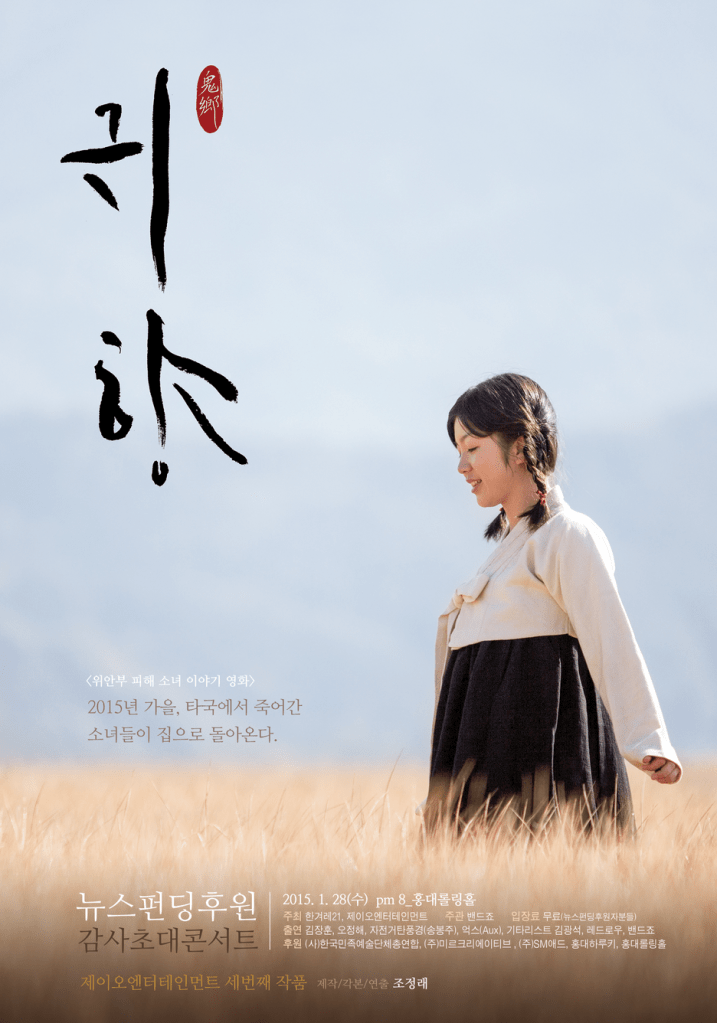
In 1943, fourteen year old Jung-min (Kang Hana) is an only child living with her cheerful father and stern mother somewhere in rural Korea. Energetic and headstrong, Jung-min thinks it sport to take a handmade amulet from one of her friends in a game despite her friend’s obvious distress. This earns her another switch beating from her disappointed mother who, regretfully, later makes her a similar amulet of her own. However, the amulet does Jung-min little good in the short term as the soldiers finally arrive and take her away with them to an uncertain destination.

Packed into a freight train with other similarly aged girls in the same situation, Jung-min is able to keep her cool and bonds with the girl next to her, Young-hee (Seo Mi-ji), who is already physically ill aside from the additional stress. Far from the shoe factory one of the girls had imagined, this collection of children is bound for a military brothel where they will be required to speak only Japanese, remaining within their tiny rooms which store only a mattress and water bucket, and endure repeated rape and violence at the hands of their captors.

Running parallel to the 1943 narrative is a jump forward to 1991 around the time in which the government finally decides to address the comfort woman issue with calls for registration so that all women affected may apply for any available compensation. Young-ok (Son Sook), now an older woman making a living from textiles and sewing amulets just like Jung-min’s, is only one of these women. Through her friendship with a shaman and her protege Eun-kyung (Choi Ri), Young-ok finds her thoughts returning to the past once again.

The younger Koreans of 1943 had known only the Japanese occupation, were educated in Japanese, and had been taught that they were “true countrymen” as one Jung-min’s friends puts it. Jung-min’s carefree, rural town is almost untouched by politics as Korean is spoken freely, folk traditions permitted, Arirang sung in the fields, and teenage girls wander around freely with no one to say to much about it. All this ends one day when the soldiers arrive, forcibly abducting Jung-min and any other young woman in the area without even a word of explanation to their parents or families. Despite the gradual erosion of their cultural identity, these women are now members of a subjugated nation so far below those of mainland birth that they barely qualify as people at all.

The treatment that these women undergo, many of them only children, is truly horrific from repeated rape to physical violence, starvation, and the ever present threat of death. Only Japanese is to be spoken in the camp which houses women and girls from both Korea and China, watched over by a Korean middle man and a Japanese madam. Allowed out of their fetid rooms for brief periods of respite (or later different kinds of work) the girls attempt to make the most of things, singing folk songs and remembering happier times. There is no real possibility of escape other than that found by one of the girls who has already gone mad after one of the visiting troops brought her own brother with it.

Indeed, there is no true escape even after the war’s end. Seeing the testimony of another former comfort woman on the television and hearing news of the programme to register women affected by wartime atrocity both for purposes of research and possible compensation, Young-ok is motivated to speak out. When she approaches a young man at the post-office to ask for the relevant forms, her nerves fail her, only to overhear the behind the counter conversation about the comfort women programme. It seems, there have been no claimants so far. The man behind the desk is unsurprised but also childishly amused. “You’d have to be some kind of loony to come out with all that kind of thing” he says, “it’s a bit…well…isn’t it?”. Not only have these women suffered immense physical and psychological trauma, they’ve also been forced into internalised shame thanks to conservative social attitudes regarding purity and surrender.

In this way, Spirits’ Homecoming (귀향, Kwihyang) stops being about Japan and Korea but becomes a wider commentary about the place of women in society and, more specifically, what happens to women in time of war. Many of the soldiers remark that the girls remind them of their sisters, yet they still go ahead with the things they do, treating these women as little more than receptacles for the fluids of their lust and rage, not much more sentient than a metal bucket. The Japanese soldiers are fairly one dimensional in their evilness, save for one who has the courage to say no, but his decision to help the girls brings only disaster for all, himself included. Berated as “bitches” for the Japanese army, the girls are denied any kind of agency and, should they outlive their usefulness, are taken off to a “better place” which smacks of the old lie told to children whose beloved dog has been taken to live a happier life “on a farm”.

Nothing can be said or done to repair what was done to these young women or return any of the things which were taken from them, but at least in telling their story there can be a kind of restitution and an end to the ongoing shame which continues to engulf their lives even though they themselves were always blameless. In reality many of these girls never got to come home, a fact which the shamanistic rites at the film’s conclusion intend to rectify, allowing Young-ok a chance to reconnect with a fallen friend whose spirit is finally guided homeward to the peaceful family life of the pre-war years. A necessarily difficult watch, Spirits’ Homecoming is a sensitive treatment of its horrific subject matter which, even if edging towards the sentimental, is resolutely unafraid to lay bare the degree of suffering inflicted on these women not only during the wartime years but throughout the rest of their lives.


Reviewed at the 2016 London East Asia Film Festival.

International trailer (English subtitles)

https://www.youtube.com/watch?v=14l4l9GNrss

Hee (火, Kaori Momoi, 2016)

heeOne of Japan’s best known actresses with a career spanning over forty years, Kaori Momoi is perhaps just as well known for her outspoken and refreshingly direct approach to interviews as she is for her work with such esteemed directors as Akira Kurosawa, Kon Ichikawa, Yoji Yamada, and Shohei Imamura. One of the few Japanese actors to have made a successful international career starring in Hollywood movies such as Rob Marshall’s Memoirs of a Geisha and international art house fare in Alexander Sukurov’s The Sun, Momoi currently lives in LA and is even reportedly preparing to play Scarlett Johansson’s mother in the upcoming US live action adaptation of Ghost in the Shell. It’s perhaps less surprising then that in choosing to adapt a short story by one of Japan’s best young writers, Fuminori Nakamura, Momoi has chosen to shift the story to LA whilst maintaining its Japanese characters.
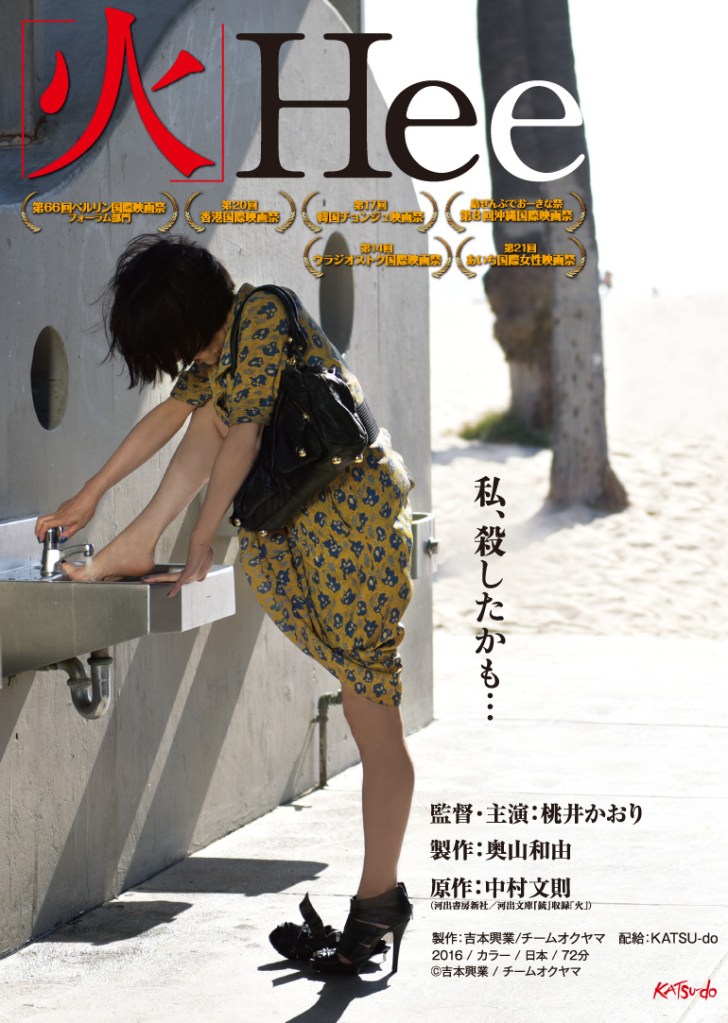
We first meet Azusa (Kaori Momoi) as she’s washing her foot in a public sink near a beach. A strange conversation with an American man implies that she’s involved in some kind of sex work and the pair head into a hotel where they’re stuck in a crowded lift with a collection of noisy strangers. Aside from this lift scene which is replayed with slightly different emphasises throughout the film, the narrative, such as it is, is provided by Azusa’s two sessions with passive psychiatrist, Dr. Sanada (Yugo Saso). In the first of these she discusses her feelings of guilt over the death of her family, killed in a fire started (perhaps not) by accident as she carelessly played with matches as a child. Later sessions see her accompanied by an official looking American man, seated in the corner but unable to understand much of what’s going on. Now Azusa is suspected of a violent crime but finds herself confessing to various other moral and criminal transgressions, but then again perhaps “confessing” is the wrong word.

Transposing the story from Japan to LA brings an additional layer of alienation to Azusa’s story as she finds herself alone and set adrift far from home. The slightly rundown, beachside faded glamour of the outside world contrasts neatly with the cool, ordered interior of the psychiatrist’s office where Sanada appears almost indifferent to Azusa’s monologue as he makes coffee in a vacuum pot and stares blankly straight ahead. It’s little wonder why Azusa remarks that perhaps he’s just not suited to this kind of work during her first session and even later states that he’s really just a sounding board for her – she’s monologuing for real, applying the talking cure to herself.

Intercut with Azusa’s monologues and the reoccurring lift scene in which Sanada also appears, Sanada is seen with his own, not quite happy, family. Married to a fellow doctor working at the same clinic, Sanada seems a little uncomfortable with his confident, dominant wife. Conversing in English at home the couple share extravagant meals prepared by their housekeeper with their little daughter but as Azusa’s monologues continue the family scenes become ever more strange and disjointed and Sanada is even seen wolfing down a plate of high grade beef in his pyjamas whilst sitting next to a bright burning fire inside a patio chimney heater. Azusa maintains control, both in the room and out, with Sanada left behind as passive observer.

Expertly played by director and lead actress Momoi, Azusa is a necessarily unreliable narrator as she offers her series of sad stories each of which leads towards a fire. Betrayed by men from her father onwards leading to a failed marriage, inappropriate relationship with another Japanese man in the US, and an ill fated assignation with an American possibly more interested in her daughter, Azusa’s only constant has been the fire but it also seems to spark her madness. It’s impossible to tell how much of what Azusa is saying is “true” at any given time as her oddly circular narratives fracture off yet return to the same point but what she appears to crave from Sanada is the simple act of acknowledgement – of being seen, understood, and respected as a human being.

Reportedly shot in just ten days for a minuscule budget, Hee is anchored by a strong performance from its leading lady but is occasionally undercut by Sanada’s passivity which leaves her without the necessary pushback. The English language actors offer their lines in a slightly surreal manner which adds to the heightened atmosphere of the piece but does not always gel with the other theatrical elements and, at times, proves jarring. Though sometimes too obtuse for its own good, Hee takes an interesting, experimental approach to its material and displays a nice flair for composition even if the cinematography itself remains more conventional. A frustrating, if sometimes fascinating, experience, Hee is the story of woman trapped in flames with only the last remaining hope that we will be able to see through the smoke and heat haze to finally acknowledge her presence.


Reviewed at the 2016 London East Asia Film Festival.

Original trailer (no subtitles)

The Map Against the World (고산자, 대동여지도, Kang Woo-suk, 2016)

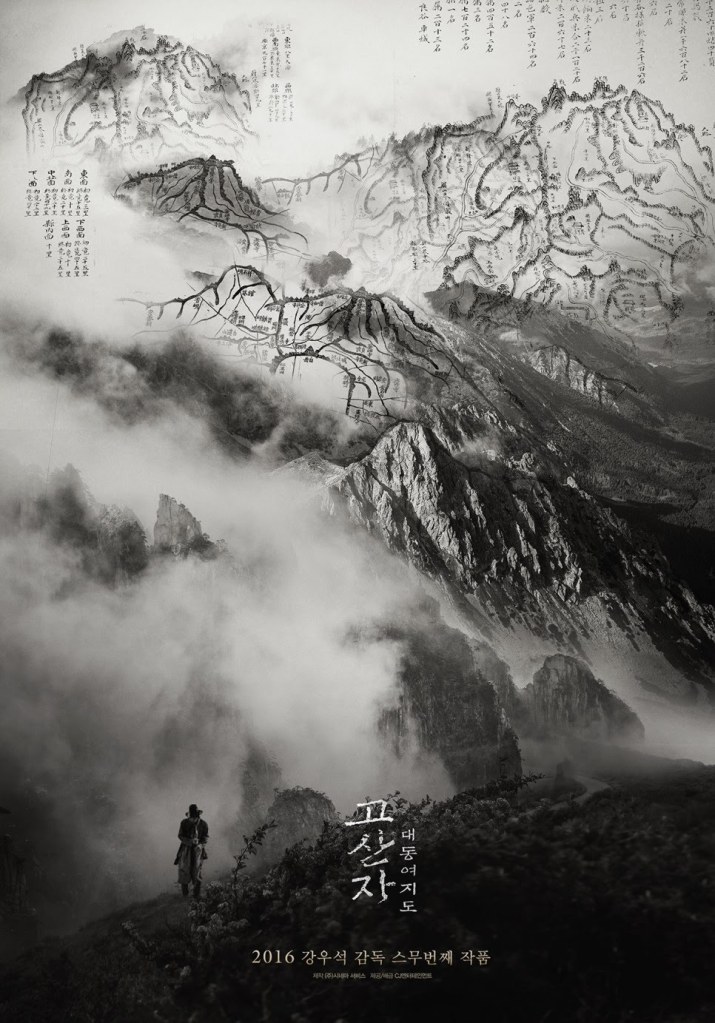
map-against-the-worldThe map is not the territory – as the old adage goes. There’s always a difference between the thing itself and the perception of it but, as the “hero” of The Map Against the World (고산자, 대동여지도, Gosanja, Daedongyeojido) points out, if you’re about to set off on a long journey it’s a good idea to not to rely on a linear map else you’ll run out of good shoes long before you reach your destination. Kim Jeong-ho (Cha Seung-Won) was, apparently, a real person (though little is known about him) who set out to make a proper map of the Korean peninsula after a cartographic error led to the death of his father and many other men from his village when they ran out of resources crossing what they thought was one mountain but turned out to be one mountain range.

The difficulty here is that The Map Around the World pivots around a man who is so crazed and obsessive in his quest that he causes serious problems not only for himself in a difficult political climate, but also for those close to him whose lives he ruins through neglect and abandonment. Is he a hero for following his dreams even though they cost others so dearly? The film seems to say yes, but it’s a difficult message to swallow.

Ever since Kim Jeong-ho’s father died, he’s been obsessed with the idea of creating an accurate map of the Korean peninsula from end to end including the “Dokdo” (or which ever name you wish to use) islands. Consequently, he spends much of his life wandering around on his own which has made him a bit strange. Returning home after a four year absence, Jeong-ho does not seem to be aware that time has been passing even in Seoul and his little daughter, Soon-sil (Nam Ji-hyun), is now all grown up. Jeong-ho also has a kind of relationship with his neighbour, Mrs. Yeonju (Shin Dong-mi), who has been looking after Soon-sil but it’s all a bit awkward.

Aside from Jeong-ho’s terrible performance as a family man, the main intrigue centres around his big philosophy – open access to information for everyone from the nobleman to the peasant. In order to make sure maps remain as accurate as possible, he’s hit on the idea of producing woodblocks so they can be reproduced en masse with fewer errors and then sold to anyone who wants one so that people are free to travel wherever they wish. This is an extraordinarily destabilising idea in the increasingly paranoid world of the late Joseon era under the Regent Heungseon Daewongun (Yu Jun-sang). The woodblocks are dangerous because the elites do not wish the common man to possess that kind of knowledge, would rather people did not travel very much, and there is always the old “national security” fear in which the rulers assert the danger of spies and invaders getting their hands on such an accurate guide to the terrain.

Of course, Heungseon Daewongun ruling as a Regent for his young son means there is also a simmering battle for power running in the background as second tier nobles snap away at each other trying to increase their status in the hope of making a bid for the big chair. Heungseon Daewongun has reason enough to be paranoid but his rule is an austere one in which all foreign elements are to be eliminated in their entirety.

Kim Jeong-ho’s world is difficult and often frightening but Jeong-ho cares for nothing but maps aside from the idea of the free exchange of information. The early part of the film is, broadly, a quirky comedy about an amiable eccentric laughing his way out of trouble whilst evading debt collectors and trying to earn the forgiveness of the women he’s abandoned with nary a word for the last four years.

Jokes about Jeong-ho’s awkward relationship with his neighbour, mild irritation with the idea that his now grown up daughter has a boyfriend, and buddy comedy with the guy helping him carve the woodblocks suddenly seem out of place when the film descends into a morass of cruelty and horror with no apparent warning. Jeong-ho himself is beaten by authorities determined to obtain his maps by underhanded means seeing as Jeong-ho wants them to be available to the people and therefore refuses to surrender them into the “care” of the state. When that doesn’t work, he places himself in line for more harassment, but that’s nothing compared to what happens when a secret sect of Christians (banned for fear of foreignness) is uncovered in the village. Brutally tortured and instructed to denounce others, the villagers are then publicly beheaded. Suddenly, maps don’t seem so important any more.

Nevertheless, Jeong-ho quickly gets over the stubbornness that has cost him the things he held most dear (aside, it seems, from maps) to get right back out there and do some hardcore cartography. The film ends on an oddly upbeat note as Jeong-ho ventures forth on another adventure, edging ever closer to completing his mission, but even if he is about to make his “dream” come true, that same dream has just got a number of people killed. Jeong-ho’s quest to make the maps available to all could be seen as resistance to the oppressiveness of the state, but it isn’t, he just really likes maps and thinks you should too. The Gangchi (otherwise known as “Japanese” sealions, apparently hunted into extinction by Japanese fishermen in the 1970s) frolic happily off the waters of Dokdo as Jeong-ho approaches, but it hardly seems like a cause for celebration.

Over long and tonally inconsistent, The Map Against the World is a frustrating and often dull experience. Hold the map against the world and see what you see, errors and imperfections everywhere. Yet fighting oppression through cartography is a difficult task, and when it comes down to it a map against the world is not enough on its own. Filled with picturesque shots of Korea’s natural beauty, The Map Against the World displays generally high production values but can’t decide if it’s the story of a valiant revolutionary waging a cultural war for freedom of information in the middle of a paranoid dictatorship, or just a film about a madman trying to map ever changing terrain. Jeong-ho’s quest may be a noble one, but his single minded determination and willingness to sacrifice other people’s lives in its service is far from heroic leaving the film’s bittersweet finale feeling very hollow indeed.


Reviewed at the 2016 London East Asia Film Festival.

Original trailer (English subtitles)

Harmonium (淵に立つ, Koji Fukada, 2016)

harmoniumKoji Fukada first ventured into the family drama arena with the darkly comic satire Hospitalité in 2010 in which frequent collaborator Kanji Furutachi played the decidedly odd “family friend” who quickly took over the household and exposed all of its weaknesses before departing as mysteriously as he arrived. This time Furutachi plays the man of the house, though like his counterpart in Hospitalité, has not been telling the whole truth. Unlike much of Fukada’s previous work, Harmonium (淵に立つ, Fuchi ni Tatsu) abandons the comedy overtones for a truly bleak and tragic atmosphere which seems to speak of the death of the family unit itself.

On a morning just like any other, Toshio (Kanji Furutachi), Akie (Mariko Tsutsui), and their small daughter Hotaru (Momone Shinokawa), take breakfast together around the kitchen table. Akie leads grace while Toshio reads his paper before Hotaru moves on to a story about the baby spiders in the garden and how they collectively eat their mother. After his wife and daughter have left for the day, Toshio lifts the shutter on his workshop only to see a familiar, if long forgotten, face standing behind it.

The two men talk and it’s clear they’re old friends but have not seen each other in a long time. Fresh out of prison, Yasaka (Tadanobu Asano) is dressed in an odd looking suit without a jacket, the top button of his pristine white shirt neatly buttoned up. Toshio offers Yasaka a job in his workshop and a room in his house – all without a word to Akie, but somehow there’s something other than an altruistic desire to help an old friend who’s fallen on hard times at play.

Yasaka moves in and is permanently on his best behaviour but it isn’t until it’s discovered that he has a talent for the harmonium and begins to help Hotaru improve her playing that Akie starts to warm to him. It also helps that he’s interested in her spiritual life at the local protestant church, unlike her husband, and is generally around and available to her. Learning how Yasaka ended up in prison and how he now feels about his crime, Akie comes to feel this melancholy man must be especially worthy to God, and sure enough a mutual attraction begins to arise between the pair.

There’s a kind of debt implied in the relationship between Yasaka and Toshio which has Toshio running scared, trying to keep his old friend sweet lest he call it in. Yasaka’s intentions remain unclear, has he come for revenge or for comfort, to restart his life or to rehash the past? There’s something inescapably odd about his presence with his identical black suit trousered, white shirted figure which simultaneously makes him look like someone who just came out of prison and has been given one outfit to help them get a job, and like a dodgy TV evangelist or cult leader – ever so slightly too buttoned down and contained. At one point he tells Toshio he’s starting to wonder why Toshio has all of this ordinary success and he doesn’t, he could take it if he wanted to. Toshio, it has to be said, is not trying very hard to protect his place at the head of the table.

Like Yoshimitsu Morita in that other landmark of the family drama turned inside out by an unscheduled visitor, The Family Game, Fukada also makes the dinner table the centre of the conversation. We can see right away that this is not a “harmonious” household through the unbalanced seating arrangements – Toshio on one side, barely speaking and reading his paper, while Akie and Hotaru sit together opposite him reciting grace before they eat. There’s an ugly, empty space at the expected fourth position which is soon to be filled by Yasaka, but his presence does little to alleviate the anxiety of three people sitting at a table meant for four. Notably, after an unexpected tragedy occurs in the second part of the film the table itself has been rotated ninety degrees and only half of it is ever used as the lower part is cut off with a small TV showing live footage from another room. The family no longer take meals together, the kitchen is no longer a warm and organised place but a cold and chaotic one.

The sins of the father are visited upon the child. Everyone thinks they’re guilty of something, and that someone else is paying for their wrongdoing (and by implication forcing them to suffer by proxy). The presence of the harmonium – a staple in small churches and parlours of the 19th century, has a strangely religious resonance that perfectly tallies with Akie’s adherence to her Protestant faith which infuses the house even in the absence of crosses or other forms of iconography. Yasaka carries with him a sense of malevolence, like a visiting demon tempting and provoking as he goes, though it ultimately remains unclear if he is even to blame for the tragedy which befalls the family or is simply another victim of it.

Retaining his elegantly composed, static camera, Fukada makes use of unusual and high impact cuts as well as a daring, unannounced jump forward in time. Red becomes a recurrent theme as it alarmingly cuts through the otherwise subdued colour scheme whether as a T-shirt hidden behind a calm white boiler suit, or the reflections of a car window as a particularly dark thought passes through a passenger’s mind. Filled with mismatched pairs and asymmetrical setups, the family find themselves locked into a wheel of repetitions until the final scene which sees them recreate a “happy” family photo in a kind of grim tableau as neglectful father Toshio desperately fights to revive his family. Darker in tone and filled with an almost supernatural malevolence, Harmonium is a tense and unpredictable drama probing at the status of the traditional family in an increasingly uncertain world.


Reviewed at the 2016 London East Asia Film Festival.

UK release trailer (English subtitles)