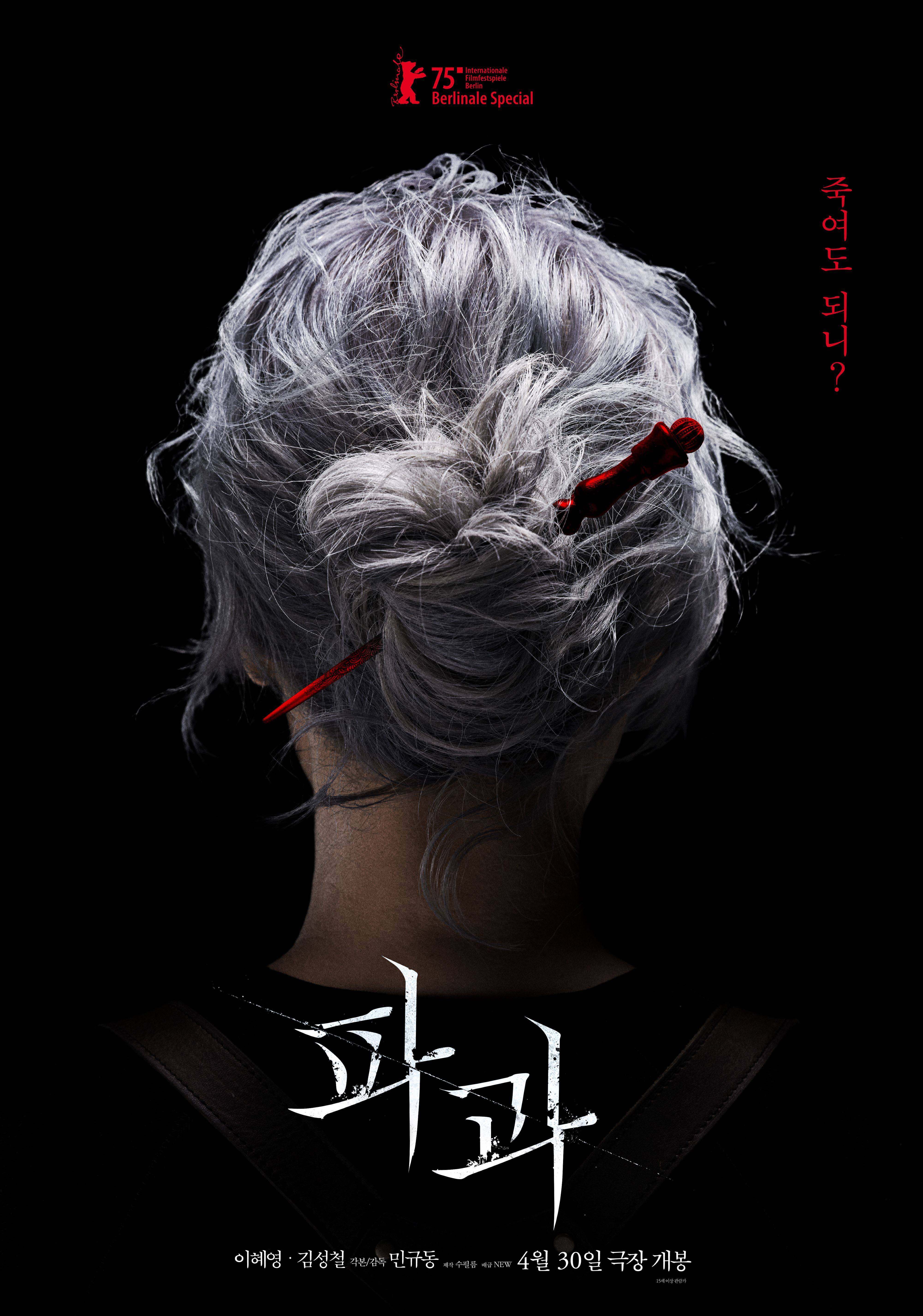
The Old Woman with the Knife (파과, Min Kyu-dong, 2025)

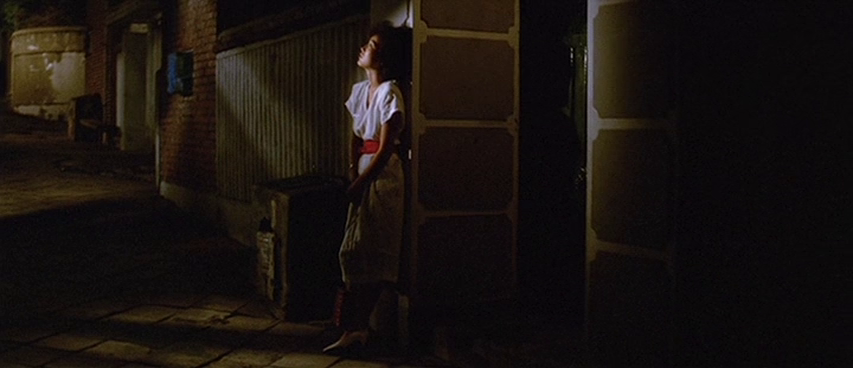
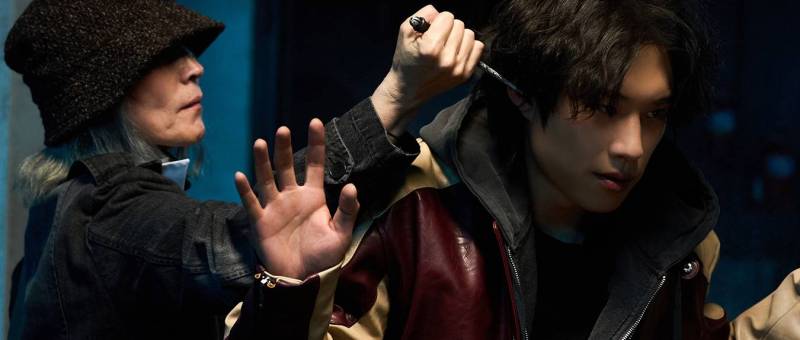
There’s an acute vulnerability that comes with ageing. It’s not vanity or mortality so much as your body betraying you as even once simple tasks become increasingly more difficult. When you’re an assassin, a loss of speed or dexterity is cause for concern and Hornclaw (Lee Hye-young) is beginning to feel her age. Her hands have begun to shake uncontrollably and as she admits to a stray dog she finds herself taking in, you forget things when you’re old. There are those in the office who have begun to notice that Hornclaw is not quite as she was and view her as a thorn in their side, a relic of an earlier era preventing them from moving on into a hyper-capitalistic future.

The original Korean title of Min Kyu-dong’s The Old Woman with the Knife (파과 Pagwa) is “bruised fruit”. An old woman working at a greengrocers throws in an extra peach for free because it’s damaged and people won’t buy them, which is silly, in her view, because they’re the best ones and always taste the sweetest. On that level, the film is about ageism and the ways older people are often written off as past their prime, but on another also about Hornclaw’s bruised but not quite buried heart and the hidden empathy that defines her life even as a contract killer. It may also in its way refer to her opposite number, Bullfight (Kim Sung-cheol), a hotshot young assassin recruited by her less ethically minded boss Sohn (Kim Kang-woo) who despite his sadistic cruelty is really just a hurt little boy looking for a maternal figure in the legend that surrounds Hornclaw. 

She was a stray dog herself until someone took her in and gave her a home, much as Bullfight is now looking for a place to belong. Hornclaw comes to identify with the dog she rescues, Braveheart, because as the vet says it’s awful to be abandoned when you’re old and sick, but perhaps also when you’re young and lonely. As her mentor taught her, having something to protect also makes you vulnerable while as you age the people you’ve lost return. Like her underling Gadget who sees visions of his late daughter, Hornclaw too is drawn back towards the past in seeing echoes of Ryu (Kim Mu-yeol), the man who saved her, in altruistic vet Dr Kang (Yeon Woo-jin).

There may be something disingenuous in the insistence that each of us must save the world coming from a band of supposedly ethical hitmen who only knock off “bugs” that are actively harmful for society. After all, who is making those decisions as to what constitutes “harmfulness”? Everyone Hornclaw takes out is indeed morally indefensible, but as she cautions Bullfight, when you start seeing people as insects you become an insect yourself. Sohn wants to reform the agency to take on more lucrative contract killing jobs such as taking out a wealthy man whose only crime appears to be being a cheating louse, while Hornclaw insists on sticking to their principles and only carrying out missions of justice which are the cases Sohn keeps turning down like that of a religious leader who has been abusing his followers. 

The vision of Hornclaw as a resentful avenger echoes that of Meiko Kaji in the Female Prisoner Scorpion series. Often caught in silhouette, she too wears a wide-brimmed hat that hides her eyes and aids anonymity, while she at one point gives her real name as “Seol-hwa” which means “snow flower” and hints at Lady Snowblood but also to her own moment of rebirth after being discovered half-dead in the snow and rescued by Ryu who gave her a purpose and sense of self-worth, not to mention a home. The irony is that Hornclaw ends up creating a monster because of her own repressed emotionality and is then unable to understand why this figure from the past has returned to her because her way of seeing the world only allows her to interpret it in terms of vengeance.

But what her new mission tells her is that having something to protect is in many ways the point and the very thing that gives her an edge over those who have nothing left to lose. Wresting back control over the agency, she vows to continue their mission as it’s always been rather than allow Sohn’s amoral capitalism to win out over justice and righteousness. Truth be told, the superhuman quality of Hornclaw’s movements is slightly at odds with the otherwise realistic tone of the rest of the film in which, as the secretary puts it, the weight of all the years is beginning to take its toll. But ironically it’s in closing her escape route that she finds true liberation in putting her ideas into practice in a more direct way while opening herself up to the world around her. There’s still life in the woman with the knife yet, and there are still plenty of bad guys out there along with a stack of files in need of attention, which is all to say retirement is going to have to wait.


International trailer (English subtitles)
Between the Knees (무릎과 무릎 사이, Lee Jang-ho, 1984)

“We are all suffering from this Westernised lifestyle and way of thinking. They are not really meant for us,” according to a sympathetic doctor, played by the director himself, at the end of Lee Jang-ho’s erotic melodrama, Between the Knees (무릎과 무릎 사이, Muleupgwa muleupsai). The heroine does indeed find herself trapped between the Korea of the past and the modern society, but the film often seems confused in its central messages in its own use of the woman’s body as metaphor for that of the nation despoiled by foreign influence. 

This is most obviously the implication of Ja-young’s (Lee Bo-hee) flashbacks in which she is quite clearly molested by her flute teacher who is a bearded white man. When her mother walks in on the abuse, she blames Ja-young beating her and shouting what we would assume to be unpleasant words branding her as a seductress though she is a clearly a child. As is later explained, Ja-young’s mother is carrying her own baggage in that her own mother was the mistress of a married man and fearful of the same fate befalling her daughter, she has brought her up with problematic notions of bodily purity that have caused Ja-young to develop a complex surrounding her sexuality in which she is unable to process her desires as a young woman. 

She later says that through her “immoral behaviour and desire to sin” she has found “freedom” as if sexuality was her way of rebelling not only against her mother’s tyranny but social conservatism in general. However, she also characterises it as the extreme opposite, blaming her mother in insisting that her treatment of her has left her with no control at all over her sexuality. In the film’s problematic framing, she essentially allows herself to be raped by a series of men partly as an act of self-harm, partly as rebellion, and partly because she has no other way of permitting herself to satisfy her sexual desires. This is of course dangerous, portraying a woman who says no as one who is really saying yes but resisting out of shame, but there is also a completely paradoxical criticism of Korean men all of whom are rapists except for Ja-young’s sort of boyfriend Jo-bin (Ahn Sung-ki) who is so obsessed with traditional Korean culture that he has earned the nickname “antique”.

Jo-bin lives in a Korean-style home and spends his time playing the flute, training in traditional martial arts, and watching pansori in comparison to the pursuits of other young people such as Ja-young’s brother Ji-cheol who mimics Michael Jackson and spends all his time in discos. Towards the beginning of the film is seems that Ja-young will be torn between Jo-bin to whom she originally says “if you’re so old-fashioned I may have to run away with you” and an incredibly unpleasant fellow student who refuses to take no for an answer and in fact eventually rapes her during an expressionist rainstorm that violently awakens her sexuality. The battle then really becomes whether or not Ja-young will be able to accept it, despite the realisation that she is “no longer the kind of virtuous bride that Korean men expect.”

This hints at the pernicious double standard of the contemporary society in which men largely behave like animals, treating women like trophies to be conquered and then discarded while insisting on a “pure woman” for a wife. The discord in Ja-young’s home stems from patriarchal failure, not only that of the man that made her grandmother a mistress and not a wife, but her father’s in having fathered a child with a 17-year-old Korean War orphan he took into his home. Resentment over his betrayal has further embittered Ja-young’s mother and caused her to double down on her sexual conservatism while fiercely resenting her husband’s other daughter. Yet in the film’s final stretches, a degree of female solidarity arises between the women that largely excludes the father with Ja-young’s mother accepting Bo-young as another daughter and inviting her to live in their home now her still young mother has remarried. 

Violent male sexuality also rears its head in a subplot in which a mute man who had developed feelings for Bo-young’s mother while they were being raised in the same orphanage attacks Ja-young’s father for ruining her life, as he undoubtedly did even if he tried to take at least some responsibility for his transgression. Bo-young later says that her mother hated the mute man and did not want to be in a relationship with him anyway, though he too it seems could not take no for an answer. In any case, it is only the traditionalist, Jo-bin, who is willing to accept Ja-young for who she is. He knows all of her ordeal and does not reject her for her sexually active past, rather scoffing when she had described sex as being a sin with the perhaps mistaken implication that such things were not regarded as taboo in the Korea of the past even as, paradoxically, it appears that Jo-bin is drawn to Ja-young’s old-fashioned modernity in rejecting his mother’s constant attempts to set him up with an arranged marriage. 

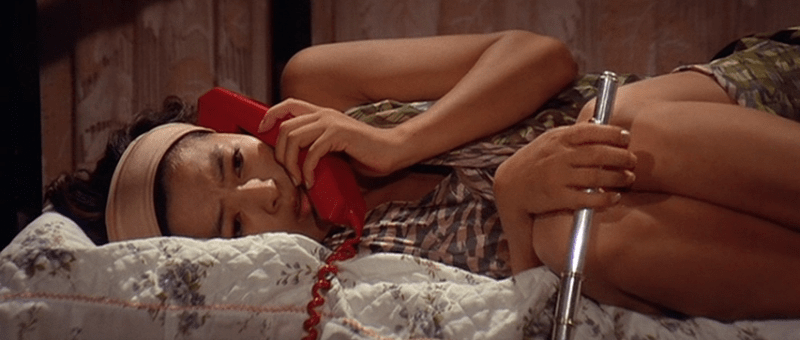
Of course, all of this is also very much informed by the climate of contemporary Korean cinema which had descended into an era of softcore pornography deliberately supported by the Chun regime as part of a bread and circuses social policy designed to distract the people from their democratic desires. Lee opens with sexually charged closeup of Ja-young’s lips on her flute, a phallic symbol also present in Ja-young’s forbidden fantasises as she idly fondles it after hearing heavy breathing on the telephone and experiences another moment of sexual crisis. Perhaps that’s paradoxical itself in that it’s learning to play this Western instrument that has led to her corruption in an allegory for a nation’s pollution by Western culture. In any case, Lee seems to imply that sexuality can be an act of resistance towards oppressive social codes but is otherwise unsure if that represents liberation or merely another form of oppressing one’s self.


Sa Bangji (사방지, Song Kyung-shik, 1988)

The presence of an intersex person presents an existential threat to a fiercely patriarchal social order in Song Kyung-shik’s intense feudal-era drama, Sa Bangji (사방지). Inspired by the life of a historical figure who was exiled from mainstream society because of their gender identity, the film finds its protagonist continually exploited as a fetishised object of desire challenging the sexual repression of a society in which women were required to display no sexuality. 

The monks at the temple where Sa Bangji (Lee Hye-young) was raised advise them that they cannot live in the secular world and with good reason, as the hostility with which they are later greeted makes clear. On looking at them, a shamaness immediately has a vision of a snail, which is as she later explains a “hermaphrodite” creature, and immediately seems to have grasped their secret. The shamaness explodes with rage and insists the noble house by whom Sa Bangji has reluctantly been taken in as a maid should expel them at once for they will only bring misfortune and potentially death. They are later told that they are abomination born from their parents’ bad karma and made to pay the price for it with only the kind Buddhist monk reminding Sa Bangji that there will always be a place at the temple for them and that bad karma can always be overcome with goodness and light. 

Sa Bangji hadn’t wanted to leave the temple because they longed to see the world beyond it, only that even in this comparatively safe space they felt a burden while again ironically caught between two worlds neither nun nor layman. Though they present as a woman, Sa Bangji has male genitalia and is at pains to keep their true nature hidden. When the widow Lee So-sa (Bang Hee) encounters Sa Bangji at the temple, she too is drawn to their uncanniness and determines to “rescue” them from a monastic existence by taking them back to her home as a maid. Once there, she begins on what can only be described as a campaign of sexual harassment in which she continually makes advances to Sa Bangji who repeatedly turns them down because they are afraid of what will happen once their gender atypicality is exposed. So-sa in fact forces it out of them by accusing Sa Bangji of stealing a precious ring as a pretext for strip searching them. 

This ring is later exchanged as a token of their love once they have indeed become intimate and discovered in each other romantic fulfilment. Yet the ring also echoes the constraint which surrounds each of them by virtue of not being male in feudal society. “How dare you make decisions all by yourself” So-sa is told when she arrives home to the estate of her husband’s family with Sa Bangji in tow, even as a noblewoman unable to exercise much agency and dependent on relatives who blame her for her late husband’s death. Her chief oppressor is of course her mother-in-law who, as an older woman, has more power, though no more freedom, and uses it to control other women. So-sa keeps Sa Bangji captive as a kind of plaything and accidental sex slave, in part to ensure their identity is not revealed, but they do seem to have found a transgressive freedom in the genuine connection between them which is brokered by Sa Bangji’s otherness.

It is Sa Bangji’s hidden “masculinity” that both gives them power and makes them vulnerable. So-sa eventually betrays them, unable to defy the feudal order to protect the person she loves, and Sa Bangji finds themselves once again imprisoned this time by the shamaness who pimps them out to other sexually frustrated women who are not permitted to express sexual desire such as widows and concubines as part of what she originally claims is a plot of revenge against oppressive nobility who forced her shaman husband to father a noble woman’s child and then killed him to keep the secret. 

Sa Bangji too wants revenge and eventually insists that they are going to show the word the beauty of their body, only for that body to be repeatedly commodified and seen as little more alive than the dildo So-sa shockingly removes from a locked chest in order to ease her frustrated desires as a youthful widow. They are called a “freak”, and eventually come to see themselves as a “monster”, “neither male nor female” and therefore existing outside of the tightly ordered patriarchal feudal society which is what makes them such a threat. In the end, not even the sacred land of the temple is safe from secular intrigue. Sa Bangji makes a drastic decision in an attempt to free themselves from gender-based oppression but it isn’t enough to overcome the world’s cruelty and leaves them once again caught between two worlds, unable to overcome the fragile masculinity of the patriarchal feudal order. 


Sa Bangji screens at Genesis 29th April as part of this year’s Queer East 

The Anchor (앵커, Jeong Ji-yeon, 2022)

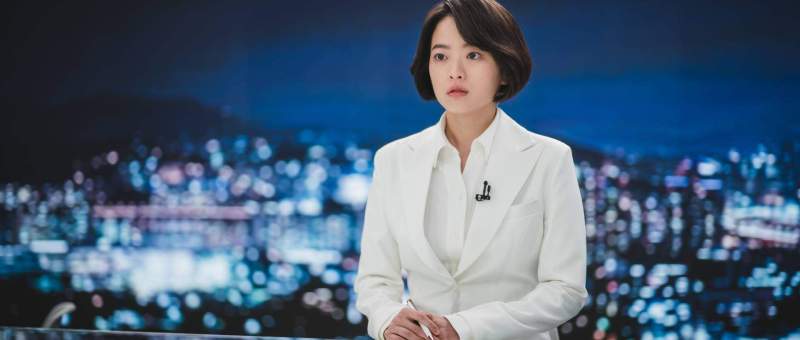
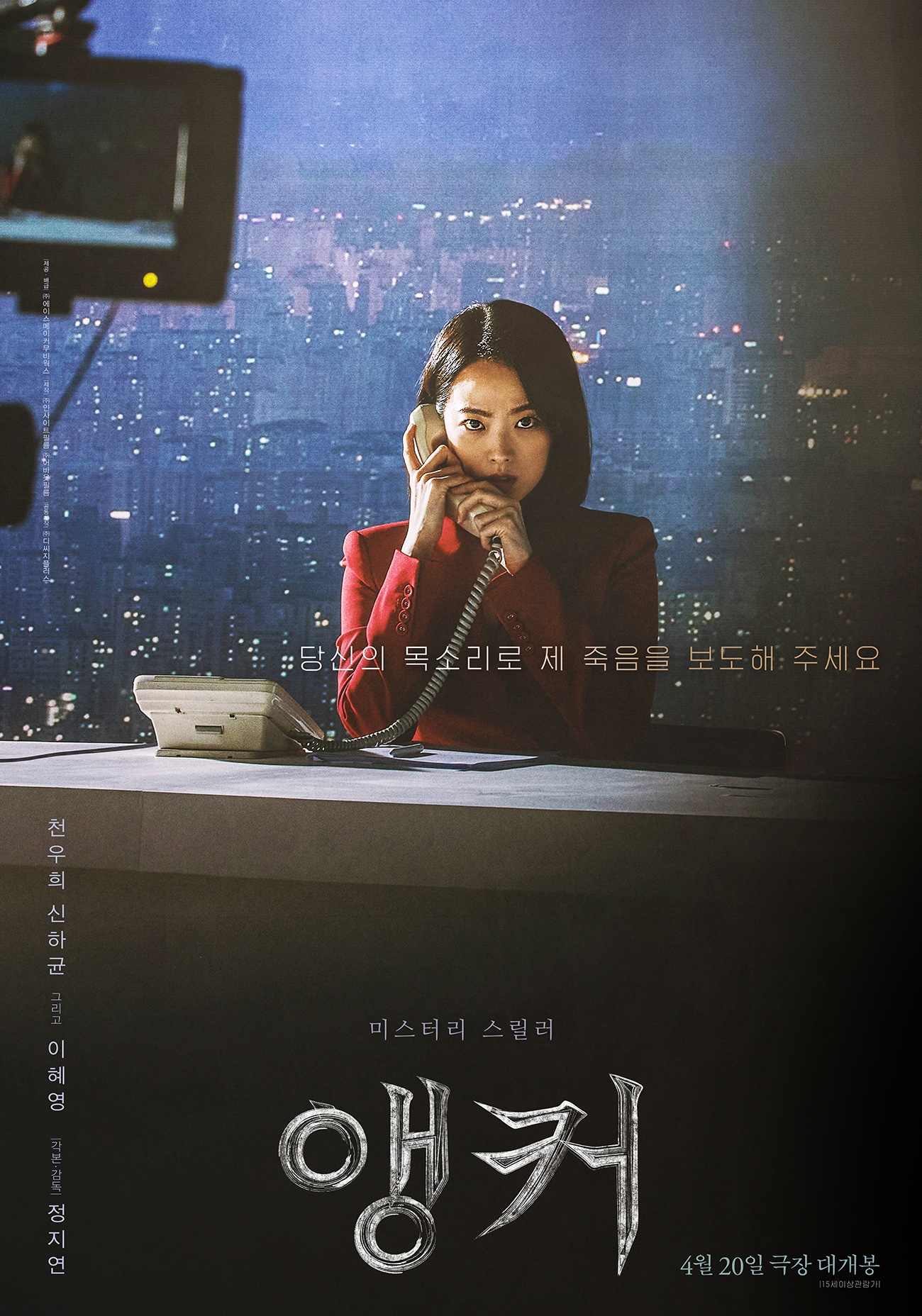
A successful newsreader’s sense of reality begins to fracture when she ends up becoming part of the story in Jeong Ji-yeon’s twisty B-movie psychological thriller, The Anchor (앵커, Anchor). As much about mothers and maternal anxiety as it is about a patriarchal and conservative society, Jeong’s eerie journey through the psyche of a traumatised woman is also a quest for identity and a search for the self as the heroine rails against her role as a mere conduit for the thoughts and will of others. 

In her mid-30s, Sera (Chun Woo-hee) is a popular anchor helming the most important news report of the day. Yet she’s facing a challenge from a younger rival who is not a trained presenter but a respected reporter who can bring a degree of editorial authority to the desk which her polished delivery cannot. As one of her bosses puts it, it’s the way that things are going which Sera seems to know seeing as he also remarks that she’s been trying to gain experience as a reporter so that she can be a “real anchor”. As it stands, her job is mostly to look presentable and support the male lead reading out words other people have written presented to her by autocue. Her mother (Lee Hye-young) is always needling her, insisting that she can’t afford to let her guard down even for a moment if she wants to keep her spot while further fuelling her sense of futility in suggesting that even becoming a news anchor may not have been her decision in the first place so much as in service to her mother’s desire for vicarious success. 

When a strange woman, Mi-so (Park Se-hyeo), calls in to the station one day insisting on speaking with Sera directly it seems like the perfect opportunity to prove her credentials as an investigative reporter but her male colleague immediately shuts the conversation down writing off the woman’s claims that she’s being harassed by an unknown aggressor as a prank call from a crazed fan. Sera follows his lead and in any case has to read the news, but something about the woman’s story disturbed her so she decides to check out her address and is shocked to discover the woman’s daughter dead in the bath and the woman herself hanging in her closet with her phone still in her hand. Perhaps echoing her own fragile mental state, Sera is haunted by the image of the woman hanging but does not seem to feel particularly guilty or responsible for her death in not following up immediately in case she and her daughter could have been saved so much as determined to turn the case into her personal crusade to decrease the likelihood of them kicking her off the desk.

The desire to investigate the case herself is in part a desire to assert her own identity as distinct from that projected onto her by her overbearing mother and chauvinistic husband who insists that her mother is controlling her but in reality just wants to control her himself. Min (Cha Rae-hyung) keeps badgering her about starting family but seems oblivious to her wishes though the couple appear to have been separated for some time only keeping up appearances to avoid the possible fallout from the scandal of divorce. Becoming a mother is in a way to lose one’s own identity especially in a society such as a Korea’s in which women who bear children stop hearing their own name, addressed only as so and so’s mum rather in their own right. It may partly be this sense of erasure which drives the resentment which exists between mother and child along with a persistent social stigma against women raising children alone especially if born out of wedlock. The idea of a woman seeking fulfilment outside of the home is still to some taboo with a strong social pressure for women to abandon their own hopes and desires and devote themselves entirely to the role of “mother”. 

On trying to decide how to frame the case, the editorial board is torn between viewing Mi-so as a victim of unjust societal pressures and condemning her as an evil woman who murdered her daughter and then herself, the police having decided that there was no third party involved despite Mi-so’s claims of an intruder. Even with a more compassionate framing, the message is pity rather than a drive for social change in which women like Mi-so who appears to be incredibly young, little more than a child herself, could get the help they need. Sera becomes convinced that a creepy psychiatrist (Shin Ha-kyun) specialising in hypnotism is somehow responsible though he frames the mysterious intruder as a kind of phantom, a manifestation of buried trauma ratting the doors trying to get in or else a convenient “entity” that allows the hauntee to deny their responsibility or reality. In any case, Sera’s investigations take her to a dark place but eventually arrive in a kind of psychological wombscape in which she must finally kill the image of the mother in herself in order to escape her mother’s house in a symbolic vision of birthing a new self having reclaimed her individual identity. Elegantly lensed and filled with visions of refracting mirrors reflecting Sera’s identity crisis Jeong’s eerie psychodrama eventually allows its heroine to find her own way out of unresolved trauma if only ironically.


The Anchor screened as part of this year’s London Korean Film Festival.

Original trailer (English subtitles)
Walk Up (탑, Hong Sang-soo, 2022)

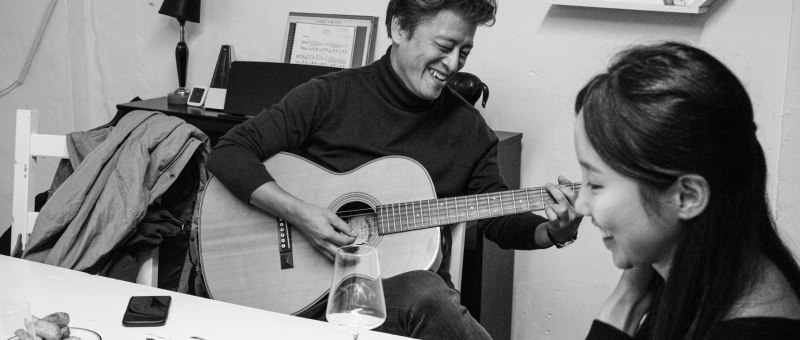
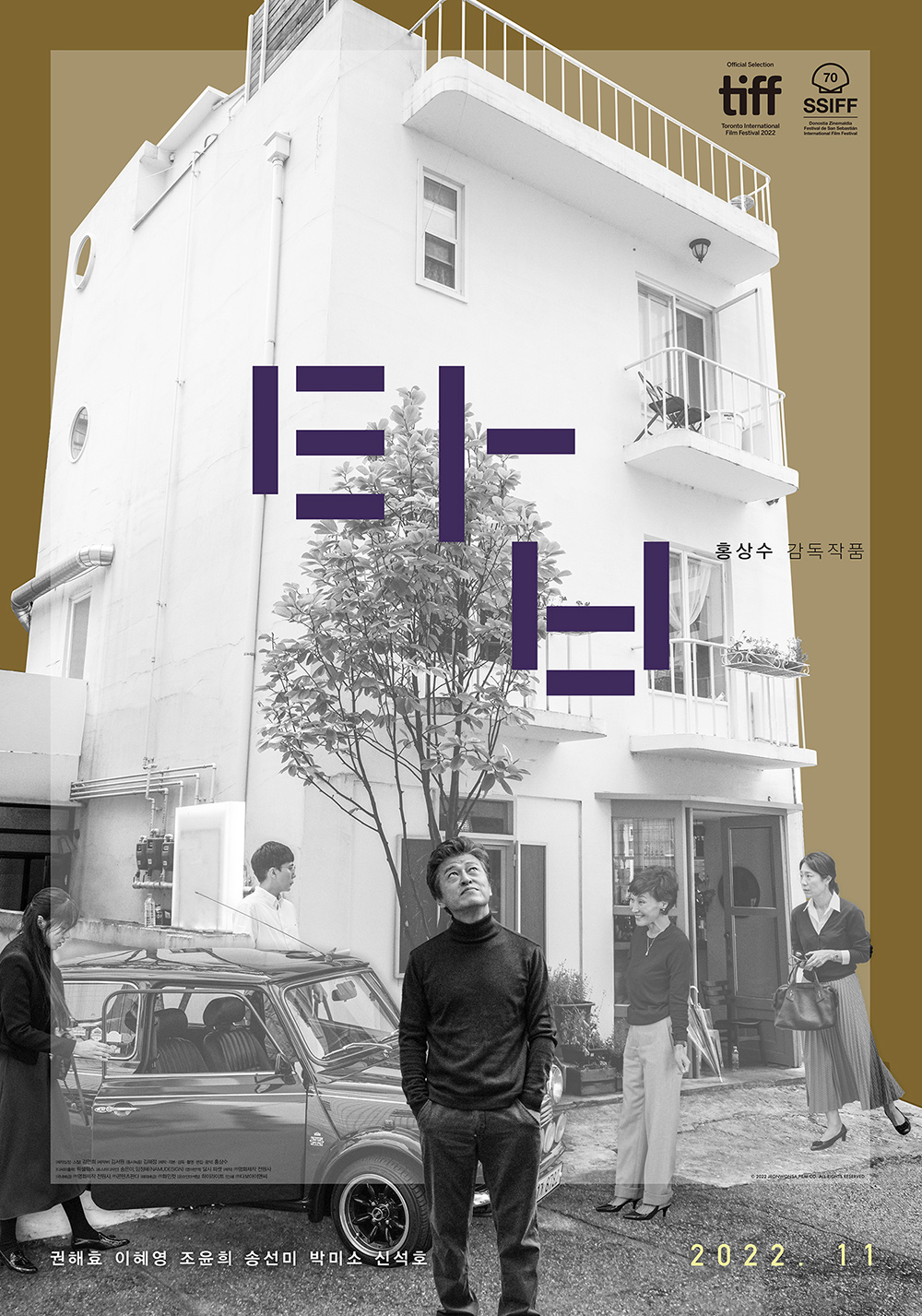
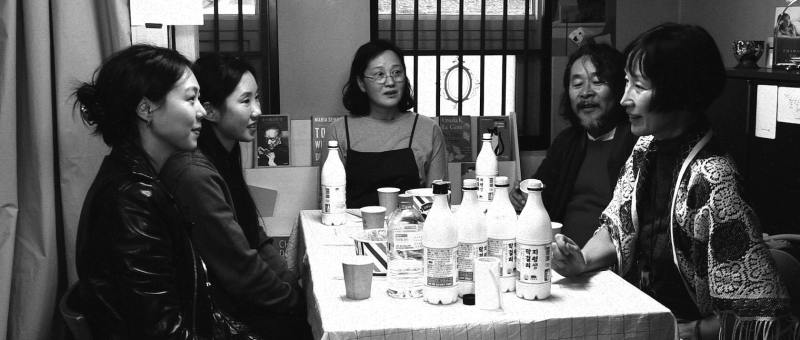
“Really all of us are like that. We’re different when we go out” an older woman tries to console, ”you want to believe that the person you see at home is the real him”. The second remark may come out more cuttingly than she means it, unsubtly suggesting that really you never know anyone and the intimacy you might believe exists within a family is just a performance. The director at the centre of Hong Sang-soo’s Walk Up (탑, tab) is indeed several different people with several different women across multiple floors of a small building owned by an old friend, Mrs Kim (Lee Hye-young), with whom he repeatedly checks in across the space of several years. 

Distance does seem to define Byungsoo’s (Kwon Hae-hyo) existence. When he turns up at Mrs Kim’s the first time, it’s with his daughter, Jung-soo (Park Mi-so), whom he later reveals he had not seen for five years. Jung-soo is there trying to make a connection, hoping Mrs Kim will take her on as an apprentice interior designer having experienced a moment of crisis on leaving art school and discovering that “art has nothing to do with money”. That’s also a problem that repeatedly plagues Byungsoo. During their conversation he’s called away to a meeting with a film producer, and later reveals that a project has fallen through after the funding was pulled at the last minute. Byungsoo embarks on a small rant about the commercialisation of the film industry in which artistic decisions are overruled by investors and no one really cares anymore about whether the film is any good only if it’s going to make money. 

Jungsoo had described her father as “feminine” and “domesticated” during her early childhood before her parents’ divorce, explaining that he seemed to change after his film career took off. Where once he’d been content to spend time a home, suddenly he was out all the time partying with actresses. Jungsoo seems to regard this personality shift as a kind of betrayal, hurt by Mrs Kim’s suggestion that Byungsoo may have been repressing himself at home and the “real” Byungsoo was the one who liked to go out on the town. Then again, people can be many things at once and perhaps there’s no one “real” Byungsoo so much as there’s the Byungsoo of the moment. Sunhee (Song Seon-mi), another failed painter who now runs a restaurant on the second floor, panders to his wounded ego repeatedly telling him how much she likes his films, though mostly for the things they’re not, and that she hopes that he will go on making films for many years to come. 

But it’s obvious that Byungsoo is deeply insecure, eventually drifting into an affair with Sunhee and living with her in the second floor apartment having taken a break from filmmaking due to ill health. He bristles when she tells him she’s going to visit a friend who slighted him on a previous occasion and tries to guilt her into not going, repeatedly texting her while she’s out to a degree that seems uncomfortably possessive and controlling. Yet he eventually ends up hugging his pillow and admitting to himself that perhaps he’s no good at relationships and deep down gets along better on his own. Even so, he later ends up with a third woman, an estate agent, who brings him wild ginseng to help with his health worries while he moves up to the studenty top floor flat which while barely big enough to turn around in comes with a spacious roofgarden. By this point his relationship with Mrs Kim, who basically begged him to move in when he first visited with Jungsoo, has clearly become strained, she perhaps also a little hurt in appearing to have carried a torch for him while hinting at feeling trapped in an unsatisfying marriage as the building itself continues on a course of disrepair. 

Mrs Kim too appears to have differing personas as she shuffles between the floors of the building she owns while each of the episodes replays with only slight differences and subject to the consequences of the last. Failed artists moving to Jeju to start again becomes a repeated theme, though it’s as if Byungsoo is resisting the pattern, talking of buying a dog with Sunhee when they relocate but then putting it off for another three years while they save money. By the time he’s made it to the top floor it’s like he’s hit rock bottom, raving about a vision from God telling him to move to Jeju and make 12 films while still ostensibly on an extended break from filmmaking. Shooting once again in a crisp black and white, Hong finally brings us back to where we came in leading us to wonder how much of what we’ve just seen really happened and how much was just a kind of thought experiment created by a bored and insecure director feeling maudlin and trying to figure himself out while his career collapses around his ears. Maybe you have to go up so you can come back down, but it doesn’t seem to leave you any less lonely as the melancholy Byungsoo discovers smoking a solitary cigarette looking up at the house from outside as if trying to decide where exactly he belongs. 


Walk Up screens at Ultrastar Mission Valley on Nov. 9 as part of this year’s San Diego Asian Film Festival.

Trailer

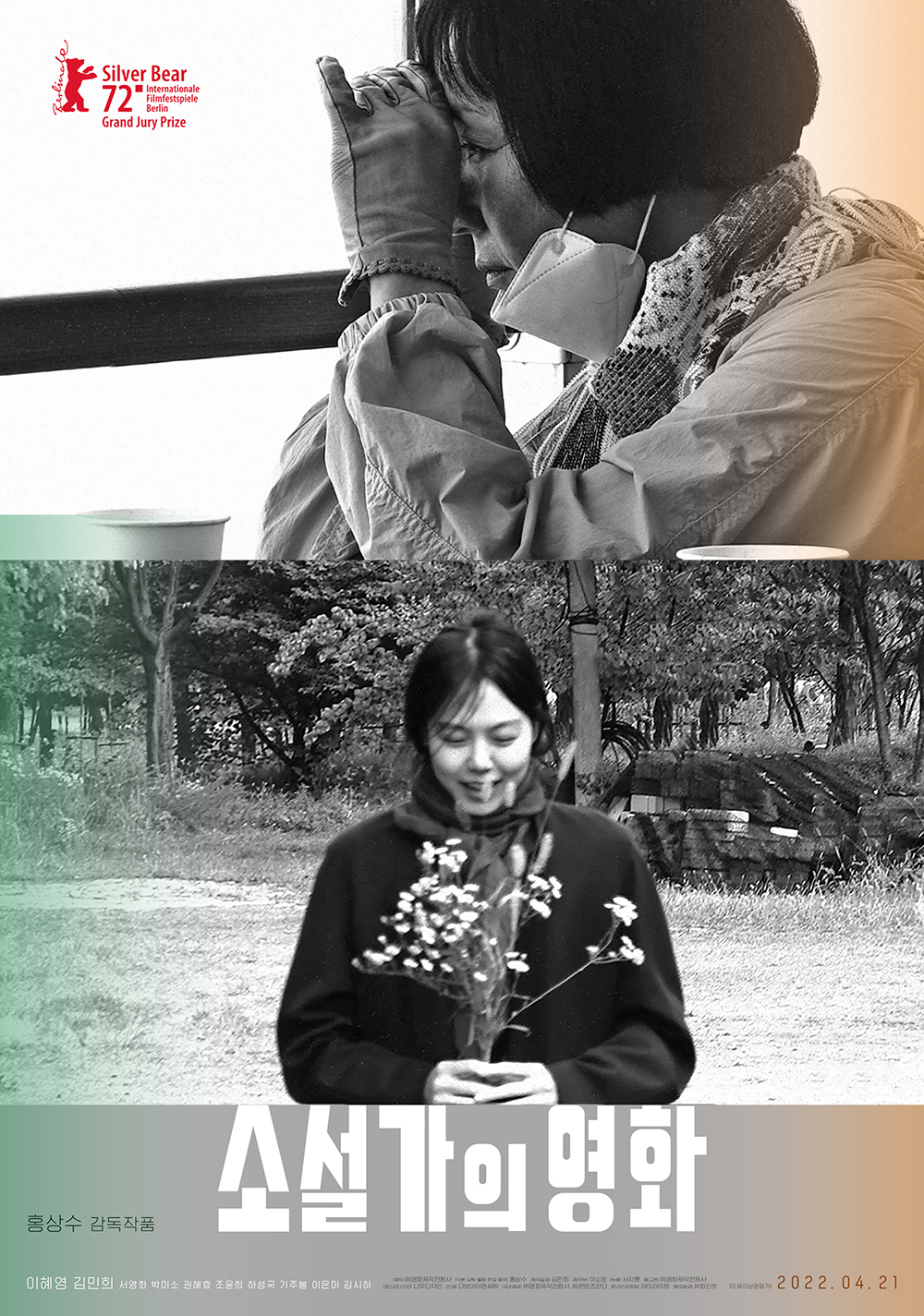
The Novelist’s Film (소설가의 영화, Hong Sang-soo, 2022)

Once again in a meta mood, Hong Sang-soo’s The Novelist’s Film (소설가의 영화, Soseolgaui Yeonghwa) seems to be peopled by those who’ve already given up. The heroine’s friend has given up her writing career to run a small-town bookshop while she herself is struggling with writer’s block, her friend’s assistant has given up acting to learn sign language, and a movie star she later meets has apparently retired because she doesn’t feel the desire to act anymore. In similar fashion a director declares that some have perceived a shift in his career that leads him to concede that he just doesn’t feel the sense of “compulsion” that used to drive him and his work may have become freer and more authentic as a result. 

As usual, Hong may partly be taking about himself, about his relationship to filmmaking and to his muse Kim Min-hee who is herself given a meta moment when berated by the director, Park (Kwon Hae-hyo), who tells her that her decision to retire is a “waste” of her talent only to be shouted at by blocked novelist Junhee (Lee Hye-young) who is hoping to make a film in order to rejuvenate her creative mojo. Junhee tells Park in no uncertain terms that Kilsoo is not a child and if this is the choice she’s made he ought to respect it, circling back to the offensiveness of the word “waste” and its various implications. The situation is so awkward that it leads Park’s wife to leave it all together, but it’s true enough that after this outburst Junhee seems to find a more comfortable relationship with Kilsoo than with any of her old acquaintances as they bond in mutual admiration and shared creative endeavour. 

It’s with a sense of tension that the film opens, Junhee venturing into the bookshop run by an old friend (Seo Young-hwa) only overhear a heated argument between her friend and a younger assistant, Hyunwoo. As so often with Hong the nature of the relationship is unclear, the argument intimate in quality not really the kind one has with an employee or casual acquaintance and so awkward that Junhee decides to wait outside until it’s over. In any case, Junhee’s manner even with the friend she’s deliberately tracked down and come to see is somewhat accusatory and passive aggressive as if hurt by her friend’s decision to abruptly drop out of contact apparently having given up writing and intending to cut herself off from her city life in its entirety.

Her encounter with the director is similar in that she seems clearly annoyed with him, firstly pretending not to recognise his wife then accusing of them of deliberately hiding from her at a popular tourist attraction. Picking up on the vibes, he asks her if she’s still upset with him over a project to adapt one of her novels that fell through. She says she isn’t but is obviously annoyed about something while his wife elaborates on his creative process and the ways she thinks he and it have changed. Then again the wife is also a little strange, introducing herself to Kilsoo, whom they’ve randomly bumped into in a park, as someone who lives with director Park rather than as his wife answering Kilsoo’s question of how long she’s lived with him with a very matter of fact 30 years. Junhee is similarly vague about the extent of her relationship with an ageing poet and former drinking buddy (Gi Ju-bong) with whom she had herself lost touch or perhaps partially ghosted when his interest turned romantic. We hear brief snippets about Kilsoo’s personal life, an allusion to scandal and drinking problem but never see her offscreen husband, only his filmmaker nephew (Ha Seong-guk). 

Yet the the serendipitous connection between Kilsoo and Junhee allows each of them to reignite their creative spark while generating an unexpected friendship. The film novelist envisions is scripted but intended to capture something of Kilsoo as she is while ostensibly playing a character, exposing the reality of the vague relationships by cutting through artifice to the truth. In another series of meta comments, the poet reminds her she needs a hook to draw the audience in but she simply tells him she’ll figure that bit out later because the story is in its way irrelevant. “He writes what he lives” she later says of him, a little dismissively. In any case, the film she makes takes on another meta quality, Hong himself perhaps behind a camera as Kim Min-hee and another woman gather flowers eventually ending with a mutual declaration of love and a sudden burst of colour in what has been a static and monochrome affair which hints at the sense of freedom and comfort Hong like the director may have found in new artistic connection. 


The Novelist’s Film screens at Ultrastar Mission Valley on Nov. 4/7 as part of this year’s San Diego Asian Film Festival.

US release trailer (English subtitles)

In Front of Your Face (당신얼굴 앞에서, Hong Sang-soo, 2021)

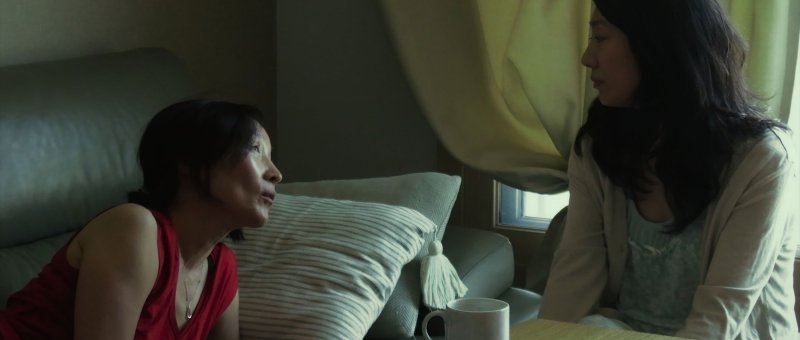
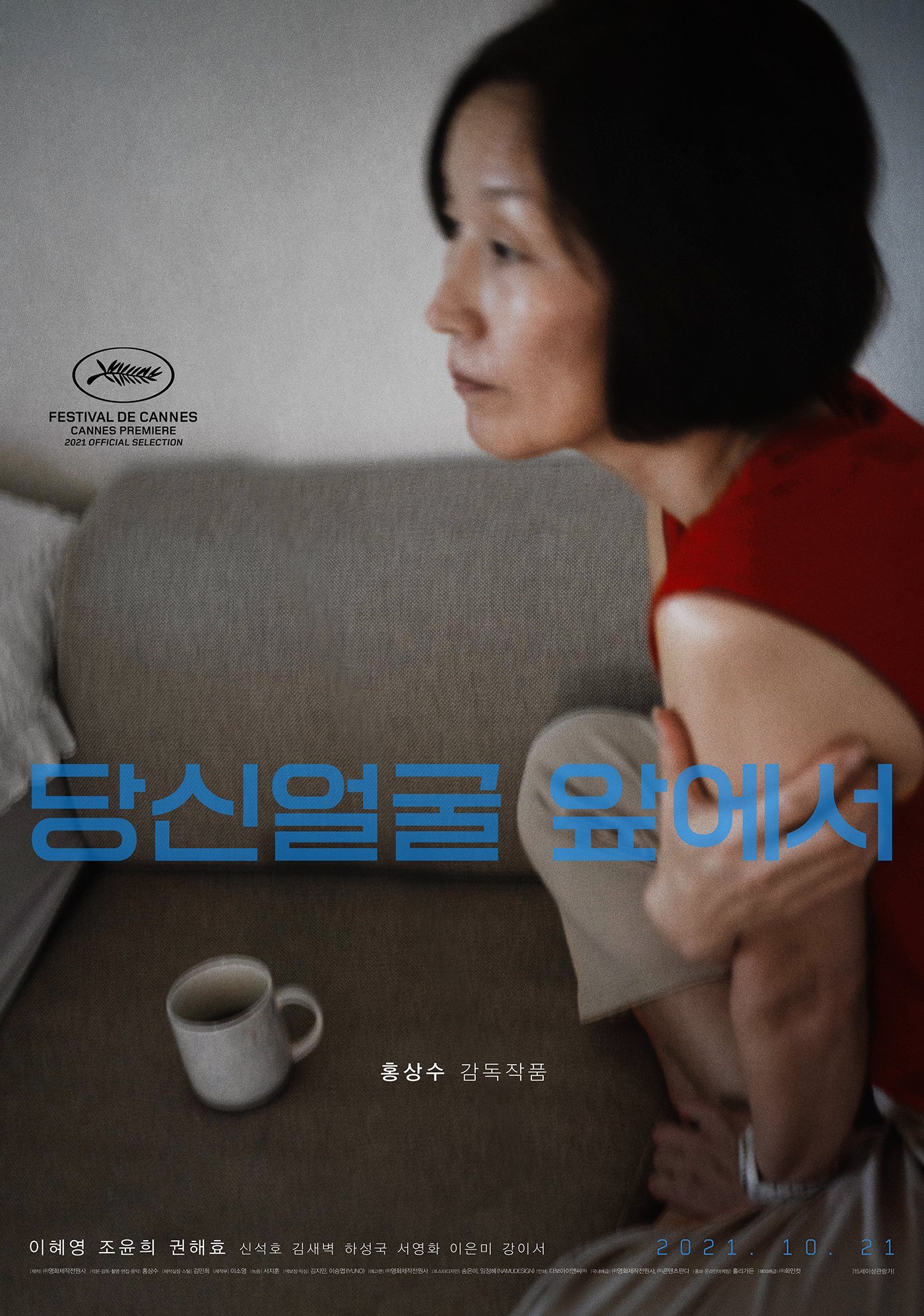
“There’s so much we don’t know about each other” a sister exclaims as if only just realising precisely how estranged they may have become this current visit home itself overshadowed by a kind of awkwardness that she doesn’t yet quite understand. Sangok (Lee Hye-young), the heroine of Hong Sang-soo’s latest meditation on existential dread In Front of Your Face (당신얼굴 앞에서, Dangsineolgul apeseo), is determined to live defiantly in the moment, shedding both past and future for the intensity of the now while learning to rejoice in the beauty of life if perhaps also burdened by ancient regrets, broken connections, and the ironic promise of an unobtainable future. 

After many years living alone in the US, former actress Sangok has returned to stay with her sister Jeongok (Jo Yoon-hee) and meet with a director who is interested in casting her in his latest film. According to her sister, Sangok ran off with a man she barely knew and followed him to America where she worked as a travel agent though more lately it seems barely getting by with a job in a liquor store. Jeongok waxes on about a swanky new apartment complex in a tranquil area of natural beauty, suggesting her sister move back to Korea but surprised and alarmed when she confesses she has no savings or property. “That’s how everyone lives there” she explains, “but it seems a lot of people here have money” noticing perhaps how much the city has changed since she’s been away while hinting that her life in America may have been in its own way disappointing. 

Sangok seems lonely, tired, a little distracted and perhaps anxious in the way she ties and reties the belt on her mac often placing a hand on her stomach for comfort. The sisters teeter on the brink of an argument about distance, unreturned letters, and whose fault it is they aren’t as close as they might have been but pull back from it wisely avoiding unnecessary confrontation in favour of maintaining the pleasant atmosphere. Yet there are also parts of Sangok’s story that don’t quite add up. A pair of women (Seo Young-hwa & Lee Eun-mi), appearing eerily like the cottage core cat-lovers from The Woman Who Ran, stop the sisters in a park recognising Sangok from her previous life as an actress decades ago. Jeongok is puzzled, sure that Sangok only appeared on TV once though the director, Song Jaewon (Kwon Hae-hyo), later descends into a reverie recalling the effect her early performances had on him as a young student in the early ‘90s. 

Hong pulls one of his usual tricks on us, repeating his opening scene with Sangok dressed in an identical outfit on her sister’s sofa if this time covered with a blanket leading us to wonder if everything we’ve just seen is only a dream. As it happens she soon gets a phone call to let us know it’s not, one which elicits from her an ironic laugh as the new hope she might have been given is suddenly crushed by another Hongian unreliable man talking too big a game even if this time the culprit is baiju rather than the familiar little green bottles of despair. Taking advantage of his selfishly postponing their lunch date, Sangok pays a visit back to her childhood home which has since become a boutique only the garden remaining the same if now dwarfed by the surrounding buildings of an ever developing city. “The memories in my heart are so heavy” she sighs, “I don’t know why I came here”, later embracing a little girl who may or may not live there now as if embracing the ghost of her childhood self. 

The meeting with the director turns out to be depressingly predictable, he having “borrowed” a cafe named “novel” from female “friend” while sending his assistant away periodically Sangok assumes because he wants to get her alone. Ironically enough she describes his films as like short stories, bemused as to why he’s so keen to hire a middle-aged former actress but finally bares her soul explaining what it is that she carries around with her on this rare trip to Seoul. Reciting small mantras to herself in the form of tiny prayers she tries to stay in the moment, reminded that every day is “grace” and that life itself is beautiful, claiming that as long as she can see whatever’s in front of her face then she’s not scared of anything. Reminders of the pandemic hover in the background with vague references to the way things are “especially now”, the atmosphere of dread and anxiety throwing Sangok’s philosophy into stark relief as she vows to live defiantly in the moment, rejoicing in life’s absurdities but also in its small comforts as she wonders what her sleeping sister dreams, shaking off her her existential vertigo to gaze out of a high-rise window.  


In Front of Your Face screens in San Diego on Oct. 30 & Nov. 1 as part of this year’s San Diego Asian Film Festival. Readers in London will also have the opportunity to see the film as part of this year’s London Korean Film Festival at Picturehouse Central on 13th November.

Original trailer (English subtitles)
The Age of Success (성공시대, Jang Sun-woo, 1988)

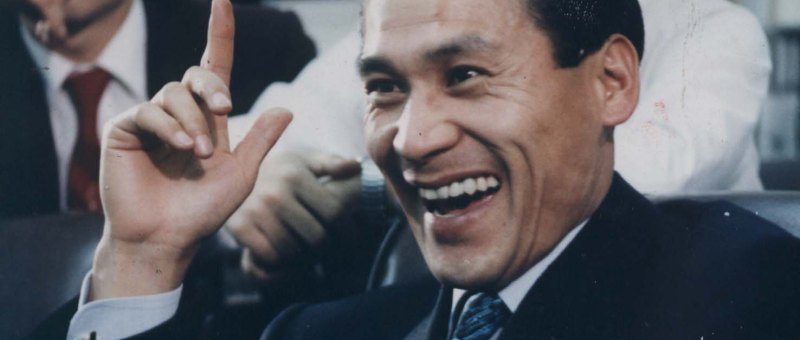
Age of Success still 3“Love only matters when you can sell it” in the nihilistic world of Jang Sun-woo’s The Age of Success (성공시대, Seonggong shidae). The Korea of 1988 was one of increasingly prosperity in which the recently democratised nation looked forward to a new era of freedom, hosting the Olympic Games as a calling card to the world stage. Like everywhere else in the ‘80s however it was also a time in which greed was good, time was money, and compassion was for suckers. Jang’s narcissistic hero worships Hitler and offers a nazi salute to a mockup of a high value note with his own face on it as he leaves for work every morning, but his relentless pursuit of “success” is destined to leave him empty handed when he realises the only commodity he can’t sell is sincerity.

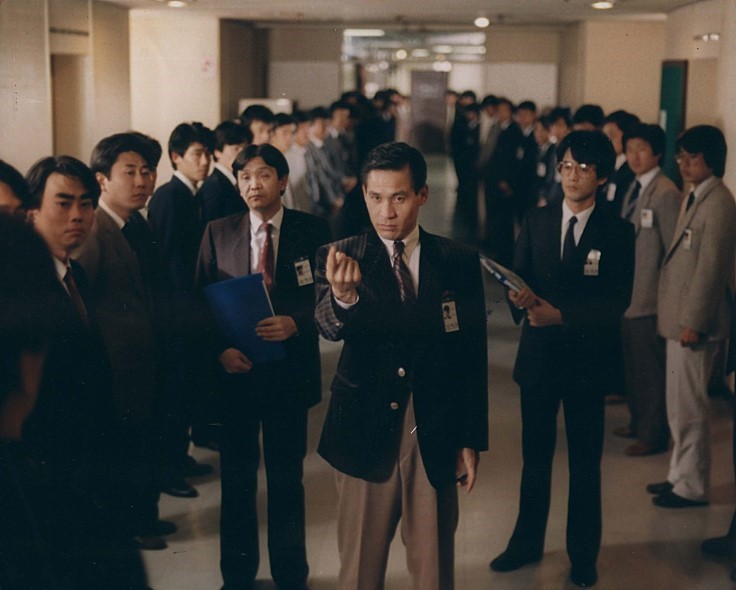
The executives of Yumi Foods, a subsidiary of Mack Gang (Mighty) corporation, are looking for a bright new face through a series of individual interviews. The panel asks each of the prospective new hires to prove their sales ability by convincing them to buy something inconsequential they happen to have in their pockets. Each of the young men fails, until the sharply suited Kim Pan-chok (Ahn Sung-ki), whose name literally means “sales promotion”, dazzles them with a show of intense charisma. He simply offers to sell them whatever is inside his clenched fist. Such is his conviction, the CEO finds himself emptying his wallet, pouring out his credit cards, and eventually borrowing from his friends until Pan-chok is satisfied he’s getting all he could possibly get at point which he opens his fingers and reveals his empty palm. The bosses are annoyed, but quickly convinced by Pan-chok’s explanation that what he’s sold them is “sales spirit” which is, after all, the most valuable thing of all (not to mention exactly what they were looking for). Pan-chok is hired.

Later, we find out that Pan-chok’s routine is an ironic inversion of his childhood trauma. A poor boy abandoned by a mother who became fed up with his father’s fecklessness, he waited alone every day for his dad to come home with something to eat. But his dad was an irresponsible drunkard who could never hold down a job. Like Pan-chok, he held out his fist and told the boy to open his fingers but he was always empty-handed. Hating his father’s incompetence, laziness, alcoholism, and violence, Pan-chok decided that he had to be strong. “Poverty makes you low and pathetic”, he insists. Love, pity, and mercy are for people with no power. “The important thing is to be strong, to win, succeed, possess, and to dominate. Only then will I be happy”.

Pan-chok is a corporate fascist wedded to ultra capitalist ideology in which the only thing that matters is strength and the ability to dominate. He lies, and cheats, and misrepresents himself to pull every underhanded trick in the book to try and get ahead. He goes to war, quite literally, with industry rival Gammi, intent on completely destroying them in order to dominate the market by whatever means possible. Coming up with signature product Agma, he irritably tells his development team that none of their work really matters because the quality of the product is largely irrelevant. Just as in his interview, all Pan-chok is selling is false promise wrapped up in marketing spin. His rival goes on TV to talk the value of tradition to defend himself against a smear campaign Pan-chok has engineered to suggest his products are a health risk, but eventually gets the better of him by playing him at his own game and making a late swing towards ultra modernity.

Pan-chok’s main gambit is seducing a local bar hostess, Song Sobi (Lee Hye-young), lit. “sexual consumption”, and using her as a spy to get info on Gammi’s latest products, but Sobi falls in love with him only to have her heart broken when she realises Pan-chok will discard her when he decides she is no longer useful. He tells her that love is only worth something when you can sell it, but is confounded when she later turns the same logic back on him after selling her charm to seduce the son and heir of the Gammi corporation as a kind of revenge.

Proving that he never learns, Pan-chok’s last big idea is that the only way to beat Gammi’s technological solution is to commodify nature, to repackage and sell back to the people the very things he previously rejected in human sensation. By this point, however, he is so thoroughly discredited that few will listen. His new boss has an MBA from an American university and no time for Pan-chok’s scrappy post-war snake oil salesman tactics. “Only success can set you free”, Pan-chok was fond of saying, but it belied a desperation to escape post-war penury. What he wanted was freedom from hunger, anxiety, and subjugation. He wanted to be a big man, not a small one like his father who always came home empty-handed, so that no one could push him around. What he became was a man without a soul, empty-hearted, consuming himself in pursuit of the consumerist dream. Korea, Jang seems to say, should take note of his lesson.


The Age of Success was screened as part of the 2019 London Korean Film Festival.

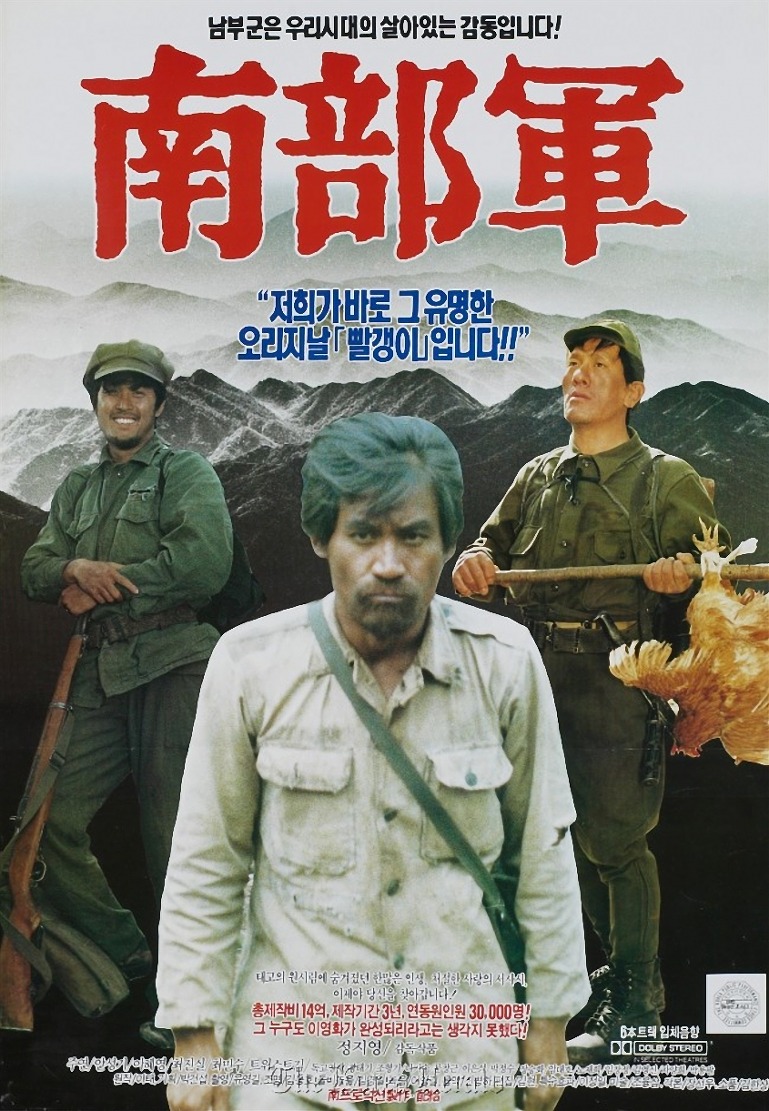
Nambugun: North Korean Partisan in South Korea (南部軍 / 남부군, Chung Ji-young, 1990)

North Korean Partisan in South Korea poster 1Under the intense censorship of South Korea’s military dictatorships, “anti-communism” had become the single most important cultural signifier to the extent that all films were in some sense “anti-communist” even if some were more obviously anti-communist than others. As power shifted away from the dictators and towards a new era of democratic freedom, a more nuanced view of the recent past became possible with the “division film” taking the place of the old-fashioned anti-communist drama. Rather than demonise the North, the division film emphasised the tragedy of partition, painting the two Koreas as equal victims of geopolitical finagling.

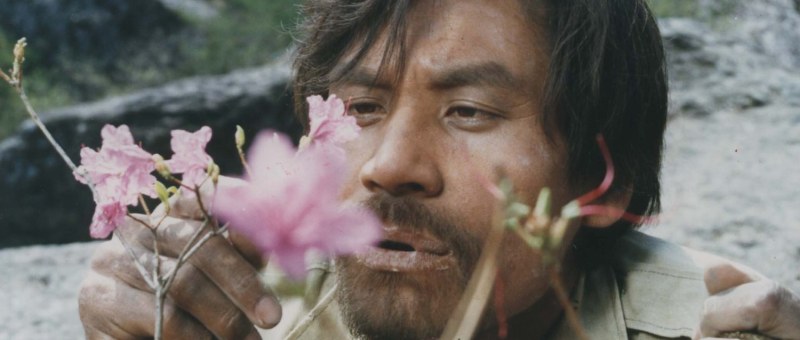
Arriving in 1990 shortly after Korea’s democratisation, Chung Ji-young’s Nambugun: North Korean Partisan in South Korea (南部軍 / 남부군, Nambugun) is among the first to directly address the subject of the Korean War from the perspective of the North Korean partisans, albeit obviously from those who eventually came South. Adapting the memoirs of war correspondent Lee Tae, Chung ignores ideology in order to explore the gruelling experience of guerrilla warfare largely being fought by ordinary people with strong convictions rather than by career soldiers or committed revolutionaries.

Lee Tae (Ahn Sung-ki) himself is an “intellectual” North Korean newspaper reporter working as a correspondent in Jeonju which is currently in North Korean occupied territory. When they get word that the Americans and South Korean forces are on their way, the newspaper staff evacuates and eventually ends up heading into the mountains to join the partisans. As he has previous experience, Lee Tae is given command of a platoon and the instruction to try and make up for his bourgeois intellectualism with hard work on the job. To keep them all in one place, Lee is assigned a series of other “intellectual” recruits including conflicted student Kim (Choi Min-soo) who joined the fight to figure out what this “inhuman” war was all about.

One of the reasons Kim is so conflicted is that he brought his hometown, high school-age girlfriend with him and wonders if that was a very responsible thing to do, especially when they are eventually separated by the command chain who decide to send her to headquarters while Kim stays with the troops. Though we are shown that the North Korean soldiers are just ordinary men and women who call each other comrade, the regime itself still comes in for subtle criticism for its oppressive hardline austerity. On the run and separated from his unit, a wounded Lee is accompanied by an earnest nurse, Min-ja (Choi Jin-sil), with whom he falls in love, but when the romance is discovered by a superior officer Lee is taken aside and reminded that here there can be no love, only revolution. He must give all of himself to the cause, reserving nothing for such bourgeois affections as romance. Both Lee and Kim spend the rest of the picture trying and failing to reconnect with their respective women while fantasising about a different kind of life in which they would not have been kept apart.

Yet, despite the fact that we clearly see a world of near total equality among the partisans, it is clear that Lee’s own thinking at least is not quite as progressive as one might assume. Bonding with Min-ja and dreaming of the future, he envisages a life for himself as a reporter in Seoul at which point she asks what she’s supposed to do and receives the answer “have dinner ready for me”.  Min-ja, apparently an orphan whose brother was killed fighting for the South, found herself becoming a field nurse for the North and perhaps has a lower ideological consciousness as a result, freely offering her medical knowledge to anyone who might be in need of it. “Why is it that we’re fighting?” she asks Lee, “you both need me”, embodying the wounded innocence of the one Korea unfairly torn apart by forces beyond its control.

All gusto and determination, Lee and the others start out with pluck and positivity but gradual disillusionment accompanies the shift from the warmth of spring to the dead of winter as the partisans find themselves starving to death on a frozen mountain. Win or lose, the victory belongs to the US or USSR, one particularly dejected soldier intones laying bare his loss of faith in the primacy of North Korean communism and accepting that they are all playthings in a proxy war being fought by Koreans on Korean soil. Kim fails to find “meaning” in conflict and emerges only with shame and regret while others clutch at pamphlets dropped by the Americans promising an amnesty for those who surrender willingly. Lee trudges on alone, frostbitten and starving, encountering only the dead and finally contemplating suicide only to be given one last source of hope and to have that too crushed. Chung humanises the communists, but still they have to lose in the spiritual as well as the literal sense. Ending on a howl of existential despair, the film dedicates itself to all those on both sides who fell on Jirisan or sacrificed their lives for a vision of a better world but does so with pity more than admiration for all that they suffered as victims of their times.


Nambugun: North Korean Partisan in South Korea was screened as part of the 2019 London Korean Film Festival.

Ticket (티켓, Im Kwon-taek, 1986)

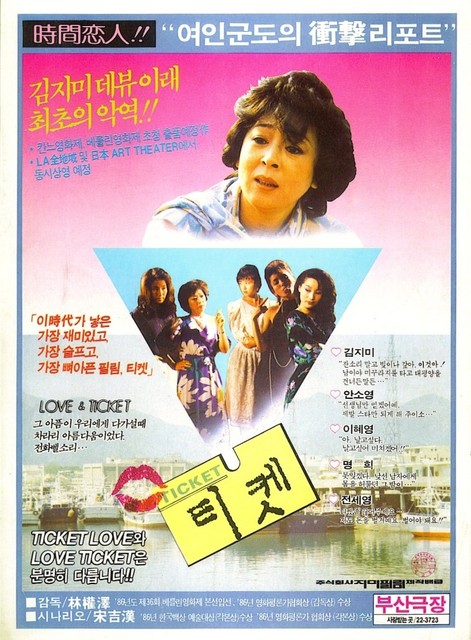
Ticket posterThe times may have changed but the double standard is still very much in existence in Im Kwon-taek’s Ticket (티켓). Set in a tabang ticket bar – a delivery coffee establishment in which customers may by “tickets” for unspecified “services”, Ticket follows five ordinary women in Kangwon Province who’ve found themselves trapped in the world of casual sex work for various different reasons but each dreaming of finding something better in the difficult mid-80s economy.

Im opens with stern madam Ji-suk (Kim Ji-Mi) selecting three pretty girls from an employment office to work at her bar in rural Kangwon Province. As she explains, the cafe is located in a quiet port town and mainly caters to seamen and tourists. Ji-suk views refinement as one of her selling points and so she expects her ladies to mind their manners and avoid vulgarity. The girls were given an advance on their wages as a signing bonus, but are technically indentured servants until they pay it off which may take some time seeing as Ji-suk is fond of adding fines onto their accounts should they break any of her rules or request any additional advances for work related expenses such as medical fees, clothing, or cosmetics.

While two of the new recruits, Miss Hong (Lee Hye-young) and Miss Yang (Ahn So-young), have had experience of this type of work before, Se-yeong (Jeon Se-yeong) is much younger and struggles to come to terms with the nature of the job, frequently incurring Ji-suk’s wrath by running out on clients who get fresh. Miss Ju (Myeong Hui), who has been working at the tabang for three years with ballooning debts, tries to warn the girls that in order to avoid her mistakes they should abide by three rules – cash only, no mercy, and no repeats. All quite sensible rules in theory but difficult to enforce in practice.

Unlike Miss Hong and Miss Yang who’ve come from impoverished rural backgrounds, Se-yeong is from Seoul but has found herself responsible not only for her immediate family but also for her down on his luck student boyfriend Min-su (Choi Dong-joon) who is currently studying to become a teacher but struggling to support himself. Min-su, not the sharpest knife in the drawer, hasn’t quite figured out that the girls don’t really just deliver coffee but in any case remains conflicted over his dependence on Se-yeong for money. Still struggling to accommodate herself to sex work, Se-yeong eventually decides to seduce a friendly sea captain as a means of easing herself into it while also trying to get Min-su a job on his boat.

Meanwhile, Miss Yang dreams of becoming an actress and is naive enough to think sleeping with a famous actor will help, and Miss Hong concentrates on being the best but usually ends up getting herself into trouble. Miss Ju, a divorcee, misses her son while Jin-suk turns out to have a sad story of her own in which she was driven into sex work after her husband, a dissident poet, was picked up by the authorities in less liberal times. Unable to bear the shame she left him, but still harbours hope he may find her again only to have that hope cruelly dashed with the stark message that life is like a bus – if you miss it, it won’t come back for you. Each of these women has, in a sense, already missed a bus and is stuck in Kangwon for the foreseeable future with no clear way out.

Though Jin-suk seemed the toughest and the least sentimental of the ladies, it’s she who wants “forgiveness” most of all which is perhaps why she goes to the trouble of taking Min-su to task for his unreasonable treatment of Se-yeong. Pointing out that nobody chooses this way of life freely, Jin-suk snaps on realising that there really are no sympathetic men and all now view her and her girls as “dirty” while continuing to use their services. Im closes with an improbably happy ending, if ambiguously, which promises a more positive future for each of our ladies as they manage to find ways out of the rural sex industry and into something more hopeful but even this abrupt tonal shift only serves to reinforce the miraculous nature of their sudden opportunities in a society which appears to remain hostile to their very existence.


Ticket was screened as part of the 2019 Udine Far East Film Festival. It is also available to stream online via the Korean Film Archive’s YouTube Channel.