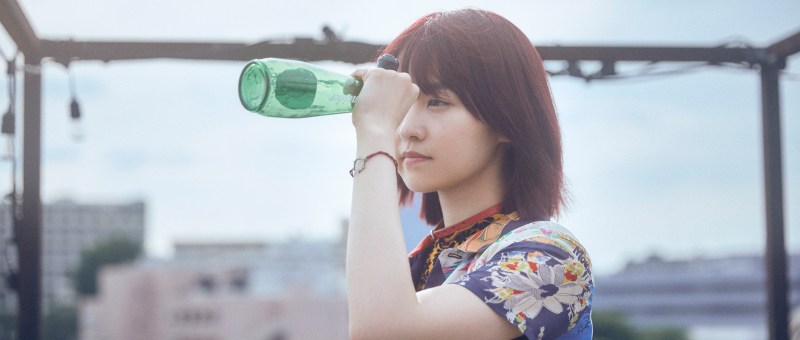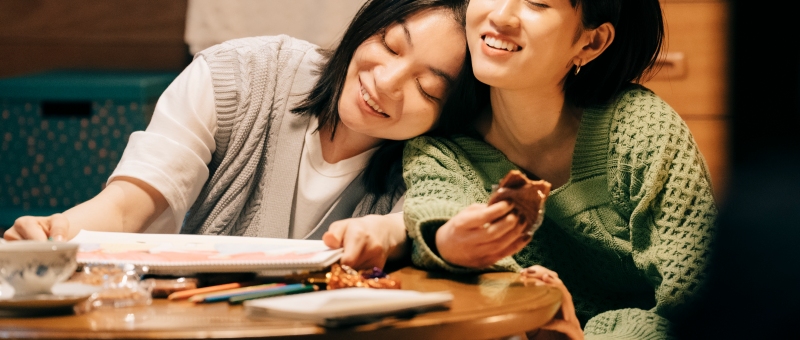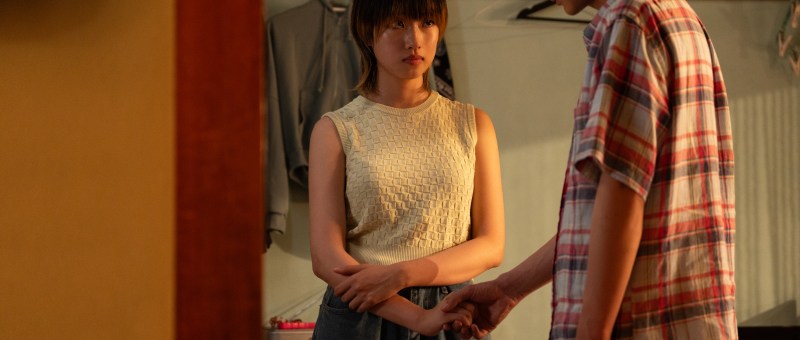
Cha-Cha (チャチャ, Mai Sakai, 2024)

Love can make you do funny things. It can also blind you to the world’s realities and colour the way you interpret the actions of others. At least, that’s how it is for the protagonists of Mai Sakai’s Cha-cha (チャチャ) who are all suffering with unrequited love and unbeknownst to them quite mistaken in their assumptions about the loves of others while otherwise solipsistically trapped in a bubble of frustrated romance.

Sometime narrator Rin (Sawako Fujima) is resentful of colleague Cha-Cha (Marika Ito) who is, ironically, the the total opposite of herself in that she’s free spirited and eccentric each qualities she assumes attract the opposite sex which Rin fears she herself does not. Chiefly she resents her because she has an unrequited crush on the boss, Kato, who is married with children though the interoffice gossip incorrectly suggests Cha-cha only got her job because she’s sleeping with him. According to Cha-cha, she is quite popular with men though describes herself as not being conventionally attractive and thinks men’s interest in her is usually more to do with conquest than romance. She develops a small crush on a handsome chef, Raku (Taishi Nakagawa), who smokes on their rooftop but though she ends up moving into his ramshackle home he does not appear to be interested in her and may in fact be suffering unrequited love for someone else. 

Because of all of these emotions can be awkward or embarrassing, no one really talks about them openly which obviously gives rise to a series of misunderstandings about the feelings and actions of others. Jealous of Cha-Cha, Rin ends up stalking her to find out if she really is sleeping with the boss though as she herself is not willing to be an adulteress it seems like something of a moot point. Cha-Cha likes the chef precisely because they have nothing in common and are in fact total opposites, much as she’s also the total opposite of Rin. She likes the idea that they could lead complementary existences because while she hates melon but likes cucumber, he likes cucumber and hates melon. 

She is also possibly drawn to him because they share a certain kind of darkness, admitting that she has a desire to lick the blood of the person she’s dating while he has a secret stash of lenses saved from the animal heads they sometimes get at the restaurant. Ironically, this shared quality may signal doom for their romance or ultimately force them together in a mutual act of settling for second best when their ideal romantic plans are disrupted by an unexpectedly extreme series of events. The most ironic thing is that the only genuine romance where feelings seem to be mutually returned, if imperfectly and with hints of exploitation, is doubted by others and motivates its own series of misapprehensions and petty jealousies. 

The strange events are at times narrated by a utility pole and telephone box who alone stand sturdy amid the changing and emotionally confusing environment of the present society. They are amused by the bizarre goings on among humans who seem incapable of being clear or honest in their romantic desires and often entirely misread the body language and behaviour of those around them to suit their own narrative. Rin thinks Cha-Cha probably is sleeping with the boss because they ignore each other, while a co-worker who admires her thinks she dislikes the boss because she avoids looking at him and assumes she likes another colleague, Aoki, ironically because she looks at him without bashfulness. 

It’s all par for the course in cha cha cha of love, and despite the dark turn the narrative may eventually take Sakai maintains an air of absurdist normality aided by quirky production design and a sense of wonder for a world that remains remains strange and difficult to understand, the protagonists individually blinkered views not withstanding. In any case, Rin’s eventual acceptance of Cha-Cha leads her to a desire to live “a more impulsive life” that will probably never be fulfilled but in some ways perhaps love is better as an unrequited fantasy than compromised reality if only it did not become an all encompassing obsession. As an imperfect man cheerfully in love tells her, perhaps Cha-Cha should focus on how to make herself happy rather than chasing an illusionary dream of love though in the end perhaps it’s all the same anyway. 


Cha-Cha screened as part of this year’s JAPAN CUTS.

Trailer (English subtitles)

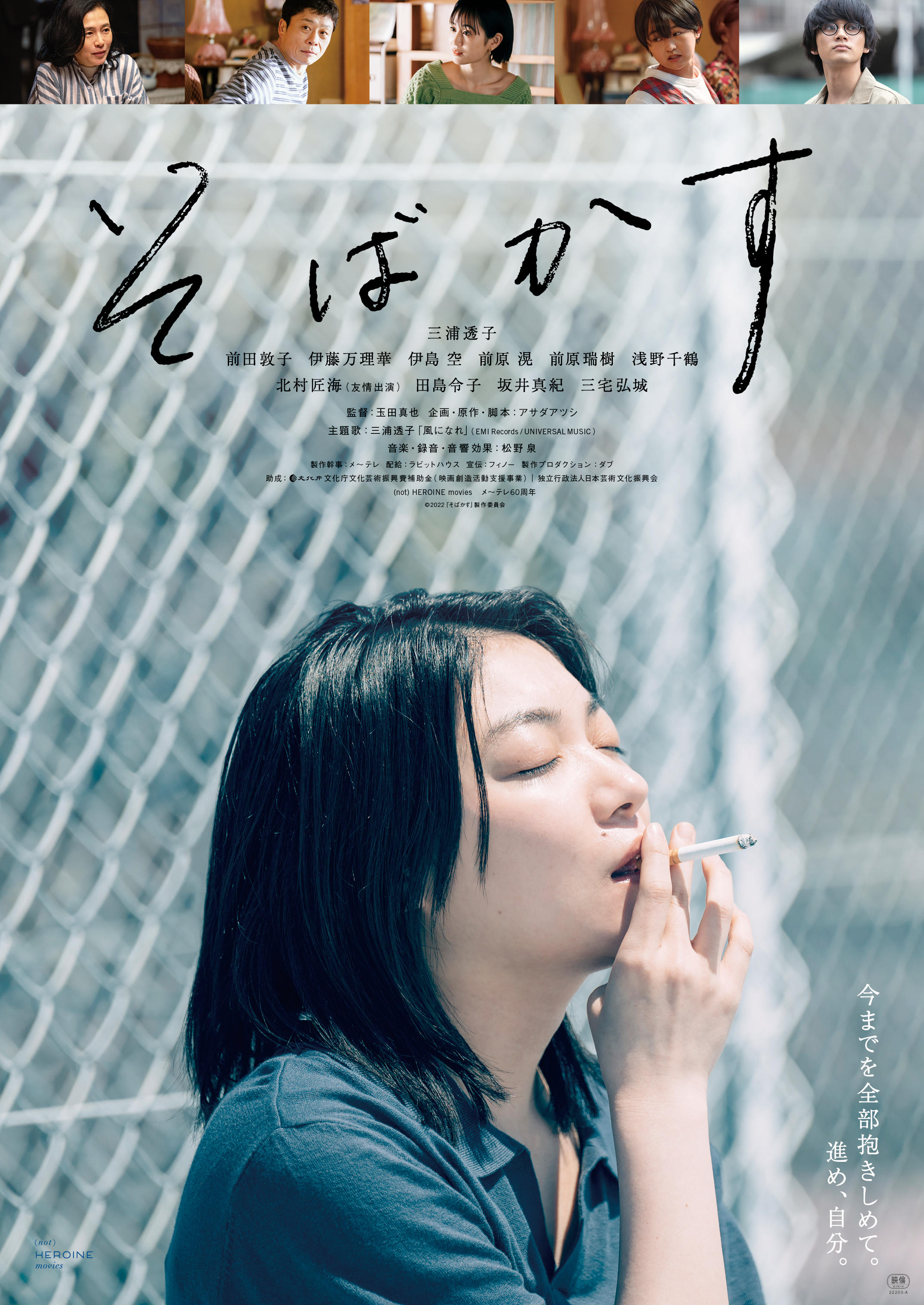
I Am What I Am (そばかす, Shinya Tamada, 2022)

Part way through Shinya Tamada’s empathetic social drama I Am What I Am (そばかす, Sobakasu), the heroine’s sister remarks that she wishes she could live as if the world did not concern her as she assumes her sister does. In many ways, it’s an incredibly ironic statement because Kasumi (Toko Miura) finds herself constantly at the mercy of a world which refuses to acknowledge her, certain that the truth she offers freely of herself must be a lie or at least a cover for some other kind of shame. 

The fact is that Kasumi is asexual and has no interest in love or dating. As the film opens, she appears to be on some kind of awkward double date but seems isolated and aloof, as if deliberately left out of a conversation as she will be several times throughout the course of the film because of the centrality of “romance” in most people’s lives. She’s constantly asked about her “type”, or what she finds attractive in a man with a clear presumption of heteronormativity in also in play. Not wanting to get into it, Kasumi finds herself just nodding along offering some vague, stereotypical comment to smooth things over. When one of the men does strike up a more interesting conversation to which Kasumi can enthusiastically contribute, he doesn’t even listen to her but abruptly gets up to chase her friend. She ends up going to ramen bar on her own to decompress before running the gauntlet at home between mum, sister, and grandma who are all very confused by her lack of interest in marriage. 

Kasumi’s mother tells her that she has to get married someday, unable to accept that not to do so is also valid choice. Whether she does this because she feels embarrassed to have a 30-year-old unmarried daughter fearing that it reflects negatively on her parenting, is genuinely worried that Kasumi is lonely and unable to progress romantically because of shyness, or has a practical concern that she’ll be alone when she’s old, remains unclear though it does seem that her quest to marry Kasumi off is more to do with herself than her daughter. But with grandma apparently having had three divorces of her own, Kasumi’s sister Natsumi (Marika Ito) paranoid her husband’s cheating on her while she’s pregnant, and the parents’ marriage strained by her father’s depression it’s only natural she may wonder what’s so great about marriage anyway. 

In any case, though Kasumi constantly tells people quite directly that the issue is she has never experienced romantic desire and is fine the way she is they refuse to believe her assuming either that she is shy, stubbornly rebellious, or as her sister later suggests, gay. “No one would judge you for that,” she spits out less than sympathetically even while quite clearly judging her for this, as if it denies a basic fact of biology as unthinkable as someone claiming not to breathe the air. Her friend, Yashiro, who introduces her to a new job at a kindergarten, reveals that people did indeed judge him for being gay which is why he’s returned to his hometown. Not even he really believes Kasumi though eventually develops a sense of solidarity with her when her attempt to update Cinderella for a new, more inclusive generation leaves her both exposed and humiliated with a conservative politician visiting the school remarking that he thinks “diversity” is all very well but it only confuses the children and perhaps they should learn about it after developing “solid values”. 

The irony is that Kasumi is remarkably unjudgemental and accepting of all those around her, Yashiro remarking that he just knew she would be a safe person to disclose his sexuality to while she also bats nary an eyelid on reconnecting with a middle school friend (Atsuko Maeda) who turns out to have become a famous porn star in Tokyo only keen to protect her from the unwanted attention of star struck teenage boys and the accusatory eyes of those around them. Each of her attempts to find platonic friendship also fails because sooner or later romance gets in the way. She hits it off with the guy at the omiai marriage meeting her mother tricked her into attending because he also reveals that he has no desire to date or get married, but as much as she thinks she’s found a kindred spirit it turns out that his issue was a more conventional reluctance to enter a serious relationship. When he develops feelings and she has explain again that she meant it when she said she had no interest in romance he takes it personally, insisting that she’s lying and resentful that she doesn’t find him attractive. An attempt to get flat with a female friend also hits the rocks when she decides to get back together with an ex instead. 

When questioned about dating activities and giving the unoriginal answer of the cinema, Kasumi had mentioned a fondness for Hollywood remake of the War of the Worlds starring Tom Cruise. She later elaborates on her statement that she likes the way he runs to explain that in most of his other films, Tom Cruise is usually running towards something but in this one he’s just a regular guy running from trouble which something she can relate to because she’s been running away all of her life too. Yet the unexpected discovery that her mini stand over Cinderella might have done some good after all along with encountering someone who might indeed be a kindred spirit gives her the courage to start moving forward, less concerned by the world and more confident in herself. An empathetic tale of one woman’s attempt to live her life the way she wants frustrated by a conformist society, Tamada’s gentle slice of life drama is a refreshingly empathetic in its fierce defence of its heroine’s right to chase happiness in the way that best suits her.


I Am What I Am screened as part of this year’s Nippon Connection.

Original trailer (English subtitles)

Images: ©2022 “I am what I am” film partners

To The Supreme! (もっと超越した所へ。, Santa Yamagishi, 2022)

Is it worth staying in a dissatisfying relationship just so that you’ll have someone to carry your rice? The idealist in all of us might want to say no, but it’s undeniably a strong argument. The four heroines of Santa Yamagishi’s To the Supreme! (もっと超越した所へ。, Motto Chouetsushita Tokoro e), adapted from the stage play by Shuko Nemoto, find themselves asking just this question as their relationships with a series of narcissistic, selfish men reach a crisis point on the eve of the coronavirus pandemic. 

Opening in early 2020, the film finds costume designer Machiko (Atsuko Maeda) reconnecting with middle school friend Reito (Fuma Kikuchi) who abruptly announces he’s moving in because he’s worried about her given the tone of her late night tweets. Former actress turned variety star Suzu (Shuri) lives with her gay best friend, Tommy (Yudai Chiba), after ending a 10-year relationship with petulant former child star Shintaro (Takahiro Miura) who is now seeing sex worker Nanase (Mei Kurokawa). Miwa (Marika Ito), meanwhile, is in a relationship with vacuous hipster Taizo (Reiji Okamoto) who spent an exorbitant amount of money on gold grills as a present and seems to be very concerned about this new virus going around. 

None of these men have a full-time job and all are (or were at one time or another) supported by their partner who is shouldering the responsibility for rent and domestic bills singlehandedly, not that there’s anything wrong with that in itself if were not such a blatant attempt to take advantage of the women they claim to love. In a flashback to 2018, we discover that Miwa was previously in a relationship with Reito and she’s carried on giving him pocket money every month for the last two years despite having moved on romantically. In his sudden announcement to Machiko that he’ll be stying by her side for the foreseeable future, it’s difficult not to wonder if he’s simply looking for a free place to stay especially as he largely continues to mooch off her while doing so claiming his live streaming channel is sure to take off soon. 

Shintaro had similarly been supported by Suzu during the time they lived together and put on a big show of letting her kept the apartment when he left even though the apartment was hers anyway because it was her name on the lease and she paid the rent while he wasn’t working. More practically minded, Suzu had been taking jobs that paid in light entertainment and variety only to be branded a sellout by Shintaro who was nevertheless jealous of her success. A former child star, he feels humiliated taking bit parts and even working as an extra but talks a big game to Nanase whom he often brands “stupid” and looks down on for being a sex worker. He makes her shout out that he’s the best actor as she climaxes and quizzes her about foreign directors when she says she struggles to watch the films of Shunji Iwai because they make her wonder if there’s something wrong with her eyesight. When she genuinely tells him that she enjoyed his “performance” after spotting him as an extra in a movie, he tells her that a sex worker’s opinion doesn’t count despite having been paying for just that kind of validation the entire time. 

Suzu runs into a similar problem in developing feelings for Tommy who rejects her in an incredibly insensitive way when she tries to make a move on him. During a heated argument, Tommy yells at Suzu for ruining all his plans because he wants to start a family and was intending to marry a woman Suzu being a prime candidate. The film flirts with but does not really get into Tommy’s internalised homophobia in which he seems to regard his sexuality as a barrier to achieving the life he wants given the still conservative culture has not yet legalised same sex marriage and makes life difficult for same sex partners who want to raise children together. He lets himself off the hook suggesting that his sexuality permits him to be “selfish” while admitting that he too has taken advantage of women’s feelings for him without really giving much thought to their own. 

Taizo is much the same. On the surface, it looks like he is genuinely solicitous of Miwa though it’s really more that he doesn’t want to get sick himself or be responsible for looking after someone who is ill. When Miwa goes to the hospital thinking she may be pregnant, she gets some other distressing news but all Taizo can do is focus on himself not wanting to accept the responsibility of becoming a father. When she looks to him for comfort, he fixates on his own relief. These men are selfish, self-involved, proud and fragile in their masculinity requiring the women in their lives to take care of all their basic needs without lifting a finger to help. But the film doesn’t quite let the women off the hook either, a sudden coup de théâtre bringing them together to reconsider making clear that they themselves enable the men’s behaviour by forgiving them if in part because they expect little better and having someone around who could theoretically help out, for example by carrying heavy bags of rice home from the store, might make life easier even if they never actually do it. Witty and slickly edited, Yamagishi ends with a sudden intrusion of eijanaika dancers as if literally to say “what’s wrong with that?”, which might present a rather cynical view of contemporary romantic relationships but one that is also admittedly difficult to argue with. 


To The Supreme! screened as part of this year’s Nippon Connection.

Original trailer (English subtitles)

It’s a Summer Film! (サマーフィルムにのって, Soshi Matsumoto, 2020)

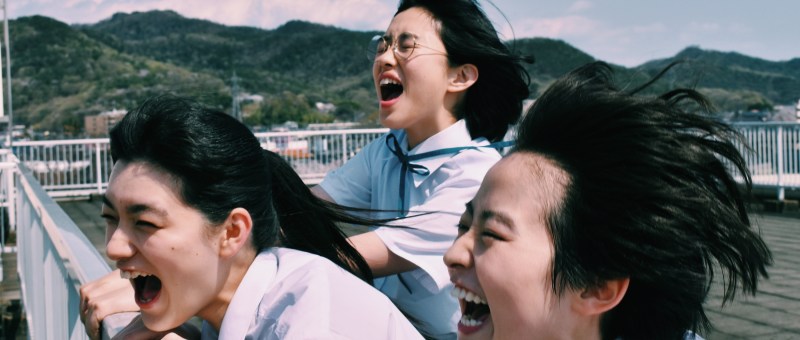
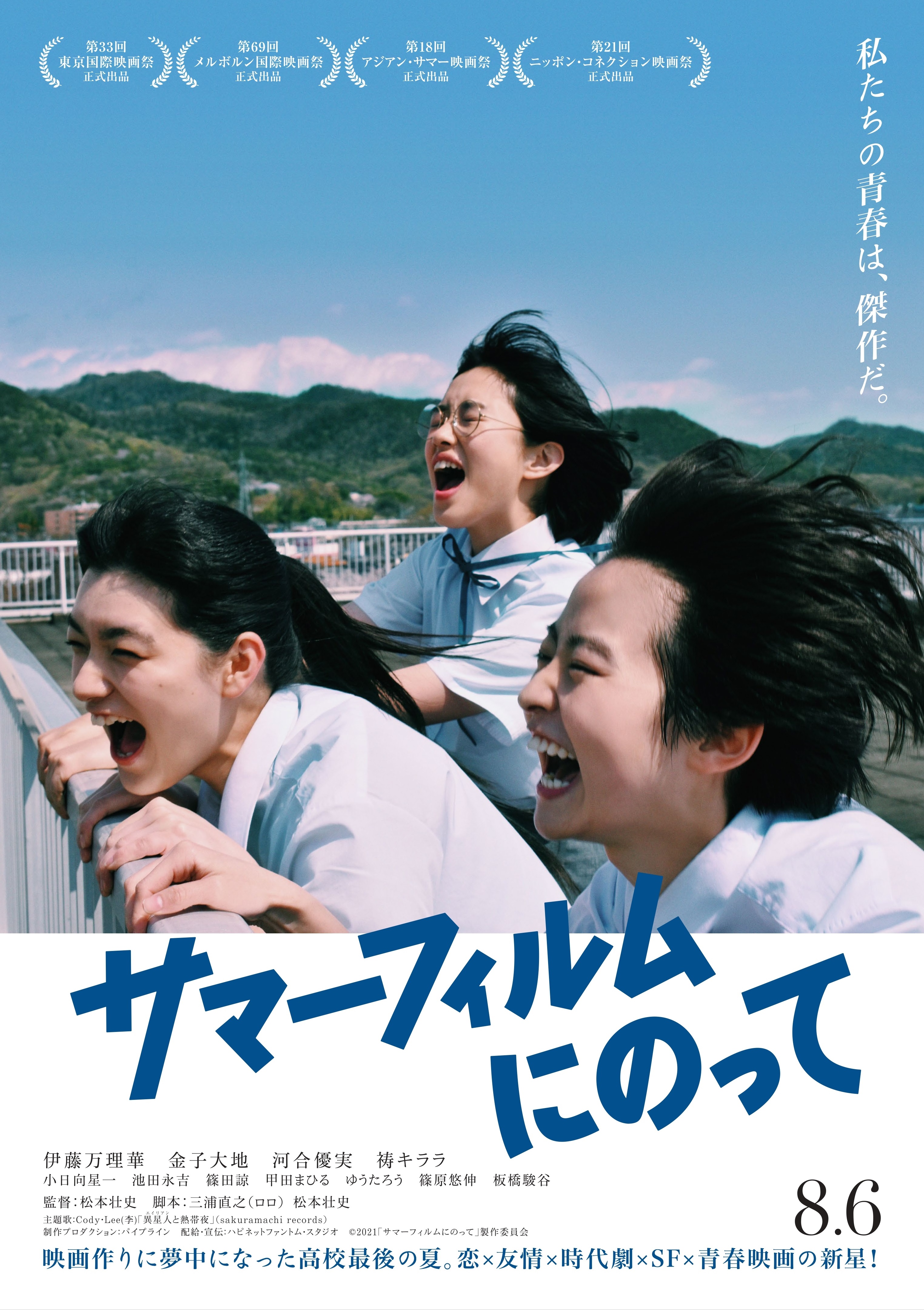
“Movies connect the present with the past through the big screen” according to the jidaigeki-obsessed heroine of Soshi Matsumoto’s charming sci-fi-inflected teen movie It’s a Summer Film! (サマーフィルムにのって, Summer Film ni Notte). True to its title, Matsumoto’s whimsical drama very much belongs to the grand tradition of high school summer movies as its youthful heroines contemplate eternity, romantic heartbreak, and artistic fulfilment while secretly plotting to best their vacuous rival by filming their very own teen samurai movie ready in time for the all-important school cultural festival. 

Aspiring director Barefoot (Marika Ito) is completely obsessed with classic samurai movies, arguing with her similarly devoted friends about who is hotter Shintaro Katsu or Raizo Ichikawa. She is a key member of the school movie making club, but intensely resentful of star player Karin (Mahiru Coda) who won the tender to make the film for this year’s cultural festival with a sappy teen romance which mostly seems to involve repeated scenes of the central couple loudly declaring their love for each other. Barefoot thinks a film should convey love without words and has written a script for a teen samurai movie in which adversaries become too emotionally invested in each other to engage in the expected final confrontation. All she’s lacking is a star and after spotting a handsome guy apparently as moved by a local rep screening as she is decides she’s found her man. What she doesn’t know is that Rintaro (Daichi Kaneko) is a secret time traveller from a future in which she has become a renowned master filmmaker but film itself sadly no longer exists. 

Being from the future and all explains Rintaro’s reluctance to star in the film, dropping accidental hints that he’s from another place as in his amusement that humans still staff removal companies and total mystification by the word “Netflix”. Yet he too is completely obsessed with classic jidaigeki from the heyday of the genre which had largely gone out of fashion by the early 1980s. As many point out, Barefoot’s hobby is slightly unusual, though she learned her love of chanbara from her grandma, receiving messages from the past she hoped to pass on to the future. Gathering most of the other rejected, outsider teens from a boy who looks about 40 to a pair of baseball nerds who can correctly guess the player from the sound of a ball hitting a glove and a bleach blond biker, she assembles a team to make her movie dreams come true as if to prove there’s something more out there than the, as she sees it, vacuous high school rom-coms favoured by the likes of Karin. 

Among the series of lessons she finally learns is that Karin need not be an adversary but could be a friend if only she look beyond her snootiness and resentment of the popular crowd even if Karin’s all pink, needlessly extravagant and egotistically branded crew shirts don’t do much to dispel Barefoot’s perception of her as entitled and self-obsessed. Another lesson she learns is that she’s not as disinterested in romance as she thought she was, though falling for Rintaro leaves her with a secondary dilemma realising that he’ll eventually have to return to his own times while also contemplating what the point of the future even is if they don’t have movies there. What she’s going to do with the rest of her life if the art of cinema is already obsolete? 

With some ironic help from Karin, what she realises is that even if something is destroyed it doesn’t disappear, films live on in the memories of those who saw them who can then take their memories with them into the future. Where her first draft had ended with an emotional anti-climax that saw her heroes too emotionally involved to engage in conflict, she now realises that samurai movies are love stories too and that “killing is a confession of love” in a slightly worrying though not altogether inaccurate take on the homoerotic subtext of the chanbara. A charmingly whimsical coming-of-age tale filled with meta touches from the constant references to classic jidaigeki to the heroine’s sci-fi-obsessed sidekick who seems to have an unrequited crush on her best friend idly reading The Girl Who Leapt Through Time, It’s a Summer Film! more than lives up to its name in its cheerful serenity as the teenage old souls defiantly learn to claim their own space while connecting with each other as they contemplate love and transience in the eternal art of cinema. 


It’s a Summer Film streamed as part of this year’s Nippon Connection.

Original trailer (English subtitles)

Kakegurui (映画 賭ケグルイ, Tsutomu Hanabusa, 2019)

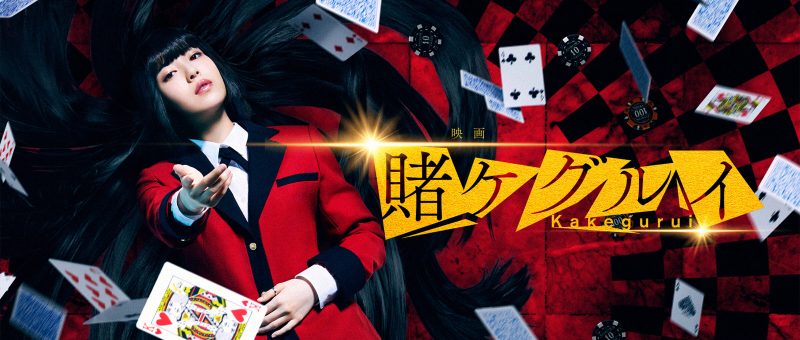
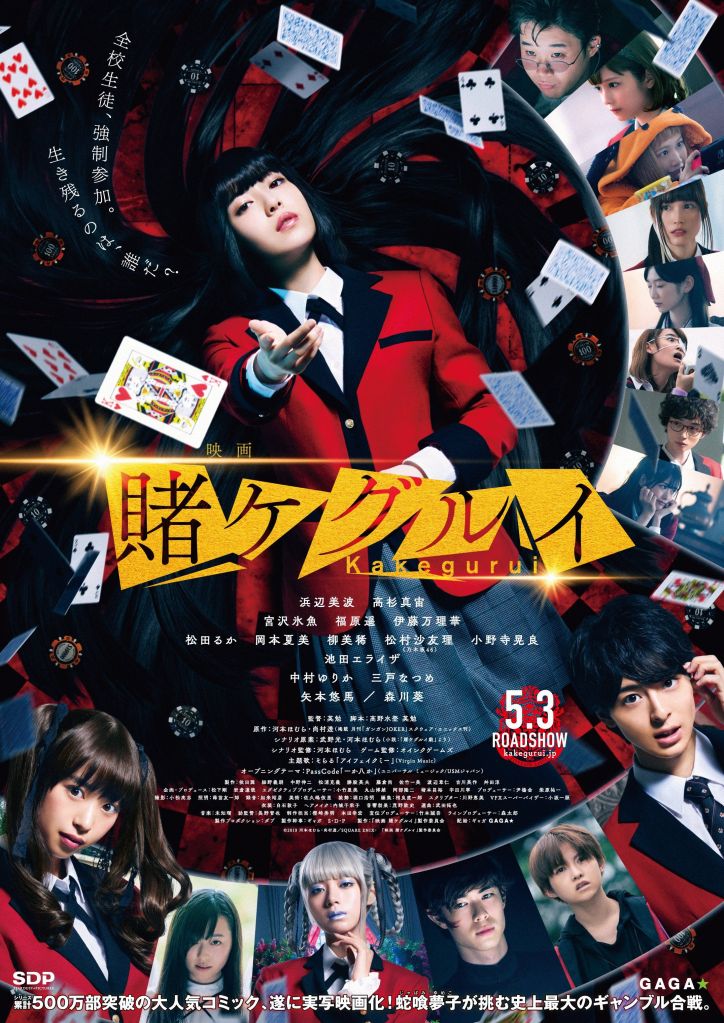
Gambling, the ultimate act of faith or the height of anarchic genius? Based on the hit manga which has already been adapted as a popular TV anime, Kakegurui (映画 賭ケグルイ) is the sequel to two seasons of a live action TV drama set in a school where hierarchy is decided not by grades or by fists, but by prowess at the gaming tables. Those who lose so badly they bankrupt themselves become a kind of subhuman underclass, tied up like dogs and routinely humiliated, while the Student Council becomes a stand in for an oppressive social order ruling over all and enforcing the law with an iron hand. 

Into this high stress environment walks Yumeko Jabami (Minami Hamabe), a transfer student to the elite Hyakkaou Private Academy determined to bend its rules to her own advantage. Meanwhile, Student Council President Kirari Momobami (Elaiza Ikeda) is forced to deal with a new and unexpected threat – The Village, a small cult made up of students who have rejected the system, dropped out to live a hippy lifestyle in the grounds, and refuse to participate in “meaningless” games of chance. Their priest-like leader, Amane Murasame (Hio Miyazawa), once beat Kirari at cards becoming something like a god of gambling, but lost his zeal for the game after losing the only thing he ever cared about. 

Where he opposes the system passively yet pointedly, Yumeko rebels in her own, fiercely individualistic way by superficially conforming, becoming a top gambler, but only because she is exercising a free choice to do so. She plays for kicks alone, and generally wins because she isn’t stressed enough about losing to let it bother her. This individualist streak makes her a hidden threat against Kirari, but one that might in itself be an interesting gamble for the infinitely bored Student Council President. 

While Yumeko’s individualism threatens to unbalance the system, The Village presents a collectivist threat, agitating wholesale revolution and an end to the oppressive rule of the Student Council which renders losers inhuman. Yet there’s an essential irony in The Village’s creepy monotony that stands in stark contrast to Yumeko’s seeming conformity but insistence on her own freedom. Your life’s your own, she later explains, it’s annoying if people try to manipulate it. In this instance she’s talking not about the “life plans” handed out by the Student Council, but the egotistical desire to “save” the lives of others without considering if they want them saved or if you’re merely infringing on their personal freedom in attempting to make choices for them based entirely on your own value system. 

Murasame perhaps bet something he shouldn’t have and technically won, but ended up losing anyway which is what has made him turn against gambling. Yumeko, meanwhile, believes that the only way to be truly free to entrust yourself to luck and destiny. That is, however, somewhat disingenuous, because what Yumeko excels at is mind games, essentially manipulating those around her in order to win. Yumeko plays players, not cards, and is rarely played herself. Unlike Murasame’s righthand woman Arukibi (Haruka Fukuhara), she doesn’t care that much what people think. Arukibi, meanwhile, is desperate for approval and is playing her own game just to get someone’s attention which makes her a volatile, if easily manipulated, opponent.

Essentially, Murasame wants freedom outside of the system where Yumeko has found it within, but her philosophy is perhaps the more dangerous in that it proposes total freedom that has no regard for the systems of governance. Then again, maybe this is all a long con to get better cakes in the cafeteria, merely gaming the system rather than actively undermining it. Nevertheless, for Yumeko life is risk, rebelling against an oppressive social order through the anarchic individualism of living by “chance”. Living in a society as highly regimented as this is a high stakes game, but you can’t win if you don’t play, and you need to play smart. That’s the peculiar irony of life at Hyakkaou Private Academy where the Student Council literally owns your future but you can win it back by playing them at their own game. Bet your life, win your freedom Yumeko seems to say but she still makes sure to bring cake for everyone, not just the “winners” or the privileged few. 


Screened as part of the Japan Foundation Touring Film Programme 2020.

International trailer (English subtitles)