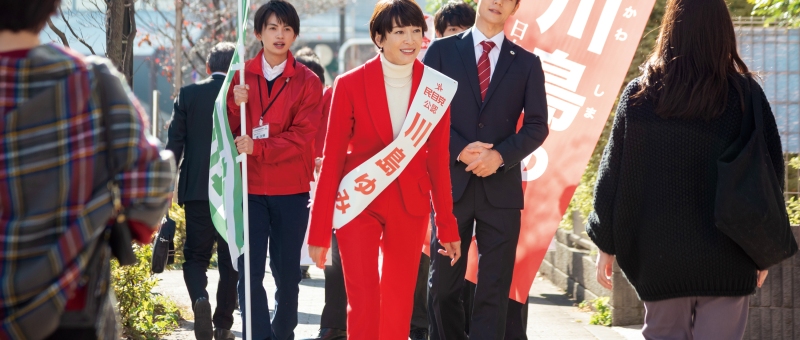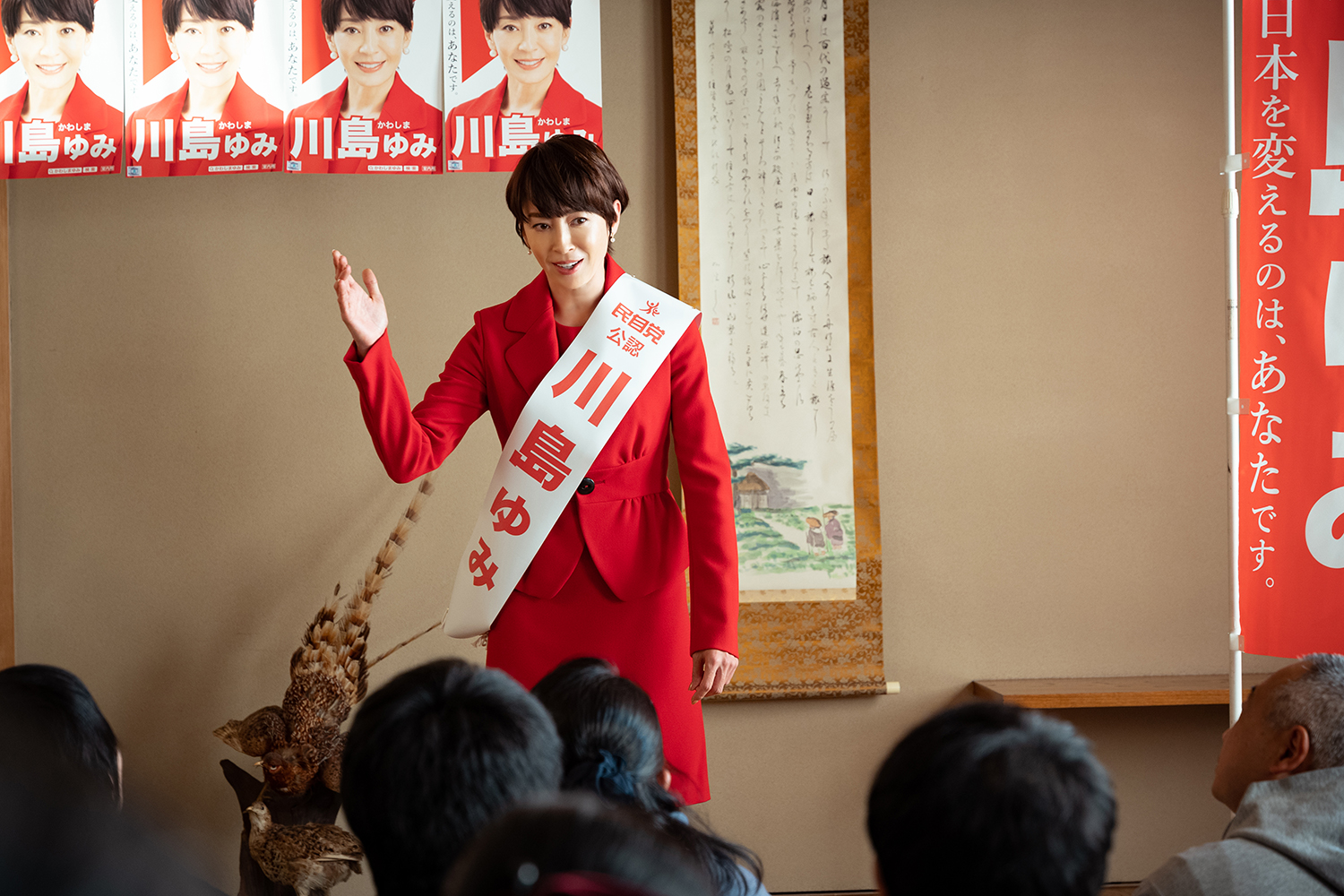
Last Mile (ラストマイル, Ayuko Tsukahara, 2024)

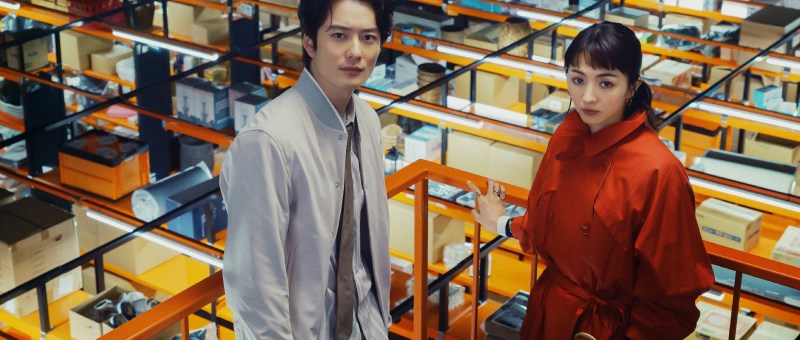
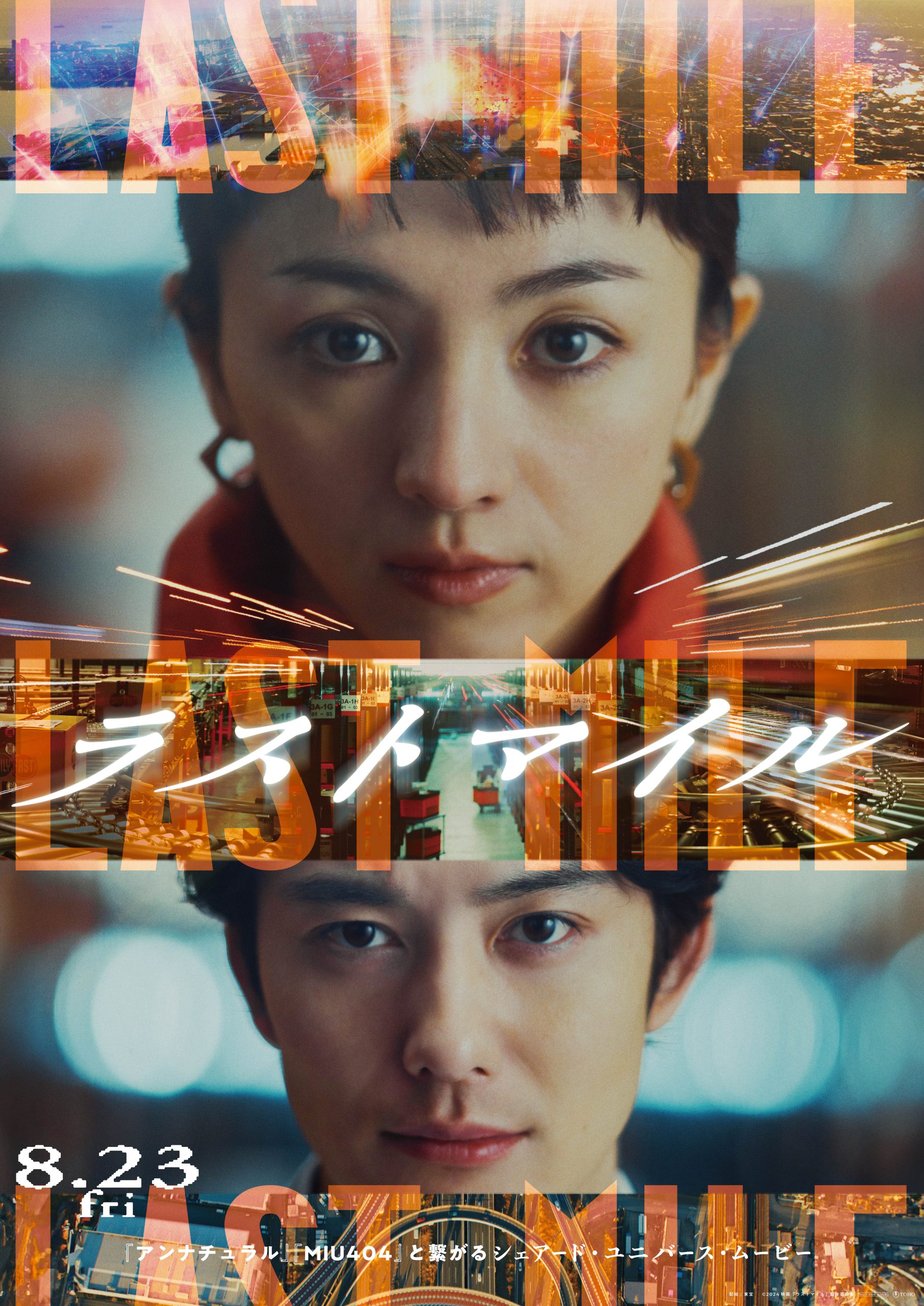
“Customer-centric”, what does that actually mean? The Amazon-like US-based conglomerate at the centre of Ayako Tsukahara’s Last Mile (ラストマイル) prides itself on its customer-centric philosophy, but at the end of the day, what that really means is that they give us what we tell them we want through our purchasing patterns and browsing history. That would be that we want everything as cheap and fast as it’s possible to be and don’t really think about the wider implications or what a world of infinite convenience might be doing to the society around us.

At least from the perspective of corporate lackey Elena (Hikari Mitsushima), recently returned from the US, the reason Daily Fast pressures its delivery staff to lower costs isn’t to maximise their profits, it’s so they can go on providing lower prices to customers which to her is all part of their customer-centric approach. This doesn’t really gel with her off-the-cuff remark about the warehouse not having a safety net to protect the workers from accidental falls or, she ominously adds, prevent people from jumping. That she brought it up at all might signal that she knows something’s not quite with the way this company treats its employees, though as it turns out she may have something else on her mind. In any case, when she arrives on her very first day the entrance to the complex is little better than a cattle market with a man on loud speaker barking instructions about were to go to the 800 members of staff some of whom have only been brought in to bulk up for the upcoming Black Friday sale. 

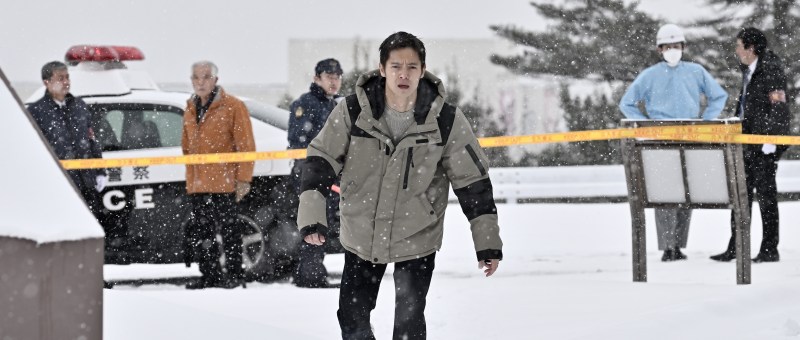
Which is all to say, it wouldn’t be all that surprising if the fact that some of their parcels have been exploding on delivery were a concerted attack against their ultra-capitalist philosophy, though actively delivering bombs to people who didn’t order them is not very “customer-centric” in any case. Obviously, Elena isn’t keen on this either but is also convinced that it can’t really be their fault because they have strict and dehumanising security measures in place preventing the workers from bringing in anything inessential. Even after she works out that the bomber has actually warned them that there are 12 bombs out there, she wilfully withholds the evidence from law enforcement to avoid damaging their share prices while trying to minimise business interruption rather than do anything sensible like stop delivering people parcels until they’ve figured out what’s going on with the bombs, though the real mystery is why the police don’t really seem to have the power to do that and, in fact, end up working with the warehouse to check each parcel individually to keep the conveyor belts going.

From the aerial view, the city itself resembles the warehouse with the roads taking the place of the belts as delivery vans shuttle along them. Seventy-something delivery driver subcontractor Sano (Shohei Hino) once had a friend who used to say that they were the ones who kept the country running. Yacchan became the number one driver largely because he took 10 minutes to eat his lunch and worked every hour god sent for dwindling pay with the implication that his gruelling schedule contributed to his early death. Sano’s son Wataru (Shôhei Uno) has just started working with him on the van after being laid off from an electronics job. They made quality washing machines that were designed to be efficient and to last, but of course they couldn’t compete with cheaper brands so they went bust.

Elena berates herself for being “too Japanese” for the American company which is to say that she takes pride in her work. That’s not to say that everything about the American business culture is bad as she encourages her assistant, Ko (Hikari Mitsushima), to call her Elena and to feel free to speak his mind rather than equivocate to avoid causing offence. But despite their “customer-centric” approach, it’s clear that the company puts profits above all else and treats its workers, who are not actually employees, poorly, without concern for their wellbeing. Yagi (Sadao Abe), the boss of logistics first Sheep Express which is the prime courier for Daily Fast, laments that he’d love to hire more drivers to help them through this crisis but he can’t because they’re always squeezing his budget and no one will work for their terrible rates except for those who, like Sheep Express itself, have no other options and will have put up with it because they’re dependent on Daily Fast. And because they’re dependent on Daily Fast, it means we all have to keep buying stuff we don’t really want or need just keep the belts going because we’re terrified about what will happen if they stop.

There is a direct comparison between Wataru’s well-made washing machines and the cheap and fast consumerist model that’s gradually taken over that suggests things like craftsmanship and integrity have gone out the window in a world where no one really bothers to go the last mile anymore, though it’s his steadfast engineering that eventually saves the day while even Elena comes to rethink her career trajectory and advises the drivers to strike and end this culture of exploitation because it turns out Daily Fast needs them more than they need Daily Fast. But maybe we don’t really need Daily Fast either, and we’re as much to blame for letting them give us what we think we want without really considering what that actually means. Perhaps a “customer-centric” society’s not all it’s cracked up to be, especially when workers and consumers are often the same people stuck on conveyor belts knowing there’s only one way to stop them.


Last Mile screens 19th June as part of this year’s Toronto Japanese Film Festival.

Trailer (no subtitles)

Cloud (Cloud クラウド, Kiyoshi Kurosawa, 2024)

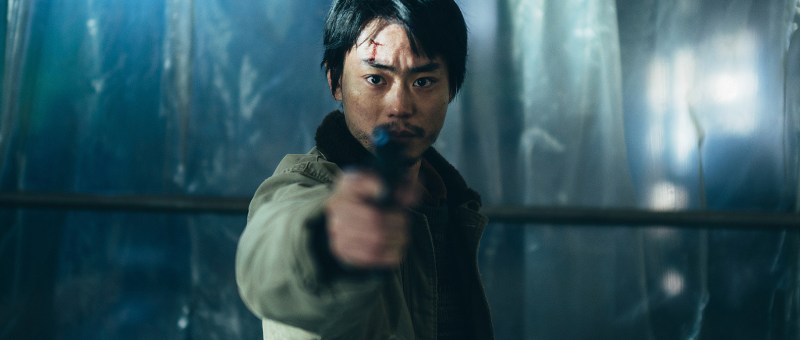
“We wanted to make easy money,” a down-on-his luck reseller admits, “is life easy now?” Factory worker Ryosuke (Masaki Suda) rebels against capitalism by subverting it through buying low and selling high while repeatedly refusing promotions at his job in a textiles factory. Though it might seem that reselling is just a way to earn an income that seems almost passive but is actually fairly labour-intensive, it’s clear that Ryosuke is a young man dissatisfied with capitalistic realities and lacking direction in his life. 

Reselling has become a kind of game to him and like a gambler who plays to lose he’s hooked on the thrill of making a killing exploiting other people’s misery. He’s at once filled with pride and smugness over his apparent triumph over his society and consumed by self-loathing. His friend and fellow reseller Muraoka (Masataka Kubota) tells him that another acquaintance has been arrested for scalping concert tickets with both of them lamenting his foolishness in getting involved with something so risky. The implication is that their friend, Goto, must have been in real desperation to lower himself to such levels and they each fear they may someday end up in the same position. Muraoka laments that that kind of selling is a young man’s game and neither of them have the time or energy to spend all day queuing to buy stuff just to sell it on cheap. They are each, it seems, beginning to feel the increasing desperation of their age that they are running out of time and have little to show for their efforts nor any prospects for the future. 

But on the other hand, neither of them want to be locked into the grind or join the oppressive but secure world of the salaryman. In many ways, Ryosuke’s factory boss Takimoto (Yoshiyoshi Arakawa) represents the “correct” path of hard and honest work, though his own paternalistic conviction in meritocracy seems outdated in a man of his age whose formative years occurred during an era of economic stagnation. He talks to Ryosuke as if he’s a young man who wants to get on but lacks confidence, telling him that he has leadership potential and is wasted on the shop floor, but his language also has an edge of the uncanny as if he were trying to recruit Ryosuke into his own worker drone revolution. In any case, even if it might be true that Ryosuke lacks confidence and ambition, that isn’t the reason he refuses promotions, which seems to be another way of rebelling against capitalism. When he eventually quits, he suggests it’s because he’s sick of being told what to do and wants more autonomy over his life and finances.

He tells his girlfriend Akiko (Kotone Furukawa) that she should quit her job too, which she’s only too happy to do because, unlike him, she actively doesn’t want to work and only wants to spend money. When she said she was thinking of giving up her apartment, Ryosuke naturally asked her to officially move in but she refused because his place is too small and she has too much stuff. Akiko has already been corrupted by the same consumerist bug that’s driving Ryosuke’s reselling business, but neither of them can really afford this lifestyle in the city. Ryosuke’s bright idea is to move to the remote countryside where he’s able to rent a huge, though ominous-looking, property for a fraction of the price with the idea of also economically supporting Akiko who will revert to traditional gender roles as a housewife in charge of the domestic space and most especially the kitchen.

But freedom cannot be found simply by retreating from urbanity and the couple soon find themselves plagued by a pervasive sense of resentment. The locals are not particularly accepting of people from Tokyo and are also needled by their success which is something they feel they’ve been unfairly denied. When Ryosuke tries to report a smashed window, even the policeman hassles him and says he’s received a tip-off that Ryosuke is breaking trading standards regulations by selling counterfeit goods as the real thing. Reselling in itself is not illegal, if definitely dubious morally and incredibly cynical. Ryosuke doesn’t seem to like to think about that and tells his new assistant, Sano (Daiken Okudaira), that he tries to sell all the items as quickly as possible so he doesn’t have to worry too much about their authenticity. If they’re wanted they’ll sell, Ryosuke justifies but he might as well be talking about himself.

“Being real or fake doesn’t matter?” Sano asks him, just as Ryosuke’s online and offline personas start to blur. He’s unaware that there are people actively hunting him for selling them substandard goods and is later pursued by real life vigilantes acting like online trolls and planning to torture him to death during a livestream. Like many of Kurosawa’s heroes, Ryosuke is completely convinced that he’s the benchmark for normal and it’s everything around him that’s strange or unfair. As the internet once again invades the “real” world, or perhaps it’s more that Ryosuke’s living his online life offline, the increasing unreality of the situation makes us wonder if any of this is “really” happening or product of Ryosuke’s fractured identity as it finally collapses under the twin corruptions of capitalism and social media. “Please keep focusing only on making money,” his new guardian angel Sano tells him, “everything will be obtainable. Whatever you want. Even things that can end the world.” Flying through ironically heavenly clouds, Ryosuke reflects that the path to hell really is paved with gold and his Mephistophelian pact with hyper-capitalism may have damned him beyond all repair.  


Cloud is in cinemas from 25th April courtesy of Blue Finch Film Releasing 

UK trailer (English subtitles)

Round Trip Heart (ロマンス, Yuki Tanada, 2015)

“Somewhere in Japan, there’s someone waiting for me” sing the heroes of Yuki Tanada’s Round Trip Heart (ロマンス, Romance), each a little lost and unwilling to go home looking for something but also afraid to find it. In any case, they can only begin by stepping off the rails and taking a detour through their shared sense of loneliness bonding as they look for new directions and an accommodation with a disappointing reality. 

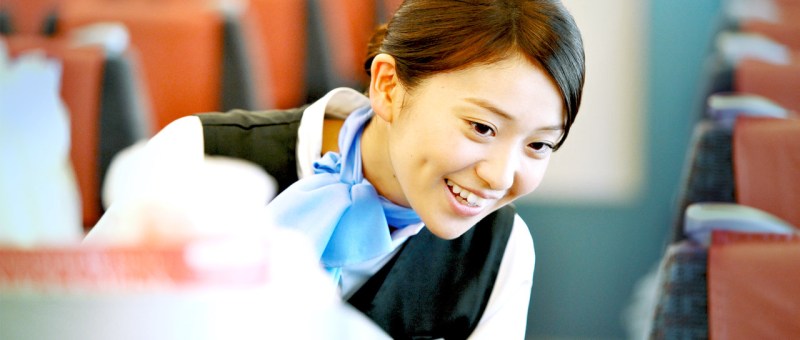
Ironically enough, Hachiko (Yuko Oshima) is a top operator of the refreshment cart aboard the Romance Car heading from Tokyo to the country by train. Hachiko claims to love trains because of their sense of certainty. After all they travel on rails, have a clear destination, and will definitely return after reaching the end of their journeys. She meanwhile feels a little lost and empty in her life of forced politeness with a feckless boyfriend who asks her for money before she heads off to work. An unexpected letter from her estranged mother, Yoriko (Megumi Nishimuta), and a strange encounter with a weird old man who tries to steal a packet of biscuits however force her change course, getting off the train and heading back into the past. 

Sakuraba (Koji Ookura), the biscuit pilferer, is a 45-year-old failed film producer on the run from the police and myriad loansharks. His sense of loneliness mirrors Hachiko’s own in that he is divorced with a 9-year-old daughter he hasn’t seen in two years and lifetime’s worth of regrets. Hachiko becomes for him a kind of surrogate daughter as he inappropriately reassembles the torn up letter and convinces Hachiko that it implies her mother may attempt to take her own life suggesting that they journey to the place it mentions, Hakone, where the family once spent a pleasant holiday. 

Familial breakdown is reason for their shared sense of displacement yet Hachiko has projected all of her resentment onto her mother who never got over her father’s decision to leave while Sakuraba fears that his daughter has grown to hate him and harbours a secret desire to restore his family but is too consumed with shame to approach them. By going to Hakone in search of her mother, Hachiko begins to reevaluate her childhood memories perhaps understanding a little more of her mother from the perspective of a grown woman rather than that of a small child who had sometimes felt left out by her parents’ closeness while they were together and rejected by her mother’s need for romantic validation once her father had left. In one particular scene we see Yoriko wearing dark glasses with what looks like a bruise over her eye while taking Hachiko to a restaurant where she orders steak only for her daughter presumably because she cannot afford two meals explaining that her boyfriend has broken up with her because of her lingering attachment to Hachiko’s father. 

The memory forces her back into a moment of resentment feeling as if her mother was only ever nice to her when men let her down, poignantly recalling her neediness in lamenting that everyone always leaves her while asking Hachiko to promise she never would. Sakuraba too complains that everybody leaves him though in his case in the wake of his repeated failures as a film producer and subsequent dealing with loansharks and other shady characters. Just as Yoriko had continued to dream of romantic fulfilment, Sakuraba continues to dream of success in film but crucially as a path back towards his family as perhaps finding a man might have been for Yoriko though she was never able to let go of the idealised image of her husband pining for the familial closeness of their Hakone trip. 

Even so the force that governs their lives is fatalistic passivity, Hachiko riding the rails to their certain destinations and back again, while Sakuraba makes every decision by tossing a coin, an action rendered meaningless by his inability to tell heads from tales. Only by rejecting their passivity in getting off the train and giving up the coin tricks can they begin to face themselves, deciding to set out and look for those who may be waiting for them rather than just sitting around waiting for something to happen. Then again perhaps if you sit in the same place long enough, what you’re looking for will eventually find you so long as you’re on the right track. 


Trailer (English subtitles)

Home Sweet Home (スイート・マイホーム, Takumi Saitoh, 2023)

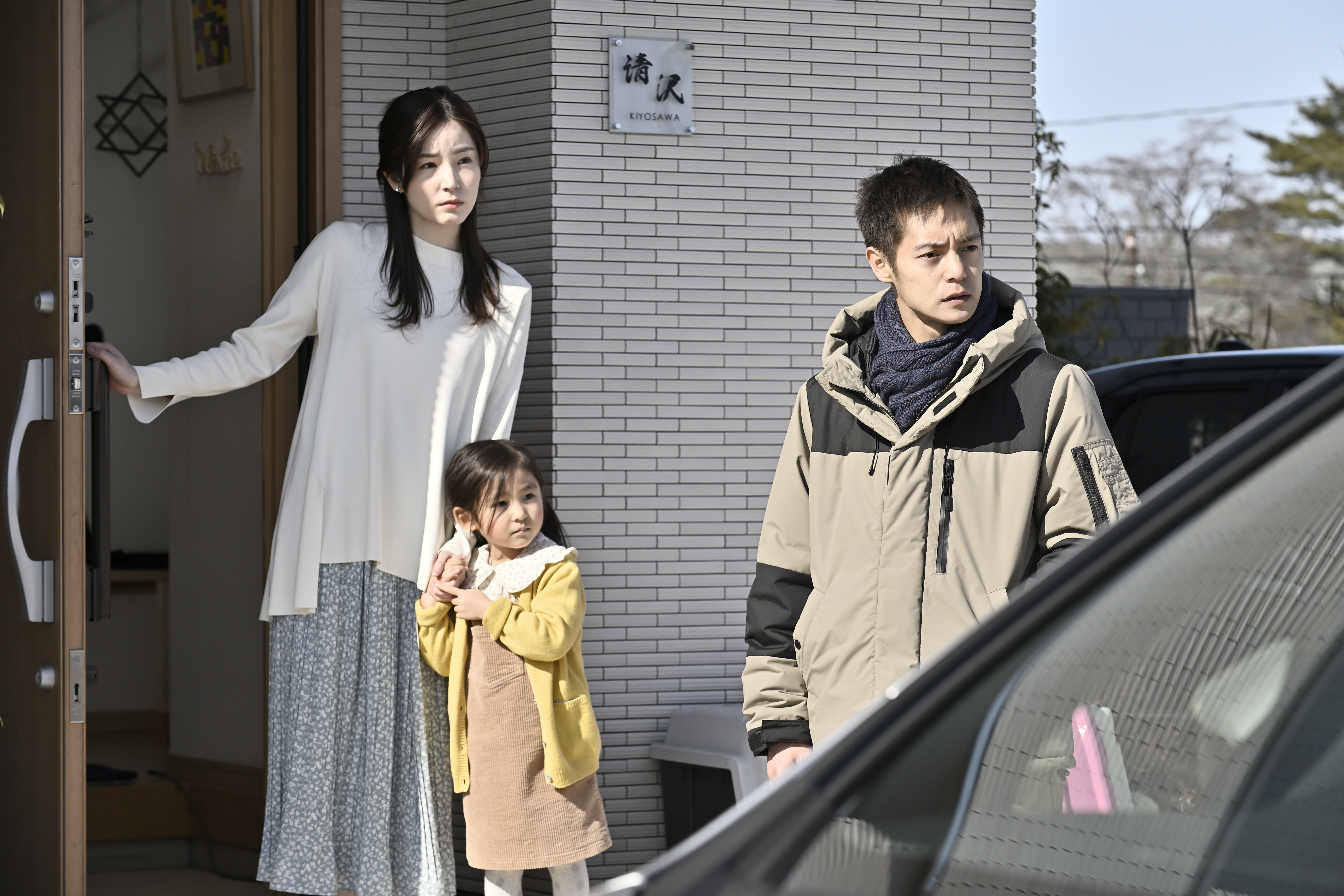
“The secret is in the basement” is not a phrase which inspires confidence when viewing a potential new living space, but as it turns out the cellar is the least of their worries in Takumi Saitoh’s eerie adaptation of Rinko Kamizu’s mystery horror novel, Home Sweet Home (スイート・マイホーム). The Kiyosawas are just looking for somewhere warm where they can enjoy life as a family in comfort and security, but if something sounds too good to be true then it usually is as they will discover to their cost. 

The saleswoman at Magic Homes describes the Kiyosawas as “the ideal family” for whom she is glad to build an “ideal” home. To many they may look “ideal” in that husband Ken (Masataka Kubota) has a steady job as a personal trainer while wife Hitomi (Misako Renbutsu) is a stay at home mum to four-year-old Sachi. But of course nothing’s quite as it seems and there are already cracks in the foundations of this happy family home as Ken has been having a years’ long affair with co-worker Yurie (Ririka). After finally deciding to take the plunge on the house, the affair comes to a natural end point as Yurie too decides to marry her longterm boyfriend with the aim of starting a family. But not long after the Kiyosawas have moved in to their new “magic home” complete with new addition Yuki, Yurie’s husband receives a video showing an unrecognisable Ken entering her apartment with the presumed motive of blackmail lending a note of anxiety to his moment of familial bliss. 

To begin with, the house itself takes on a eerie quality especially with the ominous rumble of the single AC unit in the pitch-black basement. The home does not seem to have been particularly well thought out for families with small children as the tiny doors leading to the hatch are at a toddler’s height and don’t appear to have any kind of safety locks in place. Everything else is run off the central smart system including a network of CCTV cameras sold to the family as a convenience that would allow them to keep an eye on the children wherever they might be in the house while getting on with other things, but also undoubtedly a privacy worry and no one likes to feel watched in their own home. Watched is exactly how they start to feel, Hitomi convinced someone’s been in the house while looking around realising how many vents and ducts there are ominously staring down at them in every room. 

Ken’s brother Satoru (Yosuke Kubozuka) is suffering with a mental illness that makes him paranoid, repeatedly insisting that there are people watching them and they need to protect the family because they are everywhere in the ceilings and the floors. Though it first seemed to us that the house was the problem, the family’s desire for conventional suburban living biting back at them, we wonder if the problem is Ken and his reckless endangerment of his family through his affair. When first viewing the house, the couple had been accosted by a creepy salesman, Amari (Yohei Matsukado), who makes barbed remarks about looking after the family that have Ken suspecting he’s got it in for them because they chose someone else to handle their sale or perhaps resents them for not being “ideal” enough to live in one of his “magic homes”. 

But then what is the “ideal” family, who gets to decide that? Why should the Kiyosawas have to fulfil a stereotypical ideal just to be judged worthy of homeownership? There might be something chilling in the uniformity of the house’s design, a utopian vision of suburban bliss founded on outdated patriarchal social norms of the nuclear family though in this case slightly adjusted for a new era, but then again the call is coming from within the house in more ways than one in Ken’s delayed response to traumatic childhood incident and concurrent anxiety around being able to protect his family in fulfilment in the social “ideal” for fatherhood. It’s the “ideal” that is the true enemy from the generic house design to the unfair expectations placed on the Kiyosawas to live up to a particular kind of suburban properness in order to qualify for the right to live there. Paranoid and eerie, Saito conjures a world of constant tensions in which we are all being “watched” if not to say judged and any bug in the system must be quickly removed so that the “ideal” may prevail.  


Home Sweet Home screens July 27 as part of this year’s New York Asian Film Festival.

Original trailer (no subtitles)

Images: ©2023 Rinko Kamizu, KODANSHA Ltd./ “Home Sweet Home” Film Partners

A Man (ある男, Kei Ishikawa, 2022)

©2022 "A MAN" FILM PARTNERS

“Why was living so hard for him?” a brother remarks of man he assumed to have died in an accident after severing ties with his family, though with little sympathy in his voice and in truth should the brother be dead it would be all the better for him. Adapted from  a novel by Keiichiro Hirano, Kei Ishikawa’s A Man (ある男, Aru Otoko) asks questions not so much about the limits of identity and the existence of an authentic self, but the kinds of labels we place on others and the prejudice that often accompanies them that makes some want to run from themselves. 

Accidental detective Kido (Satoshi Tsumabuki), a lawyer who previously represented the recently widowed Rie (Sakura Ando) in her divorce from her first husband, is a case in point. He tries not to react while his wealthy and extremely conservative father-in-law runs down a case he’s just won representing the parents of a man who took his own life after being expected to work extreme overtime by an exploitative company solely to fulfil the image of the salaryman. The father-in-law sneers and complaints about the family receiving compensation before moving on to a rant about the welfare state scoffing that “real” Japanese don’t rely on such things which are only for “Koreans and people of that ilk”. 

Aside from its unpleasant xenophobia, the remark is insensitive as Kido is himself third generation Zainichi Korean, though a naturalised citizen of Japan. Throughout the film, he’s bombarded with social prejudice and racist abuse to which he chooses to say nothing, because there’s nothing he can really say, though leaving us to wonder if his decision to marry his wife (Yoko Maki), the daughter of a wealthy and conservative family, is an attempt to secure his own identity as a member of Japanese society even while bristling at her further demands, that they should invest in a more impressive, larger detached house as recommended by her father and also have another child. 

Kido’s quest to uncover the “true” identity of Rie’s husband Daisuke (Masataka Kubota) who is discovered to have been living an assumed identity when the brother of the man whose name he borrowed arrives at his memorial service, is also a quest to affirm his own identity which is in many ways as self-constructed as Daisuke’s is assumed to be. The interesting thing is that Daisuke, who said little of his past, used the other man’s backstory leaving no doubt that is not quite a case of mistaken identity that brings Kyoichi (Hidekazu Mashima) to Daisuke’s memorial service, though he is quick enough to disparage the life the deceased man shared with Rie in a rural “backwater” while making vague references to insurance policies and inheritances and simultaneously offering to pay for the funeral expenses as if reclaiming ownership over Daisuke’s legacy. 

Like Kido’s father-in-law, Kyoichi appears to be a cynical and self-interested man and it’s not difficult to see why the other Daisuke may have wished to escape his life with him. As an older man points out, everyone has things in their past and though they might not seem like much to others it’s natural enough to want run from yourself, to leave everything behind and start again somewhere else. In Japan, this is much easier to do than in some other countries and it’s true enough that changing one’s name is not that uncommon either. Rie’s young son Yuto, now old enough to question his own identity, took his mother’s maiden name after the divorce, then Daisuke’s surname Taniguchi when he married his mother. Now he wonders what his name should be if it is not Taniguchi and who he really is underneath it. 

In essence, we give people names as a kind of label to describe our relationship to them as a means of mapping out the world. These labels also come with prejudices such as that directed towards Kido as a Zainichi Korean and to another of the “disappeared” men who struggled to emerge from the shadow of his father’s crime as a death row felon. The projection of an identity can be harder to live with than the identity itself. When Kido’s wife tells him that he doesn’t seem himself and she wants him to go back to the way he was before, it’s a rejection of the new identity that has begun to surface through his quest to identify Daisuke and an instruction that he conform to the image of him she has constructed for herself as a typical Japanese salaryman not so different from her father in their affluent, middle-class existence.

Having satisfied himself that he understands the man Daisuke came to be, Kido’s self-image and sense of identity seem to be reaffirmed. He is happier with his wife and son, and has fewer doubts about his place in the world, but then he’s suddenly confronted with an unexpected revelation that undermines his new sense of security in causing him to doubt the veracity of the image he has of others, and consequently of their relationship with him which again leaves him unanchored unable to affirm his image of himself without its reflection. Rie’s final acceptance that in the end she never needed the “truth” (now that she has it) points to the same answer, that in the end Daisuke’s name was irrelevant because he was the man he was to her at the time that she knew him and this is all we can ever really know of each other in a continual act of faith in interpersonal connection. A man can be many people at once, or in quick succession, and none of them any less “real” than another. “It’s nobody’s life but your own,” Kido is reminded even as he struggles to reorient himself in a merging of identities self-constructed or otherwise but perhaps destined to remain forever a stranger to himself.


A Man screens in Chicago March 18 as part of the 16th season of Asian Pop-Up Cinema.

International trailer (English subtitles)

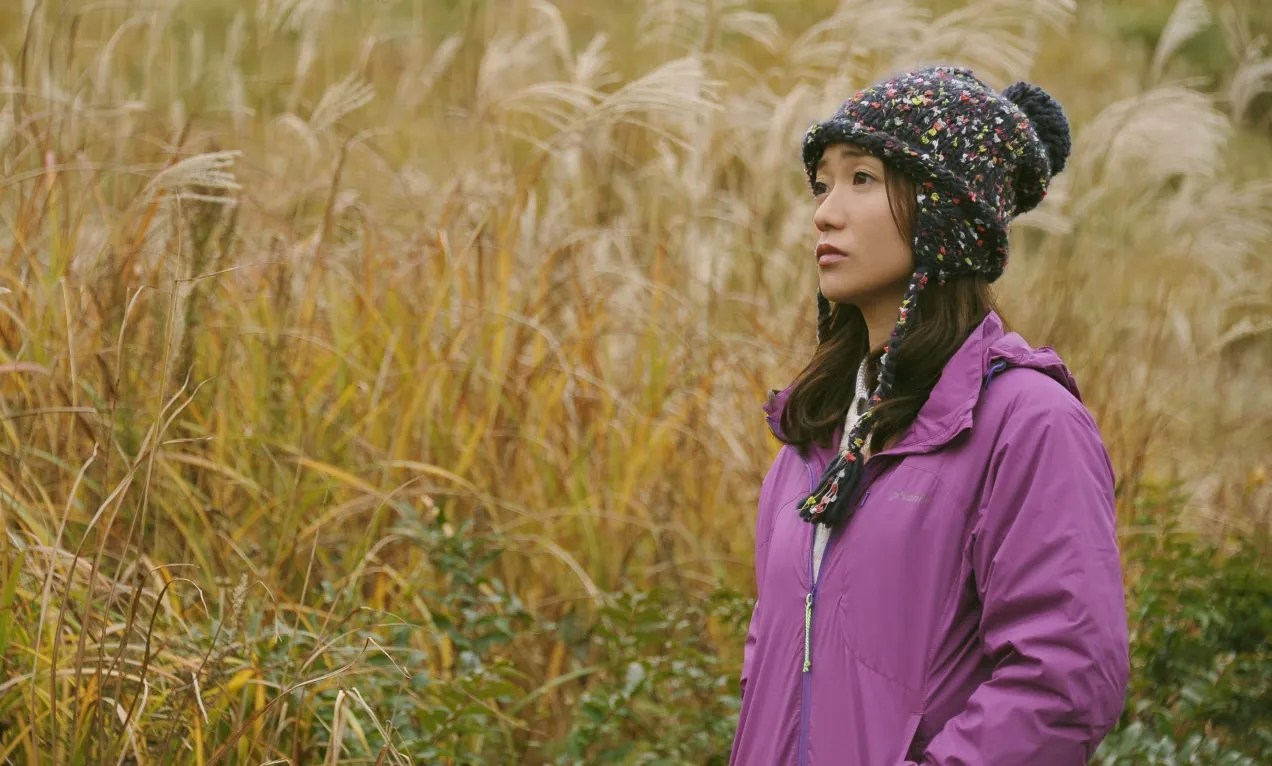
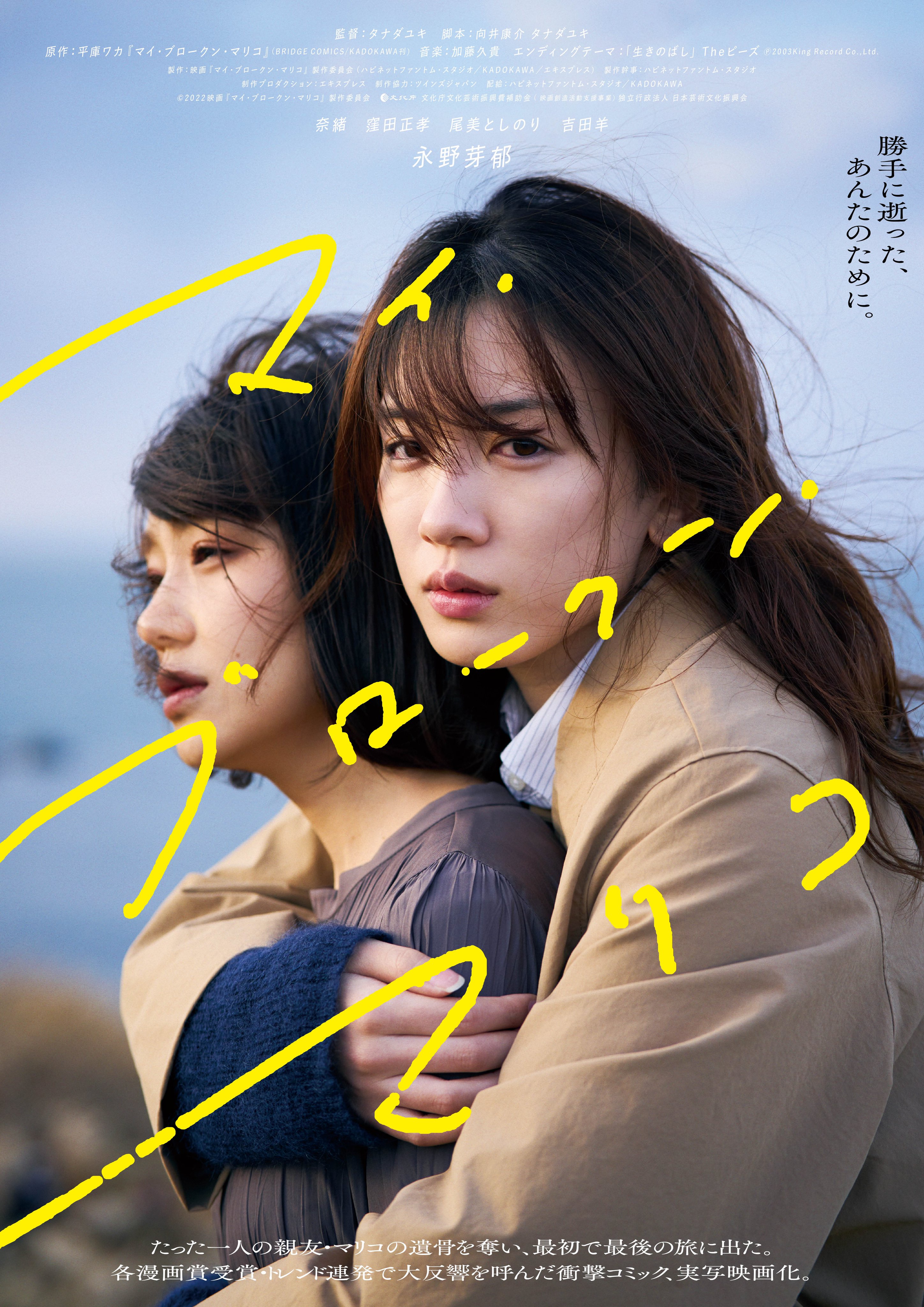
My Broken Mariko (マイ・ブロークン・マリコ, Yuki Tanada, 2022) [Fantasia 2022]

“The only thing you can do for a person who’s gone, is to live” according to a kindly soul at a train station attempting to comfort the heroine of Yuki Tanada’s adaptation of the manga by Hiroko Waka, My Broken Mariko (マイ・ブロークン・マリコ). It is in many ways, however, Shiino (Mei Nagano) who is trying to put herself back together after earth-shattering loss, attempting to reclaim her friend’s memory while struggling to reorient her life in the wake of her absence. Yet what she comes to realise is that all she can do for Mariko (Nao) now is to try to live.

At a cafe one ordinary day, Shiino hears the news announce the death of a woman presumed to have taken her own life who has the same name as her childhood friend. Overcome with anxiety, she tries to call Mariko on the phone but gets no answer nor reply to her messages. Dropping by her apartment, she realises the worst is true. Mariko is gone and she didn’t even say goodbye. Her apartment has already been cleared and her parents apparently opted for a “direct” cremation not even bothering to hold a funeral. It’s almost as if Mariko never existed at all. 

Consumed by grief and guilt that she didn’t see her friend’s death coming or in some way failed to save her, Shiino makes up her mind to rescue her unable to bear it that the father who beat and abused her all her life is allowed to keep her in death. After making a dramatic raid on their apartment, she kidnaps Mariko’s funerary urn and hits the road searching for new directions while on one last road trip looking for a safe place to let her friend rest. 

This was certainly an intense friendship or on Shiino’s side at least something more, she is clearly coded as queer in her masculine speech and attire, yet Mariko seems to have looked to her as a sisterly or maternal figure at one point exclaiming that she would have liked it if Shiino had given birth to her. As high school girls they’d idly looked at flats for rent, vowing to stay together until they were old and most importantly with a pet cat but even though Mariko had threatened suicide if Shiino were to get a boyfriend she eventually drifted away into a series of abusive relationships for which she continued to blame herself. Shiino can’t forgive herself that as much as she tried to show her she cared, she was never able to reach her or to restore Mariko’s sense of self worth. Now that she’s gone she finds herself still searching for her, struggling to remember not only the bad things or the good things but everything she was.

Through her random road trip, Shiino is forced to let Mariko go little by little firstly with the loss of her childhood letters to the unlikely appearance of a bag snatching biker in small-town rural Japan and secondly in ironically using the funerary urn to save another woman from abuse. The ghost of Mariko seems to hover around her, a street lamp flickering in comfort as she breaks down in tears in the street reading a letter in which the young Mariko told her she was no longer afraid to walk in the dark after hearing that Shiino used to go walking at night and she might bump into her at any time, while she is at one point almost possessed by her spirit when reclaiming her memory from the abusive father Shiino blames for causing her death in slow motion. In setting Mariko free she liberates herself not least from her all consuming friendship in which she admits that she had nothing and nobody else. 

“So this is how we get back to our ordinary lives” she reflects, lamenting that to the rest of the world Mariko’s death is an irrelevance and her absence barely felt, a realisation that can’t help but leave her feeling small and insignificant as do the offhand remarks from Mariko’s landlord that it’s a good thing she didn’t die in the apartment and her exploitative boss’ insistence that the death of a close friend isn’t a good enough excuse to take time off work. Replete with a quirky sense of humour despite the deep melancholy of Shiino’s overwhelming grief, Tanada’s empathetic drama finally allows its heroine to put herself back together again living quite literally in memory of her friend. 


My Broken Mariko screened as part of this year’s Fantasia International Film Festival.

Original trailer (English subtitles)

The Sunday Runoff (決戦は日曜日, Yuichiro Sakashita, 2021)

“I keep choosing a perilous path” the heroine of Yuichiro Sakashita’s political satire The Sunday Runoff (決戦は日曜日, Kessen wa Nichiyobi) explains, “But that’s where change happens”. Change, famously, is not a common occurrence in Japanese politics where the same party has remained in power for all but a handful of years since its foundation in 1955. Part of the reason for that at least according to the reluctant candidate is the nation’s rigid social attitudes in the unwillingness to question the status quo, just going along with however things have always been done, while the main cause is perhaps corruption at the local level in the interplay between supporters groups staffed by influential local businessmen and their representatives along with the collusion of civil staff who have become too blasé about the murky nature of politics. 

That’s especially true for political secretary Tanimura (Masataka Kubota) who had developed a paternal relationship with former defence minster Kawashima who unfortunately is forced to retire from office due to ill health after suffering a stroke. Unable to agree on a suitable candidate to replace him, the supporters groups throw their weight behind Yumi (Rie Miyazawa), Kawashima’s middle-aged, unmarried daughter. The above lines are spoken during her introduction to her staff who find her strange and unconvincing, mocking her Western-style business speak along with her decision to refer to them as her “crew”. 

If “change” was what Yumi wanted, she’s almost certainly standing for the wrong party. Though not explicitly stated, she’s obviously intended to be standing for an LDP stand in and in the opinion of her staff at least her seat is so safe you could paint a face on a rock and get it elected. Their problem is that they assumed Yumi would be easy to manage, though it quickly becomes clear that despite having grown up in politics she is incredibly naive and something of a loose cannon. As she admits, she tells it like it is and doesn’t consider the consequences. She is not media trained and the secretaries, Tanimura included, do not really bother to brief her in part because they assume the election’s a sure thing so they don’t need to. As we can see from her introductory speech, she is essentially playing the part of a politician as she imagines it to be, saying things she perhaps does mean because she thinks it’s what a politician would say such as her offensive reply to a question about the declining birthrate to the effect that childless couples were “slacking off” and “not functioning as humans” leading to a protest outside her office in large part by those who had found her comments hurtful because they had wanted to have children but for various reasons had not been able to. 

It’s Yumi’s political naivety that makes her the ultimate foil for the secretaries and supporters groups as she gradually comes to realise she was never meant to be anything other than a puppet. After a particularly disastrous conference, one of her older male sponsors exasperatedly asks why they couldn’t have picked a better candidate. “At least choose a man”, he adds while one of the secretaries later snaps at Yumi that she’s way out of her league, should “know her position”, and that the only reason an “amateur woman” like her was approved as a candidate was because of the supporters committee so she’s there to do exactly what they say. Forced to apologise to them, Yumi’s face is framed in the lattice work at a restaurant as if she were in prison, a sentiment echoed by Tanimura when he tells her that she has “no choice” but to continue threatening to plant smear stories in the press if she tries to walk away or blow the whistle on all the corruption she has unwittingly uncovered in the local political office. 

That would include the giving and receiving of bribes in an all too cosy relationship with local business and particularly the construction industry. Part of the problem is that the civil staff will all lose their jobs if Yumi is not elected which makes it in their interest not to act with total transparency. Tanimura hadn’t really cared about that before, each time when questioned replying only “that’s just how it is” but slowing beginning to realise that it doesn’t need to be and really it isn’t OK. Despite her eccentricity and impulsiveness Yumi would as Tanimura can see make a good politician if not one ideally suited to a conservative party. Threatening suicide from the roof of a three storey building she decries political apathy in Japan, explaining that they need to remind the people that this is really about them and that politics is not pointless because change can happen while the jaded secretaries roll their eyes and giggle setting up a crash mat in the event that she is not actually bluffing. 

What she decides to do is try to loose deliberately, but everything she tries just backfires. A series of offensive racist rants far from ruining her reputation pick her up new votes from members of the far right who previously felt unrepresented while even planting false stories in the press that she is a drug user with a criminal record doesn’t seem to dent her approval rating. Just as Yumi’s comments about the birthrate echoed those of other gaffe-prone LDP politicians such as Mio Sugita, Yumi and a reformed Tanimura even film a fake video of her pretending to abuse one of her staff directly echoing that of Mayuko Toyota who was forced to stand down after an embarrassing video of her calling her aide “baldly” while beating him went viral, but her popularity only increases. As a last resort they release video footage of her father accepting bribes and have her deny it so it becomes obvious that she lied, but her dishonesty makes no difference to the average voter. 

The cynical secretaries had indicated that ordinarily speaking they’d ride a scandal out because another one will be along before too long to knock it off the front page. Yumi’s whistle blowing plan fails again because of collusion with the local media who despite sniffing around for a story won’t run anything too negative lest they lose their access to the halls of government. The secretaries then get lucky when a possible North Korean missile strike bumps the bribery affair onto the back pages, a video of the staff laughing and cheering their near escape even becoming a meme on social media. Yumi’s resentment is in rooted in her powerless, refusing to be a puppet for local bigwigs, but it may also be true that once she’s elected they have no real power over her and changing the system from the inside may ironically become a real possibility if only she herself can overcome her conviction that nothing is ever going to change. “This is not the world you expected.” Tanimura admits, “accept it and fight”. A throwback to the films of Juzo Itami, Yumi is very much the kind of character Nobuko Miyamoto might have played in one of her “woman” films if perhaps a little more cynical. The Sunday Runoff is decidedly more barbed if at least as pointed in its criticism of incestous local politics, but in the end does believe that real change may indeed be possible if only you’re willing to fight for it. 


The Sunday Runoff streams in Germany until 6th June as part of this year’s Nippon Connection.

Original trailer (no subtitles)

Fancy (ファンシー, Masaoki Hirota, 2020)

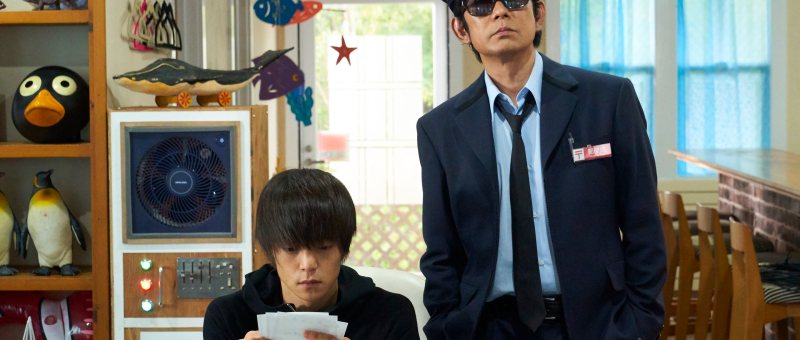
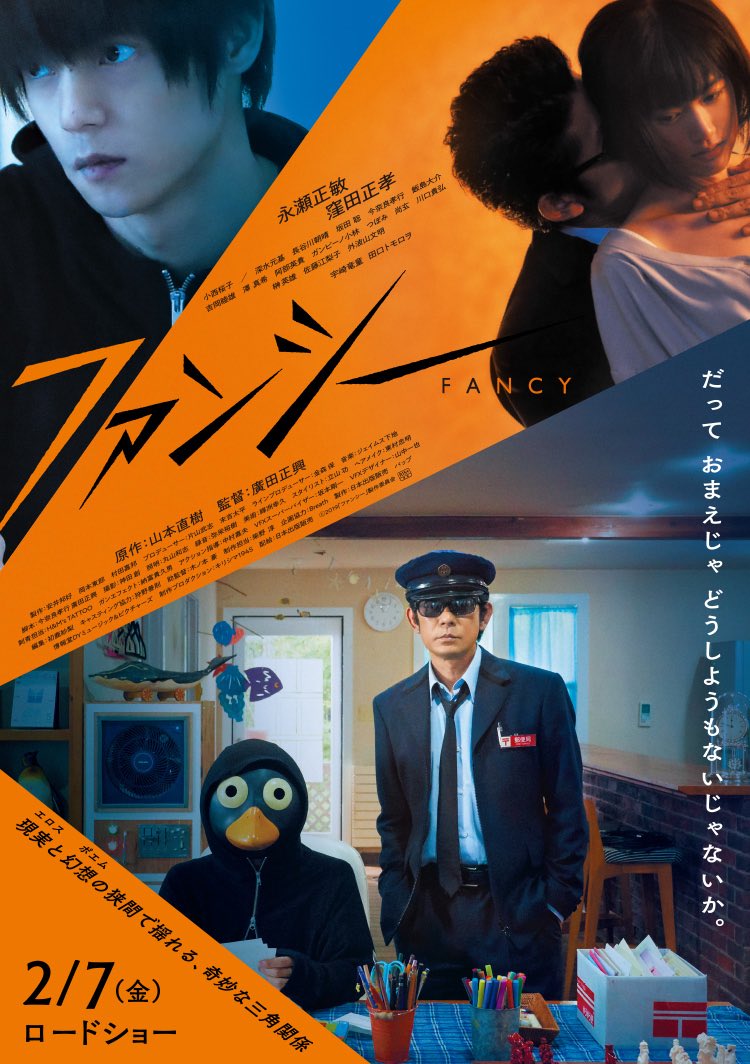
“Every minute of life is yours to make use of” according to the ultra cool hero of Masaoki Hirota’s Fancy (ファンシー), a laconic postman with a penchant for sunshades and a resigned attitude to transience. Adapted from the manga short story by Naoki Yamamoto, Fancy is indeed a transitory tale, a minor episode in the life of a poet who thinks he’s a penguin, his best friend the postman, and his penpal seeking her own kind of escape in an impromptu and probably unwise proposal of marriage. 

The postman, Takasu (Masatoshi Nagase), is also a tattooist, a former yakuza now reformed and living quietly in an old-fashioned hot springs town which seems to be stuck in the Showa era. As Takasu’s colleague Tanaka (Tomorowo Taguchi) puts it, it’s pretty “standard” now for everyone to have two jobs, his side hustle being a shooting gallery which is a front for the sex trade. Even the local Buddhist priest is intent on trying to sell everyone he meets a funerary monument, while Southern Cross Penguin (Masataka Kubota) is a best-selling poet particularly popular with high school girls in addition to being a flightless aquatic bird in human form. Penguin doesn’t expect us to believe him, but tells us that a penguin is just what he is and there’s no particular reason for it. So completely does he take his penguinhood that he opens the door in a full penguin mask, dresses only in black and white, mainly eats raw fish, and keeps his home ice cold with the aid of several industrial-size air conditioners. Penguin prides himself on answering the many fan letters he gets, explaining that they’re not so much “fans” as “comrades” who are also looking for the “shining country”. In any case, his fan mail is how he met the postman, his only friend, who is content to shiver in his home putting whisky in his tea to stave off the cold. 

Penguin’s life begins to change, however, when he gets a letter from “Moon Night Star” (Sakurako Konishi), a fan with whom he’d been corresponding. Moon Night Star pretty much insists on becoming his “wife”, failing to take Penguin’s hints that she might not be very happy “married” to an aquatic animal who can’t go outside. As we will later discover, Moon Night Star is in her own way rebelling against her fate, taking refuge in Penguin’s igloo and engaging in a delusion that she loves him in order to make it work. For his part, Penguin perhaps comes to like her too, but he can also see that she’s quite “depressed” stuck in the cold with him, pushing her towards the outside and into the arms of the postman. 

Takasu, meanwhile, finds himself on a series of borders as he begins to confront his past in the form of his absent father and the family he seems to have lost, sympathetically telling his pained former wife that her life is hers to do with as she wishes, perhaps in a sense cuttingly refusing her apology but also accepting her right to seize the present. Another man with two jobs, Takasu’s childhood friend is both yakuza gang boss and hotelier, confiding that the gangster stuff is too stressful and he wishes he could just focus on the hotel in the same way the Takasu has now become a postman. It’s his strange relationship with a yakuza drifter, however, that threatens to drag him back into gangsterdom as he learns that there’s been a schism in his former clan. With a turf war brewing, the loyalists have taken over his friend’s hotel, unreconstructed Showa-era yakuza on the streets of a pleasant hot springs resort. 

“We’re doomed anyway, do what you like” one of the goons intones, in one sense subverting Takasu’s mantra but in another perhaps embracing it. A memory of his father reminds him to “make very second count” while also catching him in an endless moment of gaze, unable to forget the back of the woman his father was tattooing at the time. Takasu looks and does eventually touch, but admits his jealousy obsessed with skin as canvas only latterly taking off his shades in a willingness to see and be seen. Penguin, meanwhile, who wanted to swim in a sea of words, finds himself floating free, braving but eventually succumbing to the heat before exclaiming that he’s going to close his eyes to allow a new story to start. The love of a poet is fleeting, Takasu reflects as each of the various protagonists shifts towards their “main” identity, edging back towards conventionality in abandoning the “fancifulness” of their sometimes strange existences. There will, however, be more strange adventures because even if it falls apart beneath your feet, life’s what you make it, be you a postman or a penguin. 


Fancy screened as part of Camera Japan 2020.

Original trailer (no subtitles)

First Love (初恋, Takashi Miike, 2019)

First love poster 1Taking a deep dive into Showa era nostalgia repurposed for the modern era, Takashi Miike returns to the world of jitsuroku excess with an ironic tale of honour and humanity. Quite literally all about the jingi, First Love (初恋. Hatsukoi) takes a pair of exiled loners betrayed by the older generation, and allows them to escape their sense of futility through simple human connection while the nihilistic gangster underworld slowly implodes all around them.

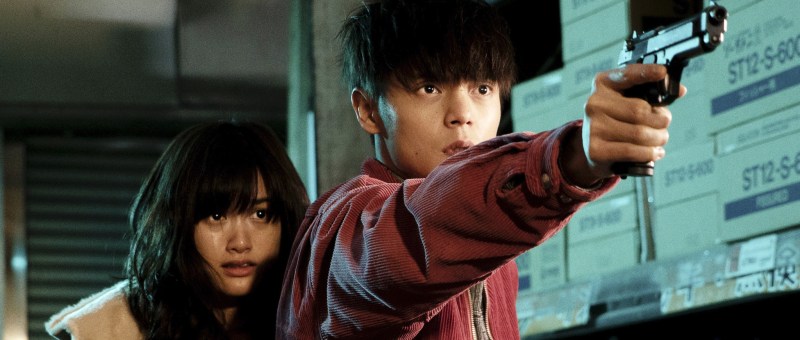
Sullen boxer Leo (Masataka Kubota) is so filled with ennui that nothing really excites him, not even success in the ring. An unexpected KO, however, sends him off to the doctor’s where he is told that he has a possibly inoperable brain tumour and very little time left to live. That is perhaps why he decides to punch a policeman in defence of a young woman running away and desperately pleading for help. Yuri (Sakurako Konishi), known as “Monica” to her captors, was sold to the yakuza by her father and has since become dependent on drugs. Little known to either Leo or Yuri, they are about to become embroiled in a long brewing turf war between the local yakuza and the Chinese Triads engineered by jaded underling Kase (Shota Sometani) who has enlisted rogue policeman Ohtomo (Nao Omori) to help in a plan to steal his gang’s drug supply and have Ohtomo sell it on in the same way he does with “confiscated” narcotics while blaming the whole thing on the Chinese.

Abandoned at birth, Leo is a man who doesn’t know his history and so doesn’t know himself. He tells a reporter that there is no particular reason that he boxes save that he doesn’t know how to do anything else, yet the fighter’s all that remains and “boxer” has become his entire identity. A passing fortune teller advises him that he loses because he only fights for himself and if he truly wants to win he needs to learn to fight for someone else, but Leo is used to being alone and believes he has no need of other people. Knowing he’s going to die means, paradoxically, that he has infinite potential because he has nothing left to lose.

Leo punching out the policeman reawakens in Yuri a memory of her “first love”, a high school classmate who tried to defend her against her abusive father whose ghost still haunts her in drug-fuelled hallucinations. The ultimate proof of the yakuza’s ironic lack of “jingi” or “honour and humanity” when it comes to the treatment of women, Yuri was betrayed first by her father and then by the petty street thug who got her hooked on drugs as a means of control and exploited her body for financial gain.

Ironically enough, it’s a Chinese Triad who proves the ultimate heir to “jingi” having come to Japan because of her love for classic Toei gangster hero Ken Takakura only to discover that kind of nobility is something you only see in the movies. While the yakuza lament that they’re at a disadvantage fighting the Chinese because they don’t need to worry about “honour” as dictated by their code, they are quick enough to scream vengeance when Kase convinces them that it was the Triads who offed their street fixer (Takahiro Miura) to get back at recently released gangster Gondo (Seiyo Uchino) who is the reason that the Triad boss is nicknamed One-Armed-Wang. Gondo and Wang are already on a collision course as representatives of their respective ideologies with Gondo perhaps the last true yakuza standing, faithful to his code to the end.

Sensing his strong sense of jingi, the romantic Triad allows Leo to escape with Yuri as if recognising that neither of them belong in this nihilistic world of pointless and internecine violence. Despite proclaiming that he had no need of other people, it’s Leo’s humanity that eventually saves him as he realises that he was always going to die and rediscovers his true strength through fighting to protect someone else. Yuri, meanwhile, finds the will to live again in making peace with the past and laying old ghosts to rest thanks to Leo’s altruistic decision to protect her. Echoing Fukasaku’s classic crime cycle in its severed heads and funky ‘70s jazz score remixing the iconic theme tune, Miike ups the ante with a series of outlandishly idiosyncratic gags as Kase’s nefarious scheme snowballs into a darkly humorous crescendo of ridiculous brutality, but ultimately rejects the futility of a world without jingi in allowing his pure hearted heroes the possibility of escape, saved rather than consumed by their sense of honour and humanity.


First Love was screened as part of the 2019 BFI London Film Festival.

Original trailer (English subtitles)

Tokyo Ghoul S (東京喰種 トーキョーグール【S】, Kazuhiko Hiramaki & Takuya Kawasaki, 2019)

tg2_poster_3校B_ol_6In Tokyo Ghoul, regular university student Ken Kaneki (Masataka Kubota) had to learn to accept the parts of himself he didn’t like in order to become the kind of man he wanted to be. Of course, the situation was more complicated than that faced by most young men because Ken Kaneki’s darkness was born of being seduced by a beautiful woman who turned out to be a “ghoul” – a supernatural being craving human flesh, something he later became himself when they were both injured in a freak accident after which he got some of her organs. The sequel, Tokyo Ghoul S (東京喰種 トーキョーグール【S】) finds him in a more centred place, having accepted his new nature as neither human nor ghoul but a bridge between the two. Now he has a series of different questions to face in trying help others accept themselves in the same way as they too wonder if there are some parts of themselves so dark that if they revealed them they could never be loved.

While Ken goes about his regular student life working part-time at ethical ghoul cafe Anteiku, a ghoul serial killer known as “The Gourmet” (Shota Matsuda) has been making the news after targeting a high profile model (Maggy) whom he stalked and killed simply to taste her heterochromatic eyes. Tsukiyama, as we later learn his name to be, is a dandyish fopp living in a Western-style country house complete with servants who serve him only the finest meals well presented to hide their dark genesis. On catching a whiff of Ken’s unique human/ghoul scent, he knows he must taste him and puts a nefarious plan in motion in order to lure him to a mysterious ghoul-only restaurant where humans are butchered live for show while the clientele salivate over scenes of intense cruelty.

That’s all too much for poor Ken. He can’t understand how anybody could act with so little regard for life. The cafe owner pointedly asks him if he feels pity when looking at the butchered flesh of an animal, which he of course does not. The ghouls feel much the same, humans are their prey – they can’t help what they are, but living under the intense fear of discovery in an obviously hostile world has made them cruel and resentful to the extent that they no longer understand the value of life. The ghouls that Ken knows, the ones which frequent Anteiku, are different. They have resolved to live ethically and respect lives both human and ghoul equally.

Ken’s friend and colleague Touka (Maika Yamamoto), however, is beginning to have her doubts. In the first film we saw her pursue a touching friendship with classmate Yoriko (Nana Mori) whose cooking she made a point of eating solely as a means of connection despite the fact that human food makes her ill. Now she fears she’s doing the wrong thing, that it will only hurt more if her friend finds out her secret and rejects her, or worse that she may put her in danger. Therefore, she counsels Ken to distance himself from his overly cheerful friend Hide (Kai Ogasawara) and the human world in general, threatening that she herself will kill Hide if he discovers that Ken is a ghoul. As expected, Ken ignores her advice but is mildly shaken by it. Deciding to intervene when his sometime enemy Nishiki (Shunya Shiraishi) is being beaten up in the street, he discovers a better future on learning that Nishiki is living with a human woman who knows he is a ghoul, but loves him anyway.

Though Kimi’s (Mai Kiryu) justifications that she can live with the fact her boyfriend kills people and eats them so long as he leaves her friends and family alone is a little worrying, it is a touching example of the film’s positive message that there is no secret so terrible that it means someone can’t be loved. Kimi accepts Nishiki’s nature as a ghoul, aware of the fact he can’t help what he is and that if she had been born a ghoul she would be the same. Touka fears rejection, but on catching sight of her bright red wings Kimi utters the single word “beautiful”, seeing only goodness without fear or hate.

Tsukiyama meanwhile seems to have gone in the opposite direction, pursuing his desires to the point of obsession in a quest for ever greater sensation. He stalks and murders the model to devour her eyes in an especial piece of irony, while his pursuit of Ken takes on an intensely homoerotic quality. Using the same tactics as Tokyo Ghoul‘s Rize, Tsukiyama picks Ken up through bonding over books, invites him to “dinner” and later sends him an invitation accompanied by a single red rose. Despite the romanticism, however, he soon reverts to type in blaming Ken for his actions. “You’re making me this way”, he insists, “take responsibility”, like every abuser ever simultaneously accepting that his behaviour is inappropriate and justifying it as a consequence of someone else’s actions. In the end, Tsukiyama’s illicit desires consume him, while Ken’s act of self-sacrifice once again allows him to be the human/ghoul bridge combatting Tsukiyama’s rapacious cruelty with an open-hearted generosity which pushes Touka to the fore so that she too can learn that peaceful co-existence is possible when there is trust and understanding on both sides.

Nishiki tells Ken his problem is that he’s too nice, but that’s not a bad thing to be because he just might “save somebody someday”. Niceness as a superpower might be an odd message for a movie about flesh eating monsters almost indistinguishable from regular humans, but perhaps that’s what will save us in the end, a generosity of spirit that makes it possible for us each to accept each other’s darkness in acknowledgement of our own. Less stylistically interesting than the first instalment, Tokyo Ghoul S may be a kind of bridge movie in a possible trilogy (a sequel is teased in a brief mid-credits sequence featuring a mysterious character who makes several unexplained appearances throughout the film), but nevertheless does its best to further the Tokyo Ghoul mythology as its hero finds his strength in difference and mutual understanding.


Tokyo Ghoul S screens in the US for three nights only on Sept. 16/18/20 courtesy of Funimation. Check the official website to find out where it’s playing near you!

Original trailer (English subtitles)