Chaos (カオス, Hideo Nakata, 2000)

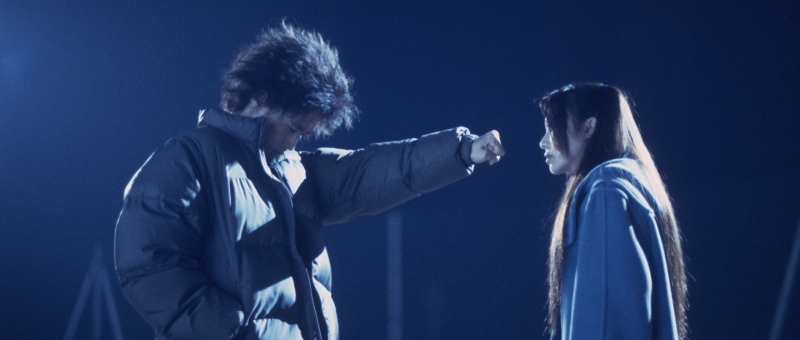
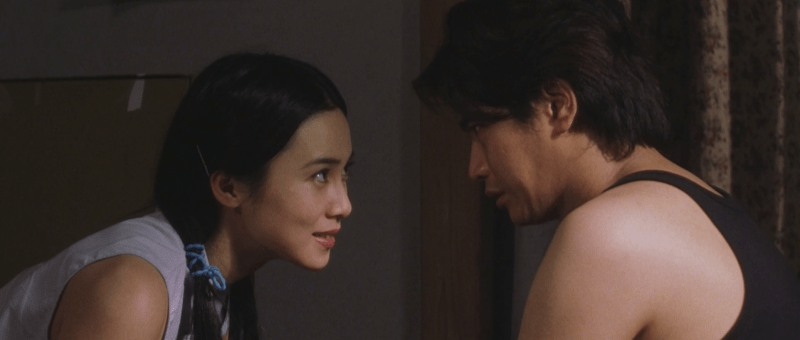
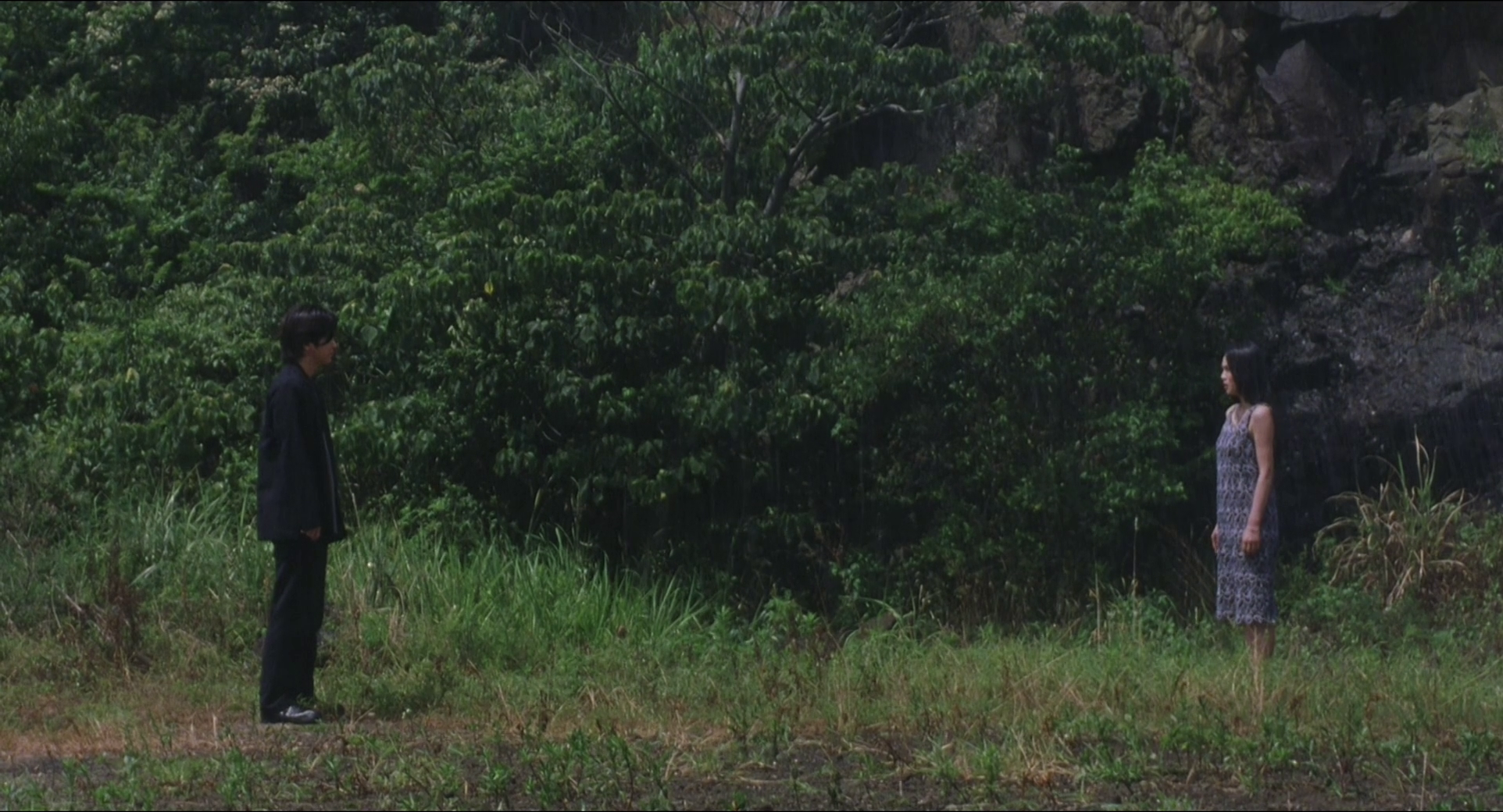
A down-on-his-luck handyman finds himself swept into intrigue when he agrees to a help a pretty young woman fake a kidnapping in Hideo Nakata’s noirish drama Chaos (カオス). Chaos is certainly what unfolds in the non-linear narrative as we try to piece together this fracturing tale of multiple betrayals and double crossings in which nothing and no one is quite as it seems and we can never really be sure just what game anyone is playing.

Goro (Masato Hagiwara), for instance, seems to be a bit of a sap. His ex-wife accuses him of being incapable of thinking of others, though his young son Noboru comes to him after having been bullied at school. He doesn’t seem to be very invested in his life of odd jobs which includes requests from lonely old men to play go as well as to visit the apartments of pretty women who’ve encountered some kind of plumbing disaster. Perhaps it’s no surprise he’s convinced to help Saori (Miki Nakatani) stage a kidnapping to test her husband’s affections seeing as she suspects he’s started an affair with a younger woman who is just nicer than she is, so she can’t compete.

What is surprising is that Goro turns out to be some sort of kidnapping expert. He explains to Saori that she should wear rope bindings for added authenticity when she’s released as well as refrain some taking showers. She should also not feed the tropical fish her friend asked her to, because if she’s been kidnapped then she’s not available, but then the fish will die, which means she’s sacrificing the life of living creatures just to prove a point. Though Goro treats her with tenderness, he frighteningly turns on after he’s helped her tie herself up, threatening rape. This is then revealed to be a ruse in order to get a real reaction of fear and terror for when he rings her husband Komiyama (Ken Mitsuishi) with the ransom request. 

This reversal makes clear to us that we don’t know who we’re dealing and anyone could suddenly change at a moment’s notice. We’ve just been told, for instance, that Saori tied the ropes so she could easily untie them by herself to go to the bathroom, which means that she could have done so anytime while she thought Goro was attacking her but didn’t. Obviously, she may have been too frightened to think of it, but then again perhaps she is also playing along with her own game too. When Goro extorts Koniyama’s sister, it looks like a cunning double bluff to lend authenticity to the original kidnapping plot while simultaneously pulling off a different scam, but maybe it’s also Goro going rogue and doubling his pay packet.

Despite his circumstances, however, Goro doesn’t seem to be in this for the money so much as white knighting for Saori even though he obviously knows she’s already married. On realising she may have betrayed him, Goro goes into a fairly convincing detective mode, posing as a policeman in order to investigate. He discovers that Komiyama’s mistress was a model who’d recently been cast aside by the agency because of a rumour she slept with a client while they also seem to have a repressive rule about dating. One of her colleagues says she hardly ever goes home to the flat her agency rents for her because she’s secretly living with a boyfriend. This is, perhaps, a world in which a woman can’t really be all of who she is because men are always trying to imprint their vision of idealised femininity on them. Womanhood is, after all, a kind of performance and one which Saori may be manipulating for her own ends. 

Yet it’s not clear where, if anywhere, the performances end and the authentic begins. Even having discovered at least a degree of the truth, Goro isn’t sure he can really trust Saori, while she may not really know either. What he resolves is that that might not matter, but what each of them is really looking for is a kind of escape from the constraints of their lives either through love or money only to discover that there is none, or else it lies only in death either literal or figural in a total reinvention of one’s persona. With shades of Vertigo, Nakata piles on the confusion and uncertainty to create an atmosphere of pure dread in which nothing, really, is quite as it’s assumed to be.


Trailer (English subtitles)
Many Happy Returns (教祖誕生, Toshihiro Tenma, 1993)

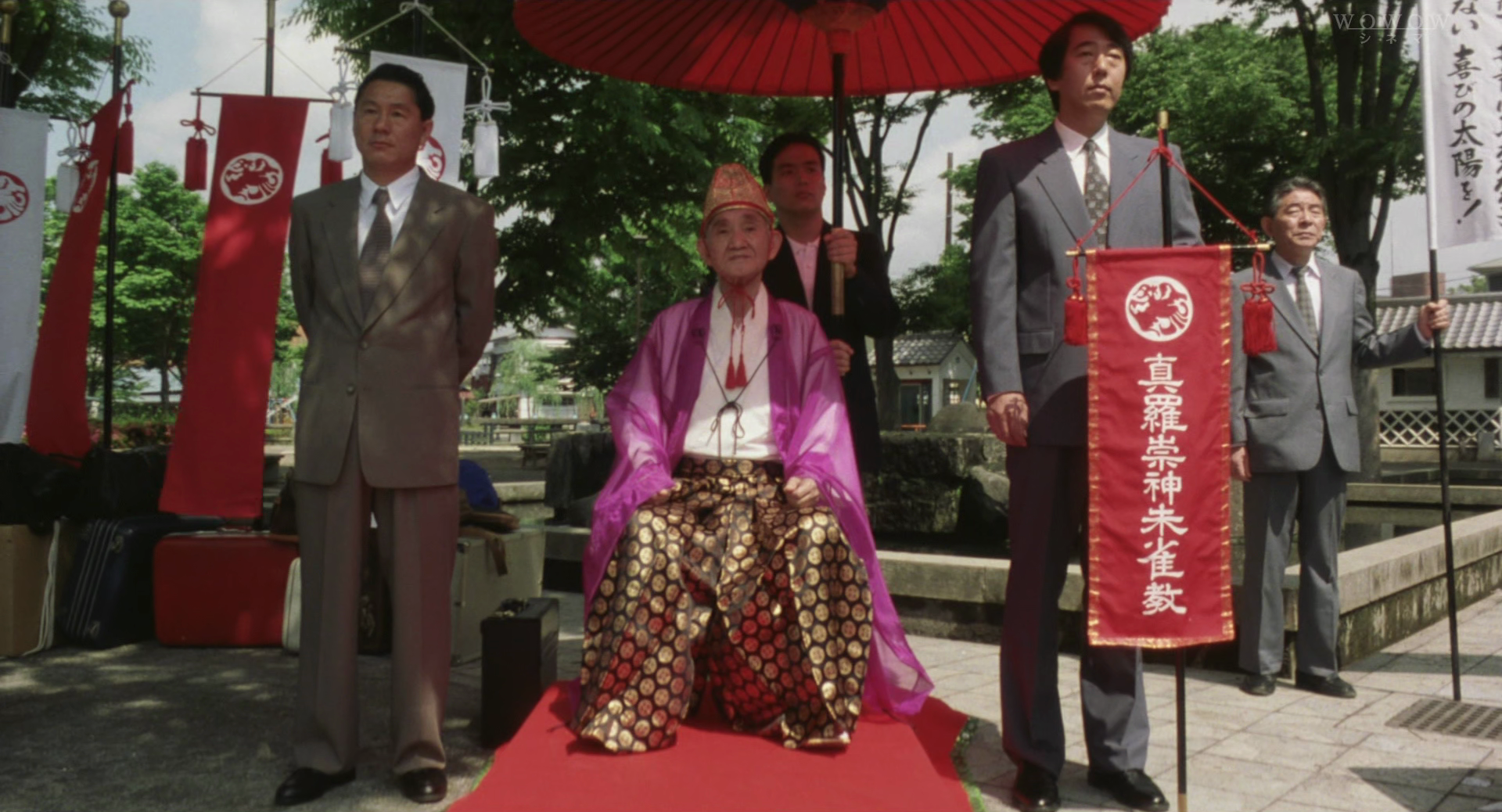
Cults, or “new religion” organisations as they’re euphemistically known, proliferated in Japan after the war. Though people may have joined them out of loneliness in search of new families or communities, the numbers only seemed to increase in the era of high prosperity as a sense of spiritual emptiness countered the age of consumerism. Coming in 1993 and based on Takeshi Kitano’s own novel, Many Happy Returns Toshihiro Tenma’s (教祖誕生, Kyoso Tanjo) approaches the issue with a genial humour that likely became impossible two years later with the involvement of Aum in the Tokyo subway attack.

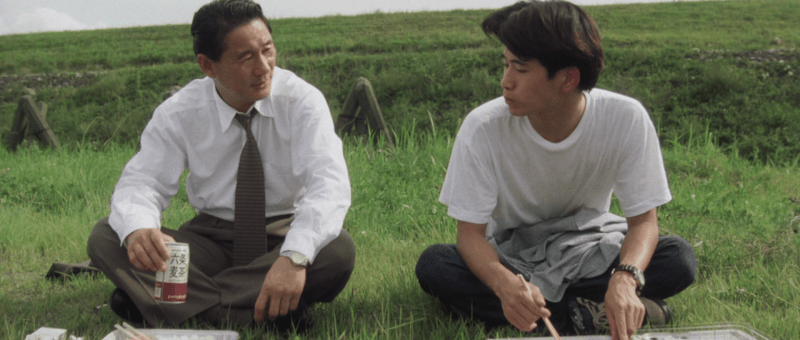
Kazuo (Masato Hagiwara), a wandering young man, asks himself why people join join cults while insisting that all looks so fake but later becomes fascinated with them himself. He can tell that the elderly woman who can suddenly walk again after an encounter with the leader (Masami Shimojo) is probably a plant, but is intrigued rather than outraged. Shiba (Takeshi Kitano), the actual “leader” of the group, tells him that it doesn’t matter. The leader healed the lady before at some point in the past, and they’re just reenacting it to show the power of god, which doesn’t really make sense, but it seems to satisfy Kazuo for the moment. 

Of course, Shiba and Go (Ittoku Kishibe) are just a pair of yakuza types running a religious cult as a business to fleece money out of vulnerable people in the countryside by making them think their leader can make all their problems better. The only thing is, Shiba and Go seem to be the only ones who know it’s all fake while current leader has started to believe that he actually has real healing powers despite using an electricity generator to create the sparks of energy flying from his hands during his healing sessions. Though the old lady in a wheelchair is a plant, the leader sometimes agrees to heal other people who request it, which could end up backfiring if Shiba can’t find a way to fake the miracle.

After becoming alarmed that the Leader is too into his religious speeches and has fallen victim to his own patter despite obviously knowing that it’s all made up, Shiba and Go pay him to leave the cult but are then left with a dilemma over how to appoint a successor. Komamura (Koji Tamaki), who’d tried to undermine Shiba’s leadership, is a religious zealot who joined the cult to be closer to god. He objects to Shiba’s godless ways, and while Shiba briefly considers making him the leader to keep him quiet, ends up appointing Kazuo who only recently started tagging along with the cult.

Though Kazuo was originally only interested in the cult precisely because it was fake, once he becomes the leader he starts to think it’s real too. He takes his responsibilities seriously, which means of course that he threatens Shiba’s position and is torn between the real nature of cult which he knows to be a cynical way of making money by exploiting vulnerable people, and the genuine religiosity of Komamura. To look the part and boost his confidence, he starts undertaking ascetic practices such as bathing in waterfalls and going on long, isolated retreats during which he also fasts. Shiba and Go, meanwhile, stuff their faces at a local Chinese restaurant in an orgy of consumerism.

Kazuo asks Shiba if the believes in god, but Shiba counters him by asking what his idea of “god” is. Kazuo believes that “god” heals the sick and helps those in trouble, but Shiba points out that that’s never actually happened, while at least their made-up religion helped some people, so in a way it’s more godlike than actual god. In any case, Shiba’s god is probably consumerism, but unlike Go it seems he has a degree of uncertainty and entertains the possibility that some kind of god really exists and will punish him for his wrongdoing and lack of faith. When he is attacked and ends up killing someone, Kazuo tells him that it’s his punishment for denying god and chasing after money which Shiba eventually concedes to be true. Nevertheless, the closing scenes find him starting again by reuniting with the previous leader, now dressed as a catholic priest, to offer the same patter about healing miracles while warning about false cults and fake religions. Kazuo, meanwhile, has fully accepted the role of an emissary of god by kicking out Go for not taking the religion seriously while preparing to meet his own apotheosis in a sold out show attended by people who, like he once was, are spiritually lost and ironically looking for something that means more than money in this increasingly empty society.


Trailer (no subtitles)

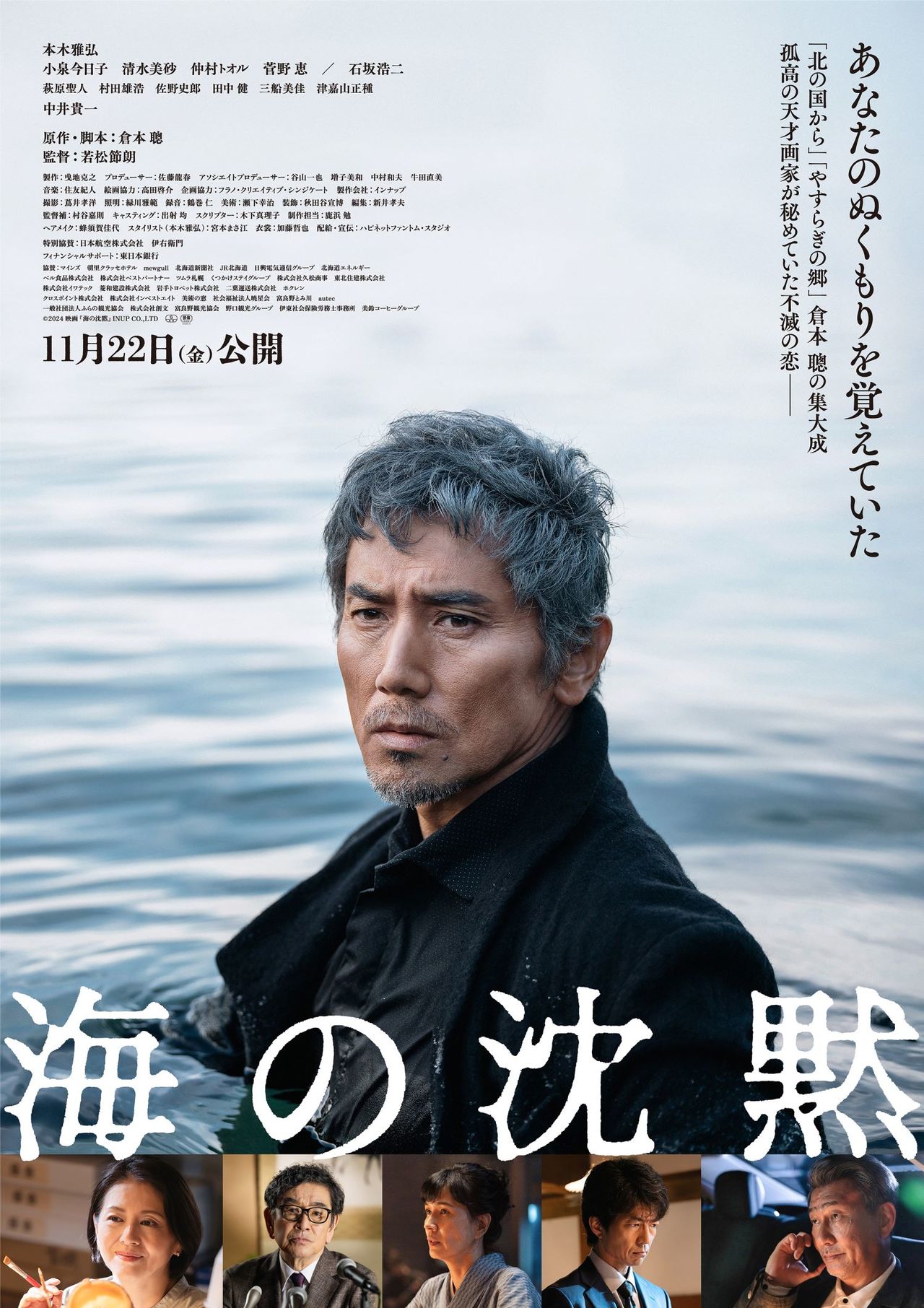
Silence of the Sea (海の沈黙, Setsuro Wakamatsu, 2024)

Can there be any greater humiliation than having your work plagiarised and the other person’s being better? Renowned artist Tamura (Koji Ishizaka) feels he has to say something on seeing an old painting at an exhibition honouring his late mentor and realising it’s not the one he painted. He doesn’t think he ever had the ability to paint something with this kind of power even when he was young, and he didn’t even use the materials which appear to have given this version a emotional depth that the original never had.

In some ways, this is Tamura’s past literally coming to the surface to show him that his life has been a series of mistaken choices and whatever success he may have achieved it’s come at the cost of his artistic soul. The first part of Setsuro Wakamatsu’s Silence of the Sea (海の沈黙,, Chinmoku no Umi) ponders why Tamura might be so keen to confess this work isn’t his when he admits that it’s objectively “better”, but even if that might be true, he has to concede it isn’t him and therefore shouldn’t have his name on it. Though he appears to have become greedy and vain, trading on his connections and more of a celebrity artist than someone with real and urgent ideas to express, he is apparently willing to burn all his bridges on the altar of authenticity while simultaneously refusing to divorce his wife, the daughter of his late mentor, despite living with another woman and their child on the other side of the country.

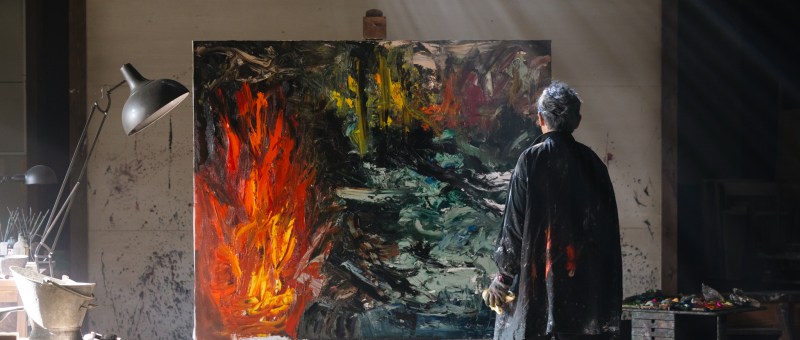
But as someone else says, does it matter whose name is on the painting when it is beautiful in itself? Then again, this beauty is intended both to cover something up and to expose it. In his youth, Tamura apparently threw another artist, Lyuji (Masahiro Motoki), under the bus. 40 years later, Lyuji is a master forger living a life in the shadows tattooing young women with his fevered artistic visions. It’s true enough that he seems to see them only as “canvases” and otherwise rejects personal connection while still carrying a torch for Tamura’s now wife Anna (Kyoko Koizumi). He seems to be stuck in the past, forever meditating on a particular pairing, The Silence of the Sea, which reflected his own moment of trauma when his parents both drowned when he was a child. 

The film seems to pain Tamura and Lyuji as two sides of the same coin. The more Tamura’s star rose, the sicker and more humble Lyuji became as if he were literally bleeding him dry. In the words of his assistant, Lyuji had an imperative to depict beauty, but art seems to deplete him. He literally vomits blood on the canvas while struggling to recreate his lost painting and thereby return to the source of his trauma. The sea for him seems to represent life and death along with life’s beauty and terror, while for Tamura it is perhaps merely picturesque even if for both of them the sun is always setting.

One man has almost painted over the other, stolen a life that might have been meant for him though his talent may lie more in an ability to play the game than in art itself. But at the same time, Lyuji has destroyed himself through his selfishness and single-minded obsession with his art along with the internal traumas it turns out he cannot simply paint over. His life is like the candle that Anna makes in his image, slowly melting away and producing only a single tear from a lonely soul. His eventual conviction is that beautiful things need only exist in our hearts and minds as memory rather than as material things. As he says, measuring art in money is mere foolishness, which paints his career of forgery as an ironic revenge against the art world which values only what’s popular and has become a game for the rich to play to enhance their status little caring for the nature of the art itself. Yet this covering up and later revealing of a truth has led to several deaths, among them a man who lived for art and a woman who yearned for love only to end up a scorned muse of an emotionally distant man. The sea took them all, but for Lyuji at least it may finally have fallen silent in the final perfection of his art.


Silence of the Sea screens as part of this year’s Japan Foundation Touring Film Programme.

Trailer (English subtitles)
Images: © 2024 Eiga Umi no Chinmoku INUP Co.,Ltd

All Under the Moon (月はどっちに出ている, Yoichi Sai, 1993)

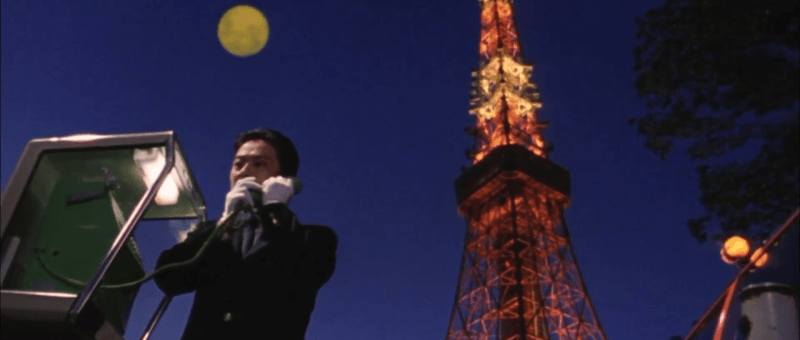
Throughout Yoichi Sai’s All Under the Moon (月はどっちに出ている, Tsuki wa Dotchi ni Dete iru), an earnest taxi driver, Anbo (Akio Kaneda), repeatedly calls in to despatch to inform them that he’s become lost and has no idea where he is despite rocking up next to such prominent landmarks as Tokyo Tower and Mount Fuji. His confusion reflects that of the changing post-Bubble society in which those like him struggle to reorient themselves and find new direction just as the nation appears slow to recognise itself and adjust to a new reality. 

It does seem that many of the drivers at Kaneda Taxi have themselves lost direction in their lives and are living very much on their margins while their rather deluded boss Sell is behaving like it’s still the Bubble dreaming of building a golf course and then a hotel to accommodate 2000 people. The Korean loan shark working with him alternately tells fellow Zainichi taxi driver Chun (Goro Kishitani) that he’s acquiring wealth to use for the reunification of Korea, and Sell that they are all children of capitalism, “Damn Reunification!”. At the wedding Chun attends, the guests take phone calls to deal with business and each remark on the precarious economic situation while one suggests that the North Korean association he represents is probably on the brink of failure joking that he fears they may sell their school and pocket the money. 

Yet despite the economic turbulence, the country has been slow to accept the presence of workers from outside Japan and many, including those at the taxi firm, still face discrimination as does Chun himself by virtue of his Korean heritage. One Japanese employee also seems to face a good deal of stigmatisation simply because he has a speech impediment, while an older mechanic with a limp insists on calling an Iranian colleague by a similar sounding Japanese name while baselessly accusing him of theft. Hoso (Yoshiki Arizono), a man with mental health issues provoked by his previous career as a professional boxer in which he accidentally killed an opponent during a bout, is fond of saying “I hate Koreans, but I like you” while otherwise fixating on Chun as a dependable big brother figure and resentful enough when he starts dating a Filipina hostess, Connie (Ruby Moreno), who works at his mother’s bar to pound down the door of her flat and demand to be let in. 

Chun himself is at least problematic and especially by the standards of today as he tries a series of crass pickup lines on Korean women at the wedding and then eventually forces a kiss on Connie not to mention physically striking her during a heated argument. He also insensitively tells her about his family’s tragic history in the war emphasising that citizens of Korea were abused for slave labour while seemingly unaware of the history of the Japanese occupation of the Philippines. Meanwhile, he also lies that his father was killed by the Japanese and that all his brothers died of malnutrition whereas they are (presumably) alive if possibly not so well in North Korea. His hard as nails mother (Moeko Ezawa) points out that she came to Japan at 10, while Connie counters that she came at 15, though their experiences have perhaps been very different leaving them somewhat at odds rather than sharing a kind of solidarity as otherwise echoed in the marginal status of each of the migrants who are similarly othered as merely not Japanese yet largely left to fend for themselves while facing possible exploitation and deportation. 

Divisions exist even within the Korean population with guests at the wedding complaining that there have been too many long and boring speeches along with North Korean propaganda songs, claiming that it is discriminatory against South Koreans and finally being allowed to sing a South Korean folksong instead which is at least a good deal more lively. The gangsters leverage the idea of reuinifaction to carry out their scams while later claiming that they have been scammed by their Japanese backer who turned out to be more racist than they had first assumed. Yet as Chun says during one of his cheesy pickup attempts, what really has reunification got to do with them, the younger post-war generation who know no other homeland than Japan? He too flounders, caught between a series of names from “Tadao Kanda” to “Chun”, to the name which appears on his taxi license “Kang” the Korean pronunciation of character read “ga” Japanese which is only otherwise used in the word for ginger as pointed out by a slightly racist fare who goes on to remark that he doesn’t see the point of the “comfort women issue”. Chun has to grin and bear it while technically powerless despite being in the driver’s seat. Predictably, the prejudiced passenger also attempted to make a run for it rather than actually pay Chun his money. “I was born after the war too” Chun reminds him, “but we say after the liberation.”

Sai introduces us to the world of Kanda Taxis through a roving long shot around the carpark travelling from one employee to another before drifting up to management on the second floor. He returns to a similar scene near the film’s conclusion as the remaining workers playfully hose each other with water while literally watching their world burn. Yet for some at least it may be liberating experience, Chun finally gaining the courage to choose his own destination and go after something that he wants, even if it he does it in a characteristically problematic way, seemingly no longer worrying about where it might be taking him but content to simply drive in the direction of the moon. 


Original trailer (no subtitles)

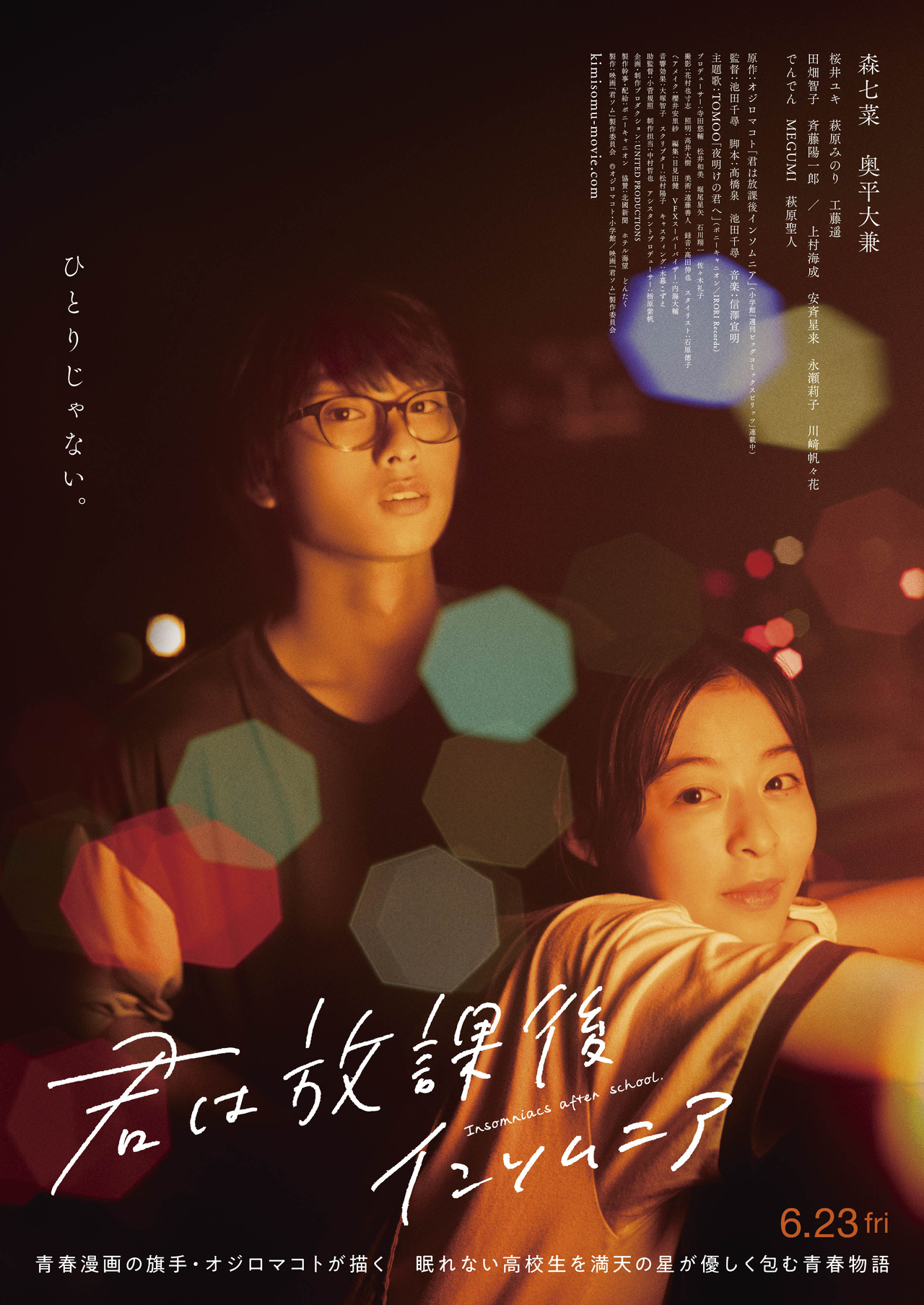
Insomniacs After School (君は放課後インソムニア, Chihiro Ikeda, 2023) [Fantasia 2023]

Two teens begin to overcome their fears and anxieties after bonding over their shared insomnia in Chihiro Ikeda’s adaptation of the Makoto Ojiro manga, Insomniacs After School (君は放課後インソムニア, Kimi wa Hokago Insomnia). It may seem strange in some ways that the pair find their inability to sleep so embarrassing that they keep it a secret from those around them, but then it’s difficult to tell people you’re having trouble sleeping without explaining why which is admittedly to enter the place of emotional vulnerability that each of them is otherwise avoiding. 

Namiki (Daiken Okudaira) describes himself as being overwhelmed by negative thoughts while his days are filled with despair. Unable to sleep at home he struggles to keep his eyes open at school and is otherwise reserved, rejected by many of his peers for being gloomy and aloof with only one real friend to whom he has disclosed his persistent insomnia. When he ventures into a part of the school others avoid thinking it is haunted, he discovers another “ghost” in classmate Isaki (Nana Mori) who also suffers from insomnia and had carved out this small corner of the disused astronomy club as a private lunchtime nap space. Luckily for him, Isaki, who is cheerful and outgoing, is willing to share and soon they become firm friends who decide that their empty nights of dark despair could otherwise be filled with fun and adventure. 

Neither of them really discuss why they aren’t able to sleep until their friendship is more deeply established and the facts emerge somewhat naturally but instead draw strength from their new connection while laying claim to their “sanctuary” in the school’s disused observatory as a place where they can find peace. Discovered by a teacher they have to keep up the pretence of restarting the astronomy club which means deciding on some sort of goal activity as proof that they have a right to the space all of which leads them down a secondary path that distracts them from their sleeplessness as they determine to put on stargazing events and enter a photography competition which requires a short sojourn in the country as well as making entreaties to their classmates for additional help and support. 

Then again, that might be contrary to their original wishes given that what they wanted from the observatory was a private place to sleep free from the stresses of their home lives which are in themselves fairly wholesome problems running from health anxiety to abandonment issues. Parallel scenes remind us that their struggles are largely the same, each has come to blame themselves for things which weren’t their fault and has developed a need to be seen as “good” which has led to chronic people pleasing and low self-esteem. But what their stargazing mission begins to teach them is that some things in life are beyond your control so there’s no point worrying about them, while the sense of eternity they discover watching the movement in the skies helps them overcome an adolescent fear of mortality in realising that “human existence doesn’t disappear so easily” and those who are gone still live on in the hearts of minds of others in the great confluence of humanity. 

Where night had been something to endure, they now find new ways to appreciate their lives in a world that seems more full of possibility than fear. Ikeda’s adaptation revels in its wholesomeness with even its slow-burn romantic subplot relatively innocent in its earnestness as the pair monologue over a voice notes app and quite literally lean on each other for support even if it’s not clear whether their insomnia actually improves or they just find better ways of living with it thanks to the new community they’ve found in the re-formed astronomy club which like most clubs is more about just hanging out than it is about serious study of the stars. Making the most of its picturesque small-town setting, the film discovers a quiet sense of serenity in the beauty of the landscape along with its ever expanding vistas in which the teens learn to overcome their mutual anxieties and embrace the infinite possibilities of life thanks to a true friendship founded on empathy and compassion.


Insomniacs After School screened as part of this year’s Fantasia International Film Festival.

Original trailer (English subtitles)

GO (Isao Yukisada, 2001)

“We never had a country” a student at a North Korean school in Japan fires back, hinting at his feelings of displacement in being asked to remain loyal to a place he never knew while the culture in which he was born and raised often refuses to accept him. The hero of Isao Yukisada’s Go is not so much searching for an identity as a right to be himself regardless of the labels that are placed on him but is forced to contend with various layers of prejudice and discrimination in a rigidly conformist society.

As he points out, when they call him “Zainichi” it makes it sound as if he is only a “temporary resident” who does not really belong in Japan and will eventually “return” to his “home culture”. In essence, “Zainichi” refers to people of Korean ethnicity who came to Japan during the colonial era and their descendants who are subject to a special immigration status which grants them rights of residency but not citizenship. Sugihara’s (Yosuke Kubozuka) situation is complicated by the fact that his father (Tsutomu Yamazaki) has a North Korean passport, making him a minority even with the Korean-Japanese community. He attends a North Korean school where speaking Japanese is forbidden and is educated in the tenets of revolutionary thought which are of course entirely contrary to the consumerist capitalism of contemporary Japan. 

His father eventually consents to swap his North Korean passport for a South Korean one mostly it seems so he can take a trip to Hawaii with his wife (Shinobu Otake) which seems to Sugihara a trivial reason for making such a big decision especially as it caused the lines of communication to break down with his bother who returned to North. Yet it seems like what each of them is seeking is an expansion of internal borders, the right not to feel bound by questions of national identity in order to live in a place of their own choosing. “I felt like a person for the first time,” Sugihara explains on being given the opportunity to choose his nationality even if it is only the “narrow” choice between North and South Korea. 

But on the other hand he wonders if it would make his life easier if he had green skin so that his “non-Japaneseness” would be obvious. Sugihara reminds us several times that this is a love story, but he delays revealing that he is a Zainichi Korean to his girlfriend because he fears she will reject him once she knows. On visiting Sakurai’s (Ko Shibasaki) home, it becomes obvious that she comes from a relatively wealthy, somewhat conservative family. Her father, who is unaware Sugihara is Korean-Japanese, immediately asks him if he likes “this country” but is irritated when Sugihara asks him if he really knows the meaning behind the various words for “Japan” again hinting at the meaninglessness of such distinctions. When he eventually does tell Sakurai that he is ethnically Korean, her reaction surprises both of them as she recalls her father telling her not to date Korean or Chinese men on account of their “dirty” blood. 

Such outdated views are unfortunately all too common even at the dawn of the new millennium. Even so, Sakurai had not wanted to reveal her full name because she was embarrassed that it is so “very Japanese” while conversely Sugihara takes ownership of the name “Lee Jong-ho”. He embraces the “very Japanese” tradition of rakugo, and hangs out in the Korean restaurant where his mother works dressed in vibrant hanbok. Given a book of Shakespeare by his studious friend, he is struck by the quote which opens the film which states that a rose by any other name would smell as sweet and wonders what difference a name makes when its the same person underneath it. 

Perhaps his father’s admission that he always found a way to win wasn’t so off base after all, nor his eventual concession that Sugihara may have it right when he rejects all this talk of “Zainichi” and “Japanese” as “bullshit” and resolves to “wipe out borders”. He insists on being “himself” or perhaps a giant question mark, and discovers that Sakurai may have come to the same conclusion in realising that all that really mattered was what she saw and felt. Yukisada captures the anxieties of the age in the pulsing rhythms of his youthful tale which keeps its heroes always on the run, but is in the end a love story after all and filled with an equally charming romanticism. 


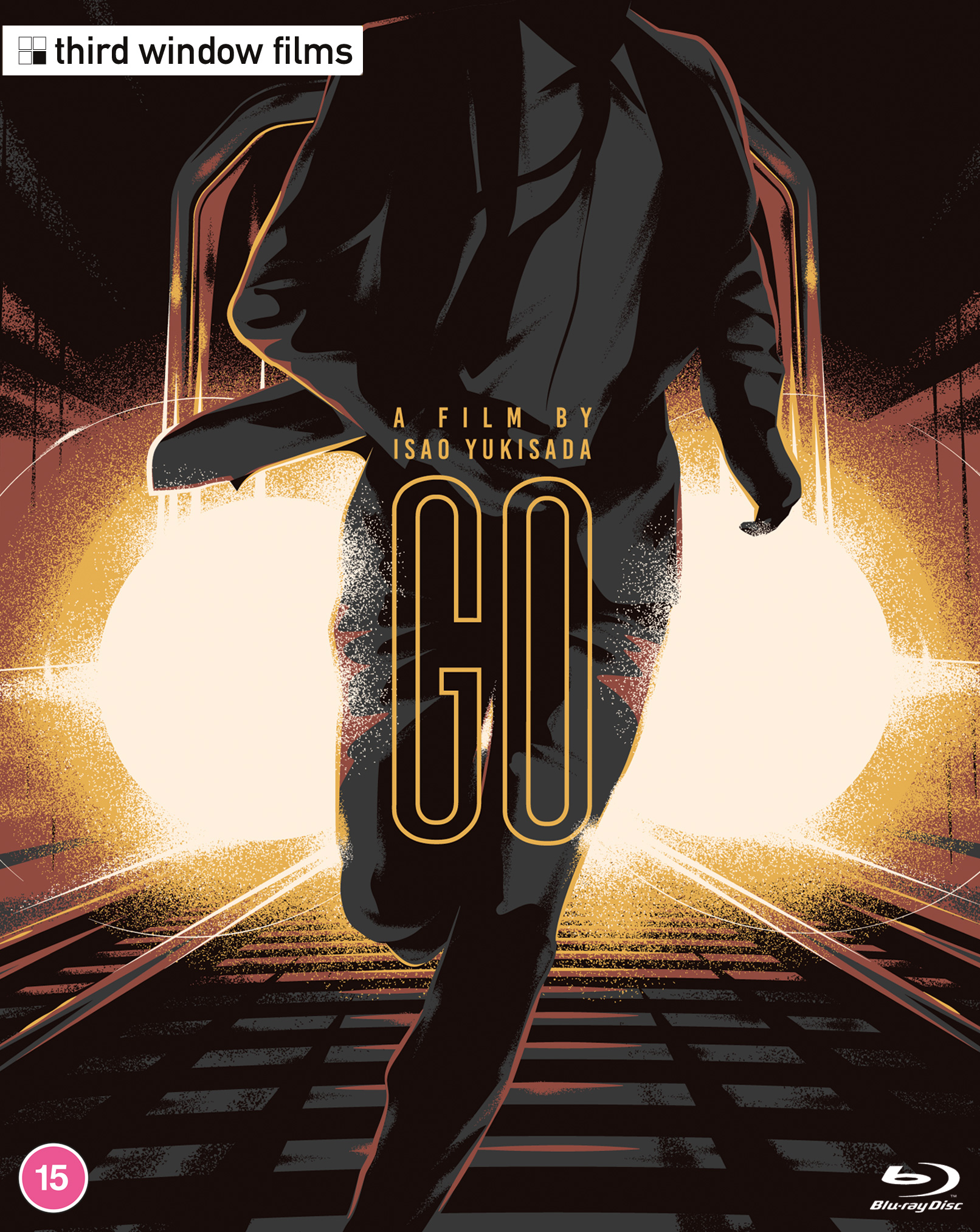
GO is released on blu-ray in the UK on 22nd May courtesy of Third Window Films.

Original trailer (English subtitles)
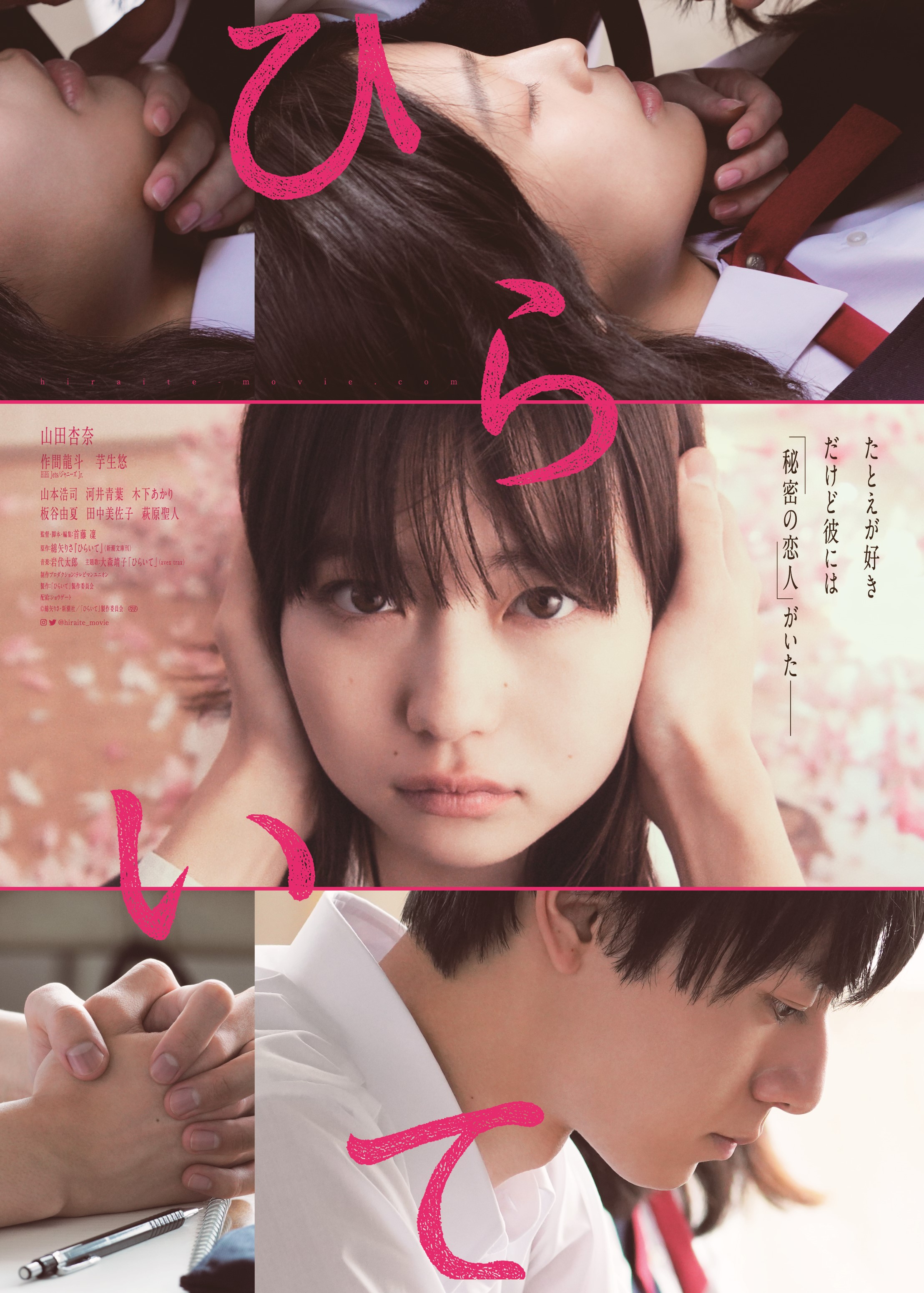
Unlock Your Heart (ひらいて, Rin Shuto, 2021)

A straight-A student and popular girl enters a self-destructive tailspin on discovering her longterm crush has a secret girlfriend in Rin Shuto’s adaptation of the novel by Risa Wataya, Unlock Your Heart (ひらいて, Hirate). Wataya also penned the source material for Akiko Ohku’s Tremble All You Want and Hold Me Back, and while Shuto may shift away from Ohku’s quirky style she maintains and intensifies an underlying sense of unease in what has the potential to develop into an incredibly messy situation. 

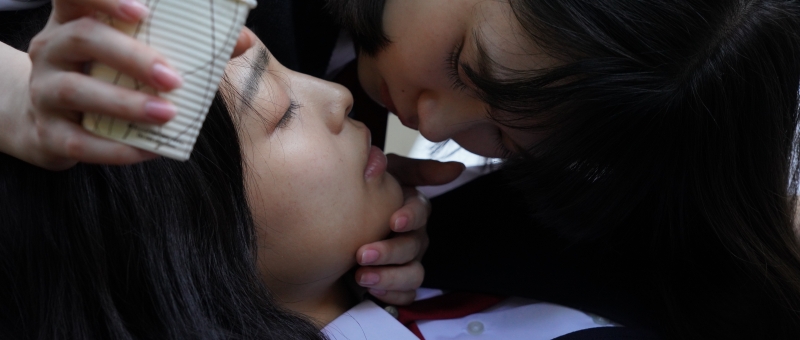
As the film opens, popular girl Ai (Anna Yamada) walks away from a dance rehearsal and discovers fellow student Miyuki (Haruka Imo) collapsed by a tree next to a pouch containing her insulin. Barely conscious, Miyuki asks her for something sweet and Ai soon returns with some sugary juice. Unable to find to an efficient way of getting her to drink it, Ai passes the liquid from her own mouth in a literal kiss of life that seems have an unexpected effect on her. Meanwhile, after sneaking into the school late at night with some friends halfheartedly joking about stealing the exam papers, Ai raids the locker of her crush, Tatoe (Ryuto Sakuma), and discovers a series of love letters which turn out to be from Miyuki. 

For some reason this revelation turns Ai’s life upside-down even though she later reveals that she had been enduring the silent crush on Tatoe for some years without ever acting on it. It may partly be that Ai is popular and attractive and so the idea that someone may not find her desirable is destabilising, cutting to the quick of her teenage insecurity while pulling the rug out from under her if she had indeed thought of Tatoe as a kind of comfortable backstop or easy plan B. Enraged, she befriends Miyuki yet for unclear reasons, perhaps hoping to get some insider info on Tatoe, find out what it is Miyuki has and she doesn’t, or somehow break them up, but finally settles on seduction unexpectedly kissing her again in an echo of their awkward meet cute.  

At heart, Ai does not understand herself and is operating with no real plan. Each escalation seems to come as a surprise even to herself leaving her with moments of internal conflict gazing into a mirror wondering what it is she’s doing. On separate occasions, both Miyuki and Tatoe accuse her of lying and indeed she is, most particularly to herself in a wholesale denial of her own desires which fuels her impulsive and self-destructive behaviour. Others accuse her of being selfish and self-absorbed, unable to look beyond herself and indifferent to the feelings of others which is also in its way a reflection of the degree to which she is consumed by internal confusion, driven slowly out of her mind while taking out her frustration on those around her not least in her increasingly dark manipulation of Miyuki and Tatoe. In the end, as Tatoe points out, she’s little different from his abusive father in her need to possess and control but it’s the extreme control that she’s trying to exercise over herself and the desires she can not accept that is causing her self-destructive behaviour. 

Only Miyuki seems to be able to see through her, at least to an extent, yet it’s not entirely clear at first if she responds to Ai’s advances willingly or simply goes along with them because she has no other friends and is afraid Ai will reject her if she refuses. Ostracised by the students because of her diabetes which is of course a very visible condition in that it requires her to inject herself while at school, Miyuki is shy and lonely while required to keep her relationship with Tatoe a secret because of his abusive father. But as Miyuki later puts it in her letter, Ai isn’t quite as aloof as she’d like to pretend and acts with an unexpected tenderness and consideration, even a kind of vulnerability, in moments of intimacy that betray the true self otherwise stifled by anxiety and internalised shame. With a persistent air of danger and unease spurred by Ai’s impulsive and chaotic nature, Shuto’s intense drama reaches its climax in its deliberately abrupt conclusion perfectly capturing the heroine’s moment of realisation imbued with all of her idiosyncratic messiness. 


Unlock Your Heart screened as part of this year’s Camera Japan.

International trailer (English subtitles)
Fukushima 50 (フクシマ50, Setsuro Wakamatsu, 2020)

The “Fukushima 50” (フクシマ50), as the film points out, was a term coined by the international media to refer to the men and women who stayed behind to deal with the unfolding nuclear crisis at the Fukushima Daiichi Nuclear Power Plant. Loosely inspired by Ryusho Kadota’s non-fiction book On the Brink: The Inside Story of Fukushima Daiichi which featured extensive interviews with those connected to the incident, Setsuro Wakamatsu’s high production value film adaptation arrived to mark the ninth anniversary of the devastating earthquake and tsunami which occurred on 11th March, 2011 and closes with a poignant callback to the plant’s role in Japan’s post-war reconstruction as the nation once again prepares to host the (now postponed) Olympics with a torch relay beginning at Fukushima as a beacon of hope as the country continues to rebuild in the wake of the disaster. 

Though inspired by real events Wakamatsu’s dramatisation is heavily fictionalised and while surprisingly frank for a mainstream film in its criticism of the official reaction to the disaster, is also quietly nationalistic while doing its best to pay tribute to the selfless sacrifice of the plant workers who stayed behind to do what they could many of whom had little expectation of surviving. Chief among them would be Izaki (Koichi Sato), an imperfect family man and veteran section chief, and the plant’s superintendent Yoshida (Ken Watanabe) who are both local men and old friends. Local, it seems, is later key with multiple appeals to the furusato spirit as each is at pains to point out that they stay not only to prevent a catastrophic meltdown that would leave most of central Honshu including Tokyo uninhabitable, but because they feel a greater duty to protect their hometown and the people in it. 

Meanwhile, they find themselves burdened rather than assisted by official support as government bodies’ political decision making undermines their attempts to avert disaster while the boardroom of TEPCO who operate the plant reacts with business concerns in mind. A few hours in the prime minister (Shiro Sano) decides to make a visit, in political terms he can’t not national leaders who don’t visit sites of crisis are never forgiven, but his presence actively hinders the recovery efforts. Referred to only as the PM, Wakamatsu’s film presents the man leading the nation as an ignorant bully overly obsessed with his personal image. He has little understanding of nuclear matters or the implications of the disaster, refuses to abide by the regular safety procedures required at the plant, and mostly governs through shouting. Beginning to lose his temper, Yoshida does his best to remain calm but resents the constant interference from those sitting in their offices far away from immediate danger while he does his best to contend with the increasingly adverse conditions on the ground, mindful of his responsibilities firstly to his employees and secondly to those living in the immediate vicinity of the plant who will be most at risk when measures taken to prevent meltdown will lead to an inevitable radiation leak. 

Yoshida’s hero moment comes when he ignores a direct order from the government to stop using seawater to cool the reactors, knowing that he has no other remaining options. Meanwhile, the government refuse offers of help from the Americans, who eventually make a strangely heroic arrival with Operation Tomodachi, discussing plans to move their families to safety while their commander reflects on his post-war childhood on a military base near the site of the nuclear plant. Japan’s SDF also gets an especial nod, granted permission to leave by Yoshida who is beginning to think he’s running out of time but vowing to stay and do their duty in protecting civilians in need. 

In essence, the drama lies in how they coped rather than the various ways in which they didn’t. The conclusion is that the existence of the plant was in itself hubristic, they are paying the price for “underestimating the power of nature” in failing to calculate that such a devastating tsunami was possible. They thought they were safe, but they weren’t. Perhaps uncomfortably, Wakamatsu mimics the imagery of the atomic bomb to imagine a nuclear fallout in Tokyo, harking back to ironic signage which simultaneously declares that the energy of the future is atomic while the plant workers reflect on the sense of wonder they felt as young people blinded by science back in the more hopeful ‘70s as the nation pushed its way towards economic prosperity. Frank for a mainstream film but then again perhaps not frank enough, Fukushima 50 is both an urgent anti-nuclear plea and an earnest thank you letter to those who stayed when all looked hopeless, suggesting that if the sakura still bloom in Fukushima it is because of the sacrifices they made.


Fukushima 50 is available to stream in the US until July 30 as part of this year’s Japan Cuts.

International trailer (English subtitles)
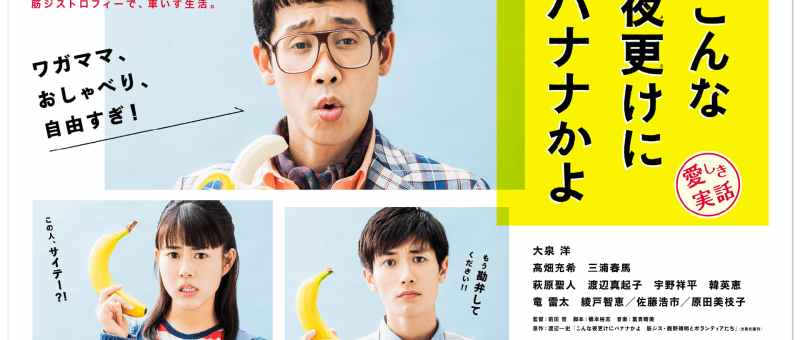
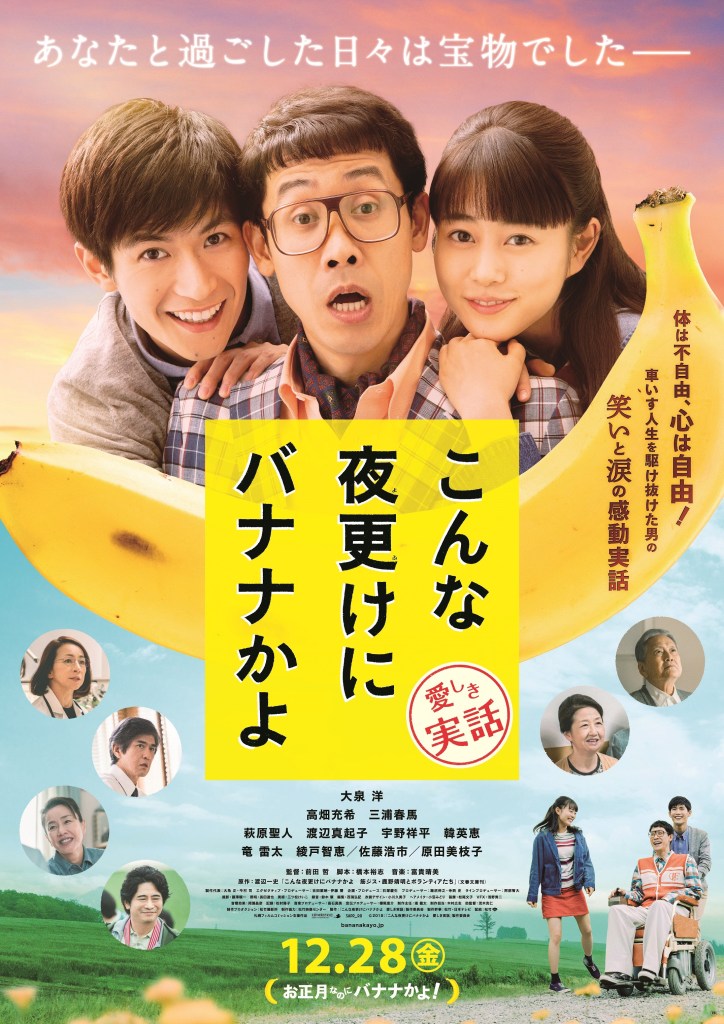
A Banana? At This Time of Night? (こんな夜更けにバナナかよ 愛しき実話, Tetsu Maeda, 2018)

Many people will tell you that if you’re having trouble sleeping, a banana is just the thing though if you’ve failed to properly prepare and have left it until 2.30am to try and buy one you might be out of luck. The hero of Tetsu Maeda’s A Banana? At This Time of Night? (こんな夜更けにバナナかよ 愛しき実話, Konna Yofuke ni Banana kayo: Itoshiki jitsuwa) is not proposing to go out and find one himself, but using his sudden desire for the potassium rich fruit as an excuse to dispatch one of his helpers in the hope of being left alone with the pretty young girl who’s just joined the team. Unbeknownst to him, the girl, Misaki (Mitsuki Takahata), is actually the girlfriend of the aspiring doctor, Tanaka (Haruma Miura), he was trying to get rid of, but the plan backfires when she takes the opportunity to go get one herself in order to escape an increasingly awkward situation. 

Inspired by Kazufumi Watanabe’s non-fiction book, A Banana? At This Time of Night? is the latest in a series of recent Japanese films dealing with the issue of disability in a society which often struggles to accommodate difference. The hero, Yasuaki Shikano (Yo Oizumi), has suffered with muscular dystrophy since the age of 12 and has survived to the age of 34 despite being told that he would likely never see 20. Determined to live an “independent” life, he relies on a small team of volunteers who assist him with day to day tasks he can no longer manage, and works as an activist for the rights of disabled people. 

Yasuaki is, however, by his own admission not always an easy person to get along with. He is often selfish and cruel to the volunteers who have given their time to help him out of nothing more than human kindness while deliberately sending them out on random errands to buy burgers  (or bananas) but finding fault when they return. Yet, he largely gets away with it because of his cheeky personality and the fact he is so robustly “honest” about his own behaviour. One of the major tenets of his activism is destigmatising the idea of asking for help so that younger disabled people in particular who might feel awkward about asking others to assist them so they can lead independent lives know that there is nothing wrong in being upfront about their needs. 

Of course, despite his “honesty”, there’s an essential contradiction in Yasuaki’s definition of independence in that he freely admits that he can only live an “independent” life because of the support he receives from the volunteers. Without them, his life would be impossible. In a further contradiction, we eventually realise that he’s only so mean to his mother (Chie Ayado) because he doesn’t want her to sacrifice the entirety of her life to look after him and wants his parents to be able to live their own lives while he lives his. Misaki, only originally volunteering to check up on her boyfriend, is horrified by Yasuaki’s attitude and vows never to return, only to be coaxed back by Tanaka awkwardly forced to take dictation of an apology/declaration of love when Yasuaki finds himself smitten by her boldness in defiantly standing up to him. 

Slightly embarrassed, Tanaka never explains that Misaki is his girlfriend, perhaps a little patronisingly allowing Yasuaki to play at romance he feels is impossible so that his feelings won’t be hurt. The central problem is, however, that both Misaki and Tanaka have their own failures of honesty which place their relationship at risk. Tanaka was under the impression that Misaki was studying to become a teacher, but her friends just said that to get her into a party with med students and she never bothered to correct him. When the relationship gets more serious, she comes clean, but he takes it badly, half-convinced she just wanted to meet a doctor and the whole relationship has been a lie. Meanwhile, he’s only studying medicine because his authoritarian father wants him to take over the family hospital and he’s beginning to wonder if it’s really what he wants to do with his life. Unlike either of them Yasuaki knows exactly what he wants – to go America and meet his idol which is why he’s been working hard learning English. 

Through their shared friendship with Yasuaki, both of the lost youngsters begin to find direction and the courage to follow it. Despite the many setbacks and difficulties he faces, Yasuaki never gives up on his dreams and boldly insists on the right to pursue them while living his life to the fullest. Which isn’t to say that his own story is merely inspirational fodder for his friends, but it does make the case for a better, more inclusive society built on mutual support in which all are free to live the way they choose spreading love and joy wherever they go. 


Screened as part of the Japan Foundation Touring Film Programme 2020.

International trailer (English subtitles)
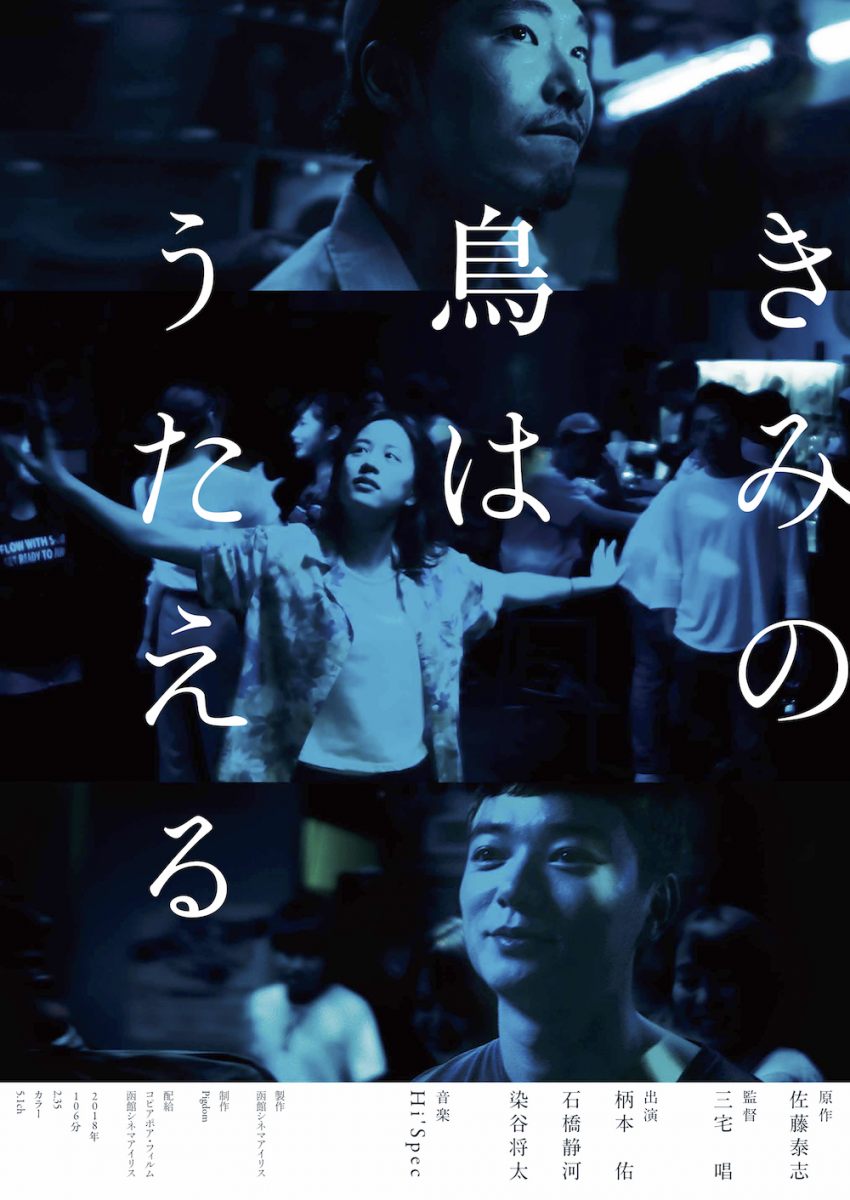
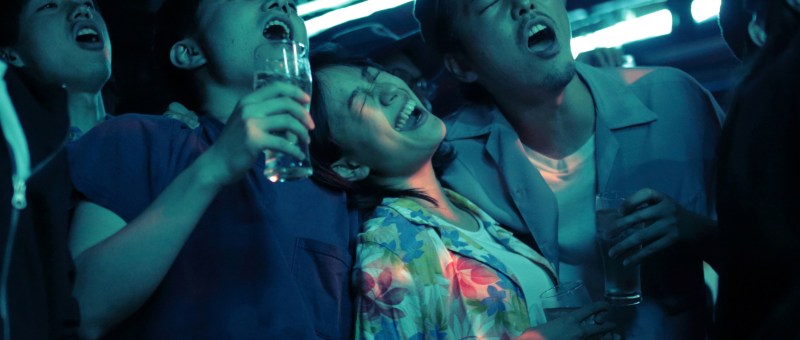
And Your Bird Can Sing (きみの鳥はうたえる, Sho Miyake, 2018)

And Your Bird Can Sing poster 1Yasushi Sato, an author closely associated with the port town of Hakodate who took his own life in 1990, has been enjoying something of a cinematic renaissance in the last few years with adaptations of some of his best known works in The Light Shines Only There, Over the Fence, and Sketches of Kaitan City. And Your Bird Can Sing (きみの鳥はうたえる, Kimi no Tori wa Utaeru), taking its title from the classic Beatles song, was his literary debut and won him a nomination for the prestigious Akutagawa Prize in 1981. Unlike the majority of his output, And Your Bird Can Sing was set in pre-bubble Tokyo but perhaps signals something of a recurring theme in its positioning of awkward romance as a potential way out of urban ennui and existential confusion.

Sho Miyake’s adaptation shifts the action back to Hakodate and the into present day but maintains the awkward triangularity of Sato’s book. The unnamed narrator (Tasuku Emoto), the “Boku” of this “I Novel”, is an apathetic slacker with a part-time job in a book store he can’t really be bothered to go to. After not showing up all day, he wanders past the store at closing time which brings him into contact with co-worker Sachiko (Shizuka Ishibashi) who appears to be leaving with the boss (Masato Hagiwara) but blows him off to come back and flirt with Boku who makes a date with her at a cute bar but falls asleep after getting home and (accidentally) stands her up, drinking all night with his unemployed roommate Shizuo (Shota Sometani) instead. Luckily for Boku, Sachiko forgives him and an awkward romance develops but their relationship becomes still more complicated when Boku introduces Sachiko to Shizuo with whom she proves an instant hit.

This is not, however, the story of an awkward love triangle but the easy fluidity of youth in which unselfishness can prove accidentally destructive. Boku, for all his rejection of conventionality, is more smitten with Sachiko than he’s willing to admit. He counts to 120 waiting for her return, refusing to make a move himself but somehow believing she is choosing him with an odd kind of synchronised telepathy. She pushes forward, he holds back. Boku encourages Shizuo to pursue Sachiko, insisting that she is free to make her choices, and if jealous does his best to hide it. Shizuo, meanwhile, is uncertain. Attracted to Sachiko he sees she prefers Boku but weighs the positivities of being second choice to a man dressing up his fear of intimacy as egalitarianism.

Boku tells us that he wanted the summer to last forever, but in truth his youth is fading. Like Sachiko and Shizuo, he is drifting aimlessly without direction – much to the annoyance of an earnest employee at the store (Tomomitsu Adachi) who prizes rules and order above all else and finds the existence of a man like Boku extremely offensive. Sachiko, meanwhile, has drifted into an affair with her boss who, against the odds, actually seems like a decent guy if one who is perhaps just as lost as our trio and living with no more clarity despite his greater experience. Like Boku, Shizuo too is largely living on alienation as he strenuously resists the fierce love of his admittedly problematic mother (Makiko Watanabe).

“What is love?” one of Sachiko’s seemingly less complicated friends (Ai Yamamoto) asks, “why does everybody lie?”. Everybody is indeed lying, but more to themselves than to others. Fearing rejection they deny their true feelings and bury themselves in temporary, hedonistic pleasures. Boku reveals that he hoped Sachiko and Shizuo would fall in love so that he would get to know a different side to Sachiko through his friend, as if he could hover around them like transparent air. The problem is Boku doesn’t quite want to exist, and what is loving and being loved other than a proof of existence? Sachiko prompts, and she waits, and then she wonders if she should take Boku at his word and settle for Shizuo only for Boku to reach his sudden moment of clarity at summer’s end. A melancholy exploration of youthful ennui and existential anxiety, And Your Bird Can Sing is a beautifully pitched evocation of the eternal summer and the awkward, tentative bonds which finally give it meaning.


And Your Bird Can Sing was screened as part of the 2019 Nippon Connection Film Festival.

Original trailer (English subtitles)