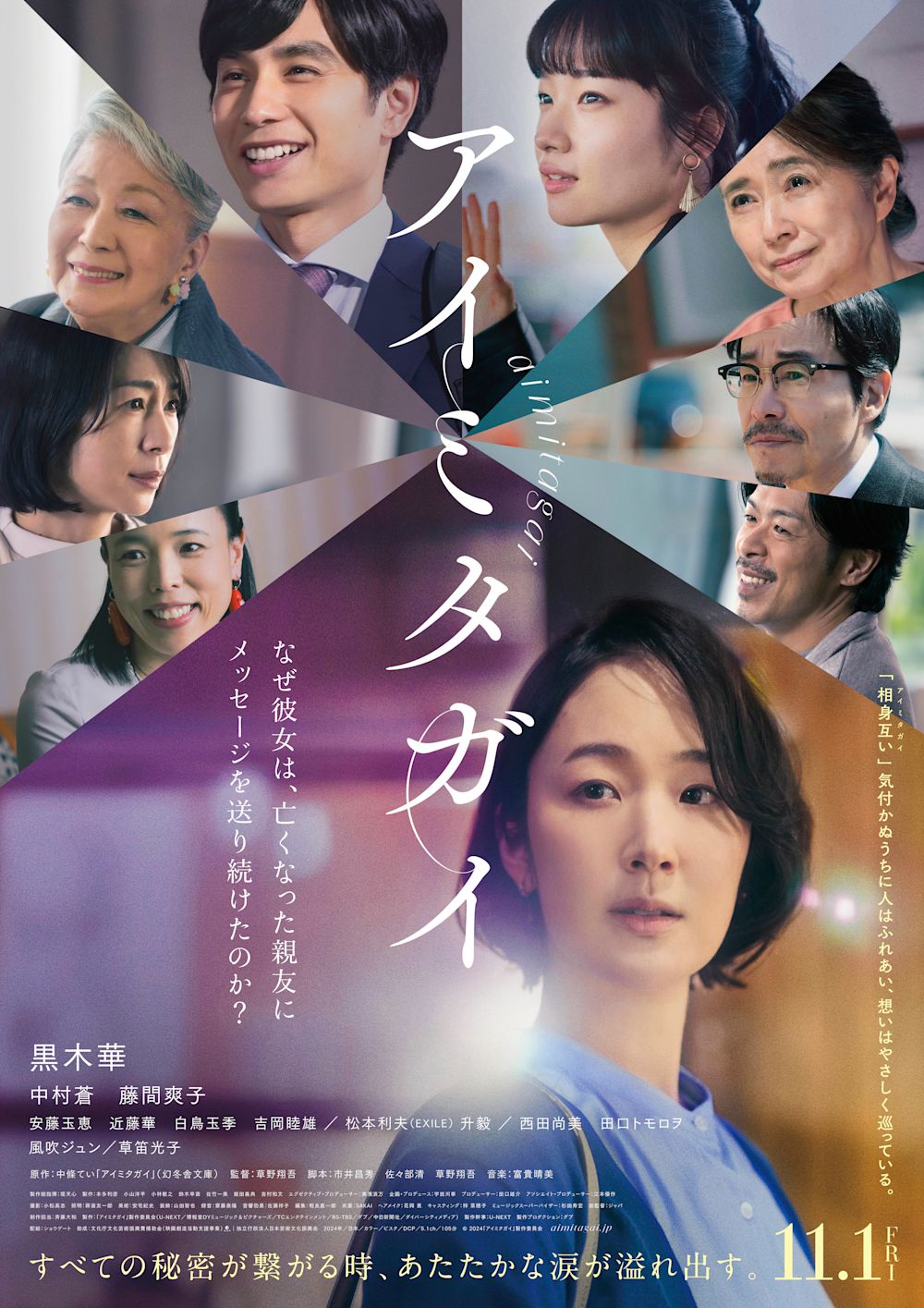
Aimitagai (アイミタガイ, Shogo Kusano, 2024)

When we say, “what goes around comes around”, we usually mean it in a bad way that someone is only getting what they deserve after behaving badly themselves. But the reverse is also true. The smallest acts of kindness people do without thinking can have quite profound effects on the world around them because, in the end, we are all connected. A bereaved father remarks that he thought novels that only had kind-hearted characters were unrealistic, but now he wants to believe that kind of world could exist after realising the impact his late daughter’s kindness had on those around her.

It was Kanami (Sawako Fujima) who saved Azusa (Haru Kuroki) in middle school when she was being bullied for coming from a single-parent family and the pair remained firm friends ever after until Kanami was suddenly killed in an accident while working overseas. Kanami’s loss leaves Azusa struggling to move forward with her life while mired in grief and uncertainty. Having lost her mother some years previously, she has never really dealt with the trauma of her parent’s acrimonious divorce and has a rather cynical view of marriage despite working as a wedding planner where her unmarried status sometimes causes her clients anxiety though it obviously has very little do with her ability to do her job. She’s always been clear with her long-time boyfriend Sumito (Aoi Nakamura) that marriage isn’t something she sees in her future, though he seems to want more commitment, while she repeatedly describes him as “unreliable” and is hesitant to take the next step with their relationship whether it involves getting married or not.

In that sense it’s really Azusa’s inability to surrender herself to the concept of what her grandmother (Jun Fubuki) calls “amai-tagai”, or mutual solidarity, which they experience first-hand while visiting her as another old lady nearby comes rushing in saying her house is on fire. It’s not so much reciprocity as a generalised idea of having each other’s backs, that people help each other as needed without keeping score in much the same way as Azusa was saved by Kanami and as she later realises by Komichi (Mitsuko Kusabue) whose piano-playing soothed her spirit though Komichi intended to play in secret, allowing her music to blend in with the six o’clock chimes as a daily act of atonement for having played the piano for boys who were going off to war many of whom never returned. It is then Azusa who saves Komichi in turn by telling her that she felt comforted by her music and that she does not believe that she has no right to play it simply because of the ways it was misused in the past. 

What Azusa fears is that by getting married she would essentially be cutting herself off from her paternal grandmother who, aside from her aunt (Tamae Ando) who is also Komichi’s housekeeper, is the only other family member she seems to have a meaningful connection with. Unable to let go Kanami, she keeps sending her messages little knowing that her mother is actually reading them and feeling both sorry and grateful that her daughter had such a good friend who like her is also struggling to continue on without her. She and Kanami’s father (Tomorowo Taguchi) find solace in the letters they receive from children at an orphanage where Kanami used to donate cakes and sweets after visiting there on a job. The photos she took are on display at their bathrooms, Azusa said because Kanami wanted them to be in a place where the children felt free to embrace their feelings privately without fear of embarrassment. 

The photographs, letters, and belated gifts are all examples of the ways in which what Kanami sent around is still going around and will continue to do so long after she herself is gone. Through realising the reality of “aimi-tagai”, Azusa learns that the world can also be a kind place, Sumito might be more “reliable” than she thought, and it might not be such a bad idea to trust people after all. Based on the novel by Tei Chujo, the film’s interwoven threads of serendipitous connections and the unexpected results of momentary acts of kindness prove oddly life-affirming if only in the ways in which each realise that Kanami is always with them even if physically absent.


Aimitagai screened as part of this year’s Toronto Japanese Film Festival.

Trailer (no subtitles)

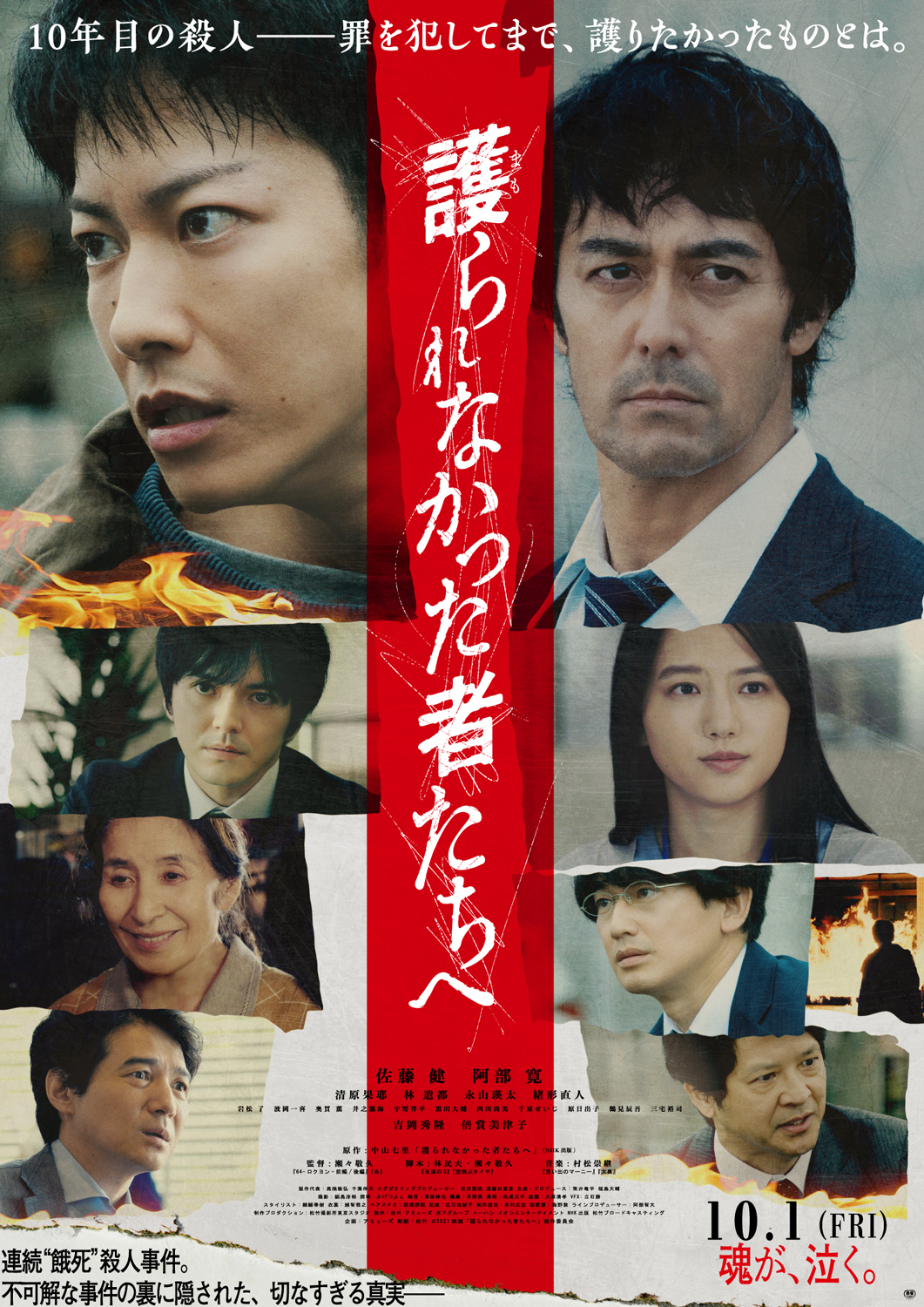
In the Wake (護られなかった者たちへ, Takahisa Zeze, 2021)

According to a young woman at the centre of Takahisa Zeze’s In the Wake (護られなかった者たちへ, Mamorarenakatta Monotachi he), natural disasters are monsters that devour humans with no rhyme or reason, but people close to her have died by human hands while left at the mercy of a hypocritical social welfare system. Though the social workers insist that benefits are something everyone is entitled to when they need support, others go to great lengths to stop anyone getting them. “That’s the country we live in,” one explains with a tone that implies he thinks this is exactly as it should be.

That social worker is the second to be found dead in suspicious circumstances nine years after the devastating 2011 earthquake and tsunami. The police obviously suspect a grudge, that someone who was turned down for benefits got fed up and killed him in revenge. But as assistant Mikiko (Kaya Kiyohara) says, it’s unlikely to be any of them because they are all “too busy trying to survive,” so they don’t have time to waste on things like vengeance. Zeze then switches to the welfare office where a social worker is trying to explain to an elderly applicant all of the different forms and documentation he’ll need to prepare for his claim. These people already have to jump through hoops to prove their “neediness,” while most of them feel defeated and humiliated in even having to ask and would prefer not to have to depend on the government. 

But a lot of Mikiko’s work involves challenging those suspected of committing benefits fraud. The first of two people she talks to is a single mother with mental health issues (Chika Uchida) who’s had to start working full-time and consequently gone over her allowance meaning her benefits should stop and she should pay back what was “wrongfully” claimed. The woman insists she needs the extra money because her daughter was being bullied for being on benefits so she wants to send her to cram school and be able to buy educational supplies, but Mikiko remains unsympathetic. The second is a man who it’s admittedly harder to sympathise with as he appears to have bought quite a fancy car which again takes him over the limit as a car is classed as a luxury item rather than a necessity. Mikiko doesn’t think they should pay out when he could easily sell the car. Of course, it’s not that simple. The man may need the car in order to work and without it would have no choice but to rely on benefits to a greater extent. In any case, he gets on Mikiko’s nerves because to her it’s people like him that prevent them helping more “genuinely” needy cases. 

But on the other hand, when they could and should have helped they refused and effectively blackmailed an old lady into revoking her application even though she had only 6000 yen (£30) left in the bank and was on the brink of starvation with no one else to turn to. Another of the social workers insists that good neighbours are the most effective way of tackling poverty which is equal parts unreasonable and unrealistic. Then again, there was a kind of solidarity that arose in the wake of the earthquake in which an old woman’s kindness saved a young man and little girl from being dragged away by the weight of their despair, giving them a new home and surrogate family along with proof of the fact that there is always someone there to help and that kind of compassion can be a kind of salvation. 

Even so, Mikiko’s insistence that you have to ask to receive, along with the welfare officer’s almost vampiric obsession with getting the applicant themselves to clearly state they need help, seems contrary to her philosophy in which it should just be provided with no questions asked. They know how difficult asking for help can be and deliberately leverage the social stigma of being on benefits to discourage people from applying for them. Citing increased demand and government cut backs in the wake of the earthquake, the social worker confusingly suggests that by declining more cases they can help more people in the long run which doesn’t make a tremendous amount of sense while his eerie grinning hints that he has begun to enjoying sadistically humiliating these vulnerable people who’ve been brave enough to come forward and ask for that to which they are otherwise entitled. 

They are all living in the wake of this disaster, something of which aloof yet empathetic detective Tomashino (Hiroshi Abe) is all too aware having lost his wife and son in the disaster. As his son’s body was never found, he too lives in a state of limbo but through investigating the killings begins to find a kind of closure along with an unexpected sense of understanding with a gloomy young man, Yasuhisa (Takeru Satoh), himself a suspect and struggling to make sense of the past, his survival, and the ongoing injustice of the world around him. The film takes its Japanese title, “those who were not protected”, from a note Mikiko writes about the importance of empathy in social work encouraging her colleagues to rebel even if their bosses tell them not to, but also hints at the grief and guilt felt by those left behind that in the end there were those they were not able to save but they can perhaps make their peace with that by continuing to help those around them even if their society largely refuses to do so.


In the Wake screens as part of this year’s Japan Foundation Touring Film Programme.

Trailer (English subtitles)

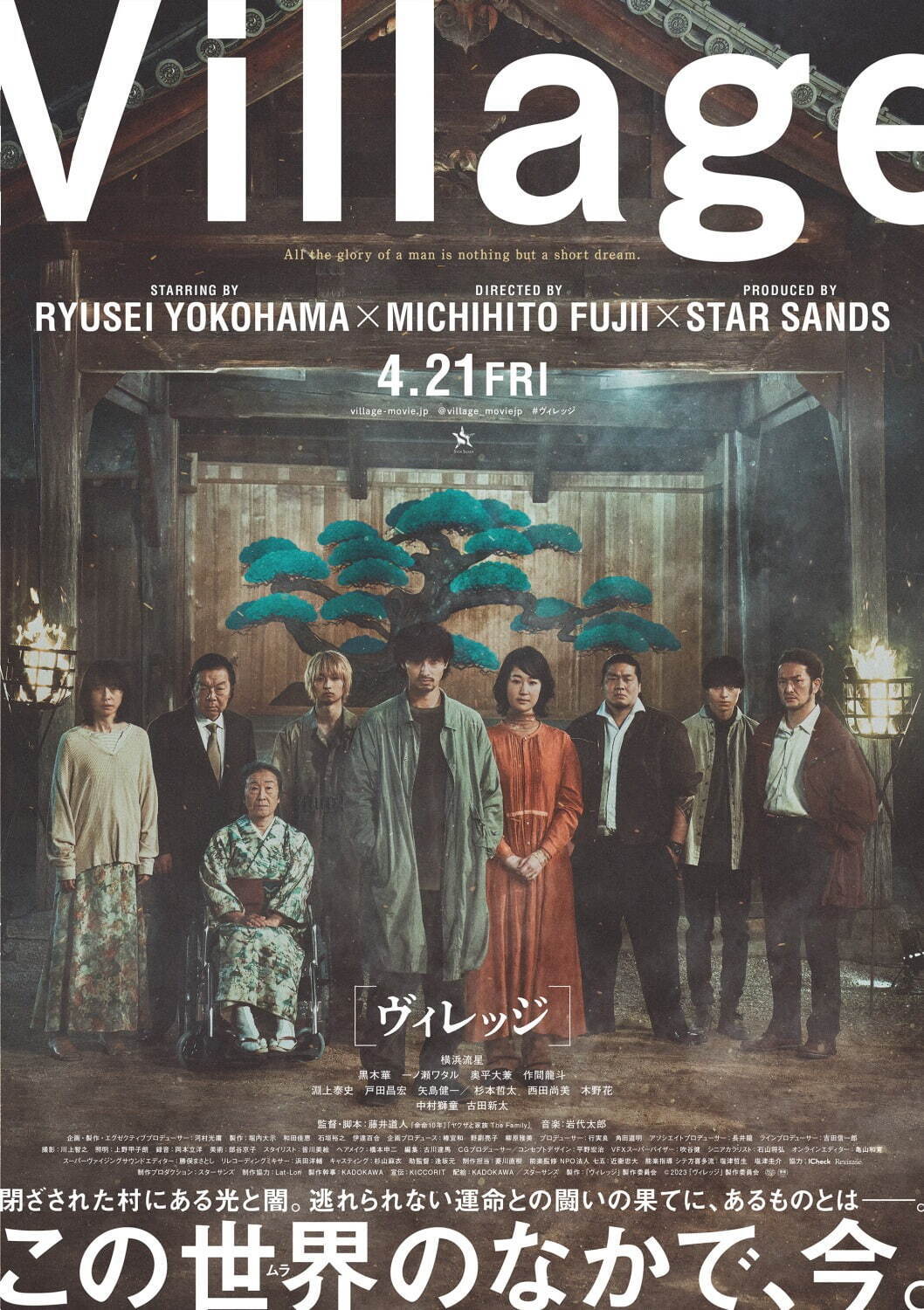
The Village (ヴィレッジ, Michihito Fujii, 2023)

The toxicity of life in small-town Japan is manifested in a giant recycling plant in Michihito Fujii’s poetic drama, The Village (ヴィレッジ). Closely aligned with the noh play quoted in the opening title card, the film charts a young man’s simultaneous blossoming and corruption as he finds himself at the service of a demonic mayor and fighting for his place in a village that doesn’t need him but requires a sacrifice. 

In the opening scenes, mist rises over the mountain accompanied by noh recitation before we eventually arrive at a noh recital. These two images would seem to signal a kind of innate Japaneseness which has been corrupted by the presence of the recycling plant despite the economic benefits it’s brought to the area. The mayor, and boss of the plant, Ohashi (Arata Furuta), wants to extend it out across the other mountains in the region and boasts that though there may have been resistance at first now everyone is grateful to them for everything they’ve done for the village. 

Yu’s (Ryusei Yokohama) father was the last holdout against the plant and apparently ended up killing a man in an altercation thereafter taking his own life and burning down their family home. Because of the stigma surrounding his father’s actions, Yu has been ostracised by his community and is used as a perpetual kicking bag not least by Ohashi’s thuggish son Toru (Wataru Ichinose) at his job at the plant. His mother has also turned to drink and developed a pachinko problem which has resulted in massive debts to yakuza loanshark Maruoka (Tetta Sugimoto) who’s press-ganged Yu into working at the illegal dumpsite which is how the plant really makes its money.

But his life begins to change when childhood friend Misaki (Haru Kuroki) returns to the village having apparently suffered a breakdown in Tokyo. Misaki’s resurfacing reinforces the purgatorial atmosphere as if everyone here were already dead. Having been away so long, only she immediately embraces Yu and simultaneously bonds with him in their outsider status. Encouraging him at work and at home, Yu gradually becomes more confident but equally dependent on the plant for his newfound status. When he’s suggested as the host of a TV documentary some of the locals object given his family background, but in contrast to his father’s opposition Yu is slowly seduced by the plant and the new life it offers him which seems almost too good to be true like a dream he is sure to be awoken from. In this, he mimics the man in the noh play who falls asleep in an inn and is transported to a world in which he is an emperor. He lives there happily for 50 years only to wake up again back in the inn and realise that really life is just a dream. 

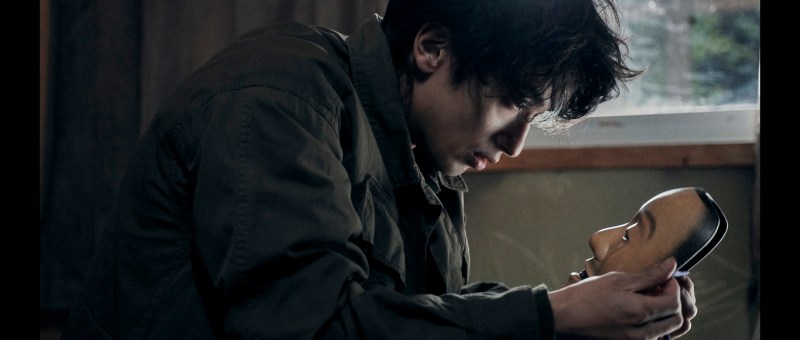
Misaki hands him back his noh mask as means of separating himself from the world around him. She says that it forces you to confront yourself, and also perhaps implies a deeper connection with an idealised vision of pre-modern Japan uncorrupted by the greed and cynicism of a man like Ohashi who claims that “position is all that matters.” Toru had told Yu that the village didn’t need him, Misaki and Ohashi say it does though for different reasons. Yet Ohashi darkly suggests that it also needs a sacrfice, and in an odd way just as his father before him it may be Yu who sacrifices himself even at the cost of his idealised life. His encroaching cynicism is directly contrasted with the idealism of Misaki’s younger brother Keiichi (Ryuto Sakuma) who like he once was is meek and diffident yet certain in his idealism and unwilling to along with the lies and wrongdoing that increasingly define village life. Eventually, he leaves the village altogether.

Yu meanwhile achieves his destiny in bringing things full circle, conducting a kind of purification ritual that aims to rid the village of Ohashi’s corruption as symbolised by the giant rubbish tip which is slowly consuming the landscape. Yu’s problem was that he tried to make his life on top of all this filth and toxicity only to realise what the price of that new life might be. Conjuring the strange and oppressive atmosphere of small-town life where past is always present and petty prejudices die hard, Fujii spins a poetic tale of fatalism and redemption amid the misty mountains and ancient chants of a slowly dying village.


Trailer (English subtitles)

Secret: A Hidden Score (言えない秘密, Hayato Kawai, 2024)

The shojo manga vibes are so strong with Hayato Kawai’s Secret: A Hidden Score (言えない秘密, Ienai Himitsu) that it’s difficult to believe it’s actually a remake of a Taiwanese film from 2007. Anyone remotely familiar with the genre will have figured the mystery fairly early on though Kawai does his best to build on the gothic overtones in what is actually a story about the hero’s recovery of his love for music having had it beaten out of him while studying abroad in the UK. 

To that extent, Minato’s (Taiga Kyomoto) disillusionment with the piano is akin to a loss of the self. He’s come back from London earlier than expected and is quickly humiliated during his friends’ hazing ritual of making him participate in a piano duel with another student which he gives up on half way through. Having experienced a truly terrible teacher who shouted and bullied him into feeling as if he should give up on music if not life Minato is left listless and lonely with no sense of direction.

This might be why he’s drawn to Yukino (Kotone Furukawa), a mysterious presence he first encounters after being struck by the sound of her playing piano in an abandoned music room soon to be torn down. He asks her what the name of the song is, but she only tells him that it’s a secret like many other things about her. Minato is fascinated but also resentful, captivated by the mystery that surrounds Yukino while frustrated by the playful distance she keeps from him. In many ways she represents life, not only romantic love but restoring his love of music and a sense of confidence in it born of his rediscovery of the simple joy of playing as symbolised by the toy piano which his father (Toshinori Omi) is also trying to repair for him.

Yet it’s also clear something’s not quite right. Yukino’s clothes are slightly old-fashioned and she doesn’t own any kind of mobile phone. No one else on campus seems to know her and she often disappears without warning only to reappear just as unexpectedly. A minor love triangle develops between Minato, Yukino, and his childhood friend Hikari (Mayu Yokota) which later provokes a secondary emotional crisis though it’s clear this slippery duet that Minato is playing gradually allows him to open himself back up emotionally so that he can re-embrace his love of music and once again play the piano which is all he’d lived for until the cruel worlds of sadistic teacher caused him to want to give up on life.

Kawai certainly ups the romance with the gothic aesthetics of the disused music room along with the drafty corridors leading to it, though when the secret is eventually revealed it’s something of an anti-climax given its obviousness and the lack of effect it has on Minato who seems to be left with another unfinished symphony of longing and loneliness destined to echo through his music for years to come. There is however a poignancy in Yukino’s declaration that she just wanted to be an ordinary girl and in the shattering of her romantic illusions when she sees that Hikaru is in love with Minato and subject to none of the barriers that cause her to think her romance has no longterm possibilities. 

More than the Taiwanese original, the film leans into the tropes of shojo manga along with the junai classics of the early 2000s in its supernaturally-tinged tale of tragic romance and impossible love. As such, the film has a nostalgic quality though its retro touchstones seem somewhat out of sync in its polaroid cameras and ‘50s-themed disco even if that itself may equally be a kind of reference to Back to the Future, though more than anything else it’s a tale of a miracle created by music bringing two lonely souls together. It may seem as if Minato is drawn towards death or something dark, but is in reality chasing himself and the melody of a life that’s lost to him, perhaps finally catching it and learning to play again only to find that the dance ends much too soon leaving only the barest echo of itself behind.


Secret: A Hidden Score screened as part of this year’s Nippon Connection

Original trailer (English subtitles)

The Zen Diary (土を喰らう十二ヵ月, Yuji Nakae, 2022)

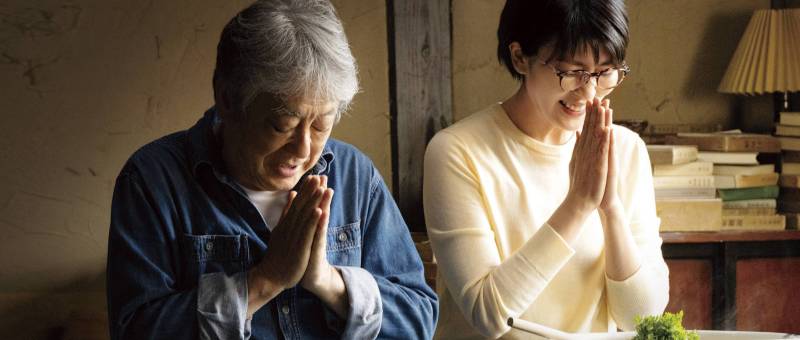
A romanticised idea of returning to the land has become a frequent motif in recent independent Japanese cinema as disillusioned youngsters crave freedom in simplicity but there’s no use denying the life of a mountain ascetic is not for everyone. Based on a 1978 essay by Tsutomu Mizukami, The Zen Diary (土を喰らう十二ヵ月, Tsuchi wo Kurau Junigatsu) is part foodie feature comfort film in the vein of The Little Forest and part melancholy contemplation on the cycle of life along with its inevitable end. 

Ageing widower Tsutomu (Kenji Sawada) lives in a cabin in the mountains with his beloved dog and is mostly self-sufficient, growing his fruit and vegetables for the largely vegetarian temple food he learned to cook as a novice monk. His peaceful days are sometimes interrupted by the arrival of his editor, Machiko (Takako Matsu ), in search of his latest manuscript but otherwise intent on staying for meal made with the freshest produce lovingly prepared by Tsutomu. It’s clear that their relationship is no longer strictly professional, if otherwise ill-defined, but equally that Tsutomu’s mountain life could itself be seen as a kind of limbo in his inability to move on from the death of his wife 13 years previously. Her ashes still sit in a box on his altar long after most would have them interred much to his elderly mother-in-law Chie’s (Tomoko Naraoka) consternation. 

Chie is also a mountain ascetic living in a cabin not far from Tsutomu’s where she apparently supplies half the local area with home made miso paste. This life is hard enough for Tsutomu, but must be verging on the impossible for a woman of Chie’s age. Nevertheless, she perseveres while apparently estranged from her surviving son (Toshinori Omi) with whose wife she did not apparently get along. Because of this apparent disconnect, Tsutomu is for some reason held responsible for her existence despite not being a blood relative, while her son is confused by her lifestyle and more or less refuses to have anything to do with her. 

Still, like Tsutomu she had perhaps also come to understand that life is movement and the simple routine of tending crops and preparing sustenance is the engine that drives existence. Divided into a series of vignettes following the traditional divisions of the year, the film lingers on seasonal details as Tsutomu painstakingly washes and prepares his homegrown veg and pickles to prepare for the upcoming season. A series of brushes with death, however, throw him into a contemplative mood realising that his ascetic lifestyle is also a flight from the inevitable and a refusal to face his fear of mortality. “Who in this world lives for eternity?” a folk song asks, while Tsutomu meditates on the zen teachings of his Buddhist upbringing and his life as a novice monk raised in a temple from the age of nine until he ran away at 13.

His reflections are perhaps more in keeping with the 1978 of the original essay than they are the contemporary setting of the film but also hint at the absurdity of class inequality. The crematorium has two doors, only one of them ornate, yet everyone leaves the same way and we are all equal in the end. He was sent to the temple because his family were too poor to feed him, though his temple life stood him in good stead for self-sufficiency and gave him the capacity for solitude. Though his family had lived on the edges of a graveyard, his father made coffins for a living, and temple life is necessarily bound up with death, Tsutomu had lived in its shadow never making his peace with mortality. Yet the seasons will also progress towards winter, and Tsutomu with them as his life draws towards its inevitable conclusion.

In any case, the film’s final words are those of thankfulness for all that life has to offer as represented in the fruits of the earth, gratefully received by an enlightened Tsutomu. In keeping with its subject matter, the unfussy yet often picturesque photography brings out the pleasures of a life of simplicity and the human warmth often to be found within it while also reflecting the intense melancholy of Tsutomu’s contemplative solitude as he meditates not only on mortality but what it is to live in sync with the rhythms of the natural world.


The Zen Diary screens at New York’s IFC Center on Feb. 12 & 16 as part of ACA Cinema Project’s New Films From Japan.

International trailer (English subtitles)

Skeleton Flowers (かそけきサンカヨウ, Rikiya Imaizumi, 2021)

The increasingly prolific Rikiya Imaizumi has become most closely associated with zeitgeisty youth romance accurately capturing the fears and anxieties of 20-somethings in contemporary Japan but brings his characteristically mellow touch to the classic coming-of-age tale in adapting Misumi Kubo’s short story Skeleton Flowers (かそけきサンカヨウ, Kasokeki Sankayo). In contrast to the gloominess of the title, teenage angst is never where you’d expect it to be as the variously pre-occupied pair at the film’s centre strive to deal with their problems with maturity and mutual compassion. 

You might for instance expect Yo (Sara Shida) who has been raised by her father, Nao (Arata Iura), since her mother left the family when she was three to feel jealousy or resentment when he sits her down and tells her that he’s fallen in love and wants to get married, especially as the woman he’s fallen in love with, Yoshiko (Akiko Kikuchi), has a small daughter of her own, Hinako. Attempting to be sensitive, Nao frames the new arrangement in a positive light in that Yo will be have more free time to be a regular teen and hang out with her friends rather than skipping out on after school clubs to take care of the household chores, a spin which could backfire in that Yo has obviously been used to being the lady of the house and might feel as if a responsibility she was proud of carrying is being taken away from her or that she’s being displaced by the new maternal presence of Yoshiko. She may in fact feel a little of this, but rather than lashing out or rebelling against the change in her familial circumstances she does her best to accept it with good grace while simultaneously prompted into a reconsideration of the relationships between parent and child meditating on the absence of her birth mother and wondering how and why she could have come to leave her behind. 

Riku (Oji Suzuka), her sometime love interest, had started a discussion in their friendship group about their earliest memories Yo unable to come up with anything on the spot but later remembering her mother carrying her into the forest and showing her the skeleton flowers of the title which appear bright white when dry but gradually become transparent as they absorb water. Later she remembers something else unsure if it’s a memory or a dream, a feeling of being suspended in mid-air as her parents argued as if everyone had forgotten she existed. Riku too frequently states that he’s “nothing at all”, feeling himself lost and directionless after being diagnosed with a heart condition later forced to accept that his life will never be the same as it was and his choices are now limited in ways they might not have been before. His health anxiety ironically leaves him emotionally numb, unable to identify let alone express his feelings as he becomes close not only to Yo but another, much more direct, girl in his class Saki (Tomo Nakai) who later does him the favour of explaining exactly what his problems are hoping to jolt him out of his emotional inertia while taking him to task for having been unintentionally condescending in his innate kindness. 

It’s this innate kindness that eventually sees both the teens through, each approaching their various worries with a mature compassion. Riku had felt uncomfortable in his familial home and jealous of Yo’s “real family” as she comes to accept her new relationships with Yoshiko and Hinako, but himself comes to understand the complicated relationship between his overbearing grandmother and lonely mother as one of mutual support getting another tip from Yoshiko that even if he feels has no particular talents, also jealous of Yo’s artistic prowess, his ability to support those around him is a talent in itself and an important part of the whole. A robust emotional honesty and the willingness to think things through calmly eventually lead stronger bonds between all concerned, Yo forgiving her birth mother while also embracing a new maternal relationship with Yoshiko, while Riku gains a new perspective of his own and even if he still hasn’t quite learned to identify his feelings is more comfortable with expressing them directly. A gentle, empathetic coming-of-age tale Imaizumi’s teenage drama roots itself in a world of fairness and compassion that allows each of the teens the space to figure themselves out while helping others to do the same no longer transparent in the rain but whole and fully visible not least to themselves. 


Skeleton Flowers streams in the US until March 27 as part of the 14th season of Asian Pop-up Cinema

Original trailer (English subtitles)

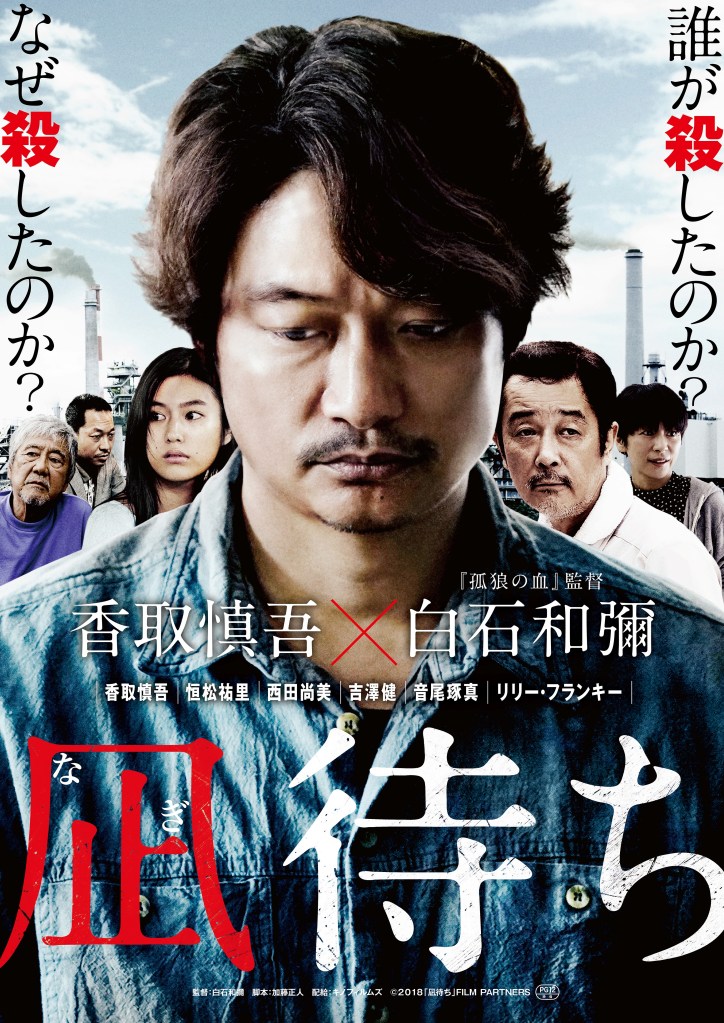
Sea of Revival (凪待ち, Kazuya Shiraishi, 2019)

“One bad thing leads to another” according to overprotective mother Ayumi (Naomi Nishida) in Kazuya Shirashi’s Sea of Revival (凪待ち, Nagi Machi). She’s not wrong, but breaking the chain proves harder than expected, especially as trouble has a way of following people around and the one thing you can never outrun is yourself. Yet, what might save you in the end is not so much self acceptance as that of others and finding your place along with a sense of belonging as member of a family in the knowledge they have chosen you as one of their own. 

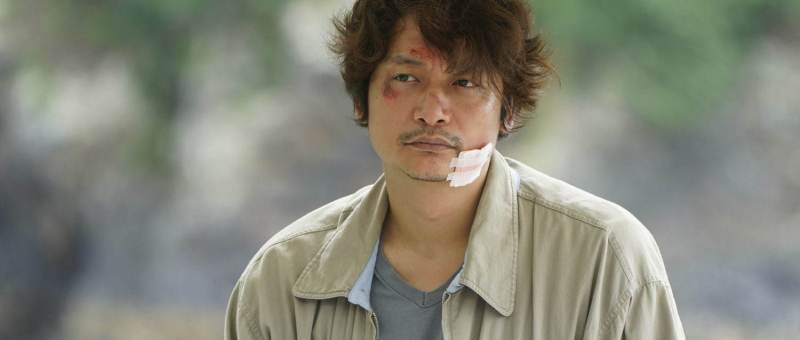
Ikuo (Shingo Katori), the hero, certainly has plenty of demons he’s looking to leave behind. A devotee of the bicycle races, he’s just been laid off from his factory job and is preparing to move to his girlfriend Ayumi’s hometown where she plans to open a hairdressers and care for her ageing father Katsumi (Ken Yoshizawa) who has just been diagnosed with stage four cancer. Ayumi left rural Miyagi with her daughter, Minami (Yuri Tsunematsu) whose name is written with the characters for beautiful waves, after the tsunami which devastated the area and took her mother’s life. She hopes that it can be a new start for their family and that Ikuo will finally be able to shape up, knock his gambling habit on the head and ease back on the drinking. 

Things get off to a bad start, however, when Ikuo fails to bond with Katsumi who largely ignores him, while he discovers that Ishinomaki is much more conservative than Kawasaki and not everyone seems to approve of his liminal status in the Konno household. The fact remains that Ayumi and Ikuo, though they’ve been living together for five years, are not legally married and therefore in the eyes of some not a proper family, and more to the point Ikuo is an outsider with relatively little to recommend him. He does however try to make good on his promise, impressing the boss at a printshop where an overly helpful family friend, Onodera (Lily Franky), has found him a job, but quickly succumbs to old habits when a pair of ne’er-do-well colleagues introduce him to an illegal bicycle racing betting club run by local yakuza. 

Matters come to a head when Minami gets fed up with her mother’s overprotective conservatism and decides to pay her back by staying out late with new friends Ayumi doesn’t approve of. Flagging up their differing parenting styles, Ikuo tells Ayumi that she’s overreacting and should be happy for her daughter who is finally living something like a normal teenage life rather than shutting herself up in her room playing games like she did in Kawasaki where the other kids made her life a misery, calling her a “radioactive” transfer student from Fukushima. Ayumi fires back that Ikuo obviously isn’t very invested in Minami because, after all, he’s not her real dad and has no idea what family is. An extraordinarily hurtful thing to say in any circumstances, Ayumi’s words strike a nerve as Ikuo struggles to claim his place as a non-husband who has nevertheless become a father figure but is not recognised as a legitimate member of the family. 

Claim his place he does however when tragedy strikes, rushing into a police cordon shouting “I’m family” but being held back by the forces of social order while Minami cleverly evades them to see something no one should ever have to see. Old Katsumi meanwhile, apparently much like Ikuo in his youth, a fiery scrapper with a self-destructive streak, struggles to accept his failure either to save his wife or die by her side. Recognising something of himself in the younger man, he finally warms up to Ikuo, literally “redeeming” him from vengeful yakuza, offering only the explanation that he does so because “he’s my son”. 

Others such as the weirdly ever present Onodera may think it proper that Ikuo leave the Konno household because he has no more reason to be there, that his presence is now even more inappropriate than it was before. Minami is advised to move in with her birth father (Takuma Otoo) despite the fact Ayumi described him as abusive and that he has remarried and is currently expecting another child. Ikuo’s five years as her father count for nothing, because he was not married to her mother. During the car journey to their new home, Minami had playfully suggested to Ikuo that he should propose but he claimed he had no right to do so as an irresponsible man unable to contribute meaningfully to the household. Ayumi dreamed of the sea and of beautiful Caribbean islands to which Ikuo had promised but failed to take her. She ironically hoped to rebuild their lives in the ruined landscape of Ishinomaki where they’ve put up walls so tall you can no longer see the sea, still beautiful despite all its terrible ferocity. 

“A good wife makes a decent man” Ayumi’s ex bitterly fires back at her though others have found it to be true, Katsumi not least among them, but Ikuo’s problem is an internalised sense of masculine failure which keeps him on the edges of a family which is otherwise his by right. In a strange way, a piece of paper can make all the difference and no difference at all, both legitimate and not, in making it plain who is and is not accepted as “family”. Accepted by others, Ikuo learns to accept himself, still burdened by guilt and regret but also bound by it as he joins his chosen family on new a journey powered by those same beautiful yet destructive forces which have engendered so much grief and hope.


Screened as part of the Japan Foundation Touring Film Programme 2020.

Original trailer (English subtitles)

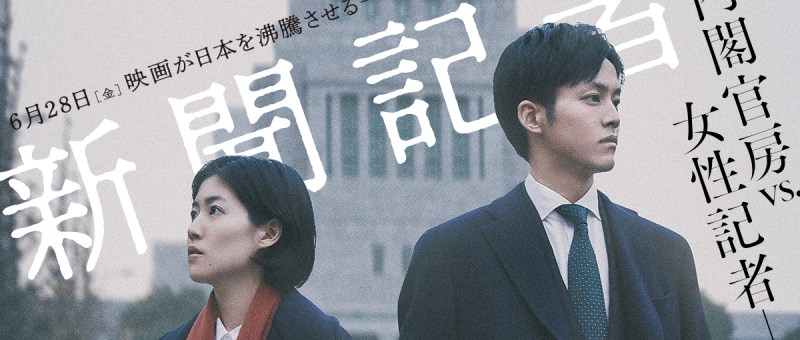
The Journalist (新聞記者, Michihito Fujii, 2019)

The Journalist poster 2In these days of “fake news” and misinformation, a robust press is more important than ever. In Japan, however, the news media institution has long been decried as toothless, if not actually in league with the ruling regime. A timely and appropriately exasperated conspiracy thriller, Michihito Fujii’s The Journalist (新聞記者, Shinbun kisha) is inspired by the non-fiction book by newspaper reporter Isoko Mochizuki who makes a brief appearance at the beginning of the film and has herself been singled out as “problematic” by politicians unused to being held to account and objecting to her intensive interview technique.

Mochizuki’s fictionalised stand in, Erika Yoshioka (Shim Eun-kyung), is a rookie reporter who grew up in America with her Japanese journalist father and Korean mother. Following her father’s “suicide” she returned to Japan and is currently working for Toto News where she receives a mysterious fax containing information about a suspicious government plan to found a new medical university.

Meanwhile, idealistic former international diplomat Sugihara is on temporary secondment to CIRO (Cabinet Intelligence and Research Office) – a secretive organisation set up under the occupation to mirror the US’ CIA but often criticised for acting like a secret police force and expending too much effort on spying on ordinary Japanese citizens on Japanese soil rather than gathering useful international intelligence. Sugihara (Tori Matsuzaka) finds himself conflicted in his new work, the first assignment of which is handling a smear campaign against a young woman (clearly inspired by the Shiori Ito case) who has accused a high ranking journalist close to the government of rape. A married man with a baby on the way, he fears rocking the boat but resents his complicity with such obvious government finagling and failure to counter the misogynistic narrative that passes for office banter.

When his former mentor, Kanzaki (Kazuya Takahashi), commits suicide, no longer able to live with his compromises, Sugihara begins to reconsider his decision not to go against his superiors but finds it difficult to countenance “betraying” his organisation even in the knowledge that they are no longer working in the best interests of the people. Yoshioka, with whom he eventually bonds after witnessing her sympathetic treatment of Kanzaki’s bereaved daughter, may in some senses be better placed to resist given her overseas upbringing. Where Sugihara and the news media at large struggle with the idea of standing up to authority, Yoshioka is keen to sell the ideals of journalistic integrity, insisting that a robust press is essential in holding power to account.

Meanwhile, she finds herself a lone voice adrift in the largely patriarchal world of Japanese news media. Leaving the press conference called by the woman accusing the government crony of rape, she stops to tell off a pair of journalists making sexist comments but receives only a brief eye roll before they walk away laughing. She also finds herself resented by her colleagues for pointing out that their hounding of Kanzaki’s bereaved wife and daughter at his funeral is insensitive and inappropriate, but refuses to back down in fierce determination to do what is right even if it is not popular.

Meanwhile, Sugihara’s odious boss Tada (Tetsushi Tanaka) is desperately trying to keep a grip on power from the shadows. He uses Sugihara’s conflicted loyalties against him, subtlety reminding him that he has a wife and newborn daughter to whom he has a greater responsibility, and insisting that there is no “shame” in complicity when it comes to maintaining “the illusion of democracy”. CIRO, it has to be said, does not come out of this well as it wilfully does the government’s dirty work – covering up the indiscretions of “valuable” politicians and their relatives in order to avoid the unpleasant chaos of unwelcome political scandals. Kanzaki’s compromises left him a broken and defeated man, Sugihara wonders what kind of man his daughter would think him to be if he too just went along with the government line and enabled their subversion of democracy solely for personal and economic security.

The press may be waking up, but The Journalist’s chief takeaway is that change comes when enough people find the courage to keep saying no. As the ending implies, the battle is far from over but it has perhaps begun thanks to the efforts of those like Mochizuki and her filmic counterpart Yoshioka as well as the courage of whistleblowers like Sugihara who risk personal ruin merely for speaking out. A timely, urgent defence of press freedom in the face of tightening authoritarianism, The Journalist is an all too plausible conspiracy thriller in which the last guardians of liberal democracy are the nails which refuse to be hammered down.


The Journalist screens in New York on July 27 as part of Japan Cuts 2019.

Original trailer (English subtitles)

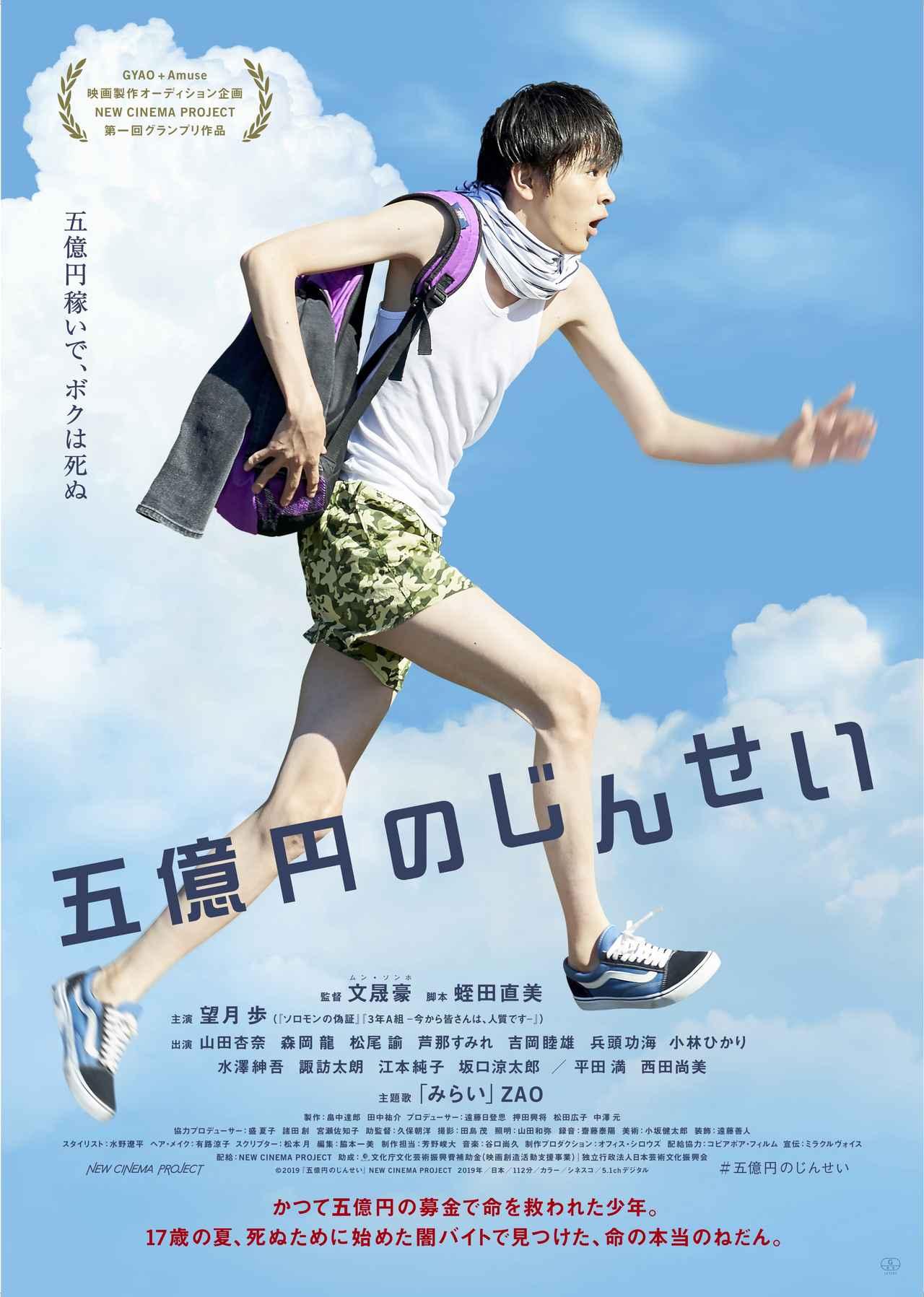
5 Million Dollar Life (五億円のじんせい, Moon Sung-ho, 2019)

5 Million Dollar Life posterIs it possible to live a life without “debts” of one kind or another or are we all just living on loans? The hero of Moon Sung-ho’s 5 Million Dollar Life (五億円のじんせい, Gooku Yen no Jinsei) wants to find out, not least because he feels himself indebted to those who have helped him in the past and struggles with the pressure of living up to their expectation. An unexpected source provides some helpful advice in pointing out that “value” in one sense at least is not something you’re free to decide for yourself but is defined by others. Then again, not being certain of your own worth makes it impossible to claim your rightful place in society as someone as worthy of love and respect as any other.

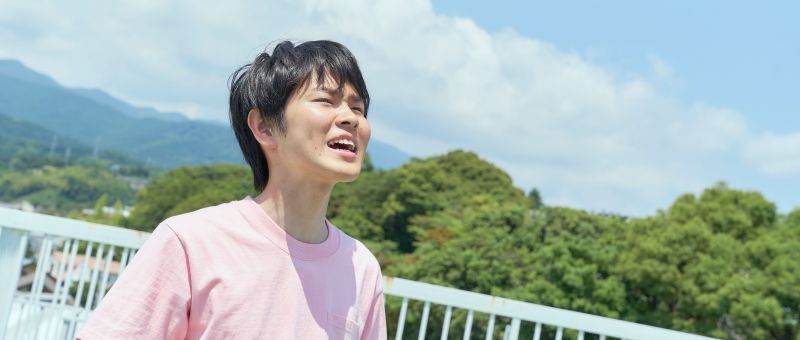
When Mirai (Ayumu Mochizuki) was six, his family found out he had a congenital heart defect and would need to go abroad for a transplant. His community rallied around him and raised five million dollars so he could go to America for treatment. The heartwarming story also made him the star of an ongoing documentary in which he’s interviewed on television every year so those who contributed to saving his life can find out how he’s getting on. Becoming a local celebrity and an accidental TV star is obviously a lot of pressure for any young man, but Mirai feels acutely burdened by the responsibility of “repaying” the kindness that was offered to him. He doesn’t feel his life was worth five million dollars and knows he is unlikely to repay their “investment”. He is after all just “ordinary”. He won’t win a Nobel prize or cure cancer, all he can do is live his life in the normal way but that’s hard when it feels like everyone is secretly looking over his shoulder and waiting for him to make a mistake.

Meanwhile he’s also become a role model to the suicidal Chiharu (Hikari Kobayashi) who doesn’t “see the value in life”  and feels that “death is glorious” because people can hate you while you’re alive, but they’ll love you when you’re gone. Mirai gets where she’s coming from. He longs for an ending too, if only to reject the responsibility he feels towards those who saved his life. Attacked by a troll online, he takes up the challenge to make the five million dollars back and then kill himself to bring an end to the whole affair but quickly discovers that it’s a lot harder to make five million dollars than he thought.

Neatly taking place during the last summer of high school, Mirai’s odyssey sends him on an odd trek across working class Japan as he finds himself alone and without money or means to support himself. At only 17, he can’t even stay in a hotel on his own and so he winds up becoming homeless but is taken in by a nice old man who claims he decided to help him because he bought an umbrella with his last pennies rather than pinching someone else’s. Though he is often exploited and betrayed by those who take advantage of his goodness, that same quality finds an answer in others who, sometimes despite themselves, want to help him because he seems like the sort of person who needs help.

This idea finds encapsulation in the surprisingly astute words of wisdom Mirai receives from a petty gangster he meets after getting involved with sex work. The gangster, who starts off by telling him that he’s making a mistake selling himself short when it’s the customer who decides what his “value” is, later explains that it’s not so much that the world is divided into people who are nice and people who aren’t, but that some people are “worth” being nice to and Mirai, for one reason or another, is one such person who thrives on kindness.

Mirai’s desire to quantify his life by putting a price on it may be mistaken, as proved by the sad case of a family committing suicide because of monetary debt, but what he realises is that people help because they want to and they don’t necessarily expect anything in return other than kindness. If he wants to find a way to repay them, he’ll have to figure it out on his own terms first, but all they really wanted they wanted from him was that he live his life as happily as possible. 5 Million Dollar Life goes to some pretty dark places, but always maintains a healthy cheerfulness as Mirai goes on his strange odyssey looking for the “value” in being alive and discovering that it largely lies shared kindnesses and unselfish connection.


5 Million Dollar Life screens on 11th July as part of the 2019 New York Asian Film Festival.

Original trailer (no subtitles)

Dawn Wind in My Poncho (ポンチョに夜明けの風はらませて, Satoru Hirohara, 2017)

Dawn Wind in My Poncho posterThe end of high school might signal impending doom for some, but it also provides a valuable opportunity for one last hurrah before surrendering to the demands of the adult world. That’s more or less how the heroes of Satoru Hirohara’s Dawn Wind in My Poncho (ポンチョに夜明けの風はらませて, Poncho ni Yoake no Kaze Haramasete) feel about it as they set off on an impromptu road trip to track down a Peruvian folksinger making his first visit to Japan in 18 years. Youthful irresponsibility and an openness to all things send our boys on a strange odyssey of self discovery in flight of a future that is almost certain to be disappointing.

Right before graduation, Janbo (Yuma Yamoto) and Matahachi (Taiga) are preparing to celebrate their friend Jin (Aoi Nakamura) getting into Uni. Only, Jin didn’t make the grade which has rather put a damper on the occasion. To make matters worse, new driver Matahatchi seems to have scratched the car belonging to Janbo’s dad which they weren’t supposed to be driving in the first place. Trying to fix the problem, they run into dejected idol Ai (Aimi Satsukawa) who dreams of chart success but is being pressured into a gravure career by her agency. Ai manages to upset some delinquents in a convenience store car park, leaving our guys wondering if they should step in but coming to the conclusion it’s not worth it unless the girl is pretty. Nevertheless, they end up driving off with Ai in the back of the car anyway with the delinquents in hot pursuit.

That’s only the beginning of the boys’ adventure, but they can’t go home yet anyway because by the end of the chase they’ve completely destroyed the car and will be extremely dead when Janbo’s dad finds out. Lovingly showing off a picture of his beloved new (secondhand) car, Janbo’s dad tells a young man coming into the bar owned by Matahachi’s single mother that if he works really hard for a very long time, he too could have a car like this. It’s a fairly depressing prospect, but it does seem like there might not be much more out there for these small town guys as they prepare to leave high school behind. Jin was the guys’ bright hope with his university dreams. Janbo is going to work for his dad and Matahachi is looking for a job. All there is to look forward to now is constraint. A boring low pay job with no prospects, followed by marriage, fatherhood, and death.

You can’t blame them for cutting loose, though in essence our guys are mild-mannered sorts well and truly outrun by Ai’s anarchic flight from her own disappointment with her faltering career. Of course, the boys are all interested in her nevertheless only Janbo is facing an embarrassing problem of his own which has him wondering if he’ll ever be able to have a “normal” sex life, marriage, or family. The problem eventually takes him to the “Banana Clinic” which is actually a front very specific sex services but does introduce him to a nice young lady (Junko Abe) who might be able to cure his sense of insecurity if in a roundabout way.

Meanwhile, the guys have blown off the fourth member of their “band” (Shhota Sometani) who is still hanging around waiting for them to turn up for practice ahead of their graduation show. A poignant radio message attached to a song request in which he reveals how lonely he was until some guys invited him to join their band goes unheard by the gang leaving him to gatecrash graduation all alone with an impromptu performance in which he sings about how school was pointless and no one cares about the future, starting a mini riot among the other kids in the process. The trio are still busy with a series of zany adventures as Matahachi tries to convince the guys to come with him on strange quest to hear the elusive folk singer, only latterly explaining to them why exactly this means so much to him. A typically teenage road trip ends up going nowhere in particular, leaving the guys in limbo as they run from their depressing futures towards the last traces freedom far in the distance. Silly, if endearing, Dawn Wind in My Poncho is a strangely sympathetic tale of youthful rebellion towards impending adulthood which ultimately places its faith in the strength of male friendship as the last refuge from a relentlessly conformist society.


Dawn Wind in My Poncho was screened as part of the 2019 Nippon Connection Film Festival.

Original trailer (no subtitles)