
The Mole Song: Final (土竜の唄 FINAL, Takashi Miike, 2021)

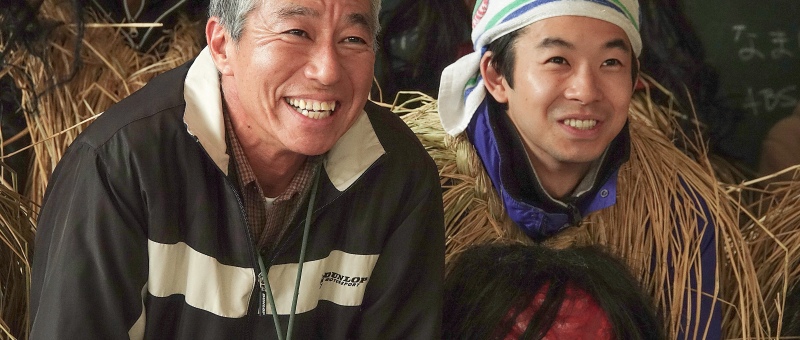
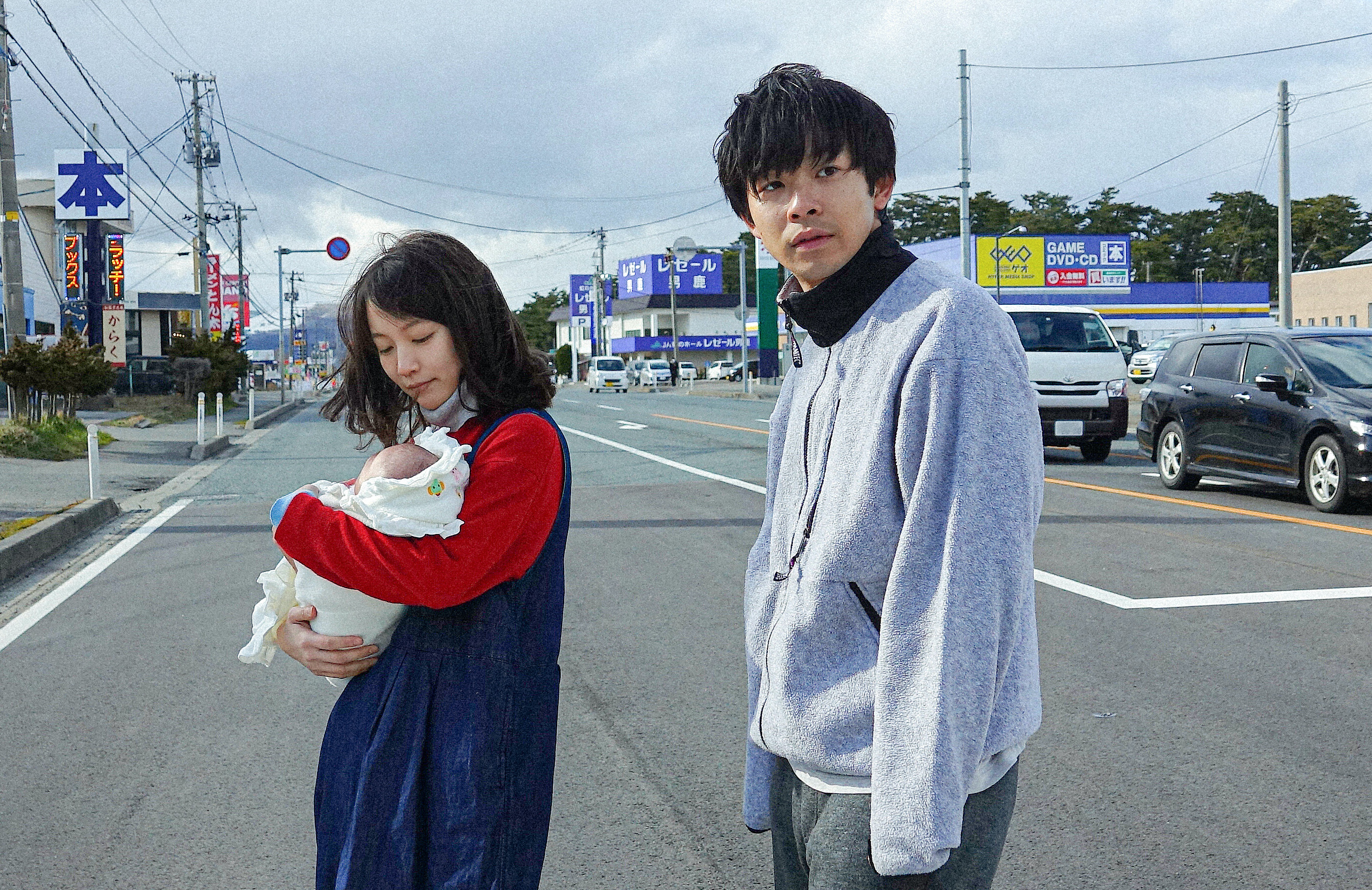
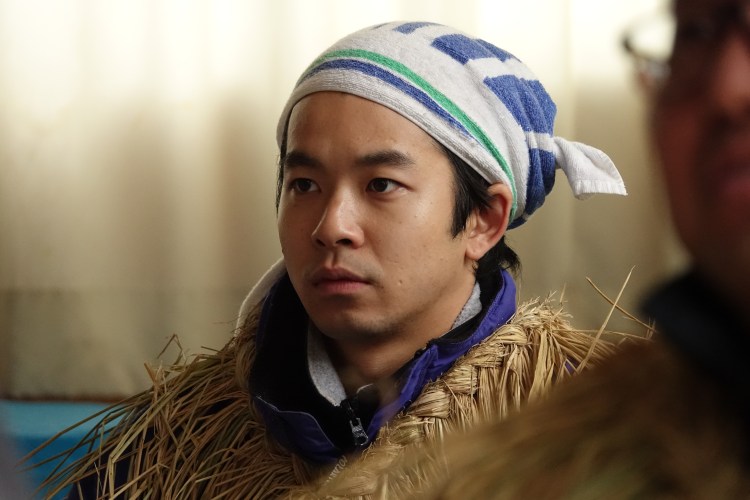
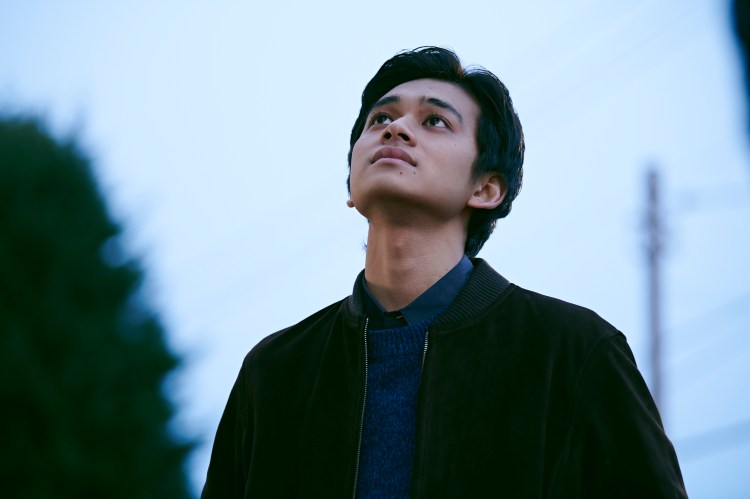
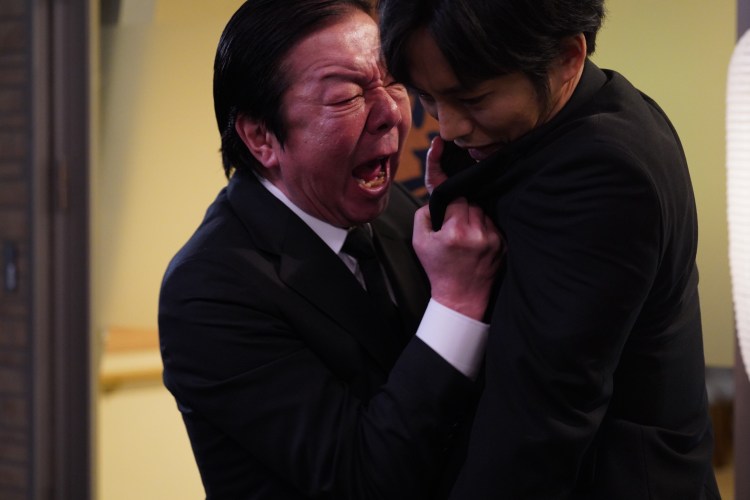
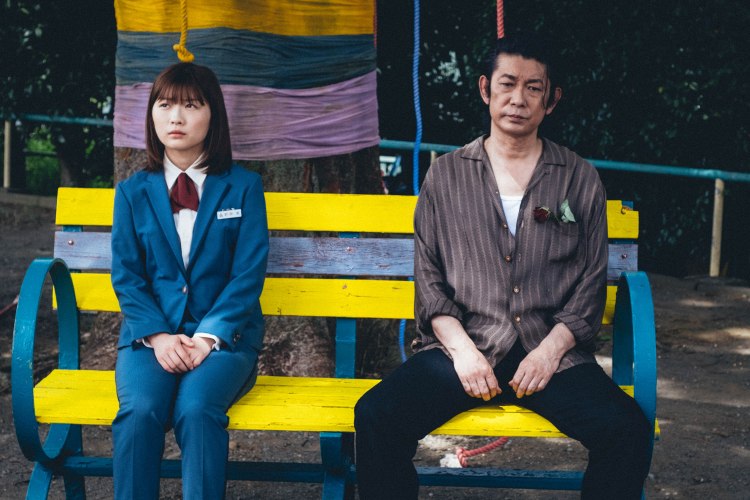
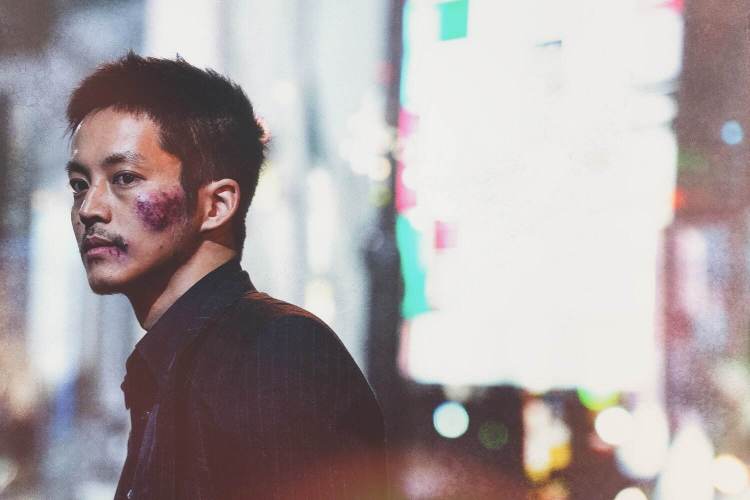
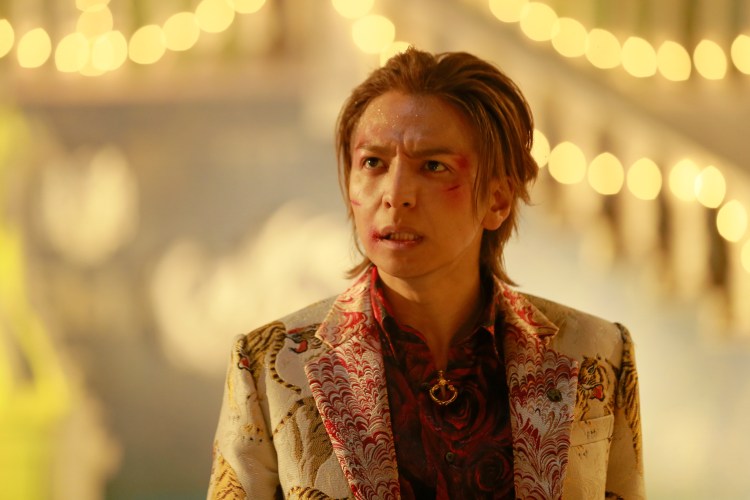
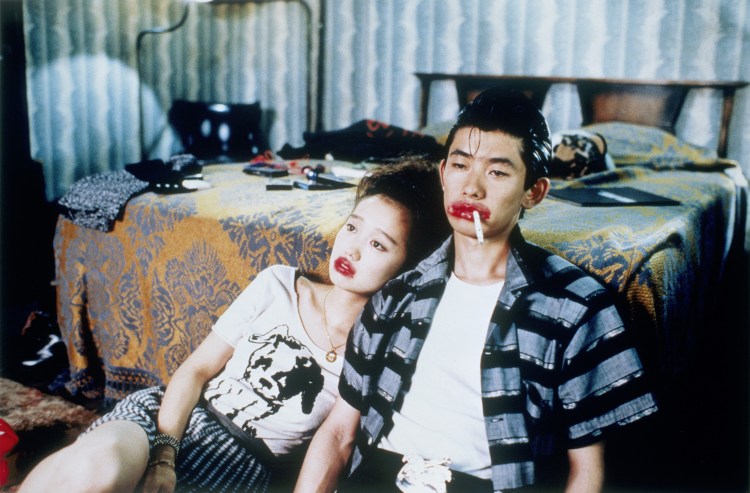
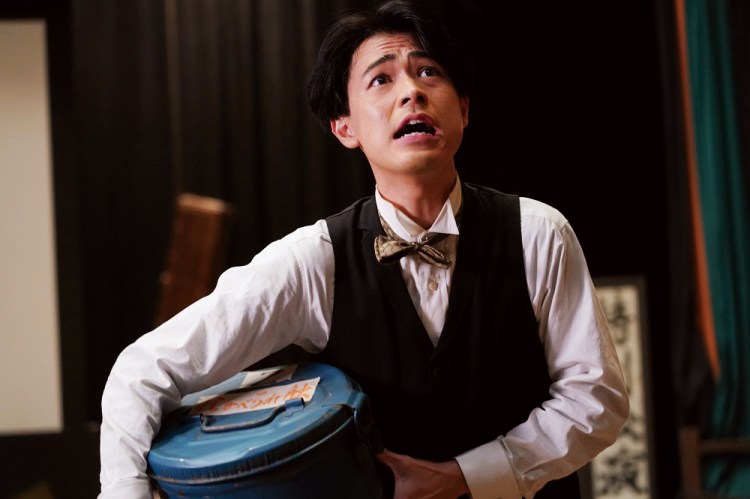
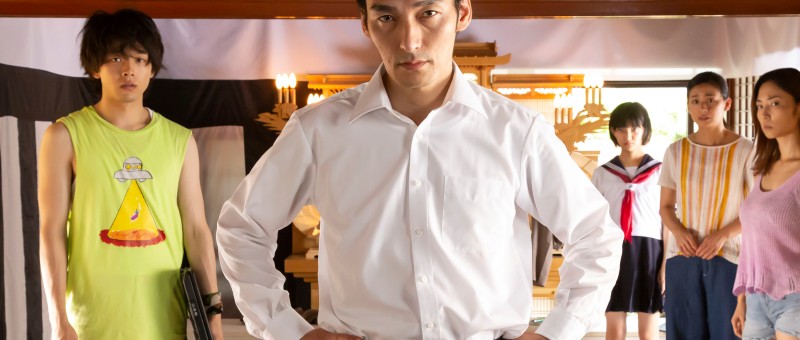
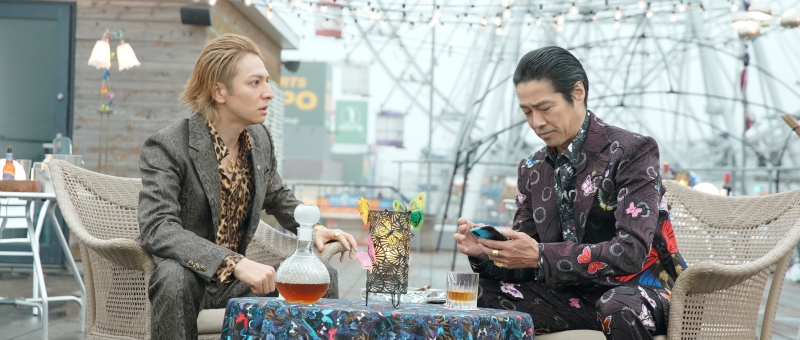
“He’s horny and looks like a fool but you can count on him” according to top mob boss Todoroki and it’s as good a description as any of the hero of Takashi Miike’s adaptation of the manga by Noboru Takahashi, The Mole Song: Undercover Agent Reiji. Billed as the conclusion of the trilogy each of which is scripted by Kankuro Kudo, The Mole Song: FINAL (土竜の唄 FINAL, Mogura no uta Final) arrives almost 10 years since the series’ first instalment and five years after the second as Reiji (Toma Ikuta) proceeds towards his ultimate target and staves off the next evolution of organised crime.

To rewind a little, as film frequently does in flashbacks to the earlier movies, Reiji was a useless street cop facing a host of complaints not least for being a bit of a creep upskirting the local ladies until offered the opportunity to go undercover in the yakuza in order to break a drug smuggling ring run by ageing boss Todoroki (Koichi Iwaki). No longer technically a law enforcement officer because undercover operations are apparently illegal in Japan, Reiji has begun to find himself torn between his ultimate mission and the codes of gangsterdom not least in his relationship with sympathetic, old school yakuza Papillon (Shinichi Tsutsumi) so named for his love of butterflies many of which adorn his brightly coloured suits. 

Reiji’s inner conflict may ironically mirror the giri/ninjo push and pull central to the yakuza drama as he begins to realise that in completing his mission of taking down Todoroki he will end up betraying Papillon who once saved his life at the cost of his legs. Papillon meanwhile is presented as the idealised figure of the traditional yakuza in his fierce opposition to the drugs trade in the conviction that all they do is make people’s lives miserable and destroy families. He alone maintains the traditional ideas of brotherhood that underpin the underworld society in which a boss is also a father and betrayal is a spiritual if also in a sense literal act of suicide. His opposite number, meanwhile, Todoroki’s son Leo (Ryohei Suzuki), is the evolution of the post-Bubble yakuza, highly corporatised and essentially amoral. Papillon compares him to a mutant butterfly fed on coca lives that will eventually kill all of those with which it is confined while Leo himself claims that he intends to redefine the concept of the yakuza for the new generation. 

Caught between policeman and gangster, Reiji’s identity confusion is mediated through his relationships with Papillon on the one hand and pure-hearted love interest Junna (Riisa Naka) on the other. Each of them at one point tells Reiji that he is dead to them, thereby exiling him to the other side temporarily or otherwise. His yakuza traits which include the perversity which plagued him before endanger his otherwise innocent love for Junna in his inability to control his impulses, upsetting her by revealing a possible fling with a local woman while working on the drug deal in Italy, while his inclination towards police work that informs his sense of “justice” places him at odds with Papillon even though they are in many ways pursuing the same goal in keeping Japan free of dangerous drugs and the crime at surrounds them while purifying the contemporary yakuza of the pollution they have caused and restoring it to the pure ideal of another kind of “justice” advocated by Papillon which Todoroki has in a sense betrayed. 

As the film makes clear, the traditional yakuza is in any case on its way out with successive law enforcement initiatives that perhaps unfairly in some senses prevent them from living their lives. Todoroki’s guys defend their choices to the more idealistic Papillon under the rationale that they can’t open bank accounts, rent apartments, or even make sure their kids have lunch to take to school, so they have to dirty their hands with these less honourable kinds of work. Leo is simply a turbo charged version of their determination to survive. As eccentric cat-like gangster Nekozawa (Takashi Okamura), making a shock reappearance, explains it isn’t as if they can go straight either because who’s going to hire a former yakuza for a regular job? 

There may be in a sense a sympathy for those caught out by their choices with no real way back, a more liberal view of “justice” leaning either towards that by their own code or a simple rejection of the amoral selfishness of those who think nothing of ruining the lives of others for their own gain. With plenty of call backs to earlier instalments, Reiji once again opening the film buck naked with in this case a vase for modesty, Miike maintains the same slapstick sense of humour frequently employing zany animation and even a puppet show to express Reiji’s sometimes simplistic way of thinking. The film even unexpectedly shifts into tokusatsu in its closing sequence, bearing out the similarity in the titular “mole song” to the classic Mothra refrain, while placing Reiji and Papillon back into their respective roles having perhaps exchanged something between them in continuing to pursue their shared goal of a drug-free society. 


The Mole Song: Final streamed as part of this year’s Nippon Connection.

Original trailer (English subtitles)

Images: Ⓒ2021 FUJI TELEVISION NETWORK/SHOGAKUKAN/JSTORM/TOHO/OLM ⒸNOBORU TAKAHASHI/SHOGAKUKAN
The End of the Pale Hour (明け方の若者たち, Hana Matsumoto, 2021)

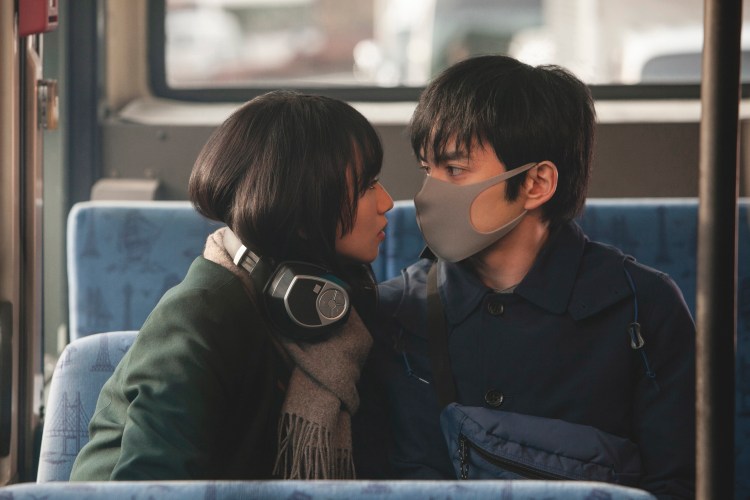
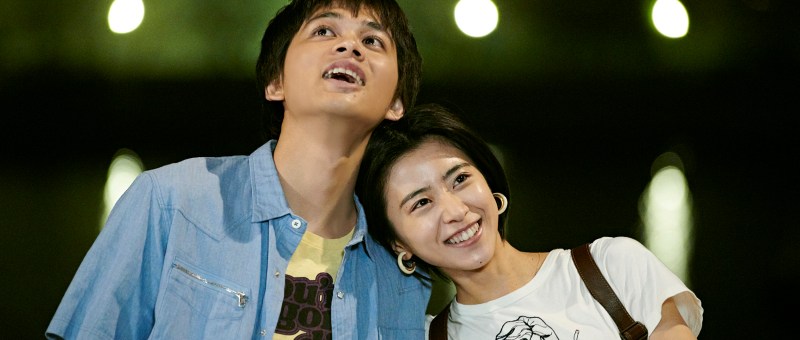
A series of youngsters contend with disillusionment amidst the failure of the salaryman dream in Hana Matsumoto’s adaptation of the “I Novel” by Masahiko Katsuse, The End of the Pale Hour (明け方の若者たち, Akegata no Wakamonotachi). United by a chorus of “it wasn’t supposed to be this way”, the choice left to them is to resign themselves to life’s disappointment or to take a gamble on a happier future which though it might not work out might grant them a greater feeling of control over an existence which often seems pointless and unfulfilling. 

The unnamed protagonist (Takumi Kitamura) is already feeling a degree of trepidation even at a gathering that has been organised by a brash fellow student who crassly brands it the “winners’ party” to celebrate that they’ve all been able to line up jobs for after graduation in a competitive employment market. He ends up leaving with an equally bored woman (Yuina Kuroshima), a graduate student a little older than him, and drifts into a relationship with her that seems doomed to failure not least in her constant reminders that “everything ends sometime” and “our youth will be over soon, we need to enjoy it now”. The man insists that their youth won’t end just because they’ve entered the working world but in a sense it of course does, his sparkler fizzling out portentously as he’s forced to think of the future. 

A recent trend has seen large numbers of graduate recruits quit their company jobs within the first three years for reasons the man and his new workplace friend Naoto (Yuki Inoue) quickly discover. Japanese companies generally hire en masse in the spring and then shuffle employees into various departments after a probationary period sometimes letting the ones who don’t make the grade go entirely. Though he had done well in the preliminary tasks and hoped to be assigned to the prestigious planning department where the real work gets done, the man is assigned to the “General Affairs” section of office dogsbodies marked out from the regular salaryman workers by their uniform jackets which make it clear that their work is considered menial mainly concerned with setting up furniture for meetings, taking care of maintenance tasks such as replacing light bulbs, and dealing with interoffice complaints. He is constantly told off for not stamping his documents properly only for someone to explain to him that he needs to make sure his name appears at the correct angle to symbolise his bowing to the boss on paper in an example of the rigid office culture for which the young have increasingly little patience.  

Part of the man’s problem is his passivity. He’s dissatisfied with the system but is at heart conventional and lacks the courage to break with it. The woman is seemingly less so, a free spirit who’s chosen a path she believes to be more creatively fulfilling excited that she might make something that will one day be in someone’s hands. But then as we discover she is more conventional than she first appears, her openness and enthusiasm perhaps partly fantasy to mask the disappointment that she too feels that her life has not turned out as she thought it would. The man remarks that he likes walking around at twilight because it’s the only moment in which he can feel free, a moment of infinite possibility in the liminal space between one day and the next in which today is already over but tomorrow has not started. Later Naoto will say something similar of their youthful days as fresh hires filled with resentment but also determination, railing against the system until the early hours of the morning, describing it as the “magic hour” of their lives though they never knew the light was dimming. 

Such dejection may be slightly unwarranted given that none of them are even 30 by time of the film’s conclusion despite the minor greying of their hair. In any case, the man seems to have come to an acceptance of youth’s end, taking the spirit of the twilight with him as he charts a new, if still conventional course, choosing not to jump ship like his friend but tentatively make an application to get out of General Affairs into a better salaryman job. “It’s been a magic time, hasn’t it?” the woman had said of their brief holiday, “like a dream” but one from which she knows, and perhaps he does too, they’ll soon have to awake. Expressing the anxieties of contemporary generation dissatisfied with their overly corporatised lives in a rigid and conservative society, The End of the Pale Hour nevertheless ends with a sense of the dawn and the promise of new beginnings if tinged with the glow of youthful nostalgia. 


The End of the Pale Hour streams in Germany until 6th June as part of this year’s Nippon Connection.

Original trailer (English subtitles)

Any Crybabies Around? (泣く子はいねぇが, Takuma Sato, 2020)

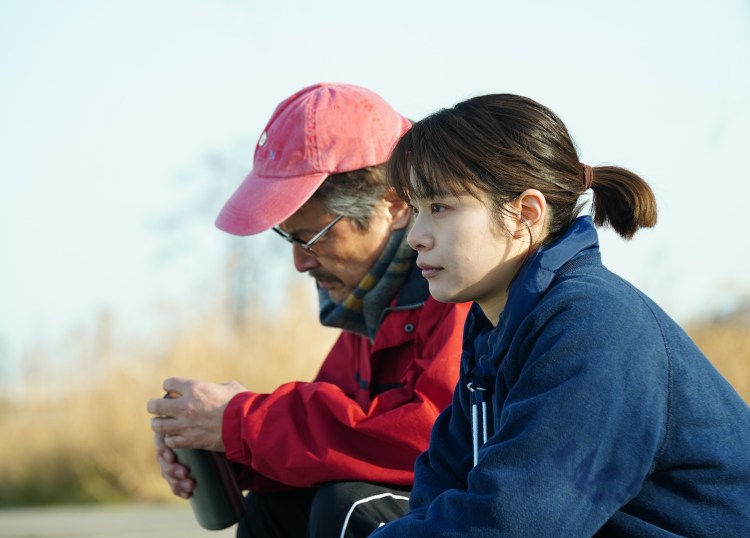
“Get your act together” an exasperated new mother exclaims, but it seems even new fatherhood isn’t quite enough to jolt the aimless hero of Takuma Sato’s paternity drama Any Crybabies Around? (泣く子はいねぇが, Nakuko wa Inega) into accepting his responsibility. Fatherhood is indeed a daunting prospect, however Sato isn’t interested solely in Tasuku’s (Taiga Nakano) attempts to “grow up” and embody the ideals of masculinity in a patriarchal society but also in the nature of fatherhood itself along with its legacies and the effects of male failure on those caught in its wake. 

Everyone in the small town of Oga seems to be aware that Tasuku has undergone a shotgun marriage though it’s more the subject of gentle ribbing than scorn or disdain. Many remark on his relative youth, though he’s perhaps not so much younger than his parents might have been when he was born it’s just that times have changed. In any case, his wife, Kotone (Riho Yoshioka), is beginning to get fed up with him worried that he isn’t ready to be a father and isn’t taking the responsibility seriously enough. As young men do he still drinks like a single man and is vulnerable to peer pressure. Kotone begs him not to participate in the local Namahage festival but he insists they have to keep the tradition alive while apparently feeling an obligation to Mr. Natsui (Toshiro Yanagiba) who ensures it continues. She makes him promise not to drink, and he does his best in the beginning but, paradoxically, the Namahage is a drinking festival. Soon enough, Tasuku has had a little too much and beginning to feel hot takes off all his clothes, running around in the nude save for the large oni mask on his face while local reporters there to cover the traditional festival decide to make him a viral sensation. Unable to bear the shame, Tasuku abandons his wife and child and runs away to anonymity in Tokyo. 

The irony is that introducing the festival to the reporters, Mr. Natsui had flagged it up as a bastion of family values, that it’s not about “scaring” children but teaching them “good ethics” while reassuring them that their fathers will always protect them. According to Mr. Natsui, those children then grow up to become fathers who protect their offspring, Tasuku’s unfortunate streaking somewhat undermining his argument. It’s interesting in a sense that Tasuku is himself fatherless, his father having passed away some years earlier leaving not much of himself behind other than the oni masks he carved for the Namahage. Tasuku’s brother (Takashi Yamanaka), who was supposed to be getting married but apparently did not perhaps because of Tasuku’s scandal, later becomes upset on deciding to sell the family business lamenting that he was able to save “nothing” of his father, rejecting the Namahage mask that Tasuku offers him as “trash” while acknowledging perhaps that the Namahage is all is he left them along with the transitory lessons it imparts. 

Tasuku was clearly not quite ready to be a dad, but having spent some time growing up and hearing that his father-in-law has passed away leaving his ex with little choice than to work as a bar hostess on the fringes of the sex trade, he decides to go home and try to make amends. He swears repeatedly that he won’t run away again and will do whatever it takes until he’s forgiven, but still he flounders failing to find secure employment while periodically visiting his grandmother in a nursing home and helping his mother (Kimiko Yo) out selling traditional ice creams at local tourist attractions. “You’re not the only one who can be Nagi’s father” she reminds him as he perhaps begins to realise that there are some bonds you can’t repair even if you’re eventually forgiven for having broken them. 

Performing the Namahage forces Tasuku uncomfortably into the role of the authoritarian father safe scaring the child in order to instil in them a sense of confidence that encourages them not to be afraid of life, in the way that he may ironically be, because there will always be someone there waiting to catch them. The ability to protect a family is a defining feature of the masculine ideal, and the Namahage in its way perpetuates outdated ideas of gendered social roles while Tasuku’s mother and even grandmother are always there for him with unconditional acceptance, supporting him even in the depths of his “disgrace” and encouraging him to move forward even if that means accepting defeat. Keeping the Namahage alive is also in a sense to preserve the paternal legacy, just as Tasuku’s father may have passed nothing else down to his sons so Tasuku may find he has nothing more to offer, perhaps no longer a “crybaby” but still struggling to shift into the role of the father even while belatedly coming of age in the knowledge that he may have left it too late. 


Any Crybabies Around? streams in Germany until 6th June as part of this year’s Nippon Connection. For viewers outside of Germany it is also available to stream in many territories via Netflix.

International trailer (English subtitles)

Nippon Connection Confirms Full Lineup for 2022!

Nippon Connection, the largest showcase for Japanese film anywhere in the world, returns for its 22nd edition with another packed programme of in-person screenings in Frankfurt 24th – 29th May with a selection also available to stream online 30th May to 6th June. This year’s Nippon Honor Award goes to Masatoshi Nagase who stars in several of the features included in this year’s lineup.

Nippon Cinema

  • Any Crybabies Around? – a young father gets caught drunk and disorderly at a festival and runs away to the city before trying to repair his familial bonds after returning some years later.
  • The Asadas – latest from Ryota Nakano starring Kazunari Ninomiya in a real life story of a photographer who begins taking photos of survivors of the Tohoko earthquake.
  • A Balance – an idealistic documentarian’s journalistic ethics are strained when she uncovers scandal close to home in Yujiro Harumoto’s probing social drama. Review.
  • The End Of The Pale Hour – an office worker falls in love but is devastated when his girlfriend suddenly breaks off contact.
  • Intolerance – latest from Keisuke Yoshida in which the father of a teenage girl killed by a car while running away after being accused of shoplifting takes revenge.
  • Just Remembering – bittersweet love story from Daigo Matsui inspired by Jim Jarmusch’s Night on Earth.
  • Last Of The Wolves – no longer an earnest rookie, a corrupted Hioka attempts to keep the peace in Heisei Hiroshima in Kazuya Shirashi’s Blood of Wolves followup. Review.
  • A Madder Red – latest from Yuya Ishii starring Machiko Ono as a widowed single mother struggling under a highly stratified society in the midst of the coronavirus pandemic.
  • The Mole Song: Final – final instalment in Takashi Miike’s Mole Song Trilogy scripted by Kankuro Kudo and starring Toma Ikuta as undercover cop Reiji.
  • My Brother, The Android And Me – a lonely researcher attempts to ease his existential anxiety by building a simulacrum of himself in Junji Sakamoto’s gothic sci-fi chiller. Review.
  • Mystery Train – 1989 Jim Jarmusch classic starring Masatoshi Nagase and Youki Kudoh as Elvis-obsessed tourists visiting Memphis. Screening with German subtitles only
  • Parasite In Love – romantic drama starring Kento Hayashi and Nana Komatsu in which a mysophobic man falls in love with a scopophobic girl.
  • Popran – outlandish comedy from Shinichiro Ueda in which an arrogant CEO’s genitals decide to leave him and he has to find them within six days or lose them forever.
  • Sensei, Would You Sit Beside Me? – a mangaka and her cheating husband become locked in a cat and mouse game of ambiguous revenge in Takahiro Horie’s deliciously cynical anti-rom-com. Review.
  • Small, Slow But Steady – drama from Sho Miyake starring Yukino Kishii as a young deaf woman dreaming of becoming a pro-boxer.
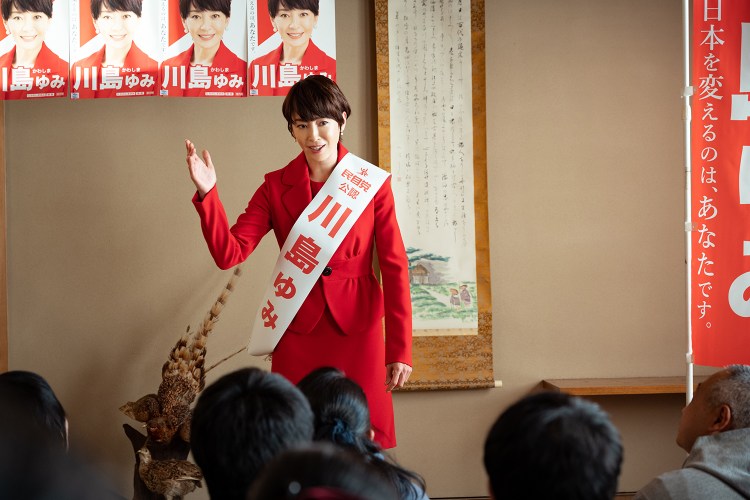
  • The Sunday Runoff – comedy drama starring Rie Miyazawa as a politician’s daughter who decides to run for her father’s seat when he passes away suddenly in office.
  • Talking The Pictures – an aspiring benshi finds himself dealing with issues of crime and authenticity in Masayuki Suo’s heartfelt tribute to the not so silent movies. Review.
  • They Say Nothing Stays The Same – an ageing boatman finds himself adrift on the great river of time in Joe Odagiri’s exquisitely shot, ethereal meditation on transience and goodness. Review.
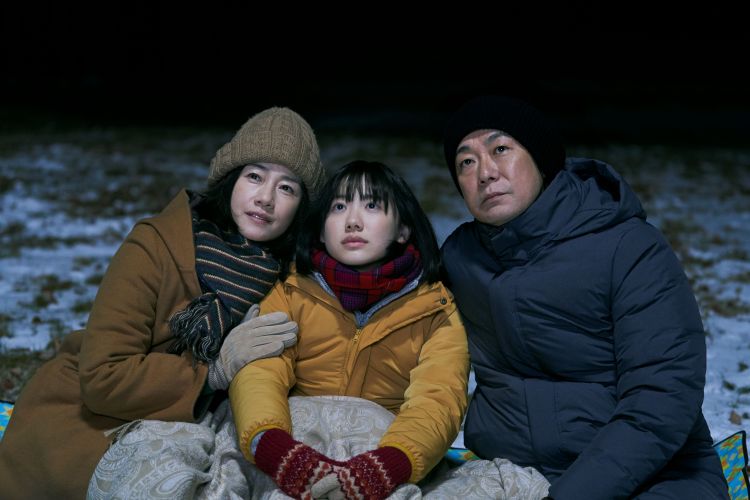
  • Under The Stars – latest drama from Tatsushi Omori starring Masatoshi Nagase and Tomoyo Harada as parents who enrol in a mysterious cult when holy water cures their daughter’s eczema.
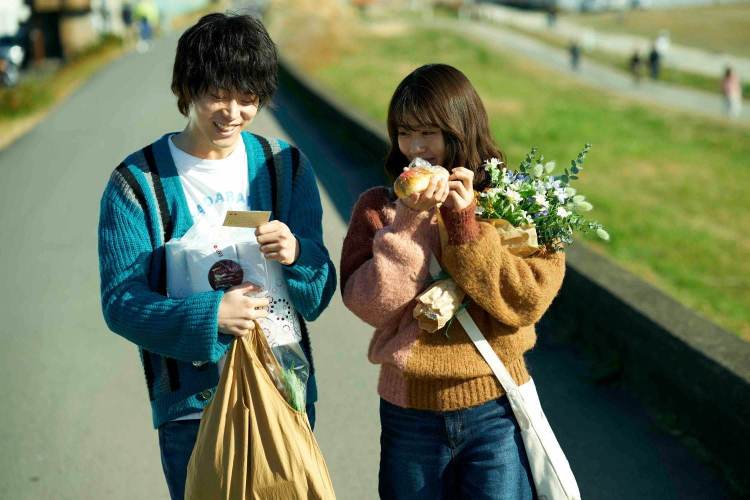
  • We Made A Beautiful Bouquet – romantic drama from Nobuhiro Doi (Flying Colors) starring Masaki Suda and Kasumi Arimura as a young couple who meet after missing the last train home.
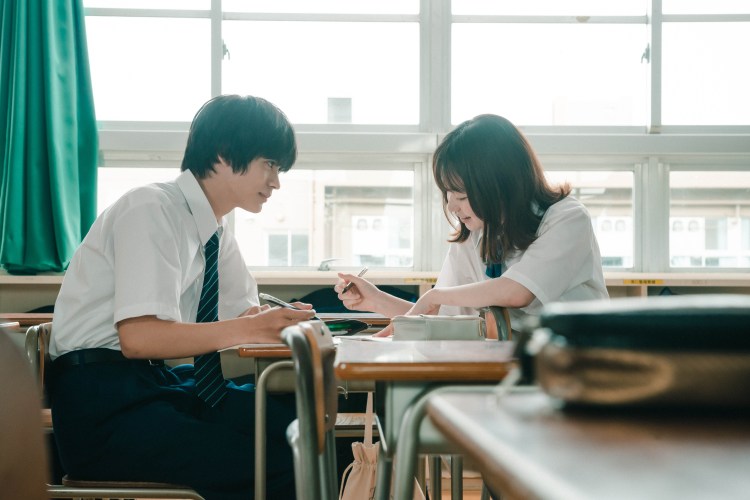
  • What She Likes… – high school drama in which a young man who feels unable to be open about his sexuality bonds with a young woman who is heavily into BL literature.
  • Wheel Of Fortune And Fantasy – a series of chance meetings and a healthy dose of fantasy lead a collection of wounded souls towards a kind of liberation in Ryusuke Hamaguchi’s whimsical triptych. Review.

Nippon Animation

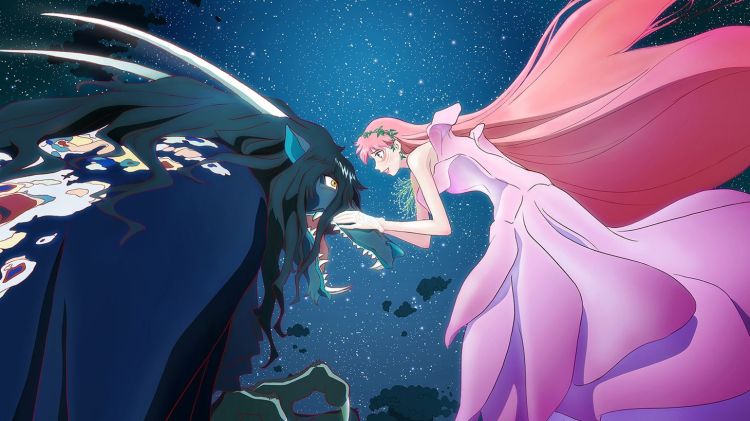
  • Belle – Mamoru Hosoda reinterprets Beauty and the Beast as a grieving young woman becomes an in-app idol star but is also threatened by the presence of a mysterious dragon. Screening in Japanese with German subtitles only.
  • Dozens Of Norths – feature animation by Koji Yamamura.
  • Inu-Oh – a blind Biwa player and a cursed young man exorcise the spirits of the Heike through musical expression in Masaaki Yuasa’s stunning prog rock anime. Review.
  • Millennium Actress – Satoshi Kon’s 2001 feature voyaging through Japanese cinema history through the eyes of a golden age actress.
  • My Neighbor Totoro – Hayao Mizayaki’s 1988 classic in which two sisters befriend a mystical forest creature after moving to the country. Screening in German..
  • Sing A Bit Of Harmony – a mysterious transfer student quickly becomes popular but has a hidden secret.

Nippon Visions

  • Angry Son – a resentful young man comes to a better understanding of his place in the world while searching for his estranged father in Kasho Iizuka’s sensitive coming-of-age drama. Review.
  • Backlight – LGBTQ+ drama set in Onomichi in the 1970s in which a student brings home a friend from university.
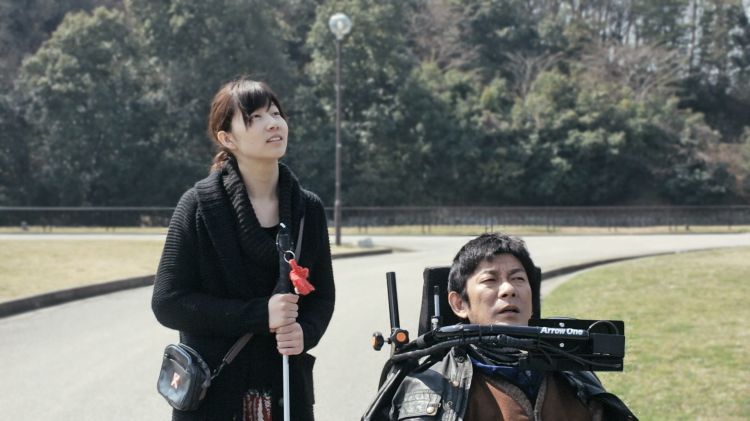
  • Just The Two Of Us – a man paralysed from the neck down and the blind woman who cares for him find themselves struggling against the prejudices of an ableist society in Keita Fujimoto’s empathetic social drama. Review.
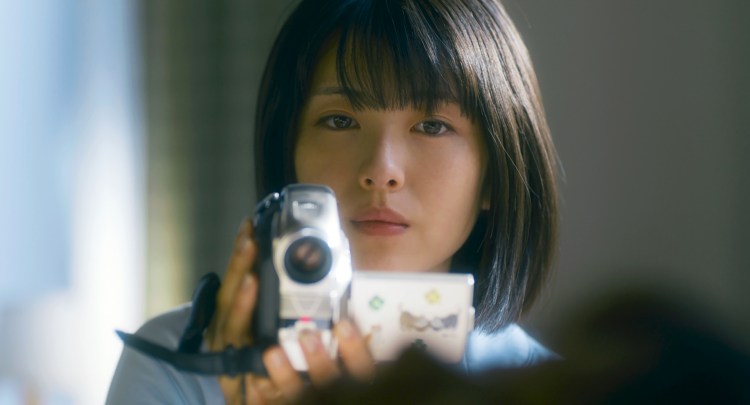
  • Let Me Hear It Barefoot – LGBTQ+ drama in which two men bond while recording sound tapes for a blind woman who longs to travel the world.
  • Melting Sounds – displaced youngsters begin to find a new sense of place thanks to a warmhearted young woman and an old man’s ambient sound obsession in Kahori Higashi’s quirky drama. Review.
  • Mr. Suzuki -A Man In God’s Country- – near future tale in which an umarried 44-year-old woman attempts to find a partner in order to escape being drafted to solve the declining birth rate.
  • Ninja Girl – an ordinary young woman gains the courage to stand up to injustice after discovering her ninja heritage in Yu Irie’s absurdist political satire. Review.
  • One Day, You Will Reach The Sea – powerful drama from Ryutaro Nakagawa in which a young woman struggles to come to terms with the loss of a friend who went missing in the 2011 tsunami. 
  • Pure Japanese – action drama from Daishi Matsunaga in which an action star takes it upon himself to protect a young girl.
  • Ring Wandering – drama revolving around a manga artist planning a series about wolves.
  • Song of a Dying Summer – melancholy summer youth drama.
  • Unlock Your Heart – teen romantic drama in which a high school girl befriends her crush’s girlfriend.

Nippon Docs

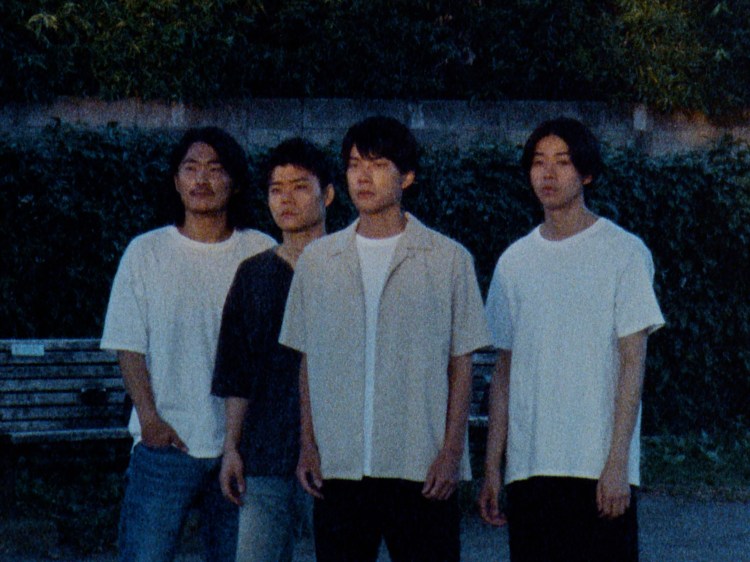
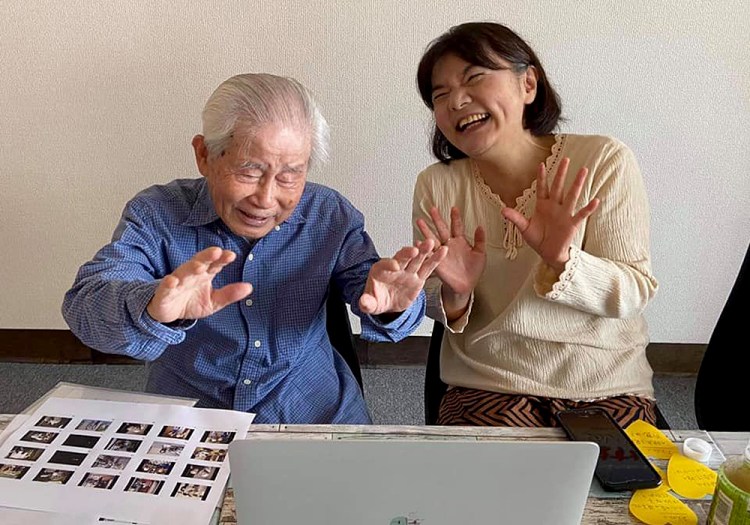
  • Double Layered Town / Making A Song To Replace Our Positions – four young travellers relate the stories of the 2011 earthquake and tsunami in verbatim stage performances running concurrently with a fictional narrative set in 2031.
  • I Go Gaga, Welcome Home Mom – Naoko Nobutomo’s follow up to I Go Gaga.
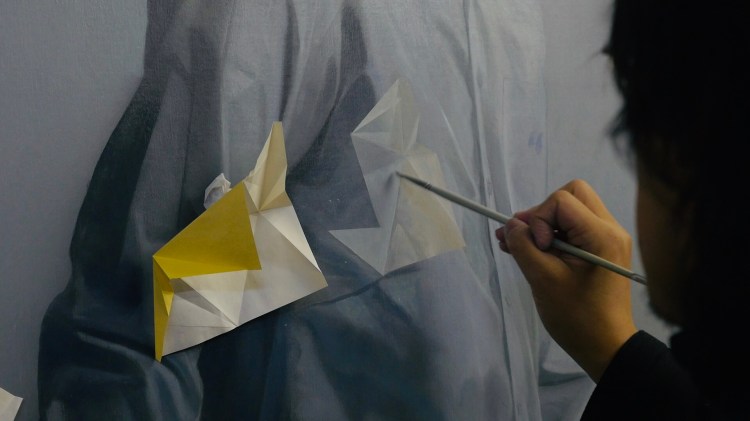
  • Origami – documentary following artist Atsushi Suwa as he creates a portrait of a deceased young man.
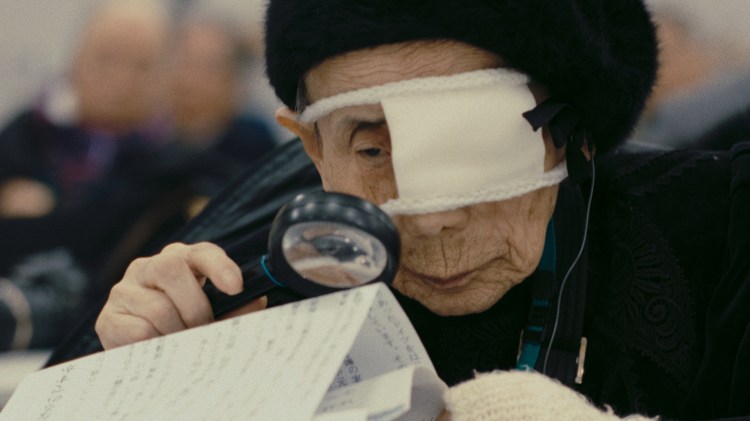
  • Paper City – documentary following three survivors of the fire bombing of Tokyo as they attempt leave a record of the wartime tragedy.
  • Salaryman – documentary exploring the mythos behind the salaryman.
  • Satoshi Kon, The Illusionist – Pascal-Alex Vincent paints an enigmatic picture of the late Perfect Blue director.
  • Target – documentary focussing on the life of Takashi Uemura who wrote the article in the Asahi Shimbun about wartime sex slavery later branded a fabrication by conservative commentators.
  • Tokyo Kurds – documentary exploring the lives of young Kurdish refugees in Japan.


Nippon Retro


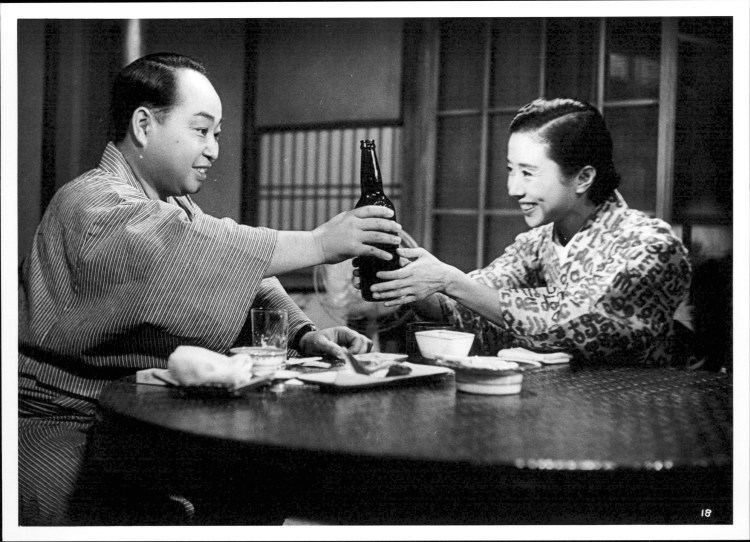
  • The Approach Of Autumn – 1960 Mikio Naruse drama in which a little boy moves to Tokyo with his mother after his father’s death.
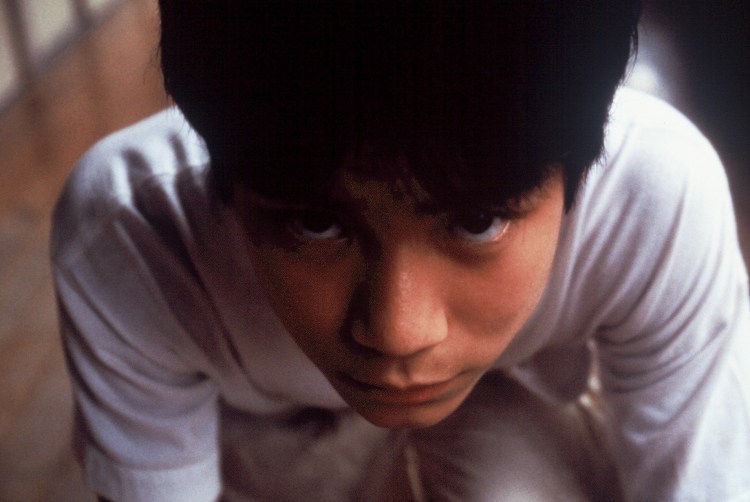
  • Canary – post-Aum drama from Akihiko Shiota in which a young boy raised in a cult bonds with a girl seeking escape from an abusive home.
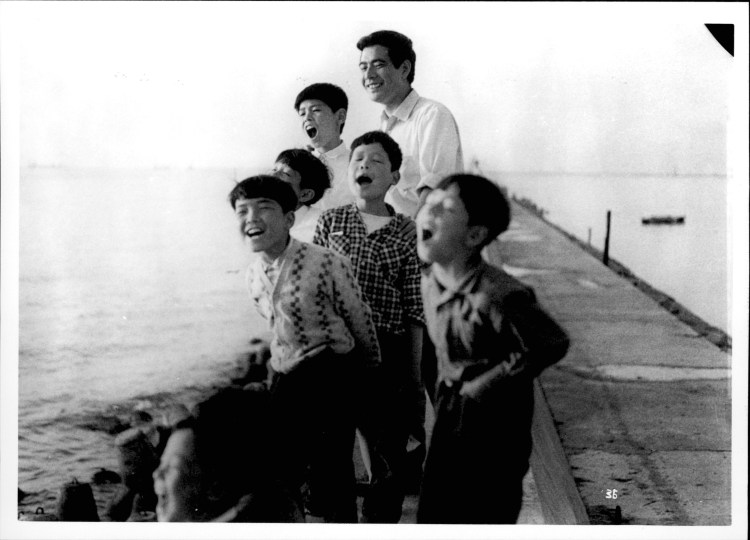
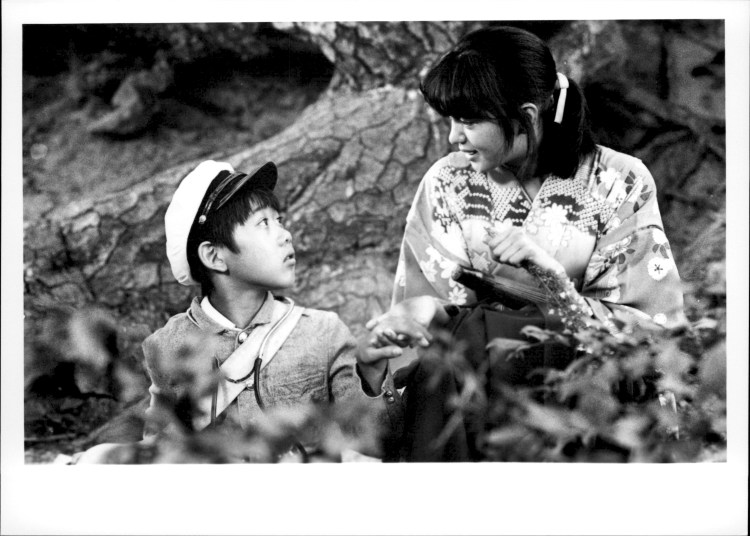
  • Children Hand in Hand – Susumi Hani’s remake of the 1948 film by Hiroshi Inagaki in which a group of schoolboys learn to mediate their friendship.
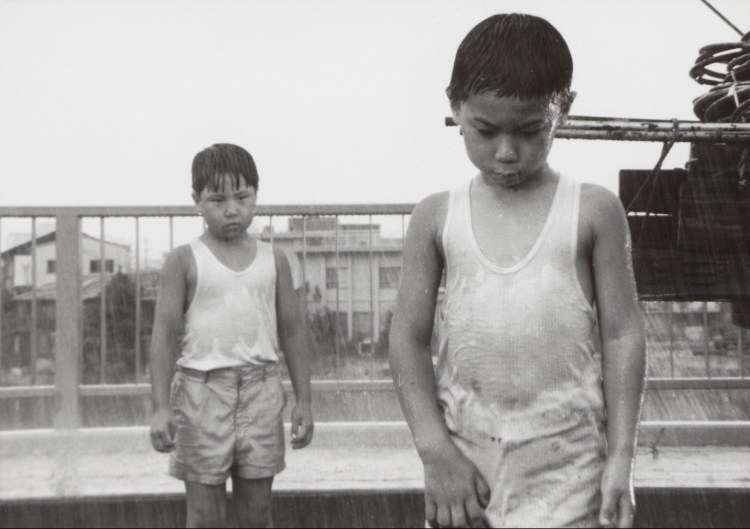
  • Muddy River – the innocent friendship between two boys is disrupted by the post-war reality in Kohei Oguri’s quietly devastating 1981 drama. Review.
  • Pastoral Hide And Seek – 1974 avant-garde autobiographical drama from Shuji Terayama.
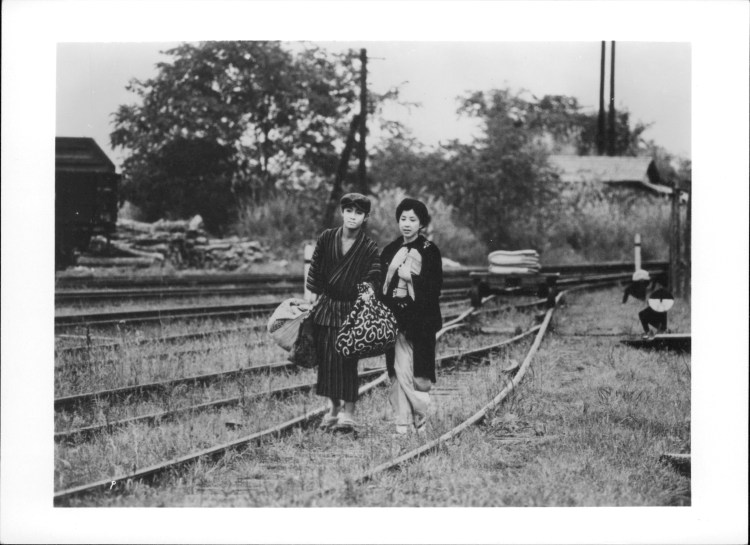
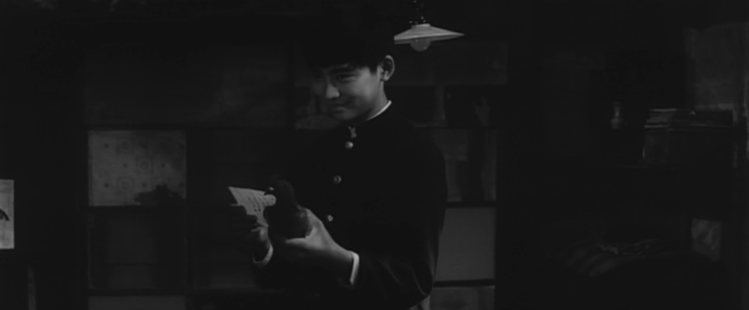
  • A Town Of Love And Hope – a young man’s pigeon selling scam eventually ruins his cross-class friendship with a wealthy young woman in Nagisa Oshima’s biting sociopolitical drama. Review.
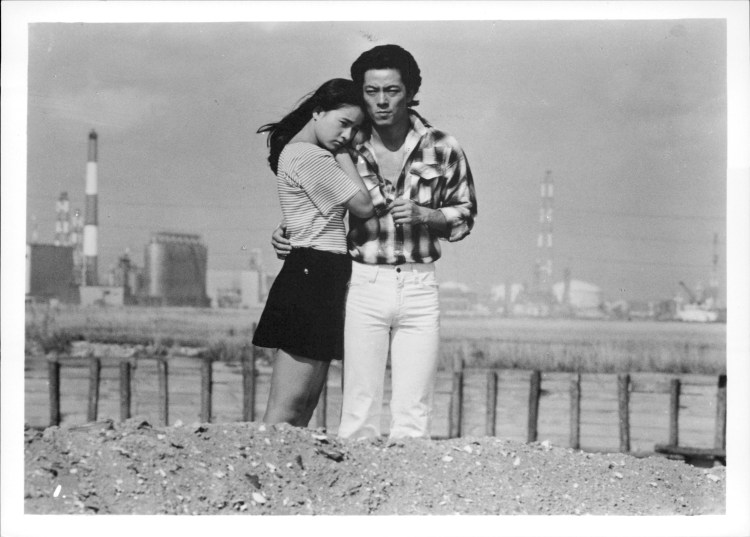
  • The Young And Wild – 1986 childhood drama from Nobuhiko Obayashi in which a young boy falls in love with an older woman soon to be sold into sex work.
  • Young Murderer – 1976 ATG drama in which a young man murders his father in a dispute over his girlfriend.

Nippon Connection takes place in Frankfurt, Germany from 24th – 29th May. Tickets are available from 7th May via the official website where you’ll shortly be able to find full details on all the films as well as timetabling information. A limited selection of films will also be available to stream online 30th May to 6th June (the full lineup will be revealed May 29). Unless otherwise stated, films screen in Japanese with English subtitles. You can keep up with all the latest information by following the festival on FacebookTwitterYouTubeFlickr, and Instagram.

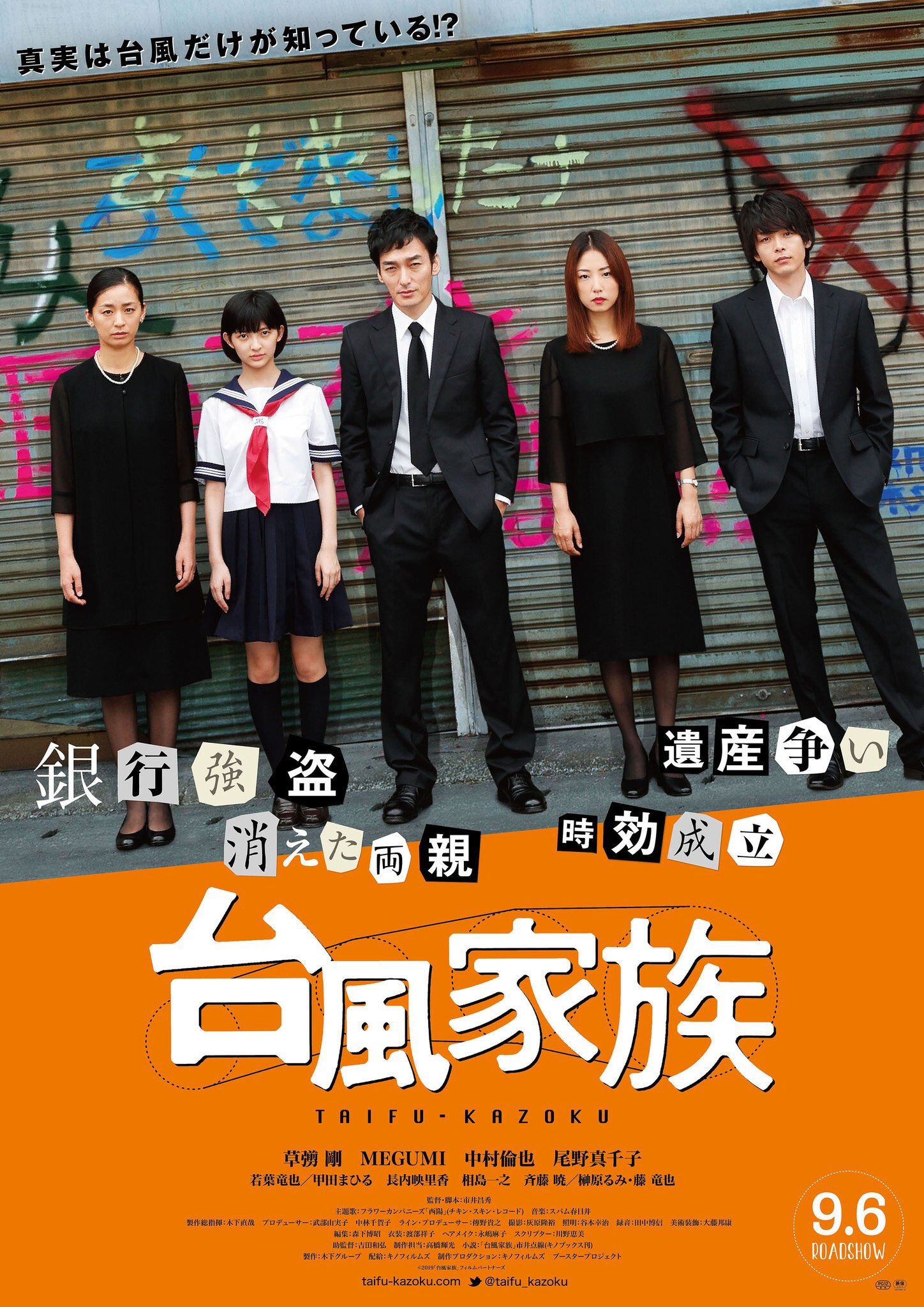
The Stormy Family (台風家族, Masahide Ichii, 2019)

A disparate group of now middle-aged children orphaned by the storm of their parents’ abandonment struggle to find solidarity on reuniting to put the past to rest, but eventually come to an understanding in letting go in Masahide Ichii’s darkly comic tale of familial resentments, The Stormy Family (台風家族, Taifu Kazoku, AKA Typhoon Family). Battling not just a sense of betrayal, but intense resentment in being left to deal with the fallout of a corrupted parental legacy the kids squabble over their “inheritance” but later perhaps regain a sense of mutual connection in reclaiming their shared history. 

10 years previously, Ittetsu (Tatsuya Fuji) and his wife Mitsuko (Rumi Sakakibara) robbed a local bank and then apparently made a run for it in the family hearse. With the statute of limitations now expired, the children decide to hold a funeral having had their parents declared dead so they can divide the estate and presumably draw a line under their shared trauma. The problem is, partly, that they’re hurt believing that their parents committed a crime and then simply abandoned them, but they have each also had to deal with the stigma of being the children of the elderly bandits who robbed a bank with a hearse. Oldest son Kotetsu (Tsuyoshi Kusanagi) lost his job, daughter Rena’s (Megumi) marriage broke down, and while middle son Kyo (Hirofumi Arai) does not particularly mention how the crisis affected him, youngest brother Chihiro (Tomoya Nakamura) who was a teenager at the time remains resentful that as he only had a part-time job anyway no one from the media was very much interested in hassling him. 

Rather than finding siblings’ solidarity in their shared trauma, the crisis only seems to have driven them further apart. If perhaps slightly ashamed, they freely admit that they’ve only come to sort out the inheritance but even this leads to another argument as Kotetsu tries to use his oldest son privileges to claim he’s entitled to an unequal share because the others all went to uni on the parents’ dime, complaining that he needs the money more because he’s been unable to hold down a steady job and has to pay for his teenage daughter Yuzuki’s (Mahiru Coda) education, hoping to send her to music conservatoire in Vienna. As expected, that doesn’t go down very well with everyone else, while even Yuzuki expresses disdain and exasperation for her father’s amoral venality, telling him to get back on his feet with honest work rather than trying to cheat his siblings out of their birthright. In this, however, the family largely agree he might not be so different from patriarch Ittetsu who despite his motto of “don’t bother others” often penny pinched to an extreme degree and even seemed inappropriately happy to receive new business considering he ran a funeral parlour. 

On closer investigation of their parents’ home, what the kids learn is that there were things they didn’t understand perhaps because Ittetsu didn’t want to “bother” them with an explanation, though as someone else points out family aren’t “others” and probably it should be alright to bother them. Having argued with his father when he left to pursue his dream of being an actor, Kotetsu eventually sacrificed his desires recommitting himself to making his daughter’s dreams come true instead but like Ittetsu struggles to find a way to support her emotionally. Ittetsu may have been a difficult, perhaps less than honest, man but in learning the truth the family begin to realise that his actions came from a deep place of love even if it was a love he was unable to show on the surface. 

In an extremely ironic twist, the funeral and a climactic storm eventually allow the siblings to let their parents go, forgiving them for the fallout from their crime but also for their abandonment and all the petty resentments of their childhood. The world may be a pretty dishonest place, filled with greedy monks, telephone fraudsters, schemers and thieves, and perhaps you can’t even really trust your family but a father’s love is apparently the one true thing though it might not always be easy to understand. A darkly comic take on dysfunctional family bonds and the radiating legacy of crime, The Stormy Family gradually creeps towards its macabre but surprisingly moving finale allowing the family to rediscover itself in letting go only to set them at odds once again with the corrupting influence of greed. 


The Stormy Family streamed as part of this year’s Nippon Connection.

Original trailer (no subtitles)

Images: ©2019 “The Stormy Family” FILM PARTNERS

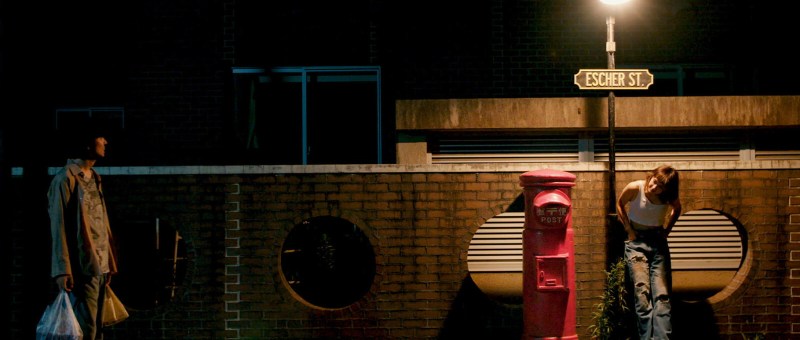
Red Post on Escher Street (エッシャー通りの赤いポスト, Sion Sono, 2020)

“Freedom is disappearing from our world. Everyone rise up!” screams an accidental revolutionary having achieved a kind of self-actualisation in wresting the leading role not only in the film within the film but in the film itself in an act of characteristically meta Sion Sono playfulness. Harking back to the earlier days of his more recently prolific career, Red Post on Escher Street (エッシャー通りの赤いポスト, Escher dori no akai post) is perhaps a thinly veiled though affectionate attack on the mainstream Japanese cinema industry, a defence not only of “jishu eiga” but a “jishu” life in the meditation that a crowd is composed of many faces in which we are all simultanteously extra and protagonist.

In a sense perhaps Sono’s stand-in, the director at the film’s centre, Tadashi Kobayashi (Tatsuhiro Yamaoka), is a festival darling who made his name with a series of critically acclaimed independent films but has since been dragged towards the mainstream while forced into a moment of reconsideration following the sudden death of his muse and lover. Kobayashi’s ambition is to produce another DIY film of the kind that first sparked his creative awakening, but it’s clear from the get go that his desires and those of his backers to not exactly match. Middle man producer Muto (Taro Suwa), sporting a sling and broken leg after being beaten up by the jealous boyfriend of a starlet he’d been “seeing”, is under strict instructions to ensure Kobayashi casts names and most particularly the series of names the studio want. To convince him, they go so far as to have the established “stars” (seemingly more personalities than actresses) join the open auditions at which the director hoped to find fresh faces, hoping he can be persuaded to cast them instead. The irony is that the studio want Kobayashi’s festival kudos, but at the same time deny him the freedom to make the kind of films that will appeal to the international circuit, the director frequently complaining the producers keep mangling his script with their unhelpful notes. 

A handsome young man, Kobayashi has also inspired cult-like devotion among fans including a decidedly strange group of devotees branding themselves the “Kobayashi True Love Club” who each wear Edwardian-style white lace dresses and straw hats while singing a folksong everywhere they go. Nevertheless, most of the hopefuls are ordinary young women with an interest in performing or merely for becoming famous. Their stories are the story, a series of universes spinning off from the central spine from a troupe kimono’d actresses performing a play about female gamblers, to a young widow taking on the mission of making her late husband’s acting dreams come true, and a very intense woman with an extremely traumatic past. The audition speech finds each of the hopefuls vowing to drag their true love back from “the crowd” into which he fears he is dissolving, only for them later to save themselves by removing their “masks” to reclaim their individual identity and agency as protagonists in their own lives rather than passively accept their relegation to the role of extra.

Then again, there are those who wilfully embrace the label such as a faintly ridiculous old man who commands near cult-like adoration from his disciples of professional supernumeraries for his ability to hog the screen even if his less than naturalistic acting is at best a distraction from the main action. Without extras, he points out, the screen would become a lonely place, lacking in life and energy though he at least seems to be content to occupy a liminal space never desiring the leading role but seizing his 15 seconds of fame as a prominent bystander. Others however are not, determined to elbow aside the vacuous leading players and reclaim their space. Subtly critiquing the seamier ends of the industry from the lecherous producers who always seem to be draped with a young woman eager for fame and fortune, to the machinations of star makers and manipulations of talentless celebrities, the film makes an argument for sidestepping an infinitely corrupt system in suggesting the jishu way is inherently purer but nevertheless ends on a note of irony as its defiant act of guerrilla filmmaking is abruptly shutdown by the gloved hand of state authority. 


Red Post on Escher Street streamed as part of this year’s Nippon Connection.

Original trailer (English subtitles)

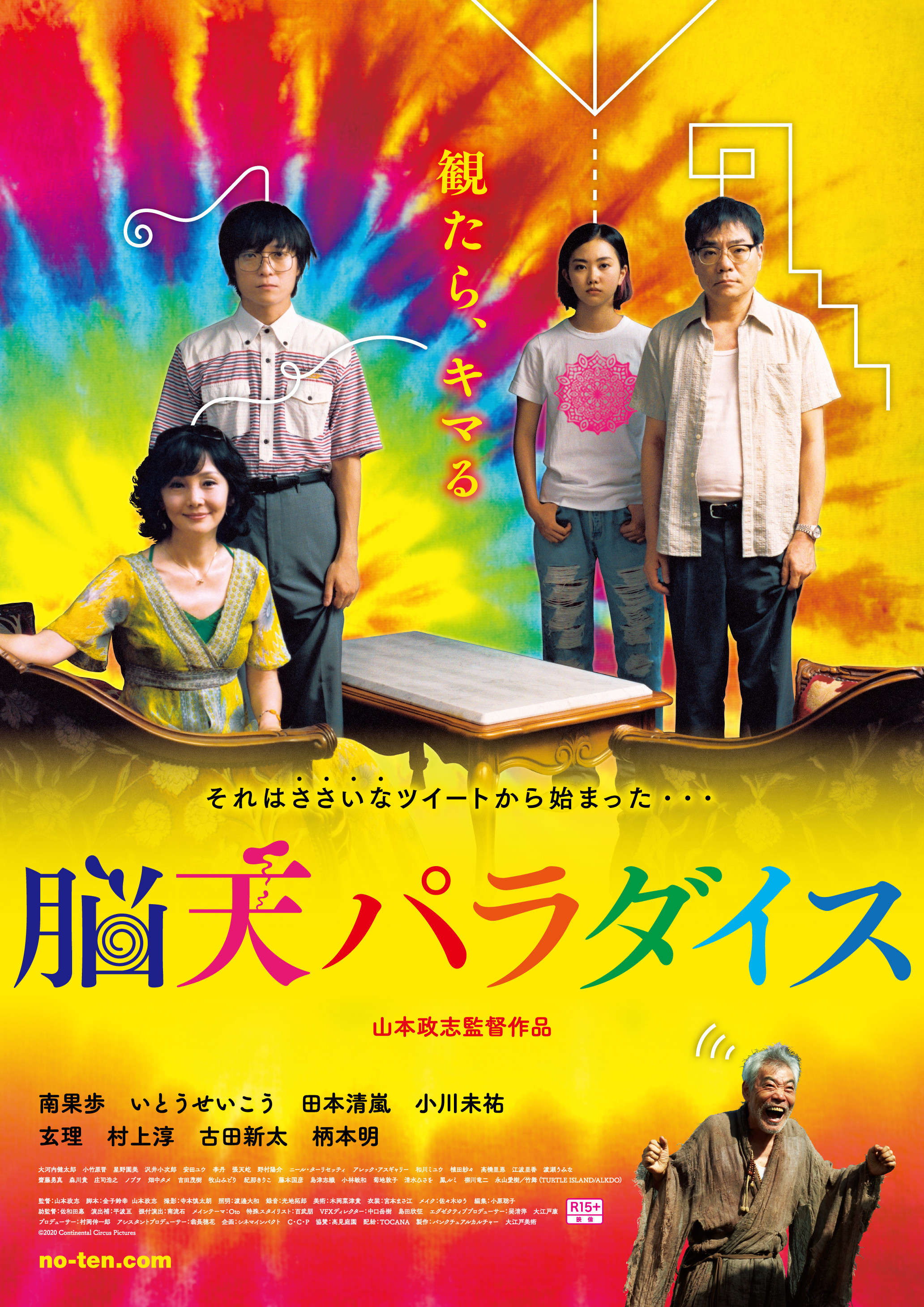
Wonderful Paradise (脳天パラダイス, Masashi Yamamoto, 2020)

A moribund Tokyo mansion becomes the scene for an orgy of life, death, love, and rebirth in Masashi Yamamoto’s surrealist party movie Wonderful Paradise (脳天パラダイス, Noten Paradise). Sometimes you have to learn to say goodbye and move on, other times you have to learn to forgive and let go of past resentment. Of course, sometimes you have to do both of those things at the same time, which is perhaps appropriate for the former home of the Sasayas which seems to exist between the realms of life and death, a perpetual Bon festival where departed spirits and lost souls congregate for one almighty party. 

Dad Shuji (Seiko Ito) has had a run of bad luck and unfortunately lost the family home he inherited from his parents meaning he and his two adult children, son Yuta (Soran Tamoto) and daughter Akane (Mayu Ozawa), are having to move on though who knows where to. Resentful that she’s having her life uprooted by her father’s fecklessness, Akane takes to social media and Tweets that there’s a party at hers and everyone’s invited as kind of goodbye to the house. Meanwhile, a series of strange events occur from a weird old monk (Akira Emoto) who keeps trying to pray to the various neoclassical statues on the property going nuts at a belligerent removal man and then apparently dropping dead, to the resurfacing of mother Akiko (Kaho Minami) who apparently left the family some years previously for a man who ran a coffee shop but has since passed away. 

The first people to arrive for the party are a gay couple looking for somewhere to celebrate their marriage, a minor irony in that the event will later descend into an elaborate funeral for two people who may or may not be dead. As more and more guests arrive, along with a series of opportunistic commercial food stands and other businesses, the party begins to get out of hand becoming ever stranger as the night wears on. 

At the heart of it all are the tensions in the family, an unresolved resentment directed at son Yuta who is, according to his brash aunt Yuka (Sonomi Hoshino), overly preoccupied with his family circumstances to the extent that it prevents him from getting a regular job and moving on with his life. Shuji has quite clearly failed both as a son and as a father, eventually betting one of his dad’s precious antiques in a card game run by yakuza loansharks setting up shop in the house. Akane appears exasperated, but is also harbouring an intense resentment towards Akiko for her abandonment that prevents her being able to “move on” from her former family home. 

Moving on is also a problem for a few of the ghosts, the line between the living and the dead becoming increasingly blurred. One random surreal moment to the next, Yamamoto careers between absurdist episodes culminating in a fight between a murderous sentient coffee bean and a statue come to life. What began as a lowkey wedding eventually becomes a bizarre funeral enacted through the medium of Bollywood song and dance transitioning into a traditional enka festival number all of which happens before a couple of hapless crooks who’ve been operating a drug factory on the family’s property for the last two years without them ever knowing turn up with their “super mandala drug of paradise” to send the evening in a psychedelic direction. 

Yet for all the surreality of death, violence, sex, and rebirth when dawn arrives it brings with it a kind of calm brokering a new peace between friends and family members as they learn to accept each other and the past in an unburdened sense of openness. Possibly deceased monks, talking cats, kids who can’t figure out how to stop swinging and mysteriously turn themselves into sticks or dissolve in bath water, scorned lovers, unrepentant thieves, ghosts and family secrets descend on this weird gothic mansion in the middle of a city, creating a “wonderful paradise” for one night only filled with surrealist magic and unforgettable strangeness that nevertheless pushes the family back together through dream logic and a taste of the absurd. A weird, sometimes incomprehensible, journey into an etherial, psychedelic twilight psychodrama rave, Yamamoto’s charmingly bizarre nighttime odyssey is a law unto itself but one filled with wonder for the uncanniness of the everyday. 


Wonderful Paradise streamed as part of this year’s Nippon Connection.

Original trailer (English subtitles)

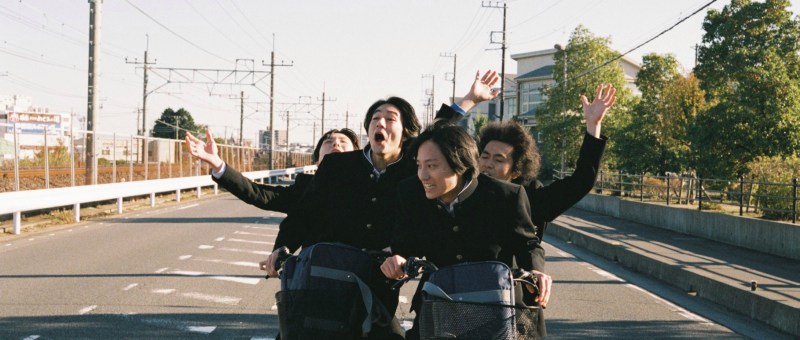
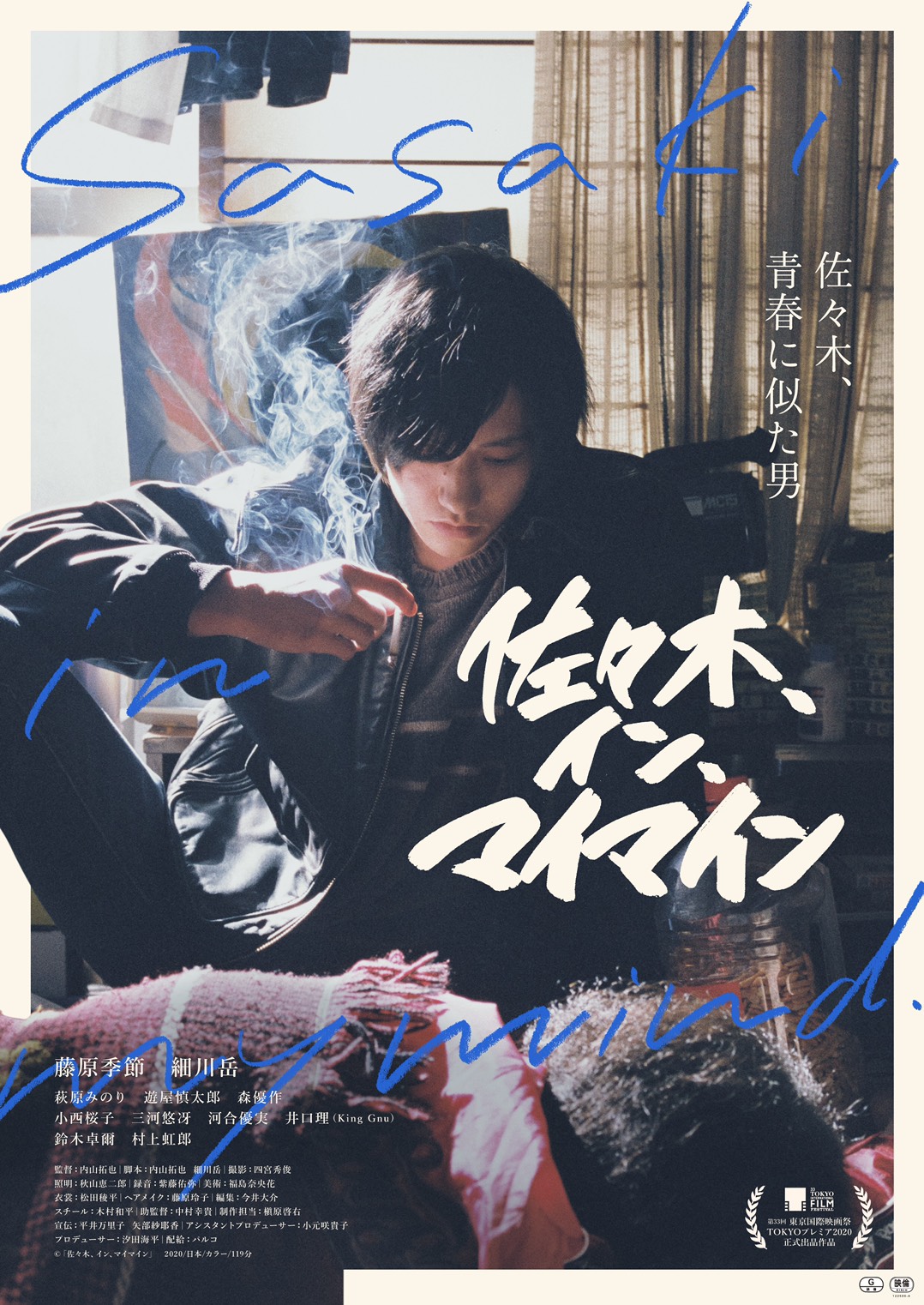
Sasaki in My Mind (佐々木、イン、マイマイン, Takuya Uchiyama, 2020)

A young man is forced to confront his quarter life malaise when presented with unexpected tragedy in Takuya Uchiyama’s heartfelt youth movie, Sasaki in My Mind (佐々木、イン、マイマイン). A study in inertia, Uchiyama’s moody drama finds its melancholy hero defeated by life, looking back to more hopeful high school days and the larger than life friend he has, by his own admission, failed convinced by his own rather solipsistic sense of personal inadequacy that he lacked the capacity to save him. 

An aspiring actor, Yuji (Kisetsu Fujiwara) lives in a small apartment with his ex-girlfriend (Minori Hagiwara) and makes ends meet with a factory job he seems to be embarrassed by. Approached by an actor friend (Nijiro Murakami) apparently doing a little a better with a series of bit parts in TV shows and commercials, Yuji is reluctant to take him up on his offer of a part in a play, while an accidental meeting with an old high school friend, Tada (Yuya Shintaro), pushes him into a defensive mindset after he’s rightly called on his passivity. “Watching life go by in terror” as his character in the play eventually puts it, Yuji is so defeated by life that it has rendered him entirely listless. Ironically taking up boxing, he gets into a random fight with a customer from the the next table at an izakaya, insisting that he doesn’t want to lose but otherwise refusing to fight for anything even the girlfriend he apparently still loves whose refusal to move on perhaps hints at the desire to be given a reason not to. 

His meeting with Tada, now a moderately successful, married salaryman, reminds him of his high school friend, Sasaki (Gaku Hosokawa), a larger than life character who used to strip impromptu and dance in the nude when greeted by chants of his name. It was Sasaki who first convinced him to become an actor as they watched Kirk Douglas in Champion on TV, though after graduation and a move to Tokyo Yuji made no real effort to keep in touch with his friend seeing him only once and discovering he had become a lonely pachinko player equally consumed by a sense of personal hopelessness. As Sasaki once put it, elephants communicate with each other through low frequency sound imperceptible to humans, his own quiet distress call apparently missed by his old friends who perhaps tired of his outlandishness as they outgrew their teenage selves and became bogged down in their own lives leaving him behind as they strove forward alone. 

Left behind is something which Yuji cannot help but feel, further deepening his sense of personal failure in having achieved not much of anything in his Tokyo life. Sasaki aside, his high school friends, Tada and Kimura (Yusaku Mori), have each shifted into a conventional adulthood with regular salaryman jobs, homes, wives, and even children. He didn’t go to his last high school reunion, probably as Tada seems to have realised out of a sense of shame, for the same reason avoiding contact with his old friends while living in an awkward limbo with the ex who apparently grew bored with his lack of drive and continuing air of defeated ennui. Despite his own insecurity, Sasaki had encouraged him to live his life, assuring him that he’s got this, but when it came to it Yuji failed to do the same abandoning him in their old home town as a relic of the past he can’t quite accept. 

Admitting as much to his theatre director, Yuji is once again told to shine in his own spotlight and that lonely people aren’t necessarily lonely because they’re alone. Everyone keeps telling him to grow up, act like an adult, but Yuji doesn’t seem to know how hung up on high school immaturity and reflecting only too late that perhaps they never really understood their friend and in the end they simply left him behind. Only a confrontation with finality pushes him towards a break with his sense of inertia, acknowledging that what he feared was letting go and the eventual forgetting that comes with loss but the “world is rushing forward. We have to keep up”. Sasaki remains for him at least in his mind as he always was, the first of many goodbyes in an “empty elegy” that eventually becomes one’s own. A touching tale of quarter life crisis, Uchiyama’s moving drama eventually pushes its static hero towards an acceptance of his moral cowardice but finally gives him the courage to move forward taking his memories with him into a freer future. 


Sasaki in My Mind streamed as part of this year’s Nippon Connection.

Original trailer (no subtitles)

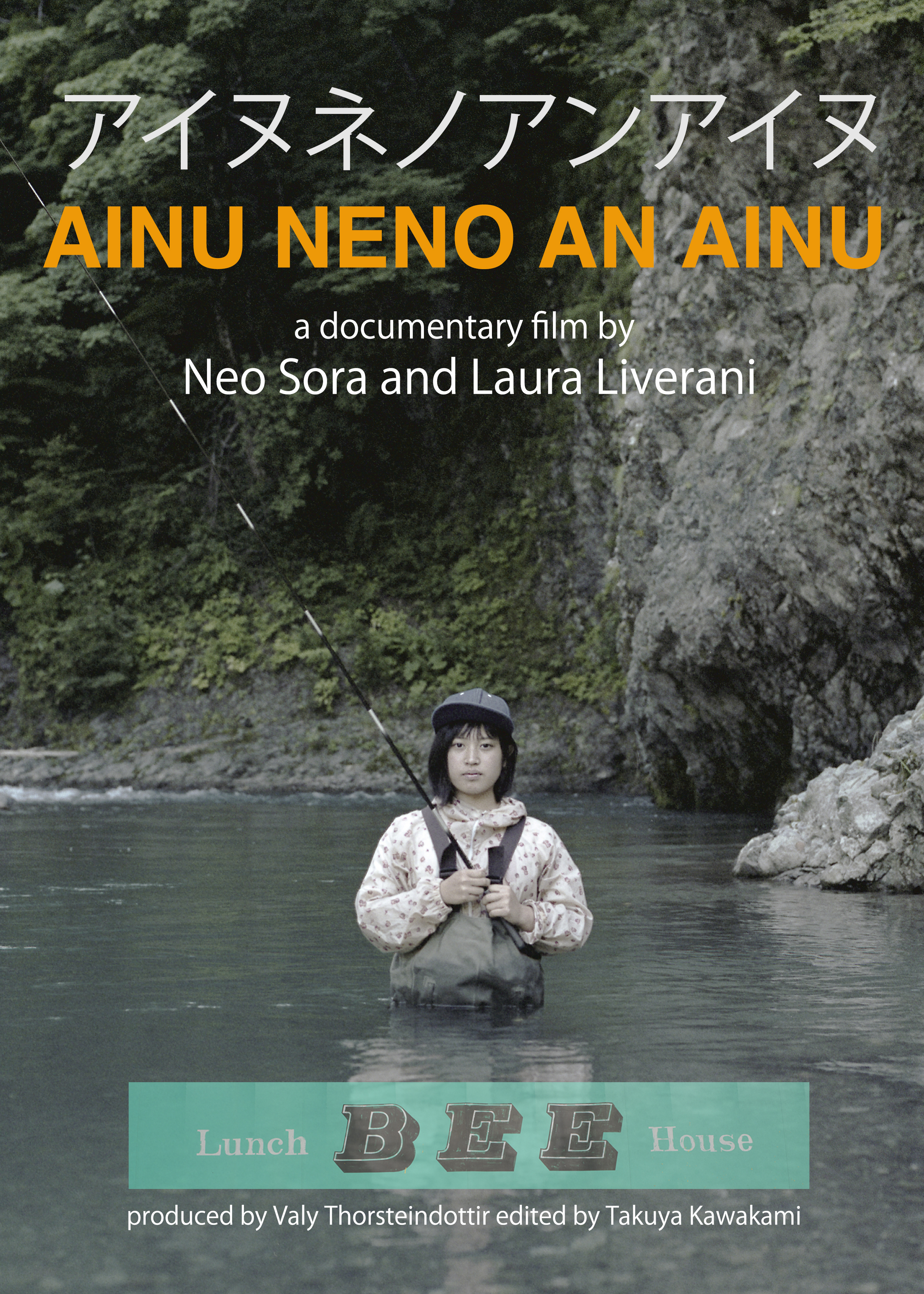
Ainu Neno An Ainu (アイヌネノアンアイヌ, Neo Sora & Laura Liverani, 2021)

Japanese society often presents itself as homogenous claiming a harmony born of a universal culture to which all subscribe, but in reality has sometimes sought to exclude or assimilate those it regards as different such as the still continuing prejudice against the burakumin underclass and towards the indigenous people of Hokkaido, the Ainu, who were only officially recognised by the Japanese government in 2008. Laura Liverani & Neo Sora’s documentary Ainu Neno An Ainu (アイヌネノアンアイヌ, lit. humanlike human) explores the realities of what it means to be Ainu in contemporary Japan as the community strives to recover and preserve its traditional culture in the face of increasing modernity. 

Japan annexed Hokkaido during the Meiji era largely through settler colonialism, later determining to “develop” the island which entailed confiscating Ainu lands along with banning their language and traditional practices such as tattooing in an act of forced assimilation. Many of the participants in the documentary have the same name but this is not necessarily because they are related as one explains, the entire town was in fact given the same surname inspired by the name of their settlement translated into Japanese when assimilated as Japanese citizens. While some aspects of traditional culture survived, many of the older residents lament that their parents preferred not to teach them the Ainu language in fear of social discrimination, something which is repeatedly cited by many as a reason some prefer not to disclose their Ainu identity after leaving for the cities. 

Nevertheless, some younger people are eagerly attempting to reclaim and preserve the Ainu language which is entirely oral and has no writing system. The main protagonist of the documentary, Maya, opens the film by teaching a traditional lullaby to a class of students later revealing that her father Kenji, who was not born Ainu, taught himself the language and has become passionate about passing it on. Language classes can also be heard on local radio while remnants of Ainu words pepper the local dialect even if many may not realise. Meanwhile, others relearn ancient lullabies not directly from their mothers but from archival tapes. 

Maya’s mother is also part of a stage performance showcasing traditional Ainu music for tourists from outside of the community, a Korean translator interpreting for a rapt audience each clutching pamphlets as they listen. A young man, Hibiki, who works for the Ainu museum admits that some feel ambivalent about the way they’ve chosen to commodify their culture in order to preserve it while others feel it’s a price worth paying in order to ensure that something at least survives. Some customs are perhaps harder to justify in the modern society such as the Iomante bear sacrifice which no longer takes place after successful campaigns by animal rights organisations. 

While some speak of divisions within the Ainu communities, others praise the local traditions of acceptance and hospitality in which it is normal to offer food, gifts, and shelter to others without expectation. Many who were not born Ainu have been accepted into the community, the Takanos for example who arrived from Tokyo in the 1960s and now run a store selling the Ainu handicrafts they have spent a lifetime learning, or Magi a transgender woman from Okinawa finding family and a place to belong among the Ainu. 

It is not in any case an either or situation, the local children cheerfully singing the theme from My Neighbour Totoro as they supervise the harvest as well as a Japanese folk song before they leave school for the day while at the end of the film introducing themselves in the Ainu language for a local radio host. Intended as a “family photo album” of the local community, an image which opens the film and recurs throughout in static captures of the various protagonists posed for a portrait, Ainu Neno An Ainu examines what it means to be a member of the Ainu community in the present society and uncovers with it a tremendous warmth and openness not only among the extended families as its centre but towards the wider society in the hope of preserving their culture through sharing it as widely as possible with all who wish to learn. 


Ainu Neno An Ainu streamed as part of this year’s Nippon Connection.

The photo project which sparked the documentary

Original trailer (English subtitles)

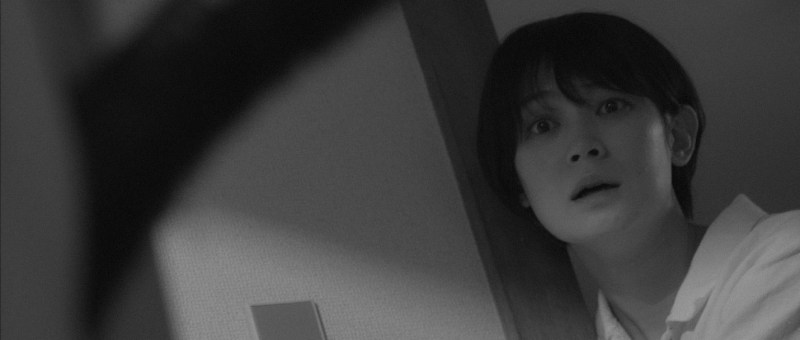
Extraneous Matter – Complete Edition (異物-完全版-, Kenichi Ugana, 2021)

If you suddenly encountered a weird, decidedly alien, octopus-like creature living in your wardrobe what would you do? Would it frighten or intrigue you, would you want to get rid of it as quickly as possible or look after it for the rest of your life? The presence of these strange creatures provokes different responses from each of the heroes of Kenichi Ugana’s Extraneous Matter – Complete Edition (異物-完全版-, Ibutsu – Kanzenban-), an expansion of his earlier short of the same title. Drawing inspiration from the early work of Shinya Tsukamoto, Ugana’s crisp, academy ratio black and white photography makes use of an ironic score mimicking classic Hollywood melodrama lending a mythic quality to this lowkey tale of alien sex fiend invasion and human loneliness. 

For Kaoru (Kaoru Koide), heroine of the first segment, the creature seems to signify her sexual frustration and sense of existential inertia. For her, every day is the same. She wakes up alone, makes herself a cup of coffee and eats a pastry in front of the television which always seems to be carrying news of a celebrity sex scandal, and then starts work with her friends (for some reason working at her apartment) who gossip about their various sugar daddies. Her boyfriend (Shunsuke Tanaka) apparently lives with her, but immediately disappears right after dinner and actively avoids intimacy. Were it not for later events, we might wonder if the creature is somehow a transformation of the boyfriend, Kaoru herself unsure whether it was a dream, first violated but then apparently satisfied by the alien tentacles which later begin satisfying all of her friends. 

If the “extraneous matter” of Kaoru’s life was indeed her unfulfilled desire and internalised shame, then for the barmaid (Momoka Ishida) of the second sequence it’s perhaps a lack of excitement while for the young man (Kaito Yoshimura) who brings a creature zipped into a holdall to a pub to meet his ex-girlfriend (Makoto Tanaka) it’s more a desire for familial intimacy or a sense of commitment that may previously have frightened him. He appears to want to get back together with the young woman, apologising for his past behaviour while explaining that he found the creature in his wardrobe scary to begin with but later became fond of it and is convinced he could raise it with her help, ordering a parfait to feed it because he’s discovered it has a sweet tooth and particularly likes strawberries. He swats the errant tentacles away as if shushing a naughty baby as the woman too begins to coo over it, shovelling cream from the parfait into its mouth with a spoon. 

But then, the extraneous matter of the lives of others can also present a challenge to the social order. Some wish to eliminate the alien threat, a young man working at a factory (Shuto Miyazak) charged with disposing of alien bodies eventually conflicted on discovering one alive sure that he can hear the creature begging him for help. Together with a like-minded colleague (Duncan) he determines to save it and help it return to its people, culminating in an unexpected ET moment which perhaps realigns the “alien” threat with a social other as the two compassionate employees evade the authorities to get the creature to safety despite having been betrayed by their female colleague (Mizuki Takanashi). 

So, what is the “extraneous matter” of our lives, a kind of loneliness, a sense of “alienation”, or of emptiness in an “absurd” world of infinite mundanity? Perhaps all of the above, Kaoru returning to her lonely life apparently missing the strange and unidentified creature only to re-encounter it in an unexpected place and discover it has not forgotten her. Gently ironic, Ugana’s sci-fi-inflected aesthetic begins with grim body horror before progressing into something warmer, for good or ill becoming fond of its alien invaders as compassionate humans refuse to reject them embracing in a sense these “extraneous” sides of themselves they may have previously found disturbing in search of more fulfilling lives. Elegantly composed in its classic academy ratio frame with its ironic bonsai pillow shots and continuing sense of unease, Extraneous Matter nevertheless ends on a note of hope rather than threat even as the invaders apparently lurk among us but bringing with them comfort even in the reflection of our unmet desires. 


Extraneous Matter – Complete Edition streamed as part of this year’s Nippon Connection.

Original trailer (English subtitles)