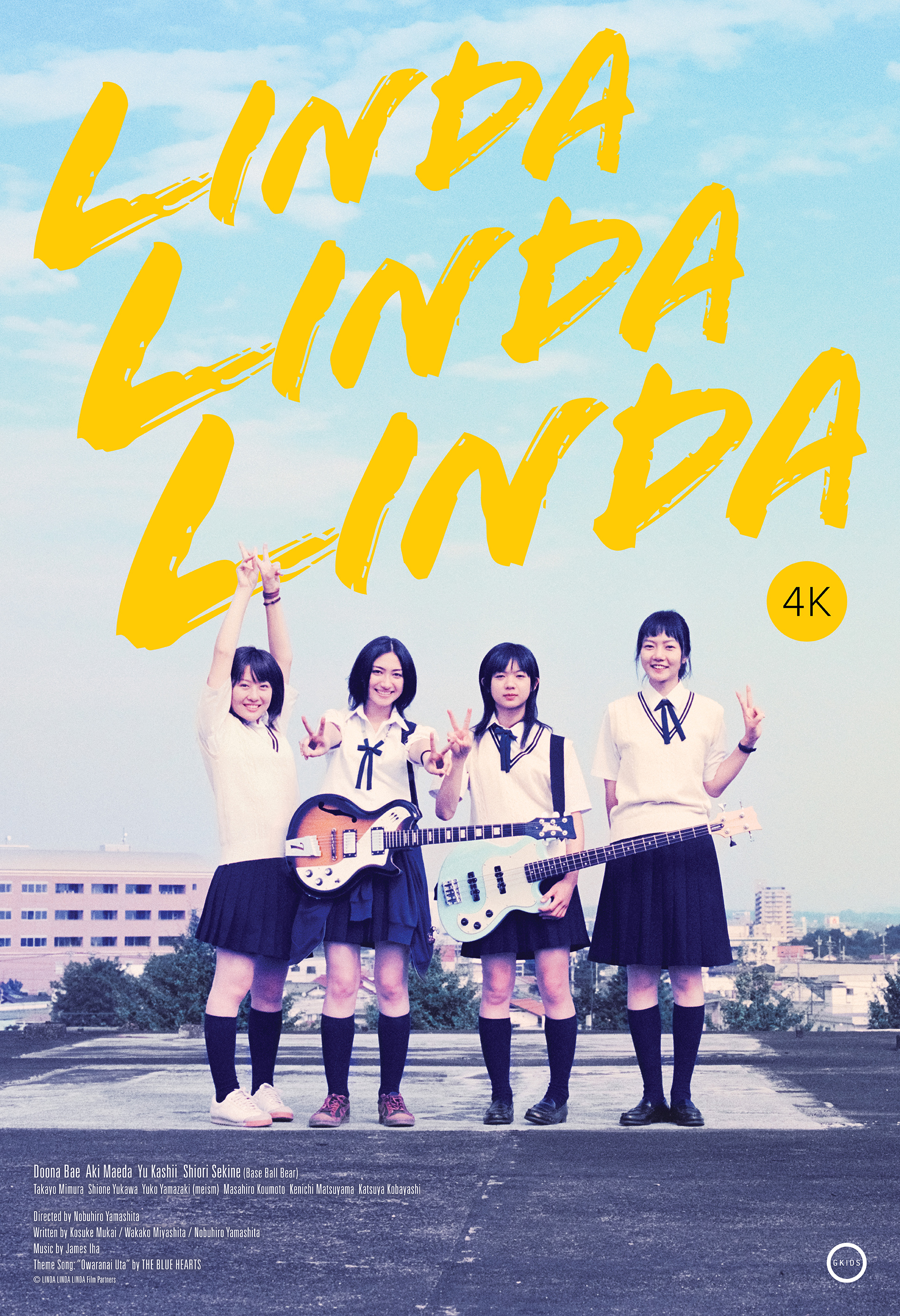
Linda Linda Linda (リンダ リンダ リンダ, Nobuhiro Yamashita, 2005)

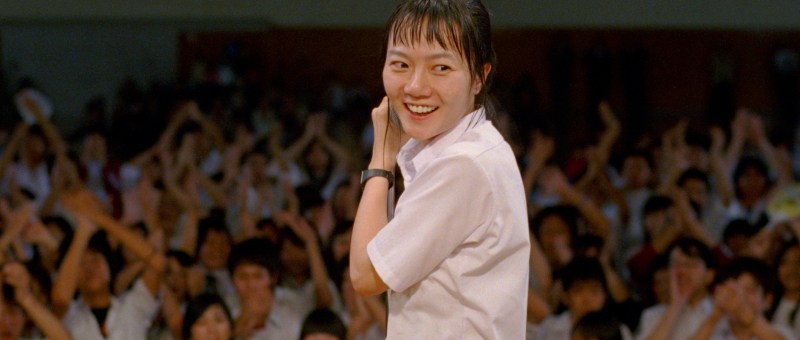
“We’ve only got a little more time to be the real us,” according to a young woman making a promo video for the upcoming school festival, but who really is the “real us”? Now celebrating its 20th anniversary, Nobuhiro Yamashita’s wistful high school dramedy Linda, Linda, Linda (リンダ リンダ リンダ) is in many ways about the process of coming into being along with the anxieties of what comes next. “We won’t end here,” the girl later adds, “We won’t let our high school days become a memory,” yet they already are in a kind of contemporaneous nostalgia and elegy for idealised youth.

Or at least, there’s already a kind of reaching back taking place as the tracks the girls pick for a replacement act are by The Blue Hearts, a 1980s punk band that has become a kind of cultural touchstone echoing a sense of youthful alienation and rebellion. “Linda Linda” is the kind of song everyone knows, and even if for some reason they don’t or don’t even speak Japanese, can at least join in with the riotous chorus. It’s this sense of universality that eventually gives it its power as torrential rain brings the entire school inside just in time to see the girls’ belated act and find themselves captivated by its infectious energy and an identification with their own sense of insecure anxiety.

It’s also the serendipitous rain that allows lonely songstress Takako an opportunity to perform having previously declined to do because it’s no fun playing on your own and all her former bandmates graduated the previous year. Moe, the girl who broke her fingers playing basketball in PE leaving the original band members unable to take the to the stage, also gets an opportunity to sing having otherwise been denied a moment of closure in being prevented from taking part in her final school festival. While Moe feels intensely guilty about rendering all their time spent rehearsing somewhat pointless, it’s really the drama between founding members Kei and Rinko that leads to the band’s demise in Rinko’s conviction that it’s “meaningless” to continue while the others decide to go ahead anyway asking Korean exchange student Son (Bae Doona) to be their vocalist because she just happened to come down the stairs at the right moment and said yes because she didn’t really understand what they were saying.

Prior to her involvement with the band, Son had been a rather isolated figure trapped in the “Japan-Korea Culture Exchange Exhibit” which seems to have been more her teacher’s idea than her own and in any case gets no actual visitors. Her Japanese is a bit limited and most of her interactions are with a little girl who lends her manga to help her learn quickly, but becoming part of the band allows her to find her voice both literally and figuratively in taking the lead as the vocalist. A boy who claims to have fallen in love with her (Kenichi Matsuyama) goes to the trouble of learning a long speech in Korean to convey his feelings, yet a bemused Son replies to him in Japanese that she’s pretty indifferent to his existence before switching to Korean to explain that she’s leaving because she’d rather be hanging out with her friends with an expression that implies she’s only just realised that’s what they are. By contrast, she has a bilingual conversation with guitarist Kei (Yu Kashii) in which they seem to understand each other perfectly and each express how glad they are that they got to be in the band together. 

Similarly, it’s the concert itself that seems to heal rifts with a simple “Are you alright?” from Rinko (Takayo Mimura) to Kei whose friendship might, as someone says, essentially be too close for them to really get along. Drummer Kyoko (Aki Maeda) decides to declare her feelings for a longstanding crush before the concert. In the end she doesn’t manage it, but it doesn’t quite matter somehow because their performance is itself a kind of coming into being in which “the real us” comes into focus if also in a moment that itself becomes romanticised or idealised as an encapsulation of youth. Yamashita travels through the school festival as if it were a passage from one state of being to another, from the noodle stalls and crepe stands to haunted houses and the boy creating his own moment through encapsulating them on film, before ending with an unending song “so we can laugh tomorrow,” and the “real us” lives on.


Linda Linda Linda opens in US cinemas 5th September courtesy of GKIDS.

Trailer (English subtitles)
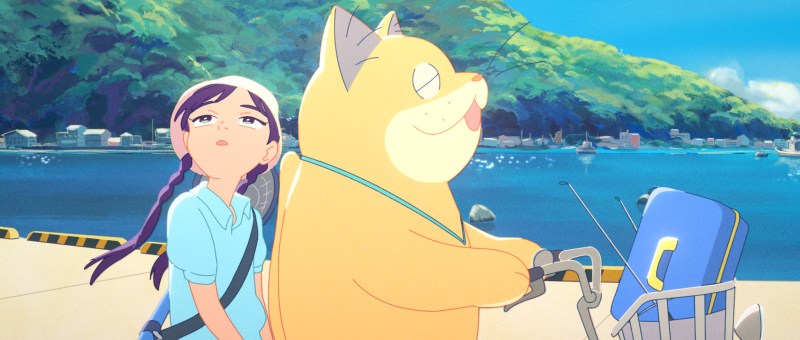
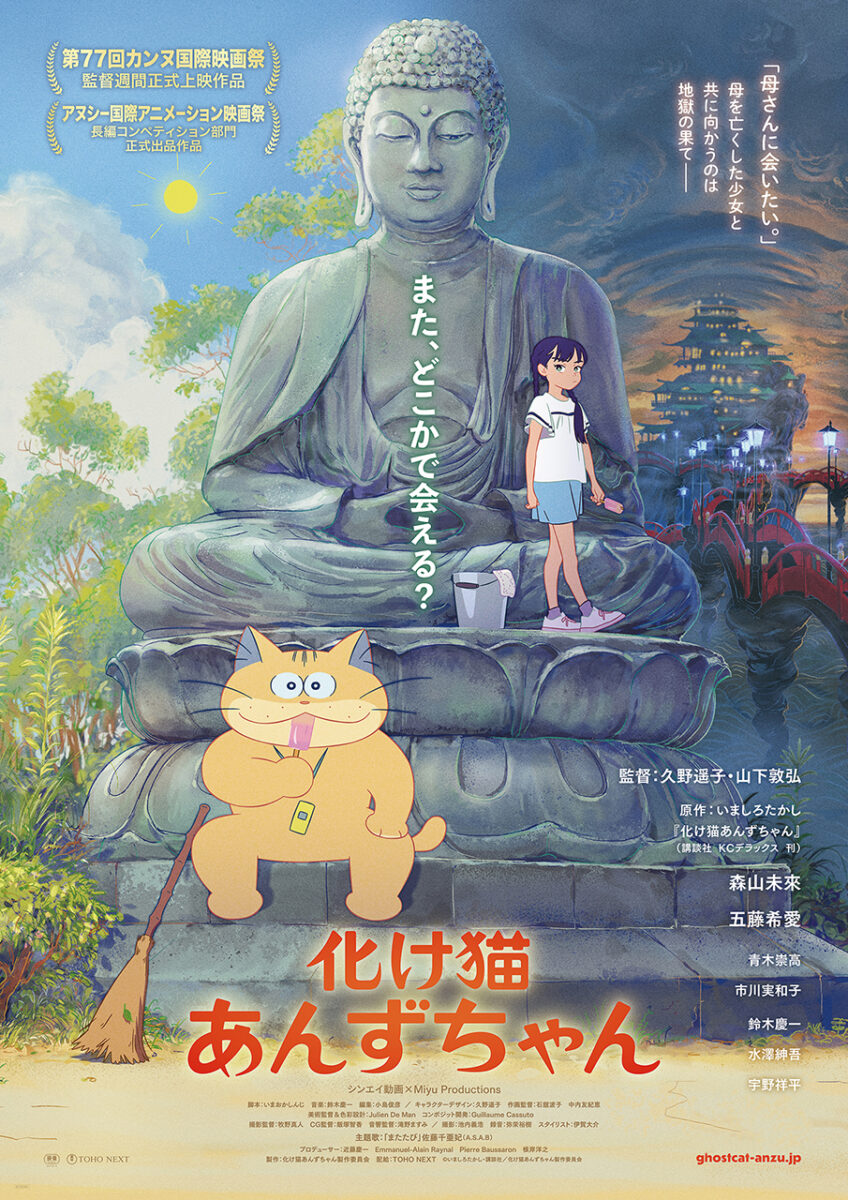
Ghost Cat Anzu (化け猫あんずちゃん, Yoko Kuno & Nobuhiro Yamashita, 2024)

It can be comforting, in a way, to think that this world is deeper than we often think it is and that we live surrounded by ancient spirits who touch our lives in ways we never suspect. All of this is, however, a little more palpable in Iketeru, the town of eternal summer, where the heroine of Yoko Kuno and Nobuhiro Yamashita’s animation Ghost Cat Anzu (化け猫あんずちゃん, Bakemono Anzu-chan) is unceremoniously dumped by her feckless father as he attempts to sort out some persistent trouble with loan sharks. 

Of course, to a girl from Tokyo who hoped to spend the summer break with her cram school crush, being sent to a temple to stay with an estranged grandfather it’s not even clear she has ever met before is not a whole lot of fun. But then as Karin (Noa Goto) says, she’s used to being alone, which might be why she takes against the giant ghost cat, Anzu (Mirai Moriyama), who lives like a human but obviously isn’t one. The funny thing about Iketeru is that no one finds Anzu’s existence odd, if at times troublesome. He’s even patiently arrested by a pair of policemen for not having a proper license for his moped which he didn’t think he needed because, after all, he’s a ghost and also a cat. A pair of little boys who’ve formed their own gang called “The Contrarians” to “defy society” call him “aniki” like some kind of yakuza boss and try to recruit him though being in a gang seems like too much bother for Anzu, which is something he has in common in Karin. 

But the funny thing is, Anzu isn’t really so different from her father in that he too can be somewhat irresponsible. Though he knows he shouldn’t, he spends the money he was keeping for her on pachinko hoping to win big but predictably loses it all. He gets over excited about jobs that pay 3000 yen (£15) a day and overcooks food he’s dropped on the floor because it’ll burn off all the dirt. But like Karin, Anzu can be a little standoffish and it isn’t even until her arrival that he starts to interact with some of the other supernatural creatures in the area who appear to have already set up some kind of club. Having invited them over, Anzu complains they didn’t pay him enough attention and he won’t invite them again while Karin asserts that they seemed “nice”. Though Anzu himself has not yet quite taken to her, the yokai are touched by her tragic circumstances and feelings of abandonment so decide to do what they can to help her. 

Part of Karin’s problem is that she’s still struggling to come to terms with her mother’s death three years previously. Iketeiru calls itself the town of eternal summer, but the summer in Japan is synonymous with the Bon festival during which this world and the other are at their closest and the spirits of the departed may temporarily return. Thus the town itself is a liminal space caught between the living and the dead which the mortal and supernatural co-exist in a very tangible way even if Karin’s eventual descent into hell involves jumping into a broken toilet in a Tokyo columbarium. Even so, she eventually finds herself squaring off against the King of Hell himself in the middle of the Bon festival while straddling the worlds of the living and dead and discovering the will to go on living which is perhaps what the town’s name may actually mean. 

In that sense, it’s a place Karin discovers as much as it’s home to cure her sense of rootless abandonment. The rotoscoped animation and live-recorded dialogue lend a sense of uncanniness to the beautifully animated backgrounds which effortlessly evoke a sense of serenity in the timelessness of a summer in small-town Japan. The juxtaposition of the ancient and the modern, Jizo playing Nintendo Switch, yokai working at the golf course which is perhaps a manifestation of the disruption wrought on the natural world by human endeavour, echo a kind of cosmic irony but also an odd kind of warmth in the strangeness of the world around us with its immortal cat spirits and friendly supernatural creatures that seems a far cry from the sterility of the city with its violent loan sharks and indifferent friends. 


Trailer (English subtitles)

Let’s Go Karaoke! (カラオケ行こ!, Nobuhiro Yamashita, 2023)

Singing is serious business. In Nobuhiro Yamashita’s adaptation of the manga by Yama Wayama Let’s Go Karaoke! (カラオケ行こ!Karaoke Ikou!), it’s matter of life and death, metaphorically at least, for a young man confronting adolescence and a zany gangster who seems kind of lonely but is desperate to learn how not to embarrass himself at the boss’ big sing off so he won’t be subjected to a homemade tattoo of his most hated motif.

The irony is perhaps that this kind of yakuza at least doesn’t really exist anymore and “Crazy Kid” Kyoji (Go Ayano) is in many ways a ghost of bygone days inhabiting a Showa-era shopping arcade soon to be torn down and replaced by a luxury hotel. Meanwhile, high schooler Satomi (Jun Saito) is also facing a kind of apocalypse in that he’s a boy a soprano whose voice has begun to change. His encroaching puberty leads him to blame himself when the school choir only places third during the nationals not making it to finals. But it’s at this concert that Kyoji first hears his “angelic” voice and decides he’s the perfect person to teach him how sing, intimidating him into an impromptu karaoke session.

As Satomi later points out, adults don’t invite kids to karaoke and this arrangement would be odd even if Kyoji were not an old school yakuza with a severed finger in his glove compartment. Of course, Satomi’s frightened but cannot really say no offering a few words of advice by daring to tell Kyoji that his falsetto is  “sickening” and he should stop waving his hands around if he wants to master the art of singing. It is also doesn’t help that his choice of song, Kurenai by X Japan, a hair rock epic mostly written in broken English, is a song of manly melodrama which requires a good deal of screaming. Despite having enlisted Satomi, Kyoji talks about one of his fellow footsoldiers as if he’s died when he’s only decided to get some professional singing lessons in an effort not to come last and end up with a lame tattoo.

Yamashita frames both their challenges as the same, Satomi fearing a social death and the death of his youth if he takes to the stage at what he’s sure would be his final concert and his voice cracks while Kyoji, ironically enough, does not really fear a literal death but the pain and humiliation of being branded by the boss for being bad at karaoke. Despite their differences a genuine a sense of friendship does arise between them, if also a possibly inappropriate homoerotic tension, as they support each other towards their shared goals and learn to sing from the heart which was apparently the real problem with Satomi’s school choir seemingly more obsessed with technique and correctness than the simple joy of singing. 

Hovering on a precipice, Satomi exists in a liminal space in his own way as ghostly as Kyoji surrounded by the obsolete. In his school film club, of which he is an honorary member, they watch VHS tapes of classics such as White Heat, Casablanca, and Bicycle Thieves which can only be watched once because the player’s broken and you can’t rewind anymore. His world’s on the brink of eclipse, and his friendship with Kyoji is a harbinger of a darker, more adult world but also one that’s less frightening than it ought to be with its admittedly scary gangsters obsessed with karaoke and bad tattoos. He starts to wonder if Kyoji was even real or some kind of imaginary friend appearing to help him deal with his impending adolescence and what it means for his singing career, but is finally reassured by a piece of concrete evidence confirming at least that it did really happen if leaving him with a sense of loneliness once their quests have come to an end. Surreal in its cheerful darkness, Yamashita’s heartfelt drama is an advocation for the for the healing powers of karaoke and the importance of singing from from the heart no matter how it might sound to those you who may themselves shed a few manly tears over a song about lost love and absent friends.


Let’s Go Karaoke! screened as part of this year’s Nippon Connection

Original trailer (English subtitles)

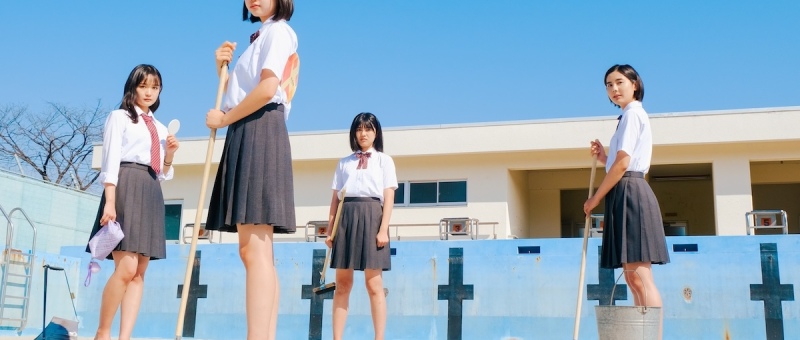
Swimming in a Sand Pool (水深ゼロメートルから, Nobuhiro Yamashita, 2024)

As the film’s title implies, the teenage girls at the centre of Swimming in a Sand Pool (水深ゼロメートルから, Suishin Zero Meter Kara) each find themselves pushing forward but meeting with resistance in Nobuhiro Yamashita’s deadpan teen comedy. Inspired by a high school play, the drama has a timely quality as each of the girls reconsiders what it means to be a woman while simultaneously insisting that gender doesn’t matter. In this case, however, it seems to matter a great deal as they’re forced into the “meaningless” and Sisyphean task of sweeping their swimming pool free of the sand that drifts over from the boys’ baseball game.  

As one of the girls, Chizuru (Mikuri Kiyota), suggests, the boys probably don’t realise (or care) how their actions are inconveniencing them. It’s the middle of summer and the pool is supposed to be undergoing maintenance in August which makes this pointless task seem even more absurd yet after trying to complain to their equally frustrated teacher Yamamoto they’re told they’ve got an attitude problem and it’s only “meaningless” because they’ve decided so in heir heads. As an adult woman, you’d think Yamamoto would have more sympathy or at least some kind of advice for the girls but only seems to want to drum mindless obedience into them, insistent that if she’s told them to do something then it must in fact have meaning. At the end of her tether she snaps that perhaps she doesn’t really like having to conform to the idea of what a teacher should be either, but seems clear that one must do it anyway. Still when a friend from home expresses surprise she’s staying in town over the summer to supervise students, Yamamoto bristles when she remarks that she now seems very like a teacher and is later seen having a covert smoke round the back of the school. 

Obsessed with rules and conformity, one of the chief reasons she’s disliked by the girls is a sense of treachery in having made one, Kokoro (Saki Hamao), humiliate herself by forcing her to participate in a swimming lesson while menstruating. Yamamoto complains that she didn’t ask for an exemption via the appropriate protocols, adding that some girls use it as an “excuse” for getting out of things. Repeatedly the girls accuse each other of using their gender to make excuses for themselves in backing down in front of the boys or allowing themselves to be constrained by social ideas of femininity. Gender is indeed something they seem to think about and dwell on, Kokoro constantly insecure in her appearance while insisting that a girl must be cute in order to count and this is the way she strives for equality with men while simultaneously insisting that gender equality is a myth.

For Miku (Reina Nakayoshi), meanwhile, the opposite maybe true in that she dances the male version of the local folk dance and has done since she was little though now wears a chest binder while she does. Miku seems hurt by Kokoro’s picking at her, eventually walking off and bumping into another girls, Rika, whom it appears she may have a crush on and is a sort of rival of Kokoro’s having beaten her to become manager of the boys’ baseball team. Another girl, Yui, seems to have a similar admiration for swimmer Chizuru but is frustrated by her having experienced a moment of existential crisis being beaten in a race by baseball team star Kusonoki with whom most of the other girls are in love.

What’s true, however, is that none of the girls can do much of anything while desperately trying to sweep up all the dust the boys chucked at them so they can get their pool back and finally swim again. “Don’t take high school girls lightly,” one insists, while another decides to make a “declaration of war” but only seems to elicit snickers from the boys. Nevertheless, through their time shovelling the sand, the girls seem to have come to their own conclusions about the role of gender in their lives and generally discovered a new kind of liberation both from their own self-imposed ideas and the sometimes repressive nature of education that reinforces them. A charming teenage summer comedy, Yamashita nevertheless captures an inspiring sense of rebellion from the students who will no longer be bound by outdated notions of what everyone else tells them they should be.


Swimming in a Sand Pool screened as part of this year’s Osaka Asian Film Festival.

Original trailer (no subtitles)

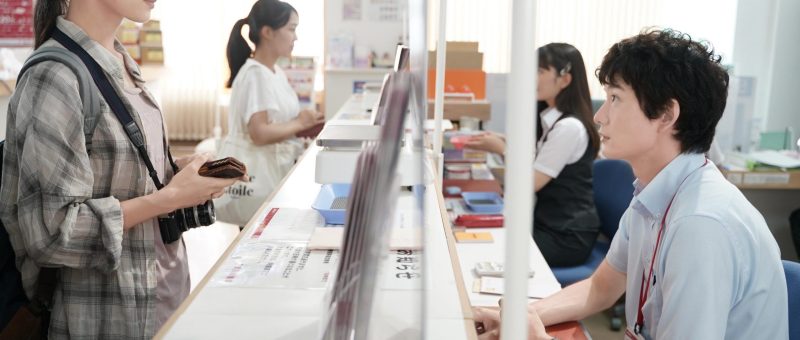
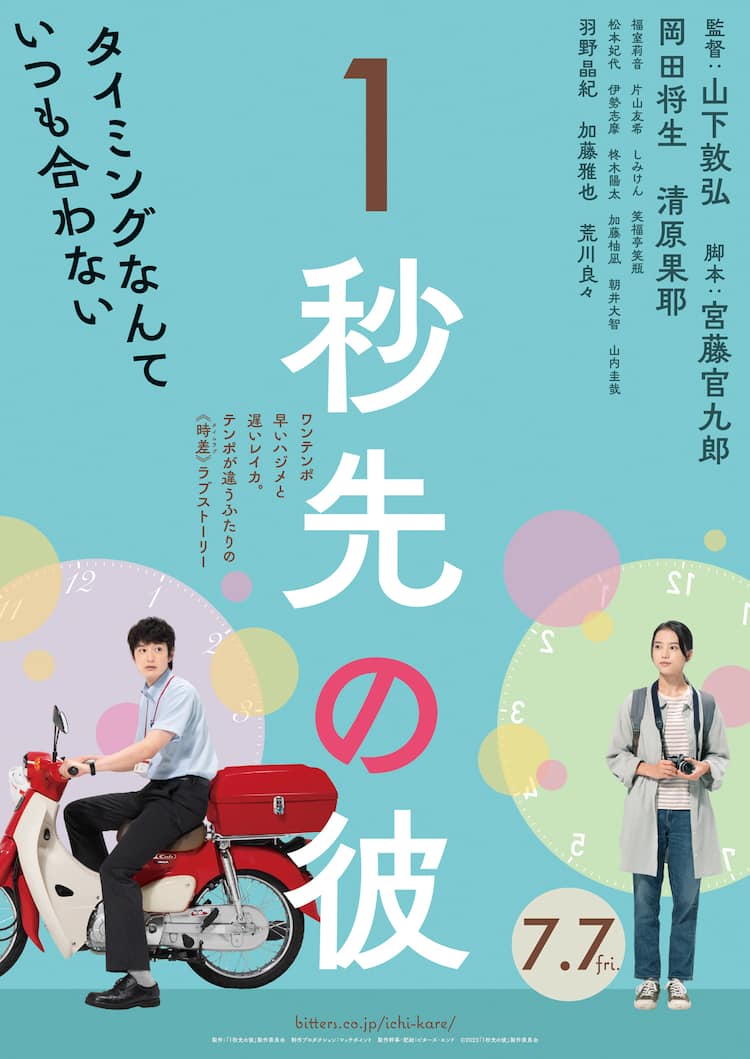
One Second Ahead, One Second Behind (1秒先の彼, Nobuhiro Yamashita, 2023)

If you’re a step ahead and someone else is a step behind, then the gap between you ought to be twice as big but in an odd kind of way it can bring you closer. At least, that’s how it is for the protagonists of Nobuhiro Yamashita’s One Second Behind, One Second Ahead (1秒先の彼, Ichibyo Saki no Kare), a remake of the Taiwanese rom-com My Missing Valentine scripted by Kankuro Kudo. 

Kudo wisely avoids some of the awkwardness of the original by reversing the genders of the misaligned romantics so that it’s now male post office worker Hajime (Masaki Okada) who wakes up to realise that he’s lost an entire day while having no recollection of how he got sunburnt or why there’s sand in his trousers. The host of a radio show he’s fond of listening to asks him about something he’s lost, causing him to remember his father who went out one evening for ginger and then never came back. Hajime’s problem is that he’s always a little ahead of himself, in too much of a hurry to fully grasp the situation around him. That might be one reason that he falls so hard for singer-songwriter Sakura (Rion Fukumuro) and becomes far more invested in the relationship than might be wise for someone you’ve only just met. 

Reika (Kaya Kiyohara), meanwhile, is always a little bit behind. Shy and somewhat reserved she struggles to get her words out and while Hajime has often left before the end of a conversation she is usually left hanging by an inattentive or impatient partner. Out of sync with the world around them, they have each lost something precious besides the obvious and are looking for a way to get it back. Kudo’s script largely drops the magical realism of the Taiwanese original with its strange world of talking lizards and opts for something a little less surreal if just as sweet while maintaining the borrowed time motif that suggests the universe is fair and willingly adjusts itself so that those who find themselves missing out will get that time back though there’s not a lot they can do with it other than reflect. 

Even so within this miraculous dream space regrets can in a sense be cured and anxieties worked out. Those awake to stopped time have the opportunity to set things right, or at least to say their piece even if no one else can hear. There’s something more than time that they can recover, though it may be only small comfort and offer little more than one-sided closure. Rather than the Valentine’s Day setting of the Taiwanese original Kudo and Yamashita shift the action to the summer which with its many fireworks displays has a rather poignant quality focussed more on the loss than the rediscovery while emphasising the short-lived quality of human relationships which can nevertheless leave a warm afterglow even if the memory itself has been lost. 

Setting the film in the historical city of Kyoto also adds to the magical feel, the emerging sunlight at one point appearing almost like a halo around the head of a frozen Hajime while he perhaps comes to accept his mother’s rationale that his father did not leave him but ran away from reality and ironically a world he felt he could not keep up with. In a repeated gag, Hajime calls up a requests show and pours his heart out to the host only for his mother to dial in and dispute everything he’s says especially reminding him that he’s not a loser but should slow down a bit and at least listen to the end of the conversation. Reika meanwhile might have to work herself up to speedier means of communication than the good old fashioned letter but can at least see that she gets there in the end even if it might take a little longer than for others. 

Despite the differences between them, they are in fact perfectly in sync and just waiting for the times to align to bring them back together. Kudo and Yamashita lend their quirky romance a melancholy and heartwarming quality, steering clear of the awkwardness of the otherwise sweet and wholesome Taiwanese original in suggesting that the “date” at the film’s centre is the fulfilment of long forgotten promise rather than the momentary whim of a lovelorn romantic. Suggesting that the things you lose cycle back to you and that the universe itself is fair and kind, the film’s pure-hearted romanticism offers a hopeful reassurance that in the end it all really will work out for the best if only you give it time.


One Second Ahead, One Second Behind screens Nov. 4/5 as part of this year’s San Diego Asian Film Festival.

Original trailer (no subtitles)

Hard-Core (ハード・コア, Nobuhiro Yamashita, 2018)

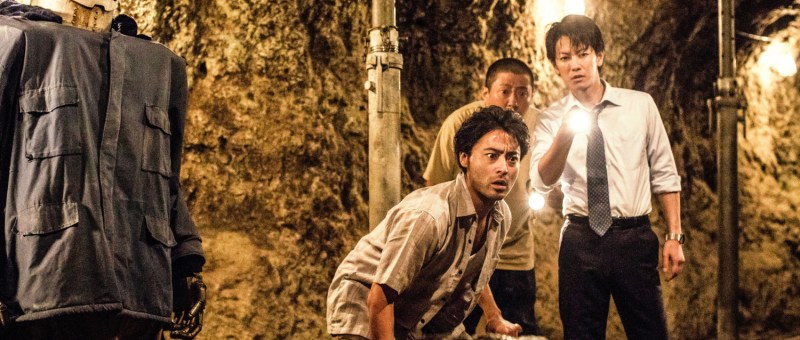
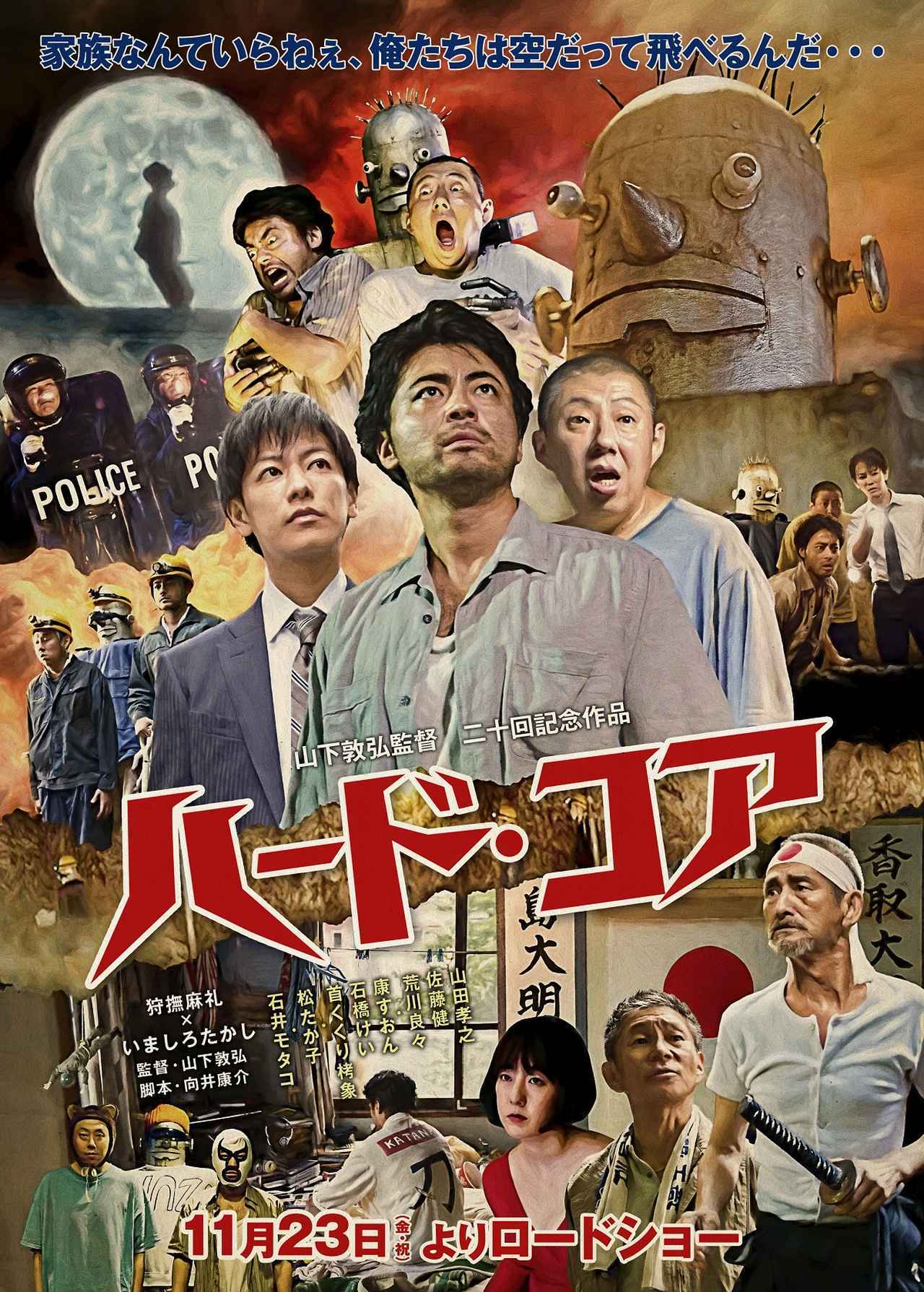
Hard-Core retro poster“The world will always be corrupt”, the cynical brother of the angry young man at the centre of Nobuhiro Yamashita’s Hard-Core (ハード・コア) advises him, “you just have to work around it”. Unfortunately, Ukon (Takayuki Yamada) just wants to do “the right thing”, but it is constantly unsure of the best way to do it while remaining resentful and conflicted in his conviction that the world has already rejected him. Yamashita has made a career out of chronicling the struggles of disenfranchised young men but Ukon and his pals are less genial slackers than potentially dangerous idealists looking for a way back to a simpler time in which the world was not quite so rotten.

An opening bar scene in which Ukon gets slowly drunk and then lays into a rowdy bunch of guys bothering a middle-aged woman (Takako Matsu) just trying to enjoy a drink showcases his propensity to abruptly lose his temper and fall into a self destructive cycle while also subtly pointing out his entitlement issues in his taking the guy to task by praising himself for leaving the lady alone while he presumably had exactly the same desire not to. In any case, after getting banned from the bar, he ends up joining an ultranationalist political cell, the Crimson Hearts, which aims to teach the youth of Japan to re-embrace its traditional culture. In order to facilitate his goals, the elderly and eccentric leader, Kaneshiro (Kubikukuri Takuzo), has enlisted Ukon, along with a friend, Ushiyama (Yoshiyoshi Arakawa) who is almost entirely mute, to dig out a mysterious cavern where he is convinced there is buried Edo-era treasure.

It’s easy to see why Ukon might fall for the rather insane ramblings of Kaneshiro. They reinforce his sense of moral decline while giving him a banner to follow and a place to belong. His loyalty to Kaneshiro is as absolute as a retainer’s to his lord, though he is perhaps conflicted in his commitment to the core ideology even as he sees obvious merit in wanting to reclaim something of the old Japan. Meanwhile, his relationship with his family appears strained. His younger brother Sakon (Takeru Satoh) has become a cynical salaryman out for nothing other than greed and self interest, staring into his own empty eyes in the reflection of the full glass panelling of his high rise office as he has meaningless sex with anonymous office ladies. Ukon just wants to do the right thing, but Sakon wants to make the smart choice and doesn’t particularly care about the wider implications of his choices.

Meanwhile, Ukon is fiercely loyal to his friends and fellow outsiders in solidarity with all those who feel the world will never be willing to accept them. Ushiyama, a man laid low by familial expectation and societal pressure, lives in an abandoned factory where he has made “friends” with a broken robot that Ukon manages to repair and names “Robo-o”. Believing that Robo-o is just like them in that he would be ostracised if people discovered his true nature, Ukon and Ushiyama set about disguising him and even get him in on their gold hunting gig (where he gets paid!) at which he proves adept considering his considerable technical superiority. Ukon’s first instinct is to protect his friend, while Sakon’s is how best to exploit him.

Nevertheless, events at the Crimson Hearts begin to escalate as unpleasant underling Mizunuma (Suon Kan) considers taking the battle to the next stage to “overthrow the corrupt totalitarianism masquerading as democracy” through actions others will regard as terrorist. Meanwhile, Ukon has also begun to fall for Mizunuma’s damaged daughter Taeko (Kei Ishibashi) whom he met by chance after being inappropriately charged with spying on Mizunuma’s new girlfriend to make sure she wasn’t sleeping around (as women do, according to Mizunuma). Ukon, as the first scene implied, is not in favour of all this obvious misogyny but can only find the strength for passive resistance. What he chooses, in the end, is his friends and his precious group of outsiders, albeit with his hopes pinned on his cynical brother and the illusionary lustre of historical treasure. The power of friendship eventually enables even Robo-o to break his programming, though it’s Sakon’s cynicism that, in one sense at least, seems to triumph. Yamashita takes his troubled young heroes on a rocky, noirish path through the “rotten” world which they are increasingly convinced holds no place for them but finally finds hope in human compassion even if that compassion may be the long buried treasure of an archaic civilisation.


Hard-Core was screened as part of the 2019 Udine Far East Film Festival. It will also be screened at the 2019 Nippon Connection Film Festival on 31st May at 22.30pm and 1st June, 22.45pm.

Original trailer (English subtitles)

Over the Fence (オーバー・フェンス, Nobuhiro Yamashita, 2016)

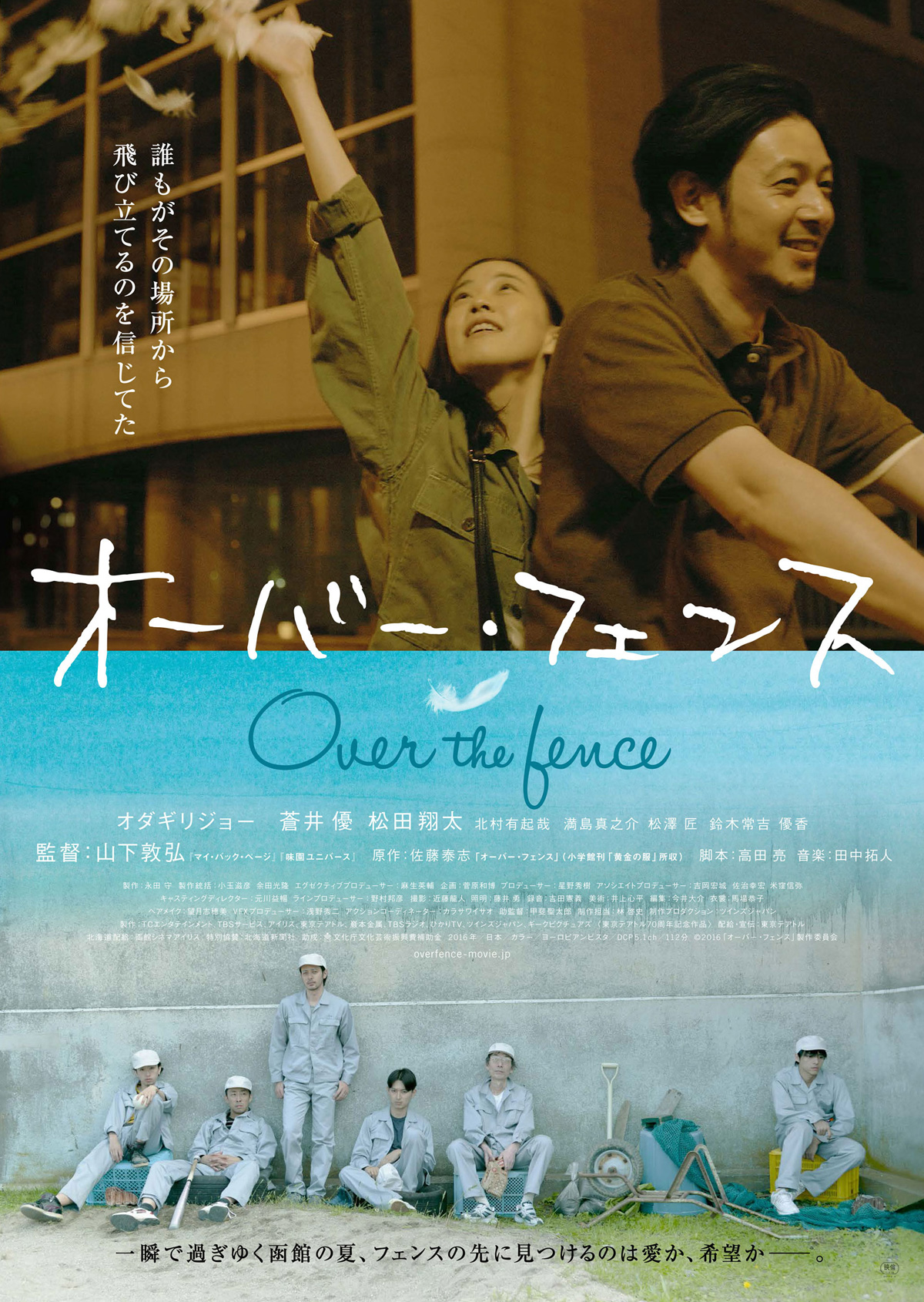
over the fence posterNobuhiro Yamashita may be best known for his laid-back slacker comedies, but he’s no stranger to the darker sides of humanity as evidenced in the oddly hopeful Drudgery Train or the heartbreaking exploration of misplaced trust and disillusionment of My Back Page. One of three films inspired by Hakodate native novelist Yasushi Sato (the other two being Kazuyoshi Kumakiri’s Sketches of Kaitan City and Mipo O’s The Light Shines Only There), Over the Fence (オーバー・フェンス) may be among the less pessimistic adaptations of the author’s work though its cast of lonely lost souls is certainly worthy both of Yamashita’s more melancholy aspects and Sato’s deeply felt despair.
Shiraiwa (Joe Odagiri) wants nothing to with anything or anyone. His wife has divorced him and he doesn’t see his child but he still wears his wedding ring and feels like a married man, unable to move on from the suspended end of his marriage. Having no place else to go, Shiraiwa has come back to his home town of Hakodate – a run down harbour town on the southern point of Hokkaido. For no particular reason other than it allows him to continue claiming unemployment benefits, he’s enrolled in a back to work scheme at a vocational school which teaches carpentry skills. Keeping himself aloof and explaining to anyone that takes an interest that he’s “human scum” and they’d best keep away, Shiraiwa is eventually convinced to go drinking with fellow student Dajima (Shota Matsuda) at his favourite bar.

Dajima introduces him to a much needed motivating factor in his life, a free spirited hostess girl with the strangely manly name of Satoshi (Yu Aoi). Satoshi argues loudly with customers in the street and dances with wild abandon in the middle of a room of quiet drinkers but on getting to know her better her rapidly changeable moods and occasional fits of violent despair speak of a more serious set of problems which Satoshi herself feels as ill equipped to deal with as Shiraiwa has been with the failure of his marriage.

Failure is something which hangs heavily over the film as the grey dullness and stagnant quality of the harbour town seems to bear out its inescapability. Unsurprisingly, in one sense, everyone at the vocational school is there because they’ve already failed at something else though some of them have more success with carpentry than others. Shiraiwa takes the work seriously even if he doesn’t really see himself heading into a career as a carpenter but there’s an additional reason why the environment is so oppressive and the uniforms not unlike those of a prison. Everyone is here because they have to be and they can’t leave until they’ve completed their re-education. The teacher at the school is always quick to remind everyone how it was when he worked in the field, only he never did, he’s a failure and a prideful fantasist too.

The other men face various problems from age and dwindling possibilities, to intense pressure to succeed leading to eventual mental breakdown, and trying to build a new life after leaving the yakuza, but Shiraiwa is unique among them in the degree to which he has internalised his essential failures. Having convinced himself that he’s “human scum” Shiraiwa wants everyone else to know too as he intentionally refuses any sense of forward motion or progress in his life to reassure himself that there is no possible future for him. Satoshi has convinced herself of something similar though her dissatisfaction and fear of rejection are deeply ingrained elements of her personality which are permanent personal attributes. Pushing Shiraiwa to address the questions he could not bear to face, she helps him towards a more positive position whilst simultaneously refusing any kind of reciprocal self analysis.

There’s an additional cruelty in Satoshi’s manic declaration that Shiraiwa drove his wife insane that’s in part self directed and raises a mutual anxiety between them as Shiraiwa may be falling for a woman who already feels herself to be “mad”. Satoshi’s strange impressions of birds and animals point to her closeness to nature and separation from conventional society but also perhaps of her fear of hurting other people through her periodic descents into self destructive cruelty. As caged as the animals in the zoo where she works, Satoshi decides to try letting them out only to discover that the eagle has no desire to leave his perch.

Hakodate becomes a kind of purgatory for all as they each attempt to conquer their demons and win the right to move on to better and brighter things. Melancholy as it is, Yamashita adds in touches of his trademark surrealist humour but even in its sadness Over the Fence leaves room for hope. Climaxing in an inconsequential yet extremely important softball game the meaning of the film’s title becomes apparent – you’ll never know if you can hit that ball over the fence until you find the courage to take a swing but you may never be able to find it without the help and support of a kindred spirit.


Over the Fence was screened as part of the Udine Far East Film Festival 2017.

Original trailer (English subtitles)

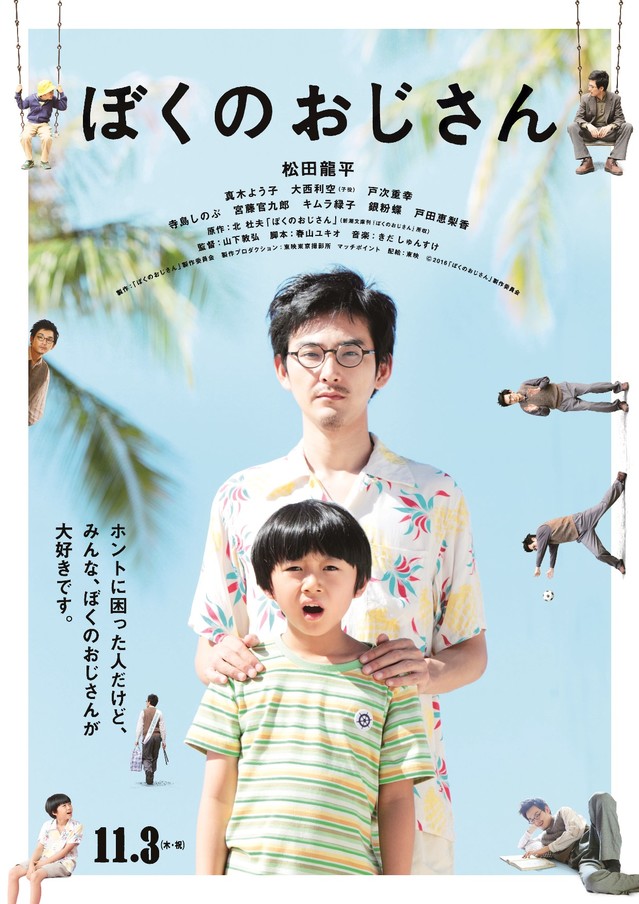
My Uncle (ぼくのおじさん, Nobuhiro Yamashita, 2016)

My-Uncle-p1Crazy uncles – the gift that keeps on giving. Following the darker edged Over the Fence as the second of two films released in 2016, Nobuhiro Yamashita’s My Uncle (ぼくのおじさん, Boku no Ojisan) pushes his subtle humour in a much more overt direction with a comic tale of a self obsessed (not quite) professor as seen seen through the eyes of his exasperated nephew. “Travels with my uncle” of a kind, Yamashita’s latest is a pleasantly old fashioned comedy spiced with oddly poignant moments as a wiser than his years nephew attempts to help his continually befuddled uncle navigate the difficulties of unexpected romance.

Yukio (Riku Ohnishi) has been given one of the most dreaded homework assignments ever – he’s supposed to write an essay about an “interesting” family member. This is a problem because Yukio thinks his family is very boring – dad is a civil servant, mum is a housewife, and his little sister is very frank but fails to generate sufficient interest for a whole essay. At this point, Yukio’s eccentric Uncle (Ryuhei Matsuda) enters the scene to enquire if the next edition of a children’s manga magazine has been released yet. Yukio says it has but he doesn’t buy it anymore because he’s grown out of it. Uncle hasn’t and wants him to buy one as soon as possible, convincing Yukio to pay 30% of the sticker price in the process. Annoyed, Yukio starts chronicling his Uncle’s strange adventures in school essay which proves a hit with his teacher (Erika Toda) who has accidentally become Uncle’s biggest fan.

Uncle lives with the family because he’s “a philosopher” which involves a lot of rejecting capitalist ideals and lying on his futon “thinking” or reading manga to give his brain a rest. Though Uncle’s brother and the father of the family (Kankuro Kudo) is content not to rock the boat, his wife (Shinobu Terajima) is often fed up with Uncle’s behaviour and is trying to set him up with proposals for an arranged marriage to get rid of him. Uncle is having none of it but is instantly smitten after being introduced to Japanese-Hawaiian photographer Eri (Yoko Maki). Eventually chasing her all the way to Hawaii with Yukio in tow, Uncle tries his luck with romance but only seems to get himself mixed up in even more unpredictable mischief.

There’s something so pleasantly innocent about My Uncle with its almost nostalgic tone and embrace of the surreality of everyday life. As seen through the eyes of Yukio, Uncle is not an entirely sympathetic figure at the beginning of the film. A part-time professor, Uncle talks big but spends his life rooting through ashtrays looking for smokable cigarette butts and collecting coupons to use for cheap dinners. Attempts to entertain the children backfire when he gifts them a very realistic plastic toy of a giant millipede though he does sometimes take Yukio out on “thinking expeditions” – usually on weekends and holidays to not be in the house to be shouted at by Yukio’s parents who are rapidly loosing patience with Uncle’s inability to progress in life.

If this were a series (and one could only hope) you could easily call the first instalment “Uncle Falls in Love” as Uncle finds himself finally thinking about settling down with the beautiful and outgoing Eri. Eri does seem to be among the few people who finds Uncle’s unusual qualities charming though he might need to rethink his plan of action if he’s finally to win her heart. Unfortunately, Eri is about to move back to Hawaii but invites Yukio and Uncle to visit. Uncle is desperate to go but as he can’t even afford to buy cigarettes, international travel is out. Undeterred, Uncle comes up with a number of labour intensive schemes to get there rather than actually working for the money but eventually makes it with Yukio’s help. There is, however, a rival on hand in Eri’s former boyfriend Shinsuke (Shigeyuki Totsugi) who is equally determined to win her back.

Life with Uncle may be one of constant exasperation but as Eri points out it’s never boring. Whether he’s getting himself arrested for accidentally buying weed or making up wild stories about himself in a misguided attempt to impress people, Uncle lives on a different plane of existence. Yukio reflects on all of this with a world weariness worthy of a 70 year old man but eventually comes to a kind of grudging affection for his silly old Uncle who is quite clearly setting himself up for a fall even if he has his heart in the right place. Yamashita mixes in poignant moments such as a reflective look over Pearl Harbour which gives rise to a discussion of life as a Hawaiian citizen of Japanese descent during the war, but broadly the tone is a bright one of zany humour and ironic one liners. Hilariously funny in a gentle, old fashioned way, My Uncle is Yamashita in full on comedy mode but all the better for it even as he leaves us desperate to find out what other strange adventures befall Uncle in the continuing saga of his existence.


My Uncle was screened as part of the Udine Far East Film Festival 2017.

Original trailer (no subtitles)

Hazy Life (どんてん生活, Nobuhiro Yamashita, 1999)

51GlvZf-iiLStarting as he meant to go on, Nobuhiro Yamashita’s debut feature film is the story of two slackers, each aimlessly drifting through life without a sense of purpose or trajectory in sight. His humour here is even drier than in his later films and though the tone is predominantly sardonic, one can’t help feeling a little sorry for his hapless, lonely “heroes” trapped in their vacuous, empty lives.
Kee (Hiroshi Yamamoto), a rocker with a giant quiff, meets Tsutomu (Teppei Uda) outside a pachinko parlour and the two strike up an unlikely friendship. Tsumtomu, a little gormless looking and near silent, ends up moving into Kee’s apartment where his main “job” appears to be copying videotapes of the amateur porn (sorry, “erotic cinema” movies) made by his friend Todokoro and his girlfriend(?) Akiko. In fact, Kee sometimes “stars” in the films too, which is something he might have wanted to tell Tsutomu before showing him the video. Kee also has a four year old child he doesn’t really get to see who lives with his ex-partner and only knows him as “uncle”.

As in many of Yamashita’s other films, nothing much happens as Kee and Tsutomu kill time whilst worrying and not worrying about the future. Neither of the guys has a proper job or any concrete ambitions, they mostly just eat time playing pachinko, drinking and hanging out with Tadokoro and Akiko. Kee is still mooning over his ex-girlfriend and, though it’s not clear why they split up, his own fecklessness may be the reason he’s not more involved in his child’s life even if he clearly would like to be. Tsutomu has developed a bit of a crush on Akiko but he never really tries to do very much about it (though he does have the good grace to turn down Kee’s invitation to become a star in one of the videos).

In constrast to his later work, Yamashita injects a number of fantasy sequences which seem to take place entirely within Tsutomu’s mind. Mostly they’re quite gentle – making a bunch of money at Pachinko and taking Akiko out for a slap-up meal or the poignant final scene of all the characters together as they enjoy a picnic under the cherry blossoms like one big happy family. However, there is one very unexpected scene which occurs after Tsutomu is caught shoplifting (which he does very badly) offering only the excuse that he’s forgotten his wallet and was too lazy to go back and get it. This fairly shocking scene of violence is one that does not typically re-occur in Yamashita’s later work and is notable for its extreme bloodiness and direct contrast to the overall tone. Perhaps intended to show Tsutomu’s inner frustrations (he spends much of the rest of the film asleep), this scene becomes one of the most intriguing in the film.

Hazy Life is a “zero budget” affair and makes no attempt to hide that. Shot on low quality equipment and committed to a “natural” look, it makes no claim to aesthetic prettiness though it does display Yamashita’s gift for interesting compositions this time working within a 4:3 frame. The fantasy sequences themselves are presented as reality bar one use of double exposure which is in general out of keeping with Yamashita’s naturalistic style as is the brief use of time-lapse photography.

Not uninteresting, but perhaps more interesting as a taste of things to come rather than as a feature in its own right. Hazy Life is just that, hazy and somewhat meandering as Kee and Tsutomu muddle through life with an air of mild depression and no particular hope in sight. “what day is it?”, “I don’t know”, “Well never mind – at least we’re alive”. This late conversation more or less sums the entire film and it’s poignantly sweet, fantasy sequence ending adds another layer of pathos to this subtly humorous look at laid-back modern life at the bottom of the heap.


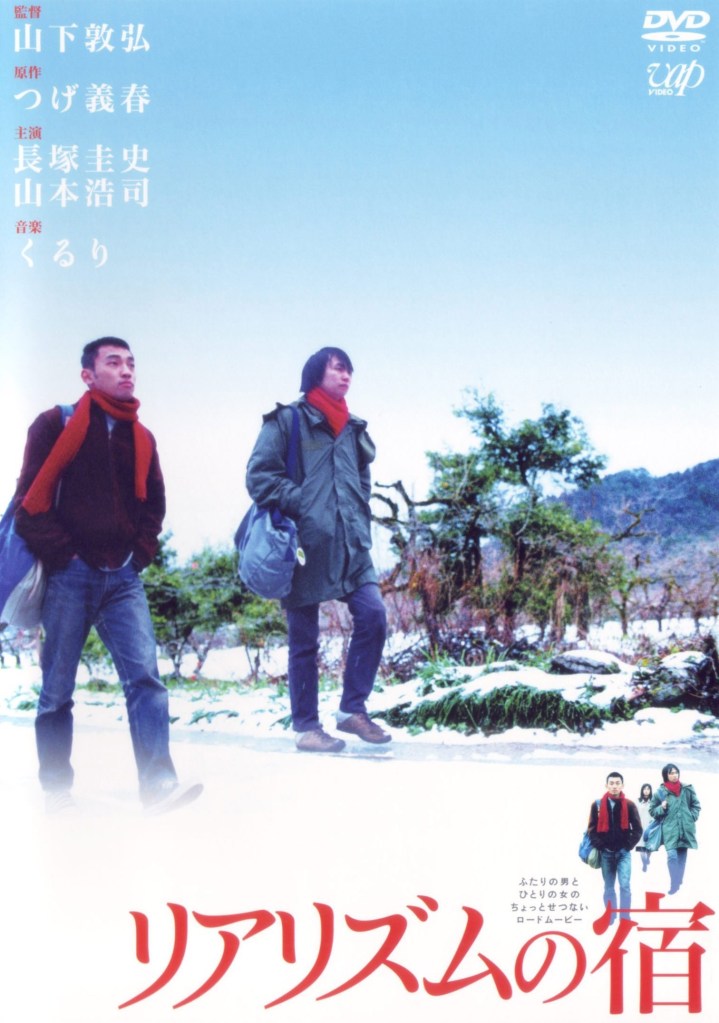
Ramblers (リアリズムの宿, Nobuhiro Yamashita, 2004)

ramblers-riarizumu-no-yado.39798

Nobuhiro Yamashita is well known for his low-key, naturalistic style often focusing on the everyday musings of youthful slackers. Ramblers (リアリズムの宿, Realism no Yado), his third feature film takes this idea and pushes it to the max as it follows two filmmakers wasting time in the mountains after their ultimate slacker actor friend lets them down at the last minute.

The two guys are Tsuboi, a screenwriter and the younger of the two, and Kinoshita – a director and a little bit older in his late twenties. The trip has been organised by a mutual acquaintance, Funaki, who’s an actor and the other two have met once or twice before but don’t exactly know each other. Funaki has overslept and will be late, or he might just come tomorrow or something. He tells the other two to go ahead without him. With nothing else to do the two guys wander off into the mountains to kill time while they wait for their Godot-like friend where they have various encounters with the strange mountain-folk all while a gentle friendship builds up in the background.

By far the most important episode occurs whilst the pair are sitting on the beach “rambling” on about nothing in particular when a scantily clad young woman, Atsuko, comes running towards them out of the sea. Hilariously, the pair try to run away as if she were some kind of terrifying sea monster but eventually decide to help her after she tells them that all of her belongings, including her wallet with her ID and money, have been washed away to sea. They end up adopting her for two or three days, paying for her new clothes, meals and board each a little taken with her but nothing untoward in mind. Suddenly this episode ends, leaving a curious hole in the young guys’ relationship.

Other than getting to know Atsuko, the guys waste time fishing, chatting with the interesting staff at the various inns they end up staying at and just generally hanging around wondering where the hell Funaki has got to. Having failed to arrange accommodation (slackers!) the pair decide to inn hop a little whilst roaming around the area though it’s definitely the off season. After their adventure with Atsuko the boys’ funds start to run down and they’re reduced to sharing meals which gets them noticed by a shady guy in cafe who insists they stay over with his friend – though it turns out to be not really his friend’s place at all and, feeling awkward, the pair attempt to find somewhere else last minute ending up at every traveller’s worst nightmare. The final “inn” is not even really a B&B, just a freezing room in someone’s house which is filled with children, a father who’s dying in the corner and a bathroom which would definitely not pass any kind of health and safety regulation. Getting a little fed up, the boys spend their final night laughing off the strange and sometimes rotten adventure they’ve been having – wondering first about Atsuko and then feeling annoyed about their “friend” who doesn’t seem to have been very invested in this particular enterprise.

As usual for a Yamashita movie, nothing really happens while quite a lot is happening. We get invested in Tsuboi and Kinoshita’s vacation as their friend pulls a Godot style stunt on them by repeatedly failing to appear but always promising to be there soon. Whilst travelling and killing time the two guys talk about various things and get to know one another better. Their time with Atsuko actually seems to bring them closer together rather forcing them into the roles of rivals, though a late stage revelation about Atsuko’s sudden disappearing act may also give them a collective sense of befuddlement mixed with mild guilt. The Ramblers ramble on for 83 minutes, though it never feels like an over extended stay. Once again Yamashita crafts a low-key, nuanced character piece that allows his naturalistic, humorous eye to shine through.


Suprisingly, you can actually buy this on UK iTunes with English subtitles!