Remember What I Forgot (曾經擁有, Keian Chui, 2022)

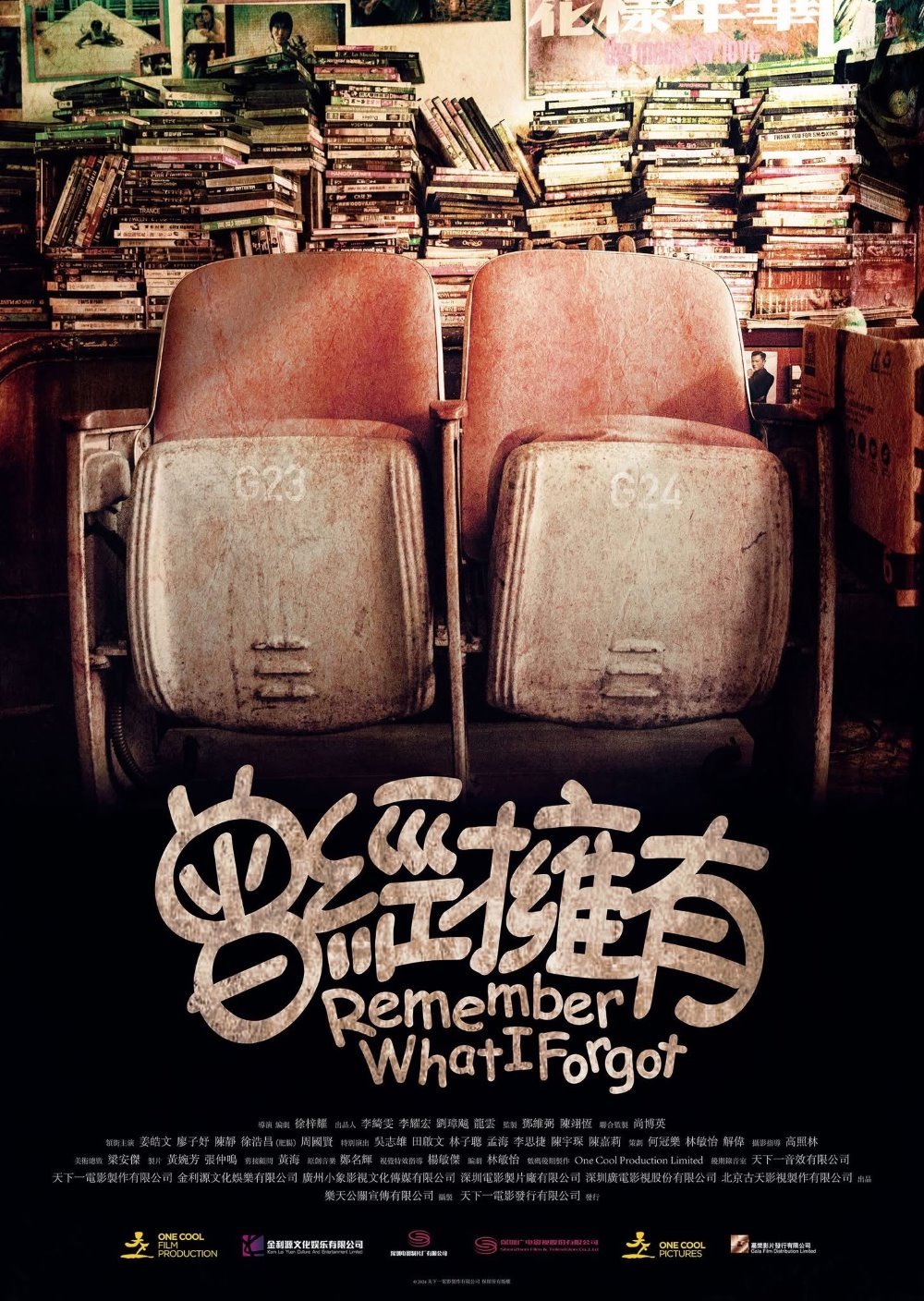
Shot in 2017 and held back until recently, Remember What I Forgot (曾經擁有) is one of series of films that suggest Hong Kong cinema is becoming a thing of a bygone era. The conceit is that the hero literally cannot remember as he has early-onset dementia and is to some extent stuck in the past or at least using Hong Kong cinema as a means of anchoring himself in a society that’s constantly changing as demonstrated by his quest to find a copy of Perter Chan’s 1996 film Double the Trouble which has gone out of print. 

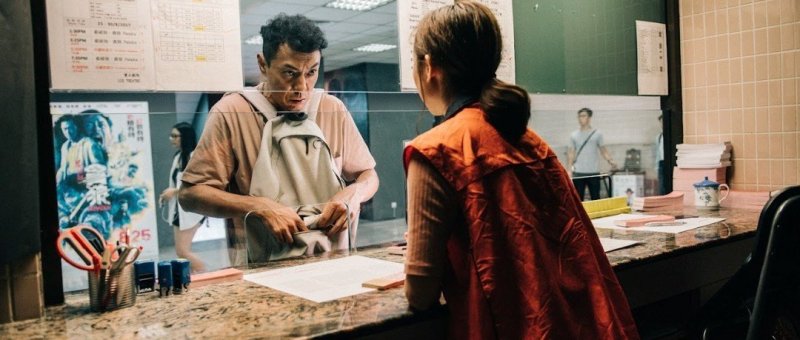
Kim (Philip Keung Hiu-Man) lives with his cousin, Wan, who is also afraid to move on because he’s worried Kim won’t be able to find his way home if they leave his moribund repair shop. Kim otherwise spends his time hanging out on film sets and watching movies at the cinema and at home which is what has convinced Ginger Keung (Fish Liew), a journalist working for a trashy TV expose show, that Kim maybe the so-called “Prince of Darkness”, a film reviewer who posts scathing takes on movies on his blog and has become the enemy of all Hong Kong film producers. 

It’s surprising they afford him so much power, but it does seem that love or loathe it his writing is eagerly awaited. Ginger tries to befriend Kim in order to exploit him by exposing him as the prince of darkness on her TV show though finds herself conflicted on realising his condition. Kim is also the only one who remembers Ginger as a screenwriter and apparently liked her film, The Movie Exorcist, which he described as “nonsensical” and having “no commercial value” but also the most fun he’s ever had at the movies. A dark satire of the death of the film business in which ghosts buy tickets in a haunted cinema, the film had been an expression of the frustration Ginger felt graduating film school but being unable to find any work. This is perhaps why she’s become cynical about Hong Kong cinema which she describes as lacking in passion. 

Having regained some of the memory he’d lost, Kim laments that he just wants to remember everything about Hong Kong cinema and doesn’t understand why no one else seems to care. Given his condition, his mind sometimes “remembers” scenes from classic movies such as Infernal Affairs and Comrades Almost a Love Story as if they had actually happened to him, which in a way they have because they’re a part of the history of Hong Kong of which he has now become a sole guardian. Poignantly, it seems that the reason he always goes to the same cinema and books the same seat is that he’s waiting for someone, but has also forgotten all about it and no longer remembers why he goes there except for his intense love of Hong Kong film.

Ironically, Kim’s becoming a movie star too in that Ginger is intent on filming him for her show while simultaneously feeling guilty for taking advantage of him and wondering if she really has what it takes to be this kind of ruthless “journalist” ready to upend someone’s life and expose them to censure and ridicule for view numbers. Maybe it was easier when she thought he was a snarky bastard trashing Hong Kong films for clicks in much the same way her show trash talks people’s “dirty laundry,” than when she realised he may be being exploited by someone else and in any case just has high standards because he loves Hong Kong cinema so much that he wants it to be better. Having remembered something, Kim tries to revisit an old cinema to keep an appointment, but it’s already been closed down as there’s no way back to that moment. Kim cannot find his way home except in the movies because that Hong Kong no longer exists anywhere else. Nevertheless, he seems determined to reclaim and preserve as much of it as he can while righting old wrongs and keeping that appointment even if the person he’s waiting for likely won’t arrive. It’s his enthusiasm that guides Ginger back from her cynicism, causing Ginger to rediscover her own love for Hong Kong films and re-evaluate her current line of work while helping Kim to achieve his dreams of keeping it alive.


Trailer (Traditional Chinese & English subtitles)
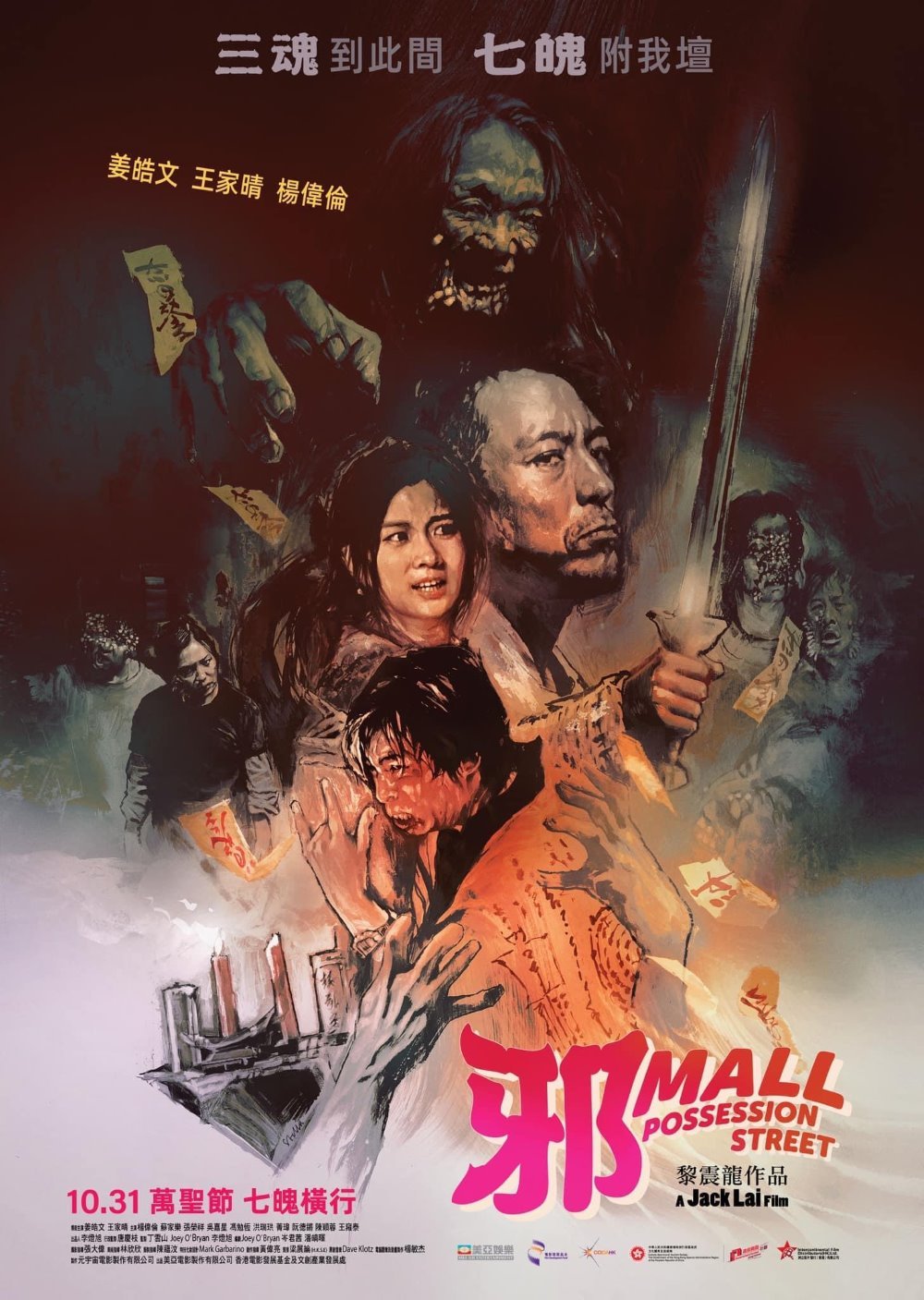
Possession Street (邪Mall, Jack Lai, 2024)

Possession Street is a real street in Hong Kong, but its name doesn’t hint at the supernatural. Rather, it’s located on the former site of Possession Point where the British took possession of Hong Kong in 1841. Nevertheless, there is definitely some body snatching going on in Jack Lai’s claustrophobic zombie-esque horror set in the decidedly purgatorial space of a shopping centre on the brink of demolition. 

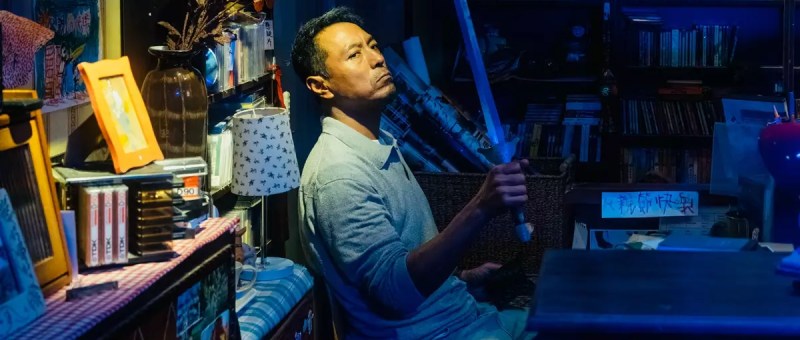
Indeed, it’s the vendors themselves that are in someways zombies. Representatives of a generation that is tired of fighting and barely clinging on to what they’ve got, they run their moribund stores stubbornly refusing to move with the times almost as if they were haunting the place. A former stuntman, Sam (Philip Keung Hiu-Man) runs an unprofitable video shop that plays classic Hong Kong wuxia movies of the kind he used to be in. Sam’s wife left him taking their daughter Yan with her when the shop first ran into financial difficulty and Sam refused to do much about it other than swear it would figure itself out in the end.

Which is one way to say young Yan (Candy Wong Ka-Ching) escaped the mall, though she continues to idolise her father and has developed a love of film precisely because of what he taught her. She tells him that she’s dropping out of uni to become a filmmaker because she wants to keep Hong Kong cinema alive in what seems to be a meta comment on the state of the industry in which Hong Kong cinema itself has become a kind of zombie, like the vendors simply treading water while trapped in a constant state of decline in its conflicted necessity to please the Mainland censors. 

In this way, the claustrophobic space of the post-war shopping centre stands in for Hong Kong itself. A place that’s lost its lustre and fallen behind the times, the mall has fallen into a state of disrepair. Many of the stores have already closed and there’s not much footfall. The mall has a serious rat problem, though really that’s about to be the least of its worries. Even so, it’s the rodents who are partially responsible for chewing on the power cables and requiring a trip to the super secret meter room where one of the vendors accidentally damages the seal keeping a not all that ancient evil from bubbling to the surface. 

As the ghost later explains, like the vendors they are those who have been left behind by the new Hong Kong and cannot progress into its future. The mall was built on top of an air raid shelter which was sealed shut by an American bomb leaving all those inside to turn to depraved acts of survival such as cannibalism along with violent outrages like rape before dying horribly inside. Their resentment has awakened another ancient evil that wants to kill everyone in the world, beginning with everyone in the mall which is locked shut until the following morning. Clearly influenced by the the Last of Us with its fungal zombies who spread the curse by coughing up a visible miasma and are covered in pustular growths, the infected echo a particular face of evil such as the fat cat capitalist constant running down his daughter who is the only one who tries to help him. He remarks that he’s glad her brother never showed up, because now the family name will continue. 

Meanwhile, Yan has been a part of this community since she was a child and fond attachments to many of the vendors including the Taoist priest whom she once-called Uncle Con-Man. Master Mak (Alan Yeung Wai-Leun) was entrusted with a mission by his former master who knew about the air raid shelter and was the guardian standing it over it, making the sure the evil didn’t leak out, but Mak has lost the faith and with the imminent demise of the shopping centre come to the conclusion that it’s time to call it quits. There is then something in the fact that this Taoist philosophy actually works and proves the only real way of overcoming the supernatural threat as if calling forth the spirit of Hong Kong. On the other hand, it’s really Yan who is trapped in this place and seeking escape in permission to move on but also to continue fighting for the Hong Kong that’s disappearing in keeping its cinema alive. When Sam tells her “ga you,” he echoes the words of the protestors while ironically telling her not to give up even though life rarely turns out the way you hoped. In effect, she liberates them all including herself from a self-imposed limbo of resigned stagnation while walking into the light of a new day determined to fight for the kind of future she wants for herself rather than what anyone else might have wanted for her.


Possession Street screened as part of this year’s Focus Hong Kong.

Trailer

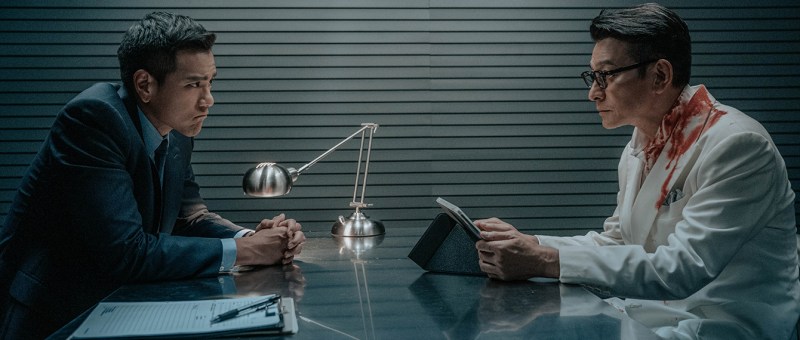
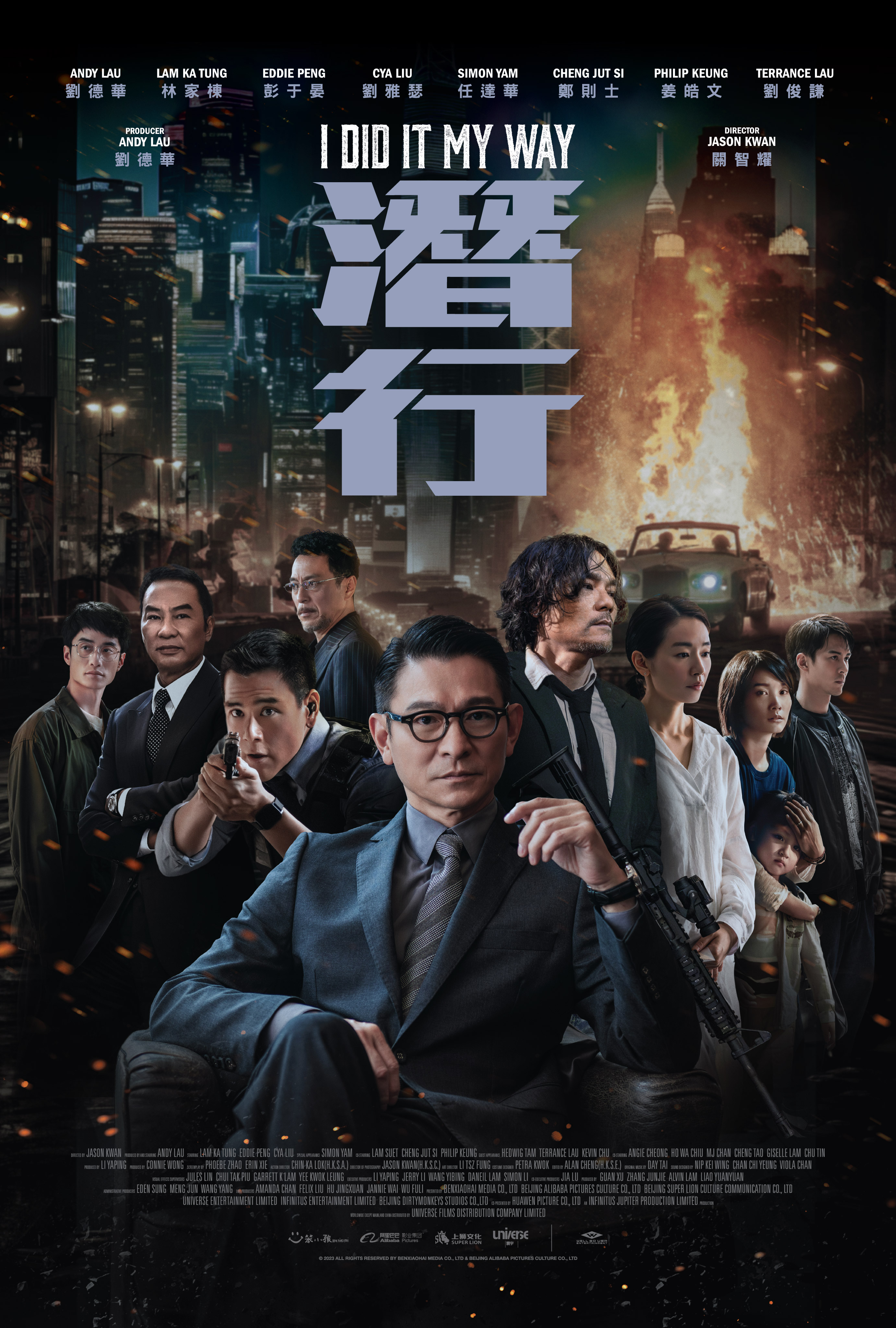
I Did It My Way (潛行, Jason Kwan, 2023)

“Oldies are still the best,” one bad guy tells another while listening to a retro pop song about the inability to distinguish good from evil, “life was simpler back then.” Jason Kwon’s I Did it My Way (潛行) is in many ways an attempt to recapture the action classics of the 90s starring many of the same A-listers though they are all 30 years older and in some cases really ageing out of the kinds of roles they’re accustomed to playing in these kinds of films. Nevertheless, the action is updated for the contemporary era in its unsubtle messaging that drugs and cyber crime are bad, while the police are definitely good and will always win.

Indeed, barrister George Lam (Andy Lau Tak-wah) is not a particularly sympathetic villain and is given little justification for his crimes save doing things his way. Cybercrime specialist Eddie Fong (Edward Peng Yu-Yan) isn’t terribly sympathetic either, but mostly because of his bullheaded earnestness. Chung Kam-ming (Simon Yam Tat-wah) asks him to work with regular narcotics cop Yuen (Lam Suet), but Eddie originally refuses, insisting that they formed their new cybercrimes squad because the “old ways” weren’t working, so it’s better that they keep their investigations separate, which is of course quite rude to Yuen especially as he goes on to add that Chung’s only asked him out of politeness and professional deference. Chung, however, reminds them that they’re all part of one big family and should learn to work together. 

One might think that a criminal enterprise is also a kind of family, but it’s shown to be illegitimate in comparison to that of the police. Yuen’s undercover agent, Sau Ho (Gordon Lam Ka-tung), has a family he’s trying to protect, as does Lam who is about to marry his much younger pregnant girlfriend. For them, family is also a weakness because it gives them a reason to be afraid not to mention something to lose. Beginning to suspect him, Lam uses Sau Ho’s wife and son as leverage, symbolically taking them hostage along with Sau Ho’s promised future that would allow him to emigrate for a life of freedom under a new identity. 

Like the song says, Sau Ho is also struggling to define his identity as an undercover cop caught between his original desire to fight crime and the criminal lifestyle he’s been forced to live which leaves him never quite sure what side he’s actually on. Lam claims he only started dealing drugs after his girlfriend was raped and subsequently developed depression but that’s too late for him to turn back and so he’s gone all in. There is a kind of brotherhood that arises between them that’s permanently strained by their positioning on either side of this line and the inevitability of confrontation. Fong promises to save Sau Ho, but he failed to save most of their other undercover officers, while Sau Ho and Lam pledge to save each other, though the act of salvation could mean different things to each of them while both torn between their respective codes and the natural connection that’s been fostered by their long years working together as part of the gang. 

The severing of this connection is again part of the price for their involvement with crime, with Lam led to believe that his choices have ironically robbed him of the pleasant familial future he dreamed of, while Sau Ho is returned to the familial embrace of the police force. Chung is repositioned as a benevolent father who can save his men, while Eddie too is forced to reintegrate by working with the other officers to fight cybercrimes which often intersect with those of other divisions. While the film includes several action sequences, it also insists that the major battle takes place online between hackers and police computer specialists, dramatising these online fights with CGI to slightly better effect than 2023’s Cyber Heist but still struggling to move on from an outdated iconography of the web. Even so, it’s clear that crime never pays even if a policewoman asks herself if it’s really worth it on a trip to the police cemetery. The sun has come out once again, making the dividing line between good and evil clear if also reinforcing the paternalistic authority of law enforcement under which living life “my way” will never be tolerated.


I Did It My Way is available digitally in the US courtesy of Well Go USA.

Trailer (English subtitles)

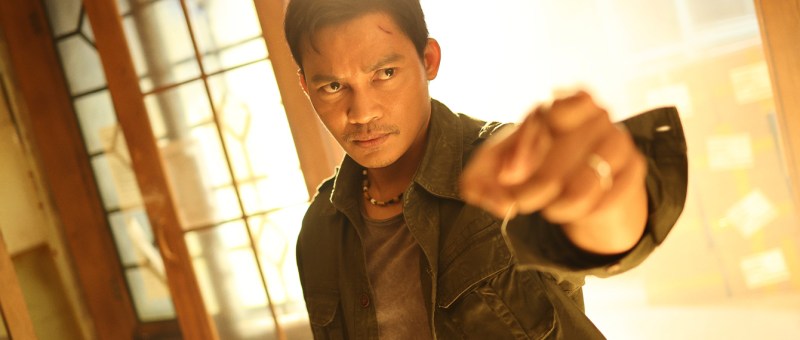
Striking Rescue (惊天大营救, Cheng Siyi, 2024)

Once again set in a fictional South Eastern Asian nation largely inhabited by Mandarin speakers, Cheng Siyi’s action drama Striking Rescue (惊天大营救, jīng tiāndà yíngjiù) is a comeback vehicle for action star Tony Jaa who has mostly been relegated to cameos and supporting roles for the last decade or so. It’s also one of a string of recent films with a bee in its bonnet about the drugs trade, and a less obvious one about the powers of large corporations though in this case the fat cat turns out to be a good guy.

To begin with, we can’t be so sure about Bai An. A flashback reveals that his wife and daughter were just murdered in an apparent gangland killing, and now he wants revenge. After targeting a petty drug dealer, Bai An is told the man he’s looking for is He Yinghao (Philip Keung), the CEO of a phenomenally successful logistics business which has nevertheless been implicated for the smuggling of drugs. Something like this happened once before, but Yinghao is well connected and was able to make it go away just as he apparently has this time. Later he also reveals that his company is the only one that is exempt from customs checks, presumably because he’s bribed someone to make that happen.

We can’t really be sure about Yinghao, either. He doesn’t seem to know about the drugs but could be bluffing or attempting to shift the blame. His spiky teenage daughter Ting seemingly resents him for his authoritarian parenting and blames him for her mother’s death. She fires back at him that he behaves as if all problems can be solved with money, and she may have a point. After their convoy is attacked by drug gangs, Ting has no idea who to trust but continues to believe in her father’s innocence while unexpectedly teaming up with Bai, who wants to kill him, and trying to figure out what’s going on. The one thing she’s sure of is that she and her father really hate drugs because they caused her mother’s death, so if it really is him behind the local drugs trade then it’s even worse that she thought it would be. 

As the truth is gradually revealed, it allows both men to reclaim their paternity as Jaa becomes a kind of surrogate father to Ting. He attempts to protect her from this very dangerous world of drug dealers and criminals, though it may not have been all that far from the otherwise life of luxury she was used to leading. Her driver, Wu, had already taught her some martial arts skills for protection while she’s bullied by the thuggish boys at school who pick on her for being Yinghao’s daughter and a foreigner. But it’s Bai An who seemingly shows her what real fatherhood is like, which ironically causes her to reevaluate her relationship with Yinghao. He in turn is somewhat redeemed by his righteousness in the face of the gangsters as opposed to a snivelling new reporter picked up by Clay and forced to choose which son to kill before being killed himself.

Making Yinghao the hero may be a slightly awkward fit given that his business interests do not appear to be all above board which is one reason why he relocated here rather than stay in China where, the implication is, he wouldn’t have gotten away with it for so long. Indeed, the film ends with a series of title cards explaining that all of the wrongdoers, including Bai, were caught and punished. Nevertheless, as Bai later reminds us, it’s every man’s dream to be a hero to his daughter and both men have now a claim on “heroism”, at least in the eyes of the idealistic Ting. Though he could not save his own daughter, Bai steps in to protect Ting on several occasions. Fighting off hordes of thugs and one very weird female assassin, Jaa gets the opportunity to show off his martial arts skills once again while relentlessly pursuing his revenge and quest for answers about the death of his wife and child. But it’s also this defence of her that allows him to reconnect with his humanity and reclaim his image of himself as a father even while mired in his grief and anger towards a world full of corruption and betrayal.


Striking Rescue is available digitally in the US from April and on blu-ray from May 15 courtesy of Well Go USA.

US release trailer (English subtitles)

The Goldfinger (金手指, Felix Chong Man-keung, 2023)

Following Wong Jing’s Chasing the Dragon and Philip Yung’s Where the Wind Blows, Felix Chong’s financial thriller The Goldfinger (金手指) is the latest in a series of Hong Kong films revolving around colonial-era corruption in which the apparent lawlessness of the pre-Handover society allowed crime to flourish along with a nascent greed nurtured by the island’s rising prosperity as an increasingly important financial centre. In an ironic touch, the film even opens with mass protests against the introduction of ICAC with protestors calling for more respect for law enforcement officers while implying some dark authoritarian force is in play even as angry policemen demand the right to immunity from their own misconduct.

In any case, what arises is a cat and mouse game between wily conman/entrepreneur Henry Ching (Tony Leung Chiu-Wai) and ICAC investigator Lau (Andy Lau Tak-Wah) who chases him for 15 years trying to expose his web of financial fraud. A failed businessman on the run from debt having supposedly abandoned an idealistic desire to build homes for people, Ching arrives in Hong Kong seeking a land of opportunity and largely finds it though through dubious means. Teaming up with similarly embittered businessman KK (Simon Yam Tat-Wah), who is resentful towards his family who treat him with disdain for being a mistress’ son and force him to do their dirty work, to build a giant real-estate based empire that is in reality rooted in complex financial fraud.

Working on the rationale that stocks can be spent like money, Ching makes contacts and manipulates markets which is all very well as long as no one asks for the cash because it doesn’t exist. Chong hints at the realities of the housing market in Hong Kong today in which land is at a premium and apartments largely unattainable as Ching alternately allies with and subverts British rule to build a property empire, setting his sights on acquiring prestigious Golden Hill building as symbol of a new Hong Kong and his own hubristic desire for personal success. With shades of Wolf of Wall Street and The Great Beauty, Ching attends soirees organised by the British and puts on a show for his targets. In his attempts to woo a British bank, his office is suddenly invaded by salsa dancers and gold glitter falls from the ceiling much to the chagrin of a bemused and increasingly mistrustful KK.

Even so the title of the film is echoed in a comment Ching makes to Lau that though he may thinks he’s some genius with the Midas touch he’s really just a patsy, pushing him to investigate possible international conspiracy that is bigger than either of them. Ching has already become a legend with a series of stories about how he made his stake money which range from running into Imelda Marcos in a shoe shop and getting backing from the oppressive regime in the Philippines, to narrowly escaping a war zone and catching a CIA spy in Moscow. He even has the hutzpah to attempt to bribe Lau by offering him a vast fortune and a scholarship for his daughter to study abroad if only he’d find a way to nix the case.

The corruption is indeed embedded, as is obvious when a judge with a posh British accent actively welcomes Ching to the court in a friendly manner and suggests they conduct their business swiftly to avoid any unnecessary turmoil to the Hong Kong economy. Friends in high places largely assist him, whether through personal greed or blackmail though as another of his associates admits, in the end there is no real loyalty among thieves only increasing fear and desperation along with resentment that Ching seems to be taking more than his fair share of the loot. Loosely based on the Carrian Group scandal, the film never loses sight of the damage one man’s greed and duplicity can do as millions of Hong Kong citizens find themselves out of pocket and uncompensated when the shares they bought become worthless, but equally suggests that in the end justice will always be denied to ordinary people while men like Ching will never fully pay for their crimes. With gorgeous production design, Chong beautifully the woozy world of Hong Kong in the ’70s and ’80s amid an intense cat and mouse game of financial fraudsters and a compromised authority.


The Goldfinger previews from 30th December ahead of opening in UK cinemas 5th January courtesy of CineAsia.

UK trailer (Traditional Chinese / English subtitles)

Full Strike (全力扣殺, Derek Kwok & Henri Wong, 2015)

A former badminton champ begins to rediscover herself after being permanently banned for bullying behaviour when charged with coaching a bunch of former bank robbers in Derek Kwok & Henri Wong’s zany sports comedy Full Strike (全力扣殺). Dedicated to “all the beautiful losers”, the film is less about literal winning as it is about learning to turn one’s life around in moments of profound despair and draw strength from even non-literal victories in simply refusing to be looked down or belittled.

It’s ironic in a sense that Dan (Ekin Cheng Yee-Kin), Kun (Wilfred Lau Ho-Lung), and Chiu (Edmond Leung Hon-Man) became bank robbers because they didn’t want to be bullied having grown up as friendless orphans. Former badminton champ Kau Sau (Josie Ho Chiu-Yee), meanwhile, was such as tyrannical diva that she gained the nickname “The Beast” before being banned because of her unsportsmanlike behaviour and treatment of her long-suffering assistant. But cast out of the sports world, she’s become a dejected layabout not quite working in her brother’s restaurant and otherwise hiding out from the world. Her life changes when she’s publicly mocked after running into her former assistant who has since gone to take her position as a reigning champion. Running out into the night, she spots a shuttle-cock-shaped meteor and is chased to a badminton club by what she assumes is an “alien” but might have just been a frightened homeless man.

In any case, she takes it as a sign she should pick up a racket once again which as Dan later points out she probably wanted to do anyway and was just waiting for an excuse. He can’t explain why he chose the unlikely path of becoming a badminton player to help him turn over a new leaf after leaving prison but reflects that perhaps you don’t really need a reason only the desire to change. Dan, Kun, and Chiu all developed disabilities as a result of their life of crime but slowly discover that they can actually help them on the court in a literal process of making the most of their life experiences no matter how negative they might have assumed them to be while Kau Sau similarly regains her self esteem while acknowledging the destructive patterns of her previous behaviour careful never to bully her new teammates as they all square off against her bullying cousin “nipple sucking Cheung” (Ronald Cheng Chung-Kei) who tries to use his newfound wealth to cover up a lack of skill by hiring Kau Sau’s old teammate. 

Cheung is also trying to overcome low self-esteem and is later forced to realise that becoming a champion won’t really change that much about how he sees himself, though apparently still relying on an ever capable middle-aged woman to fight (literally) his battles for him. Meanwhile, the gang are coopted by a media mogul hoping to make an inspirational documentary about them but also manipulating their lives and hyper fixating on their criminal pasts to the point of staging a fake arrest as they enter the stadium for a competition. Doubting the chances of success in setting up new lives for themselves as badminton players, Chiu is drawn back towards a life of crime while feeling somewhat distanced from the team as a tentative romance between Kau Sau and Dan seems to fall otherwise flat.

A throwback to classic mou lei tau nonsense comedy, the zany gags come thick and fast but are at times over reliant on low humour while the central premise of staking everything on an “unexciting” game like badminton perhaps wears a little thin by the time it gets to the high stakes finale with the heroes fighting twin battles squaring off against their traumatic pasts rather than the literal opponents in front of them. Winning becomes a kind of irrelevance when the contest was within the self. Each rediscovering the spark of life, the players rediscover the will to live while bonding as a team and sticking to their training in pursuit of their goal. Kwok and Wong lay it on a little thick with the martial arts parody in the uphill battle to master badminton but otherwise lend a poignant sense of warmth and genuine goodwill in sympathy with the underdogs’ quest if not quite to win then to own their loserdom on their on terms in reclaiming their self-respect and dignity. 


Full Strike is available to stream in the UK until 30th June as part of this year’s Odyssey: A Chinese Cinema Season.

Original trailer (Traditional Chinese / English subtitles)

The Heroic Trio (東方三俠, Johnnie To, 1993)

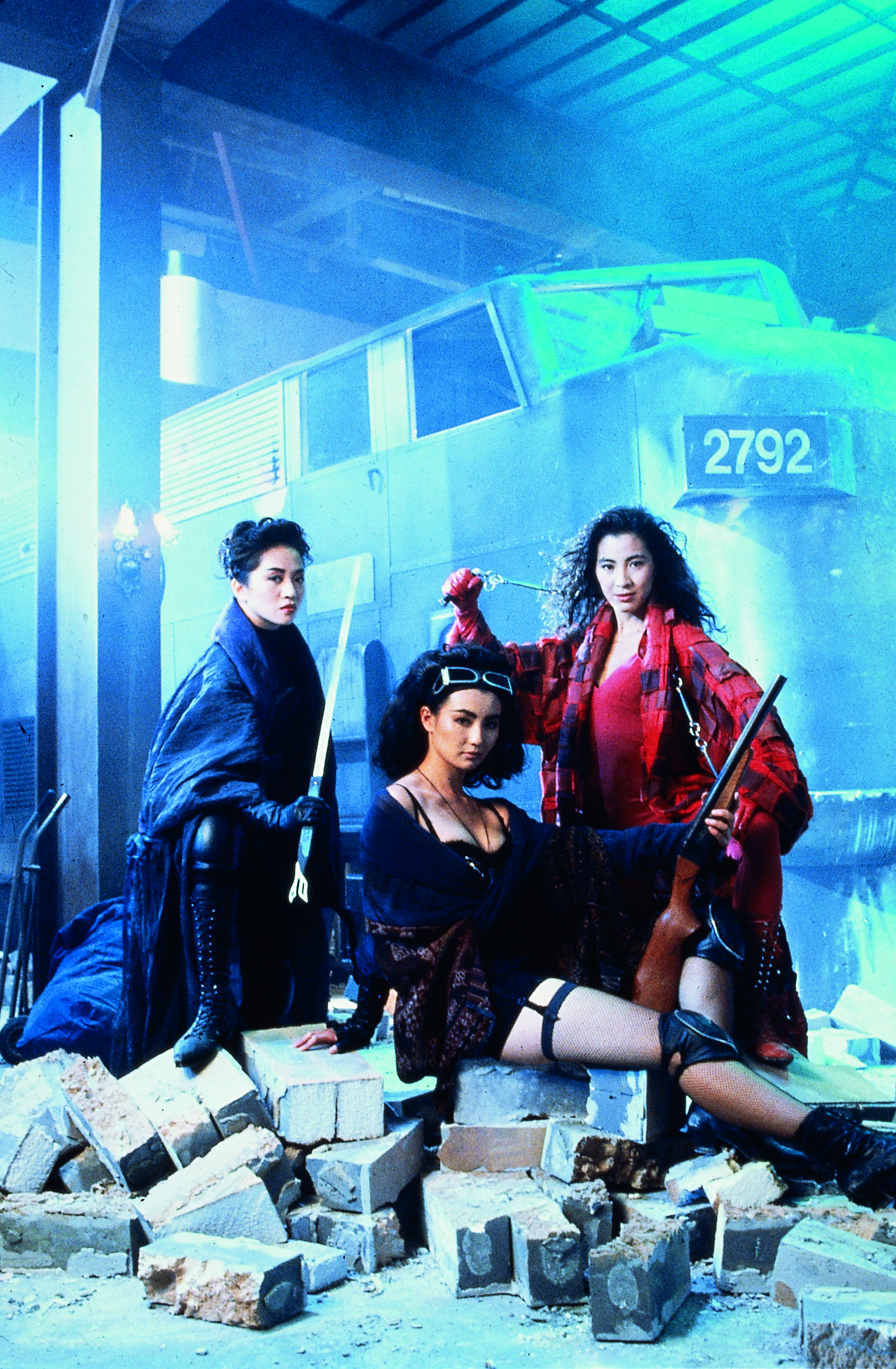
Female solidarity becomes an unexpected weapon against stealthy authoritarian take over in Johnnie To’s gloriously camp superhero action fest, The Heroic Trio (東方三俠). Uniting three of the top stars of the age in Anita Mui, Maggie Cheung, and Michelle Yeoh the film flirts with Handover anxiety in the “Evil Religion” that threatens to steal the children of Hong Kong, but eventually locates the source of salvation in the heroine’s shared humanity brokered by a tripartite solidarity of justice and equality that defies both the patriarchal world around them and the cruel authoritarianism in which they have been raised. 

In an almost biblical allegory, large numbers of male infants have been going missing over the last 18 months and the police are, predictably, mystified relying on the reappearance of the mysterious superhero Wonder Woman to solve the mystery herself. Truth be told, top Inspector Lau (Damian Lau Chung-Yan) hasn’t yet realised that Wonder Woman is his own wife, Tung (Anita Mui Yim-Fong), so perhaps his investigative skills aren’t all that despite the dynamism of the opening scenes which see him demonstrate his masculinity by leaping out of a window stop a thief from driving off in his classic car which is parked outside a creepy mansion in the middle of nowhere. Nothing really gets done until the chief of police gets a note that his own infant son is next on the list, though he briefly considers simply swapping his kid for another couple’s child while hiring “Thief Catcher” Chat (Maggie Cheung Man-Yuk) to get him back when he’s kidnapped by an “Invisible Woman”, Ching (Michelle Yeoh), whom Tung manages to wound while saving the decoy baby. 

As it turns out, Ching has been taking the babies on behalf of “Evil Master” (Yen Shi-Kwan) who lives in an underground lair in the sewers and is the head of a mysterious cult hellbent on finding a new king for China. There may be a degree of Handover anxiety in Evil Master’s mission, seeking to possess and control Hong Kong by brainwashing its children eventually possessing Ching by removing her bodily autonomy while her sisters must quite literally free her from his icy grasp. Each of the kidnapped boys is said to have a divine destiny, though Evil Master doesn’t know which one is the new king and has a habit of simply killing the ones who disappoint him while the others are raised as mindless automatons consuming those like them and destined to become thoughtless killing machines like the bloodthirsty Kau (Anthony Wong Chau-Sang). 

Chat, who was raised as one of Evil Master’s minions but managed to escape thanks to the largess of Ching and his since become an ultra-capitalist bounty hunter if one less cynical than she originally seems, thinks it’s better to simply end the cannibal kids’ misery before they end up like Kau while Tung prioritises saving the infants so they can be returned to their parents before being subject to one of Evil Master’s weird rituals. Ching, meanwhile, is only participating in Evil Master’s plan to protect the man she loves, a mad scientist slowly succumbing to poisoning caused by his invention in true genre fashion. It is then in a sense love that causes Ching to reject her programming, but it’s the solidarity of Tung and Chat, along with a desire for vengeance, that finally gives her the courage to rebel. 

In a brief flashback, Tung had failed to save Ching during a tough training session with their mentor who had cruelly told her that she’d have to fight for justice alone while Ching, cast out, sought support by turning to the dark side. The scene repeats itself twice in the film’s closing scenes in which Tung is this time able to save Ching but only because of the support from their friend and equal Chat making up the third point of the triangle and anchoring them both firmly to ensure they will not fall. “Life is meaningful if you can face yourself” Tung tells Ching, shedding her mask having presumably dealt with her own dark past and pulling her sister up with her as an equal leaving the past behind to fight for a future of justice and freedom. 

To and action director Ching Siu-tung recast Hong Kong as Gotham with a production design quite clearly inspired by Western comic books in which the three heroines end by getting fancy capes that flicker in the wind. Chat, a motorcycle-riding delinquent force of nature, even at one point launches herself into battle on an oil drum propelled by dynamite which she later uses to take out the cannibal kids not to mention Evil Master himself. But it turns out the spectre of creepy, ritualistic authoritarianism doesn’t die so easily, Evil Master’s charred skeleton gets back up for one last hurrah until his brain finally explodes when confronted by Ching’s rejection having returned to the fold and now ready to sacrifice herself for a freer future for all. Essentially a comic book wuxia, To’s ironic action drama allows its heroic trio to find salvation in female solidarity anchoring each other in a world beset by fear and villainy.


The Heroic Trio screened as part of this year’s San Diego Asian Film Festival.